Write your answer on paper. Then open the answer to check it.
Section A
Diagram 1 shows the reaction between copper(II) oxide and hydrogen gas: CuO + H2 → Cu + H2O (shown as particle diagram).
Medium5 marks
- (a)
State the chemical formula of copper(II) oxide and hydrogen gas.
[2] - (b)
State the colour of copper(II) oxide.
[1] - (c)
State the qualitative and quantitative information based on Diagram 1.
[2]
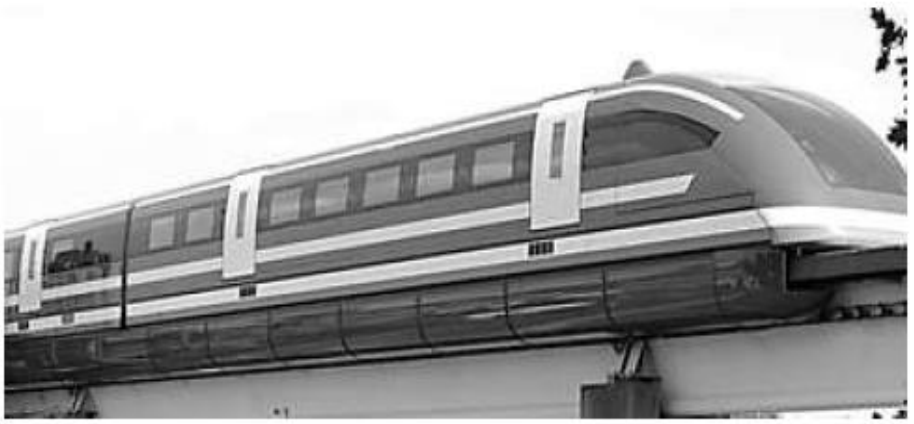
Table 1 shows two pairs of spectacles made from two types of glass: A - fused silica glass, remains transparent in sunlight; B - photochromic glass, turns dark in sunlight. Diagram 2 shows a Maglev electric train that can reach speeds of up to 581 km/h.
Medium5 marks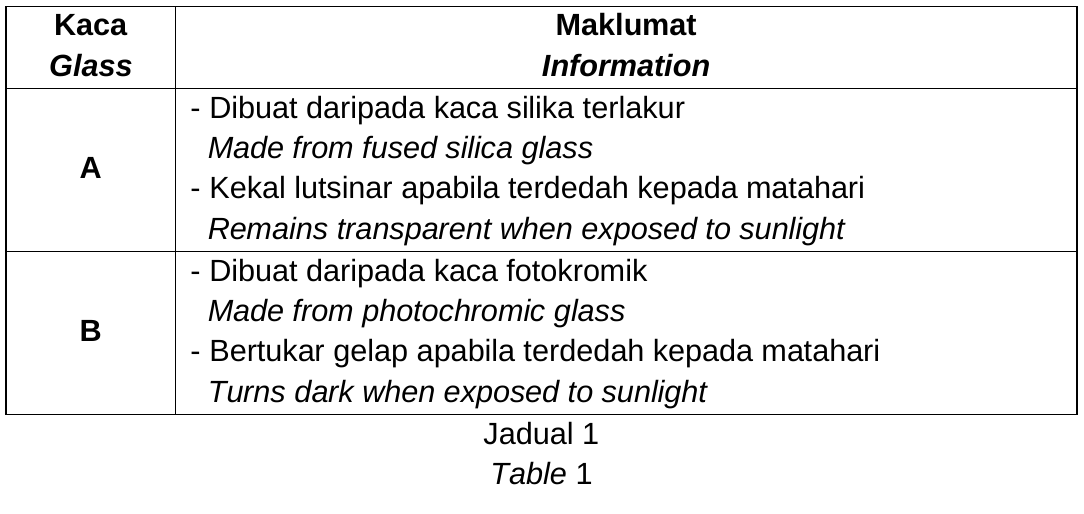
- (a)(i)
State two strengthening substances used in photochromic glass.
[2] - (a)(ii)
State the advantage of the photochromic glass.
[1] - (b)(i)
State the alloy used in this train.
[1] - (b)(ii)
Why is the alloy in 2(b)(i) suitable to use?
[1]
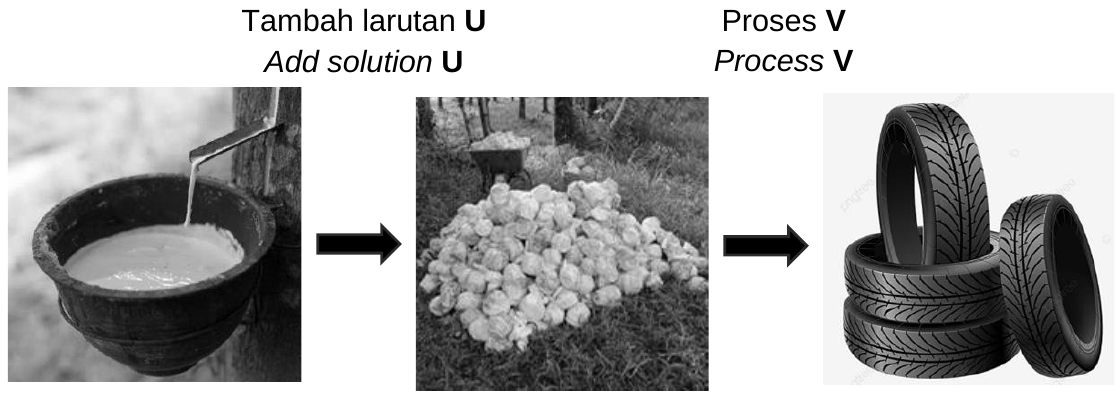
Pipes and raincoats are made from polymer T. Diagram 3.1 shows the structural formula of polymer T, the repeating unit -CH2-CHCl- (written as C(H)(H)-C(H)(Cl)) with subscript n. Diagram 3.2 shows a flow chart for the production of car tyres: latex, add solution U, coagulated rubber, process V, tyres. Process V is carried out to increase the elasticity of natural rubber.
Medium6 marks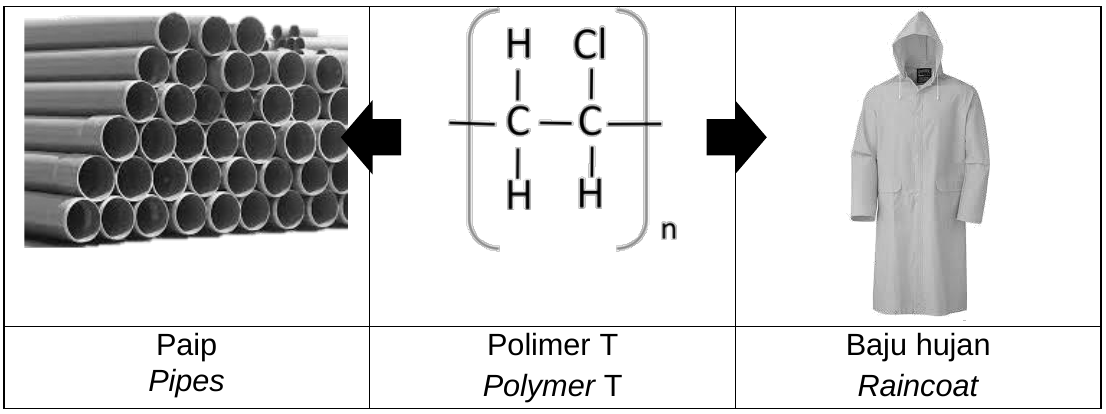
- (a)(i)
What is the meaning of polymer?
[1] - (a)(ii)
State the name of the monomer that makes up polymer T.
[1] - (b)(i)
Suggest solution U and state the name of process V.
[2] - (b)(ii)
How can process V increase the elasticity of natural rubber?
[2]
Palmitic acid + Solution J → Soap K + Glycerol is the reaction for preparing soap in the laboratory. A 12-year-old patient has a headache and can be given paracetamol or aspirin (Diagram 4).
Medium7 marks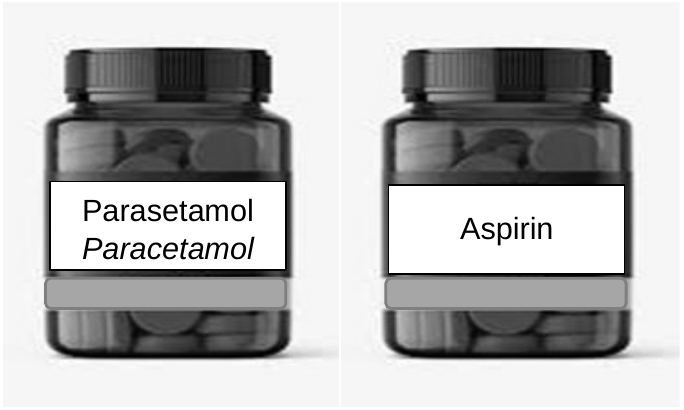
- (a)(i)
State the name of the reaction to prepare soap.
[1] - (a)(ii)
State the name of solution J if soap K is sodium palmitate.
[1] - (a)(iii)
Pn. Salmiah found that the dirt on her son's sports pants still remained after washing with soap K and water at her house. State the name of the cleaning agent that can be used to overcome the problem.
[1] - (b)(i)
Choose which medicine is more suitable to be given to the patient and state how the medicine can be taken.
[2] - (b)(ii)
Explain why you choose the medicine.
[2]
Element X is in Group 1 and Period 3. Diagram 5 shows solid X burning with a bright yellow flame in chlorine gas.
Medium8 marks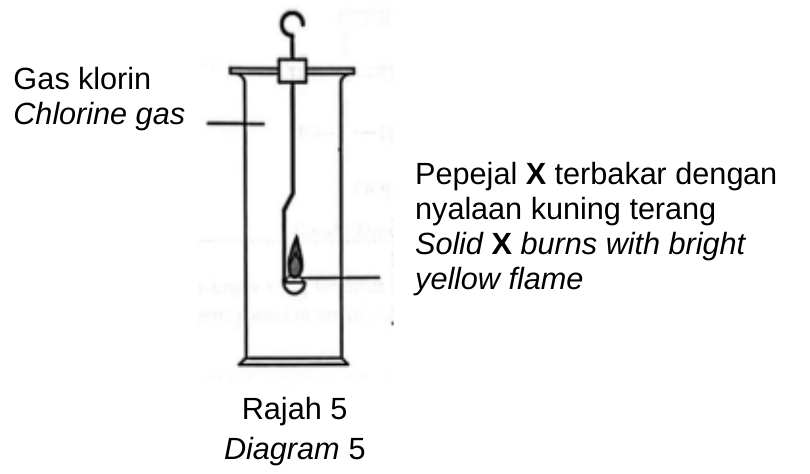
- (a)
State the colour of chlorine gas.
[1] - (b)
State the name of element X.
[1] - (c)
Write the chemical equation for this reaction.
[2] - (d)
Calculate the mass of product formed if 0.5 mol of X burns completely in chlorine gas. [Molar mass of product: 58.5 g mol-1]
[2] - (e)
Element X and chlorine are located in the same period in the Periodic Table of Elements. Compare the electronegativity of element X and chlorine. Give a reason.
[2]
Table 2 shows two experiments to study the factor that affects the rate of reaction. Experiment I: excess zinc granules + 50 cm3 of 1.0 mol dm-3 hydrochloric acid, 80 s to collect 60 cm3 of gas. Experiment II: excess zinc powder + 50 cm3 of 1.0 mol dm-3 hydrochloric acid, 30 s to collect 60 cm3 of gas (gas collected in a syringe).
Medium9 marks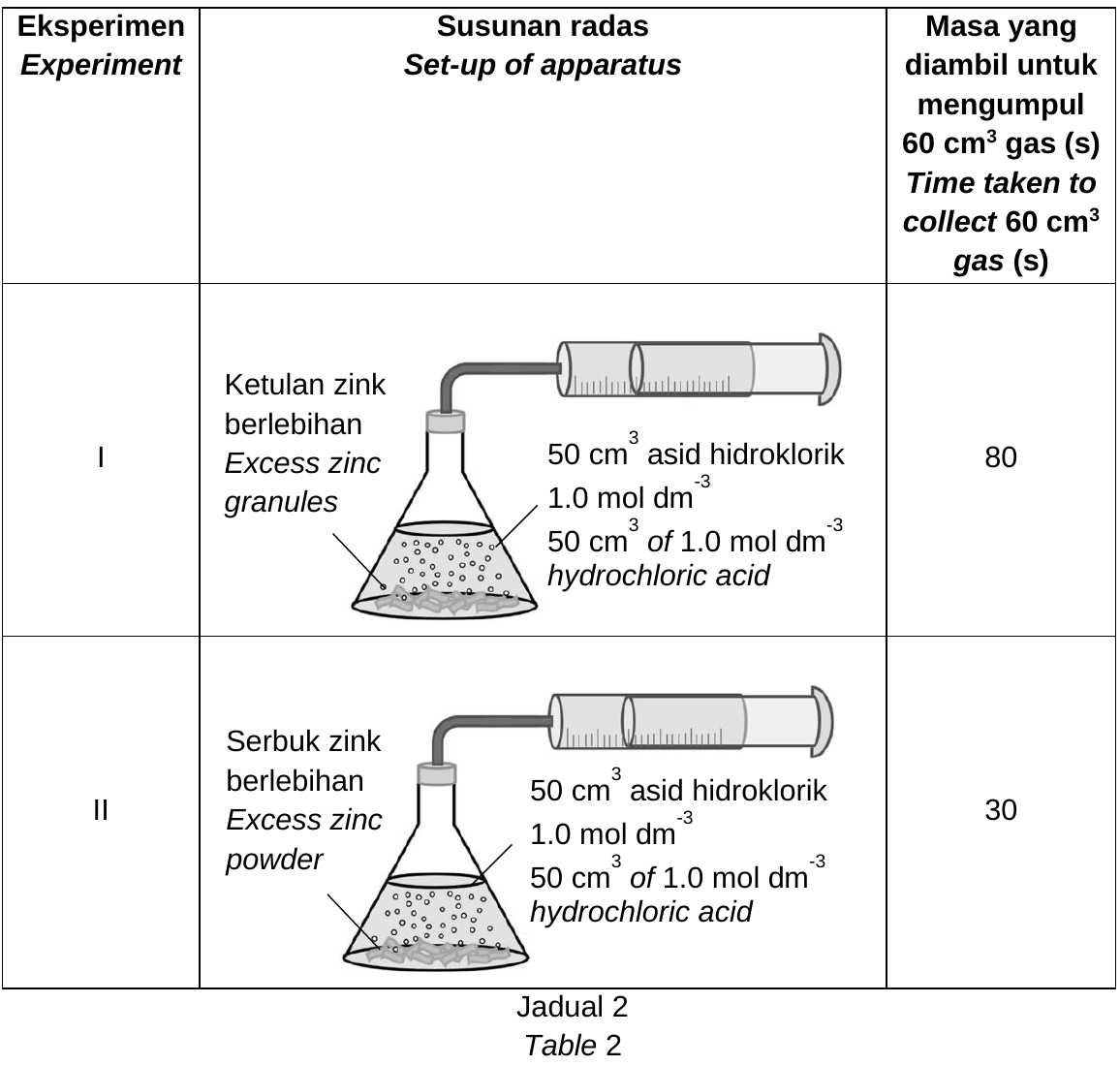
- (a)
Give one factor that can affect the rate of reaction.
[1] - (b)
Based on Table 2, state one reason why the final volume of gas obtained in experiments I and II is the same.
[1] - (c)(i)
Calculate the average rate of reaction for Experiment I and Experiment II.
[2] - (c)(ii)
Write a chemical equation for the experiment.
[2] - (c)(iii)
Compare the rate of reaction between Experiment I and Experiment II. Explain your answer.
[3]
Diagram 6 shows the flow chart for chemical reactions of hydrocarbon P. Reaction I: P burns to form CO2 + H2O. Reaction II: P + H2O → compound Q (and the reverse is dehydration). Reaction III: P → 2,3-dibromobutane, CH3-CHBr-CHBr-CH3.
Medium10 marks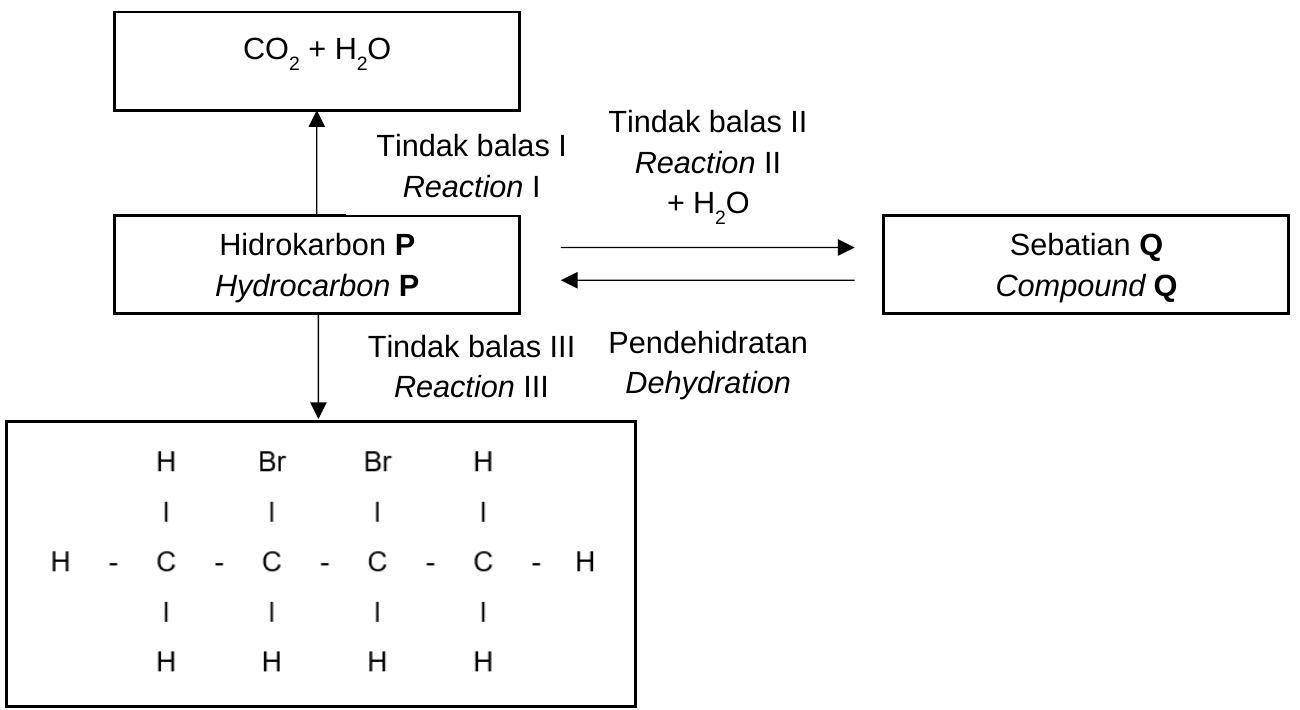
- (a)
State the meaning of hydrocarbon.
[1] - (b)
State the homologous series of hydrocarbon P.
[1] - (c)(i)
Hydrocarbon P is burnt completely in excess oxygen in Reaction I and produces soot. Write the chemical equation for the reaction.
[2] - (c)(ii)
Calculate the percentage of mass of carbon per molecule in hydrocarbon P. [Relative atomic mass: H = 1; C = 12]
[1] - (d)
Identify P, Q and Reaction III.
[3] - (e)
Describe briefly how reaction III can be carried out in the laboratory.
[2]
Diagram 7 shows the titration set-up between potassium hydroxide solution (measured with apparatus R into a conical flask with indicator S) and dilute sulphuric acid in a burette.
Medium10 marks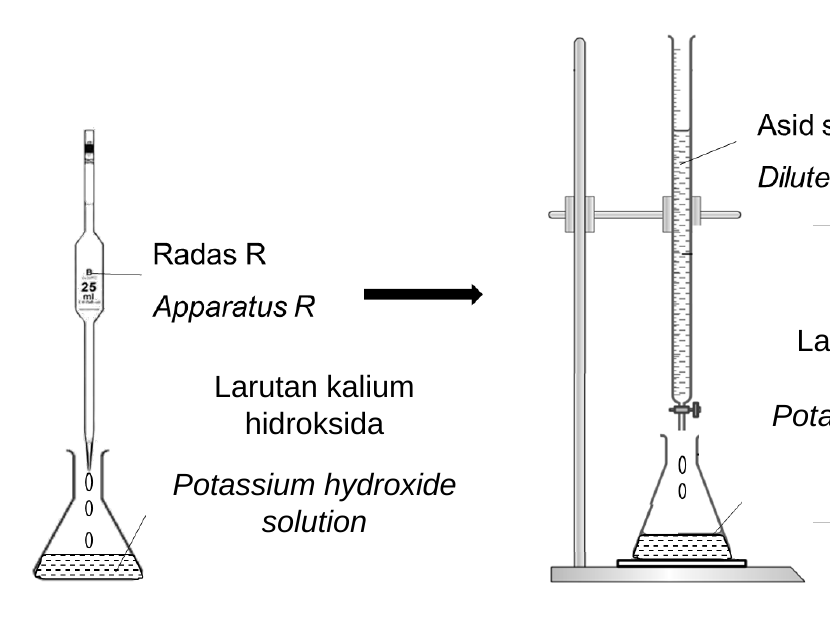
- (a)(i)
State the name of apparatus R.
[1] - (a)(ii)
Suggest one indicator S.
[1] - (b)
In this experiment, 10.00 cm3 dilute sulphuric acid is needed to neutralise completely 25.0 cm3 of 1.0 mol dm-3 potassium hydroxide solution. Calculate the molarity of the dilute sulphuric acid.
[4] - (c)
Table 3 shows ethanoic acid, CH3COOH in different states and the observation with blue litmus paper. Experiment I: ethanoic acid in water - blue litmus paper turns red. Experiment II: ethanoic acid in propanone - no change. Compare the differences in observation in experiments I and II.
[2] - (d)
Describe briefly how the salt formed in Diagram 7 can be crystallised.
[2]
Section B
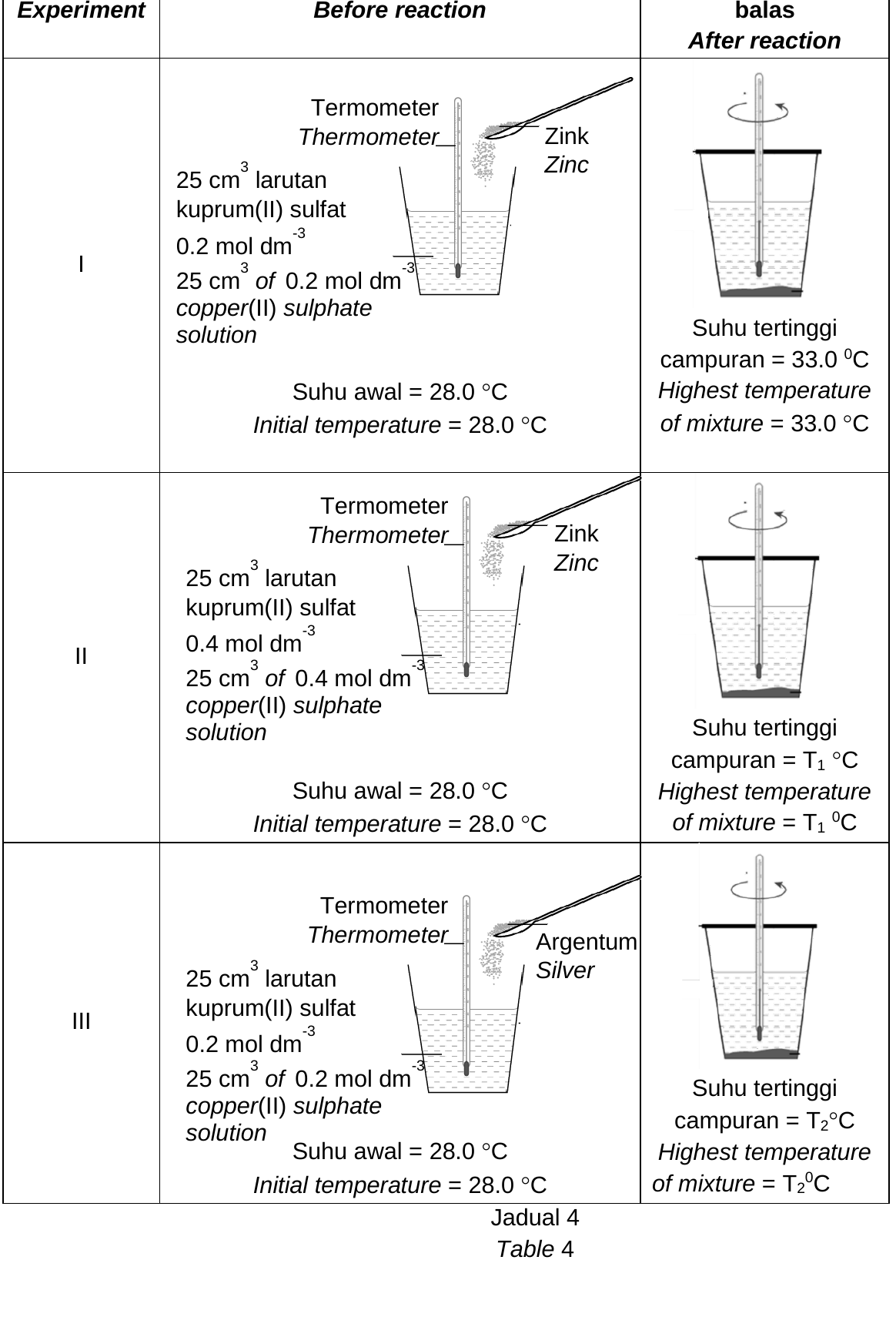
Question 9 (answer this or Question 10). Diagram 8 shows the energy level diagram for the reaction between silver nitrate and sodium chloride: reactants (silver nitrate + sodium chloride) at a higher level, products (silver chloride + sodium nitrate) at a lower level, ΔH = -65.5 kJ mol-1. Table 4 shows three experiments with 25 cm3 copper(II) sulphate solution at initial temperature 28.0 °C: Experiment I: 0.2 mol dm-3 CuSO4 + excess zinc, highest temperature 33.0 °C. Experiment II: 0.4 mol dm-3 CuSO4 + excess zinc, highest temperature T1 °C. Experiment III: 0.2 mol dm-3 CuSO4 + excess silver, highest temperature T2 °C.
Hard20 marks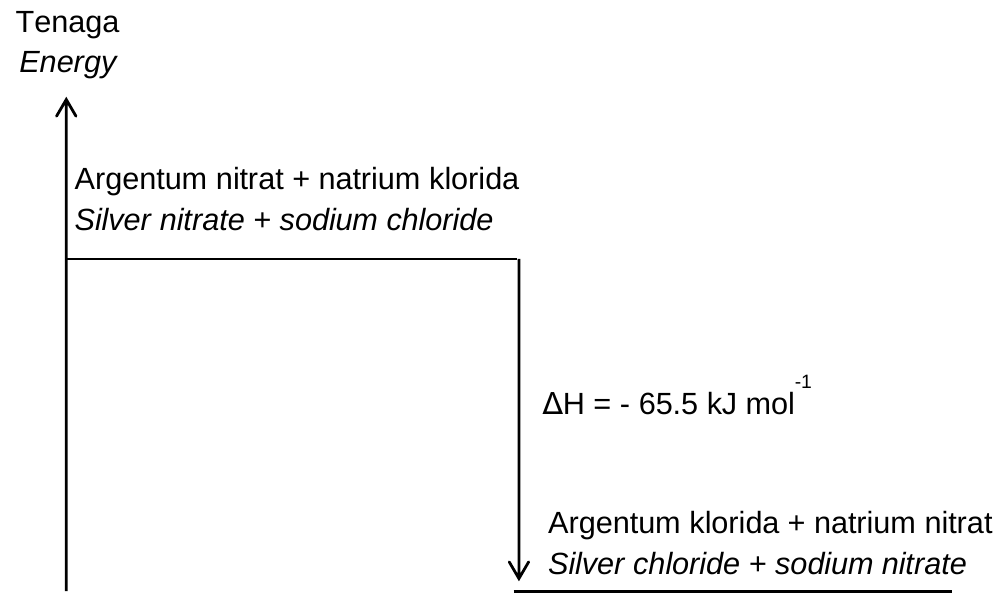
- (a)(i)
Write the chemical formula for silver chloride and state the solubility of silver chloride in water.
[2] - (a)(ii)
Write two statements that can be interpreted from Diagram 8.
[2] - (a)(iii)
Suggest another chloride compound to replace sodium chloride to obtain the same value of heat of precipitation. Explain your answer.
[2] - (b)(i)
By comparing experiments I and II, predict the value of T1 and explain your answer. By comparing experiments I and III, predict the value of T2 and explain your answer.
[6] - (b)(ii)
Suggest another metal that can displace copper(II) ions, Cu2+, in experiment I. State one observation in the reaction that occurs.
[2] - (b)(iii)
Calculate the heat of displacement of copper by zinc in experiment I. Write the chemical equation involved. [Specific heat capacity of solution = 4.2 J g-1 °C-1; density of solution = 1.0 g cm-3]
[6]
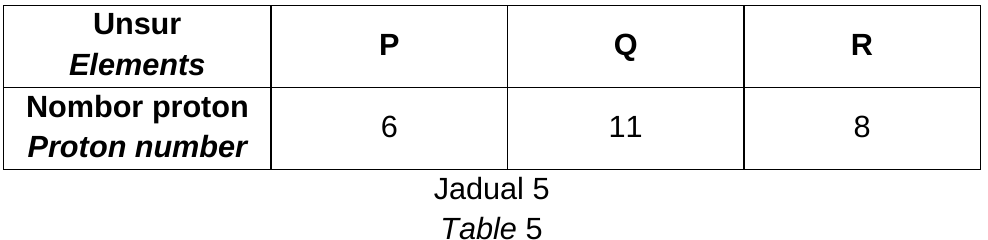
Question 10 (answer this or Question 9). Diagram 9 shows the electron arrangement of atoms of elements M (2.8.1) and N (2.8.8.1) in the same group but different periods. Table 5 shows the proton numbers of elements P, Q and R: P = 6, Q = 11, R = 8.
Medium20 marks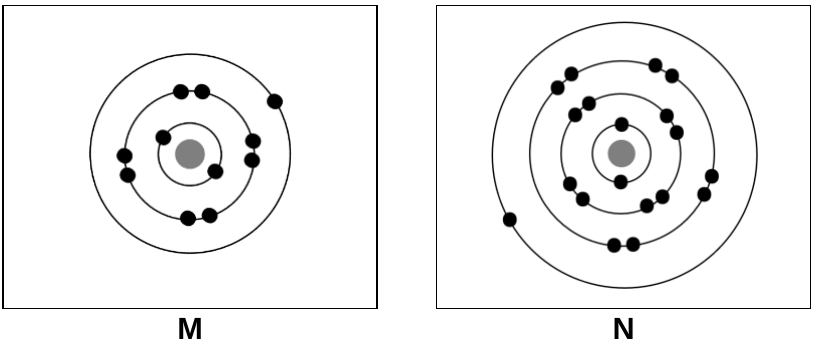
- (a)(i)
State the meaning of group and period. State the group and period where element N is located in the Periodic Table of Elements.
[4] - (a)(ii)
Write the chemical equation for the reaction between element M and oxygen gas. Calculate the mass of the product obtained if 1200 cm3 of oxygen gas is used. [Relative atomic mass: O = 16, M = 23; molar volume of gas at room conditions = 24 dm3 mol-1]
[6] - (b)
Table 5 shows the proton numbers: P = 6, Q = 11, R = 8. Choose two elements that can react to form two types of compounds: (i) a compound that has low melting and boiling points, (ii) a compound that can conduct electricity in molten and aqueous state, and describe the formation of the bond in both compounds.
[10]
Section C
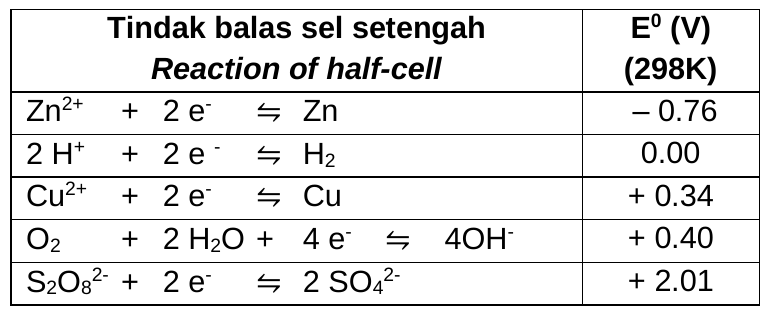
Diagram 10 shows a combination of a chemical cell (Cell I: zinc in zinc sulphate solution and copper in copper(II) sulphate solution separated by a porous pot) connected through a voltmeter to an electrolytic cell (Cell II: carbon electrodes X and Y). Table 6 shows standard electrode potentials: Zn2+ + 2e- ⇌ Zn, -0.76 V; 2H+ + 2e- ⇌ H2, 0.00 V; Cu2+ + 2e- ⇌ Cu, +0.34 V; O2 + 2H2O + 4e- ⇌ 4OH-, +0.40 V; S2O8 2- + 2e- ⇌ 2SO4 2-, +2.01 V.
Hard20 marks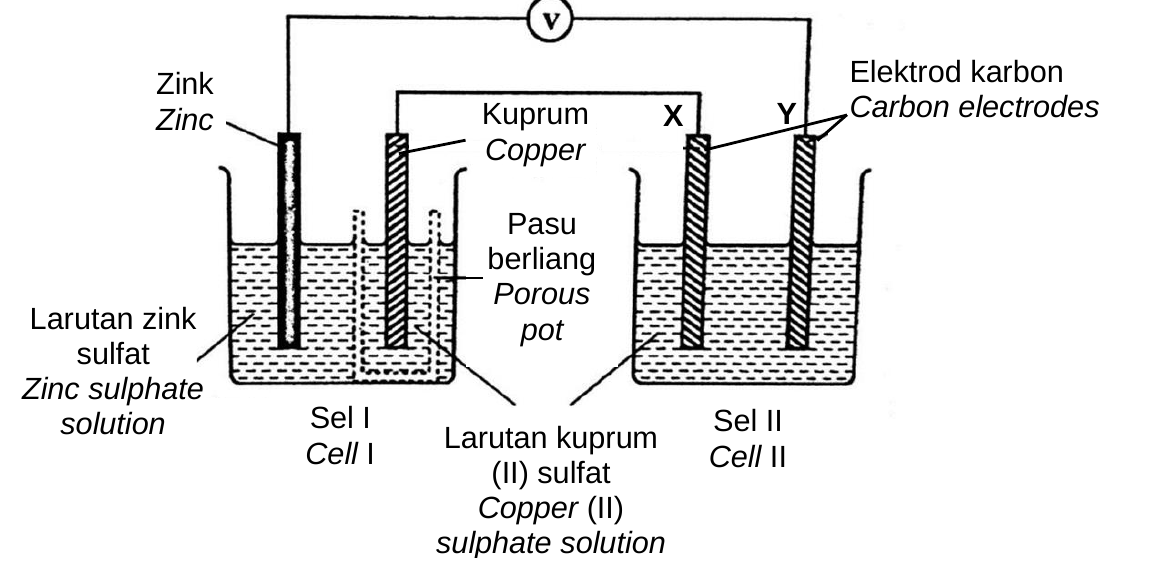
- (a)
State the colour of copper(II) sulphate. Based on Diagram 10 and Table 6, identify the negative terminal in Cell I and explain your answer.
[3] - (b)
Based on Cell I, write the half-equations for the reactions that occur at zinc and at copper. By referring to Table 6, calculate the cell voltage, E°cell in Cell I.
[4] - (c)
Based on Cell II, explain the reaction that occurs at electrode X based on: ions that are attracted to electrode X; ion that is oxidised and reason; observation; product formed.
[5] - (d)(i)
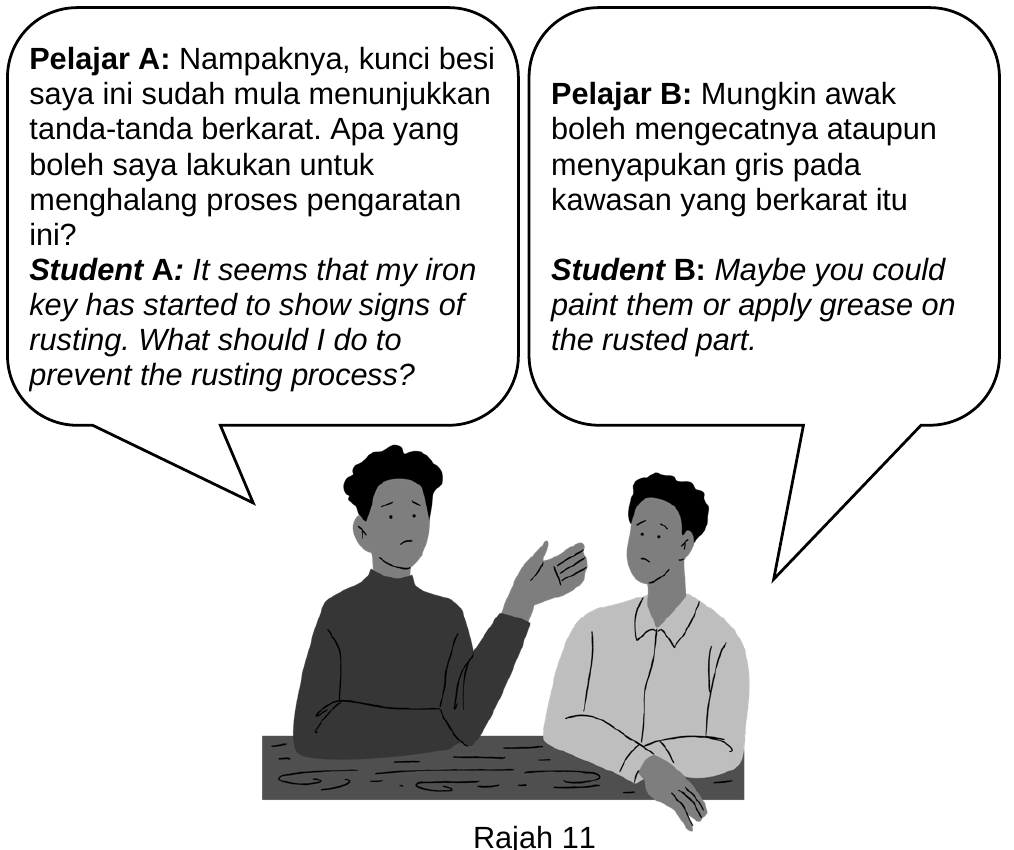
Diagram 11 shows the conversation between two students. Student A: his iron key has started to show signs of rusting, what should he do to prevent the rusting process? Student B: maybe paint them or apply grease on the rusted part. Use the information above and choose the more appropriate method to prevent rusting. Justify your answer.
[2] - (d)(ii)
After a few months, Student A found that his iron keys have started to rust. By modifying Cell II, describe briefly another method that could be carried out by the student to prevent the rusting process from continuing. Include a labelled diagram in your answer.
[6]