A patient is diagnosed of having thyroid cancer. Which isotope is used to treat the patient?
Easy
The following information is about atom T: Number of proton is 3; Nucleon number is 7. Which diagram shows the structure of atom T?
Medium
An atom of element E has 20 neutrons. The nucleon number of element E is 39. Atom E donates electrons to form ion E. How many electrons in ion E?
Medium
The following equation represents a chemical reaction: Na2CO3(aq) + CaCl2(aq) → CaCO3(s) + 2NaCl(aq). Which statement is correct?
Medium
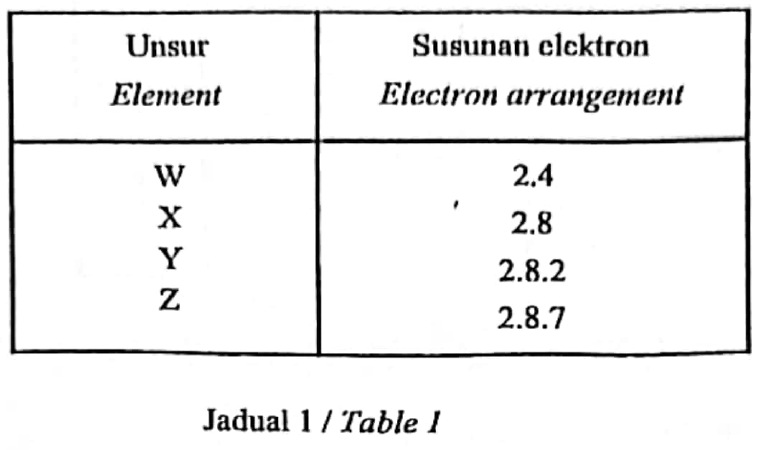
Table 1 shows the electron arrangement for element W, X, Y and Z: W 2.4; X 2.8; Y 2.8.2; Z 2.8.7. Which element is a metal?
Medium
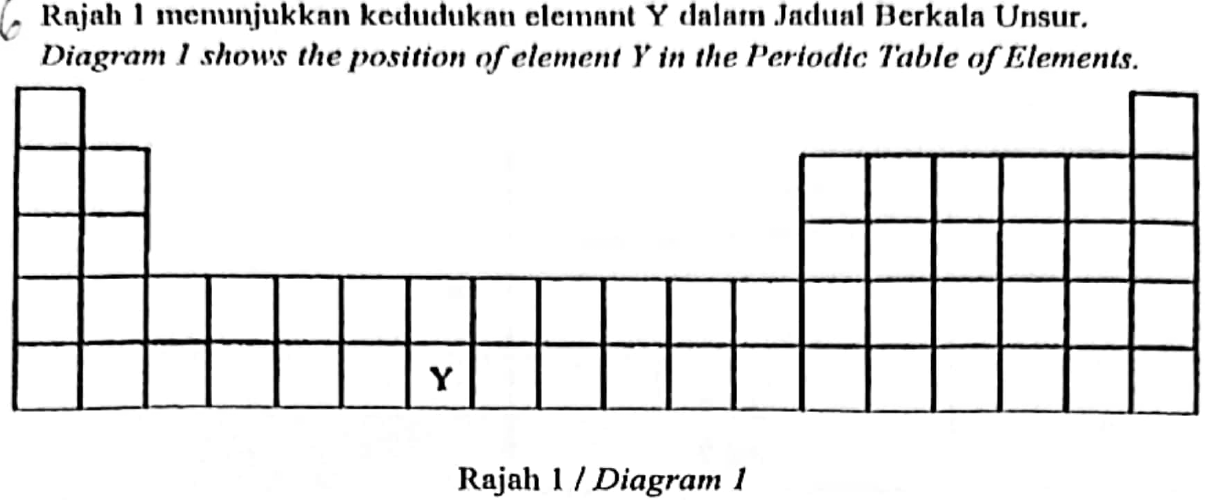
Diagram 1 shows the position of element Y in the Periodic Table of Elements (Y is in the transition-element block of Period 5). Which of the following are the characteristics of element Y? I Dissolve in water; II Form coloured compound; III Has low melting point; IV Has more than one oxidation number
Medium
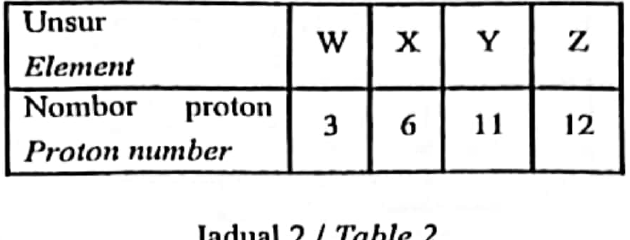
Table 2 shows the proton number of elements W, X, Y and Z: W 3; X 6; Y 11; Z 12. Which arrangement shows the atomic size of the elements in descending order?
Medium
Which compound is formed by transferring electrons?
Easy
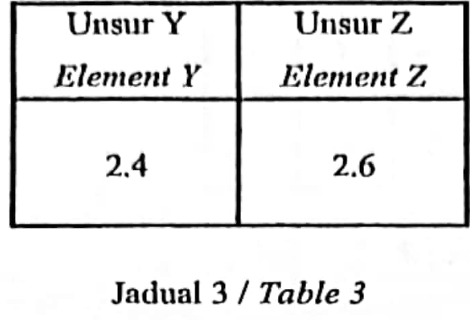
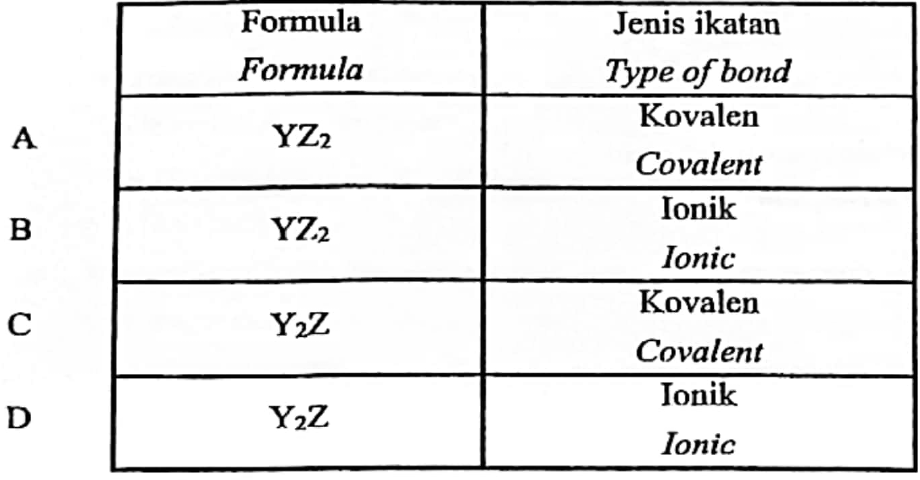
Table 3 shows the electron arrangement of element Y (2.4) and element Z (2.6). What is the formula and the type of bond of the compound formed from the reaction between Y and Z? A YZ2, covalent; B YZ2, ionic; C Y2Z, covalent; D Y2Z, ionic
Medium
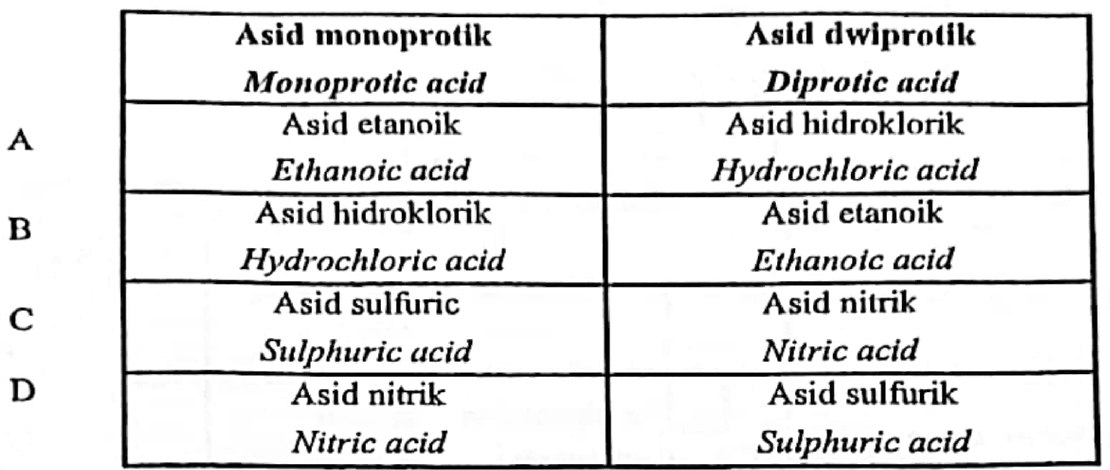
Which pair of acids is classified correctly? (Monoprotic acid / Diprotic acid) A Ethanoic acid / Hydrochloric acid; B Hydrochloric acid / Ethanoic acid; C Sulphuric acid / Nitric acid; D Nitric acid / Sulphuric acid
Easy
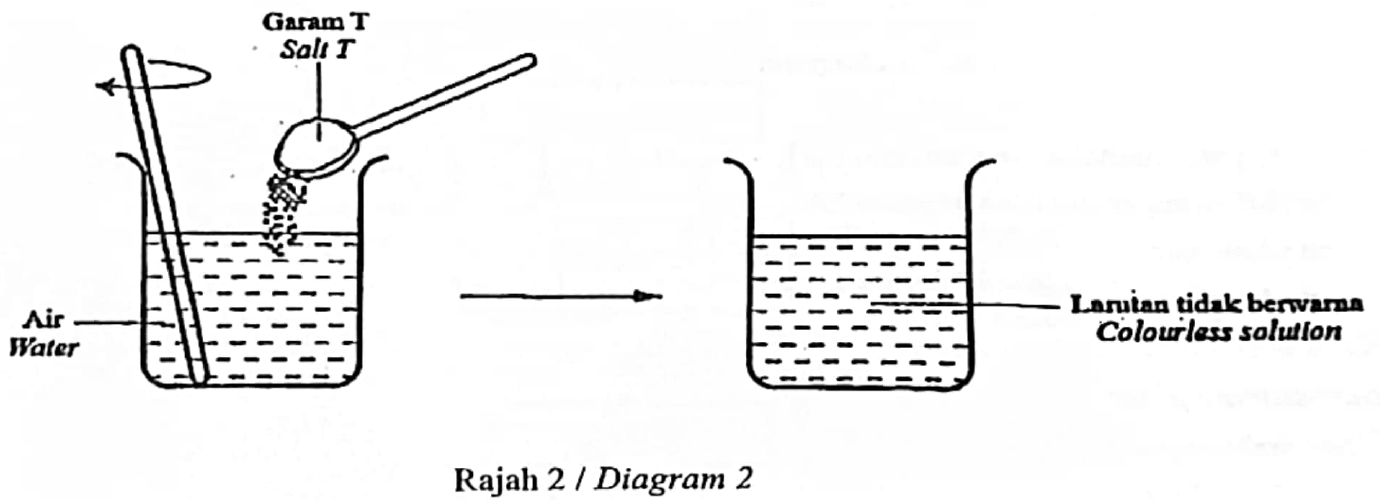
Diagram 2 shows salt T is added into the water and stirred to give a colourless solution. What is salt T?
Medium
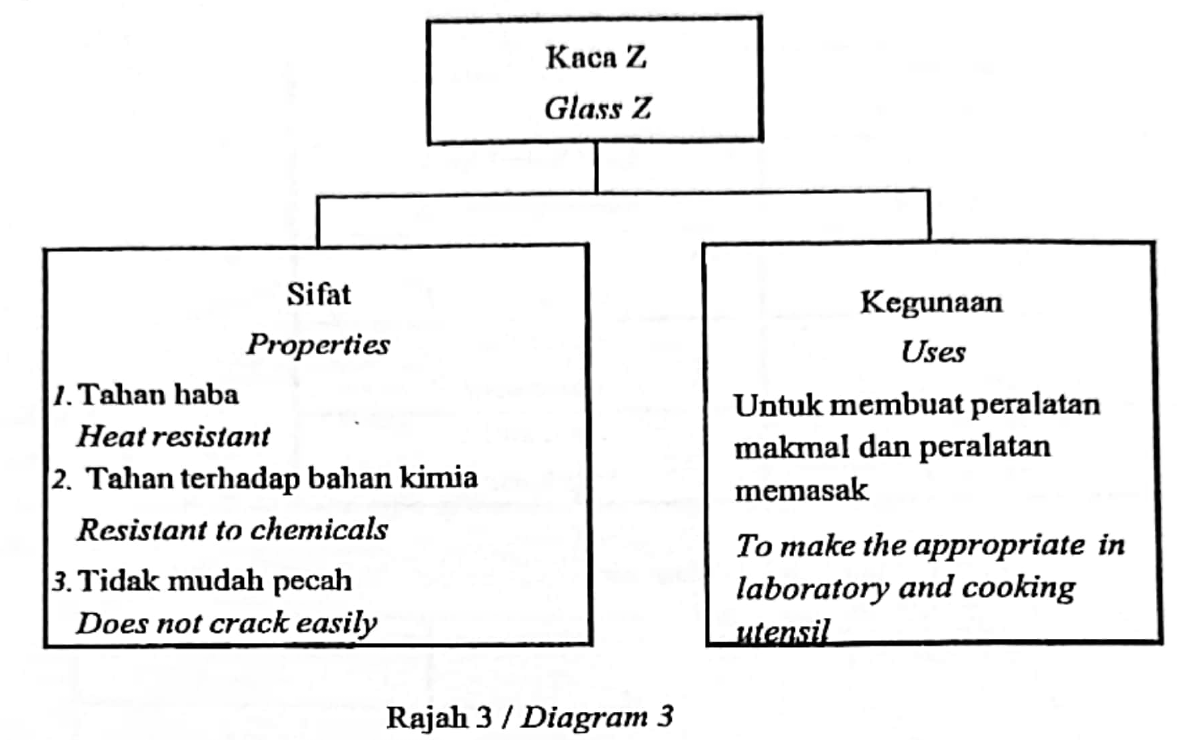
Diagram 3 shows the properties of glass Z (heat resistant, resistant to chemicals, does not crack easily) and its use (to make laboratory and cooking utensils). Which of the following is the type of glass Z?
Medium
What is the meaning of oxidation?
Easy
Which apparatus set-up is correct to purify copper metal? (A pure copper and impure copper electrodes in copper(II) nitrate solution; B pure and impure copper in zinc nitrate solution; C impure and pure copper in copper(II) nitrate solution with cells connected the other way; D impure and pure copper in zinc nitrate solution)
Medium
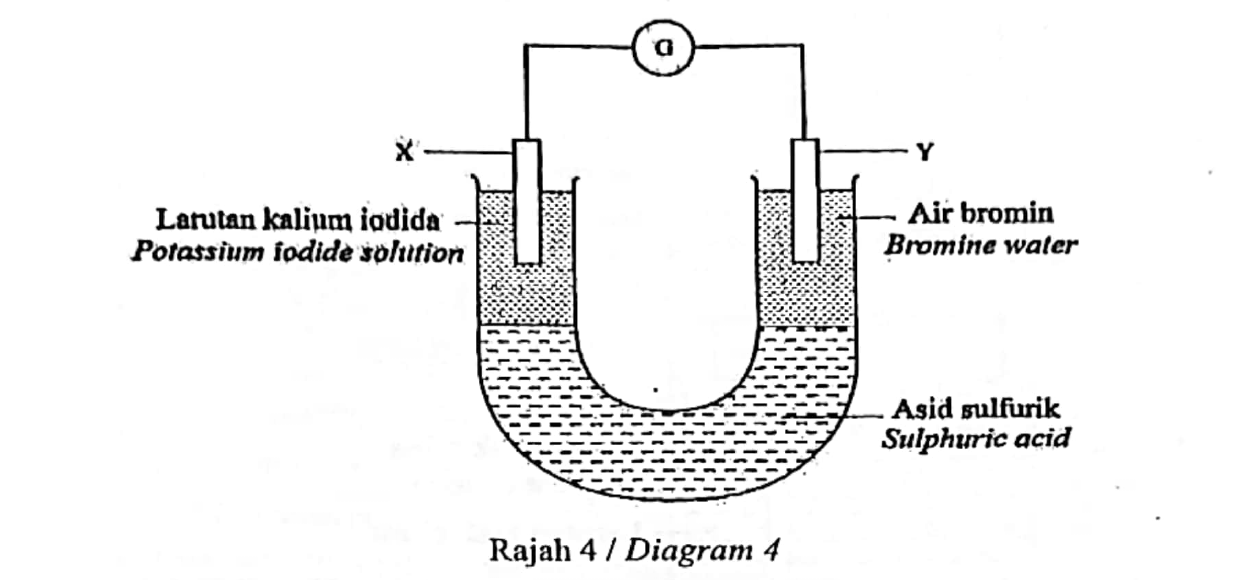
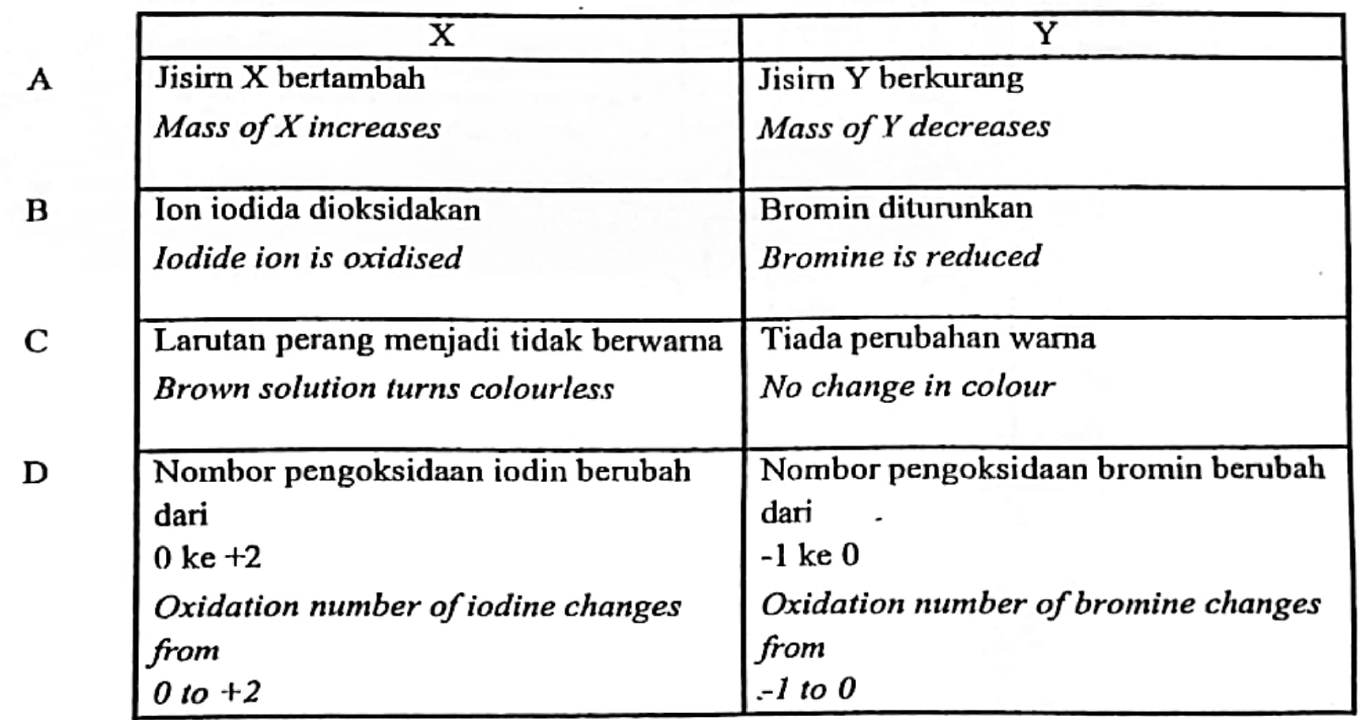
Diagram 4 shows the apparatus set-up to study the transfer of electron at a distance (potassium iodide solution at electrode X, bromine water at electrode Y, sulphuric acid between them). Which of the following occur at X and Y? A Mass of X increases / Mass of Y decreases; B Iodide ion is oxidised / Bromine is reduced; C Brown solution turns colourless / No change in colour; D Oxidation number of iodine changes from 0 to +2 / Oxidation number of bromine changes from -1 to 0
Medium
The following equation shows the reaction between iron(III) oxide, Fe2O3 with carbon monoxide, CO: Fe2O3 + 3CO → 2Fe + 3CO2. Which of the following is the change in the oxidation number of iron?
Medium
The equation represents an esterification reaction: ethanoic acid + Alcohol X → ester (CH3COO–CH2CH2CH3) + H2O. What is X?
Medium
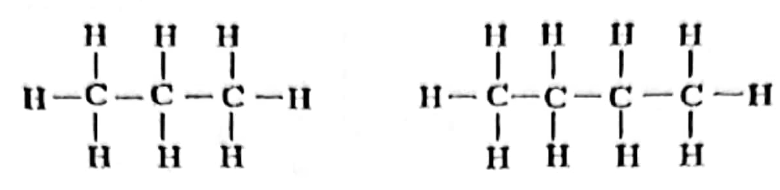
The following shows the structural formulae of two hydrocarbons (propane and butane). Which property of both compounds is similar?
Medium
A substance has the following characteristics: turns moist blue litmus paper to red; sour taste; gas bubbles released when reacts with magnesium. What is the molecular formula of the substance?
Medium
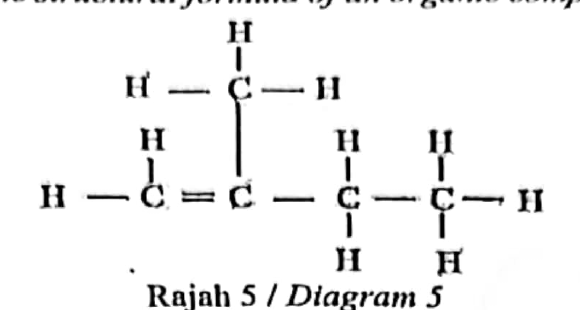
Diagram 5 shows the structural formula of an organic compound. What is the IUPAC name of the organic compound?
Medium
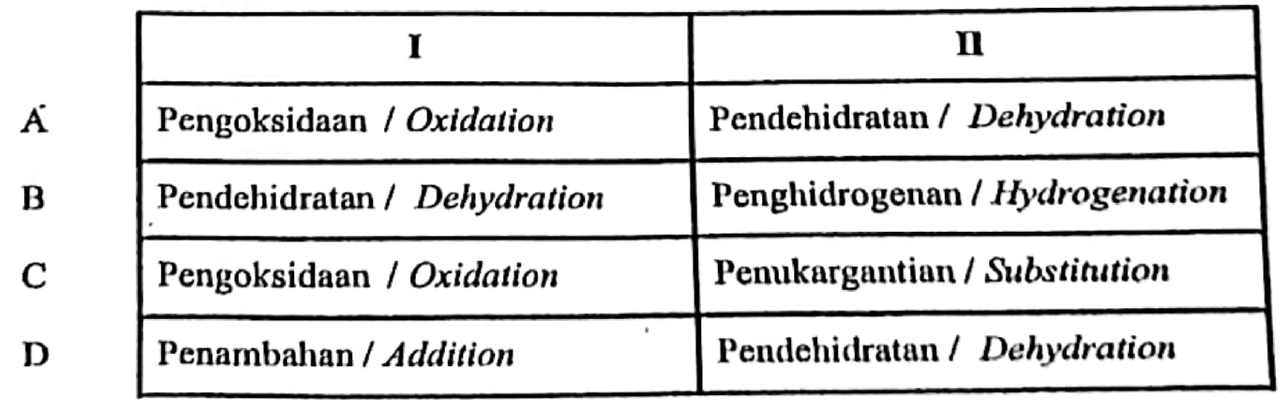
Diagram 6 shows a chemical reaction: propanol → propanoic acid (reaction I) and propanol → propene (reaction II). Name the reaction I and II.
Medium
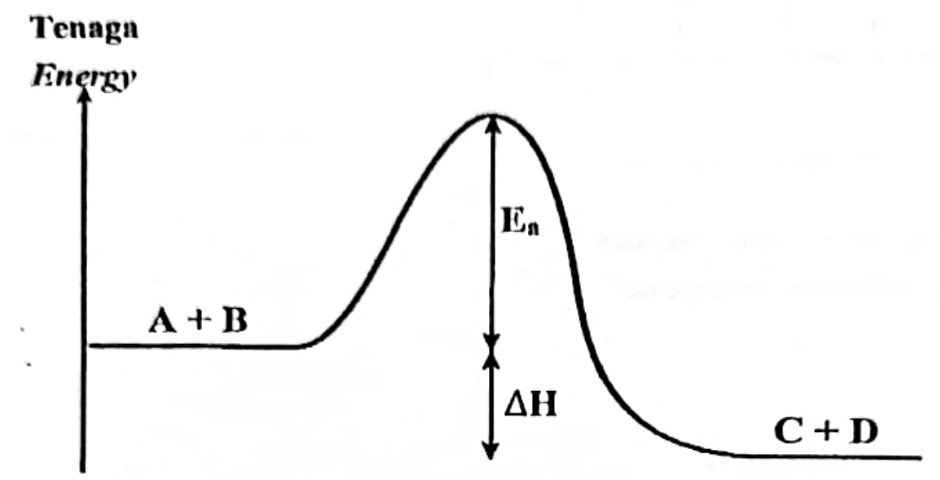
Diagram 7 shows an energy profile diagram of an exothermic reaction (A + B at higher energy than C + D; Ea marked from A + B to the peak; ΔH marked). Which of the following is true about the diagram?
Medium
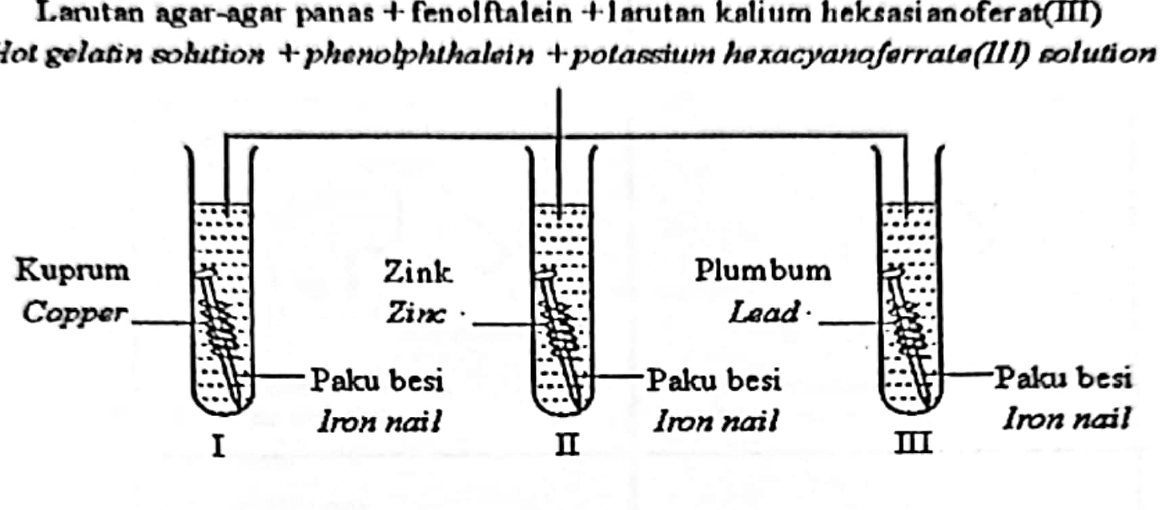
Diagram 8 shows the apparatus set-up to study the effect of other metals on the corrosion of iron: iron nail coiled with copper (I), zinc (II) and lead (III), in hot gelatin solution + phenolphthalein + potassium hexacyanoferrate(III) solution. In which test tube can the blue spot be observed?
Medium
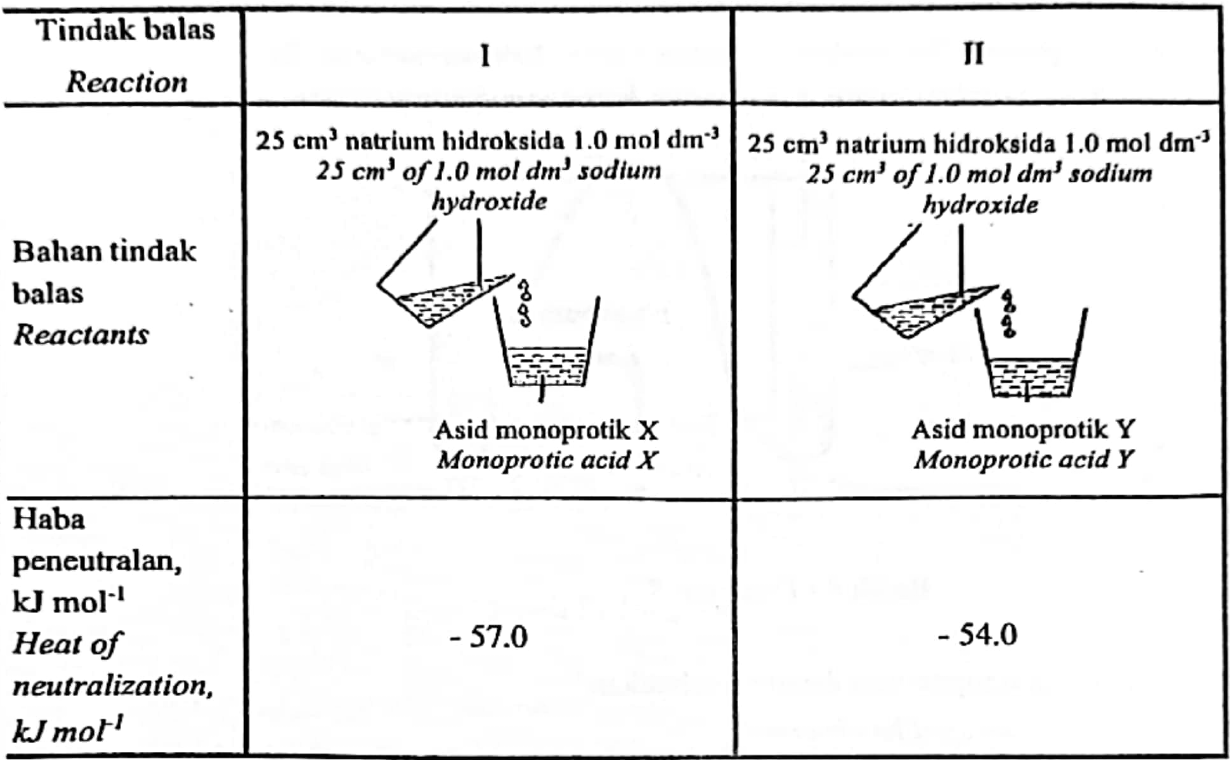
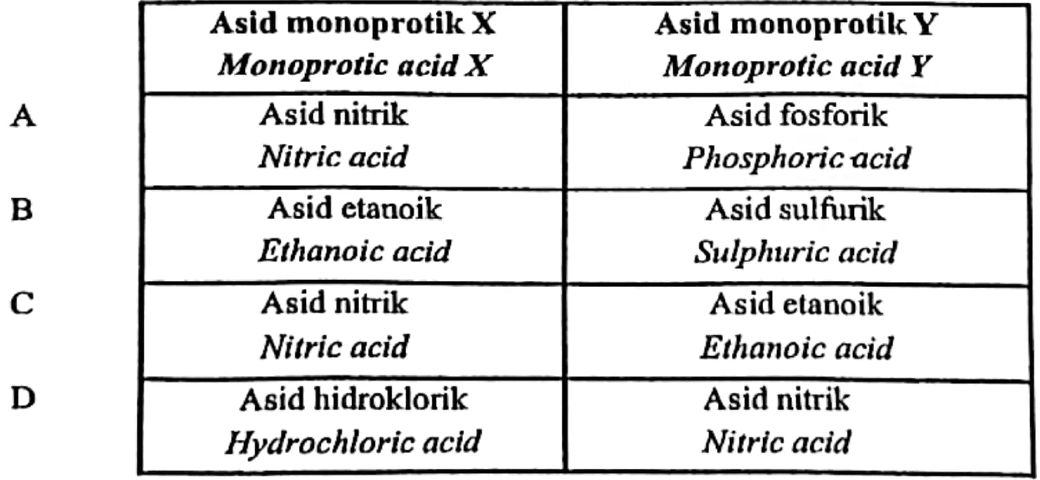
Table 4 shows the heat of neutralisation for the reaction between 25 cm3 of 1.0 mol dm-3 sodium hydroxide, NaOH with monoprotic acid X (−57.0 kJ mol-1) and monoprotic acid Y (−54.0 kJ mol-1). What is the monoprotic acid X and monoprotic acid Y?
Medium
Polymer X is a polymer that will decompose when heated and cannot be recycled. What is the type of polymer X?
Easy
Which is true about the size of nanoparticles?
Easy
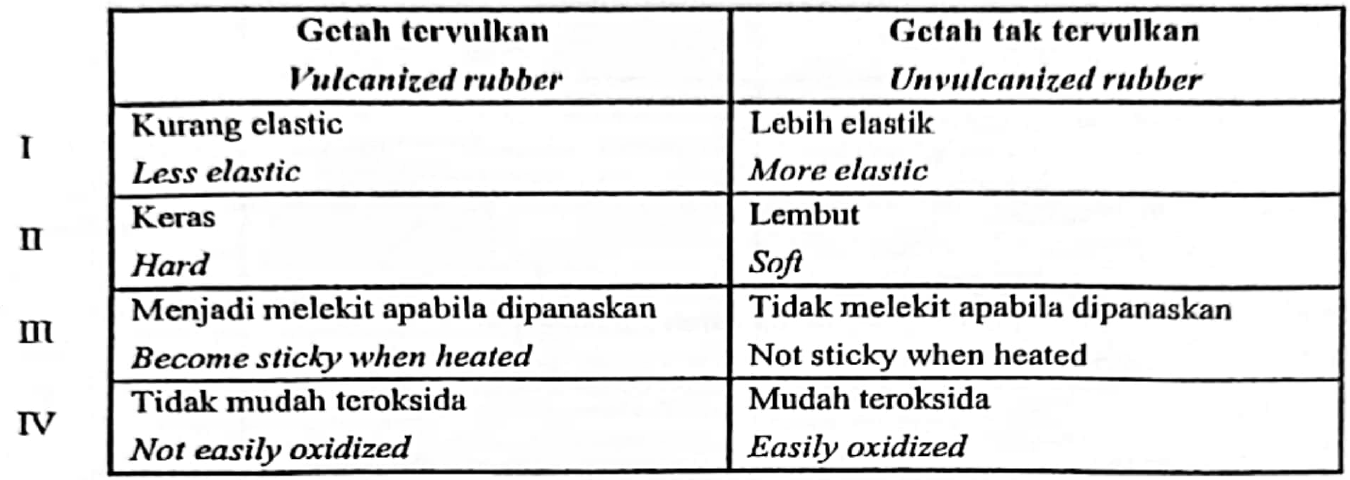
Which of the following are the correct properties for vulcanized rubber and unvulcanized rubber? I Vulcanised: less elastic / Unvulcanised: more elastic; II Hard / Soft; III Become sticky when heated / Not sticky when heated; IV Not easily oxidized / Easily oxidized
Medium
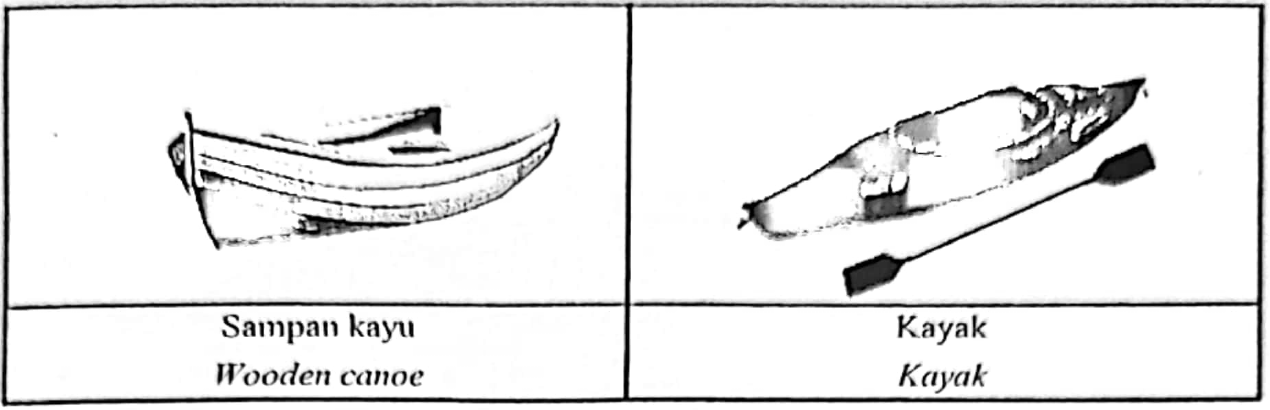
Diagram 9 shows wooden canoe and kayak. Which of the following statement describes the difference between the properties of a wooden canoe and a kayak?
Medium
Anti-aging and anti-wrinkle creams use nano liposome capsules to deliver proteins and nutrients to the skin. Which of the following explains how the action is carried out?
Medium
Paracetamol is an analgesic for headache. The chemical formula of paracetamol is C8H9NO2. What is the relative molecular mass of paracetamol? [Relative atomic mass: H = 1; C = 1; N = 14; O = 16]
Medium
When 9.2 g of ethanol burns completely in excess oxygen, carbon dioxide gas and water are produced. Calculate the mass of water vapour produced. [Relative atomic mass: H=1, C=12, O=16; Molar volume of gas = 24 dm3 mol-1 at room temperature]
Medium
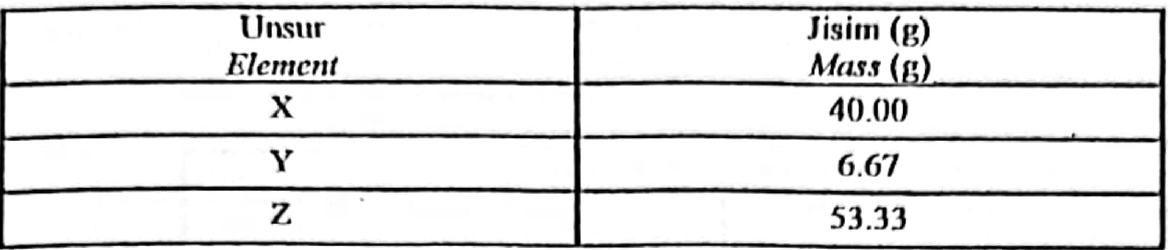
Table 5 shows the composition of acid P in apple cider vinegar: X 40.00 g; Y 6.67 g; Z 53.33 g. What is the molecular formula of acid P? [Relative atomic mass: X = 12, Y = 1, Z = 16; molecular mass of acid P = 60]
Medium
The following observations are obtained when M salt powder is heated: a colourless gas released which turns limewater chalky; the green powder turns black. What is salt M?
Medium
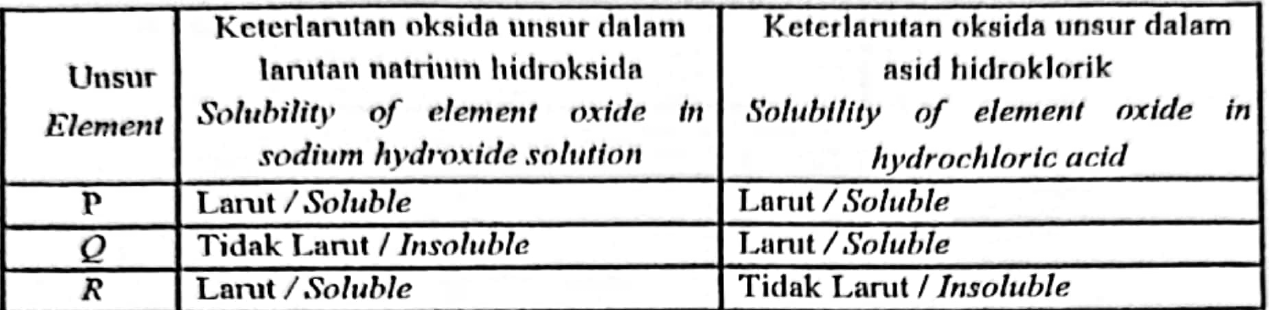
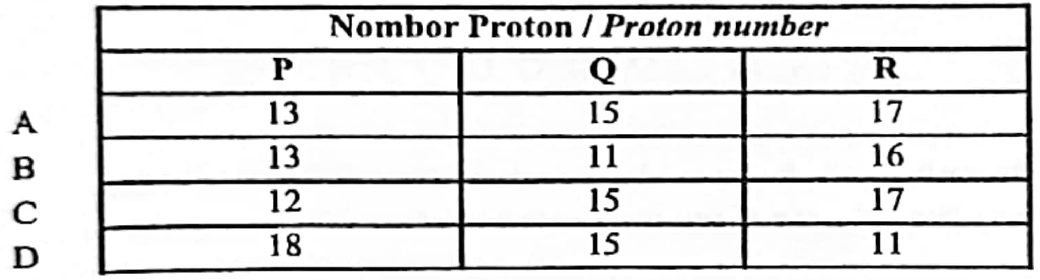
The properties of oxides of element across period 3 are shown in Table 6: P oxide soluble in NaOH and soluble in HCl; Q oxide insoluble in NaOH and soluble in HCl; R oxide soluble in NaOH and insoluble in HCl. What is the possible proton number of element P, Q and R? A 13, 15, 17; B 13, 11, 16; C 12, 15, 17; D 18, 15, 11
Medium
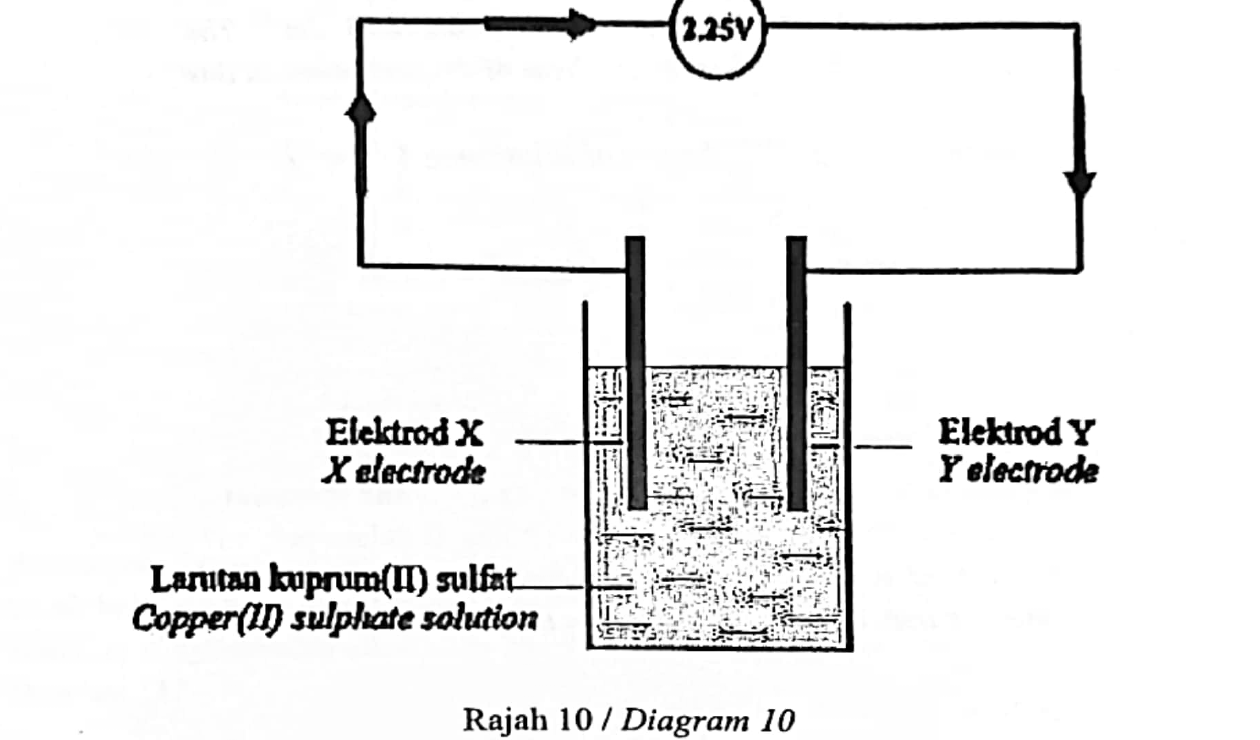
Diagram 10 shows a simple voltaic cell using metal P and metal Q as electrode (X electrode, Y electrode, copper(II) sulphate solution, voltmeter reading 2.25 V). Standard electrode potential: X2+ + 2e ⇌ X, E° = -2.38 V; Y2+ + 2e ⇌ Y, E° = p V; Cu2+ + 2e ⇌ Cu, E° = +0.34 V. What is the standard electrode potential value for metal Y?
Medium
Zinc powder in excess is added into 20.0 cm3 silver nitrate solution 0.1 mol dm-3. The temperature of the mixture increases 7.2 °C. Calculate the heat of displacement in this reaction. [Specific heat capacity of solution = 4.2 J g-1 °C-1, density of solution = 1 g cm-3]
Medium
Athletes use a pack which contains ammonium nitrate and water to treat muscle cramps. Which statement is true about the reaction in the pack?
Medium
The fuel value of charcoal is 34 kJ g-1. Calculate the mass of charcoal needed to boil 2.0 dm3 water. [Specific heat capacity of water = 4.2 J g-1 °C-1, density of water = 1 g cm-3, temperature of water at room condition = 27 °C]
Medium
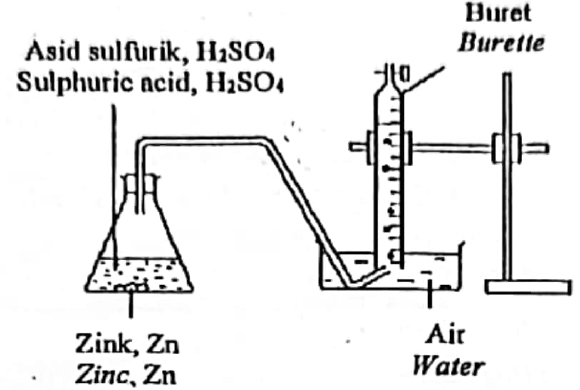
Diagram 11 shows the reaction between zinc and sulphuric acid to determine the rate of reaction (gas collected in an inverted burette over water). Which of the following change is most suitable to determine the rate of reaction in Diagram 11?
Medium
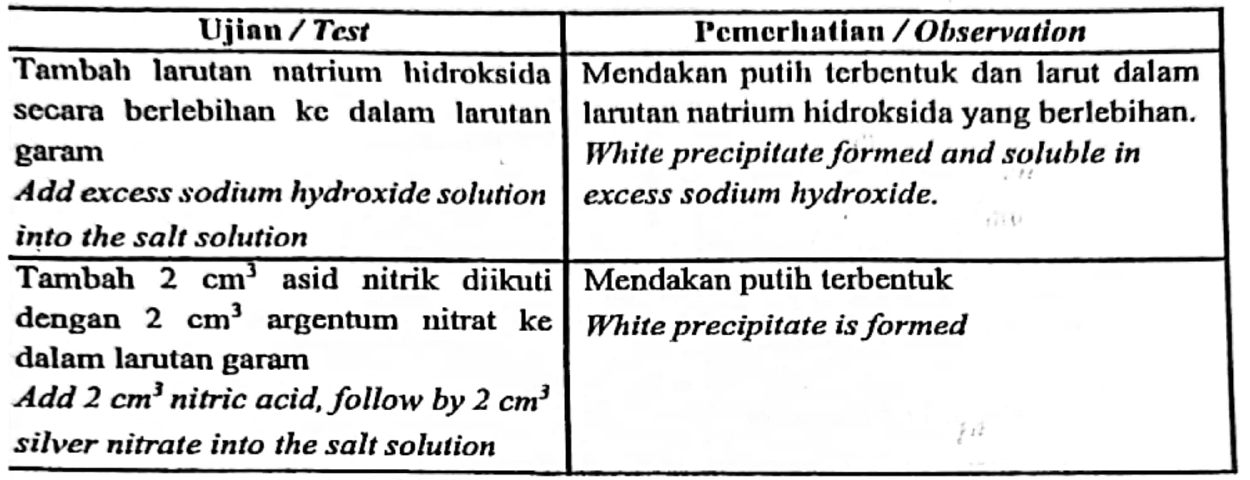
A series of tests are conducted to verify the ions present in a salt solution. Table 7: add excess sodium hydroxide solution - white precipitate formed and soluble in excess sodium hydroxide; add 2 cm3 nitric acid followed by 2 cm3 silver nitrate - white precipitate is formed. Which of the following is the salt solution?