Write your answer on paper. Then open the answer to check it.
Section A
The mass of an atom is very small and difficult to determine. Therefore, it can be determined by comparing it with a standard atom called relative atomic mass. In 1961, chemists across the world agreed to choose one isotope to be used as a reference.
Medium5 marks- (a)
State the meaning of relative atomic mass.
[1] - (b)(i)
State the name of isotope chosen as a reference to determine the mass of atom.
[1] - (b)(ii)
Give one reason why isotope in (b)(i) is chosen.
[1] - (c)(i)
Diagram 1 shows the comparison between atom X and reference atom (balance with atom X on one pan and one reference atom on the other). Based on Diagram 1, state the relative atomic mass for atom X.
[1]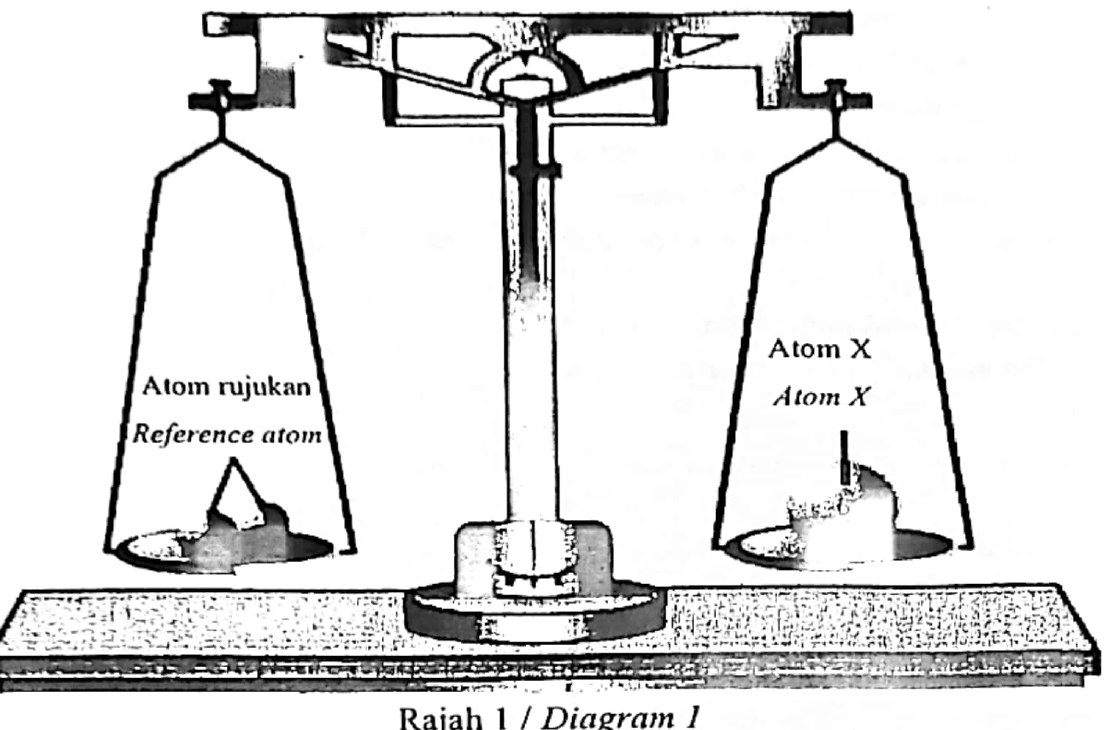
- (c)(ii)
State how many times one atom iron heavier compares with one atom nitrogen? [Relative atomic mass: N=14, Fe=56]
[1]
Ceramics are widely used in daily life such as in medicine, transportation, energy production and pottery. Diagram 2 shows the example of two type of ceramic: ceramic X (disc-like components on rods) and ceramic Y (pottery).
Medium5 marks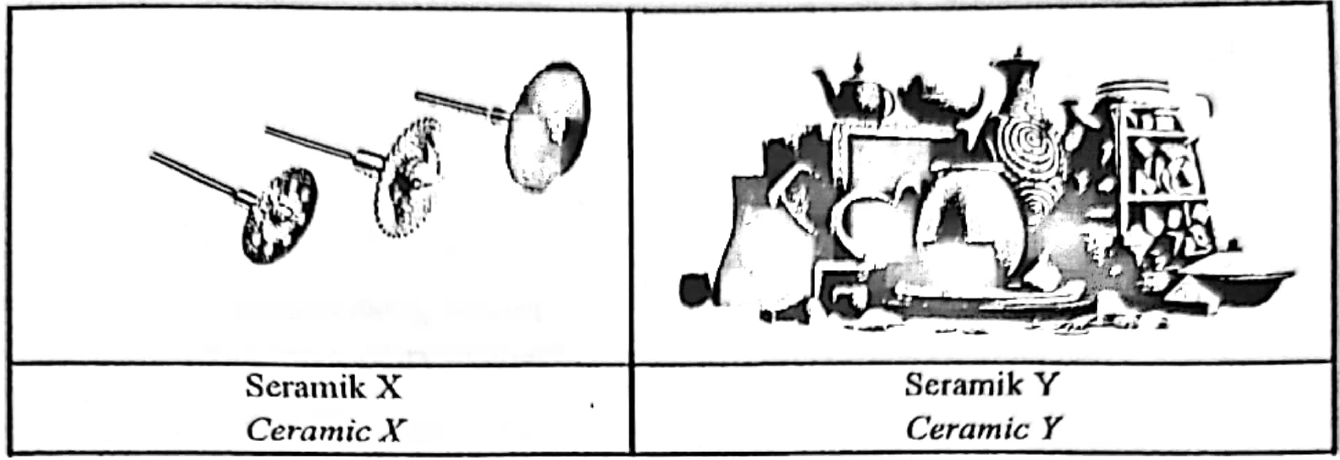
- (a)
State the meaning of ceramic.
[1] - (b)
State two basic properties of ceramics.
[2] - (c)
Identify type of ceramic X and ceramic Y.
[2]
Diagram 3 shows two products made of rubber: a natural rubber product (rubber bands) and a synthetic rubber product (a tyre).
Medium6 marks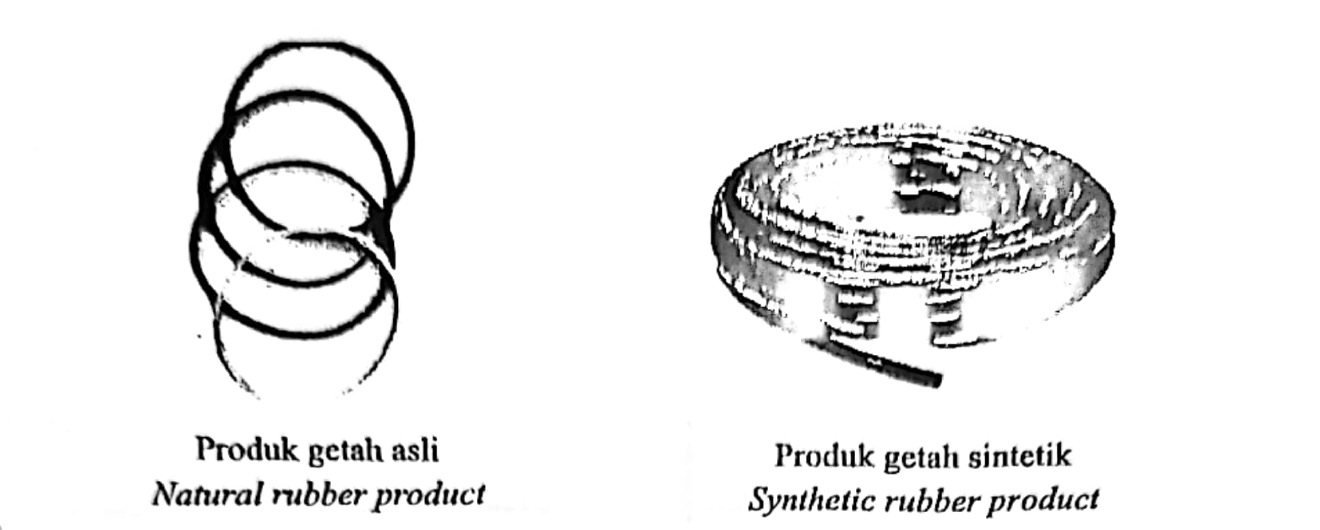
- (a)
State the meaning of synthetic rubber.
[1] - (b)
Give another one product made from synthetic rubber.
[1] - (c)
State two differences between natural rubber and synthetic rubber.
[2] - (d)
Unsustainable use of rubber will result in pollution to environment. Synthetic rubber especially takes a long time to decompose and makes the disposal process difficult. Suggest creative and innovative solutions to reduce the problem of disposing of synthetic rubber.
[2]
Diagram 4.1 shows the heating curve for solid X, C10H8 (temperature against time; A rising to B at 80 °C, constant from B to C, then rising to D).
Medium7 marks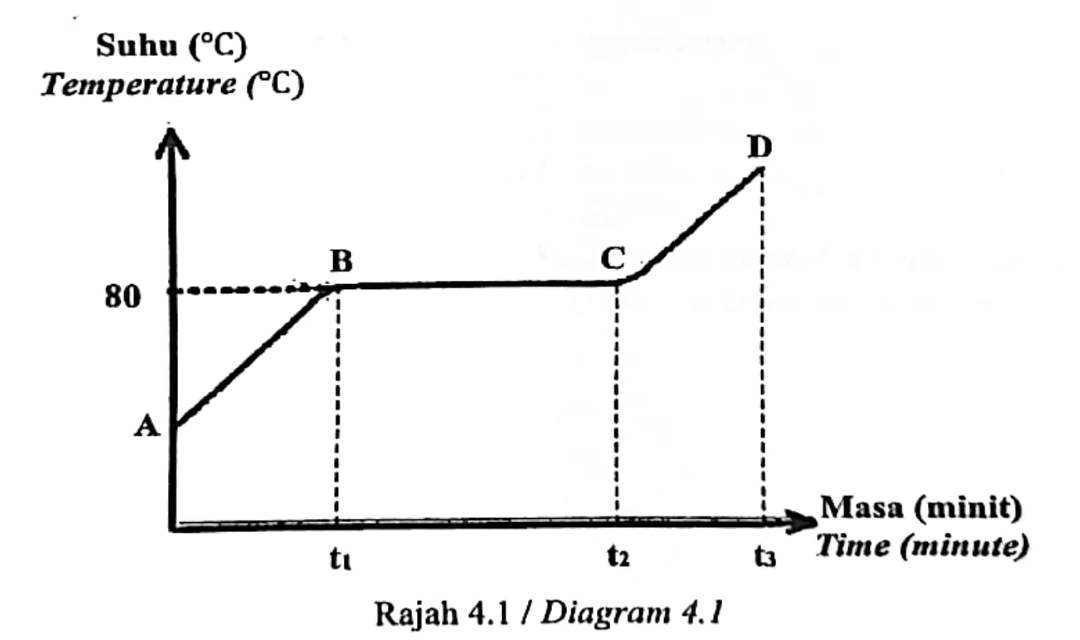
- (a)
State the meaning of melting point.
[1] - (b)
State type of particles of solid X.
[1] - (c)
From point B to point C on the heating curve, the temperature remains constant. Explain.
[2] - (d)
Liquid X is cooled until room temperature. Sketch the graph temperature against time for cooling process of liquid X and label the freezing point on the graph.
[3]
Table 5 shows the molecular formula of three members of a homologous series: P C2H4; Q C3H6; R C4H8.
Medium8 marks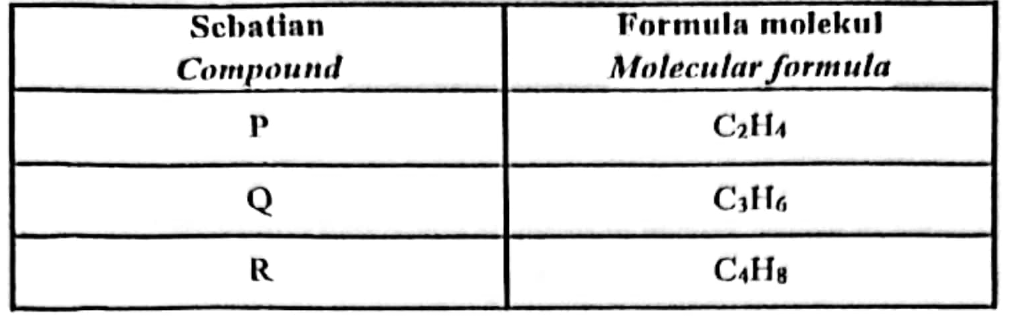
- (a)(i)
State the meaning of homologous series.
[1] - (a)(ii)
State one characteristic of the homologous series.
[1] - (b)
Draw the structural formula for molecule Q and circle the functional group.
[2] - (c)(i)
The equation below shows the combustion reaction of ethene: Ethene + O2 → Gas V + Compound W. Ethene is burnt in excess oxygen to produce gas V and compound W. Calculate the percentage of carbon by mass per molecule of ethene.
[2] - (c)(ii)
Name a reagent that can be used to test gas V in the reaction and state the observation.
[2]
(a) Rapid development of the world of entrepreneurship has caused various beauty products in the market until it is out of control. Diagram 6.1 shows 10 harmful ingredients to avoid in makeup and skincare products (parabens, artificial fragrance/parfum, sodium lauryl sulfate, toluene, phthalates, polyethylene glycol (PEG), formaldehyde, oxybenzone, diethanolamine). (b) Diagram 6.2 shows three types of modern medicine: paracetamol, streptomycin, amphetamine. (c) Table 6 shows information of three different food additives P, Q and R.
Medium9 marks- (a)(i)
Parabens are widely used as preservatives. What is the function of preservatives in cosmetic products?
[1] - (a)(ii)
State the effect of using cosmetics that contain harmful chemicals to consumer.
[1]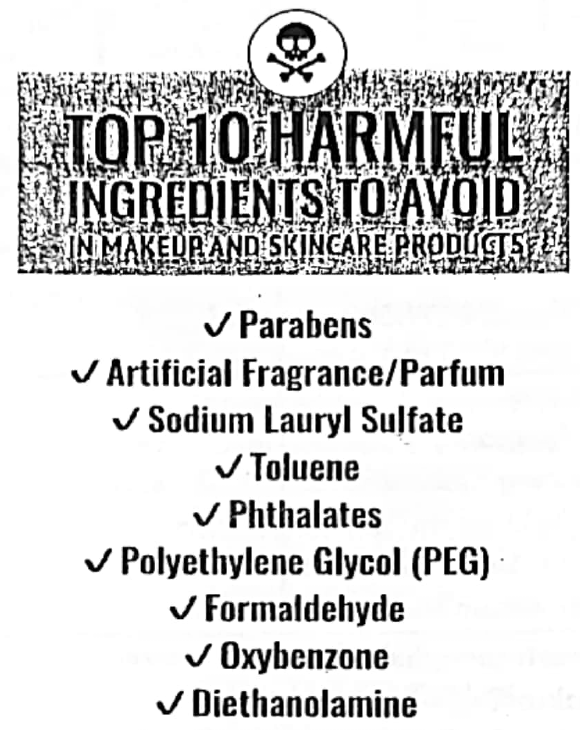
- (b)(i)
Based on Diagram 6.2, state the analgesic medicine.
[1]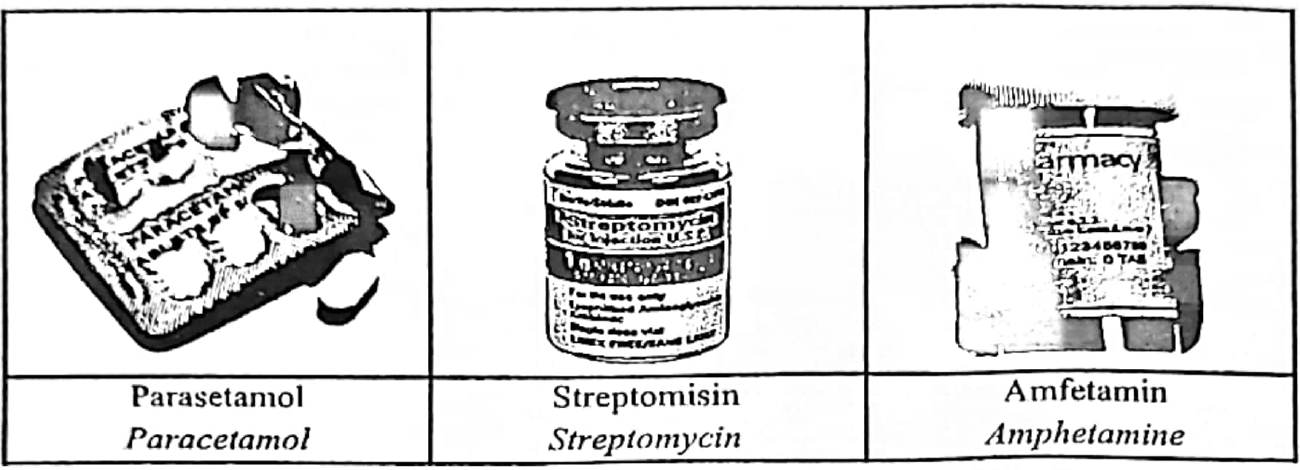
- (b)(ii)
Why the patient has to finish all streptomycin that prescribed by doctor?
[2] - (c)(i)
Table 6 shows information of three different food additives, P, Q and R (P: flavouring added to a low-calorie soft drink to sweeten it and for consumption of diabetic patient; Q: pectin, added in jelly and jam to get a thicker texture; R: vinegar, added to pickled chilli to provide an acidic condition and slow down or inhibit the growth of microorganisms). Suggest the name for food additives for P, Q and R.
[3]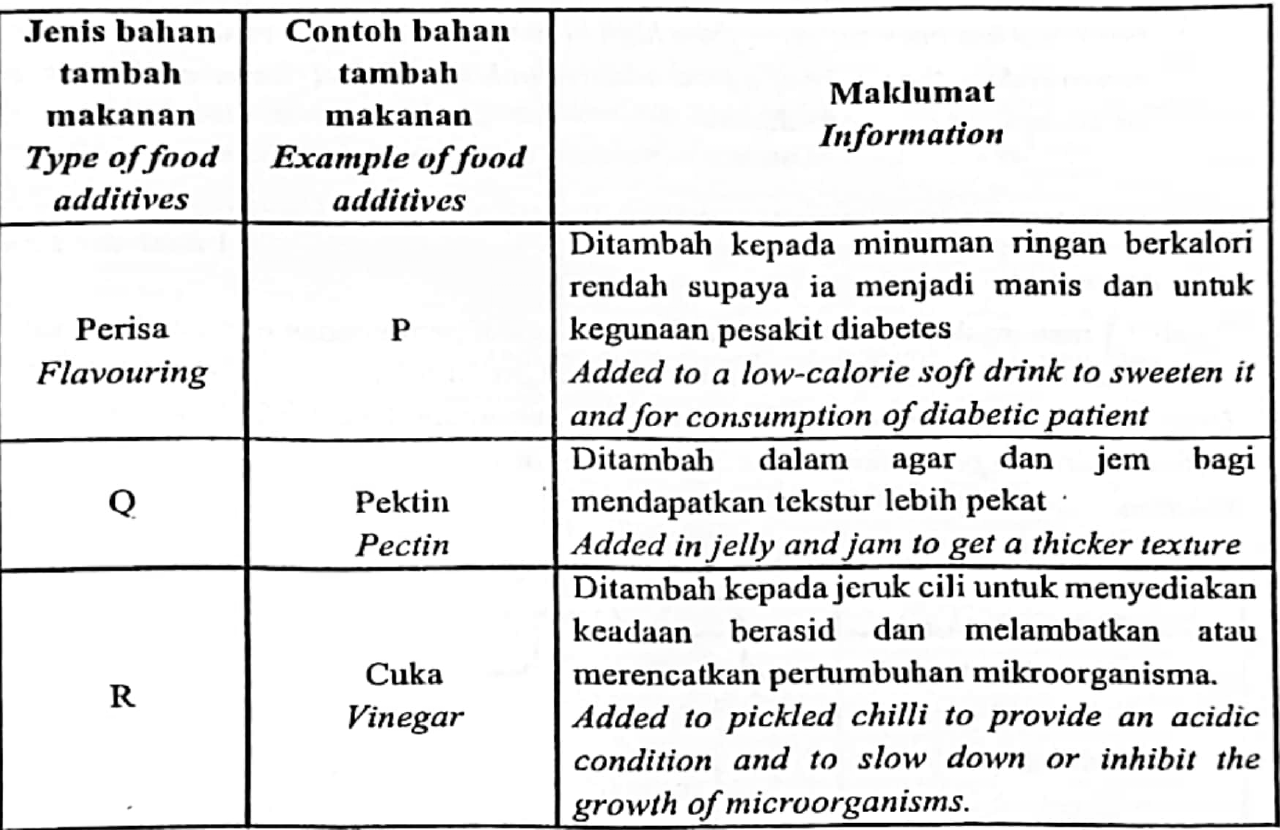
- (c)(ii)
Pak Usop has been suffering from high blood pressure for 10 years. Doctor advised him to reduce the intake of a food additive in his daily diet. Based on Table 6, state an example of the food additive.
[1]
(a) Diagram 7.1 shows the set up of apparatus to investigate the transfer of electrons at a distance between potassium iodide solution (electrode X) and acidified potassium dichromate(VI) solution (electrode Y), with dilute sulphuric acid in the U-tube. (b) Table 7 shows the observations for experiments to study the effect of other metals on the rusting of iron nail. (c) Diagram 7.2 shows two different types of iron fence.
Medium10 marks- (a)(i)
State the function of dilute sulphuric acid.
[1]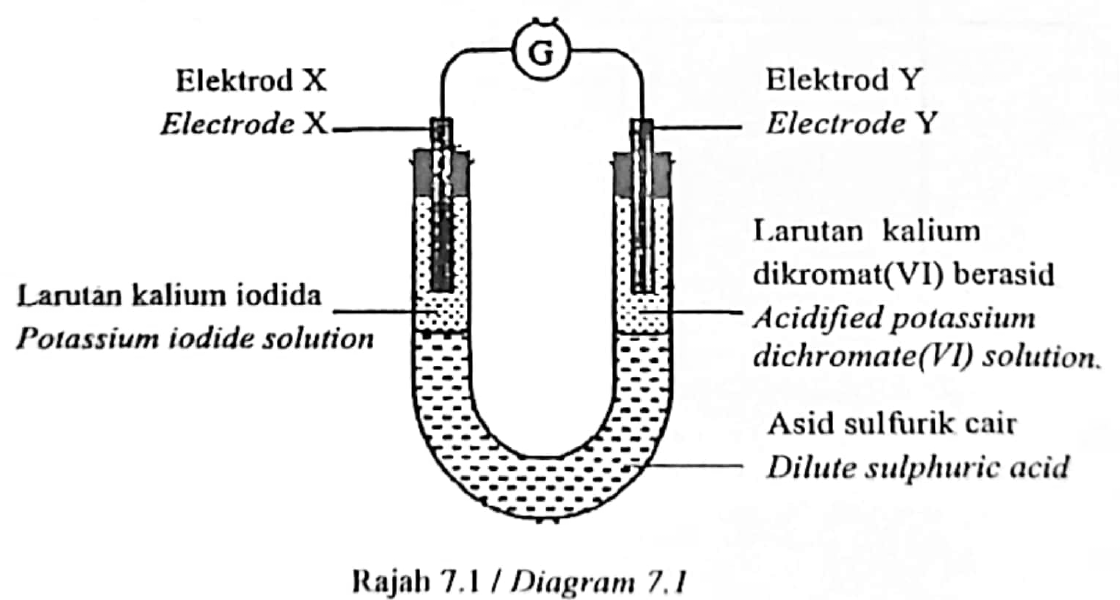
- (a)(ii)
State one observation that occurs to the reaction at electrode Y.
[1] - (a)(iii)
Write the half-equation at electrode X.
[2] - (a)(iv)
What is the change of oxidation number for iodine in the reaction?
[1] - (b)(i)
Table 7: Set I: iron nail coiled with metal P + agar-agar + potassium hexacyanoferrate(III) solution gives dark blue spot; Set II: iron nail coiled with metal Q + agar-agar + potassium hexacyanoferrate(III) solution gives no change. Identify metal P.
[1]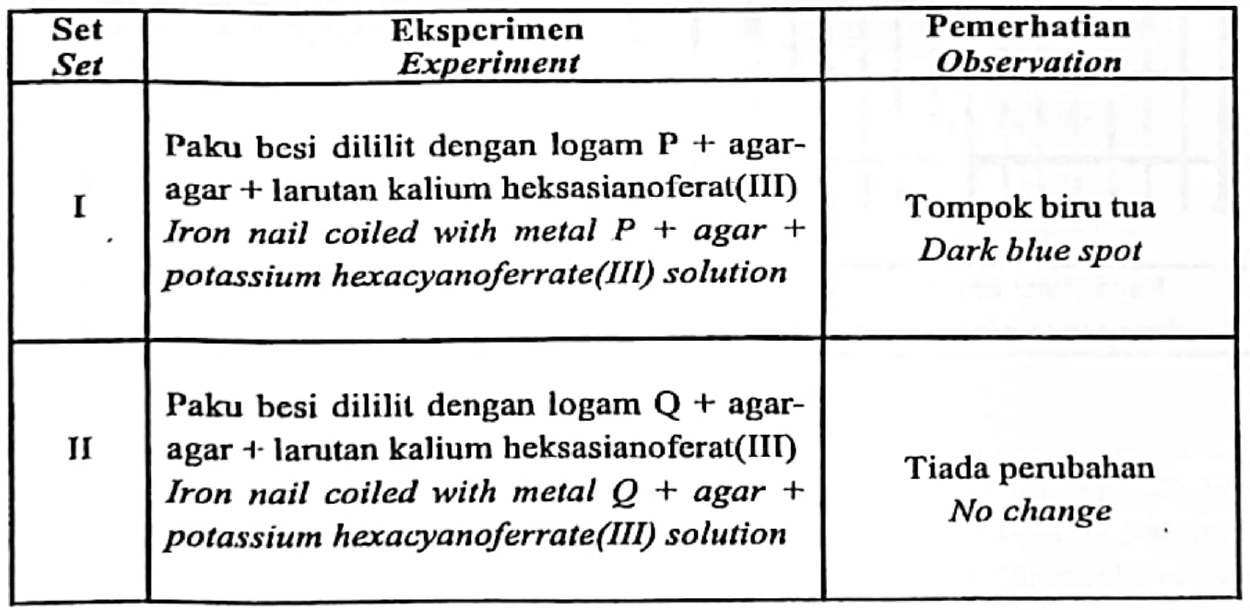
- (b)(ii)
Explain the observation for Set I.
[2] - (c)
Mr. Zahid wants to put up a fence for his house at the seaside. He wanted a fence that could last longer. Mr. Zahid has chosen an iron fence that plated with zinc. Justify the choice of Mr. Zahid.
[2]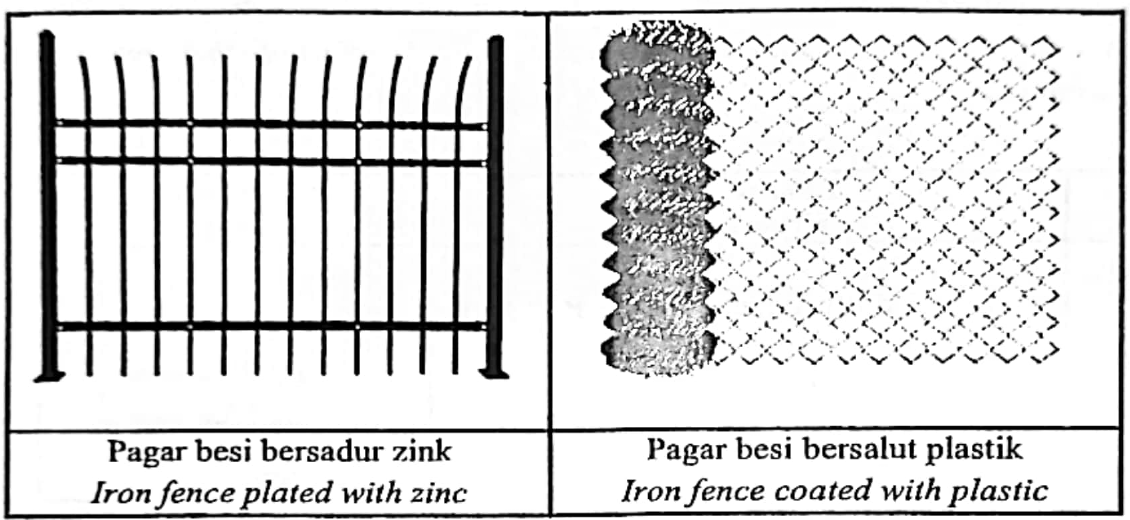
(a) Diagram 8.1 shows the energy level for the precipitation reaction of silver chloride: Ag+(aq) + Cl−(aq) → AgCl(s), ΔH = −67.2 kJ mol-1. (b) Table 8 shows the temperature change when silver nitrate solution reacts with different chloride solution. (c) Ahmad's friend Raju sprained his ankle (Diagram 8.2); Ahmad used a cold pack to treat the injury.
Medium10 marks- (a)(i)
Based on Diagram 8.1, calculate the heat released when 14.35 g of silver chloride is formed? [Mr of AgCl = 143.5]
[2]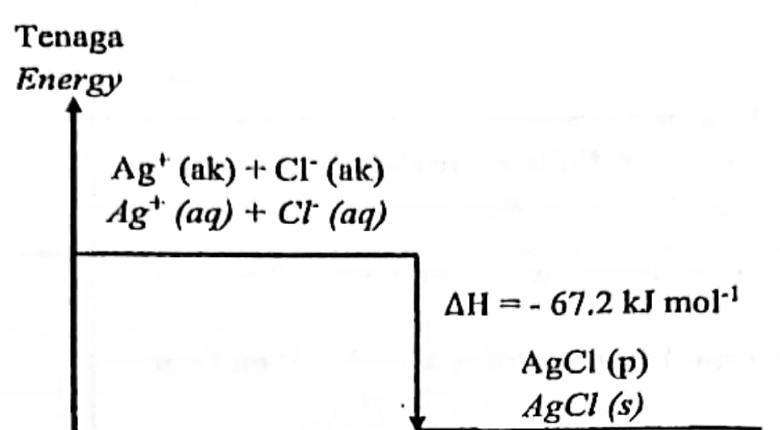
- (a)(ii)
State the type of reaction that occurred.
[1] - (a)(iii)
Compare energy change during bond breaking and bond formation in the reaction.
[1] - (b)
Table 8: Experiment I: 50 cm3 of 1.0 mol dm-3 silver nitrate solution + 50 cm3 of 1.0 mol dm-3 sodium chloride solution, temperature change 5 °C; Experiment II: 50 cm3 of 1.0 mol dm-3 silver nitrate solution + 50 cm3 of 1.0 mol dm-3 potassium chloride solution, temperature change y °C. Predict the value of y in Experiment II. Explain your answer.
[3]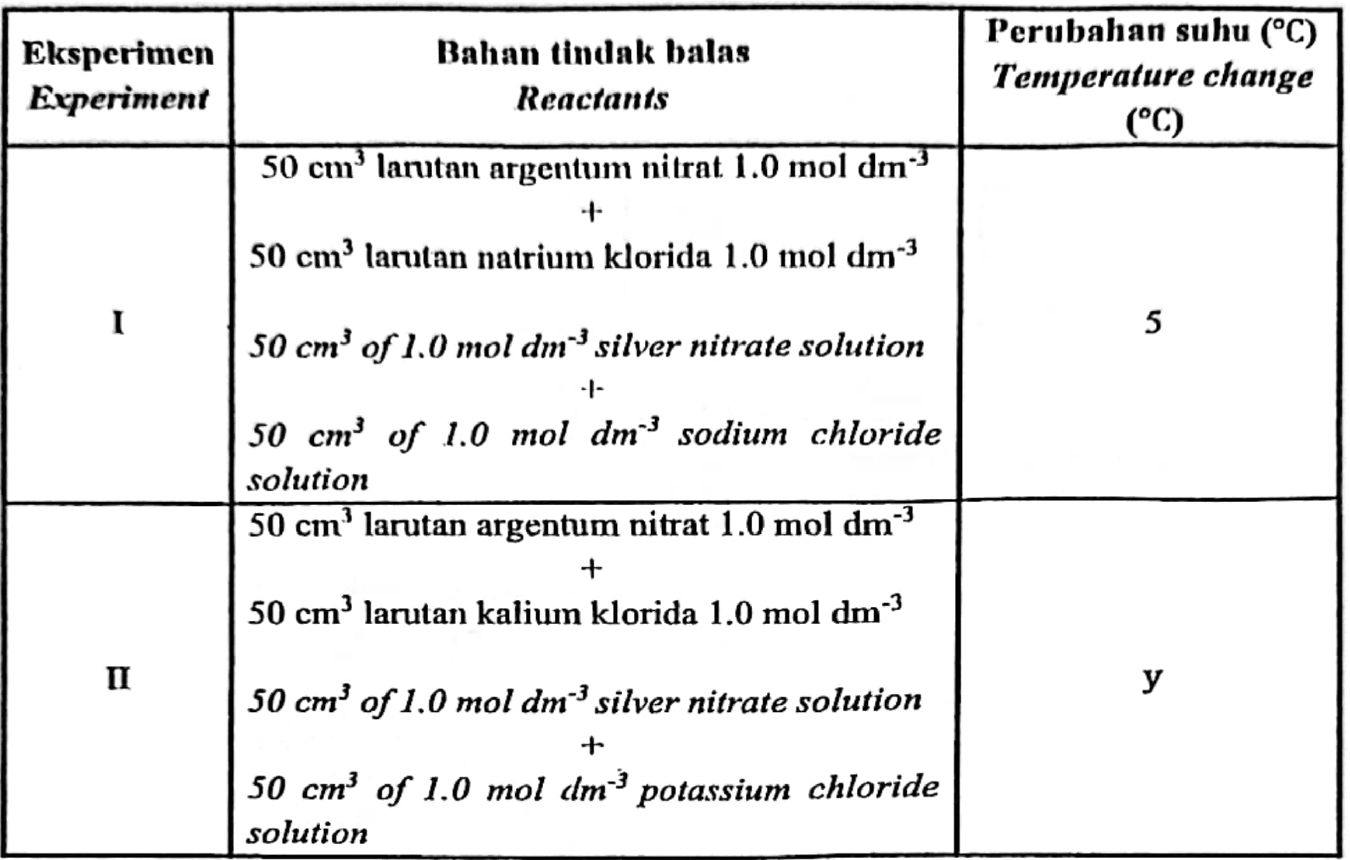
- (c)
During the school sports day, Ahmad's friend Raju was injured and sprained his ankle. Raju was taken to the Malaysian Red Crescent Society (MRCS) tent to receive treatment. As a cadet on duty, Ahmad used a cold pack to treat Raju's injuries. Is Ahmad's action reasonable? Explain.
[3]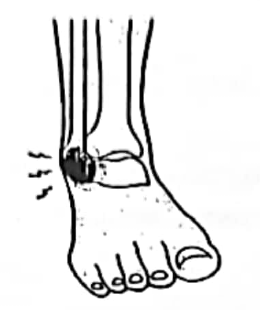
Section B
Diagram 9 shows standard representation of chlorine atom: 35/17 Cl. Answer any one of Section B questions.
Medium20 marks- (a)(i)
State the physical state of chlorine at room condition.
[1]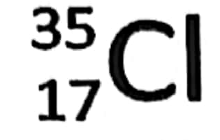
- (a)(ii)
Identify the position of chlorine atom in the Periodic Table of Elements.
[1] - (a)(iii)
Draw the electron arrangement of chlorine that exists as diatomic molecule.
[2] - (a)(iv)
The reaction between sodium and chlorine forms a compound with high melting point. Determine the mass of the compound formed when 2.3 g sodium reacts with excess chlorine. [Relative atomic mass: Na = 23, Cl = 35.5]
[6] - (b)
Table 9.1 shows information on metal Q and metal R (Q reacts with chlorine to form a white solid, QCl; R reacts with chlorine to form a green solid, RCl2 or brown solid, RCl3). Based on Table 9.1, identify the transition element and give a reason for your answer.
[2]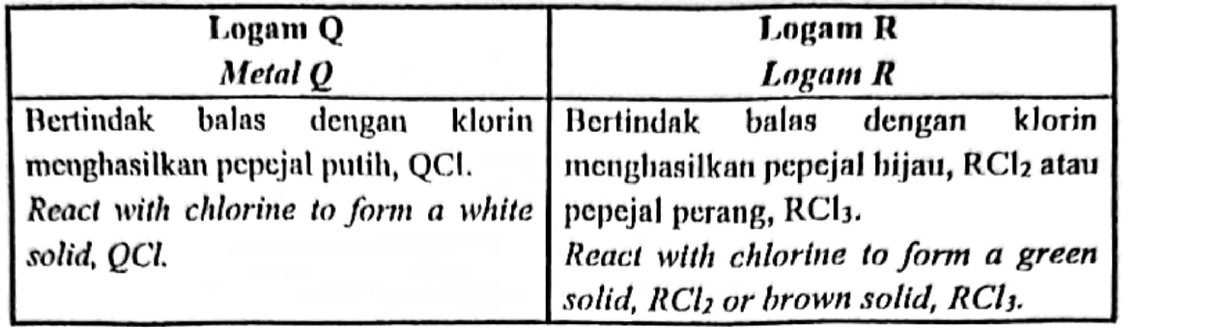
- (c)
Table 9.2 shows the results when three oxides of elements in Period 3 are added to sodium hydroxide solution and nitric acid (oxide of X: reaction with NaOH, reaction with HNO3; oxide of Y: no reaction with NaOH, reaction with HNO3; oxide of Z: reaction with NaOH, no reaction with HNO3). Based on Table 9.2, arrange X, Y and Z in order of their increasing atomic size. State the type of oxide of X, oxide of Y and oxide of Z. Then state the solubility of each oxide in water. Choose an oxide compound that dissolved in water and produces an alkaline solution.
[8]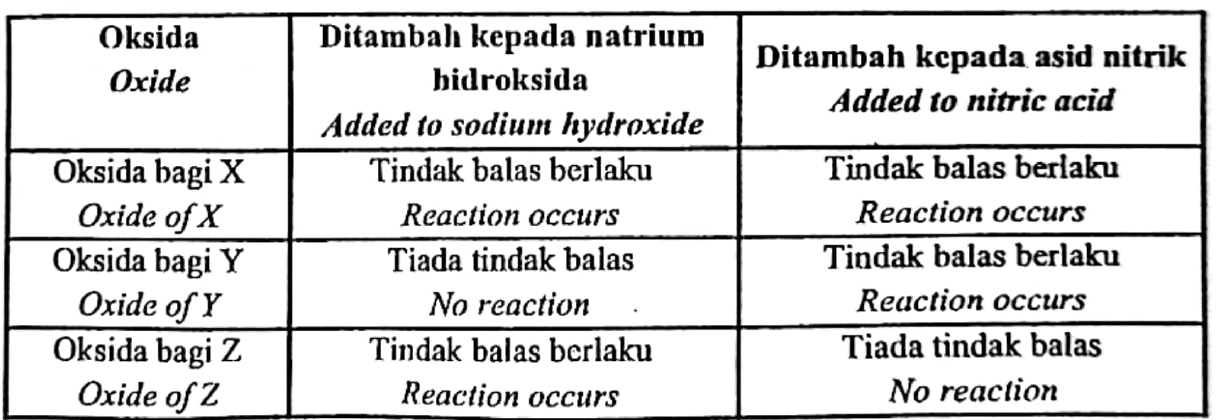
(a) Fatimah wants to prepare a 1.0 mol dm-3 sodium hydroxide solution using a 500 cm3 conical flask. This solution is known as the standard solution. Diagram 10.1 shows the apparatus set-up used. (b) The standard solution in Diagram 10.1 is used to determine the concentration of a sample of sulphuric acid by titration method (Diagram 10.2). (c) Table 10 shows the information about four solutions; P, Q, R and S.
Hard20 marks- (a)(i)
What is meant by a standard solution? State why conical flasks are used in the preparation of standard solution.
[2]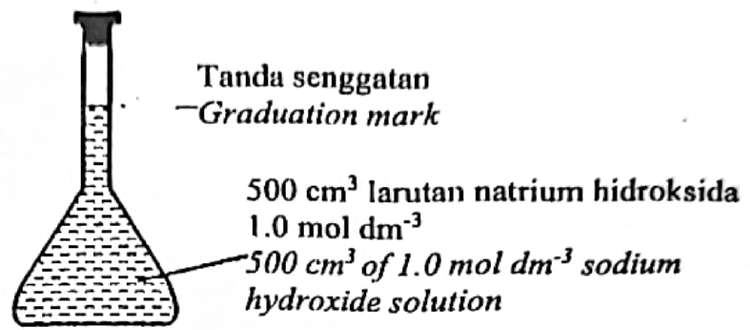
- (a)(ii)
To prepare the standard solution in Diagram 10.1, Fatimah has added X g of solid sodium hydroxide into a 500 cm3 volumetric flask. Then, distilled water is added until graduation mark is reached. Calculate the value of X. [Molar mass of sodium hydroxide = 40 g mol-1]
[2] - (b)
Complete neutralisation of 50.0 cm3 of 1.0 mol dm-3 sodium hydroxide solution required 25.0 cm3 of the sulphuric acid. Write the chemical equation for the reaction that occurs. Calculate the concentration of the sulphuric acid in mol dm-3 and g dm-3. [Relative atomic mass: H=1, S=32, O=16]
[6]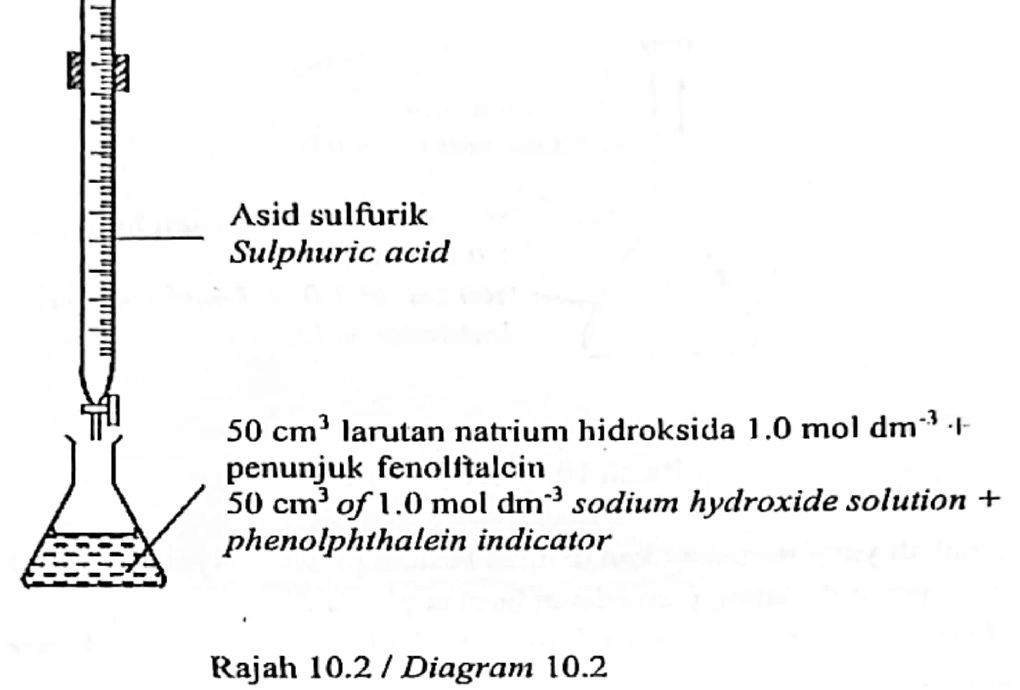
- (c)(i)
Based on Table 10, state a suitable example of a solution P, Q, R and S. (P: pH 2, degree of ionisation 100%; Q: pH 6, degree of ionisation less than 100%; R: pH 13, degree of ionisation 100%; S: pH 8, degree of ionisation less than 100%. P and Q react with R and S to produce salt and water.)
[4]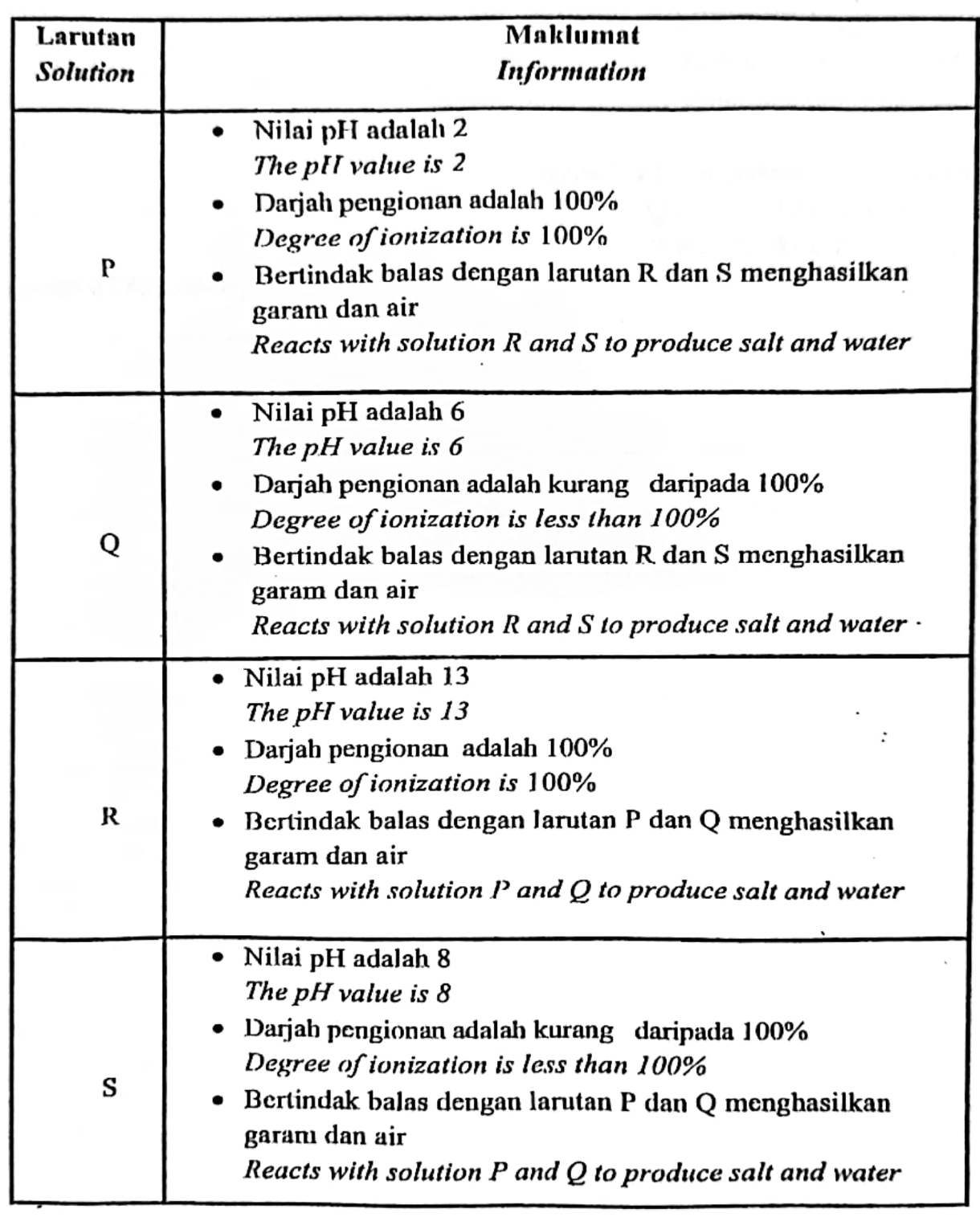
- (c)(ii)
Explain the difference in pH value for solution P and solution Q; solution R and solution S.
[6]
Section C
(a) Al-Farabi students carried out experiment to determine the rate of reaction. Table 11 shows the reactants used in Experiment I and Experiment II. Acid X is a strong diprotic acid. Experiment I: 100 cm3 of 1.0 mol dm-3 acid X and aluminium powder at 40.0 °C; Experiment II: 50 cm3 of 1.0 mol dm-3 acid X and aluminium powder at 30.0 °C. (b) Diagram 11 shows conversation between Din and Lee when carrying out an experiment between a strong acid and zinc metal.
Hard20 marks- (a)(i)
State the meaning of rate of reaction.
[1]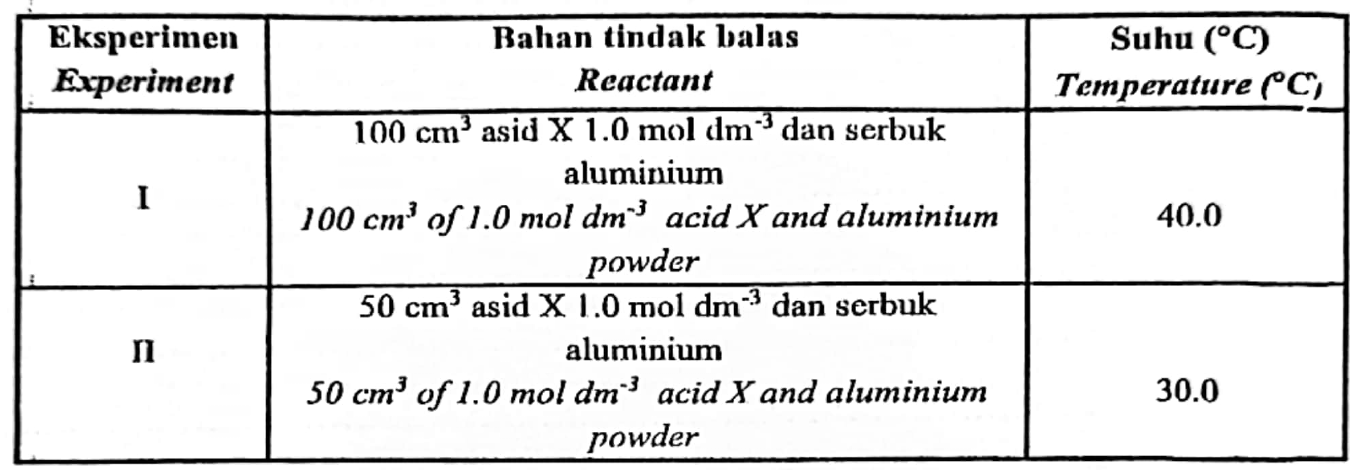
- (a)(ii)
State the factor that affect the rate of reaction above.
[1] - (a)(iii)
Suggest an acid X. Write the chemical equation for the reaction in Experiment II. Calculate the maximum volume of gas released. [Molar volume at room condition is 24 dm3 mol-1]
[6] - (a)(iv)
Compare the rate of reaction between Experiment I and Experiment II. Explain your answer based on collision theory.
[4] - (b)
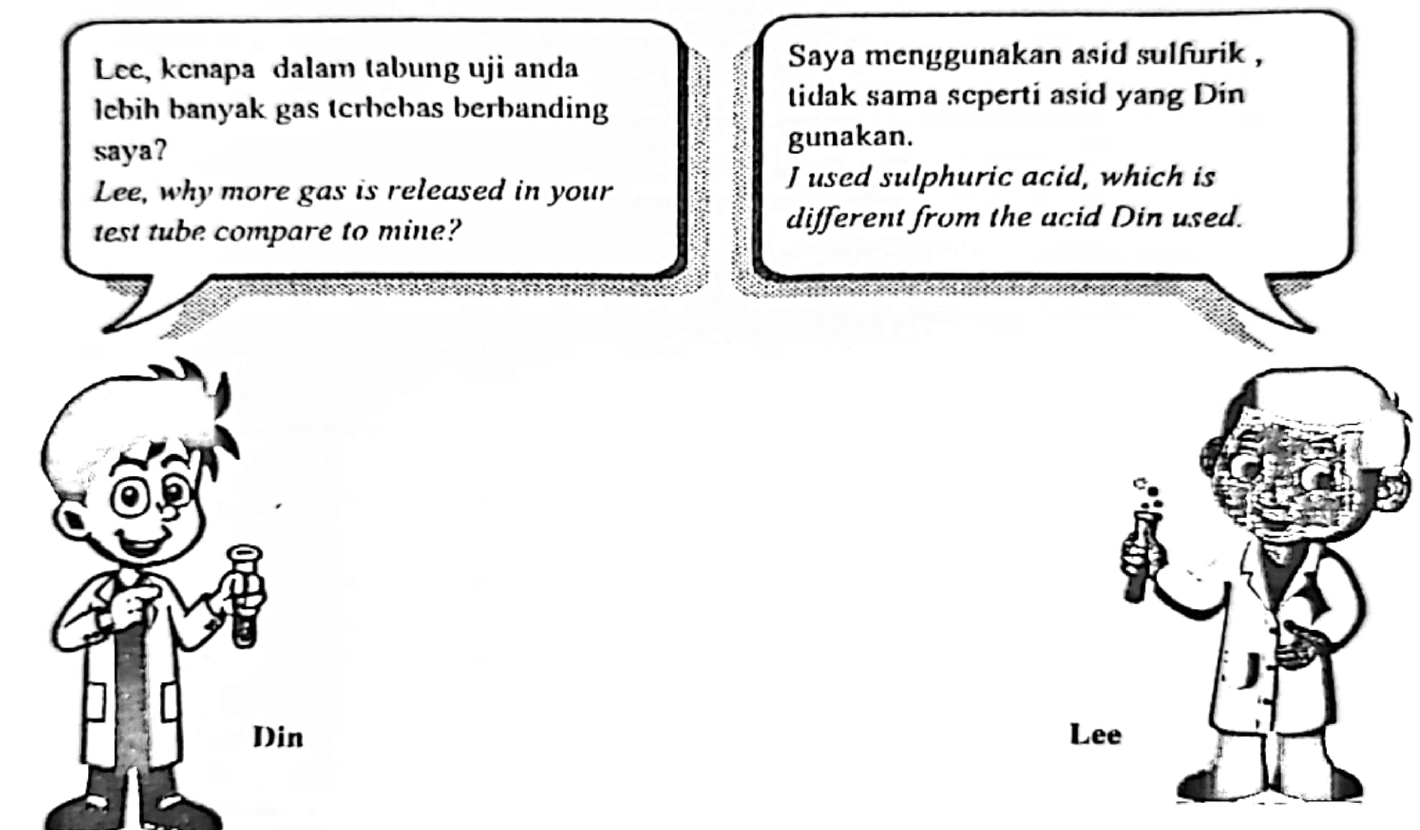
Based on Diagram 11 (Din asks why more gas is released in Lee's test tube; Lee replies he used sulphuric acid, which is different from the acid Din used), state the name of acid used by Din and describe an experiment to study a factor that affect the rate of reaction above.
[8]