Which of the following particles in ammonia solution is responsible for its alkaline properties?
Easy
What is the meaning of fuel value?
Easy
Which of the following is a slow reaction?
Easy
The vertical columns in the Periodic Table of Elements are named as
Easy
What type of glass is used to make a bulb?
Easy
Which additive in detergent is used to change stain to colourless substance?
Easy
The following statement describes the subatomic particle Q. The relative charge is neutral. The relative mass is 1. Located in the atomic nucleus. What is Q?
Easy
Table shows the content of transition elements in gems. Which one shows the correct match of the transition element? (A: Ruby - Chromium; B: Sapphire - Manganese; C: Amethyst - Titanium; D: Emerald - Silicone)
Easy
What type of chemical bond is formed through the transfer of electrons between metal atoms and non-metal atoms?
Easy
Which of the following is true about the chemical properties of alkalis?
Easy
What is meant by composite material?
Easy
Which of the following is an alternative hydrocarbon energy source?
Easy
Which of the following represent an endothermic reaction?
Easy
Which of the following polymers is a natural polymer? I Starch, II Protein, III Cellulose, IV Thiokol
Medium
What is the process of converting unsaturated fats to saturated fats?
Easy
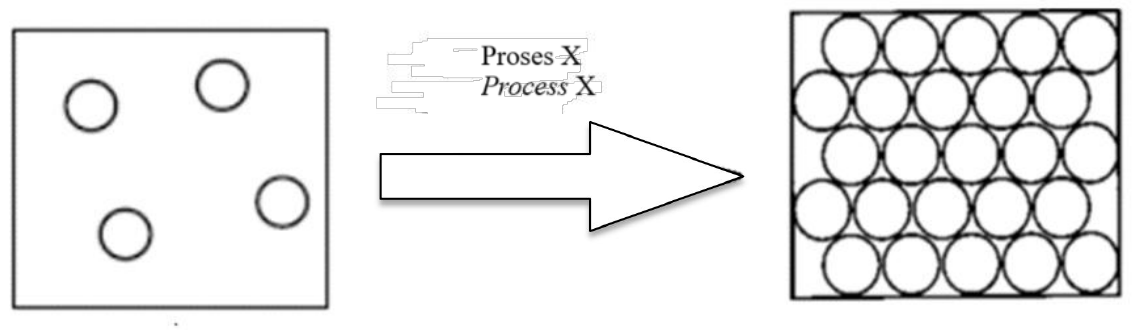
Diagram 1 shows the particle arrangement for the change of state of matter (widely spaced particles in gas state changing to closely packed regular arrangement in solid state). Which of the following is Process X?
Easy
The chemical formula of compound X is WBr2. What is the chemical formula of the compound formed when cation of X reacts with oxygen?
Medium
2Li + 2H2O → 2LiOH + H2. The chemical equation above represents the reaction between lithium metal and water. Which of the following observations may happen when lithium metal is replaced by potassium?
Medium
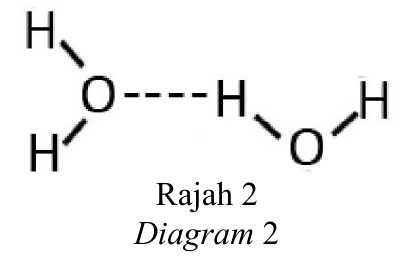
Diagram 2 shows the bond formed between water molecules (H-O···H-O-H, a hydrogen bond shown as dashed line). Which of the following has the same bond as Diagram 2?
Medium
Diagram 3 shows two solutions of the same concentration and their pH values: aqueous solution R pH 8 and aqueous solution S pH 13. The difference in the pH because
Medium
When the temperature of a reacting mixture increases, the rate of reaction increases. Which statements explain why the rate of reaction increases?
Medium
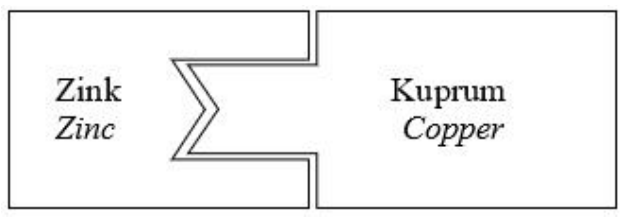
Diagram 4 shows the formation of alloy Y (zinc and copper blocks fitting together). Which of the following is a characteristic of the alloy formed?
Easy
There are three stable isotopes of silicon that exist in the environment namely Si-28, Si-29 and Si-30. The relative abundance of Si-28, Si-29 and Si-30 is 92.23%, 4.67% and 3.10% respectively. Calculate the relative atomic mass for silicon.
Medium
This is the oxidation half equation: 2I⁻(aq) → I₂(aq) + 2e⁻. Based on the equation, which statement is true?
Medium
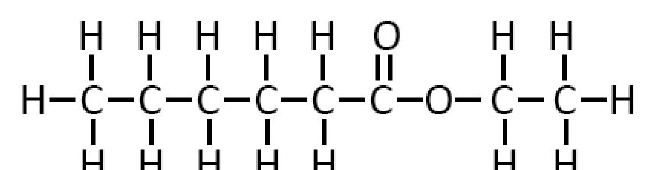
An organic compound Y has the structure as shown in Diagram 5 (an ester: a five-carbon alkyl chain attached to C(=O)-O-CH2CH3, i.e. ethyl hexanoate). Which pair of compounds will react to produce organic compound Y?
Medium
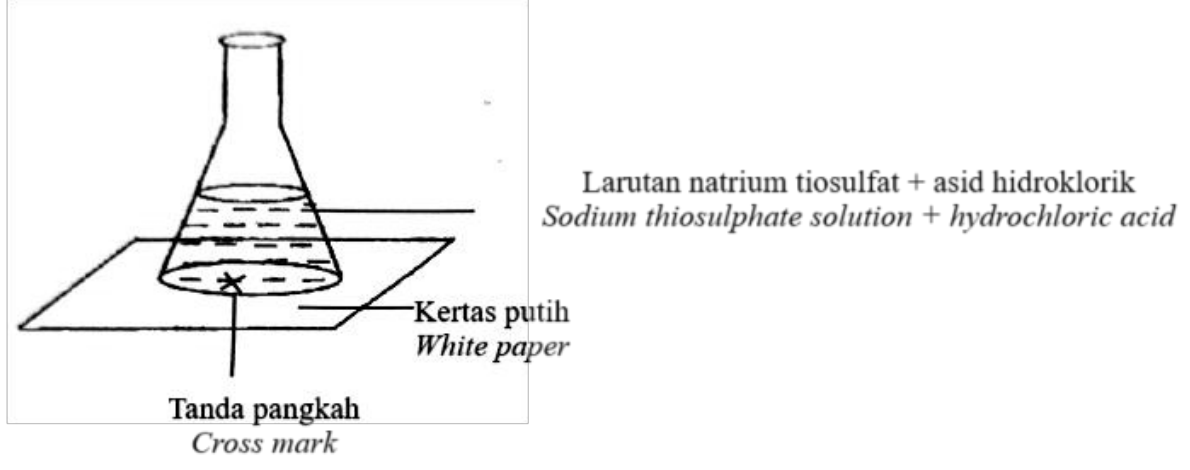
Diagram 6 shows the apparatus set-up for an experiment to determine the rate of reaction (sodium thiosulphate solution + hydrochloric acid in a conical flask on white paper with a cross mark). Which of the following techniques is the most suitable to determine the rate of reaction?
Medium
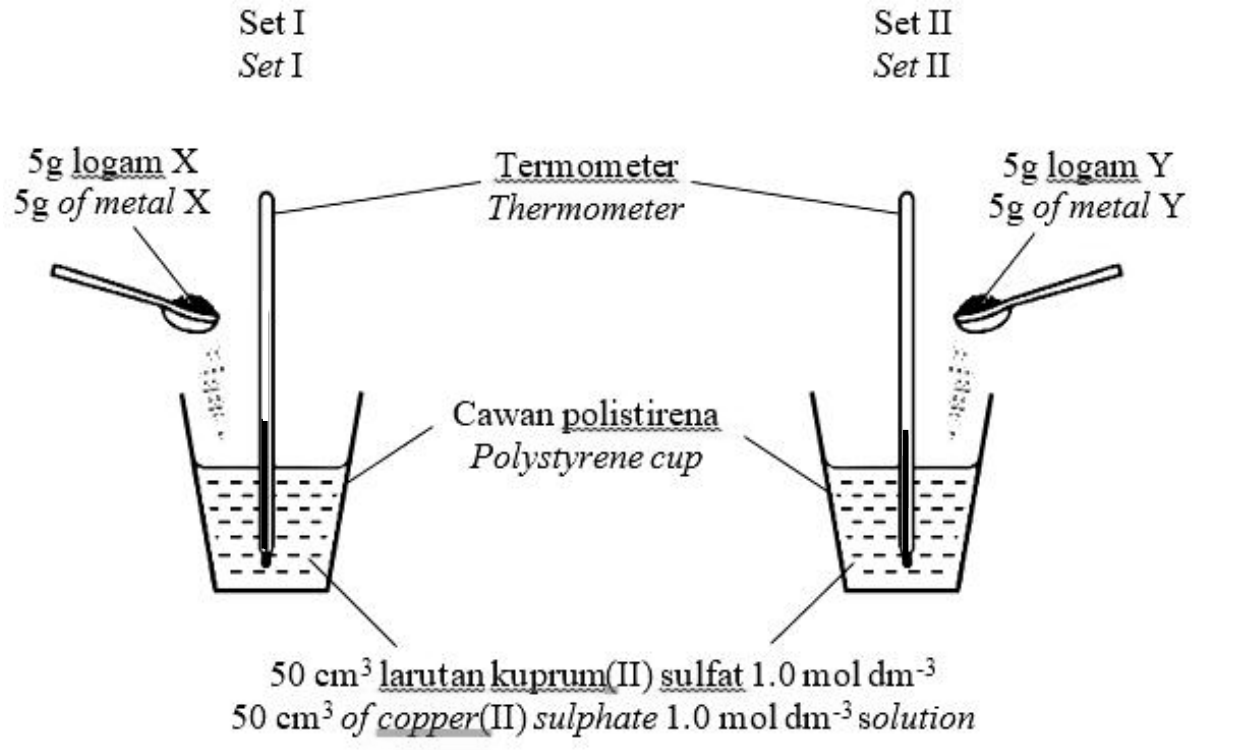
Diagram 7 shows two sets of experiments conducted by Farah to determine the heat of displacement: Set I - 5 g of metal X added to 50 cm³ of 1.0 mol dm⁻³ copper(II) sulphate solution; Set II - 5 g of metal Y added to 50 cm³ of 1.0 mol dm⁻³ copper(II) sulphate solution, each in a polystyrene cup with a thermometer. Farah found that the temperature of the mixture in set II is higher than in set I. What is the reason for the observation that was obtained?
Medium
Which pairs will produce covalent compounds? I Copper and chlorine, II Carbon and fluorine, III Hydrogen and chlorine, IV Magnesium and fluorine
Medium
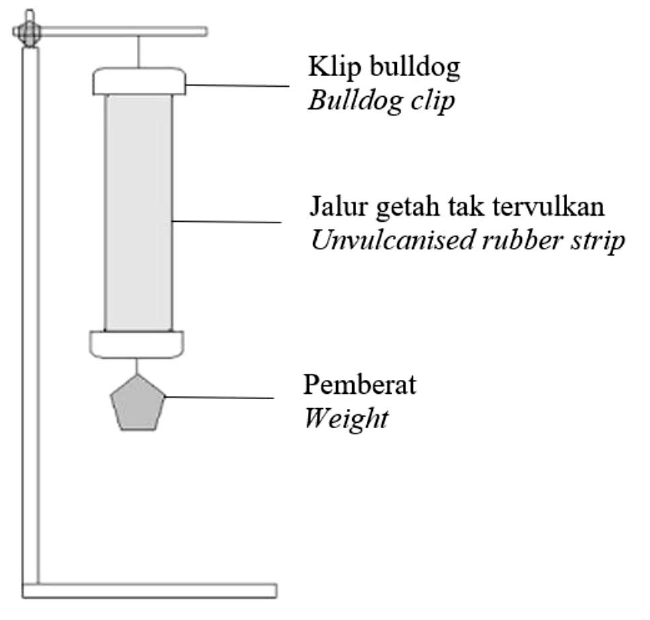
Diagram 8 shows the apparatus set-up for determine properties of rubber (an unvulcanised rubber strip held by a bulldog clip with a weight hung below). After a few minutes the weights are hung, the rubber strip is elongated. Which statement best explains the observation?
Medium
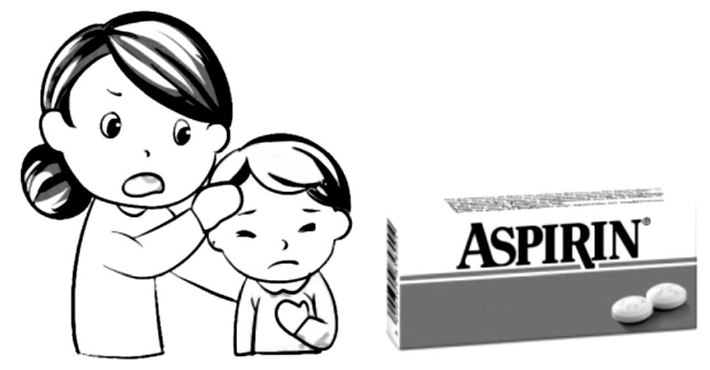
Diagram 9 shows a mother calms her 6-year-old son because he is in pain (an aspirin box is shown). Which of the following is suitable to replace aspirin?
Easy
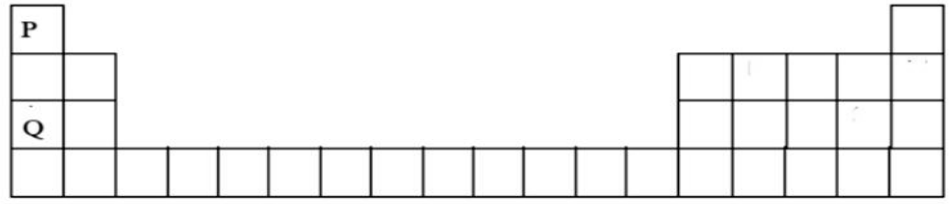
Diagram 10 shows the elements of P and Q in Periodic Table of Elements (P and Q in Group 1, Q lower down the group). Why is the atomic size of atom Q bigger than atom P?
Medium
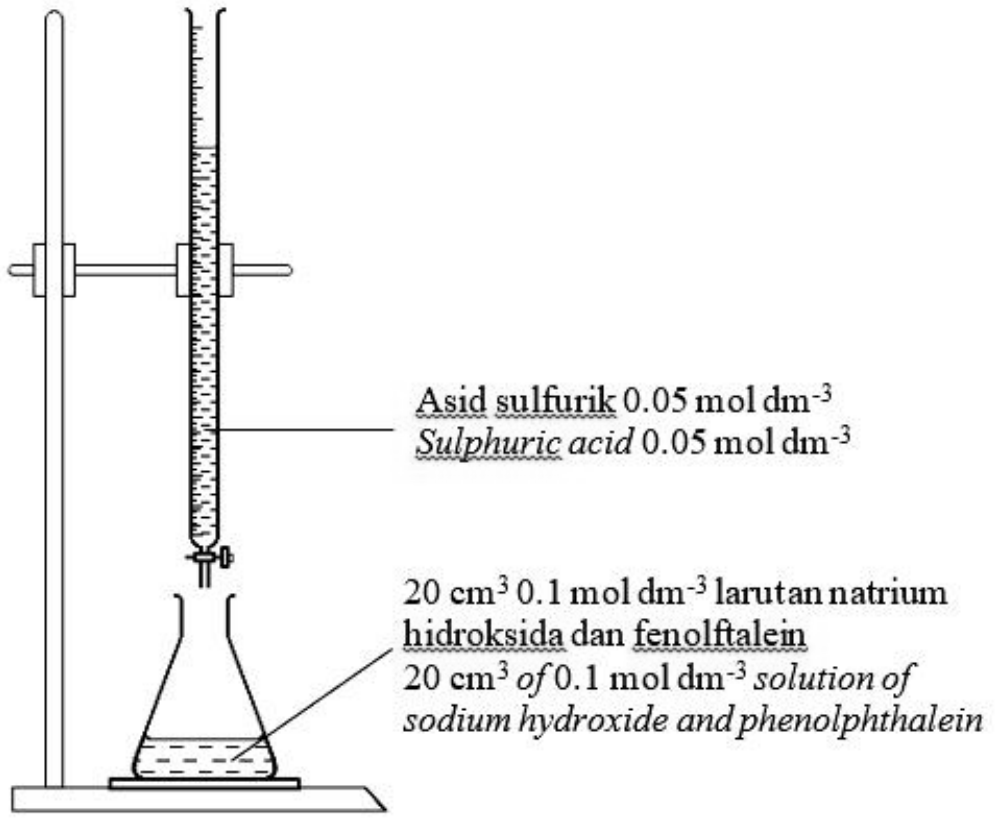
Diagram 11 shows the arrangement of the apparatus for the titration process of sodium hydroxide solution with sulfuric acid (burette: 0.05 mol dm⁻³ sulphuric acid; conical flask: 20 cm³ of 0.1 mol dm⁻³ sodium hydroxide and phenolphthalein). What is the volume of sulphuric acid needed to neutralise sodium hydroxide solution in the conical flask?
Medium
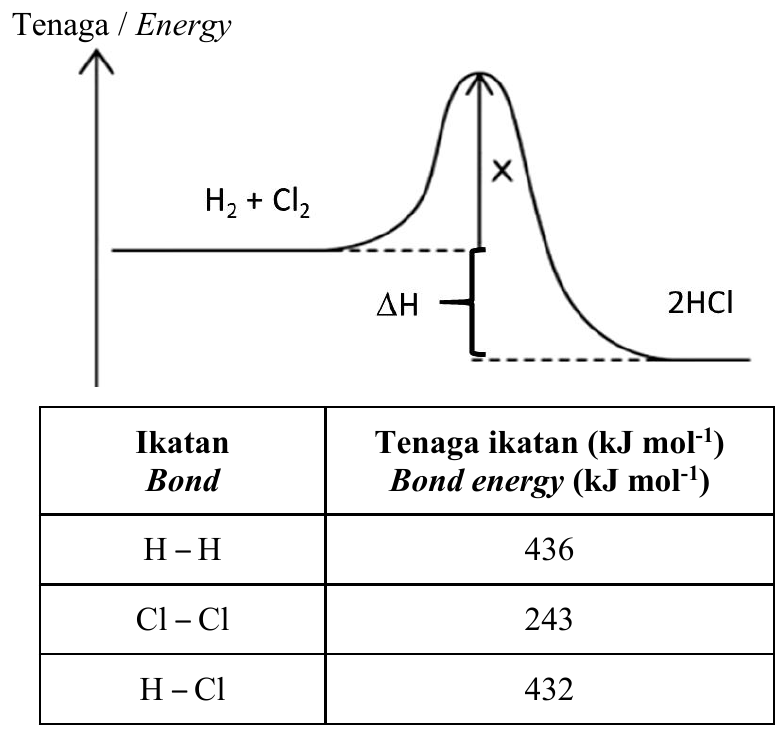
Diagram 12 shows energy profile of breaking of bond and formation of bond in exothermic reaction (H2 + Cl2 → 2HCl). Bond energies (kJ mol⁻¹): H-H 436; Cl-Cl 243; H-Cl 432. Determine heat of reaction formation of HCl based on Diagram 12.
Medium
The following equation represents the decomposition reaction of zinc nitrate which is imbalanced: Zn(NO3)2 → ZnO + NO2 + O2. What is the maximum volume of nitrogen dioxide gas released at standard temperature and pressure (STP) when 18.9 g of zinc nitrate was heated? [Relative formula mass: Zn(NO3)2 = 189 g mol⁻¹; Molar volume of gas at STP = 22.4 dm³ mol⁻¹]
Medium
When 15 g of carbon burns completely in air, the heat produced raises the temperature of 500 cm³ of water by 23.8 °C. What is the heat of combustion of carbon? [Relative atomic mass: C = 12; Specific heat capacity of water, c = 4.2 J g⁻¹ °C⁻¹; Density of water = 1 g cm⁻³]
Medium
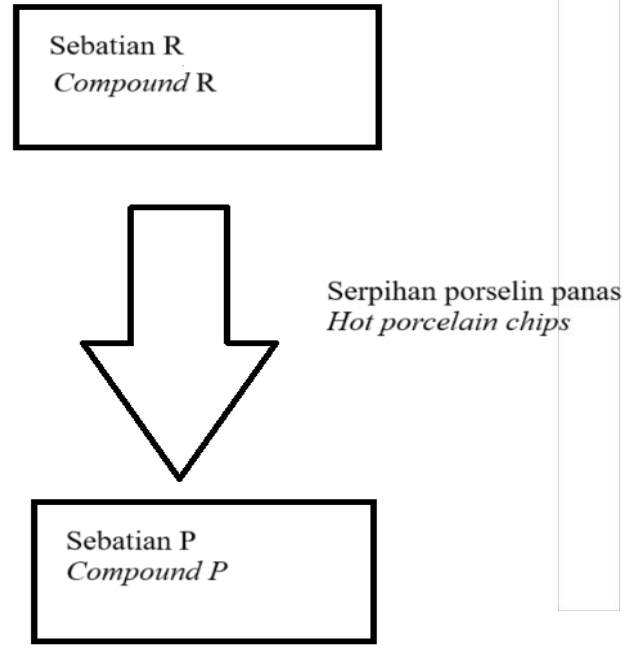
Diagram 13 shows reaction to produce compound P from compound R using hot porcelain chips. Chemical formula for compound R is C4H9OH. What is the percentage of carbon by mass in compound P? [Relative atomic mass: C = 12, H = 1, O = 16]
Medium
0.5 mol of J reacts with 24.0 g of oxygen to form J oxide. Which of the following formulas shows the empirical formula for J oxide? [Relative atomic mass: O = 16]
Medium
Diagram 14 shows cell notation for chemical cells: Zn(s) | Zn²⁺(aq) || Cu²⁺(aq) | Cu(s). If the experiment is conducted by using 100 cm³ of 0.5 mol dm⁻³ zinc nitrate solution and 100 cm³ of 0.5 mol dm⁻³ copper(II) sulphate solution, what is the maximum mass of solid deposited at cathode? [Relative atomic mass: Cu = 64, Zn = 65]
Medium
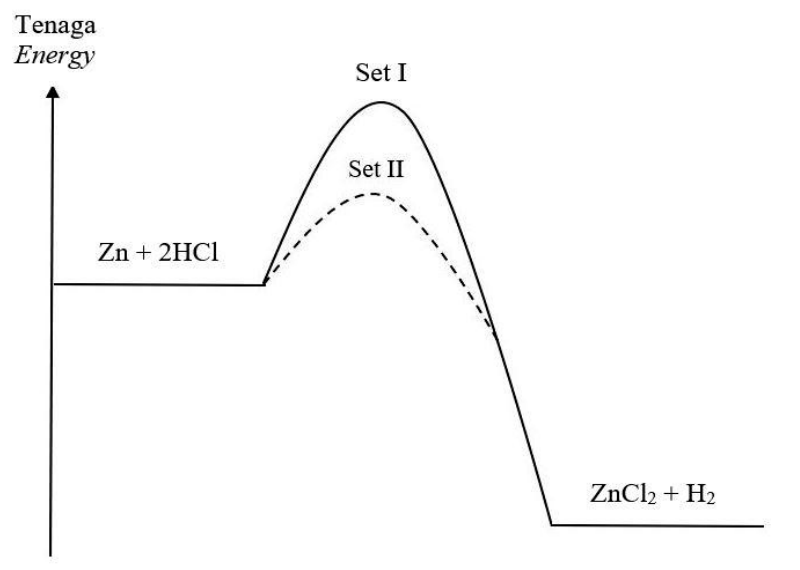
Diagram 15 shows an energy profile diagram obtained from two sets of experiments (Zn + 2HCl → ZnCl2 + H2; Set I has a higher activation energy curve, Set II a lower dashed curve; products are at lower energy than reactants). Which of the following statements are correct about Set I and Set II? A: Set I - reaction releases heat without catalyst; Set II - releases heat with catalyst. B: Set I - releases heat with catalyst; Set II - without catalyst. C: Set I - absorbs heat with catalyst; Set II - absorbs heat without catalyst. D: Set I - absorbs heat without catalyst; Set II - absorbs heat with catalyst.
Medium
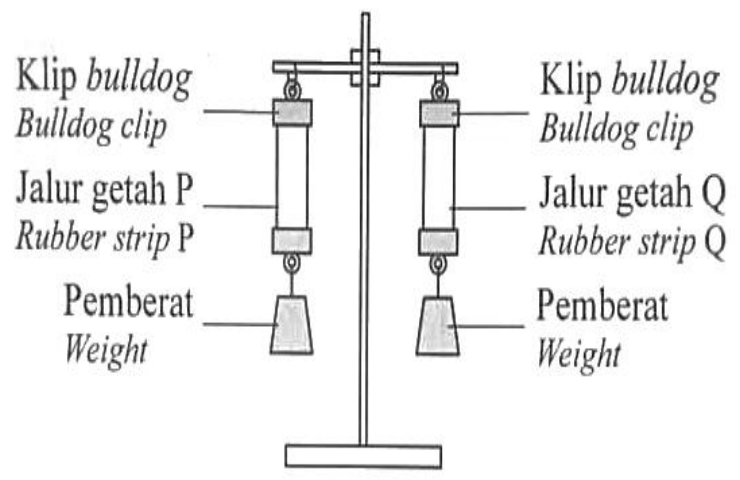
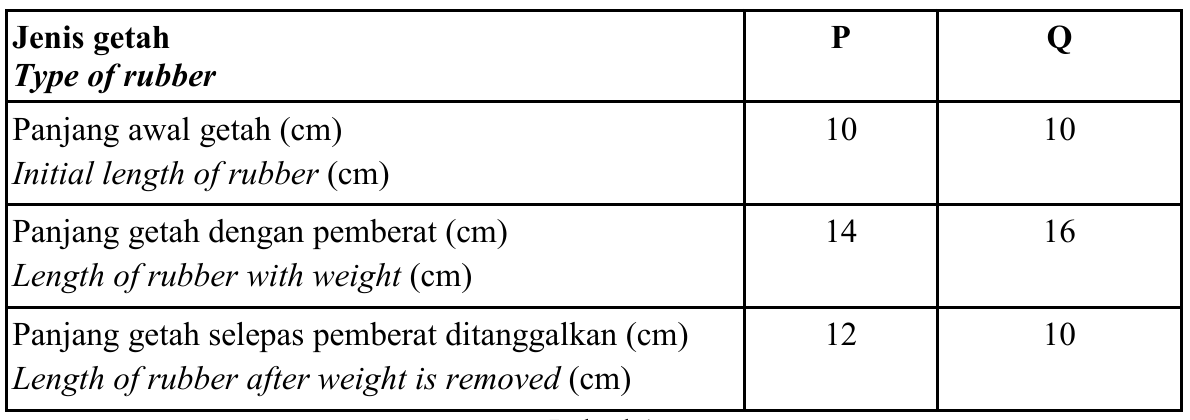
Diagram 16 shows the apparatus set up to study the elasticity of vulcanised rubber and unvulcanised rubber (rubber strips P and Q each with a weight). Table 1: Initial length of rubber (cm): P 10, Q 10. Length of rubber with weight (cm): P 14, Q 16. Length after weight is removed (cm): P 12, Q 10. Choose the correct statement about rubber P and rubber Q.