Write your answer on paper. Then open the answer to check it.
Section A
Diagram 1 shows the standard representation of elements X (nucleon number 23, proton number 11), Y (35.5, 17) and Z (39, 19).
Medium5 marks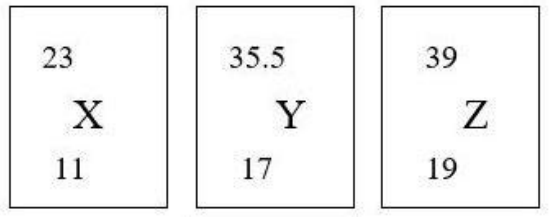
- (a)
What is the meaning of groups?
[1] - (b)
What is another name of Group 17?
[1] - (c)(i)
All elements X, Y and Z can react with water and form solutions with different pH values. When Z reacts with water, an alkaline hydroxide solution and a colourless gas are formed. Name the gas.
[1] - (c)(ii)
Which element will produce an acidic solution? Explain.
[2]
Diagram 2 shows two isomers for compound P: butan-1-ol (CH3CH2CH2CH2OH) and butan-2-ol (CH3CH2CH(OH)CH3).
Medium5 marks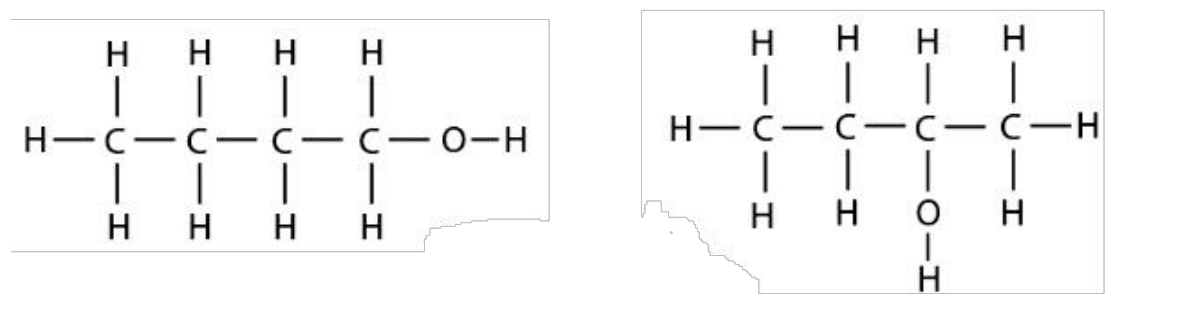
- (a)(i)
Based on Diagram 2, what is meant by isomer?
[1] - (a)(ii)
Compound P has four isomers. Draw another one structural formula for isomer compound P.
[1] - (a)(iii)
Based on your answer in 2(a)(ii), state the name of the isomer by using IUPAC nomenclature system.
[1] - (b)
State functional group for alcohol and its general formula.
[2]
Diagram 3 shows atomic structure for elements Q (3p, 4n), R (9p, 10n), S (11p, 12n) and T (20p, 20n) with electrons in shells.
Medium6 marks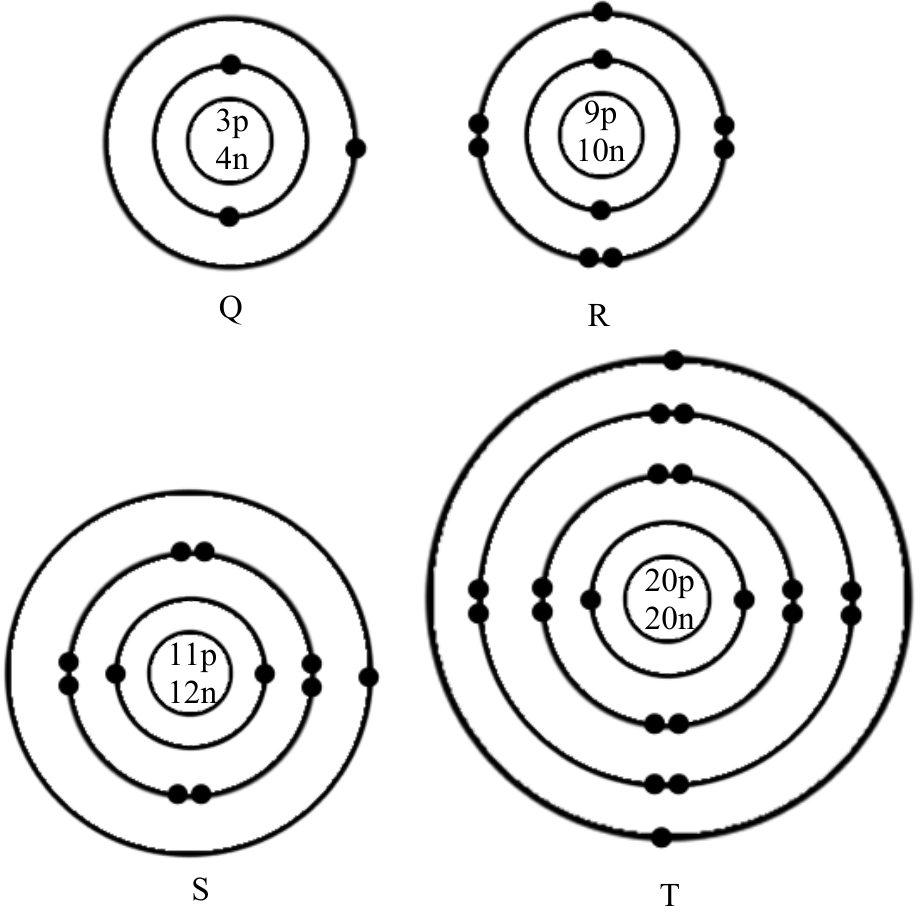
- (a)
State subatomic particle that neutral charged.
[1] - (b)
How many electrons in atom Q?
[1] - (c)
State nucleon number for S and T.
[2] - (d)
Atoms R and S can react to form a compound. Write a chemical equation for this reaction.
[2]
Table 1 shows element A is in Period 2, Group 14 and element B is in Period 2, Group 16.
Medium7 marks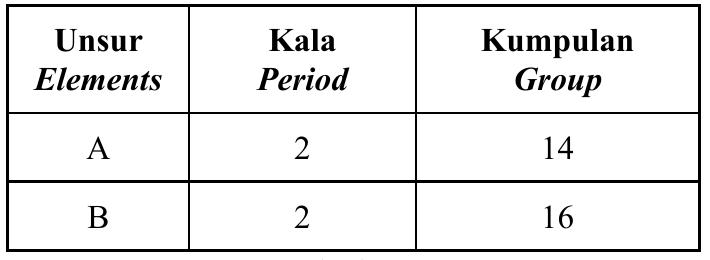
- (a)
State the meaning of covalent bond?
[1] - (b)
Based on Table 1, complete the electron arrangement formed from the formation of bonds between element A and B at Diagram 4 (three overlapping circles, shells already drawn).
[2]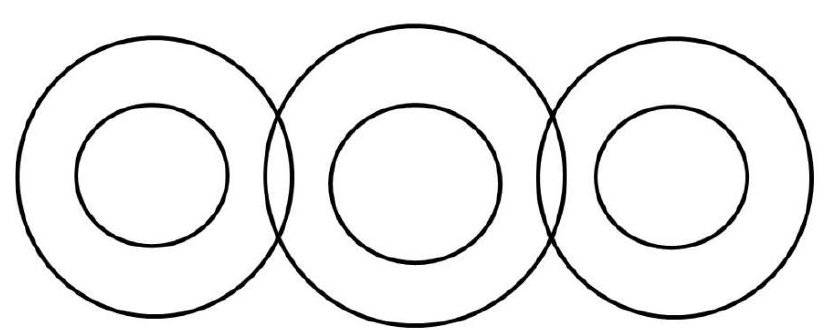
- (c)(i)
14.4 g element A reacts with element B completely to produce the compound in 4(b). Write the chemical equation for the reaction.
[1] - (c)(ii)
Based on the chemical equation in 4(c)(i), calculate the maximum volume of compound produced in room condition. [Relative atomic mass: A = 12; B = 16; molar gas volume: 24 dm³ mol⁻¹ at room condition]
[3]
Diagram 5.1 shows the structural formula of caffeine, which can be a natural fertiliser for plants.
Medium8 marks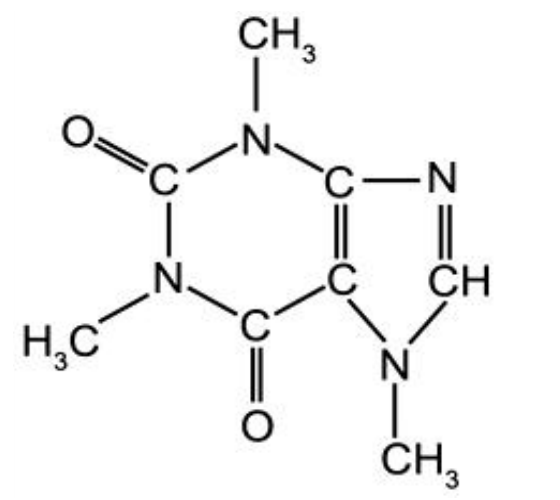
- (a)(i)
State the molecular formula of caffeine.
[1] - (a)(ii)
Calculate the percentage of nitrogen by mass in caffeine. [Relative atomic mass: C = 12; H = 1; O = 16; N = 14]
[2] - (a)(iii)
Fertilisers usually have a high content of nitrogen. Nitrogen is needed to enhance the growth of plants such as vegetables. Among the examples of fertilisers used by farmers is urea, CO(NH2)2. Based on the percentage of nitrogen by mass in caffeine in 5(a)(ii) and urea, determine the best fertiliser that should be used by farmers for their plants. Explain.
[2] - (b)(i)
Diagram 5.2 shows the apparatus set up for the decomposition of copper(II) carbonate powder (heated in a boiling tube, gas delivered into limewater). What is the function of the limewater?
[1]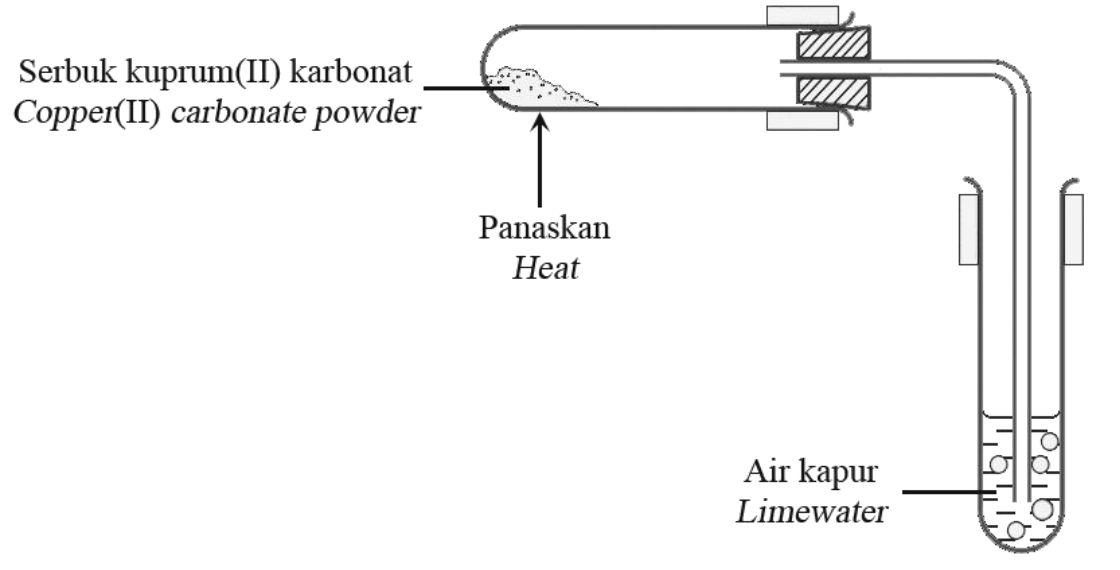
- (b)(ii)
Write a balanced chemical equation for the decomposition of copper(II) carbonate powder.
[2]
Diagram 6 shows the reaction using two soluble salts, silver nitrate and sodium carbonate, to form an insoluble salt, Solid X.
Medium9 marks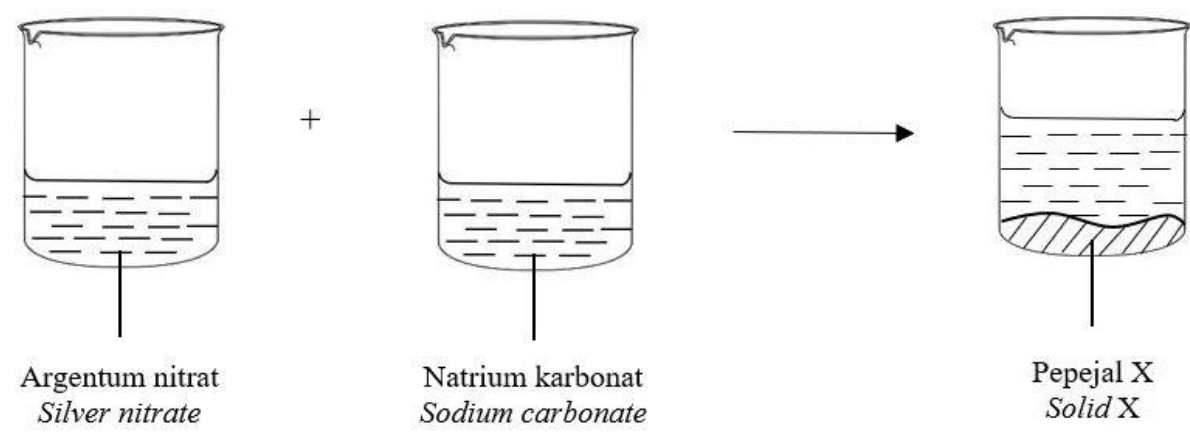
- (a)(i)
State the name of reaction to prepare the insoluble salt.
[1] - (a)(ii)
Based on the Diagram 6, identify Solid X.
[1] - (b)(i)
Write the chemical equation for the reaction between silver nitrate and sodium carbonate.
[2] - (b)(ii)
Calculate the number of moles of silver ions, in 20 cm³ of silver nitrate solution, 0.5 mol dm⁻³ and then determine the mass of Solid X formed. [Molar mass of Solid X = 276 g mol⁻¹]
[2] - (c)
Briefly describe how to prepare salt crystals from Solid X.
[3]
Diagram 7 shows a wooden boat and a kayak. Both are made using composite materials.
Medium10 marks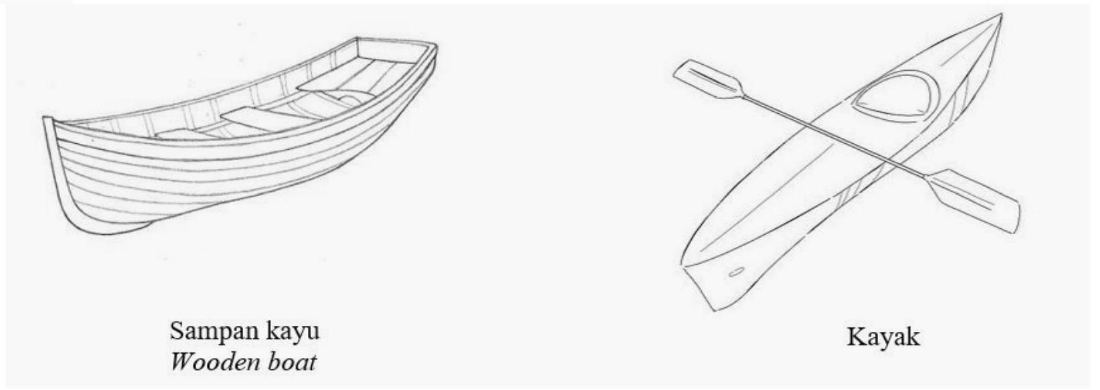
- (a)(i)
Composite materials consist of a combination of matrix substance and strengthening substance. What is the function of matrix substances?
[1] - (a)(ii)
Name a suitable composite material for making kayaks.
[1] - (b)
Laboratory glassware such as beakers and flasks are made of borosilicate glass because of its heat resistance. A sample of borosilicate glass has a composition of 80% silica, 15% boron oxide and 5% aluminium oxide. Calculate the mass of each component in a sample of borosilicate glass with a mass of 1.0 kg.
[3] - (c)
Two Form 5 Pure Science students talk: Adam says hot food should not be served in a lead glass container; the other student forgot why. As a student studying chemistry, how can you help Adam to explain why hot food should not be served in lead glass containers?
[3] - (d)
The lenses of Elly's glasses are made of lead glass. Elly found that they glare, especially under the sun. Elly wants to change to another type of lens. In your opinion, what type of glass should Elly choose to overcome the problem? Suggest the advantage of the selected glass.
[2]
Table 2 shows the heat of combustion (kJ mol⁻¹): methanol, CH3OH -728; propanol, C3H7OH -2030; butanol, C4H9OH -2680.
Medium10 marks- (a)
State the meaning of heat of combustion.
[1] - (b)
State the type of reaction for the combustion of alcohol.
[1] - (c)
The combustion of methanol in excess oxygen produces carbon dioxide and water. Write the chemical equation for the reaction.
[1] - (d)
Draw the energy level diagram for the reaction in 8(c).
[2] - (e)
State one information that can be obtained from your answer in 8(d).
[1] - (f)
If 1.2 g of propanol is used to heat 200 cm³ of water, calculate the temperature change in the reaction. [Molar mass of propanol = 60 g mol⁻¹; specific heat capacity of water, c = 4.2 J g⁻¹ °C⁻¹; density of water = 1.0 g cm⁻³]
[2] - (g)
Compare and explain why there is a difference in the value of heat of combustion between propanol and butanol.
[2]
Section B
Elisa studied the rate of decomposition of hydrogen peroxide, H2O2, using a spatula of black powder as catalyst. The accumulated gas ignited a glowing wooden splinter. Table 3 gives time (s): 0, 30, 60, 90, 120, 150, 180, 210, 240, 270, 300, 330, 360, 360 and burette reading (cm³): 50, 36, 28, 22, 17, 13, 9, 7, 5, 3, 2, 1, 0, 0; the volume of gas row is blank except 0 at 0 s. Answer any one question from Section B (Q9 or Q10).
Medium20 marks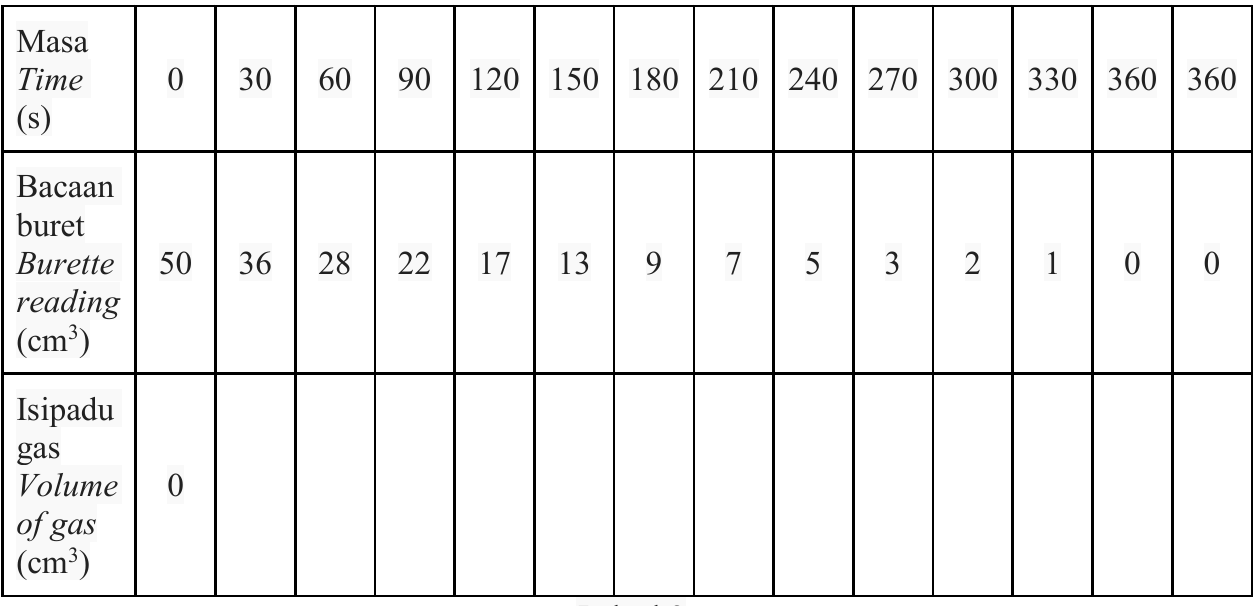
- (a)(i)
Name gas produced and probably catalyst used.
[2] - (a)(ii)
Complete Table 3 by filling the space volume of gas. Plot a graph of the volume of gas against time taken and calculate the average rate of reaction: overall reaction; in fifth minute.
[8] - (b)(i)
Ekhwan did two activities to study the factor of temperature. Situation A: sodium thiosulphate solution + sulphuric acid in a conical flask on white paper with an X; time for the X to become invisible (s) at 15, 25, 35, 45, 55, 65 °C: 270, 100, 50, 27, 10, 7. Situation B: milk + enzyme in a boiling tube with a white paper marked X behind it; time for the X to become visible (s) at 15, 25, 35, 45, 55, 65 °C: 360, 240, 120, 180, 300, 500. Explain the difference that occurs at situation A and situation B based on collision theory and your chemistry knowledge.
[10]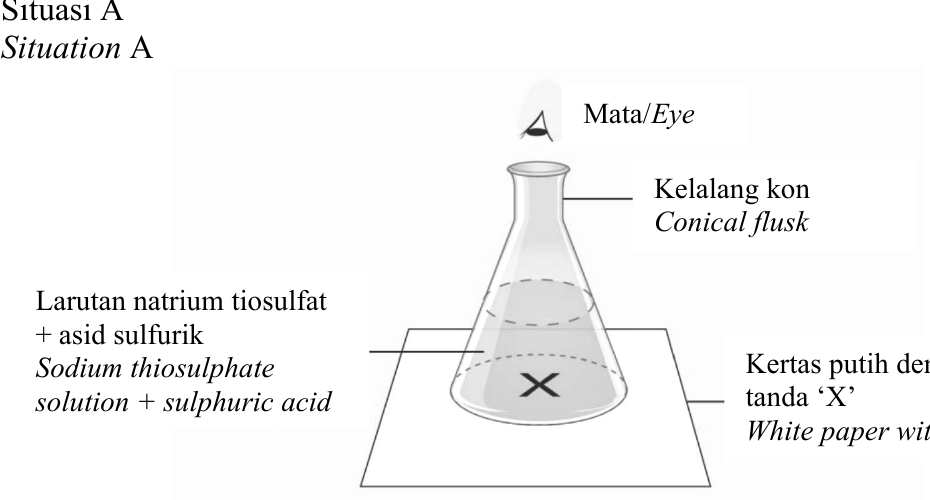
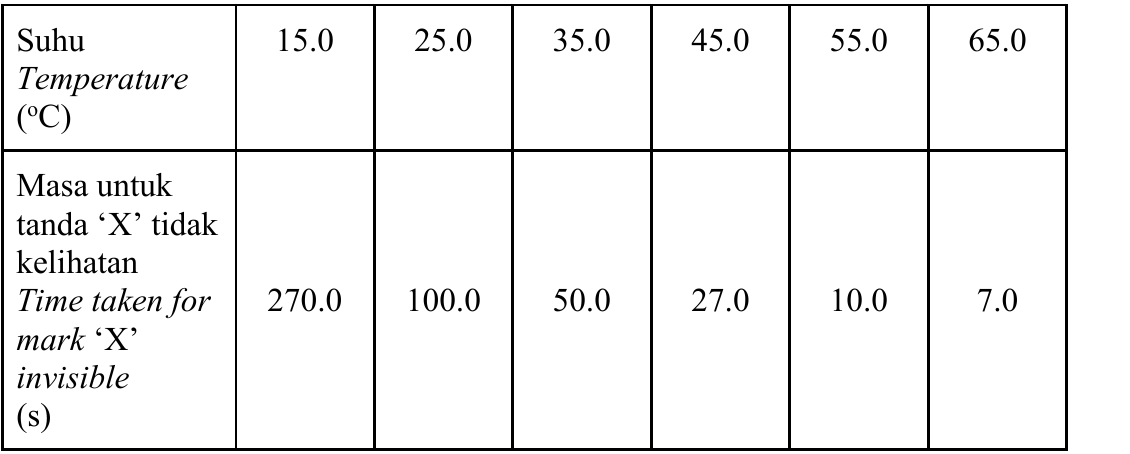
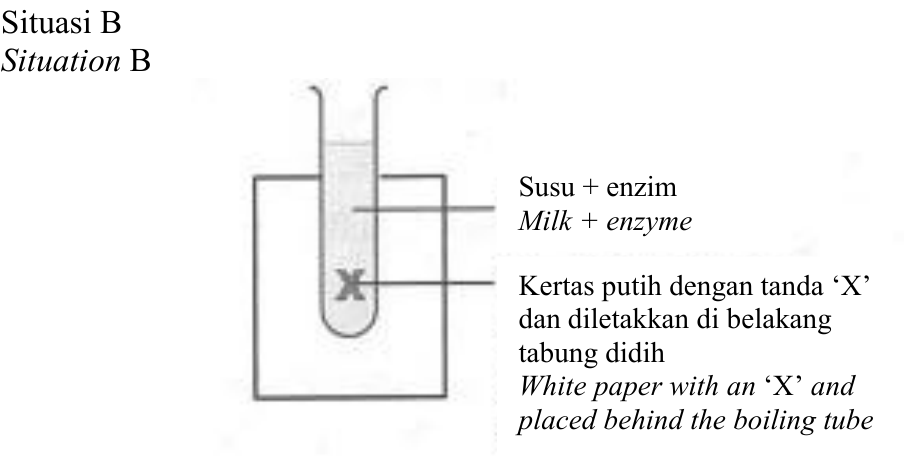
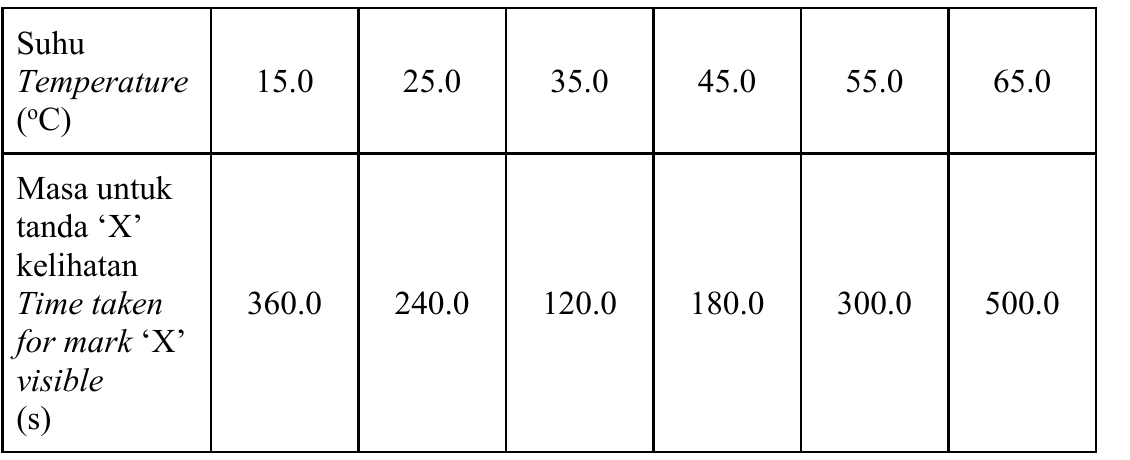
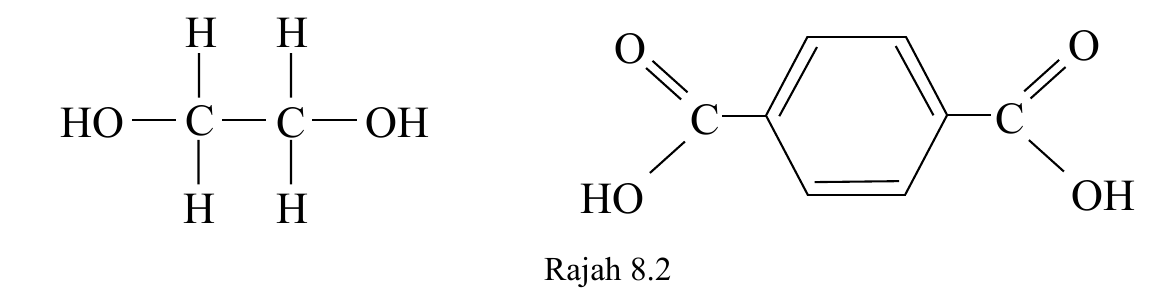
Diagram 8.1 shows the synthetic polymer X used in making fishing nets. Diagram 8.2 shows the monomers for polymer X: ethane-1,2-diol (HO-CH2-CH2-OH) and benzene-1,4-dicarboxylic acid (HOOC-C6H4-COOH). Answer any one question from Section B (Q9 or Q10).
Medium20 marks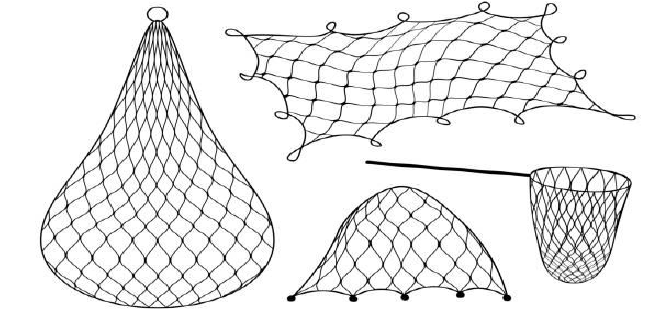
- (a)(i)
What does polymerisation mean? What is the type of polymerisation for the formation of polymer X?
[2] - (a)(ii)
Draw the structural formula for polymer X formed from the monomers in Diagram 8.2. What molecules are removed from the polymerisation? Explain why the drawn polymer is also called a polyester.
[4] - (b)(i)
The use of synthetic polymers is more widespread than natural polymers. State the characteristics of a good synthetic polymer.
[4] - (b)(ii)
A news clipping (BERNAMA, 24 June 2024) reports that Kangar Municipal Council bans plastic straws from 1 August. Plastic takes up to 450 years to decompose. How can you help to shorten the decomposition period of these plastic straws? Explain the method and its two advantages to the environment.
[6] - (c)
Malaysia was the seventh largest producer of natural rubber in the world in 2020, and in 2021 the rubber sector contributed 0.2% to GDP. Although Malaysia is one of the main producers of rubber, the use of synthetic rubber is more widespread in industry than natural rubber. What factors contribute to this situation?
[4]
Section C
Diagram 9.1 shows apparatus for corrosion of two different metals: test tube I with wire X and test tube II with wire Y, each in a solution of sodium chloride, potassium chloride and sodium hydroxide.
Hard20 marks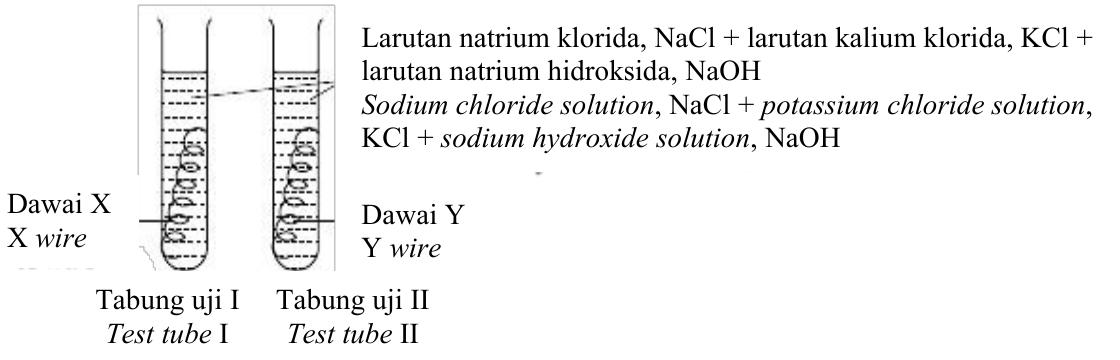
- (a)(i)
What is meant by metal corrosion?
[1] - (a)(ii)
Metal Y is more electropositive compared to metal X. Based on the statement, state the name of wire X and wire Y.
[2] - (a)(iii)
The experiment was carried out for three days. Based on Diagram 9.1, compare the observations and inferences in test tube I and test tube II.
[5] - (b)
Diagram 9.2 shows extraction of iron by reduction with carbon in a blast furnace (iron ore, coke and calcium carbonate fed in at the top). 2Fe2O3 + 3C → 4Fe + 3CO2. [Relative atomic mass: O = 16, Fe = 56] If the factory processes 640 kg of iron ore a day using excess carbon, calculate the mass of the iron produced.
[4]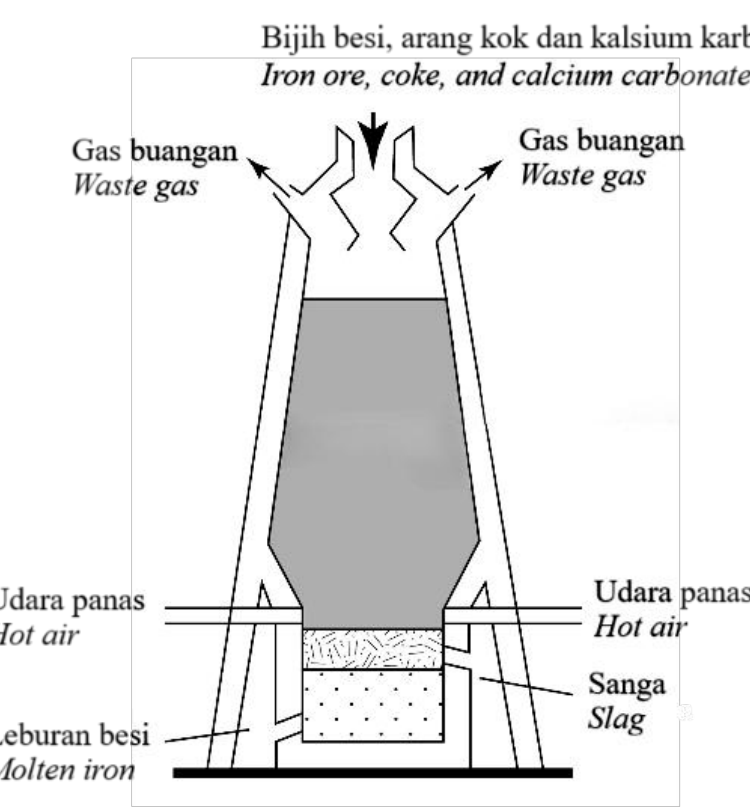
- (c)
Redox reactions involve donating and receiving electrons. Using iron(II) sulphate solution, dilute sulphuric acid and bromine water, describe one laboratory experiment to show the transfer of electrons at a distance. Include a labelled diagram and the procedure.
[8]