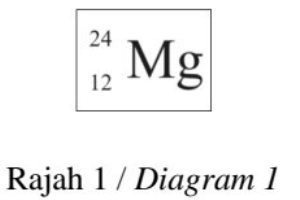
Diagram 1 shows the standard representation of magnesium atom (24/12 Mg). What is the number of valence electrons of the atom?
Medium
Which of the following statements explains the reason of carbon-12 chosen as the standard reference for determining the relative atomic mass most accurately?
Easy
Which of the following is the use of iodine-131 isotopes?
Easy
Which of the following statements are correct about the physical properties of elements in Group 18 when going down the group?
I The intensity of colour decreases
II The attraction forces between atom increases
III The density of the elements decreases
IV Melting point and boiling point of these elements increases
Medium
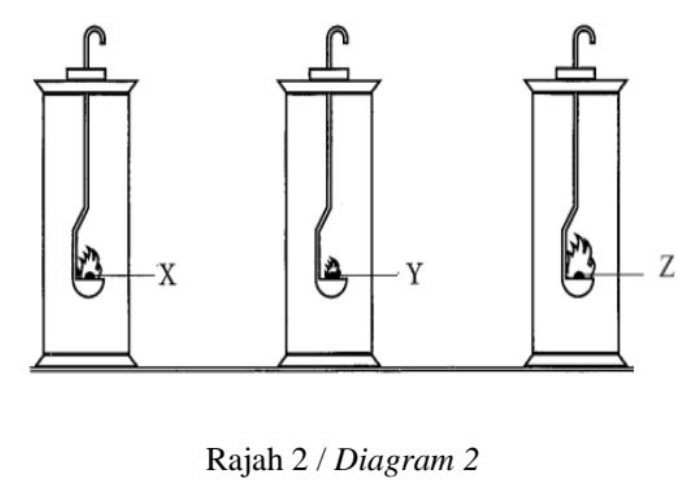
Diagram 2 shows the apparatus set-up of an experiment to study the reactivity of element in Group 1 towards chlorine gas. What is alkali metal X, Y and Z? (Z burns most vigorously, Y least vigorously.)
Medium
Oxide of Y is a white solid that is insoluble in water but can react with nitric acid and sodium hydroxide solution. What is Y element?
Medium
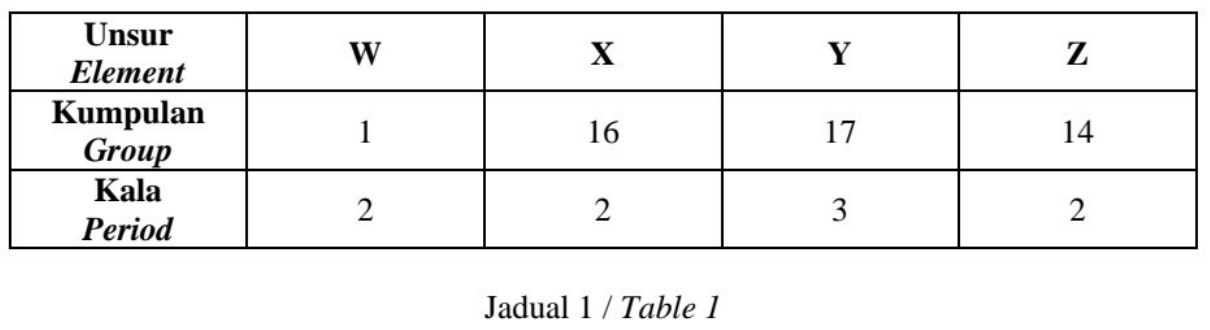
Table 1 shows the information for the position of elements W, X, Y and Z in the Periodic Table of Elements.
Element: W, X, Y, Z
Group: 1, 16, 17, 14
Period: 2, 2, 3, 2
Which pair of elements form a compound with high melting point?
Medium
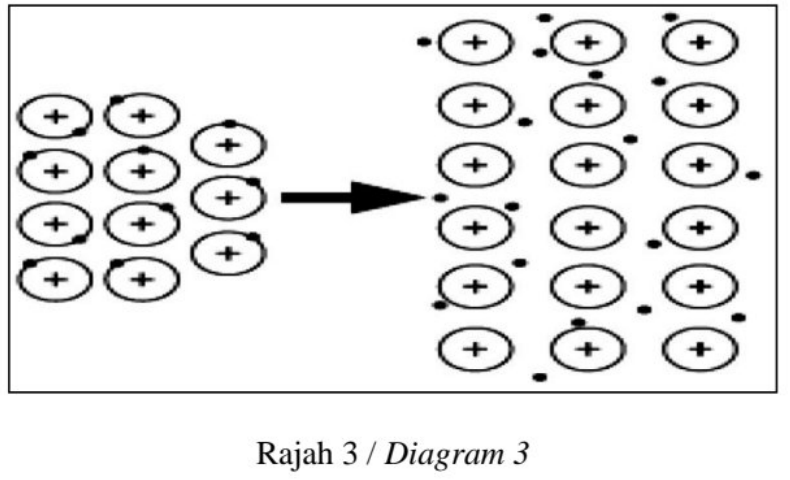
Diagram 3 shows a type of bond. Which of the following is correct about the bond?
Medium
Which of the following statements is correct about simple molecule?
Easy
In an experiment, moist universal indicator paper changes from yellow to purple when gas X is delivered to it. Which of the following statements is correct about X?
Medium
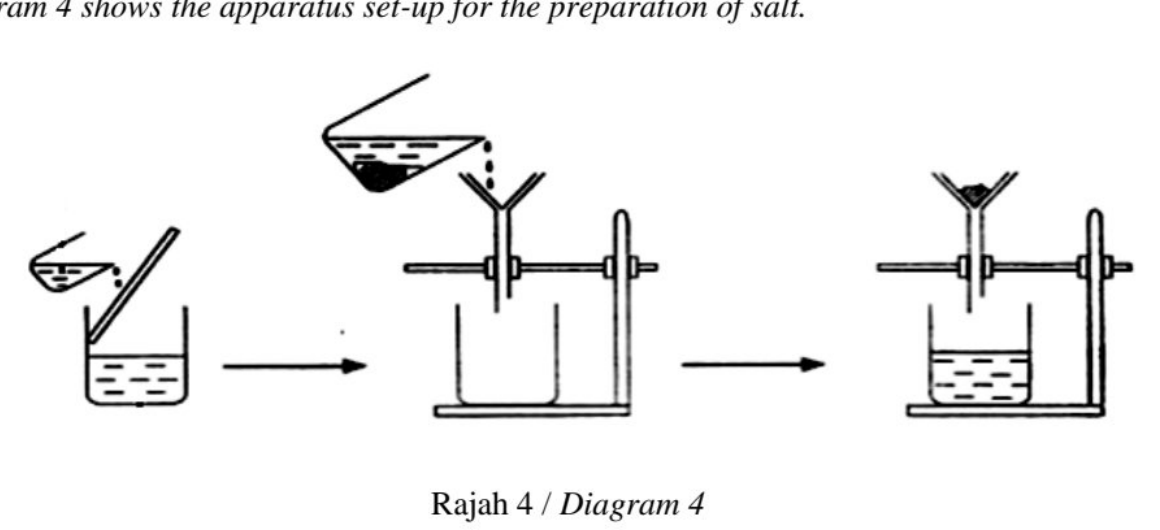
Diagram 4 shows the apparatus set-up for the preparation of salt (mixing, then filtering the precipitate, then washing/drying). Which salt is prepared through this method?
Medium
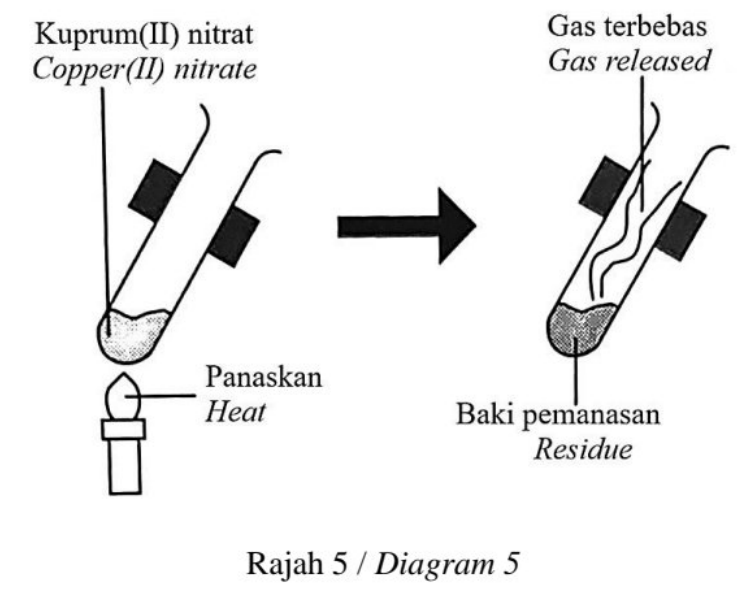
Diagram 5 shows the apparatus set-up of heating copper(II) nitrate. Which observation and test are correct to identify the gas released?
A Brown gas released; Blue litmus paper turns red
B Colourless gas released; The glowing wooden splinter is rekindled
C White fumes released; Blue litmus paper turns red
D Greenish-yellow gas released; The glowing wooden splinter is rekindled
Medium
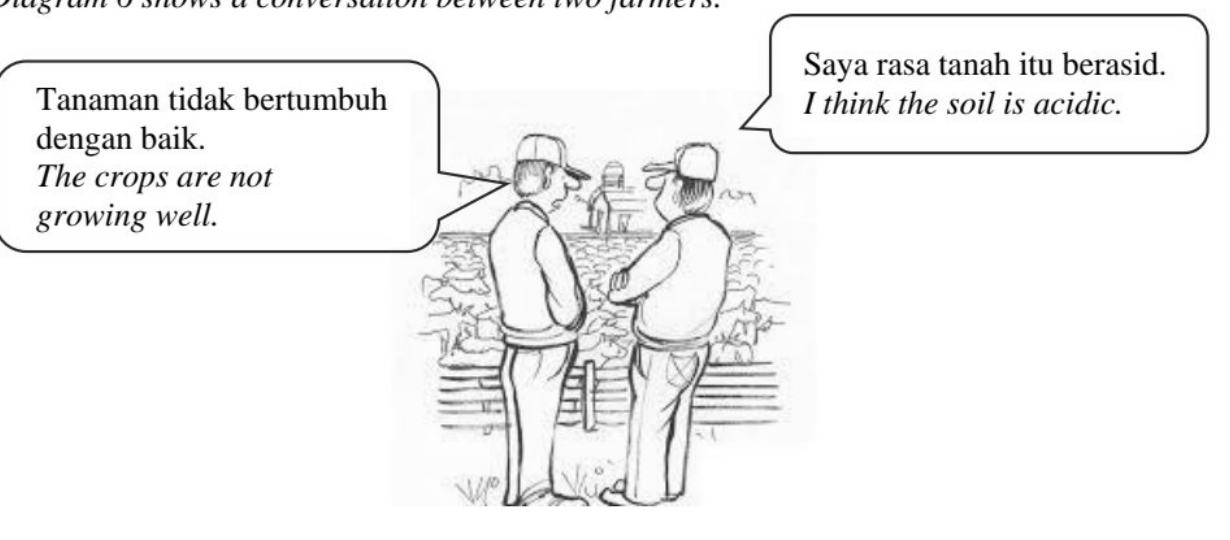
Diagram 6 shows a conversation between two farmers: 'The crops are not growing well.' 'I think the soil is acidic.' Based on the conversation, which of the following substances is suitable to overcome the problem faced by the farmer?
I Barium sulphate
II Calcium oxide
III Calcium chloride
IV Slake lime
Medium
Which of the following is a correct match of a low rate of reaction and high rate of reaction?
Easy
Which of the following statements is true about the effect of higher concentration of reactants on the rate of reaction?
Medium
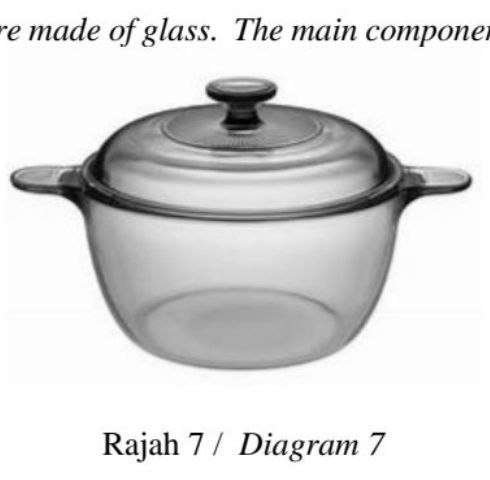
Diagram 7 shows a cookware made of glass. The main component of glass is silicon dioxide. What is the substance added to the silicon dioxide and the new property of the glass?
Medium
The following are the characteristics of composite material X: High compression strength; High stretching strength; Resistant to corrosion. What is X?
Medium
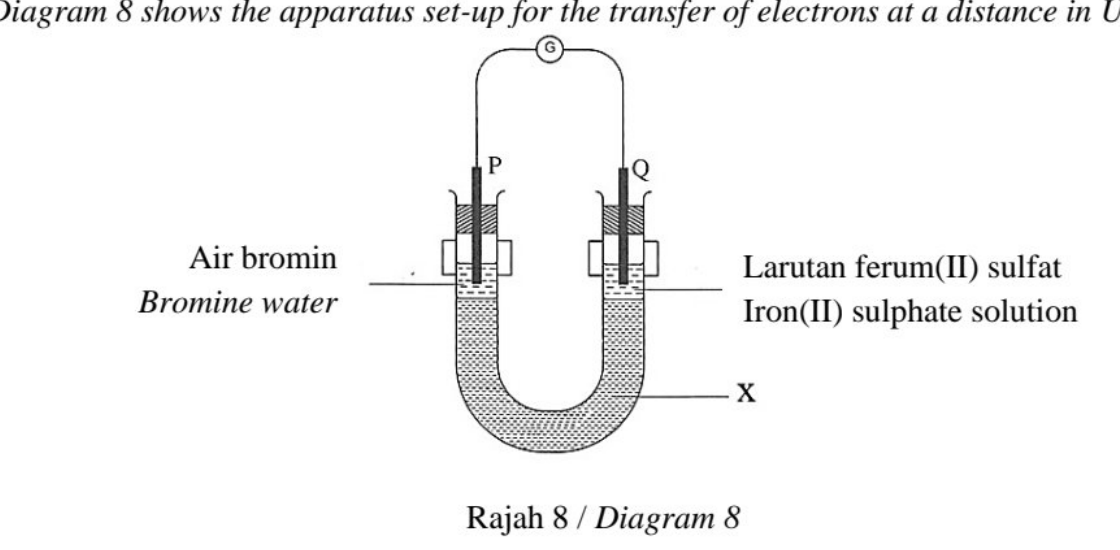
Diagram 8 shows the apparatus set-up for the transfer of electrons at a distance in U-tube (bromine water and iron(II) sulphate solution). What is the function of X?
Medium
The overall ionic equation below shows the reaction between iodine, I₂ and sulphur dioxide, SO₂.
I₂ (aq) + SO₂ (g) + 2H₂O (l) → 2I⁻ (aq) + SO₄²⁻ (aq) + 4H⁺ (aq)
Based on the equation above, name the oxidising agent in this reaction.
Medium
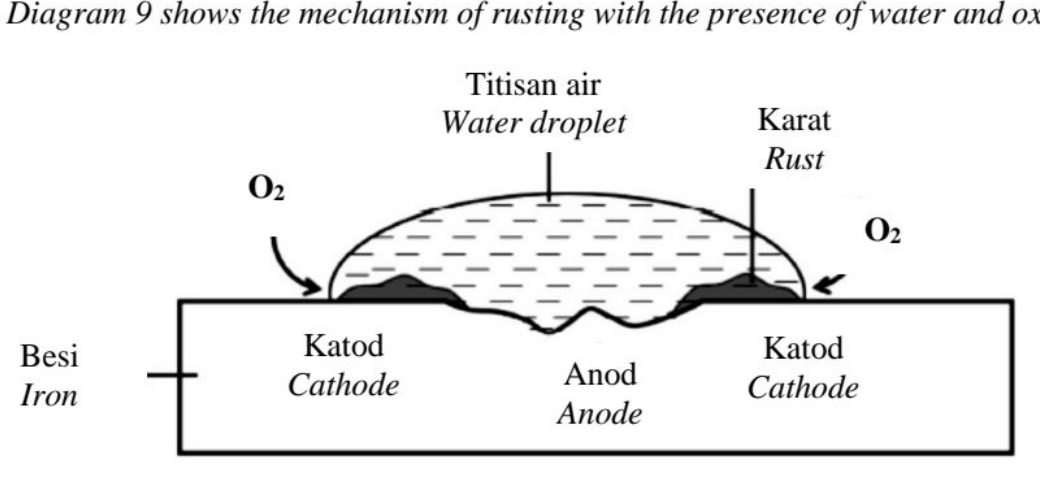
Diagram 9 shows the mechanism of rusting with the presence of water and oxygen. Which of the following pairs of half equation represent the chemical reactions that occur at anode and cathode?
Medium
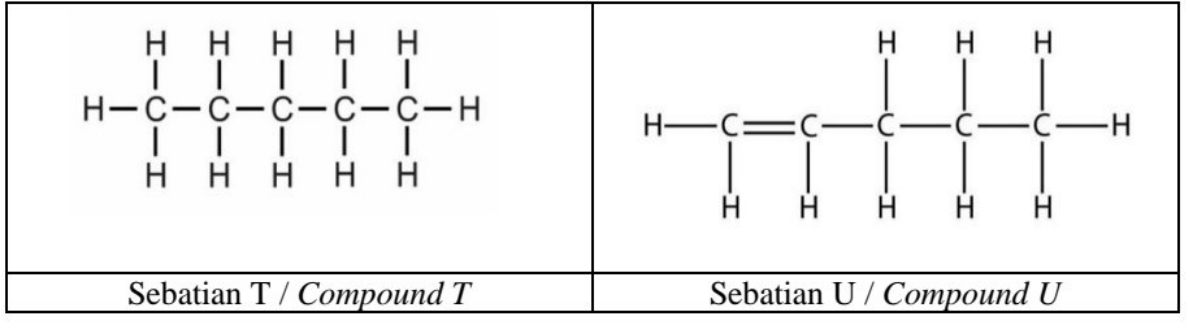
Diagram 10 shows the structural formulae of compound T (pentane, saturated) and compound U (pentene, with C=C). Which of the following shows the correct comparison between compound T and compound U?
Medium
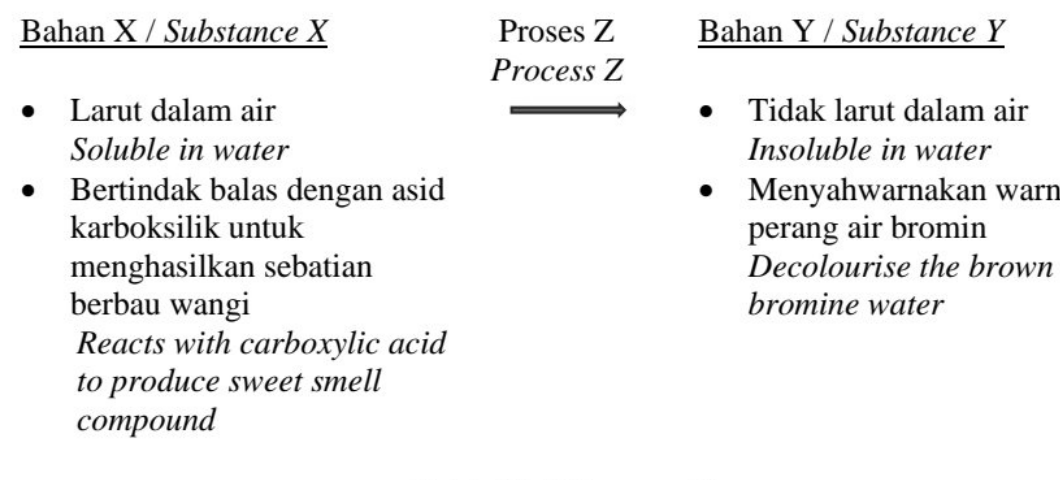
Diagram 11 shows the change of substance X to substance Y through process Z. Substance X: soluble in water; reacts with carboxylic acid to produce sweet smell compound. Substance Y: insoluble in water; decolourises brown bromine water. Which of the following is correct about process Z?
Medium
Which of the following equations can produce a substance with fruity smell?
Medium
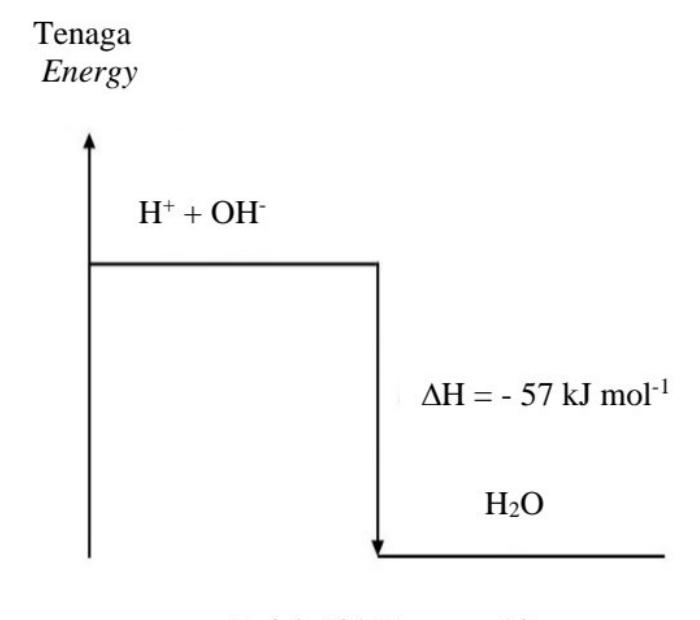
Diagram 12 shows an energy level diagram (H⁺ + OH⁻ above H₂O, ΔH = −57 kJ mol⁻¹). Which of the following statements is correct about the energy level diagram?
Medium
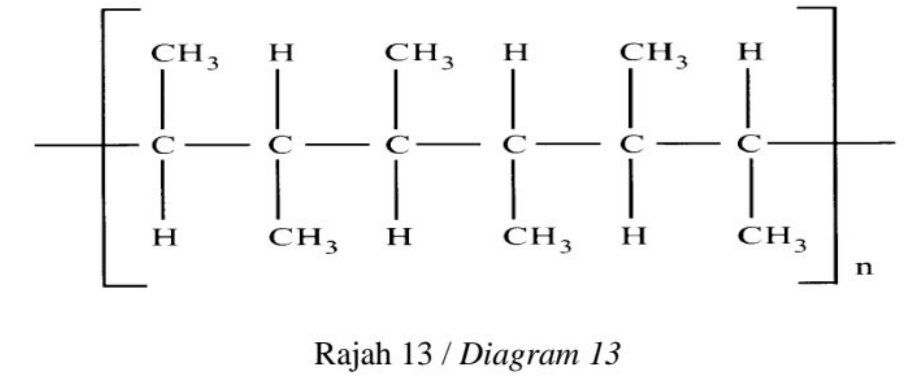
Diagram 13 shows the structural formula of a polymer. What is the structural formula of its monomer?
Medium
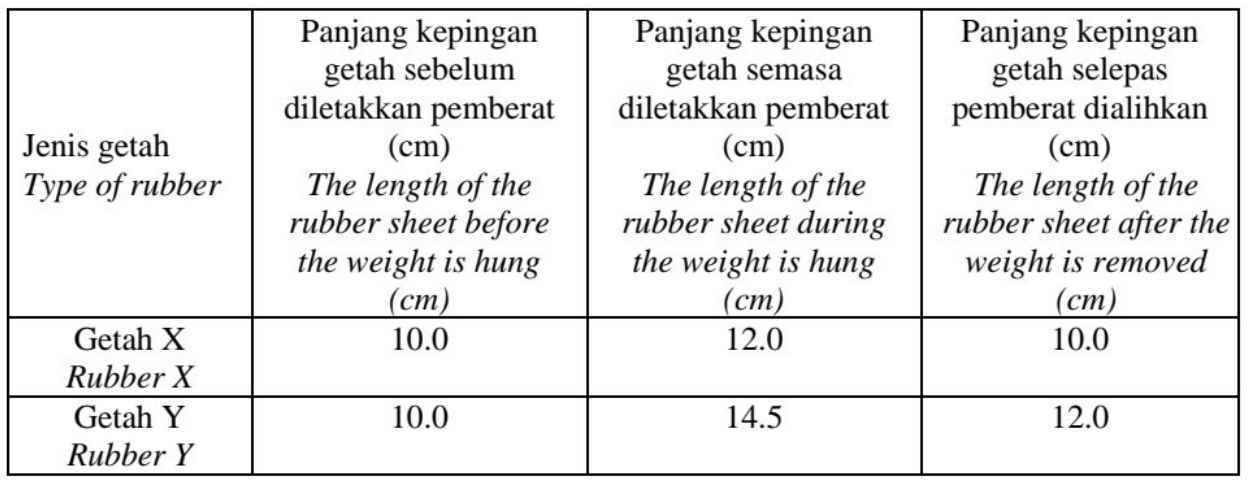
Sayyid conducted an experiment to compare the physical properties of rubber X and Y. Table 2 shows the results. Rubber X: length before hanging weight 10.0 cm, during 12.0 cm, after removing 10.0 cm. Rubber Y: 10.0 cm, 14.5 cm, 12.0 cm. Based on the result, which of the following is correctly matched about the physical properties X and Y?
Medium
Which of the following statements explains why detergent is a better cleaning agent as compared to soap?
Medium
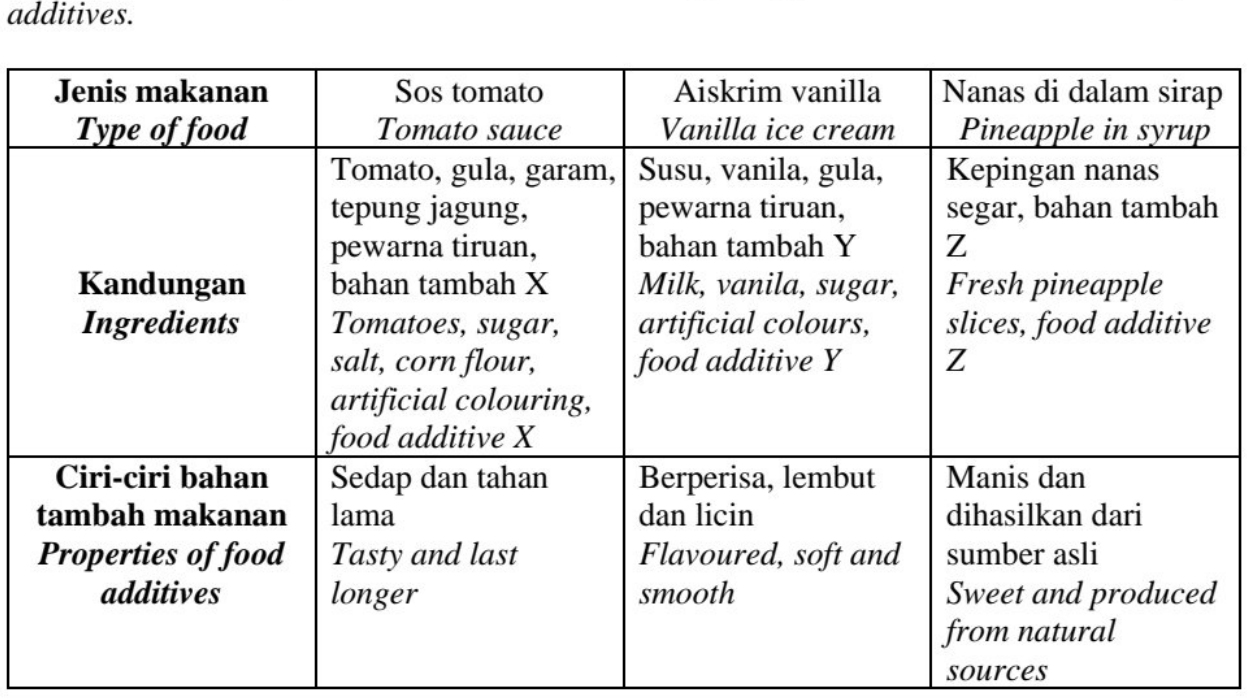
Table 3 shows information on three food labels. X (in tomato sauce): tasty and last longer (preservative). Y (in vanilla ice cream): flavoured, soft and smooth. Z (in pineapple in syrup): sweet and produced from natural sources. What is the name of food additives X, Y and Z?
Medium
The following are the symptoms shown by patient M: symptom of mental illness; hearing voices and seeing things that are not real; believe something that is not real. What is the type and example of medicine that should be taken by patient M?
Easy
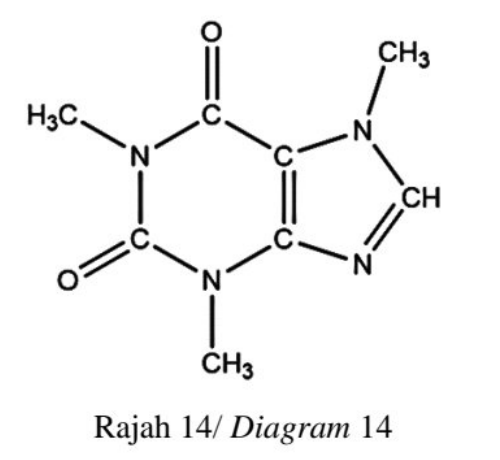
Diagram 14 shows structural formula of caffeine (C₈H₁₀N₄O₂). What is the mass of 0.25 mol caffeine? [Relative atomic mass: H = 1; C = 12; O = 16; N = 14]
Medium
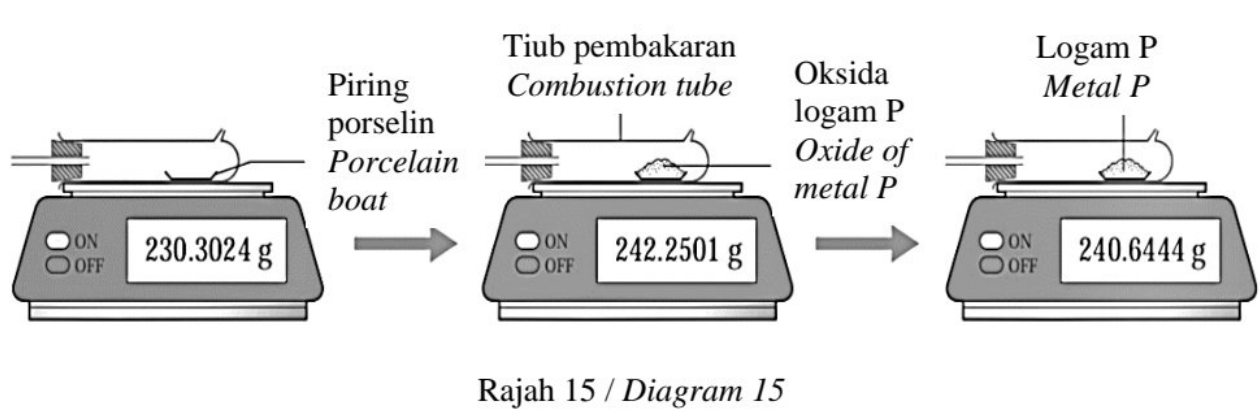
Diagram 15 shows the weighing steps in the determination of empirical formula of the oxide of metal P: porcelain boat 230.3024 g; boat + oxide of metal P 242.2501 g; boat + metal P 240.6444 g. Determine the empirical formula of metal P oxide. [Relative atomic mass: O = 16, P = 207]
Medium
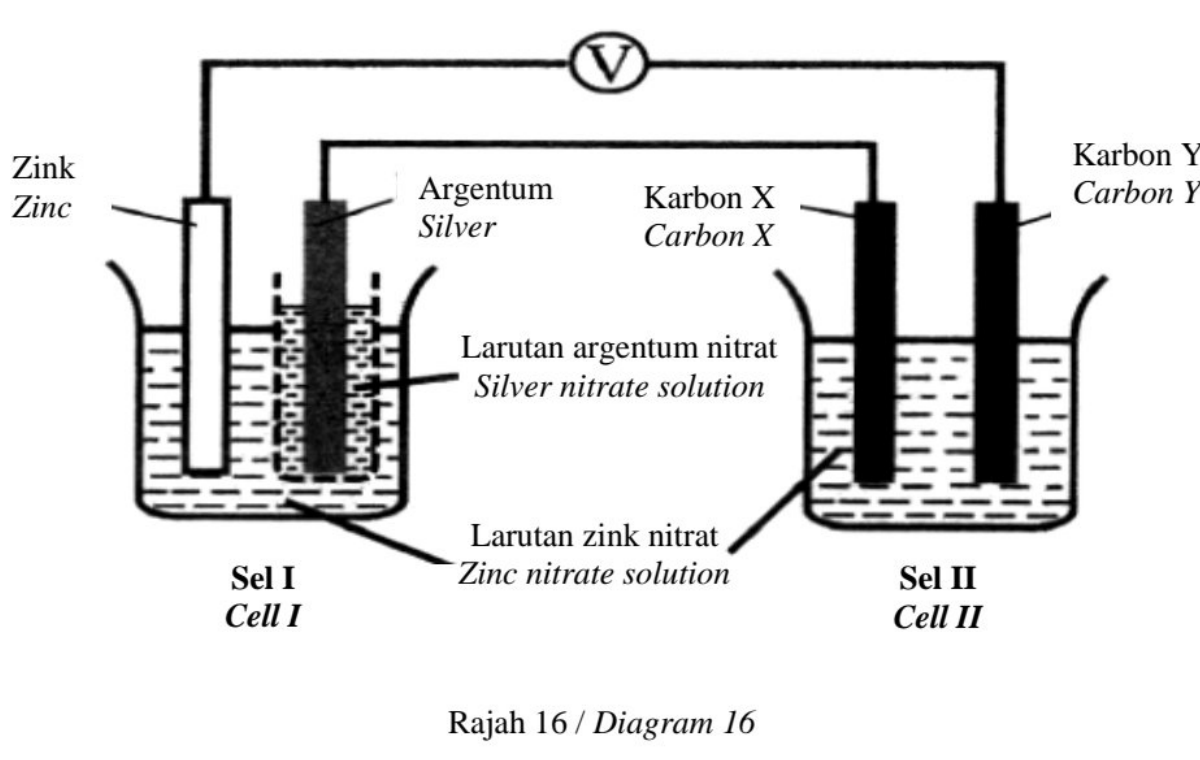
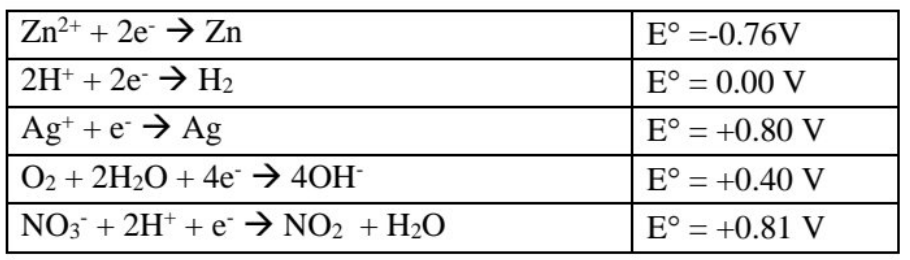
Diagram 16 shows Cell I (Zn | zinc nitrate; Ag | silver nitrate) connected to Cell II (carbon X and carbon Y in zinc nitrate solution). Given E°: Zn²⁺ + 2e⁻ → Zn −0.76 V; 2H⁺ + 2e⁻ → H₂ 0.00 V; Ag⁺ + e⁻ → Ag +0.80 V; O₂ + 2H₂O + 4e⁻ → 4OH⁻ +0.40 V; NO₃⁻ + 2H⁺ + e⁻ → NO₂ + H₂O +0.81 V. Which of the following is correct?
Medium
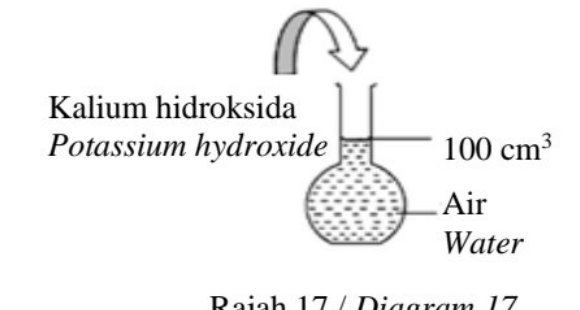
Diagram 17 shows the preparation of standard solution of potassium hydroxide, KOH by dissolving 5.6 g of potassium hydroxide in 100 cm³ of distilled water. What is the volume of the standard solution prepared above that should be used if a student wants to prepare 50 cm³ of 0.5 mol dm⁻³ potassium hydroxide solution? [Relative atomic mass: H=1; O=16; K=39]
Medium
The fuel value of charcoal is 34 kJ g⁻¹. Calculate the mass of charcoal needed to boil 2.0 dm³ of water. [Specific heat capacity of water = 4.2 J g⁻¹ °C⁻¹, density of water = 1 g cm⁻³, temperature of water at room temperature = 27.0 °C]
Medium
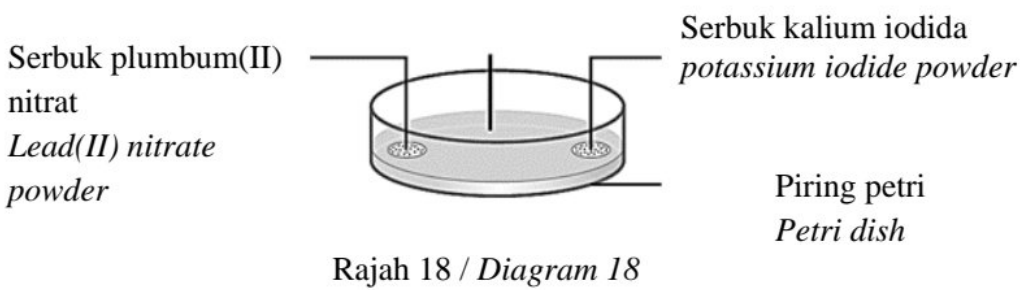
Diagram 18 shows the reaction between 0.02 mol of lead(II) nitrate powder and 0.03 mol of potassium iodide powder to form a yellow precipitate. The time taken for the reaction to complete is 1 minute. What is the rate of formation of the yellow precipitate? [Relative atomic mass: I = 127; Pb = 207]
Medium
What is the percentage composition by mass of water in hydrated aluminosilicate, Al₂O₃.2SiO₂.2H₂O? [Relative atomic mass: Si = 28; Al = 27; O = 16; H = 1]
Medium
The thermochemical equation: Cu(NO₃)₂ + 2NaOH → 2NaNO₃ + Cu(OH)₂ ΔH = −60 kJ mol⁻¹. What is the highest temperature of the mixture when 25 cm³ of 1.0 mol dm⁻³ copper(II) nitrate solution is added to 50 cm³ of 1.0 mol dm⁻³ sodium hydroxide solution with the initial temperature for both solutions 29.0 °C? [Specific heat capacity of solution = 4.2 J g⁻¹ °C⁻¹; density of solution = 1.0 g cm⁻³]
Hard
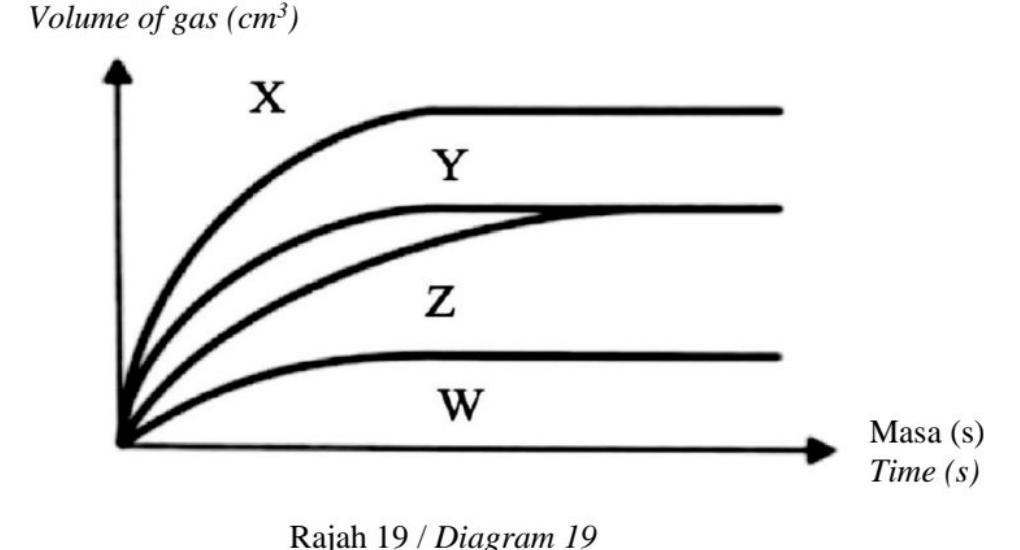
Diagram 19 shows a graph (volume of gas against time; curves X, Y, Z, W) when a magnesium ribbon is added to 25 cm³ of 1.0 mol dm⁻³ sulphuric acid at room temperature. The experiment is repeated using a higher temperature. Which of the following graphs show the volume of gas collected at regular interval time for the two experiments?
Medium
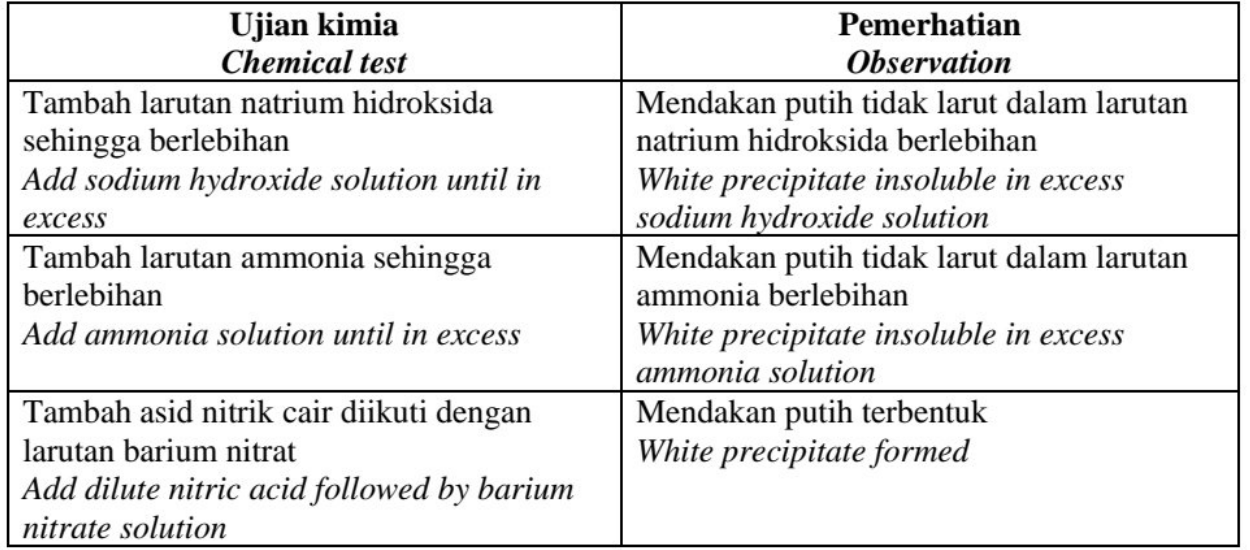
Table 4 shows the observations of chemical tests on solution X. Add sodium hydroxide solution until in excess: white precipitate insoluble in excess. Add ammonia solution until in excess: white precipitate insoluble in excess. Add dilute nitric acid followed by barium nitrate solution: white precipitate formed. What is solution X?