Write your answer on paper. Then open the answer to check it.
Section A
The chair and pails contain polymer X. The structural formula of polymer X is shown in Diagram 1: repeat unit –[CH₂–CH(CH₃)]n– (C(H)(H)–C(H)(CH₃)).
Medium5 marks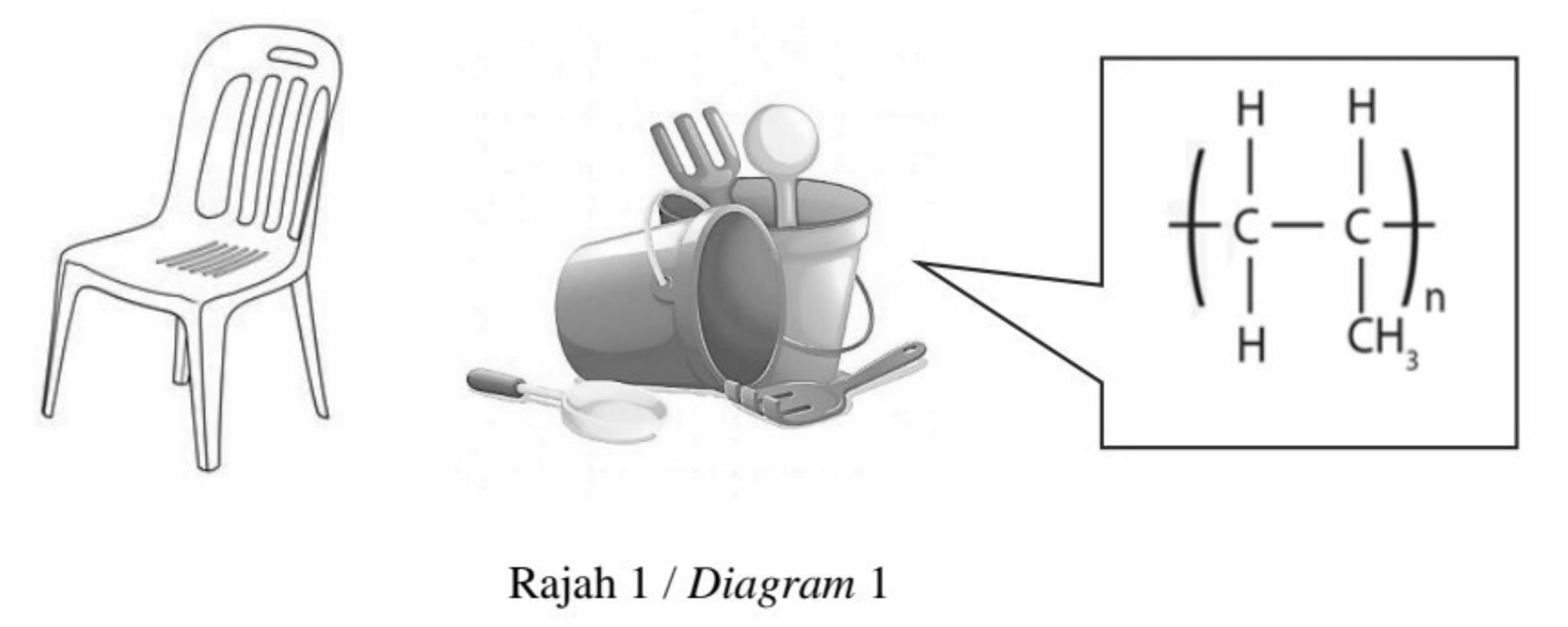
- (a)(i)
What is meant by polymer?
[1] - (a)(ii)
State the type of polymerisation involved.
[1] - (a)(iii)
State the name of the monomer for the polymer in Diagram 1.
[1] - (a)(iv)
Draw the structural formula of monomer in (a)(iii).
[1] - (b)
State one characteristic of the polymer X that makes it suitable for producing the products in Diagram 1.
[1]
Table 1 shows the information of elements in Periodic Table of Elements. Element: Na, Mg, Al, Si, P, S, Cl; electron arrangement: 2.8.1, 2.8.2, 2.8.3, 2.8.4, 2.8.5, 2.8.6, 2.8.7; atomic radius: 186, 160, 143, 118, 110, 104, 100.
Medium5 marks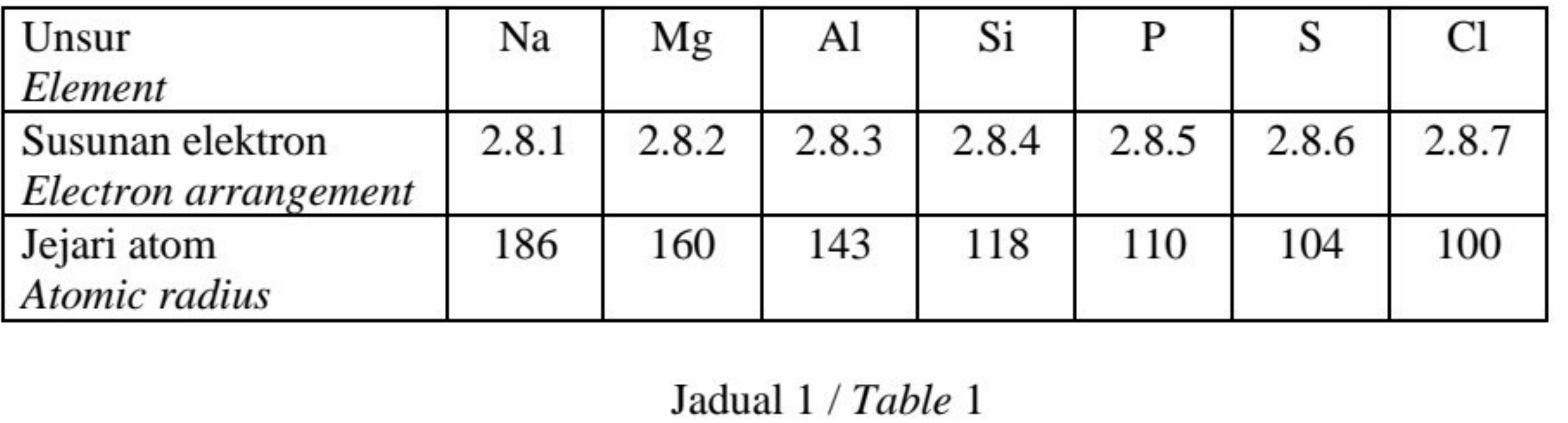
- (a)
What is meant by period?
[1] - (b)(i)
Which period are the elements placed?
[1] - (b)(ii)
Give one reason for the answer in (b)(i).
[1] - (c)
State the element that exists as diatomic molecule.
[1] - (d)
Which element is a semi-metal?
[1]
Diagram 2 shows three examples of manufactured substances in industry: P (aeroplane), Q (brake disc) and R (decorated vase).
Medium6 marks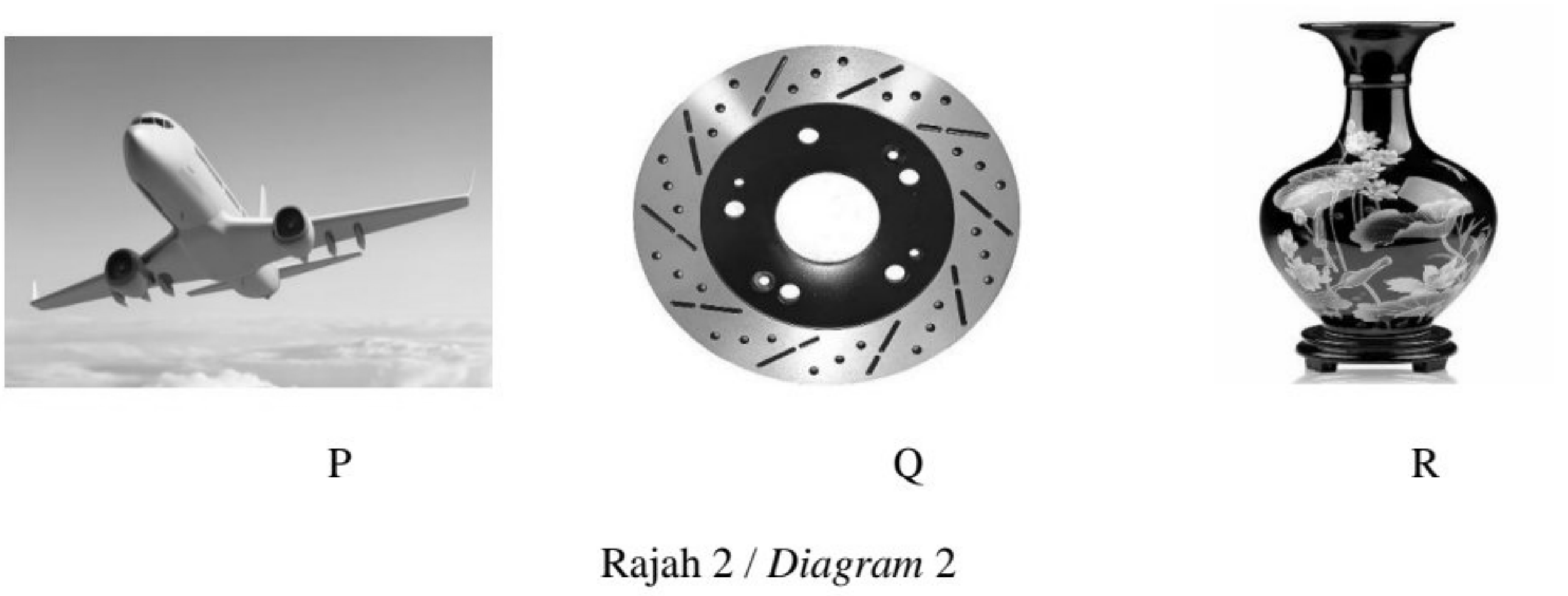
- (a)(i)
P is made of from duralumin. Copper is one of the elements in duralumin. Name one other element in duralumin.
[1] - (a)(ii)
State the difference in hardness between duralumin and its pure metal.
[1] - (b)(i)
Q and R are two types of ceramics. What is the type of ceramic R?
[1] - (b)(ii)
State one similarity between ceramic Q and R.
[1] - (c)
Table 2: glass X (silica, sodium carbonate, calcium carbonate; window glass); glass Y (silica, silver chloride, calcium carbonate; window glass). Mr Ali wishes to install a glass window at his house that is able to prevent the ultraviolet rays. Between glass X and Y, which type of glass will Mr Ali choose? Give your reason.
[2]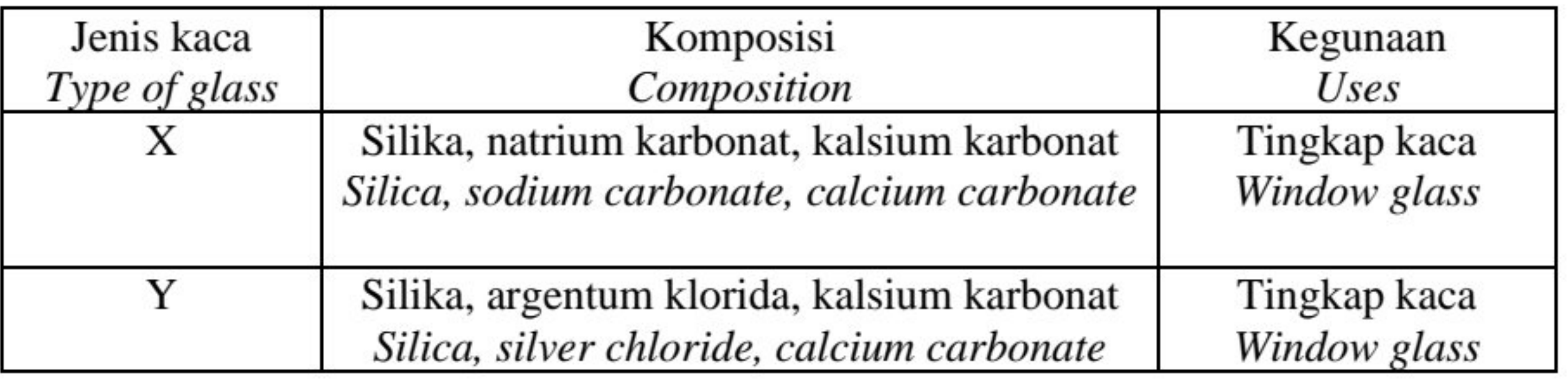
Table 3 shows the melting and boiling point (°C) of substances: P −111.0 / −46.0; Q −83.0 / 44.0; R 90.8 / 873.0; S 841.0 / 1713.0.
Medium7 marks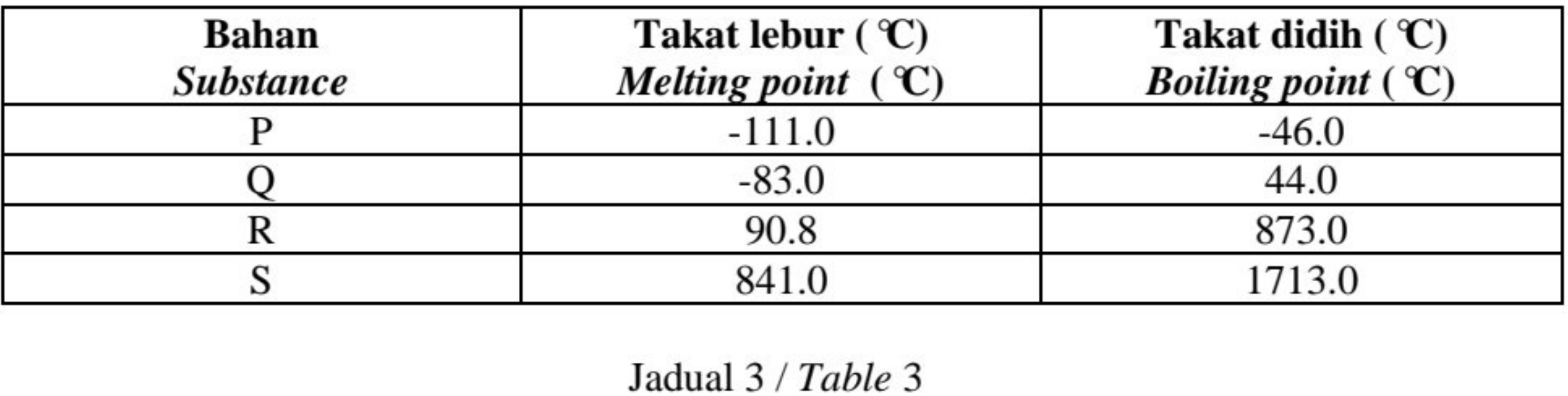
- (a)(i)
State one substance that exists in a gas state at room temperature.
[1] - (a)(ii)
Which substance will undergo the boiling process when placed in steaming water that has a temperature of 100.0 °C?
[1] - (a)(iii)
Draw the arrangement of particles in substance Q at temperature of −10.0 °C.
[1] - (b)(i)
Diagram 3 shows a graph of temperature against time for heating of naphthalene, C₁₀H₈ (melting at 80 °C between P and Q, up to 110 °C). Based on Diagram 3, no change in temperature occurs from P to Q. Explain your answer.
[2]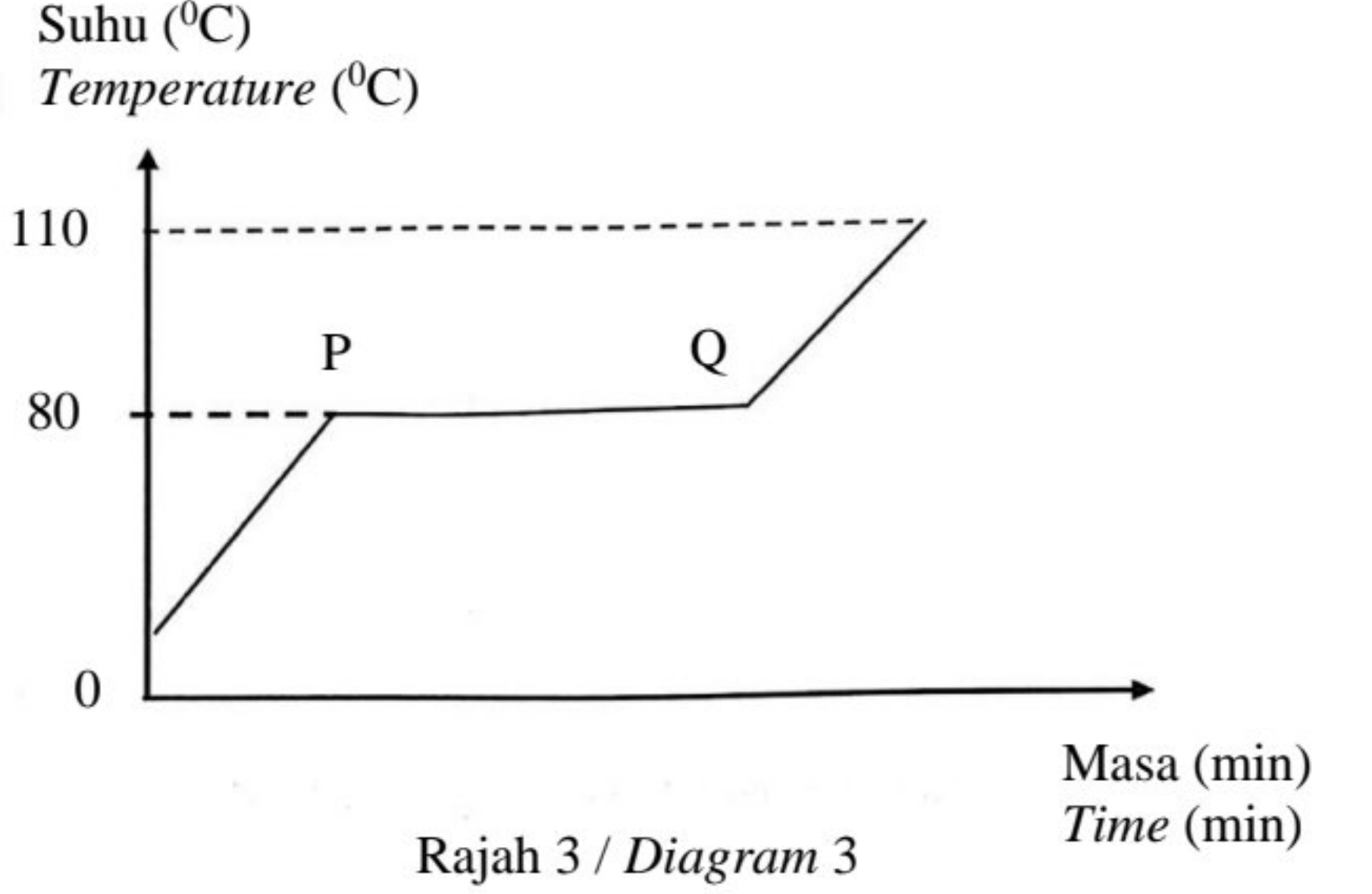
- (b)(ii)
Naphthalene liquid is then cooled to the room temperature. Sketch a graph of temperature against time for the cooling of naphthalene and mark its freezing point on the graph.
[2]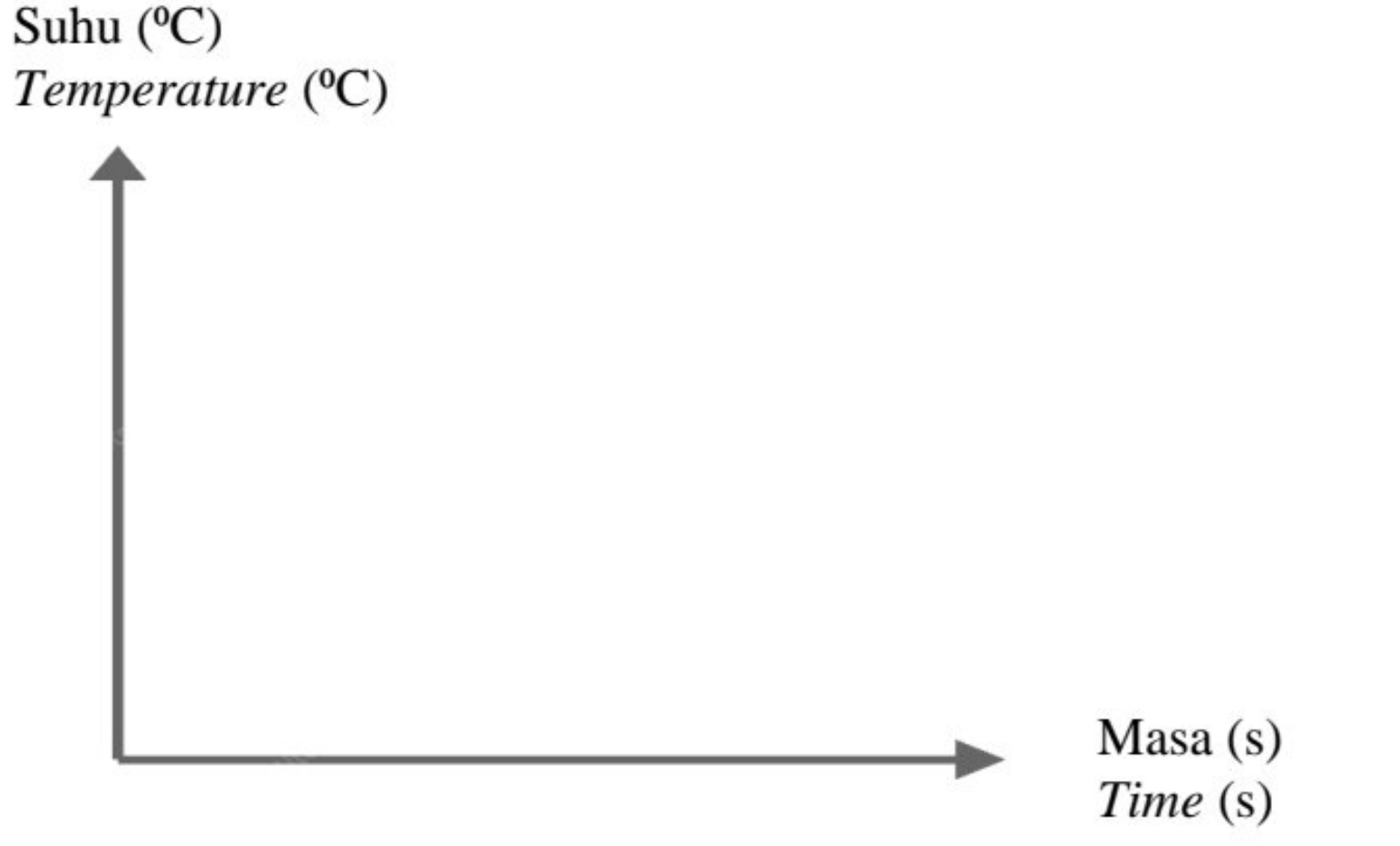
Diagram 4 shows an electron arrangement of compound formed between the reaction of element X and element Y: X²⁺ (2.8) and Y²⁻ (2.8).
Medium8 marks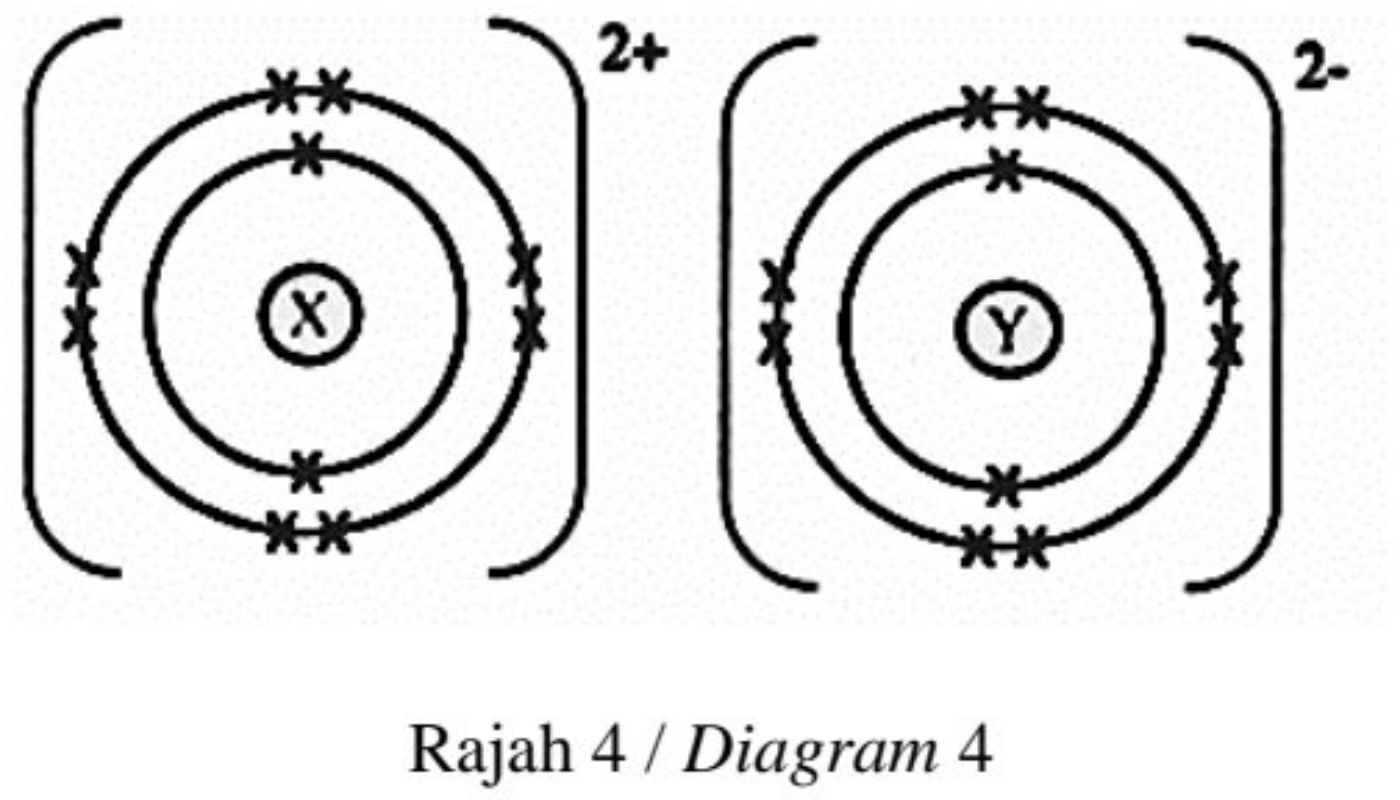
- (a)(i)
Write the electron arrangement of atom X.
[1] - (a)(ii)
State the type of forces of attraction between particles in the compound.
[1] - (a)(iii)
Write the chemical equation for the formation of the compound.
[1] - (a)(iv)
Calculate the mass of compound produced when 0.1 mol X reacts with excess element Y. [Relative atomic mass: Y = 16, X = 24]
[2] - (b)
Puan Lee puts a white solid in a cupboard to keep the cockroach away. The physical properties of the white solid: cannot conduct electricity in any states; low melting and boiling point. Based on the above information, identify the type of compound of the white solid and explain each property.
[3]
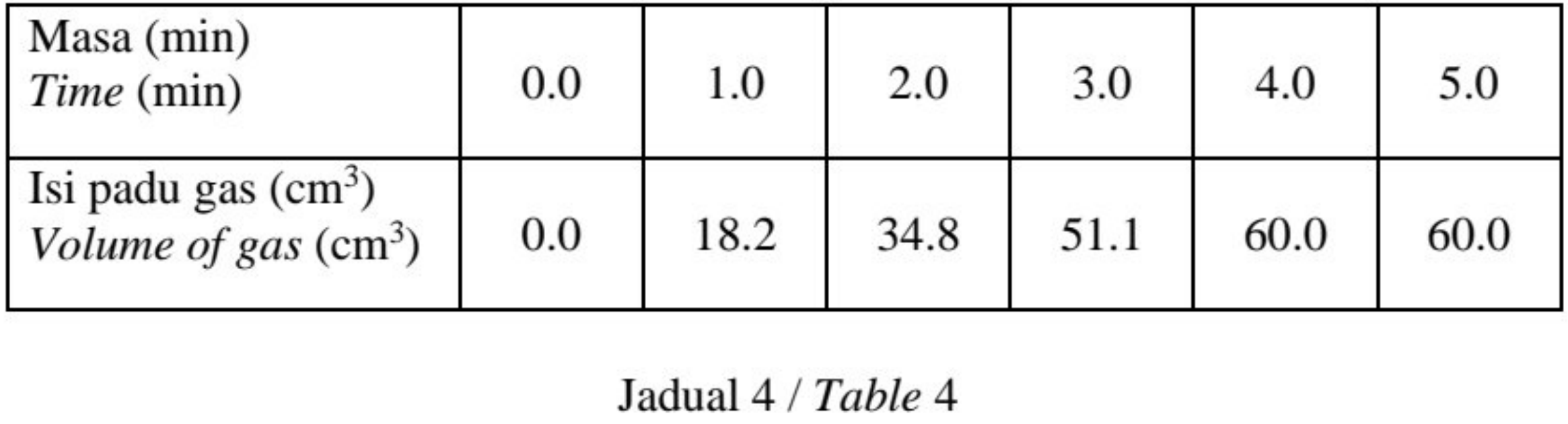
Diagram 5 shows the apparatus set-up for an experiment to study the rate of reaction between magnesium and nitric acid. In this experiment, 1.0 g of magnesium is added to 50 cm³ of 0.1 mol dm⁻³ nitric acid (with catalyst X). Table 4 shows the volume of gas collected at 1 minute interval when catalyst X is added: time 0.0, 1.0, 2.0, 3.0, 4.0, 5.0 min; volume 0.0, 18.2, 34.8, 51.1, 60.0, 60.0 cm³.
Medium9 marks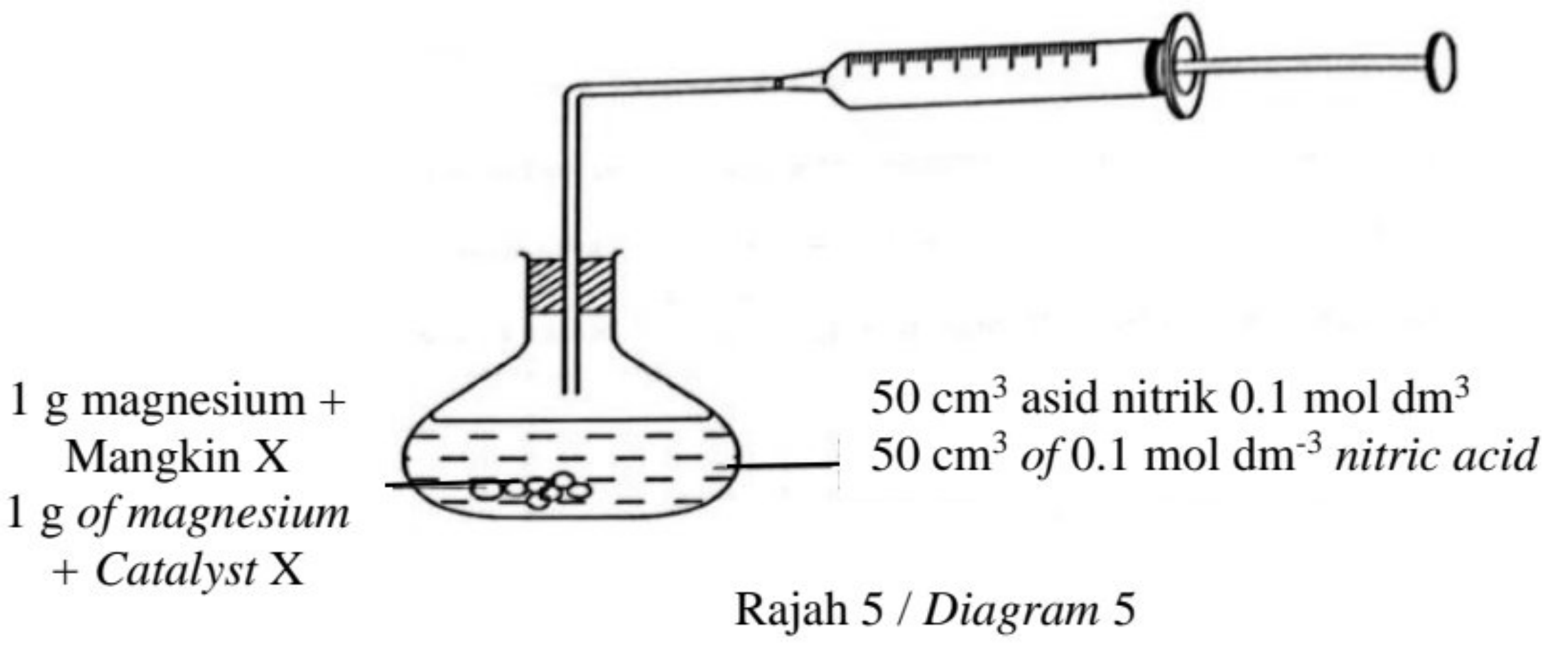
- (a)(i)
What is the meaning of catalyst?
[1] - (a)(ii)
State the name of catalyst X that can be used in this experiment.
[1] - (b)
Write the chemical equation for the reaction in this experiment.
[2] - (c)(i)
Calculate the number of mole of magnesium used. [Ar Mg = 24]
[1] - (c)(ii)
Calculate the number of mole of nitric acid.
[1] - (d)
Based on the answer in 6(c)(i) and 6(c)(ii), name the reactant which determines the volume of gas produced at the end of the reaction.
[1] - (e)
By using the collision theory, explain how the catalyst factor increases the rate of reaction.
[2]
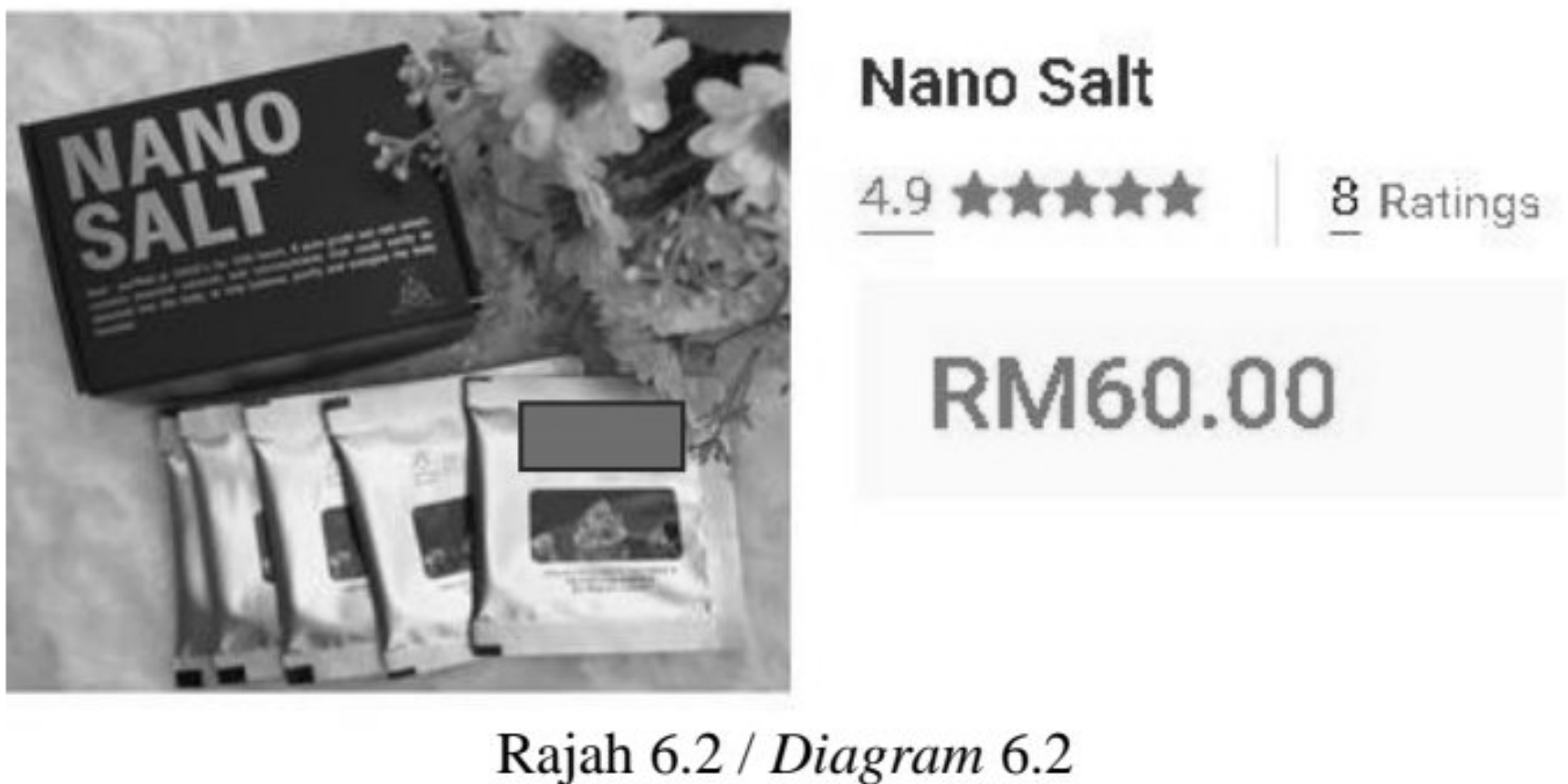
Diagram 6.1 shows the ingredients of a homemade ice cream made by Madam Patricia: cream cheese, full cream milk, cane sugar, vanilla extract, sea salt, xanthan gum. Diagram 6.2 shows an advertisement promoting nano salt (RM60.00) on an online shopping website; the advertisement claims nano salt is a nanotechnology product. Madam Patricia wants to buy it to replace the sea salt.
Medium10 marks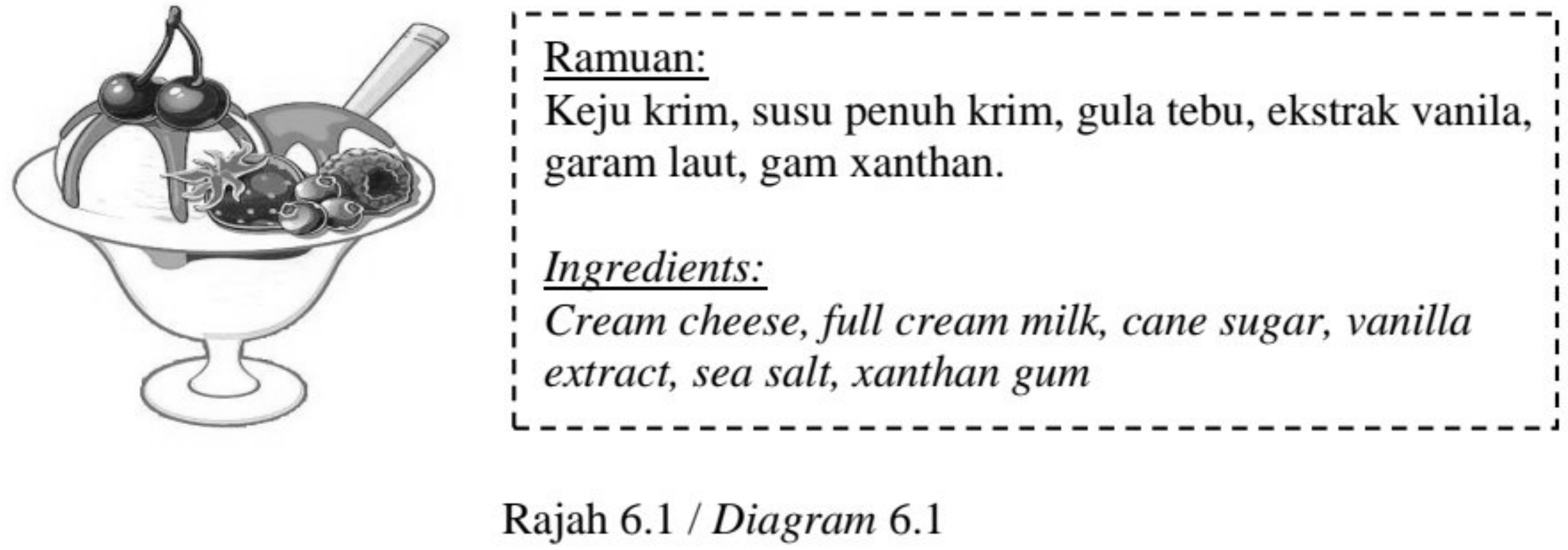
- (a)(i)
One of the ingredients in the ice cream is fats. State the physical state of fats at room temperature.
[1] - (a)(ii)
Xanthan gum is widely used in foods such as chili sauce and ice cream. State the type of food additive and the function of xanthan gum.
[2] - (a)(iii)
Madam Patricia is a diabetic. Suggest and explain another alternative for Madam Patricia to enjoy the ice cream without harming her health.
[2] - (a)(iv)
Justify the use of food additives in daily life.
[2] - (b)(i)
What is the meaning of nanotechnology?
[1] - (b)(ii)
The use of nano salt is healthier than sea salt. Explain.
[2]
Diagram 7 shows the apparatus set up to purify impure silver. Cell P (zinc in nitric acid | porous pot | silver in 50 cm³ of 1.0 mol dm⁻³ silver nitrate) is connected to Cell Q (pure silver and impure silver electrodes in 50 cm³ of 1.0 mol dm⁻³ silver nitrate solution).
Medium10 marks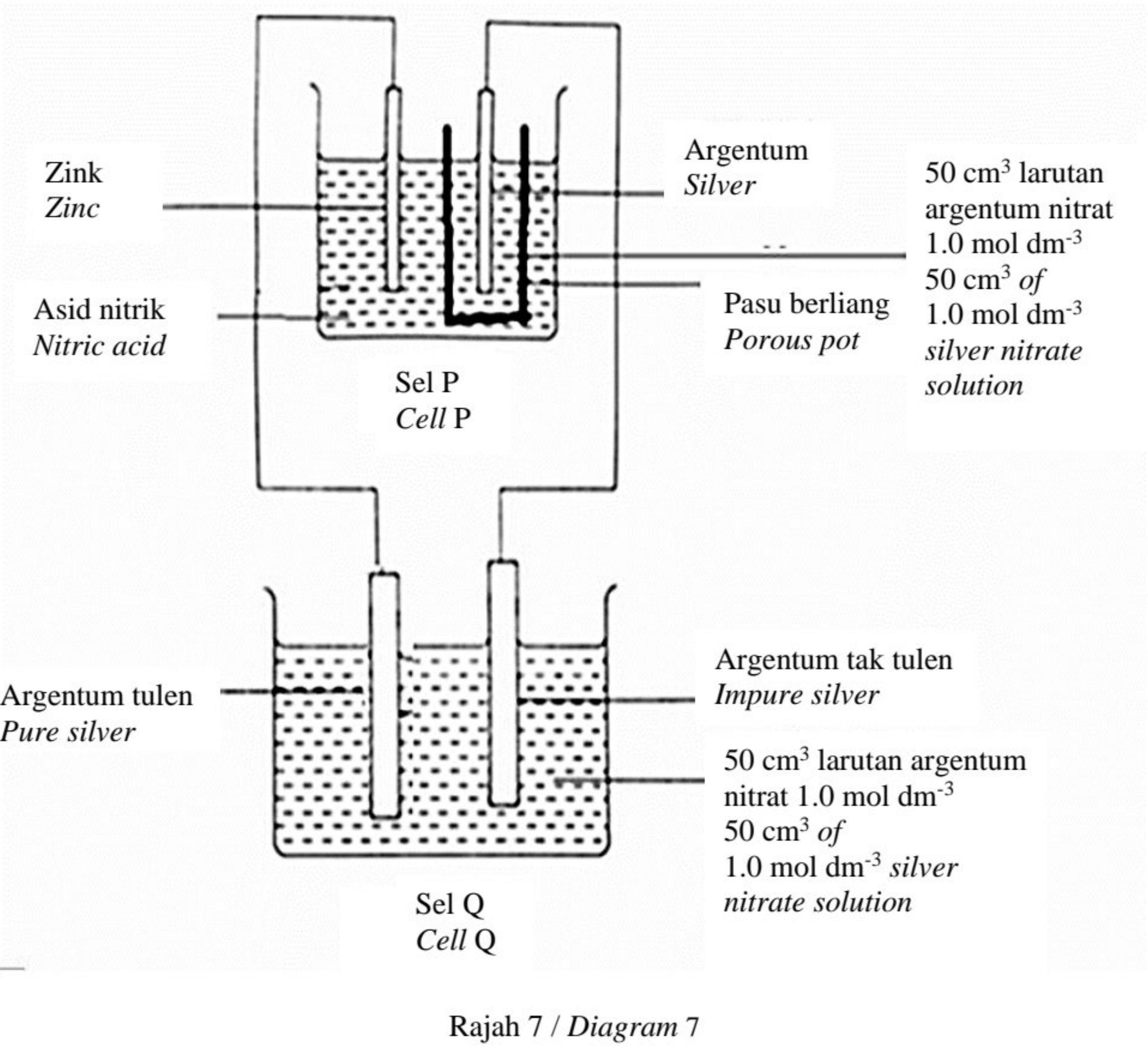
- (a)
What is the function of a porous pot?
[1] - (b)
State the anode and cathode in Cell Q.
[2] - (c)
State the observation at cathode of Cell P.
[1] - (d)
Calculate the maximum mass of silver deposited at cell P during purifying. [Ar Ag = 108]
[3] - (e)(i)
Faridah found out that her keys are rusted. By using the knowledge of electrolysis, suggest the name of the process to make the iron key look more attractive and resistant to corrosion.
[1] - (e)(ii)
Draw a suitable labelled apparatus set-up to help Faridah carry out the process in the laboratory.
[2]
Section B
Table 5 shows the information of four organic compounds. P: 3 carbon atoms; soluble in water; burns with blue flame without soot. Q: 3 carbon atoms; contains carbon and hydrogen only; decolourises the brown colour of bromine water. R: 2 carbon atoms; soluble in water; reacts with calcium carbonate to produce carbon dioxide gas. S: 4 carbon atoms; contains carbon and hydrogen only; does not decolourise the brown colour of bromine.
Medium20 marks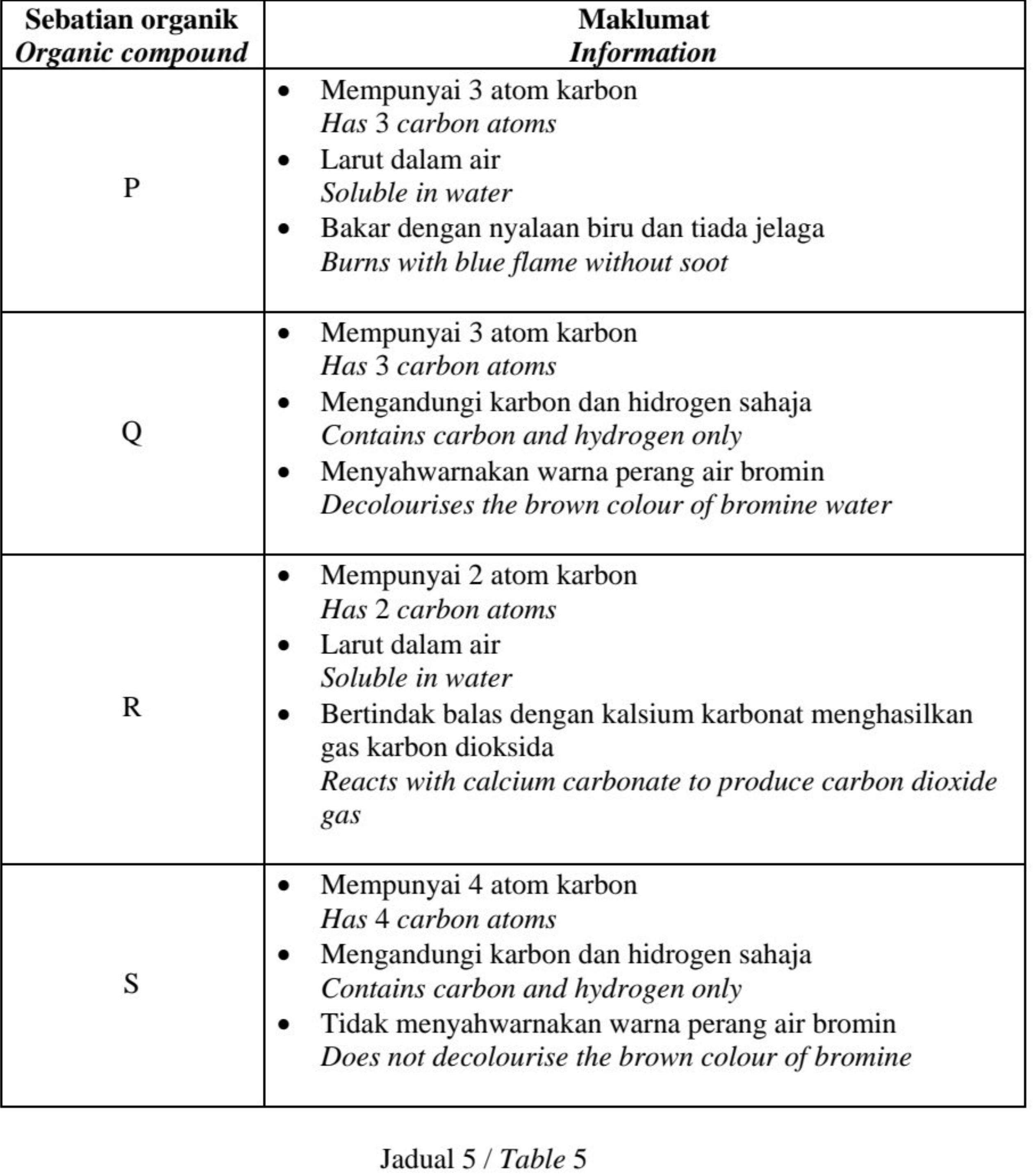
- (a)
Determine the molecular formula of compounds P, Q, R and S. State the name of the homologous series for each compound.
[8] - (b)
In the cracking process, compound X is heated at high temperature and pressure to produce compounds Q and S. Identify the compound X. Write the chemical equation for the cracking process of compound X. Calculate the mass of compound Q if 2400 dm³ of compound X is used in the reaction. [Ar H = 1; C = 12. 1 mole of gas occupies 24 dm³ at room temperature]
[5] - (c)
Compound P can be converted to organic compound Q through process T. Name process T. Draw a labelled diagram to show how to prepare and collect compound Q.
[3] - (d)
A factory wants to manufacture a new flavoured candy. A sample of ester Z is prepared through the esterification between compound P and R. Write the chemical equation for the reaction. Draw the structural formula and name the ester Z.
[4]
(a) The thermochemical equation: Zn + CuSO₄ → ZnSO₄ + Cu, ΔH = −210 kJ mol⁻¹. (b) 50 cm³ of 2.0 mol dm⁻³ silver nitrate solution is mixed with 50 cm³ of 2.0 mol dm⁻³ sodium chloride solution to form a white precipitate of silver chloride, AgCl. 65.5 kJ of heat is released when 1 mol of silver chloride precipitated. (c) Table 6 shows the energy profile diagrams for Reaction I (AgNO₃ + NaCl → AgCl + NaNO₃, ΔH = −65.5 kJ mol⁻¹) and Reaction II (N₂ + O₂ → 2NO, ΔH = +180 kJ mol⁻¹).
Hard20 marks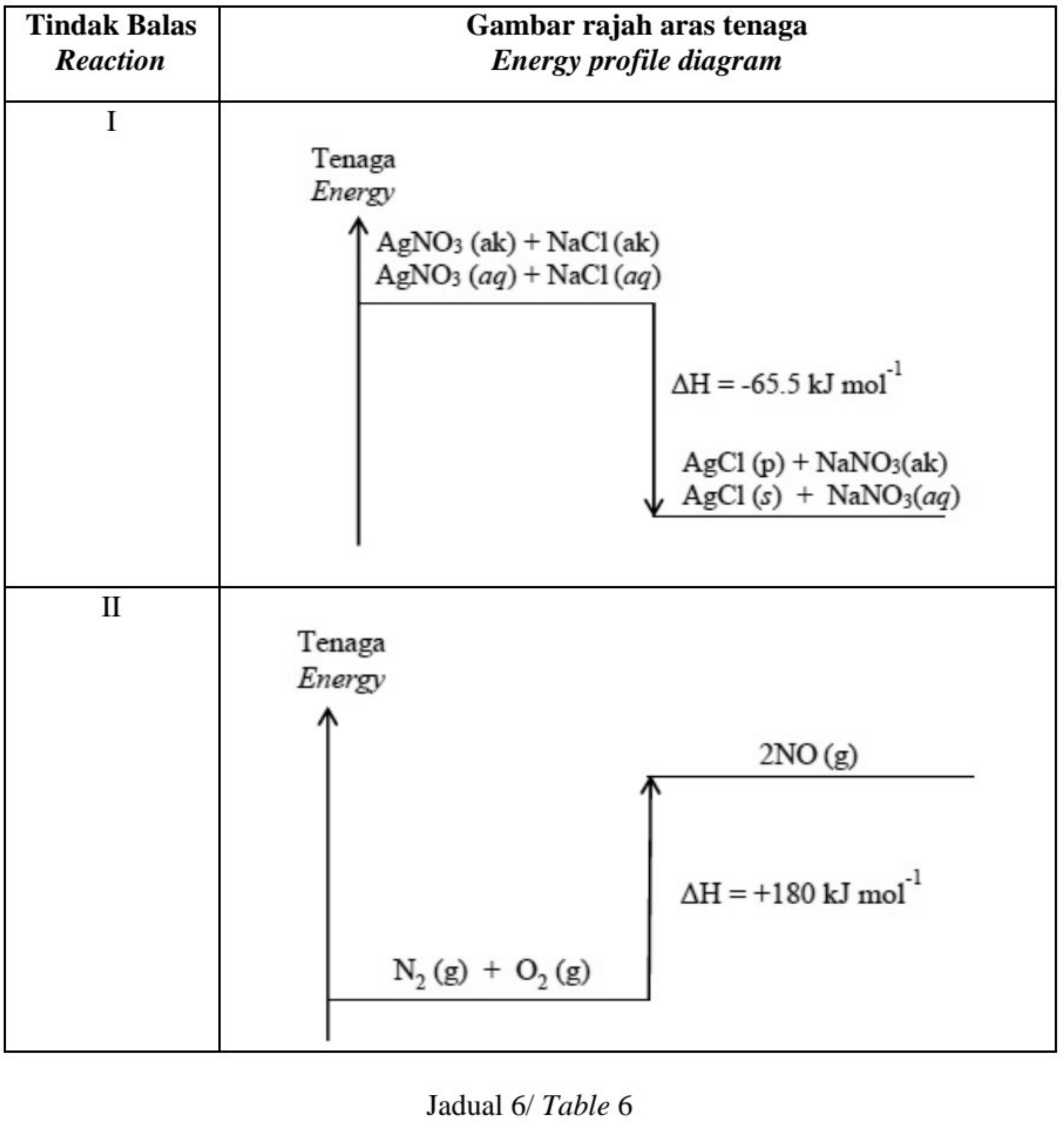
- (a)(i)
Based on the above thermochemical equation, state the meaning of heat of displacement.
[1] - (a)(ii)
State the colour of copper(II) sulphate solution.
[1] - (a)(iii)
What will happen to ΔH value when zinc metal is replaced with magnesium metal? Explain your answer.
[2] - (b)(i)
Write the ionic equation for the formation of silver chloride.
[1] - (b)(ii)
Calculate the heat released in the reaction.
[3] - (b)(iii)
What is the temperature change in the mixture? [Specific heat capacity of solution = 4.2 J g⁻¹ °C⁻¹; density of solution = 1 g cm⁻³]
[2] - (b)(iv)
The value of heat released during displacement of metal reaction is usually lower than theoretical value. Explain why and state the precautionary steps to be taken during the experiment.
[2] - (c)
Based on Table 6, compare Reaction I and Reaction II in terms of: the type of reactions; heat change during reactions; temperature change during reactions; total energy content of reactants and products; change of heat energy during the breaking and formation of bonds.
[8]
Section C
(a) Diagram 8 shows a beaker containing a mixture of zinc nitrate and zinc carbonate salts given to participants during the 'COOL SCIENCE CHALLENGE' competition in Science Week activity. (b) Table 7: sulphuric acid, H₂SO₄; zinc nitrate, Zn(NO₃)₂; sodium carbonate, Na₂CO₃.
Medium20 marks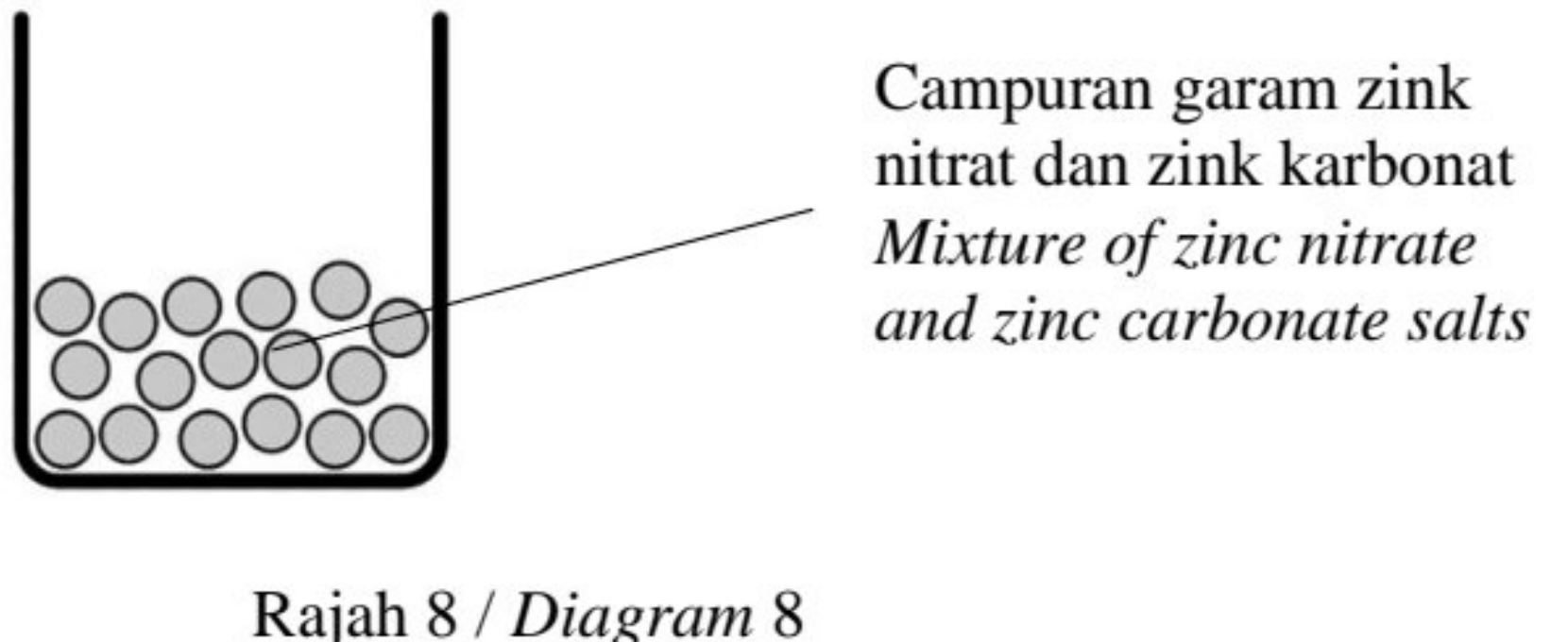

- (a)(i)
State the solubility of the two salts. Describe briefly how both salts can be separated.
[6] - (a)(ii)
Compare and contrast both salts when decomposed by heat. Write the chemical equation for the decomposition reaction for both salts.
[7] - (b)
By using the substances in Table 7, describe how to prepare zinc sulphate salt in the laboratory.
[7]