Write your answer on paper. Then open the answer to check it.
Section A
Diagram 1 shows a brass alloy trophy and the arrangement of particles in the brass alloy.
Medium5 marks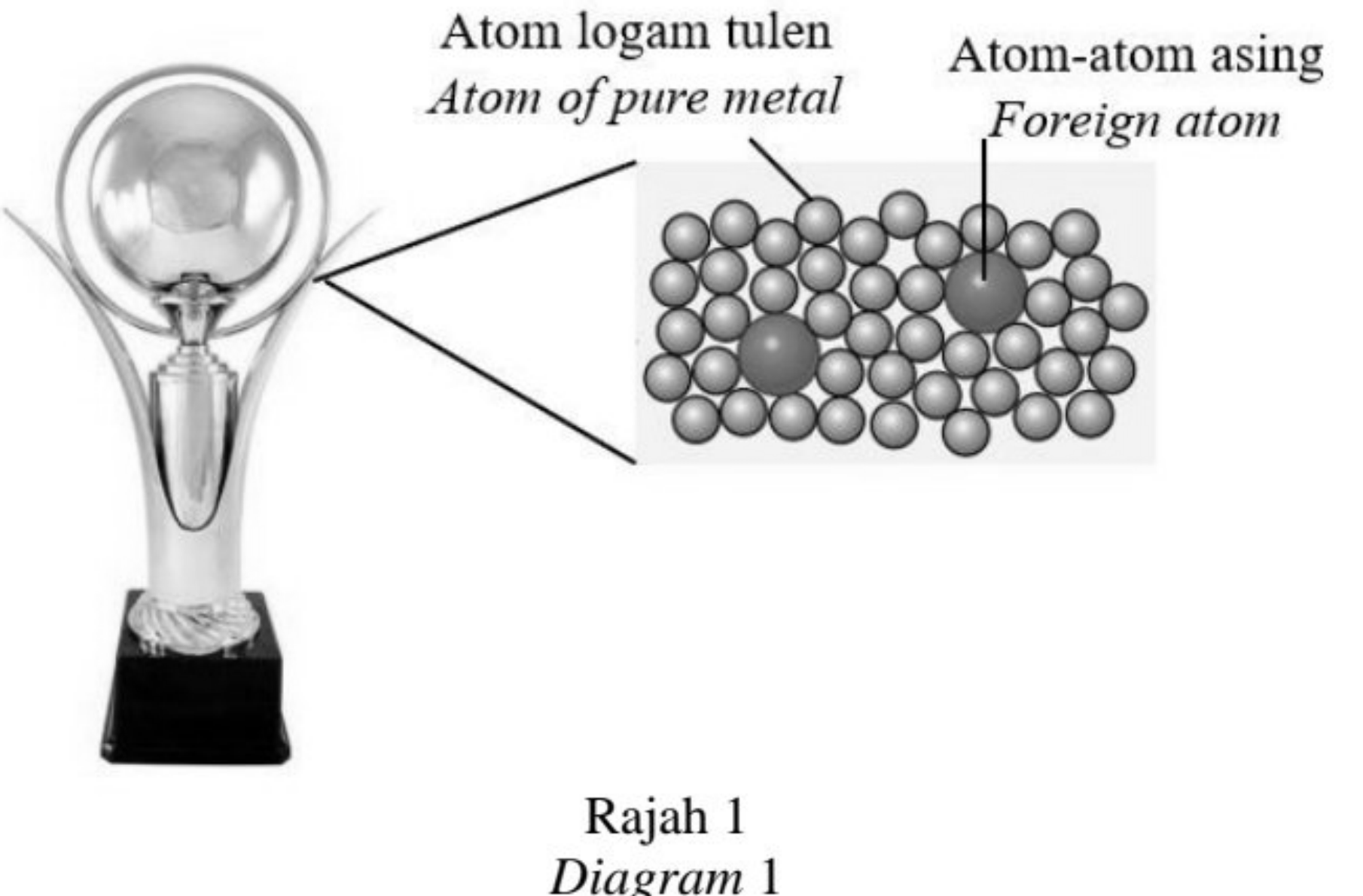
- (a)
What is meant by alloy?
[1] - (b)(i)
Brass alloy is built from the mixture of pure metal and foreign metal. State the name for: pure metal; foreign metal.
[2] - (b)(ii)
Explain why brass is chosen as material to make the trophy instead of its pure metal.
[2]
(a) Diagram 2.1 shows the apparatus set-up used in an experiment to compare the melting point of ionic compound and covalent compound. Both powdered solids of substances M and N are heated in the water bath and the physical state is compared after a few minutes. (b) Diagram 2.2 shows the arrangement of water molecules, H2O in solid and liquid states.
Medium5 marks- (a)(i)
State the meaning of melting point.
[1]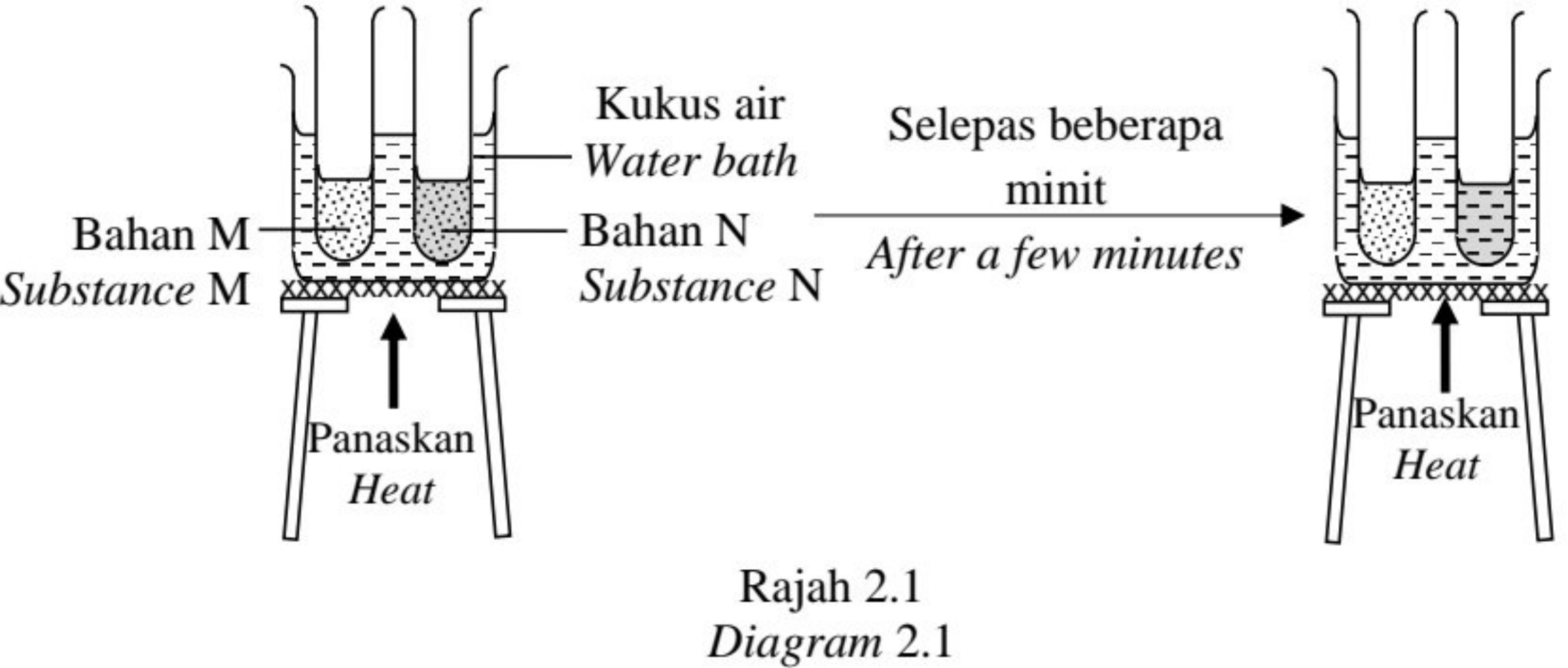
- (a)(ii)
What is the type of chemical bond that forms particle in substance N? Name an example of substance N.
[2] - (b)(i)
Q is a force of attraction that exists between hydrogen atom, H and oxygen atom, O of two nearby water molecules. What is Q?
[1]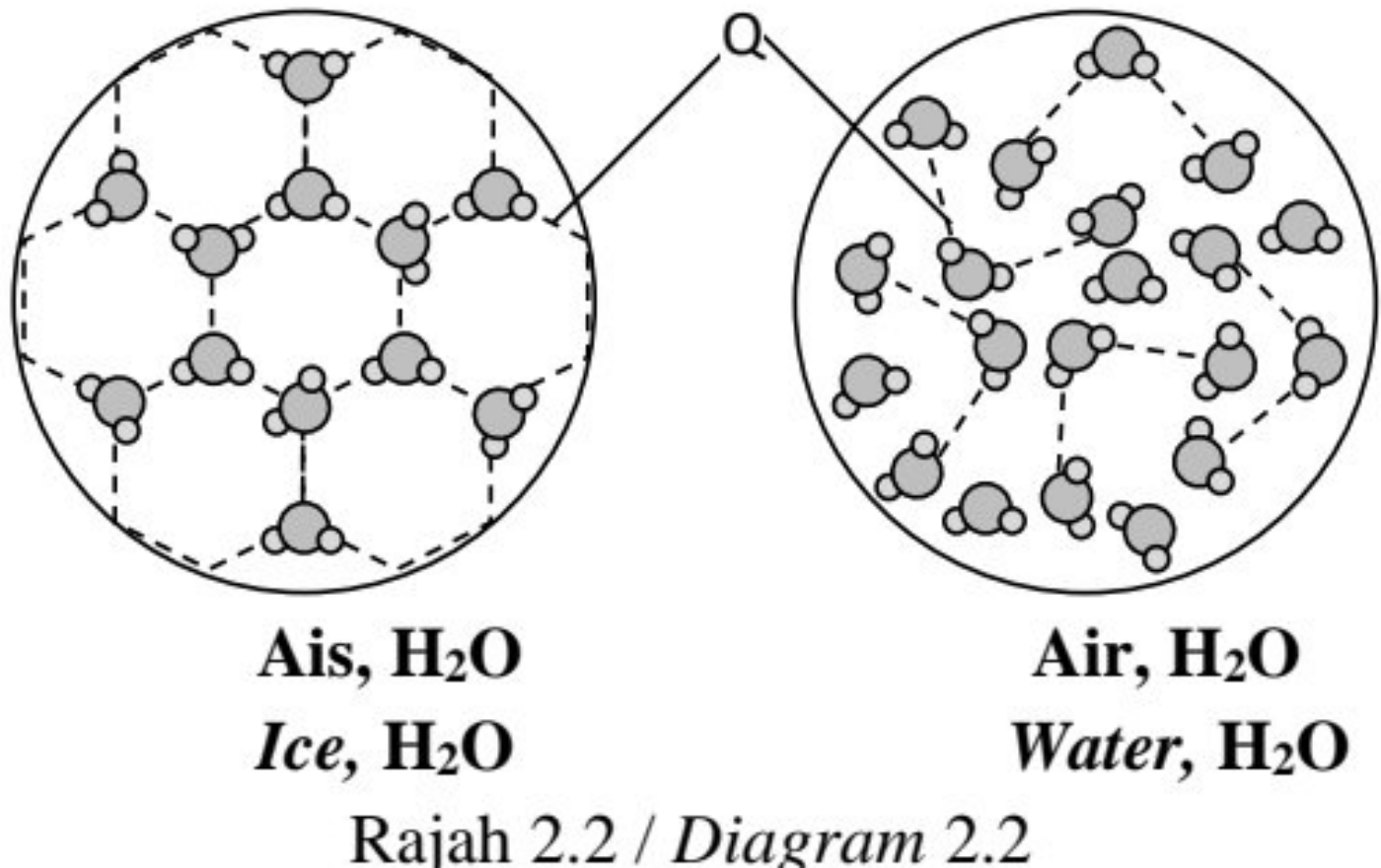
- (b)(ii)
Based on Diagram 2.2, state one effect of Q on the physical property of water.
[1]
Diagram 3 shows the set-up of apparatus used to study the chemical reaction between iron wool and oxygen gas. The iron wool burns brightly in oxygen, then a brown solid residue is produced.
Medium6 marks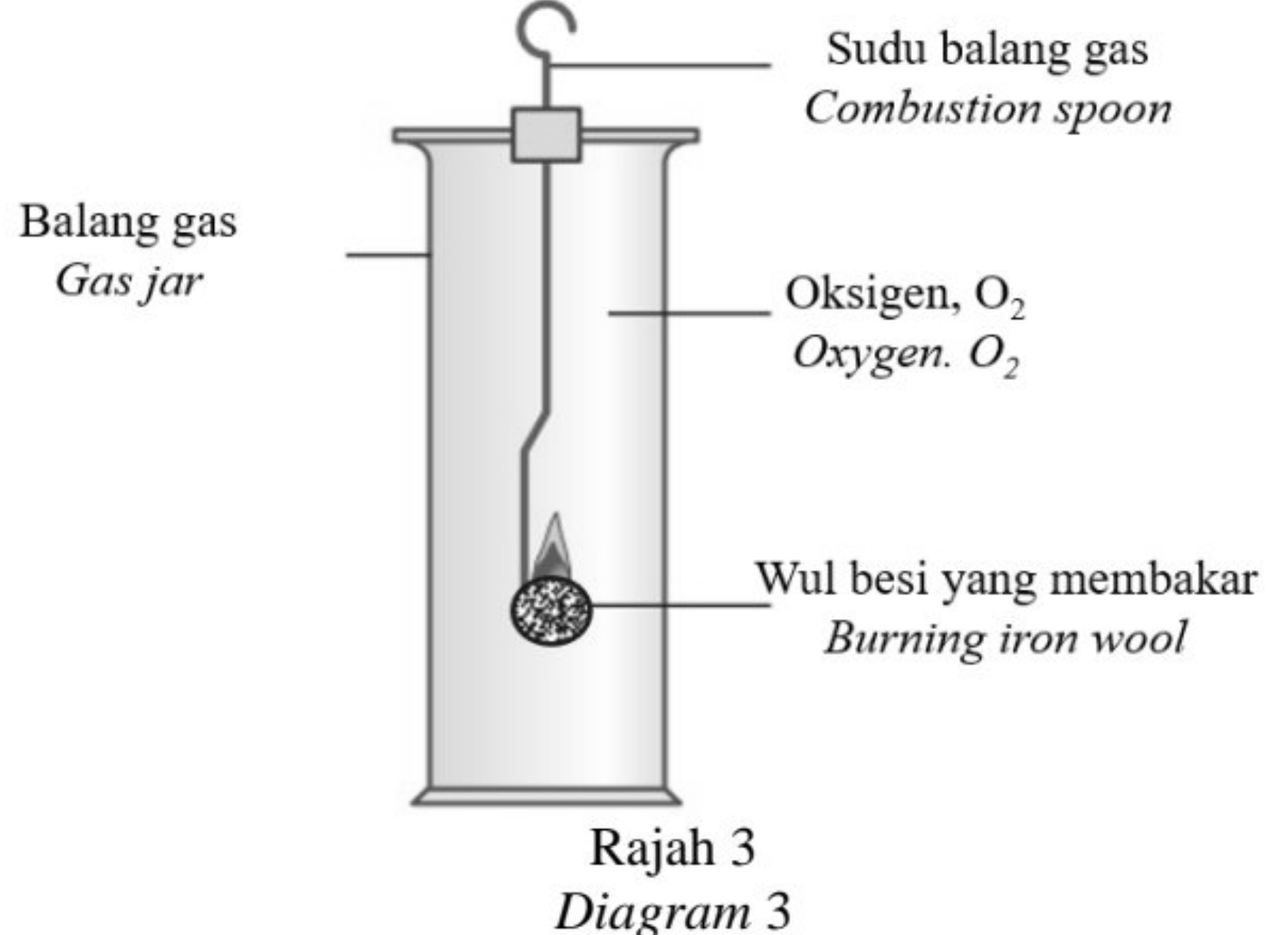
- (a)
The equation below is not a balanced chemical equation: ...Fe(s) + ...O2(g) → ...Fe2O3(s). Balance the chemical equation above.
[1] - (b)
Interpret the chemical equation qualitatively and quantitatively.
[2] - (c)
State the type of particles in Fe2O3.
[1] - (d)
Write the formula of cation in Fe2O3.
[1] - (e)
Calculate the relative formula mass of Fe2O3. [Relative atomic mass: O = 16, Fe = 56]
[1]
Table 1 shows the information of Period 3 elements in the Periodic Table of Elements: Element Na Mg Al Si P S Cl Ar; proton number 11 12 13 14 15 16 17 18; number of valence electrons 1 2 3 4 5 6 7 8.
Medium7 marks- (a)(i)
Why are these elements placed in Period 3?
[1]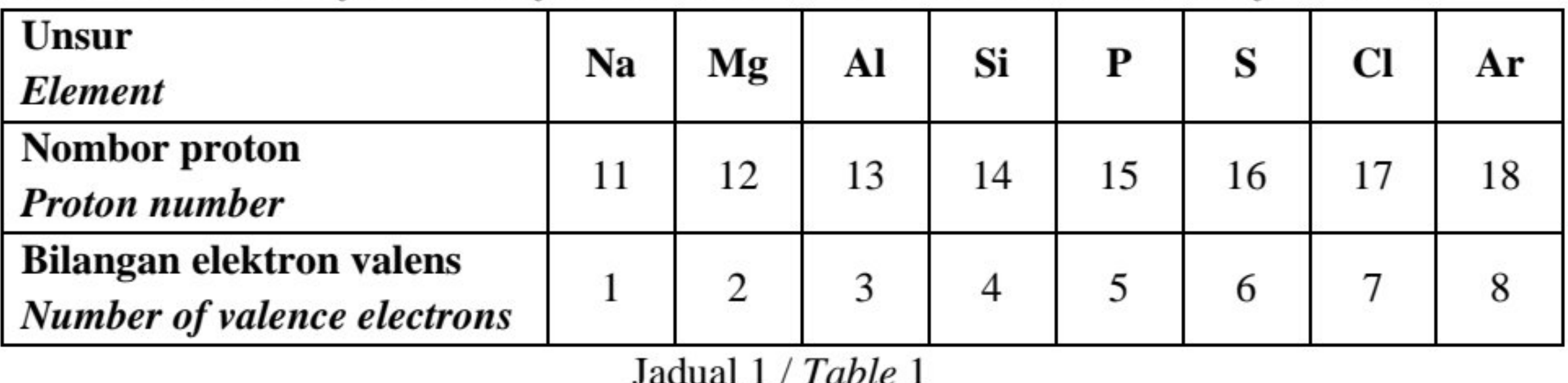
- (a)(ii)
Argon exists as monoatomic gas. Explain.
[1] - (b)(i)
Chlorine is added into swimming pool to clean the pool and to kill germs. The products of the reaction of chlorine and water are hydrochloric acid and hypochlorous acid. Write a chemical equation for the reaction between chlorine and swimming pool water.
[2] - (b)(ii)
Calculate the mass of chlorine needed to be dissolved in 2 500 000 dm³ of swimming pool water to produce 0.00004 mol dm⁻³ of hypochlorous acid. [Relative atomic mass: H = 1, O = 16, Cl = 35.5]
[3]
(a) Diagram 4.1 shows two examples of manufactured substances with their molecular structures from thermosetting plastic and thermoplastic (cross-links X in the thermosetting plastic). (b) Diagram 4.3 shows the process of vulcanisation of rubber (natural rubber chain CH2-C=CH3-CH2-CH2-C=CH-CH2 + sulphur gives rubber polymer Q).
Medium8 marks- (a)(i)
The term 'plastic' is a general name referring to synthetic polymer. What is the basic unit of plastic?
[1]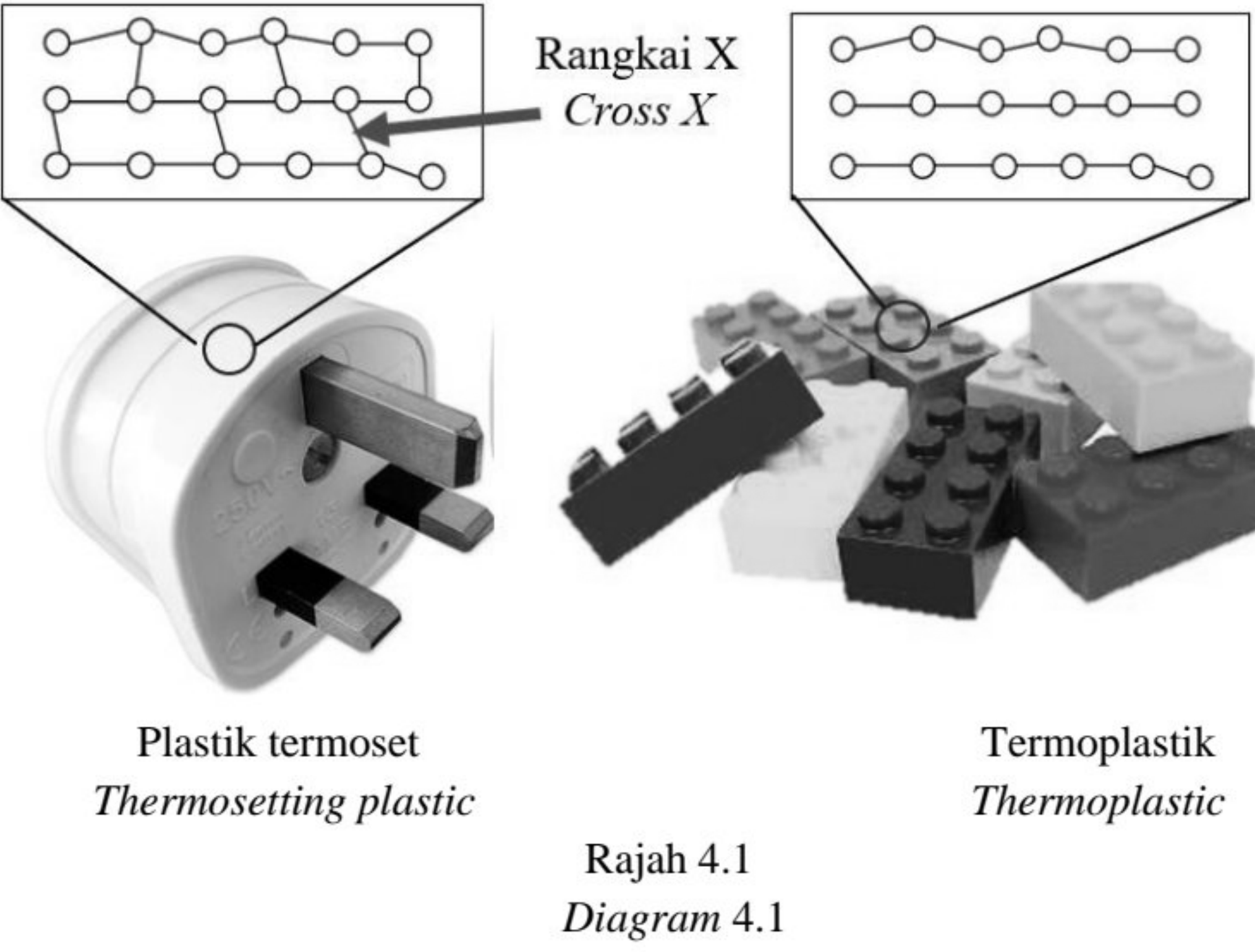
- (a)(ii)
Which plastics can be recycled? State your reasons.
[2] - (a)(iii)
Diagram 4.2 shows a plastic reduction campaign poster launched in Malaysia ('No plastic bag everyday'). Justify the implementation of the campaign.
[2] - (b)(i)
Draw the rubber polymer Q in the answer space below.
[1]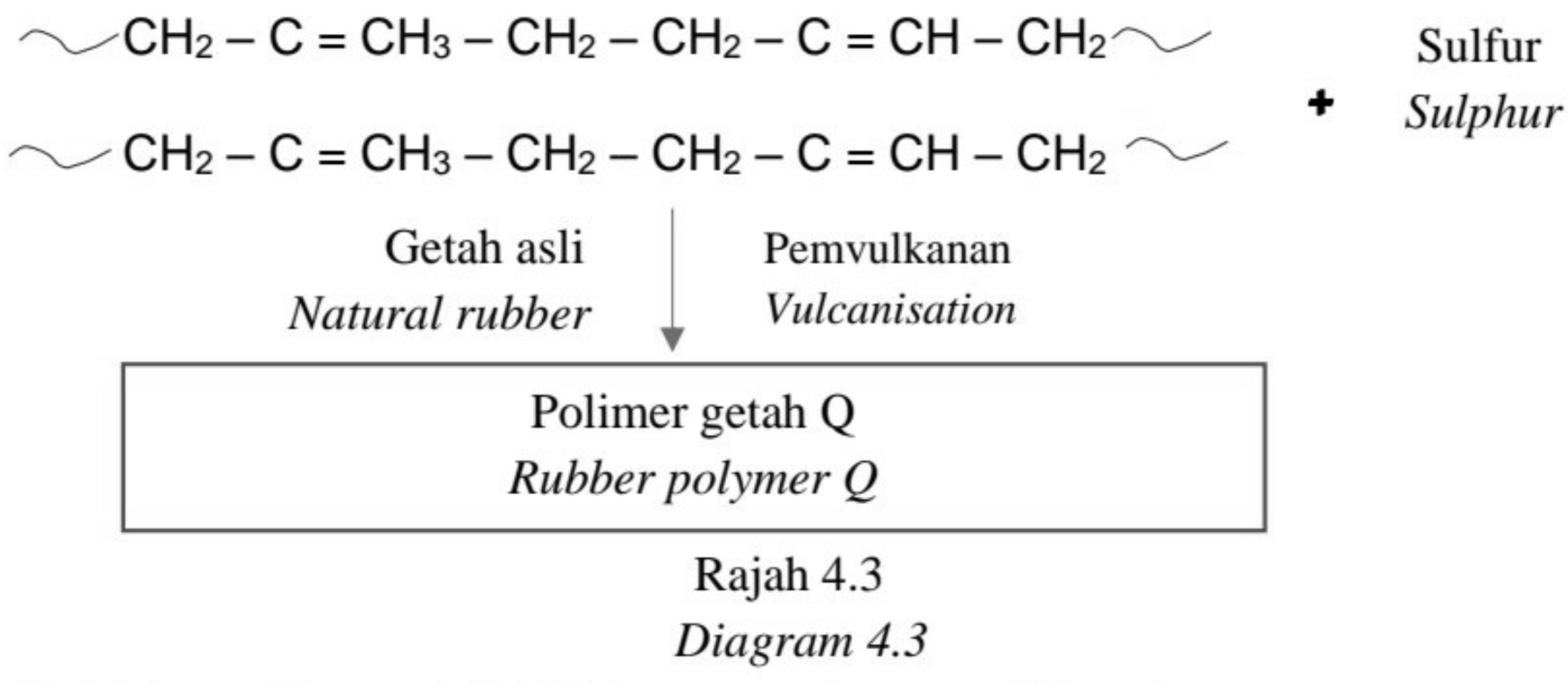
- (b)(ii)
Diagram 4.4 shows car tyres. Car tyres are made of vulcanised rubber. In your opinion, why vulcanised rubber is more suitable to be used to manufacture car tyres?
[2]
Calcium carbonate is a type of insoluble salt that is produced through the precipitation process between 50 cm³ of 1.0 mol dm⁻³ calcium nitrate solution and 50 cm³ of 1.0 mol dm⁻³ X solution. The thermochemical equation: Ca²⁺(aq) + CO3²⁻(aq) → CaCO3(s) ΔH = +12.6 kJ mol⁻¹.
Medium9 marks- (a)
State solution X.
[1] - (b)(i)
Draw the energy level diagram for the reaction on the provided axis (Energy axis).
[2] - (b)(ii)
State one information that can be deduced from the diagram in 6(b)(i).
[1] - (b)(iii)
24 g of calcium carbonate is formed in the activity. Calculate the heat change of the reaction. [Molar mass of calcium carbonate = 100 g mol⁻¹, specific heat capacity of solution = 4.2 J g⁻¹ °C⁻¹]
[2] - (c)
An athlete's highest body temperature during a long jump event reached 38.6 °C. Diagram 5.1 shows the body temperature after resting for 10 minutes (37.4 °C). Sweating causes the athlete's body to feel cold. Is sweating an endothermic reaction or an exothermic reaction? Explain the reason for your answer.
[3]
Azmi prepared 250 cm³ standard solution using sodium carbonate, Na2CO3 0.05 mol dm⁻³ as shown in Diagram 6.1 (Step 1: weigh X g sodium carbonate powder; Step 2: dissolve and stir with a glass rod; Step 3: pour into 250 cm³ volumetric flask; Step 4: add water with a pipette to the mark; Step 5: stopper and shake).
Medium10 marks- (a)(i)
What is meant by standard solution?
[1]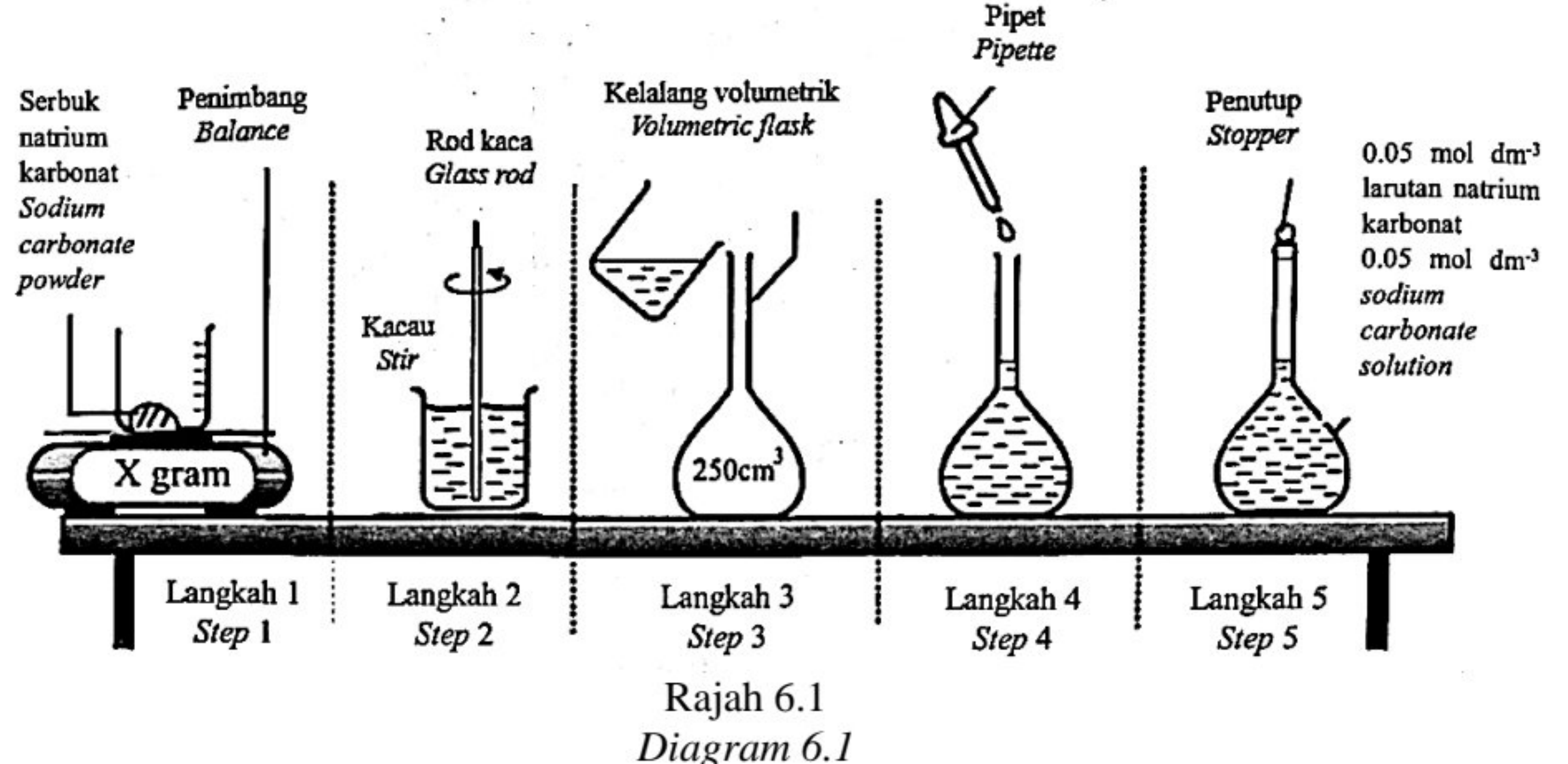
- (a)(ii)
Calculate the mass X of sodium carbonate. [Relative mass of sodium carbonate = 106]
[2] - (b)
Diagram 6.2 shows the conversation between Azmi and his teacher: Azmi is asked to find the molarity of a bottle of hydrochloric acid of unknown concentration, using the Na2CO3 0.05 mol dm⁻³ standard solution. Draw a labelled diagram for the apparatus set-up that can be used by Azmi to find out the molarity of hydrochloric acid by using the standard solution prepared in 7(a).
[2]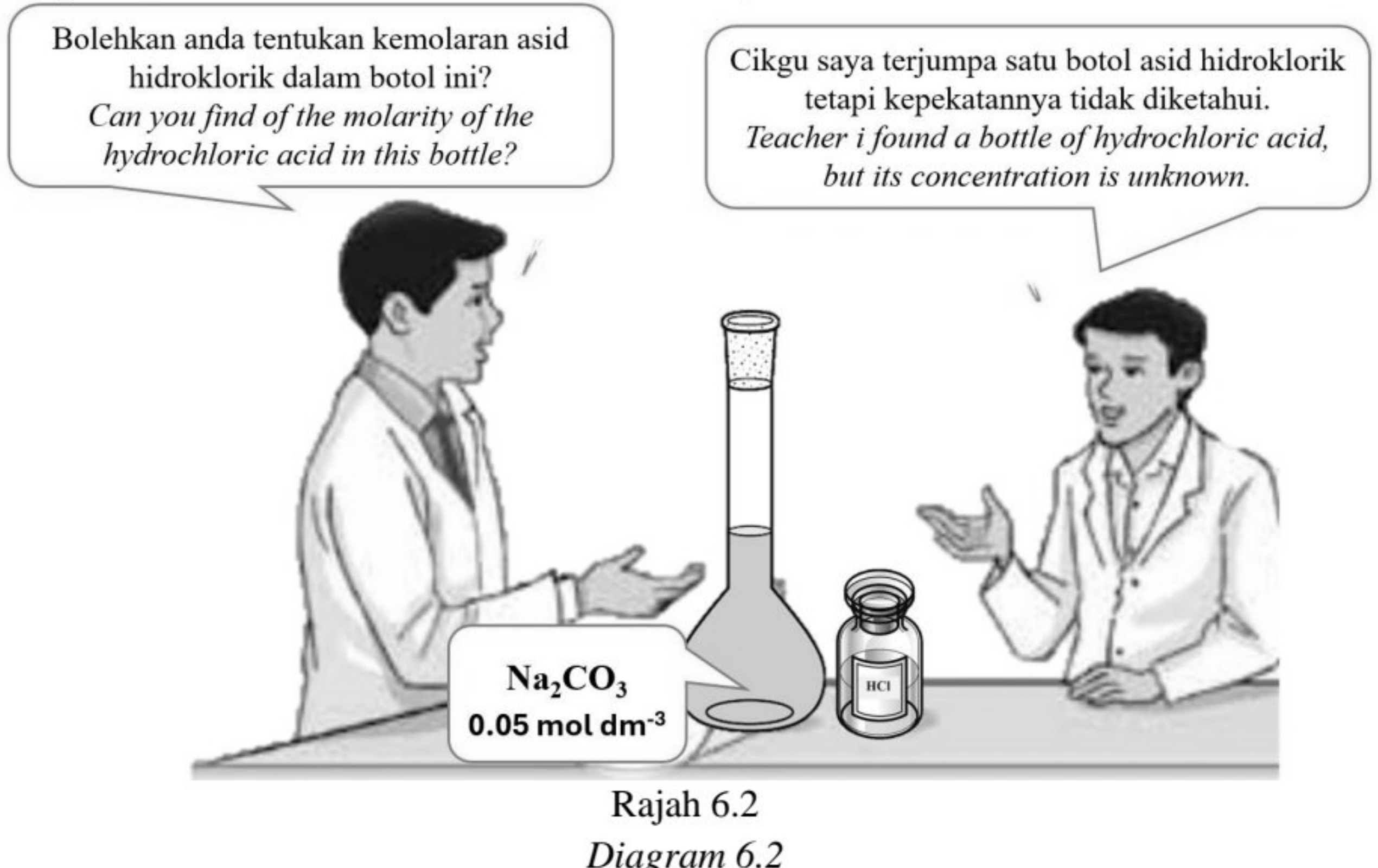
- (c)
Diagram 6.3 shows the observation when sodium carbonate solution is added to blue coloured X solution (a green precipitate forms). Suggest solution X and green precipitate.
[2]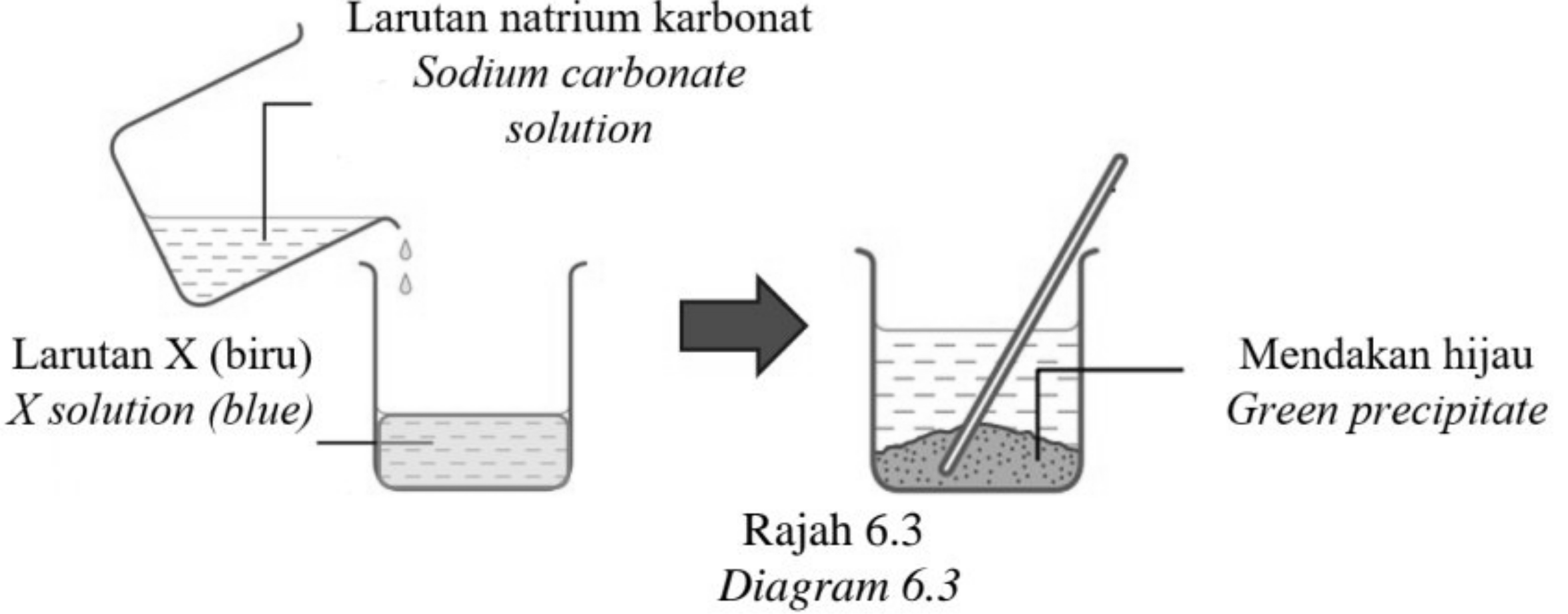
- (d)
Azmi is given a task to prepare 250 cm³ standard solution of sodium hydroxide with concentration 0.05 mol dm⁻³. Azmi plans to use the method shown in Diagram 6.1. In your opinion, is Azmi's decision correct? Explain.
[3]
Diagram 7 shows a series of reactions of an isomer of butene (2-methylpropene): hydrogenation gives compound P, hydration gives compound R, and reaction Y with acidified K2Cr2O7 solution gives compound Q.
Medium10 marks- (a)
What is the meaning of isomer?
[1]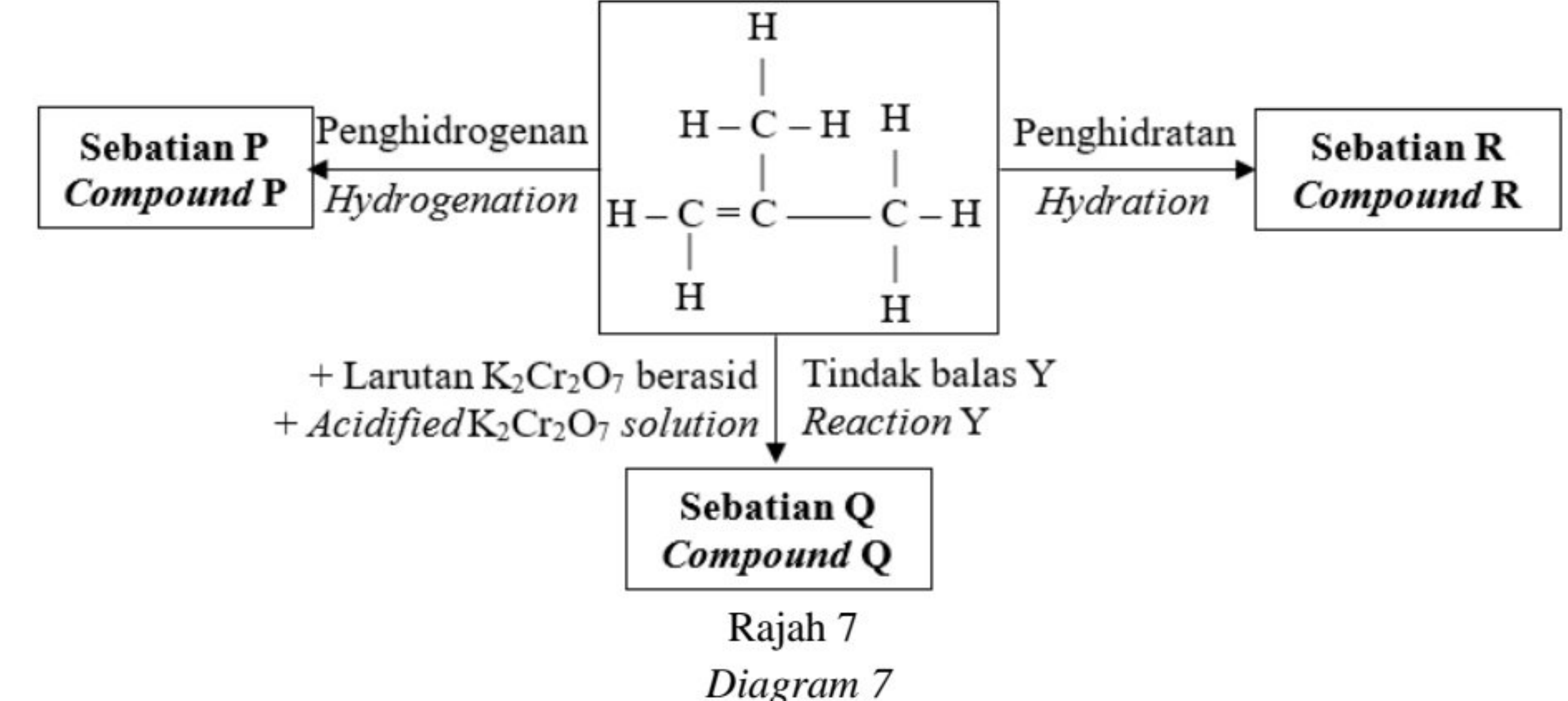
- (b)
The isomer of butene in the diagram can undergo addition polymerisation. Draw the structural formula of the polymer formed.
[1] - (c)(i)
Heating butene and hydrogen gas produces compound P. State the conditions required for the optimal production of compound P.
[1] - (c)(ii)
Briefly describe one chemical test to differentiate compound P and butene.
[2] - (d)(i)
Name reaction Y.
[1] - (d)(ii)
Write a balanced chemical reaction for reaction Y.
[1] - (e)(i)
Name compound R according to IUPAC nomenclature.
[1] - (e)(ii)
Table 2 shows the scents of different carbon compounds (butyl methanoate: plum; methyl butanoate: apple; pentyl butyrate: apricot; 2-methylpropyl methanoate: raspberry). Based on the table, briefly explain how compound R can be used as raw material to produce a fragrance in cosmetic products. State the scent of the product formed.
[2]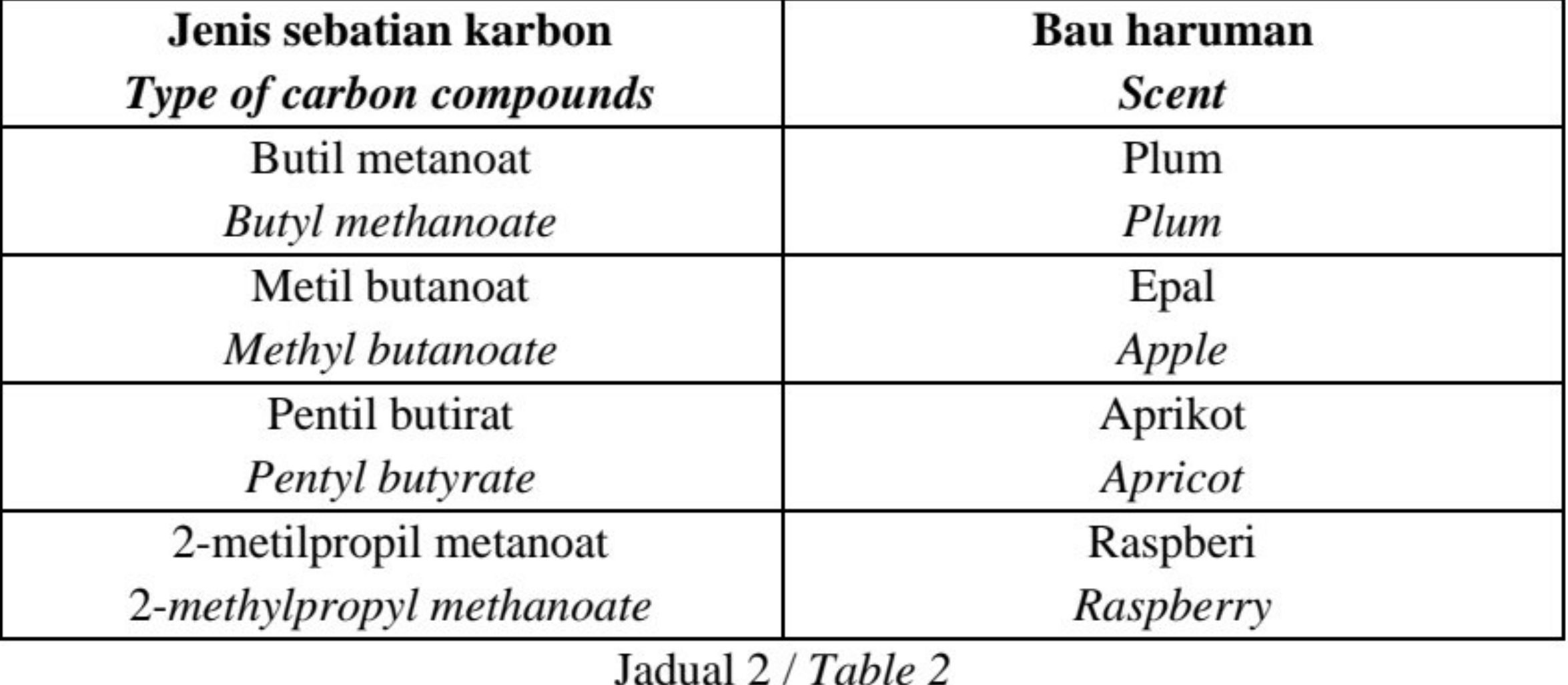
Section B
Answer any one question in Section B. (Question 9: cleaning agents, green technology and medicines.)
Medium20 marks- (a)(i)
Diagram 8.1 shows the structural formula of the anion of detergent molecule CH3(CH2)14–SO3⁻. The structure contains hydrophilic part and hydrophobic part. Based on diagram 8.1, identify part A (the hydrocarbon chain) and B (the SO3⁻ end).
[2]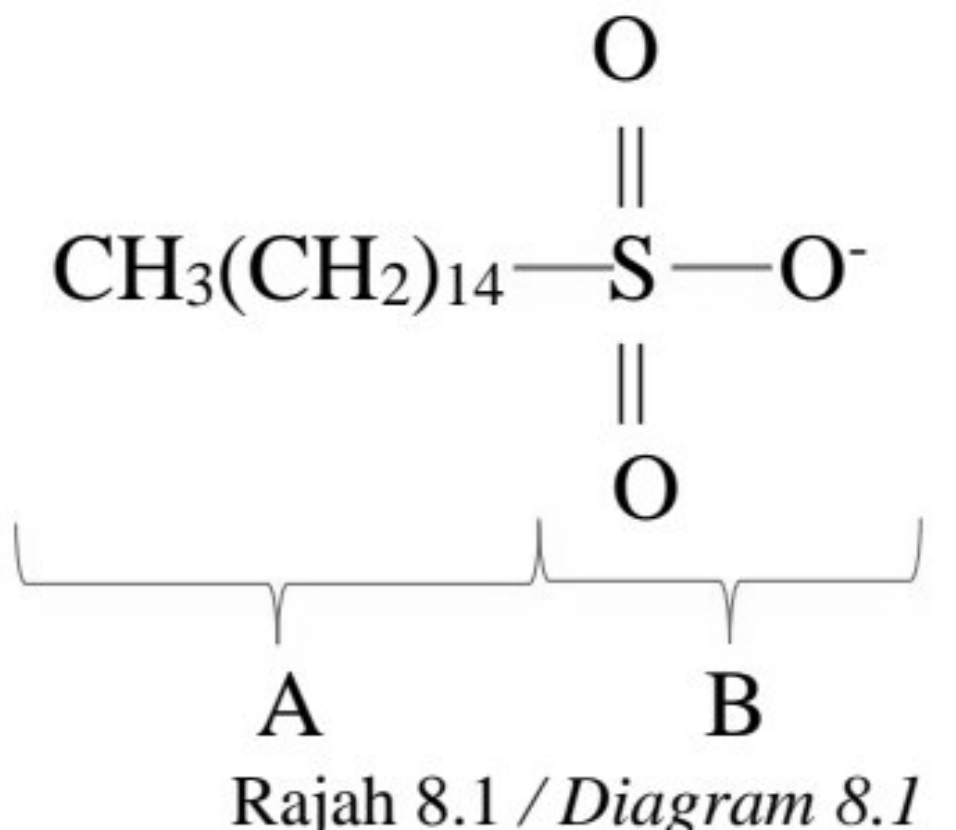
- (a)(ii)
Diagram 8.2 shows part of the washing action of anion of detergent towards the grease stain on cloth. Based on Diagram 8.2, explain the washing action of detergent anion on greasy stain on cloth.
[5]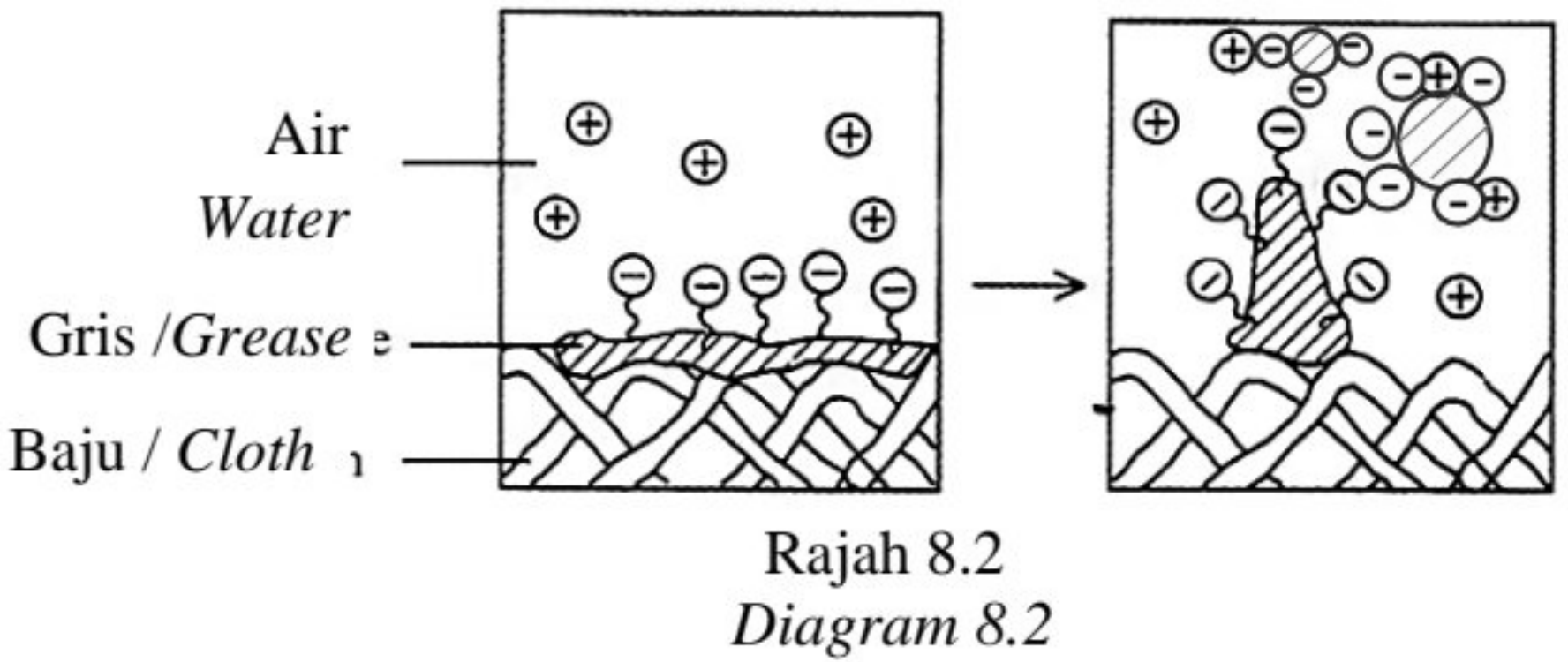
- (a)(iii)
Diagram 8.3 shows a group of scouts setting up a tent by the beach. One scout asks why his towel still has curry stains after washing with cleaning agent A; another uses cleaning agent B and removes the stain effectively. Based on Diagram 8.3, suggest cleaning agent A and B. Explain the difference in observation.
[5]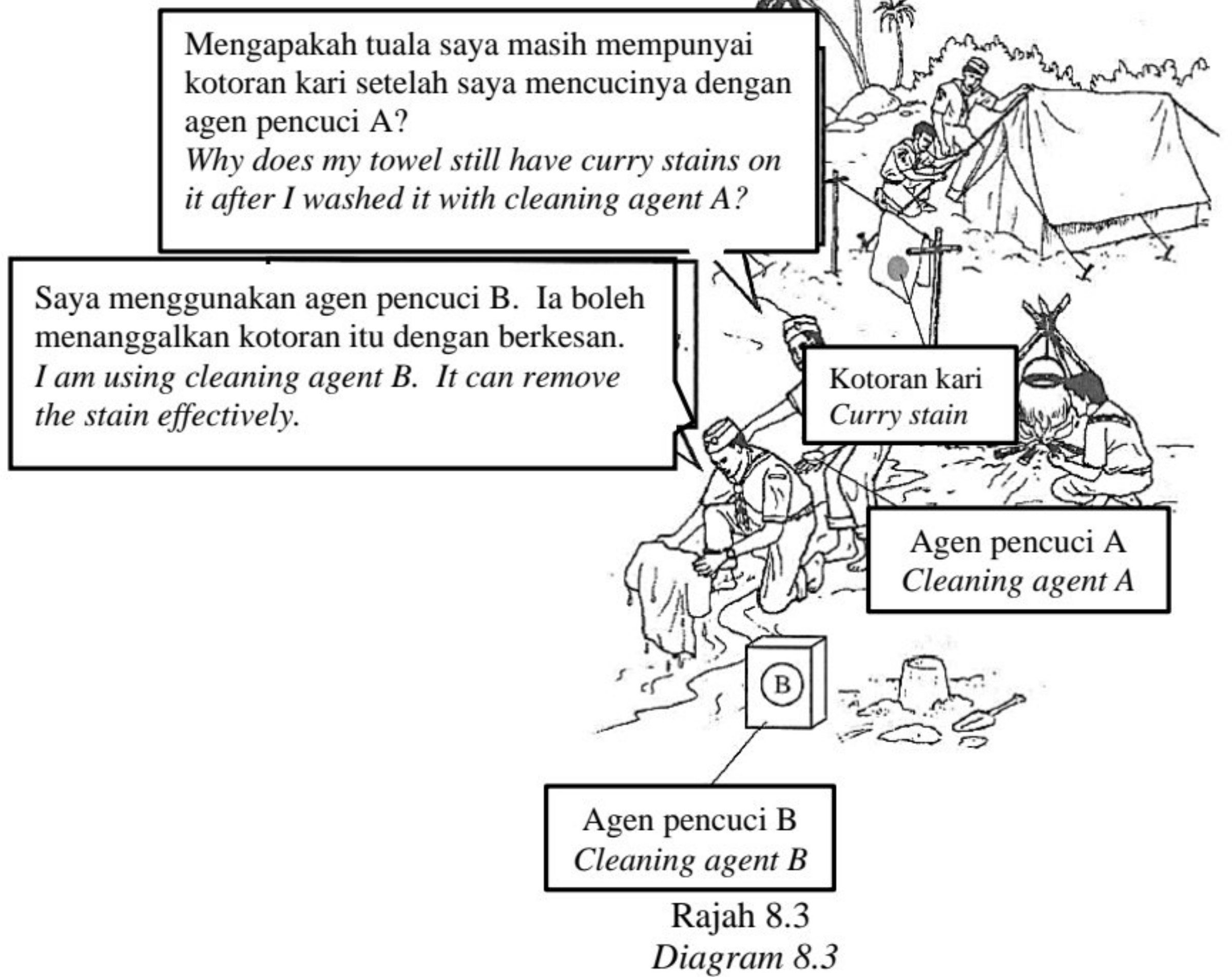
- (b)
Diagram 8.4 shows the wastewater disposal from a factory into river. Green technology is applied to treat the wastewater from industries so that water pollution can be prevented. What is the meaning of green technology? State two effects of untreated wastewater disposal into the river toward the environment.
[3] - (c)(i)
Diagram 8.5 shows a child at age of 2 years having fever; the parent says 'I only have aspirin at home. But doctor says it is not suitable for children.' Based on Diagram 8.5, explain why aspirin is not suitable for children. Suggest modern medicine that can be used to treat the child.
[3] - (c)(ii)
Traditional medicines such as honey ginger tea can be used to treat fever. However, it is not widely used nowadays compared to modern medicines. Justify the uses of traditional medicines.
[2]
Diagram 9.1 shows the process that occurs for two different situations. Situation I: extraction of iron in a blast furnace (iron ore Fe2O3 + limestone CaCO3 and coke C added at the top, hot air in, molten iron and slag out). Situation II: brown solid is formed on an iron window frame.
Hard20 marks- (a)(i)
Based on Situation I, the production of iron in industry through the reaction between iron ore, Fe2O3 and coke, C is shown in the chemical equation 2Fe2O3 + 3C → 4Fe + 3CO2 [Relative atomic mass: O = 16; Fe = 56]. Determine the oxidation number of iron in compound Fe2O3 and state the name of the compound according to the IUPAC nomenclature.
[2]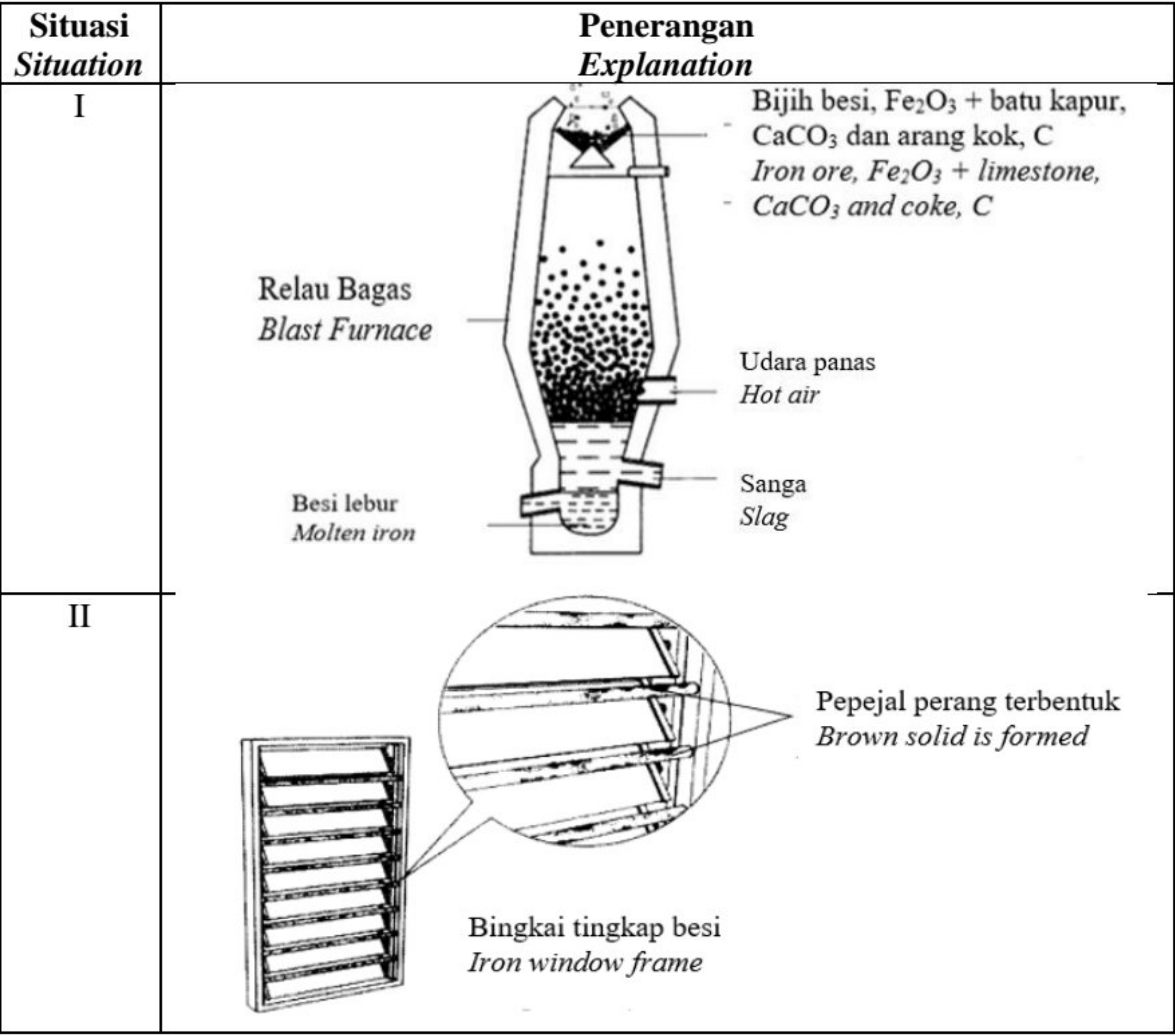
- (a)(ii)
If the factory is able to process 360 kg iron ore a day by using excess carbon, calculate the mass of the iron produced.
[4] - (a)(iii)
Based on Situation II, explain the formation of brown solid and suggest one way to prevent the formation.
[6] - (b)
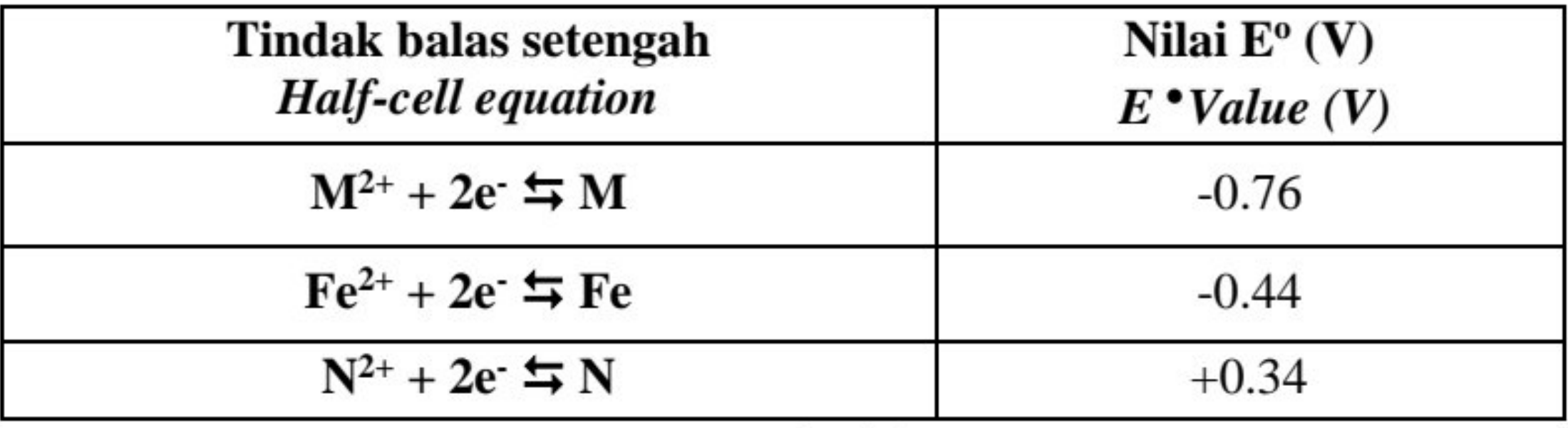
Diagram 9.2 shows the apparatus set-up of an experiment to investigate the effect of metal M and metal N on the rusting of iron (iron nail in contact with metal M in test tube I, with metal N in test tube II, in hot agar solution containing potassium hexacyanoferrate(III) and phenolphthalein). Table 3 shows the standard electrode potential E° for metal M, metal N and iron: M²⁺ + 2e⁻ ⇌ M, −0.76 V; Fe²⁺ + 2e⁻ ⇌ Fe, −0.44 V; N²⁺ + 2e⁻ ⇌ N, +0.34 V. Compare the observations in test tube I and test tube II and explain the differences in the observations between both test tubes.
[6]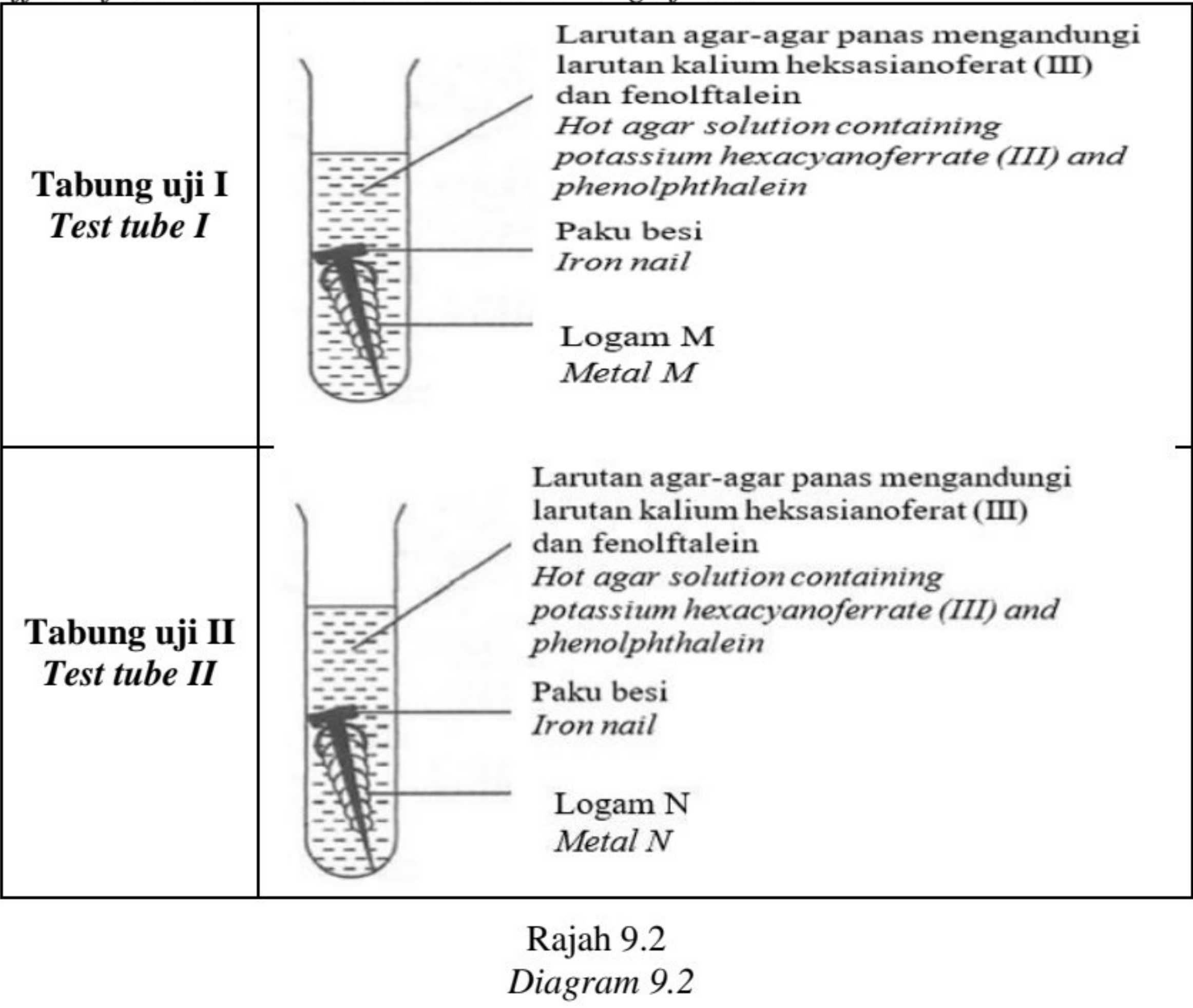
- (c)
Diagram 9.3 shows two houses with iron fences built at two different areas (rural area; coastal). In your opinion, iron fence at which area rusts faster? Give reasons for your answer.
[2]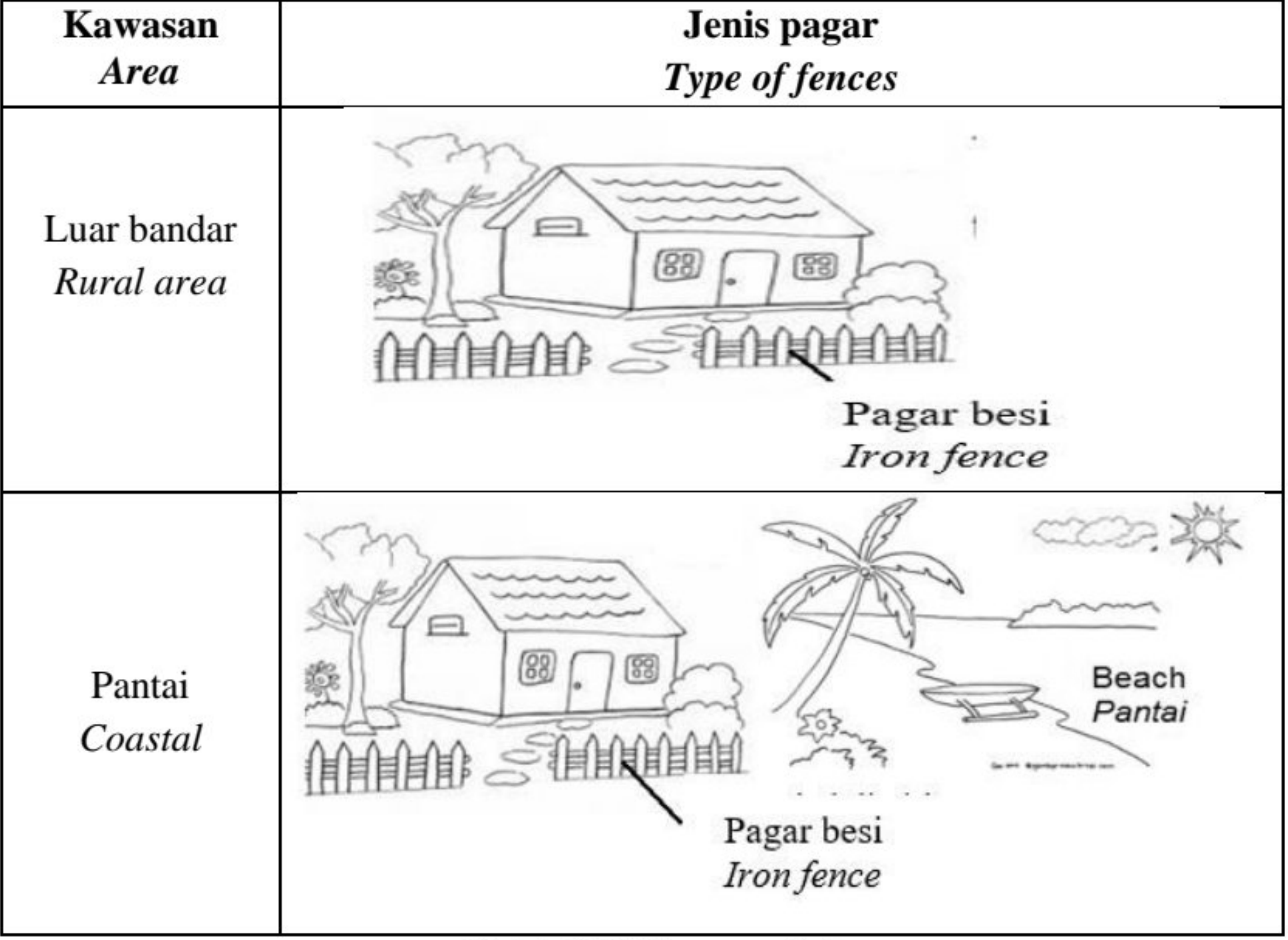
Section C
Section C (answer this question). A fast chemical reaction is a process of converting reactants into products that completes in a short time while a slow reaction takes long to complete.
Hard20 marks- (a)
State the definition of rate of reaction. Sketch a graph of quantity of reactants against time for a fast reaction then label it as 'I'. On the same axis, sketch another graph for slow reaction and then label it using 'II'.
[3] - (b)(i)
In three separate experiments, nitric acid is added to excess marble chips. Diagram 10.1 shows the volume of carbon dioxide gas evolved against time for three experiments I, II and III (V1 for I and III, V2 for II). In all three experiments the volume of nitric acid used is the same; the concentration, or temperature, or both are changed. In Experiment I and III, 100 cm³ of nitric acid 0.5 mol dm⁻³ is added to marble chips. What is the factor being manipulated in these two experiments? Write a balanced chemical equation for the reaction in Experiment I. Calculate the volume of gas, V1. [Molar volume of gas at room condition = 24.0 dm³ mol⁻¹]
[5]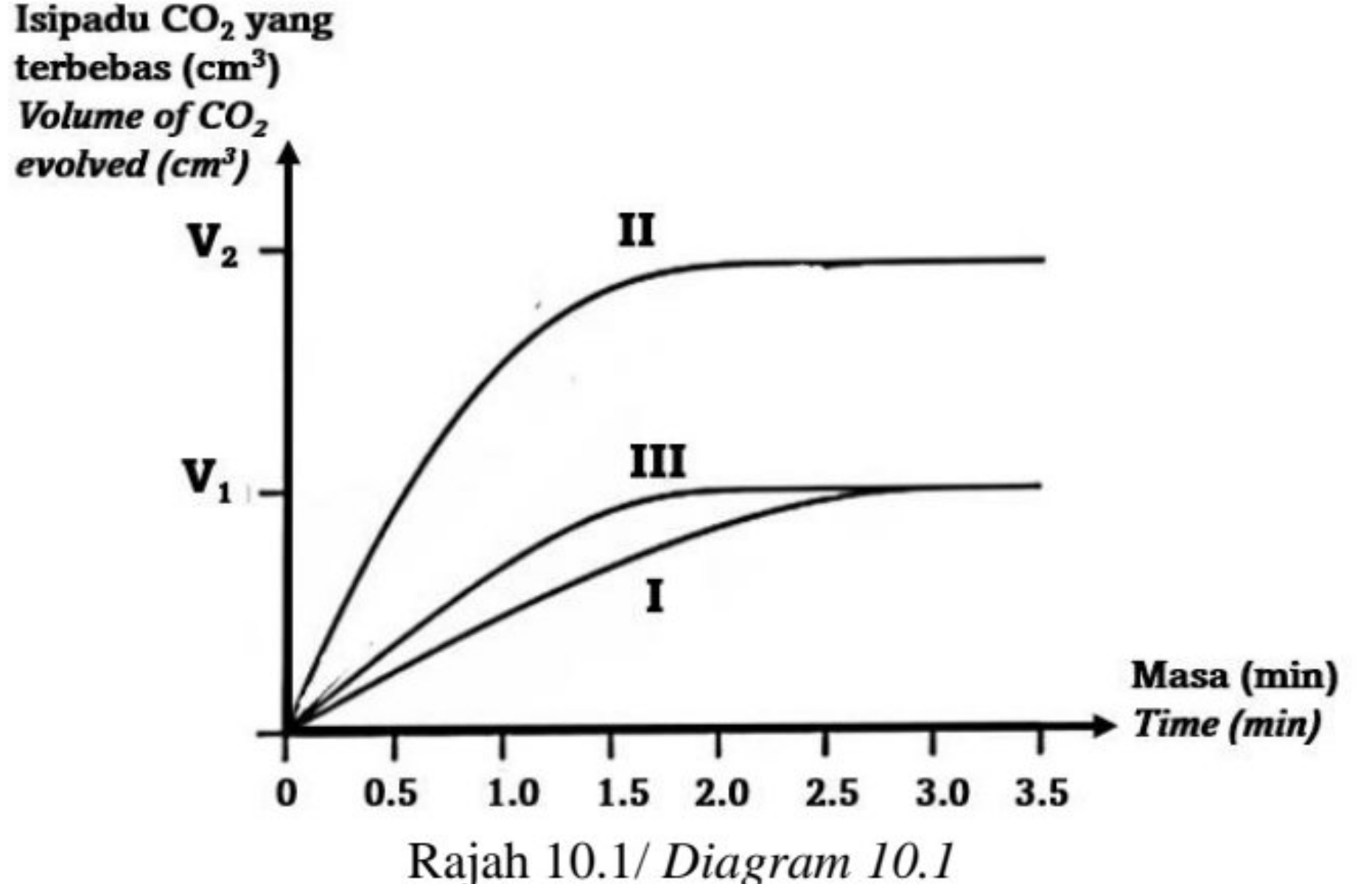
- (b)(ii)
Based on Diagram 10.1, describe how to obtain curve II from the experiment. Explain why there are differences in the initial rate of reaction between Experiment I and Experiment II. Explain your answer using collision theory.
[4] - (c)
Diagram 10.2 shows two methods that can be used in large scale production of ethanol fuel for vehicle use: Method 1: fermentation (C6H12O6 → 2C2H5OH + 2CO2, zymase, from sugarcane and maize); Method 2: hydration (C2H4 + H2O → C2H5OH, H3PO4, 300 °C, 60 atm, from ethene). You are assigned to evaluate which method is more suitable to produce ethanol as fuel. State your choice based on Diagram 10.2 and justify your answer.
[2]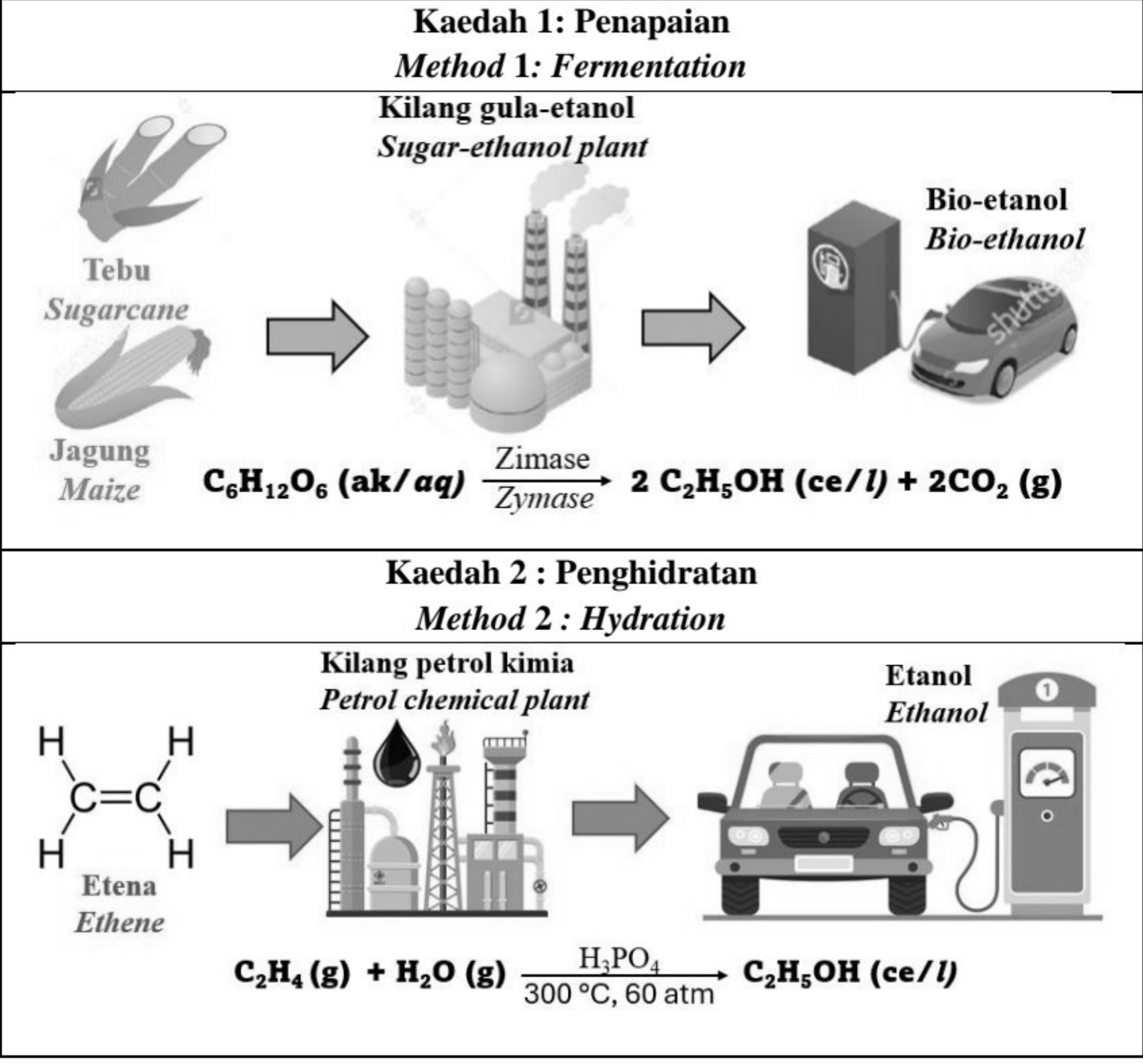
- (d)
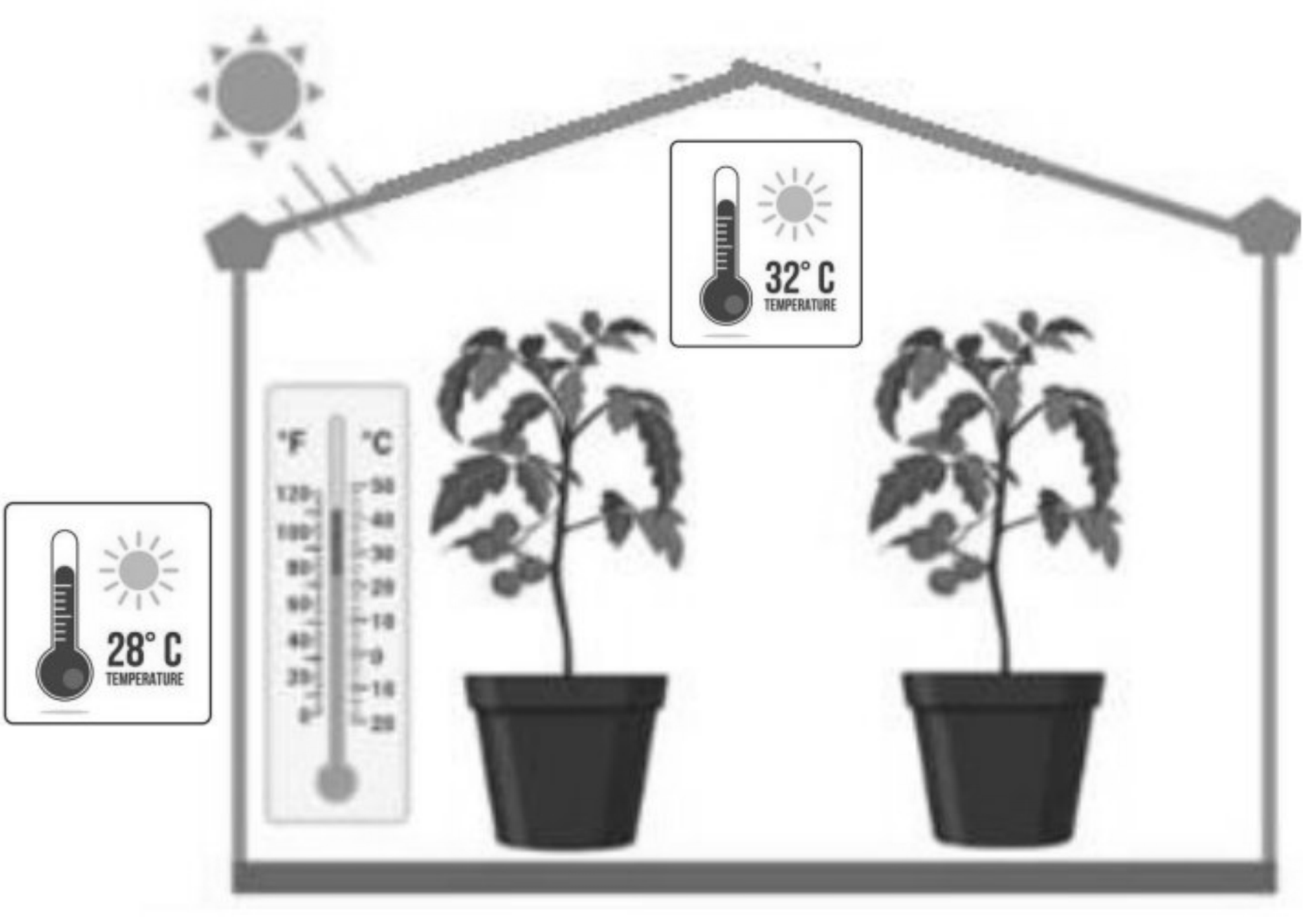
Diagram 10.3 shows tomato plants in a greenhouse protected from pests (28 °C outside, 32 °C inside). The farmer faces a problem where all the tomatoes ripen simultaneously during summer. This arises when premature green tomatoes are stimulated by the ethylene gas, C2H4, released from mature fruits. By using your knowledge in chemistry, suggest two solutions to overcome the problem so that the farmer can harvest the tomato periodically. Explain your answer.
[6]