Which of the following substances exist as molecule at room temperature?
Medium
Who is the scientist that discovered electron?
Easy
Which of the following statements explains why carbon-12 was chosen as the standard atom to determine the relative atomic mass and relative molecular mass?
Easy
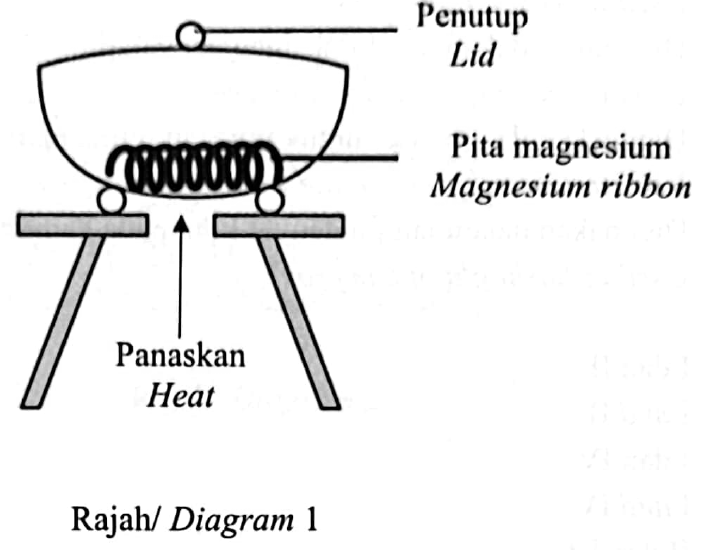
Diagram 1 shows the apparatus set-up to determine the empirical formula of magnesium oxide. Which of the following steps is correct to ensure that the magnesium ribbon is burnt completely?
Medium
Which of the following are the uses of helium gas?
I Used in weather balloons
II Used in the oxygen tanks of divers
III Used in lasers for eye retina treatment
IV Used in flashlight of cameras
Medium
Which of the following substances produces yellow colour when universal indicator is added into it?
Easy
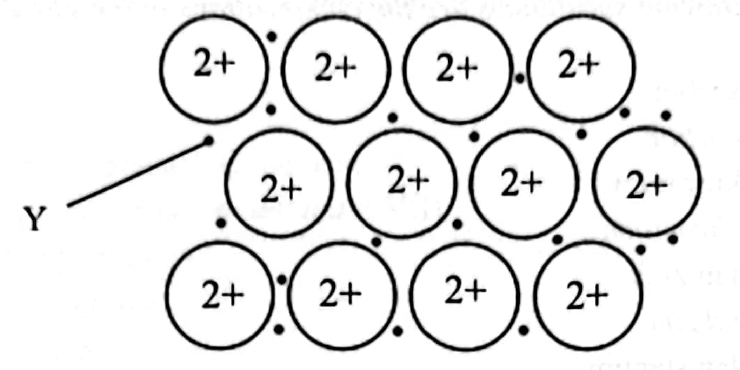
Diagram 2 shows a formation of metallic bond of magnesium. What is Y?
Easy
Nickel powder is used as catalyst for hydrogenation of ethene. How does the catalyst increase the rate of the reaction?
Easy
The National Monument of Malaysia is made up of an alloy. Which of the following substances are the compositions of the alloy?
Easy
Which of the following are the properties of ceramics?
I Electrical insulator
II Chemically inert
III Hard but brittle
IV Low thermal resistant
Medium
Colourless potassium bromide solution turns brown when substance X is added into it. What is X?
Medium
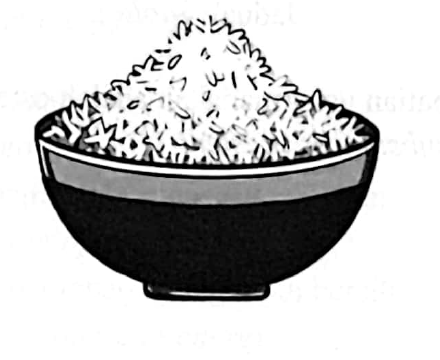
Diagram 3 shows a natural polymer which is a staple food for Malaysians. What is the monomer for the polymer?
Easy
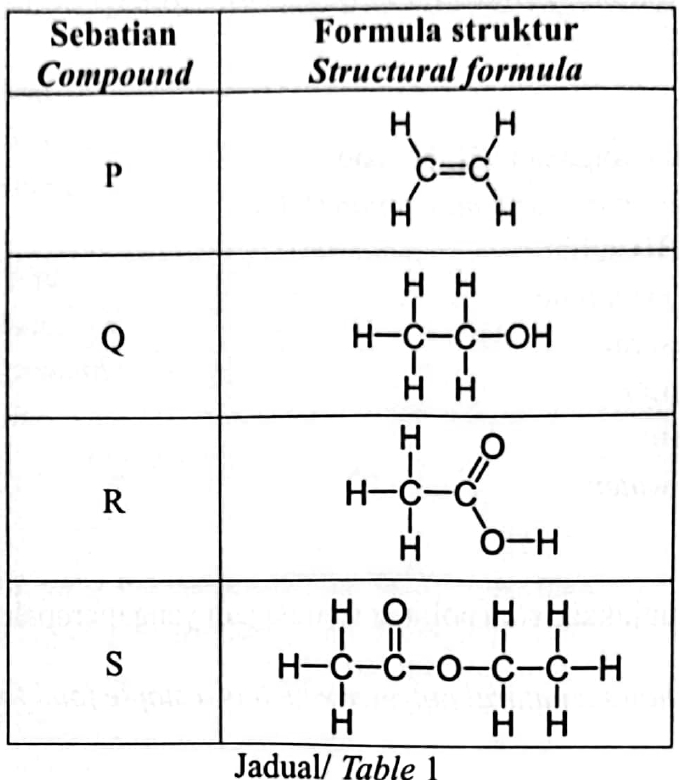
Table 1 shows the structural formulae of four different compounds: P (ethene, CH2=CH2), Q (ethanol, CH3CH2OH), R (ethanoic acid, CH3COOH), S (ethyl ethanoate, CH3COOCH2CH3). Which of the following substances is ester?
Easy
When substance P is added to distilled water, the temperature increases and the container becomes hot. What is substance P?
Easy
Which of the following is correct about the aim of utilising Green Technology in waste and wastewater management?
Medium
Element X has a boiling point of -34 °C. What is the physical state of element X at room temperature?
Medium
Which of the following statements is correct for one mole of a substance?
Medium
Element X reacts with oxygen to form a compound that is soluble in water. Which of the following elements could be X?
Medium
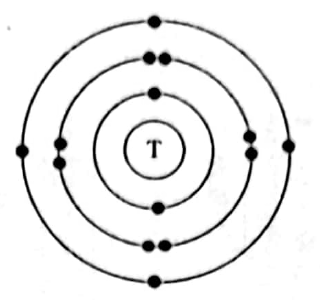
Diagram 4 shows the electron arrangement of atom T. Elements U and T are placed in the same period in the Periodic Table of Elements. The atomic radius of U is bigger than T. What is the electron arrangement of atom U?
Medium
What is the observation for the gas released when ammonium chloride is heated with sodium hydroxide solution?
Easy
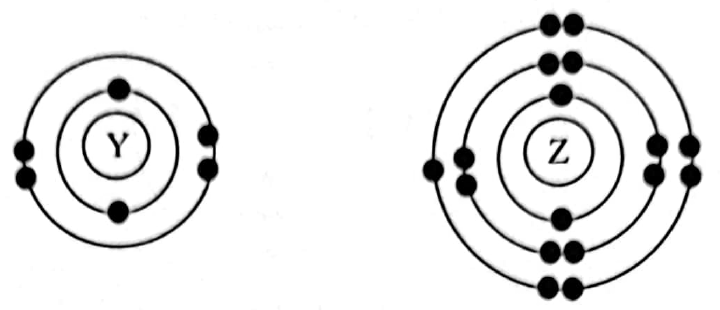
Diagram 5 shows the electron arrangement of atoms Y and Z. Which of following formula and type of bond are correct for the compound formed from the reaction between Y and Z?
Medium
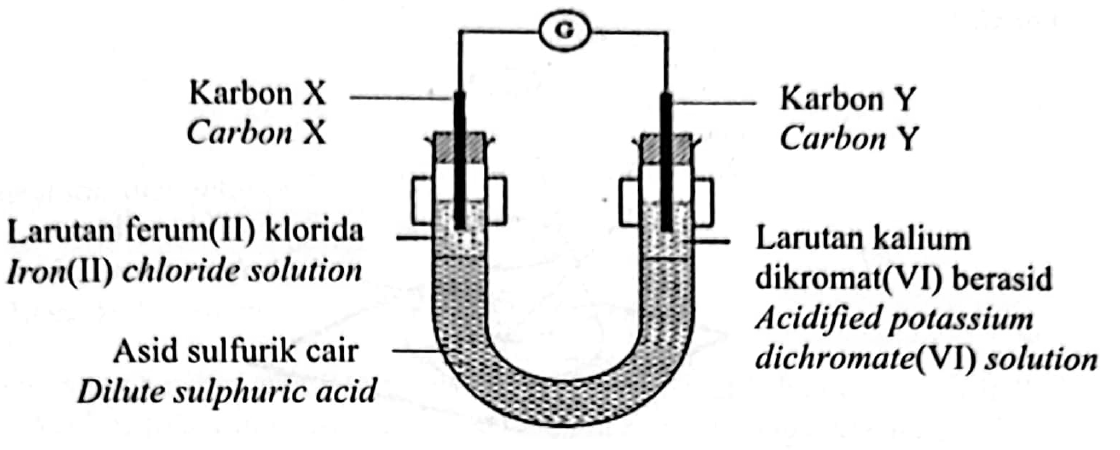
Diagram 6 shows the apparatus set-up for an experiment (U-tube with iron(II) chloride solution at carbon X, acidified potassium dichromate(VI) solution at carbon Y, dilute sulphuric acid below, connected by a galvanometer). What are the observations at carbon X and Y?
Medium
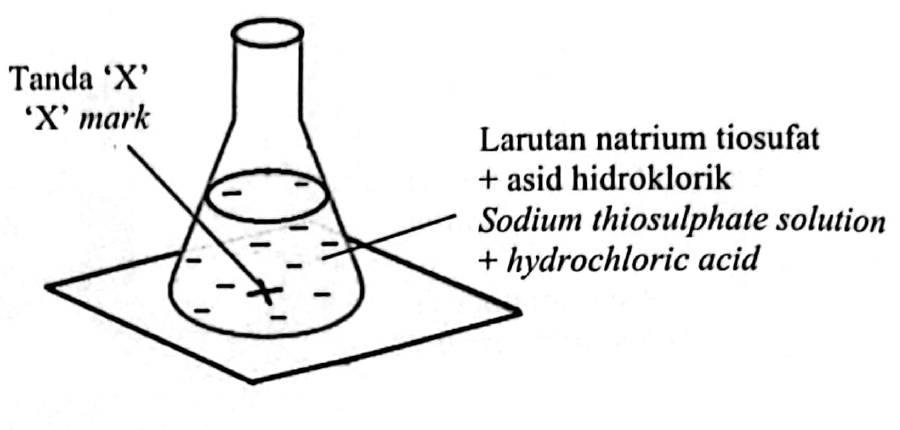
Diagram 7 shows the apparatus set-up of an experiment to determine the rate of reaction (sodium thiosulphate solution + hydrochloric acid in a conical flask over an 'X' mark). Which of the following methods is the most suitable to determine the rate of reaction?
Medium
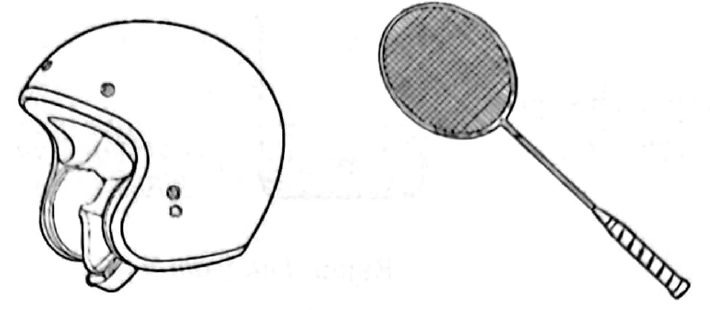
Diagram 8 shows two products made up of a composite material (a helmet and a badminton racket). Which of the following are the correct matches of the composite material?
Medium
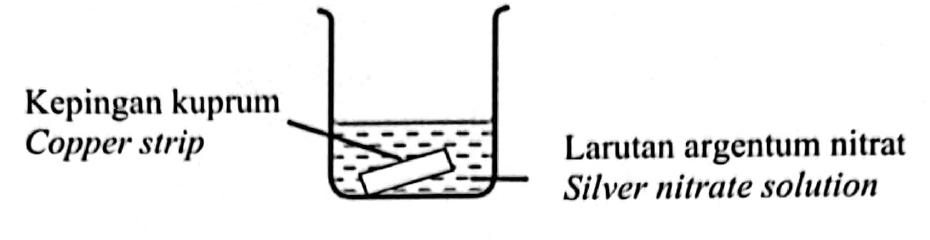
Diagram 9 shows the apparatus set-up to investigate a redox reaction (copper strip in silver nitrate solution). Which of the following statements is correct about the reaction?
Medium
The following chemical equation represents cracking process. C₇H₁₆ → Y + C₅H₁₂. What is the homologous series of compound Y?
Medium
The nucleon number of atom of element W is 23. Atom W has 12 neutrons. Which of the following elements has the same chemical properties as W? [Proton number: C = 6, O = 8, Mg = 12, K = 19]
Medium
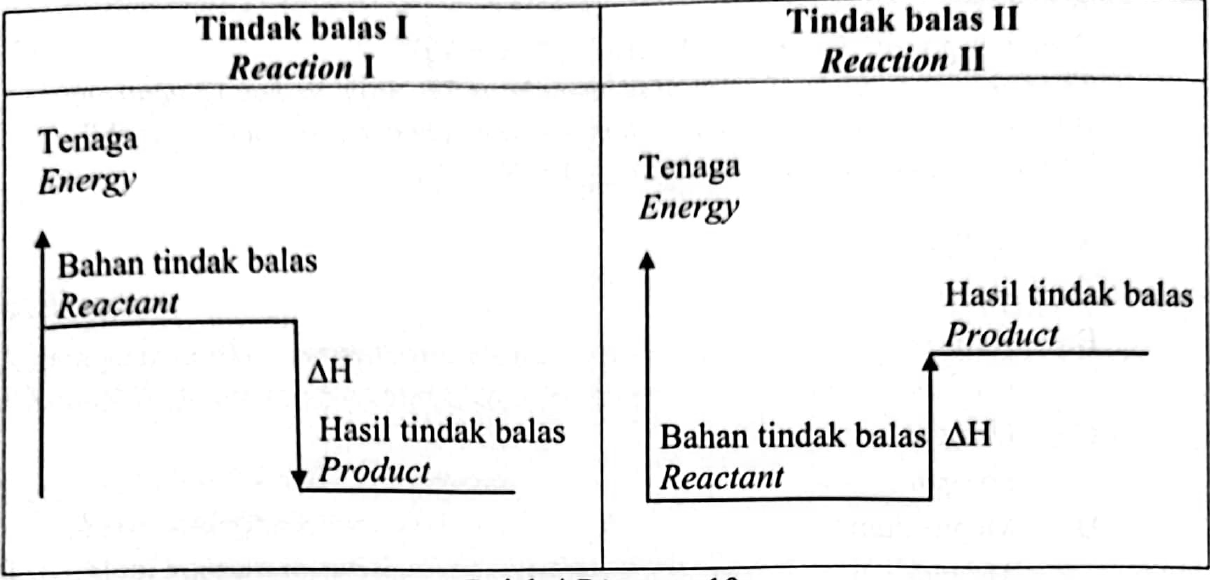
Diagram 10 shows energy level diagrams. Reaction I: products lower than reactants (exothermic, ΔH negative). Reaction II: products higher than reactants (endothermic, ΔH positive). Which of the following are the correct match for Reaction I and II?
Medium
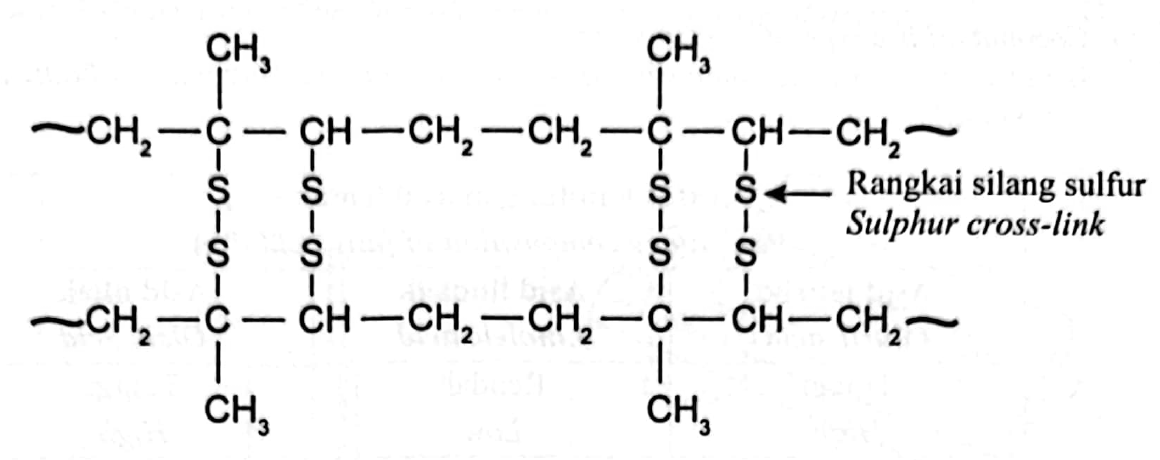
Diagram 11 shows the structural formula for a rubber (polyisoprene chains joined by sulphur cross-links). Which of the following characteristics is correct about the rubber?
Medium
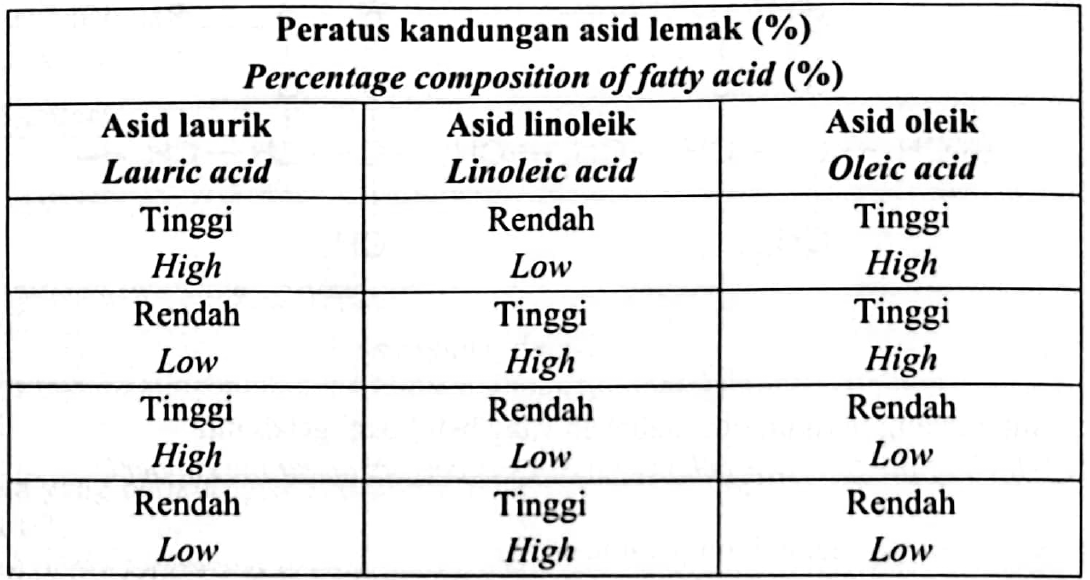
Coconut oil is a type of saturated fat. Which of the following compositions is correct about the percentage of fatty acid in coconut oil? (Lauric acid / Linoleic acid / Oleic acid)
Medium
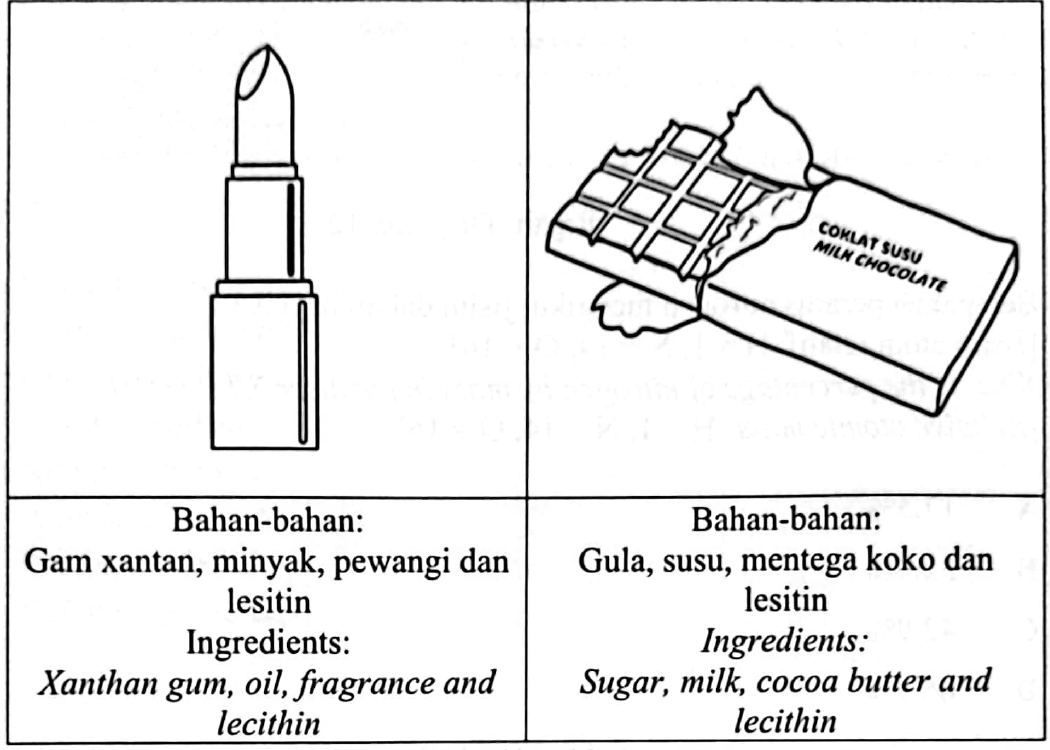
Table 2 shows some of the ingredients used in two types of products (lipstick: xanthan gum, oil, fragrance, lecithin; milk chocolate: sugar, milk, cocoa butter, lecithin). Which of the following is correct use of the same ingredient in both products?
Medium
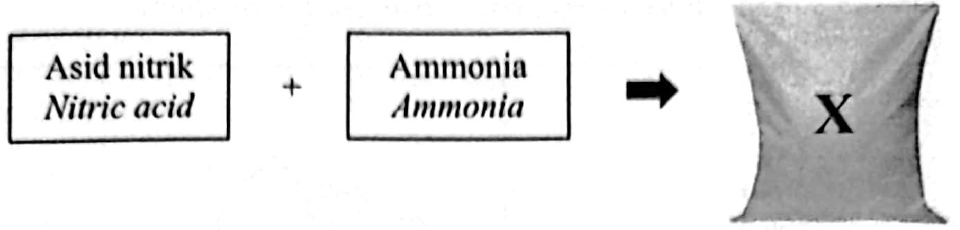
Diagram 12 shows a reaction to produce fertiliser X (nitric acid + ammonia → X). What is the percentage of nitrogen by mass in fertiliser X? [Relative atomic mass: H = 1, N = 14, O = 16]
Medium
Y is a Group 17 element in the Periodic Table of Elements. What is the volume of gas Y₂ needed to react completely with 5.6 g of iron at room conditions? [Relative atomic mass: Fe = 56, Molar volume of gas = 24 dm³ mol⁻¹ at room conditions]
Medium
The soil in Encik Ahmad's farm is not suitable for agricultural activities since it is too near to the industrial factories which emit poisonous gases. The situation become worse when it is raining. Which of the following substances can be used to help Encik Ahmad to solve his problem?
Medium
Substance J is light and strong. It is an important material in textile industry. This substance can be produced by adding a solution of 1,6-hexanediamine into substance P. What is P?
Medium
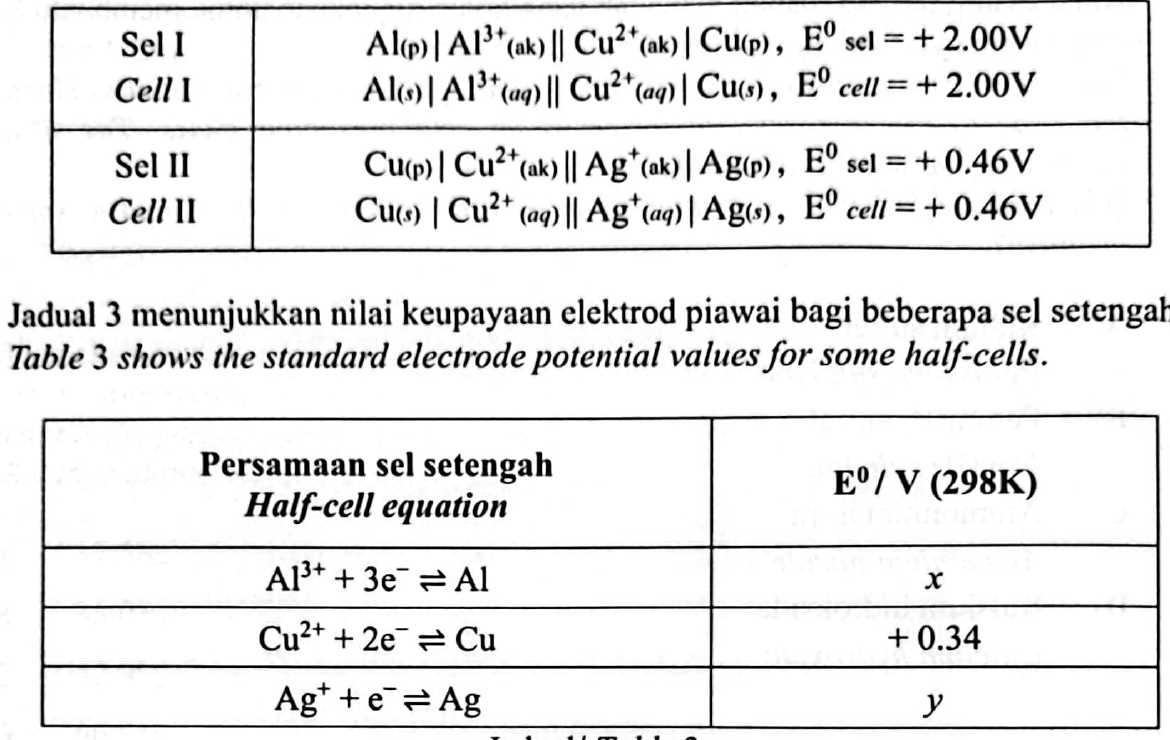
The following information shows the cell notation and voltage for two chemical cells: Cell I: Al(s) | Al³⁺(aq) || Cu²⁺(aq) | Cu(s), E°cell = +2.00 V. Cell II: Cu(s) | Cu²⁺(aq) || Ag⁺(aq) | Ag(s), E°cell = +0.46 V. Table 3 shows the standard electrode potential values: Al³⁺ + 3e⁻ ⇌ Al, E° = x; Cu²⁺ + 2e⁻ ⇌ Cu, E° = +0.34; Ag⁺ + e⁻ ⇌ Ag, E° = y. Another chemical cell has cell notation Al(s) | Al³⁺(aq) || Ag⁺(aq) | Ag(s). What is the voltage for the chemical cell?
Medium
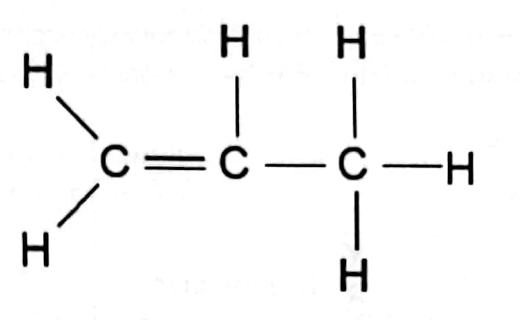
Diagram 13 shows the structural formula of compound Q (propene, CH2=CH-CH3). Which of the following substances are formed when compound Q reacts with steam?
I Propan-1-ol
II Propan-2-ol
III Propanoic acid
IV Propan-1,2-diol
Medium
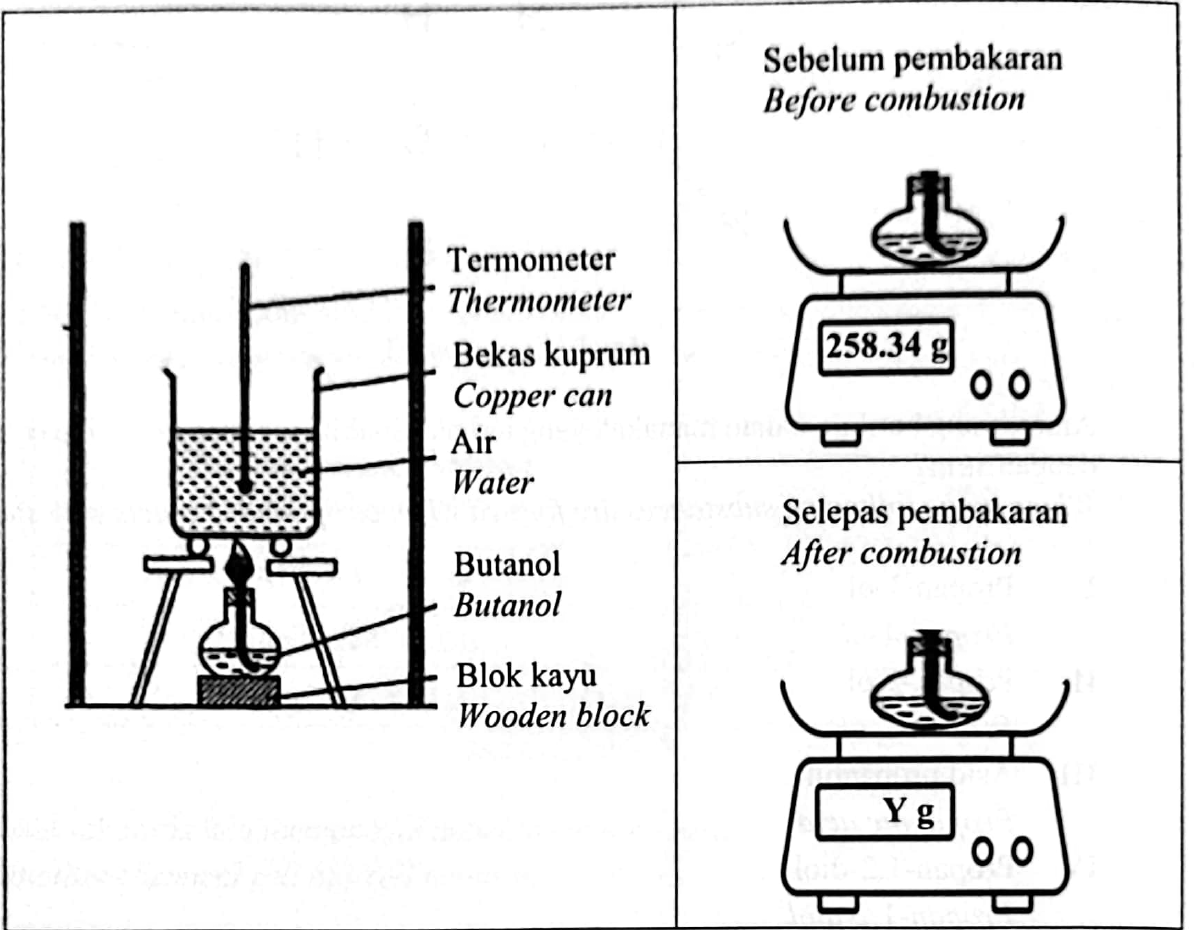
Diagram 14 shows an experiment carried out to determine the heat of combustion of butanol. Before combustion the mass of the spirit lamp with butanol is 258.34 g; after combustion it is Y g. Fuel value of butanol is 23.65 kJ g⁻¹. In this experiment, combustion of butanol in excess oxygen will increase 25 °C the temperature of 500 cm³ of water. What is the value of Y? [Specific heat capacity of water, c = 4.2 J g⁻¹ °C⁻¹; Density of water = 1 g cm⁻³; Relative atomic mass: H = 1, C = 12, O = 16]
Medium
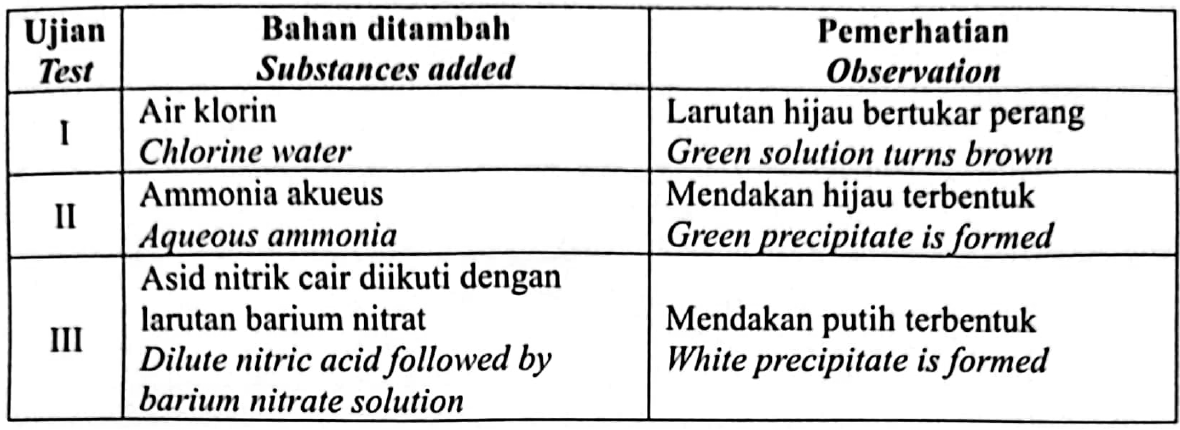
Table 4 shows a few series of chemical tests carried out on salt Z when dissolved in water. Test I: chlorine water, green solution turns brown. Test II: aqueous ammonia, green precipitate is formed. Test III: dilute nitric acid followed by barium nitrate solution, white precipitate is formed. What are the reactants that can form salt Z?
Medium
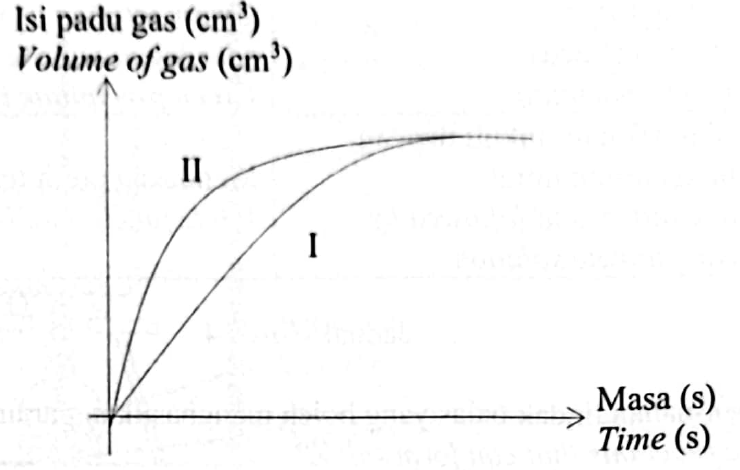
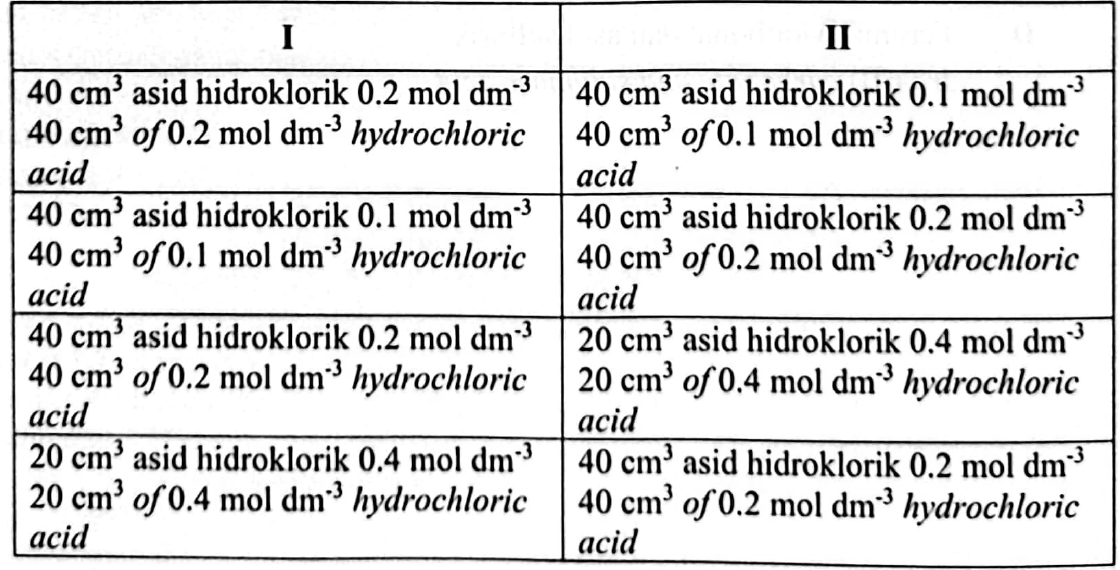
A group of students carried out an experiment to investigate factors that affect the rate of reaction. Diagram 15 shows the sketch of graphs of volume of gas (cm³) against time (s) for reaction between excess marble chips with hydrochloric acid at two different conditions. Curve II is steeper than curve I and both curves reach the same final volume. Which of the following match is correct to produce the graphs in Diagram 15?