Write your answer on paper. Then open the answer to check it.
Section A
Diagram 1 shows the water cycle that involves the conversion of states of matter (process T: water surface to clouds; process U: clouds to rain).
Medium5 marks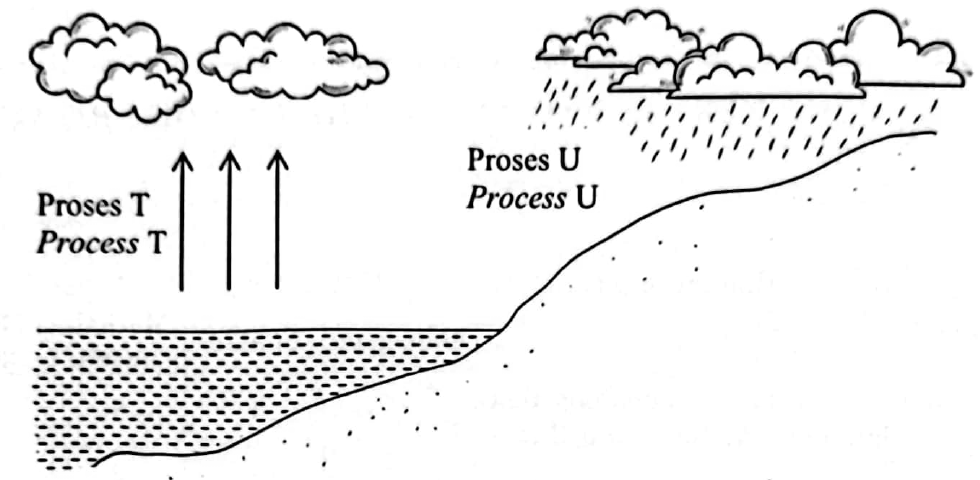
- (a)
Give the meaning of matter.
[1] - (b)
State the name of process T and state whether heat energy is absorbed or released.
[2] - (c)
Complete the following boxes by drawing the arrangement of water particles to show the changes during process U.
[2]
Diagram 2 shows examples of glass and ceramics used in daily life respectively (a cooking pot with lid and a decorated ceramic vase).
Medium5 marks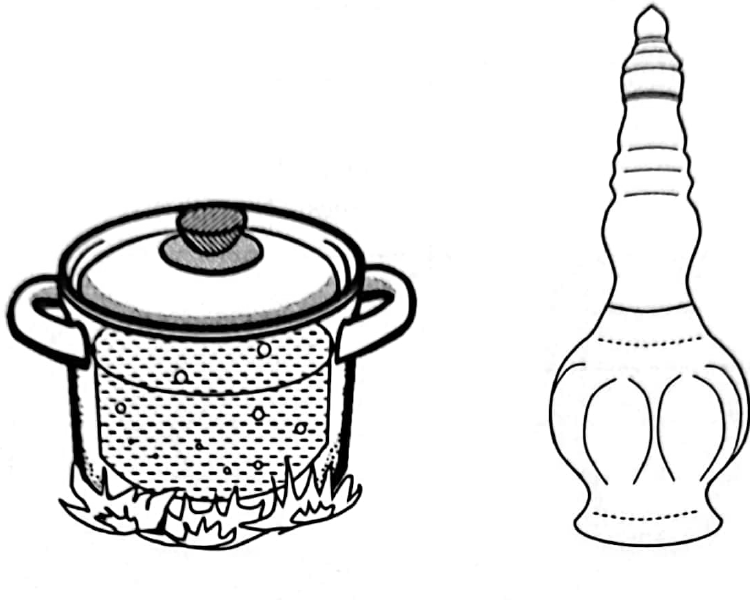
- (a)(i)
State the main component of glass.
[1] - (a)(ii)
State the type of glass used in Diagram 2. Give one reason.
[2] - (b)
Give an example of compound that made up ceramics.
[1] - (c)
State one difference in the basic property of glass and ceramics.
[1]
Diagram 3 shows water pipes that are made up of a type of polymer (polychloroethene).
Medium6 marks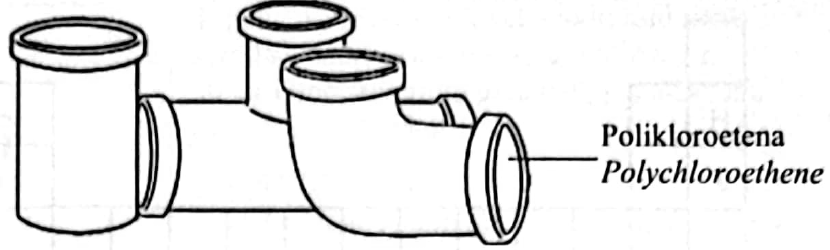
- (a)
State the name of the monomer for the polymer.
[1] - (b)
What is the type of polymerisation reaction for the production of polychloroethene.
[1] - (c)
Write the polymerisation equation for polychloroethene.
[2] - (d)
What are the properties of the polymer that make it suitable to be used as water pipes?
[2]
Diagram 4 shows part of the Periodic Table of Elements. The letters used do not represent the actual symbol of elements. (H and J are in Group 1, H above J; M is the Group 18 element in Period 2; K and L are in Period 3 in Groups 16 and 17; the Group 13 box of Period 3 is empty.)
Medium7 marks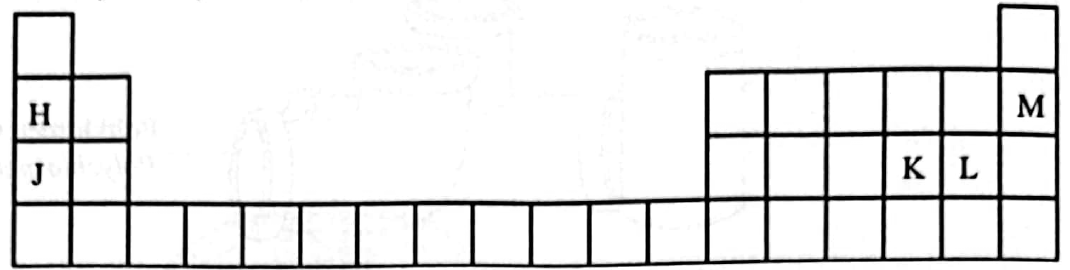
- (a)
State the element that exists as monoatomic gas.
[1] - (b)
Write the symbol X for element that forms amphoteric oxide in Diagram 4.
[1] - (c)
Arrange the elements in Period 3 from the smallest atomic size to the biggest.
[1] - (d)(i)
Compare the reactivity of elements H and J when react with oxygen.
[1] - (d)(ii)
Explain your answer in 4(d)(i).
[3]
Diagram 5.1 shows the ingredients of two different instant noodles. A: enriched flour, palm oil, citric acid, dried leek flake, egg white, lactose, monosodium glutamate, chicken fat, yellow azo dye. B: enriched flour, palm oil, citric acid, dried leek flake, egg white, lactose, onion powder, garlic powder, organic powdered chicken, yellow azo dye.
Medium8 marks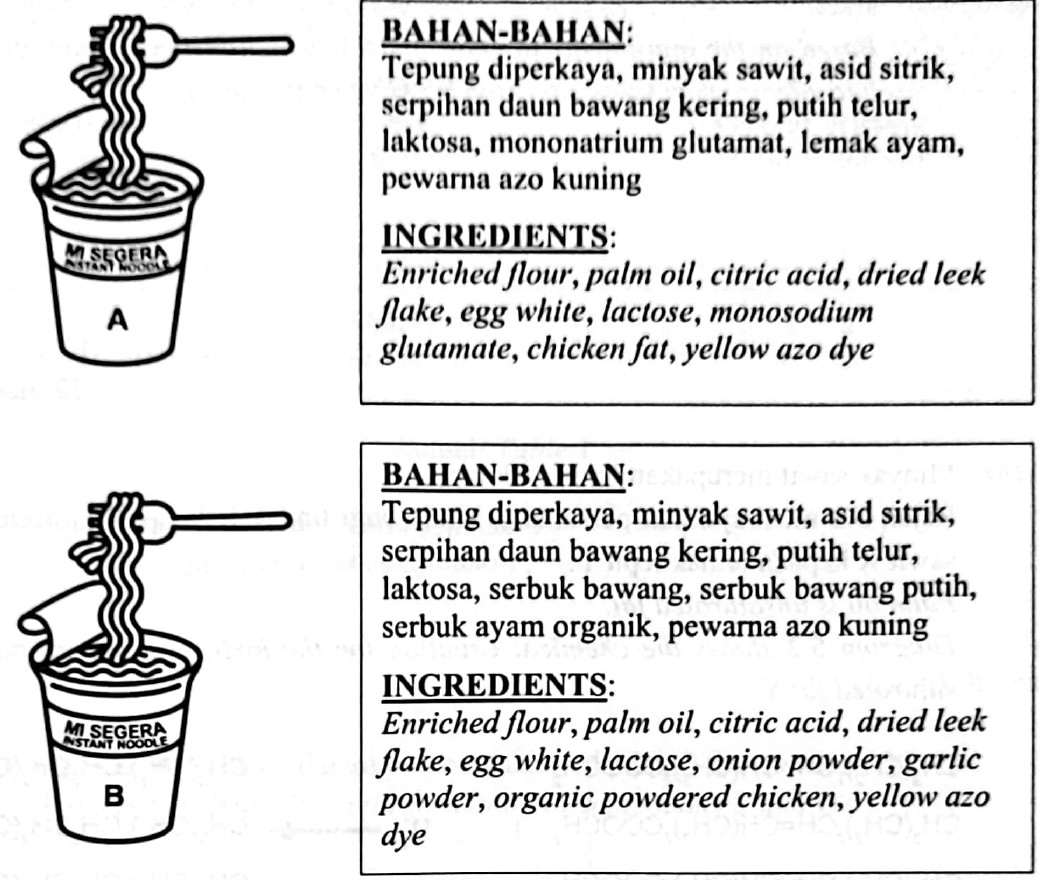
- (a)(i)
What is the type of food additive of citric acid?
[1] - (a)(ii)
What is the name of food additive used to make the instant noodle look more attractive?
[1] - (a)(iii)
Based on the ingredients in Diagram 5.1, which instant noodle gives the least bad effects when taken excessively? Give your reason.
[2] - (b)(i)
Palm oil is unsaturated fat. Diagram 5.2 shows the chemical equation for the hydrogenation of palm oil X to saturated fat Y: X (three C17 chains each with one C=C) + ___ H₂ → Y (the three chains fully saturated). Balance the chemical equation in Diagram 5.2.
[1]
- (b)(ii)
Calculate the mass of saturated fat produced when 73.9 g of palm oil is used in the hydrogenation reaction. [Molar mass of X = 739 g mol⁻¹, Molar mass of Y = 745 g mol⁻¹]
[3]
Table 1 shows the solubility of compounds P and Q when added into water and organic solvents. P: soluble in water, insoluble in organic solvent. Q: insoluble in water, soluble in organic solvent.
Medium9 marks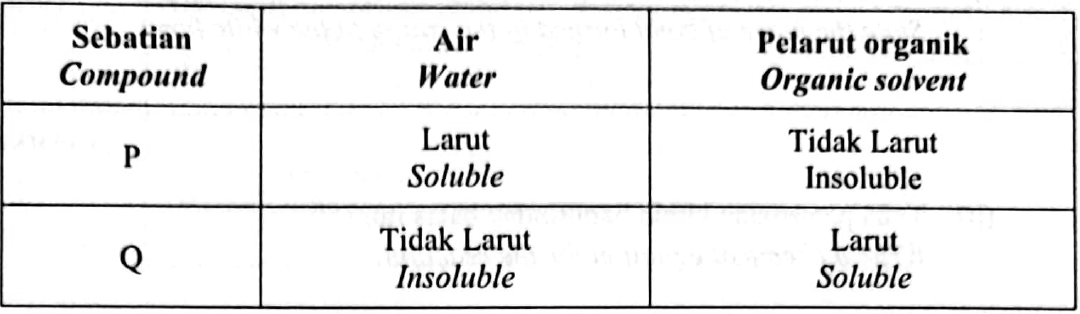
- (a)(i)
State the type of bond in compound P.
[1] - (a)(ii)
What is the similarity in the formation of compounds P and Q?
[1] - (a)(iii)
Ethanol has the same type of bond with compound Q. State the solubility of ethanol in water and give a reason.
[2] - (b)(i)
When hydrogen chloride gas reacted with ammonia gas, white fumes is formed. State the name of bond formed in the cation of the white fume.
[1] - (b)(ii)
Write a chemical equation for the reaction.
[2] - (b)(iii)
Calculate the number of molecules found in 8.5 g of ammonia gas. [Relative atomic mass: H = 1, N = 14, Avogadro's constant = 6.02 × 10²³]
[2]
Table 2 shows the products of combustion reaction of CH₄: Set I complete combustion gives X and H₂O; Set II incomplete combustion gives soot and H₂O.
Medium10 marks- (a)(i)
What is the homologous series of CH₄?
[1]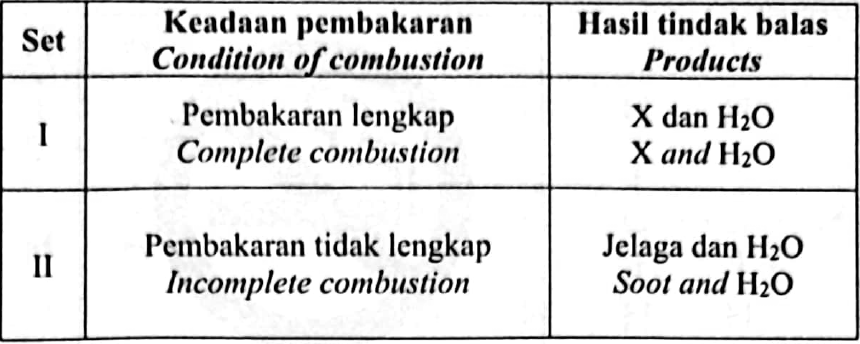
- (a)(ii)
State the name of X in Set I.
[1] - (a)(iii)
Write a chemical equation for the reaction in Set II.
[2] - (a)(iv)
Calculate the volume of oxygen gas used when 0.5 mol of soot produced in Set II. [Molar volume of gas = 24 dm³ mol⁻¹ at room conditions]
[1] - (b)
Diagram 6.1 shows a safety sign at the petrol station (No smoking). Justify the warning on the safety sign.
[2]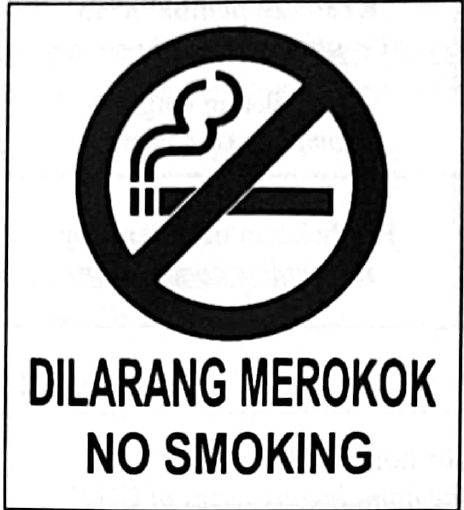
- (c)
Diagram 6.2 shows the structural formula of an ester with the smell of apple (propanoate group, C₂H₅COO–, joined to a straight four-carbon chain –C₄H₉). State the name of the ester and draw two structural formulae of isomers of alcohol used in the preparation of the ester.
[3]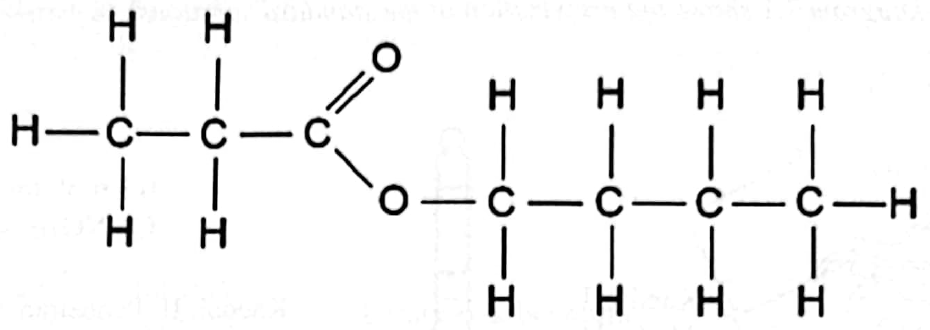
Standard solution of copper(II) nitrate is prepared through two methods. Diagram 7.1 shows the preparation of the standard solutions (Method I: Z g Cu(NO₃)₂ dissolved in distilled water to make 100 ml of 1.0 mol dm⁻³ solution; Method II: dilution to give 100 ml of 0.1 mol dm⁻³ solution).
Medium10 marks- (a)(i)
Calculate the value of Z. [Molar mass of Cu(NO₃)₂ = 188 g mol⁻¹]
[2]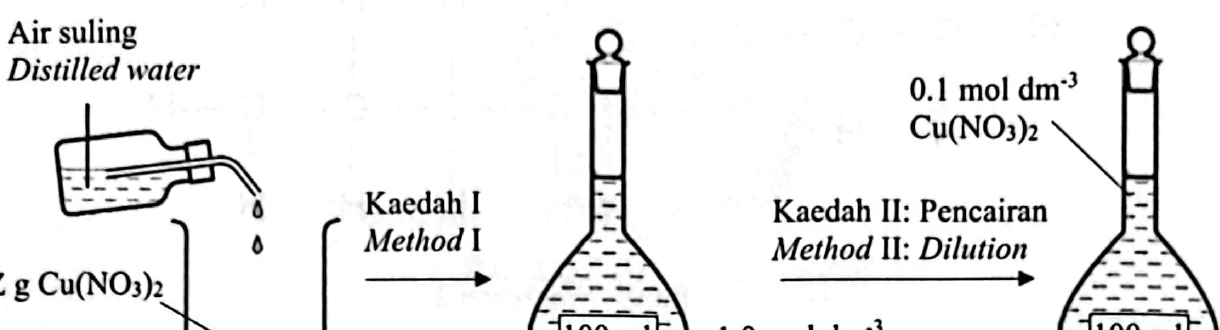
- (a)(ii)
Compare the intensity of blue colour of two standard solutions prepared. Give one reason.
[2] - (b)(i)
Standard solution prepared through method II is used to prepare an insoluble salt as shown in Diagram 7.2 (solution A added to 50 cm³ Cu(NO₃)₂ solution gives a colourless solution and precipitate Y, which is filtered). State the method used to prepare the insoluble salt.
[1]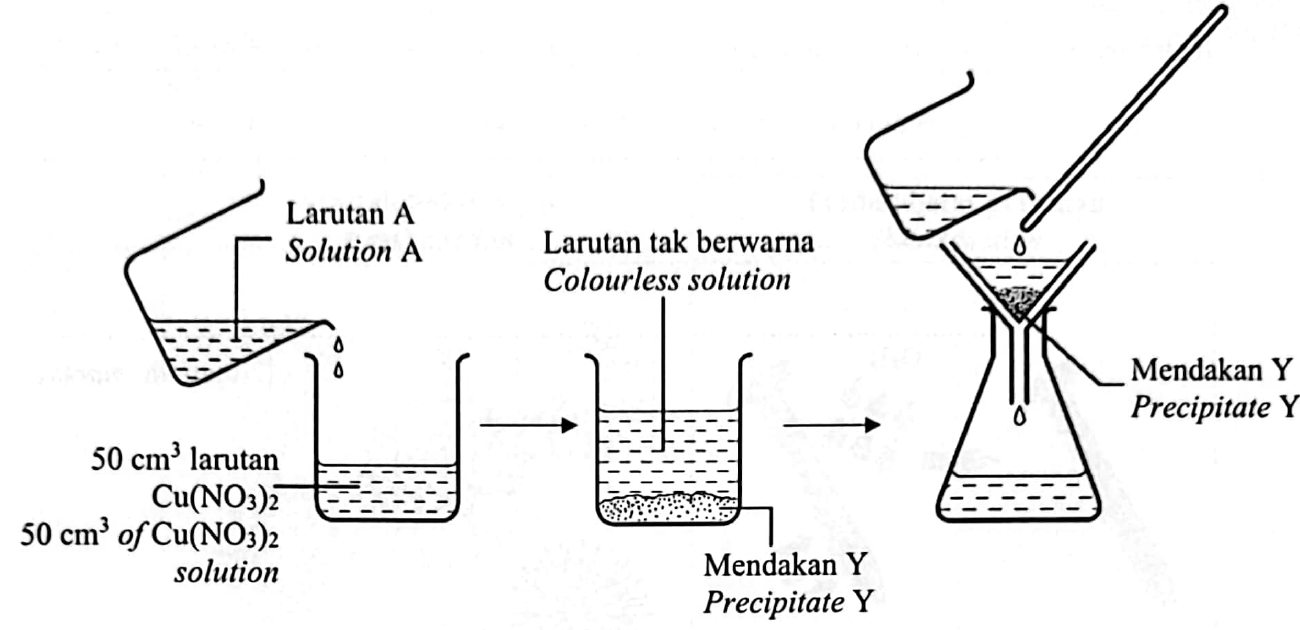
- (b)(ii)
State the name of solution A and precipitate Y produced.
[2] - (b)(iii)
Describe a chemical test to verify the presence of cation in precipitate Y.
[3]
Section B
Diagram 8.1 shows examples of fast and slow reactions in daily life (fireworks: few seconds; rusting of nail: few weeks).
Medium20 marks- (a)
State another example for fast reaction and slow reaction.
[2]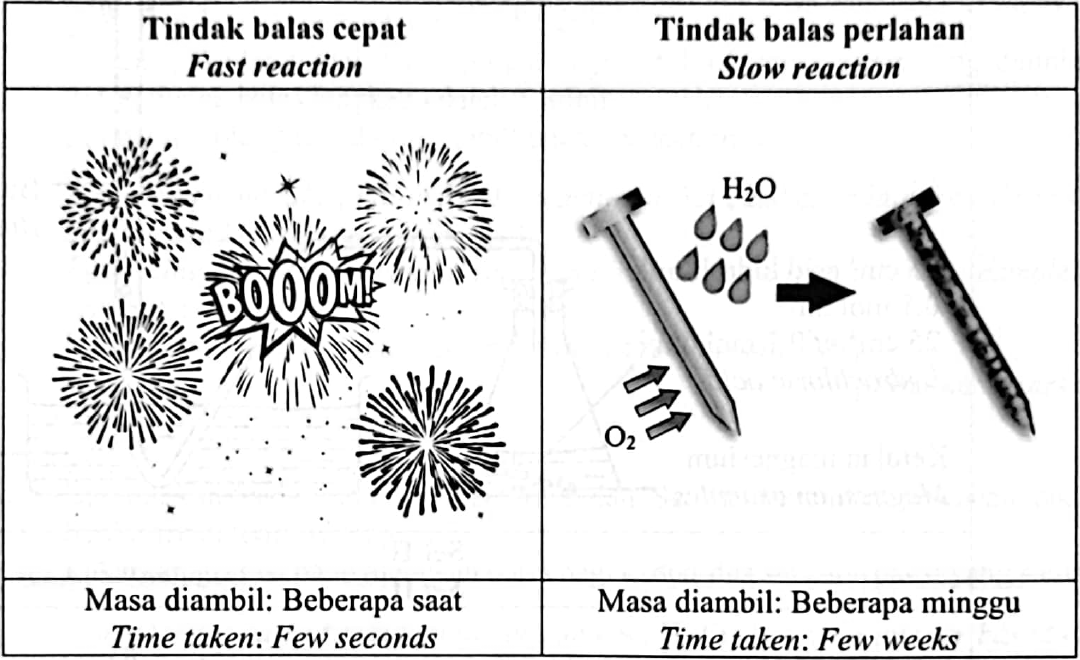
- (b)(i)
Diagram 8.2 shows an apparatus set-up to investigate factor that affects the rate of reaction (Set I: 25 cm³ of 0.1 mol dm⁻³ hydrochloric acid with magnesium granules; Set II: 25 cm³ of 0.1 mol dm⁻³ sulphuric acid with magnesium granules; gas collected in a burette over water). State two observable changes to determine the rate of reaction.
[2]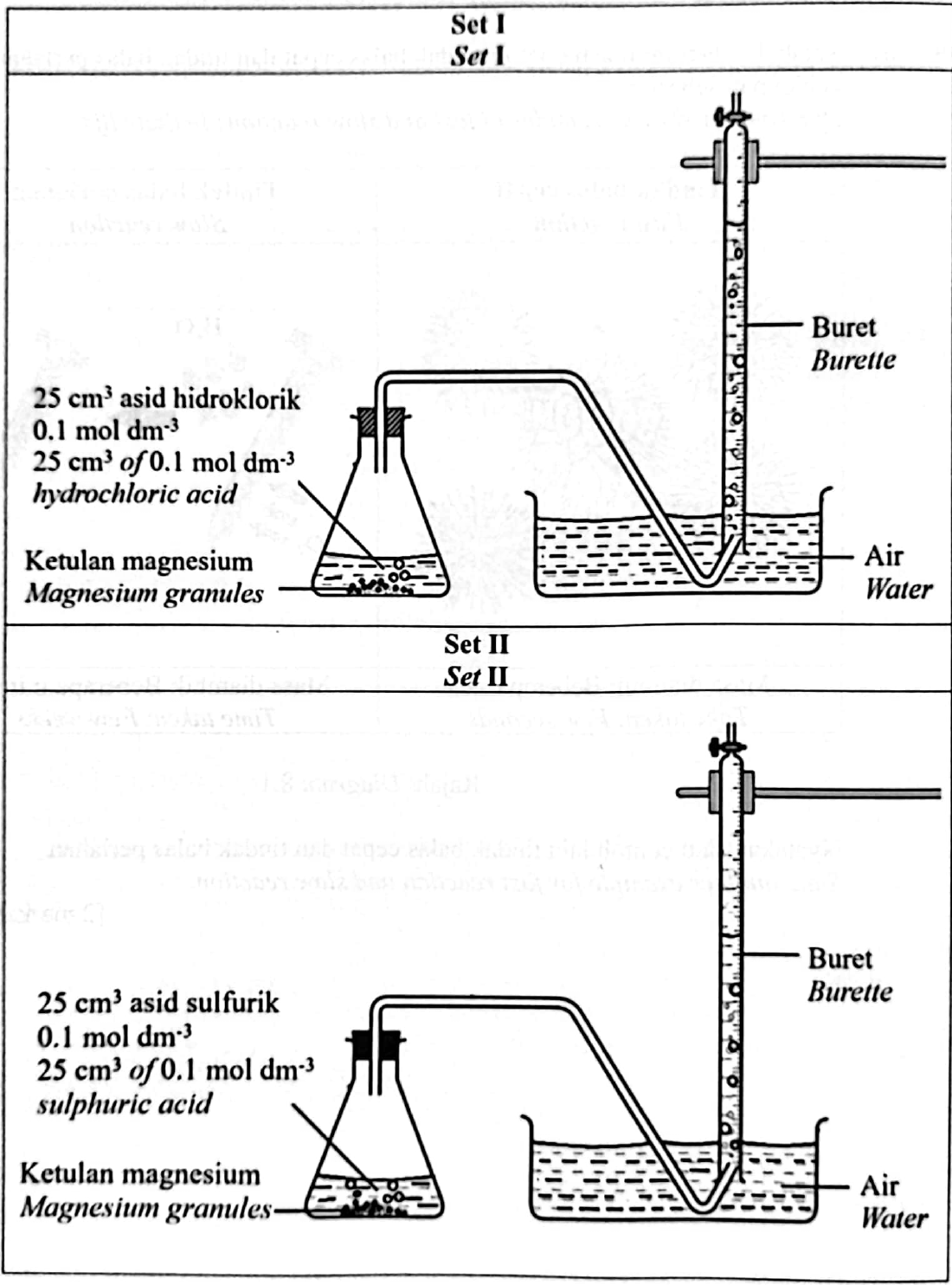
- (b)(ii)
Write the chemical equation for the reaction in Set I and calculate the volume of gas released in the reaction in Set I. Determine the average rate of reaction for Set I if the time taken for complete reaction is 1 minute. [Molar volume of the gas = 24 dm³ mol⁻¹ at room conditions]
[6] - (b)(iii)
Compare the rate of reaction in Set I and Set II. Explain your answer based on collision theory. Sketch a graph of volume against time for both sets on the same axis.
[8] - (b)(iv)
Suggest method to increase the rate of reaction in Set II without changing the total volume of gas released. Give one reason.
[2]
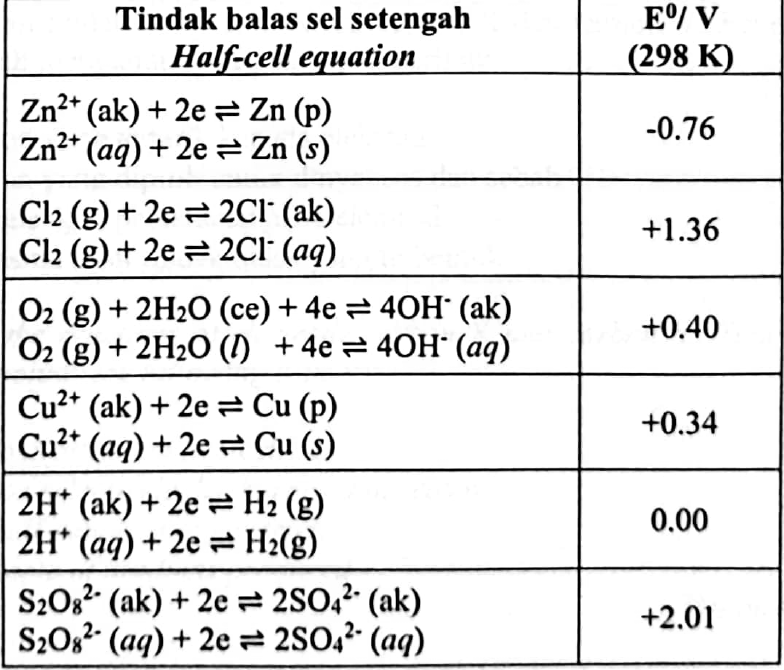
Diagram 9.1 shows the apparatus set-up of a chemical cell to study a redox reaction (zinc electrode in 1.0 mol dm⁻³ zinc sulphate solution, copper electrode in 1.0 mol dm⁻³ copper(II) chloride solution, salt bridge, voltmeter). Table 3 shows a part of the standard electrode potential of half-cells: Zn²⁺ + 2e ⇌ Zn -0.76 V; Cl₂ + 2e ⇌ 2Cl⁻ +1.36 V; O₂ + 2H₂O + 4e ⇌ 4OH⁻ +0.40 V; Cu²⁺ + 2e ⇌ Cu +0.34 V; 2H⁺ + 2e ⇌ H₂ 0.00 V; S₂O₈²⁻ + 2e ⇌ 2SO₄²⁻ +2.01 V.
Medium20 marks- (a)(i)
State the meaning of redox reaction and the function of salt bridge.
[2]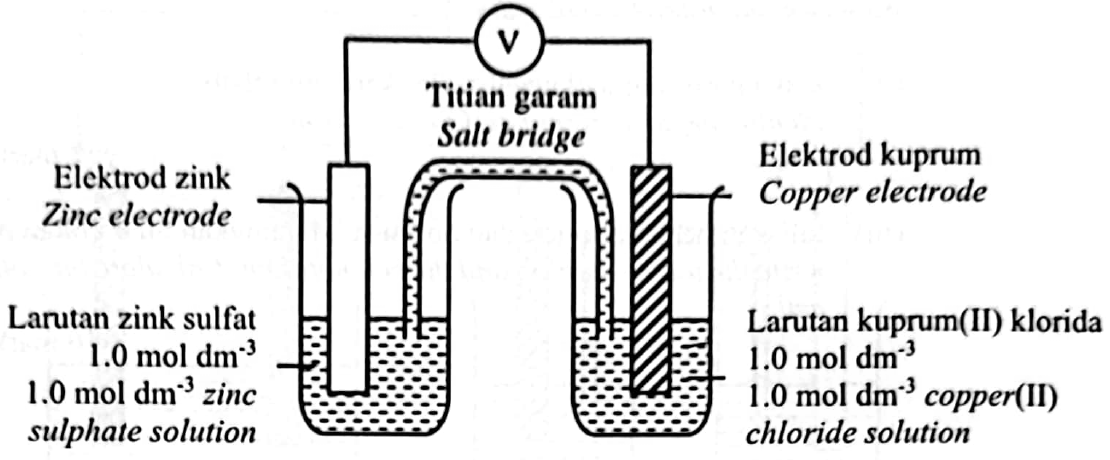
- (a)(ii)
Based on Diagram 9.1 and Table 3, identify negative terminal. Give a reason.
[2] - (a)(iii)
Write the ionic equation and the cell notation. Calculate the voltage for the cell.
[6] - (b)
Diagram 9.2 shows an apparatus set up of a chemical cell in Diagram 9.1 that combines with another cell (carbon X and carbon Y electrodes in 1.0 mol dm⁻³ copper(II) chloride solution, connected to the Cu | Zn cell with a voltmeter). Explain the reactions at electrode carbon X and carbon Y. Your explanation should include: ions attracted to electrode; ion selectively discharged and reason; half-equation at electrodes; name of products produced.
[10]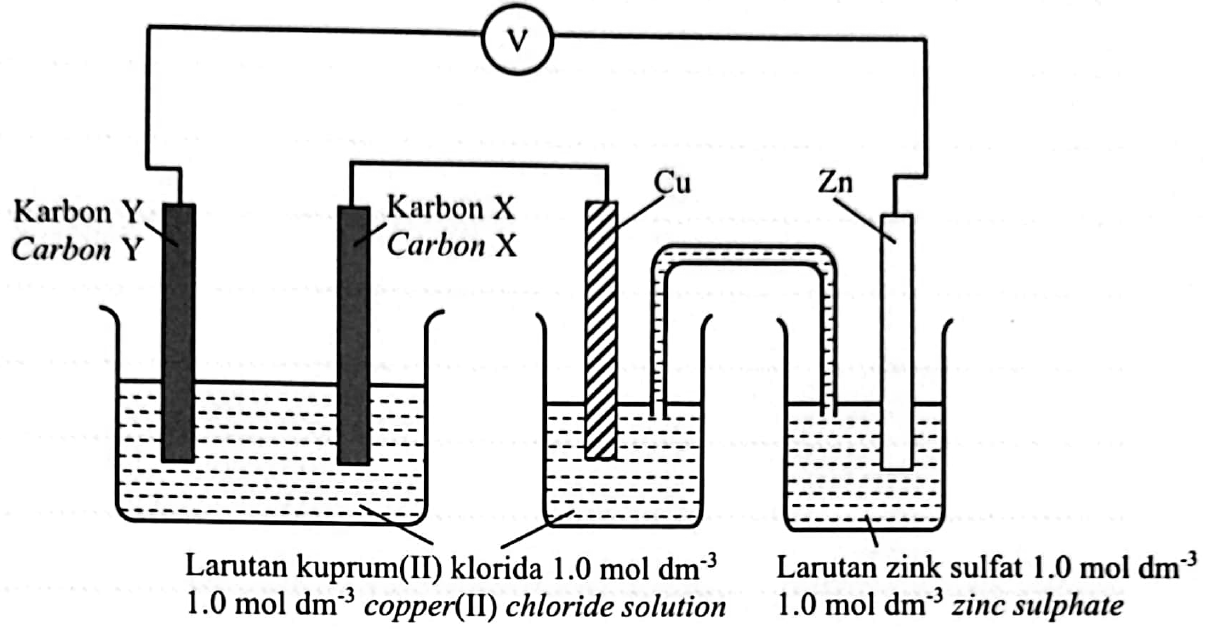
Section C
Diagram 10 shows the photosynthesis reaction of a tree: 2803 kJ heat absorbed for every 1 mol of glucose produced.
Medium20 marks- (a)
During photosynthesis reaction, carbon dioxide reacts with water to form glucose, C₆H₁₂O₆ and oxygen. State the type of reaction based on the heat change and write a thermochemical equation for the reaction.
[4]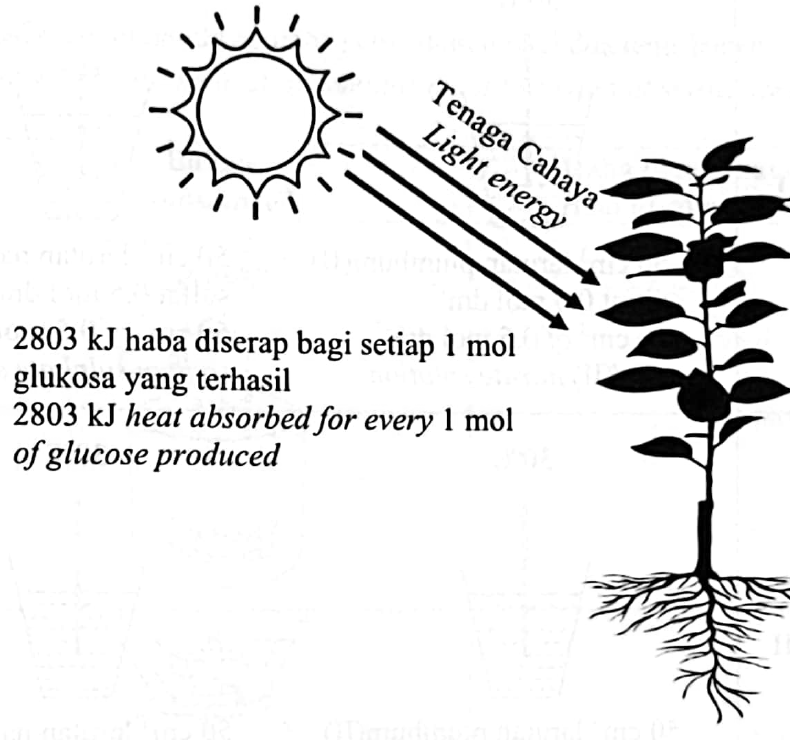
- (b)(i)
Table 4.1 shows two apparatus set-up to determine the heat of precipitation of lead(II) sulphate. Set I: 50 cm³ of 0.5 mol dm⁻³ lead(II) nitrate solution (30 °C) + 50 cm³ of 0.5 mol dm⁻³ sodium sulphate solution (30 °C). Set II: 50 cm³ of 1.0 mol dm⁻³ lead(II) nitrate solution (30 °C) + 50 cm³ of 1.0 mol dm⁻³ sodium sulphate solution (30 °C). Determine the heat of precipitation of lead(II) sulphate in Set I if 630 J of heat is released.
[2]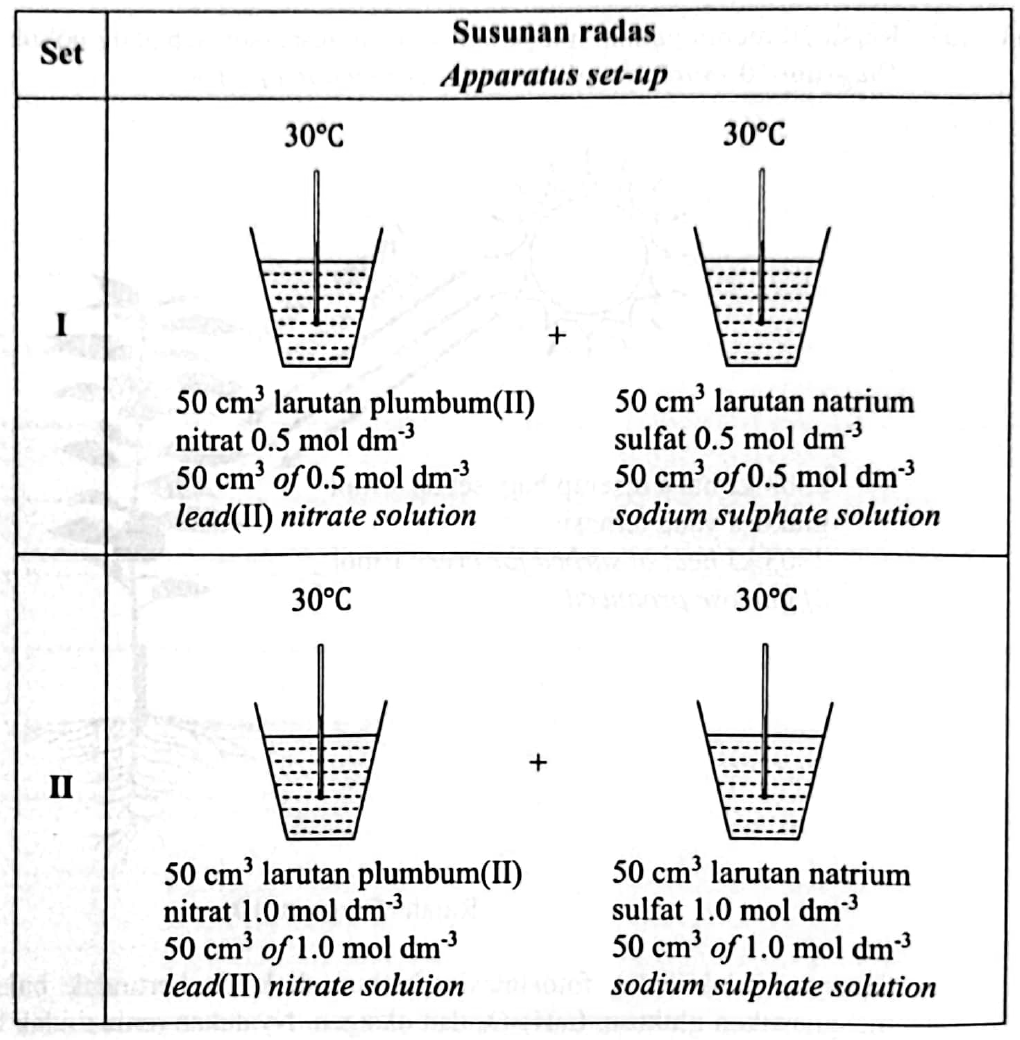
- (b)(ii)
Predict and explain your answer for: heat of precipitation for lead(II) sulphate in Set II; changes in temperature in Set II.
[4] - (c)(i)
Table 4.2 shows the heat of combustion of two types of substances: butane gas -2880 kJ mol⁻¹; ethanol -1360 kJ mol⁻¹. Which substance is more suitable to be used as fuel? Give one reason.
[2]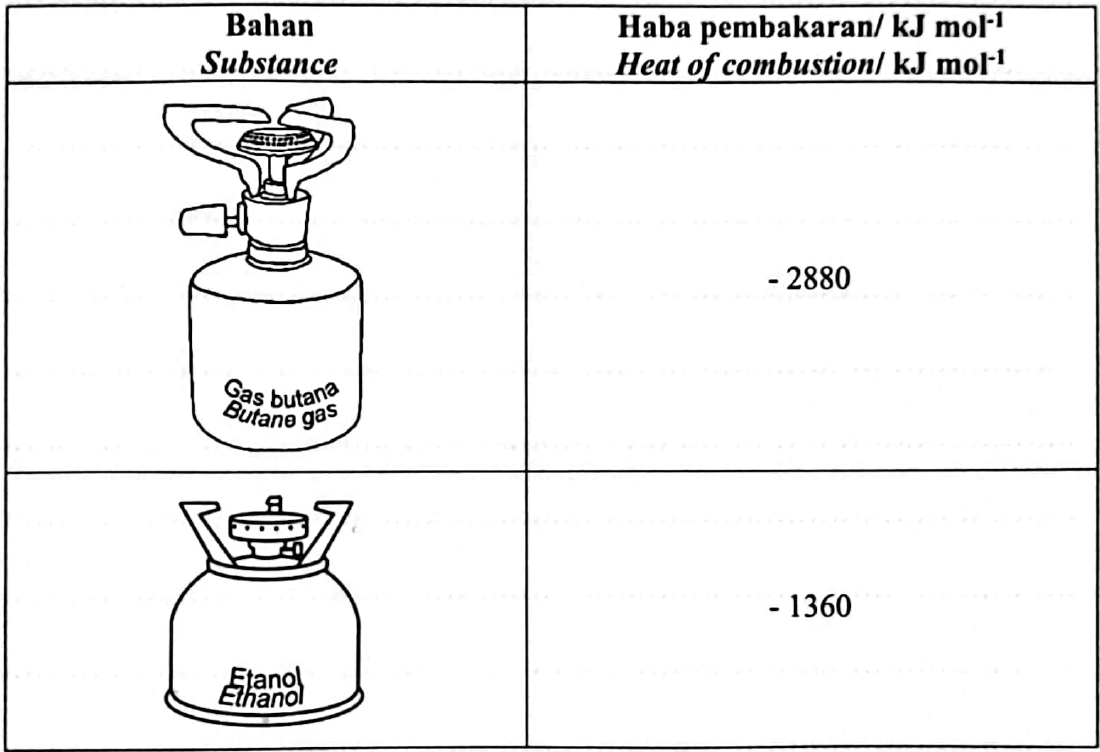
- (c)(ii)
Describe an experiment to determine the value of heat of combustion for the substances.
[8]