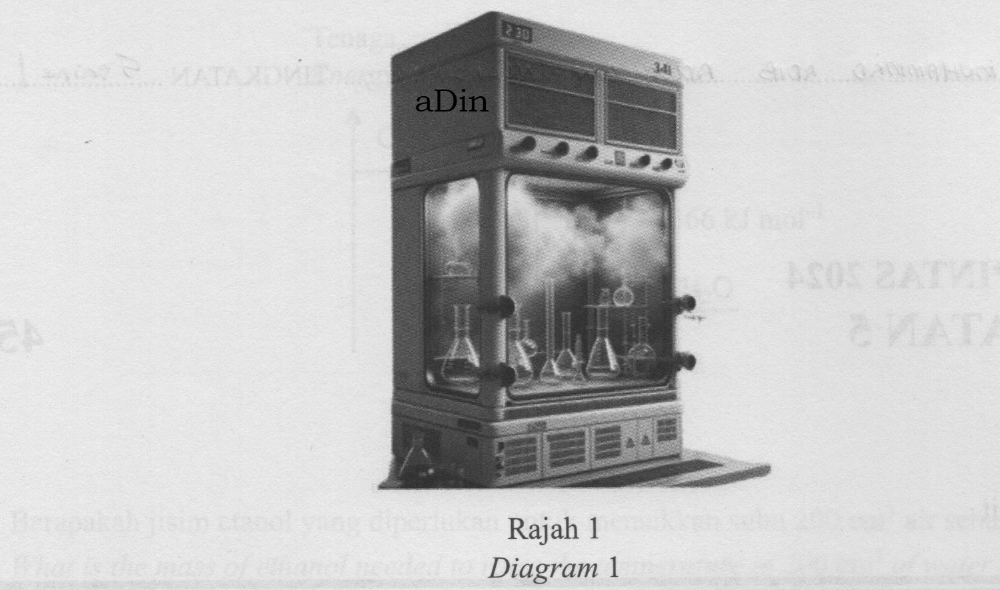
Diagram 1 shows the safety equipment in the laboratory (a fume cupboard). Which of the following chemicals need to be handled inside the safety equipment shown in Diagram 1?
Easy
What is the chemical formula of aluminium carbonate?
Medium
Which of the following substances consist of ionic bond?
Easy
Which of the following factors affect the rate of reaction? I Presence of catalyst; II Mass of reactants; III Number of mole; IV Size of reactants
Medium
The following equation shows the reaction between copper(II) oxide and hydrogen gas. CuO + H₂ → Cu + H₂O. What is the type of reaction that takes place for copper(II) oxide?
Easy
Which of the following reactions absorbs heat from the surrounding?
Medium
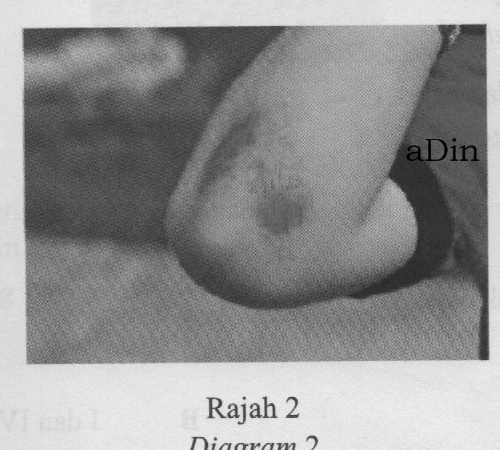
Diagram 2 shows an injury (a wound on the elbow) of a student during sports day. What type of medicine should be taken by the student?
Easy
Which of the following substances consist of molecules?
Easy
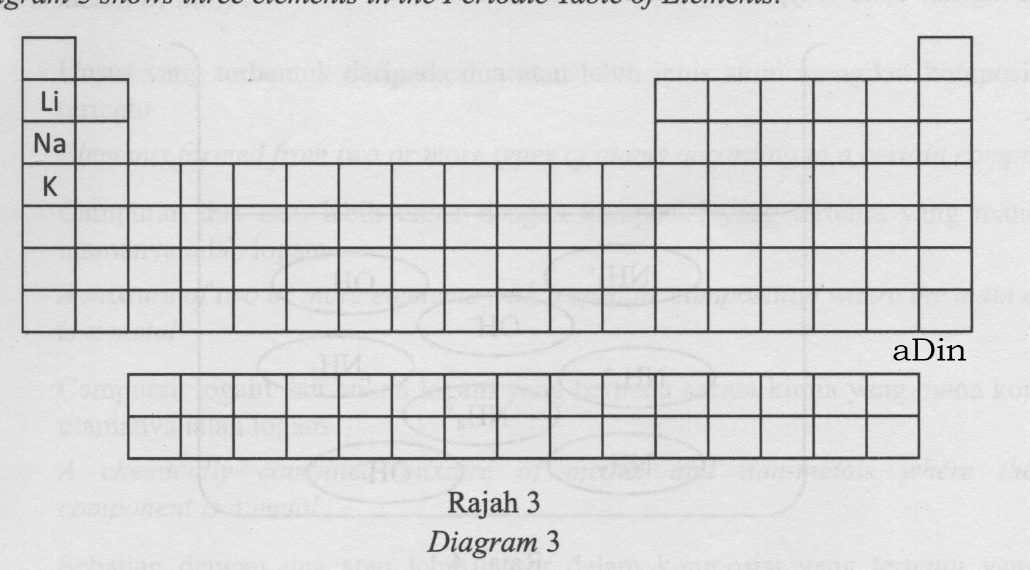
Diagram 3 shows three elements (Li, Na, K) in the Periodic Table of Elements. Which of the following is true about the elements?
Easy
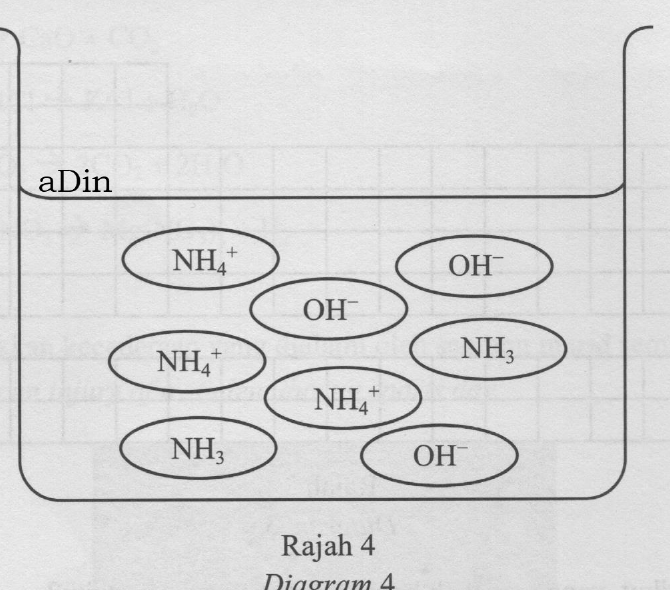
Diagram 4 shows types of particles in a solution (NH₄⁺, OH⁻ and NH₃). Which of the following represents the type of solution shown?
Medium
What is meant by alloy?
Easy
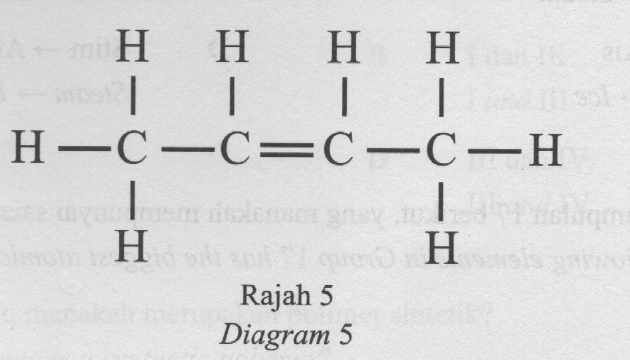
Diagram 5 shows a chemical compound (H₃C–CH=CH–CH₃, drawn as a structural formula). What is the number of isomers for compound in Diagram 5?
Medium
Which of the following statements is true to explain the coagulation of latex?
Medium
Which of the following inter-conversions of matter causes the kinetic energy of particles to increase?
Medium
Which of the following elements in Group 17 has the biggest atomic size?
Easy
Which of the following is a diprotic acid?
Easy
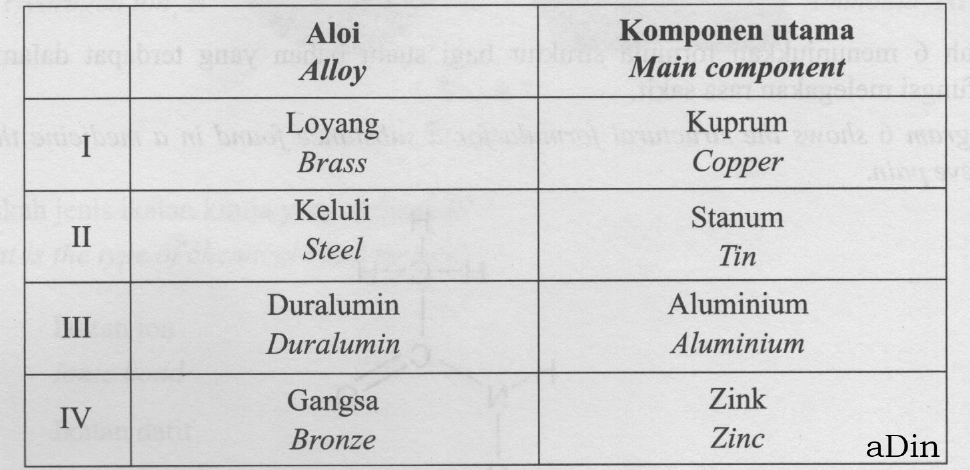
Which of the following is true about alloys and their main components? Table: I Brass - Copper; II Steel - Tin; III Duralumin - Aluminium; IV Bronze - Zinc.
Medium
Which of the following is a synthetic polymer?
Easy
Which of the following is true about carbon compound?
Medium
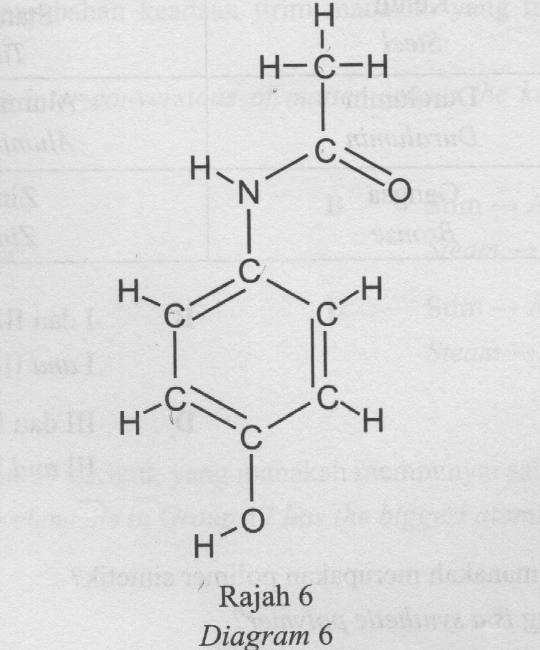
Diagram 6 shows the structural formula for a substance found in a medicine that works to relieve pain. What is the molecular formula for this substance?
Medium
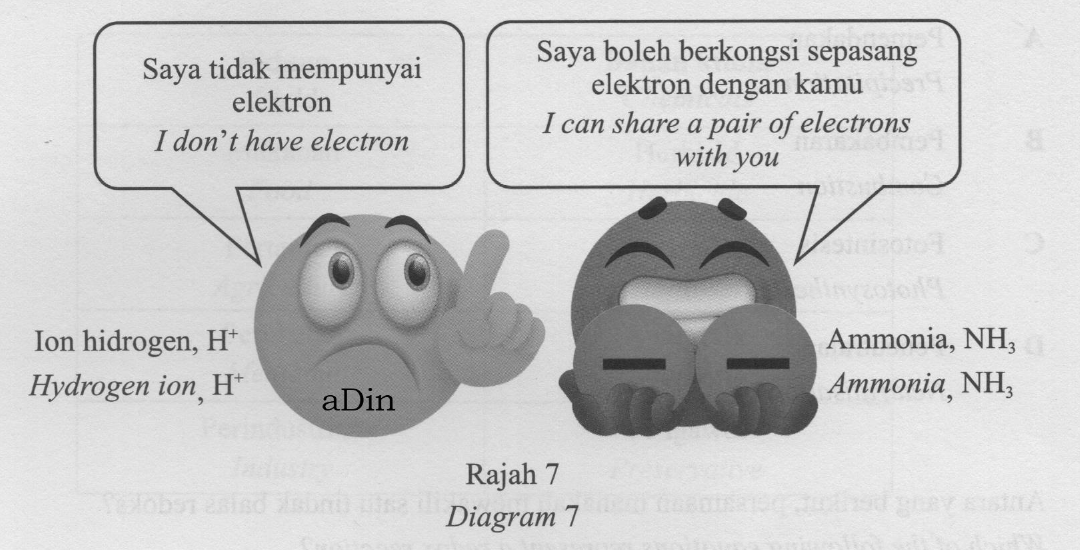
Diagram 7 shows the bond formation of two types of particles: hydrogen ion, H⁺ ("I don't have electron") and ammonia, NH₃ ("I can share a pair of electrons with you"). What is the type of chemical bond formed?
Medium
Which of the following processes is a slow reaction?
Easy
Which of the following equations represent a redox reaction?
Medium
The boiling point of potassium is lower than sodium. Which statement most accurately explains this phenomenon?
Medium
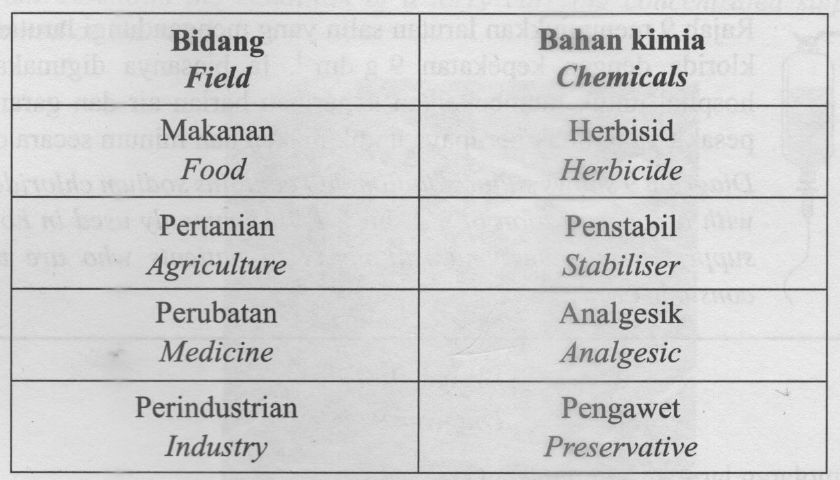
Which of the following pairs is matched correctly? A Food - Herbicide; B Agriculture - Stabiliser; C Medicine - Analgesic; D Industry - Preservative
Easy
Diagram 8 shows epsom salt which is often used in foot soak solution to relief foot ache. It consists of white powder magnesium sulphate heptahydrate, MgSO₄.7H₂O. What is the molar mass of magnesium sulphate heptahydrate? [Relative atomic mass: Mg = 24; S = 32; O = 16; H = 1]
Medium
Diagram 9: saline solution contains sodium chloride solution with a concentration of 9 g dm⁻³, commonly used in hospitals to supply daily water and salt needs to patients unable to consume orally. What is the molarity of the saline solution? [Relative atomic mass: Na = 23, Cl = 35.5]
Medium
Diagram 10 shows an overturned lorry carrying concentrated sulphuric acid. 1200 cm³ of 4.65 mol dm⁻³ sulphuric acid has spilled on the road. Calcium carbonate compound is used to react with the acid to produce calcium sulphate, carbon dioxide and water. What is the minimum mass of calcium carbonate compound required? [Relative atomic mass: H = 1, C = 12, O = 16, Ca = 40]
Medium
Pak Ahmad works at a potato plantation. The potato crops were not growing well. He sprinkled some quicklime (calcium oxide) onto the soil for a week. After a few weeks, the potato crops became healthier. What was the purpose of sprinkling the quicklime onto the soil?
Medium
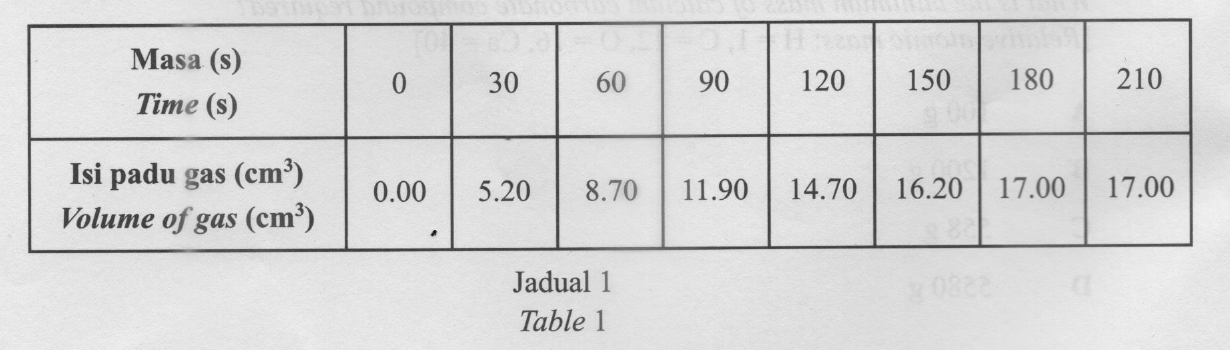
Table 1 shows the volume of hydrogen gas collected in an experiment. Time (s): 0, 30, 60, 90, 120, 150, 180, 210. Volume of gas (cm³): 0.00, 5.20, 8.70, 11.90, 14.70, 16.20, 17.00, 17.00. Calculate the average rate of reaction for overall reaction.
Medium
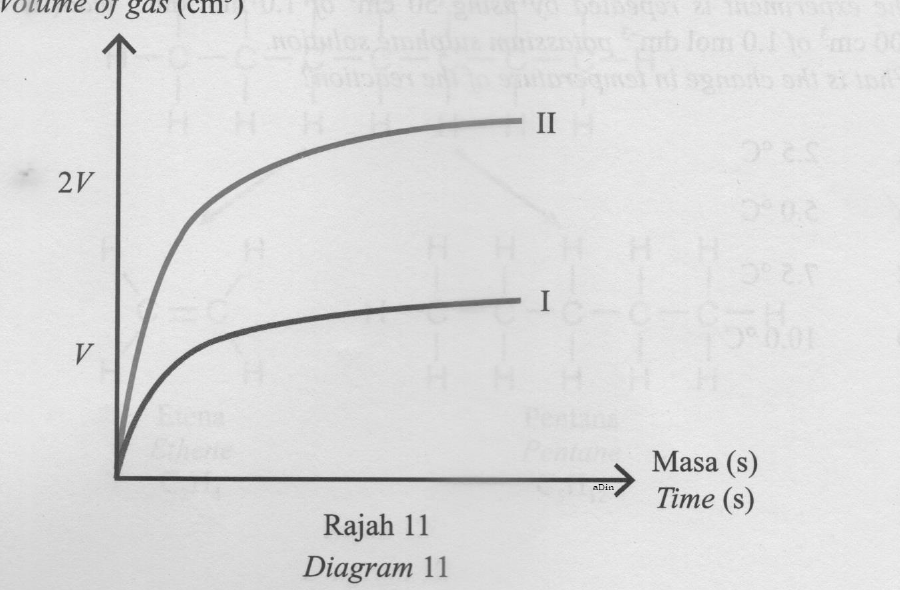
Diagram 11 shows a graph of volume of carbon dioxide gas against time for the reaction between 5 g calcium carbonate powder, CaCO₃ and 50 cm³ of 1.0 mol dm⁻³ hydrochloric acid, HCl (curve I). Curve II reaches 2V instead of V and is steeper. Which of the following reaction will produce curve II?
Medium
50 cm³ of 1.0 mol dm⁻³ lead(II) nitrate solution was added to 50 cm³ of 1.0 mol dm⁻³ potassium sulphate solution in a plastic cup. The temperature changes is 2.5 °C. The experiment is repeated by using 50 cm³ of 1.0 mol dm⁻³ lead(II) nitrate solution and 100 cm³ of 1.0 mol dm⁻³ potassium sulphate solution. What is the change in temperature of the reaction?
Medium
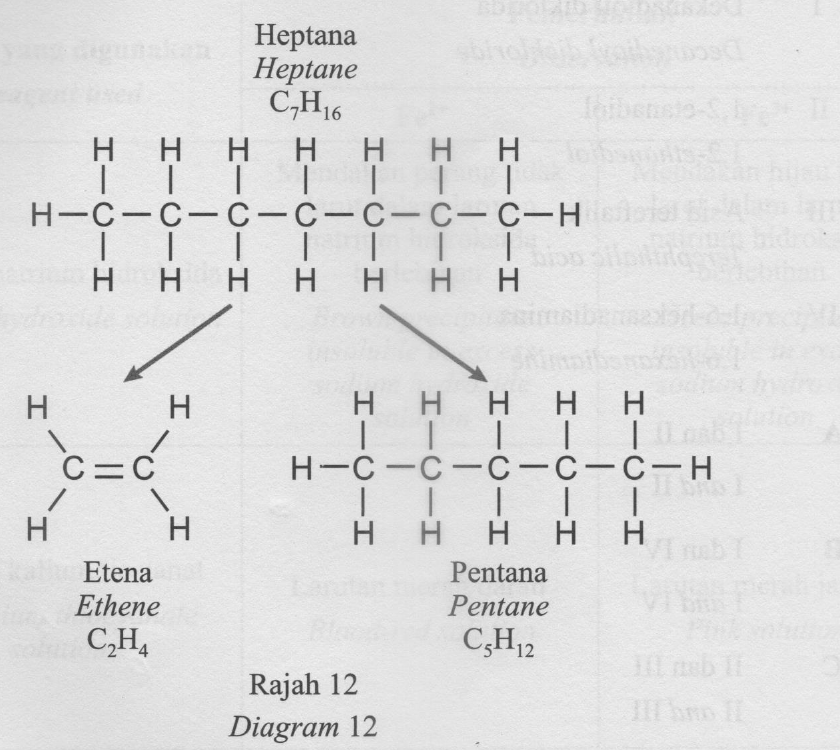
Diagram 12 shows a process which a long chain molecule change to two types of compounds: heptane, C₇H₁₆ forms ethene, C₂H₄ and pentane, C₅H₁₂. What is the name of the process?
Easy
Which of the following are monomers of nylon? I Decanedioyl dichloride; II 1,2-ethanediol; III Terephthalic acid; IV 1,6-hexanediamine
Medium
Which of the following is the property of covalent compound?
Medium
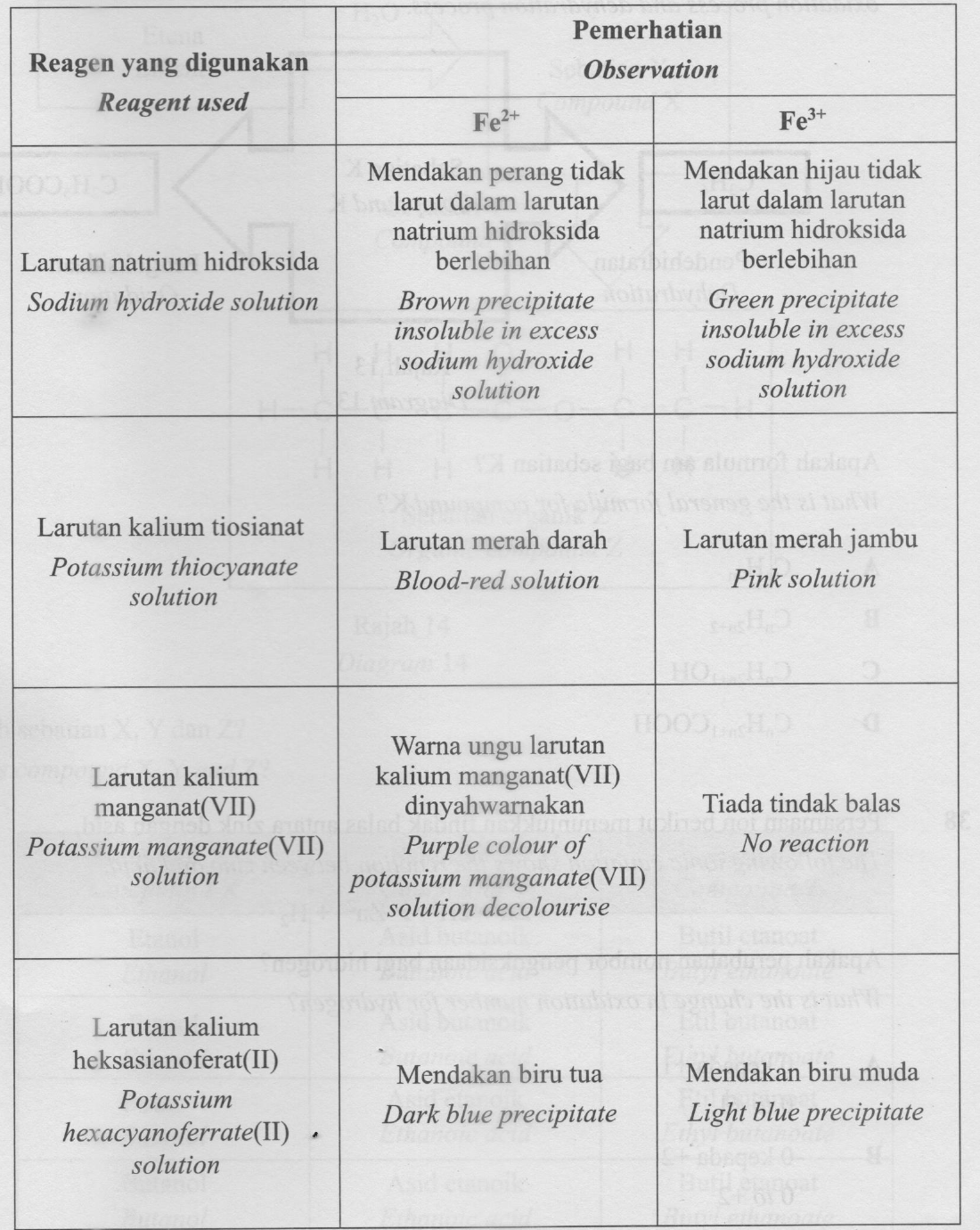
Which of the following observation obtained is true for iron(II) ion and iron(III) ion? (Table: reagent used; observation for Fe²⁺; observation for Fe³⁺)
Medium
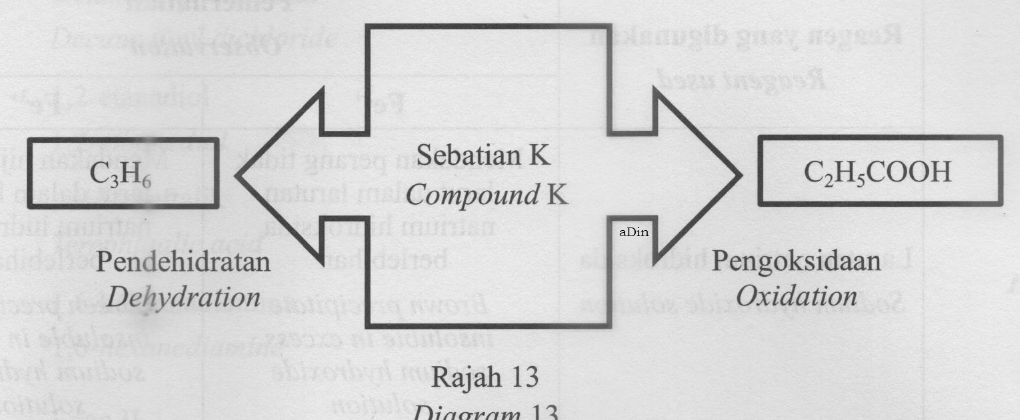
Diagram 13 shows the conversion of compound K to two organic compounds through oxidation process (to C₂H₅COOH) and dehydration process (to C₃H₆). What is the general formula for compound K?
Medium
The following ionic equation shows the reaction between zinc and acid. Zn + 2H⁺ → Zn²⁺ + H₂. What is the change in oxidation number for hydrogen?
Medium
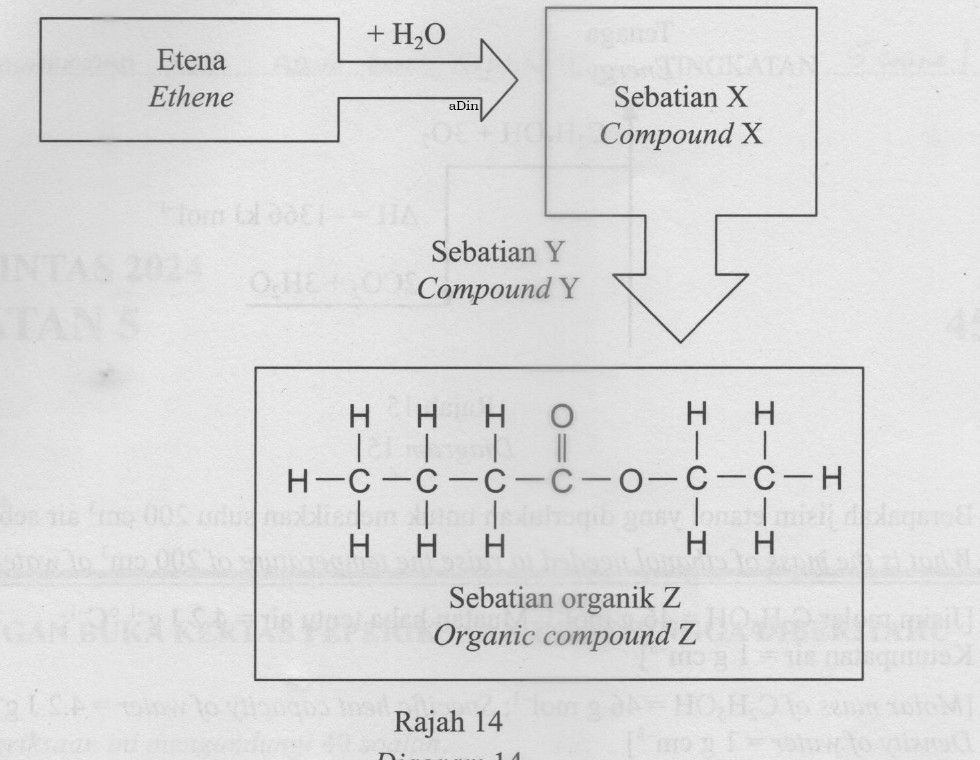
Diagram 14 shows series of reactions to produce organic compound Z: ethene + H₂O gives compound X; X gives compound Y; X and Y react to give compound Z (the ester CH₃CH₂CH₂COOCH₂CH₃). What is compound X, Y and Z?
Medium
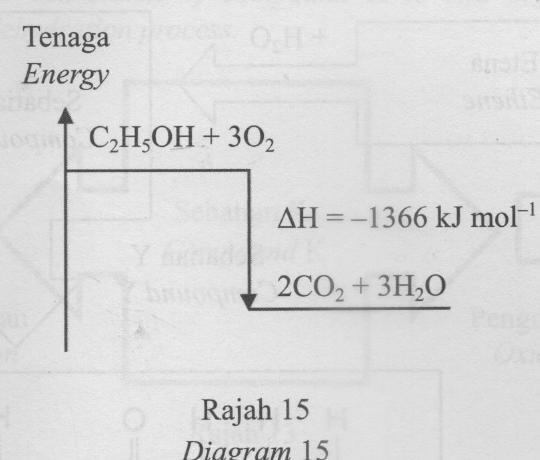
Diagram 15 shows the energy level diagram for the combustion of ethanol, C₂H₅OH (ΔH = –1366 kJ mol⁻¹). What is the mass of ethanol needed to raise the temperature of 200 cm³ of water by 31.0 °C? [Molar mass of C₂H₅OH = 46 g mol⁻¹; Specific heat capacity of water = 4.2 J g⁻¹ °C⁻¹; Density of water = 1 g cm⁻³]