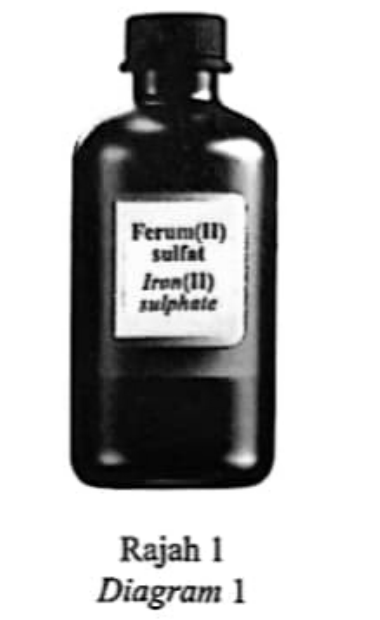
Diagram 1 shows the way to store iron(II) sulphate. Which of the following properties is the reason why the solution is stored in a dark bottle?
Medium
What is the chemical formula of chromium(III) oxide?
Medium
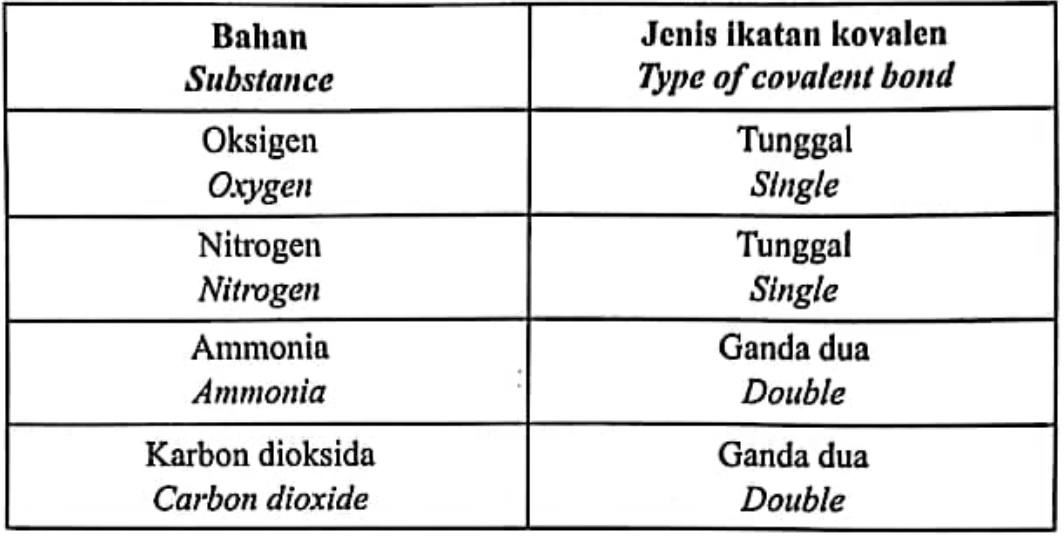
Which substance is correctly matched with its type of covalent bond? [Proton number: H = 1, C = 6, N = 7, O = 8]
Substance | Type of covalent bond
A Oxygen | Single
B Nitrogen | Single
C Ammonia | Double
D Carbon dioxide | Double
Medium
Which of the following is a factor that affects the rate of reaction?
Easy
Which of the following occurs in a reduction reaction?
Easy
Which of the following chemical equation is an endothermic reaction?
Medium
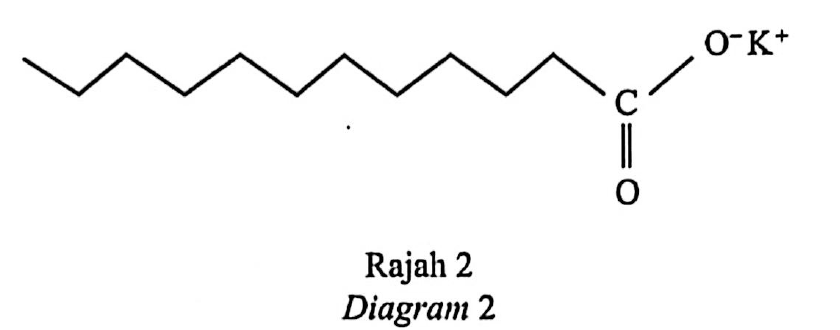
Diagram 2 shows the structural formula of a substance (a long hydrocarbon chain ending in COO⁻K⁺). What is the substance?
Medium
Which of the following substances is made up of one type of atom only?
Easy
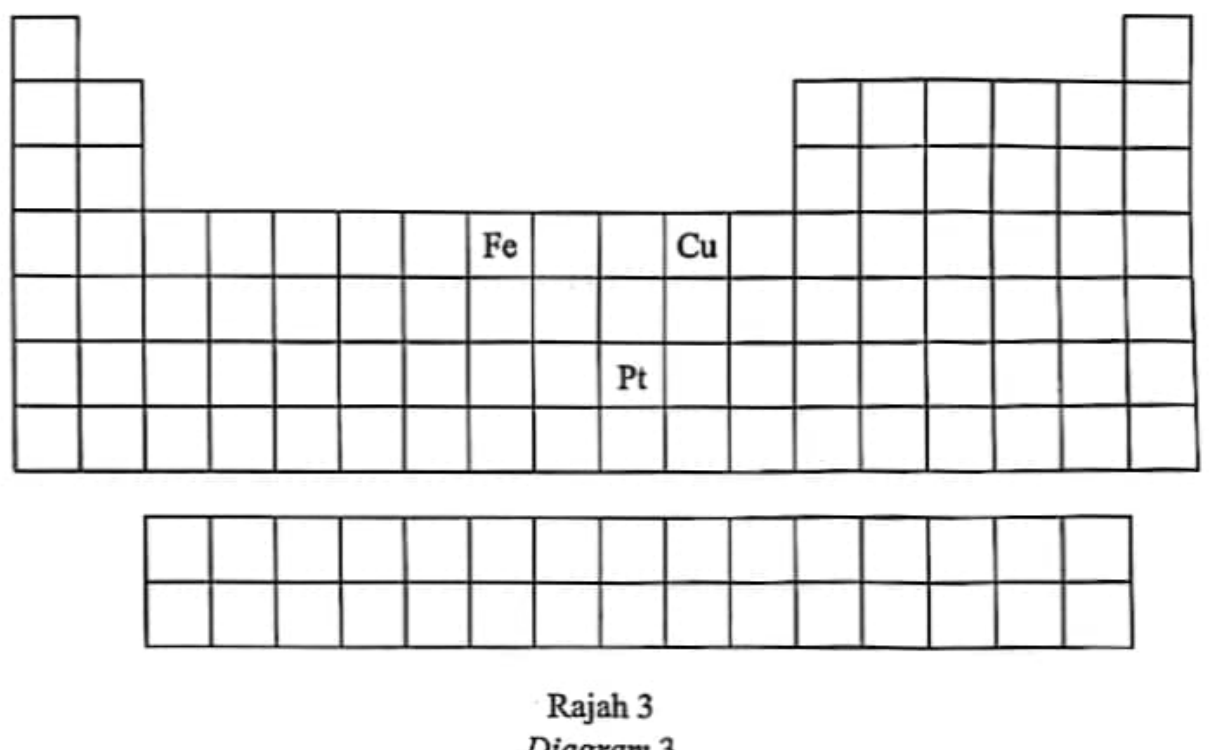
Diagram 3 shows three elements (Fe, Cu and Pt) in the Periodic Table of Elements. Which statement is true about the elements?
Medium
Which ion shows the alkaline properties in ammonia solution?
Easy
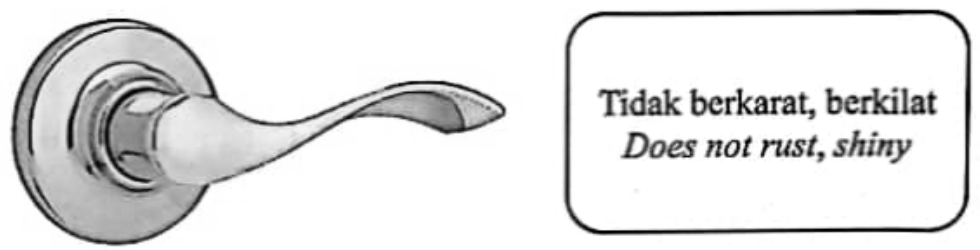
Substance R is used to manufacture doorknobs. Substance R has the following properties: does not rust, shiny. What is substance R?
Easy
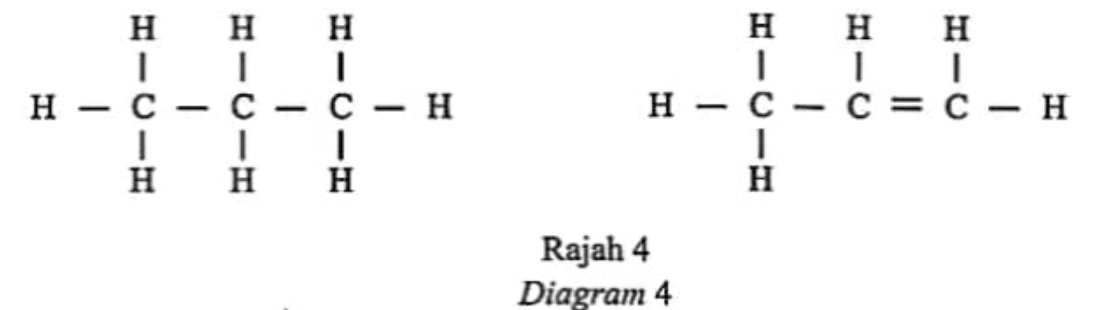
Diagram 4 shows the structural formula of two hydrocarbons (propane and propene). Which property is similar for both hydrocarbons?
Medium
Which statement is true about rubber?
Medium
Which inter-conversion of matter causes the kinetic energy of particles to decrease?
Easy
Which element in Group 17 has the smallest atomic size?
Easy
Which of the following substances is a salt?
I Barium sulphate
II Magnesium oxide
III Ammonium chloride
IV Potassium hydroxide
Medium
Which of the following substances is the main component for glass?
Easy
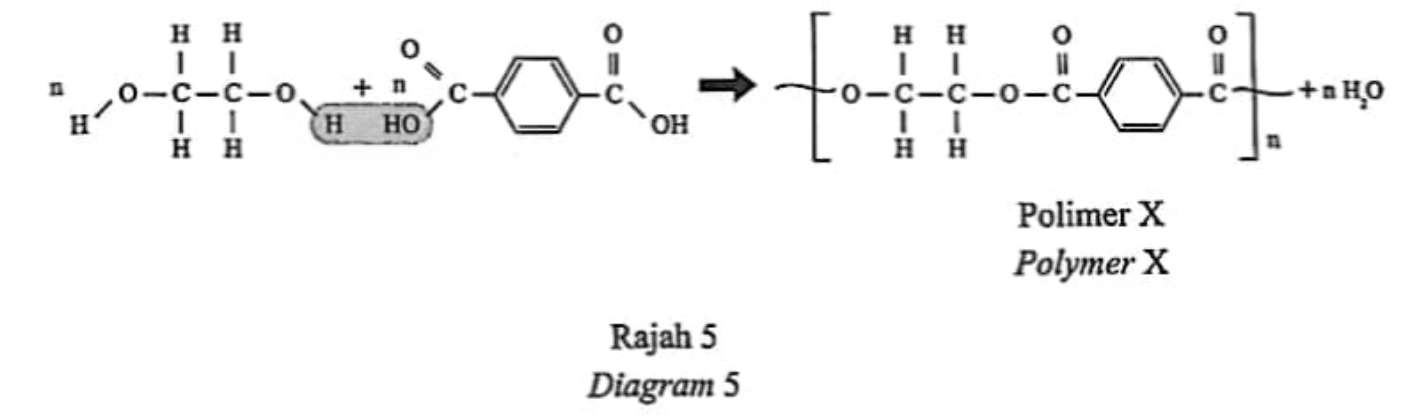
Diagram 5 shows the formation of polymer X (ethane-1,2-diol condensing with benzene-1,4-dicarboxylic acid, releasing water). What is polymer X?
Medium
Which of the following statements is true about carbon compounds?
Medium
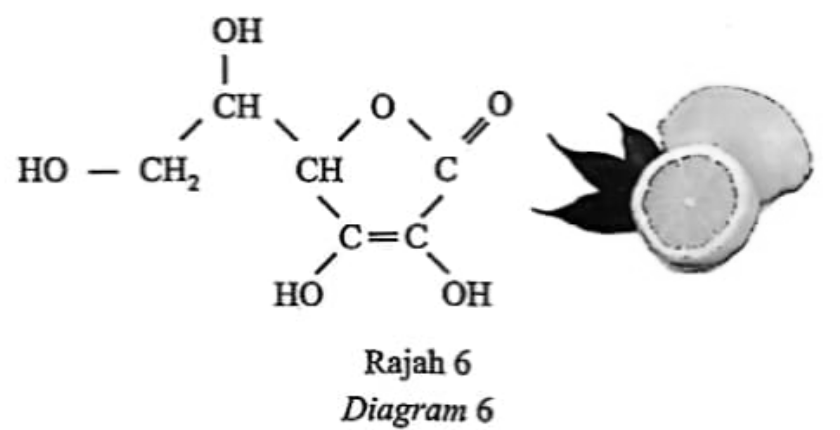
Diagram 6 shows the structural formula of Vitamin C that is found in a lemon. What is the molecular formula for Vitamin C?
Medium
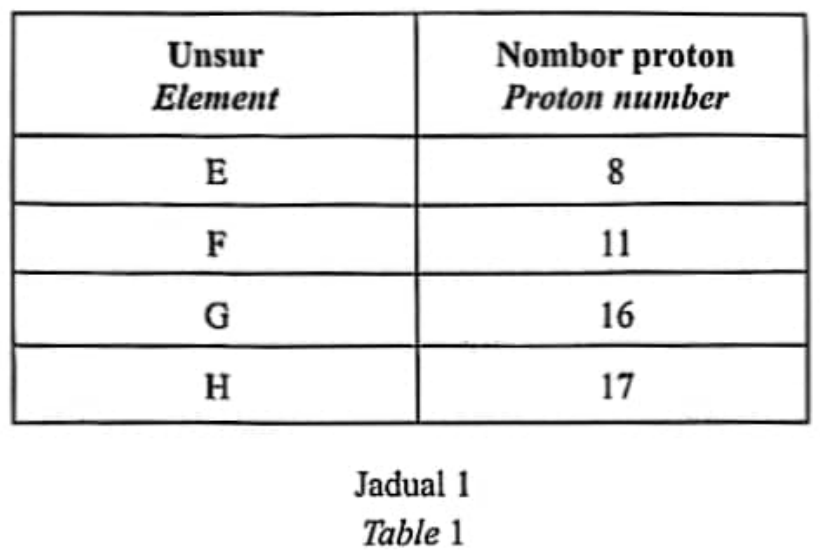
Table 1 shows the proton number of four elements, E, F, G and H: E = 8, F = 11, G = 16, H = 17. Which pairs of elements can combine to form an ionic compound?
Medium
The following equation represents the reaction between zinc and nitric acid: Zn + 2HNO₃ → Zn(NO₃)₂ + H₂. Which method is the most suitable to increase the rate of reaction?
Medium
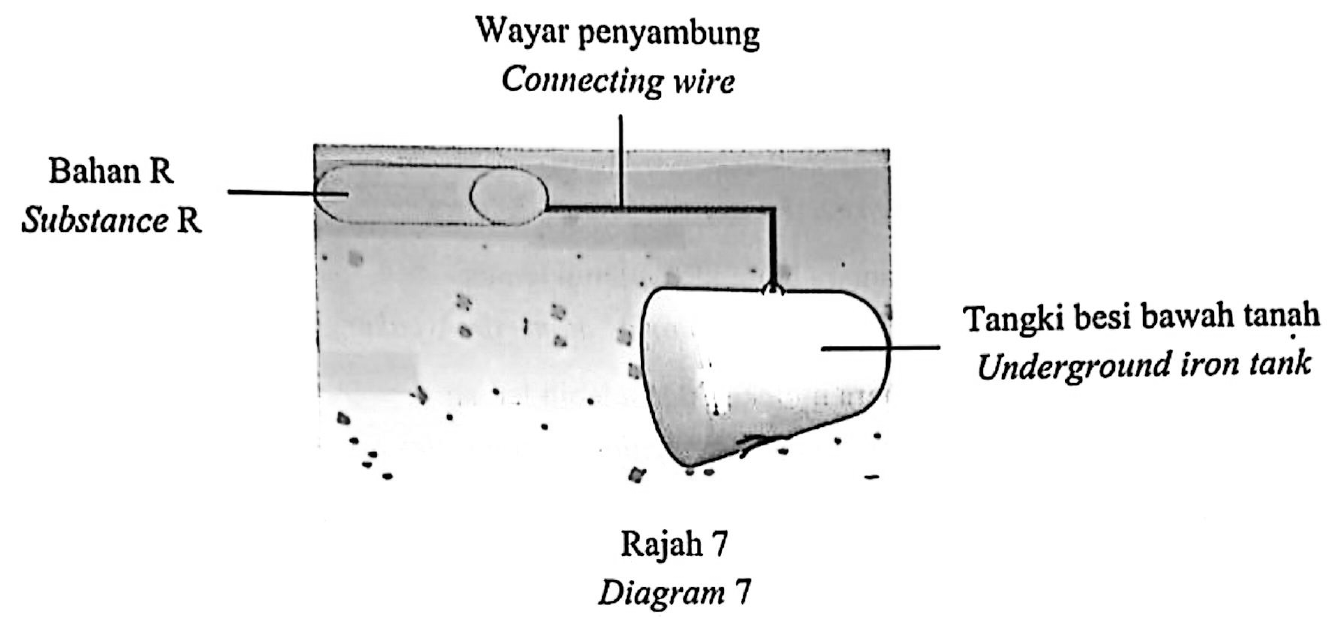
Diagram 7 shows substance R is used as a method to prevent the corrosion of an underground iron tank (R is connected to the tank by a wire). Which of the following is suitable to be used as substance R?
Medium
The boiling point of chlorine is lower than bromine. Which statement best explains this phenomenon?
Medium
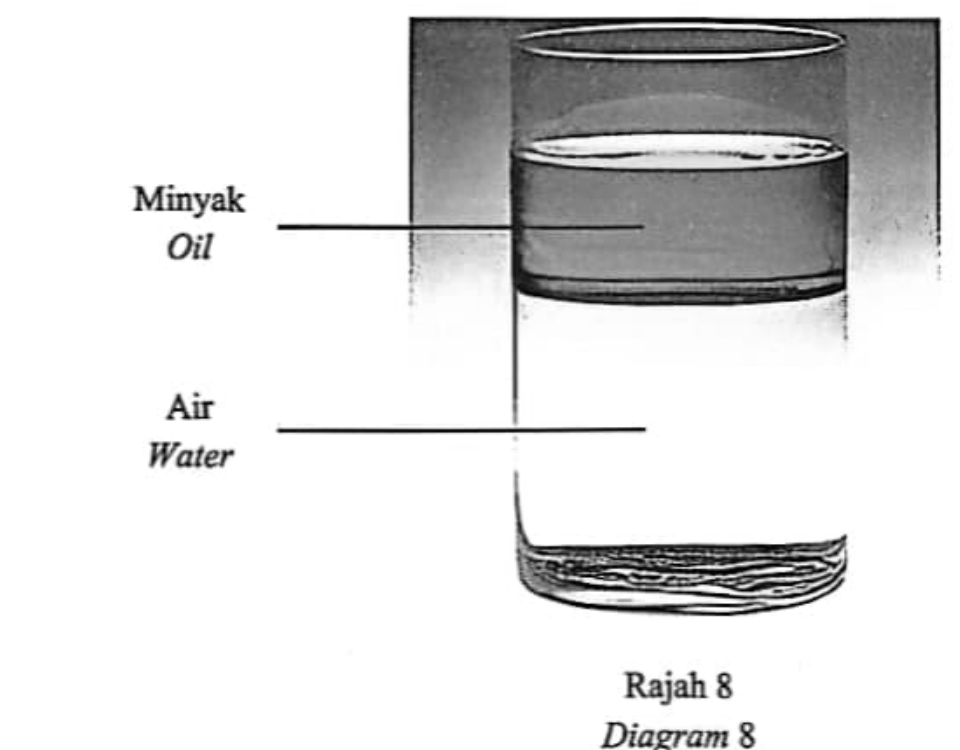
Diagram 8 shows a glass containing two layers of substances (oil above water). Which food additive is the most suitable to be used to ensure both substances are mixed?
Easy
Plaster of Paris is often used to treat patients with bone injuries. It consists of a fine white powder of calcium sulphate hemihydrate, (CaSO₄)₂.H₂O. What is the molar mass of calcium sulphate hemihydrate? [Relative atomic mass: Ca = 40; S = 32; O = 16; H = 1]
Medium
A standard solution is prepared by dissolving 8.0 g sodium hydroxide in 250 cm³ of water. What is the molarity of the standard solution of sodium hydroxide? [Relative atomic mass: H = 1, O = 16, Na = 23]
Medium
500 cm³ of 4.65 mol dm⁻³ sulphuric acid from a car battery has been spilled on a garage floor. Baking soda, NaHCO₃ can be used to react with the acid to produce sodium sulphate, carbon dioxide and water. What is the minimum mass of baking soda needed? [Relative atomic mass: H = 1, C = 12, O = 16, Na = 23]
Medium
Which of the following fertilisers contains the highest percentage of nitrogen by mass? [Relative atomic mass: H = 1; C = 12; N = 14; O = 16; S = 32; K = 39]
Medium
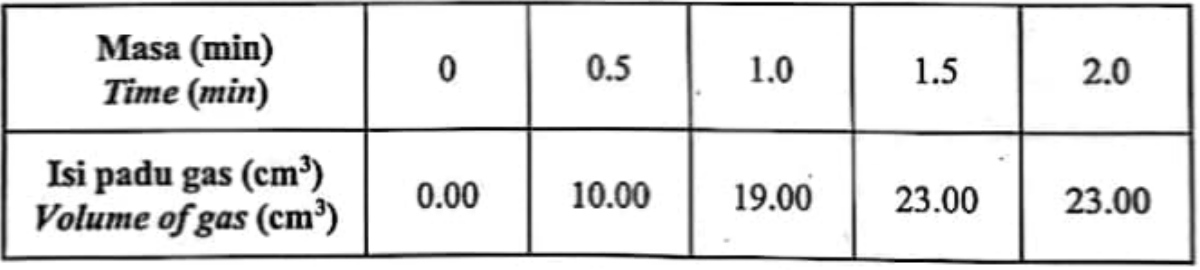
Table 2 shows the volume of oxygen gas collected in an experiment.
Time (min): 0, 0.5, 1.0, 1.5, 2.0
Volume of gas (cm³): 0.00, 10.00, 19.00, 23.00, 23.00
Calculate the average rate of reaction.
Medium
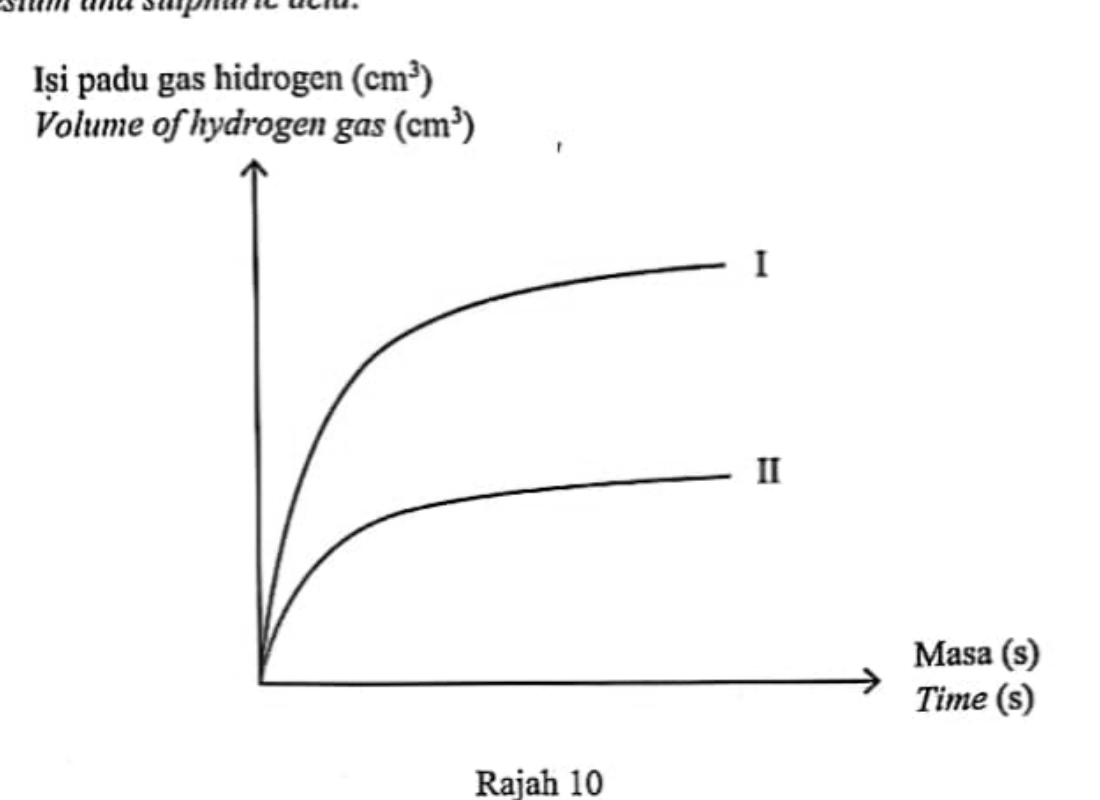
Diagram 10 shows a graph of volume of hydrogen gas against time for the reaction between magnesium and sulphuric acid. Curve II is obtained when a magnesium strip is added into 25 cm³ of 0.5 mol dm⁻³ sulphuric acid in a conical flask. Which of the following can be done to obtain curve I?
Medium
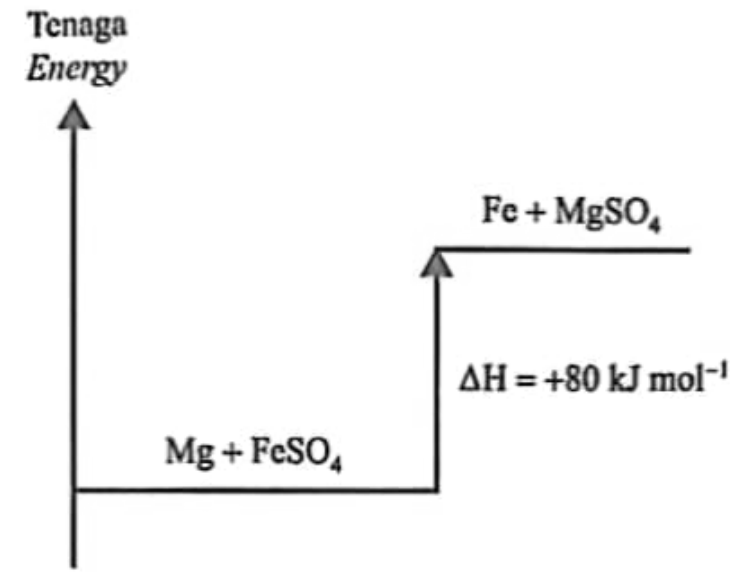
Diagram 11 shows an energy level diagram: Mg + FeSO₄ at the lower level, Fe + MgSO₄ at the higher level, ΔH = +80 kJ mol⁻¹. Which of the following is true about the energy level diagram above?
Medium
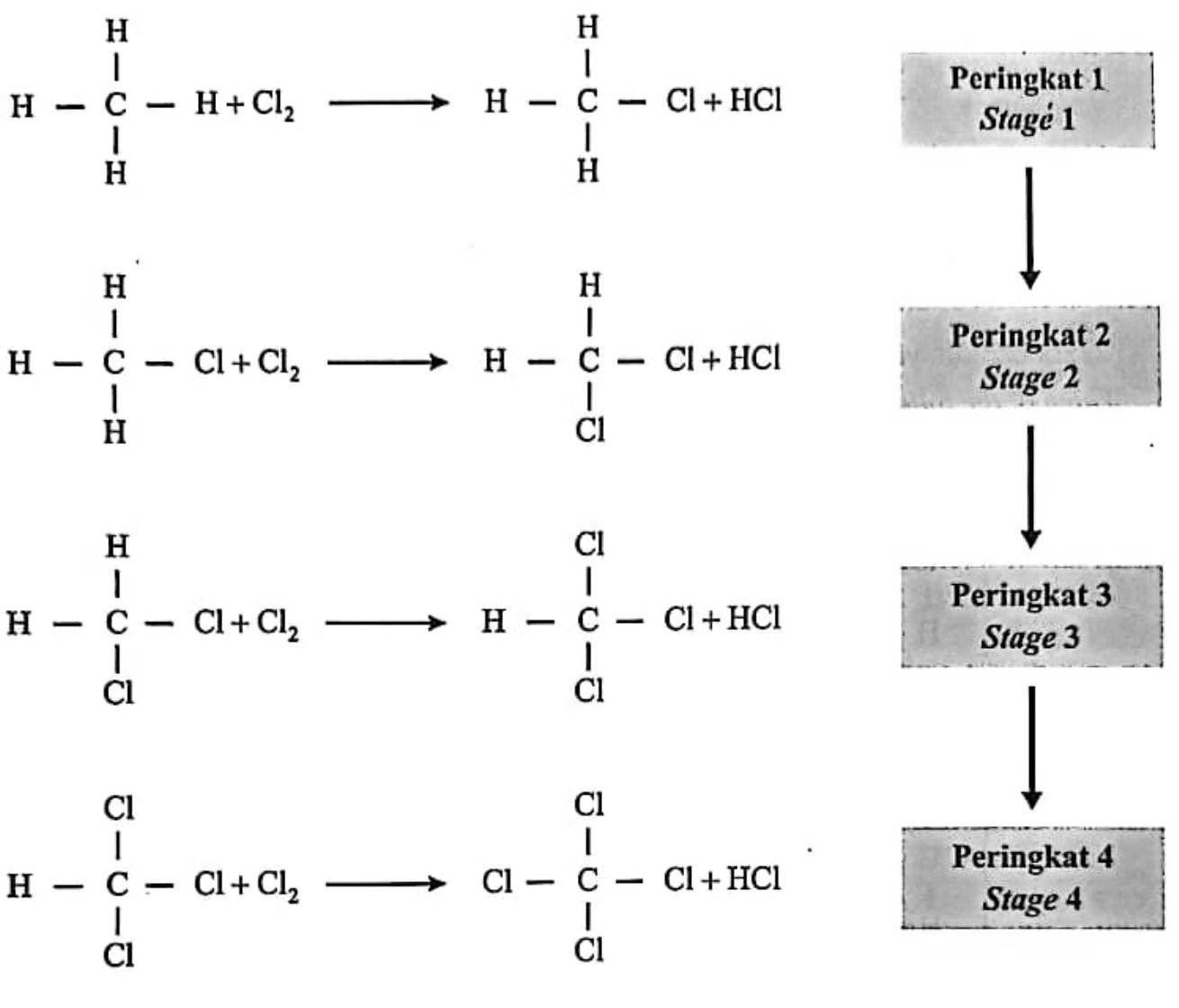
Diagram 12 shows a type of reaction (methane reacting with chlorine in four stages, replacing H atoms with Cl and giving HCl). What is the name of the reaction?
Easy
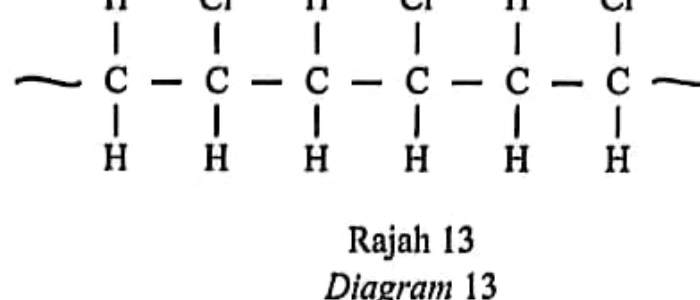
Diagram 13 shows the structural formula of polymer Y (chain of repeating CH₂–CHCl units). Which of the following is the structural formula of polymer Y?
Medium
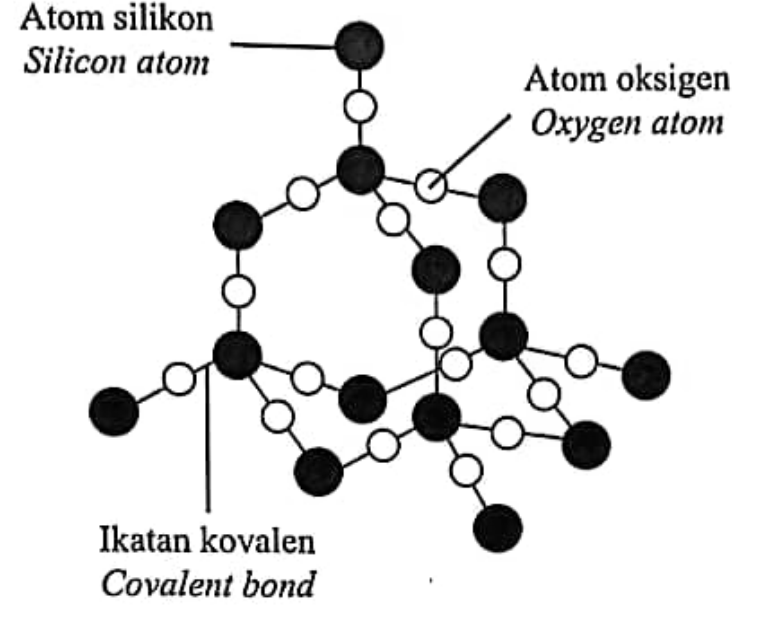
Diagram 14 shows the atomic model of a compound (silicon atoms and oxygen atoms joined by covalent bonds). Which of the following is true about the compound?
Medium
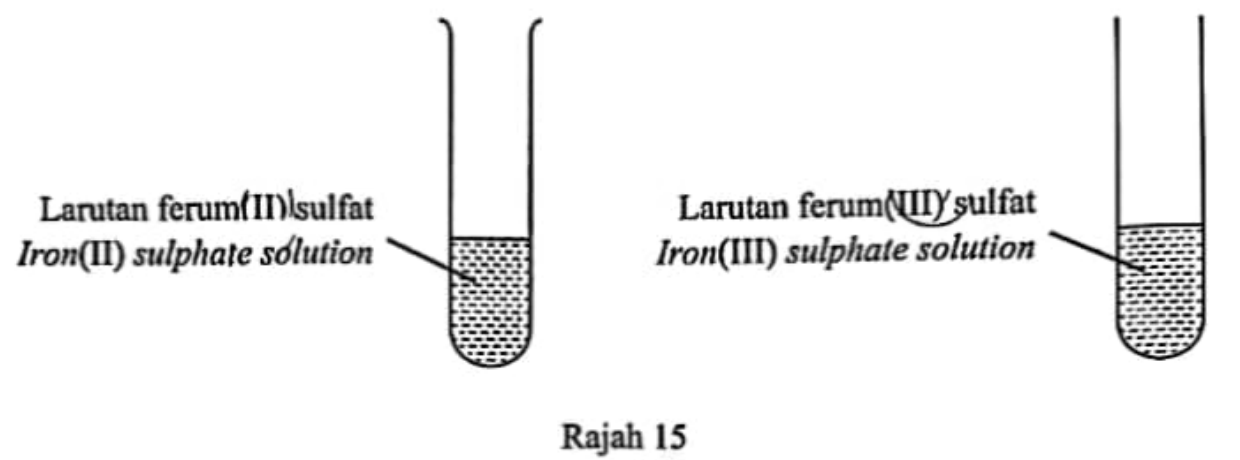
Diagram 15 shows two salt solutions: iron(II) sulphate solution and iron(III) sulphate solution. Which of the following reagent can be used to differentiate the two solutions?
Medium
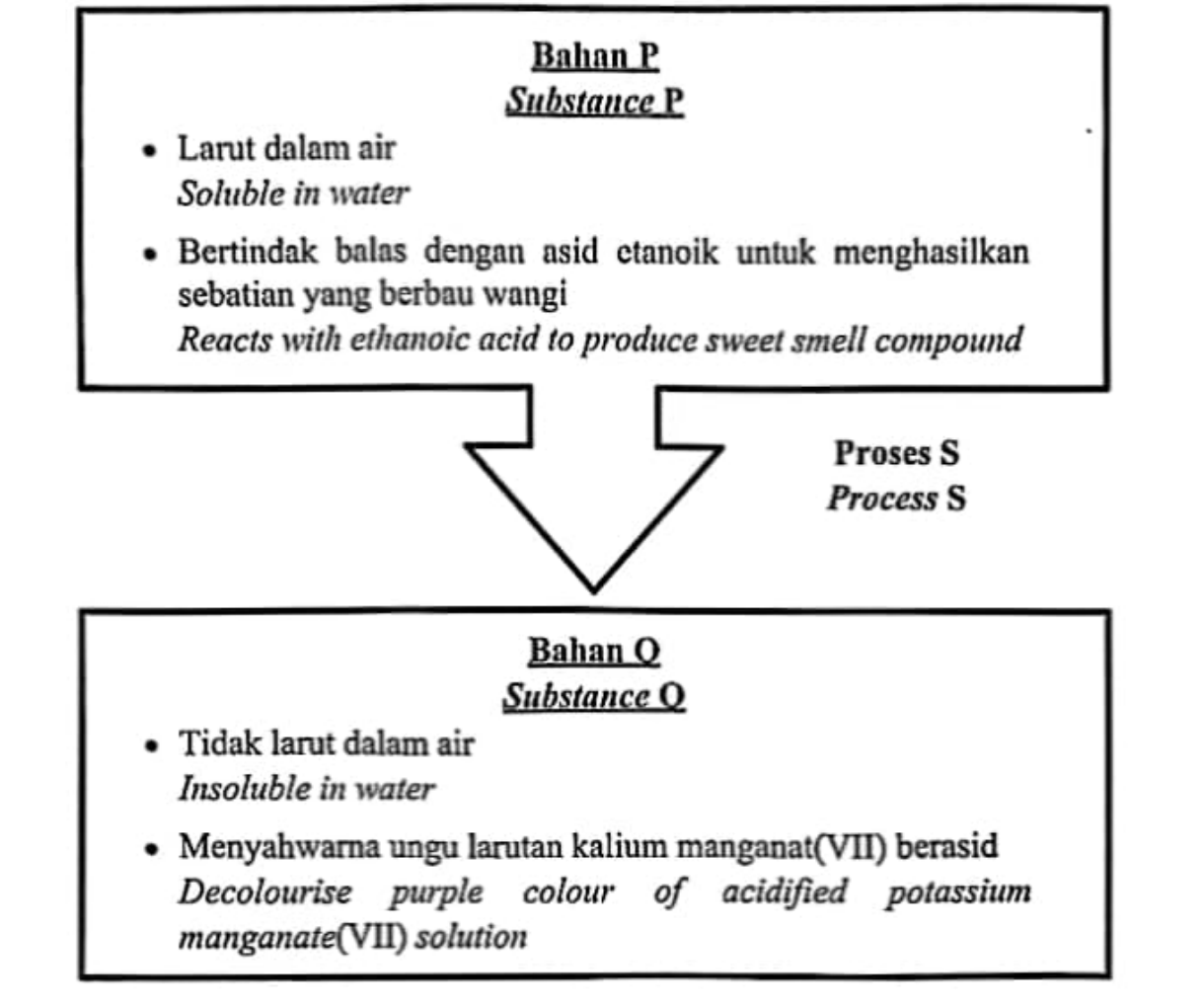
Diagram 16 shows the change of substance P to substance Q through process S. P: soluble in water; reacts with ethanoic acid to produce sweet smell compound. Q: insoluble in water; decolourises purple colour of acidified potassium manganate(VII) solution. Which of the following is correct about process S?
Medium
The following ionic equation represents the reaction between acidified potassium dichromate(VI) solution and iron(II) sulphate solution: Cr₂O₇²⁻ + 14H⁺ + 6Fe²⁺ → 6Fe³⁺ + 2Cr³⁺ + 7H₂O. What is the change of oxidation number of chromium in the reaction?
Medium
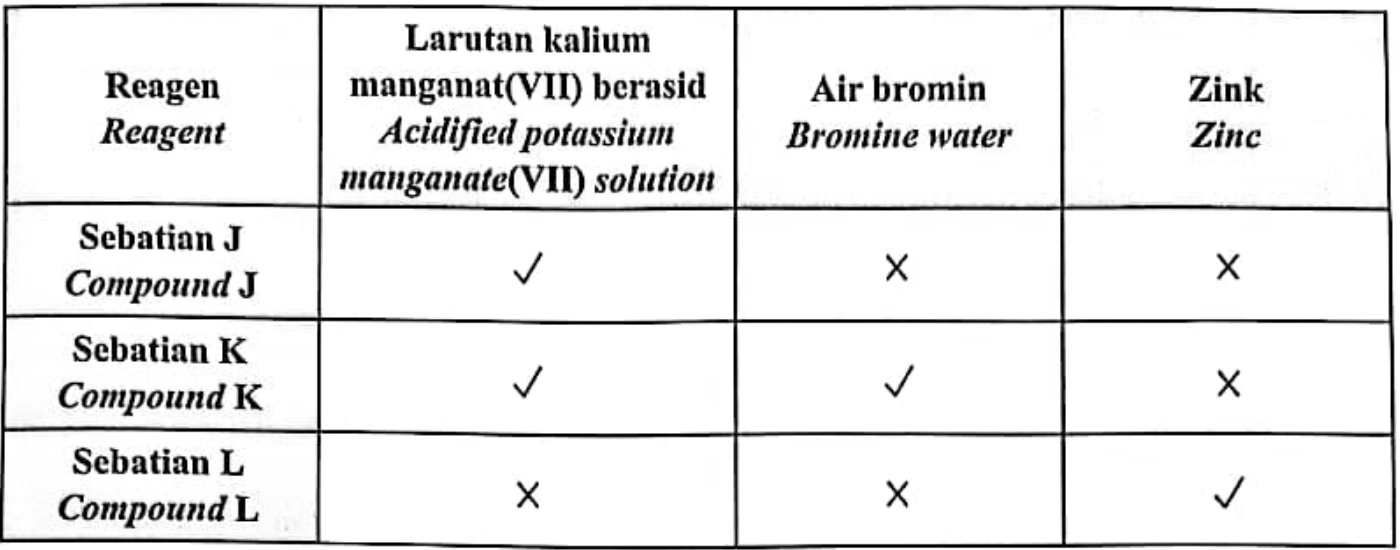
Table 3 shows the experiment results for reactions between compound J, K and L with several reagents. Compound J, K and L has two carbon atoms.
Acidified KMnO₄: J ✓, K ✓, L ✗
Bromine water: J ✗, K ✓, L ✗
Zinc: J ✗, K ✗, L ✓
Name the compound J, K and L.
Medium
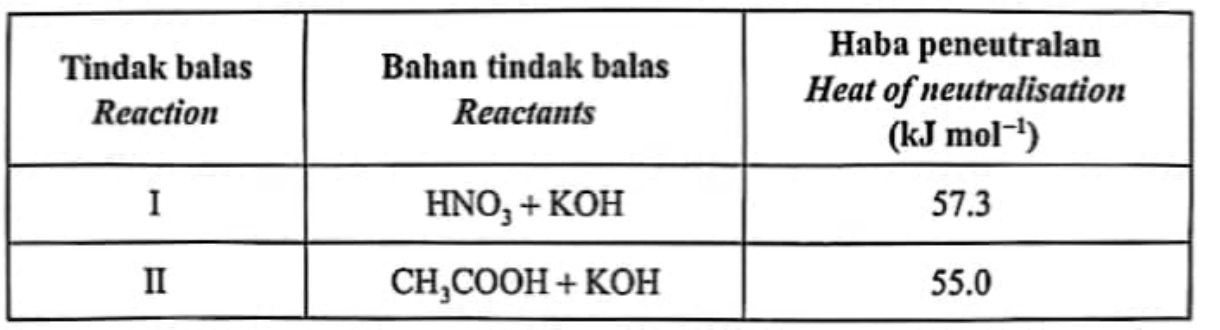
Table 4 shows the heat of neutralisation of two reactions between acid and alkali: I HNO₃ + KOH, 57.3 kJ mol⁻¹; II CH₃COOH + KOH, 55.0 kJ mol⁻¹. Which is the best statement explaining the difference of heat of neutralisation for reaction I and II?