Write your answer on paper. Then open the answer to check it.
Section A
An experiment is carried out to study the acidic properties of solution A. Solution A is the mixture of glacial ethanoic acid in solvent K. Diagram 1 shows the observation for the experiment (marble chips in solution A; gas bubbles are released).
Medium5 marks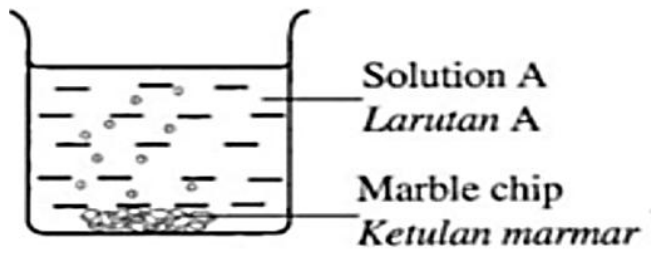
- (a)(i)
State the meaning of acid.
[1] - (a)(ii)
Name the ion that is responsible to show the acidic properties of an acid.
[1] - (a)(iii)
Based on the observation in Diagram 1, suggest solvent K.
[1] - (a)(iv)
Explain the observation of solution A.
[2]
Diagram 2 shows components made of ceramics and alloys for a high-powered motorcycle (engine, brake disc). The engine is made of Alloy Q that consists of iron and atom X.
Medium5 marks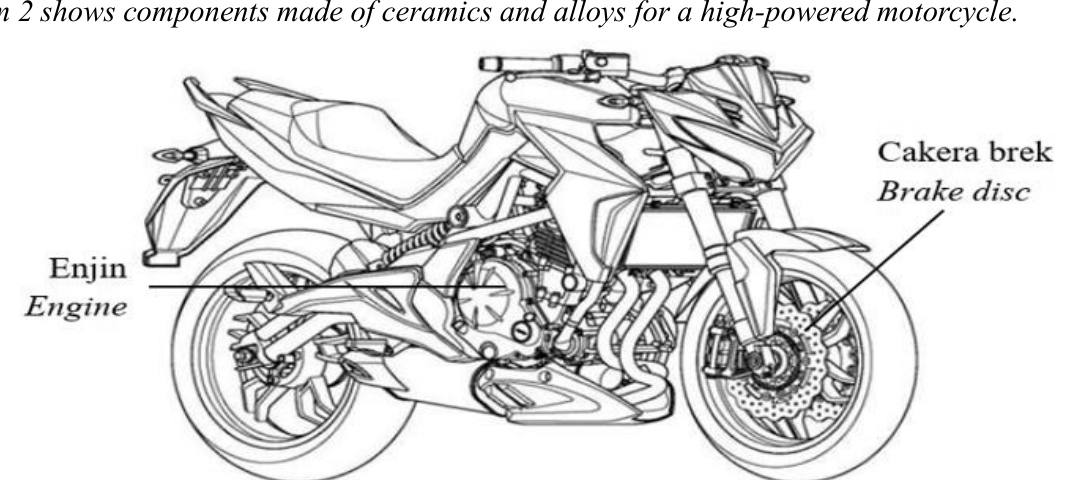
- (a)
State the name of the alloy used to make the engine in Diagram 2.
[1] - (b)
What is the name of atom X?
[1] - (c)
Draw a labelled diagram to show the arrangement of atoms in the alloy.
[2] - (d)
What is the property of alloy that makes it suitable to manufacture engine?
[1]
Diagram 3 shows part of the Periodic Table of Elements. P, Q, R, S and T are not the actual symbols of the elements. (R and S are in Group 1 with S below R; T is in Group 2 next to S; Q is in Group 15 and P is in Group 17.)
Medium6 marks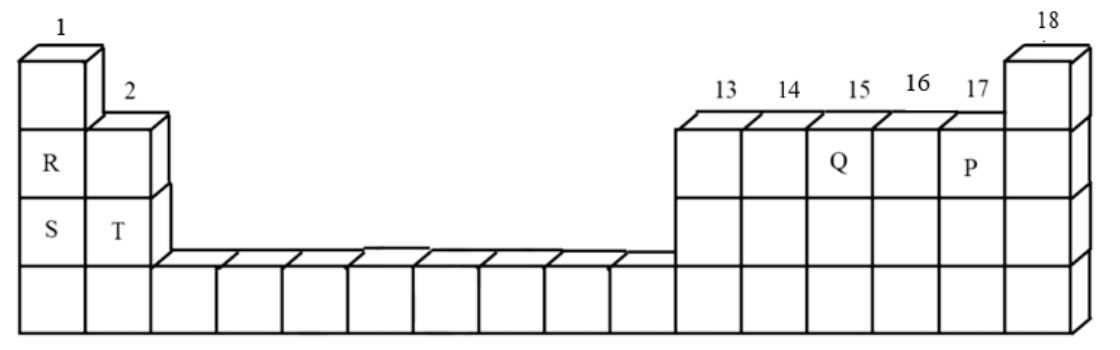
- (a)
What is the basic principle used in arranging the elements in the Periodic Table of Elements?
[1] - (b)(i)
A student carried out an experiment to study the reactivity of two alkali metals, R and S, with water located in Group 1 of the Periodic Table. Based on the position in the Periodic Table, which element is more reactive?
[1] - (b)(ii)
Element R reacts with excess oxygen gas to produce oxide compound. Write a chemical equation when R reacts with oxygen gas.
[2] - (c)(i)
State two elements that can produce a covalent compound. (English version of the paper reads 'ionic compound'.)
[1] - (c)(ii)
Based on your answer in (c)(i), what is the molecular formula for the covalent compound formed?
[1]
Diagram 4.1 shows that polyglycolic polymer is used to produce surgical suture threads that are easily dissolvable and do not need to be manually removed after surgery (repeating unit -[O-CH2-C(=O)]n-, H and OH end groups). Ali is a gastric patient and he is having headache (Diagram 4.2). To relieve his headache, he took aspirin. Unfortunately, he got pain in his stomach.
Medium7 marks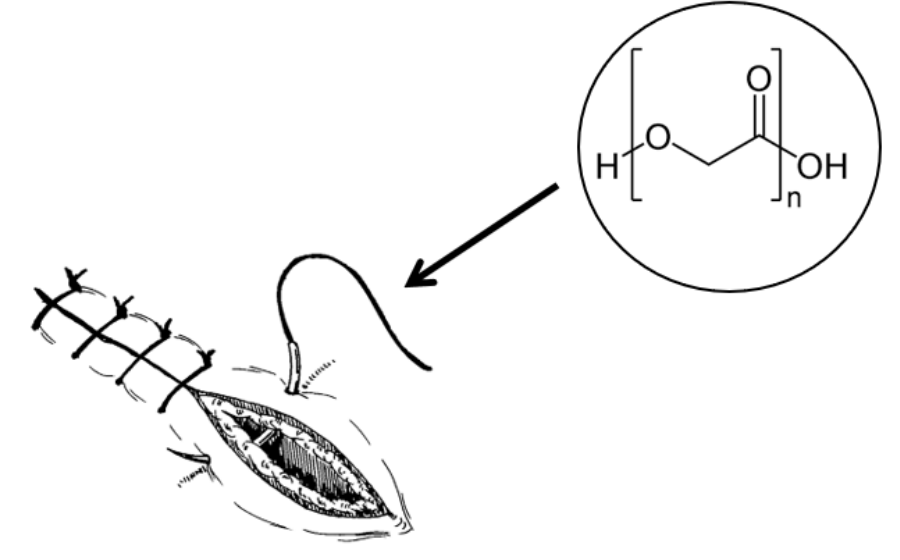
- (a)(i)
What is the meaning of polymer?
[1] - (a)(ii)
Polyglycolic polymer is formed through the process of condensation polymerisation. Explain the condensation polymerisation reaction.
[2] - (b)(i)
Explain why he experiences that situation.
[2] - (b)(ii)
Suggest the name of the medicine that can replace aspirin.
[1] - (b)(iii)
State the side effect if the medicine suggested in 4(b)(ii) is taken excessively.
[1]
Diagram 5 shows apparatus set-up to determine rate of reaction between 20 cm³ of 1.0 mol dm⁻³ hydrochloric acid and excess zinc chips which is carried out at temperature of 30 °C in Experiment I (gas syringe collecting hydrogen gas).
Medium8 marks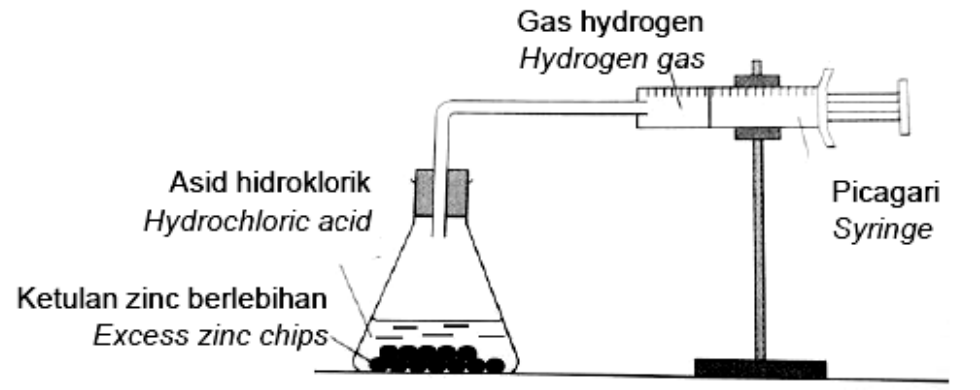
- (a)
What is the meaning of rate of reaction?
[1] - (b)
State an observation in the experiment.
[1] - (c)
The following is the chemical equation for the reaction above: Zn + __HCl → ZnCl2 + H2. Balance the chemical equation (1 mark). Calculate the volume of hydrogen gas released. [Molar volume of gas at room conditions = 24 dm³ mol⁻¹] (3 marks)
[4] - (d)
As a chemist, suggest a way in which you can increase the rate of reaction in Experiment I without changing the volume and concentration of hydrochloric acid solution. Next, draw a curve labelled as Experiment II on the same axis on the graph (volume of hydrogen gas against time; Experiment I curve rises and levels off).
[2]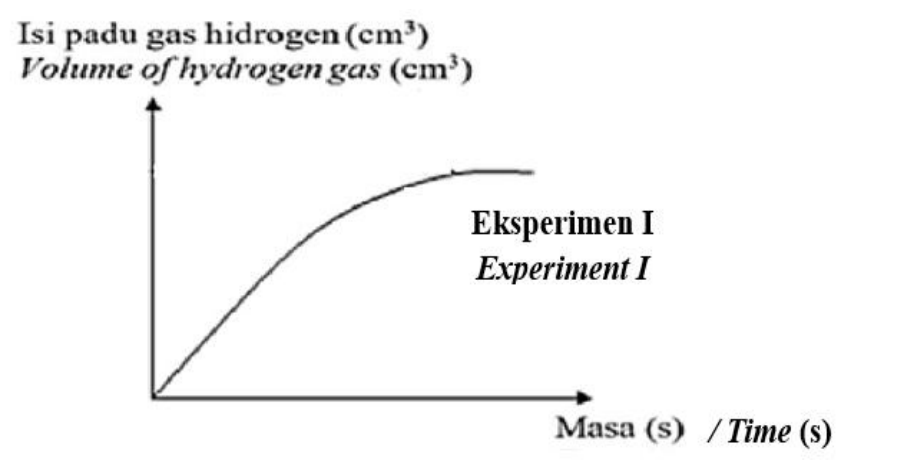
Table 6 shows the melting point and boiling point of three substances: X 80.0 °C / 218.0 °C; Y -101.0 °C / -25.0 °C; Z 801.0 °C / 1413.0 °C (melting point / boiling point).
Medium9 marks- (a)(i)
What is meant by melting point?
[1]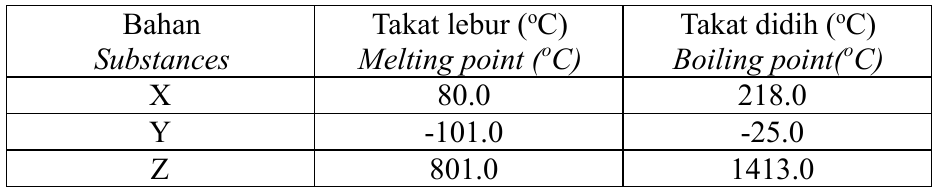
- (a)(ii)
Name substance that exists in the state of gas at 10 °C.
[1] - (a)(iii)
Sketch the graph of temperature against time for substance X when it is cooled from 90 °C until it reaches a temperature of 50 °C.
[2] - (a)(iv)
Draw an apparatus set-up for heating process of substance X.
[2] - (b)
Diagram 6.2(a) and Diagram 6.2(b) show graphs of cooling curves of naphthalene plotted by two different students. State a significant difference between the two graphs and explain why phenomenon R occurs.
[3]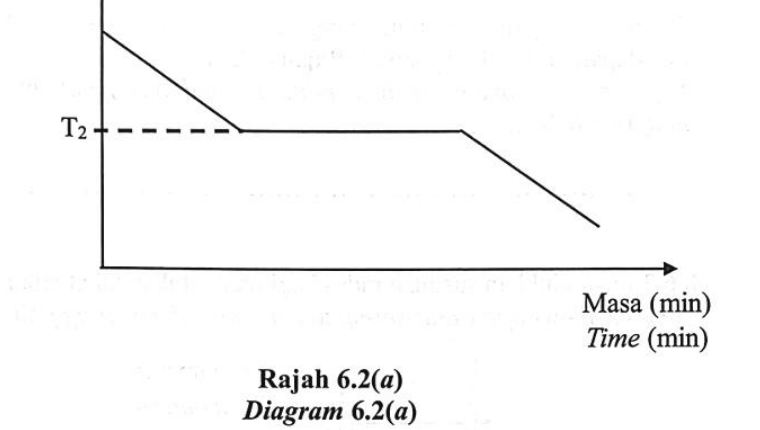
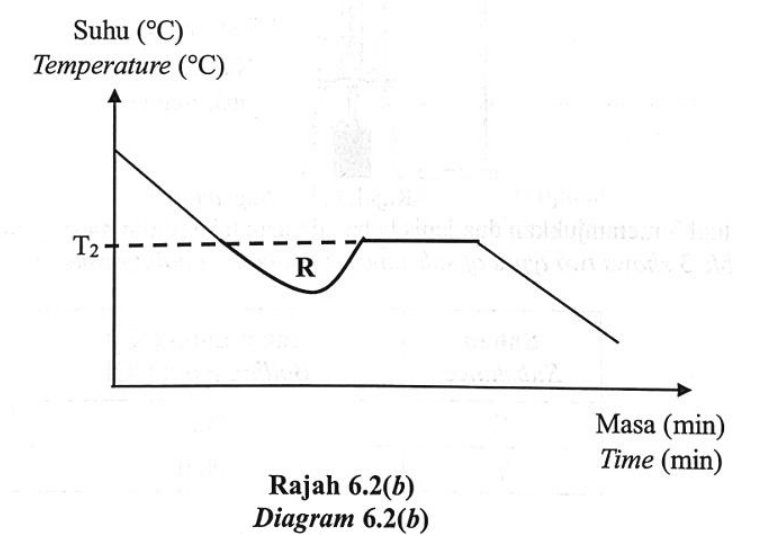
Diagram 7.1 shows the apparatus set up used to investigate redox reactions. Cell X: magnesium in magnesium sulphate solution and copper in copper(II) sulphate solution joined by a salt bridge. Cell Y: U-tube with potassium bromide (electrode R) and iron(III) chloride (electrode S) in dilute sulphuric acid. Diagram 7.2 shows the apparatus set up to investigate electron transfer at a distance (iron(II) sulphate solution and acidified potassium manganate(VII) solution in a U-tube with sulphuric acid, carbon electrodes, galvanometer).
Medium11 marks- (a)(i)
Based on Cell X: What is meant by redox reaction?
[1]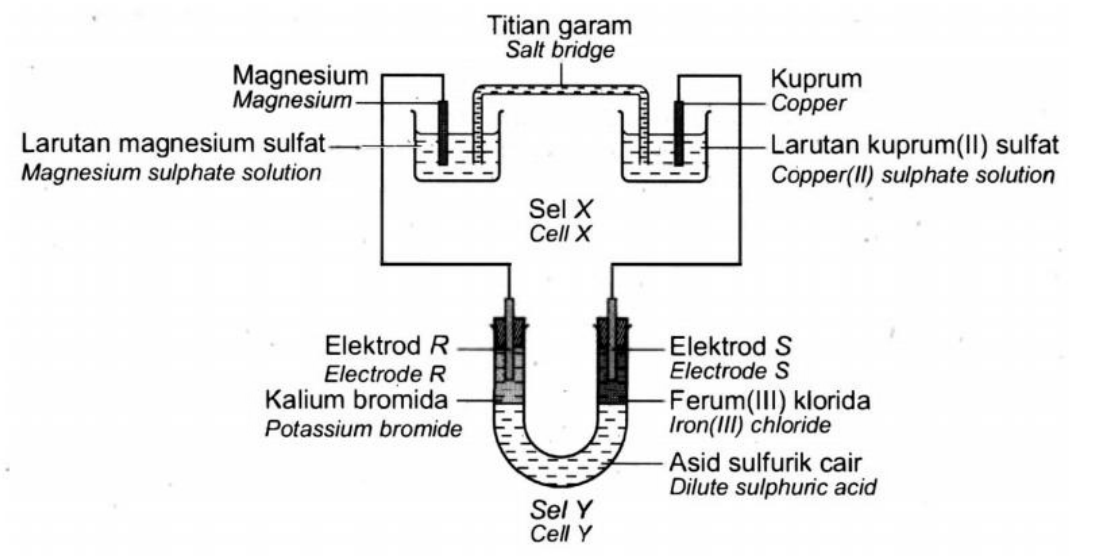
- (a)(ii)
Identify positive terminal.
[1] - (a)(iii)
Write the half equation for negative terminal.
[1] - (b)(i)
Based on Cell Y: State the function of potassium bromide solution and iron(III) chloride solution.
[2] - (b)(ii)
Write ionic equation for reaction occurring at cell Y.
[2] - (b)(iii)
After 30 minutes, state the observation obtained on iron(III) chloride solution. Explain why the observation was obtained.
[2] - (c)
A group of students replaced sulphuric acid solution with glucose solution; it was found that the needle of the galvanometer does not deflect. Justify the actions of the group of students.
[2]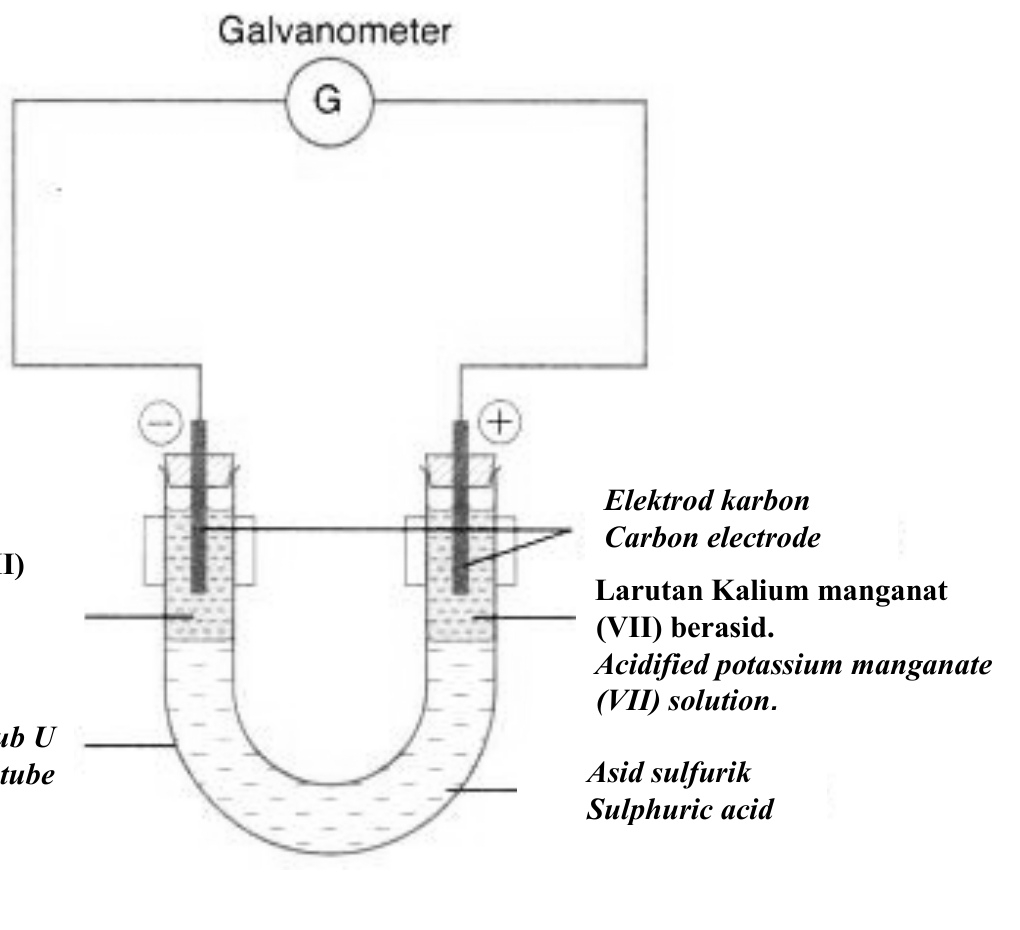
Diagram 8 shows two labelled reagent bottles containing carbon compounds used to produce artificial flavours: bottle A contains C3H7OH and bottle B contains CH3COOH.
Medium10 marks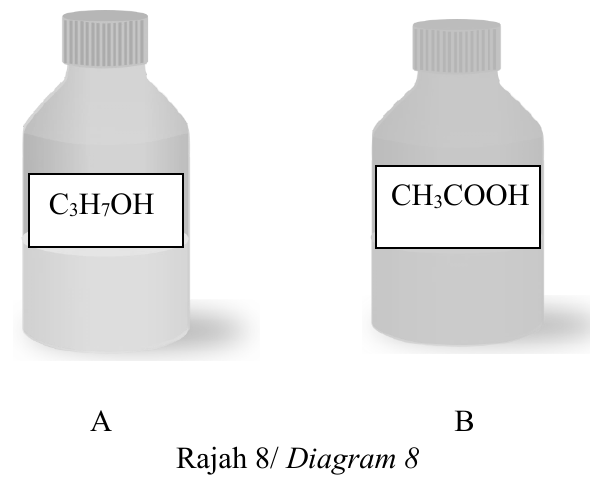
- (a)
State the meaning of carbon compound.
[1] - (b)
Draw and name the isomers of the compound in bottle A.
[2] - (c)(i)
The solution in bottle A can react with the solution in bottle B. Write the balanced chemical equation for the reaction involved.
[2] - (c)(ii)
Name the product that formed.
[1] - (d)
Briefly describe one chemical test to differentiate compound C3H7OH and CH3COOH.
[3] - (e)
Ethanol is a type of alcohol that belongs to the homologous series of alcohols and can be produced through fermentation or by the hydration of ethene. It is widely used in daily life, especially in the medical and personal care industries. One of its main applications is as an active ingredient in hand sanitizers due to its ability to kill germs and viruses. Since the outbreak of infectious diseases such as COVID-19, the use of alcohol-based sanitizers has significantly increased. Justify the use of ethanol as the main ingredient in the production of hand sanitizers.
[1]
Section B
Answer any one question in Section B (Question 9 or Question 10). (a) A student conducted an experiment to determine the heat of neutralisation using 50 cm³ of 1.0 mol dm⁻³ hydrochloric acid and 50 cm³ of 1.0 mol dm⁻³ sodium hydroxide solution. Table 9: initial temperature of hydrochloric acid 29.0 °C; initial temperature of sodium hydroxide 28.0 °C; highest temperature of the reaction mixture 35.0 °C.
Hard20 marks- (a)(i)
State the meaning of heat of neutralisation.
[1]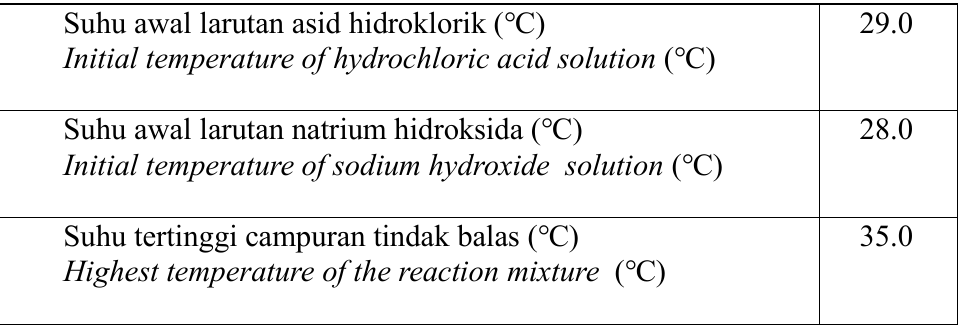
- (a)(ii)
Based on Table 9, calculate: the heat change during the reaction; the number of moles of water formed; the heat of neutralisation. [Specific heat capacity of a solution = 4.2 J g⁻¹ °C⁻¹; density of solution = 1 g cm⁻³]
[3] - (a)(iii)
This experiment was repeated using 50 cm³ of 1.0 mol dm⁻³ hydrochloric acid and 50 cm³ of 1.0 mol dm⁻³ potassium hydroxide solution. Predict the temperature change and give your reason.
[2] - (b)(i)
Diagram 9.1 shows the energy level diagram for two chemical reactions (Set I: products higher than reactants, ΔH = +; Set II: products lower than reactants, ΔH = −). Based on Diagram 9.1, suggest an example for each reaction in Set I and Set II.
[2]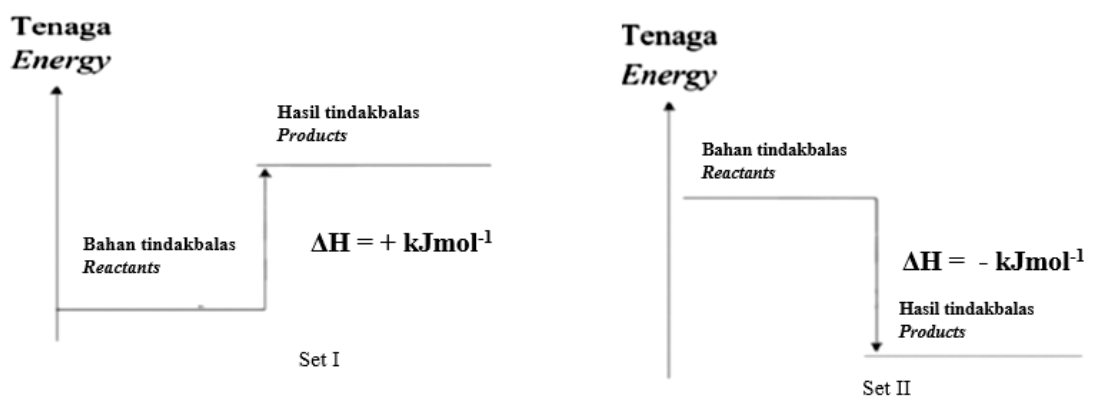
- (b)(ii)
Construct a table to compare the reactions in Set I and Set II in terms of the type of reaction, temperature change, change in thermal energy during bond breaking and formation, total energy content of the reactants and products.
[8] - (c)
Diagram 9.2 shows the structural formula of propanol and butanol. Based on Diagram 9.2, compare the heat of combustion of propanol and butanol. Explain your answer.
[4]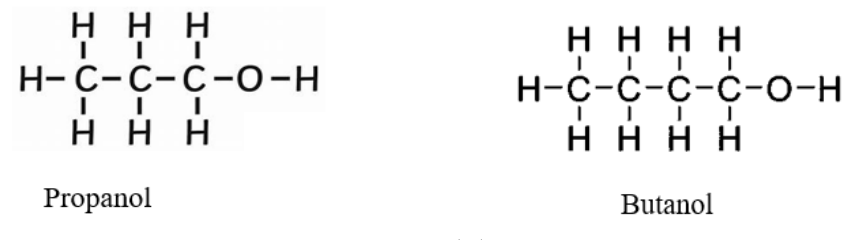
Answer any one question in Section B (Question 9 or Question 10). (a) Table 10 shows the word equations for two reactions involving metal P and metal Q oxide. The empirical formulas for P oxide and Q oxide were determined using Method I (P + oxygen → P oxide) and Method II (hydrogen + Q oxide → Q + water).
Hard20 marks- (a)(i)
What is meant by empirical formula?
[1]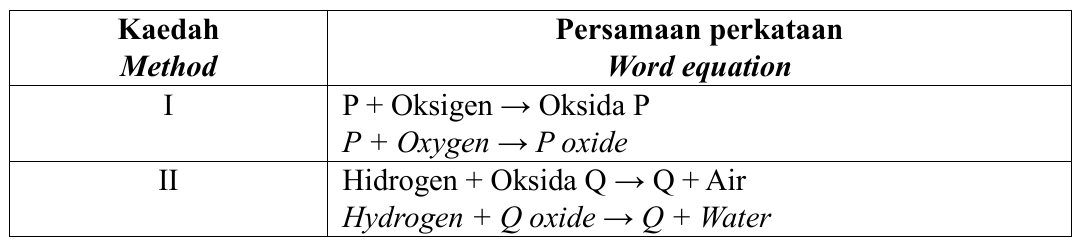
- (a)(ii)
The following is a chemical equation for the reaction between metal P and oxygen gas: 2P(s) + O2(g) → 2PO(s). State two information, qualitative and quantitative, that can be obtained from the chemical equation above.
[2] - (a)(iii)
Suggest metal P and metal Q. Explain why the metal was chosen.
[4] - (a)(iv)
In Method II, hydrogen gas is produced through the reaction between an acid and a reactive metal. Using reactive metal zinc, Zn and a suitable example of acid, write a chemical equation for the reaction that produces hydrogen gas. Calculate the mass of zinc required to produce 120 cm³ of hydrogen gas to be used in Method II. [Relative atomic mass: Zn = 65; H = 1; molar gas volume: 24 dm³ mol⁻¹ at room condition]
[5] - (b)(i)
Diagram 10.1 shows the structural formula of caffeine, which can be a natural fertiliser for plants. Based on the information above, determine the molecular formula for caffeine and the percentage of nitrogen by mass in caffeine. [Relative atomic mass: H = 1, C = 12, O = 16, N = 14]
[3]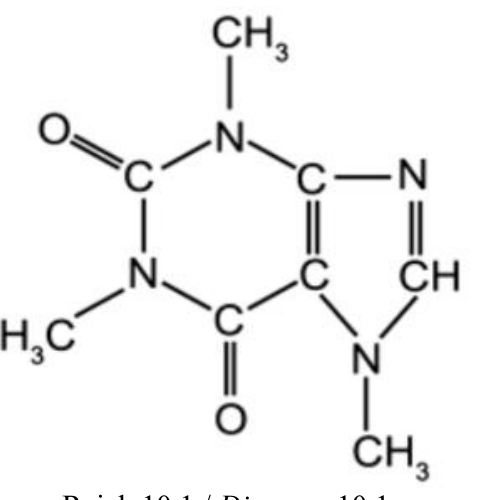
- (b)(ii)
Fertilisers usually have a high content of nitrogen. Nitrogen is needed to enhance the growth of plants such as vegetables. Among the examples of fertilisers used by farmers is urea, CO(NH2)2. Based on the percentage of nitrogen by mass in caffeine in 10(b)(i) and urea, determine the best fertiliser that should be used by farmers for their plants. Explain.
[5]
Section C
(a) A chemist prepares a standard solution of sodium hydroxide solution with the concentration of 0.2 mol dm⁻³ using a 250 cm³ volumetric flask and the sodium hydroxide stock solution from beaker A in Diagram 11.1.
Hard20 marks- (a)(i)
What is meant by standard solution?
[1]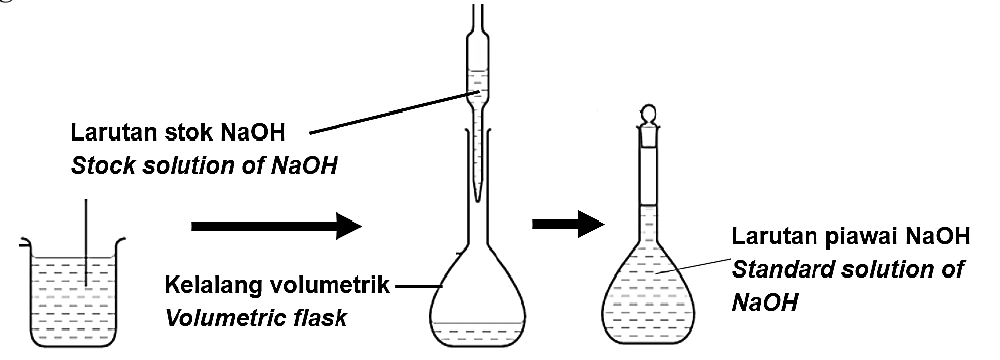
- (a)(ii)
A volumetric flask is more suitable to be used in the preparation of the standard solution. Give a reason.
[1] - (a)(iii)
25 cm³ of sulphuric acid is needed to react completely with 25 cm³ of the standard solution of sodium hydroxide prepared. State the type of the reaction that occurs and write a balanced chemical equation for the reaction. Calculate the concentration of the sulphuric acid used.
[6] - (b)(i)
Table 11 shows the volume of acid needed to neutralise sodium hydroxide solution: Set I, 0.1 mol dm⁻³ hydrochloric acid with 25 cm³ of 0.1 mol dm⁻³ sodium hydroxide uses 25 cm³; Set II, 0.1 mol dm⁻³ sulphuric acid with 25 cm³ of 0.1 mol dm⁻³ sodium hydroxide uses 12.5 cm³. Explain why there is a difference in volume of acid used in Set I and Set II.
[3]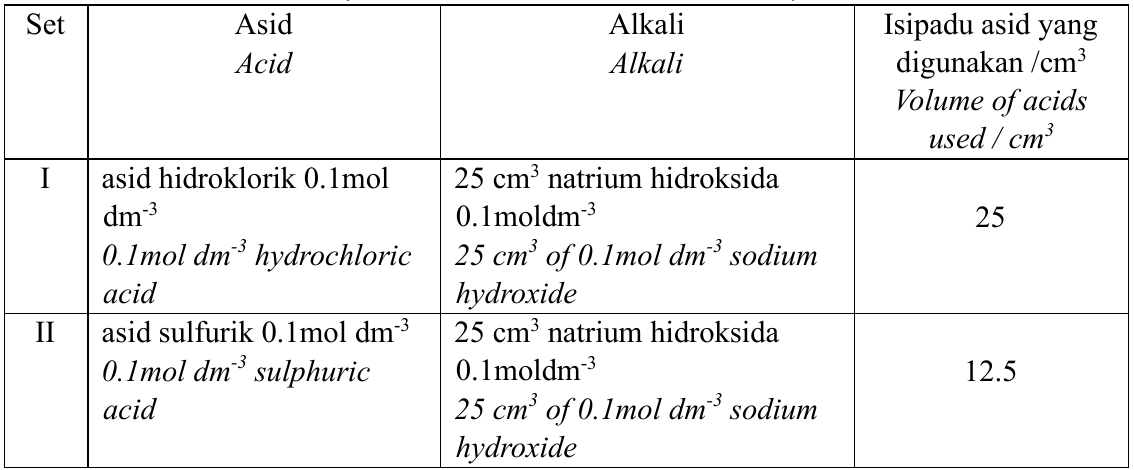
- (b)(ii)
Diagram 11.2 shows salt Z which can dissolve in distilled water and ionise into Cu²⁺ ions and X⁻ ions. Suggest ion X⁻ that is present in salt Z solution. Salt Z can be prepared by adding two suitable chemical substances. Suggest the two suitable chemical substances.
[2]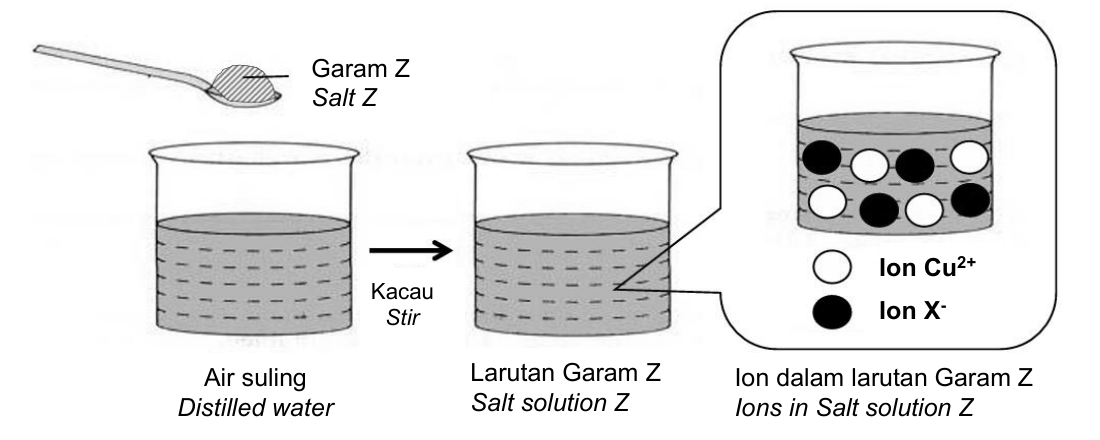
- (b)(iii)
Based on the chemical substances suggested in (b)(ii), describe an experiment to prepare a dry sample of salt Z crystal in the laboratory. (The paper labels this part (ii) under part (b).)
[7]