Which of the following is the most appropriate action to take when sulfuric acid spills on the laboratory table?
Easy
Diagram 2 shows the standard representation of a lead atom: 207/82 Pb (nucleon number 207, proton number 82). What are the number of protons, number of neutrons and number of electrons in the lead atom?
Medium
One mole of chlorine, Cl2 and one mole of ammonia, NH3 have
Medium
Which of the following are the uses of krypton gas?
I Used in lasers for eye retina treatment
II Used to fill weather balloons
III Used in lighthouse lamps
IV Used in flashlight of cameras
Easy
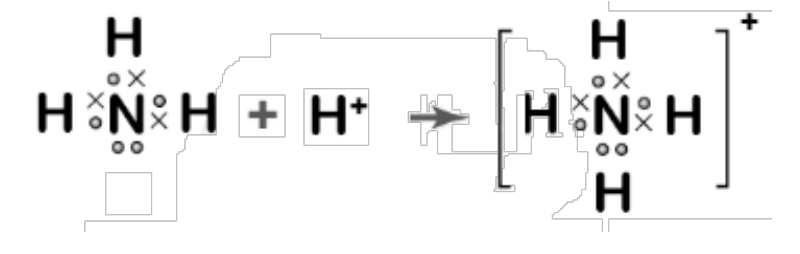
Diagram 5 shows the formation of a chemical bond of the nitrogen atom in ammonia, NH3 donates a pair of electrons to form a bond with the hydrogen ion, H+. What is the type chemical bond formed?
Medium
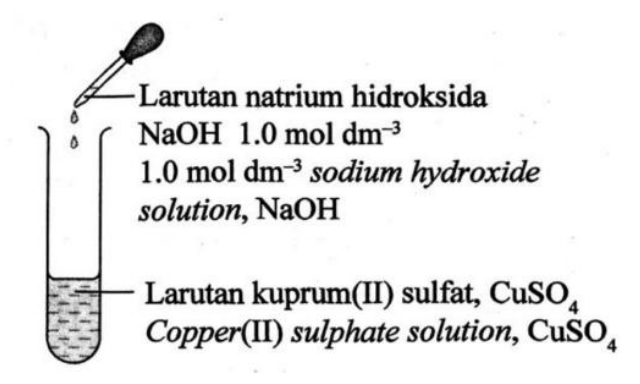
Diagram 6 shows the apparatus set-up to identify the cation present in the aqueous solution (1.0 mol dm⁻³ sodium hydroxide solution, NaOH, added dropwise to copper(II) sulphate solution, CuSO4). What is the observation at the end of the reaction?
Easy
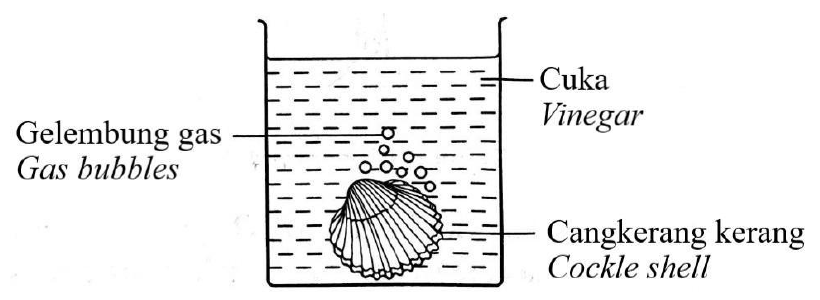
Diagram 7 shows an observation when a cockle shell is put into a beaker containing vinegar. The following chemical equation shows the reaction: CaCO3 + 2CH3COOH → (CH3COO)2Ca + H2O + CO2. Which of the following factors increases the rate of reaction?
Medium
Which composite material is correctly matched to its use?
Medium
The following ionic equation shows the reaction between zinc and acid: Zn + 2H⁺ → Zn²⁺ + H2. What is the oxidation number change for hydrogen?
Medium
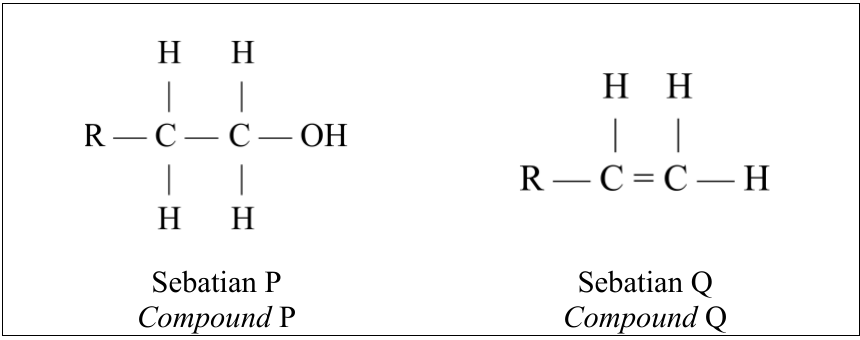
Diagram 10 shows the structural formula of compounds P (R–CH2–CH2–OH) and Q (R–CH=CH2). Which of the following is true about the reaction to convert compound P into compound Q?
Medium
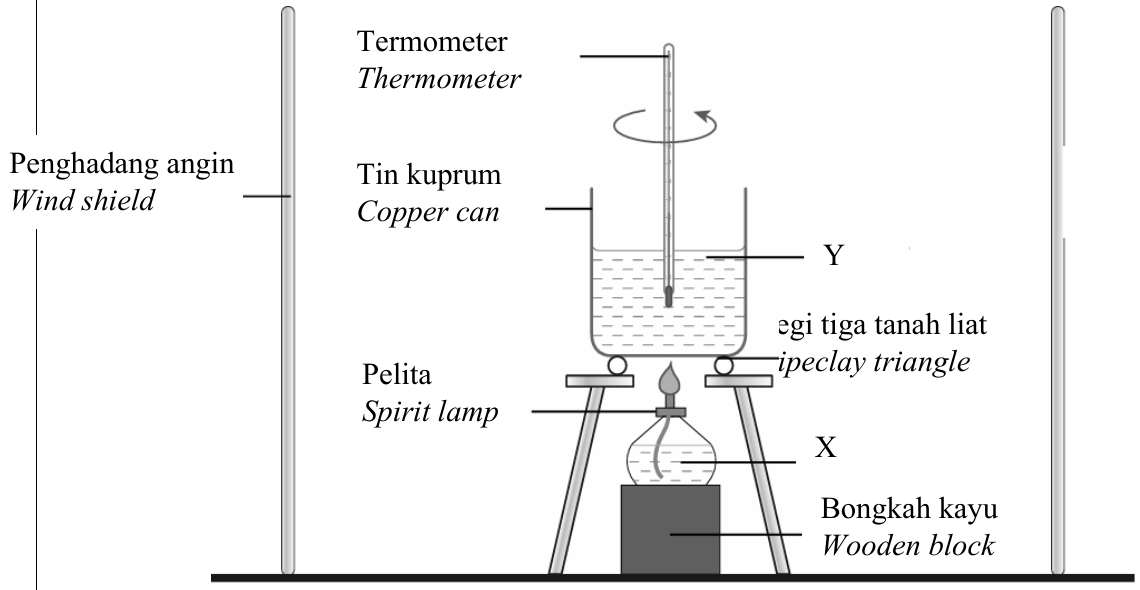
Diagram 11 shows the experimental set-up to determine the heat of combustion of ethanol, C2H5OH. What is X and Y? (X is the fuel in the spirit lamp; Y is the liquid in the copper can.)
Medium
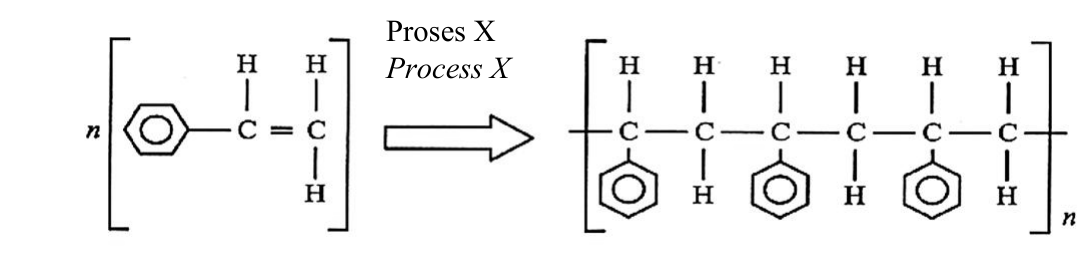
Diagram 12 shows process X (n styrene monomer molecules joining to form polystyrene). What is process X?
Easy
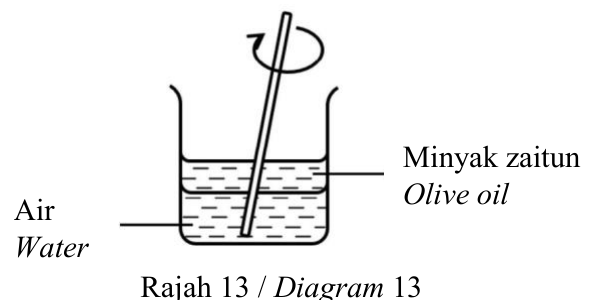
Ain tried to mix olive oil with water as a basic ingredient in the preparation of cosmetics using natural ingredients. Diagram 13 shows that water and olive oil do not mix well. What is the appropriate material used by Ain to ensure that the two basic ingredients are mixed well?
Easy
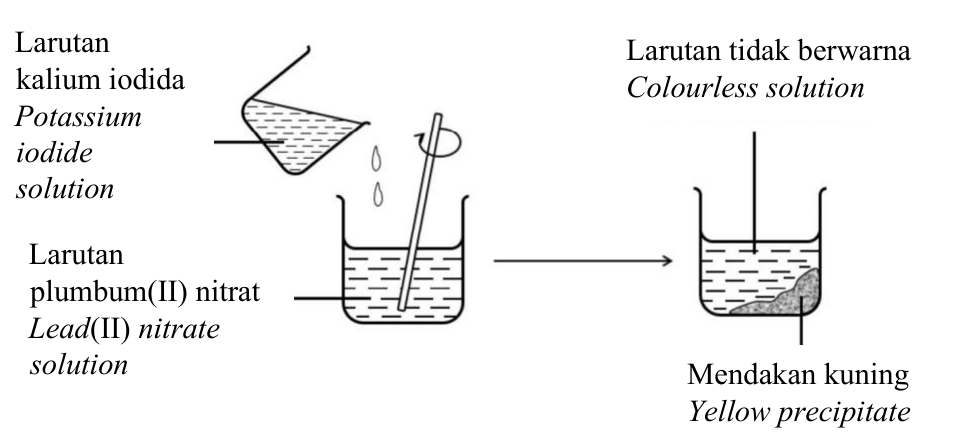
Diagram 14 shows the observation of an experiment that has been carried out by a student in the laboratory (potassium iodide solution added to lead(II) nitrate solution; colourless solution with yellow precipitate formed). Based on Diagram 14, which statement is most accurate to describe the experiment qualitatively and quantitatively?
Medium
Dilute hydrochloric acid reacts faster with zinc powder than with zinc sheet. Which of the following explains the statement?
Medium
Which of the following is the property of ionic compound?
Easy
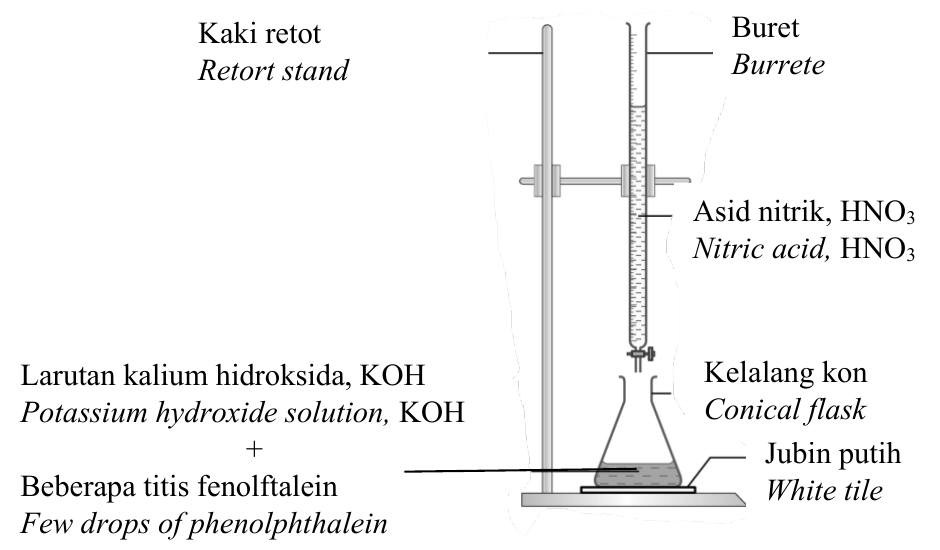
Diagram 17 shows process X (titration of potassium hydroxide solution, KOH, with a few drops of phenolphthalein in a conical flask, against nitric acid, HNO3, from a burette). Why phenolphthalein is needed in titration?
Easy
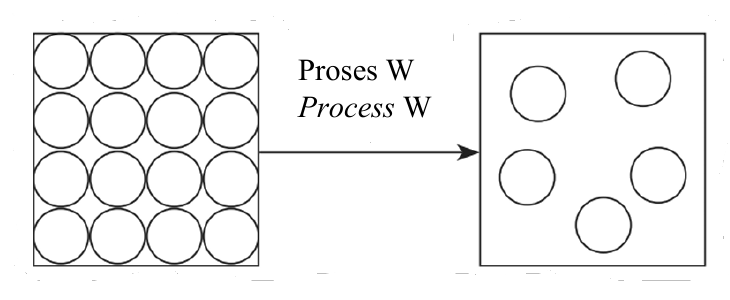
Diagram 18 shows the arrangement of particles of a substance that undergoes change in the physical state through process W (closely packed particles in a regular arrangement change to widely separated particles). Which of the following substances undergo process W?
Medium
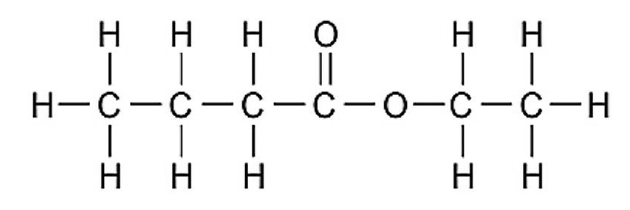
Diagram 19 shows a structure formulae of food flavouring which found in fruits (CH3CH2CH2COOCH2CH3). Which of the following can be used to make the food flavouring?
Medium
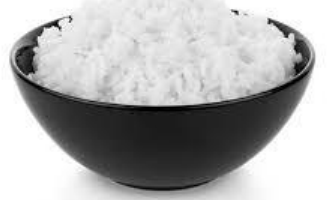
Diagram 20 shows a natural polymer which is a staple food for Malaysians (a bowl of rice). What is the monomer for the polymer?
Easy
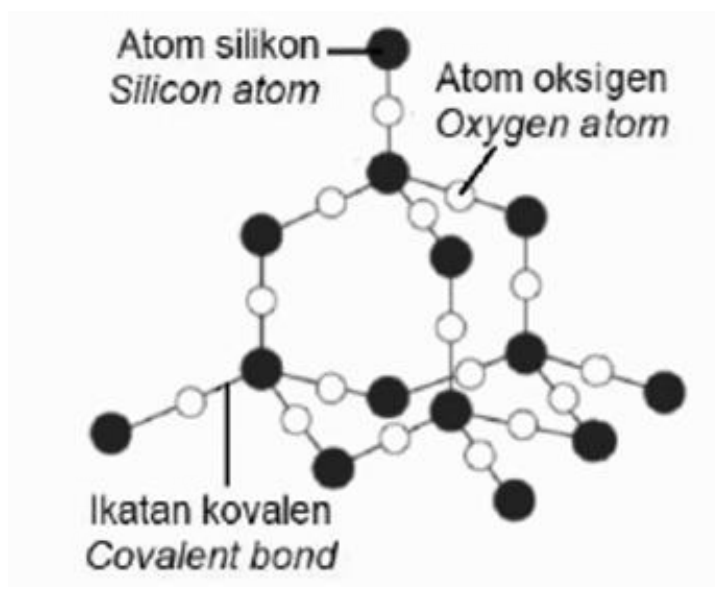
Diagram 21 shows the atom model of a compound (silicon atoms and oxygen atoms joined by covalent bonds in a giant network). Which of the following is correct about the compound?
Medium
Table 22 shows the condition of reactants used in experiment I and experiment II. Experiment I: excess zinc granules + 50 cm³ of 2.0 mol dm⁻³ hydrochloric acid. Experiment II: excess zinc powder + 50 cm³ of 2.0 mol dm⁻³ hydrochloric acid. Which graph shows the correct curve for experiment I and experiment II?
Medium
Diagram 23 shows a spectacle made from a type of glass. The spectacle can protect our eyes from dangerous ultraviolet (UV) rays. Which of the following substance is the chemical used in the glass?
Easy
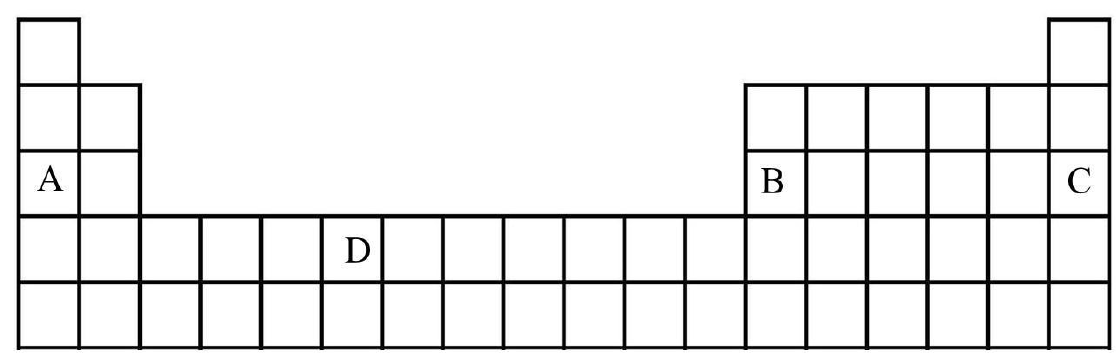
Among the following positions in the Periodic Table, which one shows the smallest atomic size? (A: Group 1, Period 3; B: Group 13, Period 3; C: Group 18, Period 3; D: a transition element in Period 4.)
Medium
Moisturizer is one of the basic ingredients in cosmetics. Which of the following is not an example of a moisturizer?
I Glycerin
II Paraben
III Gam xanthan
IV Jojoba oil
Easy
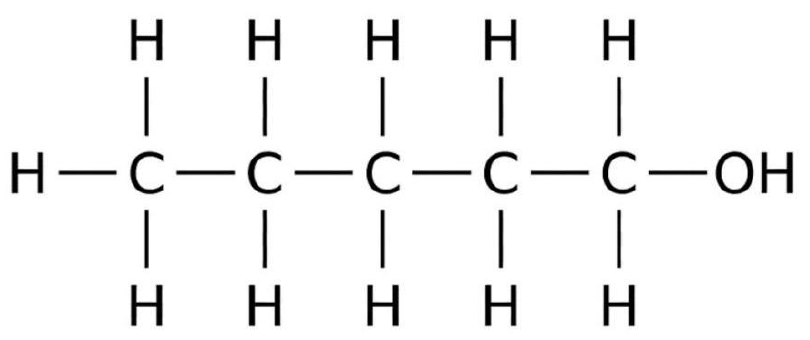
Diagram 26 shows a carbon compound (CH3CH2CH2CH2CH2OH, pentan-1-ol). Which of the following is the isomer of the compound?
Medium
Which particles combine to form a dative bond?
Medium
Diagram 28 shows brake disc made from advanced ceramic. Which of the following properties best suits its use?
Easy
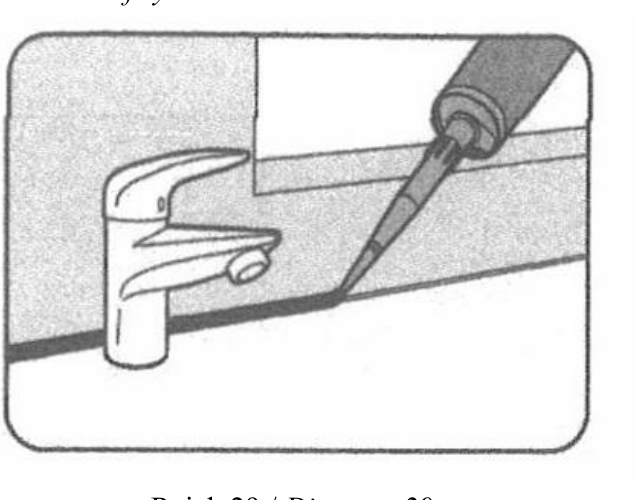
Diagram 29 shows one of the uses of synthetic rubber (a sealant applied around a tap). Which of the following is true about synthetic rubber?
Medium
Table 30 shows the number of protons and electrons for atom of elements J, L, P and Q (J: 8 protons, 8 electrons; L: 11, 11; P: 12, 12; Q: 17, 17). The letters J, L, P and Q are not the actual symbols of the elements. Which is the correct formula and type of bond when two of the elements react?
I L2J – Ionic
II LJ2 – Covalent
III P2Q – Ionic
IV PQ2 – Ionic
Medium
Chempaka make a natural soap and finds the pH value of the soap solution is 9. When the solution is added with substance X, the pH value of the soap solution change to 8. Which of the following is the substance X and which explanation causes the pH value of the soap solution change?
Medium
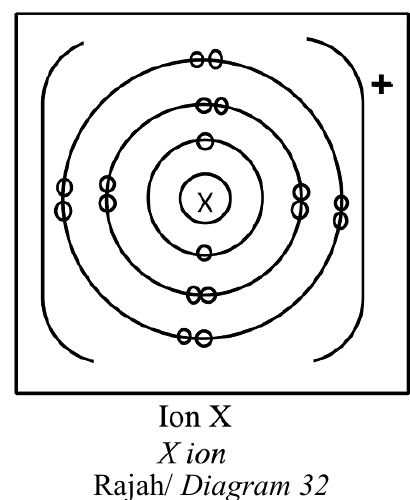
Diagram 32 shows the electron arrangement of X ion (X⁺). Which chemical equation represents the chemical reaction between atom with element X with water?
Medium
In an experiment, 100 cm³ of 0.5 mol dm⁻³ hydrochloric acid is mixed with 100 cm³ of sodium hydroxide solution, 0.5 mol dm⁻³ in a polystyrene cup. The temperature of the mixture increases by 7.0 °C. [Specific heat capacity of the solution = 4.2 J g⁻¹ °C⁻¹; Density of solution = 1 g cm⁻³] Which statements are correct if the experiment is repeated by replacing 0.5 mol dm⁻³ hydrochloric acid and 0.5 mol dm⁻³ sodium hydroxide solution with 1.0 mol dm⁻³ hydrochloric acid and of 1.0 mol dm⁻³ sodium hydroxide solution while other conditions remain the same?
I Temperature change of mixture increases two times
II Heat of reaction increases two times
III Heat change increases two times
IV Number of mol of water increases two times
Medium
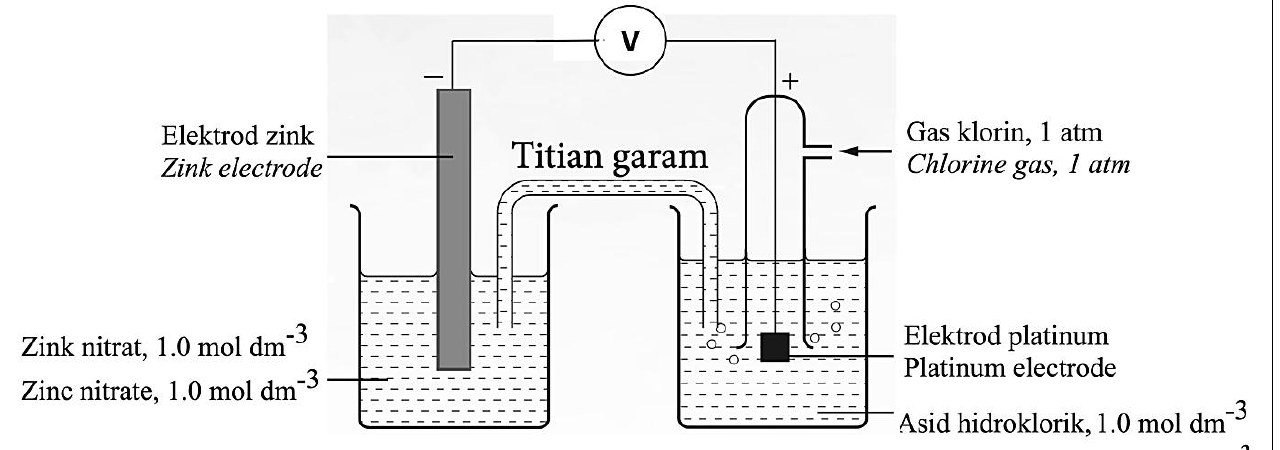
Diagram 34 shows a set-up of apparatus of a chemical cell (zinc electrode in 1.0 mol dm⁻³ zinc nitrate, negative terminal; platinum electrode with chlorine gas, 1 atm, in 1.0 mol dm⁻³ hydrochloric acid, positive terminal; salt bridge). Which of the following is the correct cell notation of the chemical cell?
Medium
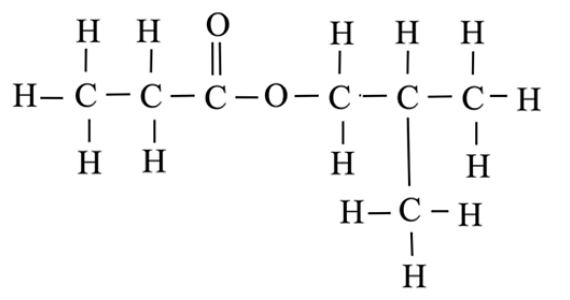
Diagram 35 shows the structural formula of an organic compound which produced from a chemical reaction between an alcohol and a carboxylic acid (CH3CH2COO–CH2CH(CH3)CH3). What is the IUPAC name of the alcohol used to produce organic compound in Diagram 35?
Medium
The following chemical equation represents the reaction between zinc and copper(II) nitrate solution: Zn + Cu²⁺ → Zn²⁺ + Cu, ΔH = −210 kJ mol⁻¹. What is the mass of zinc required to release 5250 J of heat energy? [Relative atomic mass: Zn = 65; Specific heat capacity of the solution = 4.2 J g⁻¹ °C⁻¹]
Medium
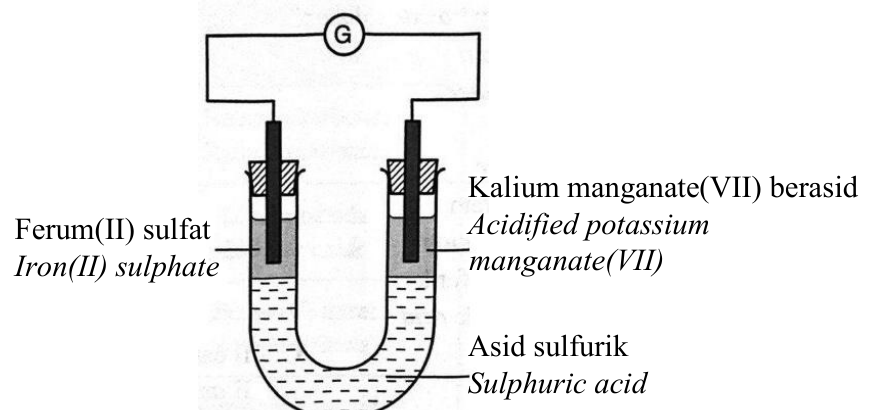
Diagram 37 shows the apparatus set-up to study the transfer of electrons at a distance (iron(II) sulphate on one side and acidified potassium manganate(VII) on the other, connected by sulphuric acid and a galvanometer). What is the change in oxidation number for the substance that is oxidised and reduced?
Medium
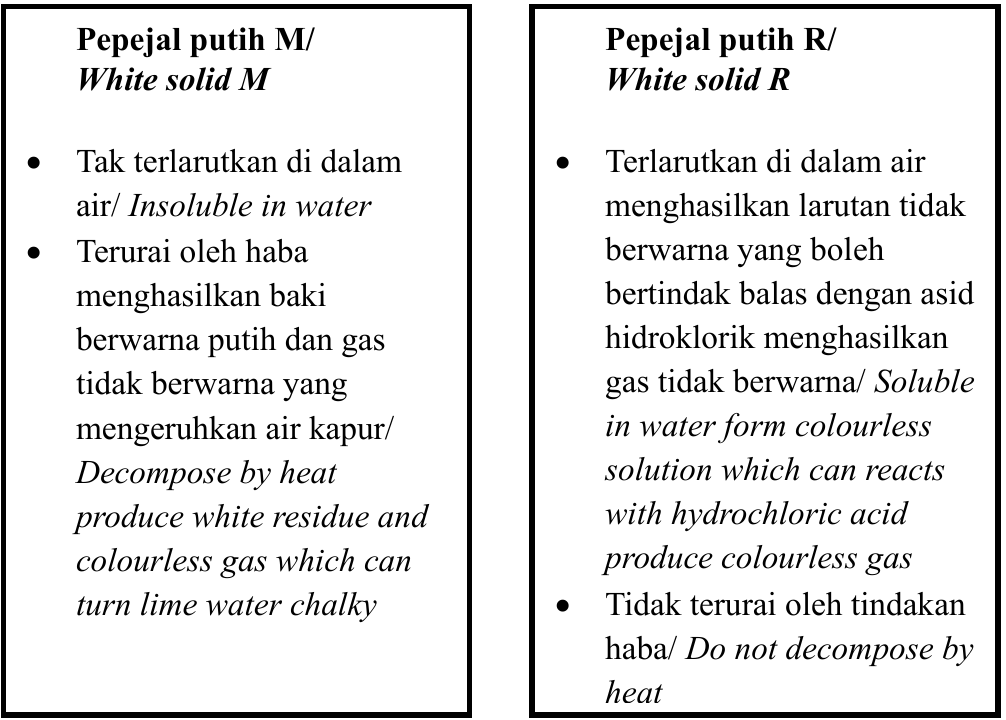
While carry out an experiment, Alston found two bottles of white solid of ionic compound which labelled with solid M and solid R. Diagram 38 shows the information. White solid M: insoluble in water; decomposes by heat to produce white residue and colourless gas which turns lime water chalky. White solid R: soluble in water to form colourless solution which reacts with hydrochloric acid to produce colourless gas; does not decompose by heat. What is white solid M and white solid R?
Medium
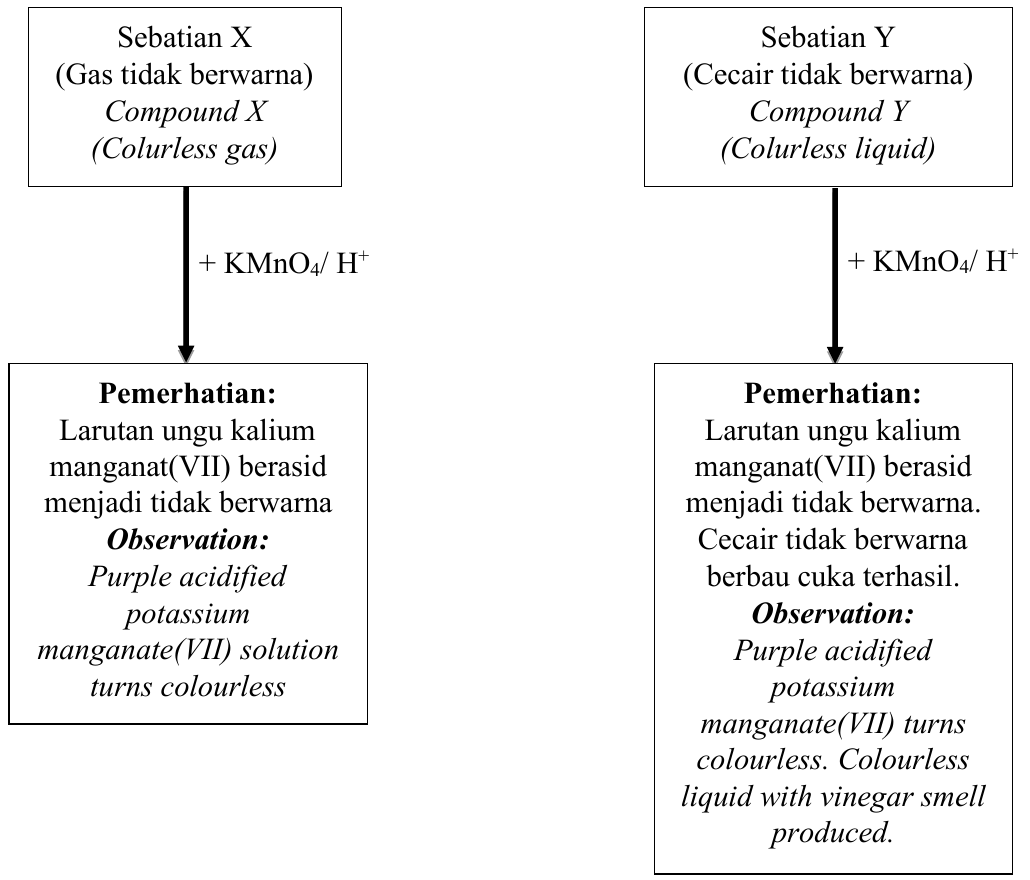
Diagram 39 shows a series of chemical reaction of organic compound X and organic compound Y. Both compound X and Y has two carbon atoms. Compound X (colourless gas) with acidified KMnO4: purple solution turns colourless. Compound Y (colourless liquid) with acidified KMnO4: purple solution turns colourless; colourless liquid with vinegar smell produced. What is the process to change compound X to compound Y?
Medium
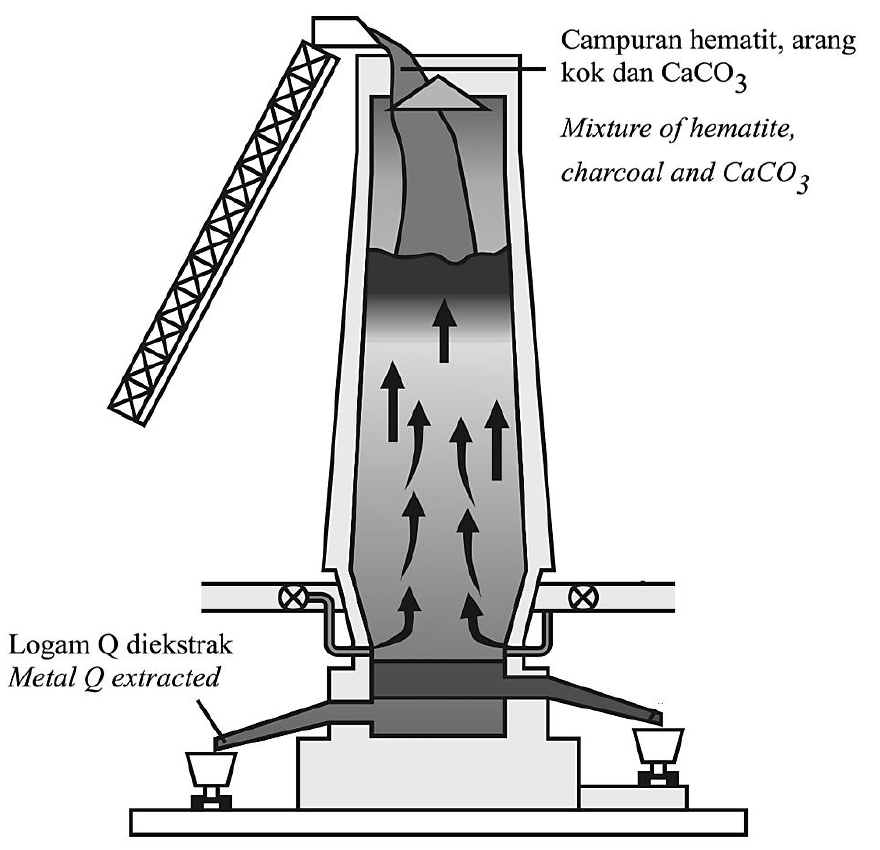
Diagram 40 shows a blast furnace which used to extract metal Q from its ore, hematite. Hematite contains iron(III) oxide. Metal Q extracted is added until excess into copper(II) sulphate solution. Which statement is correct about the reaction between metal Q and copper(II) sulphate solution?