Write your answer on paper. Then open the answer to check it.
Section A
A student carried out a test to study the properties of ammonia when dissolved in methylbenzene and water in separate test tubes, as shown in Diagram 1. (Test tube A: ammonia in methylbenzene with red litmus paper; Test tube B: ammonia in water with red litmus paper.)
Medium5 marks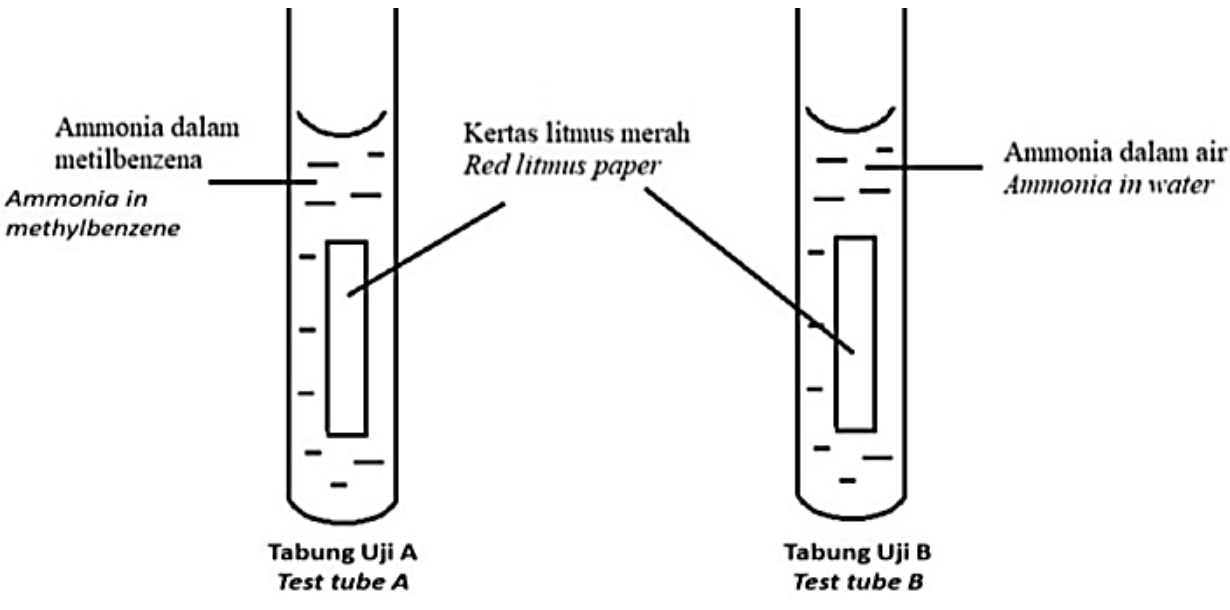
- (a)
State the meaning of alkali.
[1] - (b)
Predict the observation of the red litmus paper color in both test tubes.
[2] - (c)
Based on your answer in a(ii), explain the observation in Test Tube B.
[2]
Composite materials are widely used in the development and advancement of technology nowadays. Diagram 2 shows a dams built on a lake.
Medium5 marks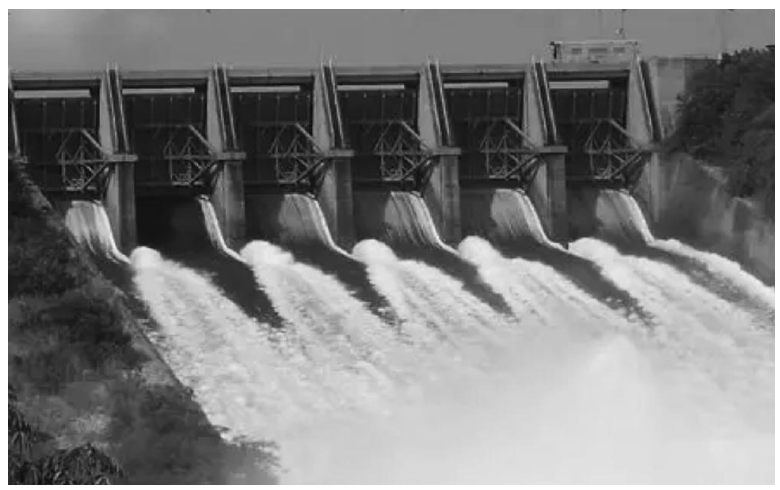
- (a)
What is meant by a composite material?
[1] - (b)
State the matrix substance and the strengthening substance used to build dam.
[2] - (c)
Explain why composite suitable to build dam.
[2]
Diagram 3 shows part of the Periodic Table of Elements. D, J, E, G and L are not the actual symbols of the elements.
Medium6 marks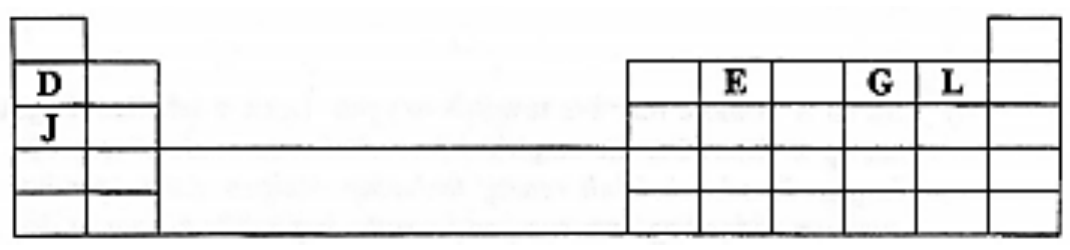
- (a)
What is the basic principle used in arranging the elements in the Periodic Table of Elements?
[1] - (b)
Why are Elements D and J placed in the same Group?
[1] - (c)
When element D or J reacts with element G, a white solid is formed. Write the balanced chemical equation for the reaction between elements D and G.
[2] - (d)
Element J is more reactive than element D when reacting with G. Explain this statement.
[2]
Figure 4.1 shows a section of the polypropene polymer used in food packaging: –CH₂CH(CH₃)–CH₂CH(CH₃)–CH₂CH(CH₃)–. Additive X is used in the production of mayonnaise. Figure 4.2 shows the reaction that occurs after additive X is added to the original mixture of mayonnaise ingredients (oil and water separate; after shaking, tiny droplets of oil are dispersed in water).
Medium7 marks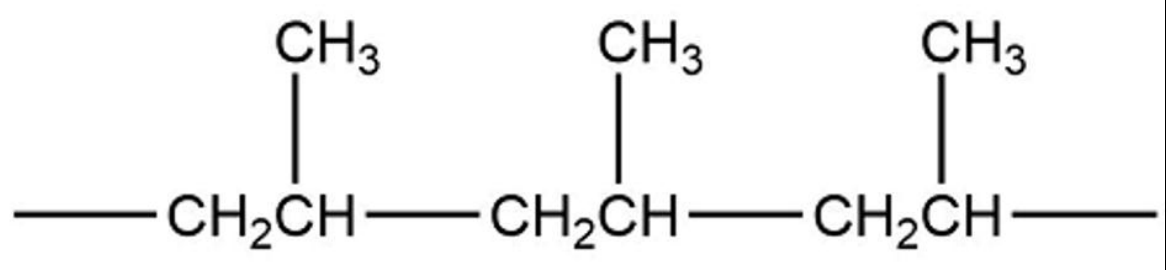
- (a)
What is the meaning of polymer?
[1] - (b)(i)
Draw the structural formula of the monomer for the above polymer.
[1] - (b)(ii)
Name the type of polymerisation reaction involved in the formation of the above polymer.
[1] - (c)(i)
What class of food additive is shown in Figure 4.2?
[1] - (c)(ii)
Why is this food additive added in the production of mayonnaise?
[1] - (c)(iii)
What are the side effects of excessive use of food additives in food production?
[2]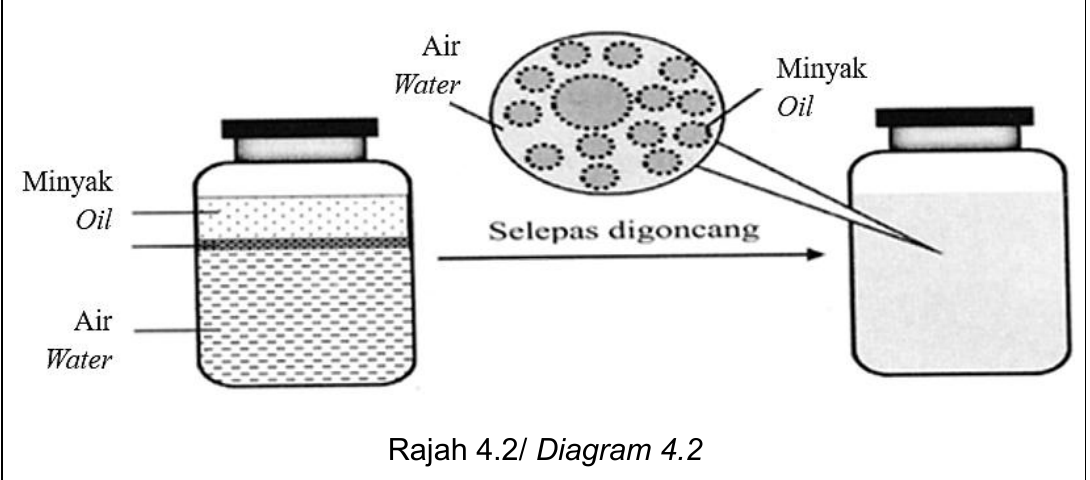
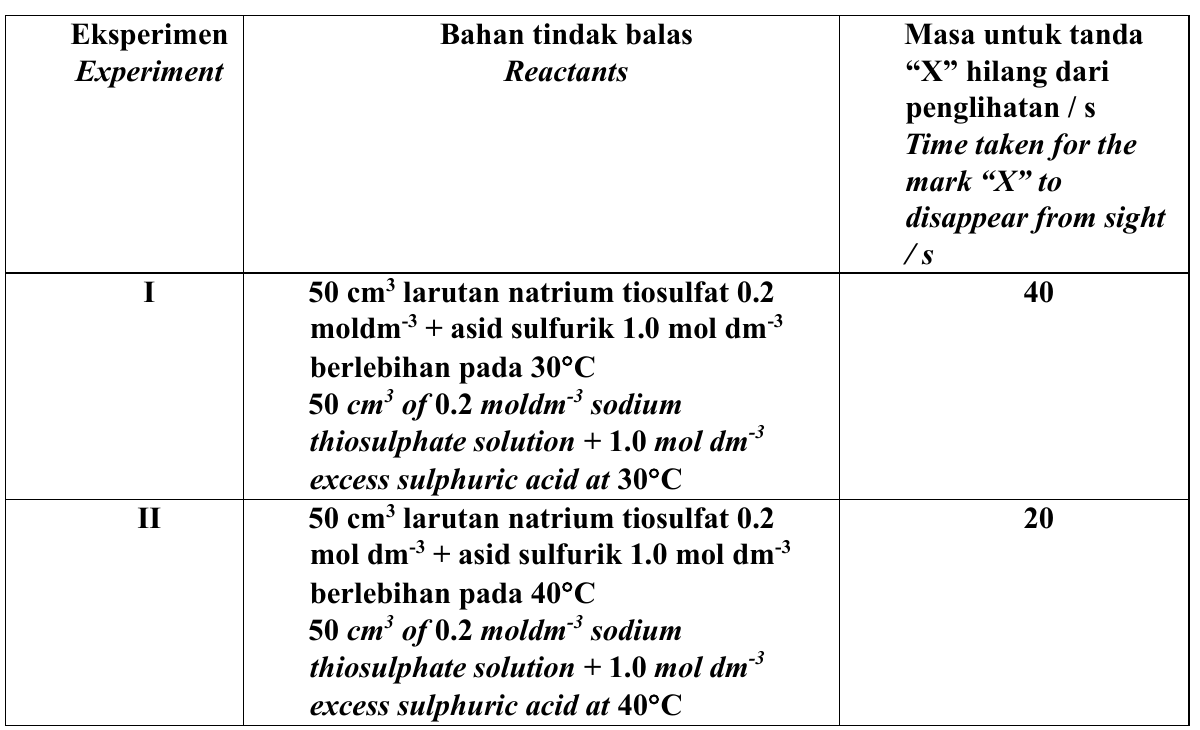
Diagram 5.1 shows the apparatus set up for Experiment I and II at different temperatures to determine the rate of reaction between sodium thiosulphate with sulphuric acid (a conical flask on white paper marked with an X). Table 5.0 shows the result of the experiment. Experiment I: 50 cm³ of 0.2 mol dm⁻³ sodium thiosulphate solution + excess 1.0 mol dm⁻³ sulphuric acid at 30 °C; time taken for the mark X to disappear = 40 s. Experiment II: same reactants at 40 °C; time = 20 s.
Medium8 marks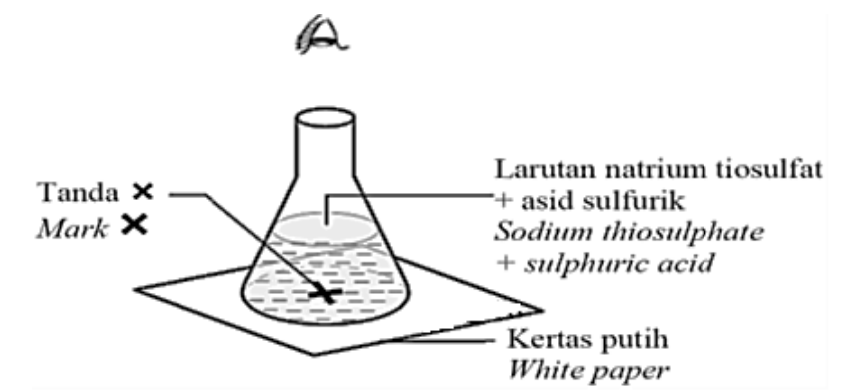
- (a)
What is the meaning of rate of reaction?
[1] - (b)
State an observation in the experiment above.
[1] - (c)(i)
Write the balanced chemical equation for the reaction above.
[2] - (c)(ii)
Calculate the average rate of reaction for Experiment I and Experiment II.
[2] - (d)
Compare the rate of reaction of Experiment I and Experiment II. Explain your answer.
[2]
Diagram 6.1 shows the standard representation of two isotopes of sodium atom: 23/11 Na and 24/11 Na.
Medium9 marks- (a)(i)
State the meaning of isotopes.
[1] - (a)(ii)
Determine the number of protons of sodium-23 atom.
[1] - (a)(iii)
Draw the atomic structure of 24/11 Na.
[2] - (b)(i)
Diagram 6.2 shows two isotopes of copper: copper-63 (63/29 Cu, natural abundance 75.0%) and copper-65 (65/29 Cu, natural abundance 25.0%). Calculate the relative atomic mass of copper.
[2]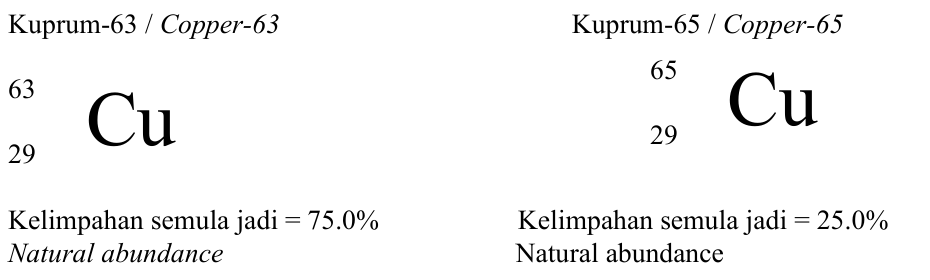
- (b)(ii)
Compare and contrast copper-63 atom and copper-65 atom.
[2] - (c)
Madam Maimunah was diagnosed with bone cancer. What isotope is used to treat Madam Maimunah?
[1]
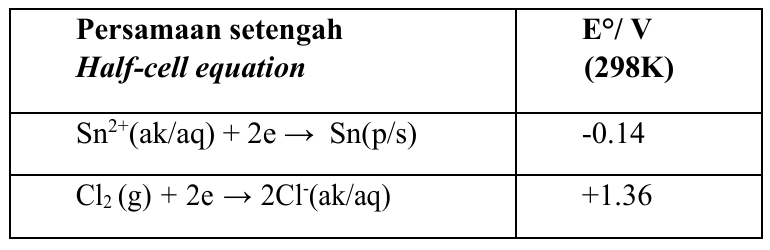
Diagram 7.1 shows a chemical cell: a tin electrode in a solution containing 1.0 mol dm⁻³ Sn²⁺ ions and a platinum electrode with chlorine gas, 1 atm, in a solution containing 1.0 mol dm⁻³ Cl⁻ ions, joined by a salt bridge and voltmeter. Table 7.1 gives the standard electrode potentials: Sn²⁺(aq) + 2e → Sn(s), E° = −0.14 V; Cl₂(g) + 2e → 2Cl⁻(aq), E° = +1.36 V (298 K).
Medium10 marks- (a)(i)
State the colour of chlorine gas.
[1]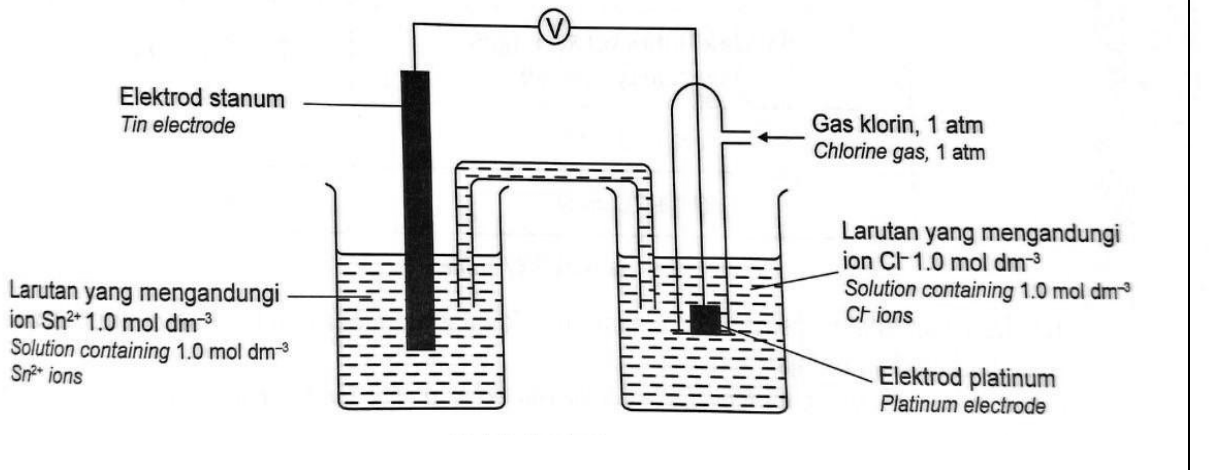
- (a)(ii)
Identify negative and positive terminal.
[1] - (a)(iii)
Write the cell notation for the chemical cell.
[1] - (a)(iv)
Calculate the value of the E° for the chemical cell.
[2] - (b)
Table 7.2 shows the E° value of a few half cells. Based on the value of E° explain if a reaction will occur or not for the following reactants as shown in Diagram 7.2 (metal Q in a solution containing P²⁺ ions).
[3]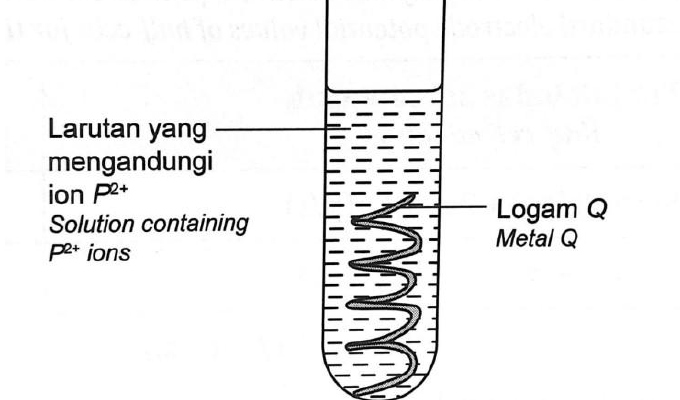
- (c)
Diagram 7.3 shows a method to extract aluminium for manufacturing aluminium cans (electrolysis of aluminium oxide dissolved in cryolite using carbon electrodes, molten aluminium flows out). Justify the usage of the method in industries.
[2]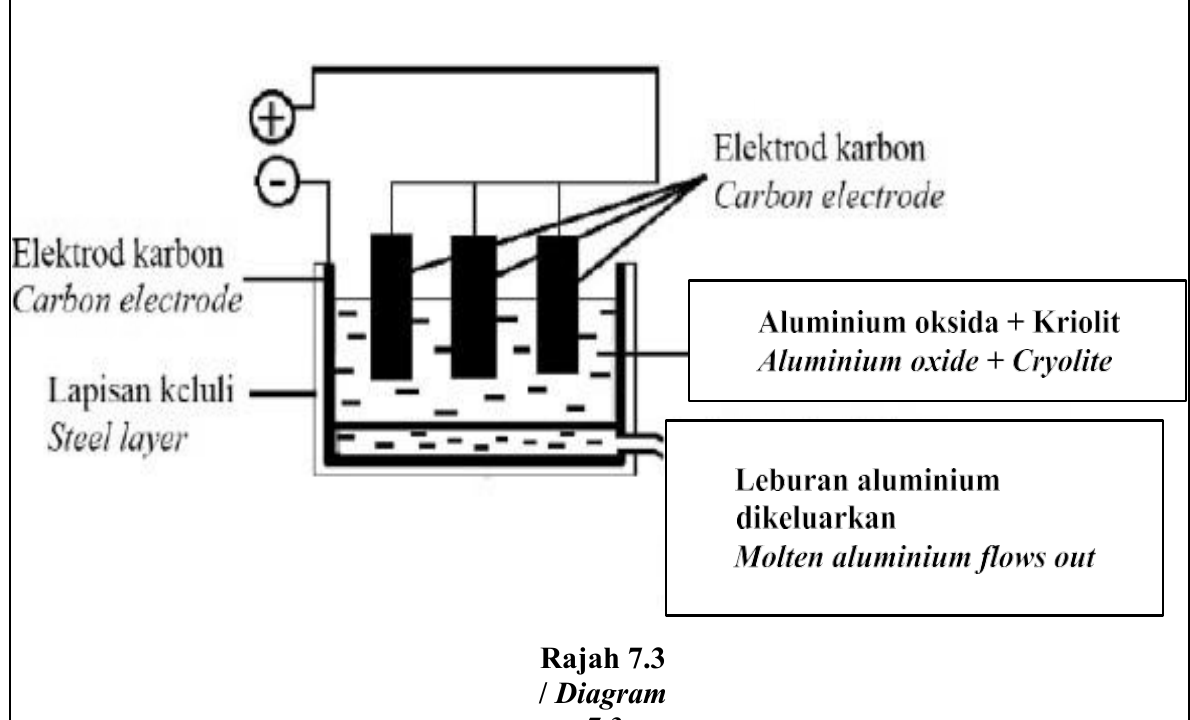
Diagram 8 shows a series of reactions involving compound Q: glucose → (yeast) → compound Q; compound Q undergoes combustion to give water and gas P; compound Q with porcelain chips gives gas R; compound Q with oxidising agent X gives compound S, C₂H₄O₂.
Medium10 marks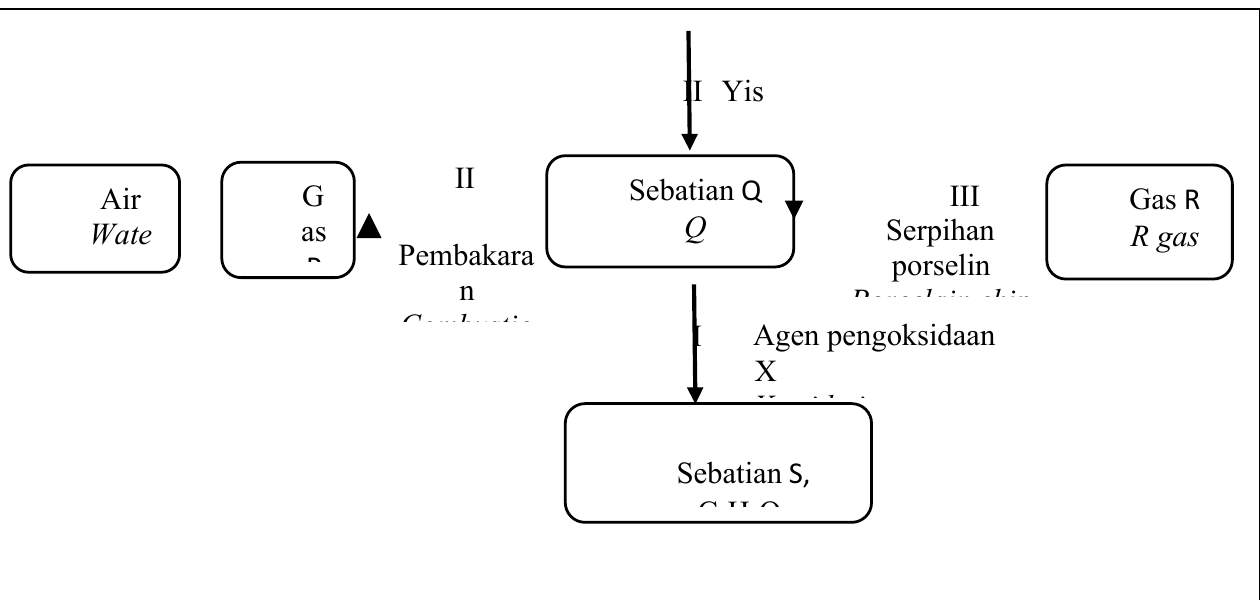
- (a)
Name reaction II.
[1] - (b)(i)
State the chemical formula for substance Q.
[1] - (b)(ii)
Write the balanced chemical equation for reaction II.
[2] - (b)(iii)
0.2 mol of compound Q undergoes complete combustion at room temperature. Calculate the volume of gas P liberated. [1 mol of gas occupies a volume of 24 dm³ at room temperature. Relative atomic mass: H = 1; C = 12]
[2] - (c)
Draw the structural formula of compound S.
[1] - (d)
Describe the test for the presence of gas R formed from chemical reaction III.
[2] - (e)
The use of Compound Q as a fuel provides many benefits, especially in reducing greenhouse gas emissions. Justify the statement above.
[1]
Section B
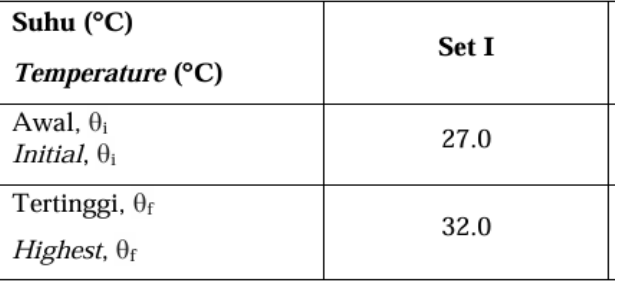
Answer any one question in Section B. (a) Diagram 9.1 shows the apparatus set up to compare the heat of displacement of copper from copper(II) sulphate solution by magnesium powder, Mg, using polystyrene cups (100 cm³ of 0.5 mol dm⁻³ copper(II) sulphate solution). Table 9.1 shows the result: initial temperature θ₁ = 27.0 °C; highest temperature θf = 32.0 °C (Set I).
Hard20 marks- (a)(i)
State the meaning of heat of displacement.
[1] - (a)(ii)
Apart from the temperature change, state other observations for the experiment.
[1] - (a)(iii)
Why polystyrene cups were used in this experiment.
[1] - (a)(iv)
Based on Table 9.1, calculate the heat of displacement of the reaction between copper(II) sulphate solution and magnesium. [Given that the specific heat capacity of solution c = 4.2 J g⁻¹ °C⁻¹, density of solution = 1 g cm⁻³]
[3]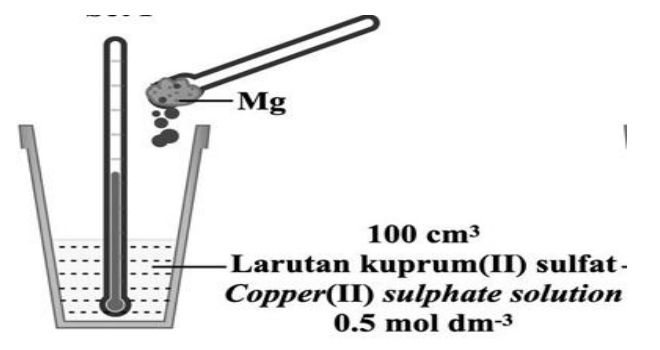
- (a)(v)
Write a balanced chemical equation for the reaction in experiment.
[2] - (a)(vi)
Draw the energy level diagram for the reaction.
[2] - (a)(vii)
Predict the heat of displacement if experiment is carried out using zinc to replace magnesium. Explain your answer.
[2] - (b)
Diagram 9.2 shows substance A (hot pack) and substance B (cold pack) used in daily life. Hot pack applied to your injured part by your physical therapist and cold pack can be used to relieve pain and swelling. Compare the reaction occur in substance A and substance B in terms of: type of reaction; temperature change; change in the total energy content of reactant and total energy content of product; formation and breaking bond.
[4]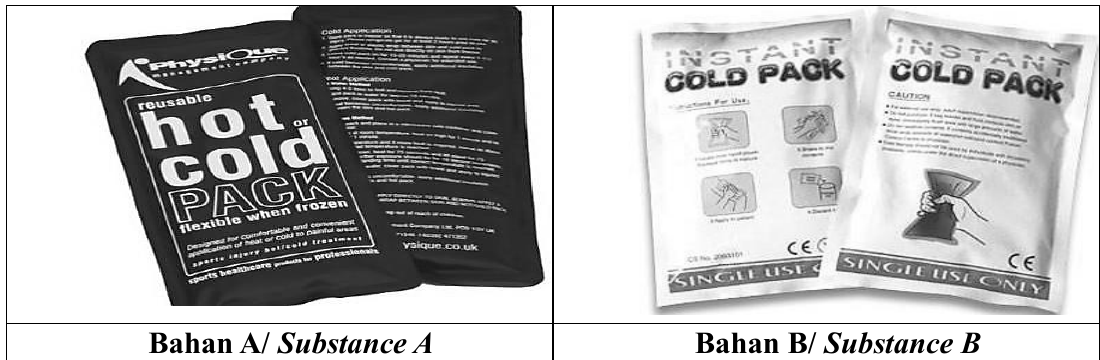
- (c)
Table 9.2 shows the heat of neutralisation for two sets of experiment using different monoprotic acids, X and Y reacting with potassium hydroxide solution (Set I: acid X + sodium hydroxide solution, −55 kJ mol⁻¹; Set II: acid Y + sodium hydroxide solution, −57 kJ mol⁻¹). Based on the table above, suggest acid X. Explain why the heat of neutralisation for Set I is lower than Set II.
[4]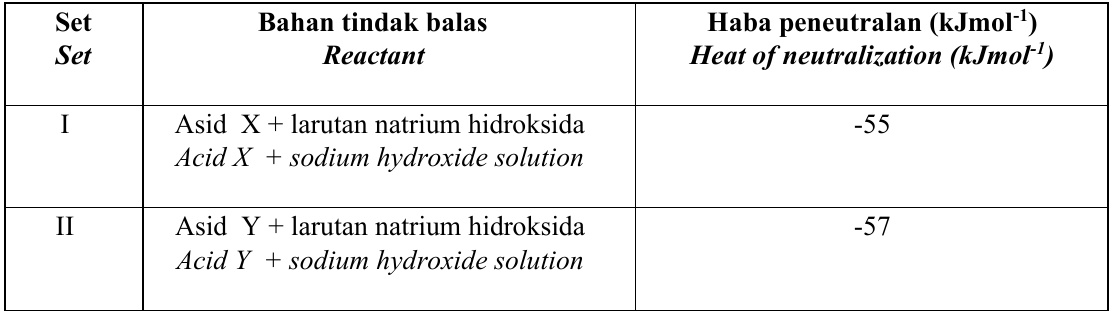
Answer any one question in Section B. (a) Unbalanced chemical equation: Al(s) + ZnO(s) → Zn(s) + Al₂O₃(s).
Hard20 marks- (a)(i)
Write the balanced chemical equation for the reaction above. State one information qualitatively or quantitatively that can be obtained from the balanced chemical equation.
[2] - (a)(ii)
Calculate the mass of zinc formed when 2.7 g of aluminium metal is react with excess zinc oxide. [Relative atomic mass: Al = 27; Zn = 65]
[3] - (b)(i)
Diagram 10.1 shows compound M: 4.8 g carbon, 1.6 g oxygen, 1.0 g hydrogen; relative molecular mass = 74. Calculate the empirical formula and the molecular formula of compound M.
[5] - (b)(ii)
Compound M and butene, C₄H₈ can be used as fuel. As an environmentalist who is always trying to reduce the carbon footprint, you need to choose between compound M and butene, C₄H₈, which fuel is suitable for use in life. Justify your choice.
[4] - (c)(i)
What is meant by molecular formula? (Diagram 10.2 shows the arrangement of apparatus for two methods used to determine the empirical formula of two compounds: Method I — heating metal X in a crucible; Method II — passing hydrogen from zinc and hydrochloric acid over heated metal oxide Y.)
[1]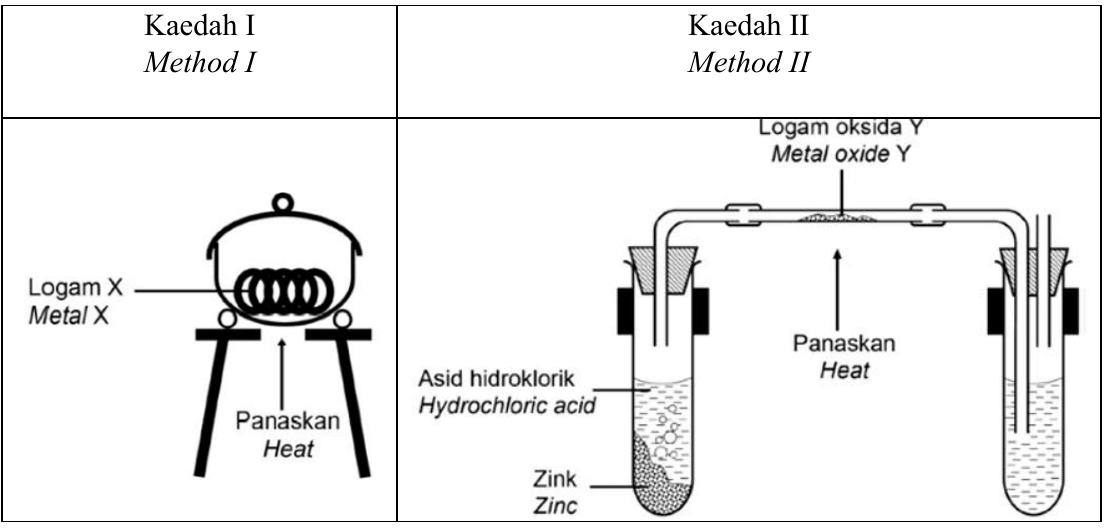
- (c)(ii)
Suggest metal X and Y metal oxide. Explain why the metal was chosen.
[4] - (c)(iii)
Which method is appropriate to use to determine the empirical formula of lead oxide?
[1]
Section C
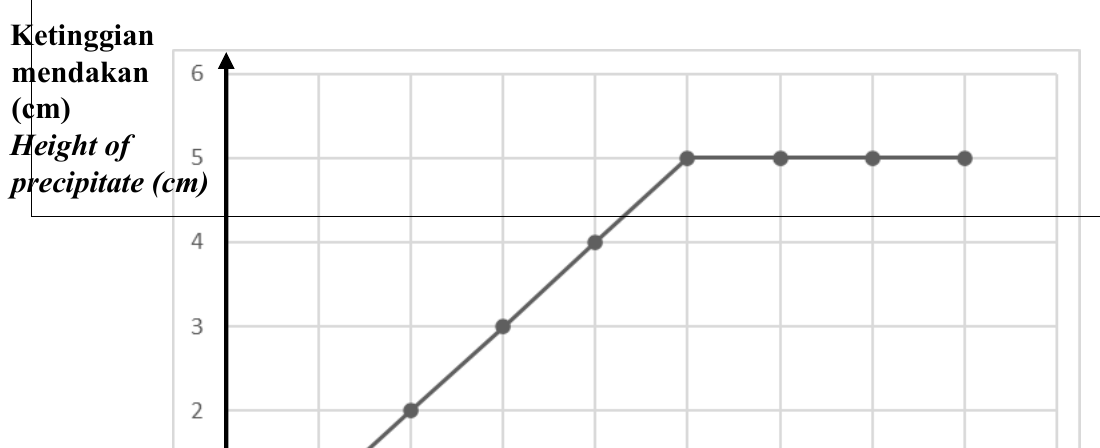
(a) Diagram 11.1 shows 0.5 mol dm⁻³ potassium iodide, KI solution of volume 1 to 8 cm³ added into 8 test tubes, each containing 2.5 cm³ of 0.5 mol dm⁻³ lead(II) nitrate, Pb(NO₃)₂. The graph shows the height of precipitate (cm) against volume of potassium iodide solution (cm³) added: the height rises in a straight line to 5 cm and then stays constant.
Hard20 marks- (a)(i)
State the type of reaction between lead(II) nitrate solution and potassium iodide solution.
[1]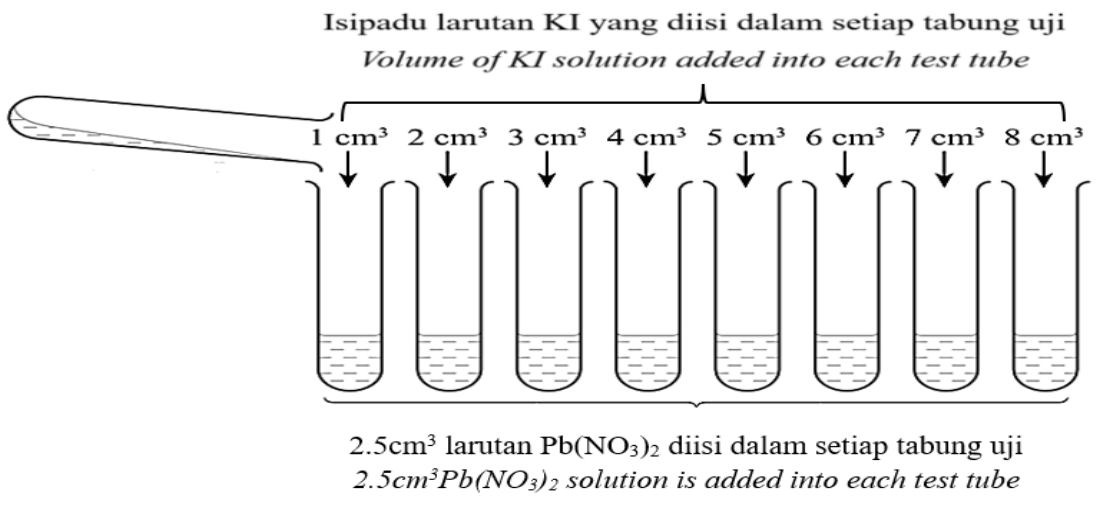
- (a)(ii)
Based on the graph, state the volume of potassium iodide solution needed to completely react with 0.5 mol dm⁻³ lead(II) nitrate solution.
[1] - (a)(iii)
Calculate the number of moles of: potassium iodide solution based on volume in (a)(ii); lead(II) nitrate solution used in the experiment.
[2] - (a)(iv)
Determine the number of moles of iodide ion, I⁻ that reacts completely with 1 mol of lead(II) ion, Pb²⁺.
[1] - (a)(v)
Construct the ionic equation for the formation of the precipitate formed in this experiment.
[2] - (b)
Diagram 11.2 shows the experiment for the heating of copper(II) carbonate (Experiment I, gas passed into lime water) and copper(II) nitrate (Experiment II, moist blue litmus paper and glowing wooden splinter at the mouth of the tube). Both salts decompose when heated. Compare and contrast the observation and product for both experiments.
[4]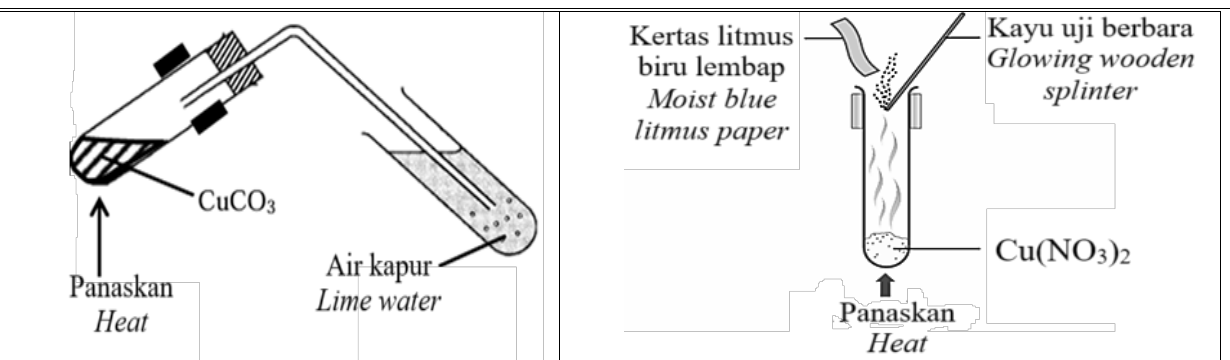
- (c)(i)
Diagram 11.3 shows a shell, made from a type of salt. Ali crushes the shell into small pieces and puts them into a test tube, then adds 50 cm³ of 1.0 mol dm⁻³ hydrochloric acid. Gas T is released and a colourless solution is produced. State the name of gas T and the colourless solution produced.
[2]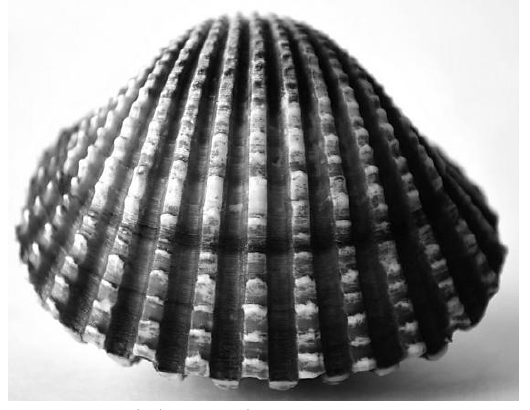
- (c)(ii)
As a chemist, suggest a chemical that can be added to the colourless solution in (c)(i) to regenerate the salt solid that exists in the shell. Describe the experiment on how you can prepare the salt solid that exists in the shell using the chemical you suggested and the colourless solution in (c)(i). Write the balanced chemical equation for the reaction that occurs.
[7]