Which of the following are the elements of Group 18 in the Periodic Table of Elements?
Easy
Which of the following shows the correct type of particle for each substance?
Medium
0.40 g of metal P reacts with fluorine to produce 0.78 g P fluoride. What is the empirical formula of the P fluoride? [Relative atomic mass : F = 19, P = 40]
Medium
Protium, deuterium and tritium are the isotopes of hydrogen. Which of the following are the differences for the three isotopes? I Chemical properties; II Physical properties; III Number of protons; IV Nucleon number
Medium
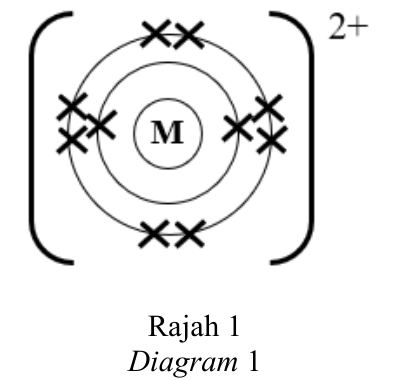
Diagram 1 shows the electron arrangement of ion M²⁺. Ion M²⁺ contains 12 neutrons. What is the nucleon number of atom M?
Medium
Which of the following statements is true about metallic bond?
Medium
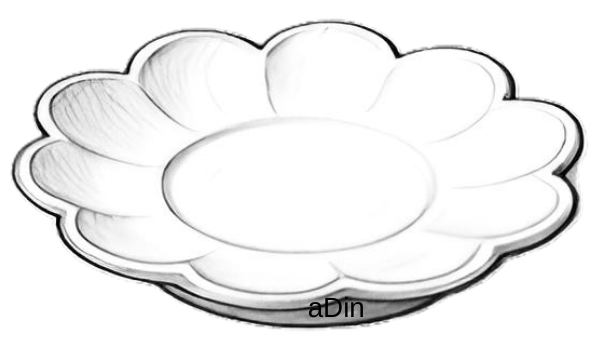
Diagram 2 shows an example of the uses of ceramics. Based on Diagram 2, which of the following is a property of ceramic?
Easy
The following information is about element X: • Can be used as catalyst in industry • Forms complex ions. Which of the following is correct about element X?
Medium
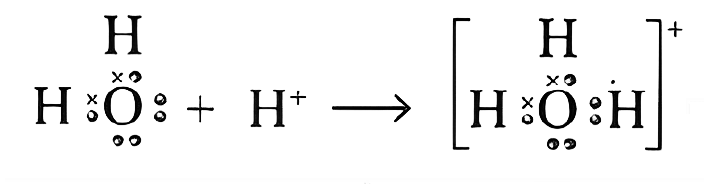
Diagram 3 shows the formation of bond to form hydroxonium ion (H₂O + H⁺ → H₃O⁺, shown with electron arrangements). Which of the following is the type of chemical bond involved in this compound?
Medium
Elman dissolves glacial ethanoic acid into a beaker containing propanone. Which of the following statements is correct for the solution produced?
Medium
Table 1 shows three elements X, Y and Z that are in Period 3 of the Periodic Table of Elements. Element X: oxide is acidic; Element Y: oxide is basic; Element Z: oxide is amphoteric. Which of the following sequences is correct based on the increase in the proton number of the elements?
Medium
The following equation represents the reaction between iron and chlorine gas: 2Fe + 3Cl₂ → 2FeCl₃. What is the change in oxidation number of chlorine?
Medium
The following information is about a type of compound: • Has carbon and hydrogen atoms only • Single bond between carbon atoms • Insoluble in water. What is the general formula for the compound?
Medium
The relative molecular mass of M₂(SO₄)₃ is 342. What is the relative atomic mass of element M? [Relative atomic mass: O = 16, S = 32]
Medium
Determine the pH value of calcium hydroxide solution Ca(OH)₂ with a concentration of 0.1 mol dm⁻³.
Medium
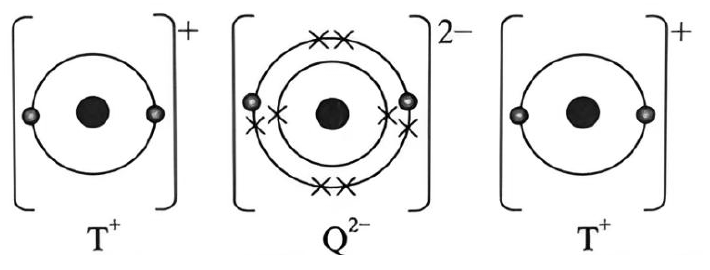
Diagram 4 shows the electron arrangement of a compound formed when element T and element Q react (ions T⁺, Q²⁻ and T⁺). What is the group of element Q in the Periodic Table of Elements?
Medium
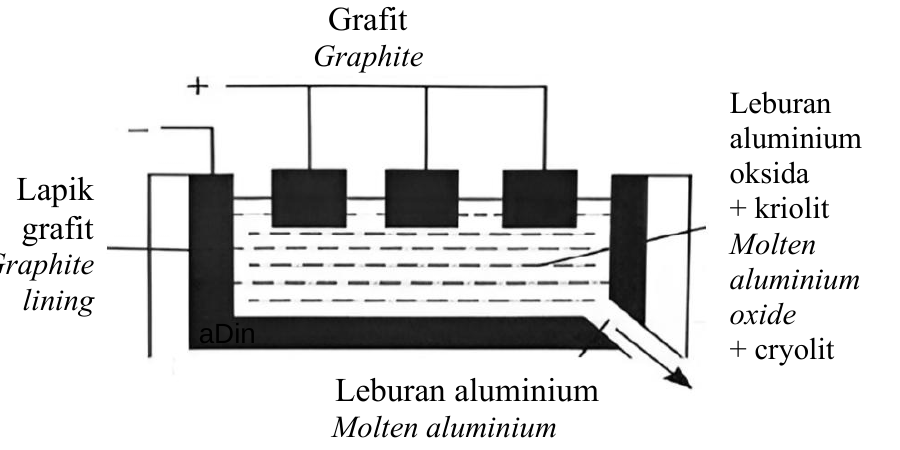
Diagram 5 shows the process of extraction of aluminium from its ore (electrolysis of molten aluminium oxide + cryolite with graphite electrodes and graphite lining). Which of the following statements is correct about Diagram 5?
Medium
What is the mass of sulphur in 3.45 × 10²² sulphur dioxide molecules, SO₂? [Relative atomic mass: O = 16, S = 32; NA: 6.02 × 10²³ mol⁻¹]
Medium
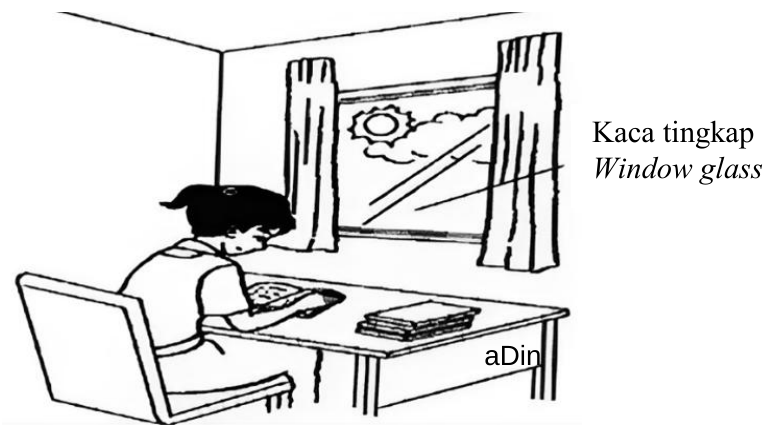
A student was dazzled by the sunlight while doing her revision as shown in Diagram 6. She wanted to change the window glass to solve the problem. The new window glass should contain substance T. What is substance T?
Medium
Element T is located below sodium in the Periodic Table of Elements. Which statement is correct about element T?
Medium
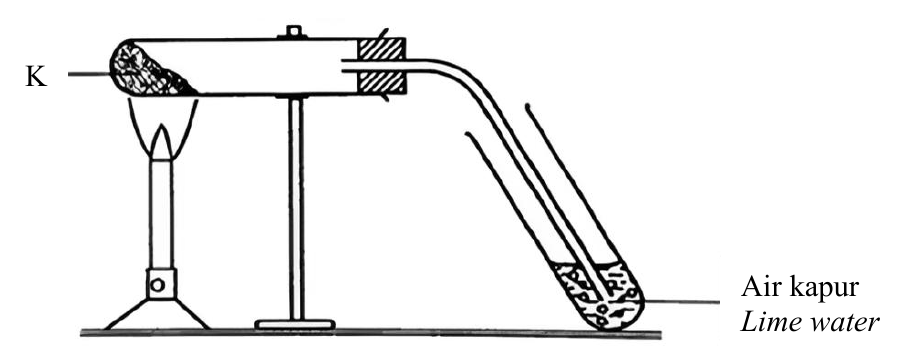
Diagram 7 shows the apparatus set up for the decomposition of compound K by heat. When K is heated, the lime water turns chalky. What is compound K?
Medium
Which of the following substances are suitable to prepare copper(II) chloride? I Copper metal and hydrochloric acid; II Copper(II) oxide and hydrochloric acid; III Copper(II) nitrate and magnesium chloride; IV Copper(II) carbonate and hydrochloric acid
Medium
Table 2 shows the total volume of oxygen liberated at regular time intervals for the decomposition of hydrogen peroxide, H₂O₂ at room temperature catalysed by manganese(IV) oxide. Time (min): 0, 1, 2, 3, 4. Volume of gas (cm³): 0, 9.2, 17.6, 25.7, 33.6. What is the average rate of reaction in the third minute?
Medium
Digital communication plays a very important role in modern living. Effective transmission of data, voices and images in a digital format requires a suitable material. What is the material?
Easy
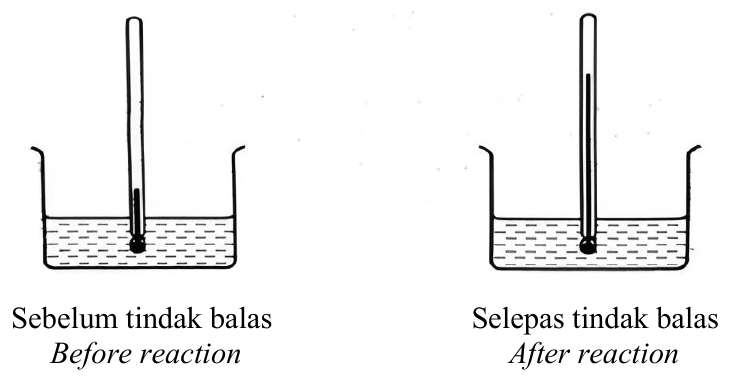
Diagram 8 shows the mercury level of thermometer in a reaction (before and after reaction). Which of the following explains the reaction above?
Medium
Silver metal is displaced when a copper strip is placed in silver nitrate solution. What is the observation for this reaction?
Medium
Which of the following is an example of a carbon allotrope? I Silica; II Kevlar; III Diamond; IV Graphene
Easy
Diagram 9 shows various types of cosmetic available in the market. Consumers must ensure that the substances used in cosmetic products are safe and free from harmful chemicals. Which of the following harmful chemicals and side effects are matched correctly?
Medium
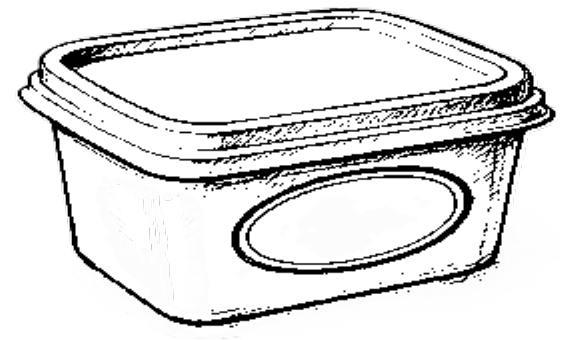
The following material can be prepared from vegetable oils by chemical reactions in the presence of catalyst (Diagram 10: a tub of margarine). What is the name of reaction and catalyst used in the reaction?
Easy
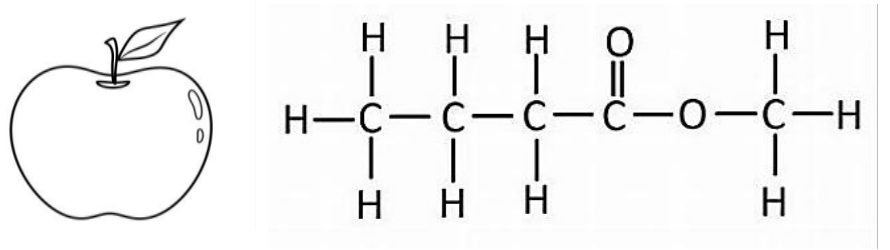
Diagram 11 shows the structural formula of ester that produces the fragrant smell found in green apple (CH₃CH₂CH₂COOCH₃). Which of the following can be used to prepare the ester?
Medium
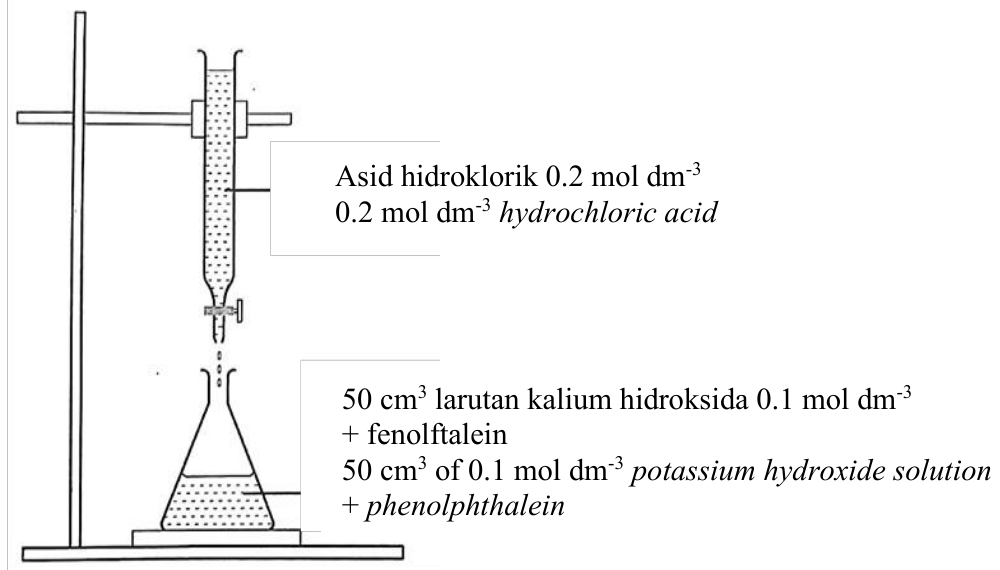
Several students from 5 Kekwa conducted a titration experiment for hydrochloric acid and potassium hydroxide solution in the laboratory (Diagram 12: 0.2 mol dm⁻³ hydrochloric acid in the burette; 50 cm³ of 0.1 mol dm⁻³ potassium hydroxide solution + phenolphthalein in the conical flask). What is the volume of hydrochloric acid needed to neutralise potassium hydroxide solution?
Medium
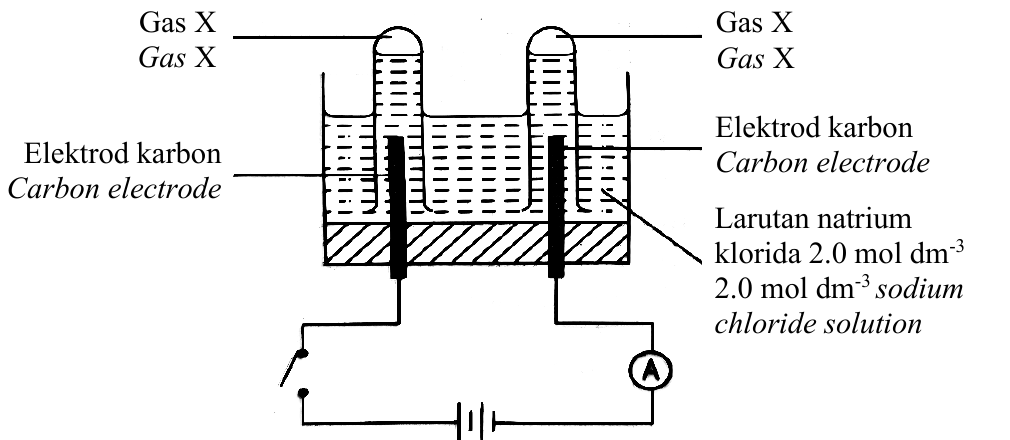
Diagram 13 shows the apparatus set up to study the electrolysis of sodium chloride solution (2.0 mol dm⁻³) using carbon electrodes. What are the names of gas X and gas Y?
Medium
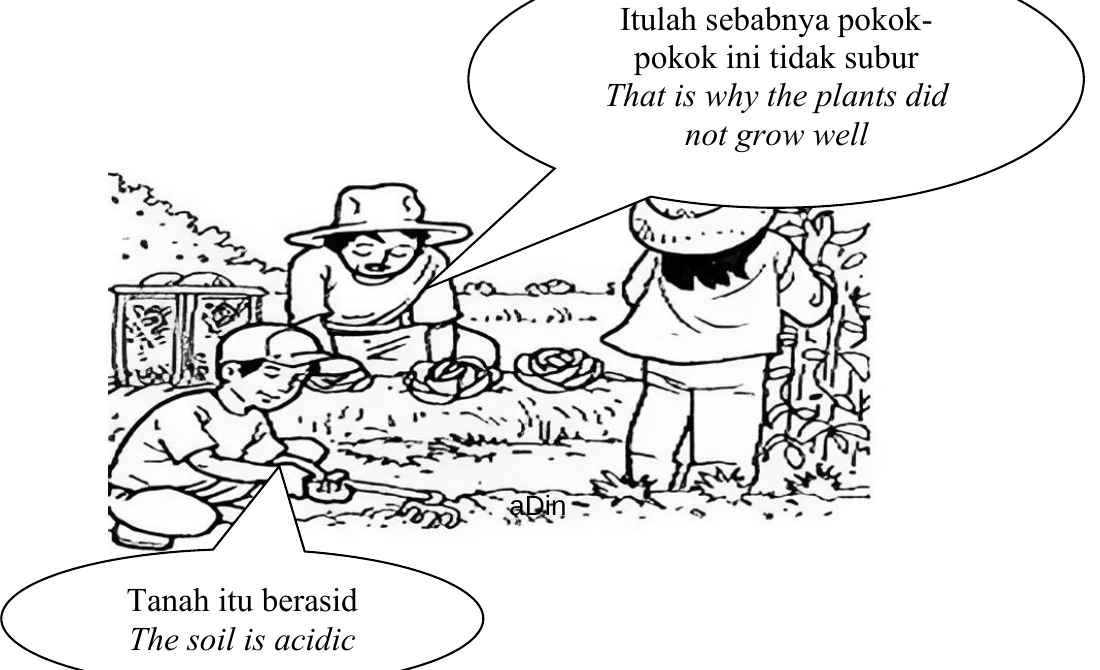
Diagram 14 shows conversation between two farmers: 'The soil is acidic' and 'That is why the plants did not grow well'. Based on the conversation in Diagram 14, which of the following substances is suitable to overcome the problem faced by the farmer?
Easy
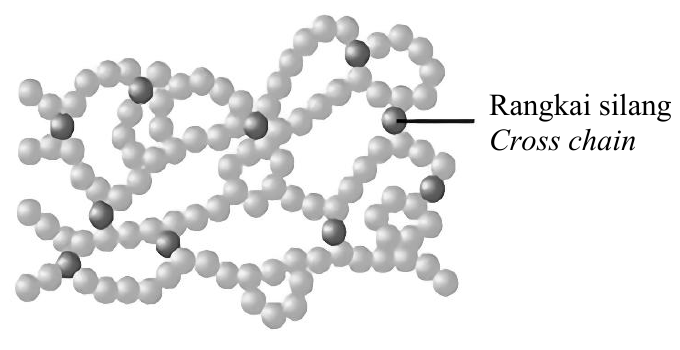
Diagram 15 shows the structure of polymer X (polymer chains joined by cross chains). Which of the following is a property of polymer X?
Medium
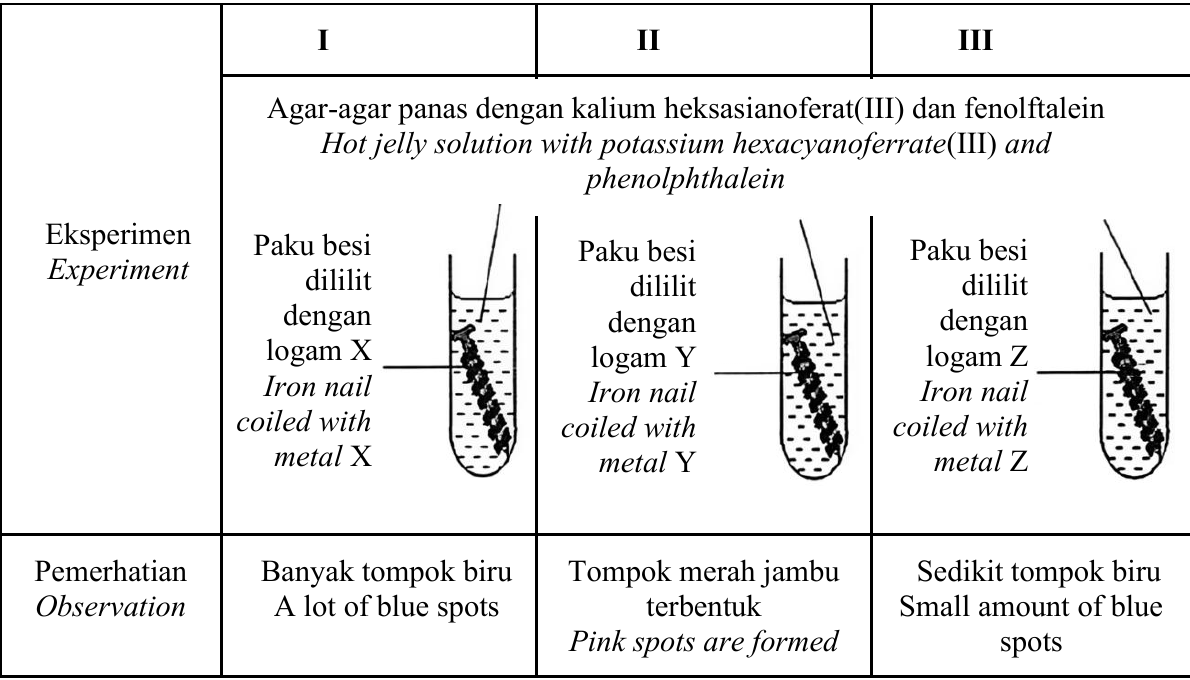
Table 3 shows the apparatus set up to investigate the effect of metals X, Y and Z on the rusting of iron. Hot jelly solution with potassium hexacyanoferrate(III) and phenolphthalein. Experiment I: iron nail coiled with metal X - a lot of blue spots. Experiment II: iron nail coiled with metal Y - pink spots are formed. Experiment III: iron nail coiled with metal Z - small amount of blue spots. Based on the experiment, arrange the metals in order of decreasing electropositivity.
Medium
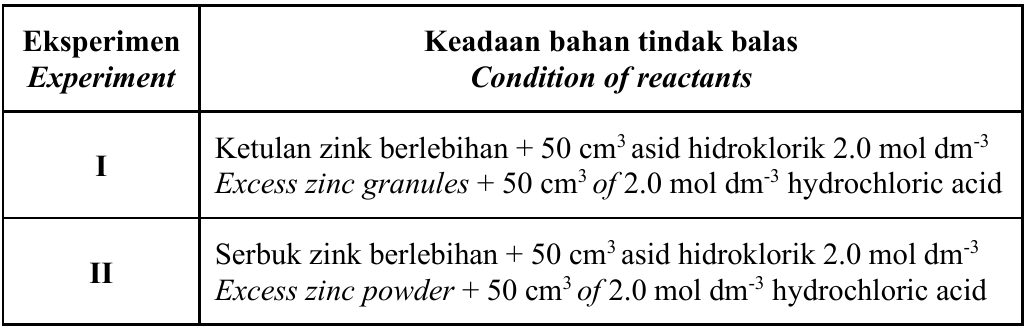
Table 4 shows the condition of reactants used in experiment I and experiment II. Experiment I: excess zinc granules + 50 cm³ of 2.0 mol dm⁻³ hydrochloric acid. Experiment II: excess zinc powder + 50 cm³ of 2.0 mol dm⁻³ hydrochloric acid. Which graph (volume of hydrogen against time) shows the correct curves for experiment I and experiment II?
Medium
When zinc nitrate is heated strongly, it decomposes as the equation below: 2Zn(NO₃)₂ → 2ZnO + 4NO₂ + O₂. What is the volume of NO₂ gas produced if 18.9 g of zinc nitrate is heated? [Molar mass: Zn(NO₃)₂ = 189 g mol⁻¹; 1 mol of gas occupies 24 dm³ at room temperature and pressure]
Medium
The heat of combustion of propanol C₃H₇OH is −2016 kJ mol⁻¹. When 0.3 g of propanol is completely burnt in oxygen, the heat released is used to heat 250 cm³ of water. What is the rise in temperature of the water? [Specific heat capacity of solution = 4.2 J g⁻¹ °C⁻¹] [Molar mass of propanol: 60 g mol⁻¹]
Medium
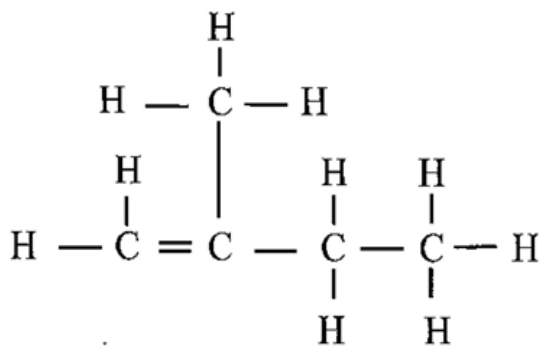
Diagram 16 shows the structural formula of an organic compound (CH₂=C(CH₃)–CH₂–CH₃). What is the IUPAC name of the organic compound?
Medium
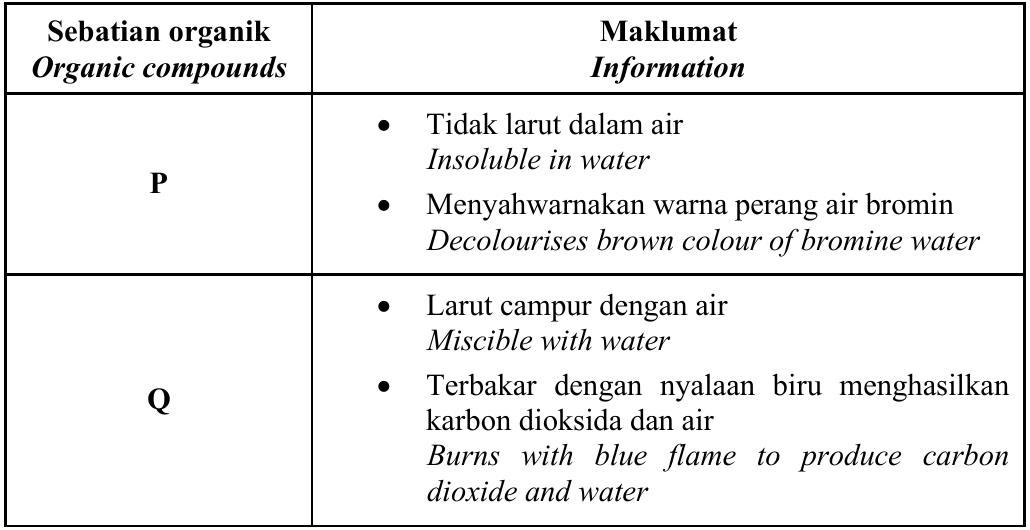
Table 5 shows the information of two organic compounds. P: insoluble in water; decolourises brown colour of bromine water. Q: miscible with water; burns with blue flame to produce carbon dioxide and water. Based on the information given, which structural formula has the same characteristics as above?