Table 1 shows the freezing points and boiling points of several chemical substances.
Substance | Melting point (°C) | Boiling point (°C)
P | -63.5 | 61.2
Q | -111.6 | 12.7
R | -218.8 | -183
S | 80 | 218
Which of the following substances is in a liquid state at room temperature?
Medium
Which of the following is a transition element?
Easy
Choose the statement that describes one of the chemical properties of alkalis.
Medium
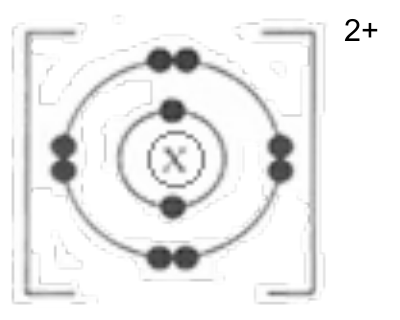
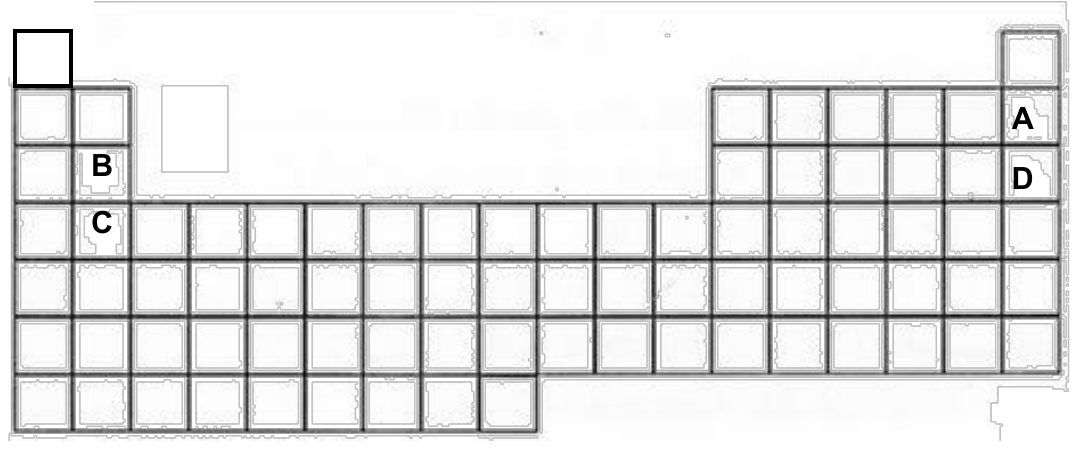
Diagram 1 shows the electron arrangement for the X2+ ion. Which of the following is the position of element X in the Periodic Table of Elements? (Options A to D are marked on the Periodic Table in the figure.)
Medium
Which of the following salts is insoluble in water?
Easy
Table 2 shows the observation on blue litmus paper in three solutions.
Solution | Observation
Glacial ethanoic acid | No change in the colour of blue litmus paper
Glacial ethanoic acid + propanone | No change in the colour of blue litmus paper
Glacial ethanoic acid + water | Blue litmus paper turns red
Based on the observation, choose the correct statement.
Medium
Which of the following substances accelerates the coagulation of rubber?
Easy
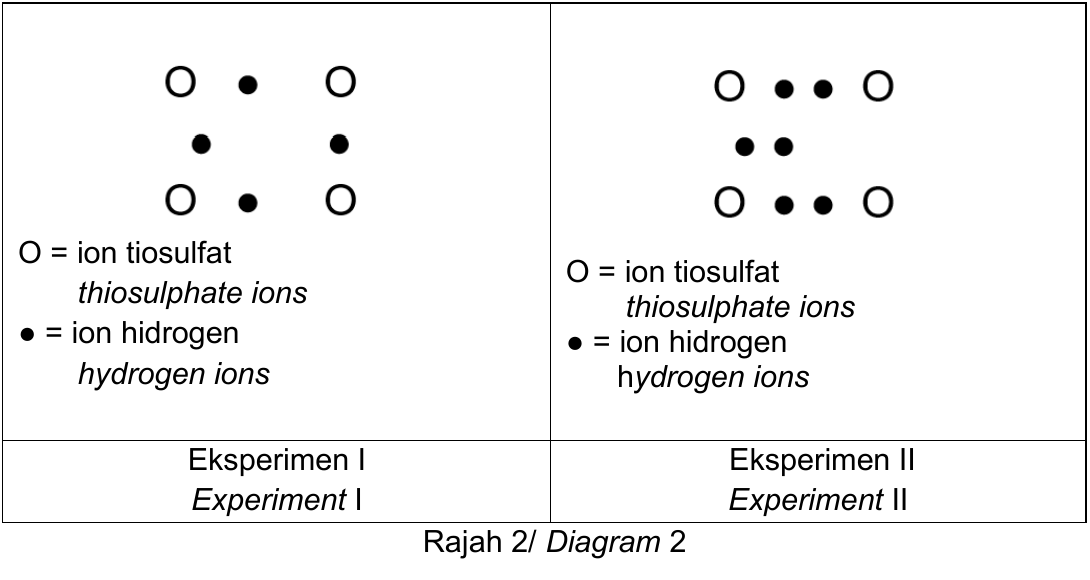
Diagram 2 shows the images of hydrogen ion and thiosulphate ion particles in experiments I and II (Experiment I: 4 thiosulphate ions and 4 hydrogen ions; Experiment II: 4 thiosulphate ions and 6 hydrogen ions). Which of the following statements shows the difference in rate of reaction for the two sets of experiments?
Medium
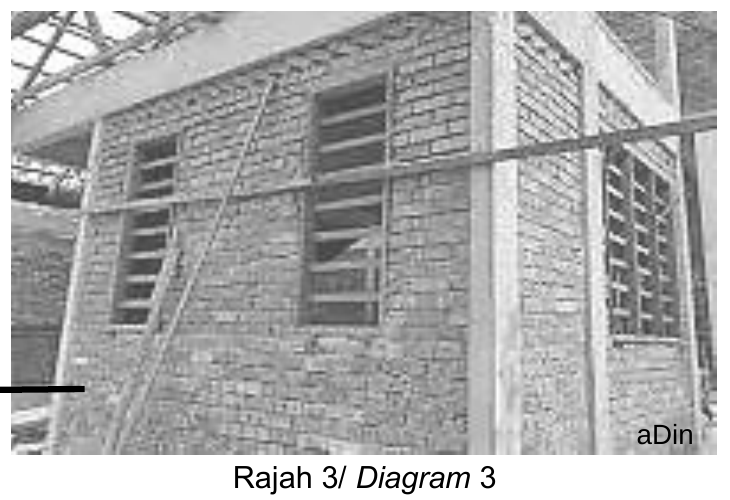
Diagram 3 shows one use of substance X in daily life (a brick building under construction; X labels a structural part). What are the properties of substance X that make it suitable for use?
Medium
A resident in Kampung Sentosa made a complaint to the Water Department because his water bill increased drastically. The officer of the department found that there was an underground water pipe leakage in the house area by using a detector. What is the substance in the detector used by the officer?
Easy
Which of the following is a saturated hydrocarbon?
Medium
Table 3 shows the elements in a period: Na, Mg, Al, Si, P, S, Cl, Ar. Which statement is true about the changes in the properties of elements across that period from left to right?
Medium
The following is information about the physical properties of ethanol: ethanol is a covalent compound that is soluble in water. Which of the following statements correctly describes the information?
Medium
Fat and oil molecules are formed from the reaction between glycerol and fatty acids. How many fatty acid molecules combine with one glycerol molecule to form one fat or oil molecule?
Easy
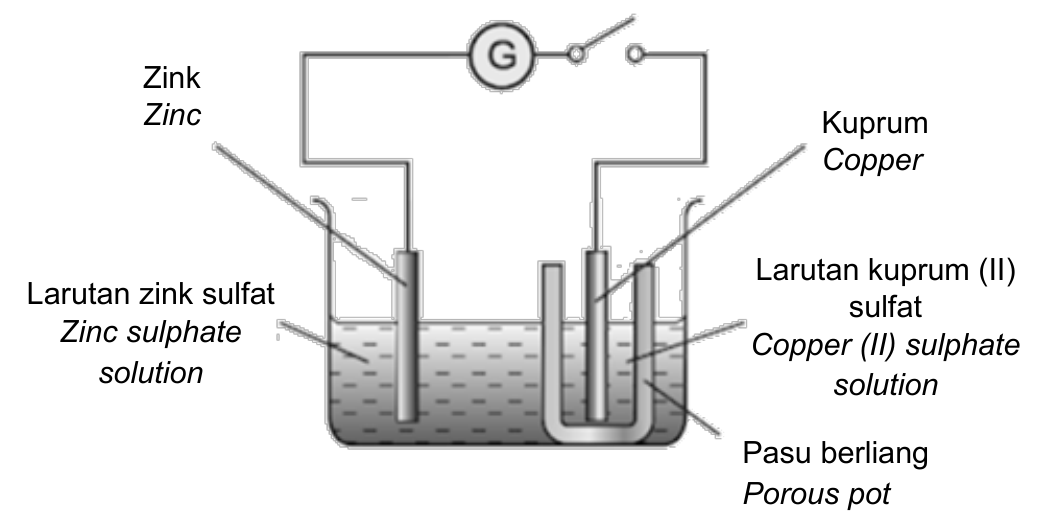
Diagram 4 shows the arrangement of the apparatus for a Daniell cell (zinc in zinc sulphate solution, copper in copper(II) sulphate solution, porous pot). Which of the following is the half equation for the reactions at the positive and negative terminals of the cell?
Option | Negative terminal | Positive terminal
A | Zn → Zn2+ + 2e- | Cu2+ + 2e- → Cu
B | Cu+ + e- → Cu | Zn → Zn+ + e-
C | Cu → Cu2+ + 2e- | Zn2+ + 2e- → Zn
D | Zn → Zn+ + e- | Cu+ + e- → Cu
Medium
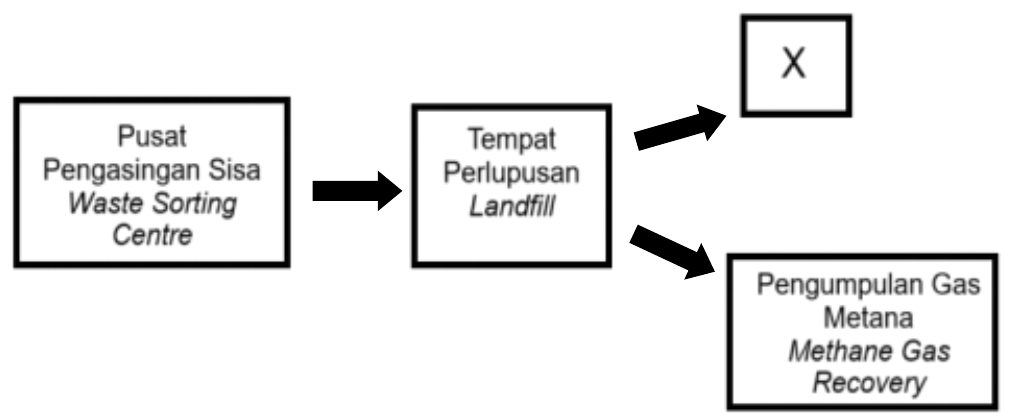
Diagram 5 shows the flow chart of waste management levels (Waste Sorting Centre → Landfill → X and Methane Gas Recovery). Which of the following statements correctly describes level X?
Medium
A compound contains element P and element Q. The percentage by mass of element P in the compound is 25.26 %. The empirical formula of the compound is PQ2. If the Relative Atomic Mass of element P is 24, what is the Relative Atomic Mass of element Q?
Medium
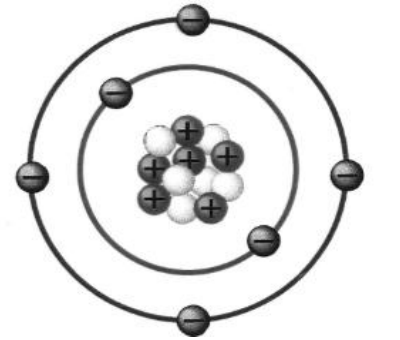
Diagram 6 shows the atomic structure of an element. How many electrons are in this atom?
Easy
Which of the following has the same number of atoms as 12 dm³ of ammonia gas at room temperature?
[Avogadro constant = 6.02 × 10²³, Relative atomic mass: H = 1, C = 12, N = 14, O = 16, S = 32, Molar volume of gas at room condition = 24 dm³ mol⁻¹]
Medium
Diagram 7 shows the position of X and Y atoms in the Periodic Table of Elements (X in Group 1, Period 2; Y in Group 16, Period 3). Which of the following diagrams represent the compound formed when X reacts with Y?
Medium
Table 4 shows two sets of chemical reactions.
Set I: 25 cm³ HX acid 0.5 mol dm⁻³ + magnesium tape at room temperature
Set II: 25 cm³ H2X acid 0.5 mol dm⁻³ + magnesium tape at room temperature
Which statement explains why the reaction rate of set II is higher compared to the reaction rate of set I?
Medium
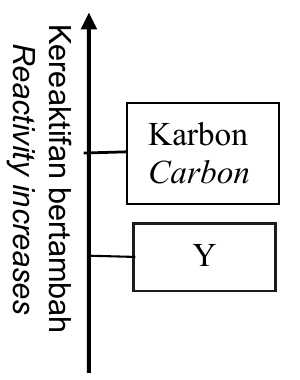
Diagram 8 shows the positions of carbon and metal Y in the Reactivity Series of Metals (Y is below carbon). Metal Y can be extracted from its ore using the reduction method by carbon. What is metal Y?
Medium
Which of the following statements explains why a "sea of electrons" can conduct electric current?
Medium
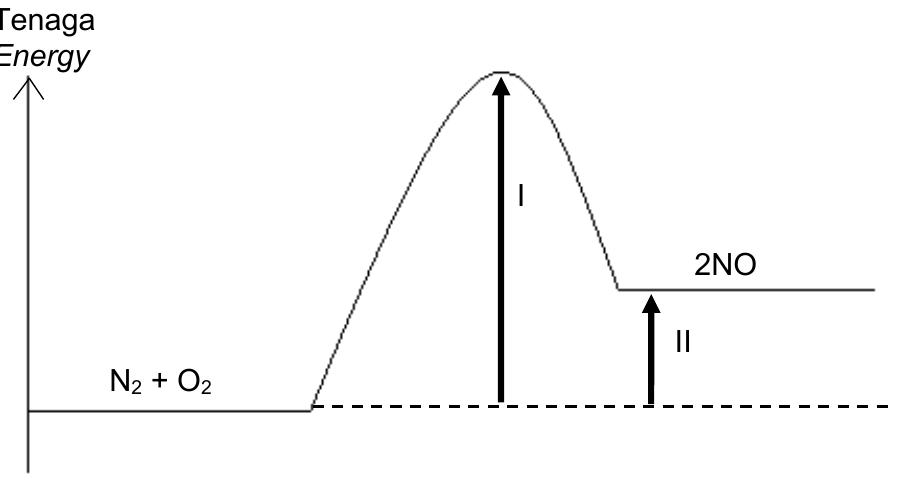
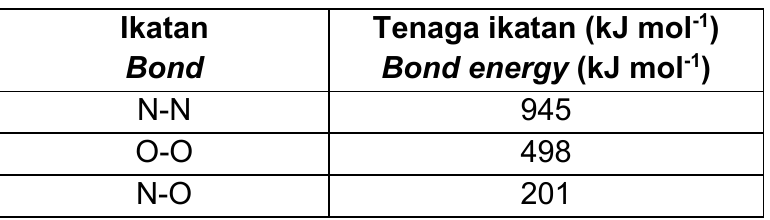
Diagram 9 shows the energy profile diagram and Table 5 shows the bond energy values for the reaction between nitrogen and oxygen (N2 + O2 → 2NO; level I is the activation energy arrow, level II is the energy difference between N2 + O2 and 2NO).
Bond | Bond energy (kJ mol⁻¹)
N≡N (N-N) | 945
O=O (O-O) | 498
N-O | 201
Which of the following represents the correct level and value for the heat of reaction?
Option | Level | Heat of reaction (kJ mol⁻¹)
A | I | -1242
B | I | +1242
C | II | +1041
D | II | -1041
Medium
Which food additives have the correct function?
I | Sodium benzoate | Slows down the growth of bacteria
II | Aspartame | Slows down the oxidation of fats in food
III | Pectin | Thickens liquids in food
IV | Lecithin | Adds flavour to food
Medium
A total of 25 cm³ of sodium hydroxide solution, NaOH with a concentration of 0.1 mol dm⁻³ is used to neutralise hydrochloric acid, HCl. Calculate the volume of hydrochloric acid required if the concentration is 0.05 mol dm⁻³.
Medium
Elements X and Y are Group 1 elements. Table 6 shows the observations from an experiment to study the reactivity of metals X and Y with water.
X: Moves rapidly and randomly on the surface of the water with a loud 'hiss' sound and burns with a yellow flame.
Y: Moves very rapidly and produces loud 'hiss' and 'pop' sounds, and burns with a purple flame.
Which of the following statements explains the observation?
Medium
Table 7 compares solutions X, Y and Z at the same concentration and volume.
Solution | X | Y | Z
pH value | 5 | 2 | 1
Degree of ionisation in water | Low | Higher | Higher
Time taken to react completely with excess zinc powder | Slow | Fast | Fastest
What are X, Y and Z?
Option | X | Y | Z
A | HCl | CH3COOH | H2SO4
B | HCl | H2SO4 | CH3COOH
C | CH3COOH | HCl | H2SO4
D | H2SO4 | CH3COOH | HCl
Medium
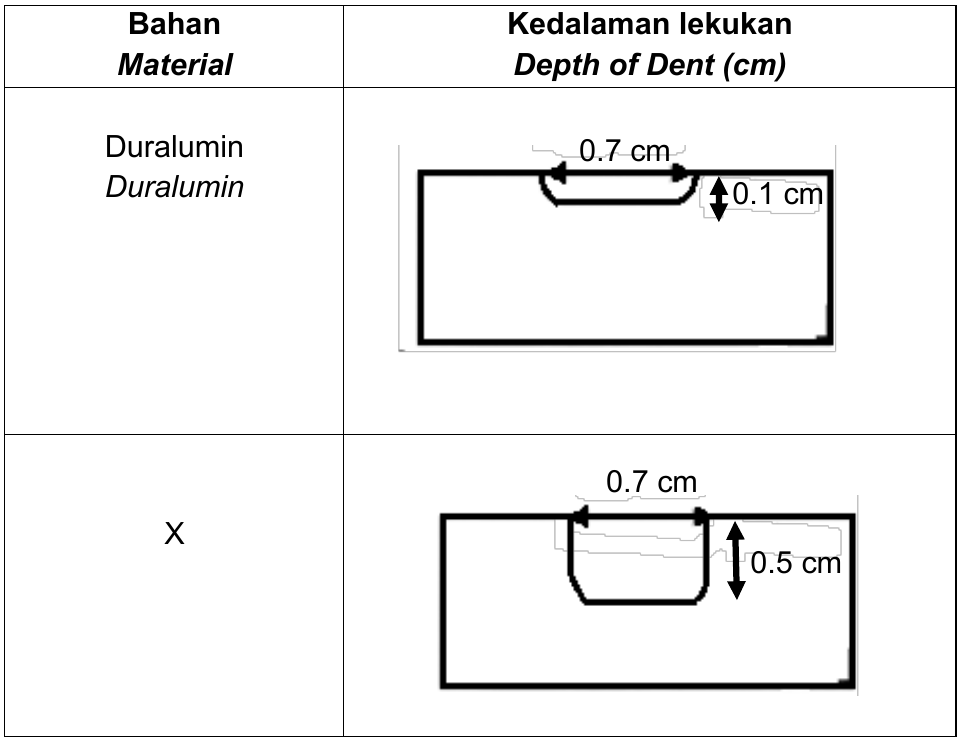
Diagram 10 shows the depth of dent after a weight is dropped on the surface of two different materials: duralumin (width 0.7 cm, depth 0.1 cm) and X (width 0.7 cm, depth 0.5 cm). What is X?
Medium
Given the following ionic equation: Cr2O7²⁻ + Fe²⁺ → Cr³⁺ + Fe³⁺
What is the correct observation and change in oxidation number for chromium during this reaction?
Medium
Table 8 shows two types of polymer materials used in daily life.
Substance A: made from natural rubber
Substance B: made of polyethene
What are the long-term effects of widespread use of substance B compared to substance A?
Medium
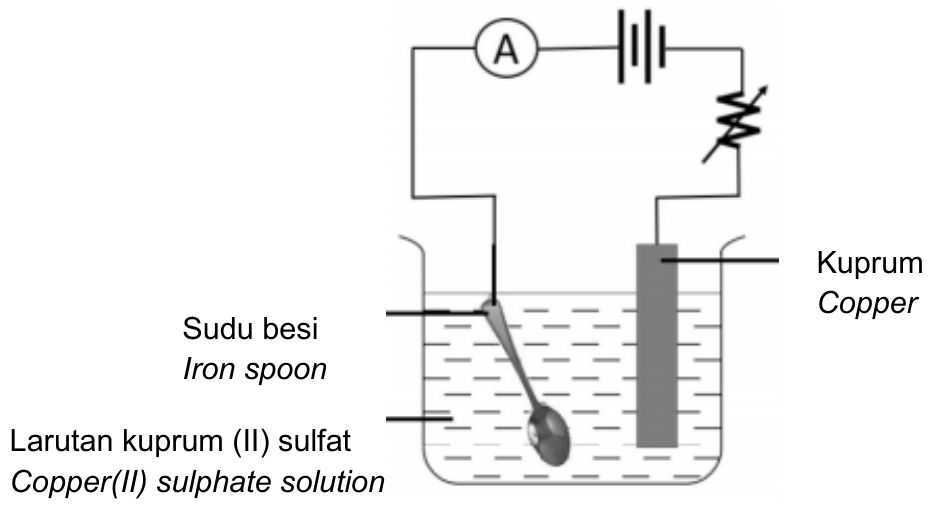
Diagram 11 shows the arrangement of the apparatus used by a student to plate an iron spoon using copper. The student found that plating was not done successfully. Which of the following steps needs to be done so that the plating can occur and be done evenly?
I Lower the voltage
II Add the number of dry cells
III Change the position between the iron spoon and copper
IV Increase the concentration of copper(II) sulphate
Medium
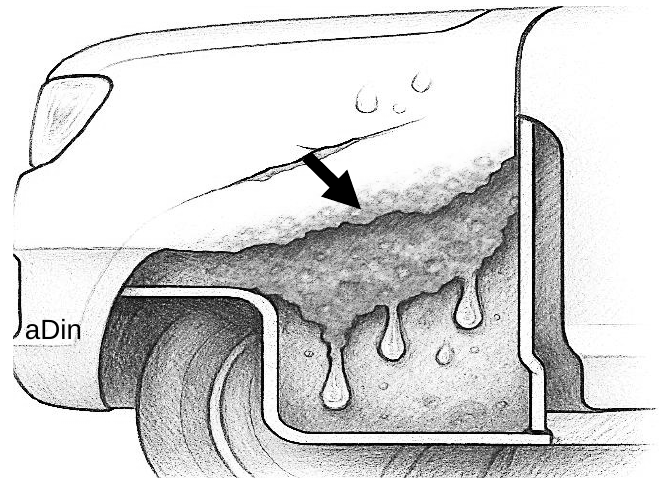
Diagram 12 shows a cross-section of part of a car body where the paint has been scratched and exposed to a humid environment. What will happen to the exposed iron area in terms of redox reactions?
Medium
Table 9 shows two thermochemical equations.
Experiment I: Zn + CuSO4 → Cu + ZnSO4 ΔH = -46.2 kJ mol⁻¹
Experiment II: Mg + CuSO4 → Cu + MgSO4 ΔH = -84.0 kJ mol⁻¹
What is the difference in reaction temperature between experiments I and II if 50 cm³ of 1.0 mol dm⁻³ copper(II) sulphate solution was used?
[Specific heat capacity of solution = 4.2 J g⁻¹ °C⁻¹]
Medium
Diagram 13 shows the conversion reaction of ethene, C2H4, to ethanoic acid, CH3COOH: Ethene → (hydration) → Compound A → (Process Y) → Ethanoic acid. Which of the following is compound A and process Y?
Medium
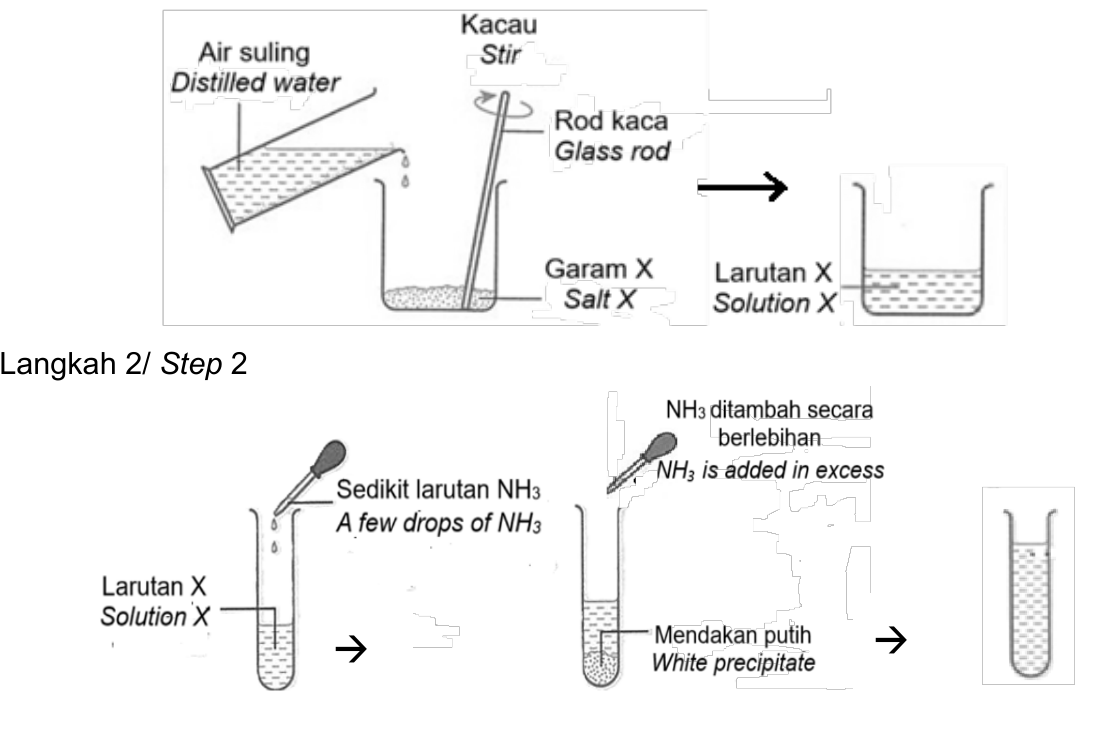
Diagram 14 shows the qualitative analysis conducted by a group of students to identify salt X. Step 1: salt X is dissolved in distilled water. Step 2: a few drops of NH3 solution give a white precipitate, then NH3 is added in excess (result shown in the diagram). Table 10, step 3: hydrochloric acid is added in excess to a test tube containing solution X, followed by 2.0 cm³ barium chloride solution. Observation: white precipitate is formed. What is salt X?
Medium
Aiman burned a strip of magnesium metal in air using a bunsen burner. After complete combustion, a white powder had formed. He used 24 g of magnesium. Calculate the mass of magnesium oxide formed. (Relative atomic mass: Mg = 24, O = 16)
Medium
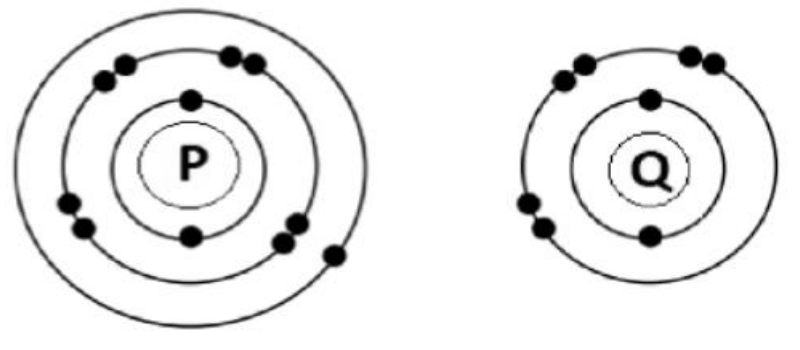
Diagram 15 shows the electron arrangement for atoms P and Q. Which of the following is true when P reacts with Q?
Medium
Aini produced a bottle of body lotion in the laboratory. However, when she applied the lotion to her skin, it felt oily. Which of the following pairs should be added to reduce the problem?
Option | Cosmetic additive | Example
A | Thickener | Glycerin
B | Preservative | Paraben
C | Moisturiser | Lecithin
D | Emulsifier | Stearic acid
Medium
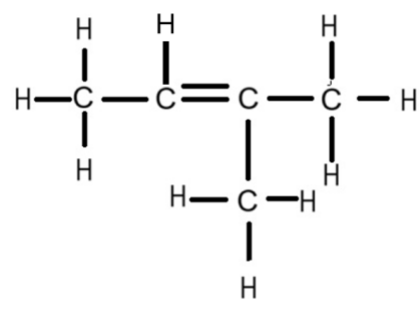
Diagram 14 shows the structural formula of a hydrocarbon compound (CH3-CH=C(CH3)-CH3). Which of the following is an isomer of the hydrocarbon compound?