Which of the informations are needed to determine the empirical formula of a compound?
I The relative atomic mass of element
II The relative molecular mass
III Mass of element in a compound
IV Proton number in the atom of element
Medium
Which of the following is a hydrocarbon compound?
Easy
The name of the functional group for carboxylic acid is
Easy
Which statement defines reduction?
Easy
Which of the following is the example of advanced ceramics?
Easy
Which substance is a triprotic acid?
Easy
Which of the following is an endothermic reaction?
Easy
Which of the following statements is correct about catalysts?
Medium
Which food additive is used to prevent crackers from becoming rancid and changing in taste?
Easy
State one use of polyethene
Easy
Alloy X has the following composition: 95% Tin, 3.5% Antimony, 1.5% Copper. What is alloy X?
Easy
Which of the following reactions release heat to the surrounding?
Easy
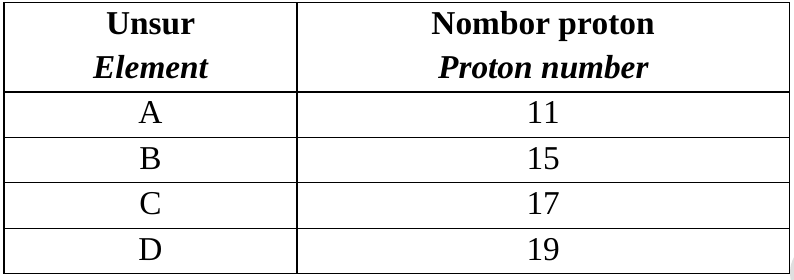
Table 1 shows four elements with proton number respectively. The descending order of atomic size of these four elements is
Element A: 11; B: 15; C: 17; D: 19
Medium
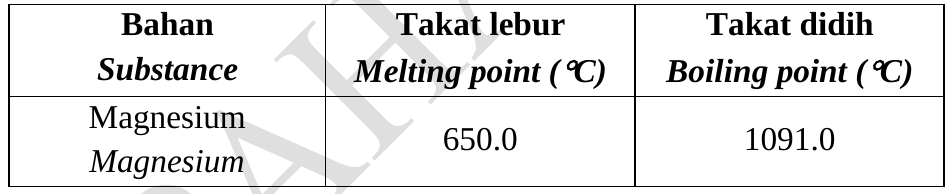
Table 2 shows melting points and boiling points of magnesium: melting point 650.0 °C, boiling point 1091.0 °C. What is the physical state of magnesium at 700 °C?
Easy
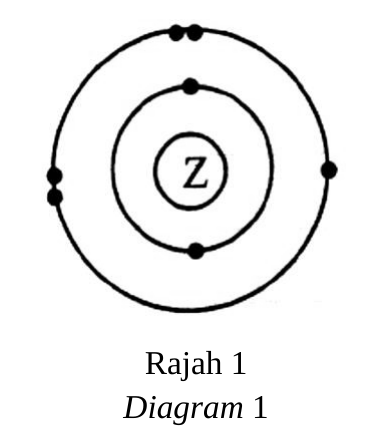
Diagram 1 shows the electron arrangement of atom Z. Chemical properties of atom Z are similar to the chemical properties of the atom with proton number
Medium
Table 3 shows the proton number for six types of element P, Q, R, S, T and U: P 1, Q 6, R 8, S 11, T 12, U 17. Which of the following pairs of element produce substance that is soluble in water?
Medium
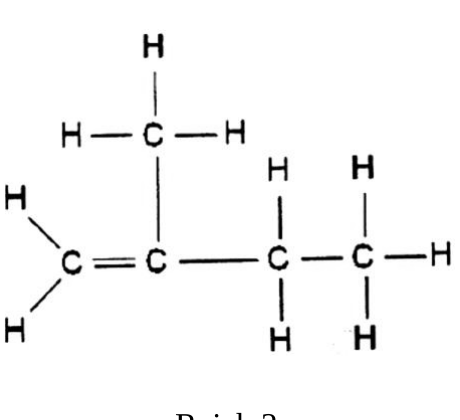
Diagram 2 shows structural formula of compound X (CH2=C(CH3)-CH2-CH3). Name the product when compound X reacts with chlorine gas.
Medium
The following equation represents redox reaction: 2Al + 3Cl₂ → 2AlCl₃. Which of the following shows the correct change in oxidation number for aluminium, Al?
Medium
Table 4 shows the pH value of two acids, P and Q: pH of 0.1 mol dm⁻³ solution is 0.7 for P and 5.5 for Q. Which statement is true about acid P and Q?
Medium
The formula of ion for elements Y and Z are as follows: Y³⁺ and Z²⁻. Which of the following chemical formula represents the reaction between Y and Z?
Medium
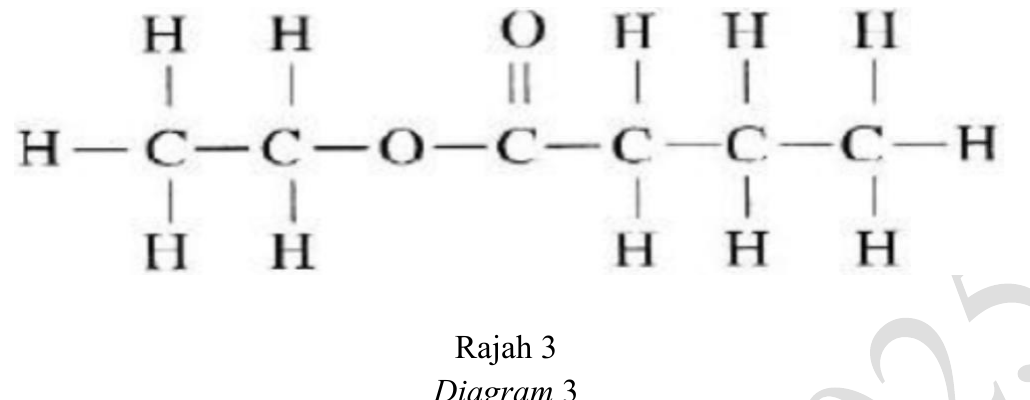
Diagram 3 shows structural formula of ester (ethyl group attached through O to C(=O) followed by a three-carbon chain). Name this ester.
Medium
Cell notation for a voltaic cell is shown below.
Pt(s) | I⁻(aq), I₂(aq) || Ag⁺(aq) | Ag(s)
Which of the following substances undergoes reduction process?
Medium
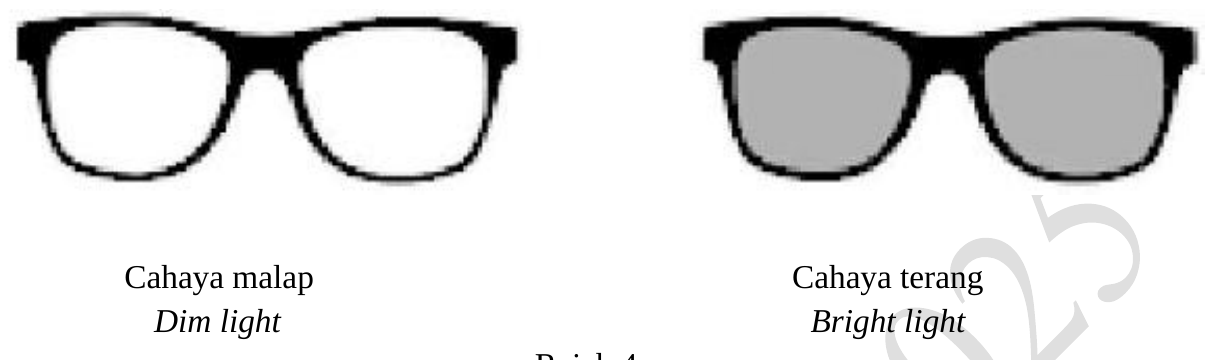
Diagram 4 shows spectacles made from photochromic glass that can protect our eyes from dangerous ultraviolet (UV) rays. Which of the following statements explains the change of the lens from dim light to bright light?
Medium
Solid R produces a brown gas that turns moist blue litmus paper to red when heated strongly. Identify solid R.
Medium
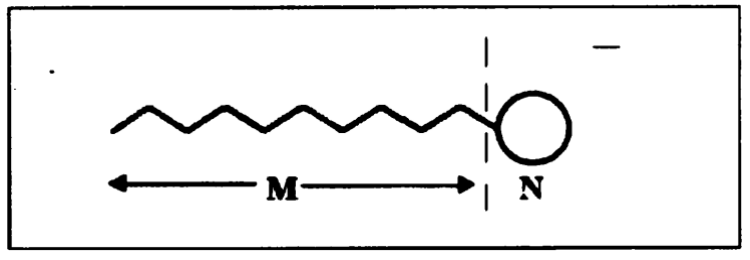
Diagram 5 shows structure of a detergent anion. Which of the following is true about M when detergent is used to clean the oily stain?
I M is hydrophobic part.
II M is alkaline.
III M soluble in oil or grease.
IV M soluble in water.
Medium
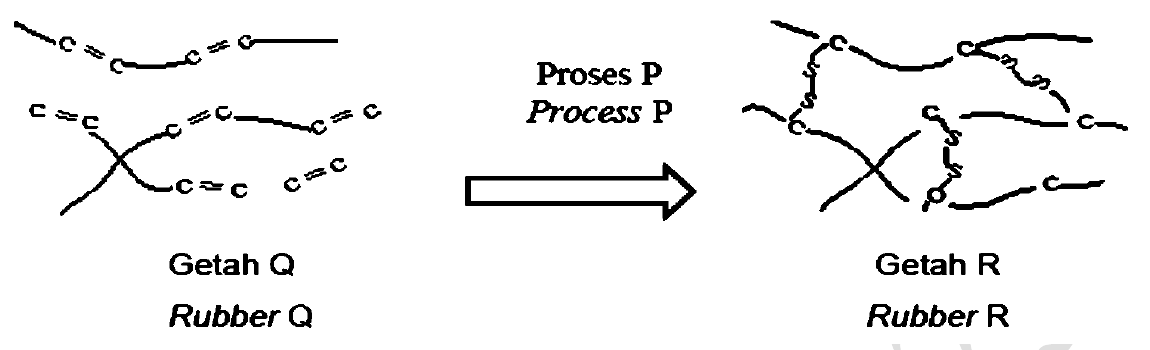
Diagram 6 shows the conversion of Rubber Q to Rubber R through Process P. Which statement is true to explain the conversion of Rubber Q to Rubber R?
Medium
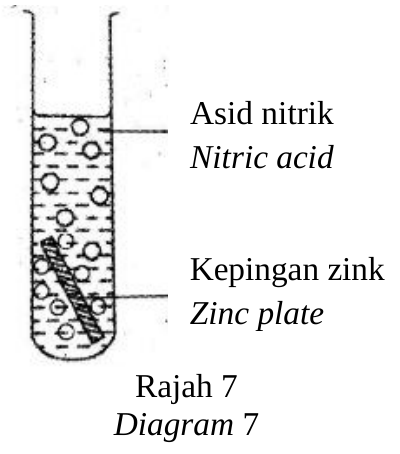
Diagram 7 shows reaction between zinc plate and nitric acid. Which of the following factors can increase the rate of this reaction?
Easy
Table 5 shows two atoms of the elements and their electron arrangement: M 2.8.1; N 2.6. The letters used are not the actual symbols. Which of the following is the correct balanced chemical equation between element M and N?
Medium
What is the oxidation number for chromium in K₂CrO₄?
Medium
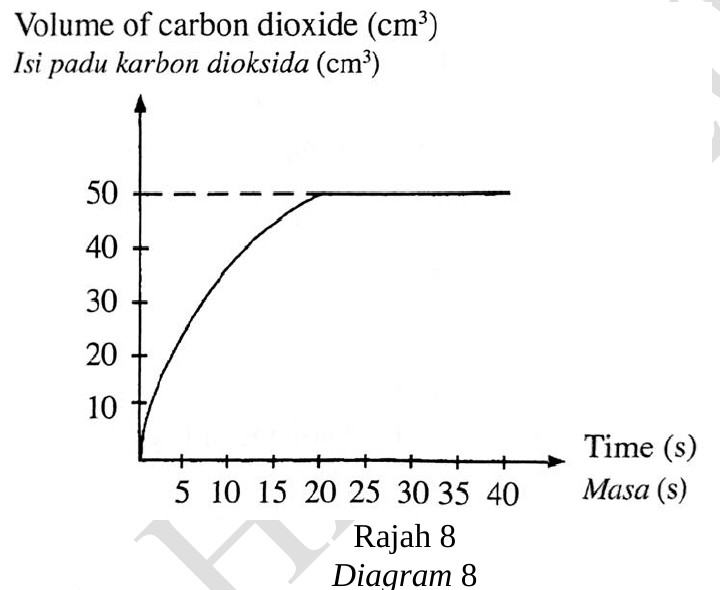
Diagram 8 shows the volume of carbon dioxide gas produced from the reaction of hydrochloric acid, HCl with calcium carbonate, CaCO₃ (graph of volume of CO₂ against time; the volume reaches 50 cm³ at 20 s). What is the average rate of reaction?
Medium
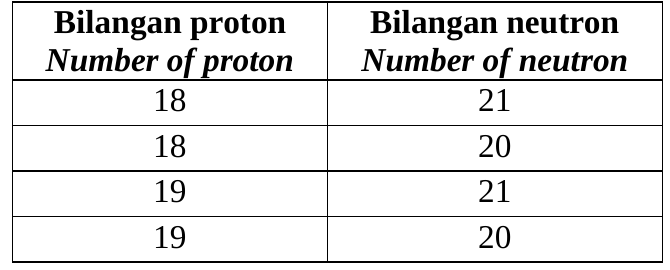
Nucleon number for atom X is 39 and the electron arrangement for ion X⁺ is 2.8.8. What is the number of proton and neutron for atom X?
A 18, 21; B 18, 20; C 19, 21; D 19, 20 (proton, neutron)
Medium
32 g of copper(II) sulphate, CuSO₄ is dissolved in distilled water to produce 0.4 mol dm⁻³ copper(II) sulphate solution. What is the volume of distilled water needed to dissolve copper(II) sulphate? [Relative atomic mass: Cu=64; S=32; O=16]
Medium
0.1 mol ethene burns completely in air to produce water and a gas that can turn lime water cloudy. Calculate the maximum volume of gas produced. [Relative atomic mass: C=12; H=1; O=16] [Molar volume of gas at room condition = 24.00 dm³ mol⁻¹]
Medium
The equation shows the reaction between lead(II) nitrate and sodium chloride. 100 cm³ of 0.1 mol dm⁻³ lead(II) nitrate solution is used. [Relative atomic mass: Pb=207; Cl=35.5]
Pb(NO₃)₂ + NaCl → PbCl₂ + 2NaNO₃
Which of the following are true about the reaction?
I 0.02 mol of sodium nitrate produced
II 0.05 mol sodium nitrate produced
III The mass of precipitate produced is 2.78 g
IV The mass of sodium chloride that reacted is 5.85 g
Medium
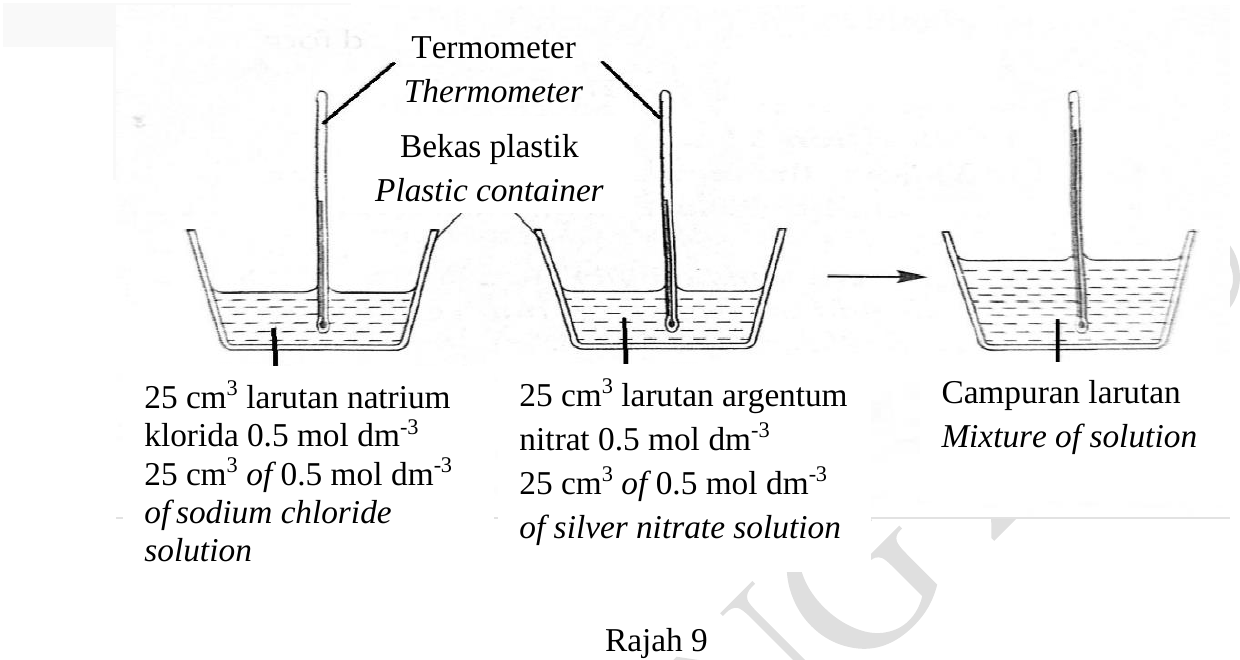
Diagram 9 shows the apparatus for precipitate reaction of silver chloride: 25 cm³ of 0.5 mol dm⁻³ sodium chloride solution mixed with 25 cm³ of 0.5 mol dm⁻³ silver nitrate solution in a plastic container. Calculate the maximum temperature rise in the mixed solution if the heat of precipitation of silver chloride is -67 kJ mol⁻¹. [Specific heat capacity of solution = 4.2 J g⁻¹ °C⁻¹]
Medium
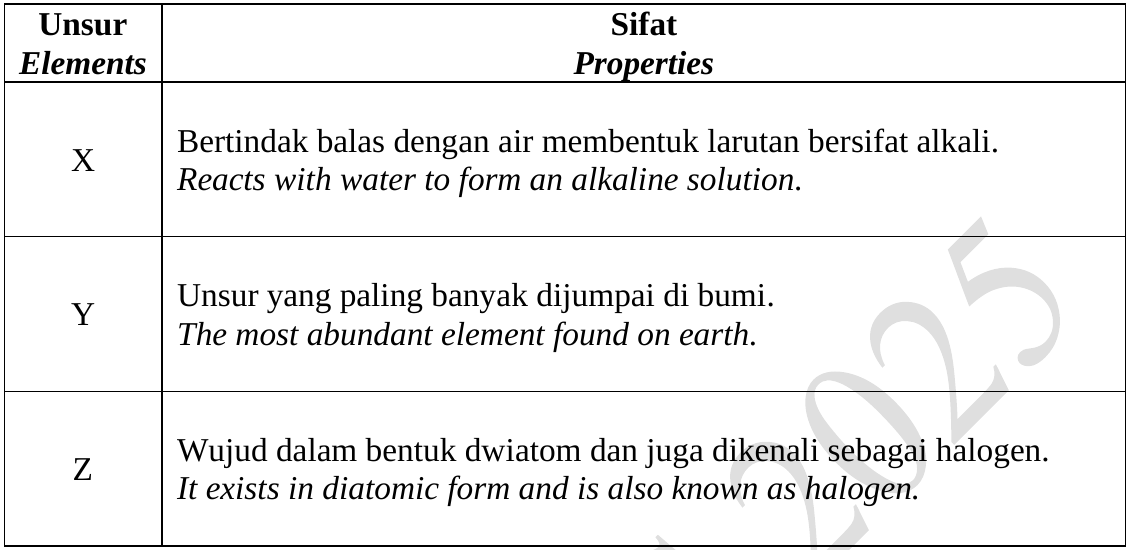
Table 6 shows the properties of elements X, Y and Z: X reacts with water to form an alkaline solution; Y is the most abundant element found on earth; Z exists in diatomic form and is also known as halogen. Compound M is formed from the reaction between atom X and atom Z while compound N is formed from the reaction between atom Y and atom Z. Which compound has a higher melting point?
Medium
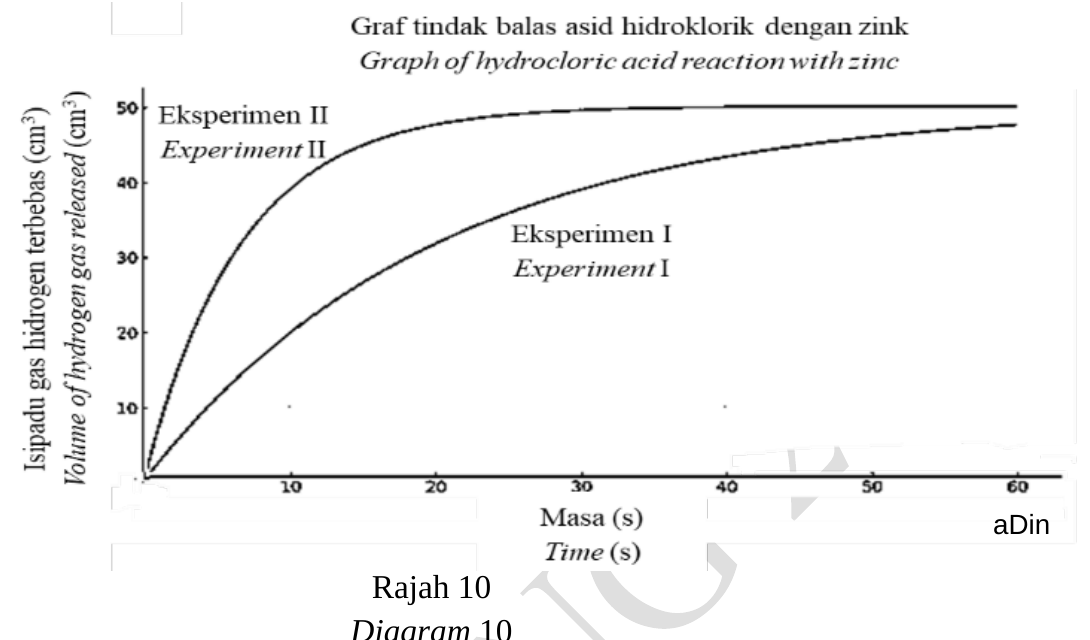
Diagram 10 shows the curve of graph for the reaction between calcium carbonate and hydrochloric acid in Experiment I and Experiment II. Experiment I used zinc chips and 25 cm³ of 1.0 mol dm⁻³ of hydrochloric acid. Which of the following is correct if zinc chips are used to react with 50 cm³ of 0.5 mol dm⁻³ of hydrochloric acid in Experiment II?