Write your answer on paper. Then open the answer to check it.
Section A
Diagram 1 shows a car that can be found in the market. Material X is made up from a mixture of glass and plastic. Table 1 shows alloy W (iron 98%, carbon 2%) used to manufacture the body of the car.
Medium5 marks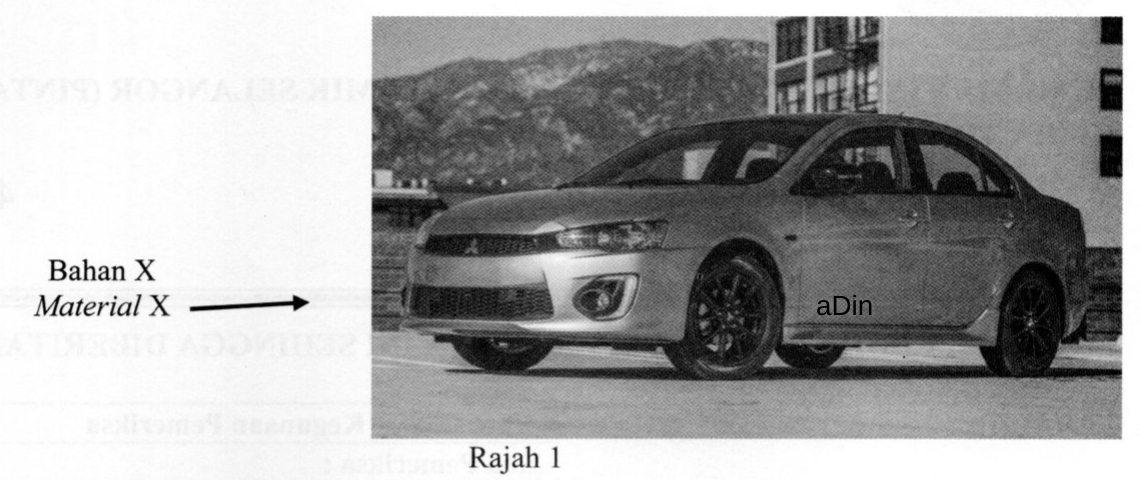
- (a)(i)
Name material X.
[1] - (a)(ii)
State one advantage of using material X.
[1] - (b)(i)
Alloy W is used to manufacture the body of the car as in Diagram 1. Name alloy W.
[1]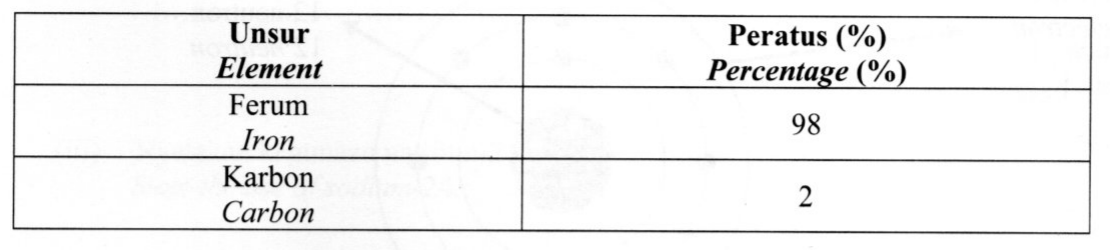
- (b)(ii)
Explain why alloy W is harder than pure iron.
[2]
Diagram 2 shows the atomic structure of sodium (11 protons, 12 neutrons, 11 electrons). Sodium atom has three subatomic particles: proton, electron and neutron.
Medium5 marks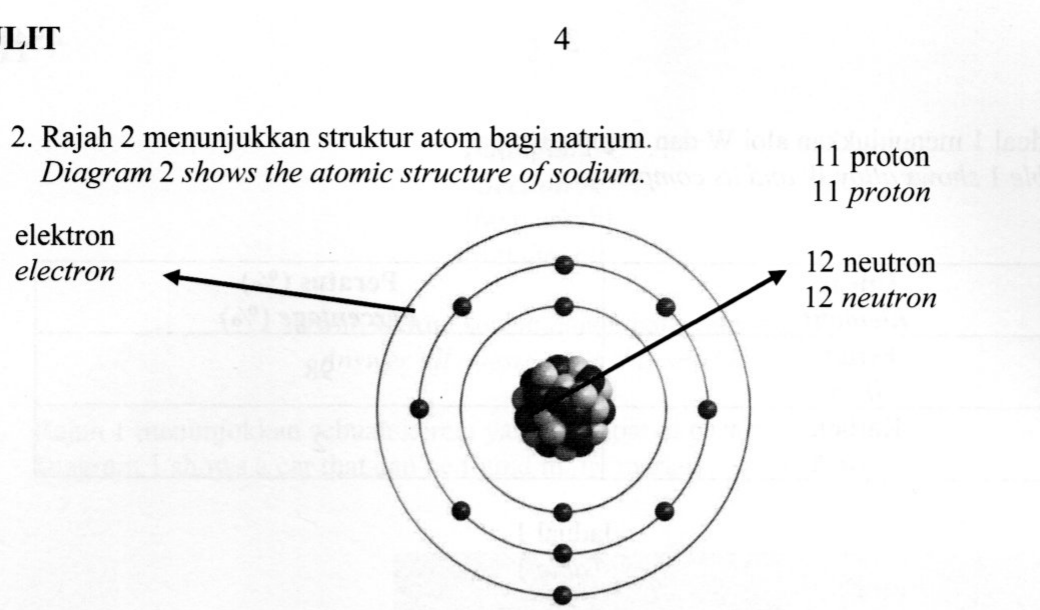
- (a)
Name the lightest subatomic particle.
[1] - (b)
Write the standard representation of sodium.
[1] - (c)(i)
Sodium-24 is an isotope of sodium. State the meaning of isotopes.
[1] - (c)(ii)
State the number of neutrons for sodium-24.
[1] - (c)(iii)
State the use of sodium-24.
[1]
Element X and element Y can react to form a chemical compound. Diagram 3 shows the electron arrangement of the compound formed: X+ with 8 electrons in the outermost shell (four shells) and Y- with 8 electrons in the outermost shell (three shells).
Medium7 marks
- (a)
Write the electron arrangement of atom X.
[1] - (b)
Write the chemical equation for the formation of the compound in Diagram 3.
[3] - (c)(i)
Molecule Q consists only of element Y. Its physical properties: greenish-yellow gas at room temperature; low boiling point. State the type of compound for molecule Q.
[1] - (c)(ii)
Draw the electron arrangement for molecule Q.
[2]
Urea fertiliser supplies nitrogen for crops. The molecular formula of urea is CO(NH2)2. Ammonia reacts with carbon dioxide to form urea and water under high pressure at 180 °C.
Medium7 marks- (a)(i)
State the meaning of molecular formula.
[1] - (a)(ii)
State the empirical formula of urea.
[1] - (a)(iii)
Name all the elements present in urea.
[1] - (b)
Write a balanced chemical equation for the reaction above.
[2] - (c)
Calculate the mass of urea if 42 dm³ of carbon dioxide reacts with excess ammonia. [Molar mass of urea: 60 g mol⁻¹; Molar volume: 24 dm³ mol⁻¹ at room conditions]
[2]
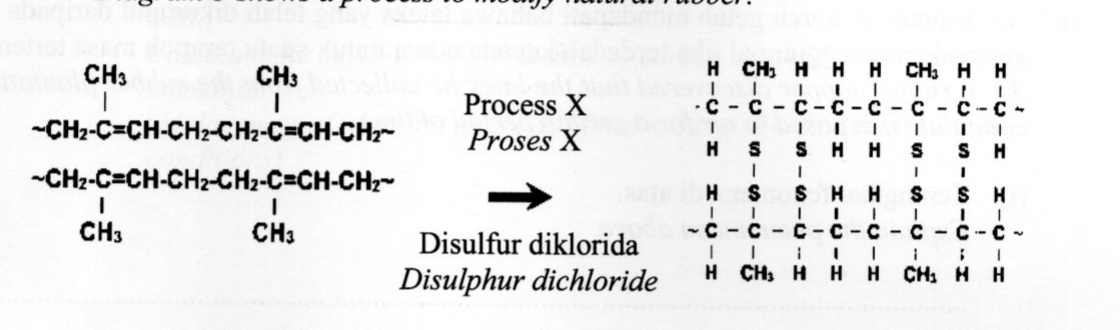
The structural formula shows the monomer of natural rubber (CH2=C(CH3)-CH=CH2). Ali, a rubber tapper, found that latex collected from the plantation coagulates when exposed to air for a certain period. Diagram 5 shows a process to modify natural rubber using disulphur dichloride.
Medium8 marks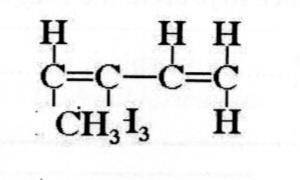
- (a)
Name the monomer according to IUPAC nomenclature.
[1] - (b)(i)
Explain the phenomenon above.
[3] - (b)(ii)
Suggest a suitable substance to prevent the coagulation of latex. Explain your answer.
[2] - (c)(i)
Name process X.
[1] - (c)(ii)
State one advantage as a result of the modification.
[1]
Diagram 6 shows a flow chart for the reaction of chlorine: chlorine + water gives hydrochloric acid + hypochlorous acid; chlorine + compound P gives sodium chloride + sodium chlorate(I) + water; chlorine + iron gives compound X.
Medium9 marks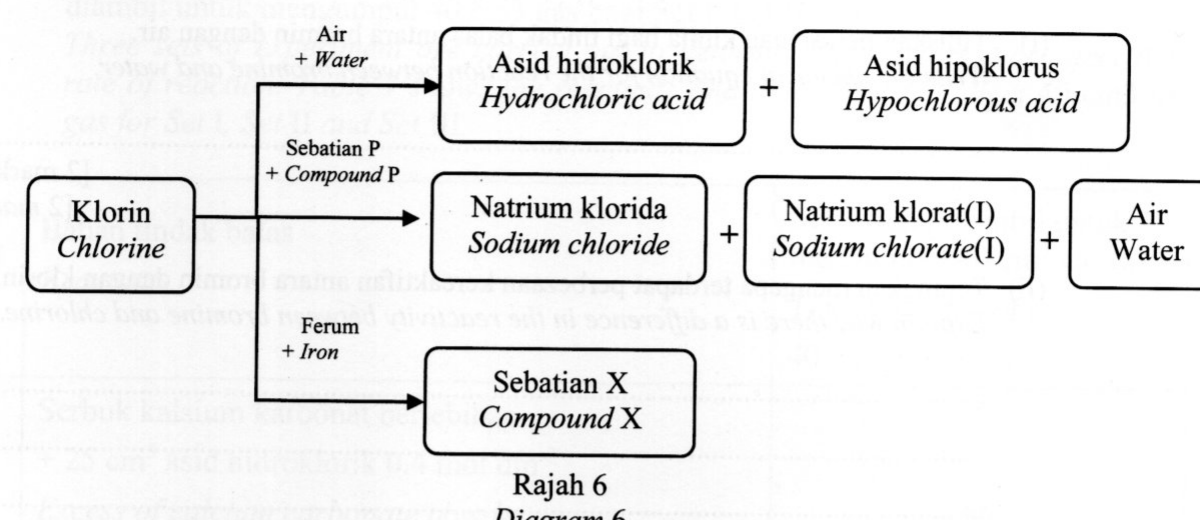
- (a)(i)
Identify compound P.
[1] - (a)(ii)
State the observation when blue litmus paper is placed into the product of the reaction between chlorine and water.
[1] - (a)(iii)
Write the chemical equation for the reaction between chlorine and iron.
[2] - (b)(i)
Reactivity of chlorine with water is higher compared to bromine. Write the chemical equation for the reaction between bromine and water.
[2] - (b)(ii)
Explain why there is a difference in the reactivity between bromine and chlorine.
[3]
Three sets of experiment determine the factors that affect rate of reaction. Table 7: Set I: excess calcium carbonate powder + 25 cm³ of 0.4 mol dm⁻³ hydrochloric acid, 30 s to collect 40 cm³ of gas; Set II: excess calcium carbonate powder + 25 cm³ of 0.2 mol dm⁻³ hydrochloric acid, 50 s; Set III: excess calcium carbonate granules + 25 cm³ of 0.2 mol dm⁻³ hydrochloric acid, 90 s.
Medium10 marks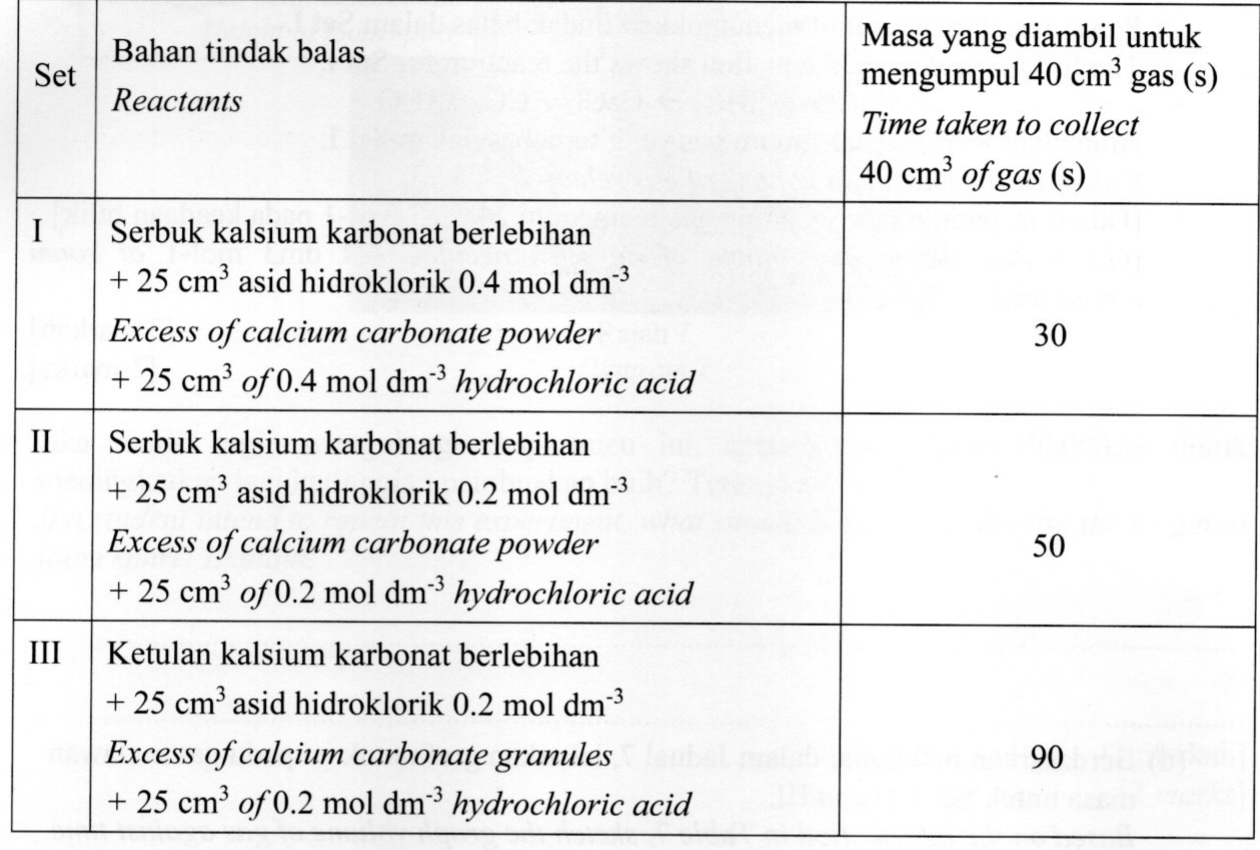
- (a)
State the meaning of rate of reaction.
[1] - (b)
State two factors that affect the rate of reaction.
[2] - (c)
The equation CaCO3 + 2HCl → CaCl2 + CO2 + H2O shows the reaction for Set I. Calculate the maximum volume of gas released in Set I. [Molar volume = 24 dm³ mol⁻¹ at room conditions]
[3] - (d)
Based on Table 7, sketch the graph of volume of gas against time for Set I, II and III.
[2]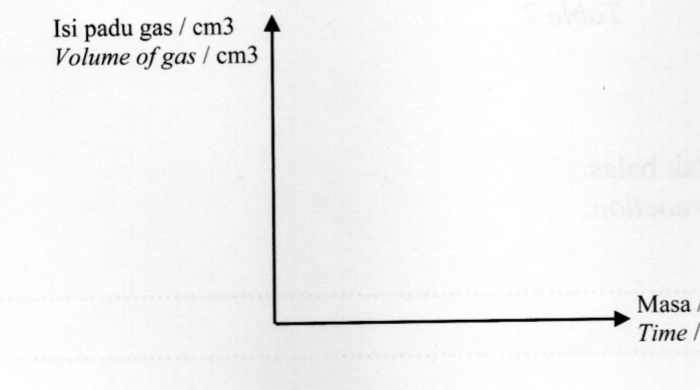
- (e)
Diagram 7 shows foam spurt when hydrogen peroxide is mixed with soap water to produce 'elephant toothpaste'. If a student repeats this experiment, what should be done to increase the height of the foam spurt? Explain.
[2]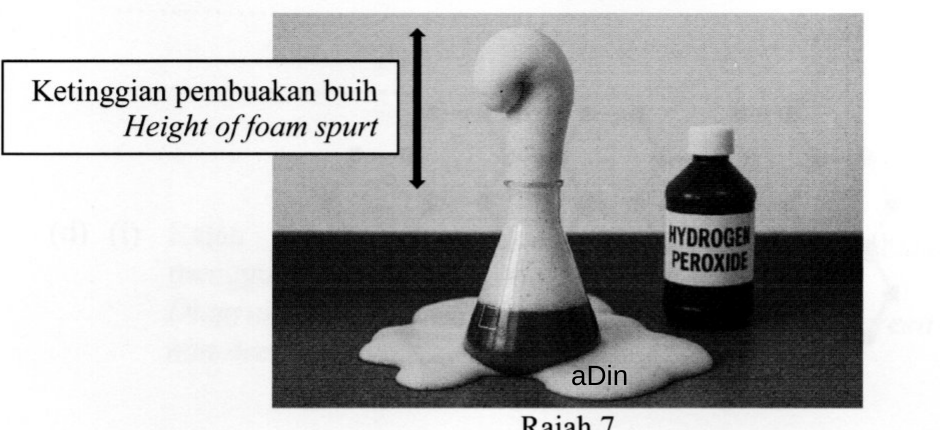
Diagram 8(a) shows a graphene sheet used in the field of nanotechnology.
Medium10 marks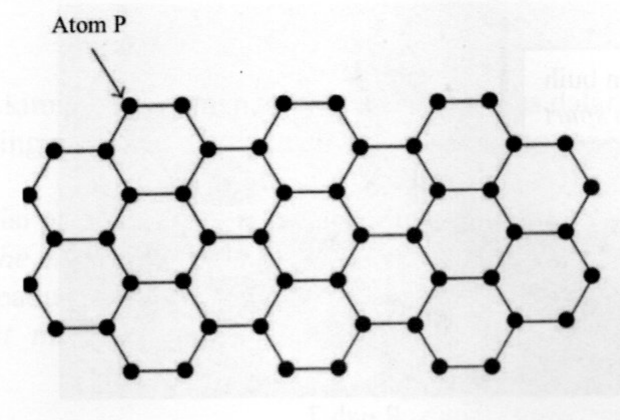
- (a)
State the meaning of nanotechnology.
[1] - (b)
Compare the electrical conductivity between graphene and diamond. Explain your answer.
[2] - (c)
Beside electrical conductivity, state two physical properties of graphene.
[2] - (d)(i)
Diagram 8(b) shows an advertisement of a sunscreen lotion that uses nanotechnology. Explain the advantages of using nanotechnology in the lotion.
[3]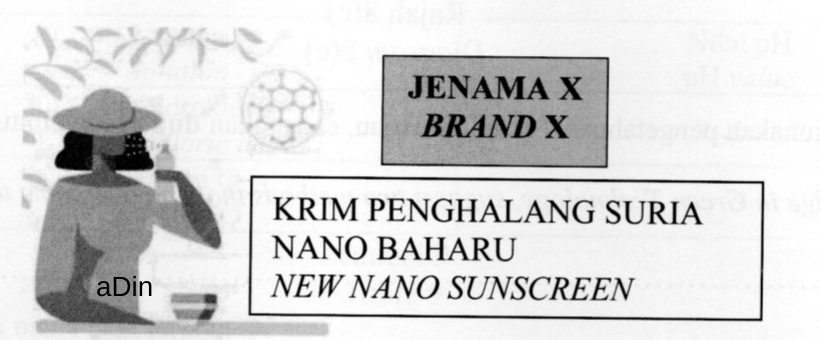
- (d)(ii)
Diagram 8(c) shows the amount of solid waste from beauty products. Using knowledge in Green Technology, suggest two methods that can overcome this problem.
[2]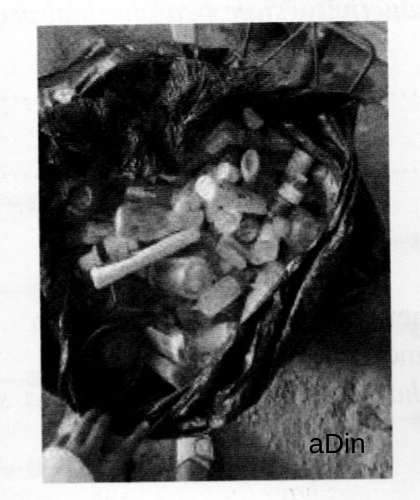
Section B
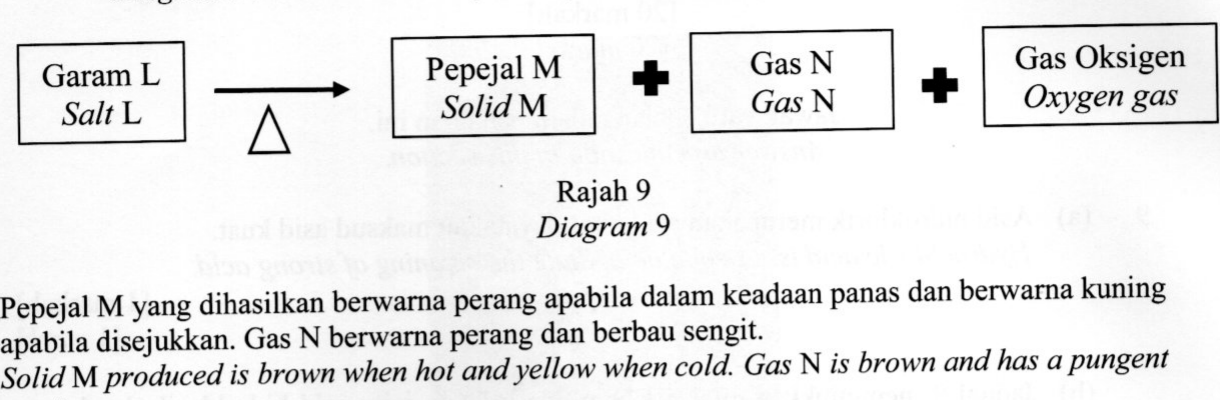
Hydrochloric acid is a strong acid. Table 9 shows pH values of hydrochloric acid (pH 1) and solution Q (pH 5), both of the same concentration. Acid reacts with alkali to produce salt and water. Diagram 9 shows the heating of salt L to give solid M + gas N + oxygen gas.
Medium20 marks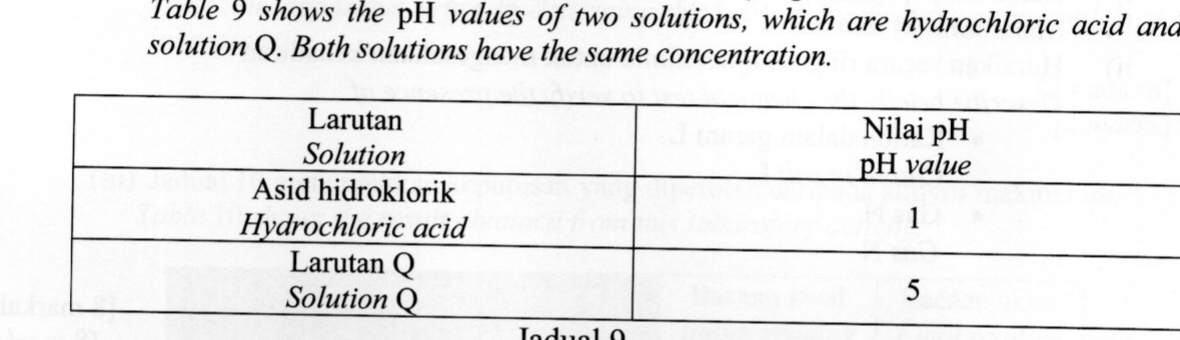
- (a)
Hydrochloric acid is a strong acid. State the meaning of strong acid.
[1] - (b)
State the name of solution Q. Explain the difference in pH values of these two solutions.
[4] - (c)(i)
Acid reacts with alkali to produce salt and water. State the name of the reaction.
[1] - (c)(ii)
50 cm³ of hydrochloric acid reacts with 20 cm³ of 1.0 mol dm⁻³ potassium hydroxide solution. Write a chemical equation for this reaction. Calculate the concentration and the pH value of the hydrochloric acid used.
[6] - (d)(i)
Name solid M and gas N.
[2] - (d)(ii)
Describe briefly the chemical test to verify the presence of (a) the cation in salt L; (b) gas N.
[6]
Butanol is a type of carbon compound that can be used as a fuel. Heat of combustion for butanol can be determined in the laboratory. Butene is another carbon compound also commonly used as a fuel.
Hard20 marks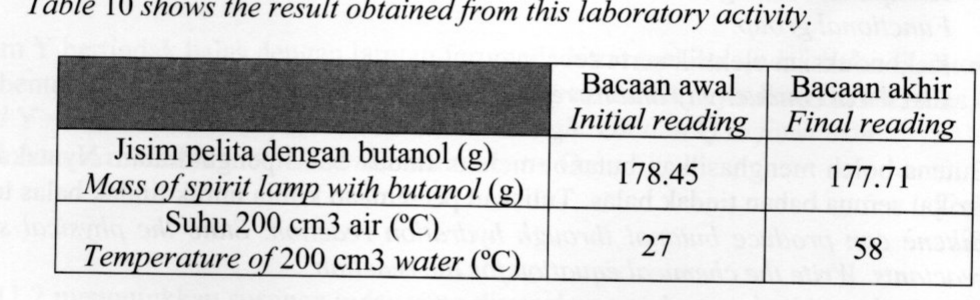
- (a)(i)
State the meaning of heat of combustion for butanol.
[1] - (a)(ii)
Draw the apparatus set-up to determine the heat of combustion of butanol in the laboratory.
[2] - (a)(iii)
Table 10 shows the results (mass of spirit lamp with butanol: initial 178.45 g, final 177.71 g; temperature of 200 cm³ water: initial 27 °C, final 58 °C). Calculate the heat of combustion for butanol. [Relative atomic mass: H = 1; C = 12; O = 16] [Density of water = 1 g cm⁻³; specific heat capacity of water = 4.2 J g⁻¹ °C⁻¹]
[4] - (a)(iv)
If the activity is repeated by replacing butanol with propanol, predict the heat of combustion for propanol. Give one reason to your answer.
[2] - (b)
Structural isomerism can occur in both butanol and butene. Draw the structural formula of an isomer of butanol and an isomer for butene. Compare butanol and butene in terms of: homologous series, functional group, electrical conductivity and its reason. Butene can produce butanol through hydration reaction. State the physical state of all reactants. Write the chemical equation for the reaction.
[11]
Section C
Four parts on redox reactions: (a) conversion of iron(II) nitrate to iron by metal Y; (b) heating zinc in oxygen; (c) industrial production of iron from Fe2O3 and coke; (d) electron transfer at a distance.
Hard20 marks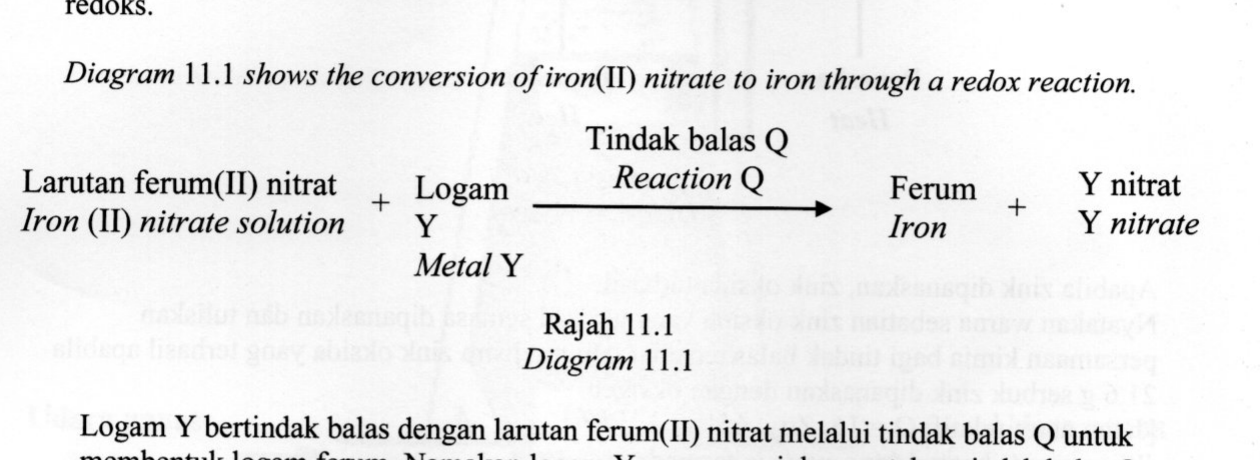
- (a)
Diagram 11.1 shows iron(II) nitrate solution + metal Y → iron + Y nitrate (reaction Q). Name a suitable metal Y and state reaction Q.
[2] - (b)
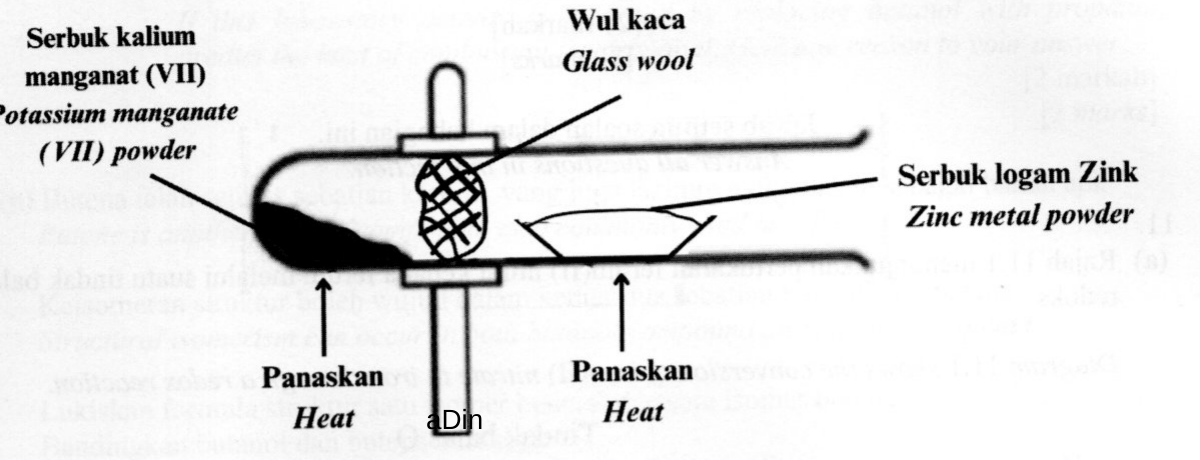
Diagram 11.2 shows the apparatus used to investigate the reactivity of zinc towards oxygen (potassium manganate(VII) powder heated, glass wool, zinc powder heated). State the colour of zinc oxide formed during heating, write the chemical equation, and calculate the mass of zinc oxide formed when 21.6 g of zinc powder is heated with oxygen. [Relative atomic mass: O = 16; Zn = 65]
[6] - (c)
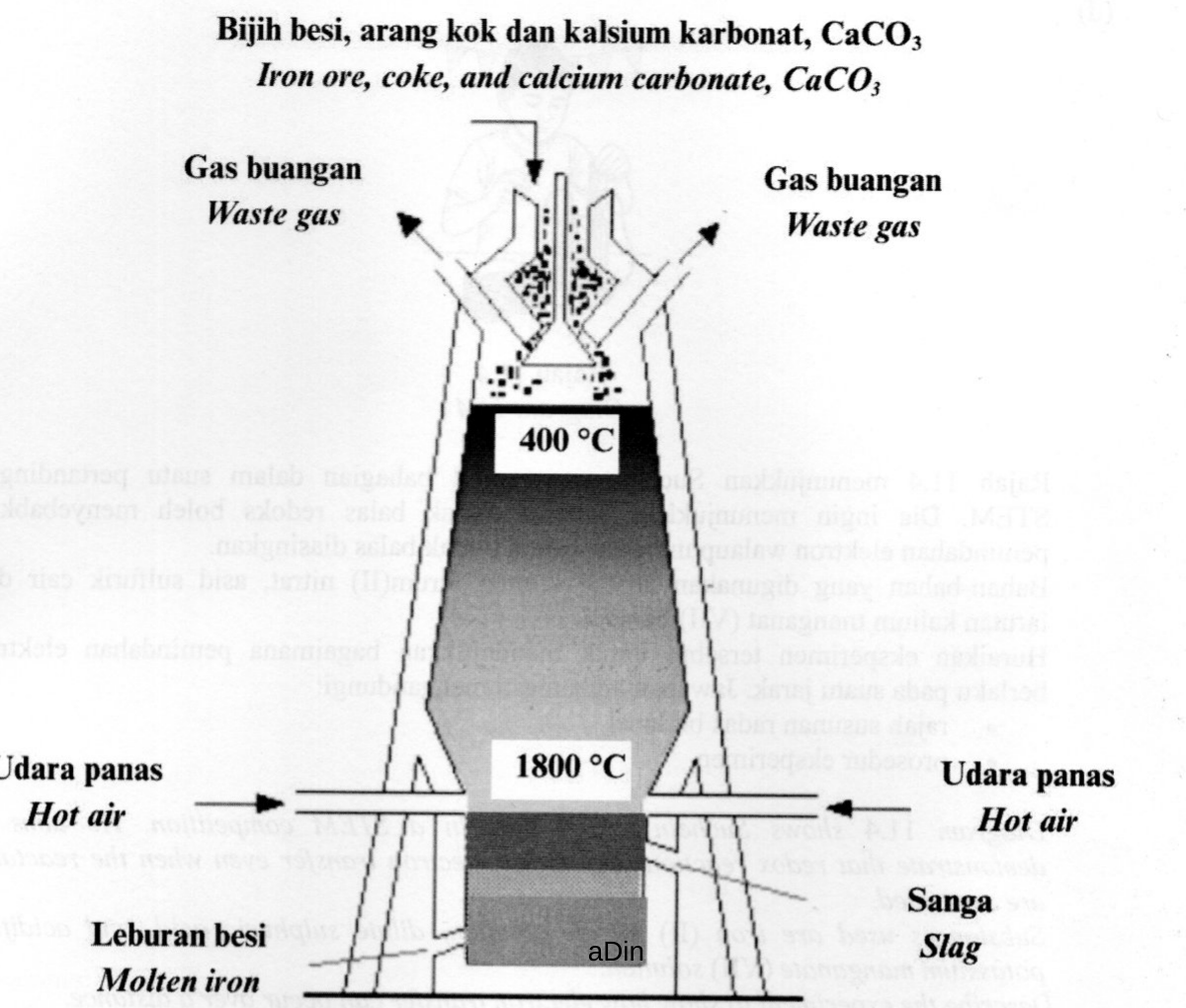
Diagram 11.3 shows the production of iron through the reaction between iron ore, Fe2O3 and coke, C. Determine the oxidation number of iron in Fe2O3 and name the compound according to IUPAC nomenclature. State whether aluminium can be extracted from its ore by the method in Diagram 11.3. Explain.
[4] - (d)
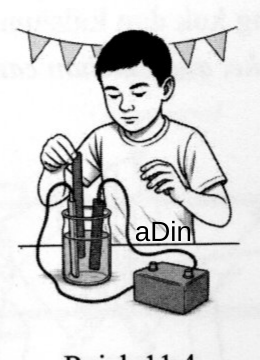
Suchein wants to show that redox reactions can cause electron transfer even when the reactants are separated. Substances: iron(II) nitrate solution, dilute sulphuric acid, acidified potassium manganate(VII) solution. Describe the experiment to show how electron transfer can occur over a distance. Include a labelled apparatus diagram and the procedure.
[8]