Which of the set-up apparatus is correct to determine the melting point of acetamide?
Medium
Why is helium gas chemically inert?
Medium
Where are the valence electrons located in an atom?
Easy
Which of the following is diprotic acid?
Medium
A substance commonly used in daily life is found to have a pH value of 9. Which of the following is the substance?
Easy
Which of the following has the lowest rate of reaction?
Easy
Which substance is a composite material?
Medium
Q contains silicon dioxide, sodium carbonate and calcium carbonate. What is Q?
Easy
Which of the following is a redox reaction?
Medium
Rockets use a mixture of hydrogen and oxygen as a fuel. The equation of the reaction is as follows: 2H₂ + O₂ → 2H₂O. Which statement explains that the reaction is redox?
Medium
What is the name of the process involved in the production of tuak?
Easy
Diagram 12 shows the molecular formula of a hydrocarbon: C₁₀H₂₂. What is the name of the hydrocarbon compound?
Easy
Which of the following is the formula for calculating the difference in heat energy content?
Medium
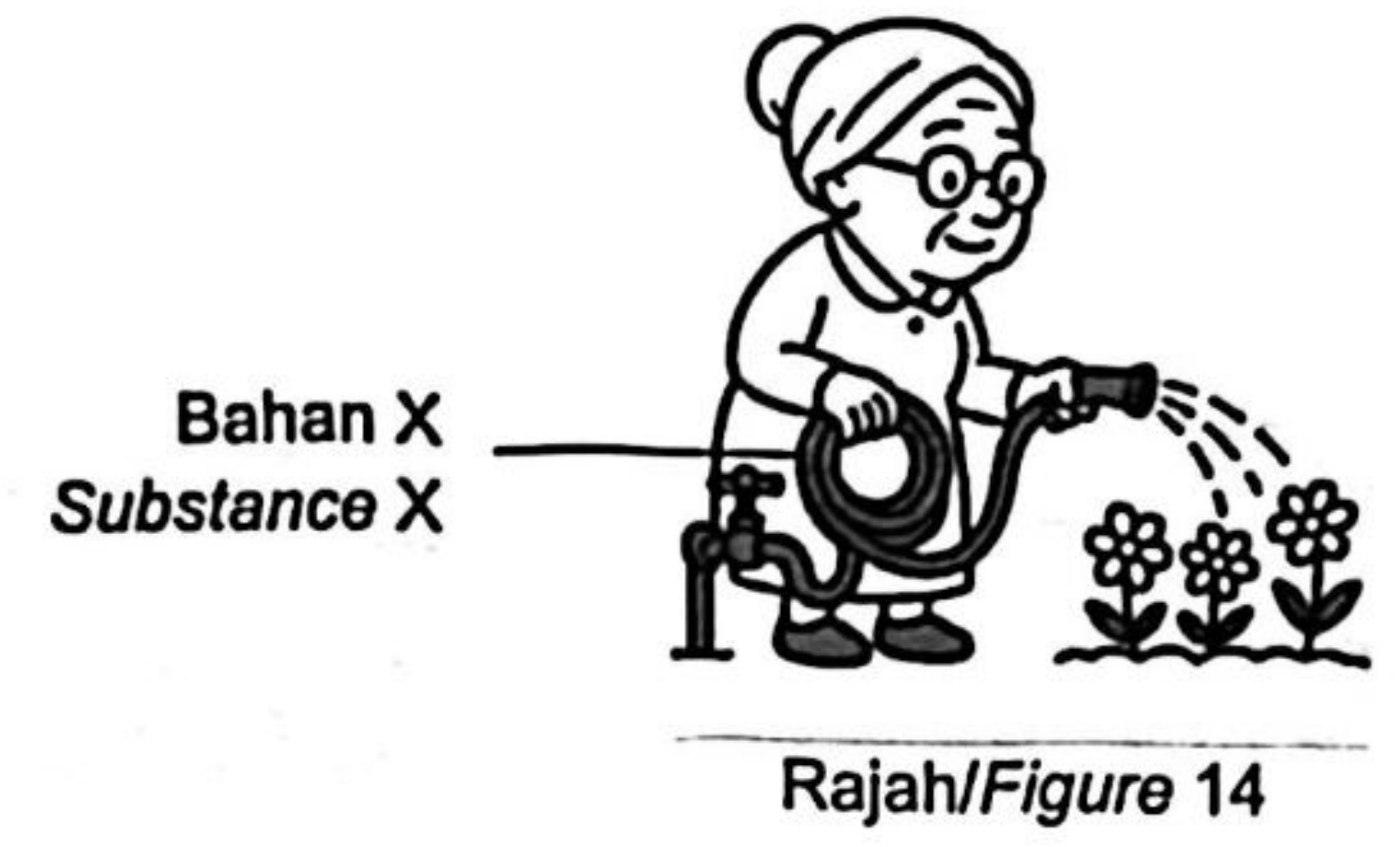
Figure 14 shows a substance X which is used for flower watering. What are the properties of material X?
Medium
What is the structural formula for unsaturated fatty acid?
Medium
Compound D undergoes deposition process. Which of the following shows the conversion of states of matter of the compound D?
Easy
Which of the following particles equal to 1 mol? [Relative atomic mass: H=1] [Avogadro constant, N_A = 6.02 × 10²³ mol⁻¹]
Medium
Which chemical formula is correctly named according to the IUPAC nomenclature system? A: CO - Carbon oxide; B: SO₃ - Sulphur(III) oxide; C: Fe₂O₃ - Iron(II) trioxide; D: FeO - Iron(II) oxide.
Medium
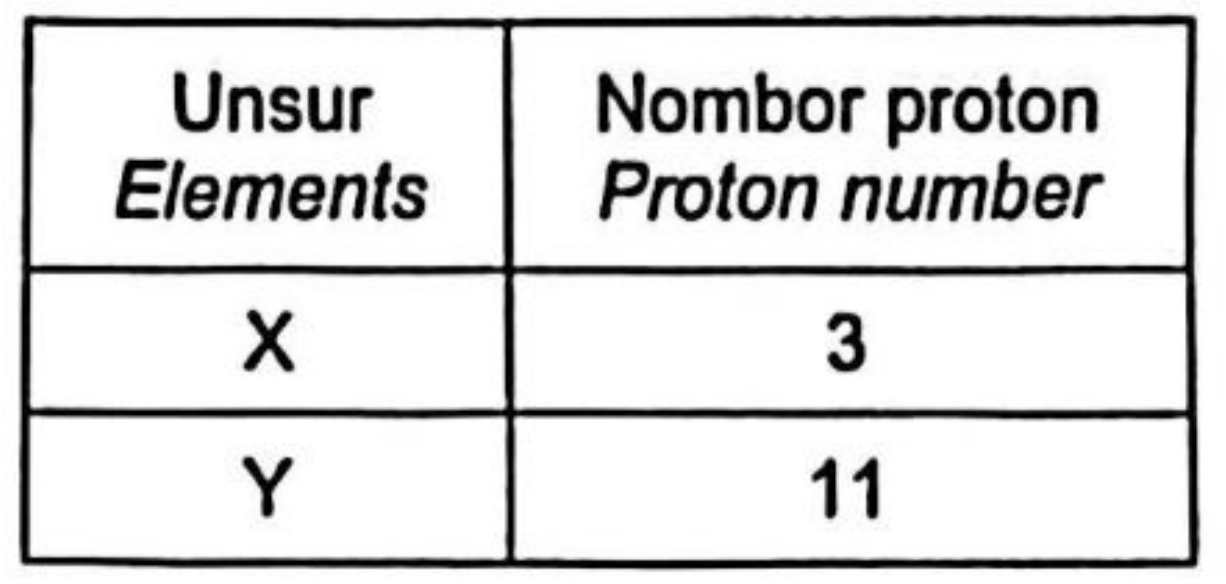
Table 19 shows the proton number of two elements in Group 1 of The Periodic Table of Elements: X = 3, Y = 11. Which of the following is the correct statement about X and Y?
Medium
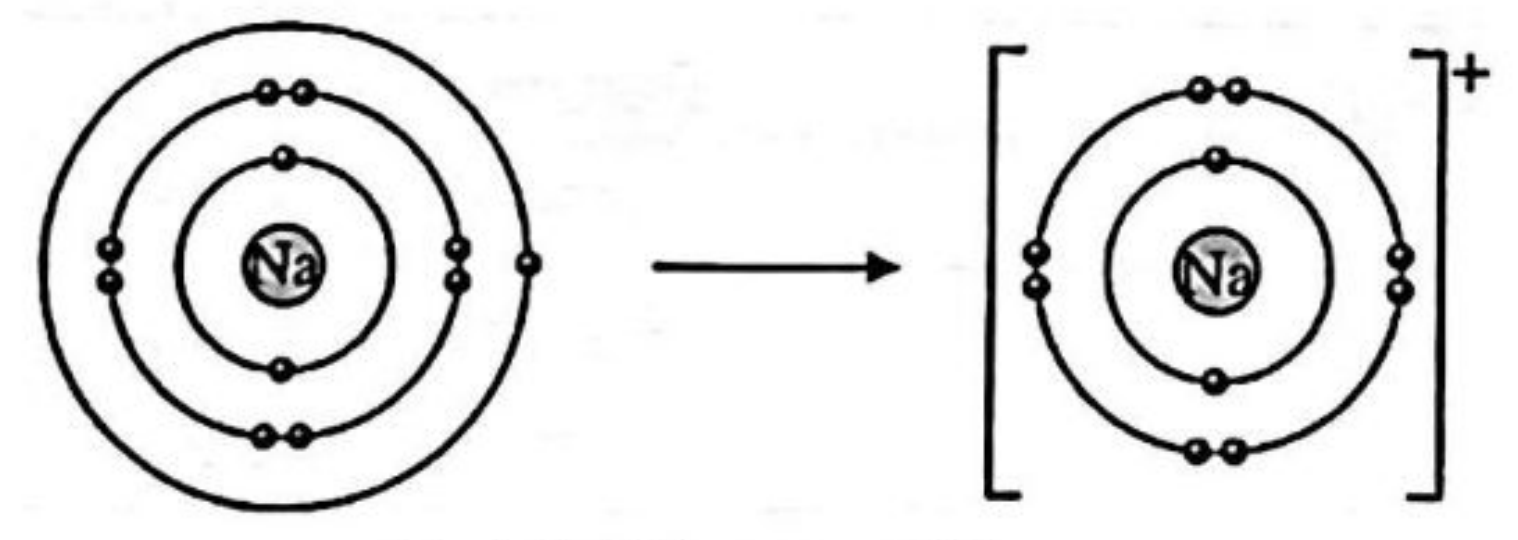
Diagram 20 shows the formation of sodium ions. Which of the following is the half-equation for the formation of sodium ions?
Medium
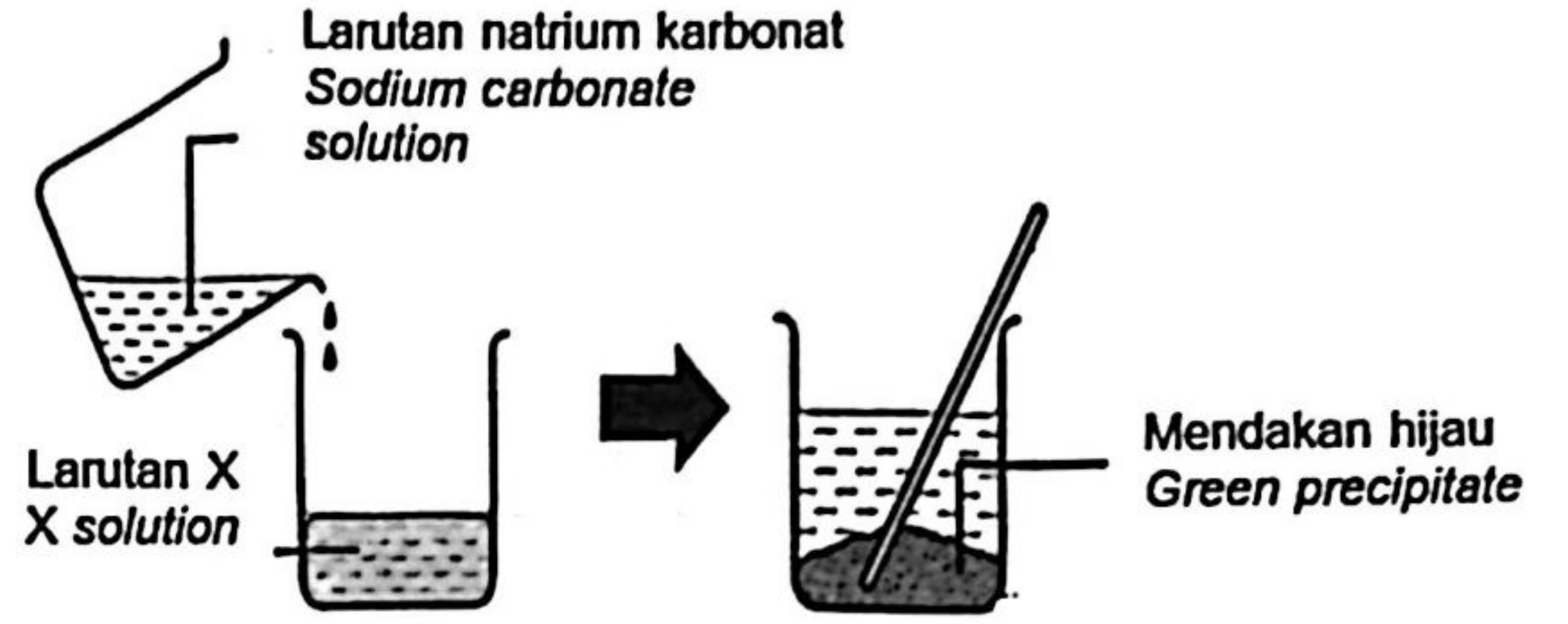
Diagram 21 shows the observation when sodium carbonate solution is added to solution X which is blue. A green precipitate forms. Which of the following is the name for a green precipitate?
Medium
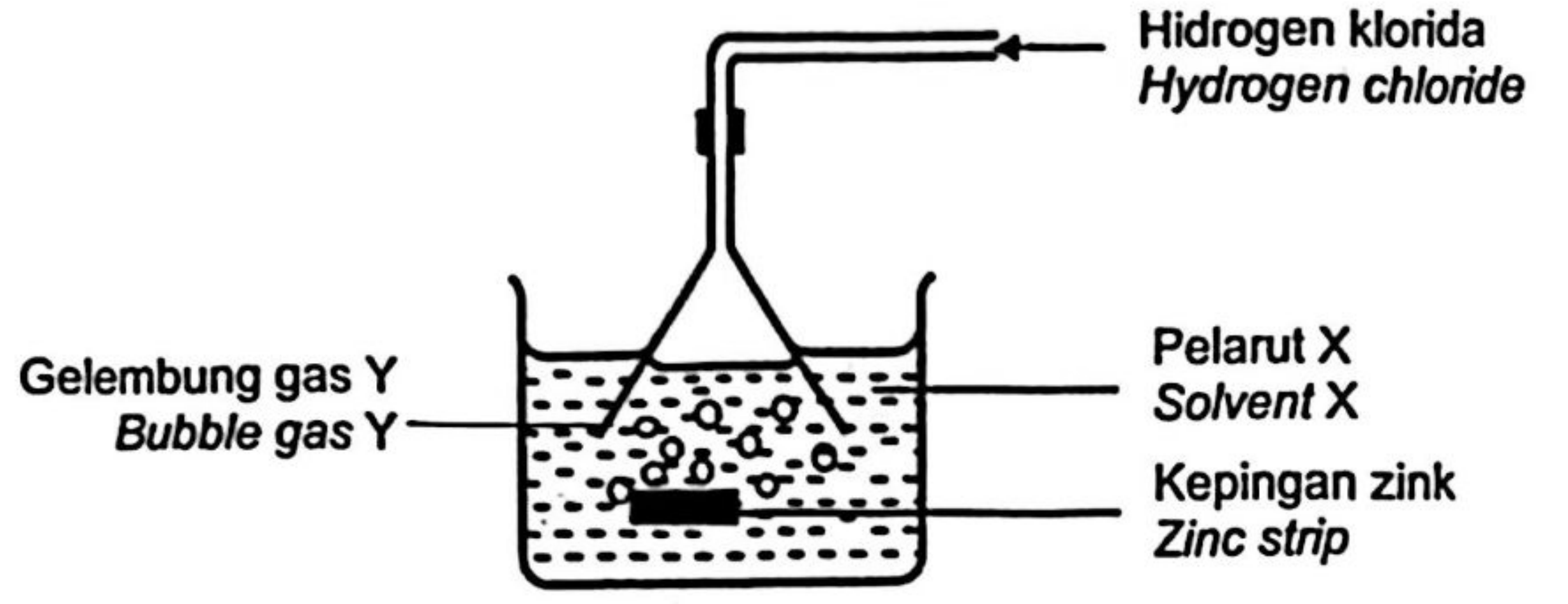
Diagram 22 shows the arrangement of the apparatus to study the properties of hydrogen chloride in solvent X (zinc strip in solvent X, bubbles of gas Y released). Based on the observations in diagram 22, what is the method to identify the released gas Y?
Medium
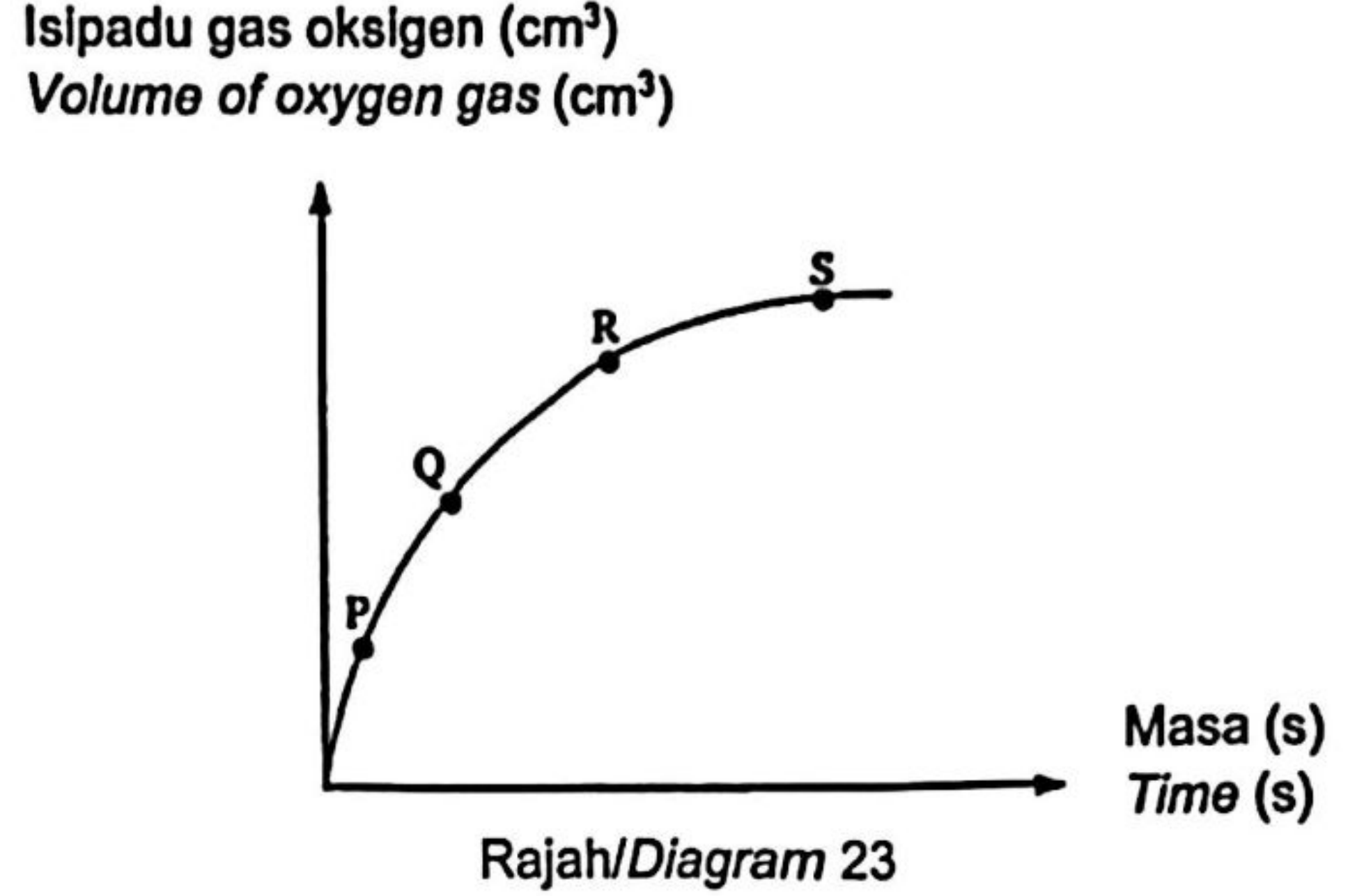
Diagram 23 shows a graph of volume of oxygen gas collected against time in the decomposition reaction of hydrogen peroxide when using manganese dioxide as catalyst. Which point shows the highest rate of reaction?
Medium
Electrolysis of solution X using carbon electrodes produces gases at both electrodes. What is solution X?
Medium
Magnesium chloride solution, 0.1 mol dm⁻³ is electrolyzed using carbon electrodes. Which are the half equations for the reactions occurring at the anode and cathode? A: anode 4OH⁻ → O₂ + 2H₂O + 4e; cathode Mg²⁺ + 2e → Mg. B: anode 4OH⁻ → O₂ + 2H₂O + 4e; cathode 2H⁺ + 2e → H₂. C: anode 2Cl⁻ → Cl₂ + 2e; cathode 2H⁺ + 2e → H₂. D: anode 2Cl⁻ → Cl₂ + 2e; cathode Mg²⁺ + 2e → Mg.
Medium
What happens when natural rubber is vulcanized?
Medium
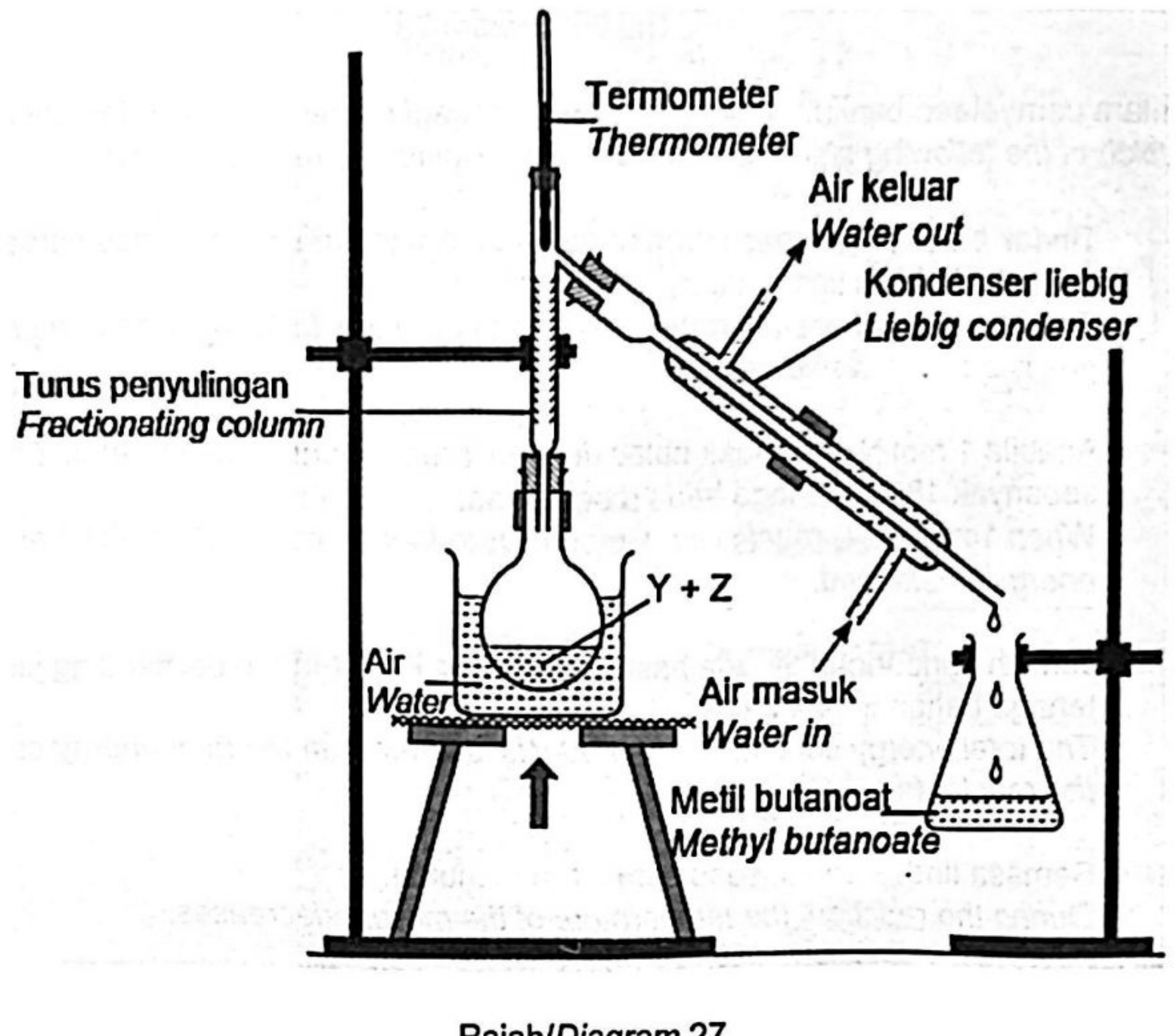
Diagram 27 shows the arrangement of the apparatus for the process of producing methyl butanoate ester. Y and Z are two substances used to produce methyl butanoate which smells like apples. What substances are Y and Z?
Medium
Diagram 28 shows a thermochemical equation: N₂(g) + O₂(g) → 2NO(g) ΔH = +180 kJ mol⁻¹. Which of the following statements is correct to explain the reaction above?
Medium
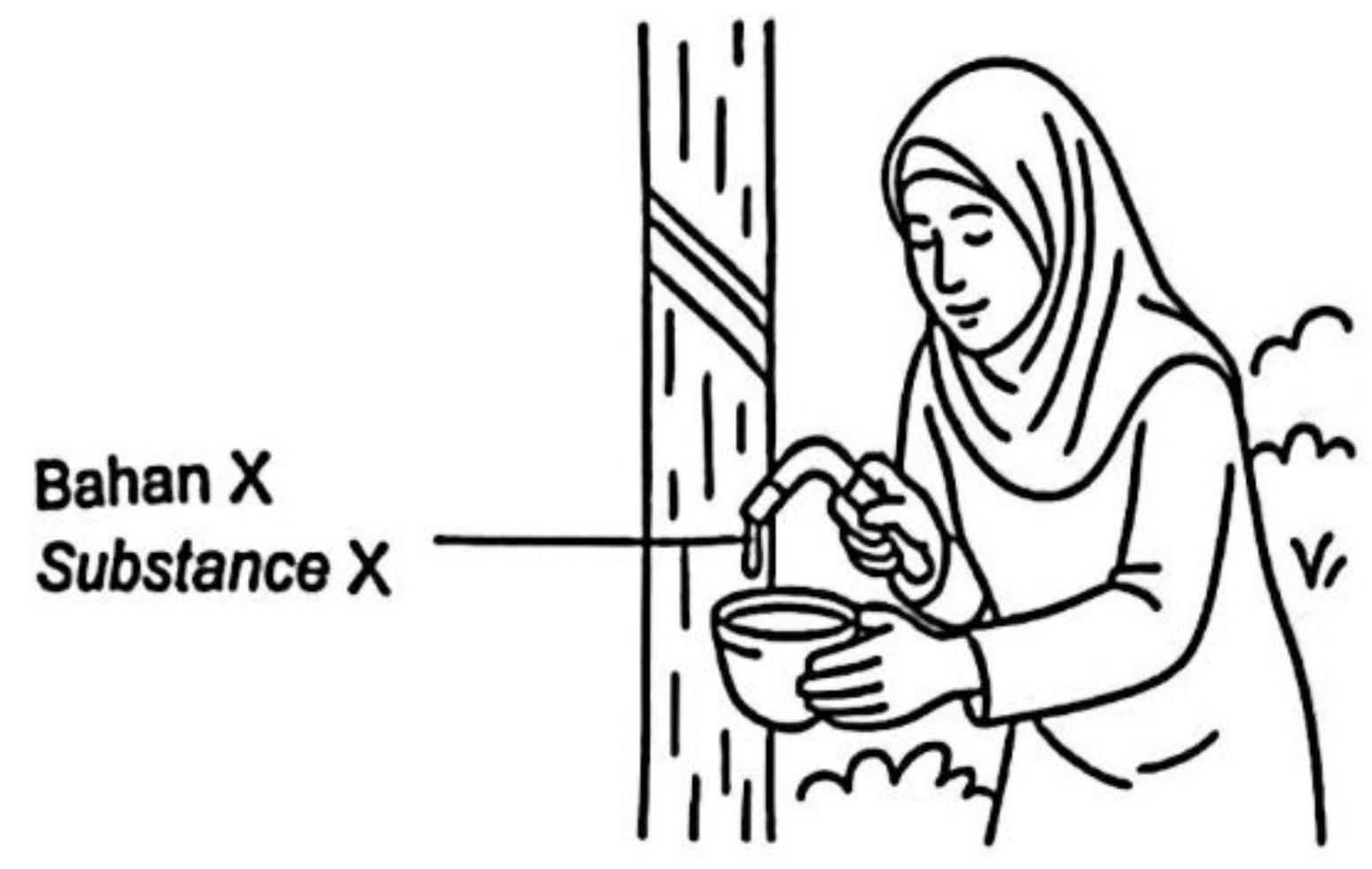
Figure 29 shows a woman tapping rubber in her rubber estate. What is the structural formula of monomer and polymer of substance X?
Medium
Which of the following is the function of an analgesic?
Easy
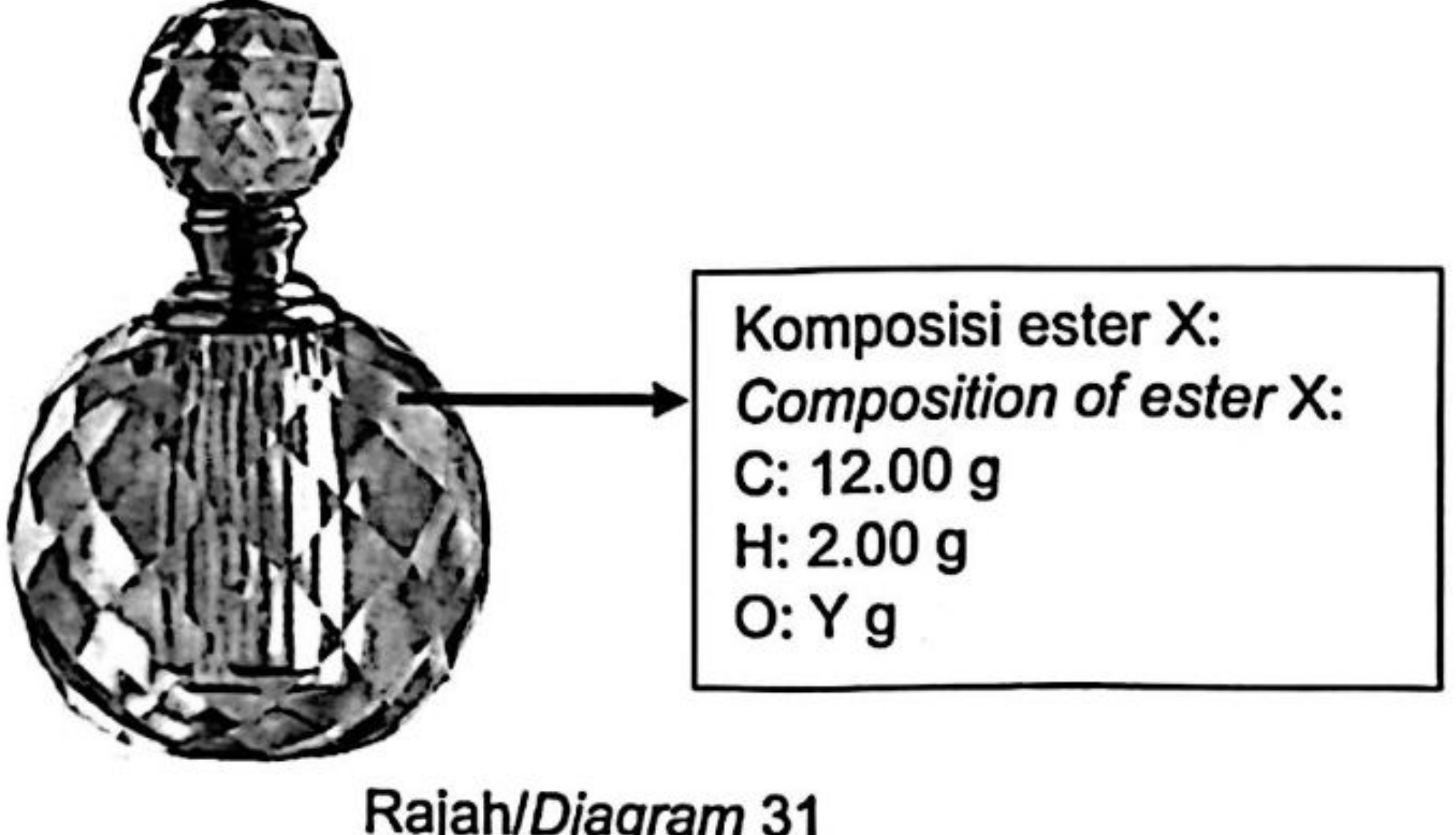
Diagram 31 shows a bottle of perfume containing 50 g of substance including ester X (solvent). 44% of the mass of the substance is ester X. Composition of ester X: C: 12.00 g, H: 2.00 g, O: Y g. Relative molecular mass of ester X is 88. What is the molecular formula of ester X? [Relative atomic mass; H = 1, C = 12, O = 16]
Medium
The formula for a sulphate ion is SO₄²⁻ and for a nitrate ion is NO₃⁻. If the formula of the sulphate salt of T is TSO₄, what is the formula of the nitrate salt of T?
Medium
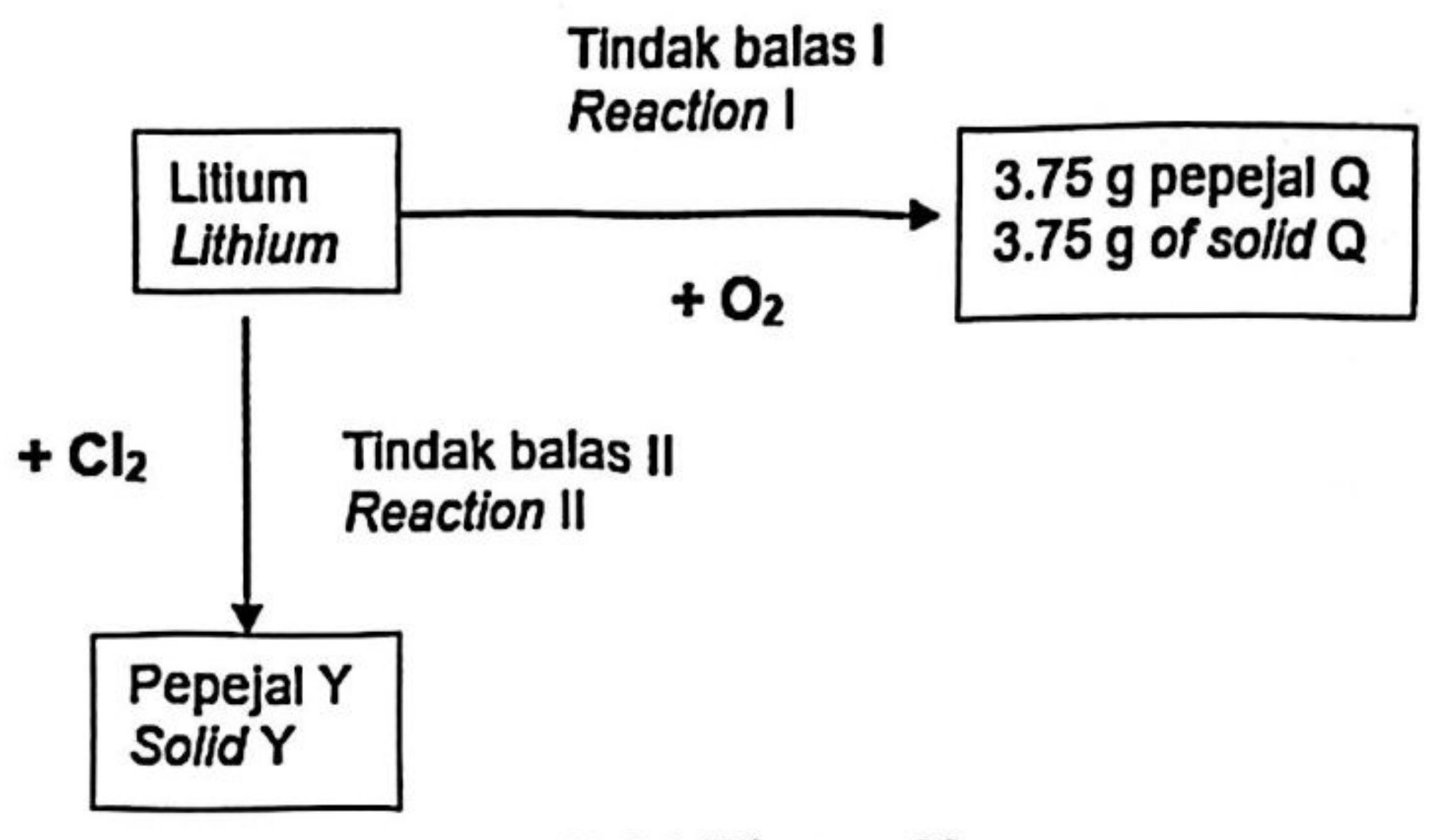
Diagram 33 shows two different reactions of a metal: lithium + O₂ gives 3.75 g of solid Q (Reaction I); lithium + Cl₂ gives solid Y (Reaction II). What is the mass of solid Y formed when the same mass of lithium is used? [Relative atomic mass: Li = 7, O = 16, Cl = 35.5]
Medium
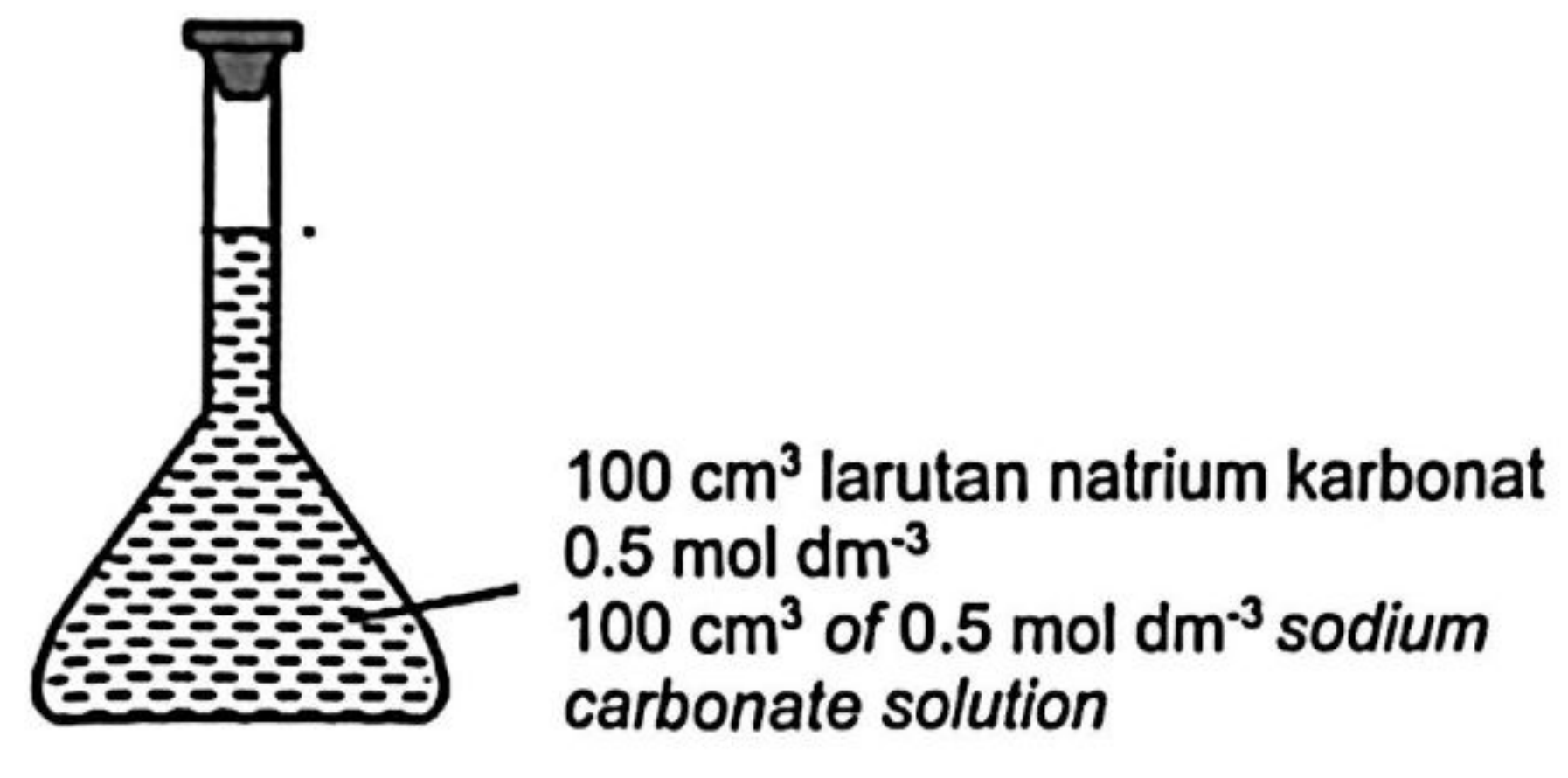
Diagram 34 shows the preparation of sodium carbonate stock solution (100 cm³ of 0.5 mol dm⁻³ sodium carbonate solution). How much volume of stock solution needs to be added to produce 500 cm³ of 0.01 mol dm⁻³ sodium carbonate solution using the dilution method?
Medium
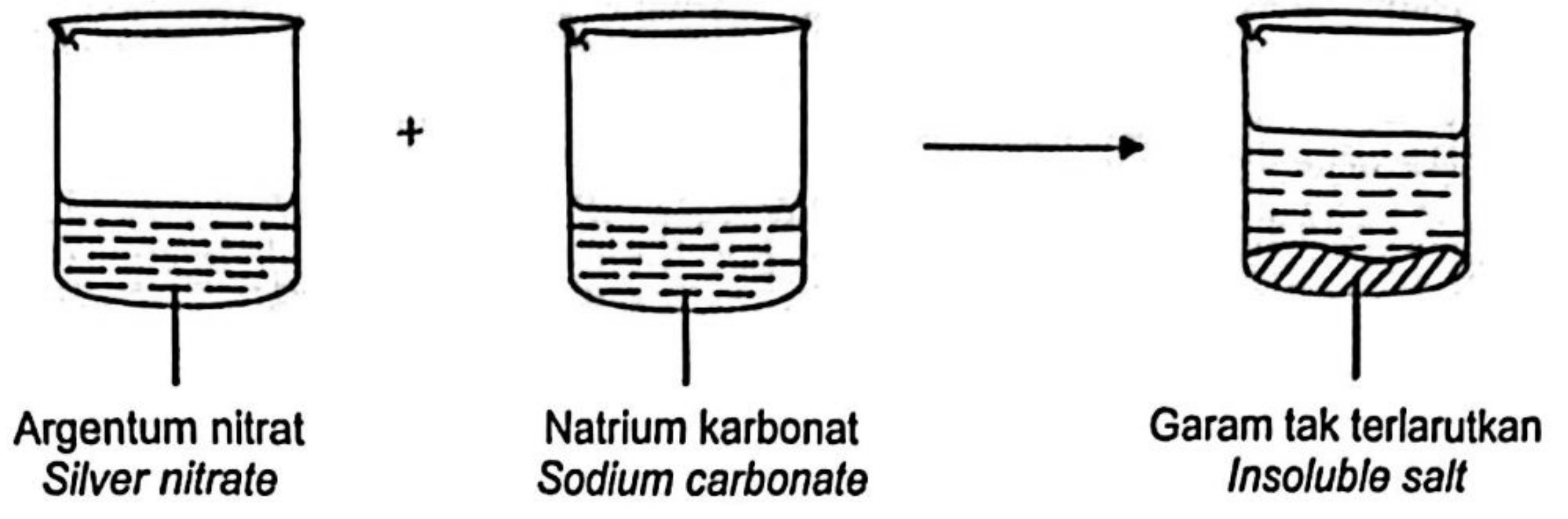
Diagram 35 shows the reaction of two types of soluble salts (silver nitrate and sodium carbonate) to produce an insoluble salt. Calculate the mass of insoluble salt produced if 20 cm³ of 0.5 mol dm⁻³ silver nitrate solution is used. [Molar mass of insoluble salt = 276 g mol⁻¹]
Medium
Iron is produced when haematite, Fe₂O₃ reacts with carbon monoxide: Fe₂O₃ + 3CO → 2Fe + 3CO₂. Which changes in oxidation number of the iron, Fe and carbon, C are correct?
Medium
2.3 g ethanol burns completely in excess oxygen producing carbon dioxide gas and water. Calculate the volume of carbon dioxide gas liberated. [Relative atomic mass: C = 12; H = 1; O = 16. Molar volume at room temperature = 24 dm³ mol⁻¹]
Medium
The following equation represents the precipitation reaction: Ba(NO₃)₂ + Na₂SO₄ → BaSO₄ + 2NaNO₃, ΔH = -42 kJ mol⁻¹. What is the value of the increase in reaction temperature when 100 cm³ of each solution is mixed and 13.98 g of precipitate is formed? [Specific heat capacity = 4.2 J g⁻¹ °C⁻¹; density of solution = 1 g cm⁻³; Relative atomic mass: Ba = 137, S = 32, Na = 23, O = 16, N = 14]
Medium
The following equation represents a reaction between 40 cm³ of 0.5 mol dm⁻³ nitric acid and excess calcium carbonate: 2HNO₃ + CaCO₃ → Ca(NO₃)₂ + CO₂ + H₂O. The time taken for the reaction to complete is 360 seconds. What is the average rate of reaction? [Molar volume at room temperature = 24 dm³ mol⁻¹]
Medium
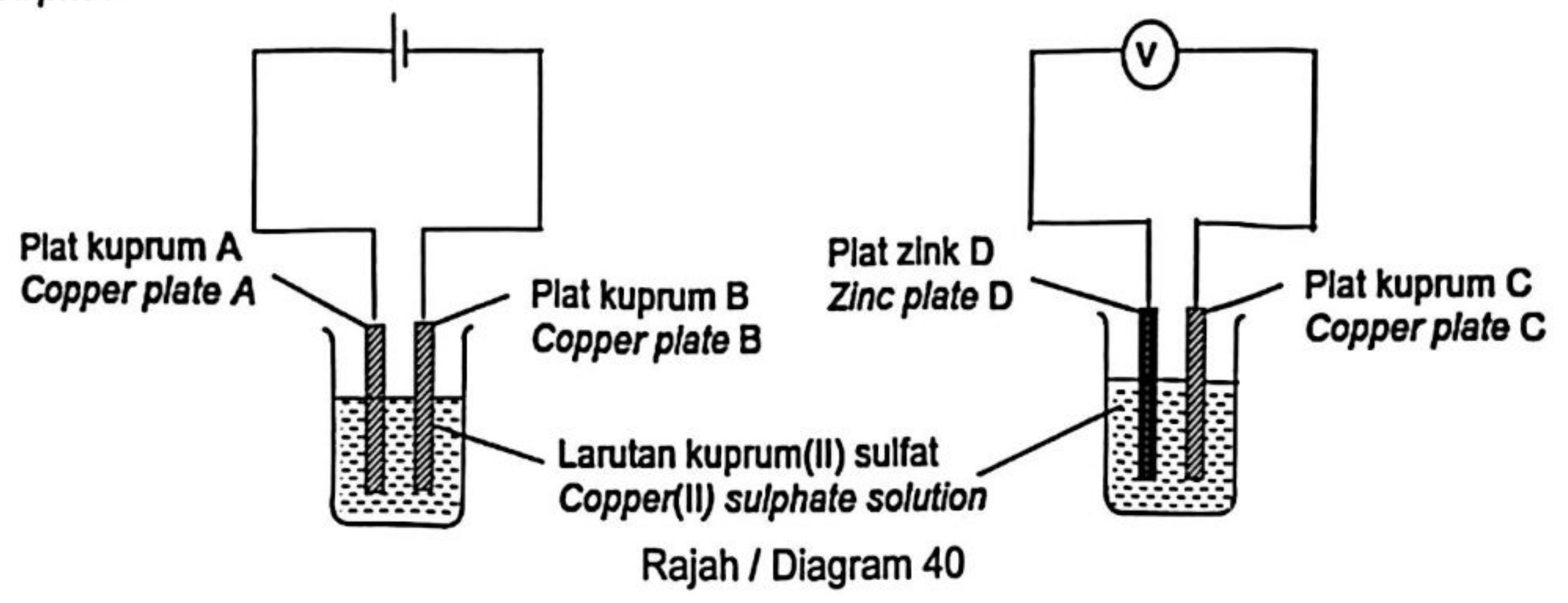
Diagram 40 shows an electrolytic cell (copper plates A and B) and a voltaic cell (zinc plate D and copper plate C) using the same electrolyte, copper(II) sulphate. Which of the changes in mass of copper plates A, B and C are true?