Write your answer on paper. Then open the answer to check it.
Section A
Table 1 shows the number of protons and the number of neutrons in three sodium isotopes: Sodium-22 (11 protons, 11 neutrons), Sodium-23 (11 protons, 12 neutrons), Sodium-24 (11 protons, 13 neutrons).
Medium5 marks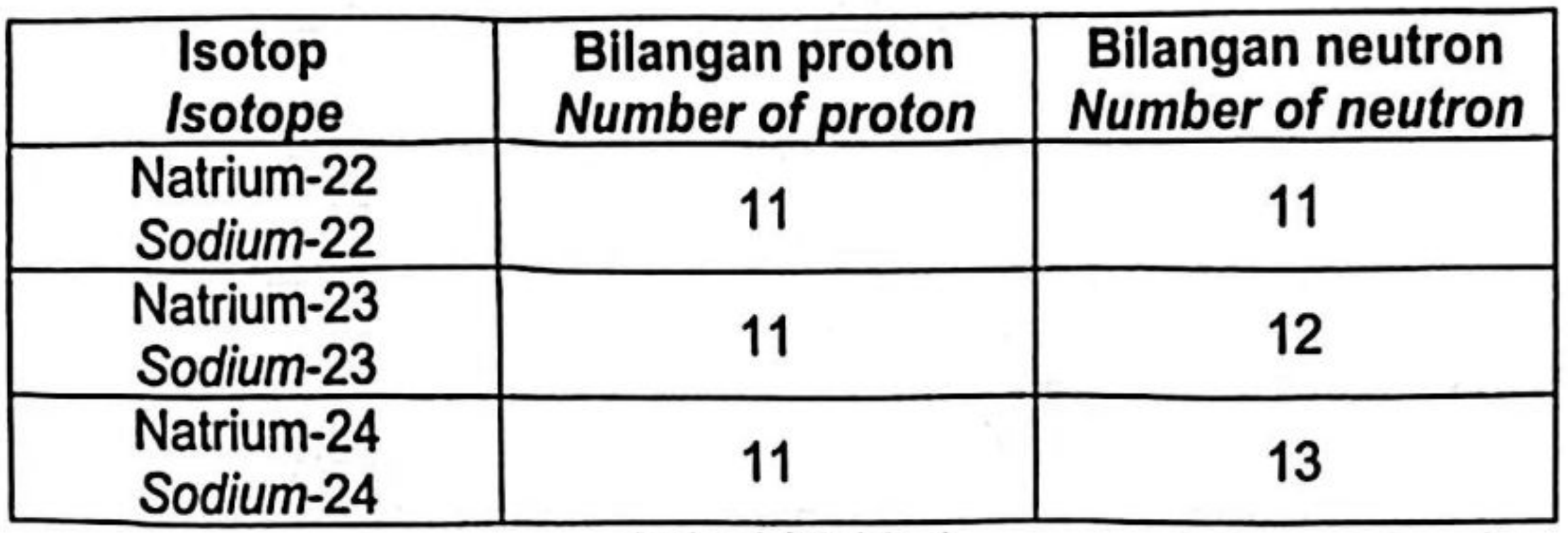
- (a)
State the meaning of isotope.
[1] - (b)
State three sub atomic particles.
[1] - (c)
Write the electron arrangement of Sodium-22 atom.
[1] - (d)
Write the standard representation of atom for isotope Sodium-23 in ᴬ_Z X.
[1] - (e)
State one of the uses of Sodium-24.
[1]
Diagram 2 shows the various uses of graphene as a sensor. The rapid development of engineering, medicine and other scientific disciplines has contributed to the application of the latest nanotechnology in various aspects of life. Among the important materials is the allotrope of carbon known as graphene.
Medium5 marks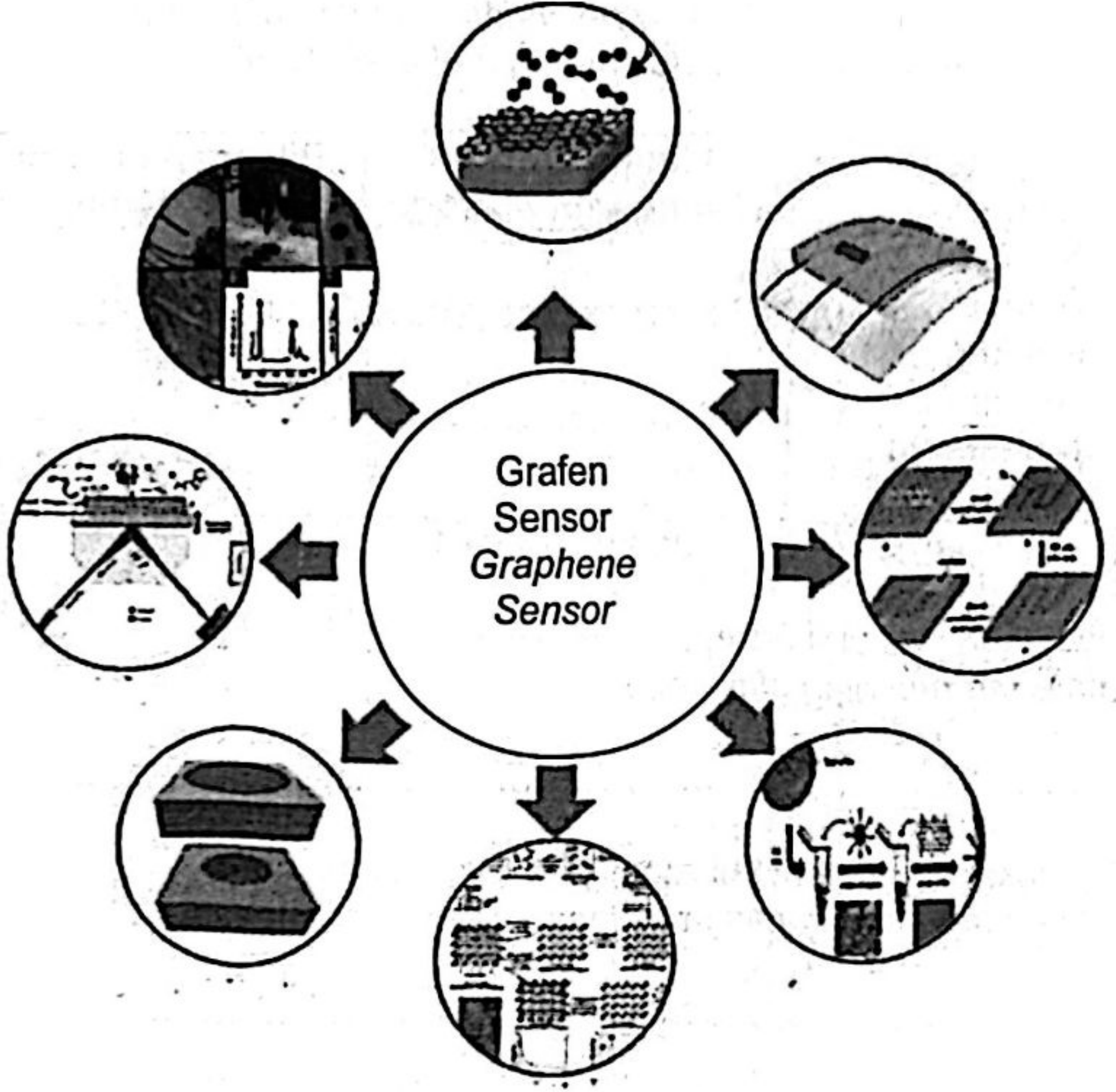
- (a)
What is the meaning of nanotechnology?
[1] - (b)(i)
State one of physical properties of graphene.
[1] - (b)(ii)
Why graphene suitable use as sensor?
[1] - (c)(i)
Why nano particles suitable to apply in textiles and cosmetic?
[1] - (c)(ii)
Give one other use of nanotechnology in textiles or cosmetics.
[1]
Table 3 shows the results of experiments conducted in the laboratory to determine the properties of the oxides of elements found in Period 3 of the Periodic Table of Elements. Oxide X: dissolves to form a colourless solution in sodium hydroxide solution; no changes with nitric acid. Oxide Y: no changes with sodium hydroxide solution; dissolves to form a colourless solution in nitric acid. Oxide Z: dissolves to form a colourless solution in both sodium hydroxide solution and nitric acid.
Medium6 marks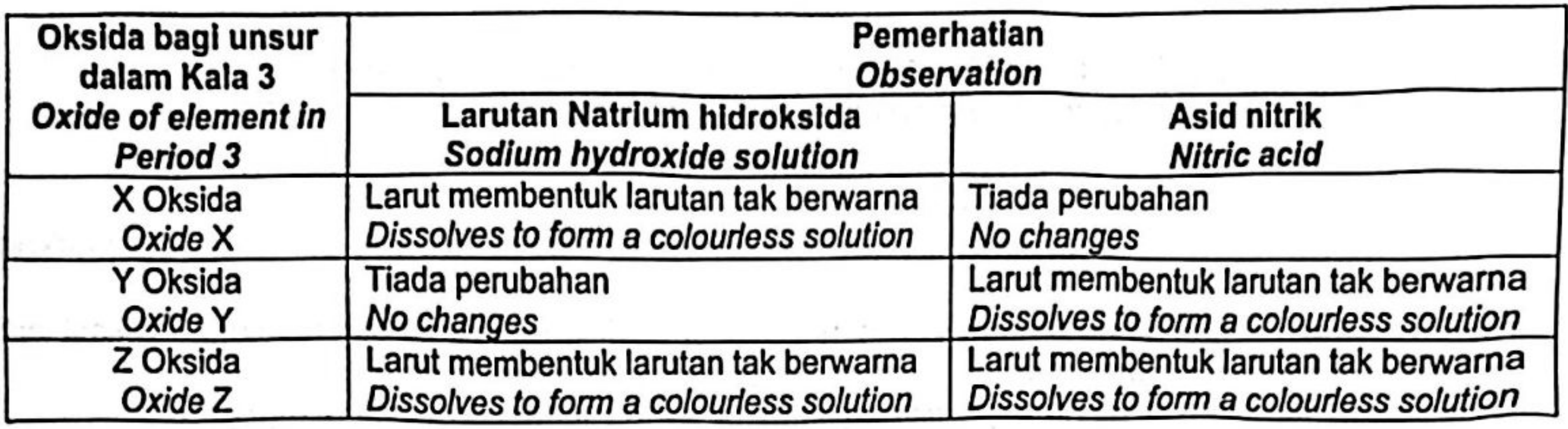
- (a)
State the definition of Period in the Periodic Table of Elements.
[1] - (b)
Based on the experimental results in Table 3, arrange all the elements in order of increasing atomic size.
[1] - (c)(i)
If the chemical formula of Y oxide is YO, write the chemical equation when Y oxide reacts completely with nitric acid.
[2] - (c)(ii)
If 0.05 mol YO reacted with 100 cm³ nitric acid, calculate the concentration of nitric acid used.
[2]
Diagram 4 shows the apparatus set-up for the reaction between hydrogen chloride gas and ammonia gas. T₁, T₂ and T₃ are the possible positions where white fumes formed in the experiment after five minutes. Glass wool soaked in concentrated ammonia solution is at the left end; glass wool soaked in concentrated hydrochloric acid is at the right end.
Medium7 marks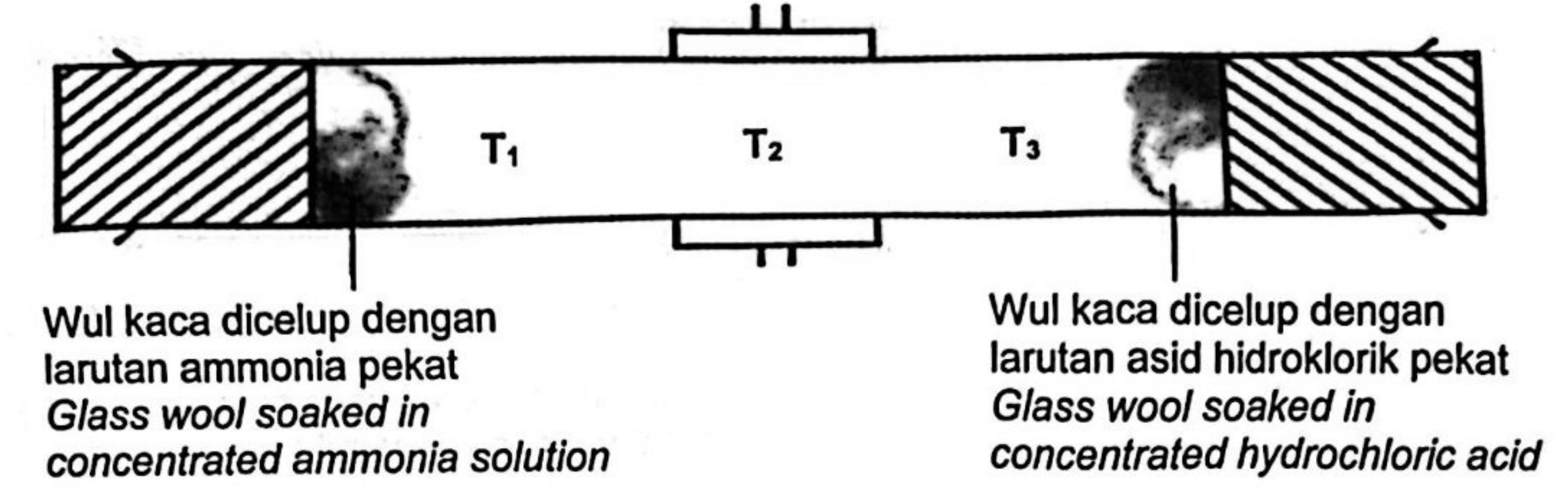
- (a)
State the particle of ammonia gas.
[1] - (b)(i)
Write chemical equation for the reaction.
[2] - (b)(ii)
State the position of white fumes formed.
[1] - (b)(iii)
Give a reason for your answer in (b)(ii).
[1] - (c)
Calculate mass of white fumes formed when 0.5 mol of ammonia gas reacted. [Relative atomic mass: H = 1, N = 17, Cl = 35.5]
[2]
Table 5 shows the proton number and nucleon number for atoms of element X (1, 1), element Y (3, 7) and element Z (8, 16). Compound P are formed between non-metal and non-metal elements while compound Q are formed between metal and non-metal elements.
Medium8 marks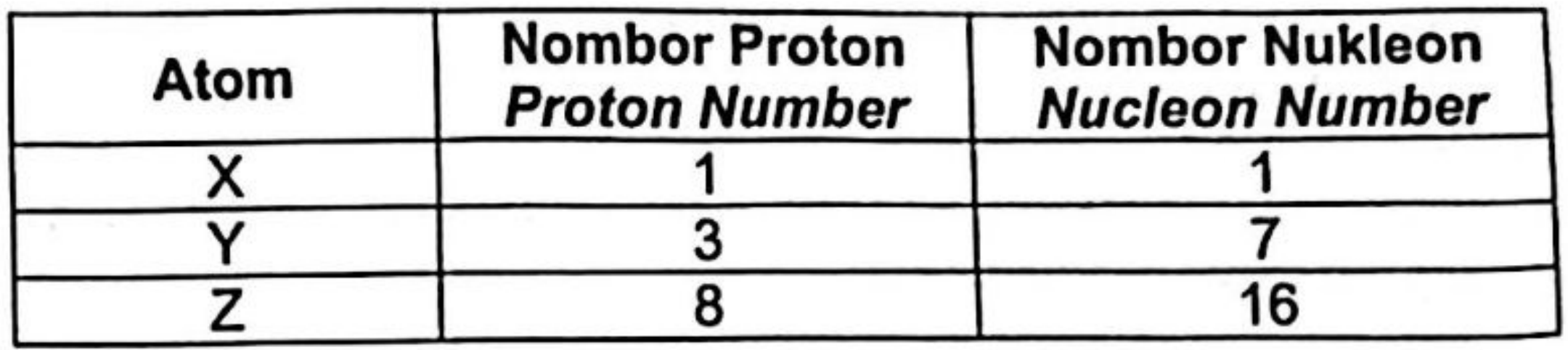
- (a)
State one types of covalent bond.
[1] - (b)(i)
Choose two elements that can form compound P.
[1] - (b)(ii)
Draw an electron arrangement diagram for compound formed in (b)(i).
[2]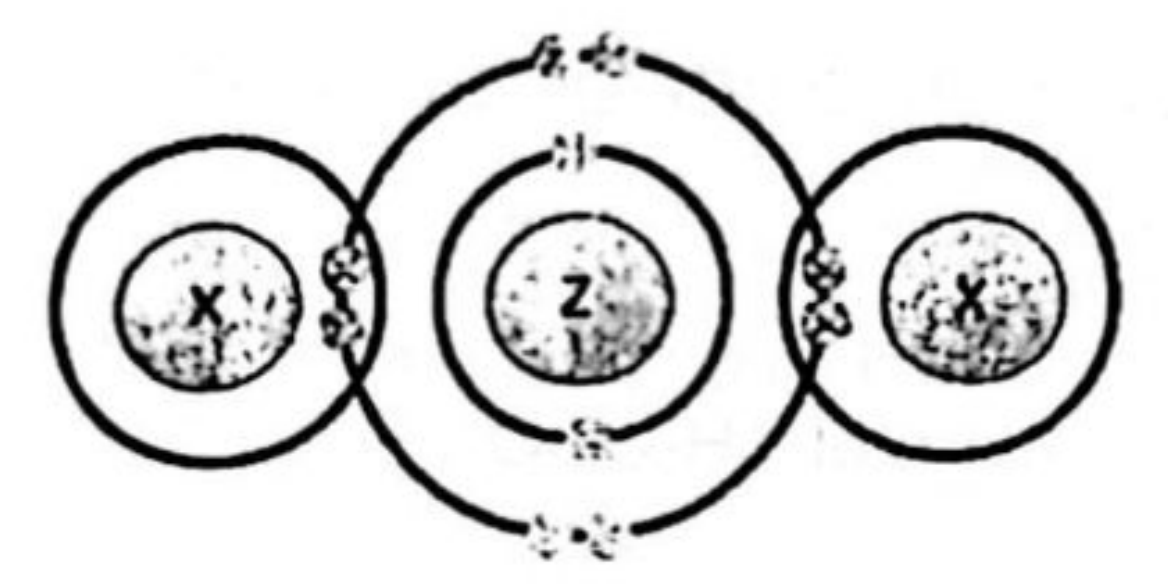
- (c)
Element Y and element Z can form compound Q. Write a chemical equation for the reaction that occured.
[2] - (d)
Between compound P and compound Q, which compound can form hydrogen bonds? Explain your answer.
[2]
Diagram 6.1 shows a series of chemical reactions for carbon compound P (C₂H₆O). Reaction I: P with acidified potassium manganate(VII) solution gives compound Q. Reaction II: P reacts with Q to give compound R. Diagram 6.2 shows a reagent bottle labelled as liquid X.
Medium9 marks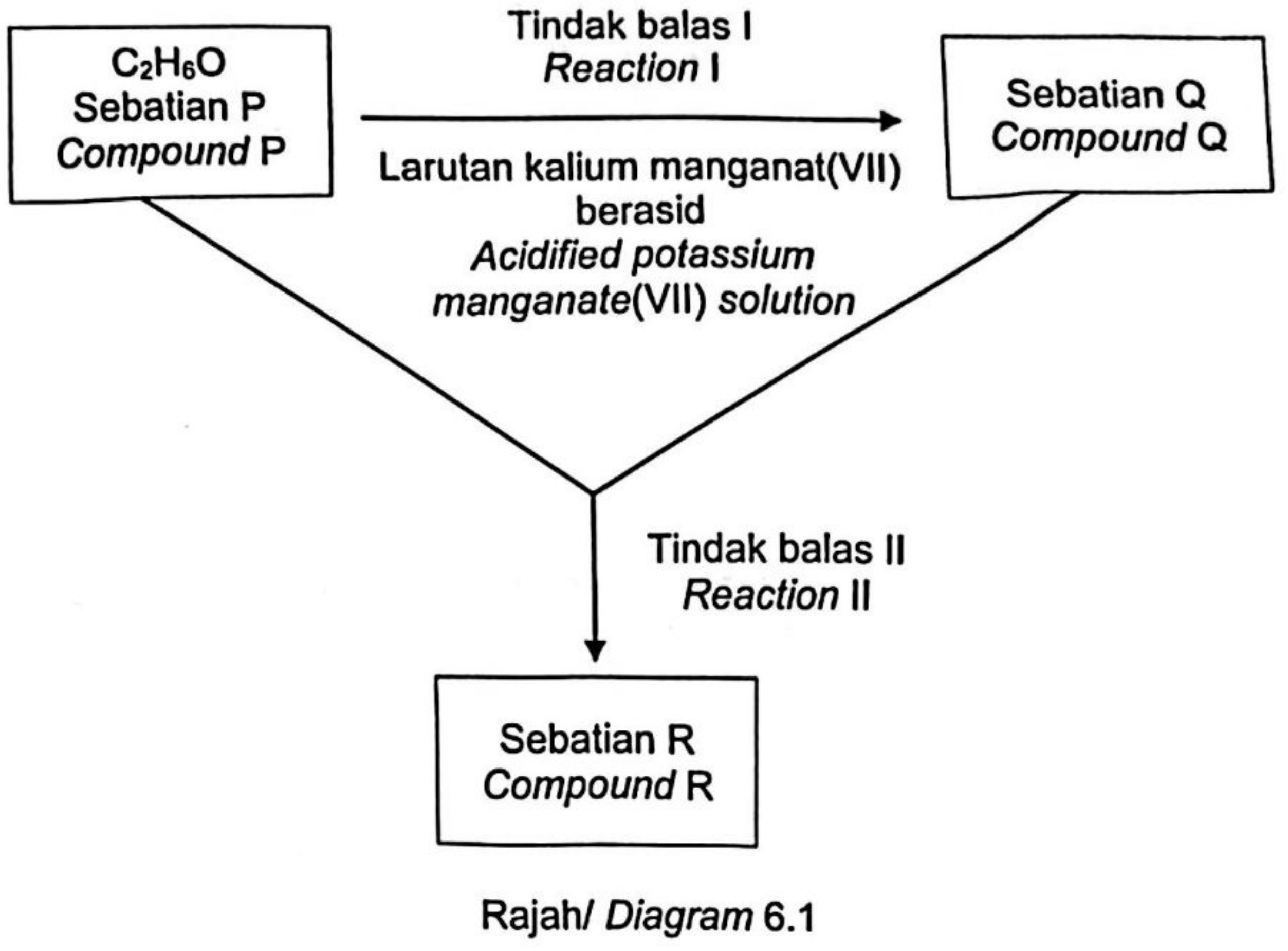
- (a)
What is meant by carbon compound?
[1] - (b)
State the name of Reaction I.
[1] - (c)(i)
Compound P reacts with compound Q to produce compound R in Reaction II. Write chemical equation for the reaction occurred.
[2] - (c)(ii)
If 0.1 mol compound P is needed to react completely with compound Q, determine the mass of compound R produced. [Relative atomic mass: C = 12, H = 1, O = 16]
[2] - (d)
Diagram 6.2 shows a reagent bottle labelled as liquid X. Describe briefly the chemical test to confirm whether liquid X is compound P or compound Q.
[3]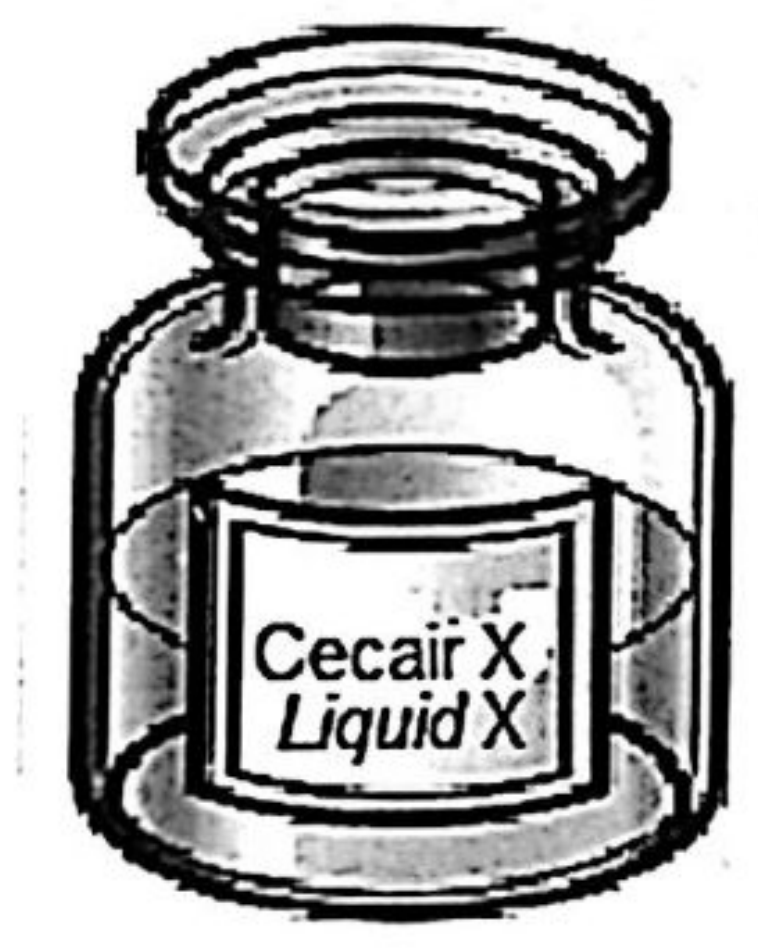
(a) Ethanoic acid, CH₃COOH is a weak acid. Diagram 7.1 shows the apparatus set-up used in experiment to study the acidic properties of ethanoic acid: Experiment I uses glacial ethanoic acid with calcium carbonate; Experiment II uses ethanoic acid (aqueous) with calcium carbonate; a balloon is fitted on each flask. (b) Diagram 7.2 shows how acidication of the ocean occurred: CO₂ + H₂O → H₂CO₃. The high amount of carbonic acid increases the acidity of water making it unsuitable for aquatic life.
Medium10 marks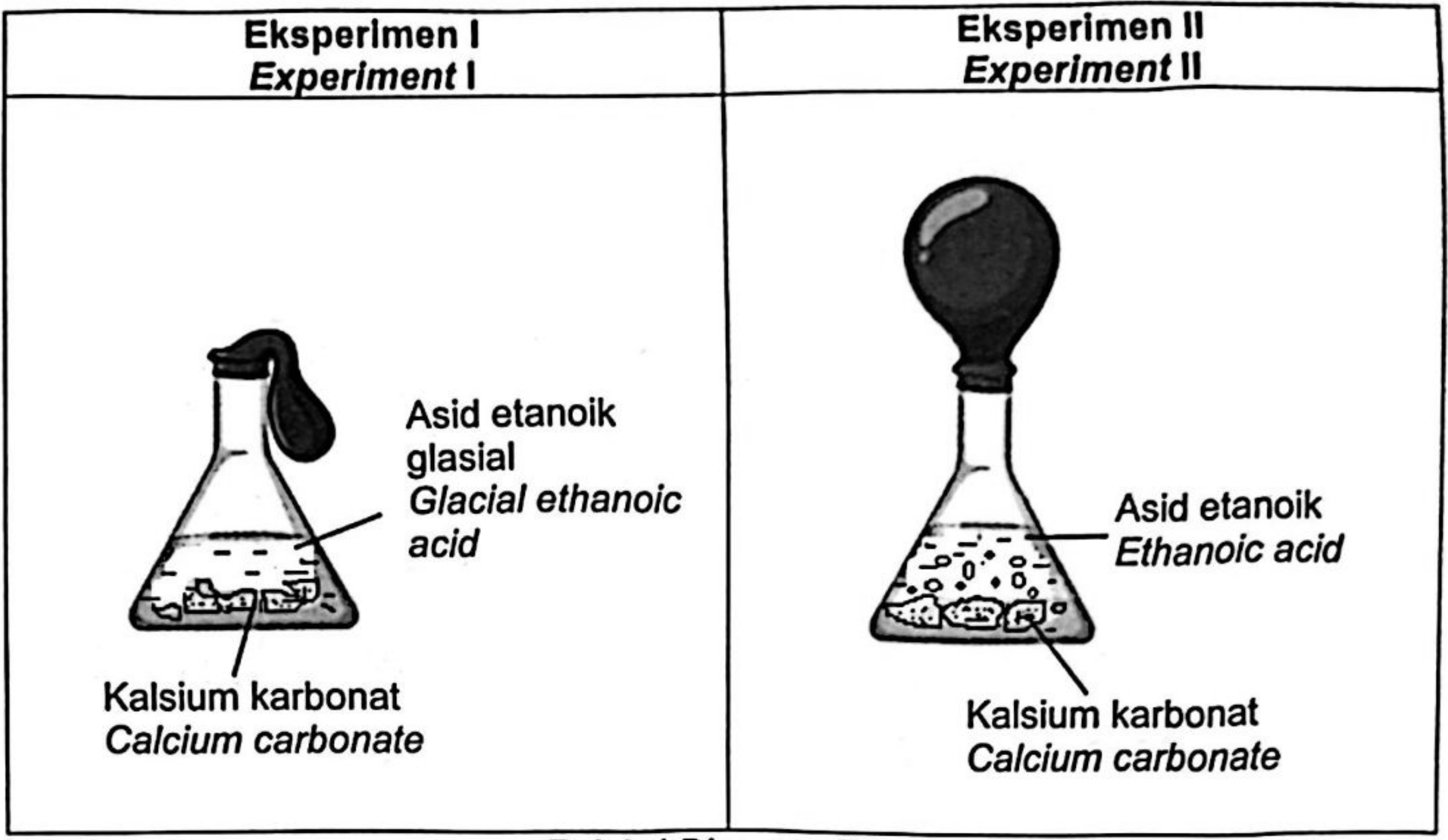
- (a)(i)
State the meaning of weak acid.
[1] - (a)(ii)
State the basicity of ethanoic acid and explain.
[2] - (a)(iii)
Based on Diagram 7.1, explain the differences in the observation of the experiment.
[3] - (a)(iv)
Write chemical equation for the reaction between ethanoic acid and calcium carbonate in experiment II.
[2] - (b)(i)
If the sea water in Diagram 7.2 is transferred into an aquarium, suggest one method to ensure the pH of the water is suitable for fish living in it.
[1] - (b)(ii)
Give a reason for the answer in (b)(i).
[1]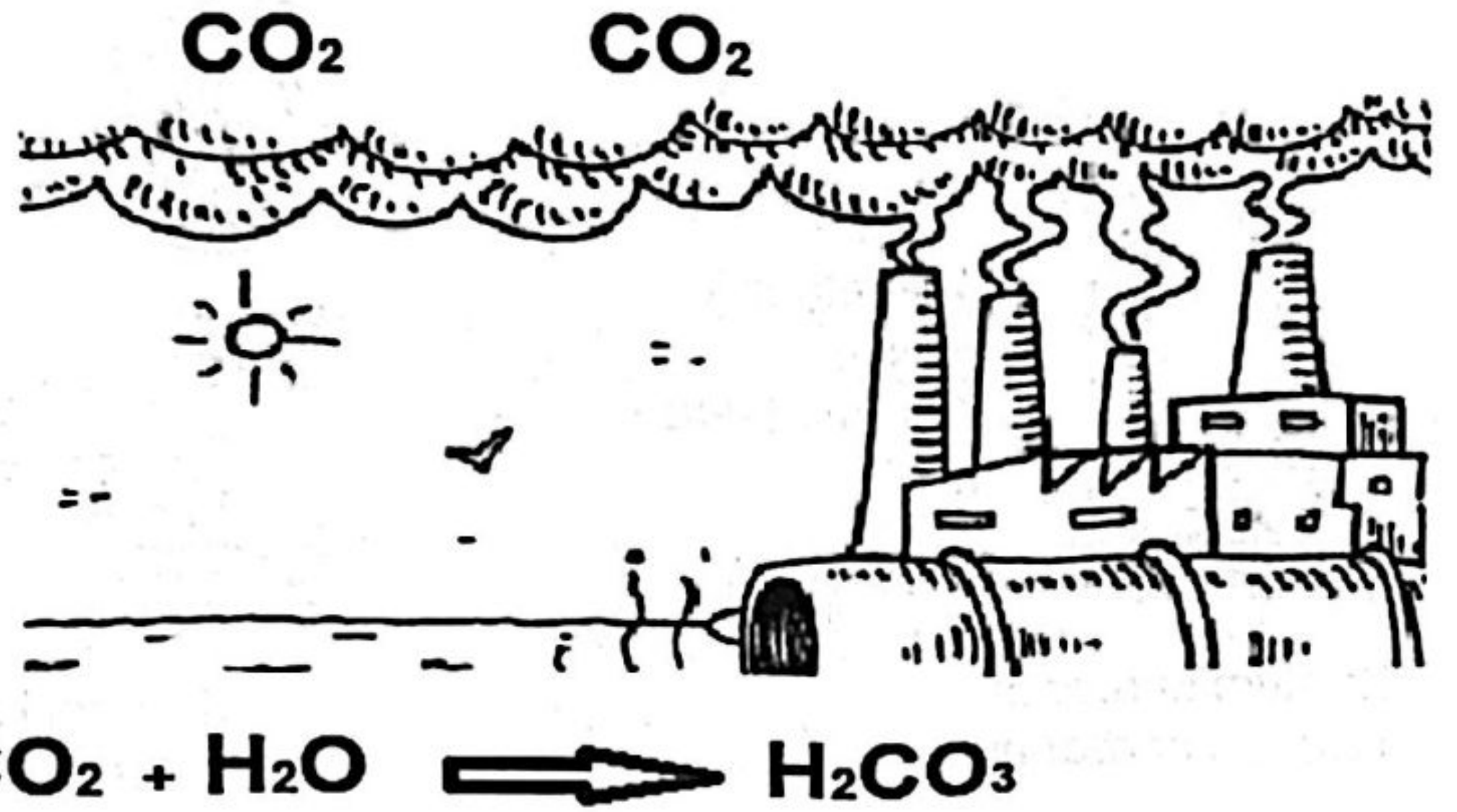
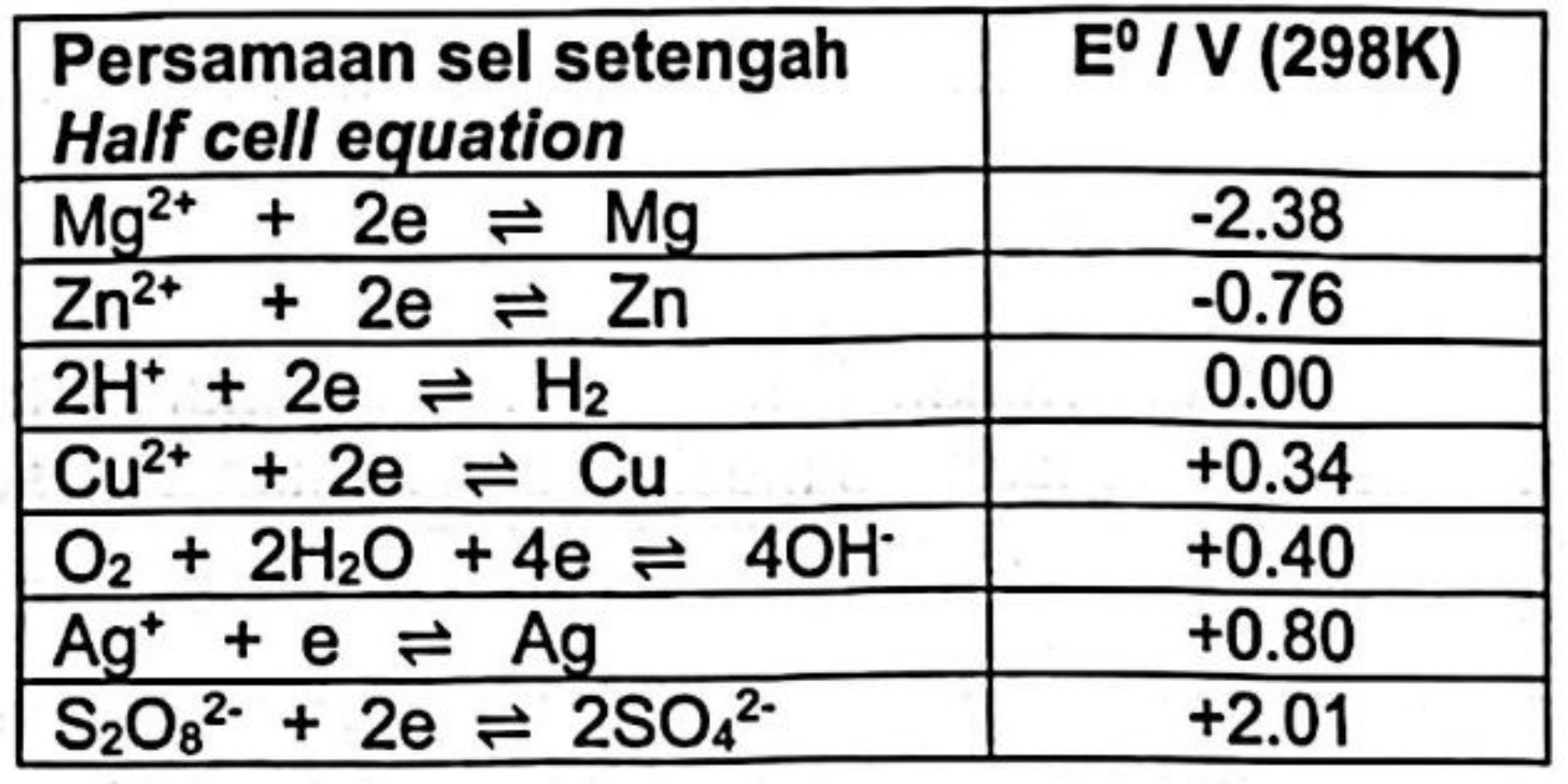
Diagram 8 shows a combination of chemical cell (Cell I: zinc in zinc sulphate solution, copper in copper(II) sulphate solution, salt bridge) and electrolytic cell (Cell II: carbon electrodes X and Y). In order to detect the presence of electric current, a bulb is connected to the circuit. Table 8 shows some of the standard potential electrode values of half cells: Mg²⁺ + 2e ⇌ Mg -2.38 V; Zn²⁺ + 2e ⇌ Zn -0.76 V; 2H⁺ + 2e ⇌ H₂ 0.00 V; Cu²⁺ + 2e ⇌ Cu +0.34 V; O₂ + 2H₂O + 4e ⇌ 4OH⁻ +0.40 V; Ag⁺ + e ⇌ Ag +0.80 V; S₂O₈²⁻ + 2e ⇌ 2SO₄²⁻ +2.01 V.
Medium10 marks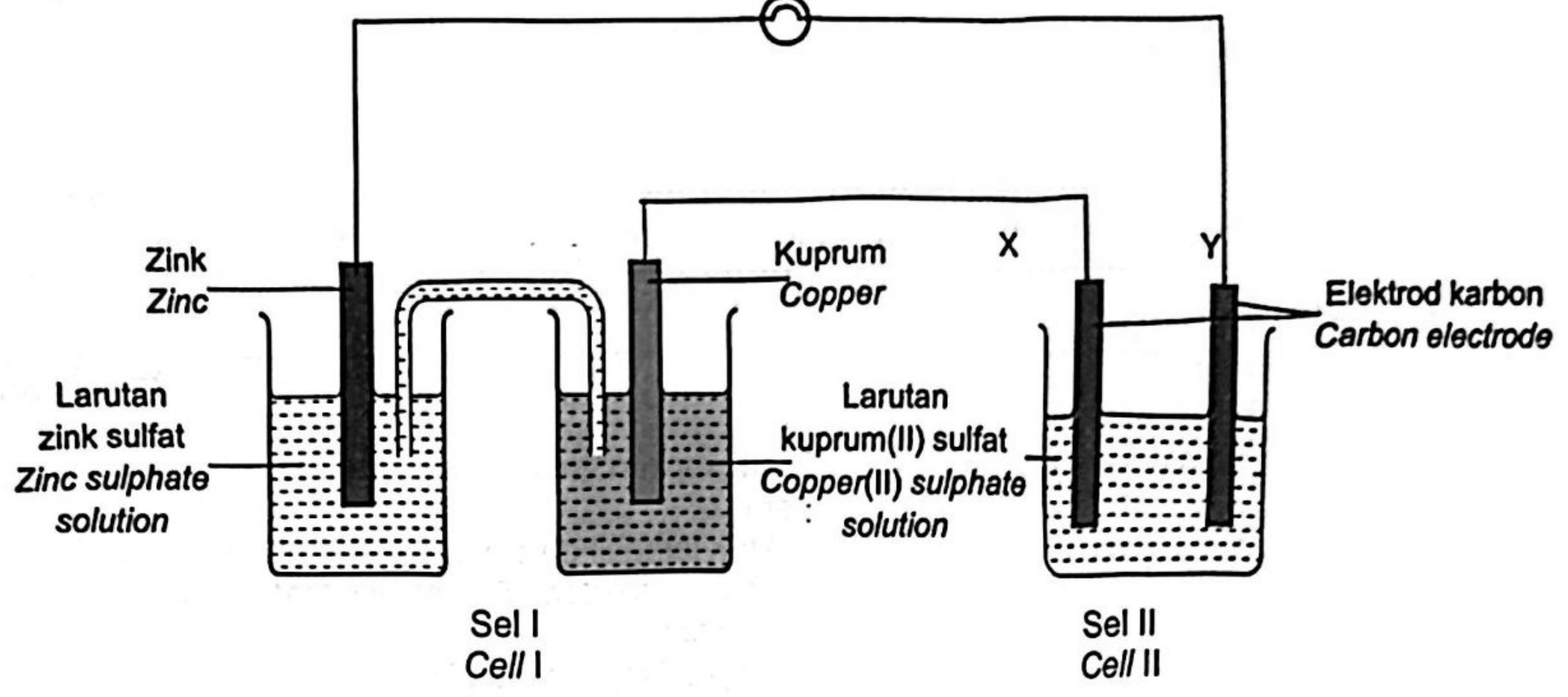
- (a)
State one factor that affects the electrolysis products at electrodes for the electrolysis of aqueous solution.
[1] - (b)
Referring to Cell II, which carbon electrode is anode?
[1] - (c)(i)
State the name of product formed at electrode X in Cell II.
[1] - (c)(ii)
Explain your answer.
[2] - (d)
The bulb light up when the circuit is completed. This shows that there is an electric current in the circuit. Explain how the electric current is produced in the circuit.
[3] - (e)
Aiman wants to change the light bulb so that it is brighter. He has replaced zinc with magnesium and zinc sulphate solution is replaced with magnesium sulphate solution. Justify Aiman's action.
[2]
Section B
Diagram 9 show 4 sets of experiments to study the reaction between 2 g of marble with 15 cm³ of hydrochloric acid, HCl. Experiment I: 1.0 mol dm⁻³ HCl + water at 30 °C with granule calcium carbonate. Experiment II: 5.0 mol dm⁻³ HCl + water at 30 °C with granule calcium carbonate. Experiment III: 1.0 mol dm⁻³ HCl + water at 30 °C with powder calcium carbonate. Experiment IV: 5.0 mol dm⁻³ HCl + water at 30 °C with powder calcium carbonate.
Hard20 marks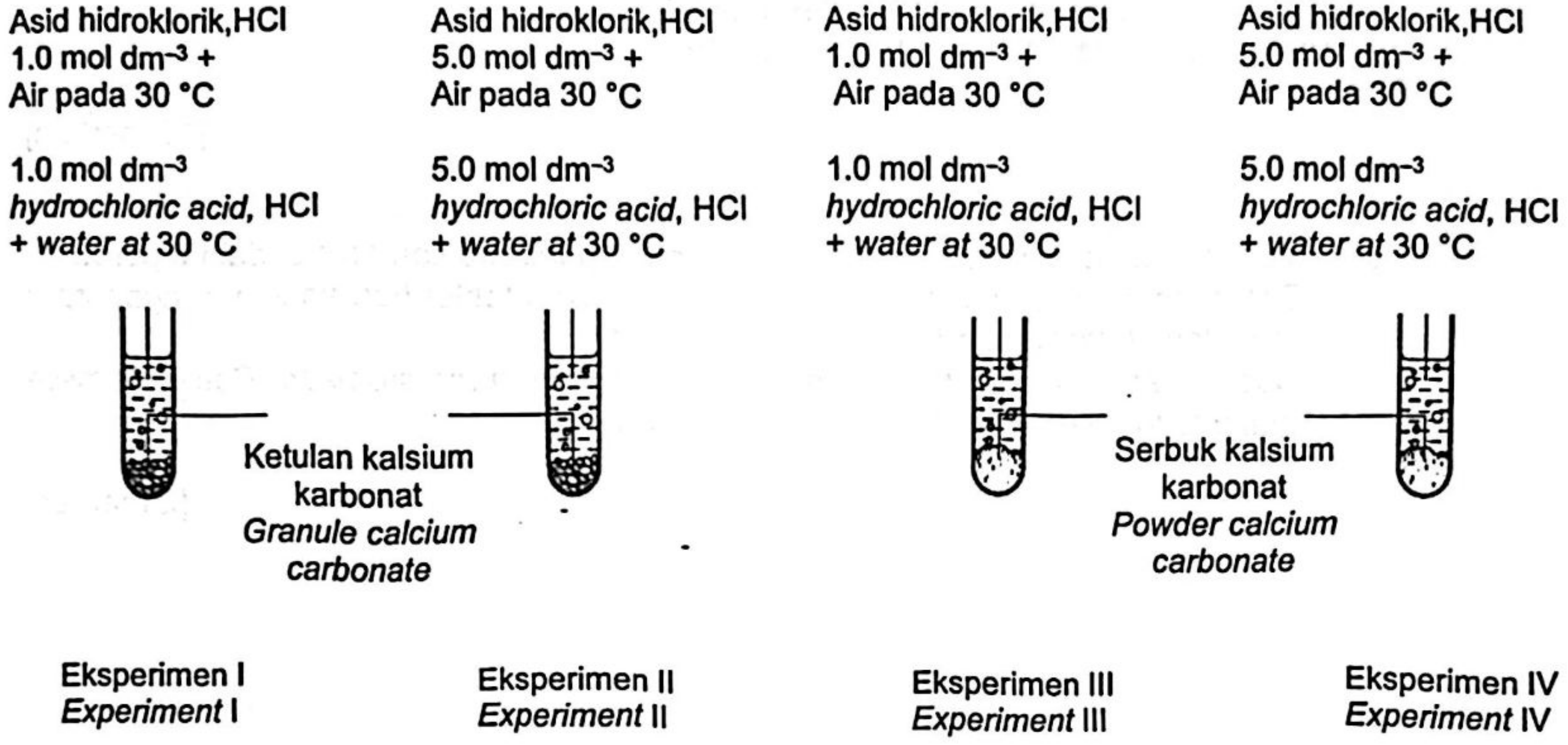
- (a)
What is meant by the rate of reaction? Based on this experiment, state one change that can be observed and measured to determine the rate of reaction.
[2] - (b)
Write the chemical equation and state two factors that affect the rate of reaction.
[4] - (c)
Draw a diagram for the set-up of the apparatus of experiment I to collect the gas produced.
[2]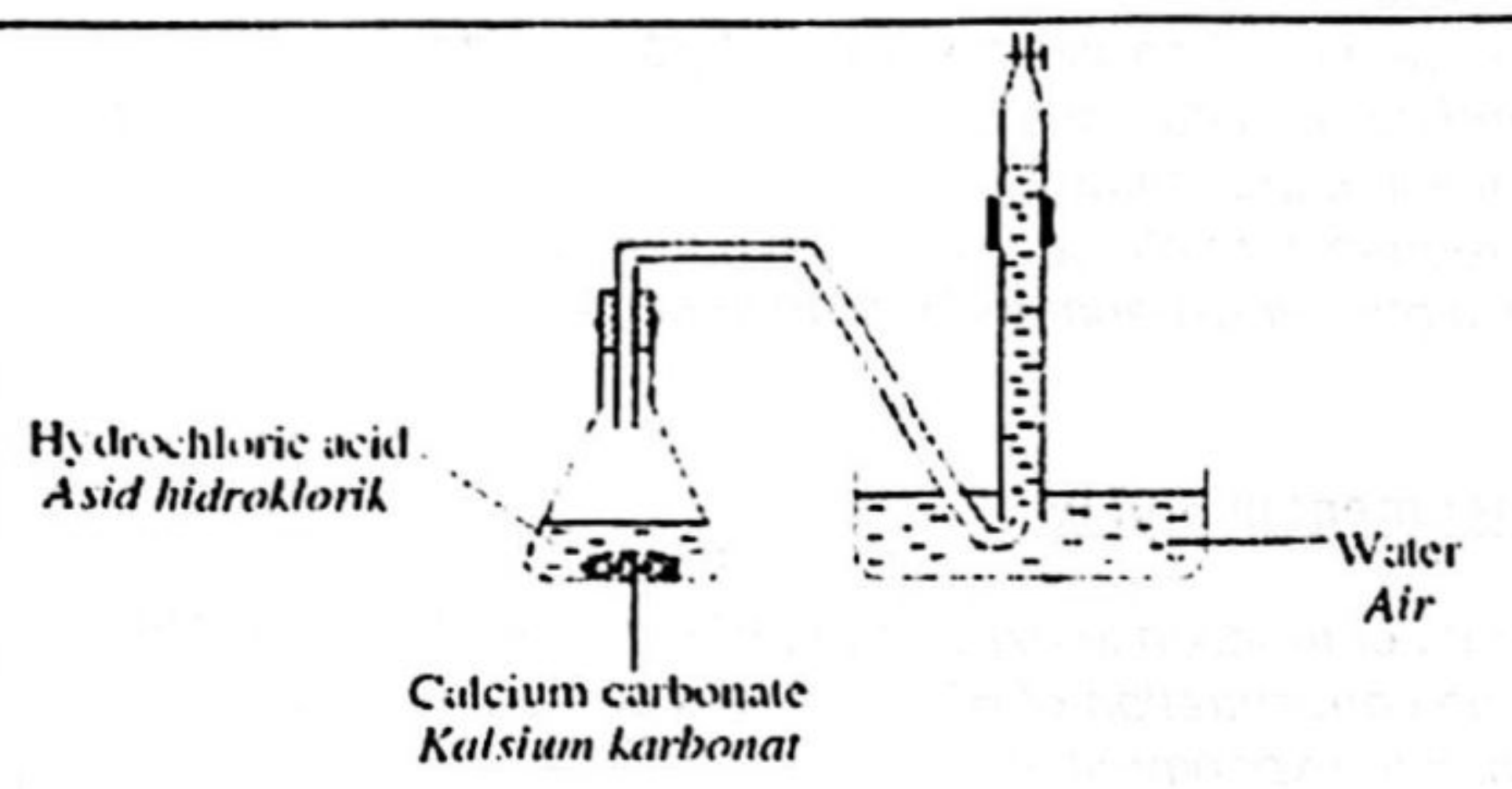
- (d)
Based on Diagram 9, compare the rate of reaction between: Experiment II and Experiment IV; Experiment III and Experiment IV.
[10] - (e)
Doctor use antacid tablets to neutralize the acid in the stomach. Doctors advise patients to chew the tablet instead of swallowing. Justify the doctor's action.
[2]
Question 10 has three parts: (a) Diagram 10.1 shows the uses of two composite materials (A and B); (b) Table 10.2 shows glass types X (making telescope lens), Y (laboratory apparatus), Z (glass container); (c) Diagram 10.3 shows polystyrene cups with the styrene monomer.
Medium20 marks- (a)
Based on Diagram 10.1, state the names of composite material A and composite material B. Next, state the reinforced material and matrix material for both composite materials. State the advantages of composite material B based on its use and explain why it turns dark when exposed to light and becomes transparent again when conditions are dim.
[9]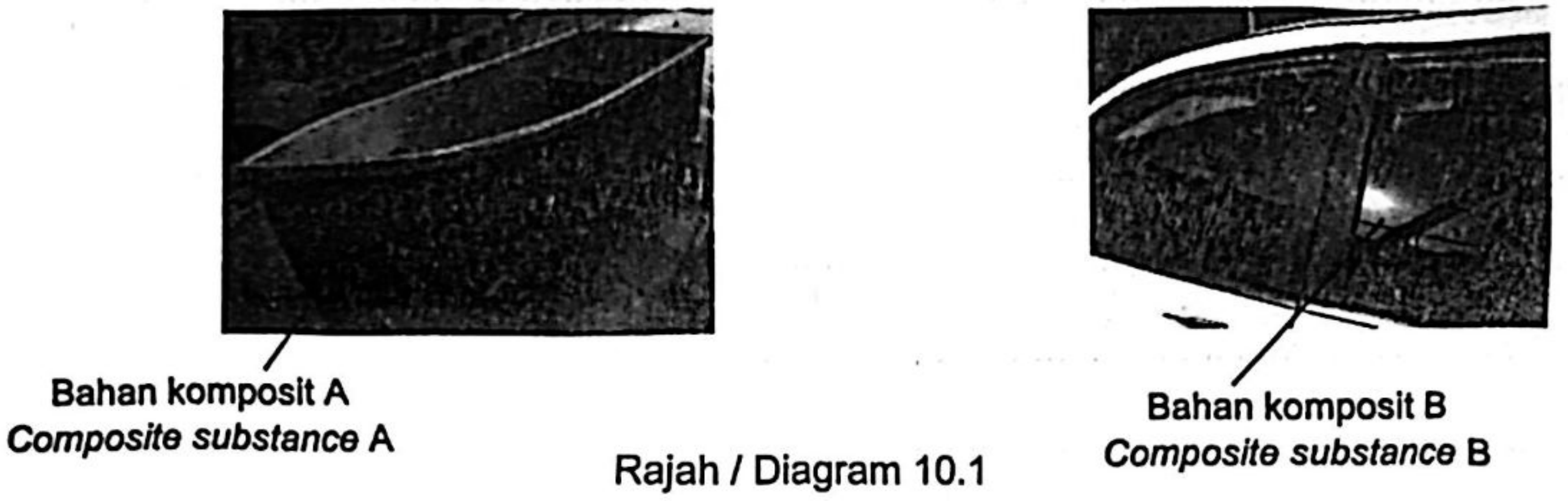
- (b)
Based on Table 10.2, state glass X, glass Y and glass Z. If borosilicate glass has a composition of 80% silica, 15% boron oxide and 5% alumina, calculate the mass of each component in 1 kg of borosilicate glass.
[6]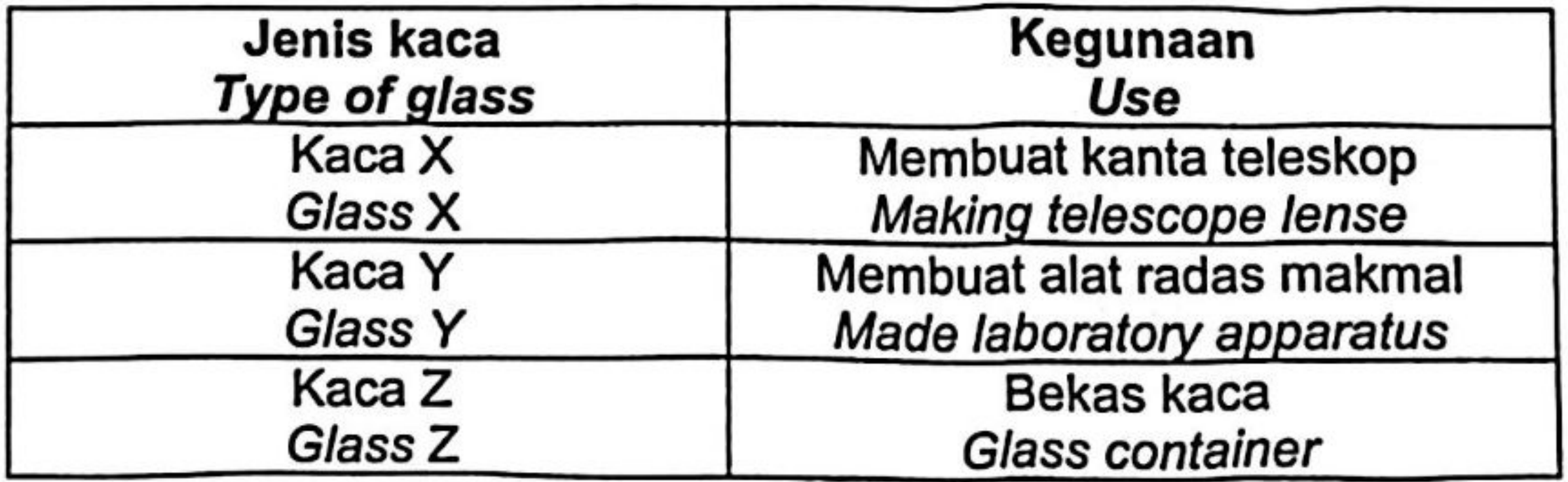
- (c)
Based on Diagram 10.3, state the type of polymerization for the formation of the polymer. Write the polymerization reaction equation for the formation of polystyrene. Calculate the relative molecular mass of the monomer and state other uses of polystyrene. [Relative atomic mass: C = 12, H = 1]
[5]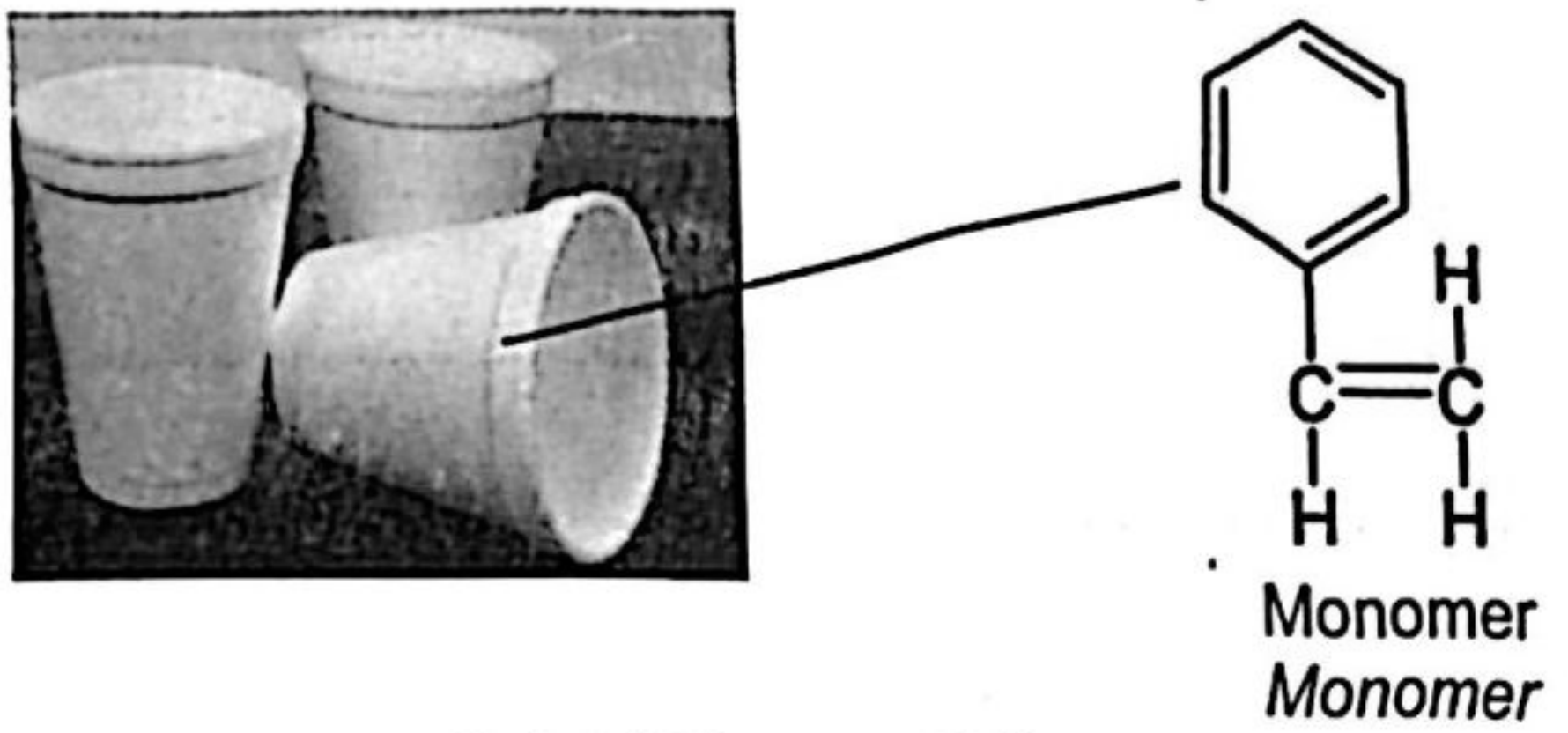
Section C
Section C (answer all). (a) Table 11 shows the molecular formula and heat of combustion of ethanol (C₂H₅OH, -1368 kJ mol⁻¹) and propanol (C₃H₇OH, -2022 kJ mol⁻¹). (b) "The heat released when a strong acid reacts with a strong alkali is higher than the heat released when a weak acid reacts with a strong alkali."
Hard20 marks- (a)(i)
State the definition of heat of combustion.
[1] - (a)(ii)
Based on the information in Table 11, state the type of reaction that occurs in the combustion of ethanol and propanol. Compare the heat of combustion produced and explain why the heat of combustion values obtained are different.
[4]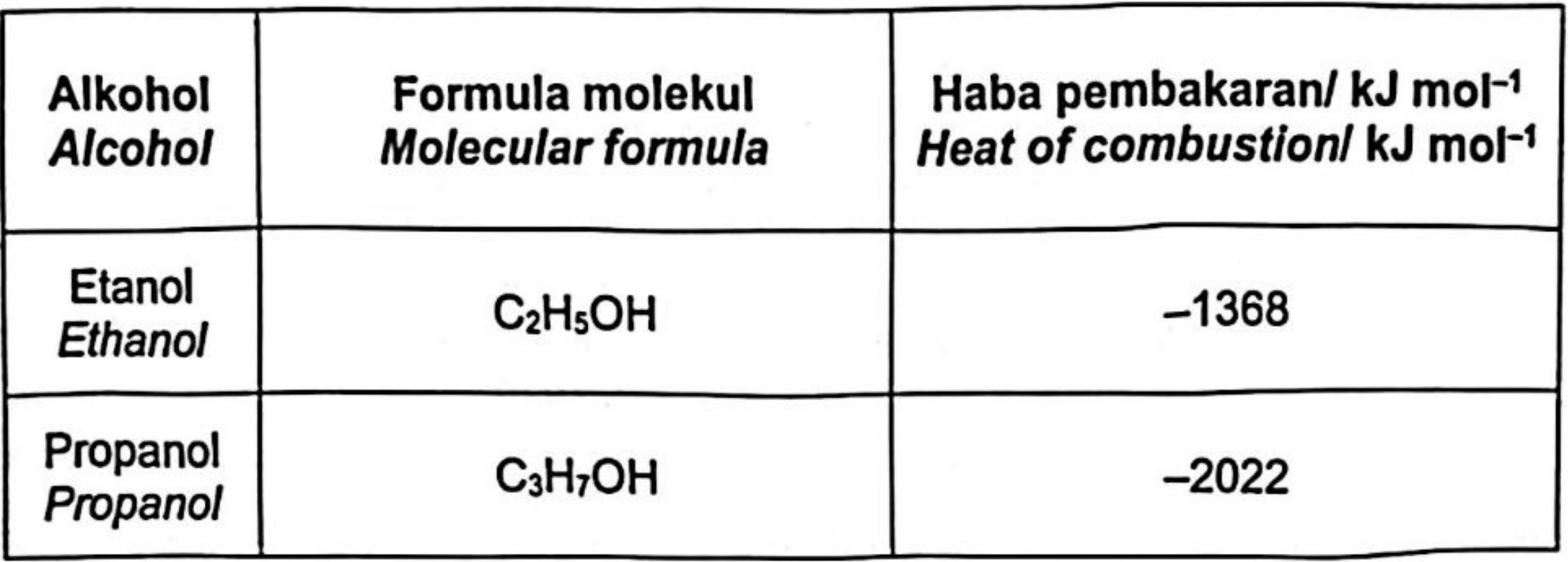
- (a)(iii)
Ethanol is burned in excess oxygen released carbon dioxide gas and water. Write the chemical equation for the reaction occured. Then, calculate the volume of carbon dioxide gas is produced at room condition if 92 g ethanol is burnt. [Molar mass of ethanol: 46 g mol⁻¹] [Molar volume at room condition: 24 dm³ mol⁻¹]
[5] - (a)(iv)
Fariha has conducted an experiment to determine the heat of combustion of propanol in the laboratory. Based on the experimental results obtained by Fariha, it was found that the heat of combustion of propanol is lower than that in Table 3. Explain why.
[2] - (b)
Suggest suitable examples of acid and alkali, describe the method to prove the above statement.
[8]