JOHOR SET 6 2023 P2 Q11
MediumWrite your answer on paper. Then open the answer to check it.
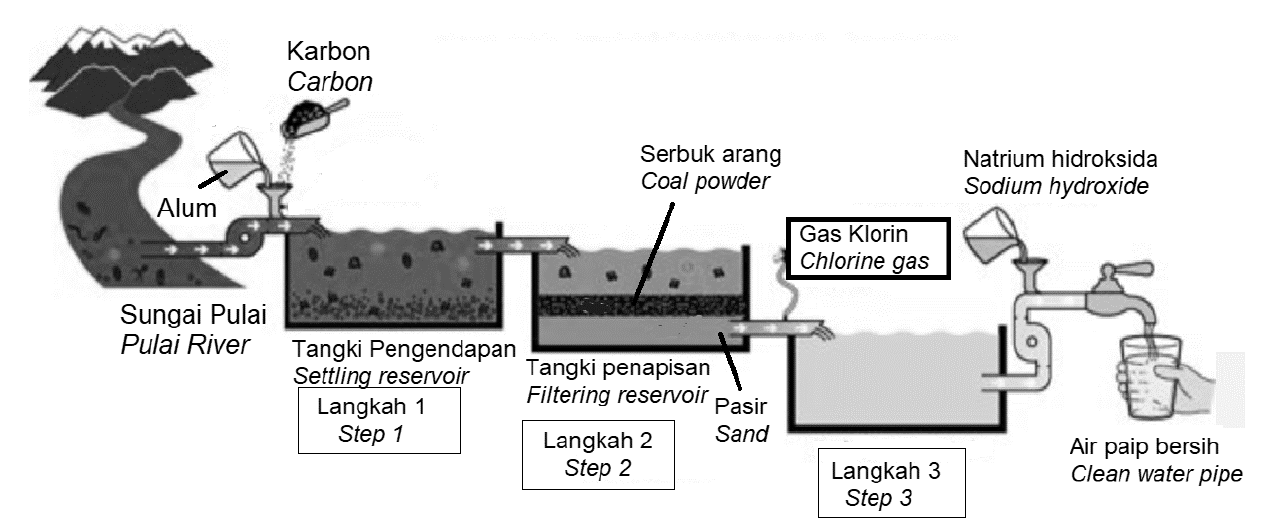
Diagram 11.1: substance X added to latex causes the latex to coagulate (clumps form); substance Y added to latex leaves it as a liquid (no coagulation). Diagram 11.2: vulcanisation of latex polymer (poly(2-methylbuta-1,3-diene) chains) with sulphur. Diagram 11.3: water purification steps (step 1 settling reservoir with alum, step 2 filtering reservoir with sand and coal powder/carbon, step 3 chlorine gas and sodium hydroxide before clean water pipe). Cl2(g) + H2O(l) → HOCl(aq) + HCl(aq).
Medium20 marks- (a)
Latex is a natural polymer. What is the meaning of polymer?
[1]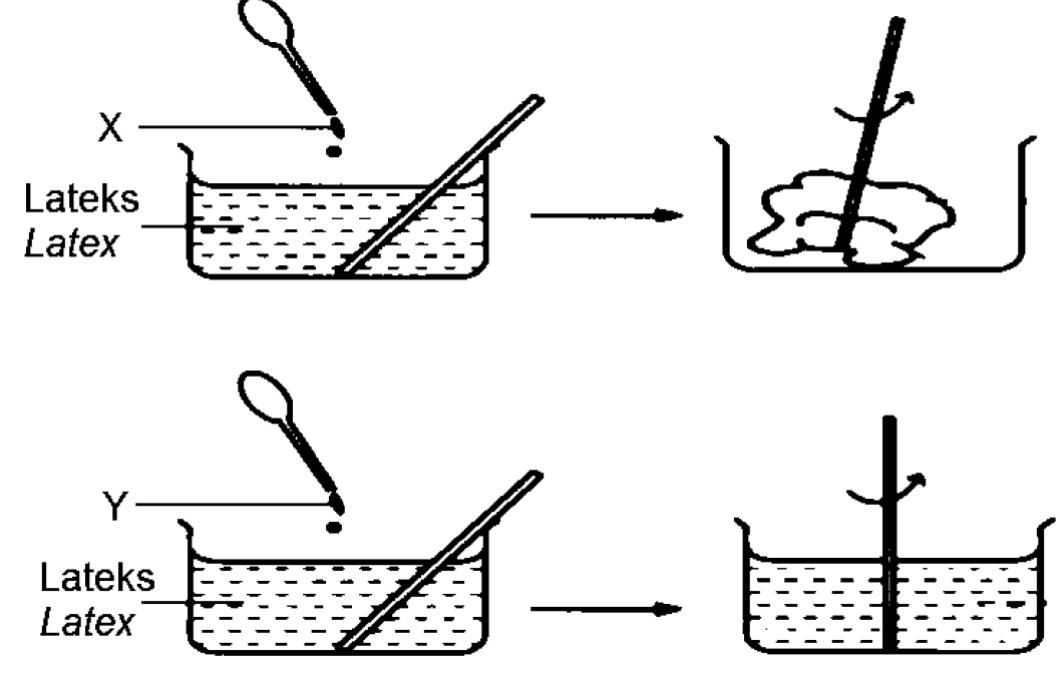
- (b)(i)
Identify X and Y.
[2] - (b)(ii)
State the difference in observations of latex by substance X and substance Y. Explain your answer.
[5] - (b)(iii)
Diagram 11.2 shows the vulcanisation process of latex polymer to make it more elastic and not easily oxidised. Draw and label the structural formula of this latex polymer.
[2]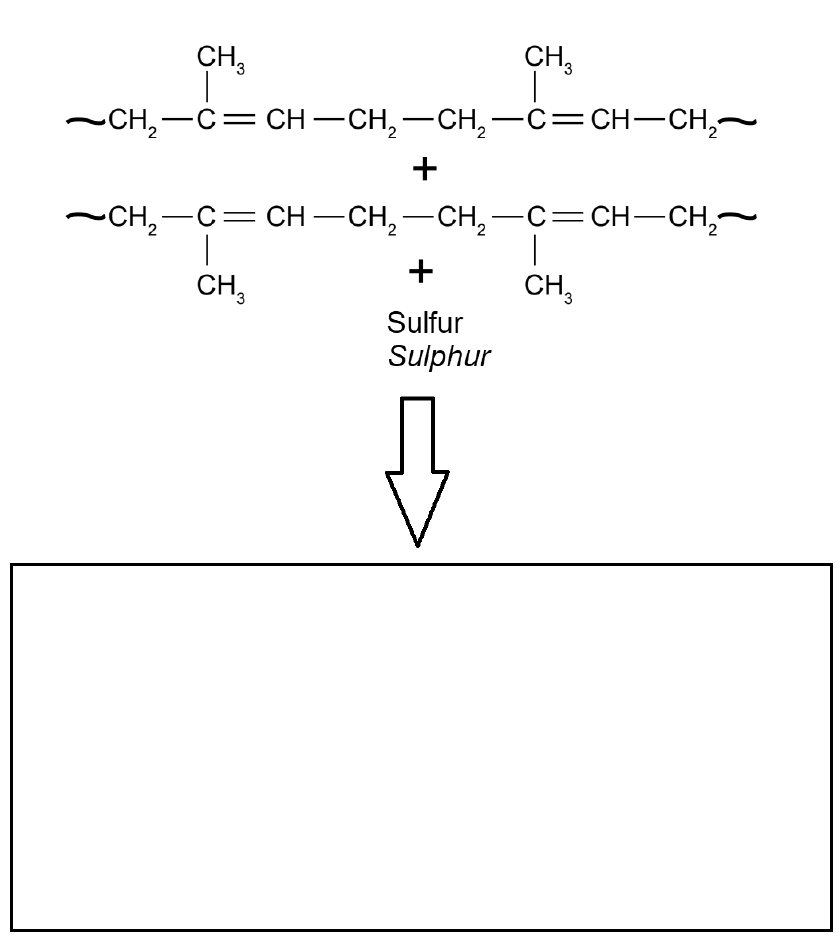
- (b)(iv)
Calculate the pH value of sulphuric acid with a concentration of 0.1 mol dm-3.
[2] - (d)
In step 3 of Diagram 11.3, chlorine gas dissolves and reacts with water: Cl2(g) + H2O(l) → HOCl(aq) + HCl(aq). The hydrochloric acid in tap water must be neutralised by the solution named in step 3 before it reaches the user. Using your knowledge of chemistry, describe how to determine the concentration of hydrochloric acid in the treated water in the laboratory using phenolphthalein solution, conical flask, burette and other materials and apparatus.
[8]