MRSM 2021 P2 Q10
MediumWrite your answer on paper. Then open the answer to check it.
Diagram 10.1 shows two types of synthetic polymer that undergo heating process to study the ability of the respective polymer to be recycled (Synthetic polymer A: plastic bottle before heating, reshaped bottle after; Synthetic polymer B: bowl before heating, black powder after).
Medium20 marks- (a)
Based on Diagram 10.1, compare the observation for synthetic polymer A and synthetic polymer B after heating. Explain your answer.
[5]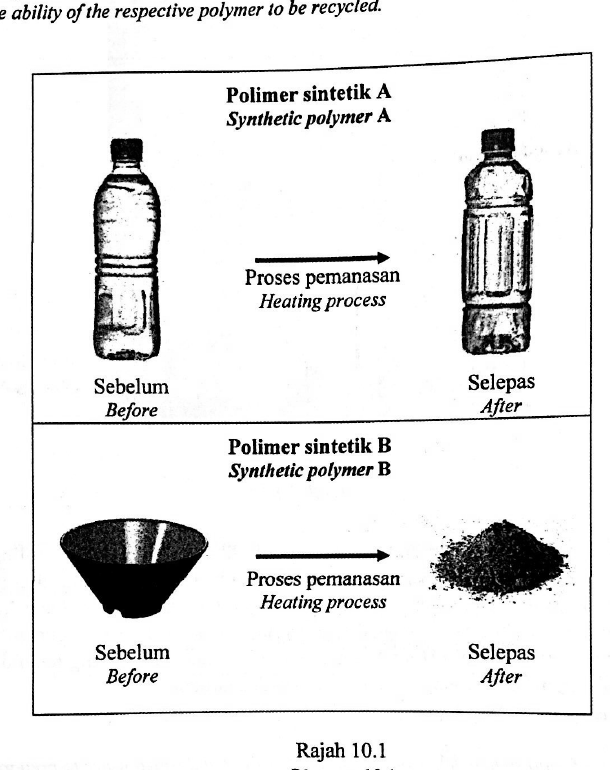
- (b)
Diagram 10.2 shows information about two polymers, terylene (monomers: terephthalic acid and 1,2-ethanediol) and polyvinyl chloride (monomer: vinyl chloride). Terylene and polyvinyl chloride are polymers produced through different polymerisation reactions. State the meaning of polymer and compare the polymerisation reaction of terylene and polyvinyl chloride. Suggest another polymer that can be produced for each polymerisation reaction involved.
[5]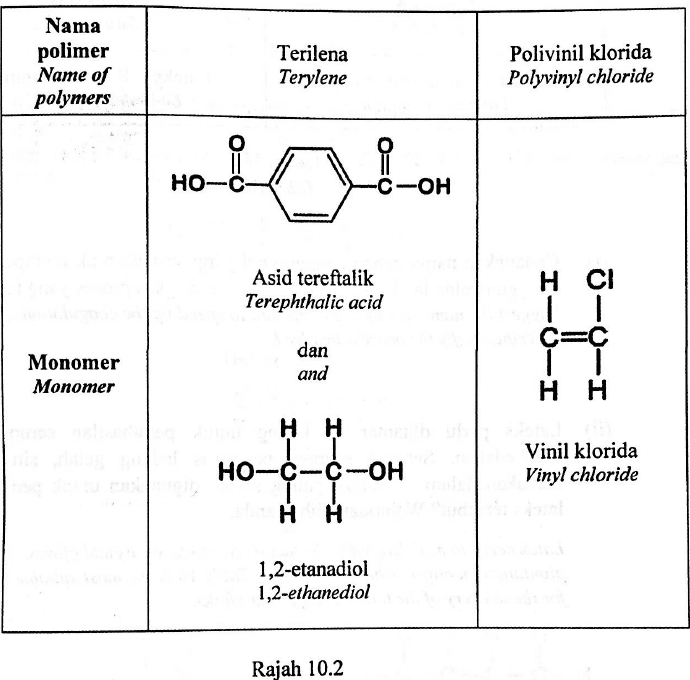
- (c)(i)
Table 10 shows two situations involving latex: Situation A: latex + coagulant; Situation B: latex + anticoagulant. Suggest the name of suitable coagulant to speed up the coagulation of latex and describe briefly the process involved.
[4]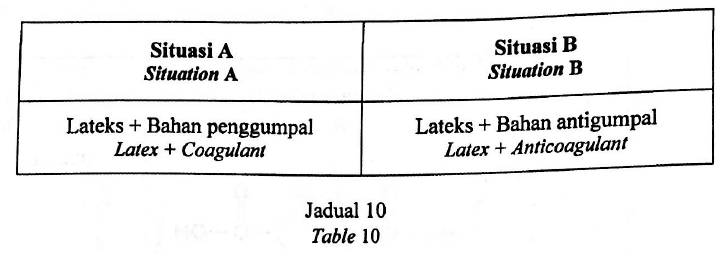
- (c)(ii)
Latex needs to be delivered to the factory to produce surgical gloves. As a rubber plantation manager, which situation in Table 10 is the most suitable to be used for the delivery of the latex? Justify your choice.
[6]