KELANTAN 2021 P2 Q11
HardWrite your answer on paper. Then open the answer to check it.
Section C, compulsory. Ali is a gastric patient. Diagram 11.1 shows the antacid medication (aluminium hydroxide and magnesium hydroxide) that Ali takes.
Hard20 marks- (a)(i)
What is the meaning of base?
[1]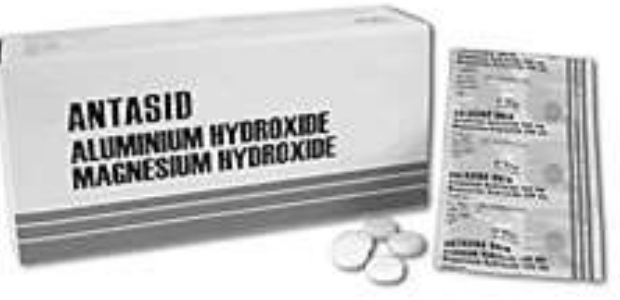
- (a)(ii)
How can the medicine in Diagram 11.1 help Ali to treat his gastric pain?
[2] - (a)(iii)
The mass of medicine taken by Ali is 1000 mg where the ratio of aluminium hydroxide to magnesium hydroxide is 1 : 0.6. The concentration of hydrochloric acid in Ali's stomach is 1.0 mol dm-3. Determine the number of moles of acid that have reacted with one of the substances in the medicine. [Molar mass: Al(OH)3 = 78 g mol-1, Mg(OH)2 = 58 g mol-1; 1 g = 1000 mg]
[4] - (b)
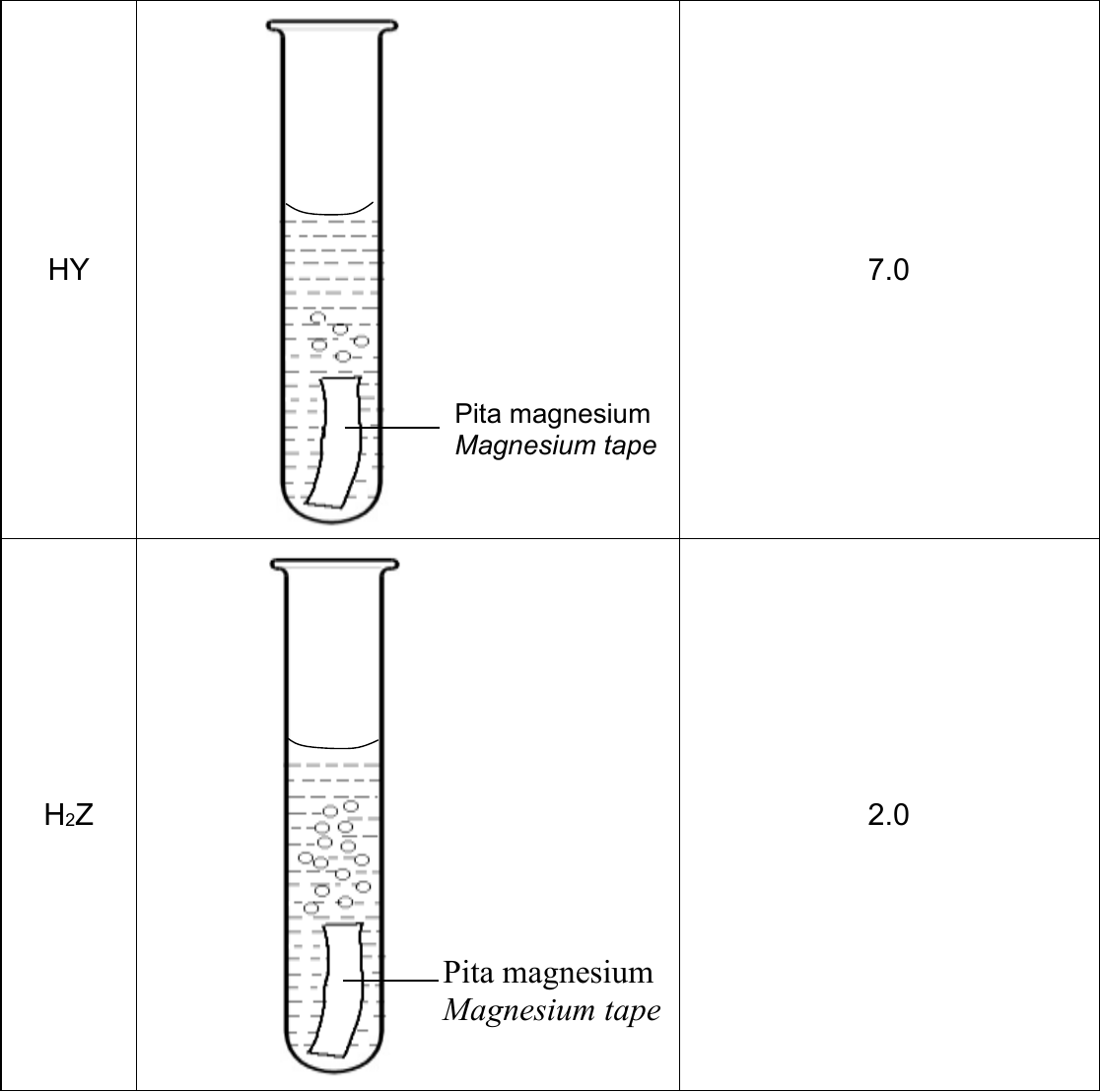
Three pieces of magnesium tape of equal length were inserted into three different acids of concentration 1.0 mol dm-3. Table 11 shows the observations (HX: 4.5 min; HY: 7.0 min; H2Z: 2.0 min). In your opinion, why are there differences in the above observations for the reactions? Give suitable examples of acids HY and H2Z.
[5]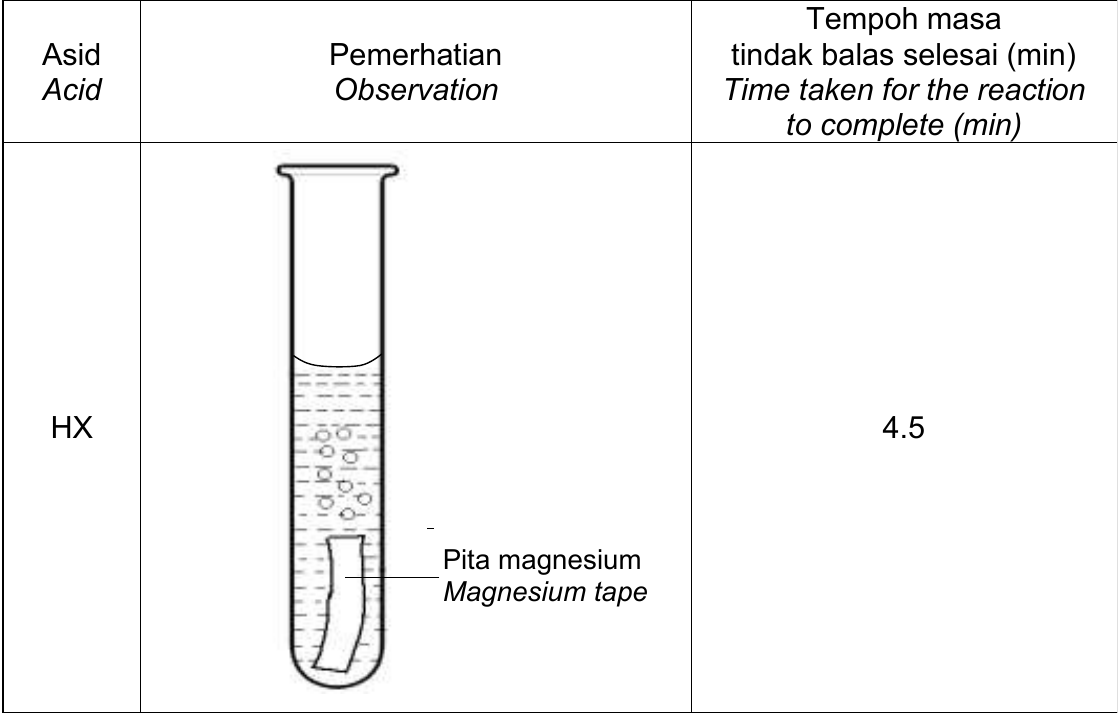
- (c)
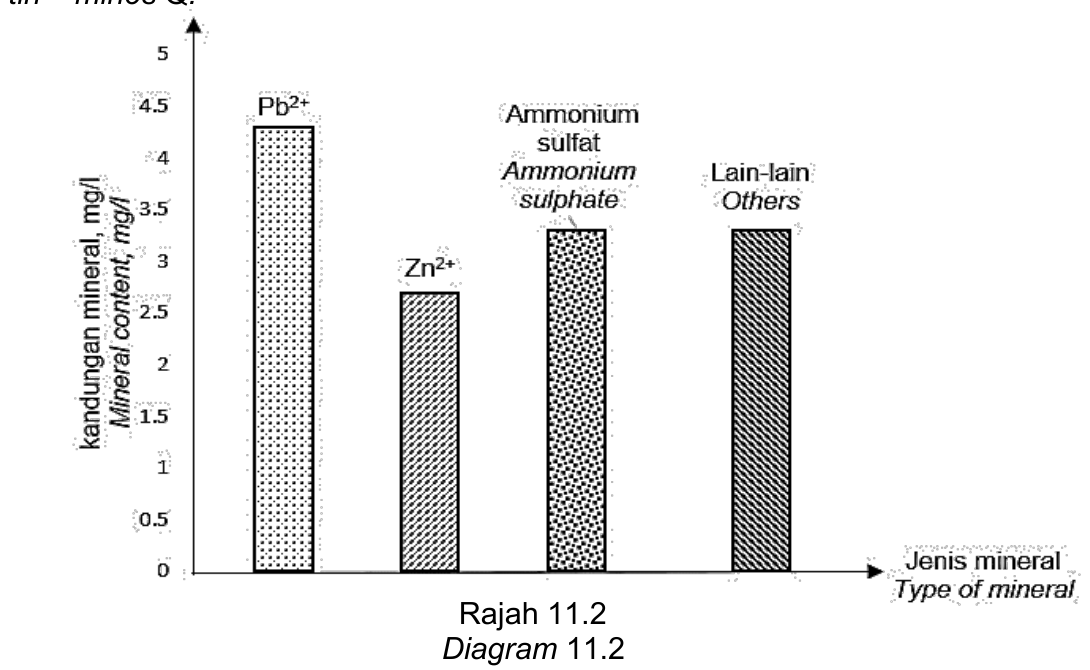
Diagram 11.2 shows a graph of the type of mineral and its content in the water of tin mine Q (Pb2+ about 4.3 mg/l, Zn2+ about 2.7, ammonium sulphate about 3.4, others about 3.3). Q is a tin mine that has ceased operating, located near an agricultural area. The water is unsafe to drink and smells bad because it contains heavy metals and fertiliser from agricultural areas as a result of leaching, and sediment is formed. In your opinion, why does the water smell bad and what is the name of the substance in the sediment? How would you prove that the water contains the ions of the compound you specify in the sediment, and verify the substance that causes the water to smell?
[8]