Write your answer on paper. Then open the answer to check it.
Section A
The volume of a bucket, I cm³, varies directly as the square of its radius, j. Using k as a constant, express k in terms of I and j. Hence calculate k if the volume is 1 250 cm³ and the radius is 25 cm.
Medium3 marksExpress k in terms of I and j; hence find k when I = 1 250 and j = 25.
[3]
Lokman has a major medical insurance policy with a deductible of RM1 000 and an 80/20 co-insurance. He was admitted to hospital and the medical cost was RM35 000. Calculate the cost borne by the insurance company and the cost borne by Lokman.
Medium4 marksCalculate the cost borne by the insurer and by Lokman.
[4]
A white tile costs RMx and a black tile costs RMy. Table 3 shows two tile arrangements (5 × 5 chequered patterns of white and black tiles) with total prices RM101 (first suggestion) and RM91 (second suggestion). Using the matrix method, calculate x and y.
Medium5 marks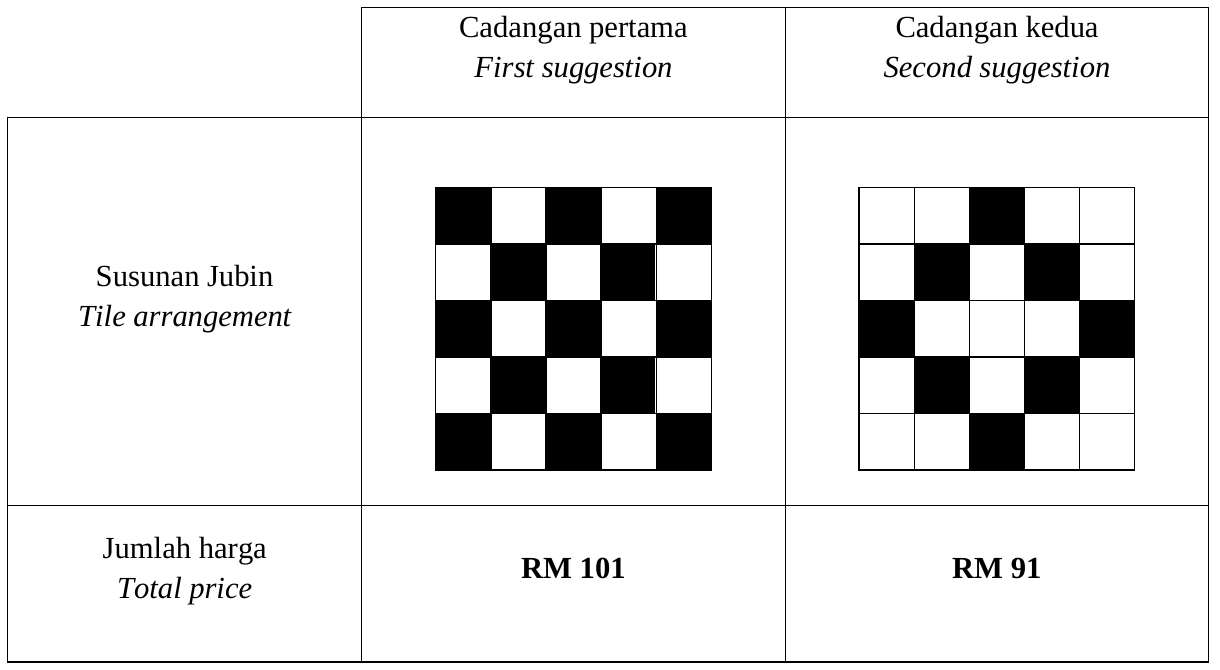
Using the matrix method, calculate x and y (see Table 3).
[5]
The volume of a medal in Diagram 4 is 404 cm³ and the volume of the crescent is 60 cm³. The medal stands on a cuboid base 8 cm × 8 cm × 4 cm. Mr Azam wants to change the pillar to a cylinder, keeping the original volume. Find the height of the cylinder if its radius is 2 cm. Use π = 22/7.
Medium4 marks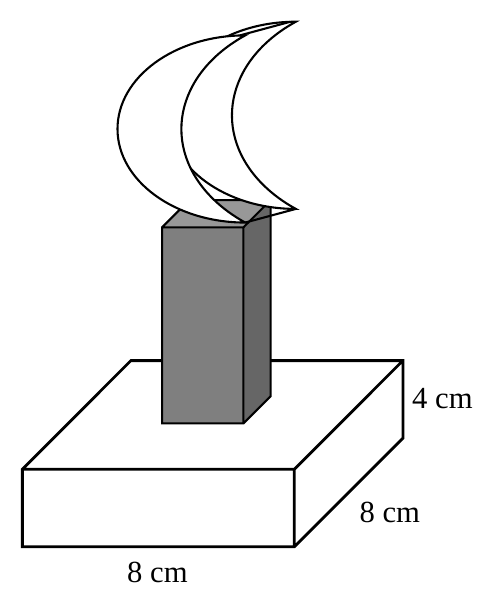
Find the height of the cylindrical pillar.
[4]
In Diagram 5, PQRS is a trapezium and O is the origin. PQ is parallel to SR and PS is parallel to the y-axis. P(−2, 4), Q(4, 6), R(9, 1). Find the equation of the straight line PS and the equation of the straight line RS.
Medium4 marks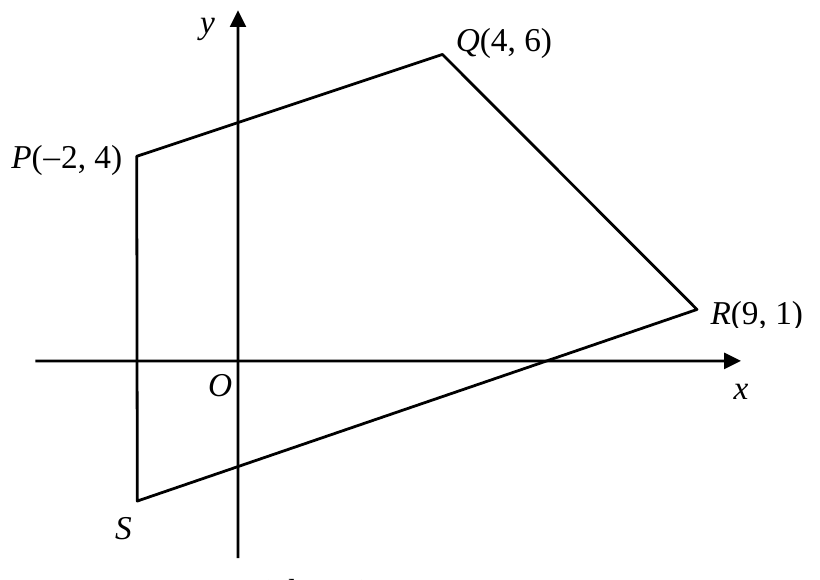
Find the equations of PS and RS.
[4]
(a) State whether '81 is divisible by 9 or 81 is divisible by 4' is true or false. (b) Write two implications based on: √x = 7 if and only if x = 49. (c) Premise 1: If 5x = 20, then x = 4. Premise 2: x ≠ 4. Conclusion: ____
Medium4 marks- (a)
True or false: 81 is divisible by 9 or 81 is divisible by 4.
[1] - (b)
Write two implications based on: √x = 7 if and only if x = 49.
[2] - (c)
Premise 1: If 5x = 20, then x = 4. Premise 2: x ≠ 4. Write the conclusion.
[1]
Diagram 6 in the answer space shows an incomplete Venn diagram with a rectangle labelled S. Construct set R such that R is a subset of S and hence shade R′.
Medium3 marks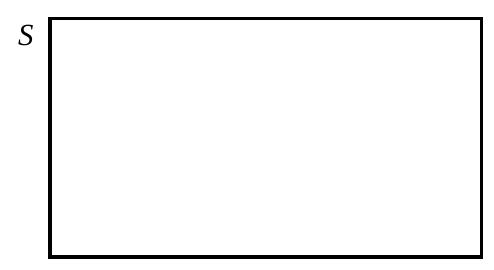
Draw set R inside S and shade R′.
[3]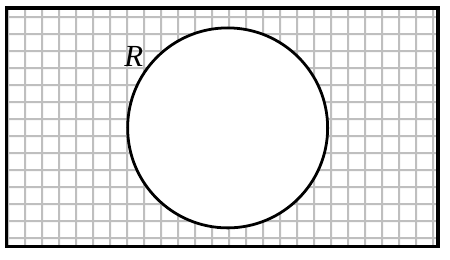
Complete Table 8 in the answer space and then, using a scale of 2 cm to 1 unit on the x-axis and 2 cm to 5 units on the y-axis, draw the graph of y = 2x² + 5x − 7 for −5 ≤ x ≤ 2 and −10 ≤ y ≤ 18. Table 8: x = −5, −4, −3, −2, −1, 0, 1, 2; y = 18, 5, −4, −9, [blank], −7, 0, 11.
Medium5 marks
- (a)
Complete the table: find y when x = −1.
[1] - (b)
Draw the graph of y = 2x² + 5x − 7 for −5 ≤ x ≤ 2 using the given scales (graph paper in the answer space).
[4]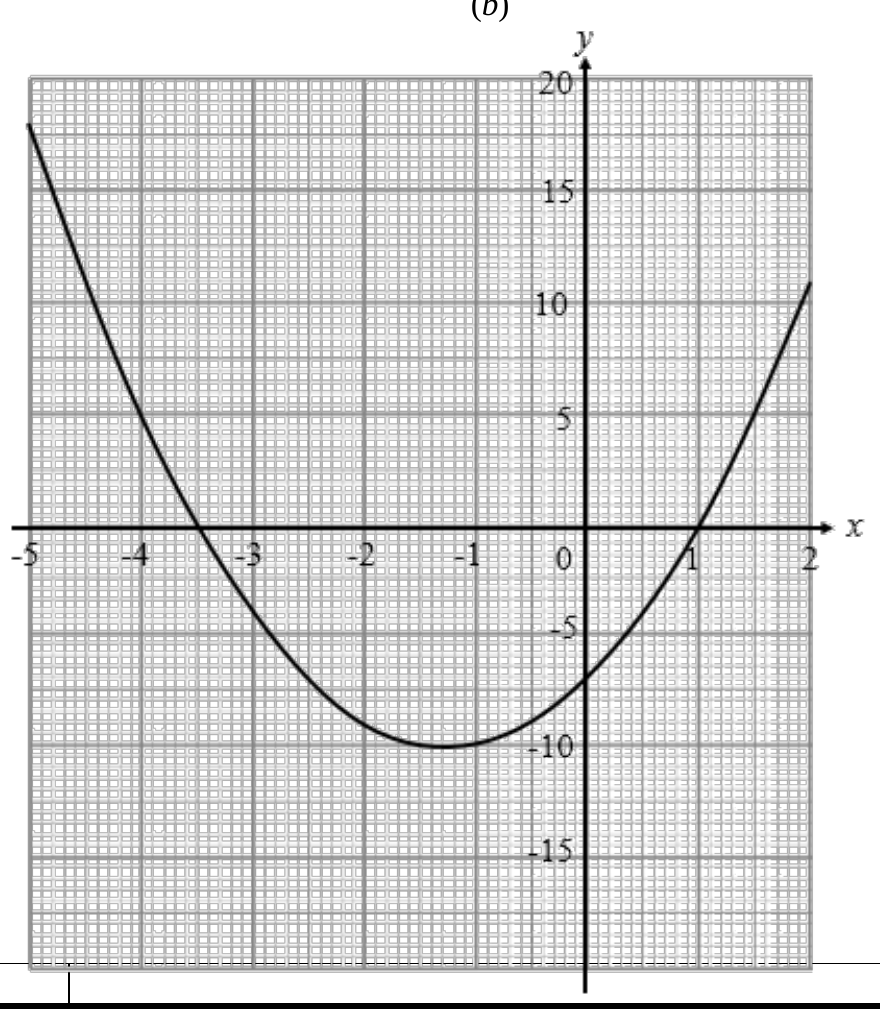
Amin and Bob bought chocolates at a supermarket. Bob bought twice the number bought by Amin. After each ate 3 chocolates, the product of the numbers of chocolates left is 14. Calculate the number of chocolates bought by Amin.
Medium4 marksCalculate the number of chocolates bought by Amin.
[4]
Diagram 10 shows eight labelled cards. Box Y has J, 4, Q, R. Box Z has M, 5, N, 8. A card is picked at random from box Y and then another card from box Z. List the sample space and then, by listing the possible outcomes of the event, find the probability that one card is labelled with a letter and the other is labelled with a number.
Medium4 marks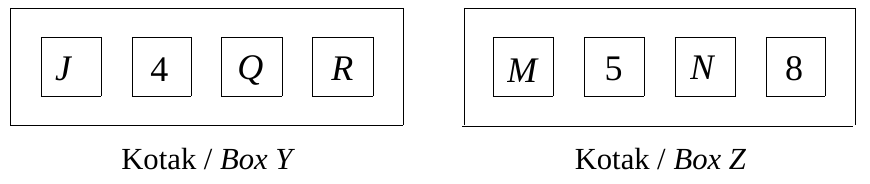
List the sample space, list the outcomes of the event and find the probability.
[4]
Section B
Table 11 shows Cik Sara's financial plan (RM). Net income 4100; passive income 400; total monthly income 4500; minus fixed monthly savings 0; minus savings for emergency fund 200; income balance T. Monthly fixed expenses: housing loan 1500; car instalment 750; total 2250. Monthly variable expenses: groceries 1000; utility bills 550; travel savings 600; total U. Surplus of income V.
Medium9 marks- (a)
Calculate the values of T, U and V.
[3] - (b)
Calculate Cik Sara's cash flow. Determine whether she manages her finances efficiently or inefficiently and justify.
[3] - (c)
Cik Sara plans to buy land costing RM36 000 within 3 years. Calculate her monthly savings and give two improvement suggestions.
[3]
Diagram 12 shows a speed-time graph of a particle for 37 seconds. The speed rises from 0 to 18 m s⁻¹ at time t, falls to 12 m s⁻¹ at 15 s, stays at 12 m s⁻¹ until 25 s, then falls to 0 at 37 s.
Medium9 marks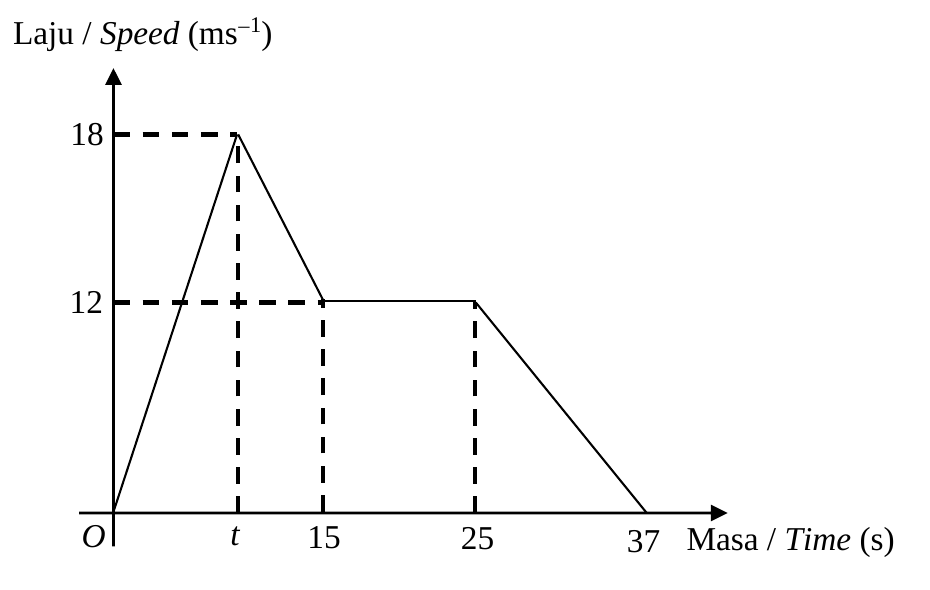
- (a)(i)
State the uniform speed, in m s⁻¹, of the particle.
[1] - (a)(ii)
State the duration, in s, that the particle moves with uniform speed.
[1] - (b)
Calculate the deceleration, in m s⁻², of the particle in the last 12 seconds.
[2] - (c)
Calculate the value of t if the total distance travelled in the first 15 seconds is 165 m.
[3] - (d)
Describe the motion of the particle in the last 22 seconds.
[2]
Diagram 13 shows the scores of 24 students in a Maths quiz: 14 21 20 25 26 38 / 17 23 35 29 30 12 / 22 28 15 19 25 33 / 31 23 30 22 18 30.
Medium9 marks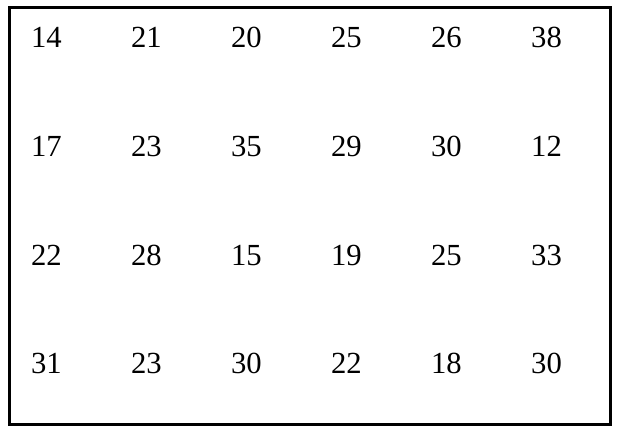
- (a)
Complete Table 14 (class intervals 11–15, 16–20, 21–25, 26–30, 31–35, 36–40 with frequency and midpoint).
[3] - (b)
Calculate the estimated mean score of a student.
[2] - (c)
Using a scale of 2 cm to 5 marks on the horizontal axis and 2 cm to 1 student on the vertical axis, draw a histogram of the data (graph paper provided).
[3]
- (d)
State the shape of the distribution of the histogram.
[1]
Diagram 14.1 shows a right prism with square base ABCD (AB = 7 cm) on a horizontal plane. ABKJGF is the uniform cross section (AB = 7 cm, AF = 8 cm, EF = 7 cm, EH = 3 cm, JK = 2 cm, CL = 4 cm). Rectangle GJMH is an inclined plane; FGHE and JKLM are horizontal. Edges AF and CL are vertical. (a) Draw to full scale the plan of the solid. (b) Another right prism with rectangular base PQRT is joined at the vertical plane TCLMH (Diagram 14.2; PQVU is the uniform cross section with PU = QV = 9 cm, PQ = 2 cm, WV = 6 cm; HUVW is an inclined plane). Draw to full scale the elevation of the composite solid on a vertical plane parallel to AB, as viewed from Y. Graph paper must not be used.
Medium9 marks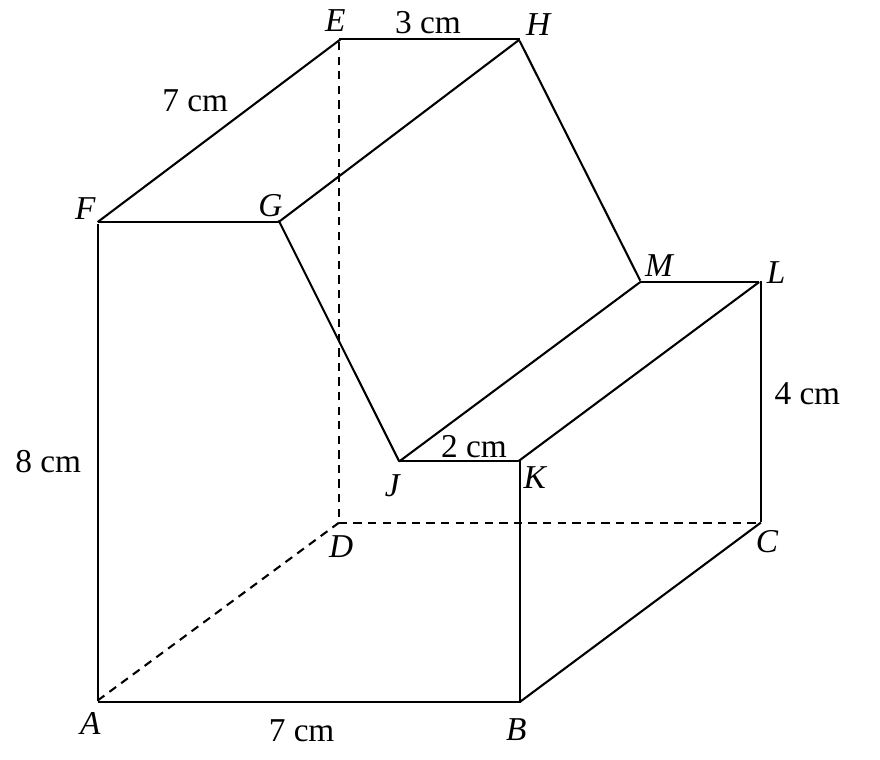
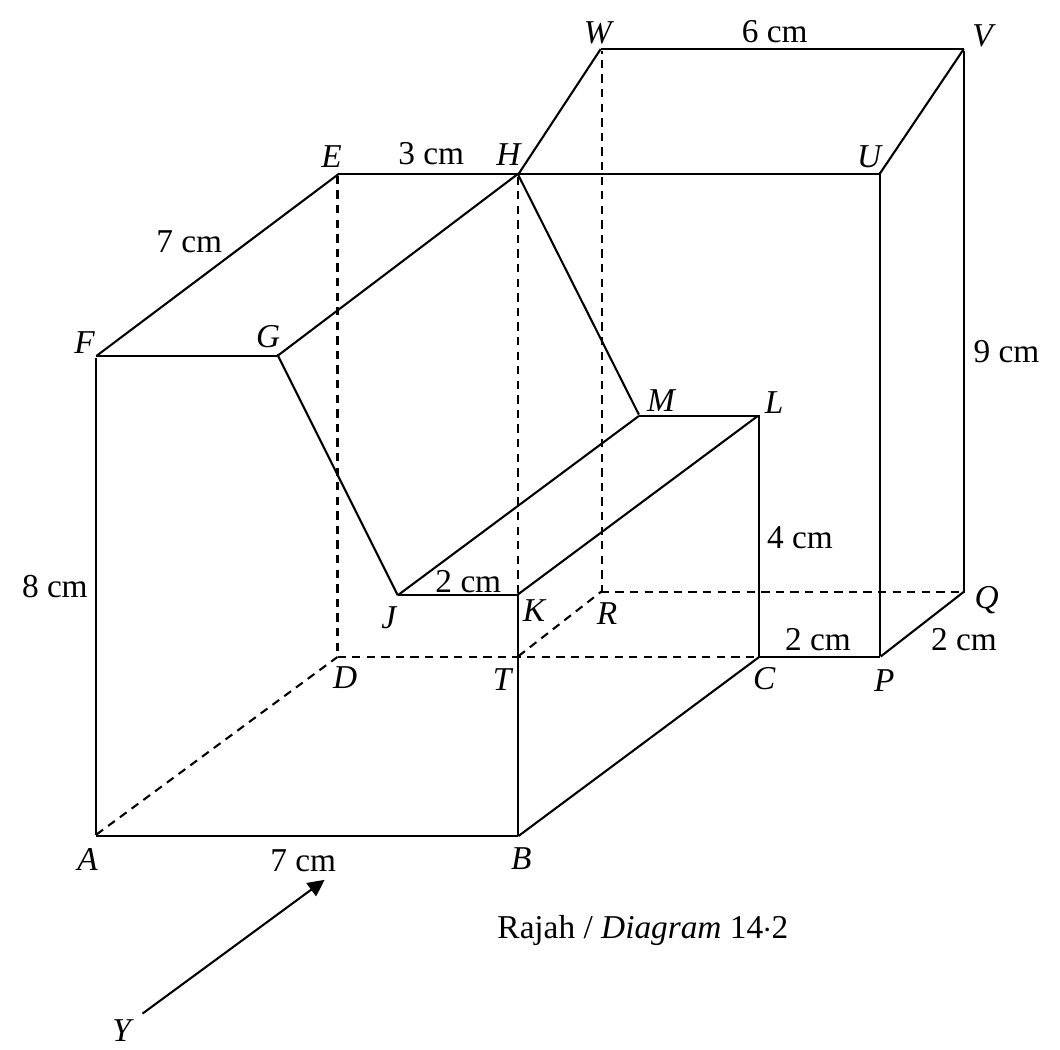
- (a)
Draw to full scale the plan of the solid in Diagram 14.1.
[4]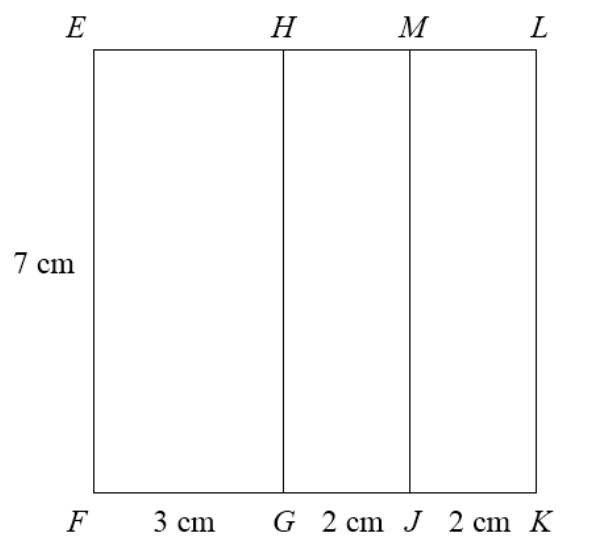
- (b)
Draw to full scale the elevation of the composite solid on a vertical plane parallel to AB as viewed from Y (Diagram 14.2).
[5]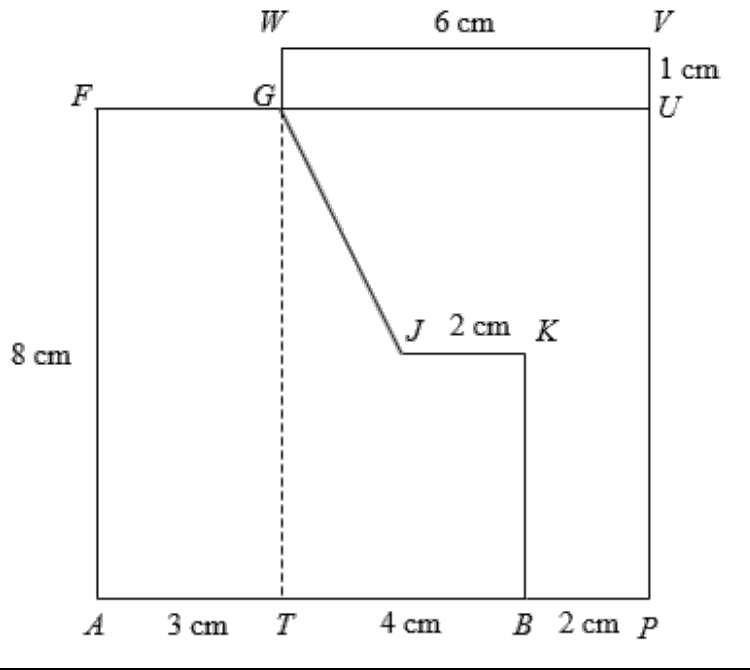
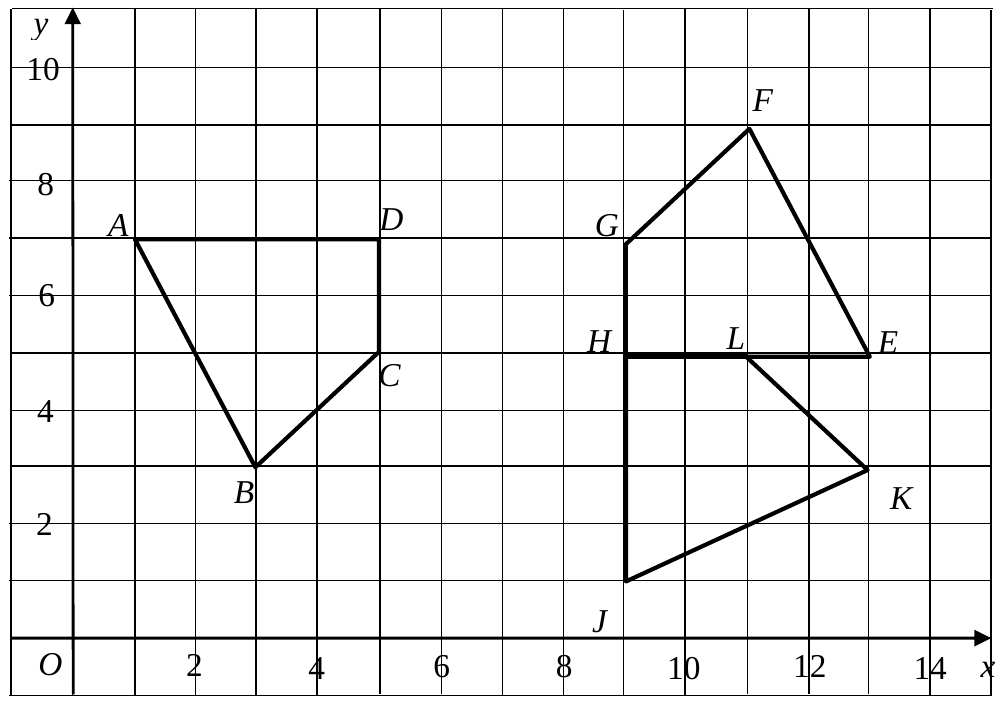
(a) Diagram 15.1 shows the point (2, 4) and the line y = 1. T is a translation [[2], [−3]]; P is a reflection in y = 1; R is a clockwise rotation of 90° about the centre (2, 2). State the coordinates of the image of (2, 4) under (i) T, (ii) P, (iii) R. (b) Diagram 15.2 shows quadrilaterals ABCD, EFGH and JKLH. EFGH is the image of ABCD under V. JKLH is the image of EFGH under W. Describe in full (i) V, (ii) W.
Medium9 marks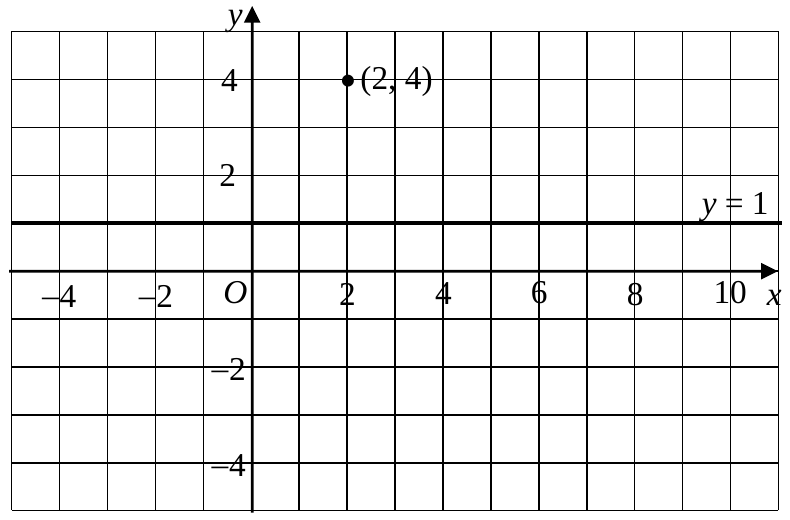
- (a)(i)
Image of (2, 4) under T.
[1] - (a)(ii)
Image of (2, 4) under P.
[1] - (a)(iii)
Image of (2, 4) under R.
[1] - (b)(i)
Describe in full the transformation V (ABCD to EFGH).
[3] - (b)(ii)
Describe in full the transformation W (EFGH to JKLH).
[3]
Section C
Diagram 16.1 shows an abandoned rectangular land PQRS. Triangle AQB is a swamp with AQ = BR = x m. PA = 35 m and QB = 12 m (the English text prints 34 m and 10 m; the BM text and figure show 35 m and 12 m). (a)(i) Express SR in terms of x. (ii) Form a quadratic expression for the area L m² of the whole rectangle. (iii) Given the non-swampy area is 650 m², find x. (b) Pak Maun fences around PABRS with fence costing RM13 per metre; his budget is RM2 000. Determine whether the budget is sufficient if the installation fee is half of the total purchase price of the fence. (c) The quit rent rate is RM0.43 per square metre. Calculate the total area of the land and the quit rent payable each year.
Medium15 marks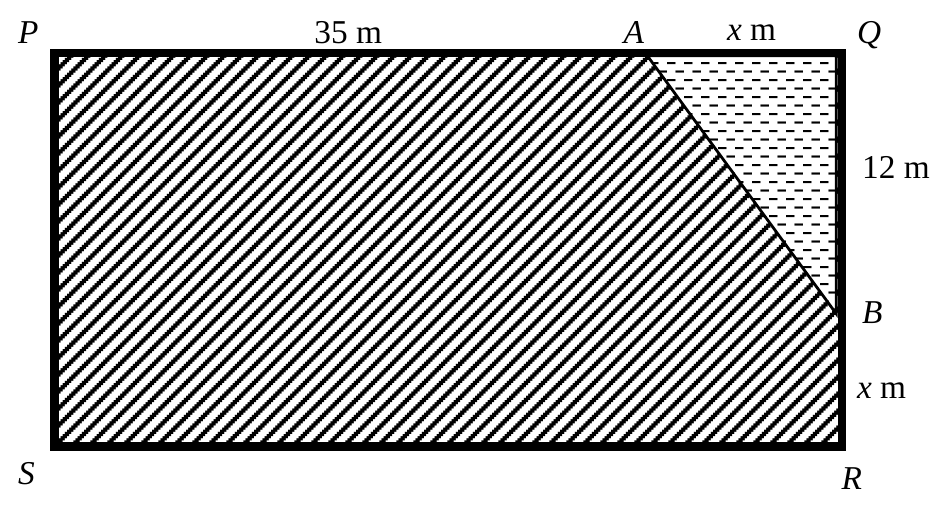
- (a)(i)
Express the length of SR in terms of x.
[1] - (a)(ii)
Form a quadratic expression for the area L m² of the whole land.
[2] - (a)(iii)
Given the non-swampy area is 650 m², calculate x.
[4] - (b)
Determine whether the RM2 000 budget is sufficient for fencing PABRS (installation = half the fence price).
[5] - (c)
Calculate the total area of the land and the quit rent payable each year.
[3]
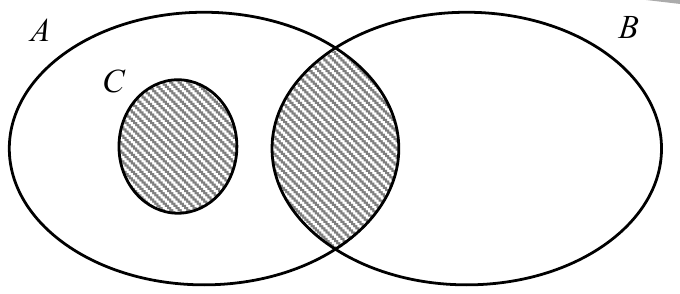
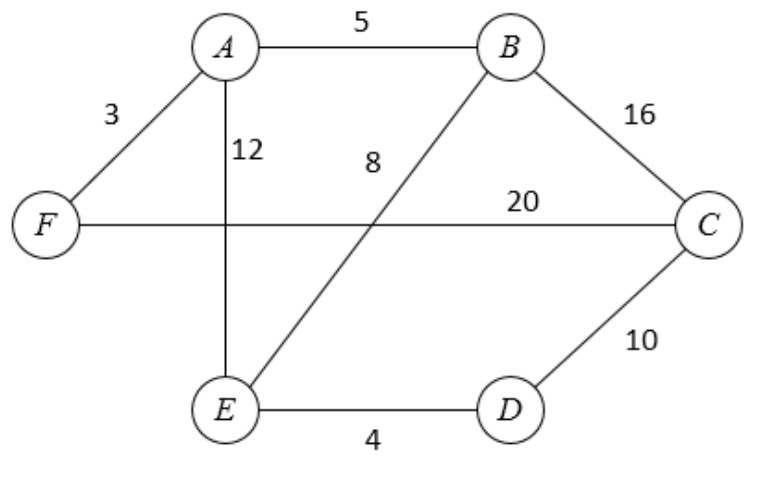
Companies A, B and C supply stationery (Table 17.1). A: Pen, Pencil, Ruler, Eraser, Notebook. B: Ruler, Eraser, Novel, Magazine. C: Pen, Notebook. (a)(i) Complete the Venn diagram for A, B and C. (ii) Shade the region and list the items under (A ∩ B) ∪ C. (b) Table 17.2 gives distances (km): A–B 5, A–E 12, A–F 3, B–C 16, B–E 8, C–D 10, C–F 20, D–E 4. (i) Complete the weighted graph. (ii) Draw one tree with the minimum distance and state it. (c) Encik Khairil applies for an RM200 000 loan: Option A 10 years at 3.5%; Option B 15 years at 3.8% (Table 17.3). (i) Calculate the monthly instalment for both options. (ii) Calculate the difference between the total repayments.
Medium15 marks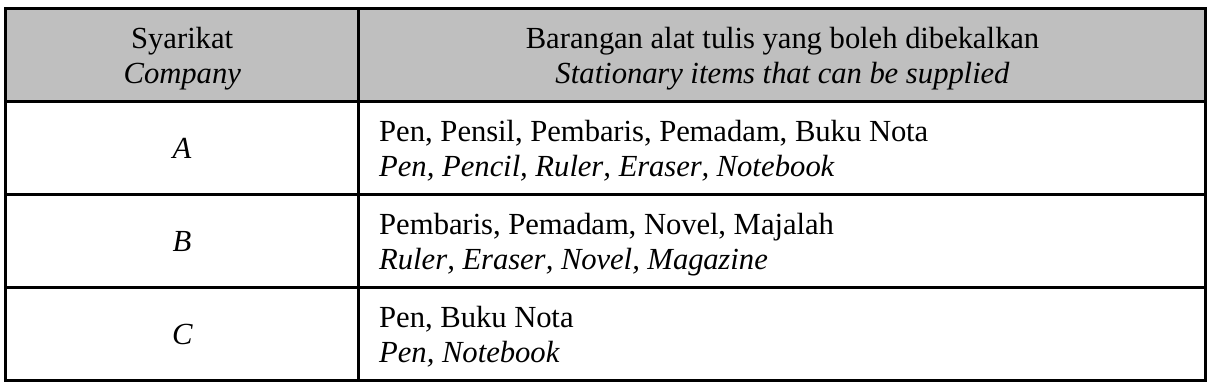
- (a)(i)
Complete the Venn diagram for companies A, B and C (Table 17.1).
[2]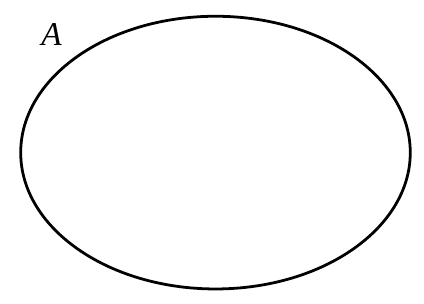
- (a)(ii)
Shade the region (A ∩ B) ∪ C and list all the items.
[3] - (b)(i)
Complete the weighted graph for the six companies (Table 17.2).
[2]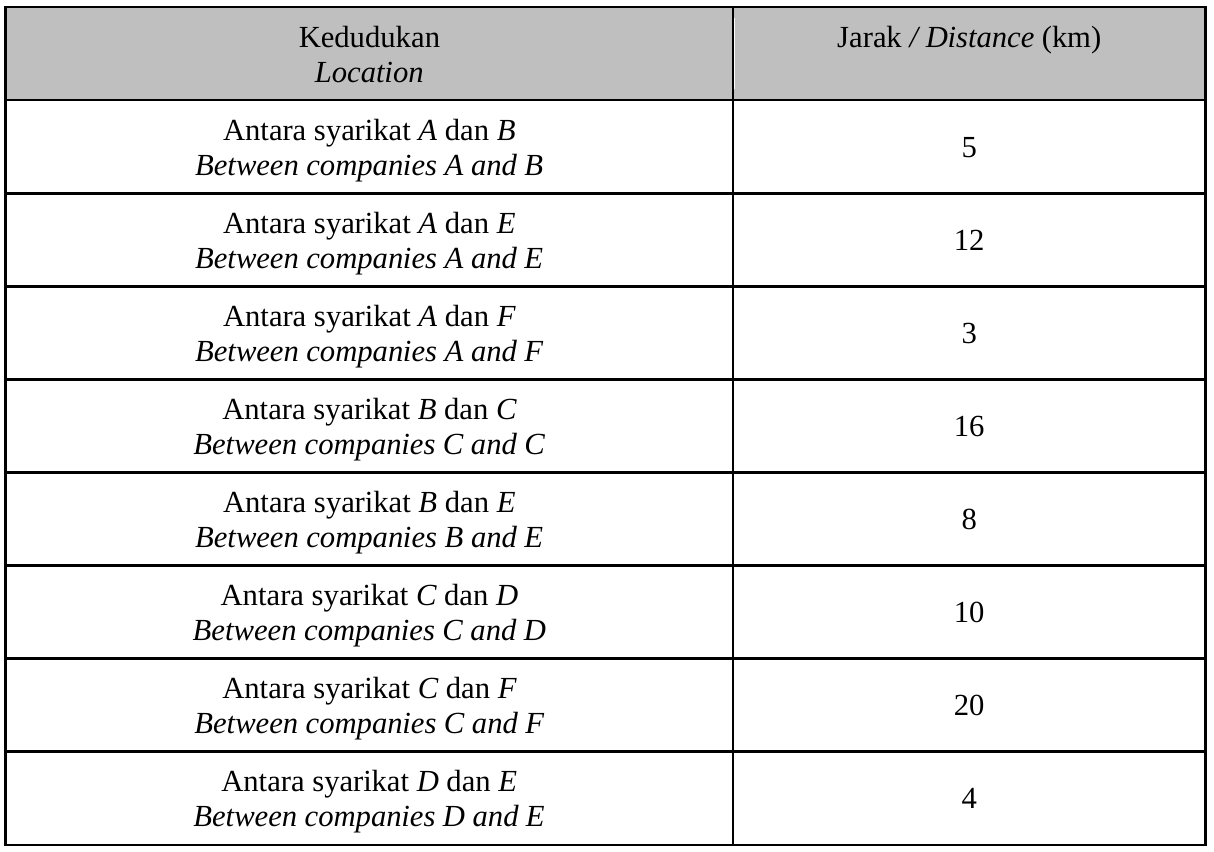
- (b)(ii)
Draw one tree with the minimum distance and state the minimum distance in km.
[3]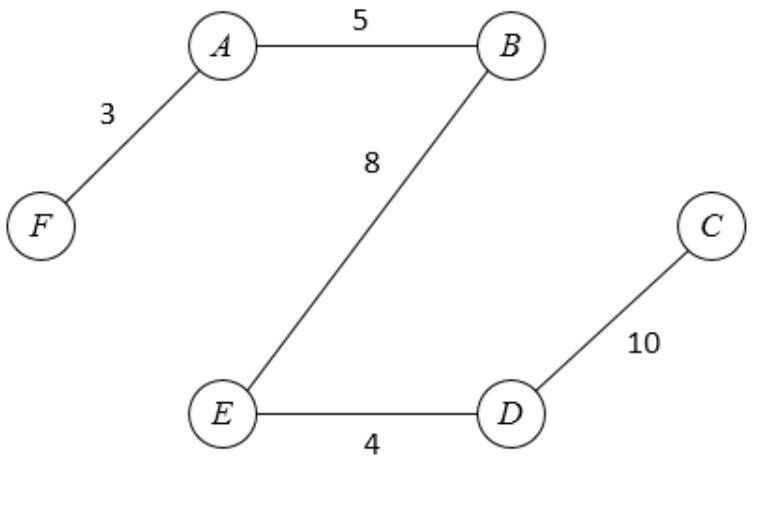
- (c)(i)
Calculate the monthly instalment for Option A and for Option B.
[4] - (c)(ii)
Calculate the difference between the total repayments of the two options.
[1]