Write your answer on paper. Then open the answer to check it.
Section A
Diagram 1 shows an irregular polygon (exterior angles 90°, 55°, x°, 74°, 40°, 62° at the vertices; interior angle 140° marked at the bottom vertex).
Medium3 marks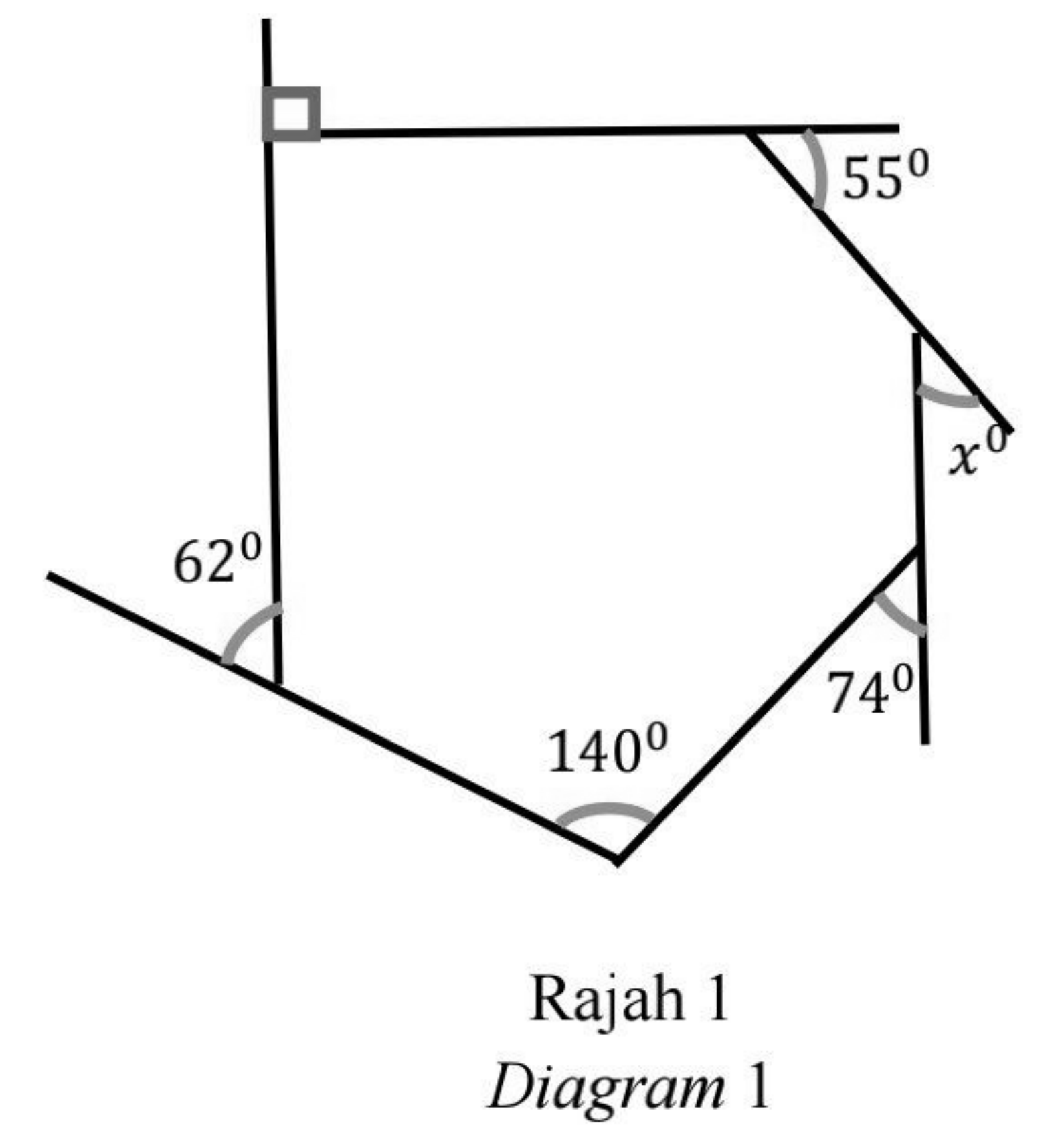
- (a)
Name the polygon in Diagram 1.
[1] - (b)
Find the value of x.
[2]
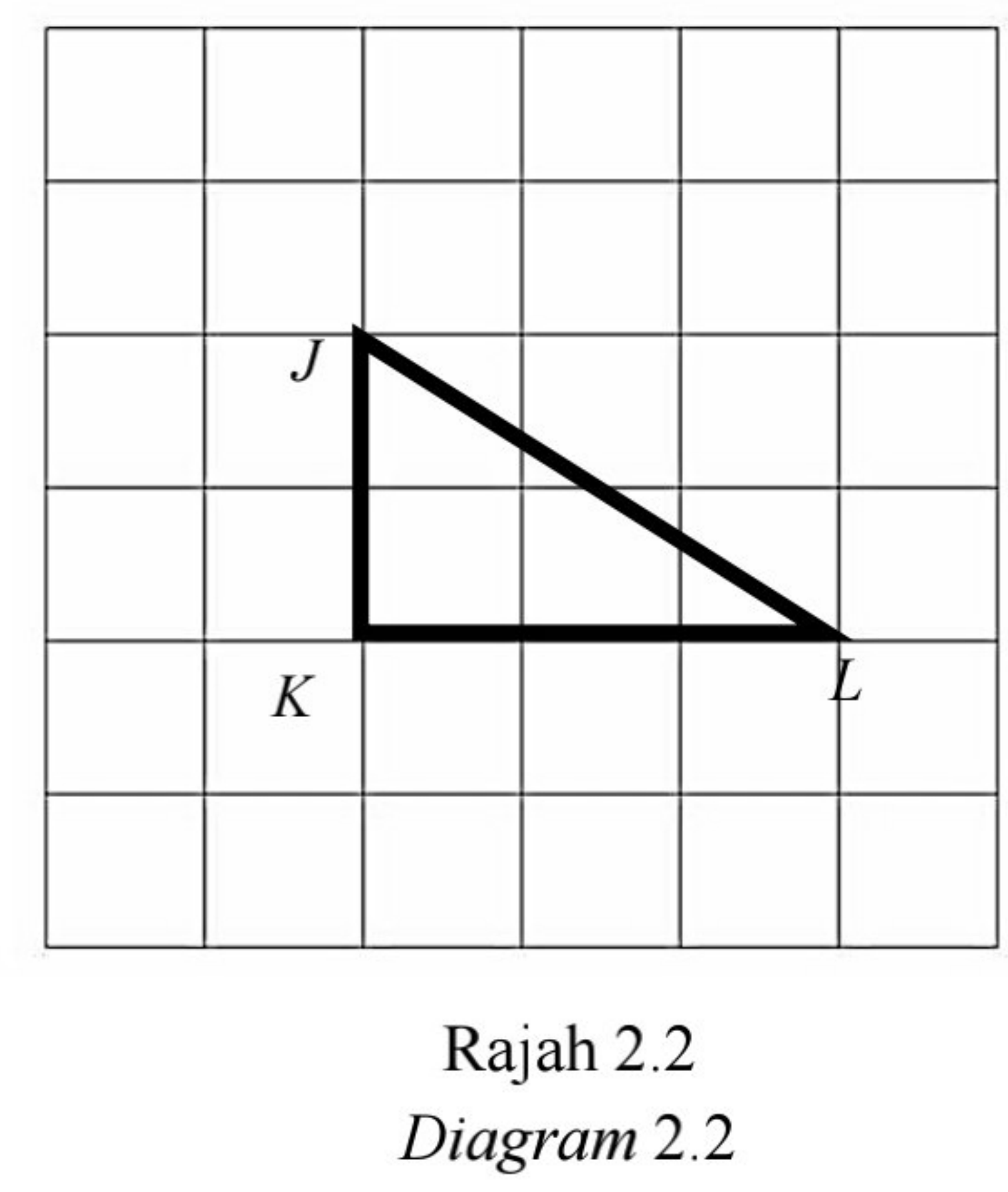
Diagram 2.1 shows the object ABCDE (AB = 3 cm, BC = 6 cm) while PQRST is the scale drawing of ABCDE (QR = 9 cm, QP = 4.5 cm). Diagram 2.2 shows the object JKL drawn in a square grid.
Medium3 marks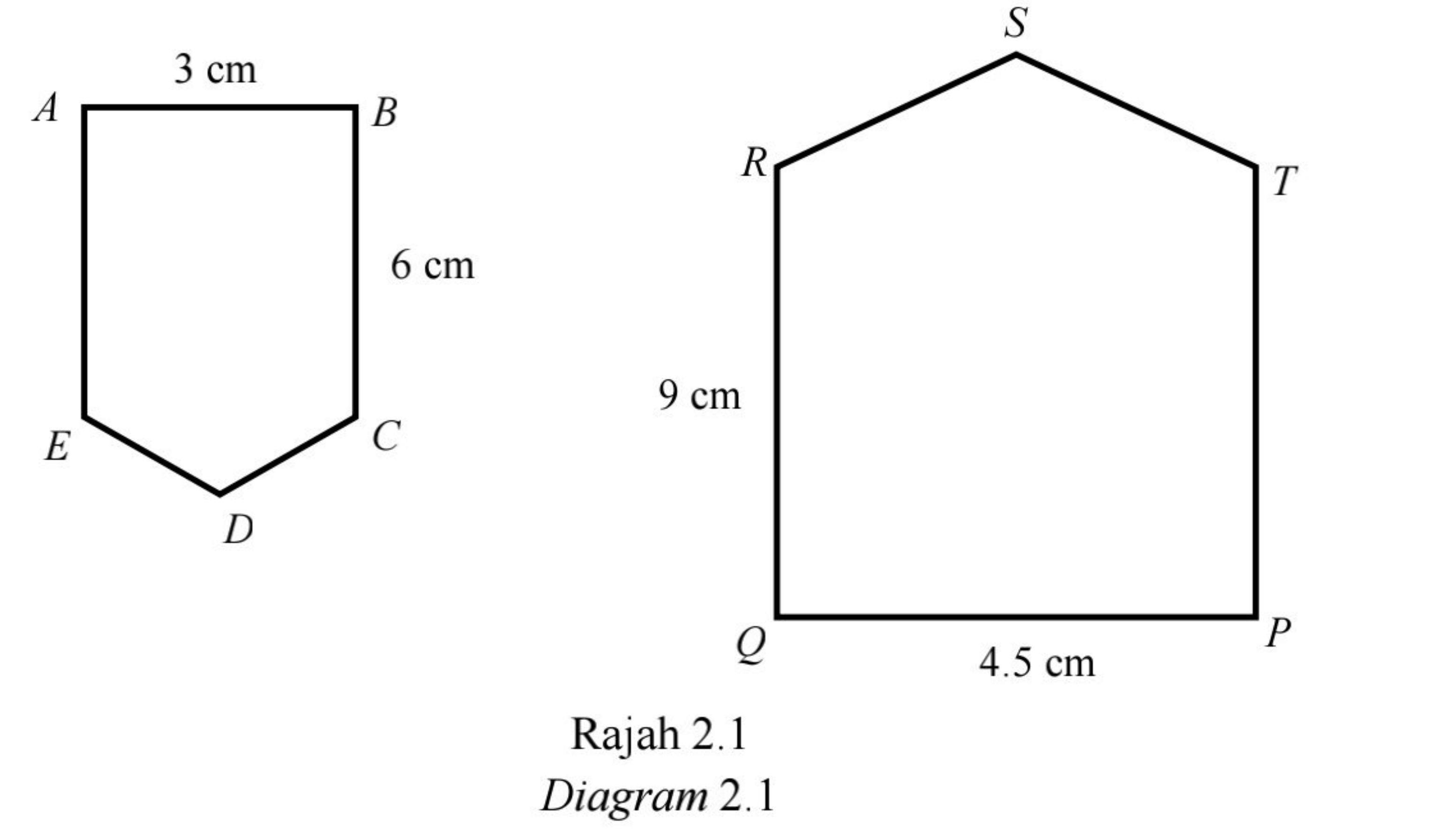

- (a)
Determine the scale used.
[1] - (b)
Draw a scale drawing for shape JKL in Diagram 2.2 on the square grid provided in the answer space with the scale 1 : 1/2.
[2]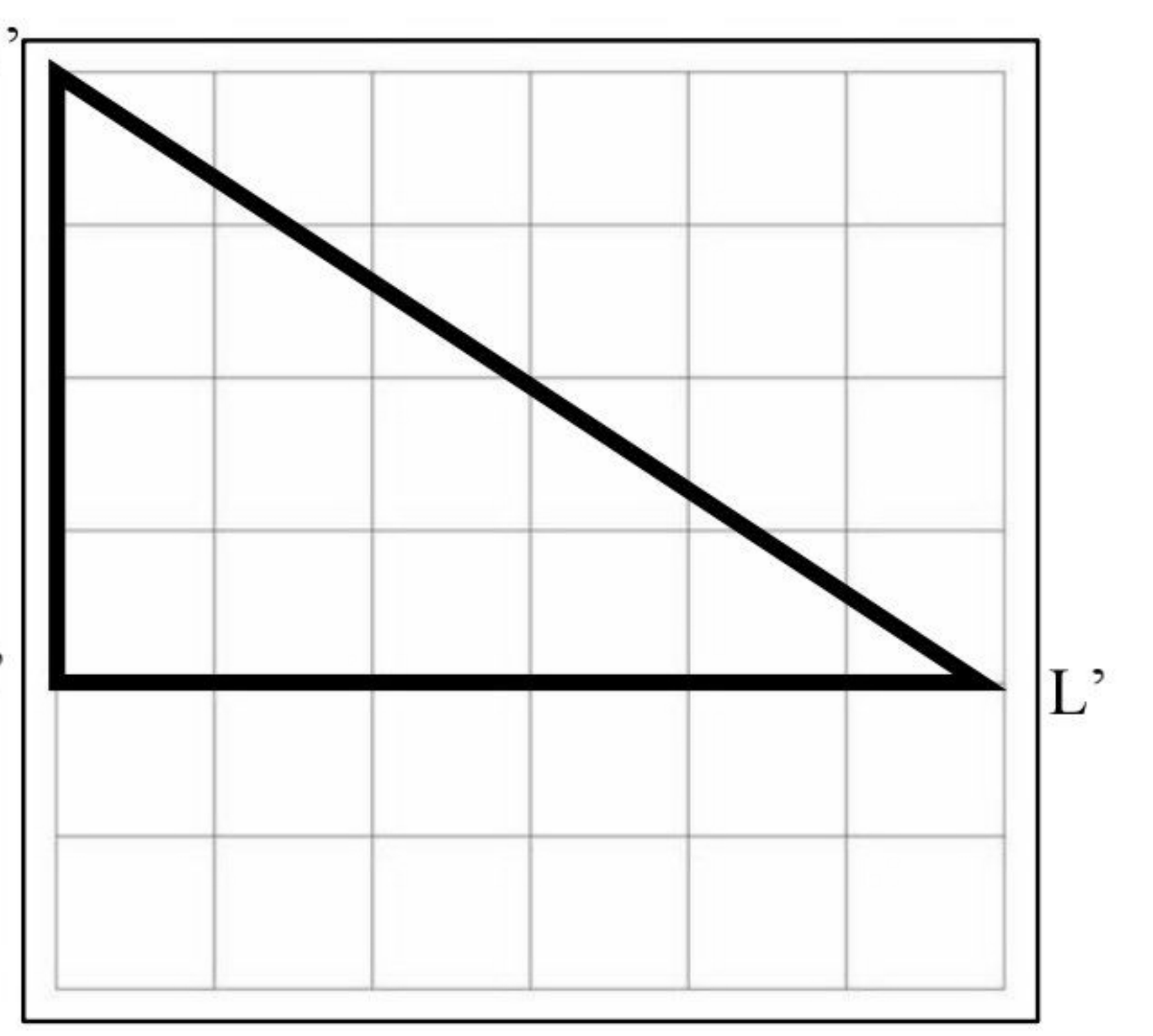
It is given that the quadratic function is f(x) = x² + x − 12.
Medium3 marks- (a)
Sketch the graph function.
[2]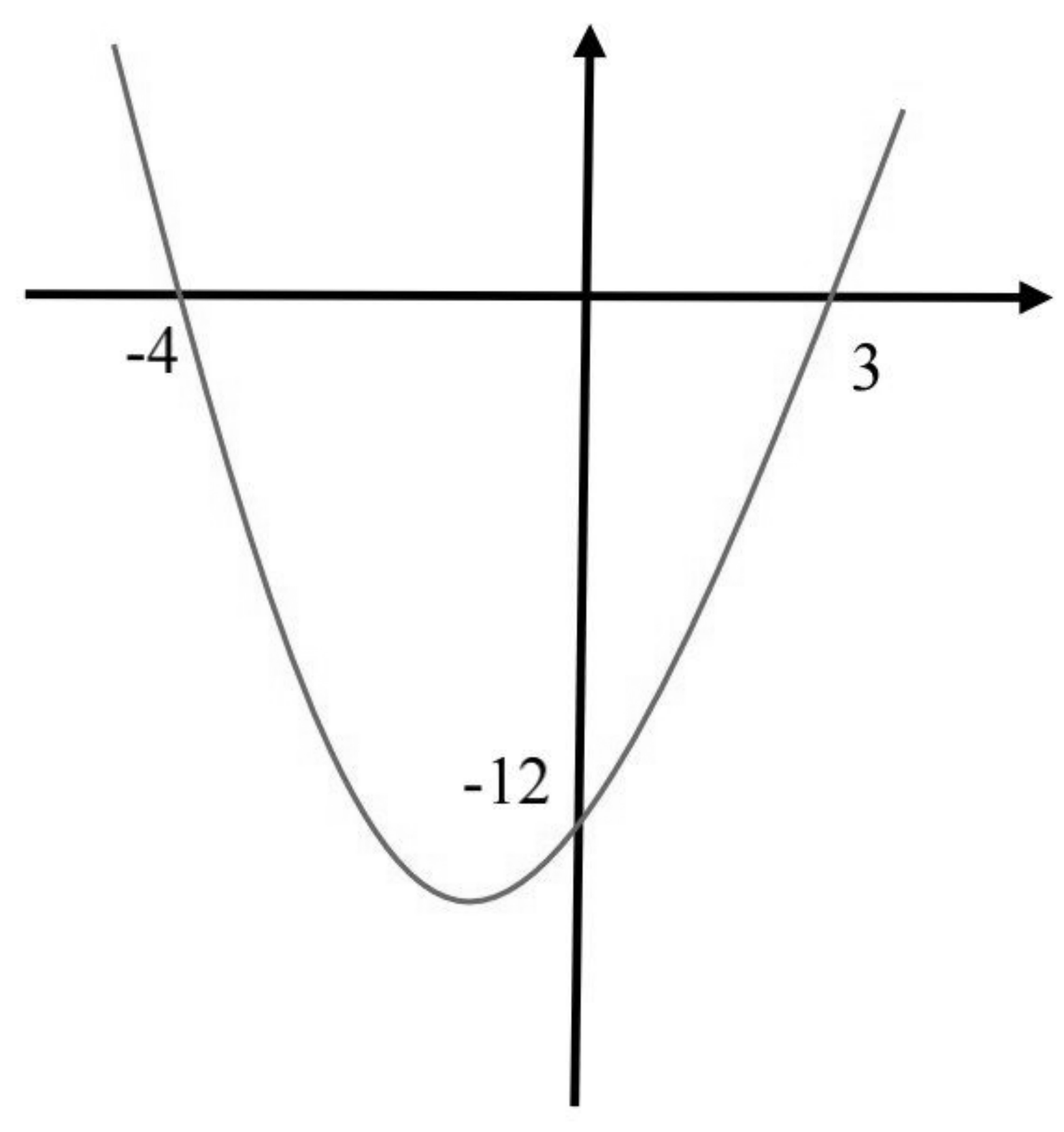
- (b)
Determine the axis of symmetry of the graph function.
[1]
Diagram 3 shows two types of receipt received by Mr Fahmi: a hotel receipt (Deluxe Room RM180, tax X 6% RM10.80, total RM190.80) and a fast food receipt (subtotal RM45.30, tax Y 6% RM2.72, total RM48.02). Table 1 shows the payment types of HH Hotel: accommodation rate RM x; service tax 6%; total RM190.80.
Medium4 marks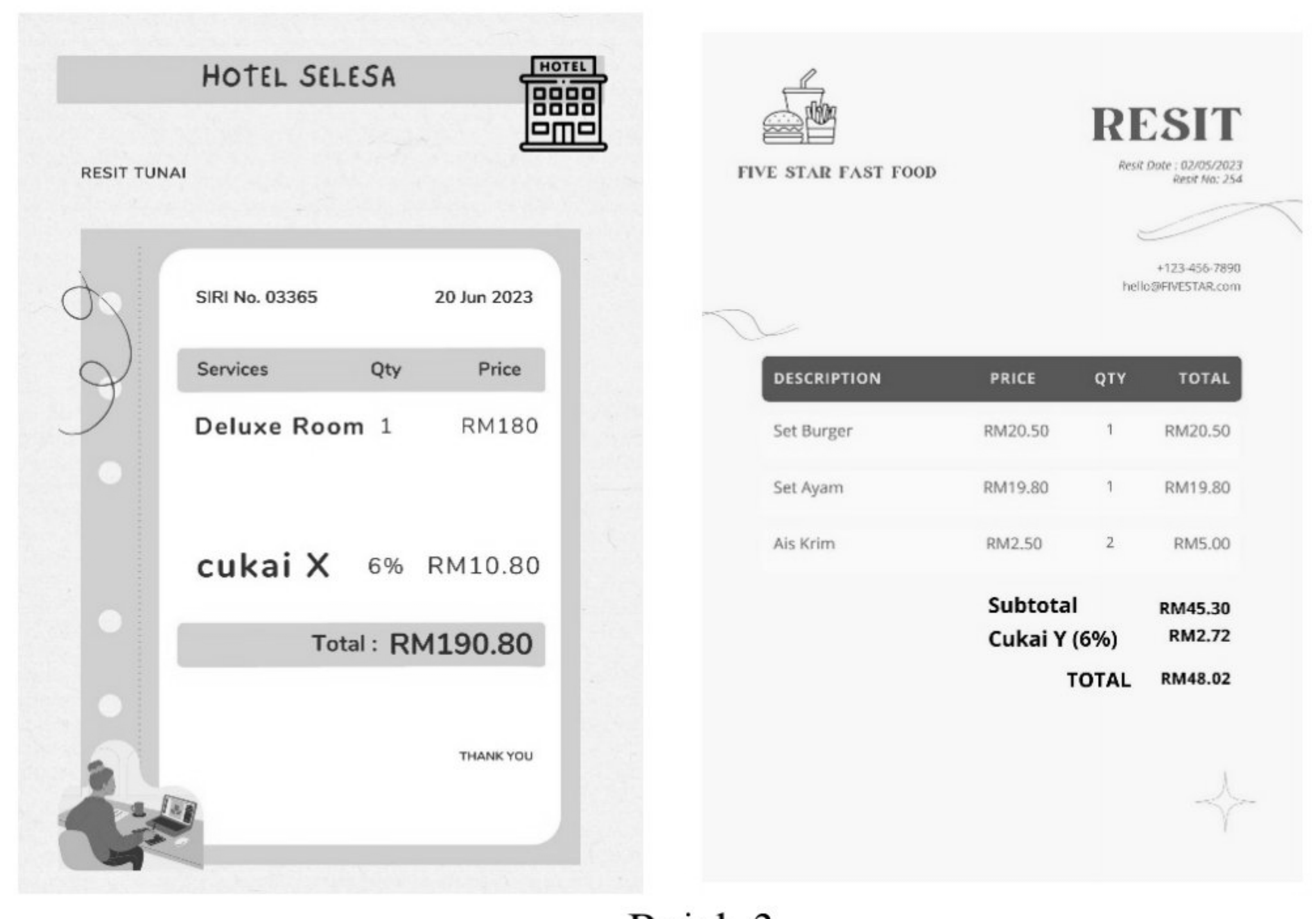
- (a)
Name the type of tax that included tax X and tax Y as shown in Diagram 3.
[1] - (b)
Mr Rafi stayed at the hotel for 2 days 1 night. Calculate the accommodation rate for the hotel.
[3]
A point P is located at a Ferris wheel which is rotated as shown in Diagram 4. Faiz draws a plan for a treasure hunt in a square grid with scale 1 unit to 1 metre. The clues for the location of the treasure box: (1) the treasure box is 3 m away from flag pole B; (2) the treasure box is 4 m from Jalan Sentosa.
Medium4 marks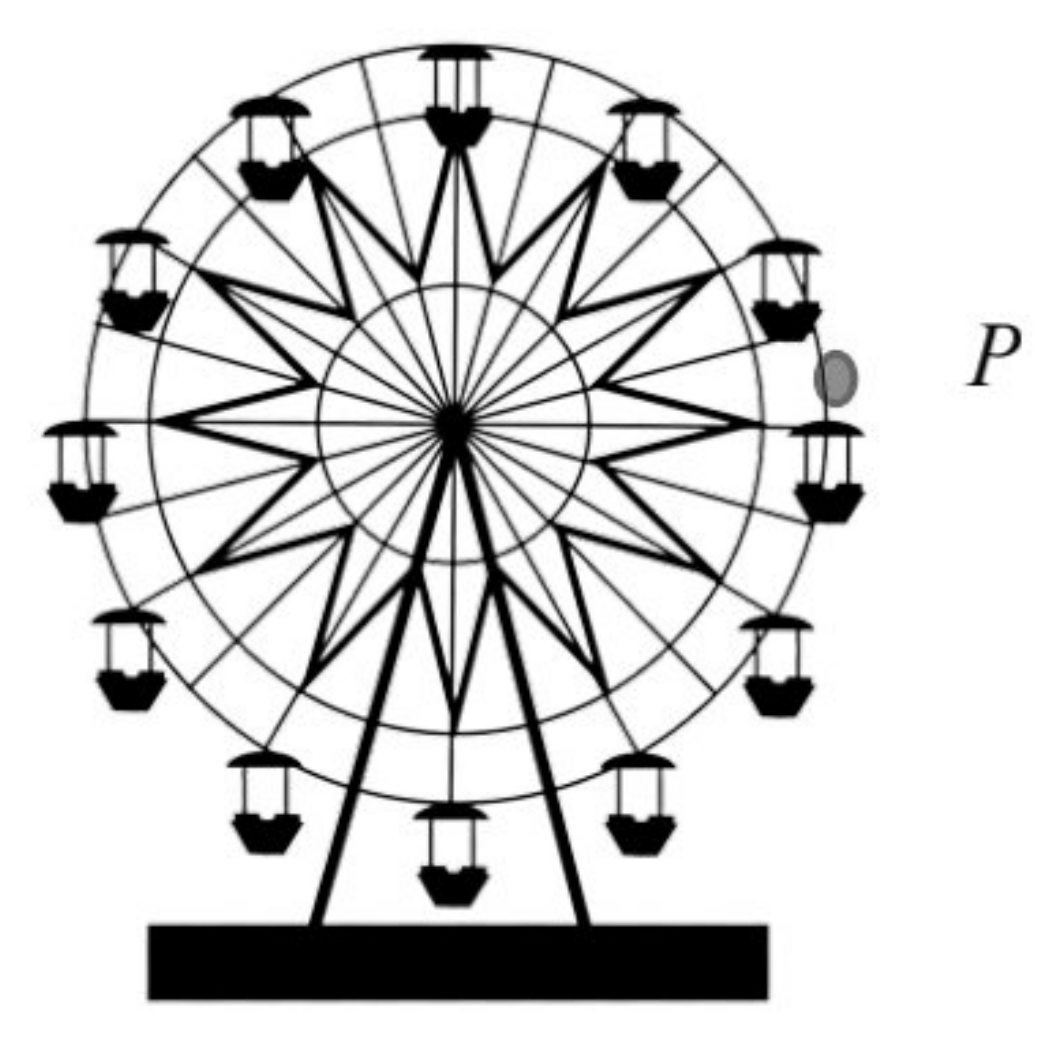
- (a)
Describe the locus of point P.
[1] - (b)
On the answer section, draw both loci. Hence mark the possible locations of the treasure box with the symbol ⊗.
[3]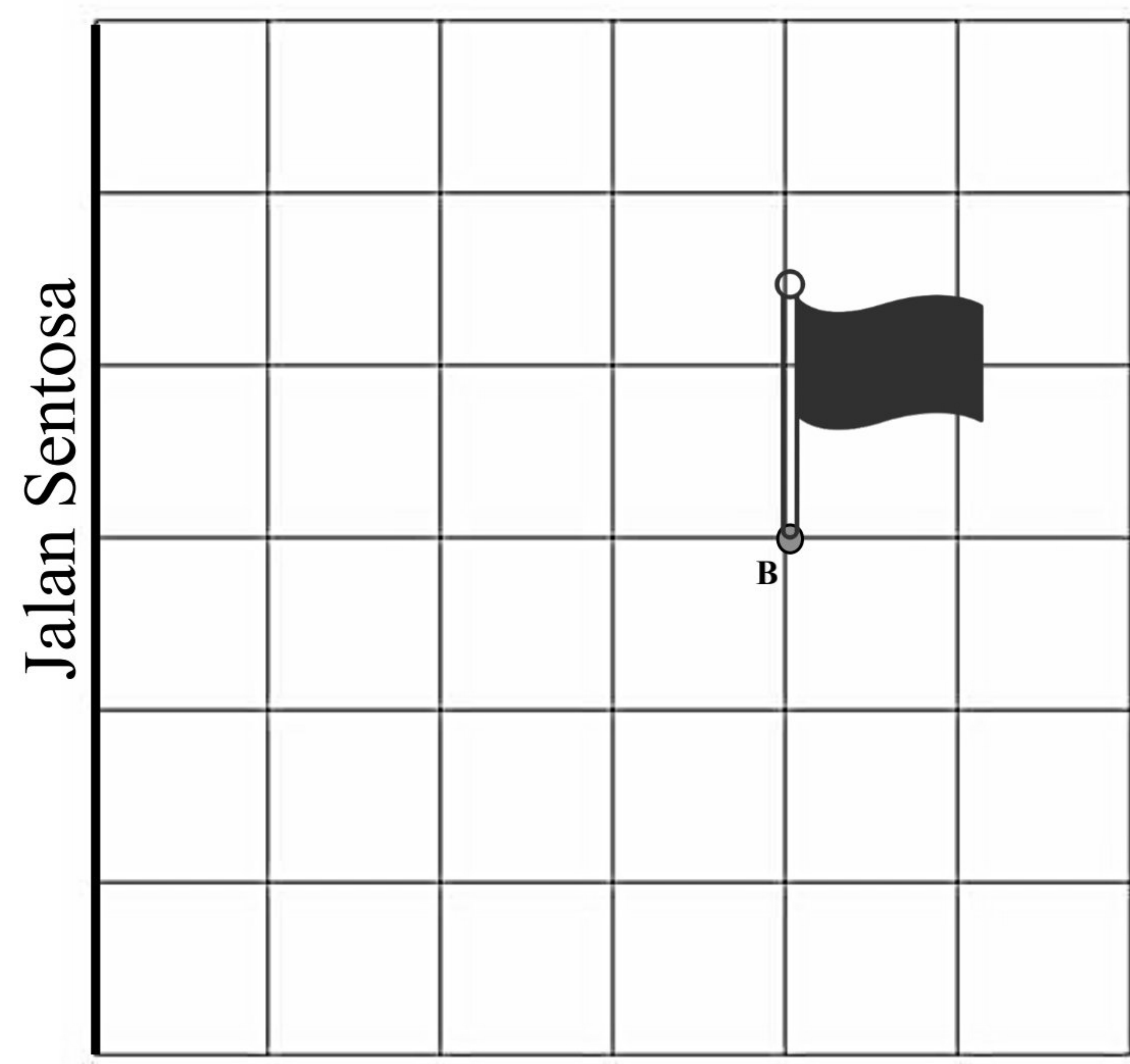
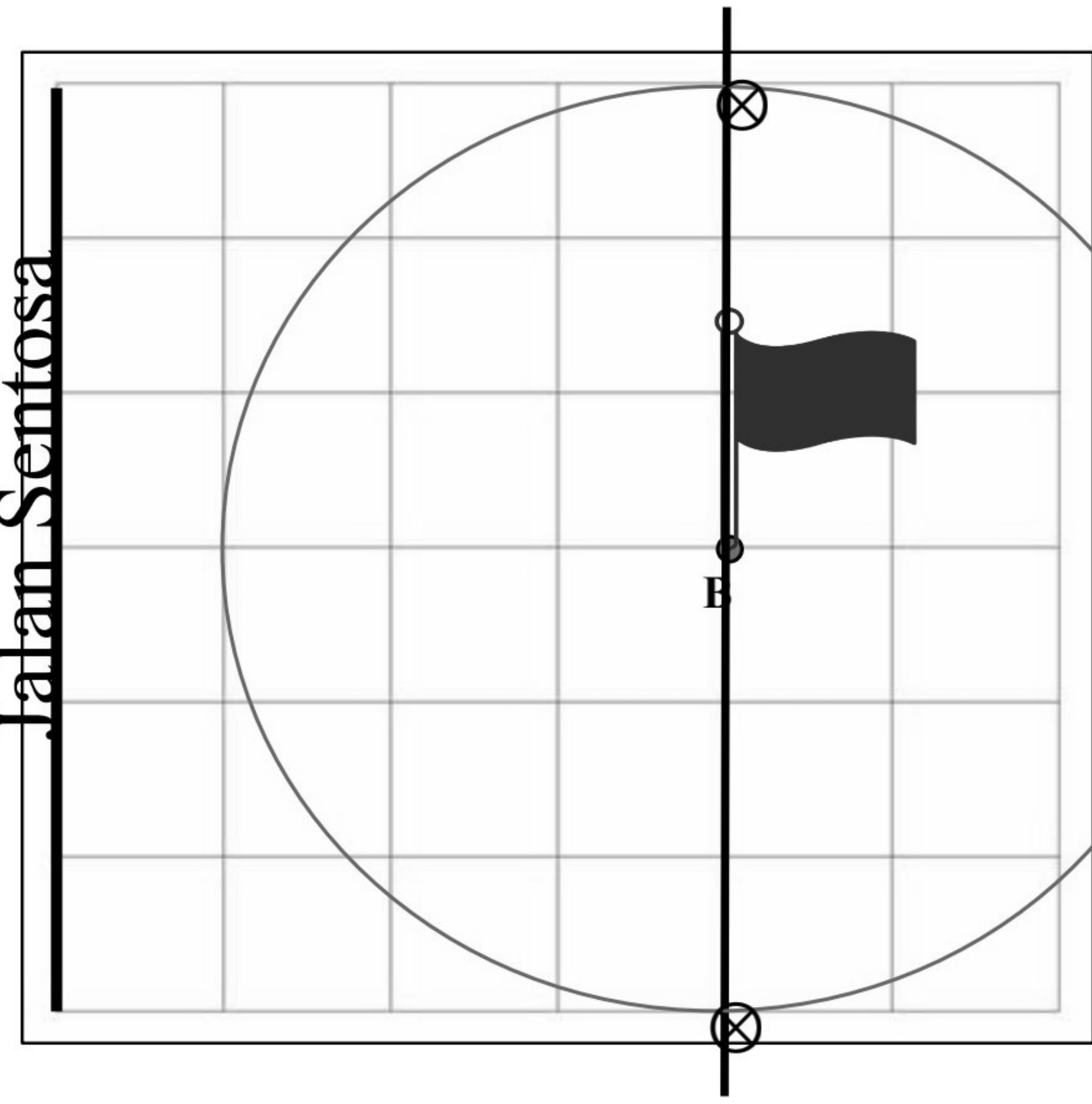
Table 2 shows the premium rates under the Motor Tariff for policies issued in Sabah and Sarawak for vehicles with an engine capacity not exceeding 2 200cc: engine capacity 1 400 cc: comprehensive RM196.20, third party RM67.50; 1 650 cc: RM220.00, RM75.60; 2 200 cc: RM243.90, RM85.20. Fadli lives in Kundasang and wants to buy an insurance policy for his new car which has engine capacity 2 050cc. The value of the car that needs to be insured is RM120 000 and he is eligible to transfer NCD of 45% from his old car.
Medium4 marks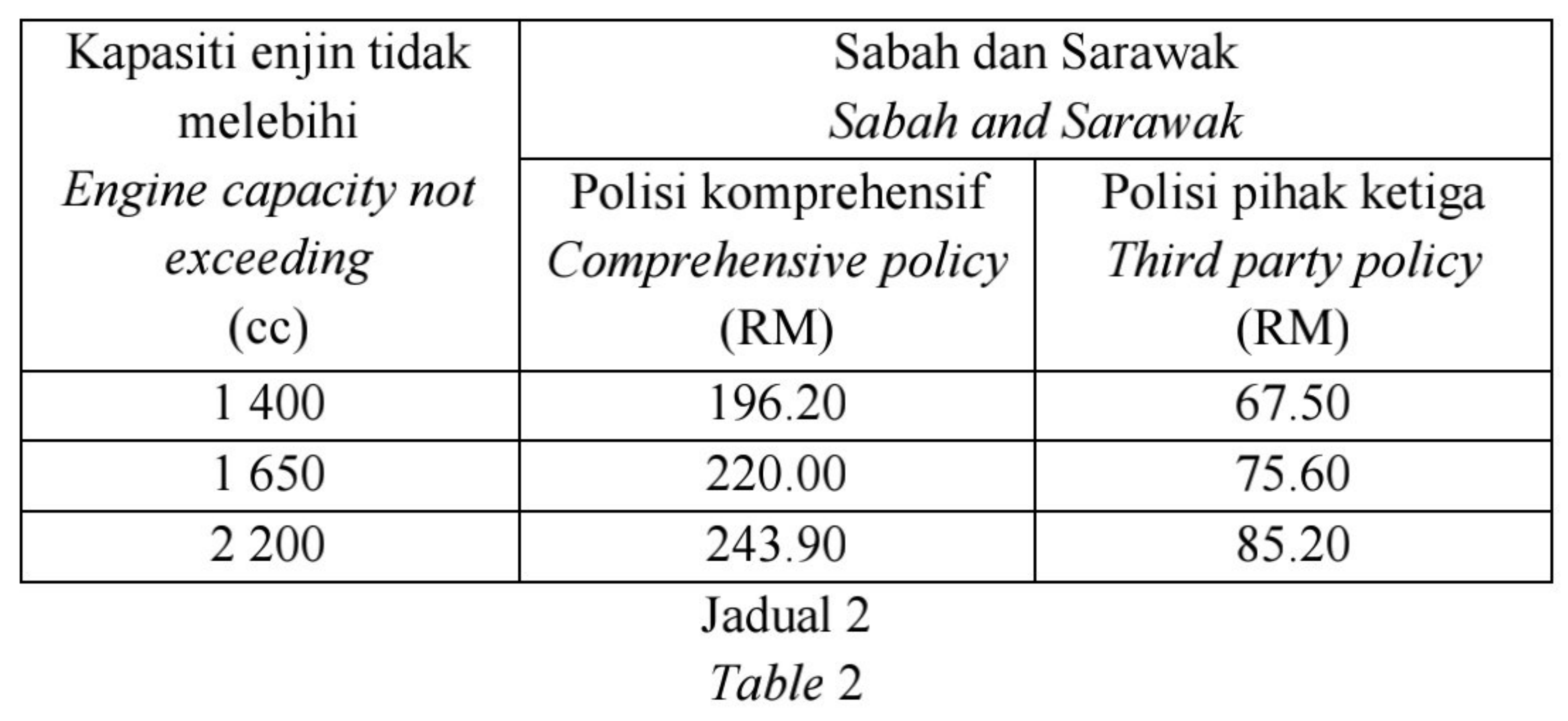
- (a)
State one factor that affects the gross premium payment for a motor insurance.
[1] - (b)
Calculate the gross premium for the comprehensive policy for his new car.
[3]
Diagram 5 shows a parallelogram ABCD drawn on a Cartesian plane. The equation of line AD is 2y − 4x = 8. B is the point (1, 0); D lies on the y-axis and DC is horizontal. Find
Medium4 marks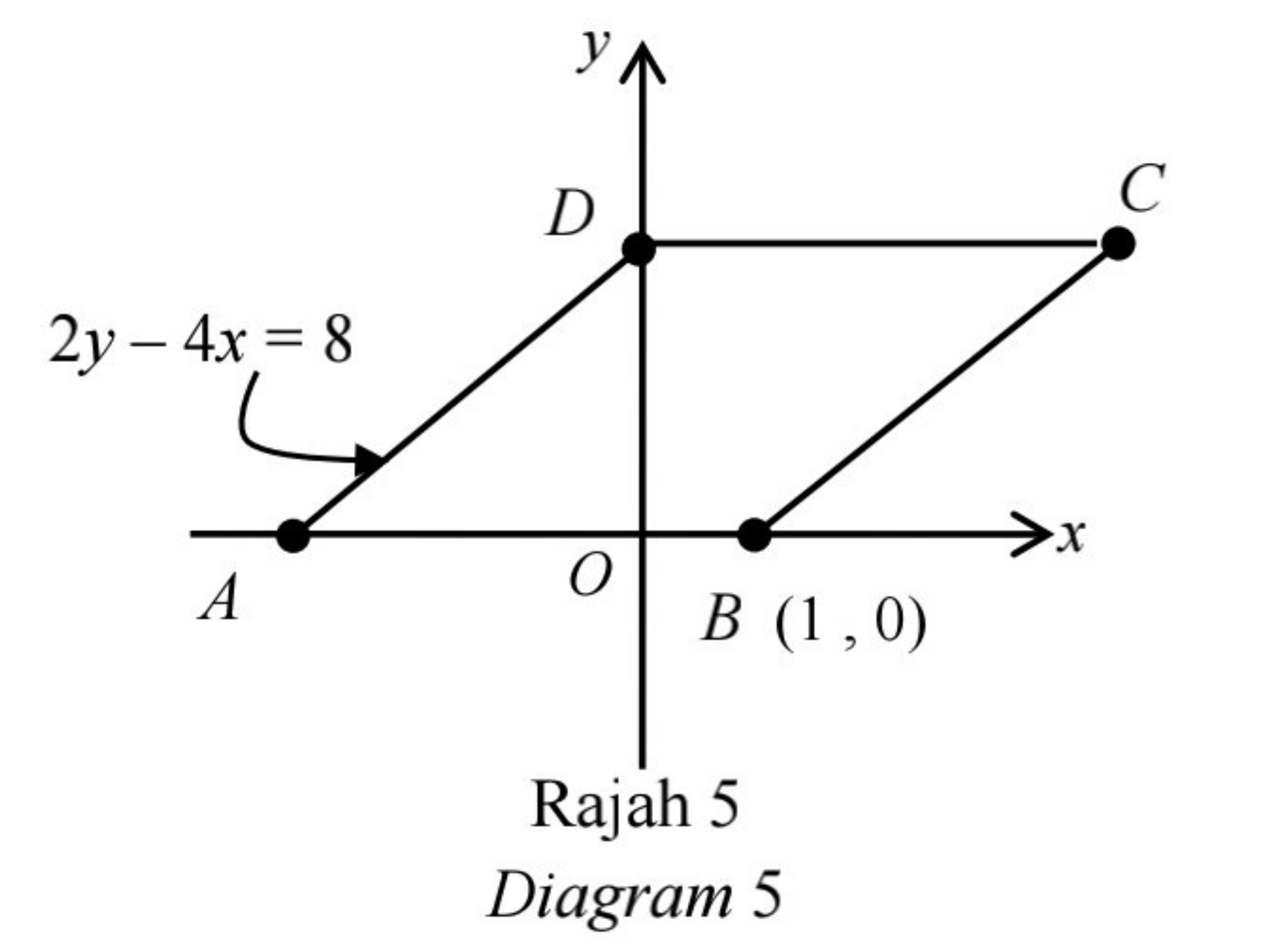
- (a)
The equation of the straight line DC.
[1] - (b)
The equation of the straight line BC.
[3]
Diagram 6 shows a few numbered cards in two boxes: Box P has cards 3, 5, 9, 4; Box Q has cards 1, 2, 7. Two cards are randomly selected, one from box P followed by box Q respectively.
Medium4 marks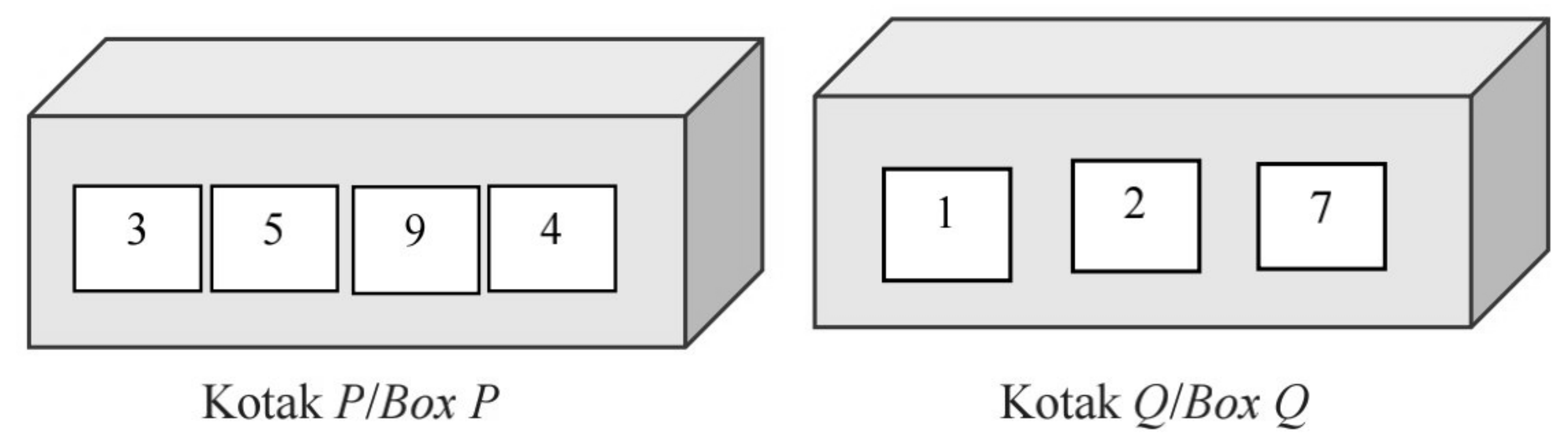
- (a)
List the sample space.
[2] - (b)
By listing all the possible outcomes, calculate the probability the first card is labelled with a prime number or the second card is labelled with an odd number.
[2]
Table 3 shows Mazni's financial plan. Net income RM4 000; passive income RM300; total monthly income RM4 300; minus fixed monthly savings (10% of monthly income) T; minus savings for emergency fund RM150; income balance Q; monthly fixed expenses: housing loan RM1 200, car instalment RM800, total RM2 000; monthly variable expenses: groceries RM700, utility bills RM400, giving money to parents RM500, fuel RM300, total RM1 900; surplus/less of income S.
Medium6 marks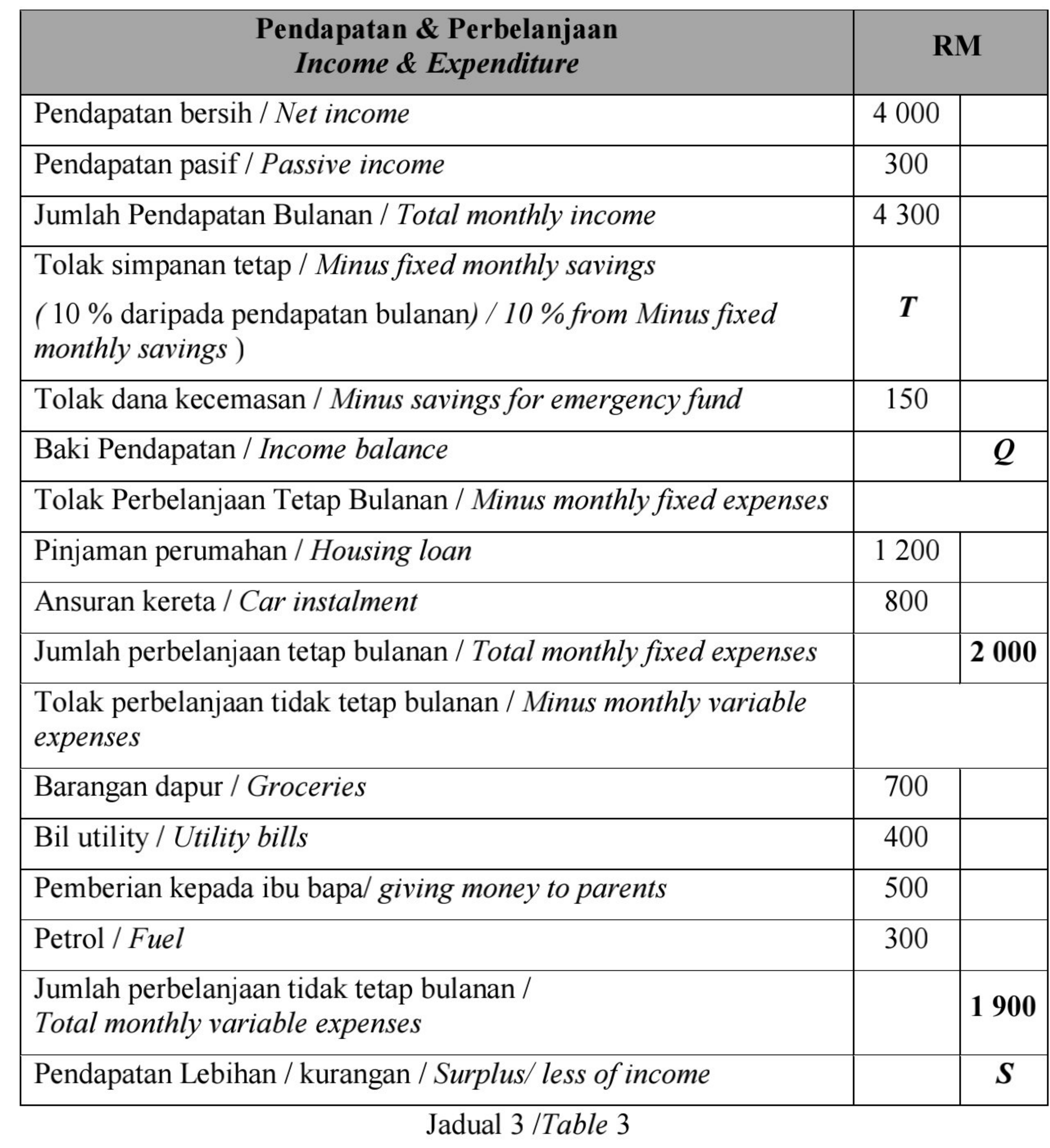
- (a)
Puan Fadila would like to buy a laptop worth RM4 000 as a gift for her son's birthday. Therefore, she has planned to save RM400 a month for ten months. State two of the SMART approaches in financial management based on Puan Fadila's situation.
[2] - (b)(i)
Calculate the value of T, Q and S.
[2] - (b)(ii)
Mazni wants to buy a smartphone worth RM5 000 in a year. Will Mazni be able to achieve her goal? Give your justification.
[2]
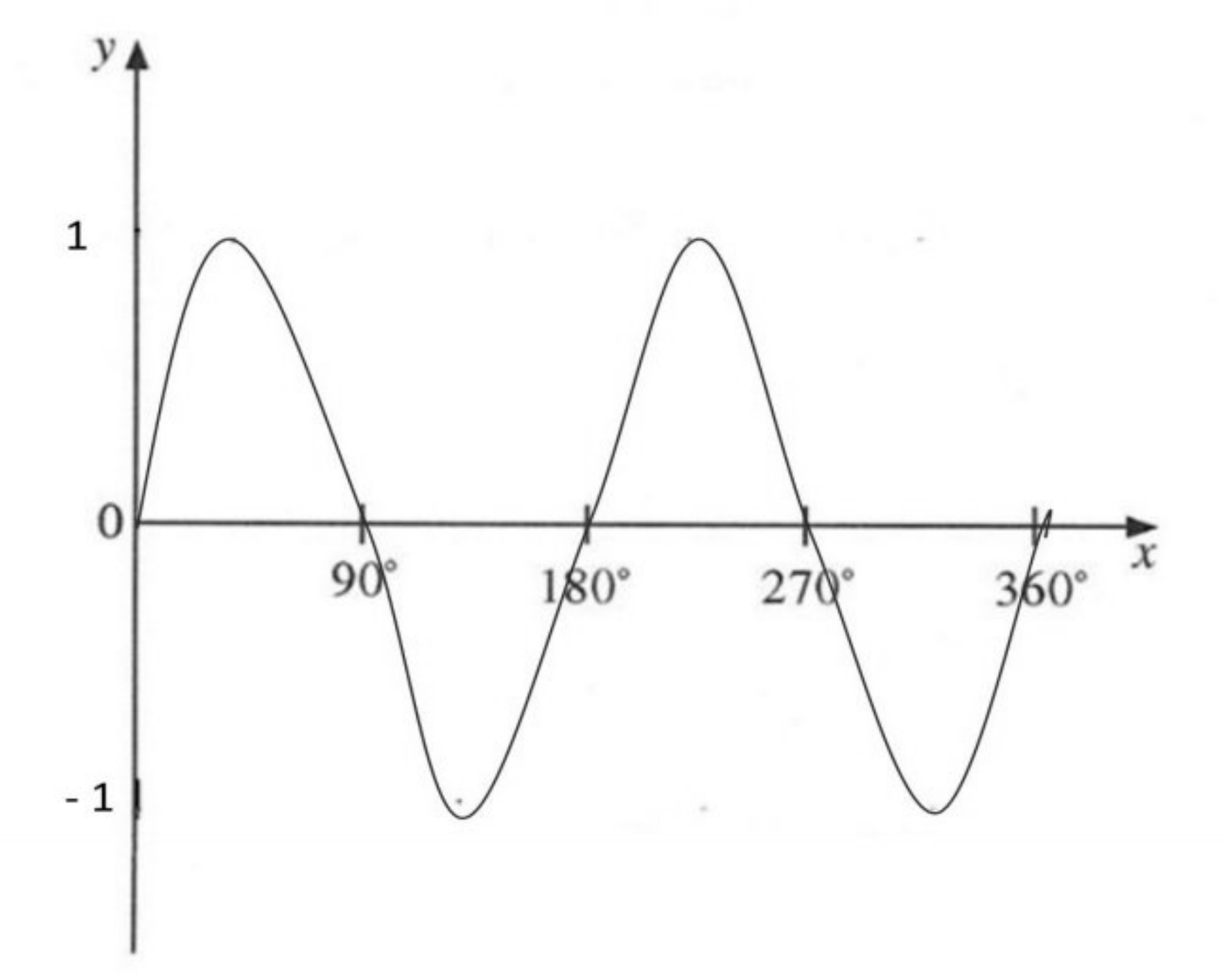
Diagram 7 shows a trigonometric graph: it starts at its maximum 3/2 at x = 0°, crosses the x-axis at 90° and 270°, has a minimum −3/2 at 180° and returns to 3/2 at 360°.
Medium5 marks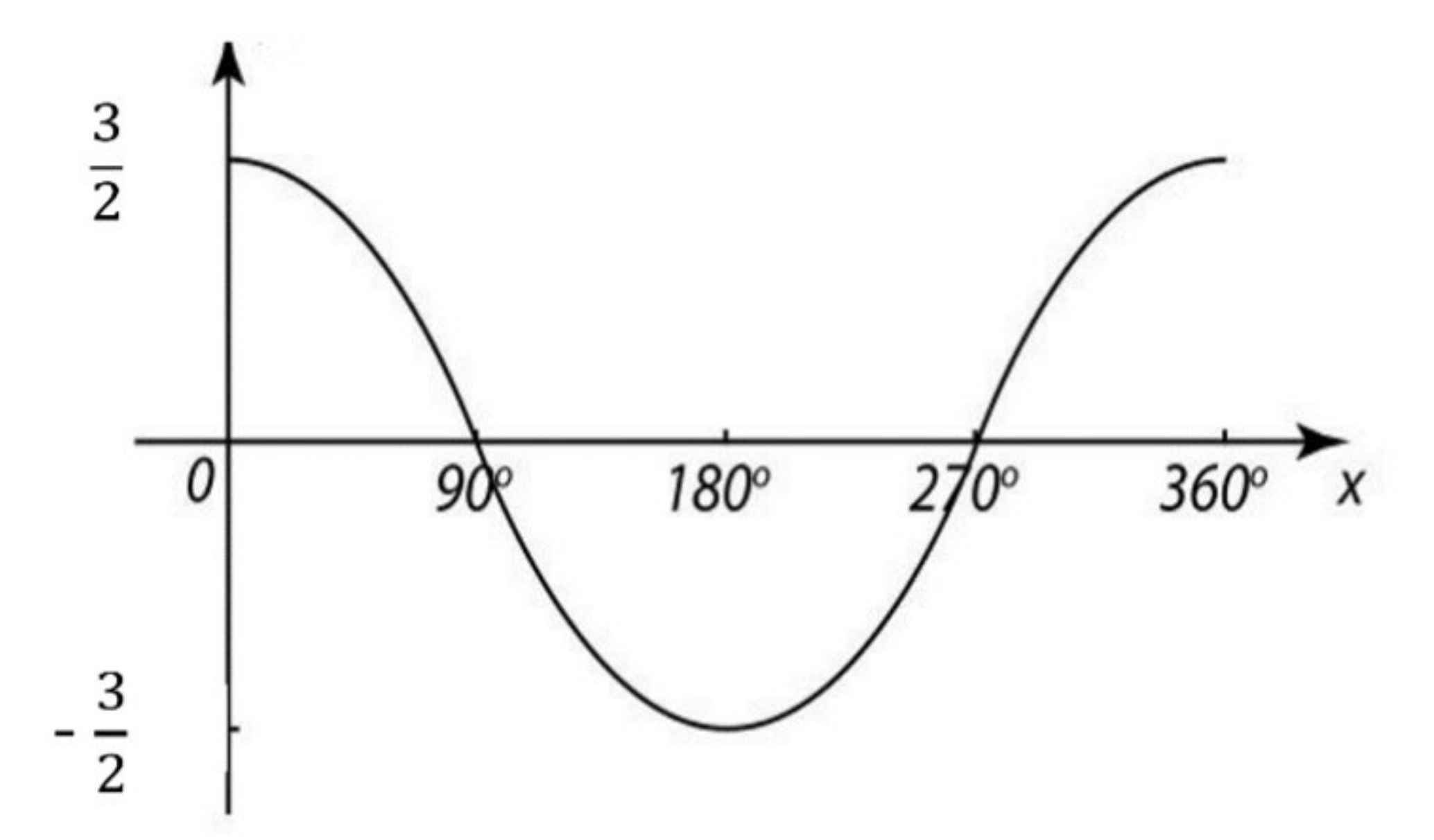
- (a)
Determine the value of sin 280.3° based on its corresponding reference angle.
[2] - (b)(i)
State the graph of trigonometry function in Diagram 7.
[1] - (b)(ii)
In the answer space, draw the graph of the function y = sin 2x for 0° ≤ x ≤ 360°.
[2]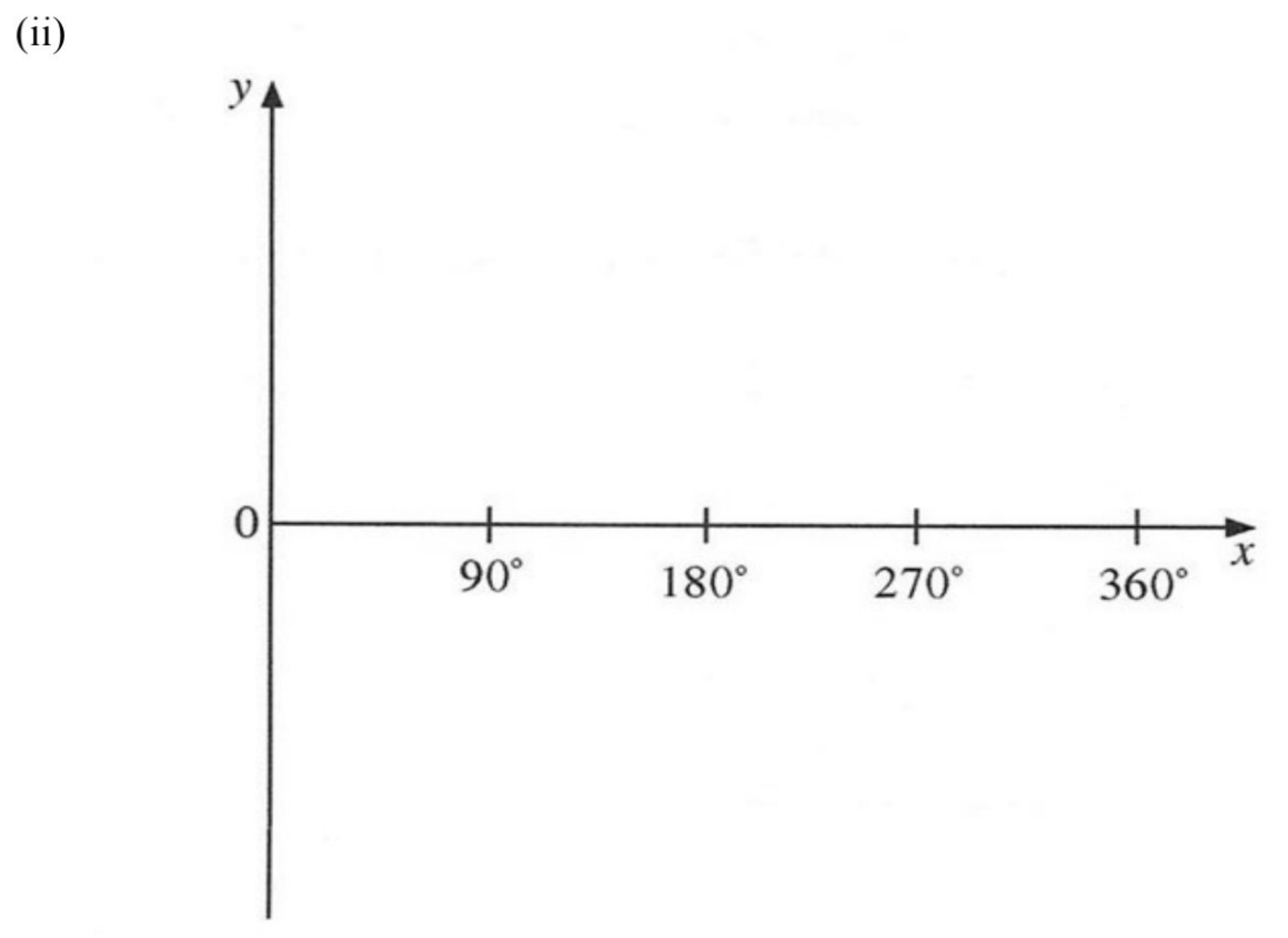
Section B
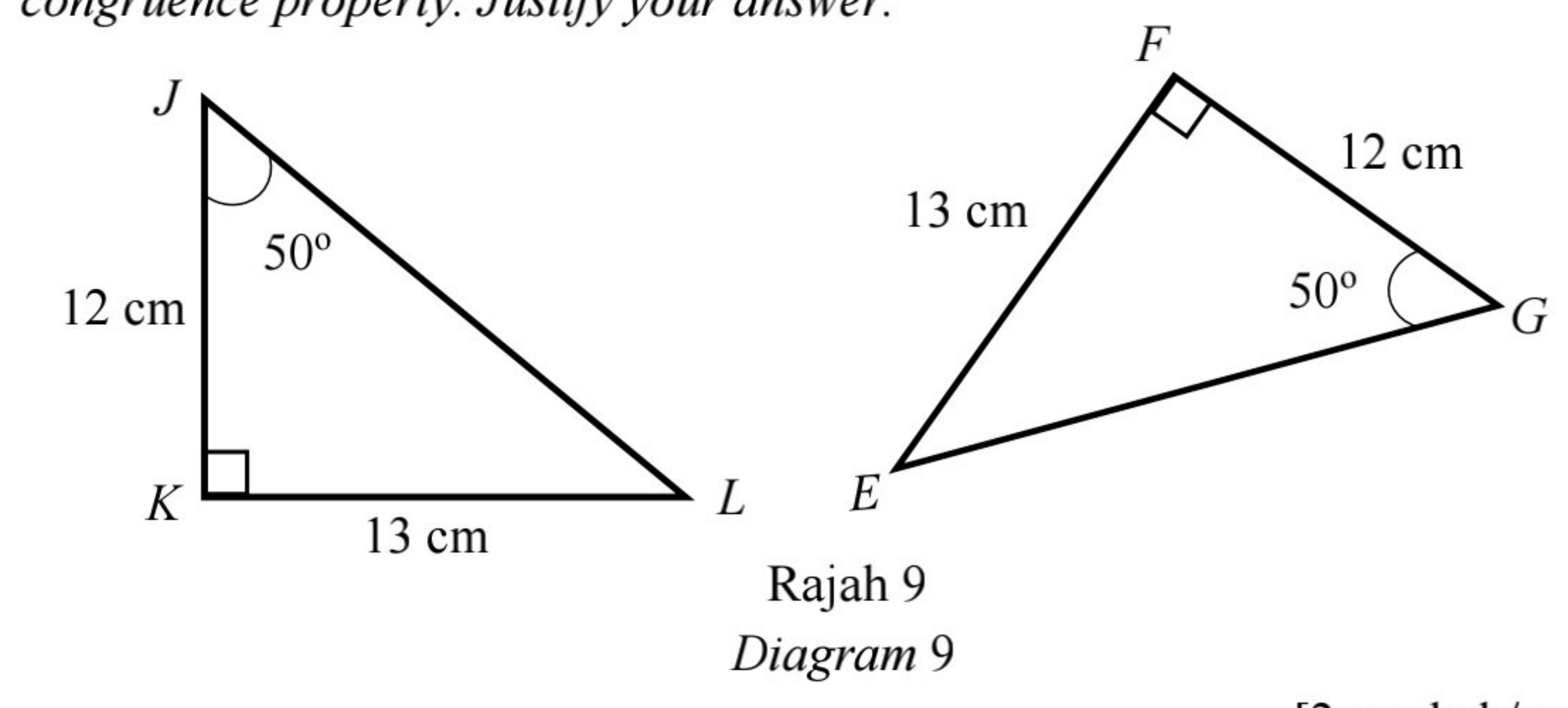
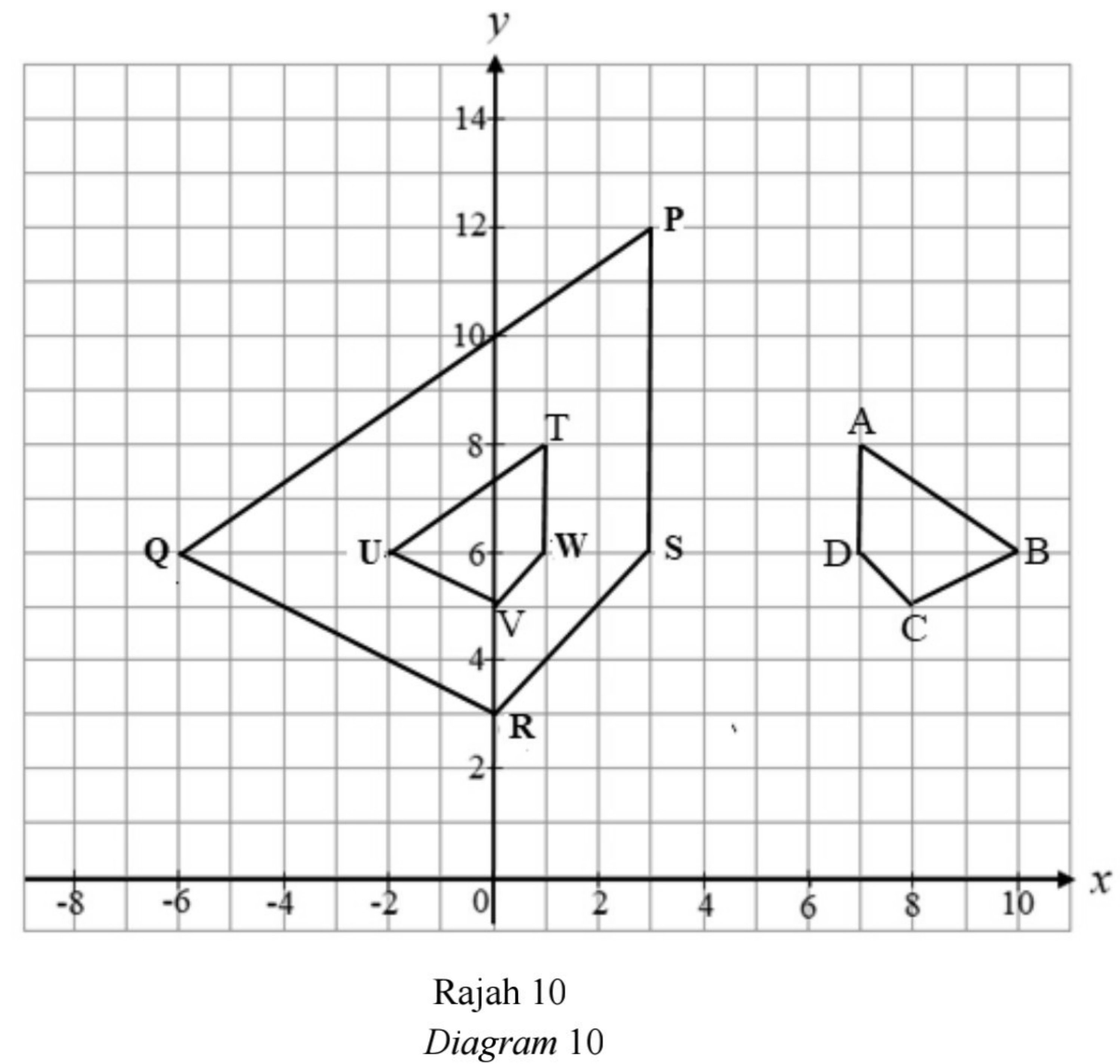
(a) Diagram 8 shows point P(−2, 4) on a Cartesian plane. Transformation T is a translation (5, −6). Diagram 9 shows triangles JKL (JK = 12 cm, KL = 13 cm, angle K = 90°, angle J = 50°) and EFG (EF = 13 cm, FG = 12 cm, angle F = 90°, angle G = 50°). (b) Diagram 10 shows three polygons ABCD, TUVW and PQRS drawn on a Cartesian plane. Polygon PQRS is the image of polygon ABCD under the combined transformation EF.
Medium8 marks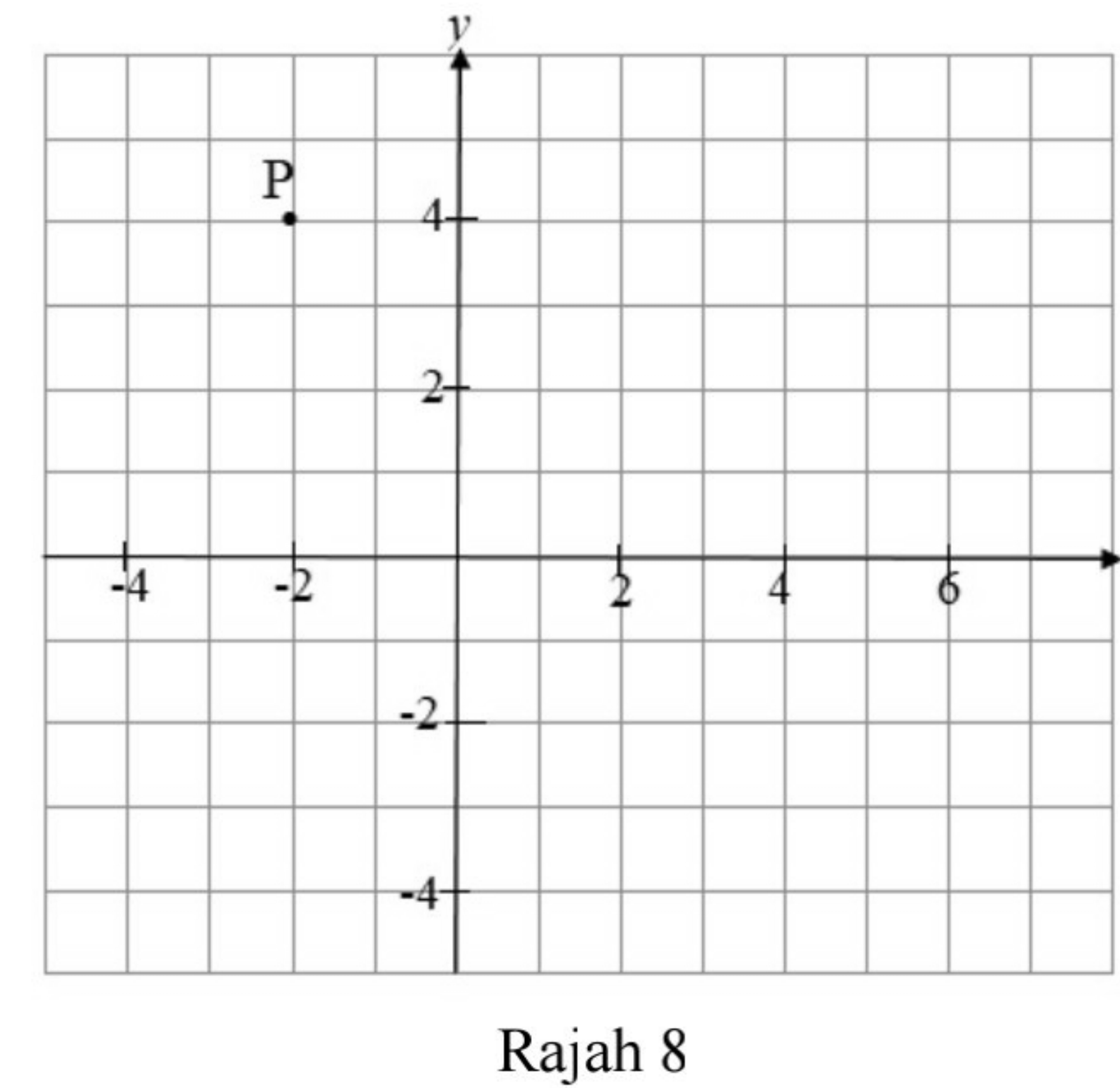
- (a)(i)
State the coordinates image of point P under the transformation T.
[1] - (a)(ii)
Determine whether the pair of triangles in Diagram 9 satisfy the triangle congruence property. Justify your answer.
[2] - (b)(i)
Describe in full the transformation F.
[2] - (b)(ii)
Describe in full the transformation E.
[3]
Matrix operations and a word problem on books: Afriena has RM100. She goes to Glory Book Store to buy 17 exercise books and activity books, to give to her students. The price of an exercise book and an activity book are RM4.50 and RM5.00 respectively. After buying both types of books, the remaining money in Afriena's hand is RM19.
Medium10 marks- (a)(i)
Given [[−1, 2], [0, p]] [[q], [4]] = [[10], [16]], calculate the value of p and of q.
[2] - (a)(ii)
Given (1/m) [[8, n], [2, 1]] [[1, −3], [−2, 8]] = [[1, 0], [0, 1]], calculate the value of m and of n.
[2] - (b)(i)
Form two linear equations from the given information.
[2] - (b)(ii)
Hence, using matrix method, calculate the number of exercise books and activity books.
[4]
Mr Zahir needs to select at most 35 male students for a marching competition which involves morning and afternoon session students. The number of morning session students selected is at least twice the number of afternoon session students.
Medium9 marks- (a)
Using x to represent the number of morning session students and y to represent the number of afternoon session students, write two linear inequalities other than x ≥ 0 and y ≥ 0 to represent the given situation.
[2] - (b)
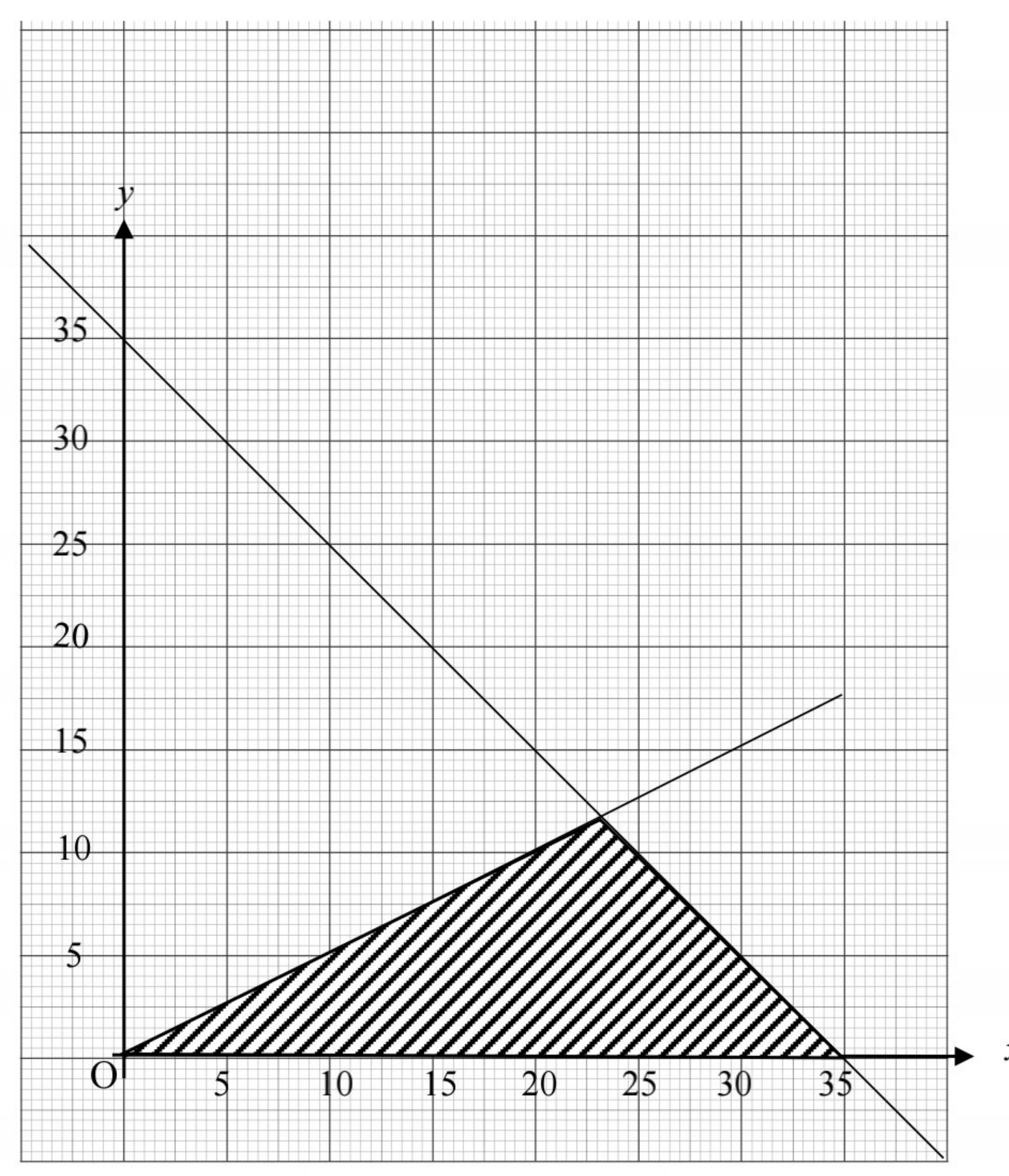
Draw and shade the common region which satisfies the system of linear inequalities on the square grids provided (Graph for Question 13).
[4]
- (c)(i)
From the graph in 13(b), determine the minimum and maximum number of morning session students when the number of afternoon session students selected is five people.
[2] - (c)(ii)
Determine whether the selection conditions are fulfilled if 12 afternoon session students want to participate in the marching competition. Give your justification.
[1]
Diagram 11 shows a solid cuboid with rectangular base ABCD combined to a right prism at the vertical plane DCHE. The base ABCMLD lies on a horizontal plane. K and J are vertically above D and C respectively. BCHG is a square. Rectangle KJML is an inclined plane. Given that JH = CM. (AB... BC = 3 cm, CM = 4 cm, AB = 6 cm as shown.)
Medium9 marks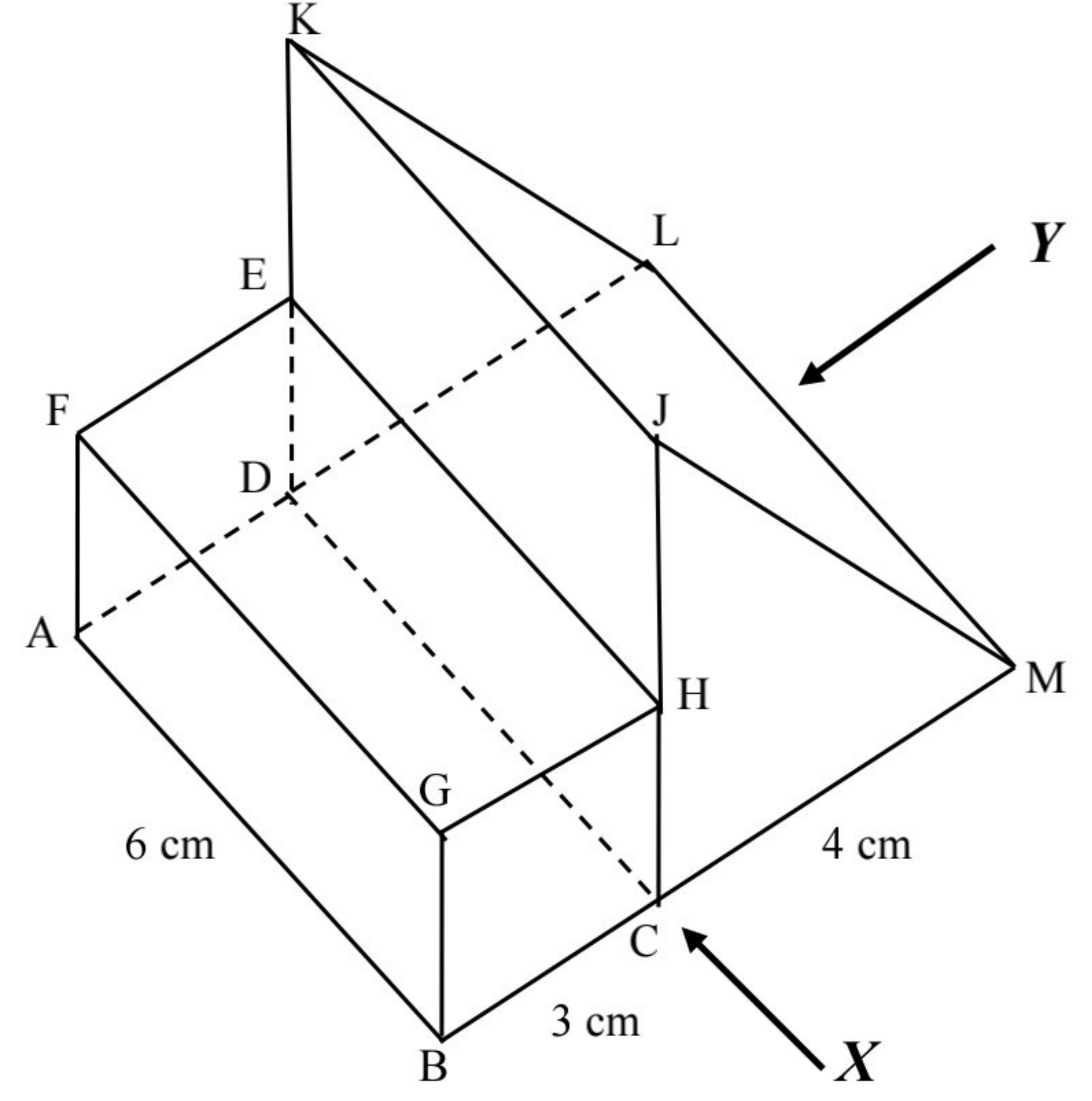
- (a)
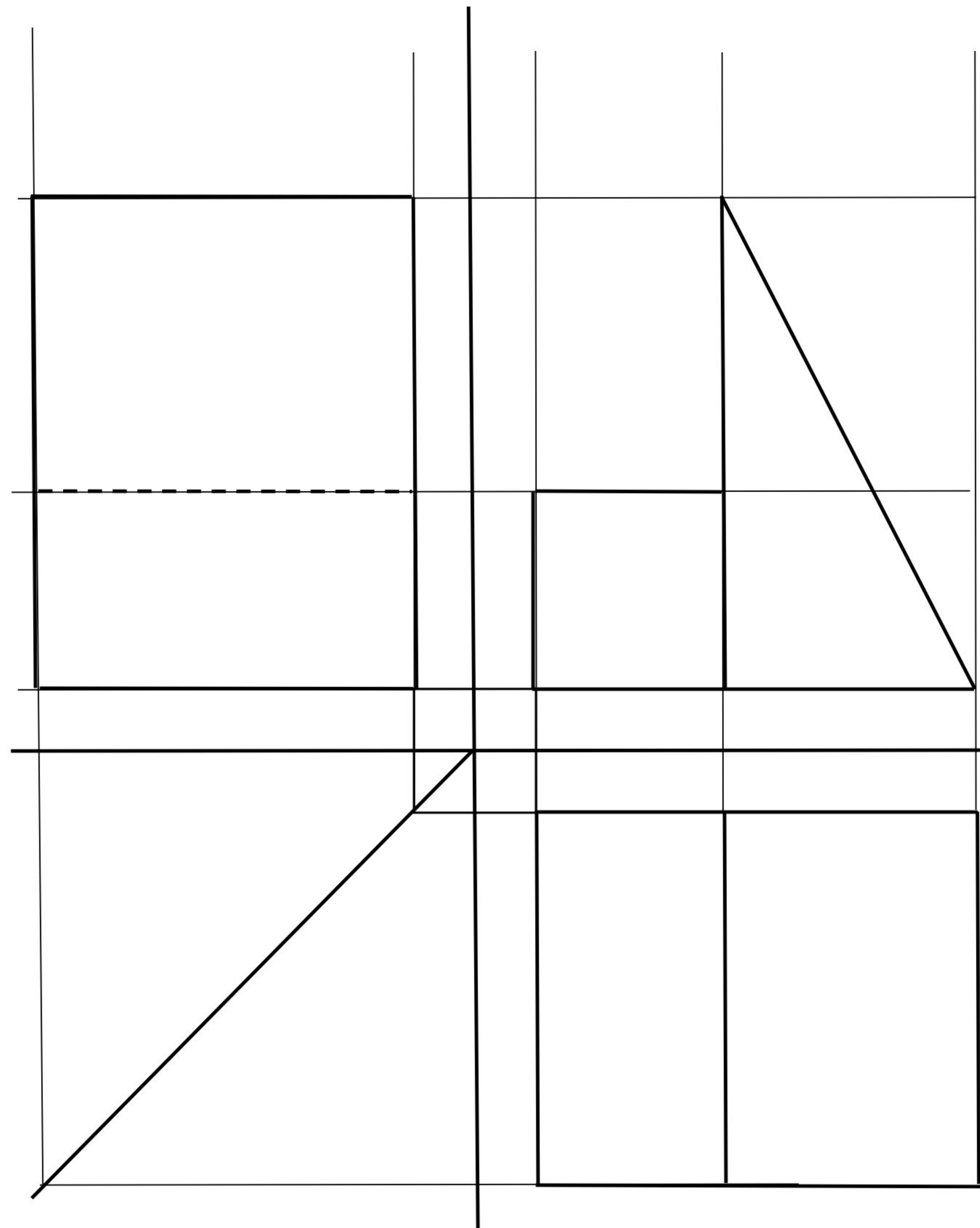
Draw to full scale, the elevation of the combined solid on a vertical plane parallel to BCM as viewed from X.
[4]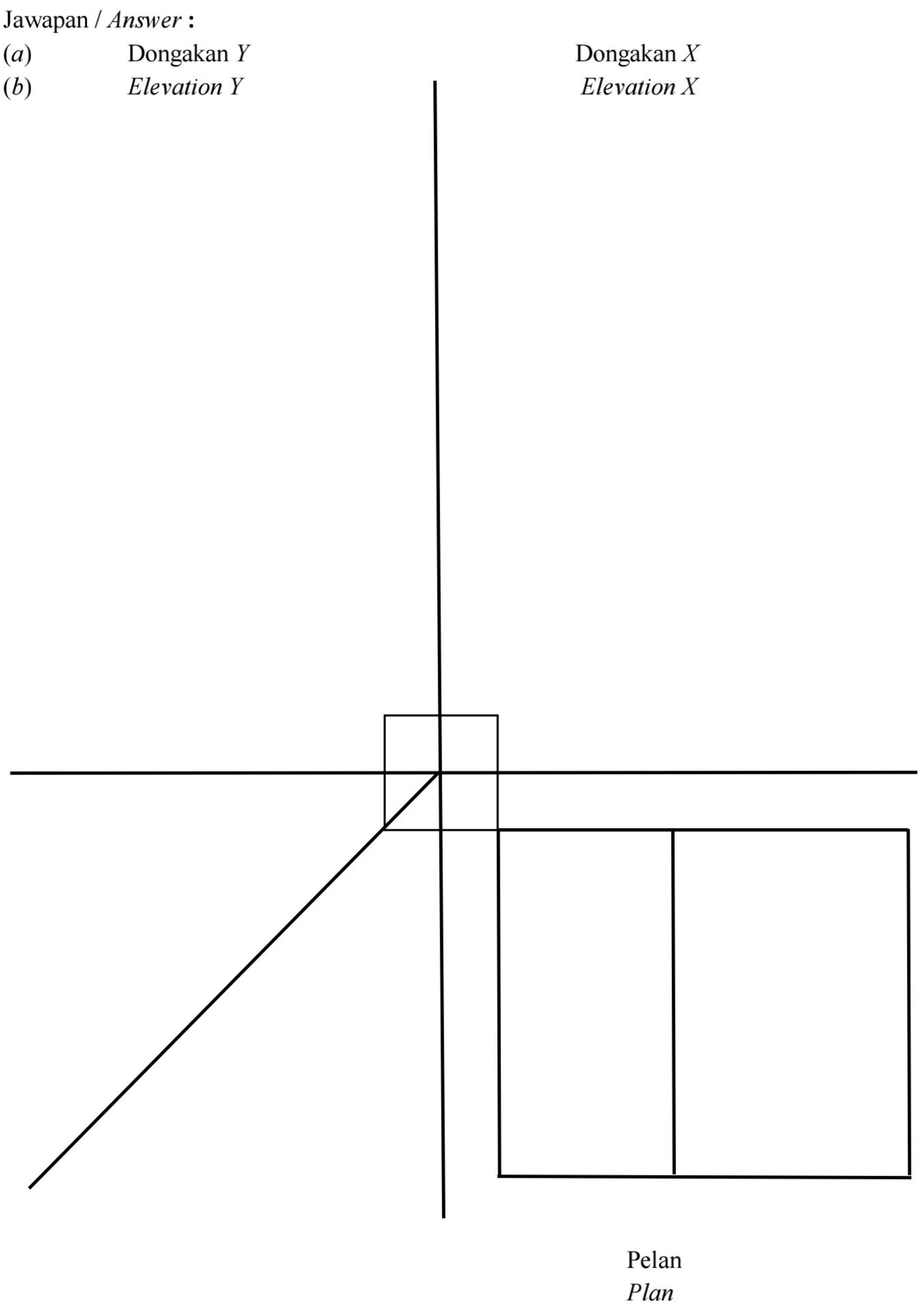
- (b)
Draw to full scale, the elevation of the combined solid on a vertical plane parallel to ML as viewed from Y.
[5]
Diagram 12 shows a stem-and-leaf plot representing the marks obtained by Fayyad and Firash in 15 cooking competitions. Key: 0 | 4 | 1 means 40 marks for Fayyad and 41 marks for Firash. Table 4 shows the time taken by 40 pupils to write a Malay Language essay.
Medium9 marks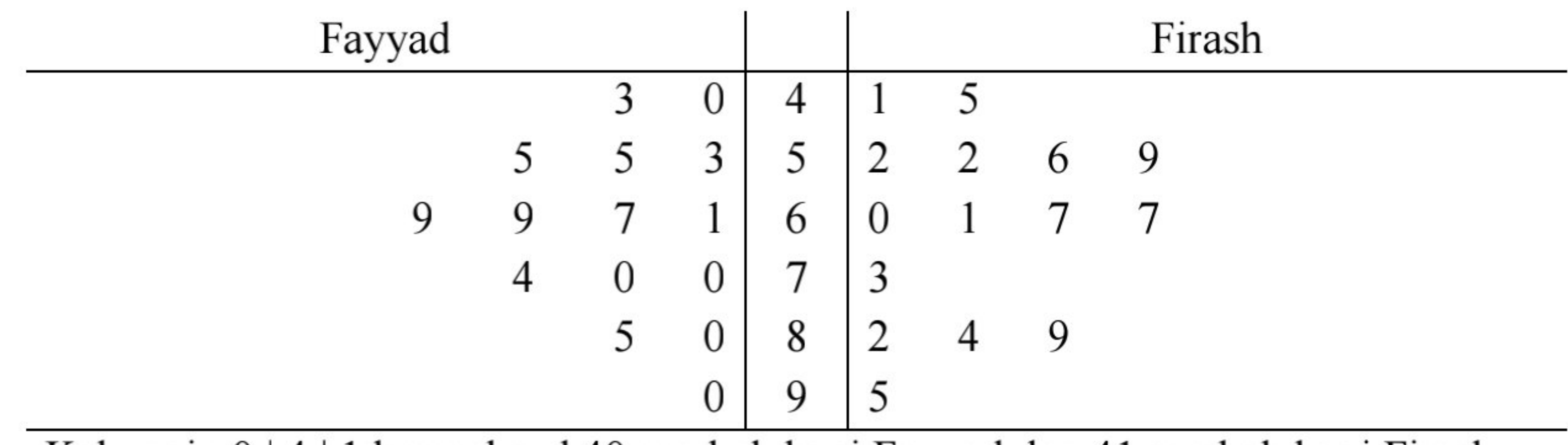
- (a)
Calculate the range of marks for Fayyad and Firash.
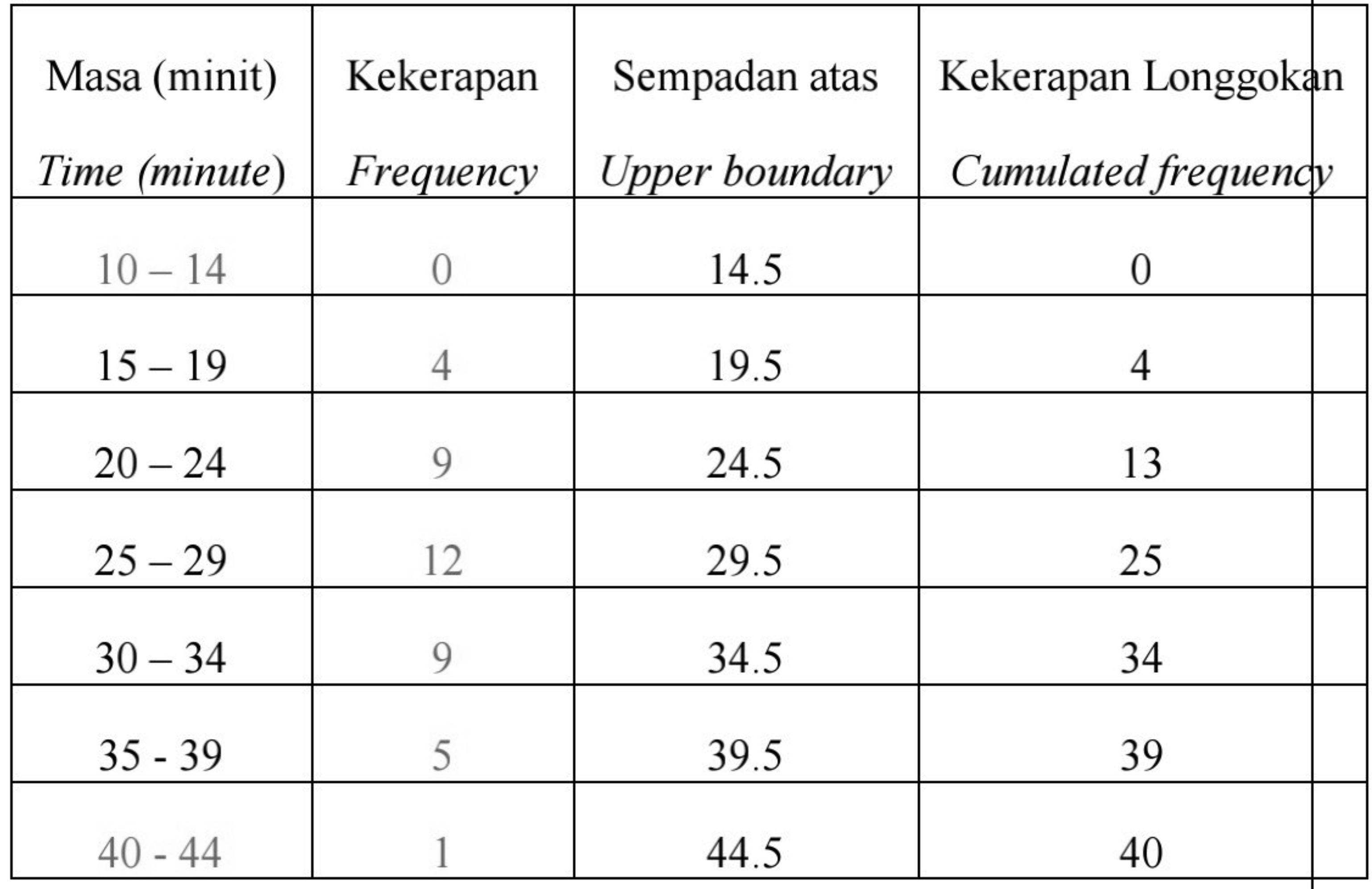
[2] - (b)
Table 4 shows the time taken by 40 pupils to write a Malay Language essay. Complete the cumulated frequency table (classes 10 – 14, 15 – 19, 20 – 24, 25 – 29, 30 – 34, 35 – 39, 40 – 44 with frequencies 0, 4, 9, 12, 9, 5, 1).
[3]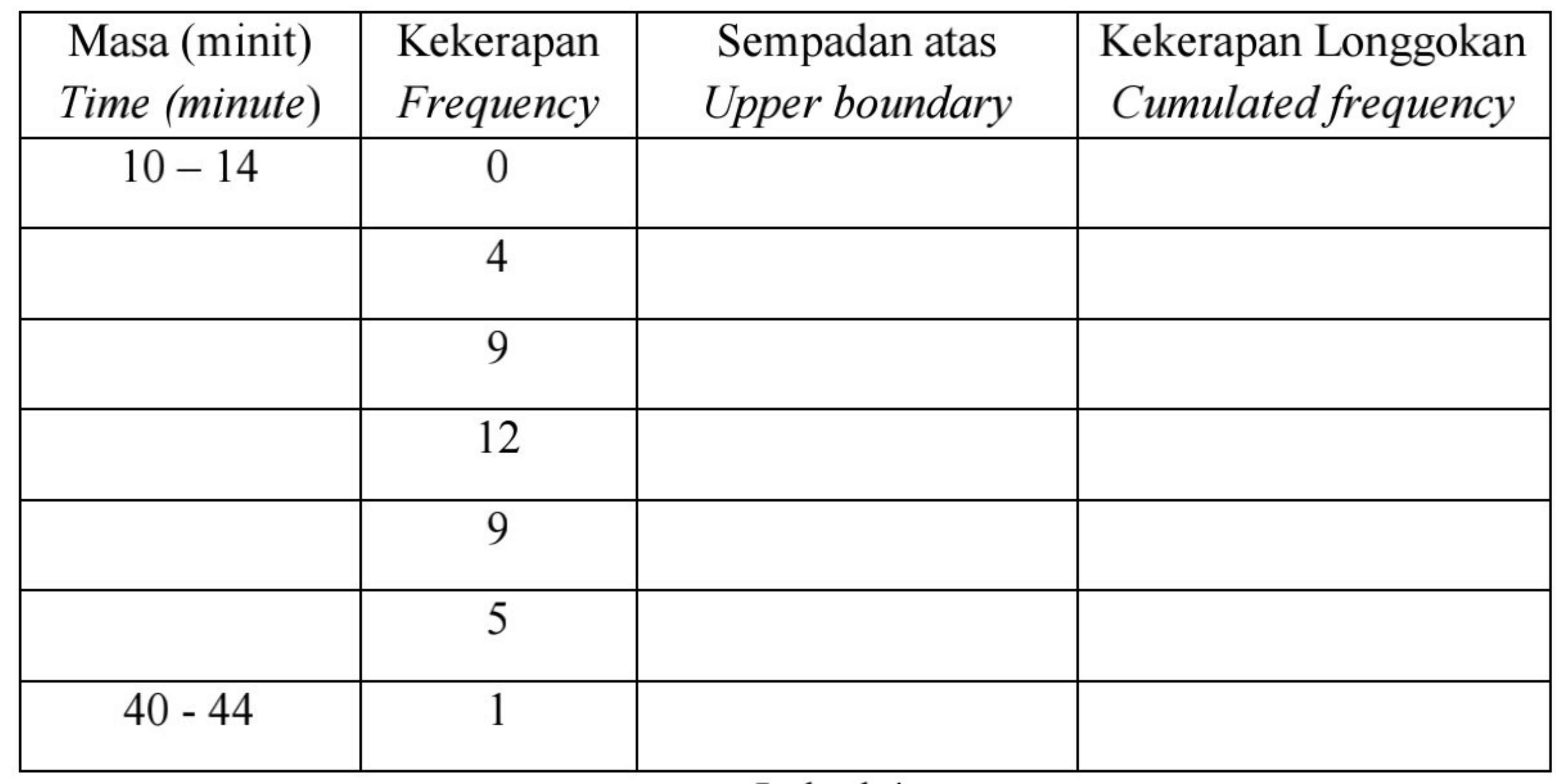
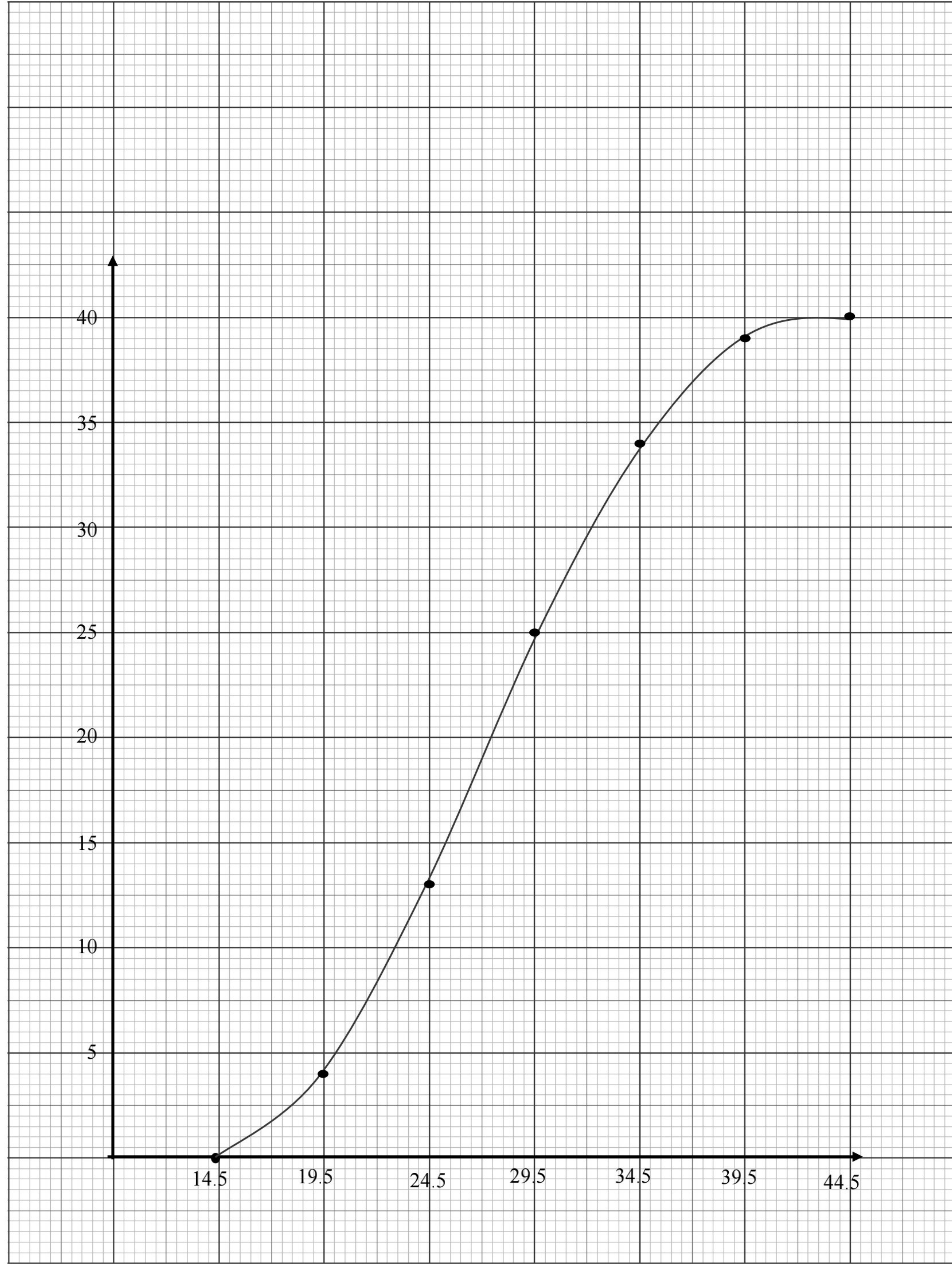
- (c)
By using a scale of 2 cm to 5 units on the x-axis and y-axis, draw an ogive based on completed Table 4 in (b).
[4]
Section C
Mr Faris is a fish cracker entrepreneur in east coast Malaysia. Every two months Mr Faris delivers crackers to a food company in Pasir Gudang, Johor. (Choose Question 16 or 17.)
Hard15 marks- (a)(i)
Mr Faris sells two types of crackers, namely chip crackers and lekor crackers. The price of a packet of chip crackers is RMx and RMy for a packet of lekor crackers. Table 5 shows the number of crackers sold in the first two months: first month 250 chip, 300 lekor; second month 350 chip, 280 lekor. Mr Faris has earned RM6 750 in sales in the first month and RM8 050 in the second month. Write two linear equations, in terms of x and y, to represent the above information.
[2]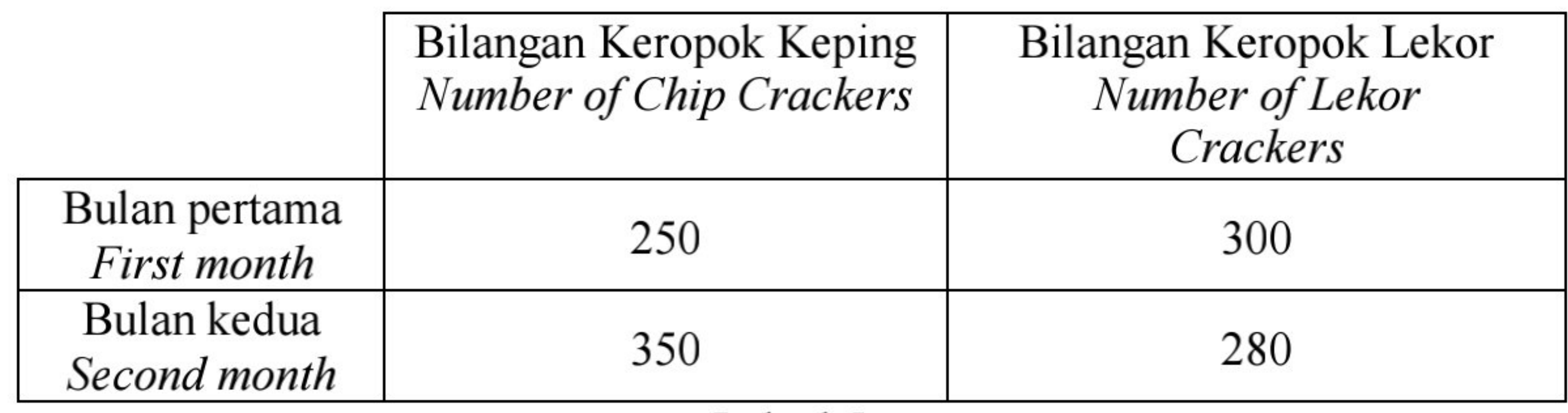
- (a)(ii)
Mr Faris saved RM24 190 in a fixed deposit account at Bank Mutiara for 3 years with an interest rate of 6.5% per annum. What is the difference between the amount of interest earned by Mr Faris if he is given compound interest (compounding every 3 months) compared to simple interest?
[4] - (b)(i)
Mr Faris has savings to be used to buy machines and equipment in his company. Table 6 shows the life span in years for E brand and P brand batteries used for equipment in Mr Faris's cracker shop (life expectancy 0-0.9, 1.0-1.9, 2.0-2.9, 3.0-3.9, 4.0-4.9, 5.0-5.9; battery E: 8, 21, 14, 8, 9, 5; battery P: 5, 8, 17, 21, 9, 5). Given the mean of battery E is 2.51 and standard deviation of battery E is 1.48. Based on the data, determine which battery brand is more durable and better.
[3]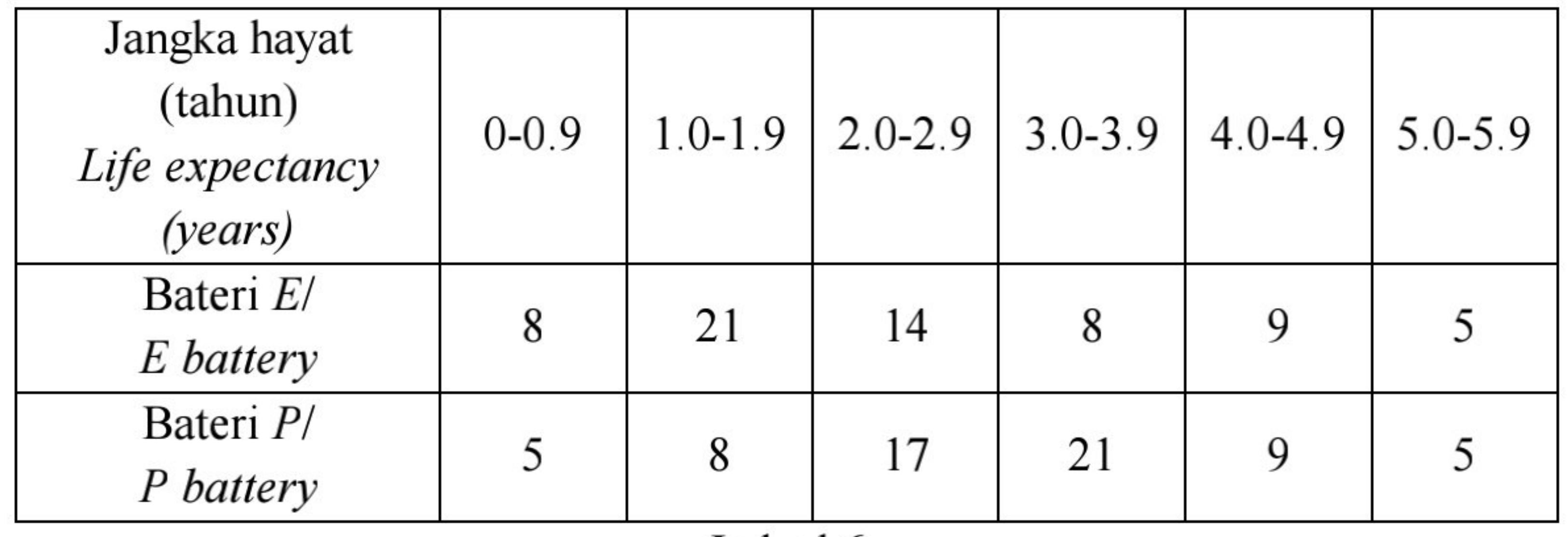
- (b)(ii)
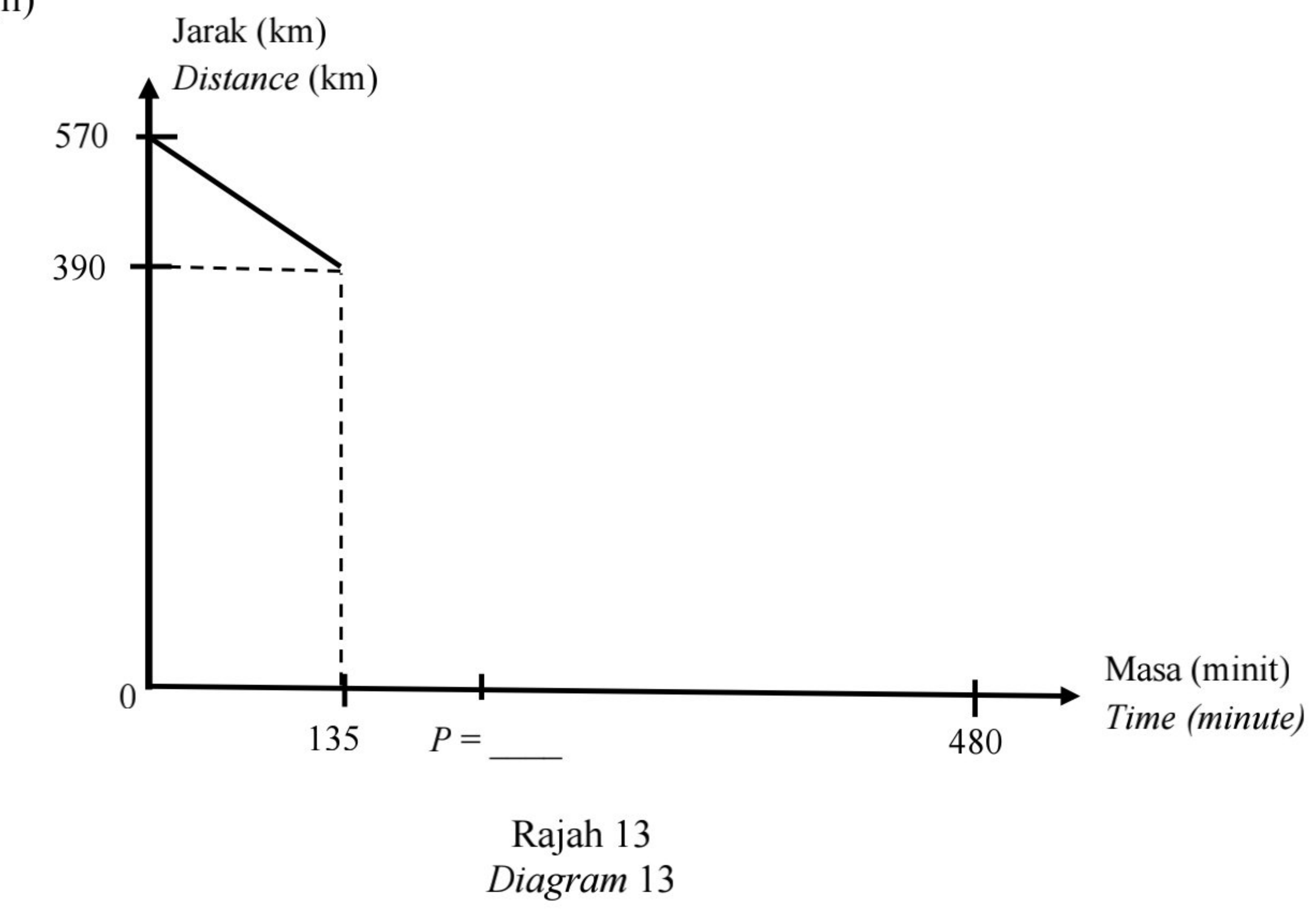
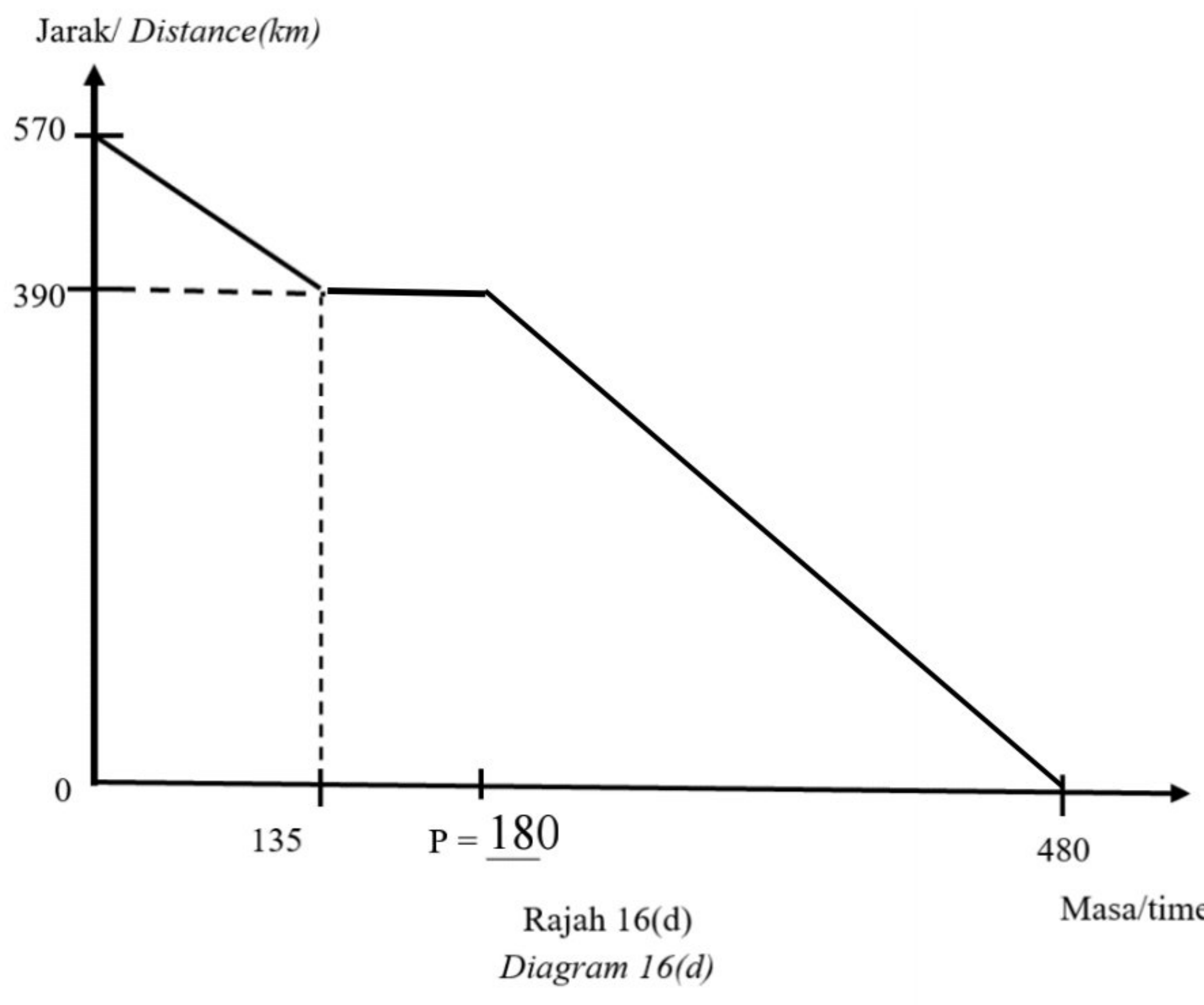
Mr Faris drove a lorry to deliver crackers that had been ordered 570 km from Kuala Terengganu to Pasir Gudang. Table 7 shows his travel records (10 October 2023: 6.45 a.m. journey starts; 9.00 a.m. rest at Mersing after drive for 180 km; 9.45 a.m. continue journey; 2.45 p.m. arrived in Kuala Terengganu) and Diagram 13 shows the incomplete distance-time graph. Complete the distance-time graph in the answer space to represent Mr Faris's whole journey and find the value of P.
[2]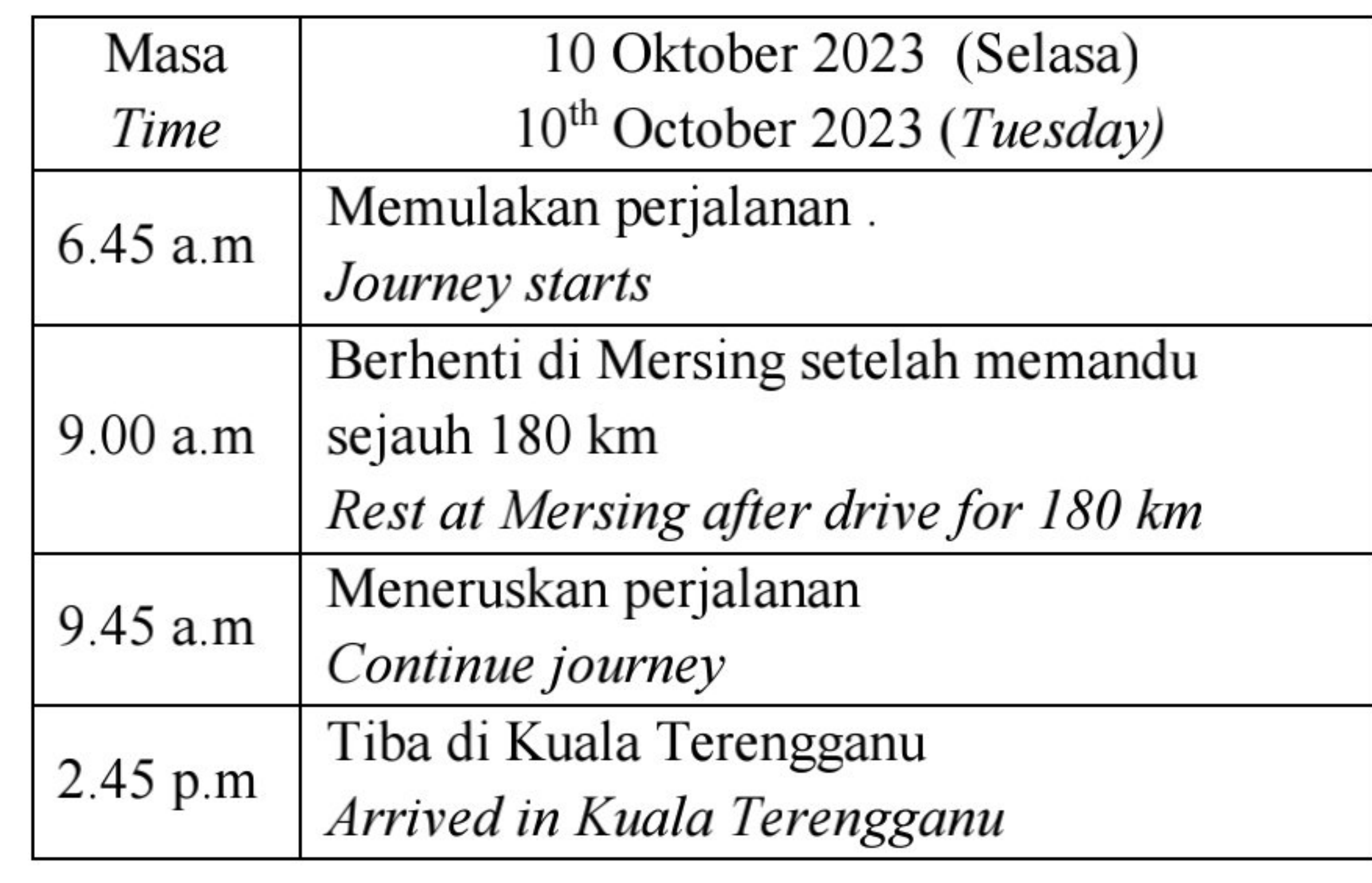
- (c)(i)
Diagram 14 shows Mr Faris's choice of route to go to Company A that has ordered crackers (vertices: R Faris homestay, S petrol pump, T ALSUFI Restaurant, U OPA Super market, V Bank, W Company A). Determine the shortest route that Mr Faris will travel from his homestay at R to Company A at W, with condition all the routes must pass through once only.
[2]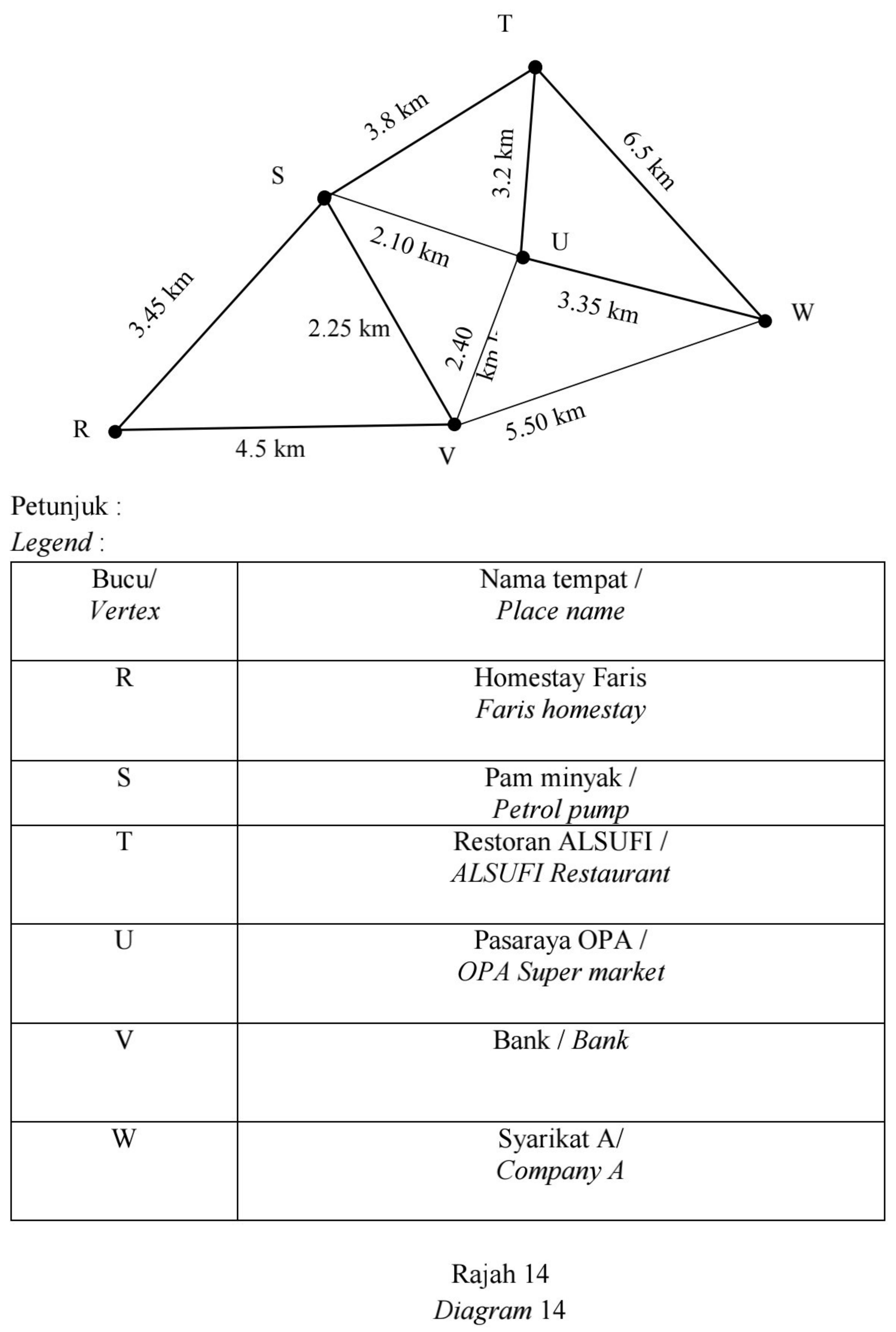
- (c)(ii)
What is the shortest route distance, in km, of the journey?
[1] - (d)
After Mr Faris arrived at Company A, Mr Faris inspected 90 packages of lekor crackers and 200 packets of chip crackers in the box. Mr Faris found that some packages of lekor crackers are damaged. Find the probability of a lekor cracker package that is still good if 5 of them are damaged.
[1]
Table 8 (car loan): car price RM165 000; interest charge 2.62%; down payment 10%; loan repayment period 108 months. (Choose Question 16 or 17.)
Hard15 marks- (a)(i)
Mr Harith plans to buy a car on credit. He has made a plan by taking out a loan at a bank and he is able to pay the monthly instalments. Based on the information from Table 8, calculate the total loan repayment amount.
[2]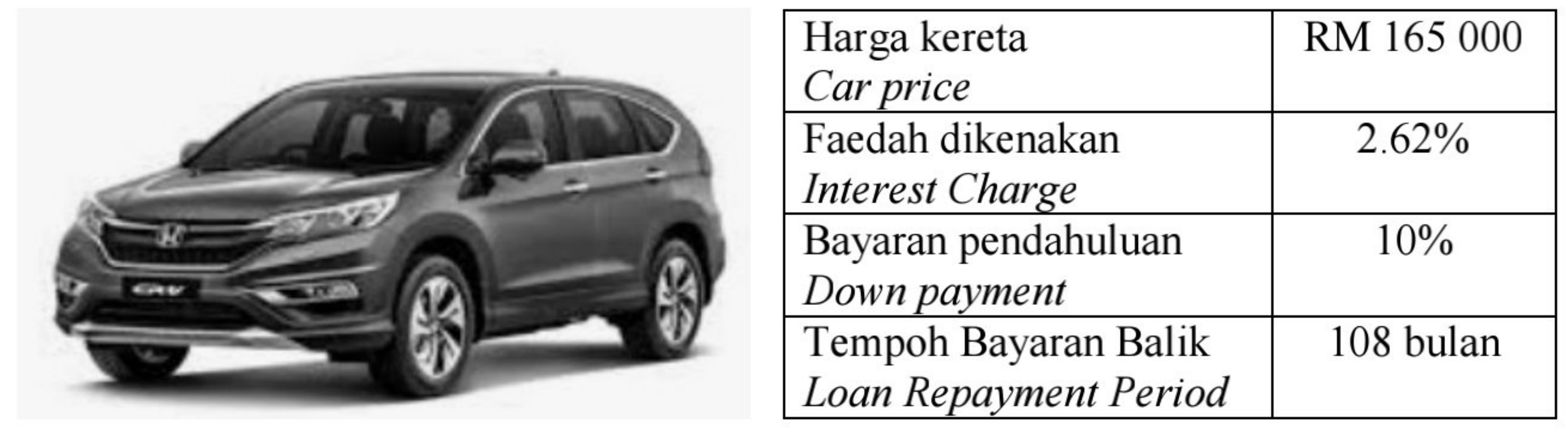
- (a)(ii)
Calculate the monthly instalment to be paid by Mr Harith.
[2] - (b)(i)
Mr Harith wants to have a car registration plate with his favourite numbers which are 6, 5 and 2. What are the three-digit numbers that can be selected from the numbers? List the numbers in ascending order using set notation.
[1] - (b)(ii)
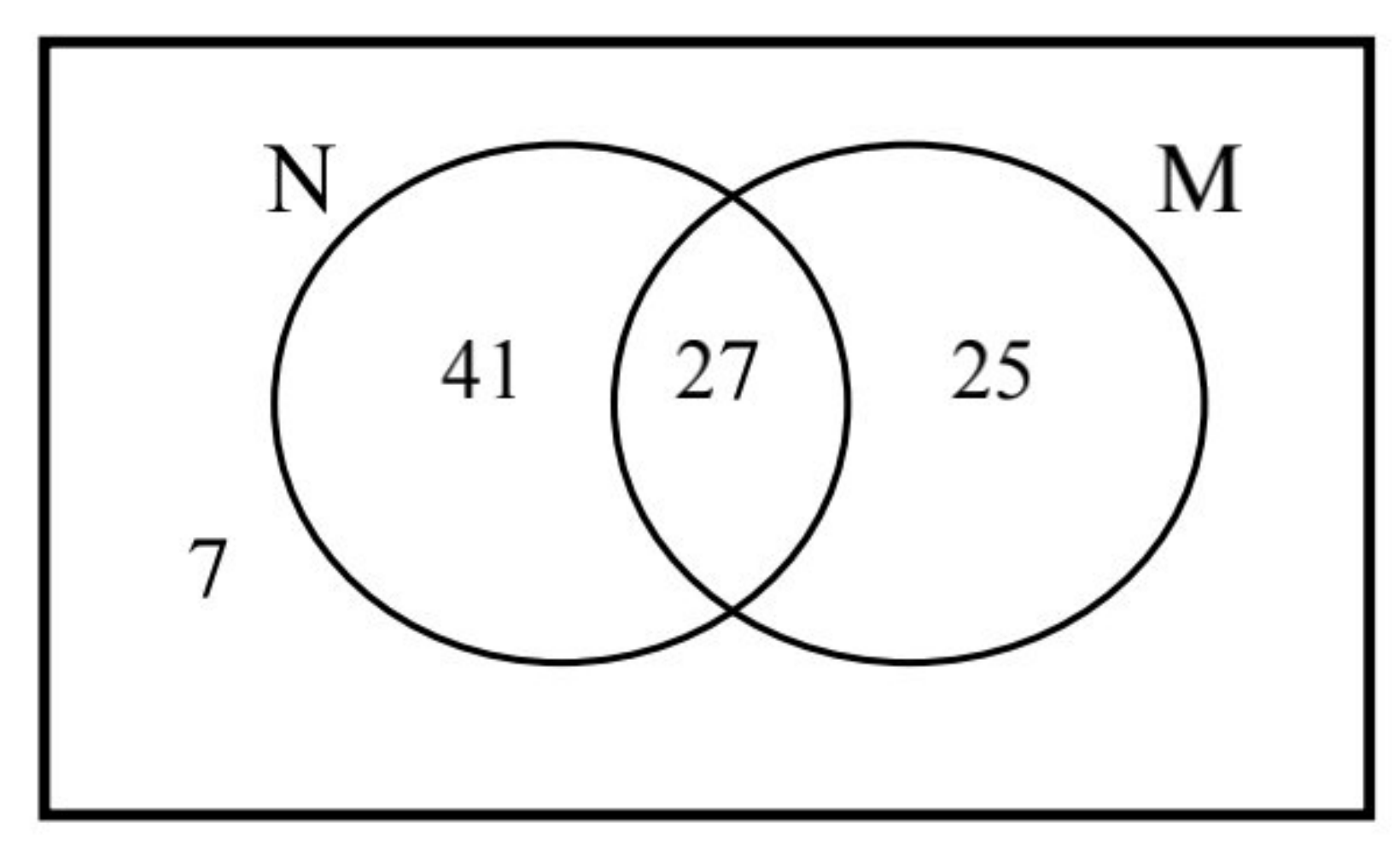
Based on a study of 100 adults, 68 people own national cars N, 52 people own imported cars M, and 27 people own both imported cars and national cars. Complete the Venn diagram in the answer space provided. Hence state the number of people who own the imported car only.
[3]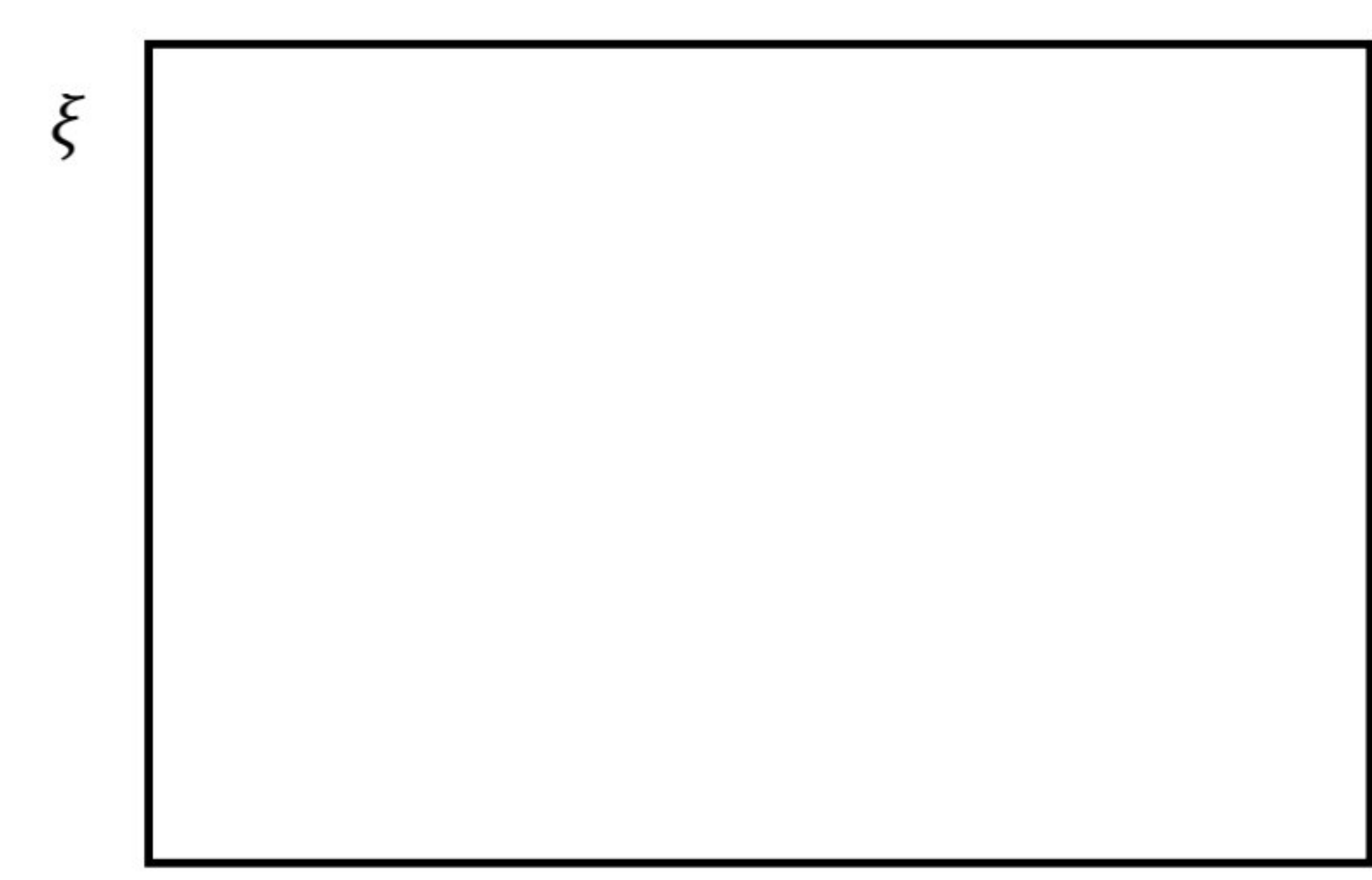
- (c)(i)
Diagram 15 shows their journey from Pasir Gudang to Bangi (speed-time graph: speed 0 at 0630, 110 km h⁻¹ at 0730, constant 110 km h⁻¹ until 1020, rising to 120 km h⁻¹ at 1115). Calculate the time period in minutes of the car moving at a uniform speed.
[1]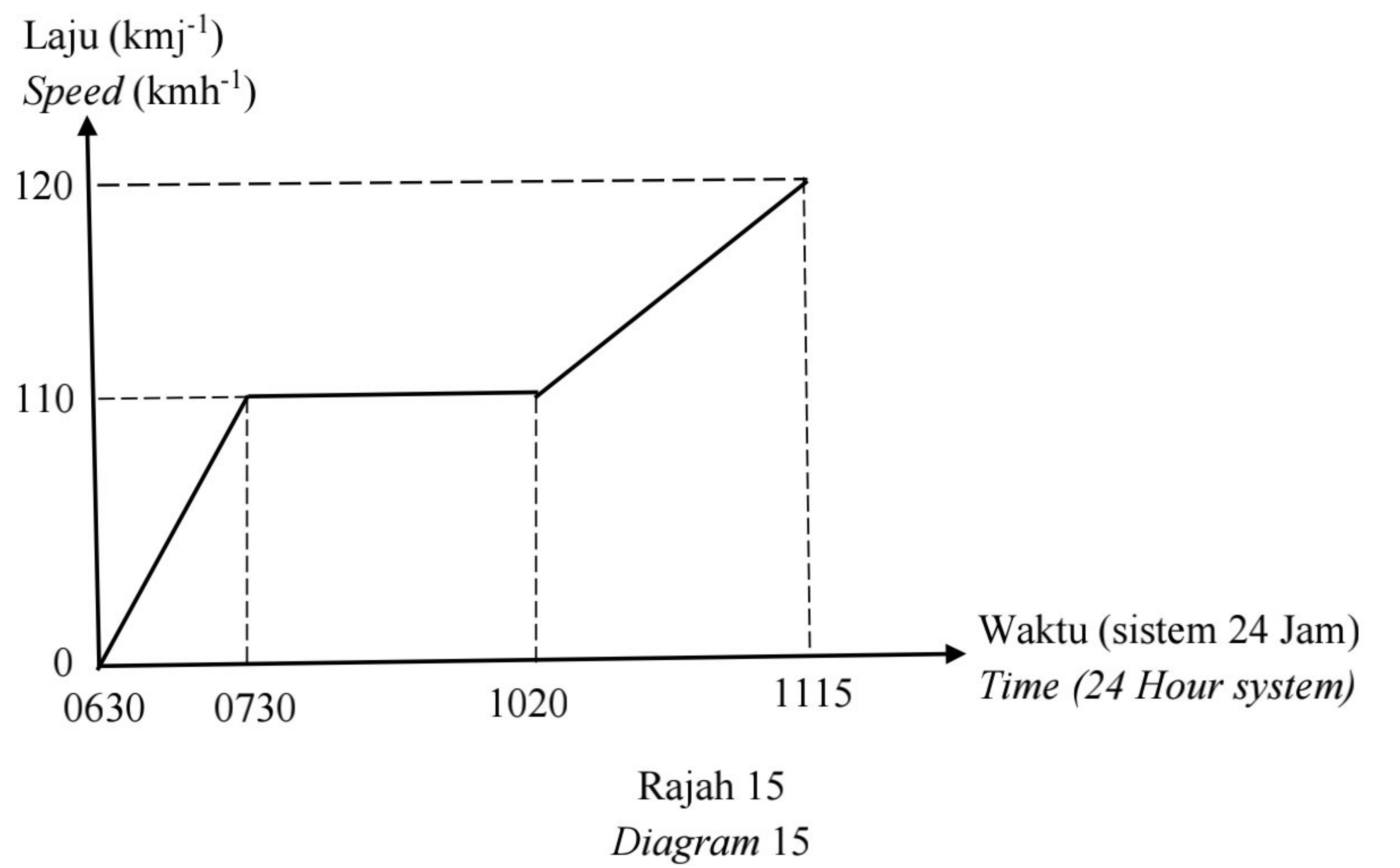
- (c)(ii)
Calculate the rate of change of speed against time in km h⁻¹ for the last 30 minutes.
[2] - (d)(i)
The time taken to reach Bangi, t, varies directly with the distance, d, and inversely with the speed, v. It is given that the distance travelled to reach Muar is 200 km with a uniform speed of 110 km h⁻¹ and takes 2 hours and 30 minutes. Calculate the distance travelled by Mr Harith if he takes 5 hours and 20 minutes at a speed of 100 km h⁻¹.
[2] - (d)(ii)
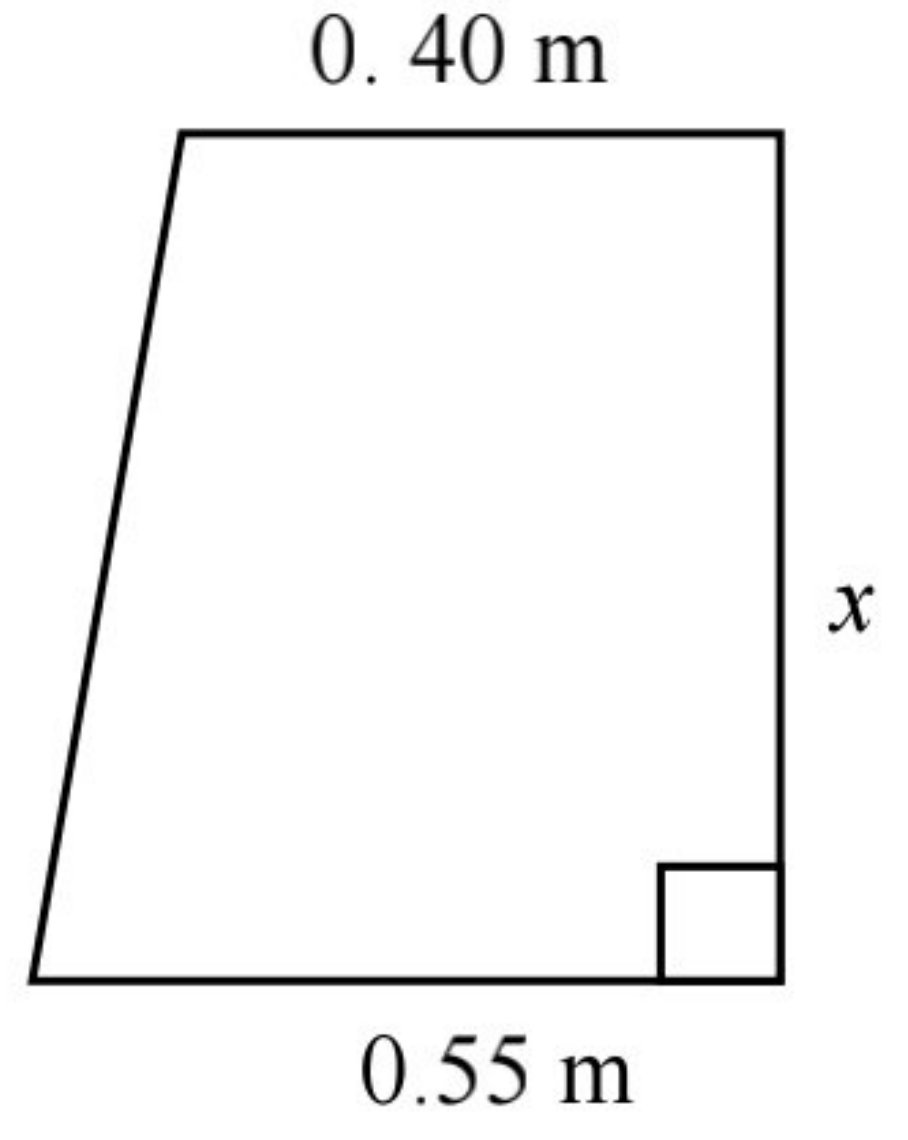
A car carpet is placed at the driver's seat and was cut in the shape of a trapezium as shown in Diagram 16 (parallel sides 0.40 m and 0.55 m, height x). Given the area of the car carpet is 2 850 cm², calculate the length of the car carpet, x, in metre.
[2]