PERAK SET 36 2022 P2 Q17
HardWrite your answer on paper. Then open the answer to check it.
(Section C: answer any one question.) (a) Vanessa wants to tile her kitchen. Table 17 shows the tiles she buys: small tiles 2p pieces at RM3 each; large tiles q pieces at RM7 each. The total number of tiles bought is 155. The total price of the tiles is RM605. Using the substitution or elimination method, calculate the value of p and of q. (b) A study of 100 families in Vanessa's housing area investigated the type of tiles on their floors. The result is in Figure 17.1. Given the universal set ξ = S ∪ P ∪ H, set S = {families that install ceramic tiles}, set P = {families that install porcelain tiles} and set H = {families that install homogeneous tiles}. The Venn diagram shows 2x (H only), 48 (S, inside H only), 3x (S, H and P), 16 (H and P only), x + 12 (P only). (i) On the Venn diagram in the answer space, shade the region that represents families that install only porcelain tiles. (ii) State, in terms of x, the number of families that install homogeneous and ceramic tiles. (iii) Calculate the value of x and hence determine the number of families that do not install porcelain tiles. (c) Figure 17.2 shows tiles with a tessellation pattern made of congruent polygons produced by isometric transformations. (i) State the transformation involved to produce shape Y from shape X. (ii) Hence, state the transformation involved to produce shape Z from shape Y.
Hard15 marks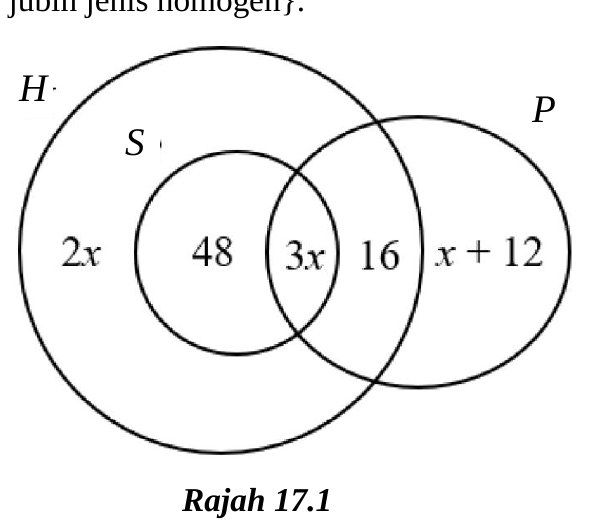
- (a)
Calculate p and q using substitution or elimination.
[4]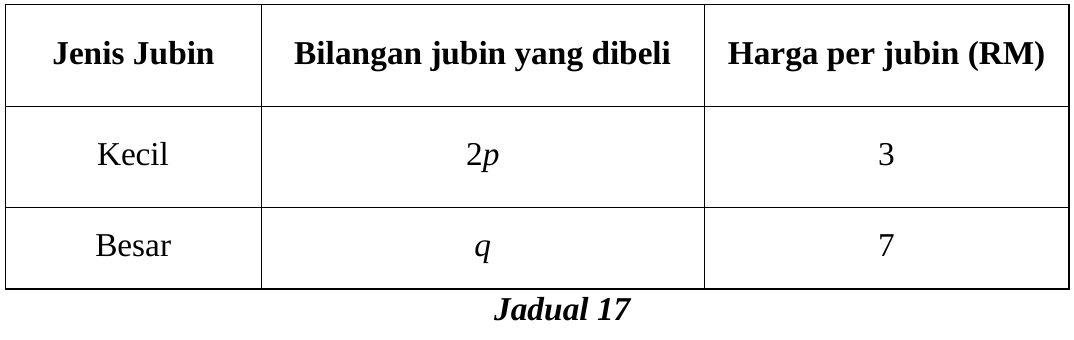
- (b)(i)
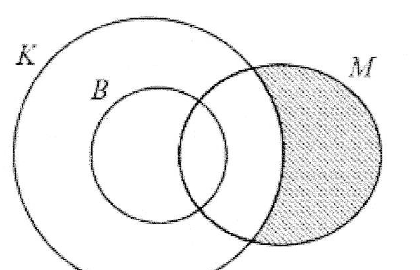
Shade the region of families that install only porcelain tiles.
[1]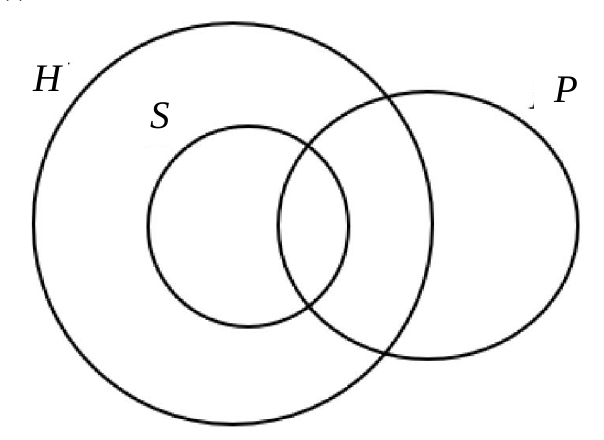
- (b)(ii)
Number of families that install homogeneous and ceramic tiles, in terms of x.
[1] - (b)(iii)
Calculate x and the number of families that do not install porcelain tiles.
[4] - (c)(i)
Transformation to produce Y from X.
[2]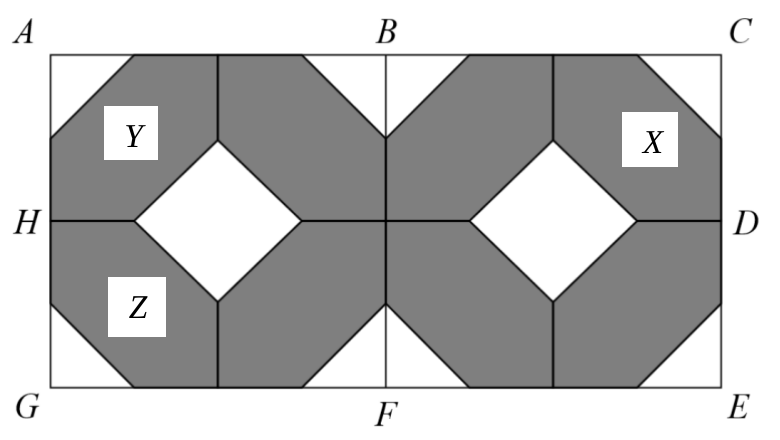
- (c)(ii)
Transformation to produce Z from Y.
[3]