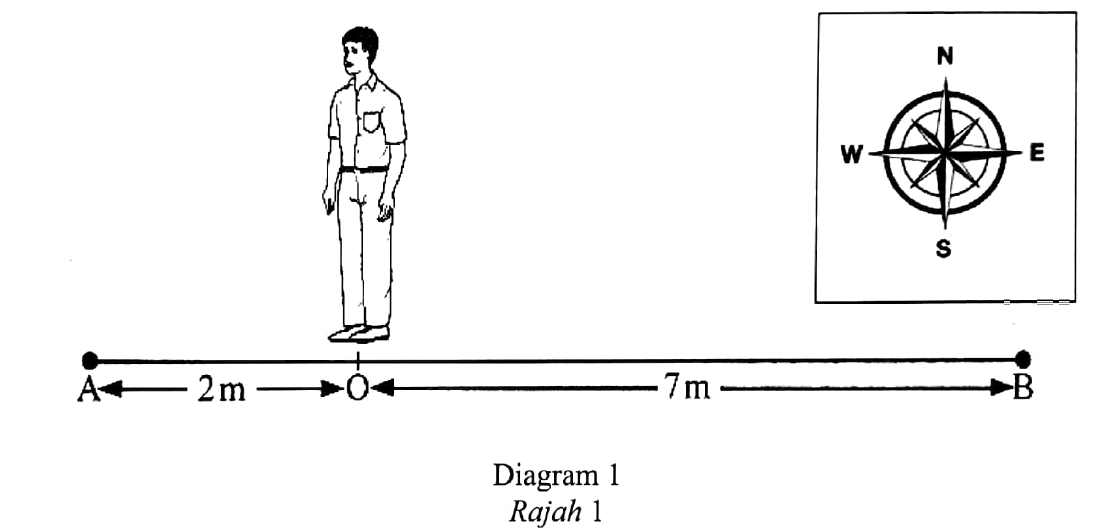
Diagram 1 shows Richard stands at O. He walks towards A, then moves towards B and stops at B. (OA = 2 m to the west, OB = 7 m to the east.) What is the displacement of Richard?
Medium
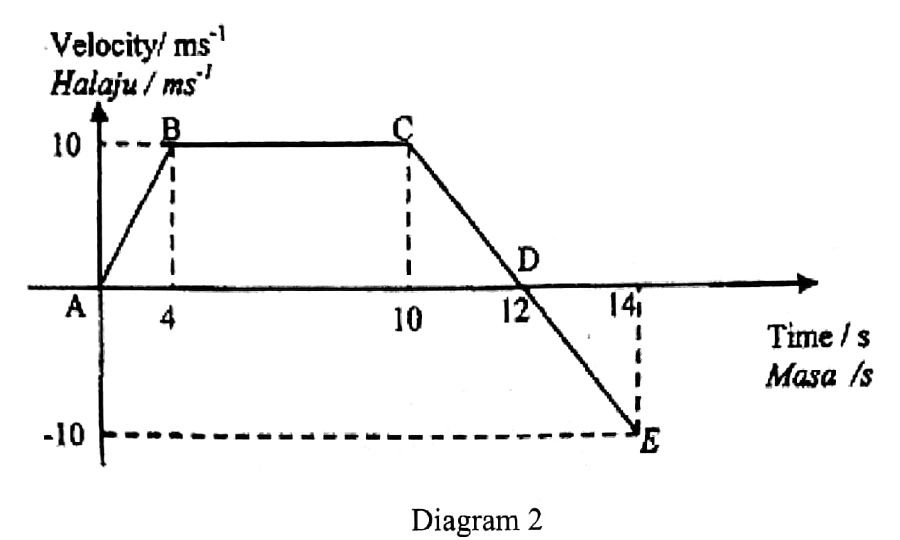
Based on the velocity-time graph below (Diagram 2), what is the displacement of the car in 14 s? (Graph: velocity rises from 0 to 10 m s⁻¹ at 4 s, constant until 10 s, falls to 0 at 12 s, then to -10 m s⁻¹ at 14 s.)
Medium
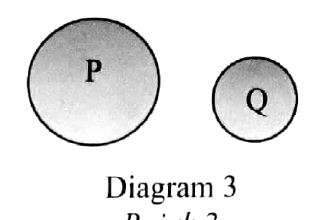
Diagram 3 shows two steel balls, P and Q, dropped from the top of a building to the ground. Assume the air resistance is negligible. Which of the following velocity-time graphs shows the correct motion of P and Q?
Medium
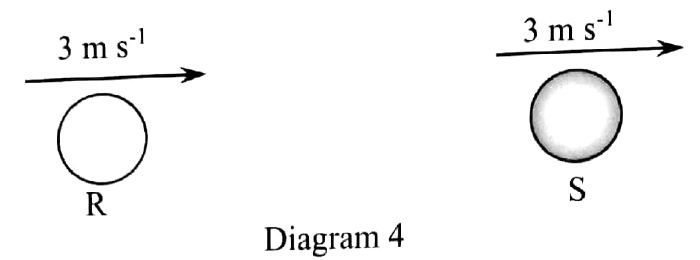
Diagram 4 shows two spheres, R made of cork and S made of steel. Both are moving at a speed of 3 m s⁻¹. Which comparison about the momentum is correct?
Easy
Force F acting on an object of mass 3 kg on a smooth floor produces an acceleration of 4.0 m s⁻². What is the acceleration of an object of mass 5 kg if force 2F acts on it?
Medium
A ball of 1.2 kg with velocity of 4 m s⁻¹ is hit by a car moving in the same direction as the ball. The velocity of the ball increases to 10 m s⁻¹ in 0.5 s. What is the impulse on the ball?
Medium
Which of the following statements is correct about the gravitational forces acting on earth and moon? [Gravitational force of the earth against the moon = F_E] [Gravitational force of the moon against the earth = F_M]
Easy
Given that the radius of the earth is R and the escape velocity on the surface of the earth is 11 km s⁻¹. What is the escape velocity at the height of 0.5R from the surface of the earth? Hint: v = √(2GM/r); v = escape velocity, G = gravitational constant, r = distance from the centre of the earth, M = mass of Earth.
Medium
Which of the following statements is correct about a liquid-in-glass thermometer? I The thermometer applies the concept of thermal equilibrium. II Mercury is used in the thermometer because mercury is a good heat conductor. III The smaller diameter of capillary tube makes the thermometer more sensitive. IV The thermometer can be used without calibration.
Medium
A piece of metal with a mass of 100 g and at a temperature of 100 °C is placed in a beaker of ice at 0 °C. 10 g of the ice has melted while the temperature of the metal decreases to 60 °C. What is the specific heat capacity of the metal in the unit J kg⁻¹ °C⁻¹? Assume no heat loss to the surrounding. (Latent heat of fusion of ice = 3.34 × 10⁵ J kg⁻¹)
Medium
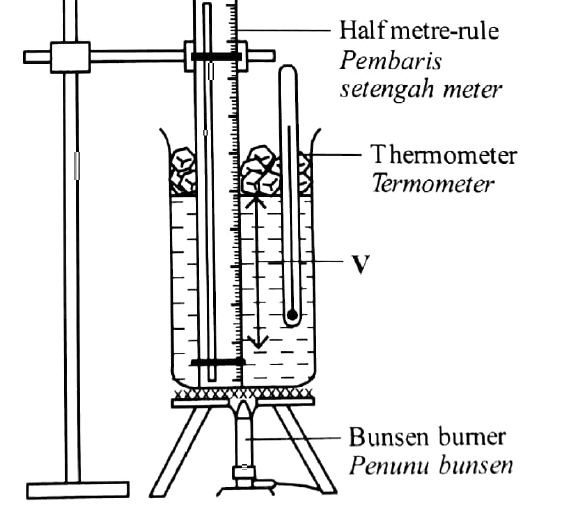
Diagram 5 shows an arrangement of apparatus to investigate the relationship between the volume of air column, V and the temperature, T for a fixed mass of air. Which of the following graphs shows the relationship between V and T, where T is temperature measured in Kelvin?
Medium
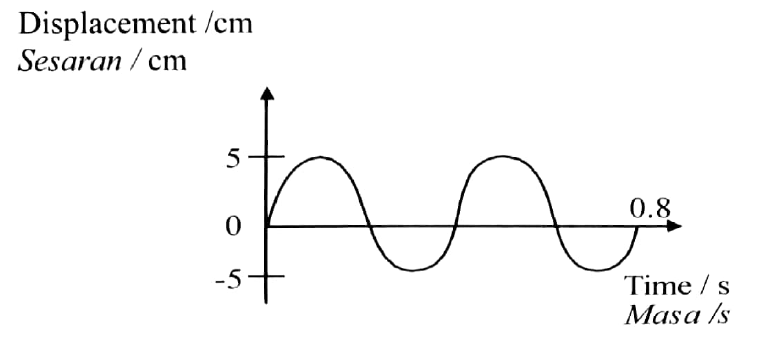
Diagram 6 shows the displacement-time graph of a wave (amplitude 5 cm; two complete oscillations in 0.8 s). What is the frequency of the wave?
Medium
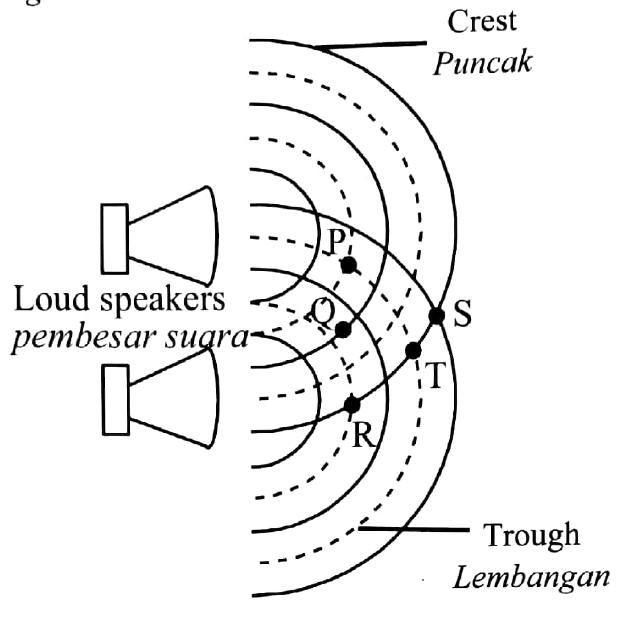
Diagram 7 shows an interference of sound waves emitted from two loud speakers which are coherent. Constructive interference occurs at
Medium
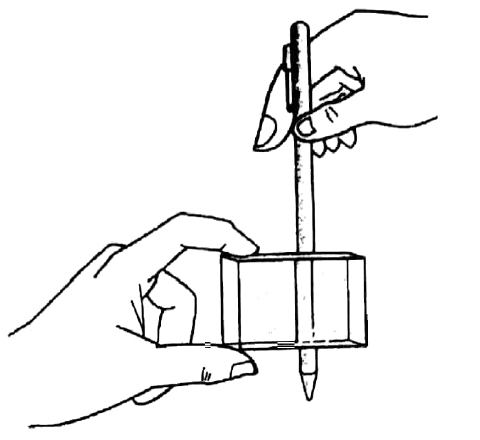
Diagram 8 shows a glass block is placed in front of a pen. The pen appears bent is due to
Medium
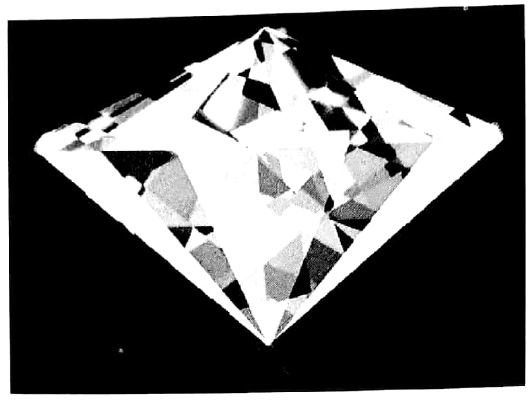
Diagram 9 shows a diamond glitters when struck by light rays. This phenomenon is caused by
Medium
Which of the following ray diagrams produces an image that is virtual, upright and bigger than the object?
Medium
An object is placed 5 cm in front of a convex lens which has a focal length of 10 cm. What is the value of m, the magnification of the image?
Medium
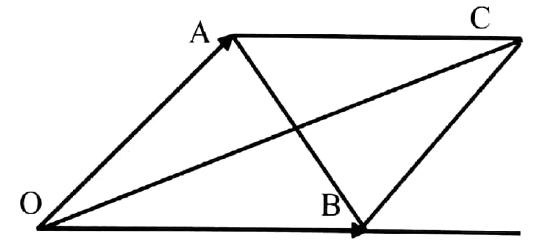
Diagram 10 shows two forces, OA and OB acting on point O. The resultant force is determined by using the parallelogram of forces. Which of the following represents the resultant force?
Easy
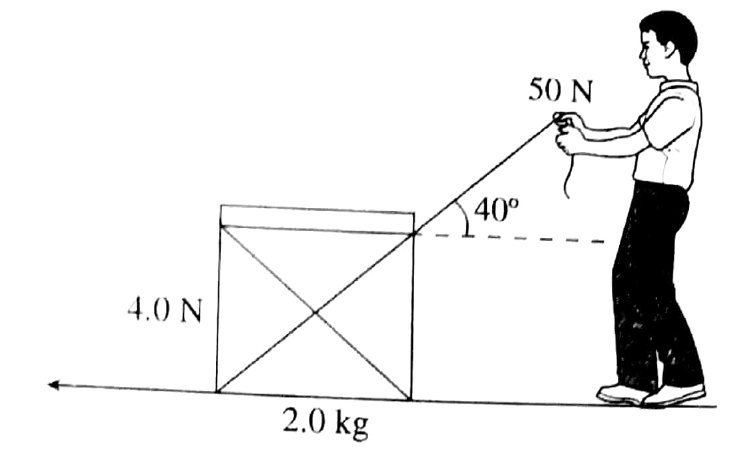
Diagram 11 shows a box being pulled by a man. The frictional force acting on the box is 4.0 N. (Pull = 50 N at 40° above the horizontal; mass of box 2.0 kg.) What is the horizontal resultant force acting on the box?
Medium
Which of the following phenomena shows a force in equilibrium?
Easy
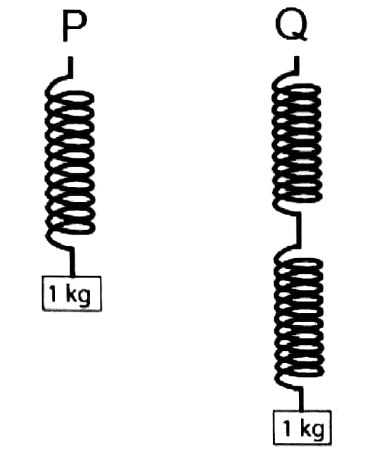
Diagram 12 shows 1 kg of mass hung to three different arrangements of the same spring (P: one spring; Q: two springs in series; R: two springs in parallel). Which is true about the extension of the spring for each arrangement P, Q and R?
Medium
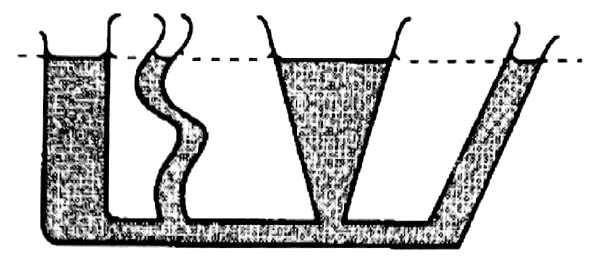
Diagram 13 shows the arrangement of an apparatus for an experiment (connected containers of different shapes, liquid at the same level in each). Which of the following conclusions is correct?
Medium
Which device application is based on the Pascal's principle?
Easy
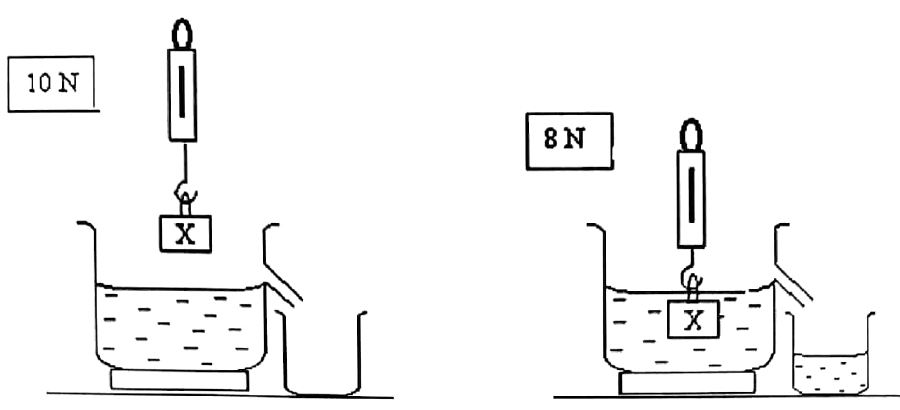
Diagram 14 shows a set of experiment and the result obtained by a student (block X weighs 10 N in air and 8 N when fully submerged in water). Based on the observations, calculate the volume of block X. [Density of water = 1000 kg m⁻³ and g = 10 m s⁻²]
Medium
Current can flow from one point to another due to a potential difference between two points in a circuit. What is the correct definition of potential difference?
Easy
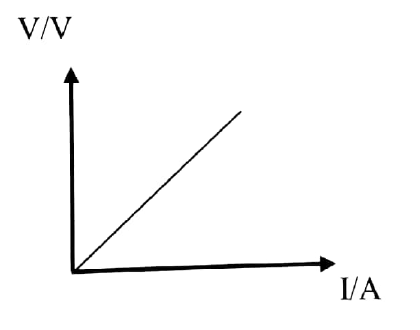
Diagram 15 shows a graph V versus I for an Ohmic conductor. What is the relationship shown by the graph?
Medium
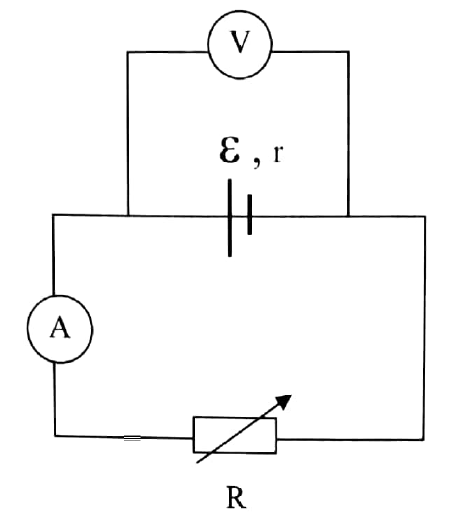
Diagram 16 shows a circuit in which the cell has internal resistance. What are the changes in the reading of the voltmeter and ammeter when the resistance of the rheostat is increased? A: voltmeter increases, ammeter increases. B: voltmeter decreases, ammeter decreases. C: voltmeter decreases, ammeter increases. D: voltmeter increases, ammeter decreases.
Medium
A tower fan is labelled with 240 V, 50 W. Calculate the tower fan resistance.
Easy
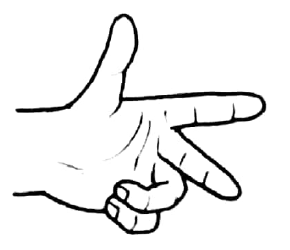
Diagram 18 shows the Fleming's left-hand rule. Index finger represents
Easy
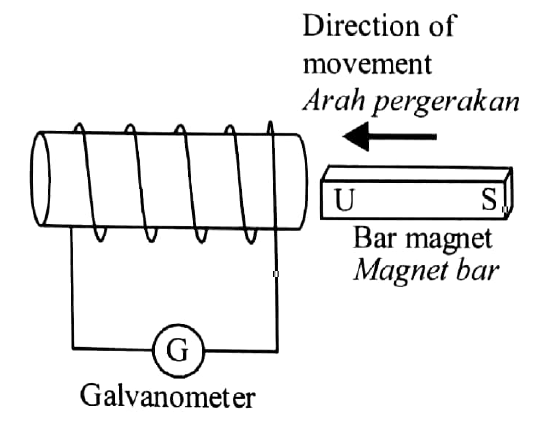
Diagram 19 shows a bar magnet moving towards a solenoid. Which of these actions will NOT increase the deflection of the galvanometer pointer?
Medium
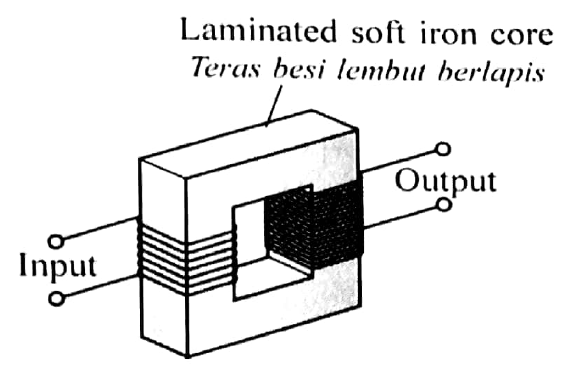
Diagram 20 shows the structure of a transformer. What is the function of laminated soft iron core in the transformer?
Easy
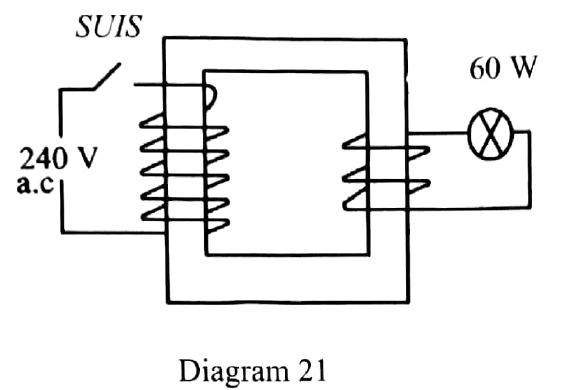
Diagram 21 shows a transformer that is used to light up a 60 W bulb (primary 240 V a.c.). If the efficiency of the transformer is 85%, calculate the current, I when the switch is on.
Medium
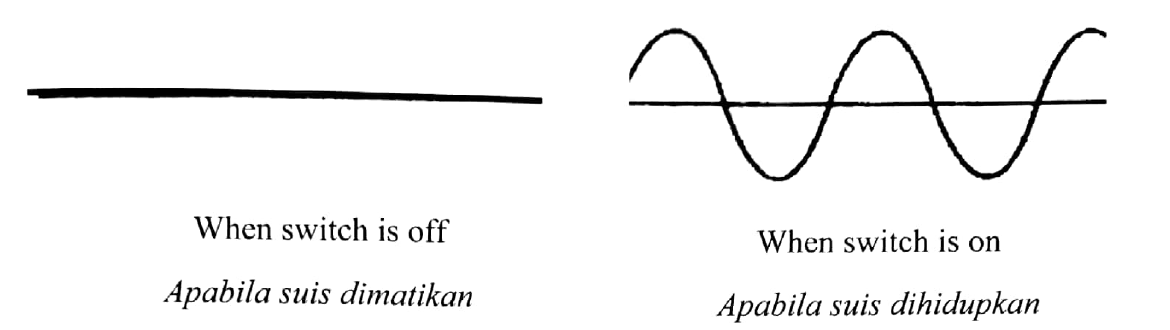
Diagram 22 shows the output waveform on a cathode ray oscilloscope (CRO) screen: a flat line when the switch is off and a sine wave (a.c.) when the switch is on. Which circuit will display the output waveform shown in Diagram 22?
Medium
The following circuit diagrams show four diodes connected to an a.c. power supply. Which circuit will make the bulb light up the brightest?
Medium
Which circuit will not light up the bulb?
Medium
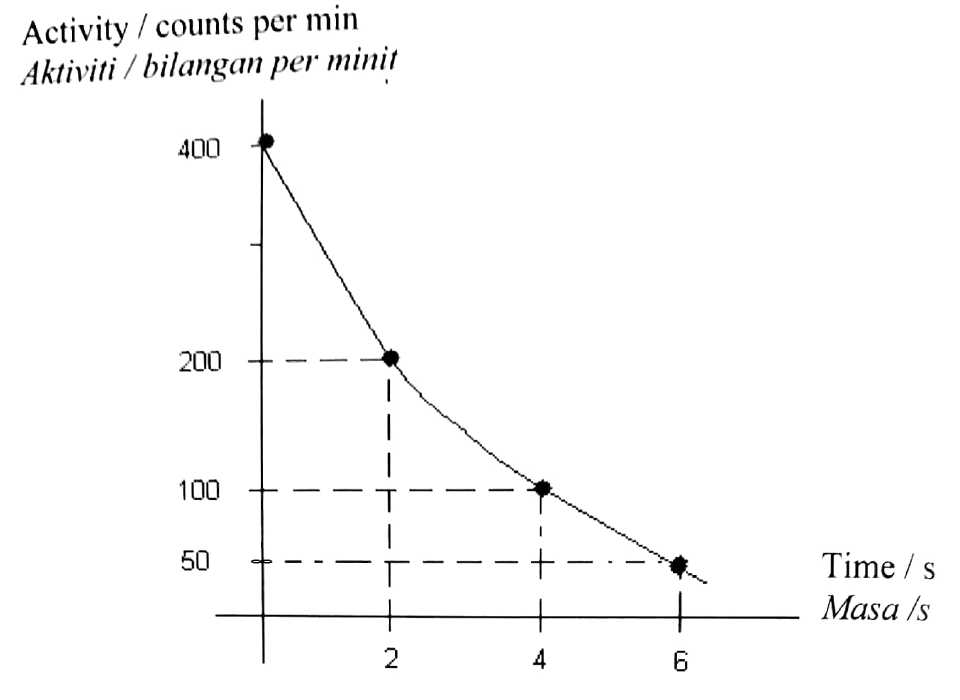
Diagram 23 shows a graph of activity against time for a radioactive element (activity 400, 200, 100, 50 counts per min at 0, 2, 4, 6 min). How many half-lives has the element gone through after 6 minutes?
Medium
A radioactive decay is represented by ²¹²₈₄Po → ᴬ_ZX + 2 ⁴₂He. Determine the values of A and Z for the nucleus X. A: A = 208, Z = 80. B: A = 204, Z = 86. C: A = 220, Z = 86. D: A = 204, Z = 80.
Medium
Which of the following nuclear reactions is an example of fusion?