Write your answer on paper. Then open the answer to check it.
Section A
Diagram 1 shows a mechanical stopwatch reading at the end of an experiment (pointer at 24 s). The stopwatch is used to measure the time of 20 complete oscillations of a simple pendulum of length, l.
Medium4 marks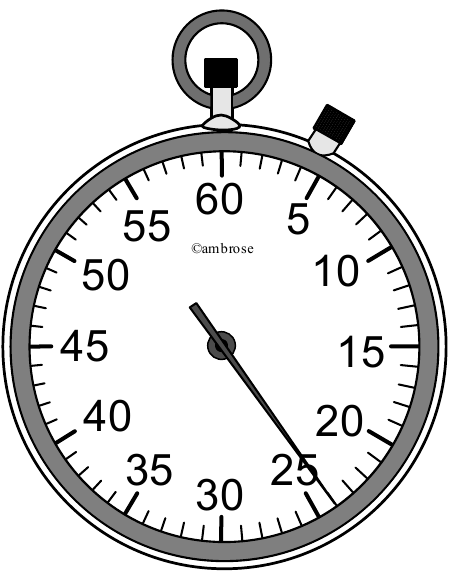
- (a)
Time is a ..................... quantity.
[1] - (b)
Calculate the period for one complete oscillation.
[2] - (c)
What happen to the time of 20 complete oscillations if the length of pendulum, l, is reduced?
[1]
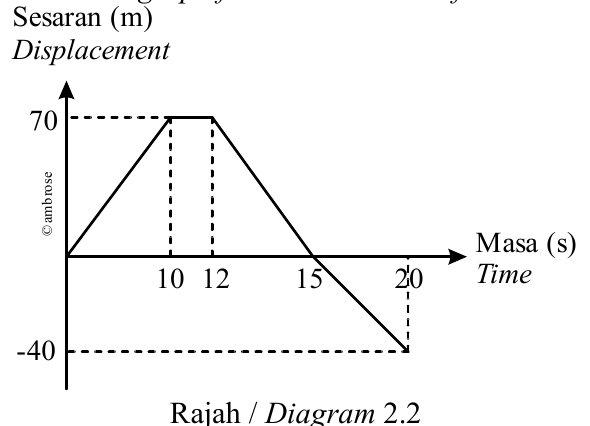
Diagram 2.1 shows the starting and ending position of Adam during cycling (70 m forward, then back to 40 m behind the start). Diagram 2.2 shows the displacement-time graph for the movement of Adam (0 to 70 m at 10 s, stays until 12 s, back through 0 at 15 s, to -40 m at 20 s).
Medium5 marks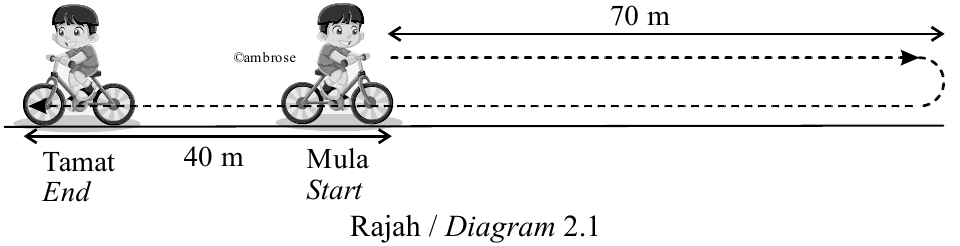
- (a)
What is the definition for displacement?
[1] - (b)
What happens to Adam during 10th to 12th seconds?
[1] - (c)
Determine the total displacement for Adam.
[1] - (d)
Hence, calculate the average velocity of Adam for the whole journey.
[2]
Diagram 3.1 shows an electric circuit consisting of a semiconductor diode, a bulb, a switch and a dry cell (the diode is connected so that it is reverse biased).
Medium6 marks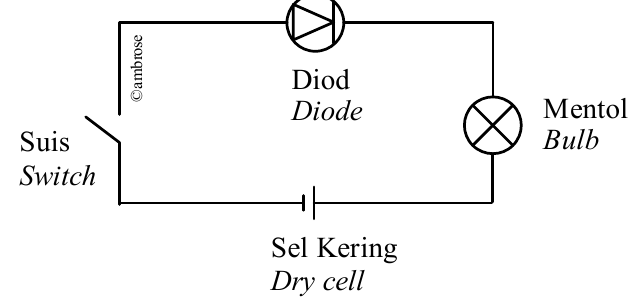
- (a)
What is the function of semiconductor diode?
[1] - (b)(i)
State what will happen to the bulb when the switch is closed?
[1] - (b)(ii)
Give reason for answer in b(i).
[1] - (c)
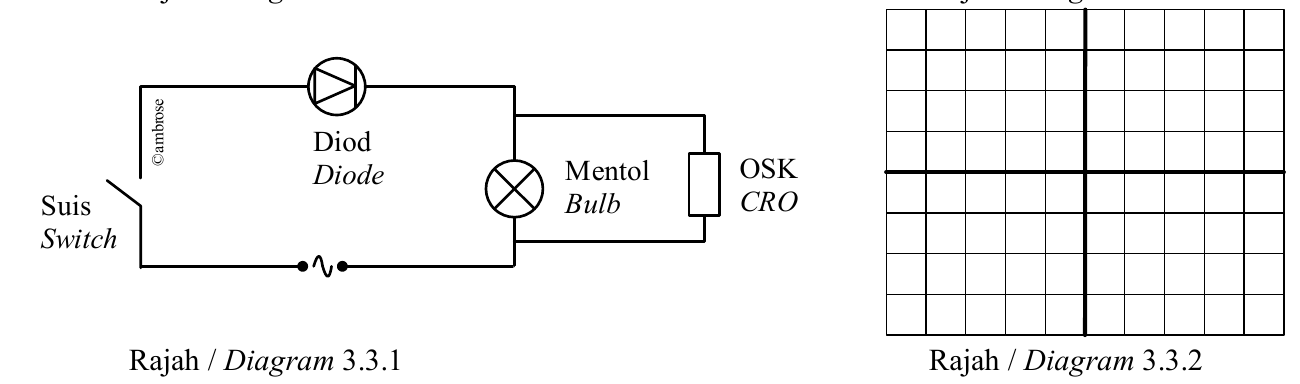
The diode is connected to a CRO. Diagram 3.2.1 shows the diode connected to d.c. power supply; Diagram 3.3.1 shows it connected to a.c. power supply. The time base of the CRO is turned on. Sketch the waveform displayed on the CRO screen in Diagram 3.2.2 and Diagram 3.3.2.
[2]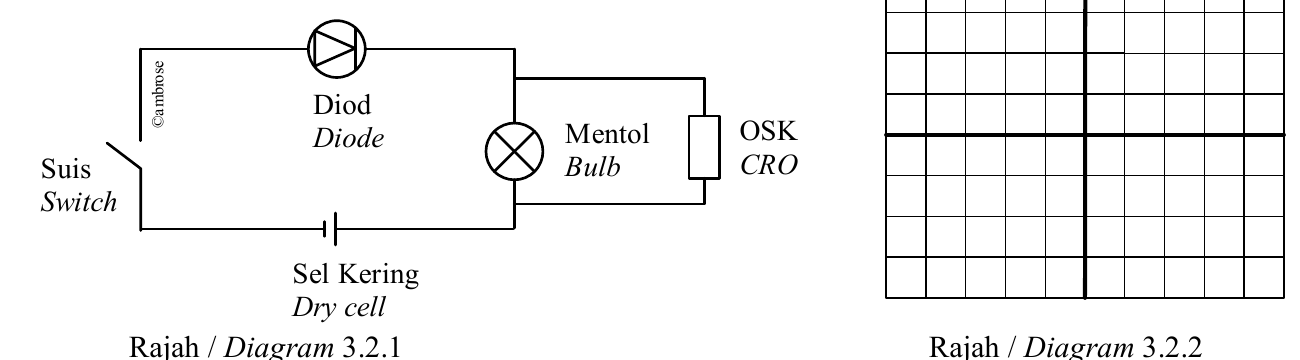
- (d)
Name the process involved in Diagram 3.3.1.
[1]
(a) Diagram 4.1 shows a conversation between Adam and Fatimah with their father at the durian orchard (why do durians fall to the ground; why does the moon revolve around the earth). (b) Diagram 4.2 shows an arrangement of kit to determine a force: a rubber stopper on a thick string moving in a horizontal circle, with a plastic tube, crocodile clip and slotted weight.
Medium9 marks- (a)(i)
What is the correct answer should be given by their father? Tick (√) at the correct answer: [ ] Because there is a centripetal force acting between two bodies. [ ] Because there is a gravitational force acting between two bodies.
[1] - (a)(ii)
Calculate the acceleration due to gravity for a durian of mass 1.5 kg that is falling to the ground. Ignore air resistance. Mass of earth, M = 5.97 × 10²⁴ kg; distance between durian and centre of earth, R = 6.37 × 10⁶ m.
[2] - (a)(iii)
Hence, calculate the force acting on the durian as it is falling.
[2] - (b)(i)
When the rubber stopper makes a circular motion, the tense string exerts a force on the rubber stopper. Draw the direction of the force in Diagram 4.2.
[1]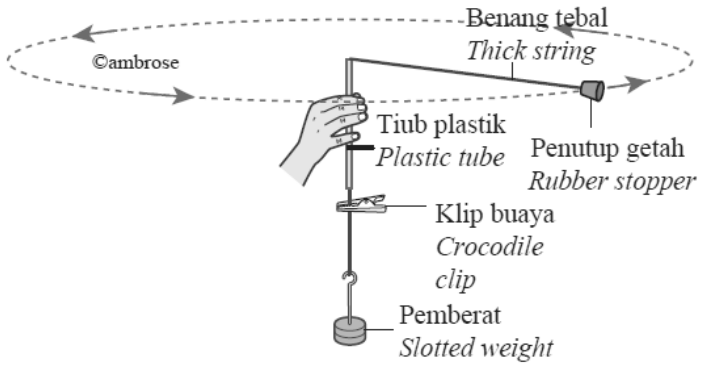
- (b)(ii)
If the radius of circle r = 1.0 m and the rubber stopper (mass = 0.2 kg) moves with linear speed v = 4 m s⁻¹, calculate the force exerted on the rubber stopper.
[2] - (b)(iii)
What happen to linear speed if the length of string is shortened?
[1]
Diagram 5 shows a graph of maximum kinetic energy, Kmax (eV) against frequency for calcium metal, where f0 is the threshold frequency. Light A gives Kmax = 0.27 eV and light B gives Kmax = 0.60 eV. The calcium metal is irradiated with A and B.
Medium9 marks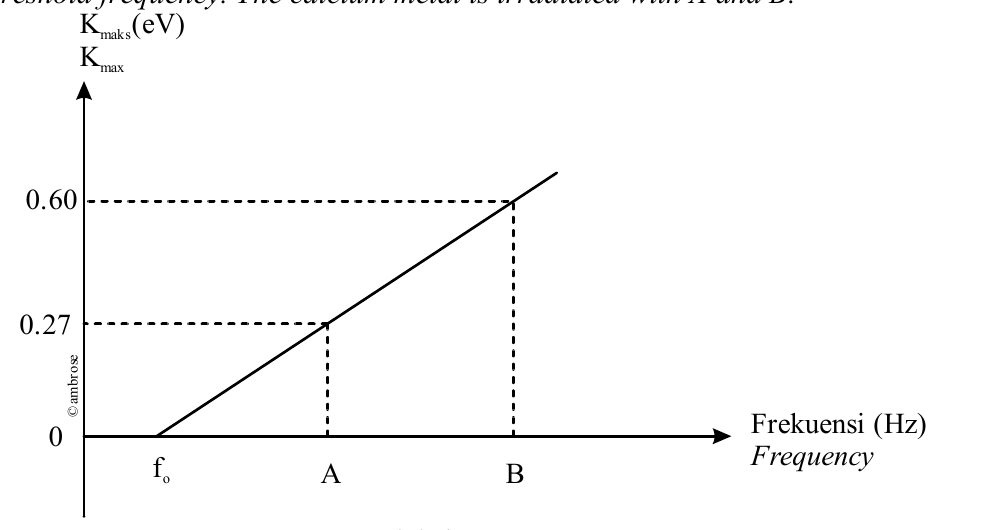
- (a)
What is the meaning of threshold frequency, f0?
[1] - (b)(i)
Compare the frequency of light A and B.
[1] - (b)(ii)
Compare the maximum kinetic energy of photoelectron emitted when irradiated with light A and B.
[1] - (b)(iii)
Hence, relate the frequency and maximum kinetic energy of photoelectron emitted.
[1] - (c)(i)
Work function, W of calcium metal is 3.00 eV. Calculate the threshold frequency, f0.
[2] - (c)(ii)
Calculate the energy of light B when the light is irradiated on calcium metal.
[2] - (d)
What happen to maximum kinetic energy if the intensity of light is increased?
[1]
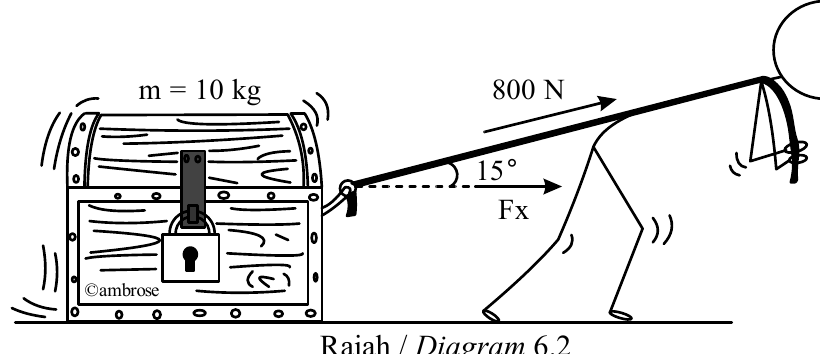
Diagram 6.1 and Diagram 6.2 show a man pulling a vault of mass m = 10 kg with a force F = 800 N. The rope is pulled at angle 40° (Diagram 6.1) and 15° (Diagram 6.2) to the horizontal component force, Fx.
Medium9 marks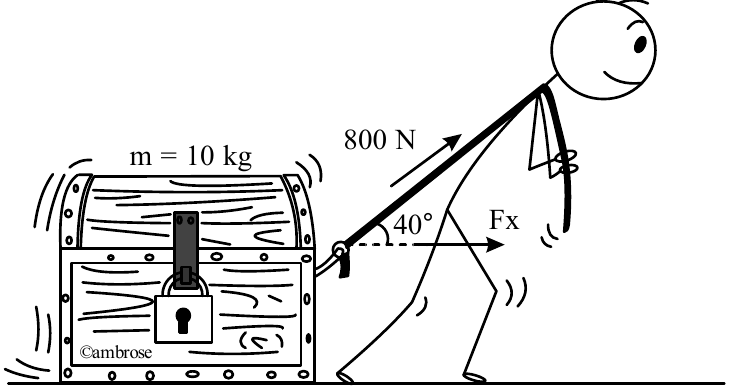
- (a)
What is the meaning of force?
[1] - (b)(i)
Calculate force, Fx in Diagram 6.1.
[2] - (b)(ii)
Calculate force, Fx in Diagram 6.2.
[2] - (c)(i)
Compare the angle with horizontal component of force, Fx.
[1] - (c)(ii)
Compare the magnitude of Fx.
[1] - (d)(i)
Hence, relate angle and horizontal component of force, Fx.
[1] - (d)(ii)
Relate the horizontal component force, Fx with the acceleration of the vault.
[1]
Diagram 7.1 shows the image formed on the surface of a spoon (small, upright image). Diagram 7.2 shows an incomplete ray diagram for a concave mirror (object between F and the mirror; two rays drawn). Diagram 7.3 shows a dental mirror used to examine the teeth.
Medium9 marks- (a)(i)
Name the phenomenon involved in producing the image.
[1]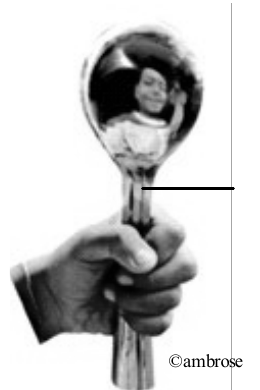
- (a)(ii)
Based on Diagram 7.1, state one characteristic of image formed by the surface of spoon.
[1] - (a)(iii)
Diagram 7.2 shows an incomplete ray diagram. Complete the ray diagram to show how the image is formed.
[3]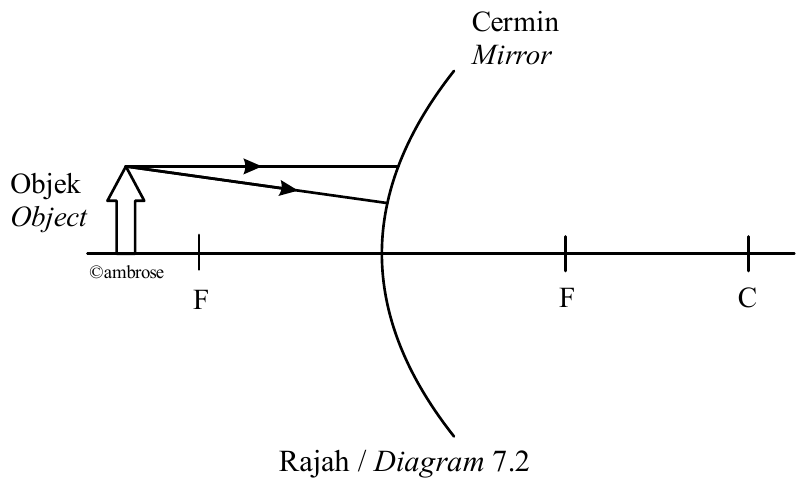
- (b)(i)
Name the type of mirror suitable to be used. Give one reason for your answer.
[2]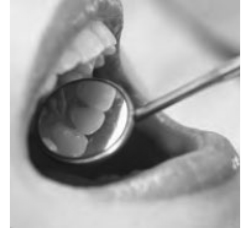
- (b)(ii)
State the suitable distance between the mirror and the teeth. Give one reason for your answer.
[2]
Diagram 8.1 shows a hair dryer which uses a heating element made of wire. The hair dryer is labelled 240 V, 2 kW.
Medium9 marks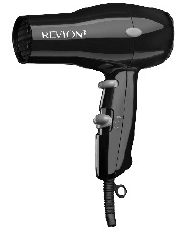
- (a)(i)
The hair dryer is used 6 hours per day. Calculate the energy used in unit kWh for 30 days.
[2] - (a)(ii)
If the cost of electrical energy is 20 cent per unit, calculate the cost of using the hair dryer for 30 days. [1 unit = 1 kWh]
[2] - (c)(i)
Table 1 shows four heating elements K, L, M and N (K: straight nichrome wire; L: coiled constantan wire; M: straight constantan wire; N: coiled nichrome wire). Based on Table 1, state the suitable structure of wire. Give one reason.
[2]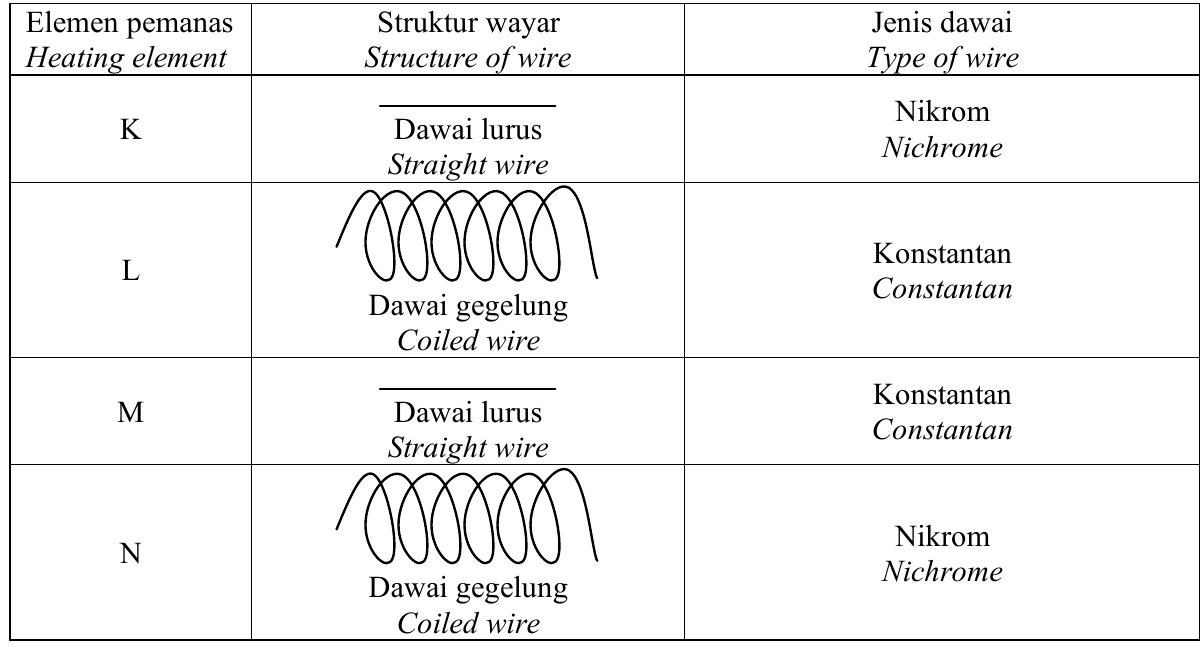
- (c)(ii)
State the suitable type of wire. Give one reason.
[2] - (d)
Based on your answer in 8(c), determine the most suitable heating element to produce large quantity of heat.
[1]
Extra version of question 4 (printed as '4 Extra' in the paper). Diagram 4.1 shows a process to calibrate a thermometer (0 °C in ice and distilled water in Beaker A, 100 °C in boiling distilled water in Beaker B heated by an immersion heater). Diagram 4.3 shows an experiment to determine the specific heat capacity of an aluminium block.
Medium9 marks- (a)(i)
State the S.I unit for temperature.
[1]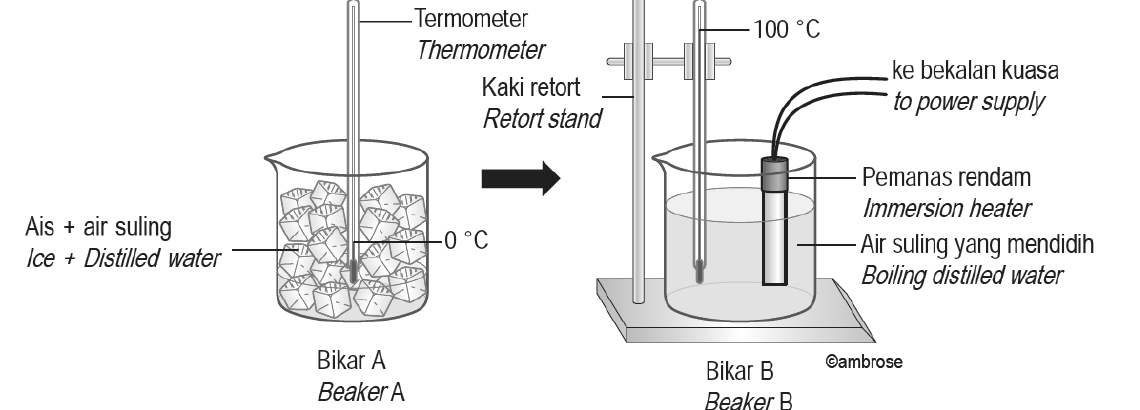
- (a)(ii)
Why should wait until the level of the liquid column in the thermometer no longer changes before making a mark on the stem of the thermometer?
[1] - (a)(iii)
Diagram 4.2 shows the length L = 12 cm from 0 °C to 100 °C. If the thermometer is used to measure the temperature of hot water, the level of the liquid column becomes 7 cm. Calculate the temperature of the hot water.
[2]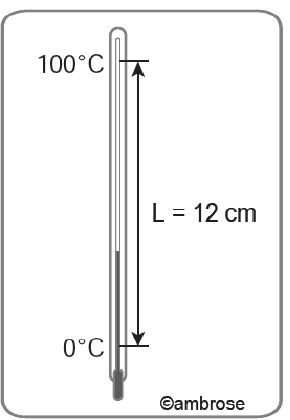
- (b)(i)
Why is the aluminium block wrapped with tissue?
[1]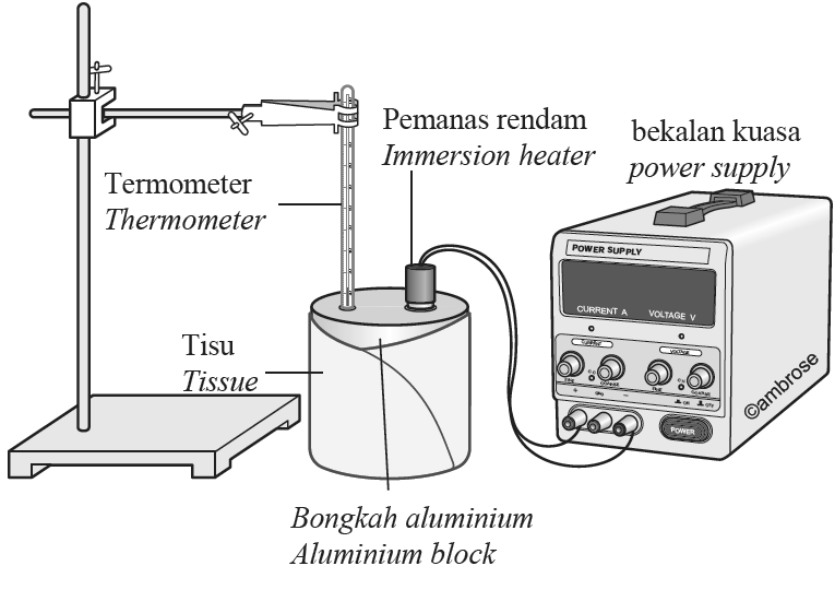
- (b)(ii)
The mass of aluminium block is 0.5 kg. When the power supply of 20 W is switched on for 10 minutes, the temperature is increased by 26.6 °C. Calculate the specific heat capacity of aluminium.
[3] - (b)(iii)
If the aluminium block is changed with iron block which has specific heat capacity 450 J kg⁻¹ °C⁻¹, predict what will happen to the rise in temperature if heating time and power of immersion heater are unchanged?
[1]
Extra version of question 5 (printed as '5 Extra' in the paper). Diagram 5.1 shows a pattern of waves from a ripple tank passing through a wide slit (slight bending); Diagram 5.2 shows waves passing through a narrow slit (circular wavefronts). Diagram 5.3 shows the electromagnetic spectrum: Gamma ray, P, Ultraviolet, Visible light, Infrared.
Medium9 marks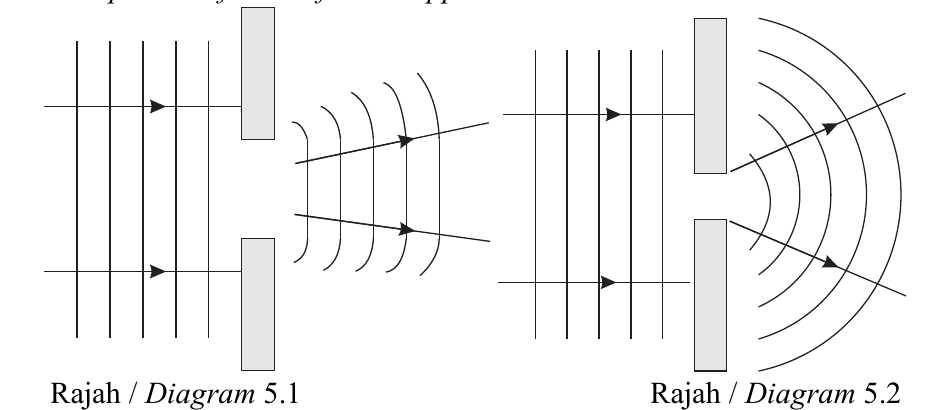
- (a)
Name the phenomenon shown in Diagram 5.1.
[1] - (b)
Name one physical quantity that change after the wave passing through the slit.
[1] - (c)(i)
Based on Diagram 5.1 and Diagram 5.2, the size of slit.
[1] - (c)(ii)
Shape of the wave after passes through the slit.
[1] - (c)(iii)
State the relationship between size of slit and the shape of wave after passing through the slit.
[1] - (d)(i)
State the electromagnetic wave P.
[1]
- (d)(ii)
State one usage of wave P.
[1] - (d)(iii)
Calculate the wavelength of infrared which has frequency of 2 × 10¹³ Hz. (Speed of infrared is 3 × 10⁸ m s⁻¹)
[2]
Section B
Diagram 9.1 shows an outdoor storage tank. The water pipe in the house leaks at two points X and Y (X higher than Y; water from Y spurts further horizontally).
Hard20 marks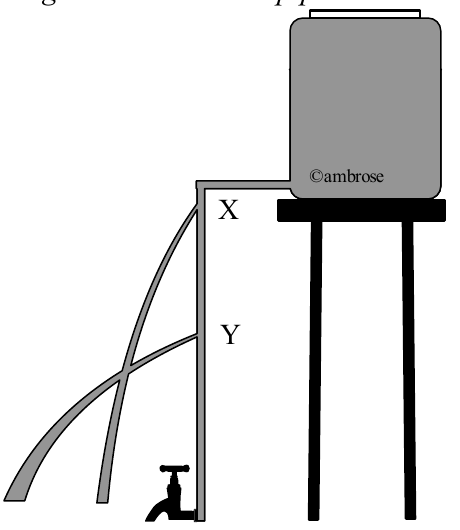
- (a)
The depth of the liquid is one of the factors that affect the pressure in liquid. State one another factor.
[1] - (b)(i)
Compare the depth of water at point X and Y.
[1] - (b)(ii)
Compare the horizontal distance of water spurting out from point X and Y.
[1] - (b)(iii)
Compare the water pressure at point X and Y.
[1] - (c)(i)
Relate the water pressure and horizontal distance of water spurting out.
[1] - (c)(ii)
State the relationship between pressure and depth of water.
[1] - (d)(i)
Given that the atmospheric pressure is 10 m water and the density of water is 1 000 kg m⁻³, calculate the atmospheric pressure in the unit of Pa.
[2] - (d)(ii)
Calculate the total water pressure at Y if the depth of water is 5 m.
[2] - (e)
Diagram 9.3 shows a pail, hose, table and aquarium. You are assigned to remove water from the aquarium using the items given. Table 2 shows the methods that can be used: K (pail on table, aquarium on floor, large hose, 1.0 m height difference); L (pail on floor, aquarium on table, small hose, 0.5 m); M (pail on table, aquarium on floor, small hose, 0.5 m); N (pail on floor, aquarium on table, large hose, 1.0 m). Choose the most suitable method and provide the reasons for your choice.
[10]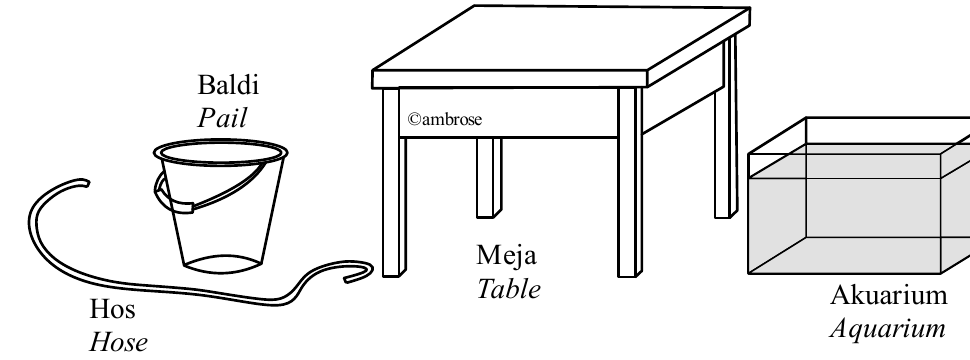
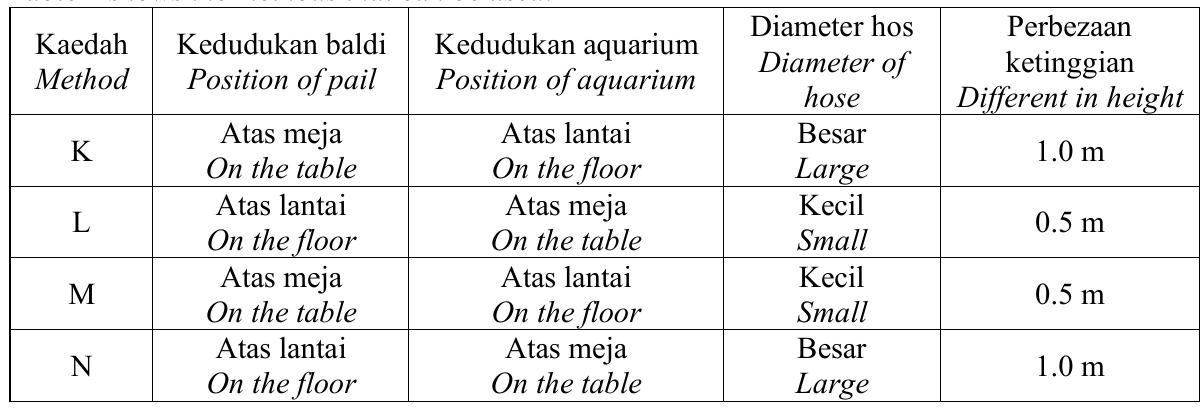
Diagram 10.1 shows a nuclear reaction: ¹₀n (1.00867 u) + ²³⁵₉₂U (235.04392 u) → ²³⁶₉₂U → ⁹²₃₆Kr (91.92611 u) + ¹⁴¹₅₆Ba (140.91441 u) + 3 ¹₀n (3 × 1.00867 u) + energy.
Medium20 marks- (a)(i)
Name the type of nuclear reaction that occurred.
[1] - (a)(ii)
Calculate mass defect in kilogramme. [1 u = 1.66 × 10⁻²⁷ kg]
[3] - (a)(iii)
Calculate the energy produced in the nuclear reaction.
[2] - (c)
By referring Diagram 10.1, explain how a chain reaction can be produced.
[4]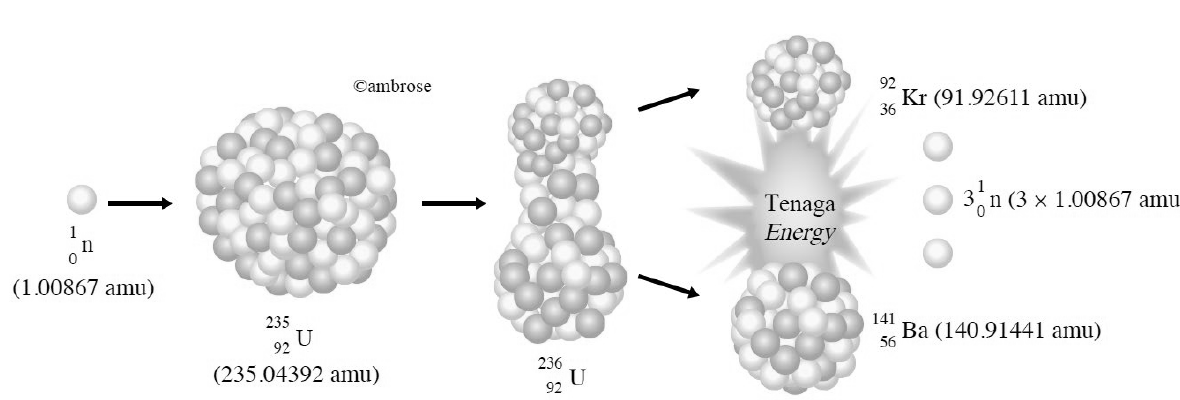
- (d)
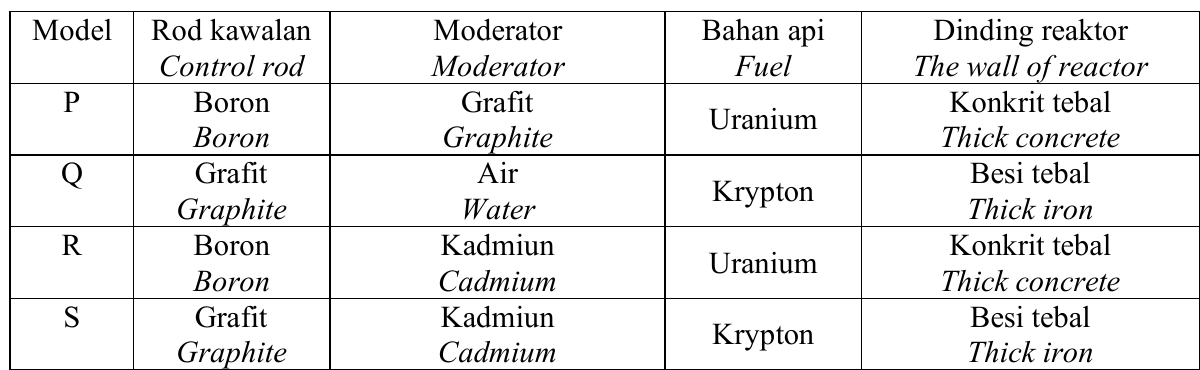
Diagram 10.2 shows a cross section of a nuclear reactor model (control rod, moderator, fuel, wall). A new nuclear reactor is to be built near the seaside. Table 4.2 shows nuclear reactors P (boron control rod, graphite moderator, uranium fuel, thick concrete wall), Q (graphite, water, krypton, thick iron), R (boron, cadmium, uranium, thick concrete), S (graphite, cadmium, krypton, thick iron). Determine the most suitable nuclear reactor model that can function efficiently. Justify your answer.
[10]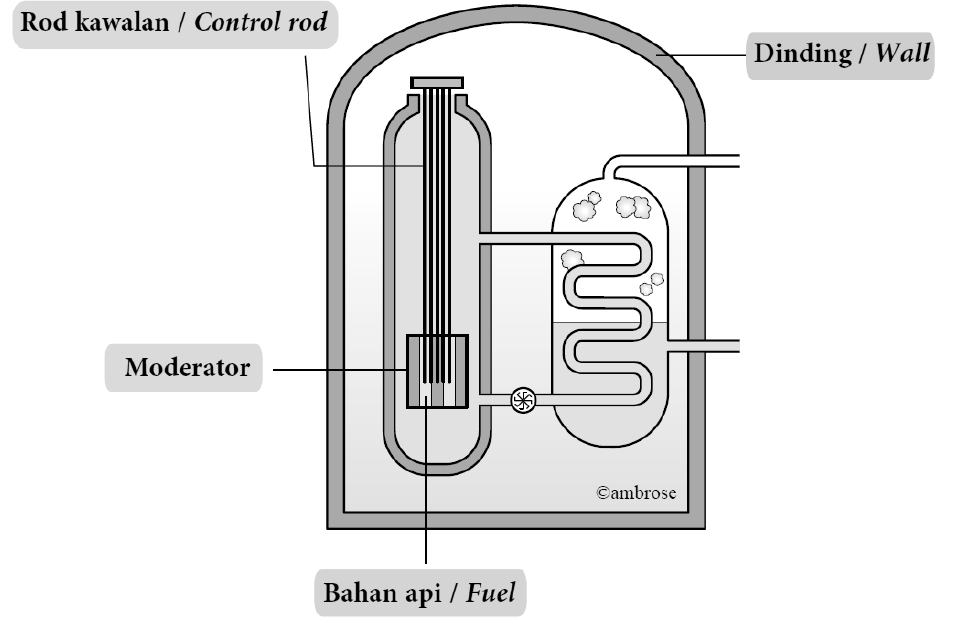
Section C
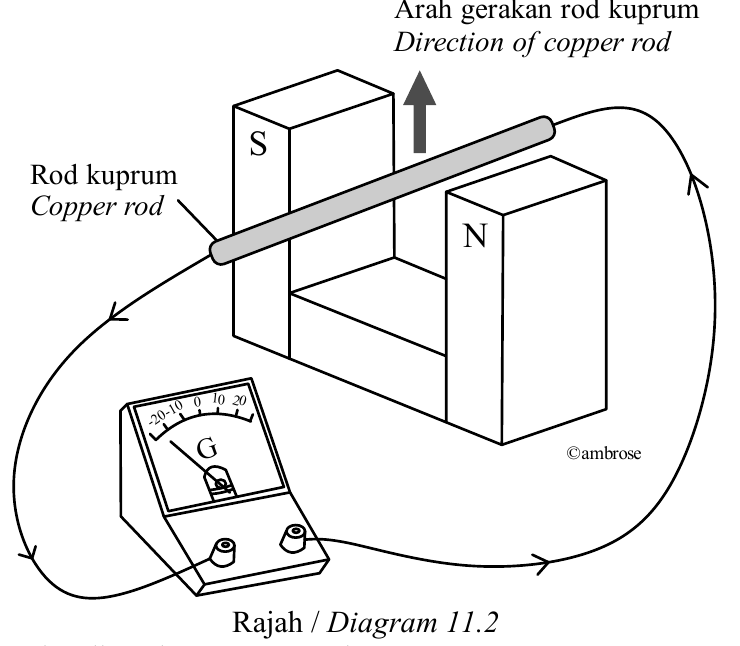
Diagram 11.1 and Diagram 11.2 show a copper wire (thin rod) and a thicker copper rod connected to a zero-centred galvanometer. The two copper rods are moved upwards between two magnadur magnets of opposite poles (S and N). The galvanometer deflects more in Diagram 11.2.
Hard20 marks- (a)
What is the meaning of induced current?
[1]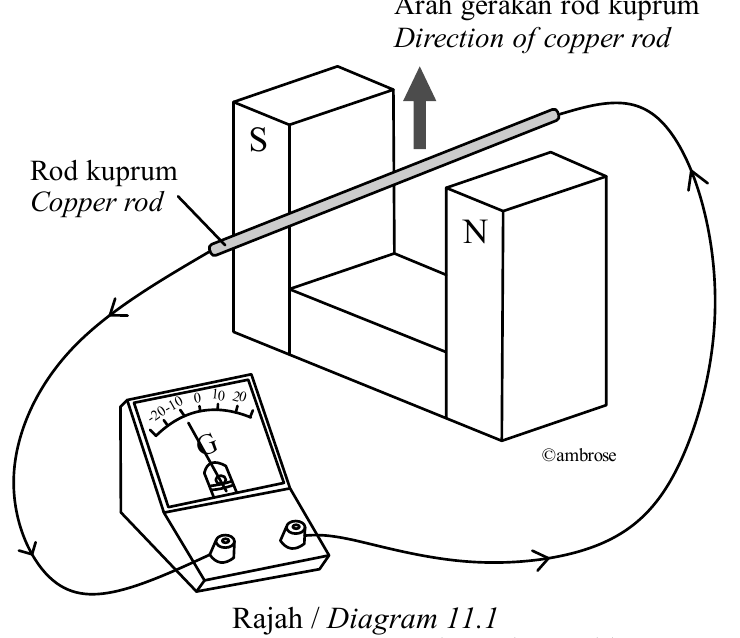
- (b)(i)
Compare and contrast the direction of motion, the cross-sectional area of copper rod and the magnitude of deflection of galvanometer pointer.
[3] - (b)(ii)
Relate the magnitude of deflection of galvanometer pointer with the cross-sectional area of copper rod to make a deduction regarding the relationship between induced current and cross-sectional area of copper rod. Name the physics concept involved.
[3] - (c)
Diagram 11.3 shows a bar magnet moved into a solenoid and producing induced current. Explain what happens at the end of P, the direction of deflection of the galvanometer needle and the laws of physics involved in generating the induced current.
[3]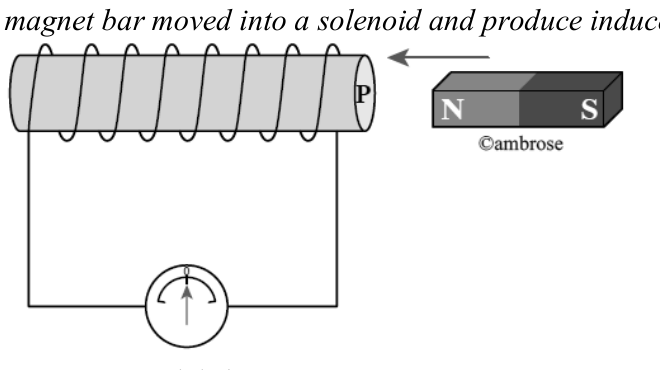
- (d)
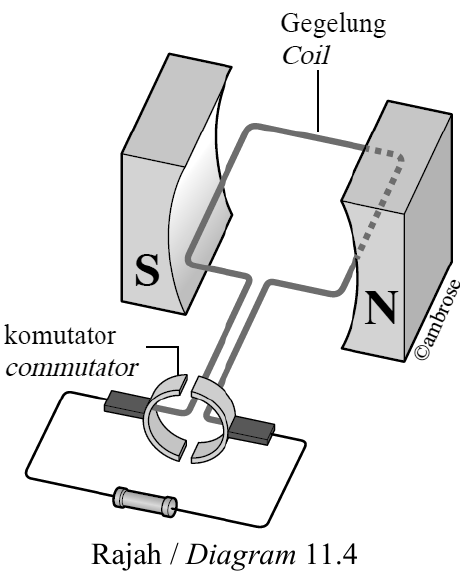
Diagram 11.4 shows the structure of a direct current generator. The generator produces a small direct current. Suggest modifications to the structure of the generator so that it can produce a high alternating current. State and explain the modifications based on characteristics of magnet, wire, and type of ring.
[10]