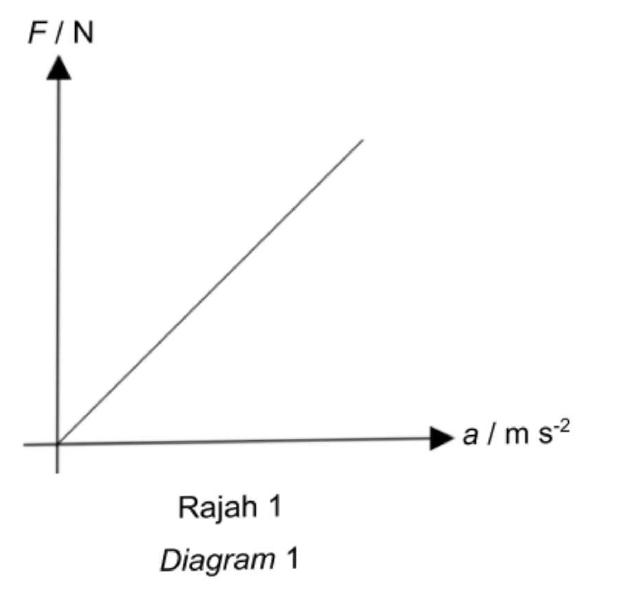
Diagram 1 shows a graph of force, F against acceleration, a of an object. Which statement is correct about the graph?
Medium
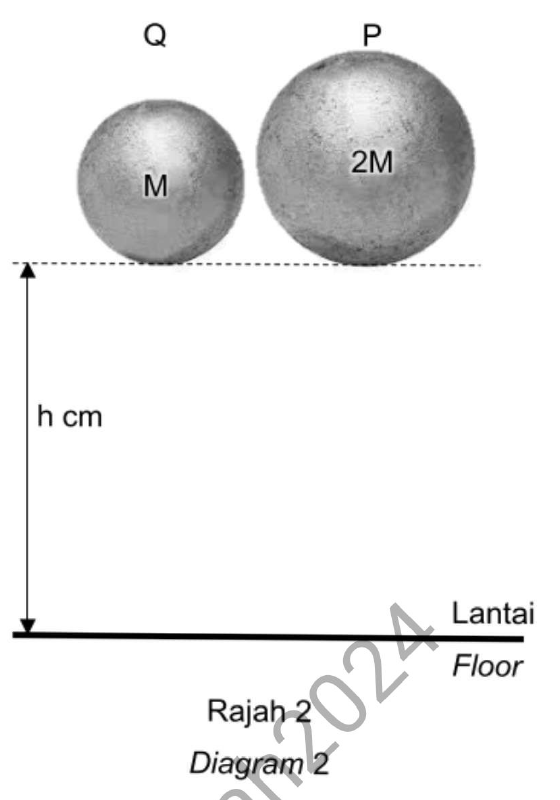
Diagram 2 shows two shot put balls P and Q of masses M and 2M each at the same height, h. The two balls are dropped simultaneously. Which of the following statements is true?
Medium
The driver and passengers of a car are advised to wear seat belts. The purpose of wearing seat belts is to reduce the negative effect of
Medium
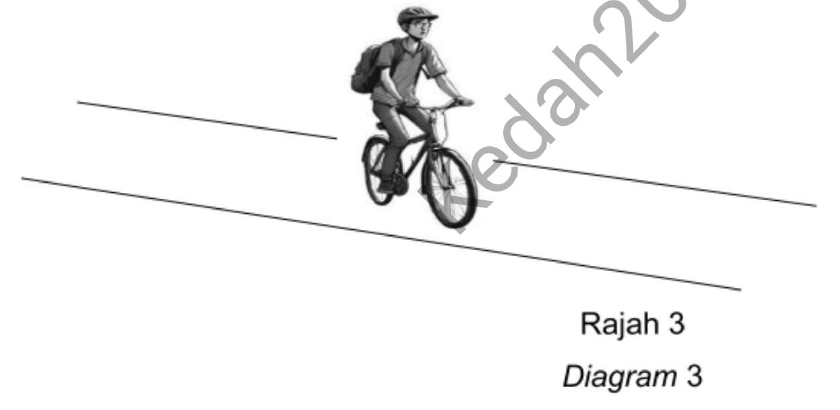
Diagram 3 shows a cyclist cycling on a road. What is the force acting between the bicycle tyre and the road?
Easy
Which activity produces the largest impulsive force? (A: hitting a billiard ball with a cue; B: catching a ball with a glove; C: long jump landing; D: high jump landing on a mattress)
Medium
An astronaut of mass 80 kg can jump 10 cm high off the surface of the Earth. When he is on the Moon, he can jump higher than this because on the Moon
Medium
According to the Newton's Universal Law of Gravitation, the force of gravity between two objects is directly proportional to
Easy
Two satellites orbiting the Earth with the same period. What is the physical quantity that is the same for both satellites?
Medium
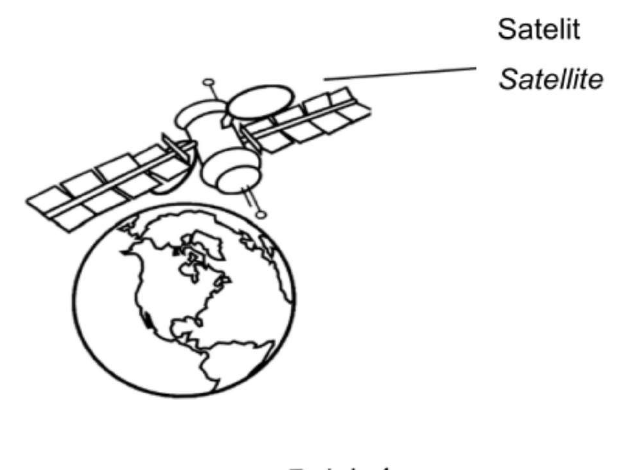
Diagram 4 shows a satellite orbiting the Earth. What is the factor that enables a satellite to maintain orbiting the Earth without falling?
Medium
What will happen to the heat capacity of an object when its mass increases?
Medium
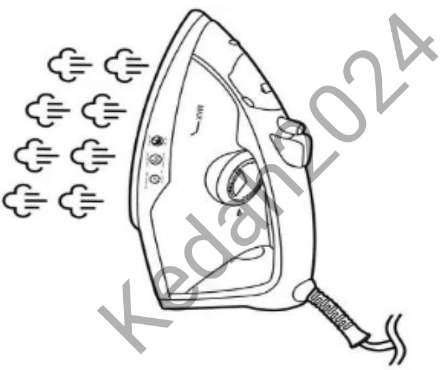
Diagram 5 shows a steam iron labelled 240 V, 1500 W commonly used for ironing clothes. Calculate the time taken to change 500 g of water at 30°C into steam. [Specific heat capacity of water = 4200 J kg⁻¹ °C⁻¹, Specific latent heat of vaporization of water = 2.26 ×10⁶ J kg⁻¹]
Medium
The volume of a gas bubble released from the bottom of a pool increases as it rises because
Medium
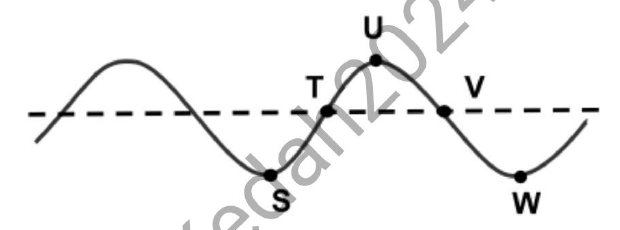
Diagram 6 shows a wave travelling in the sea. Which two points represent one wavelength?
Easy
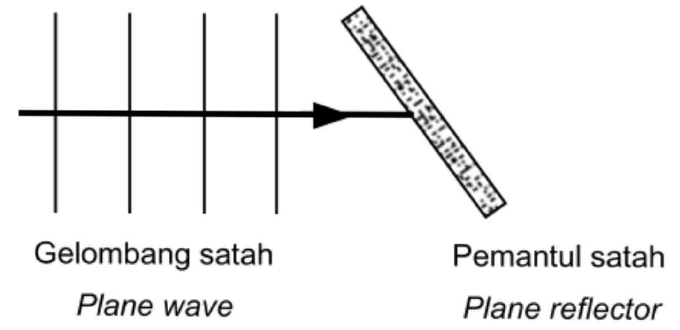
Diagram 7 shows plane wavefronts propagate towards a plane reflector in an experiment by using a ripple tank. Which pair is correct to describe the reflected wave formed? (Frequency of the wave, Wavelength)
Medium
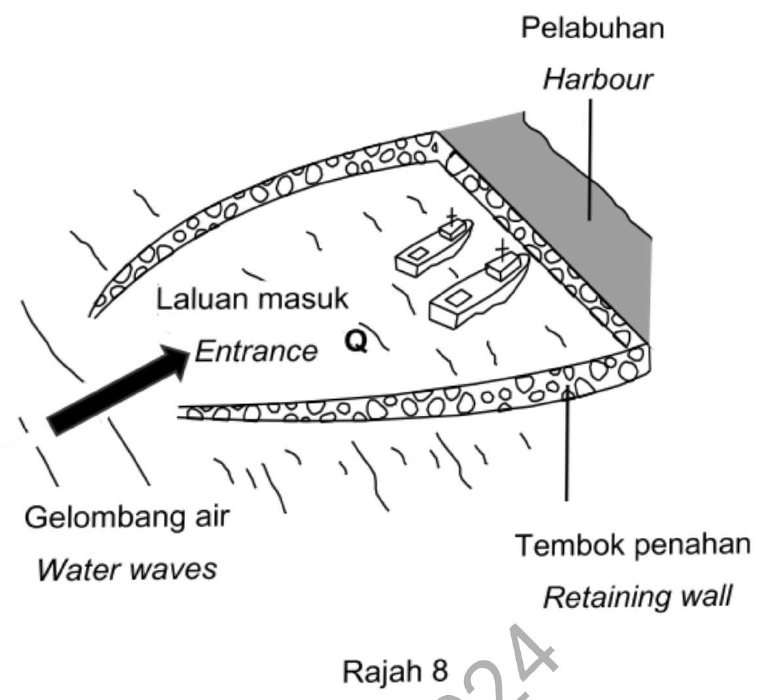
Diagram 8 shows water waves moving towards a harbour. Which of the following statements is correct about the water waves at Q?
Medium
Which of the following wave cannot propagate in vacuum?
Easy
Which of the following does not change when a light ray is refracted in a certain medium?
Easy
A convex lens has a focal length of 10 cm. An object is placed 20 cm in front of the lens. Determine the position of the image formed by the lens.
Medium
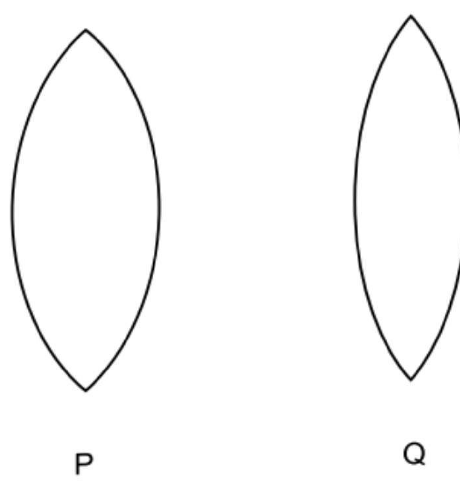
Diagram 9 shows two lenses which are used to make a telescope. Which of the following statements is correct about both lenses?
Medium
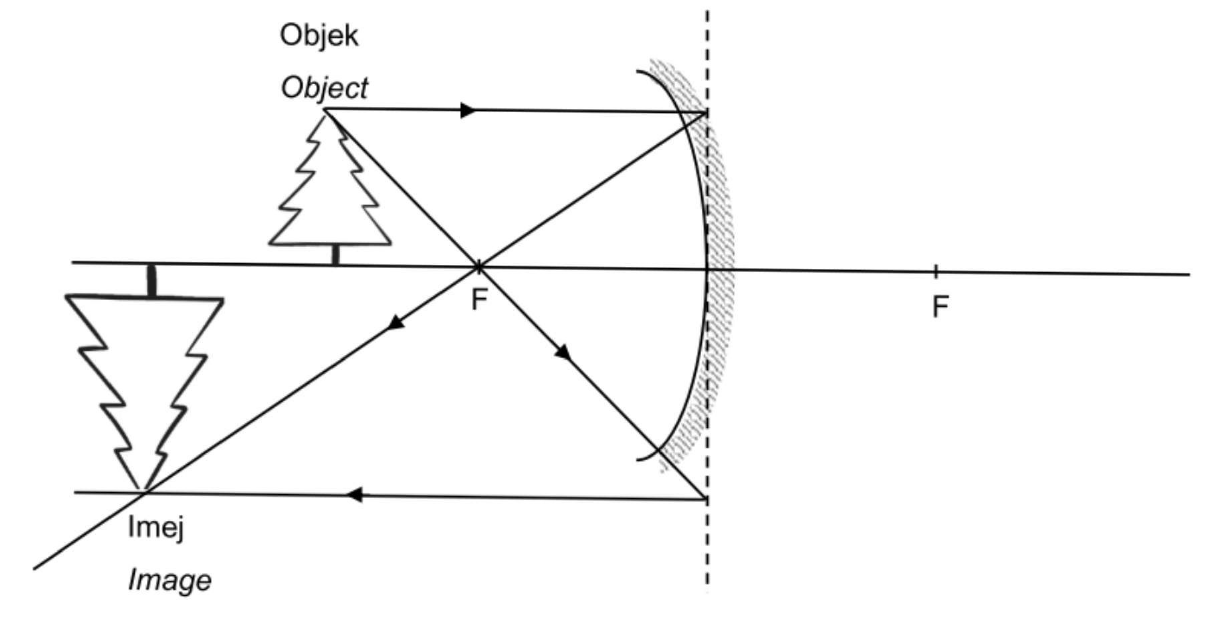
Diagram 10 shows the formation of an image by a concave mirror. If the curvature of the mirror is increased, what will happen to the size of the image?
Medium
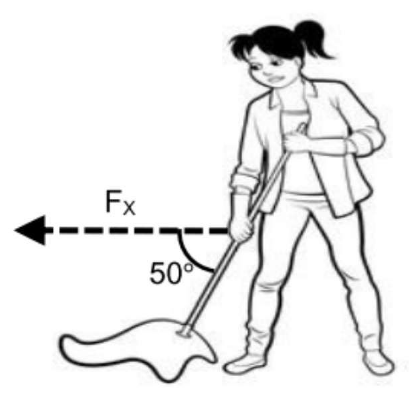
Diagram 11 shows a worker mopping the floor. What is the magnitude of the horizontal force component, Fx if the pushing force of the worker on the mop is 40 N? (The angle between the mop handle and Fx is 50°.)
Medium
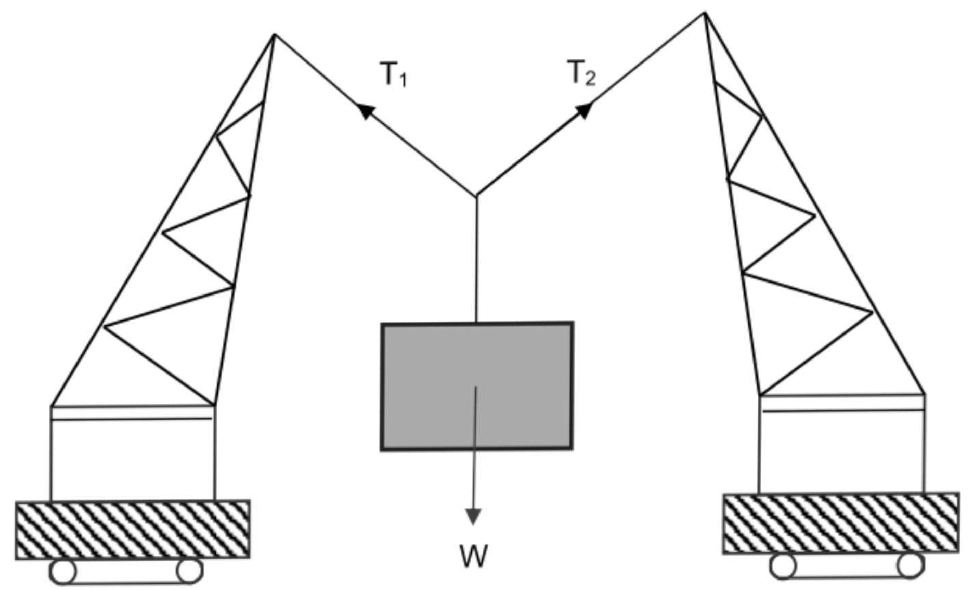
Diagram 12 shows an object hanging stationary between two cranes. Which triangle of forces correctly represents the forces acting on the object?
Medium
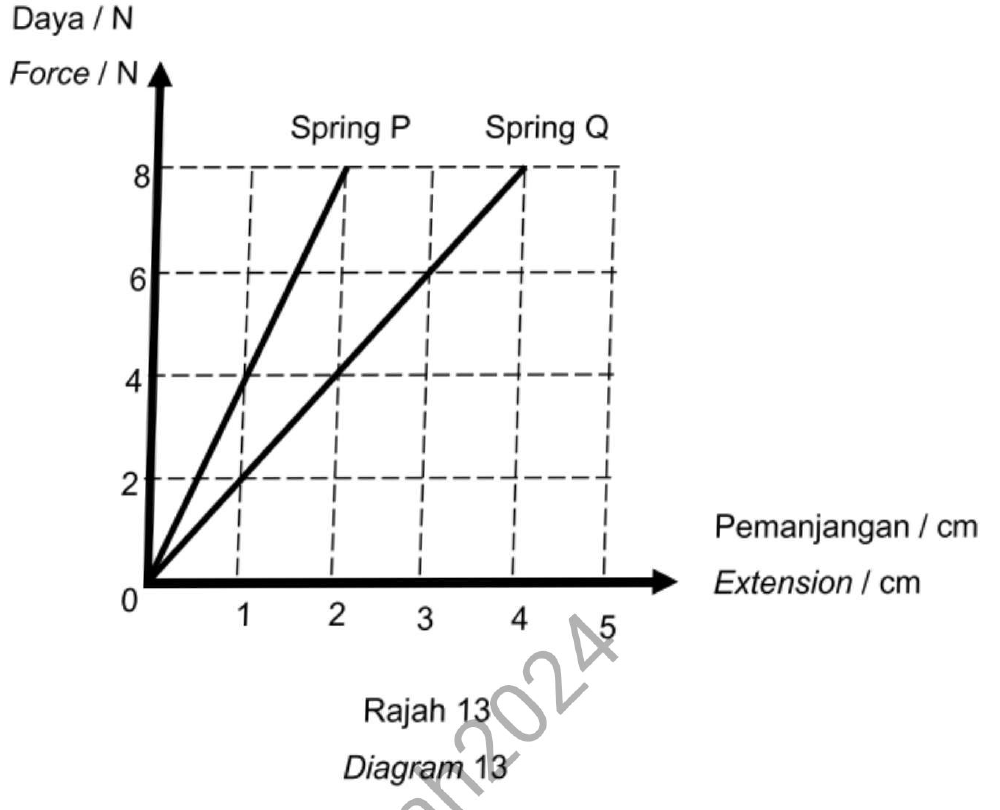
Diagram 13 shows a graph of force against extension in an experiment to investigate spring elasticity. Which comparison is true for both springs? I Spring P is stiffer than spring Q. II The spring constant P is greater than spring Q. III The elasticity of the spring Q is greater than spring P. IV The elastic potential energy of spring Q is greater than spring P.
Medium
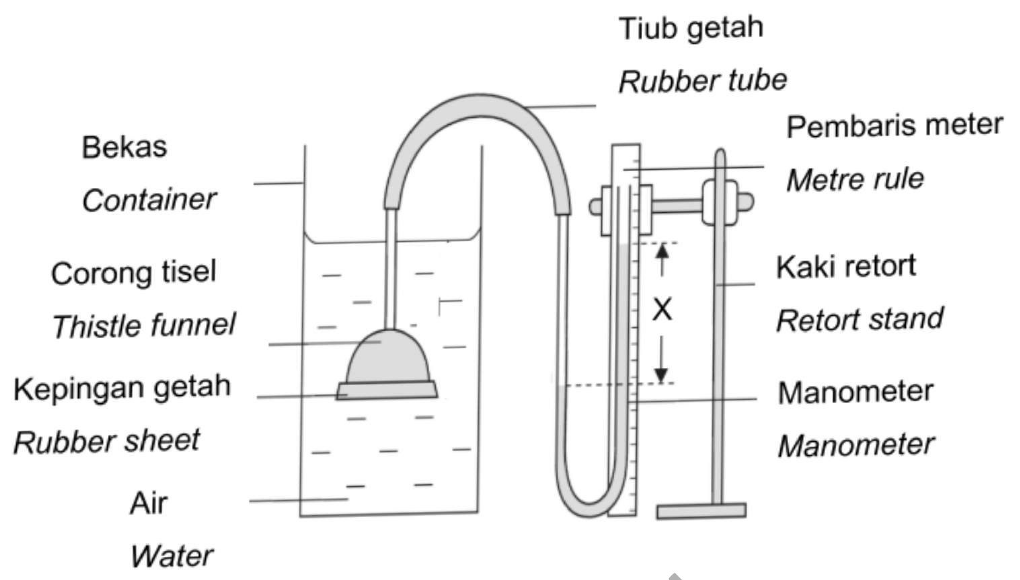
Diagram 14 shows a thistle funnel connected to a mercury manometer. When the thistle funnel is pushed into water, length of X increases. What is the physical quantity that represent the length of X in the manometer?
Medium
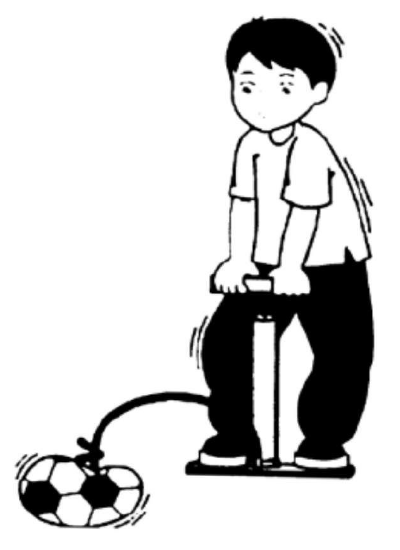
Diagram 15 shows a boy pumping a ball. Gas pressure of the ball exists because the gas molecules
Medium
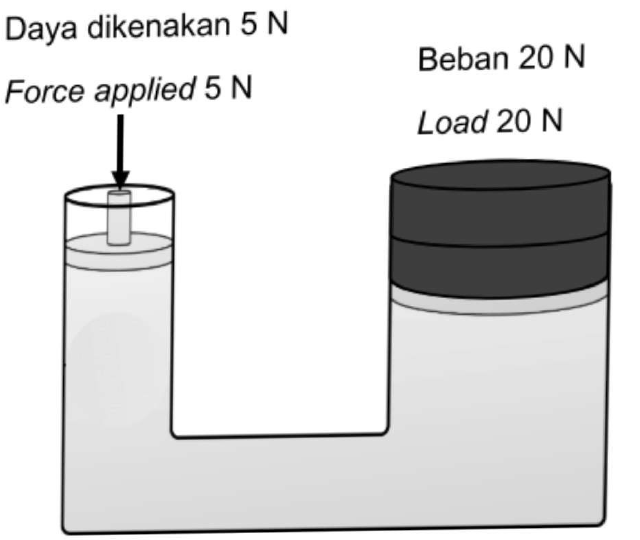
Diagram 16 shows a simple hydraulic system. Force applied 5 N on the small piston, load 20 N on the large piston. If the area of the small piston is 1.5 cm², what is radius of the large piston that is required for the hydraulic system?
Medium
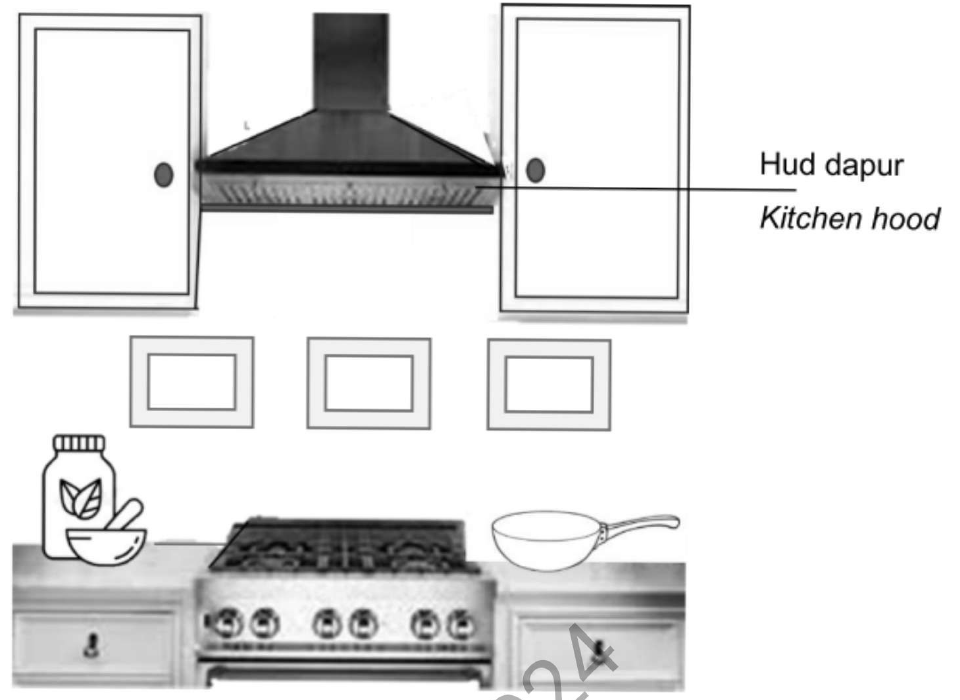
Diagram 17 shows a kitchen hood. What is the physics principle involved in the use of the appliance?
Medium
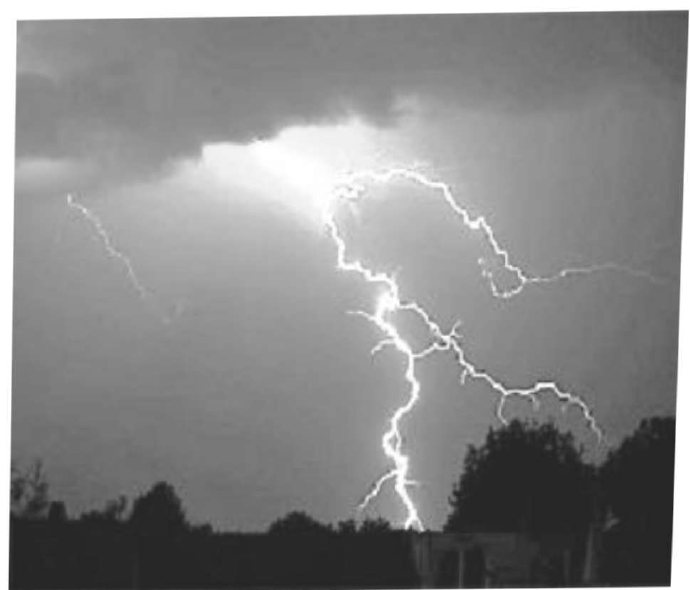
Diagram 18 shows the phenomenon of lightning. Lightning happens when
Medium
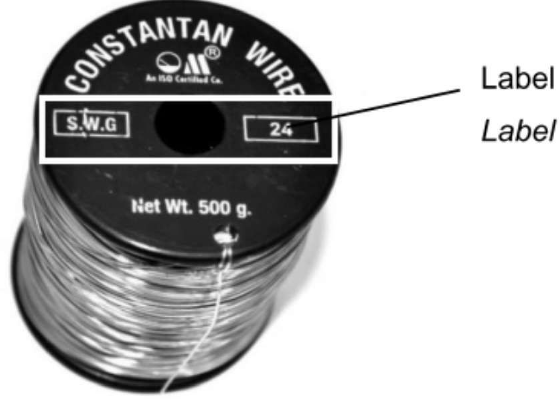
Diagram 19 shows a coil of constantan wire. What physical quantity represents the value on label as shown in Diagram 19? (Label: S.W.G 24)
Easy
Which voltmeter shows reading of electromotive force? (Circuits A to D shown as pictures.)
Medium
What is the meaning of 100 W?
Easy
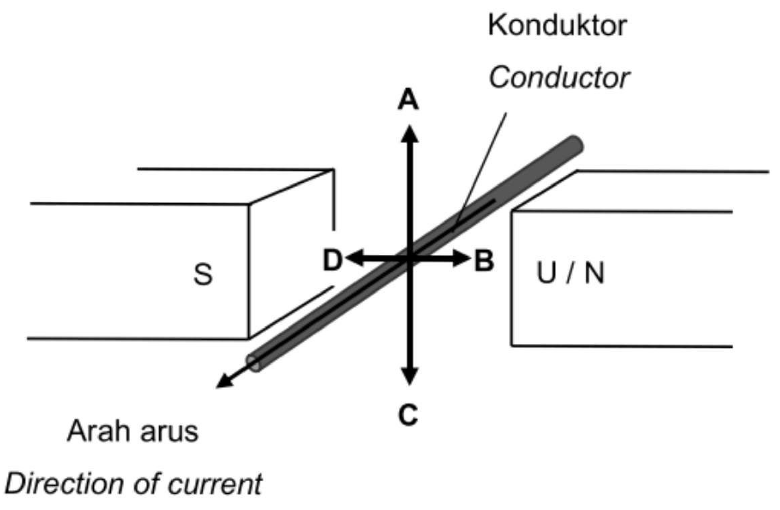
Diagram 20 shows a current-carrying conductor between the poles of a pair of permanent magnets. What is the direction of the force on the conductor?
Medium
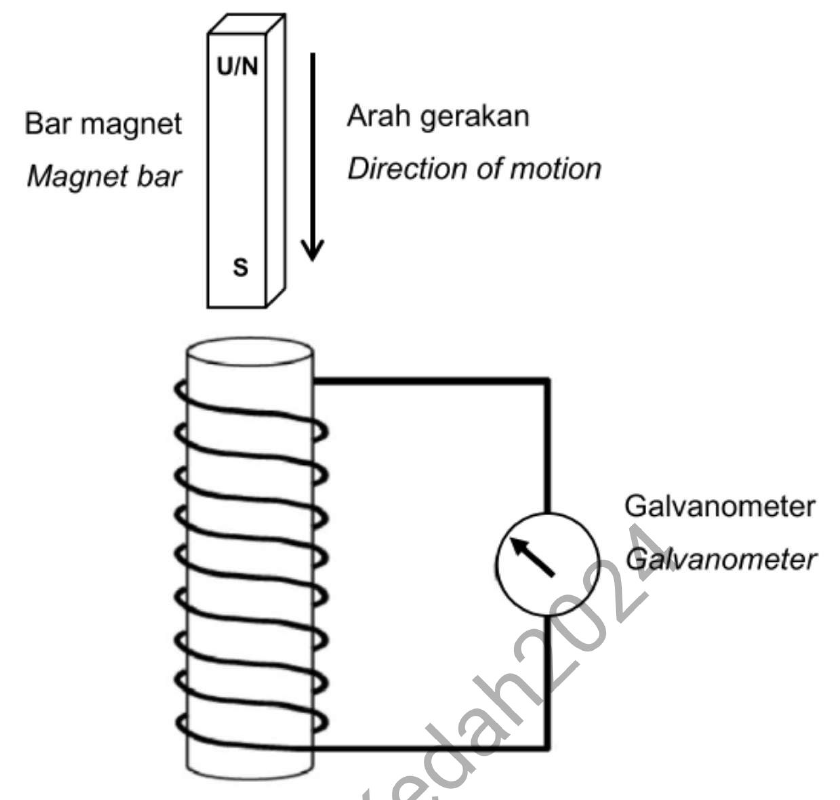
Diagram 21 shows a bar magnet released from a height into a solenoid which is connected to a galvanometer. Which of the actions will increase the deflection of the galvanometer pointer?
Medium
Transformer is used in transmission of electricity to reduce energy loss by
Medium
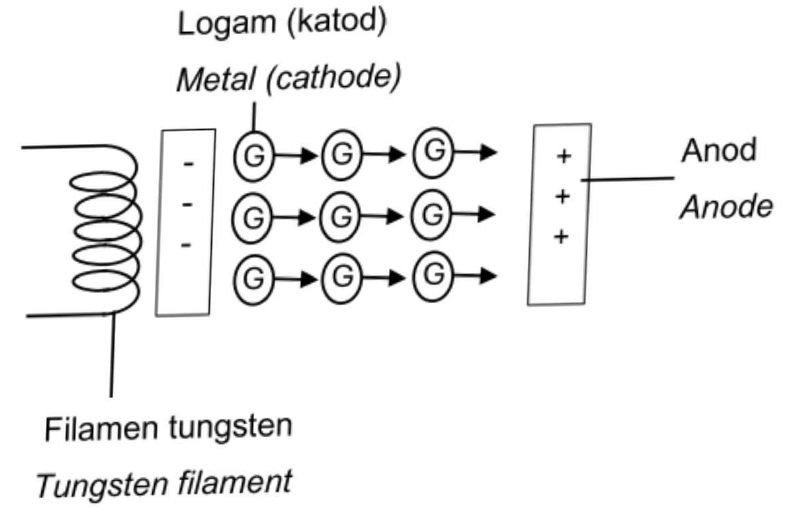
Diagram 22 shows a metal (cathode) heated at a high temperature. Particles G escape from the metal surface. What are the particles G and the process involved? (A Proton, Thermionic emission; B Electron, Ionisation; C Proton, Ionisation; D Electron, Thermionic emission)
Medium
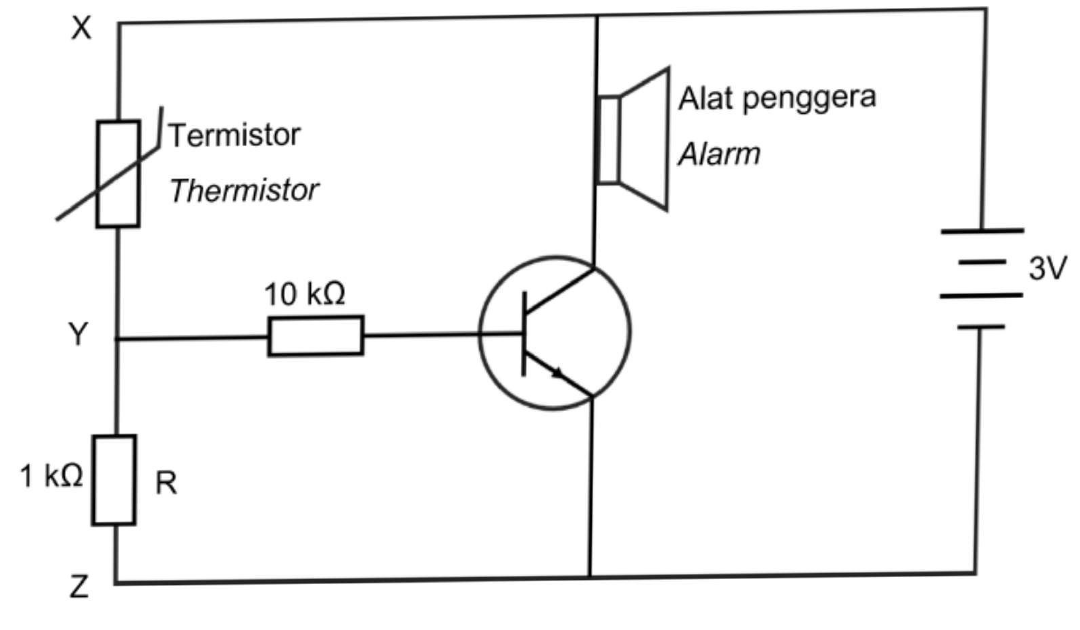
Diagram 23 shows a simple circuit of a fire alarm. What is the function of thermistor in the circuit?
Medium
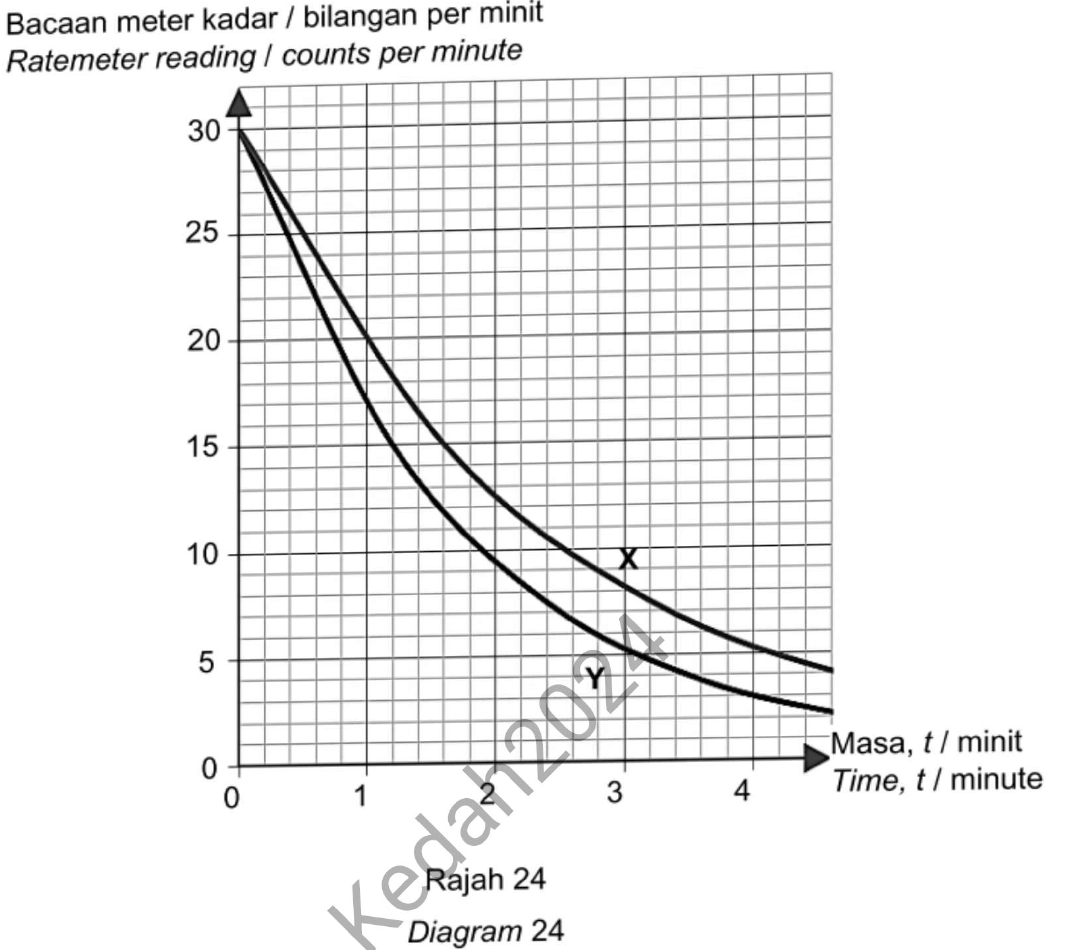
Diagram 24 shows the decay graphs of two different radioactive sources. Which of the following statements is correct about both graphs?
Medium
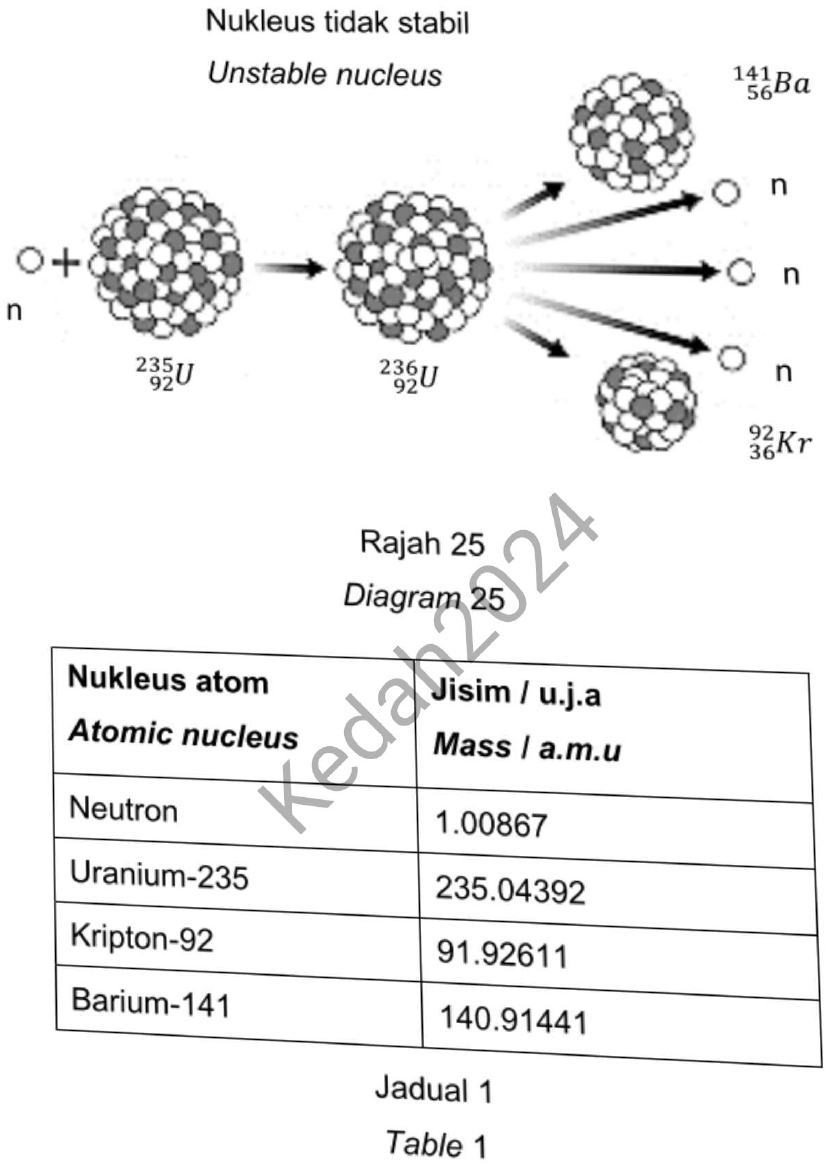
Diagram 25 shows a nuclear fission process for the Uranium-235 atom that produces the nucleus of the Krypton-92 and Barium-141 atoms as well as nuclear energy. Table 1 shows the mass of the neutron and nucleus of the atom involved: Neutron 1.00867 a.m.u; Uranium-235 235.04392 a.m.u; Krypton-92 91.92611 a.m.u; Barium-141 140.91441 a.m.u. Calculate amount of nuclear energy released in this process. [1 a.m.u = 1.66 × 10⁻²⁷ kg]
Medium
Which is the correct statement about continuous spectrum?
Medium
Which of the following is true about the photoelectric effect?