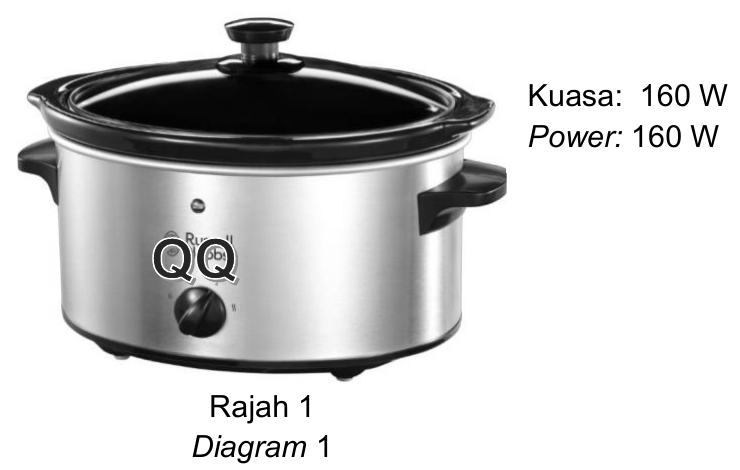
Diagram 1 shows the specification of a slow hot cooker (Power: 160 W). What is the physical quantity represented by power?
Medium
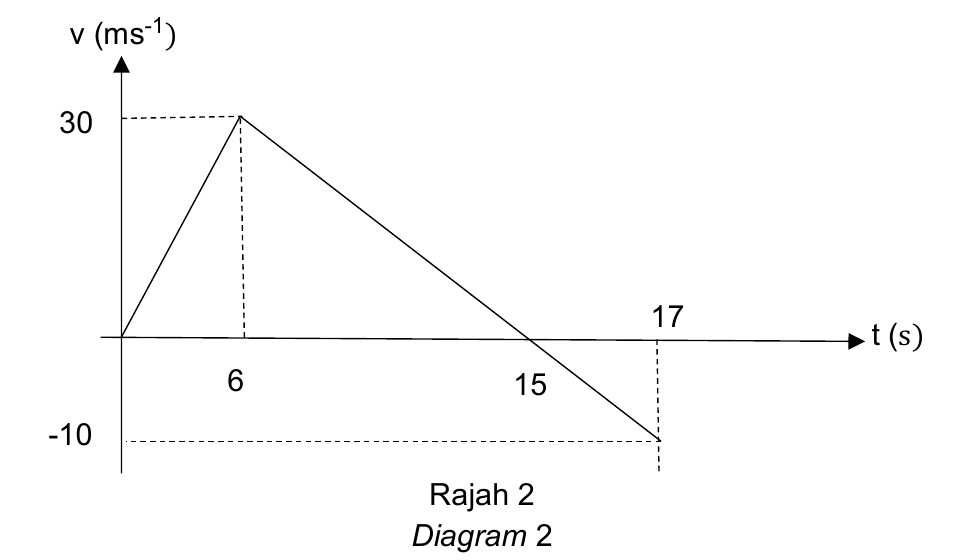
Diagram 2 shows the velocity against time graph (v rises from 0 to 30 m s⁻¹ at t = 6 s, falls to 0 at t = 15 s and to -10 m s⁻¹ at t = 17 s). Find the total displacement.
Medium
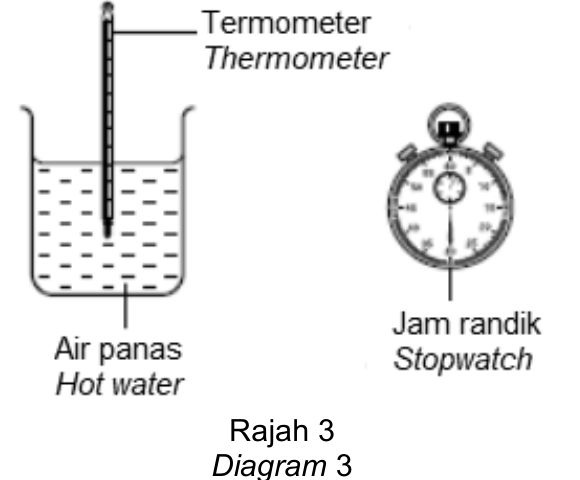
Diagram 3 shows a set-up to investigate the relationship between temperature and time during the cooling of hot water. A beaker of hot water is left to cool down. Which of the following is correct? (Manipulated, Responding, Constant variables)
Medium
An atomic nucleus at rest emits an α-particle of mass 4 u. The speed of the α-particle is found to be 5.6 × 10⁶ m s⁻¹. Calculate the speed of the daughter nucleus, of mass 218 u.
Medium
A tennis ball of mass 60 g is served at a speed of 55 m s⁻¹. The ball is in contact with the racket for 25 ms. Calculate the average force exerted by the racket on the ball.
Medium
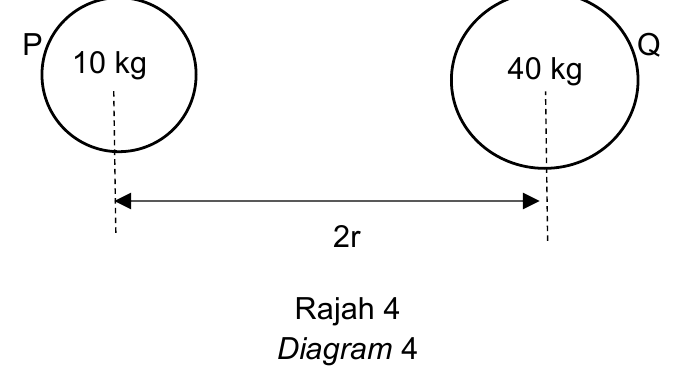
The gravitational force between two bodies, planets P (10 kg) and Q (40 kg), depends on their masses and the distance between them, 2r (Diagram 4). Based on Diagram 4, calculate the gravitational force.
Medium
A satellite orbits around the Earth with a constant period T. If R is the radius of the Earth and g is the gravitational acceleration on the surface of the Earth, which expression is the radius of the orbit?
Medium
The escape velocity at a height of 0.2R from a planet of radius R is 10 km s⁻¹. What is the escape velocity from the surface of the planet?
Medium
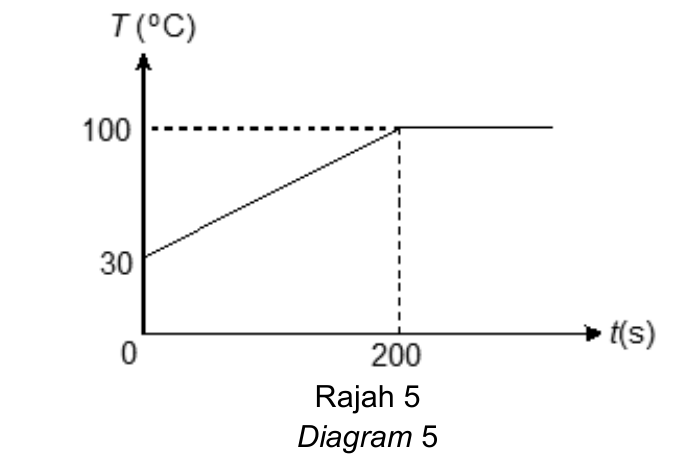
An electric kettle with power rating 240 V, power P is used to boil 2 kg of water. Diagram 5 shows the graph of temperature T against time t (30 °C to 100 °C in 200 s). Calculate the power P needed to boil 2 kg of water. (Specific heat capacity of water = 4200 J kg⁻¹ °C⁻¹)
Medium
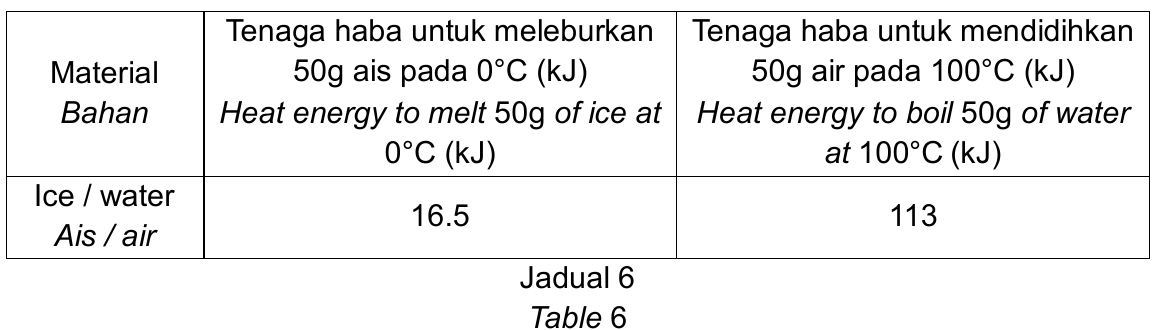
Table 6: heat energy to melt 50 g of ice at 0 °C = 16.5 kJ; heat energy to boil 50 g of water at 100 °C = 113 kJ. Based on Table 6, how many times more energy is required to boil a mass of water than to melt the same mass of ice?
Medium
The volume of an air bubble is 6 mm³ when it is at a depth of H m below the water surface. Given that its volume is 15 mm³ when it is at a depth of 2 m, find the value of H.
Medium
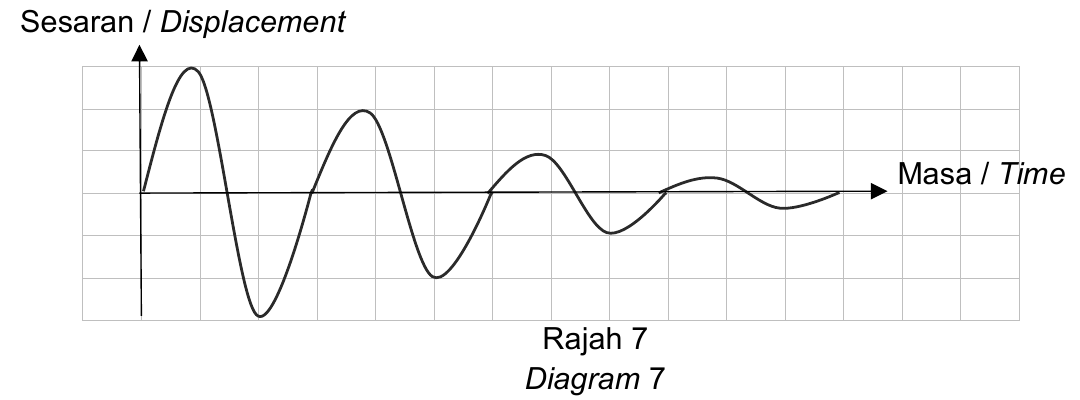
Diagram 7 shows a graph of displacement against time for a system experiencing damping. Why does the amplitude of oscillation decrease?
Medium
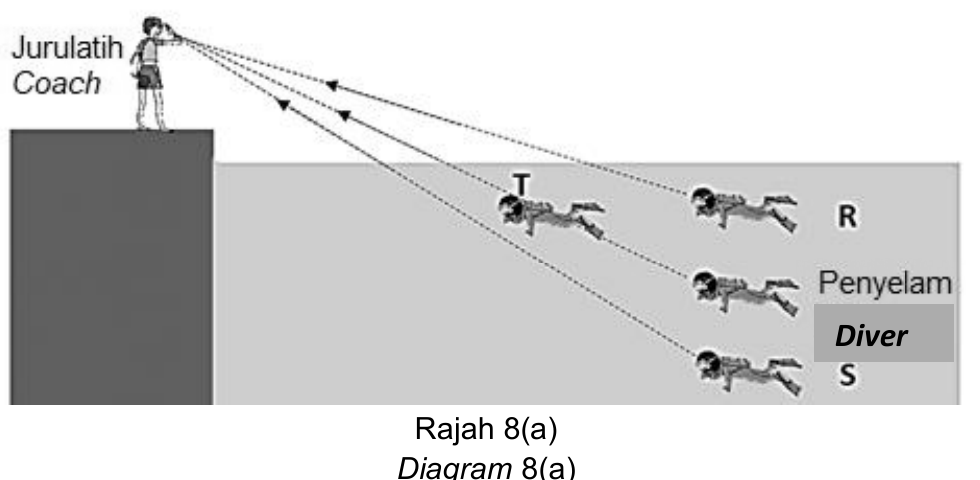
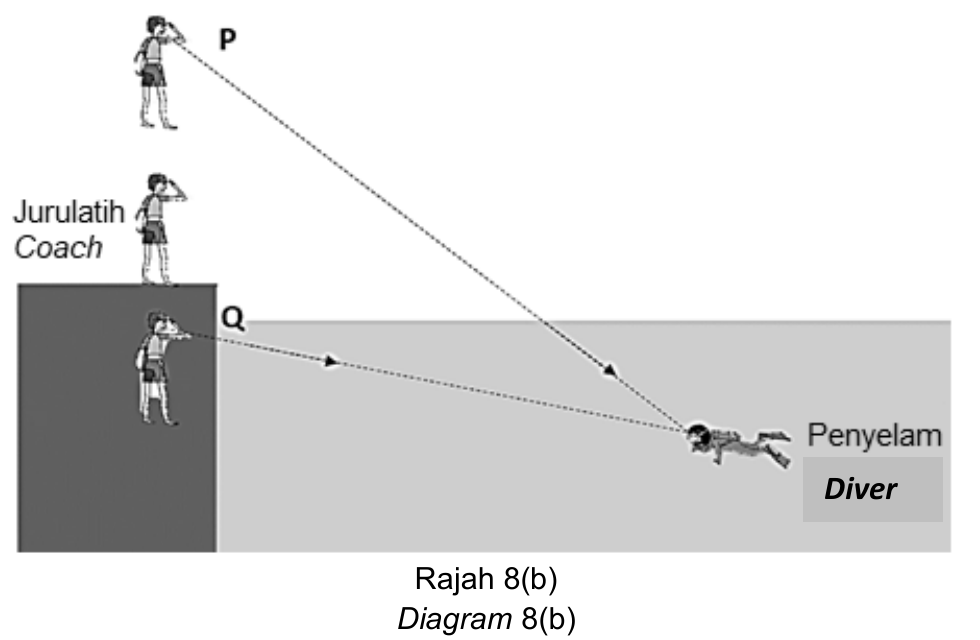
Based on Diagram 8(a), the possible position of the diver's image is R, S or T. Diagram 8(b) shows the possible position of the coach's image is P or Q. Choose the correct combination of both image positions.
Medium
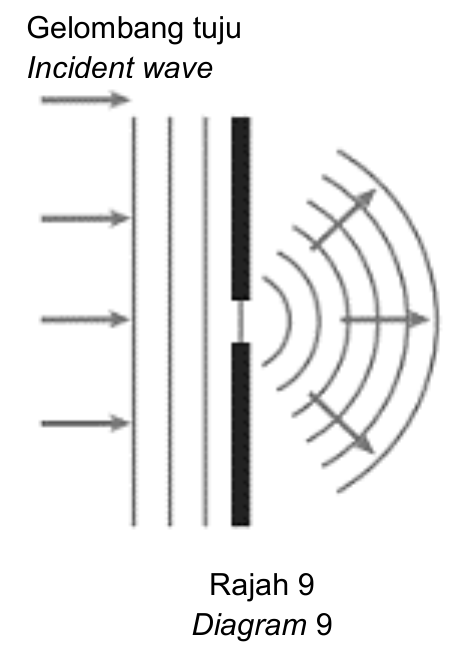
Diagram 9 shows a water wave propagating through a small gap. Which property of the diffracted wave is correct?
Medium
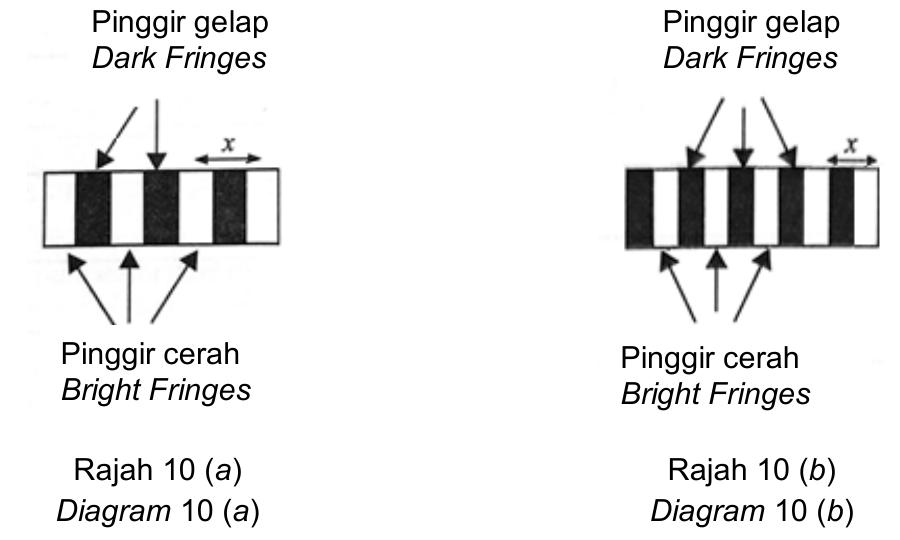
Diagrams 10(a) and 10(b) show the fringes formed on the screen in Young's double-slit experiment for each situation (x = distance between two successive bright fringes; x is larger in 10(a)). Which combination is the correct relationship between x and the colour of monochromatic light used in each diagram?
Medium
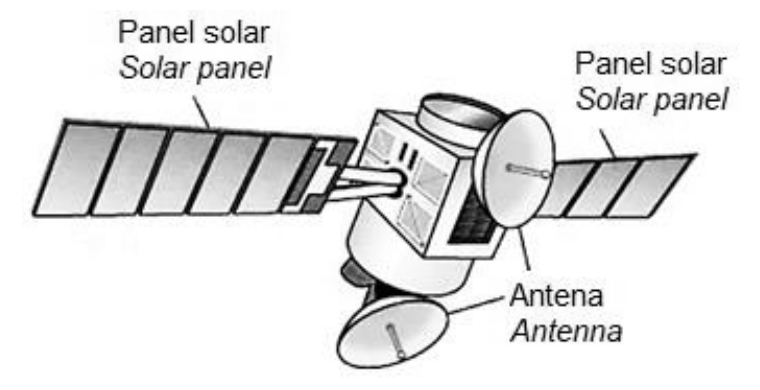
Diagram 11 shows a communication satellite. What type of wave is used?
Easy
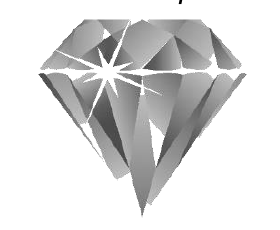
Diagram 12 shows a diamond, a mineral composed of pure carbon. Why does the sparkle of diamonds make them unsurpassed as gems?
Medium
Table 13: Lens: convex; focal length: P; object distance: 10 cm; characteristics of image: Q, R and T; image formed at: infinity. Based on Table 13, choose the correct information of P, Q, R and T.
Medium
An object is put in front of a convex lens at a position of 30 cm from the optical centre. If the focal length of the convex lens is 15 cm, what is the magnification ratio of the final image to the object?
Medium
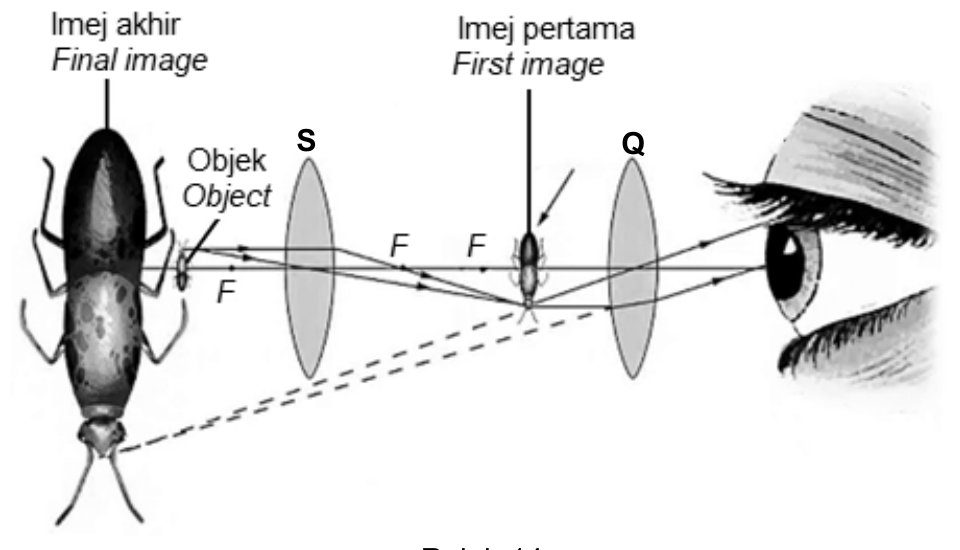
Diagram 14 shows the position of the first image and the final image of an object using a compound microscope (objective lens S, eyepiece Q). Choose the false statement.
Medium
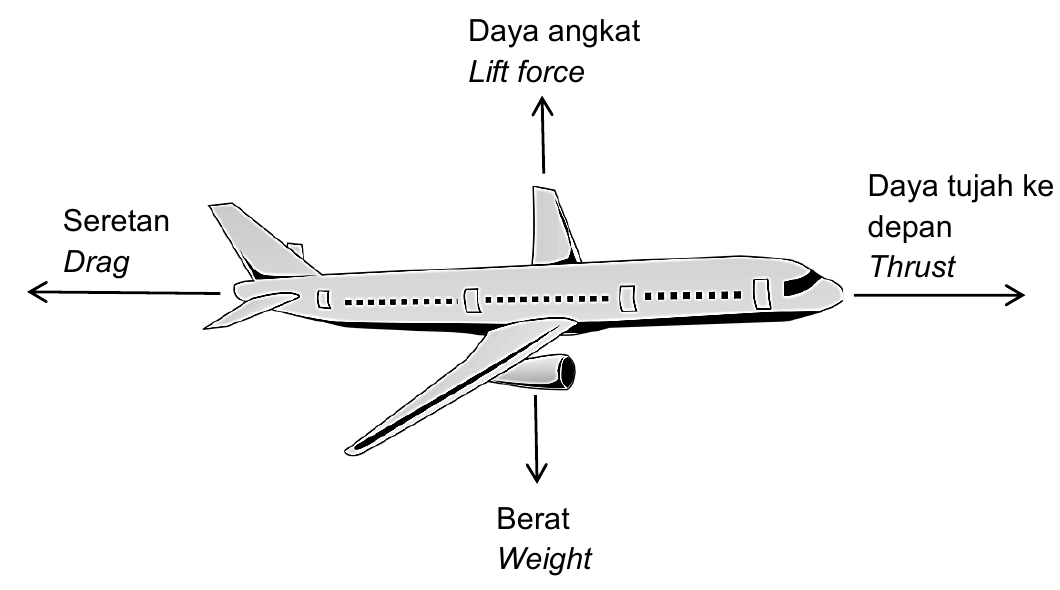
Diagram 15 shows an airplane flying horizontally with increasing velocity (lift force up, weight down, drag backwards, thrust forwards). Which of the following statements is correct?
Medium
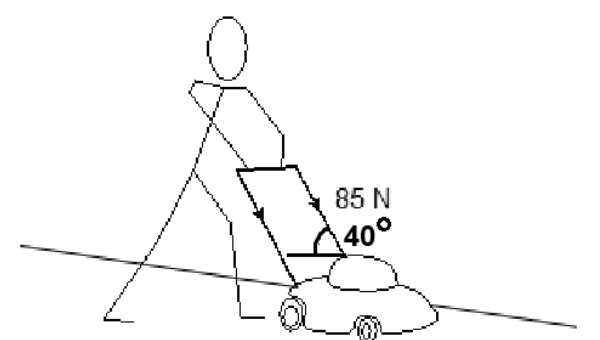
Diagram 16 shows a man pushing a lawn mower with a total force of 85 N on the handle, which makes 40° with the horizontal. What is the force that causes the lawn mower to move forward?
Medium
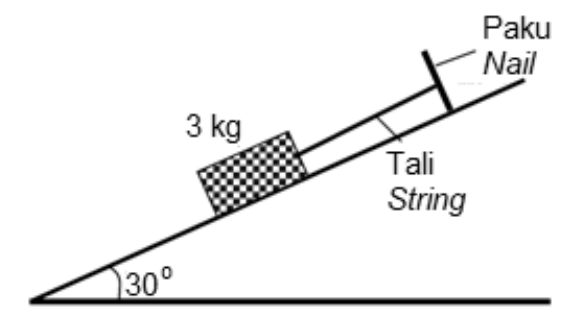
Diagram 17 shows a block of mass 3 kg supported by a light string on a smooth inclined plane at 30°. What is the tension in the string if the block is at rest?
Medium
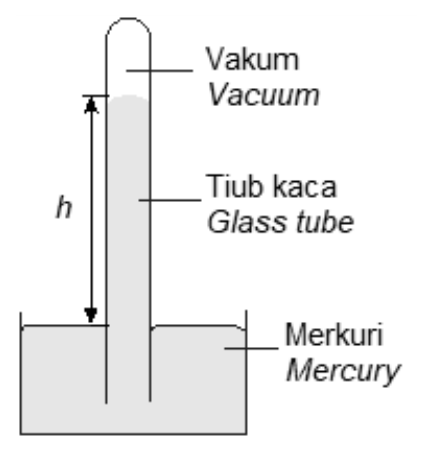
Diagram 18 shows the instrument to measure the atmospheric pressure. The name of this instrument is
Easy
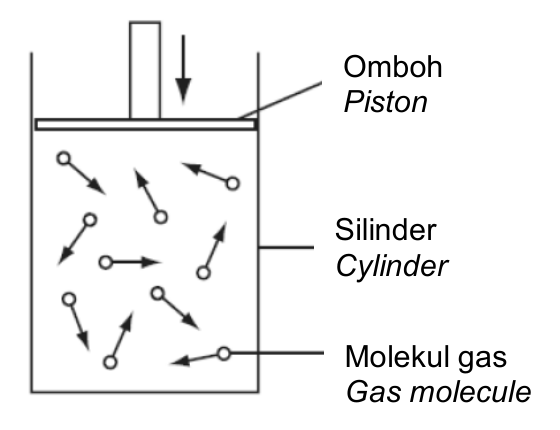
Diagram 19 represents gas molecules in a cylinder. The piston is moved slowly downwards and the temperature of the gas stays the same. Why does the pressure of the gas increase?
Medium
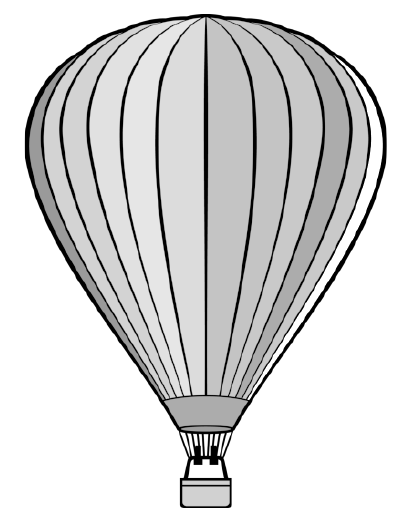
Diagram 20 shows an advertising balloon rising slowly in the air. Which of the following is true about the situation?
Medium
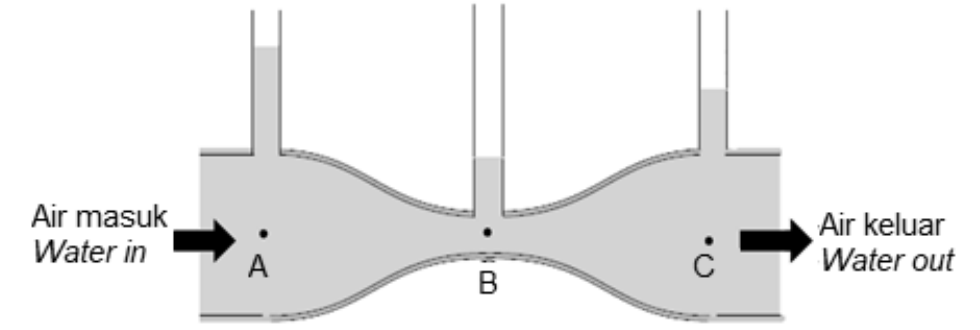
Diagram 21 shows water flowing through a venturi tube (A at the wide inlet, B at the narrow throat, C at the wide outlet). At which point is the velocity of water the highest?
Medium
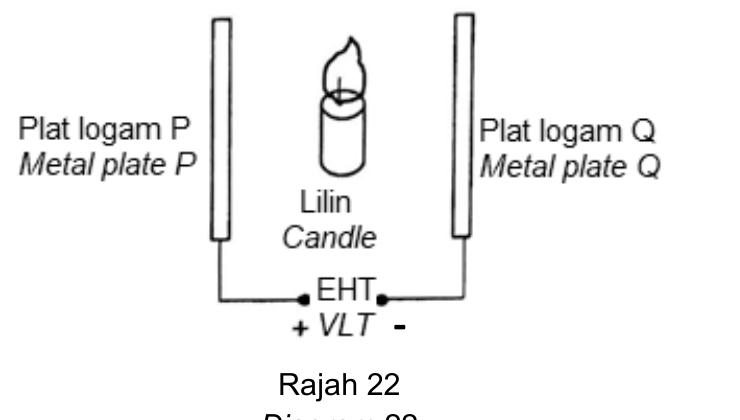
Diagram 22 shows a lighted candle placed between two parallel metal plates (P, Q) connected to an Extra High Tension (E.H.T.) power supply. What happens to the candle flame when the E.H.T. power is switched on?
Medium
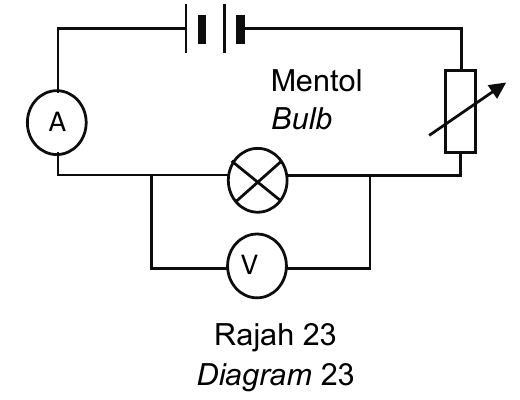
A simple circuit is set up as shown in Diagram 23. The brightness of the light bulb changes as the rheostat is adjusted. Which graph best represents the relationship between potential difference V across the bulb and current I through it?
Medium
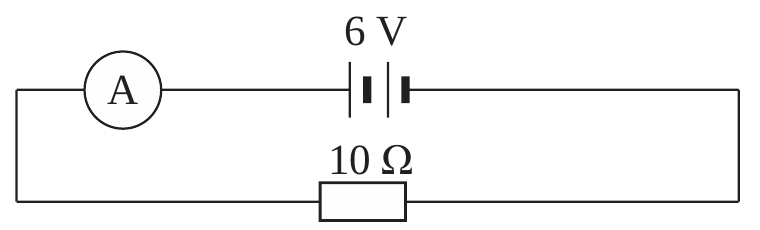
Diagram 24 shows an electric circuit (6 V cell, 10 Ω resistor). What is the energy dissipated in the resistor for 1 minute?
Medium
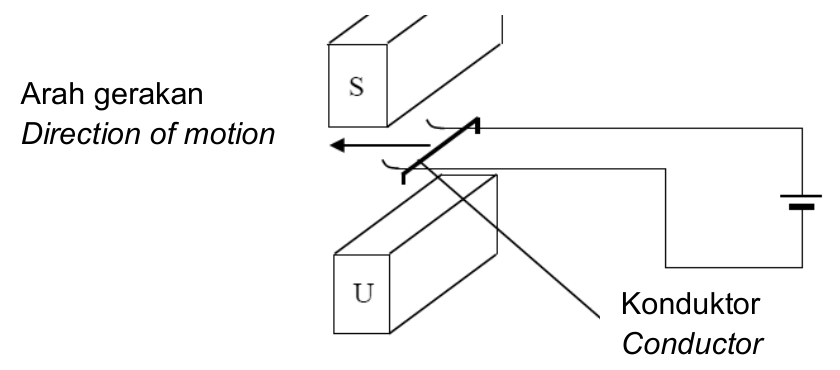
Diagram 25 shows the movement of a current-carrying conductor between two magnets. Which of the following will increase the speed of movement of the conductor?
Medium
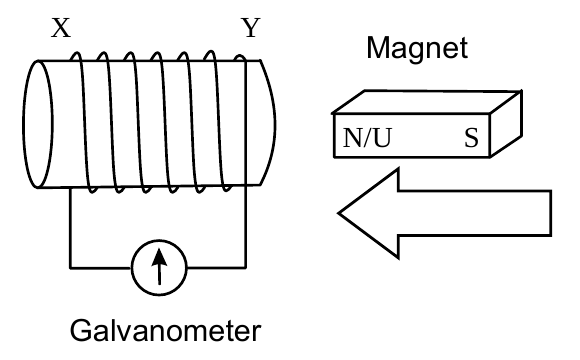
Diagram 26 shows a bar magnet being moved towards a solenoid (end Y nearer the magnet). What is the magnetic polarity at both ends of the solenoid, X and Y?
Medium
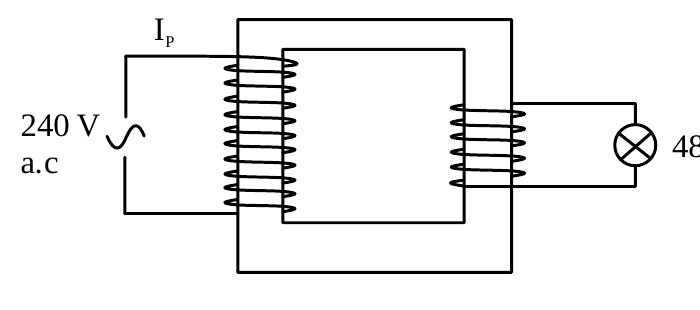
Diagram 27 shows an ideal transformer used to light up a 48 W bulb at normal brightness from a 240 V a.c. supply. What is the current IP?
Medium
Thermionic emission involves
Easy
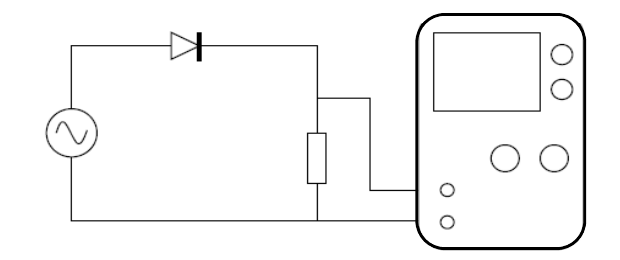
Diagram 28 shows a cathode ray oscilloscope (CRO) connected to an a.c. source, a diode and a resistor. Which diagram shows the trace displayed on the screen of the CRO?
Medium
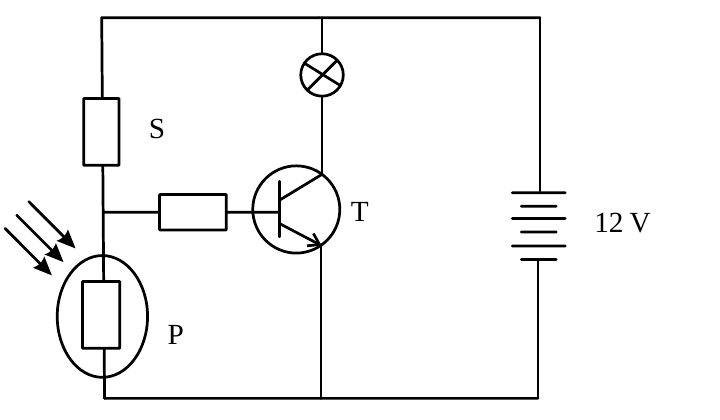
Diagram 29 shows a transistor circuit. Resistor P has a resistance of 10 kΩ. In order to light the bulb, the potential difference across resistor P must be at least 2 V. What is the maximum value of resistor S when the bulb is lit up? (Supply 12 V)
Medium
The following equation shows the decay of Thorium-234: ²³⁴₉₀Th → ²²⁶ₓRa + y ⁴₂He + 2 ⁰₋₁e. What are the values of x and y?
Medium
The following equation shows a nuclear fusion: ²₁H + ³₁H → ⁴₂He + ¹₀n + energy. The mass defect from the reaction is 0.028688 u. Calculate the energy released in the reaction.
Medium
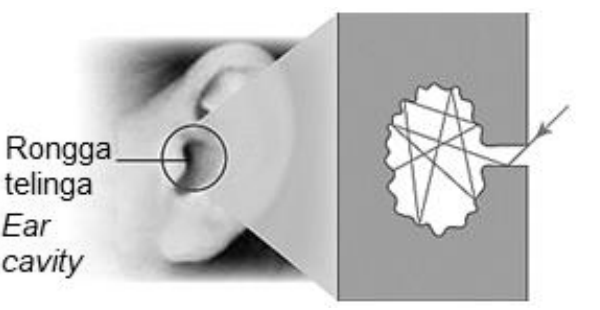
Diagram 30 shows the process that occurs when light radiation enters the ear cavity. The ear cavity can act as
Medium
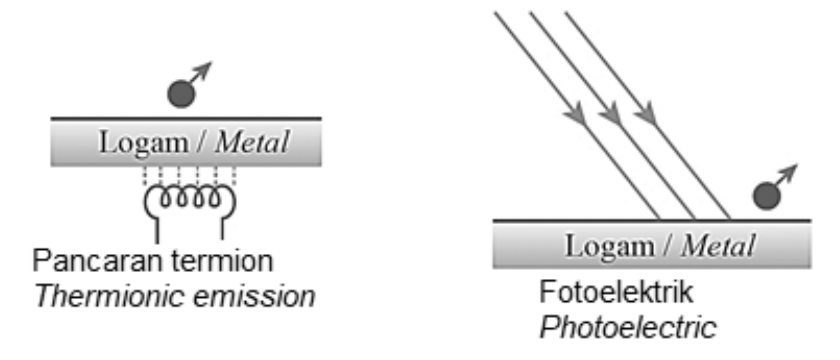
Diagram 31(a) shows thermionic emission. Diagram 31(b) shows the photoelectric effect. Which is correct about the time taken for an electron to be released from a metal surface?