Which of the following physical quantities is a base quantity?
Easy
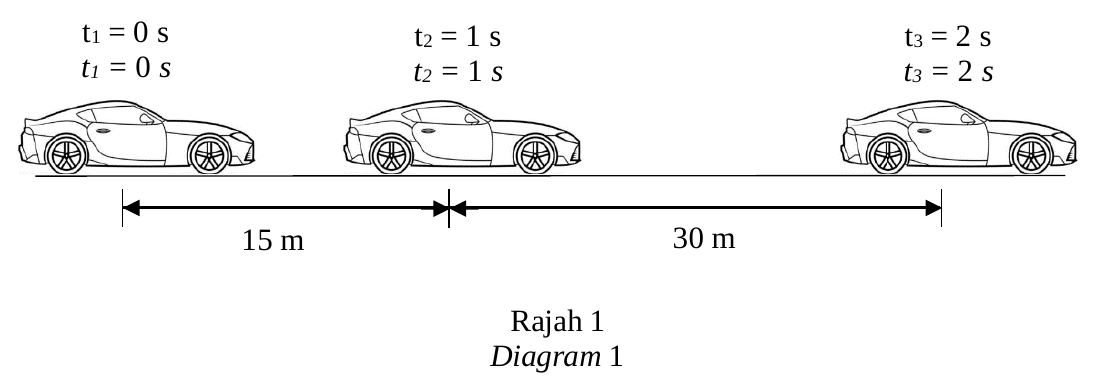
Diagram 1 shows a car moving in a straight line. The car is at t1 = 0 s, t2 = 1 s and t3 = 2 s. The distance between the first and second positions is 15 m and between the second and third positions is 30 m. What type of motion does the car have?
Medium
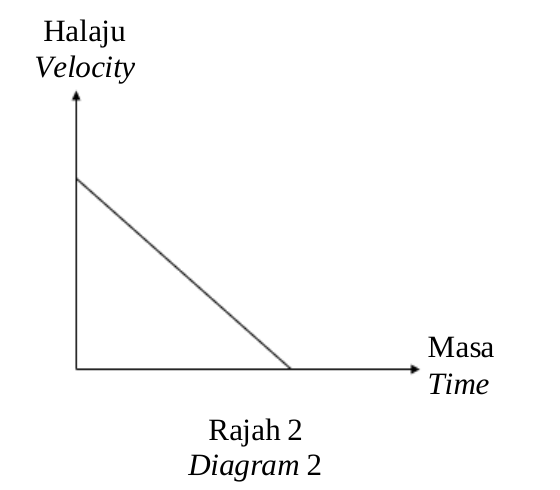
Diagram 2 shows a velocity-time graph (velocity decreasing linearly with time). Which of the following graphs is equivalent to the graph above?
Medium
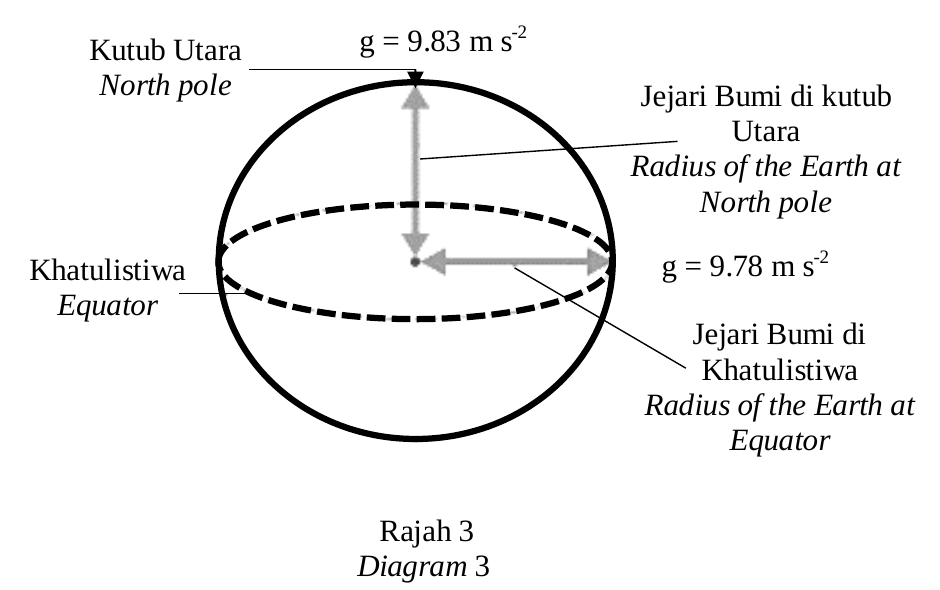
Diagram 3 shows the value of the acceleration of gravity at two different positions on the Earth's surface: g = 9.83 m s⁻² at the North pole and g = 9.78 m s⁻² at the Equator. Which of the following statements correctly describes the above situation?
Medium
Which of the following statement is correct about inertia?
Easy
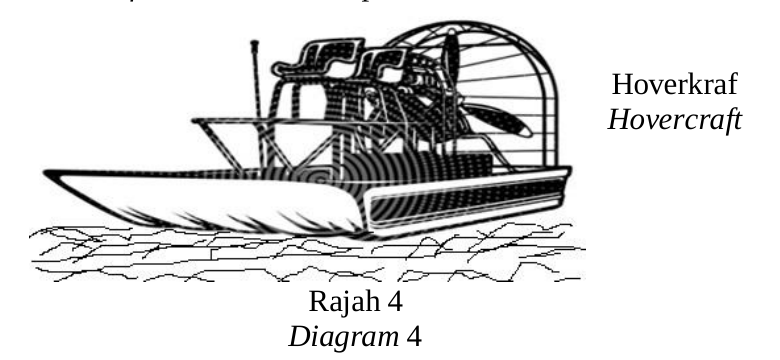
Diagram 4 shows a hovercraft used in the swamp. Which principle is applied to move the hovercraft?
Medium
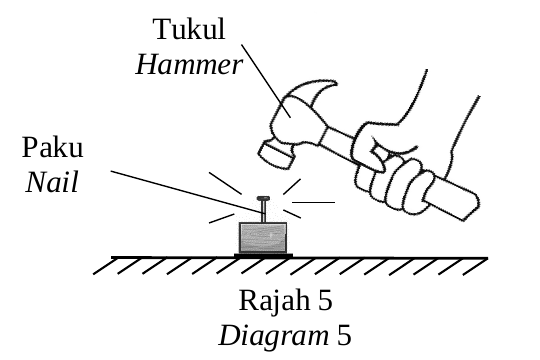
Diagram 5 shows a nail being tapped by a hammer. The nail sinks into the wood after being tapped. Which of the following statements is true?
Medium
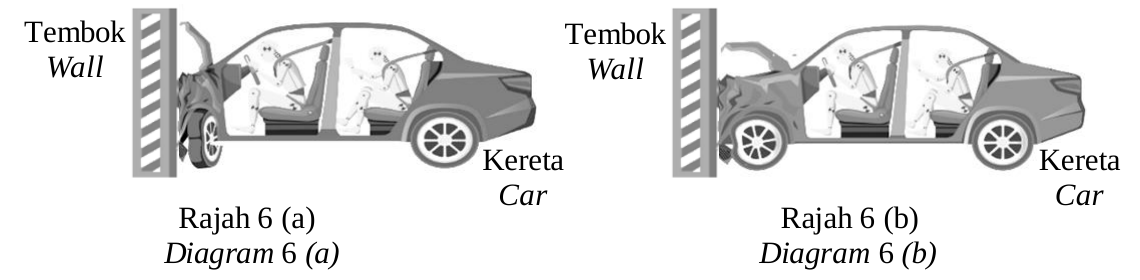
Diagram 6 (a) and Diagram 6 (b) show two cars that hit the wall. The car in Diagram 6 (a) moves with a higher velocity before the collision than the car in Diagram 6 (b). Which of the following relationships describes the situation above?
Medium
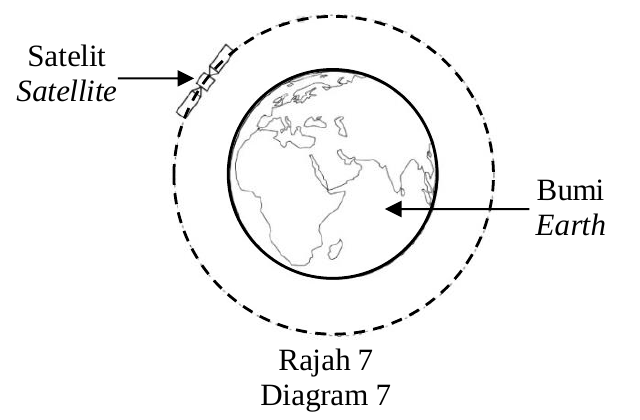
Diagram 7 shows a satellite orbiting the Earth with uniform speed. What force keeps the satellite in circular motion?
Medium
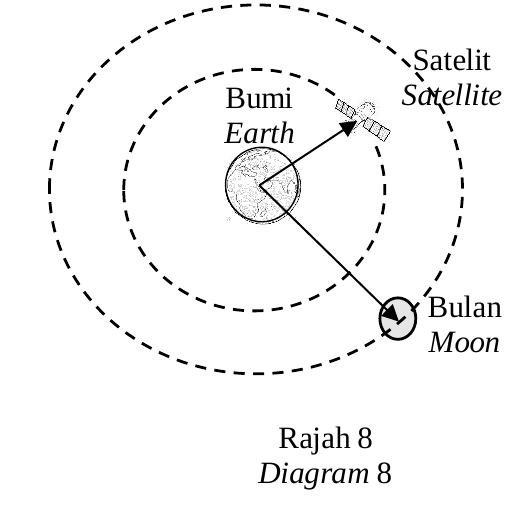
Diagram 8 shows a satellite and the Moon orbiting the Earth. What is the height of the satellite if the satellite is required to orbit the Earth with a period of 24 hours? [Orbital period of the Moon = 27.3 days, radius of orbit of the Moon = 3.83 x 10⁸ m, radius of the Earth, R = 6.37 x 10⁶ m]
Medium
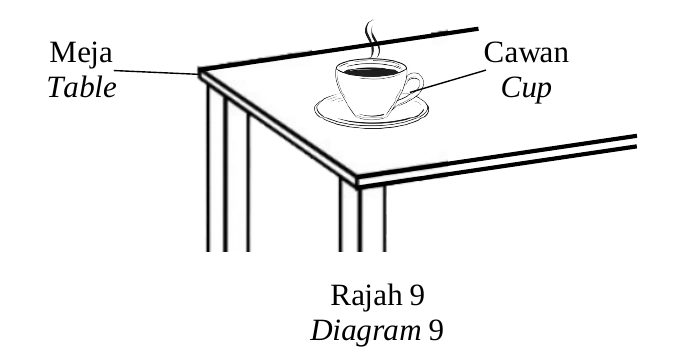
Diagram 9 shows a cup of hot coffee left on the table. The coffee gets cold after 1 hour. Which of the following concept explains the situation above?
Medium
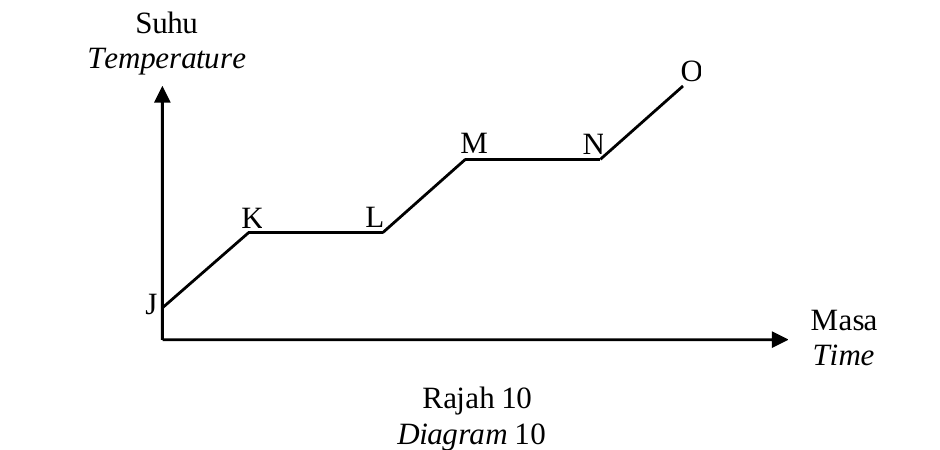
Diagram 10 shows a graph of temperature against time for heating a solid material (points J, K, L, M, N, O; flat sections at KL and MN). Which sector specific latent heat of vaporisation is absorbed?
Medium
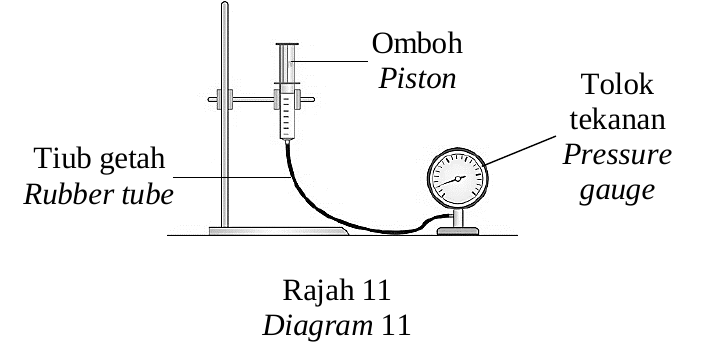
Diagram 11 shows an experiment to study the relationship between gas volume and gas pressure at a fixed mass of gas. Which of the following law involved?
Medium
“The loud noise of the jet has caused several pieces of glass at the airport to have broken due to resonance”. Which of the following statements correctly describes the above situation?
Medium
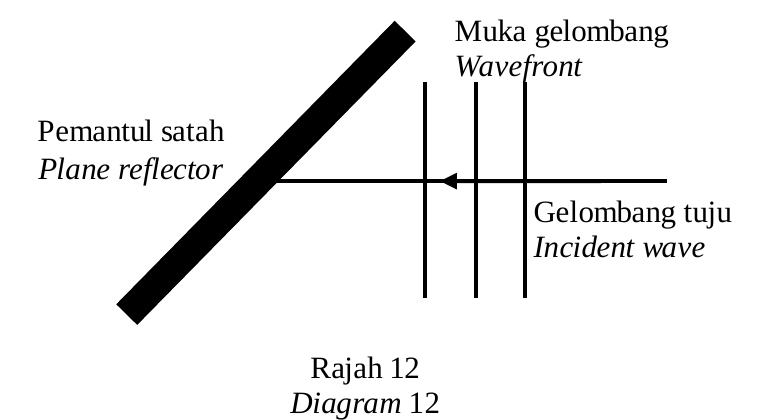
Diagram 12 shows plane water waves propagated towards a plane reflector. Which physical quantity changes after the waves are reflected?
Easy
The direction of propagation of a water wave changes when the water wave travels from deep sea to the beach. Based on the above statement, what is the phenomenon that occurs?
Easy
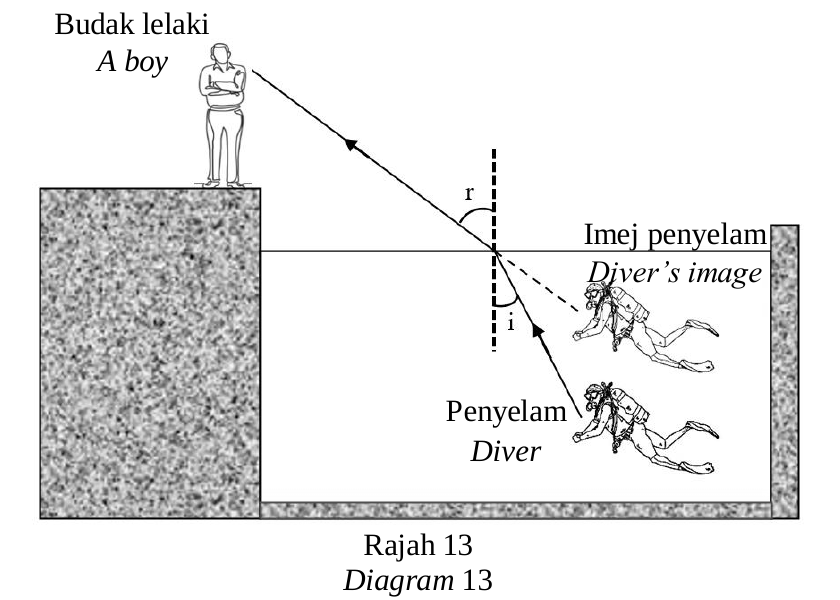
Diagram 13 shows a boy observing a diver in a swimming pool. The diver appears to be closer to the water surface. Which statement explains the phenomenon above?
Medium
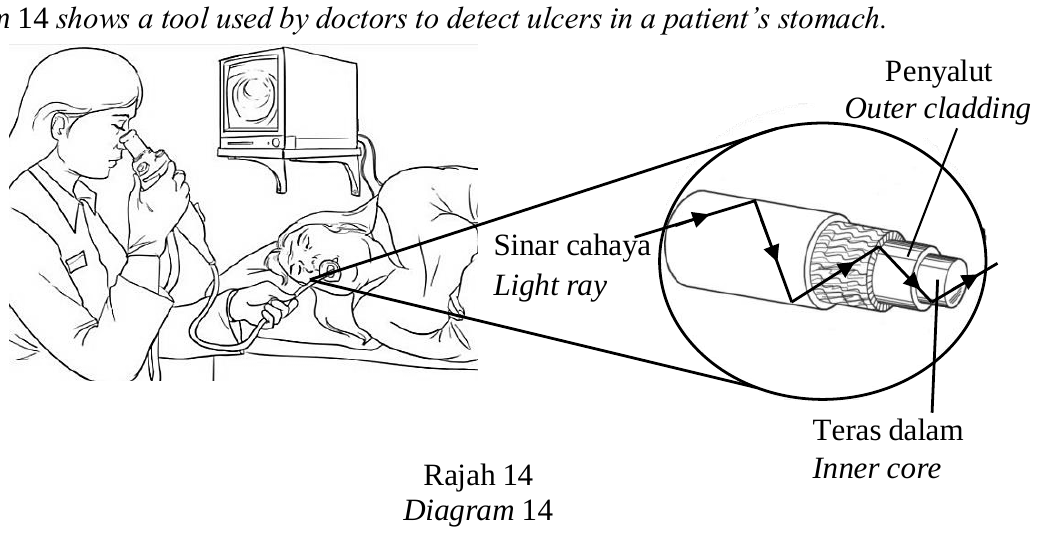
Diagram 14 shows a tool used by doctors to detect ulcers in a patient’s stomach (an optical fibre with inner core and outer cladding). Which statement describes how the doctor can see the image of the ulcer?
Medium
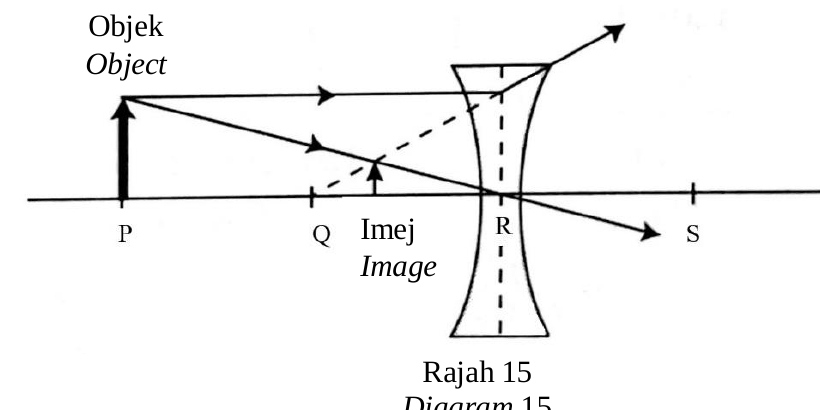
Diagram 15 shows light rays passing through a concave lens. Points P, Q, R and S lie on the principal axis (P at the object, Q at the image, R at the lens, S on the far side). Which point is the focal point for that lens?
Medium
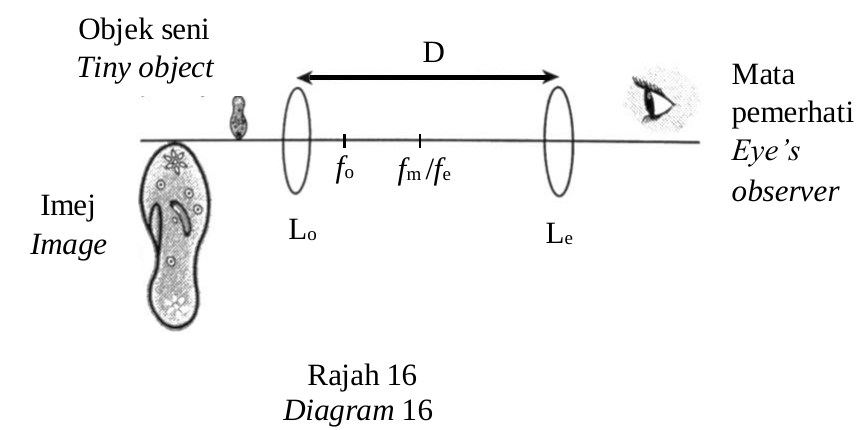
Diagram 16 shows the position of the objective lens, Lo and eyepiece lens, Le of a compound microscope. Which arrangement of lenses is correct for the compound microscope at normal adjustment? (Focal length, f / Distance between two lenses, D)
Medium
Which of the following methods can determine the resultant force?
Easy
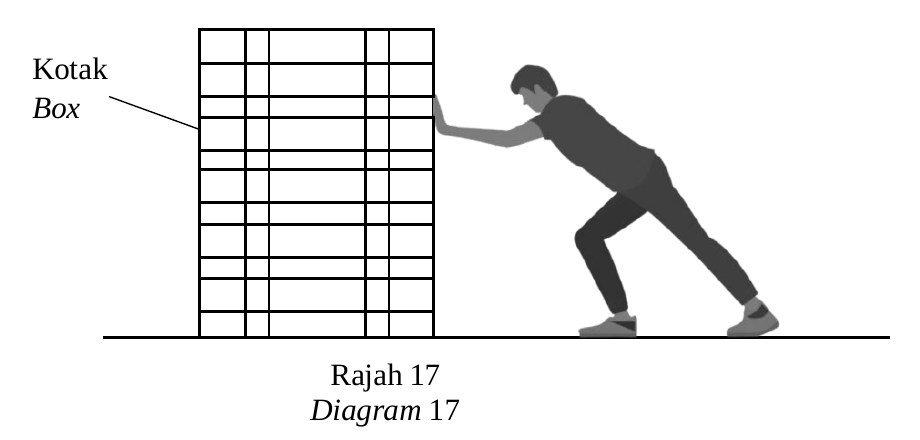
Diagram 17 shows a box being pushed on a smooth surface. Which of the following statements can increase the acceleration of the box?
Medium
Which of the following situations is experiencing forces in equilibrium?
Medium
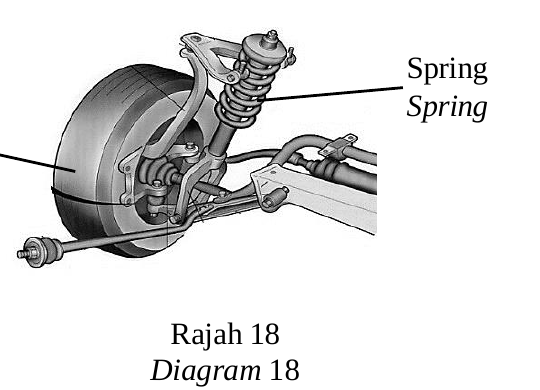
Diagram 18 shows the spring found in the shock absorber system of a car. Determine the appropriate characteristics of a spring as a shock absorber on a car.
Medium
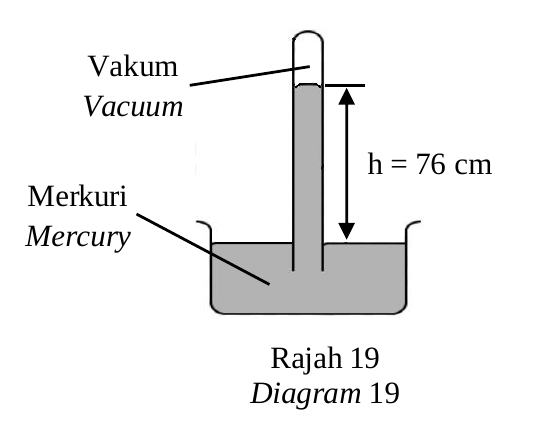
Diagram 19 shows a mercury barometer that is used by teacher to study the atmospheric pressure at a beach (h = 76 cm). What will happen to the value of h if the teacher brings the barometer to the peak of a mountain?
Medium
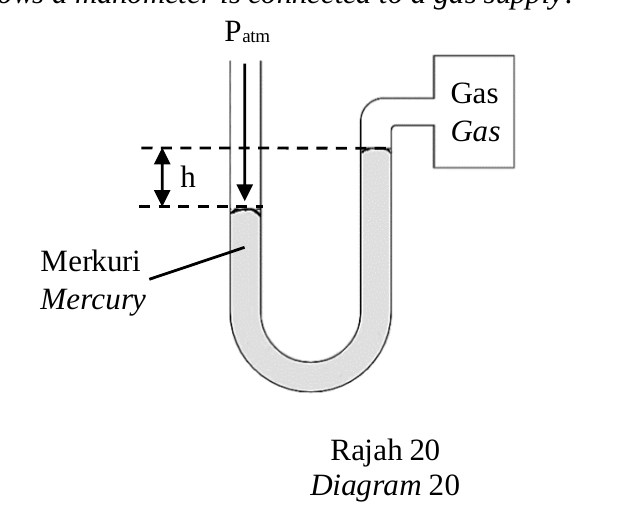
Diagram 20 shows a manometer is connected to a gas supply. What is the gas pressure in the manometer? [ρ = density of mercury, g = gravitational acceleration, Patm = atmospheric pressure]
Medium
Which of the following is the best characteristic to choose for a hydraulic fluid?
Medium
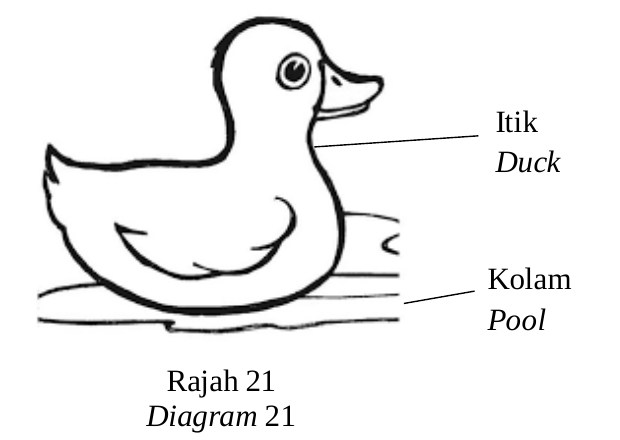
Diagram 21 shows a duck floating on the surface of a pool. If the water displaced by the duck is 15 cm³, what is the buoyant force that acts on the duck? [Density of water = 1000 kg m⁻³]
Medium
Which of the following describes Ohm's Law?
Easy
Which of the following factors affect the resistance of a wire? I Temperature of wire; II Length of wire; III Resistivity of wire; IV Cross sectional area of wire
Medium
What is meant by electromotive force?
Easy
Which of the following steps can you do at home to achieve savings in electricity consumption?
Easy
Which of the following is the similarity between the brushless motor and brushed motor?
Medium
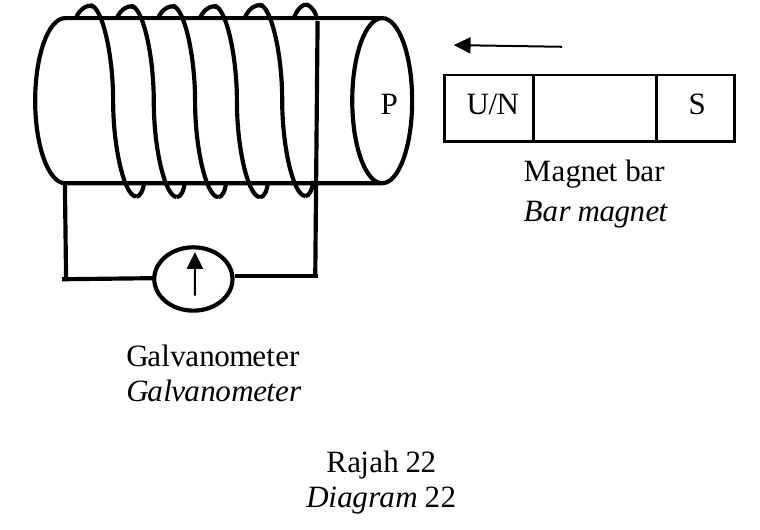
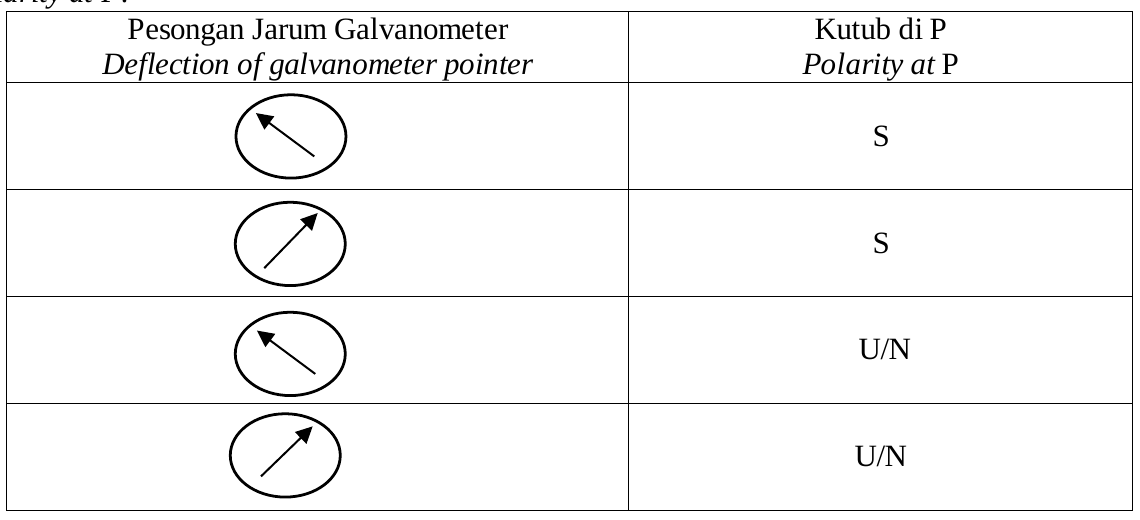
Diagram 22 shows a bar magnet (N end nearest the solenoid) moving towards a solenoid. Which of the following shows the correct deflection of the galvanometer pointer and the polarity at P? (Options are in the table figure: A pointer left, P = S; B pointer right, P = S; C pointer left, P = N; D pointer right, P = N)
Medium
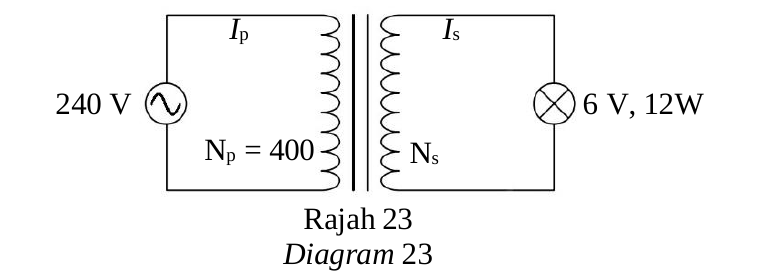
Diagram 23 shows an ideal transformer is used to light up a bulb labelled 6 V, 12 W. The primary coil (Np = 400) is connected to a power supply of 240 V. Calculate the number of turns in secondary coil and current flows in the secondary coil.
Medium
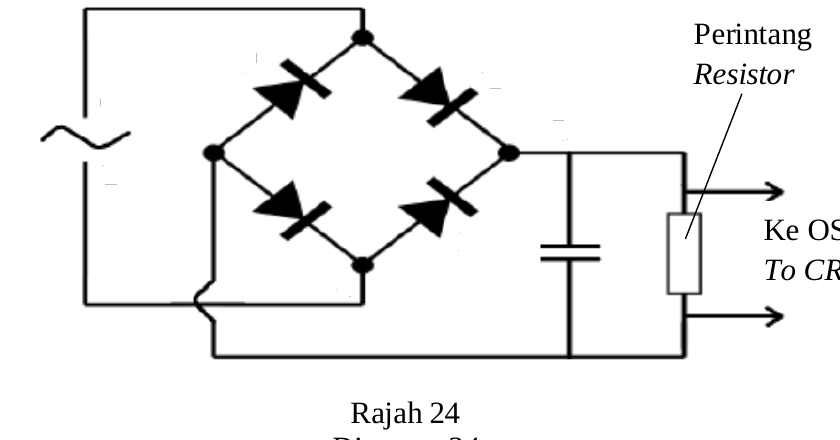
Diagram 24 shows a full wave rectification circuit (bridge of four diodes, a capacitor in parallel with a resistor connected to the CRO). How the output wave formed can be smoothened?
Medium
Which of the following statements correctly describes a transistor?
Easy
In a nuclear fission reaction, the energy released is 3.5 x 10⁻¹¹ J for the decay of an atom of Uranium-235. What is the loss of mass in the reaction?
Medium
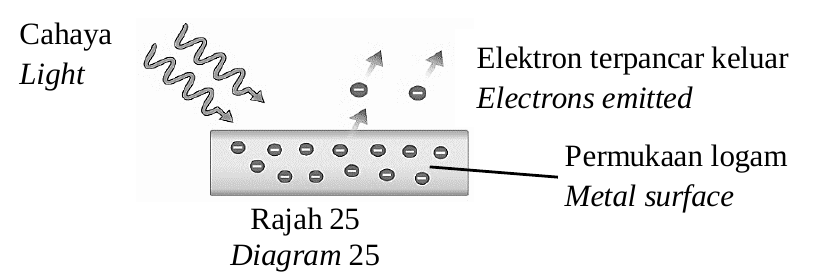
Diagram 25 shows a phenomenon of electrons being released from a metal surface when light shines on it. What is the name of the phenomenon?
Easy
What is the work function of Platinum metal if the threshold frequency, fo is 1.36 x 10¹⁴ Hz? [Planck constant, h = 6.63 x 10⁻³⁴ J s]