Write your answer on paper. Then open the answer to check it.
Section A
Diagram 1 shows the interference pattern of water waves produced by two coherent sources S1 and S2 in a ripple tank. Note: thick line = crest, thin line = trough.
Medium4 marks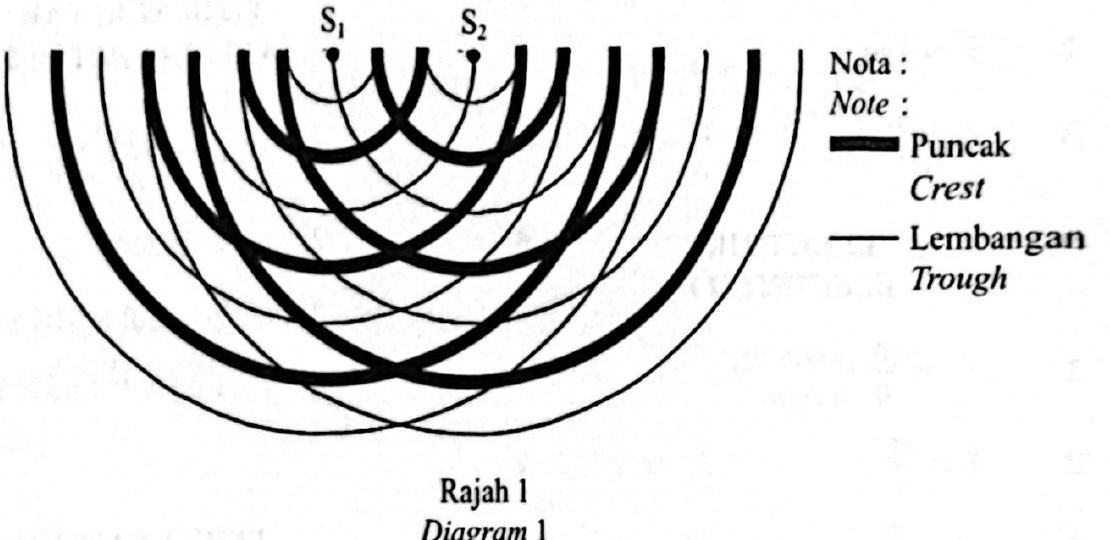
- (a)
What is meant by interference?
[1] - (b)
State the definition of coherent source.
[1] - (c)
Draw and label an antinode line and a nodal line in Diagram 1.
[2]
Diagram 2 shows a transistor circuit: a 6 V supply, a bulb in the collector circuit, a 20 kΩ resistor in series with component Q at the base, and a 1 kΩ resistor at the base.
Medium5 marks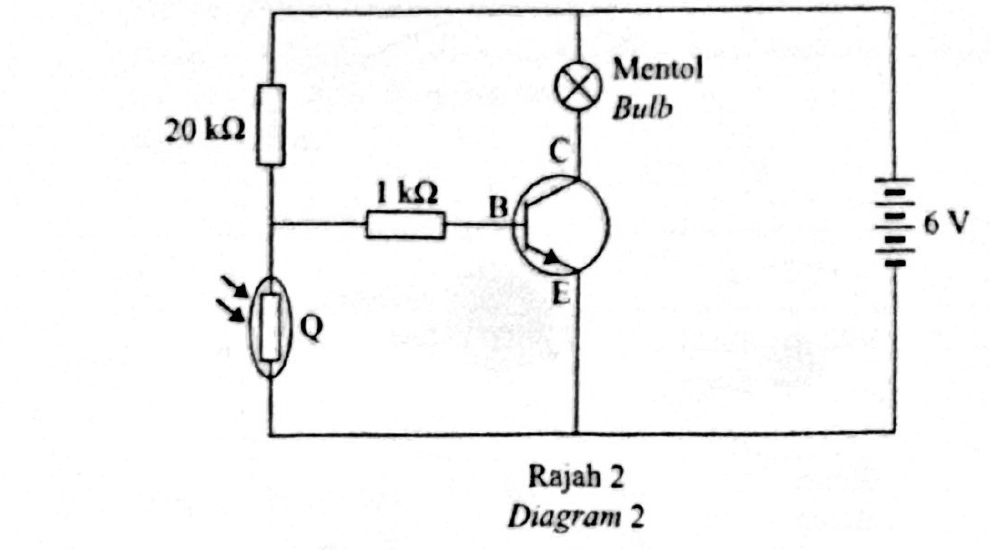
- (a)
Name the component Q.
[1] - (b)
What happens to the base voltage, V_B when the environment gets darker?
[1] - (c)
The bulb will light up when the base voltage, V_B is 4.0 V. Based on Diagram 2, calculate the resistance of Q when the bulb lights up.
[3]
Diagram 3 shows the Moon orbiting the Earth, while the Earth orbits the Sun. The gravitational force between the Sun, Earth and Moon can be determined using Newton's Universal Law of Gravitation. h is the height of the Moon above the Earth's surface.
Medium6 marks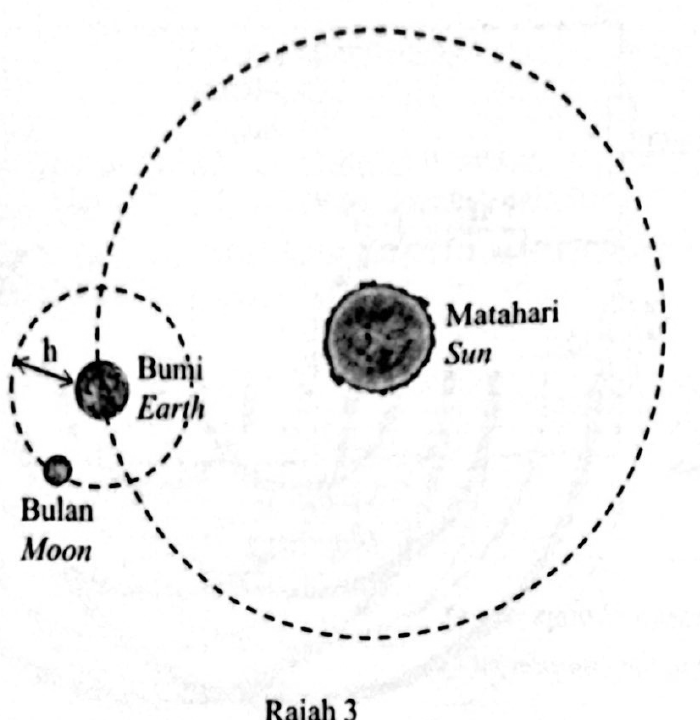
- (a)
What is Newton's Universal Law of Gravitation?
[1] - (b)
Based on Diagram 3, compare the gravitational force between the Earth and the Moon, with the Earth and the Sun. Give a reason.
[2] - (c)
Given: mass of Moon = 7.35 × 10²² kg; mass of the Earth = 5.97 × 10²⁴ kg; radius of the Earth = 6.37 × 10⁶ m; gravitational force between the Earth and the Moon = 2.00 × 10²⁰ N; G = 6.67 × 10⁻¹¹ N m² kg⁻². Calculate the height of the Moon from the Earth's surface, h.
[3]
Diagram 4 shows part of the uranium-238 decay series: U-238 (Z=92) → Th-234 (90) → Pa-234 (91) → U-234 (92) → Th-230 (90) → Ra-226 (88).
Medium9 marks
- (a)
What is meant by radioactive decay?
[1] - (b)
Based on Diagram 4, determine the number of alpha particles and beta particles emitted when U-238 (92) decays into Ra-226 (88).
[2] - (c)
What happens to the number of alpha particles emitted in 4(b) if the surrounding temperature is reduced to near freezing?
[1] - (d)(i)
Ra-226 (88) decays to Rn-222 (86) by emitting an alpha particle. Given: mass of Ra-226 = 226.54 a.m.u; mass of Rn-222 = 222.018 a.m.u; mass of alpha particle = 4.003 a.m.u. Calculate the mass defect in a.m.u.
[1] - (d)(ii)
Calculate the energy released.
[3] - (d)(iii)
If the mass defect in 4(d)(i) decreases, what happens to the energy produced in the reaction?
[1]
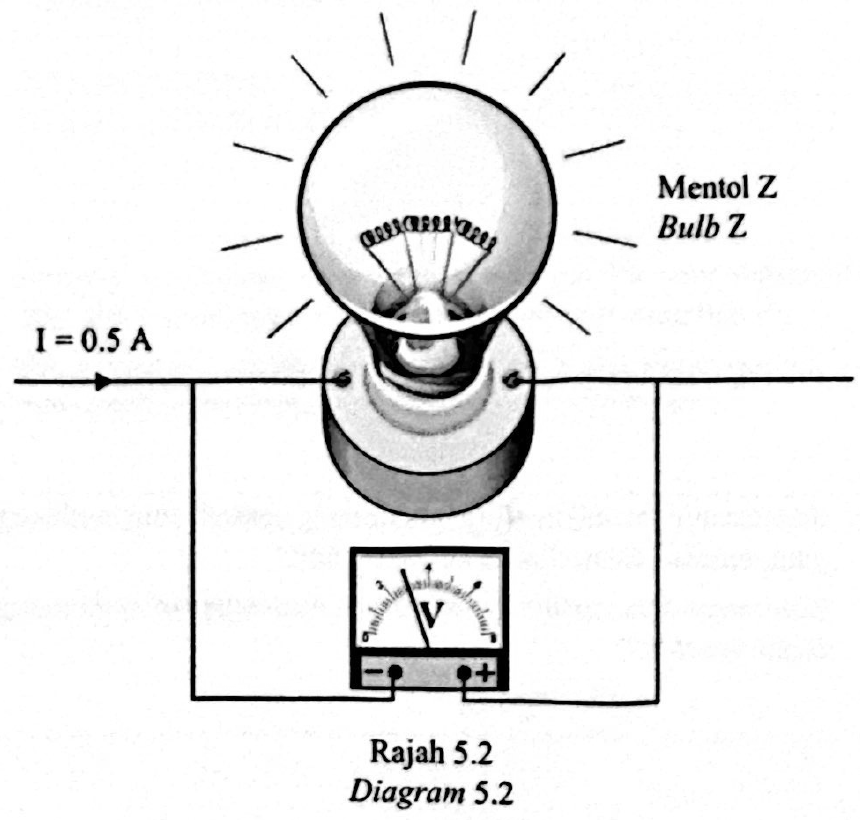
Diagram 5.1 and Diagram 5.2 show the brightness of bulb W and bulb Z when current I = 0.5 A flows in them. A voltmeter is connected across each bulb; bulb W is brighter and its voltmeter reading is larger.
Medium9 marks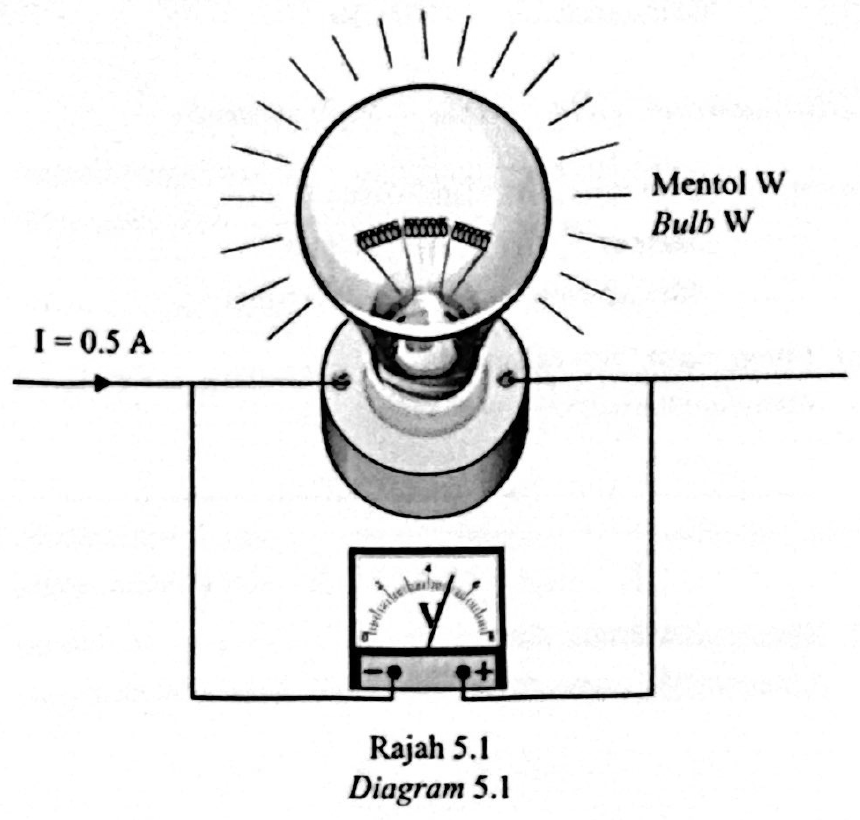
- (a)
What is meant by current?
[1] - (b)(i)
Based on Diagram 5.1 and Diagram 5.2, compare the voltage across the bulb.
[1] - (b)(ii)
Compare the number of turns of coil of filament wire.
[1] - (b)(iii)
Compare the resistance of filament wire.
[1] - (b)(iv)
Compare the brightness of bulb.
[1] - (c)(i)
Based on the answer in 5(b), relate the number of turns of coil of filament wire to the resistance of filament wire.
[1] - (c)(ii)
Relate the resistance of filament wire to the brightness of bulb.
[1] - (d)
Given: length of filament wire of bulb W = 2.0 m; diameter = 3 × 10⁻⁴ m; resistivity = 5.6 × 10⁻⁸ Ω m. Calculate the resistance of filament wire of bulb W.
[2]
Diagram 6 shows a graph of maximum kinetic energy, K_max against frequency, f for metal P and metal Q. The x-intercepts are 6.64 × 10¹⁴ Hz (metal P) and 10.34 × 10¹⁴ Hz (metal Q); the y-intercepts are −W_P and −W_Q. The threshold frequency, f₀ and the work function, W can be determined from the x-intercept and y-intercept respectively.
Medium9 marks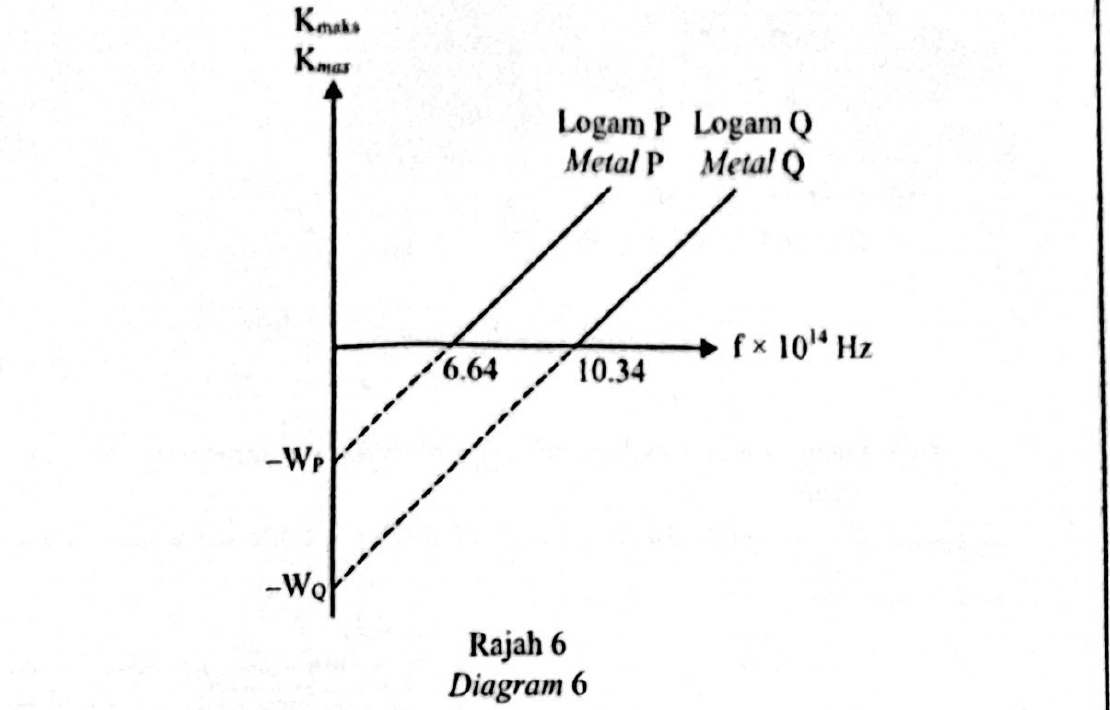
- (a)
What is meant by threshold frequency?
[1] - (b)
Given that the Planck's constant, h = 6.63 × 10⁻³⁴ J s. Based on Diagram 6, calculate the work function for metal Q.
[2] - (c)(i)
Based on Diagram 6, compare the threshold frequency of metal.
[1] - (c)(ii)
Compare the work function of metal.
[1] - (c)(iii)
Compare the maximum kinetic energy of photoelectrons emitted from the metal surface.
[1] - (d)(i)
Based on the answer in 6(c), relate the threshold frequency to the work function.
[1] - (d)(ii)
Relate the work function to the maximum kinetic energy of photoelectrons.
[1] - (e)
What happens to the electrons on the surface of metal P if a beam of light that has a frequency of 6.64 × 10¹⁴ Hz is directed to the surface of metal P?
[1]
Diagram 7 shows hydrofoils attached to the bottom of a boat. The production of lift force by the hydrofoil is based on Bernoulli's principle.
Medium9 marks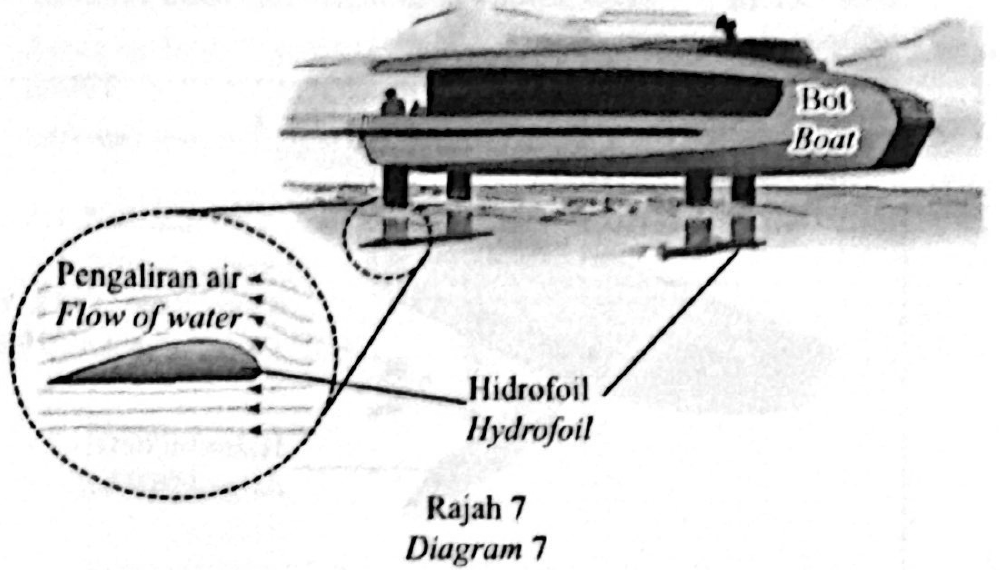
- (a)
State Bernoulli's principle.
[1] - (b)
The surface area of the lower part of the hydrofoil in Diagram 7 is 0.5 m² and the pressure difference between the upper and lower surfaces of the hydrofoil is 50 kPa. Calculate the lift force produced by the hydrofoil in the unit of Newton.
[3] - (c)(i)
Table 7 shows the characteristics of hydrofoil surfboards S (10 kW, large hydrofoil), T (12 kW, small hydrofoil) and U (12 kW, large hydrofoil). Based on Table 7, state the characteristics of the surfboard that can move the fastest. Give one reason for the suitability of each characteristic: size of hydrofoil.
[2]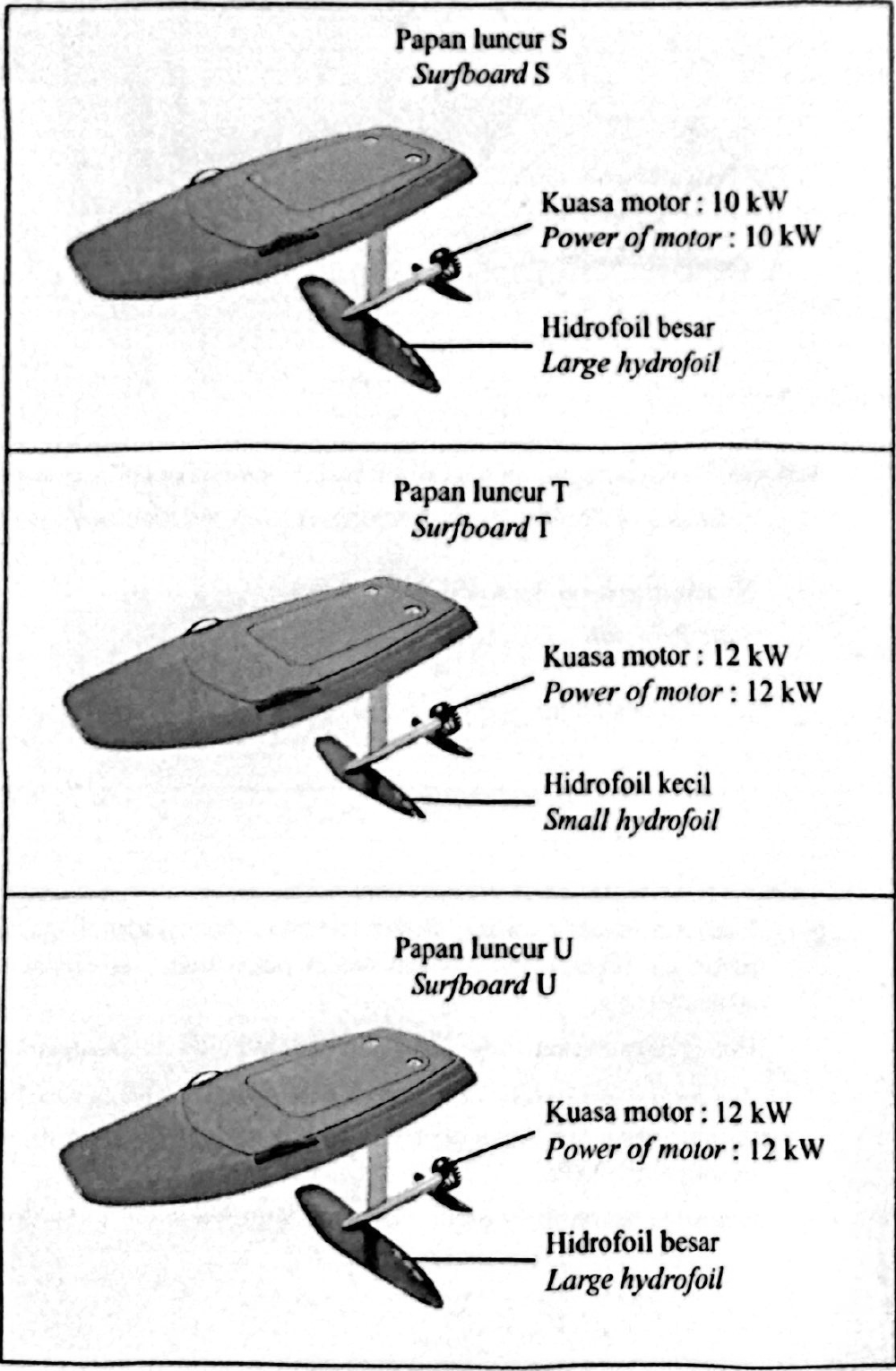
- (c)(ii)
Power of motor (give one reason).
[2] - (d)
Based on the answer in 7(c), determine the surfboard that can move the fastest.
[1]
A man sees a bird on a tall tree using binoculars. Diagram 8 shows the structure in part of the binoculars (objective lens, two prisms, eyepiece lens, observer's eye).
Medium9 marks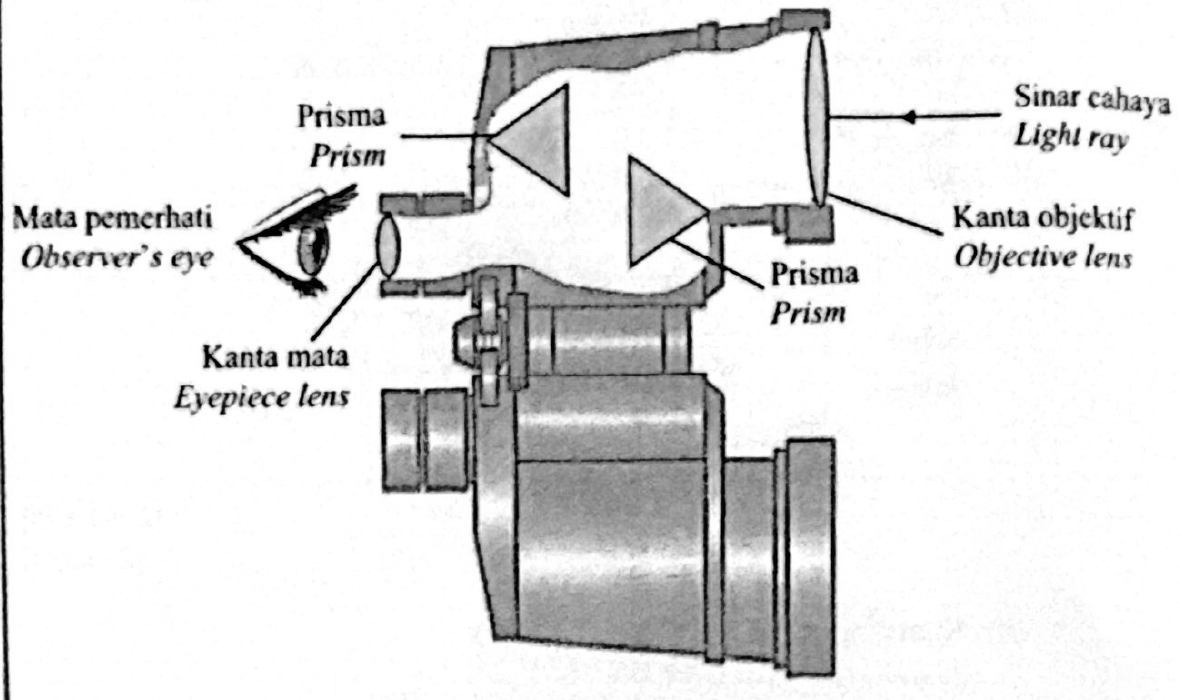
- (a)
State one characteristic of the image of the bird that can be seen using binoculars.
[1] - (b)
In Diagram 8, complete the path of light rays entering the binoculars to the observer's eye.
[2] - (c)(i)
You are required to suggest modifications to the binoculars so that the image seen is clearer and easier to carry when looking at distant birds. State and explain: the focal length of objective lens.
[2] - (c)(ii)
The diameter of the lens.
[2] - (c)(iii)
The characteristics of material used for the body of the binocular.
[2]
Section B
Diagram 9 shows an archer pulls the bowstring with a force, F resulting in extension of x cm. When the arrow is released, it will travel at a speed due to the elasticity of the bow.
Medium20 marks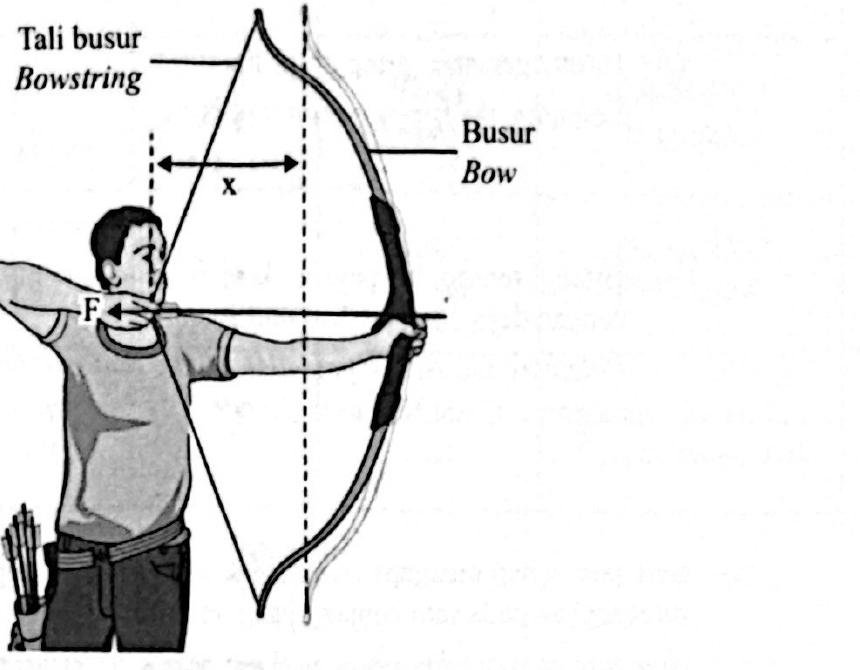
- (a)
What is meant by elasticity?
[1] - (b)
Using the concept of elasticity and the principle of conservation of energy, explain how archers can produce a far shooting distance.
[3] - (c)(i)
The force applied by the archer is 100 N and the extension, x of the bow is 50.0 cm. Calculate the spring constant of bow.
[2] - (c)(ii)
Calculate the elastic potential energy that can be stored when the bow is pulled by the force of 100 N in unit of Joule.
[3] - (d)
Give one reason why a bow will not return to its original condition when extended to a certain length.
[1] - (e)
Table 9 shows the bows P, Q, R and S used in archery sports (bow string material, mass of bow, arrow flechas feathers, material of arrow). Study each of these bows and explain the suitability of each feature. Determine the most suitable bow to produce the longest shooting distance and easy to carry. Give reasons for your choice.
[10]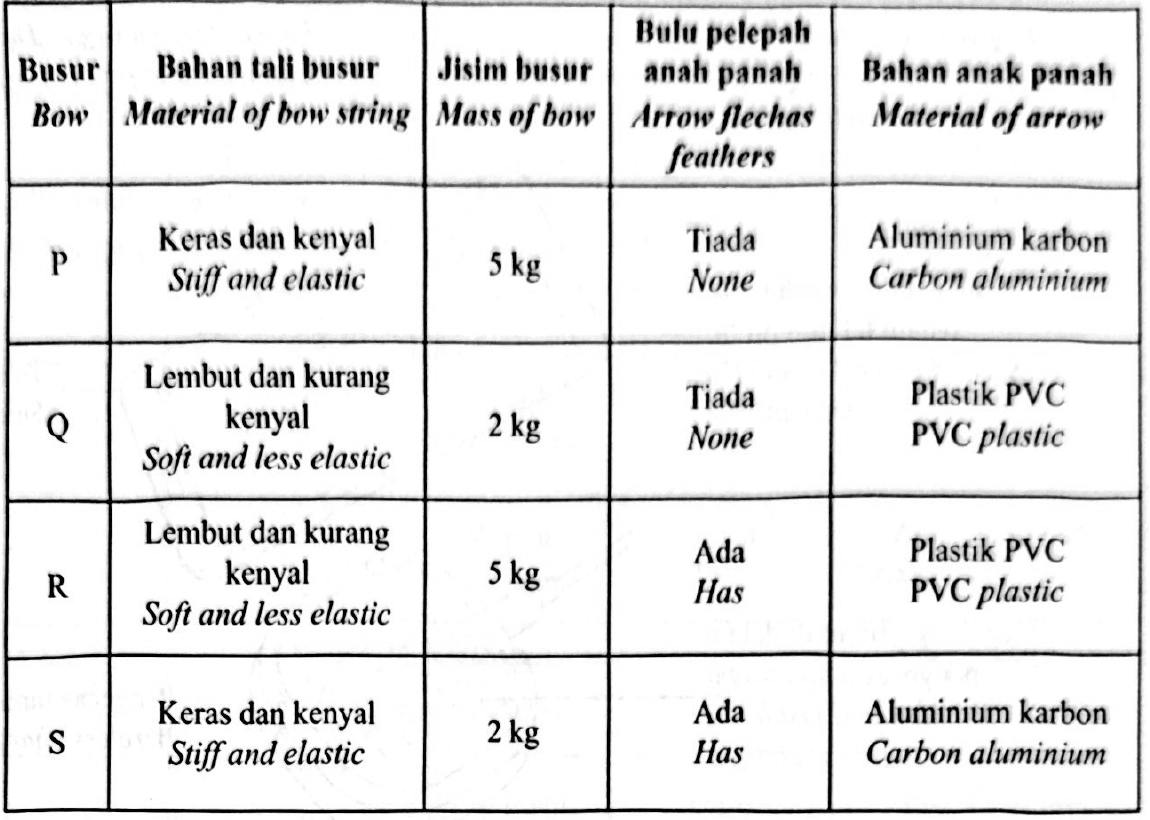
Diagram 10.1 shows a smartphone being charged using the wireless charger. There are coils inside the wireless charger and smartphone that allow this wireless charging process to occur based on electromagnetic induction.
Medium20 marks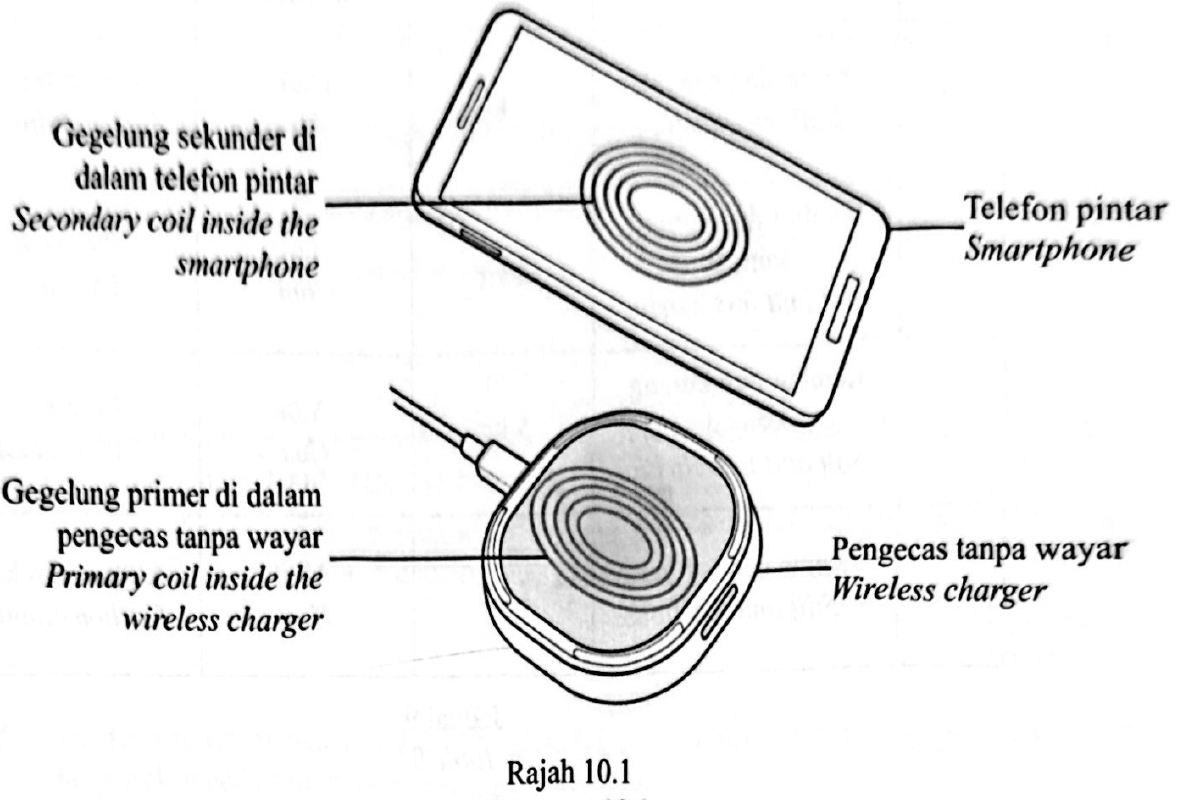
- (a)(i)
What is meant by electromagnetic induction?
[1] - (a)(ii)
Explain how the coil in the wireless charger can charge the smartphone.
[4] - (b)
Table 10 shows the choice of components that can be used to build the prototype of wireless charger (number of turns of primary coil, type of wire of coil, thickness of the wireless charger, type of power supply for prototypes P, Q, R, S). Based on Table 10, identify and explain the suitability of each component to produce a wireless charger prototype that has high efficiency and then determine which prototype is most suitable to use. Give reasons for your choice.
[10]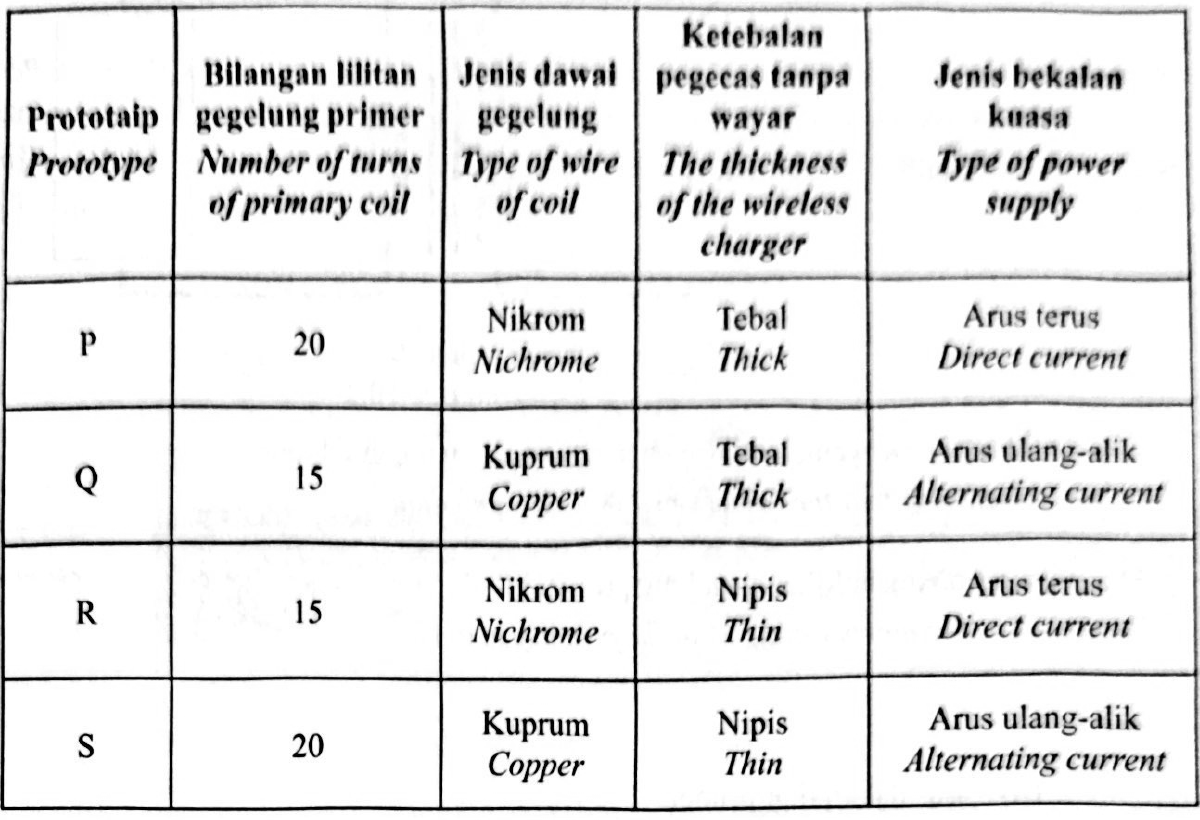
- (c)(i)
Diagram 10.2 shows a transformer inside the wireless charger plug (240 V supply, secondary N_S = 70 turns, output 6 V 50 W). Assuming that the transformer is ideal, calculate the number of turns of the primary coil, N_P.
[2]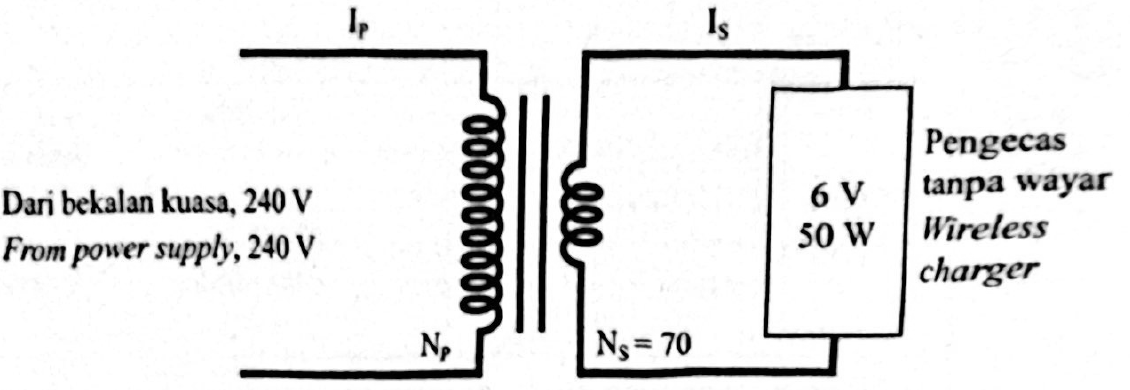
- (c)(ii)
Calculate the current in primary circuit.
[3]
Section C
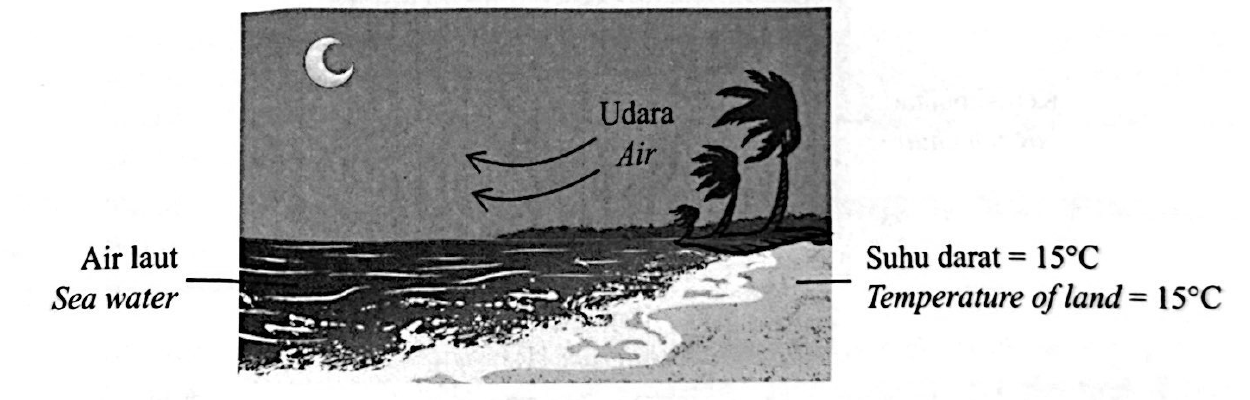
Diagram 11.1 and Diagram 11.2 show the phenomenon of sea breeze and land breeze that occur due to the difference in the specific heat capacity of sea water and land. Given that the specific heat capacity of land and sea water are 3 900 J kg⁻¹ °C⁻¹ and 1 632 J kg⁻¹ °C⁻¹ respectively.
Medium20 marks- (a)
What is meant by specific heat capacity?
[1] - (b)
Based on Diagram 11.1 (day: air flows from sea to land, land 38 °C) and Diagram 11.2 (night: air flows from land to sea, land 15 °C), compare the specific heat capacity of land and sea water, the temperature of air above land, the density of air above land and the direction of air flow. Then, relate the specific heat capacity to the temperature of air. Therefore, deduce the relationship between the temperature of air above land and the direction of air flow.
[6]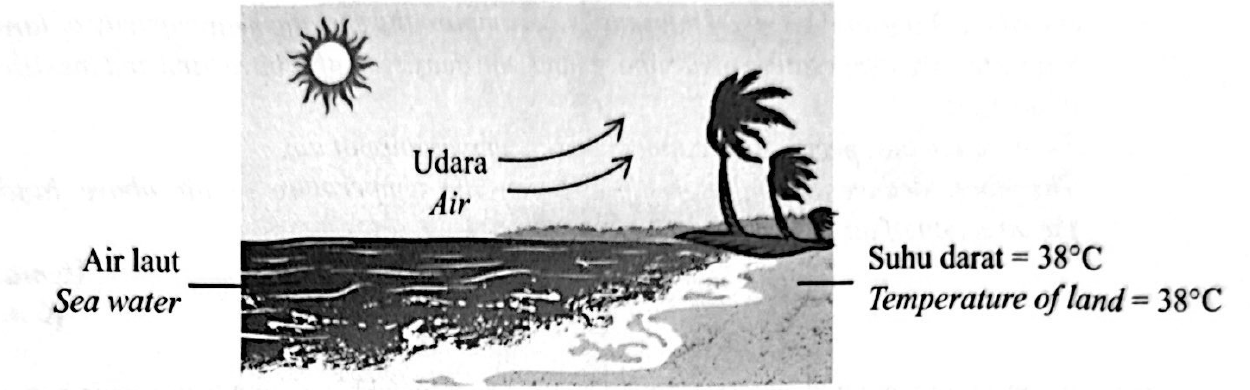
- (c)
Diagram 11.3 shows beach chairs placed on a beach during day time. The beach chair feels hot when you start sitting on it. After a while, the chair was found not to be as hot as before. Explain.
[3]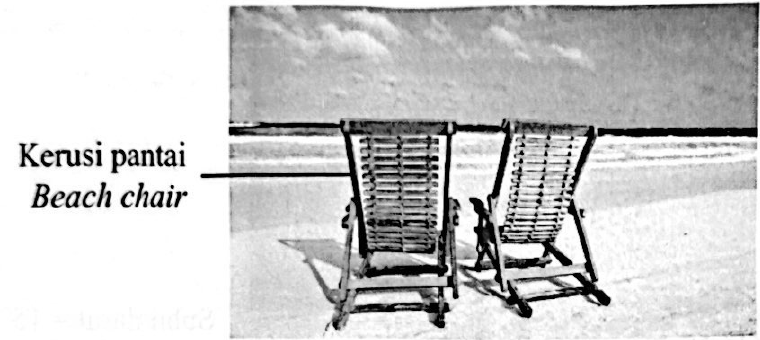
- (d)
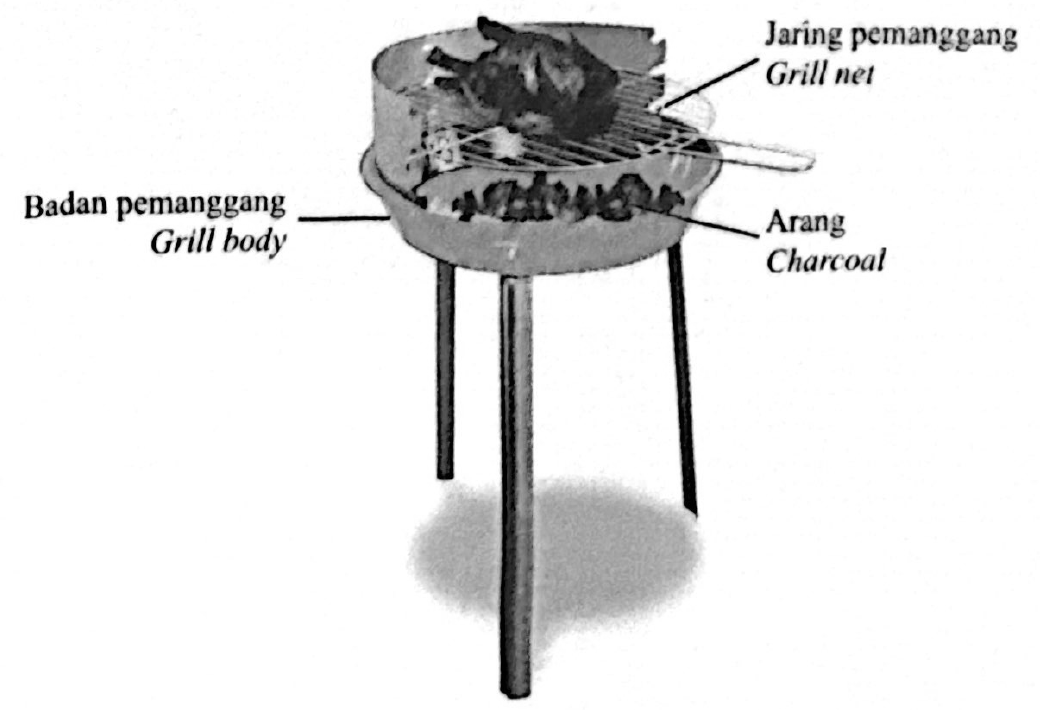
Diagram 11.4 shows a grill that uses charcoal to grill food by the beach. You are required to suggest some modifications to the grill so that the grill can be held securely and is portable, and able to grill large amounts of food quickly without the disturbance of the wind from the shore. State your recommendations based on the features of the grill net, grill body, grill size and additional tool on the grill. Give reasons for your answer.
[10]