Which of the following is the purpose of plotting a graph in a scientific investigation?
I Giving a consistent measurement
II Finding the values that are out of range
III Determine the average value of the experimental data
IV Finding the relationship between two variables
Medium
When an object is travelling with a constant velocity, its acceleration will be
Easy
Which graph shows the motion with constant acceleration?
Medium
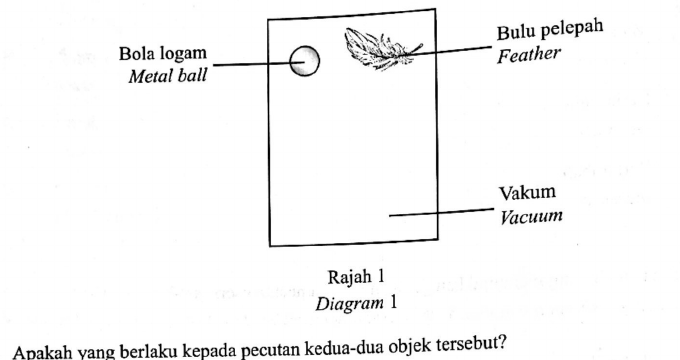
Diagram 1 shows a metal ball and a feather dropped from the same height in a vacuum. What happens to the acceleration of both objects?
Easy
Which of the following have a very small inertia?
Easy
The Principle of Conservation of Momentum states that
Easy
Which of the following are not the effect of a force acting on a moving car?
Easy
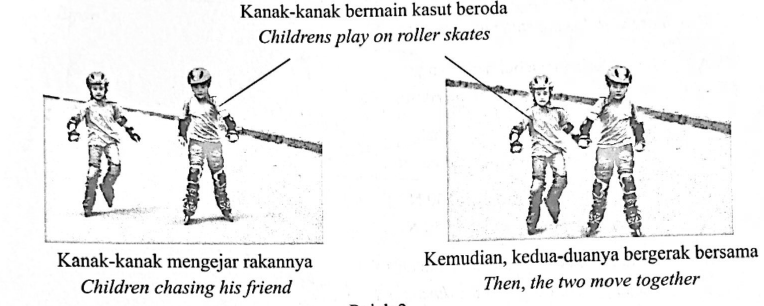
Diagram 2 shows two children playing with roller skates. One child chases his friend, then the two move together. Which statements are correct?
I Total momentum is conserved
II Total kinetic energy is conserved
III Both children experience elastic collision
IV Both children experience inelastic collision
Medium
A durian of mass 1.5 kg falls freely from a tree branch. Which of the following statements is correct?
Medium
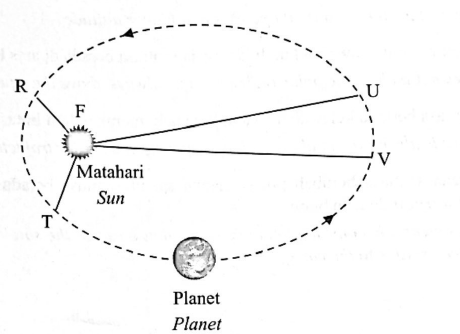
Diagram 3 shows a planet orbiting the Sun in an ellipse where the Sun is at one of the focus of the ellipse. The area of the FRT is equal to the area of the FUV. Based on Kepler's Second Law, deduce a relationship involving the time of the planet's motion from R to T and from V to U.
Medium
The disadvantages of geostationary satellites are as follows, except
Medium
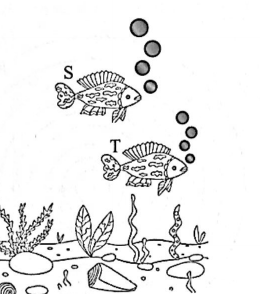
Diagram 4 shows the air bubbles made by fish S and fish T, under the surface of water with different depths. Based on Diagram 4, state the relationship between the pressure and the volume of air bubbles.
Medium
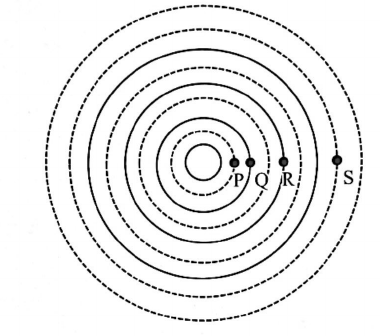
Diagram 5 shows the wave front pattern produced by the vibrating dipper in the ripple tank. Which distance between two points represents the wavelength and compare the amplitude of water waves at the two points?
Medium
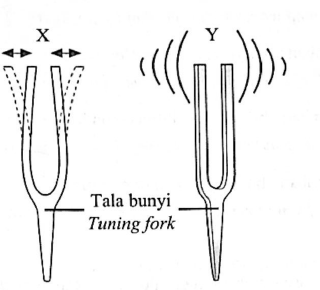
Diagram 6 shows two identical tuning forks, X and Y, placed side by side. The tuning fork X is tapped to vibrate and then the tuning fork Y also vibrates. Name the phenomenon experienced by the tuning fork Y.
Easy
Sound waves are more easily diffracted in comparison to the light waves because
Medium
In a Young's double-slit experiment, a monochromatic light of wavelength 633 nm passes through two slits which are 0.5 mm apart. Vertical fringes pattern are observed on a screen placed 4 m from the double-slit. Calculate the distance between two consecutive bright fringes.
Medium
Which of the following waves cannot propagate in vacuum?
Easy
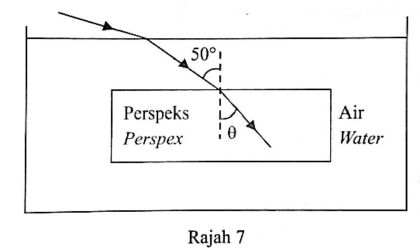
Diagram 7 shows a light from air undergoes refraction when the light enter the water and perspex. The refractive index of water and perspex are 1.33 and 1.5 respectively. Determine the angle, θ.
Medium
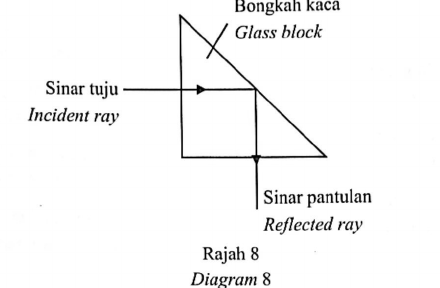
Diagram 8 shows a ray of light propagates in a glass block. Why the incident ray is reflected in the glass block?
Medium
An object is placed 10.0 cm in front of a convex lens with a focal length of 5.0 cm. Determine the image distance.
Medium
Which optical instrument produce a real, diminished and inverted image?
Medium
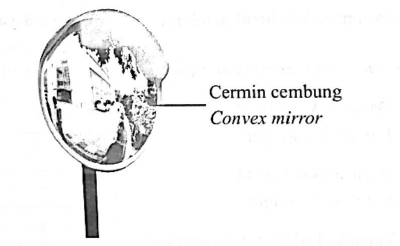
Diagram 9 shows a convex mirror works as a safety mirror placed at a sharp corner. Which of the following is an advantage of using a convex mirror as a safety mirror?
Easy
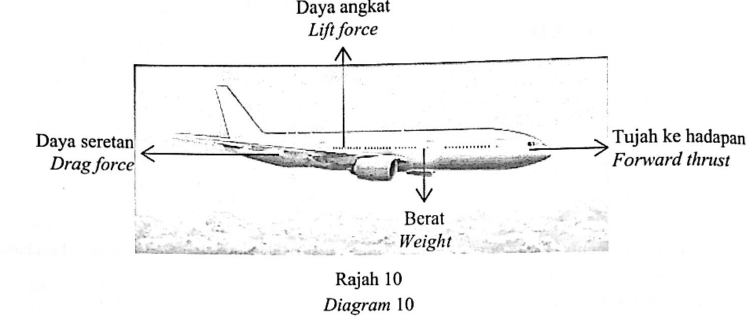
Diagram 10 shows the forces acting on an aeroplane which is moving forward with an acceleration at a constant altitude. Which statement is correct to explain the forces acting on the aeroplane?
Medium
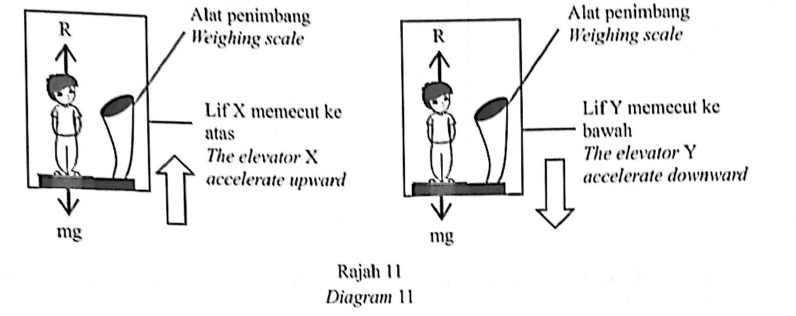
Diagram 11 shows a student stands on a weighing scale. He experienced two different elevator motion situations X and Y. Elevator X accelerates upward; elevator Y accelerates downward. Which of the following equations is true about the apparent weight, R?
Medium
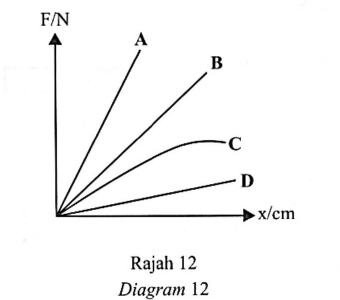
Diagram 12 shows the graph of the relationship between the force, F and the extension of spring, x. Among A, B, C and D, which one shows that a large force is required for the extension of a spring?
Medium
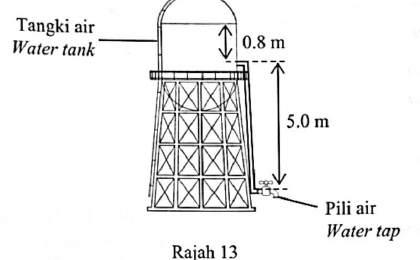
Diagram 13 shows a water tap on a water tank (water level 0.8 m above the tank base, tap 5.0 m below the tank base). What is the pressure in the tap? [Density of water = 1 000 kg m⁻³ and atmospheric pressure = 1.0 × 10⁵ Pa]
Medium
Why does atmospheric pressure decrease at high altitudes?
Easy
What is the name of instrument that can be used to measure gas pressure?
Easy
“Pressure applied on an enclosed fluid will be transmitted uniformly in all directions in the fluid.” The statement refers to
Easy
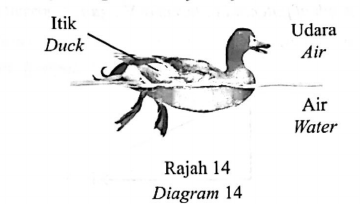
Diagram 14 shows a duck floating on the surface of a lake. The water displaced by the duck is 10 m³. Calculate the buoyant force acted on the duck. [Density of water = 1 000 kg m⁻³]
Medium
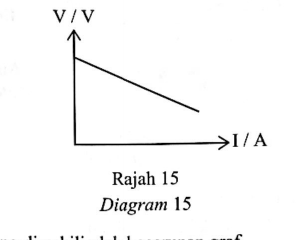
Diagram 15 shows a graph of potential difference, V against current, I that flows in a circuit. Name the physical quantity represented by the gradient of the graph.
Medium
A current of 20 A flows through an electric fan when connected to a 240 V power supply. Calculate the energy dissipated after 5 minutes?
Medium
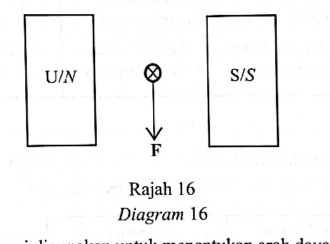
Diagram 16 shows force F acting on a current-carrying conductor between two permanent magnets. State the suitable rule used to determine the direction of the force F.
Easy
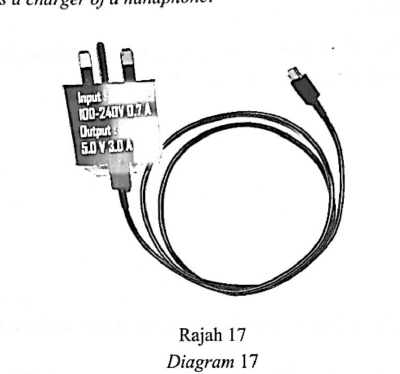
Diagram 17 shows a charger of a handphone. Given: Np number of turns of primary coil, Ns number of turns of secondary coil, Vp input voltage, Vs output voltage. Which pair is correct about the transformers in the charger?
Medium
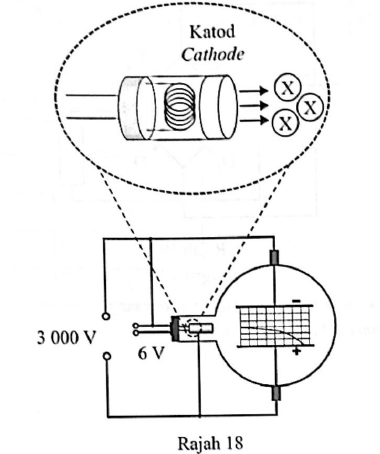
Diagram 18 shows the process that occurs at the cathode metal in a deflection tube. X particles are released from the metal surface of the cathode when the 6 V power supply is turned on. What is the particle X and name the process involved?
Easy
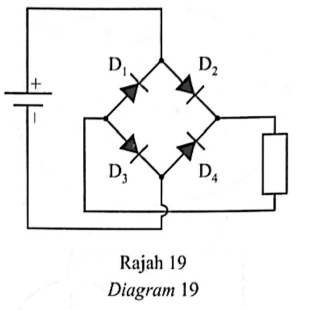
Diagram 19 shows four diodes connected to a direct current power supply. Which diodes are connected in reverse bias?
Medium
The following equation shows the decay of a Radium nucleus: ²²⁴₈₈Ra → ²¹⁶₈₈Po + y ⁴₂He + z ⁰₋₁e. What are the values of y and z?
Medium
What is photon energy?
Easy
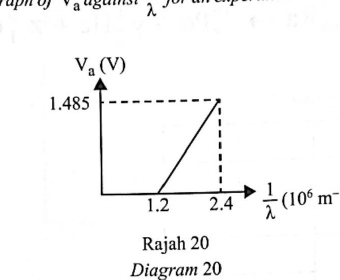
Diagram 20 shows a graph of Va against 1/λ for an experiment to determine the value of Planck's constant, h. Given: the gradient of the graph, m = hc/e; charge of a photoelectric, e = 1.60 × 10⁻¹⁹ C; speed of light in a vacuum, c = 3.00 × 10⁸ m s⁻¹. Based on Diagram 20 (Va = 1.485 V; 1/λ from 1.2 to 2.4 × 10⁶ m⁻¹), calculate the Planck's constant value, h.