Choose the row where the base quantity and its SI unit match.
Easy
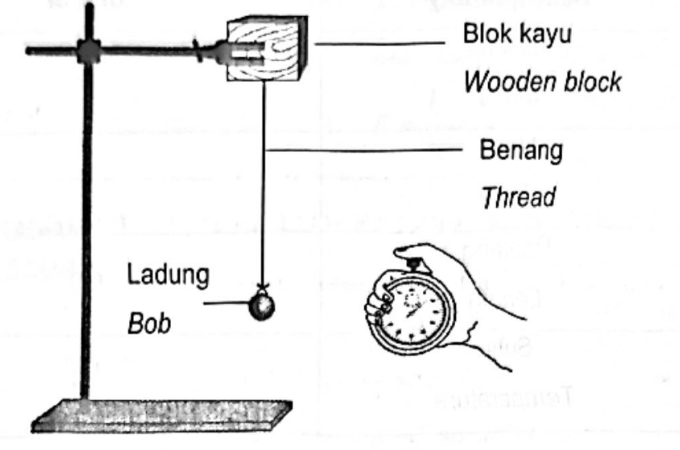
Diagram 1 shows apparatus to investigate how the length of a simple pendulum affects its period of oscillation. Choose the correct pair of manipulated, responding and constant variables.
Medium
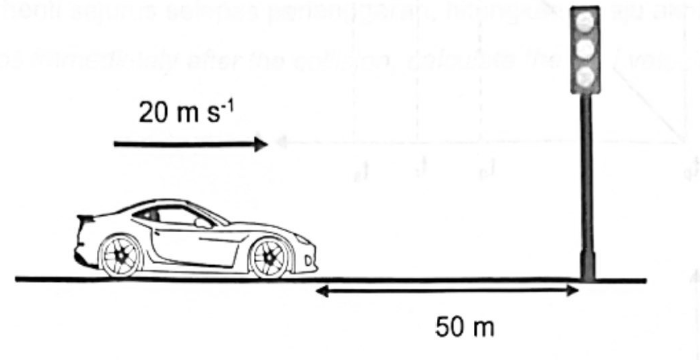
Diagram 2: a car moving at 20 m s⁻¹ slows down and stops completely after travelling 50 m. Find the acceleration of the car.
Medium
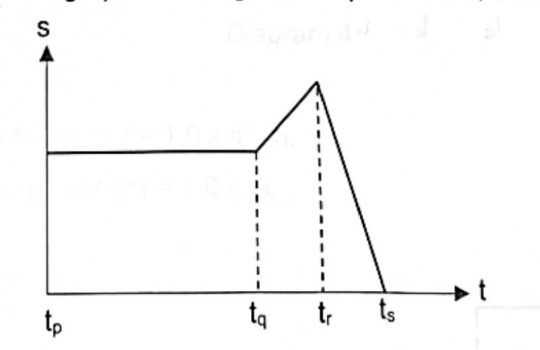
Diagram 3 is a displacement-time graph of an object: constant displacement from t_p to t_q, then displacement rises to t_r, then falls steeply to t_s. Which velocity-time graph represents the same motion?
Medium
Trolley X (6 kg, 3 m s⁻¹) collides elastically with trolley Y (3 kg, 2 m s⁻¹). Trolley X stops immediately after the collision. Calculate the final velocity of trolley Y.
Medium
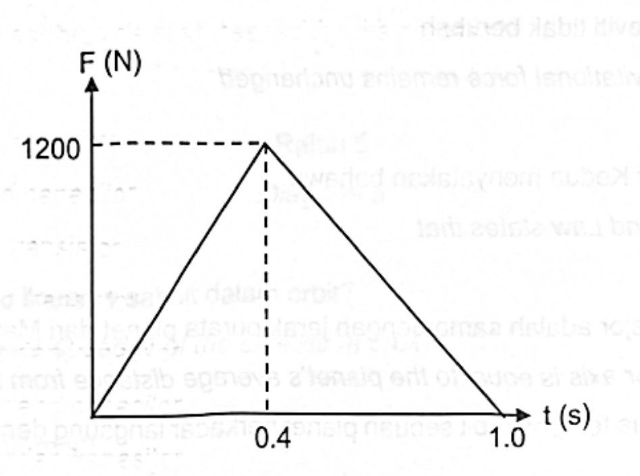
Diagram 4 is a force-time graph (triangle, peak 1200 N at 0.4 s, force falls to zero at 1.0 s). Find the impulse of the object at t = 1.0 s.
Medium
Two objects A and B, masses m_A and m_B, are a distance r apart and the gravitational force is F. What happens to the force if the mass of A is doubled and the distance is halved?
Medium
Choose the statement of Kepler’s Second Law.
Easy
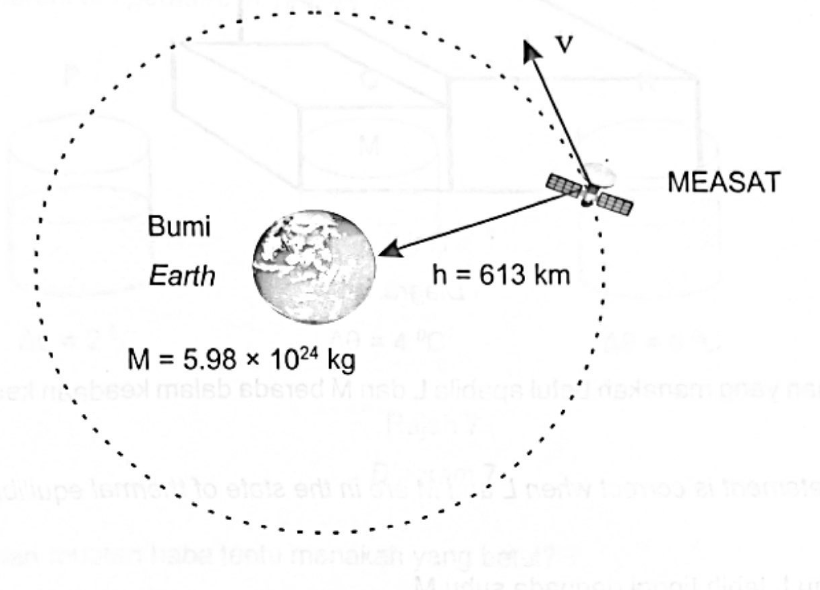
Diagram 5: Measat orbits 613 km above the Earth’s surface. Earth radius = 6.37 × 10⁶ m, Earth mass = 5.98 × 10²⁴ kg. Find the linear speed of the satellite in orbit.
Medium
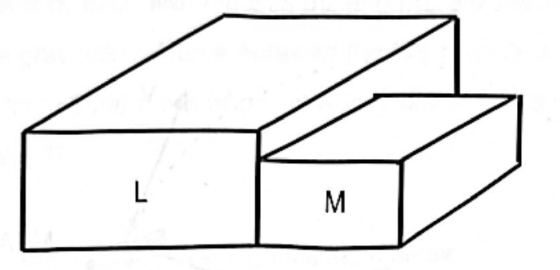
Diagram 6: copper blocks L (50 °C) and M (30 °C) are in thermal contact. Which statement is correct when L and M are in thermal equilibrium?
Medium
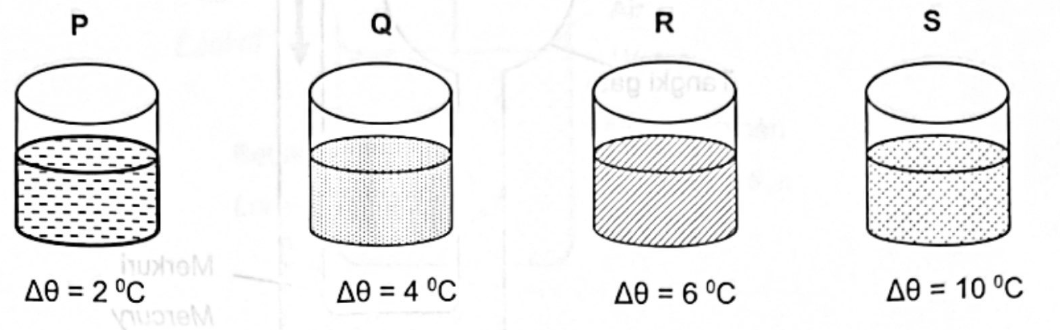
Diagram 7: four liquids P, Q, R and S of equal mass in identical containers are placed in sunlight for one hour. Temperature rises: P 2 °C, Q 4 °C, R 6 °C, S 10 °C. Which arrangement of specific heat capacity is correct?
Medium
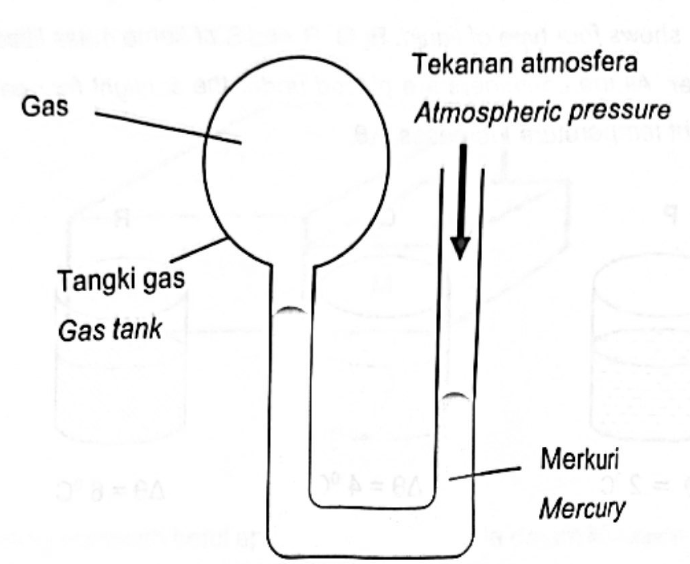
Diagram 8: a mercury manometer is connected to a gas tank. If atmospheric pressure is 76 cm Hg, which statement is true about the gas pressure in the tank?
Medium
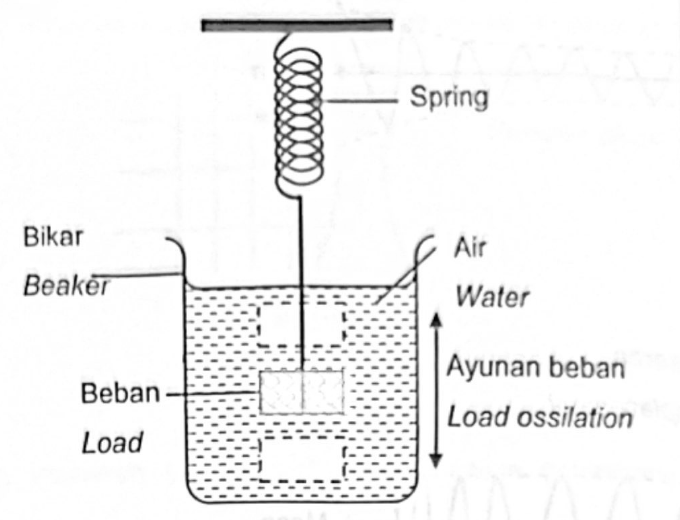
Diagram 9: a load hanging on a spring oscillates in water. Which displacement-time graph describes the motion of the load?
Medium
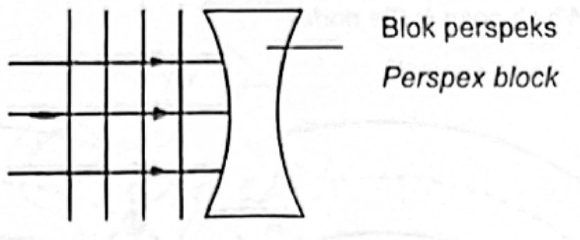
Diagram 10: water waves in a ripple tank pass through a perspex block. Which wavefront pattern can be observed?
Medium
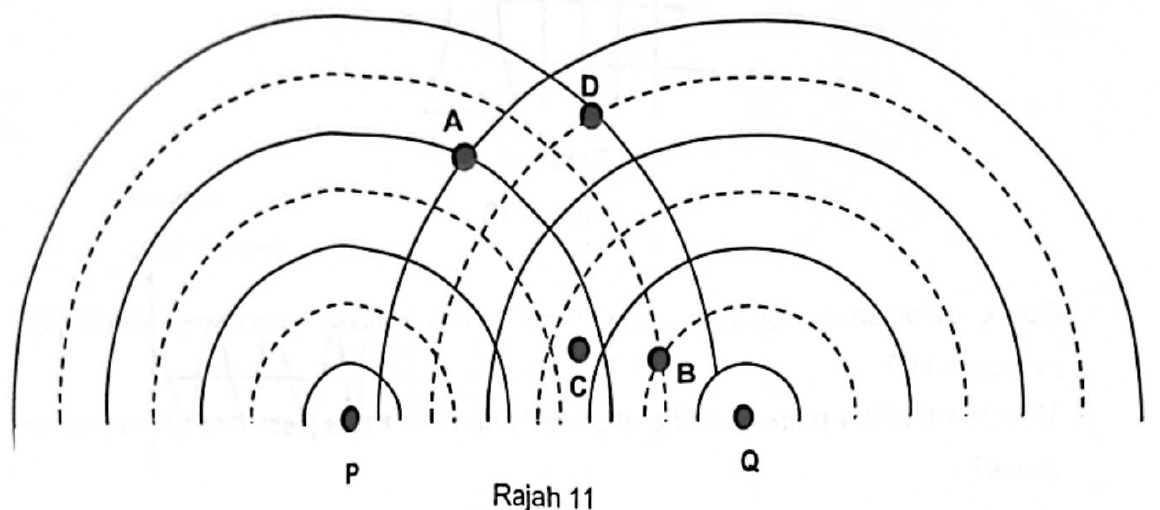
Diagram 11: interference pattern of water waves from coherent sources P and Q. Which point (A, B, C or D) is the node?
Medium
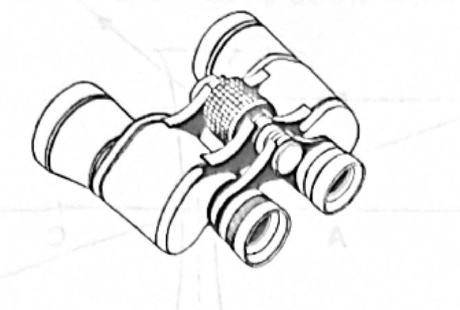
Diagram 12: binoculars use a prism to see distant objects. What is the physics concept used?
Easy
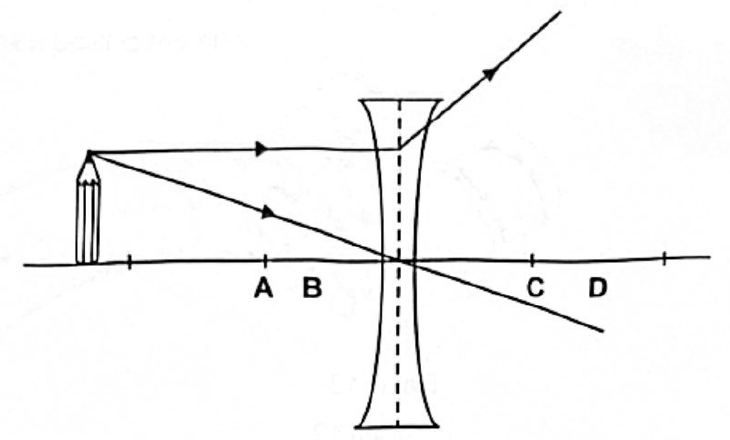
Diagram 13: incomplete ray diagram for a concave lens. Among positions A, B, C and D, which is the position of the image formed?
Medium
The focal lengths of the objective lens and eyepiece of a light microscope are f_o and f_m. The distance between the lenses is L. Which relationship is correct at normal adjustment?
Medium
The focal length of a convex lens is f. Where should the object be placed for its image to be the same size as the object?
Medium
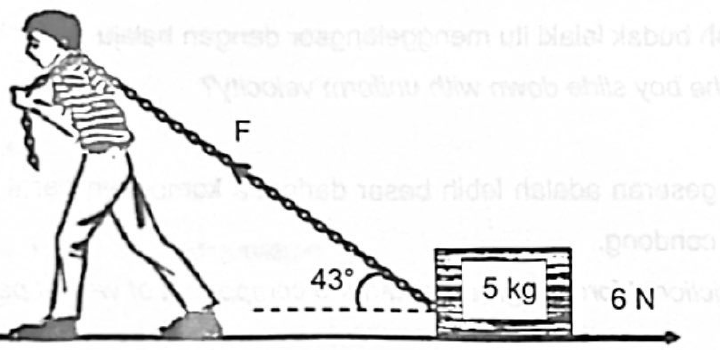
Diagram 14: a 5 kg box is pulled by force F at 43° above the rough surface. Friction is 6 N and the box accelerates at 2.42 m s⁻². What is F?
Medium
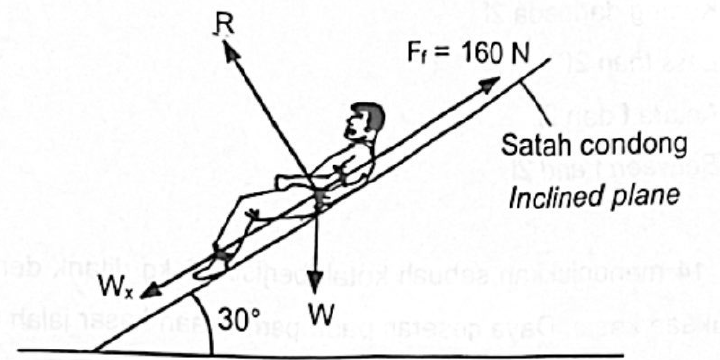
Diagram 15: a boy of weight 320 N slides down a 30° inclined plane at uniform velocity. W_x is the weight component parallel to the plane and F_f = 160 N is friction. Why does the boy slide at uniform velocity?
Medium
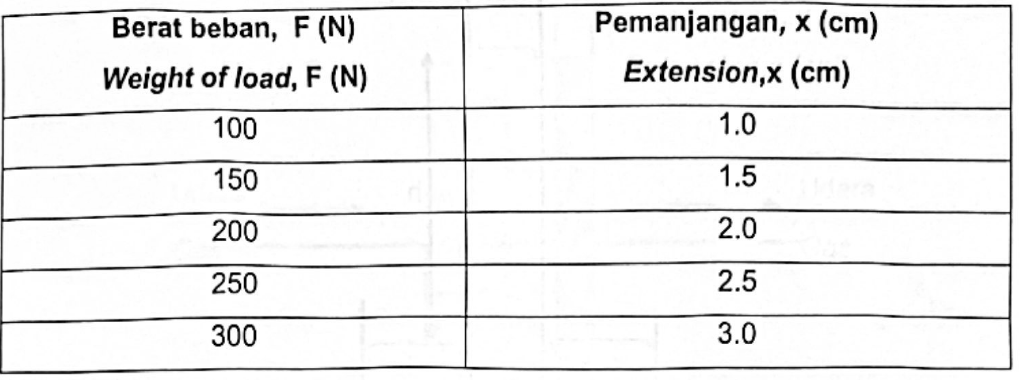
Table 1 gives weight of load F (100–300 N) and extension x (1.0–3.0 cm) of a spring with original length 10.0 cm. What is the constant variable?
Medium
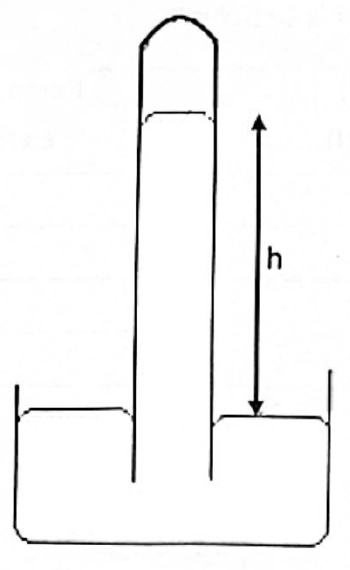
Diagram 16 shows a simple mercury barometer. What physical quantity does h represent?
Medium
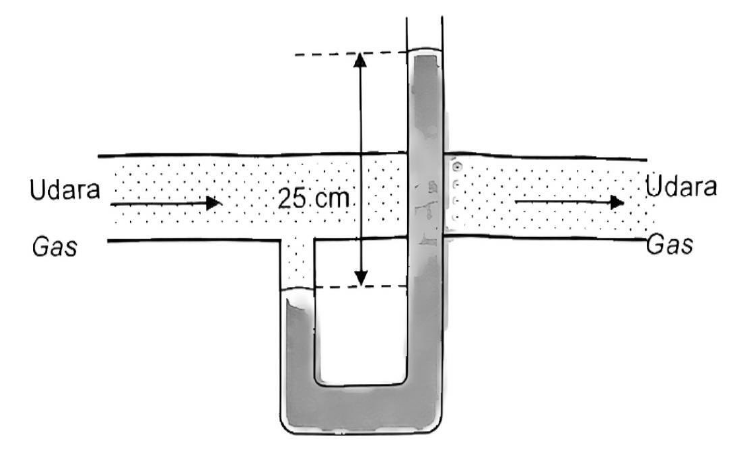
Diagram 17: a mercury manometer (height difference 25 cm) measures gas pressure in a pipe. Atmospheric pressure is 76 cm Hg. Find the gas pressure in Pa. [ρ = 13600 kg m⁻³, g = 9.81 m s⁻²]
Medium
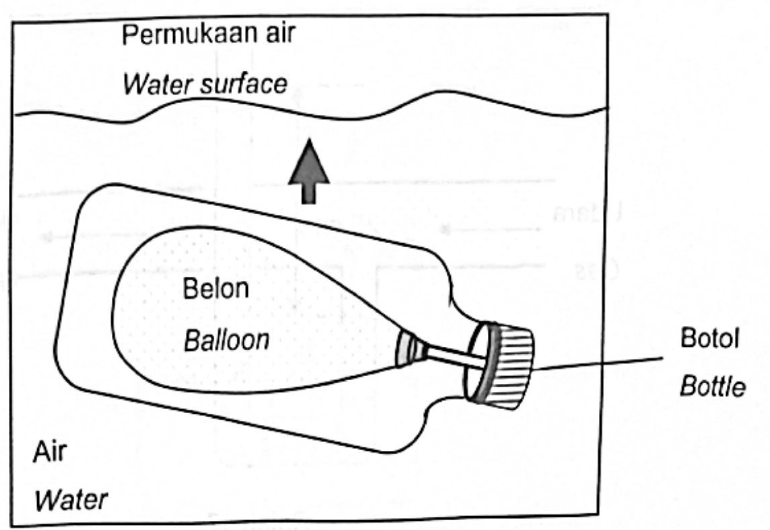
Diagram 18: a bottle containing a balloon accelerates upwards towards the water surface. Which statement is correct?
Easy
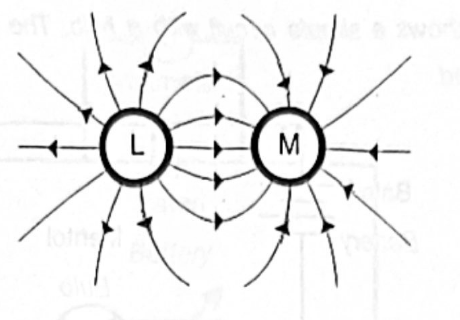
Diagram 19 shows the electric field lines for a pair of charged particles L and M. What is the charge of L and M?
Medium
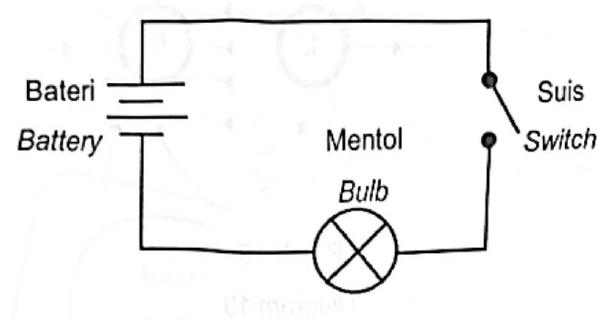
Diagram 20: a simple circuit with a bulb that lights brightly when the switch is closed. Which statements are false about the bulb? I The heating filament is made of copper. II The filament is coiled. III The filament is made of high resistivity material. IV A thick filament produces brighter light.
Medium
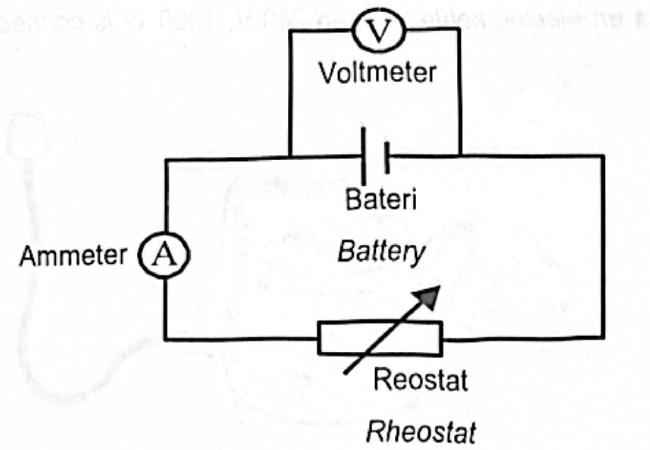
Diagram 21: a circuit with a dry cell that has internal resistance. What happens to the ammeter and voltmeter readings when the rheostat is adjusted to reduce the resistance?
Medium
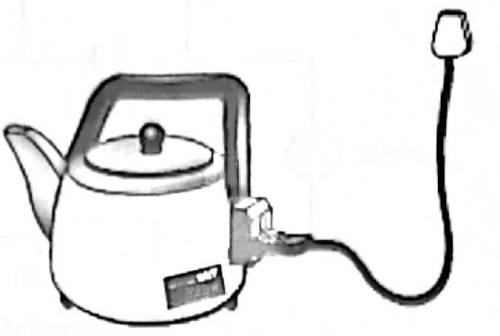
Diagram 22: an electric kettle labelled 240 V, 1000 W is connected to a 240 V supply. What is the electric energy produced in 1 second?
Medium
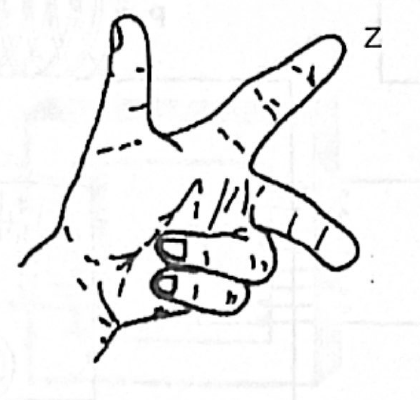
Diagram 23 shows a left-hand gesture representing Fleming’s Left-hand Rule. What direction does Z represent?
Easy
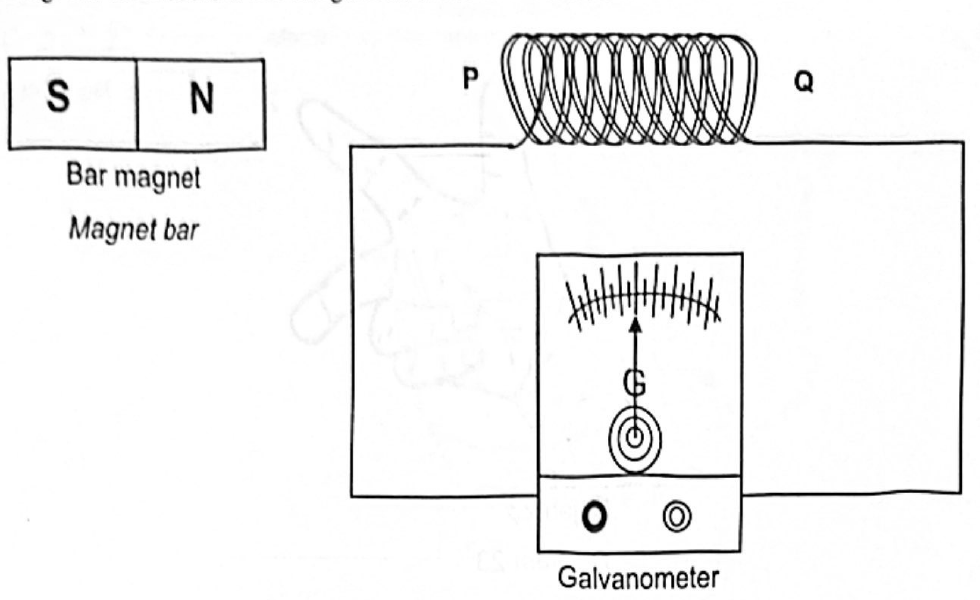
Diagram 24: a bar magnet (S N) in front of a solenoid connected to a galvanometer. Which action produces a south pole at Q?
Medium
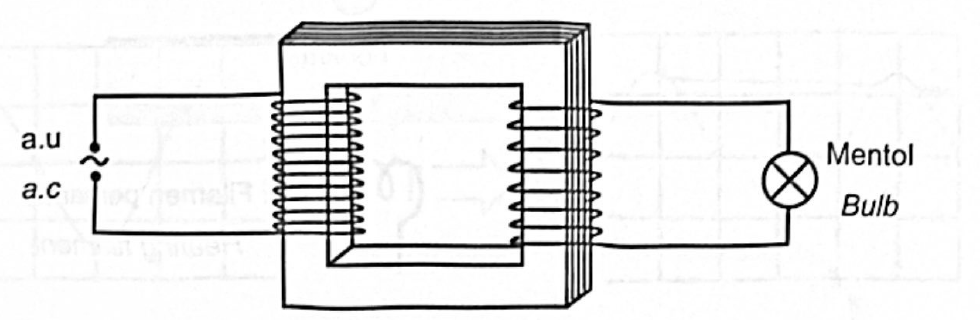
Diagram 25: a simple transformer with an a.c. supply lights a bulb at normal brightness. What happens when the a.c. input is replaced with a dry cell of higher voltage?
Medium
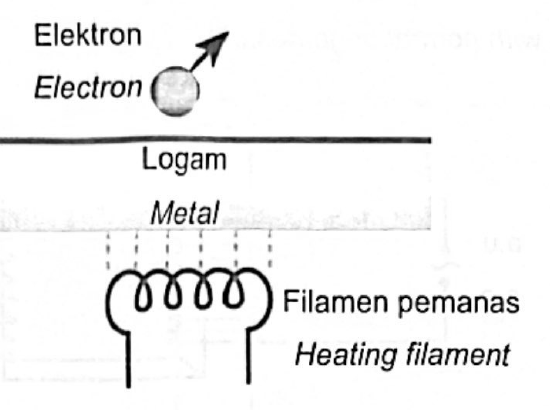
Diagram 26: thermionic emission in a vacuum tube. What happens to the electrons when the Extra High Tension (E.H.T.) power supply is switched on?
Medium
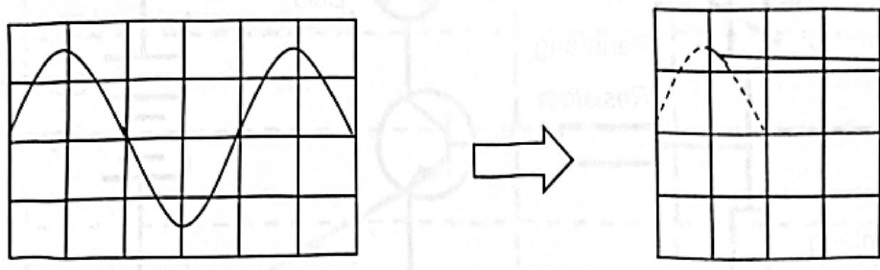
Diagram 27: CRO displays show an alternating current converted to a direct current. What electronic devices are needed for the process?
Medium
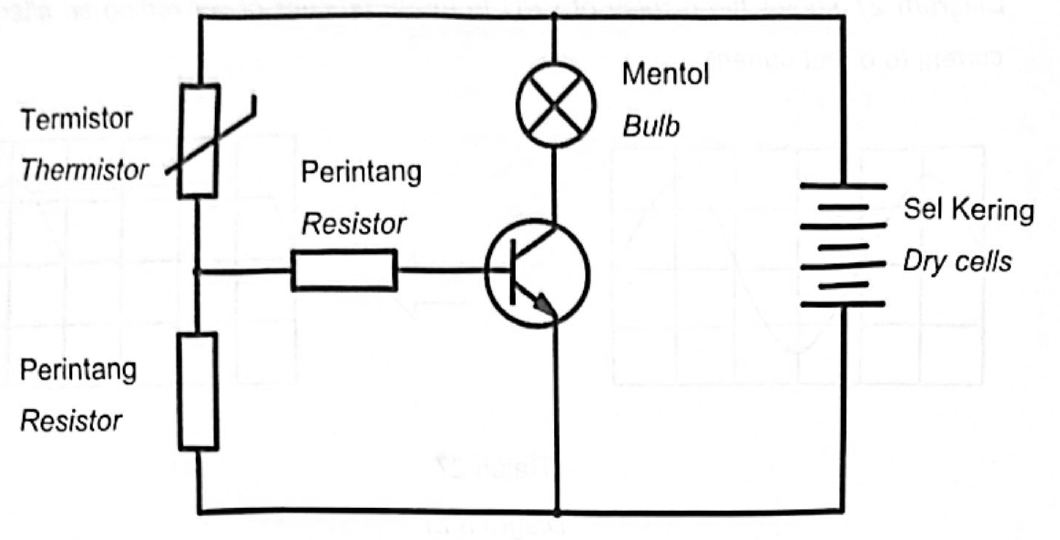
Diagram 28: a transistor circuit with a thermistor and a bulb. What happens to the resistance of the thermistor and to the bulb at room temperature?
Medium
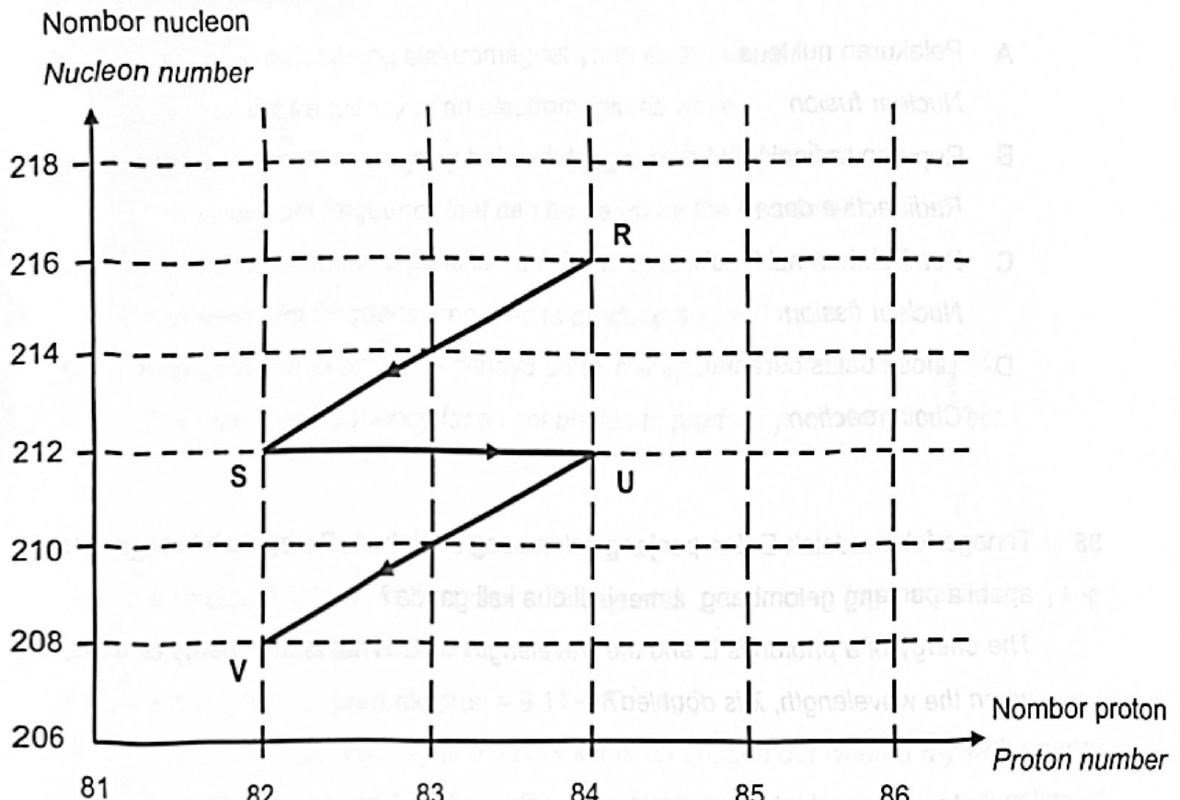
Diagram 29 shows the decay series of nucleus R (nucleon 216, proton 84) to nucleus V (nucleon 208, proton 82) through S and U. How many alpha and beta particles are emitted?
Medium
What is the nuclear reaction that produces energy on the surface of the Sun?
Easy
The energy of a photon is E and its wavelength is λ. What is the energy of the photon when the wavelength is doubled?
Medium
What is the meaning of threshold frequency?
Easy
Light of energy 1.213 × 10⁻¹⁸ J shines on a platinum surface with work function 6.35 eV. Find the maximum velocity of the emitted photoelectron. [1 eV = 1.6 × 10⁻¹⁹ J, electron mass = 9.11 × 10⁻³¹ kg]