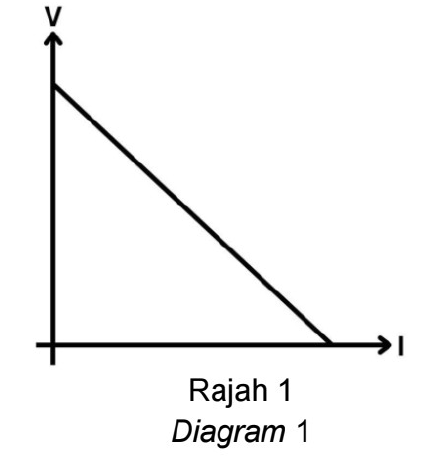
Diagram 1 shows graph V against I. The graph is a straight line with a positive V-intercept and a negative gradient, meeting the I axis. Which of the following is the correct relationship?
Medium
Which physical quantity is equal to displacement / time?
Easy
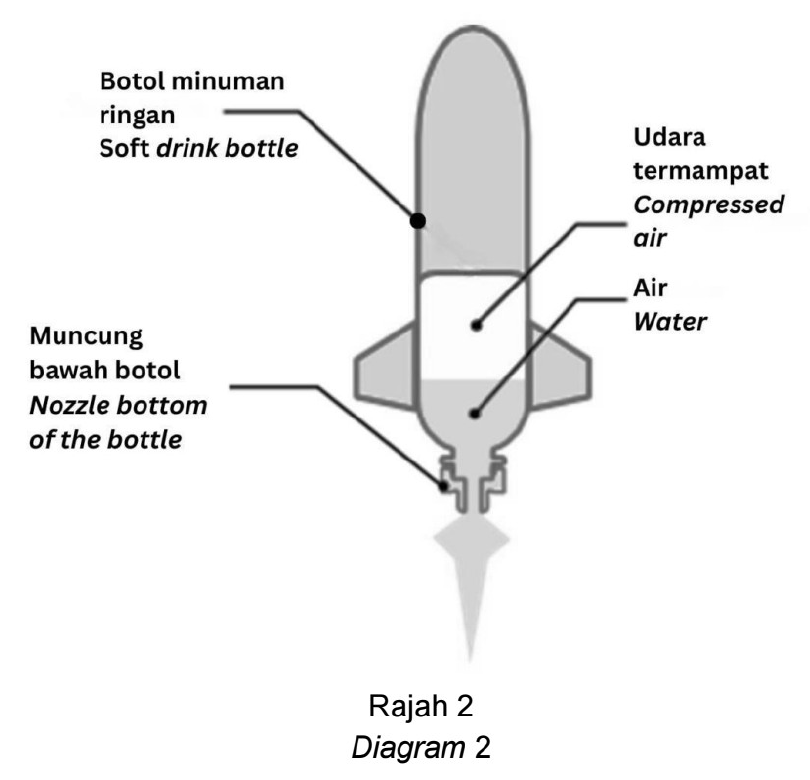
Diagram 2 shows a water rocket that is launched upwards. As the water rocket is released, water spurts out at high speed through the nozzle at the bottom. Which of the following statements is true about the motion of the water rocket?
Medium
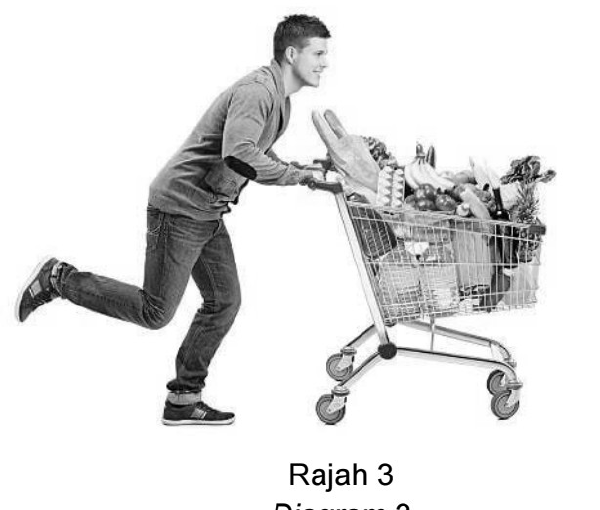
Diagram 3 shows a worker pushes a trolley containing goods with a mass of 60 kg along a horizontal surface with a force of 120 N. If the frictional force acting on the horizontal surface is 15 N, what is the acceleration of the trolley?
Medium
Which of the following situations produces a small impulsive force?
Medium
A satellite is at a height, h m above the earth's surface experience gravitational acceleration, g, 8.95 m s⁻². What is height, h? [Gravitational constant, G = 6.67 × 10⁻¹¹ N m² kg⁻²] [Mass of the Earth, M = 5.97 × 10²⁴ kg] [Radius of the Earth, R = 6.37 × 10⁶ m]
Medium
'The square of orbital period of any planet is directly proportional to the cube of the radius of its orbit'. The above statement explains about
Easy
Geostationary satellites are in a special orbit known as Geostationary Earth Orbit. Which of the following statements describes about geostationary satellites?
Medium
The patient's body temperature can be determined by a doctor when thermal equilibrium occur between patient's body and clinical thermometer. What is the meaning of thermal equilibrium?
Easy
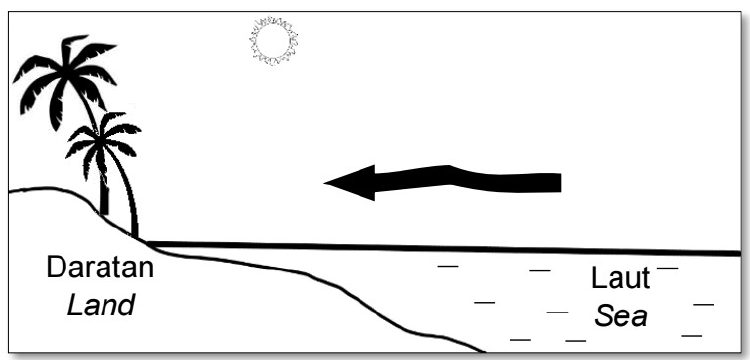
Diagram 4 shows the formation of the sea breeze. Which statement is correct?
Medium
A heat energy of 2448000 J is used to change the state of 900 g of liquid at a temperature of 100 °C to gas at a temperature of 100 °C. What is the latent heat of vaporization of that liquid?
Medium
Resonance occurs when an oscillating system is subjected to an external force that has the same frequency as the natural frequency of the oscillating system. Which statement correctly describes the phenomenon of resonance?
Medium
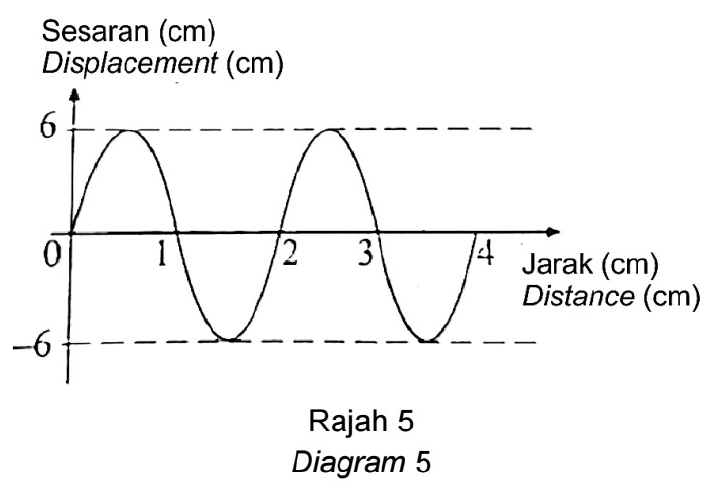
Diagram 5 shows a displacement-distance graph of a transverse wave (displacement in cm from -6 to 6; distance in cm from 0 to 4, two complete waves). What is the amplitude and wavelength of the wave in cm?
Medium
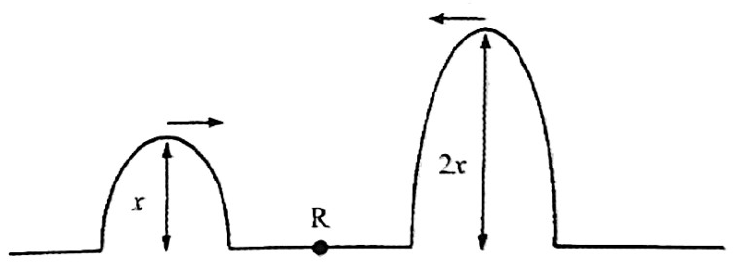
Diagram 6 shows two waves moving at the opposite direction and meet at point R (one pulse of height x, the other of height 2x). What is the resultant amplitude of the wave at point R?
Medium
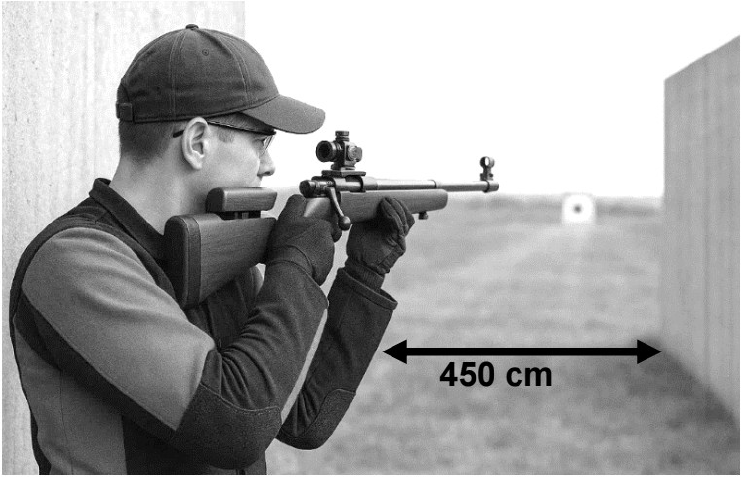
Diagram 7 shows the position of a shooter and a concrete wall when the shooter shoots; the wall is 450 cm from the shooter. What is the time interval between the shooting sound and its echo heard by the shooter? [The speed of the sound in air is 330 m s⁻¹]
Medium
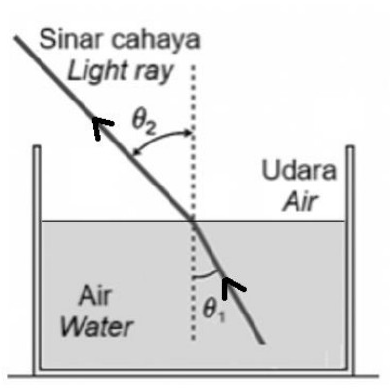
Diagram 8 shows a light ray propagating from water to air. If the angle of incidence, θ₁ is 40°, calculate the angle of refraction, θ₂ in air. [Refractive index of air, n = 1.00, refractive index of water, n = 1.33]
Medium
Which of the following is true about the conditions for total internal reflection to occur?
Medium
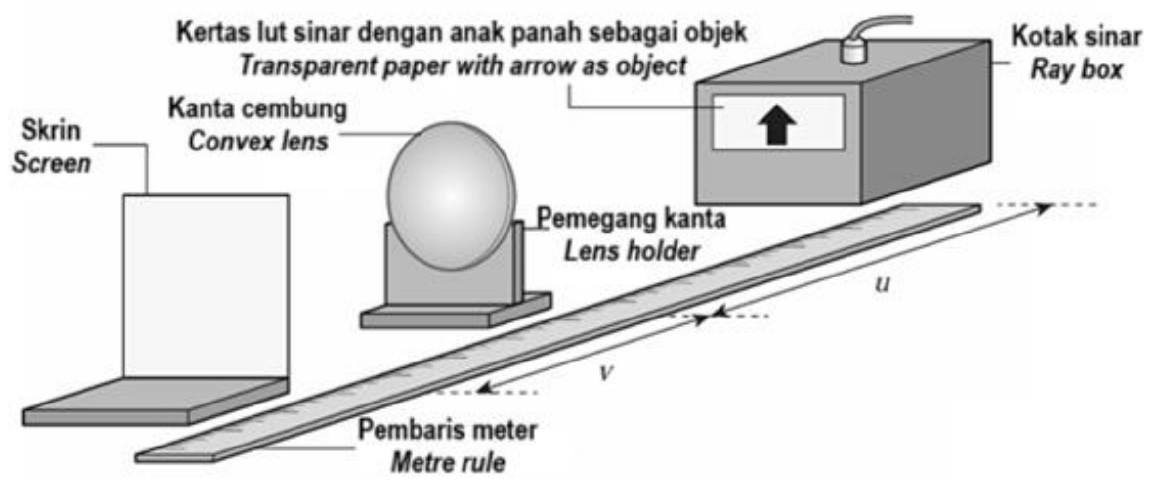
Diagram 9 shows an experimental setup to detect the position and characteristics of images formed by a convex lens (ray box with object, convex lens, screen, metre rule). When the screen is moved forward and backward, no image is formed on the screen. What is the most suitable conclusion?
Medium
Which of the following ray diagrams shows the correct reflection of light from a curved mirror?
Medium
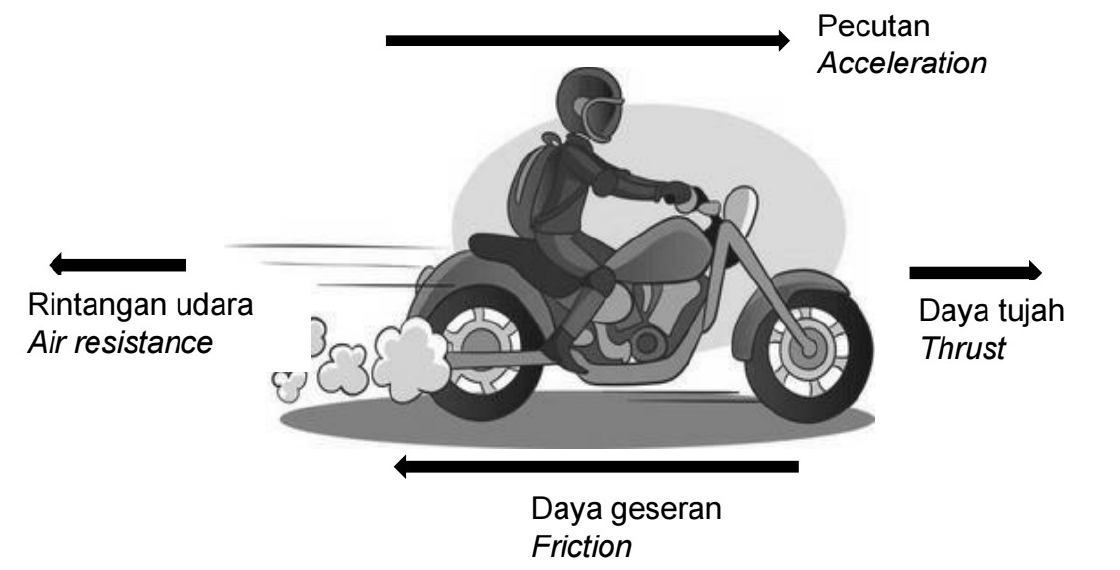
Diagram 10 shows the horizontal forces acting on an accelerating motorcycle (acceleration and thrust to the right; air resistance and friction to the left). Which of the following statements is true? I The resultant force is not zero. II Thrust equal to air resistance. III The motorcycle is not in equilibrium of force. IV Air resistance + frictional force > thrust force.
Medium
What is resolution of forces?
Easy
Which graph shows the correct relationship between the force, F and the extension, x of a spring?
Easy
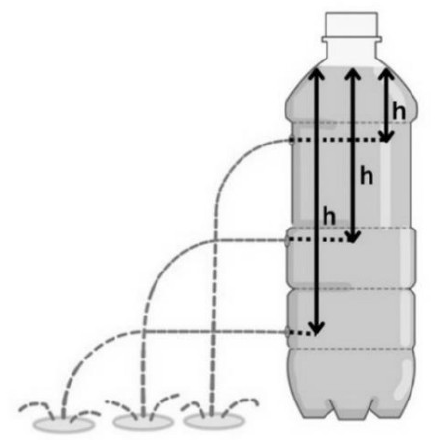
Diagram 11 shows water spurts from holes in different positions on a bottle filled with water to study the factors that affect liquid pressure. Diagram 11 shows the pressure of liquid depends on…
Easy
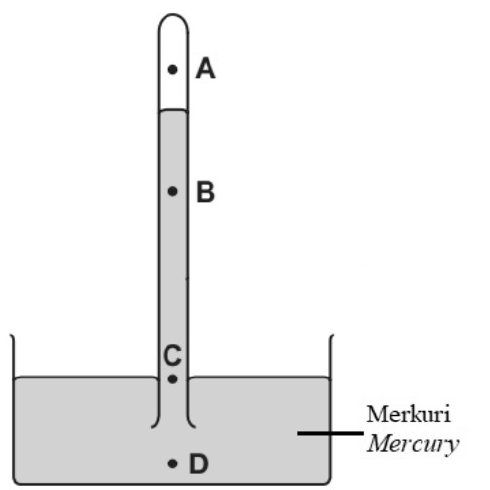
Diagram 12 shows a simple mercury barometer that shows atmospheric pressure at sea level (points A above the mercury in the tube, B in the mercury column, C at the mercury surface level in the dish, D below the surface in the dish). At what point does the pressure exceed the atmospheric pressure at sea level?
Medium
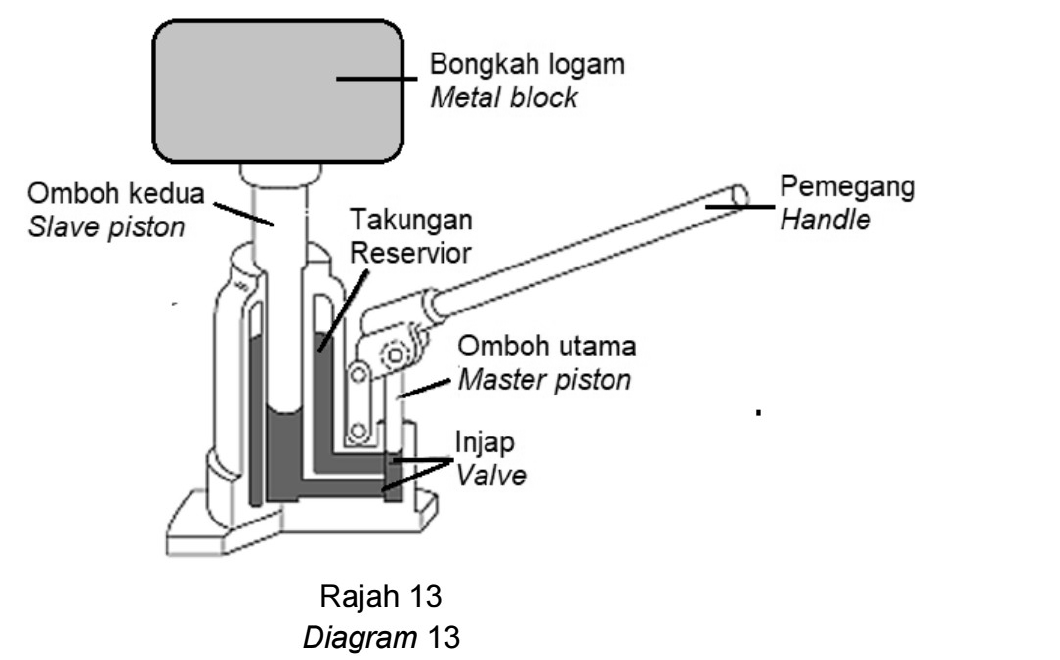
Diagram 13 shows a hydraulic jack used to lift a metal block of weight 4000 N. If the ratio between the surface area of the master piston and the slave piston is 1 : 10, calculate the force, F, exerted on the master piston.
Medium
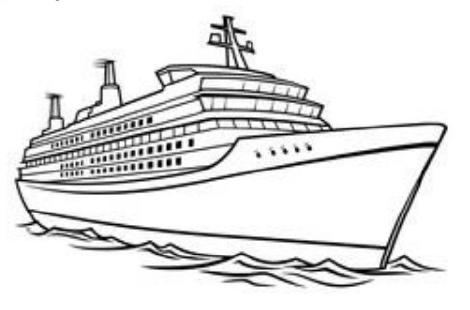
Diagram 14 shows a heavy ship that can float on the surface of sea water. Which of the following principles correctly explains the situation in Diagram 14?
Easy
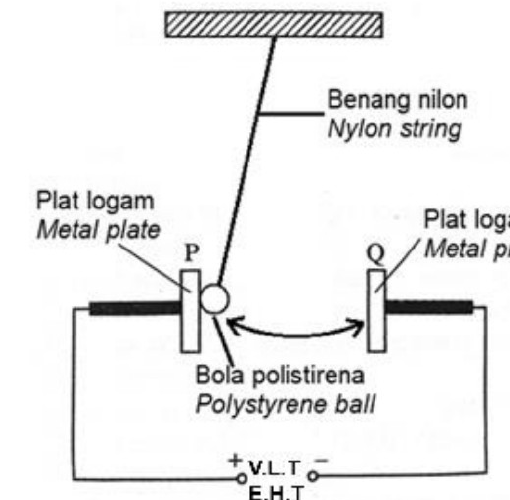
Diagram 15 shows a metal coated polystyrene ball oscillating between metal plates P and Q in a strong electric field (E.H.T. supply). Which of the following statements will increase the oscillation frequency of the polystyrene ball?
Medium
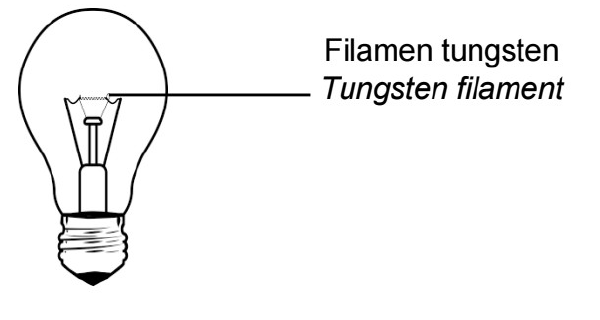
Diagram 16 shows a bulb that uses a coil of tungsten wire as a filament. What is the function of tungsten wire coil?
Medium
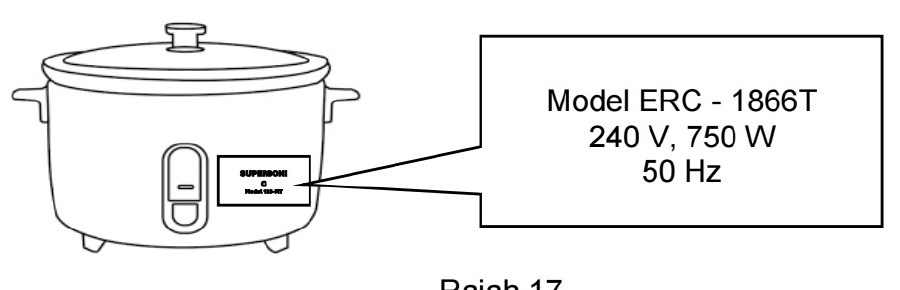
Diagram 17 shows a rice cooker labelled 240 V, 750 W (Model ERC-1866T, 50 Hz). The labelled of 240 V, 750 W means that the rice cooker uses ...
Medium
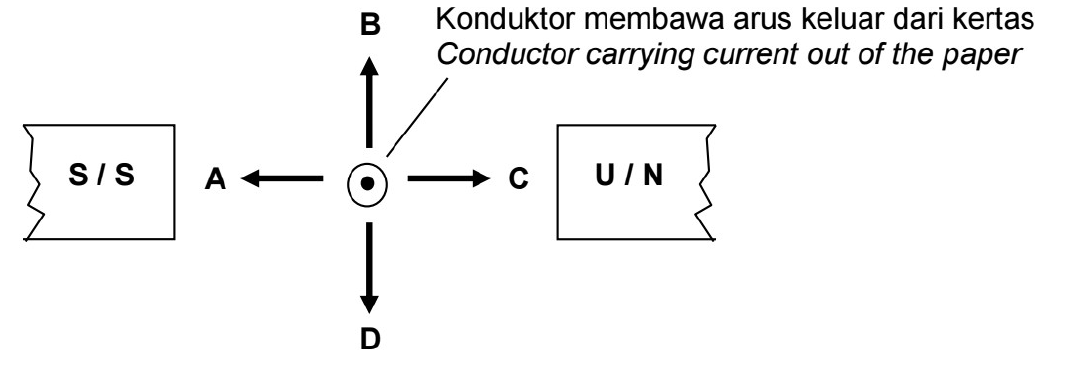
Diagram 18 shows a conductor carrying current in a magnetic field (current out of the paper; S pole on the left, N pole on the right). In which direction will the conductor move? (A left, B up the page, C right, D down the page)
Medium
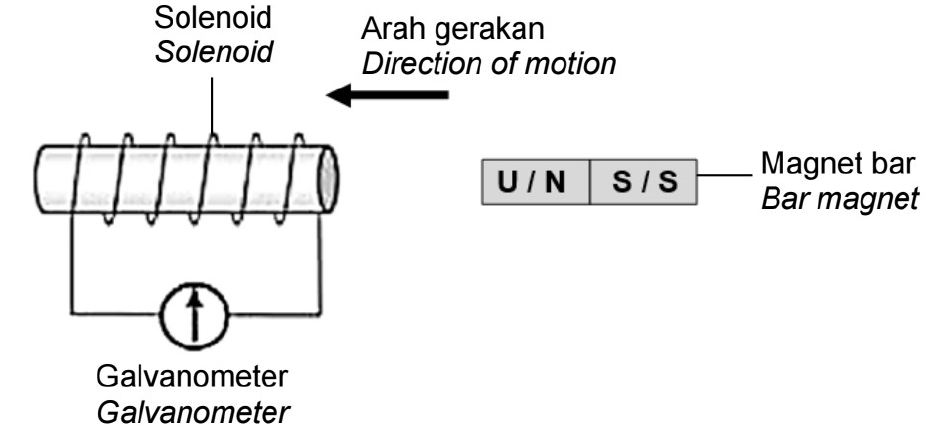
Diagram 19 shows a moving bar magnet approaching a solenoid. It was found that the galvanometer indicator pointer will be deflected. The direction of deflection of the galvanometer pointer can be determined by …
Medium
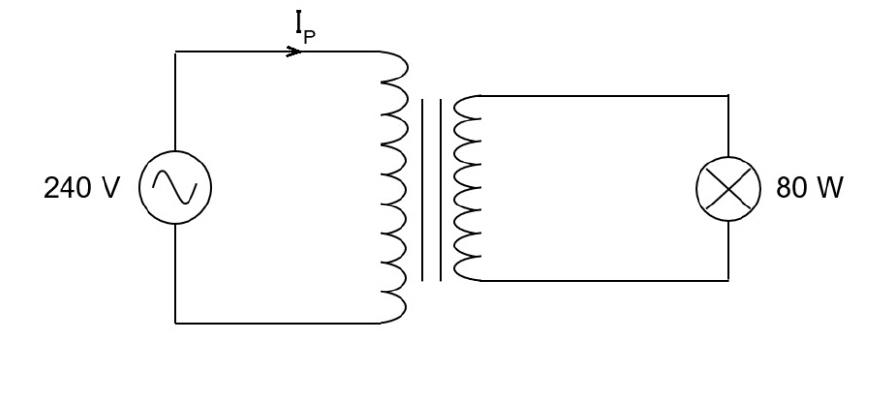
Diagram 20 shows an ideal transformer used to light up a bulb at normal brightness (primary supply 240 V; bulb 80 W). What is the value of the primary current, Ip?
Medium
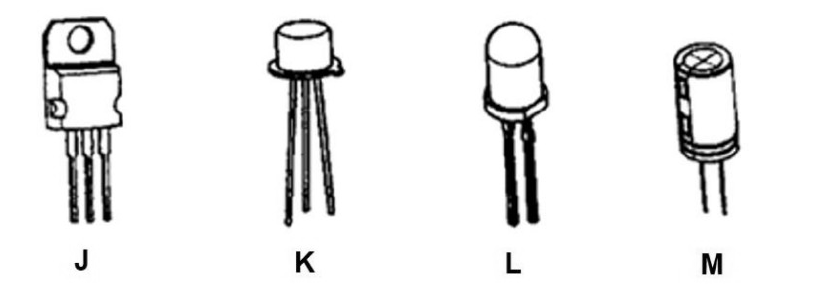
Diagram 21 shows four types of electronic components (J, K, L, M). Which of the following statements correctly describes the components J, K, L and M? I Components J and K are used as current amplifiers. II Components L and M are used as current amplifiers. III Components J and K are used as automatic switches. IV Components L and M are used as automatic switches.
Medium
Which of the following is a cathode ray?
Easy
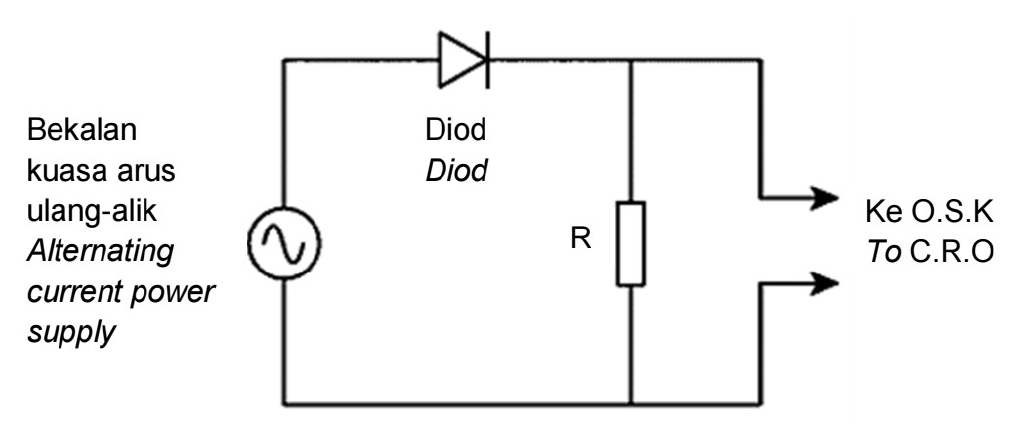
Diagram 22 shows a half wave rectification circuit connected to an alternating current power supply and a cathode ray oscilloscope (C.R.O.). Which is a sketch of the change in the display of a cathode ray oscilloscope screen if a capacitor, C is connected in parallel with a resistor, R?
Medium
What is the meaning of the half-life of a radioactive nuclei?
Easy
Why is a nuclear reactor equipped with control rods?
Medium
Which of the following describes the photoelectric effect?
Medium
A metal has a work function of 3.2 eV. Light of frequency 8.5 × 10¹⁴ Hz is shone on the metal. What is the maximum kinetic energy of the emitted electron? [h = 6.63 × 10⁻³⁴ J s, and 1 eV = 1.6 × 10⁻¹⁹ J]