Write your answer on paper. Then open the answer to check it.
Section A
Diagram 1 shows an instrument to measure gas pressure (a U-tube containing coloured water, connected to a gas container; the height difference between the two water levels is h).
Medium4 marks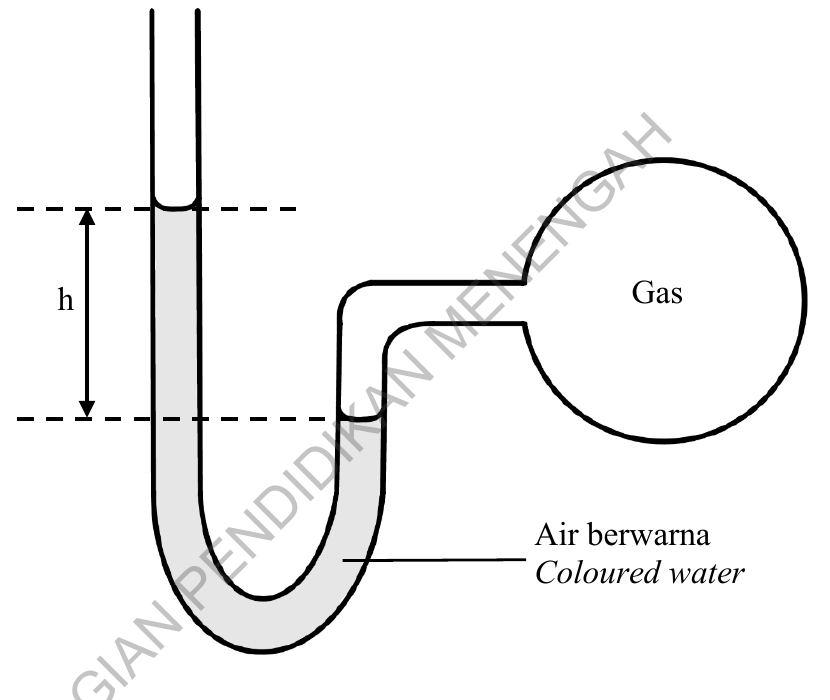
- (a)
Name the instrument in Diagram 1.
[1] - (b)
In Diagram 1, mark the direction of the gas pressure acting on the coloured water using an arrow.
[1] - (c)
Predict what will happen to h if the coloured water is replaced with mercury. Give reason for your answer.
[2]
Diagram 2 shows MEASAT-3 and RazakSAT orbiting the earth (MEASAT-3 in a higher orbit than RazakSAT).
Medium5 marks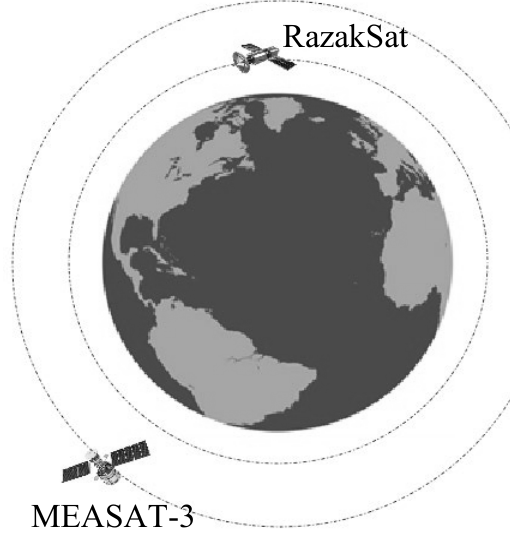
- (a)
State the type of satellite for RazakSAT.
[1] - (b)
Give two differences between RazakSAT and MEASAT-3.
[2] - (c)
RazakSAT has experienced a technical problem that has caused its speed to increase. Predict what happen to the satellite.
[2]
Diagram 3 shows a transformer with 80% efficiency (soft iron core, primary 240 V a.c. with primary current IP = 0.2 A, secondary 12 V).
Medium6 marks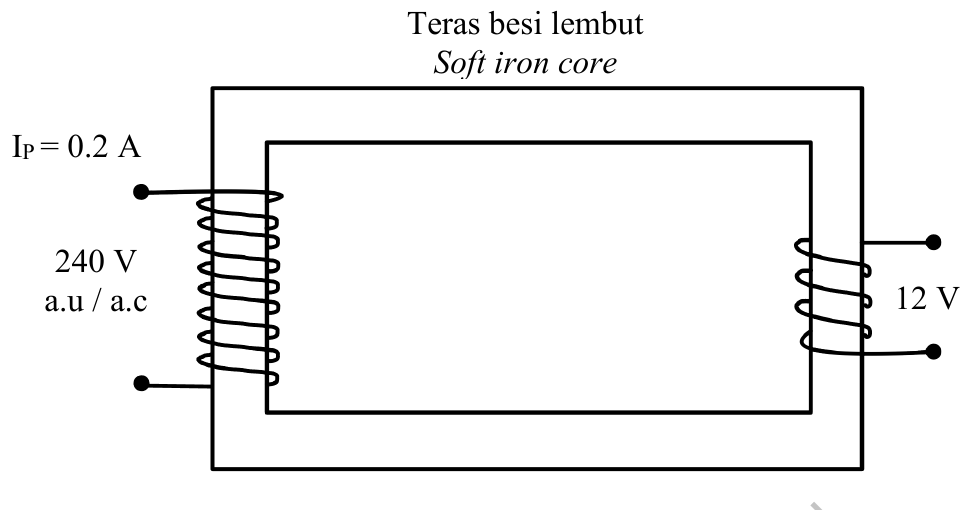
- (a)(i)
Name the type of transformer in Diagram 3.
[1] - (a)(ii)
Give one reason why the efficiency of the transformer is less than 100%.
[1] - (b)(i)
Calculate the input power.
[2] - (b)(ii)
Calculate the output current.
[2]
Diagram 4 shows the structure of a nuclear reactor in which the nuclear fission takes place (reactor inside a thick concrete wall, with water/steam pipes).
Medium9 marks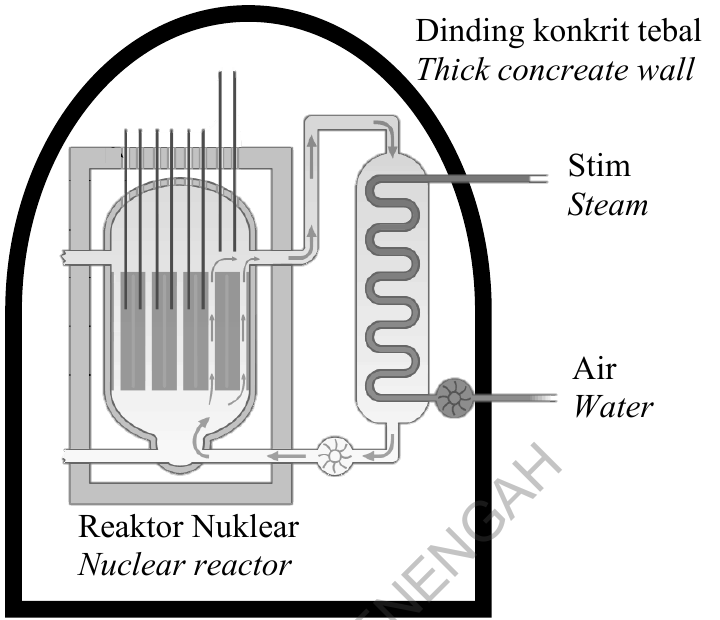
- (a)
What is the meaning of nuclear fission?
[1] - (b)(i)
Nuclear fission reaction occurs continuously in the nuclear reactor. Name the reaction.
[1] - (b)(ii)
What is the component in a nuclear reactor to control the reaction rate in 4(b)(i)? Explain your answer.
[2] - (c)(i)
Table 1 shows the total mass before and after a nuclear reaction: before 236.0329 a.m.u; after 235.8665 a.m.u. Calculate the mass defect in kg. [1 a.m.u = 1.66 × 10⁻²⁷ kg]
[3]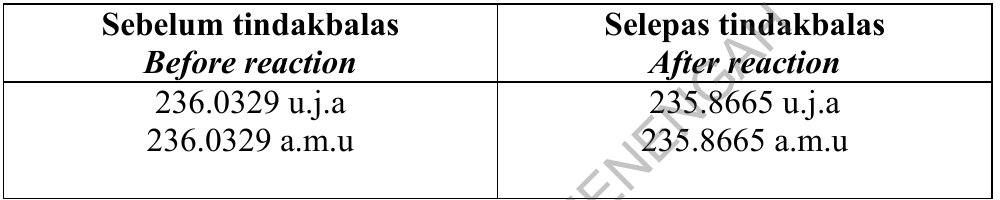
- (c)(ii)
Calculate the amount of energy released.
[2]
Diagram 5.1 and Diagram 5.2 show two identical cows pulling a load and produce different resultant forces. Diagram 5.1: pulling force F = 2000 N, frictional force FR = 800 N, acceleration a = 0.5 m s⁻². Diagram 5.2: F = 2000 N, FR = 1200 N, a = 0.2 m s⁻².
Medium9 marks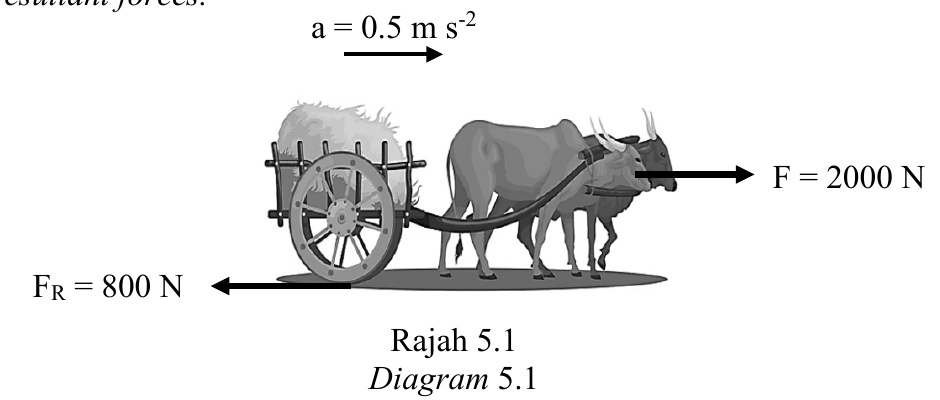
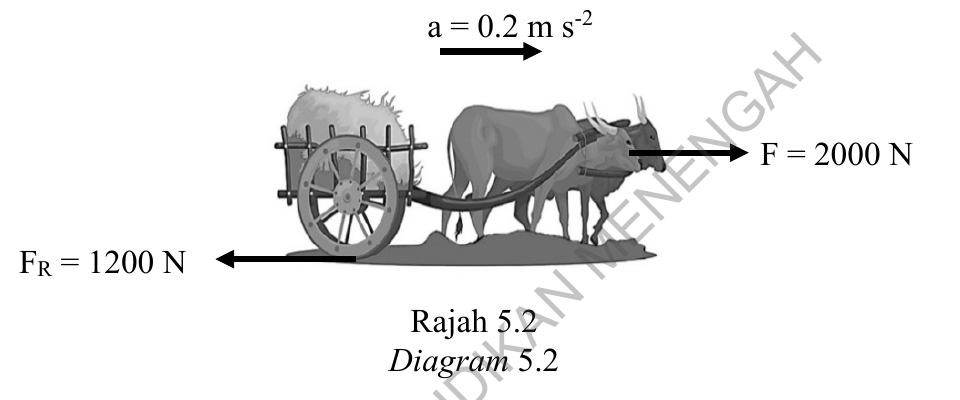
- (a)
What is meant by resultant force?
[1] - (b)(i)
Observe Diagram 5.1 and Diagram 5.2. Compare the frictional force, FR.
[1] - (b)(ii)
Compare the acceleration.
[1] - (b)(iii)
Compare the resultant force.
[1] - (c)(i)
Based on your answer in 5(b), relate the frictional force and the resultant force.
[1] - (c)(ii)
Relate the resultant force and the acceleration.
[1] - (d)(i)
Diagram 5.3 shows a car parked on a sloped road (weight W acting downwards). What is the resultant force acting on the car?
[1]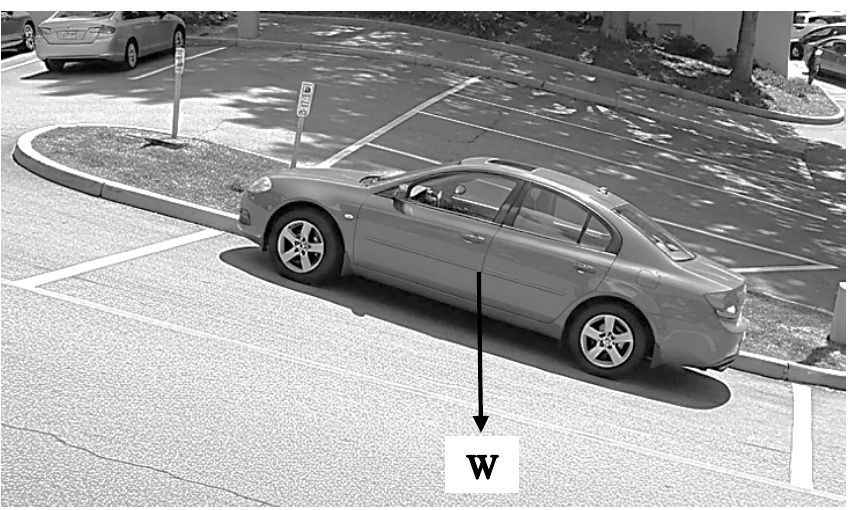
- (d)(ii)
In the space below, sketch the triangle of forces of the weight, W, normal reaction, R and frictional force FR.
[2]
Diagram 6.1 shows an optical biometric fingerprint scanner that uses a convex lens. Light is refracted when entering the lens. Diagram 6.2 and Diagram 6.3 show two optical scanners with different convex lenses (Diagram 6.2 has a thicker, more curved lens than Diagram 6.3).
Medium9 marks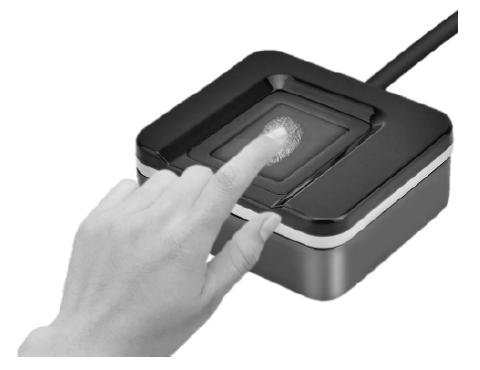
- (a)
State the physical quantity that changes when light is refracted.
[1] - (b)(i)
Based on Diagram 6.2 and Diagram 6.3, compare the radius of curvature of the lens.
[1]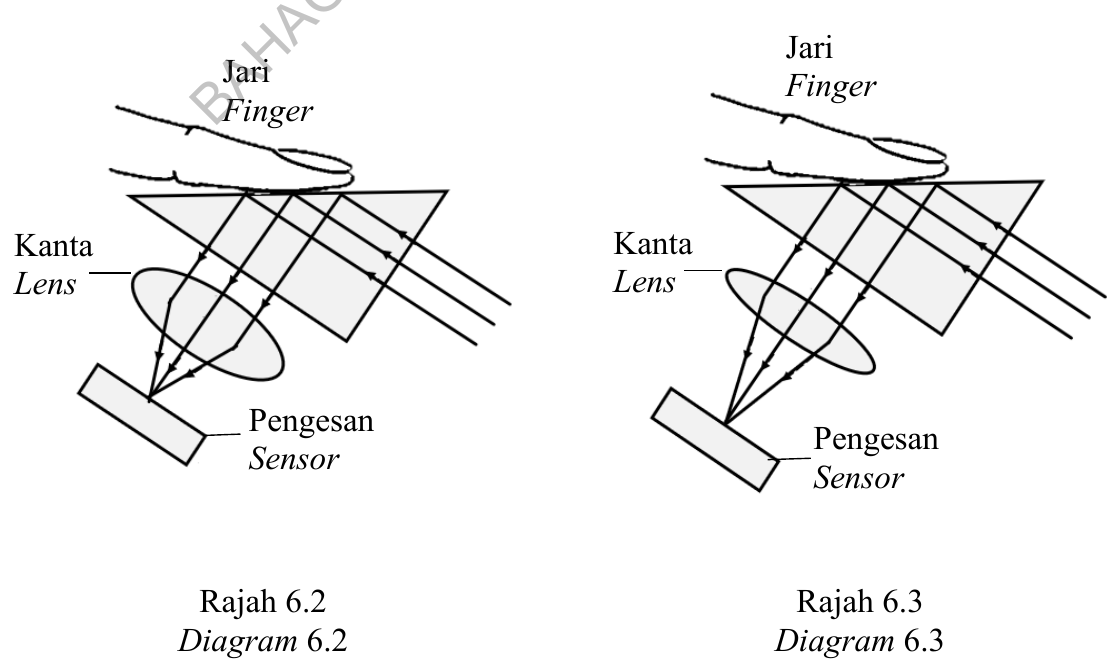
- (b)(ii)
Compare the thickness of the lens.
[1] - (b)(iii)
Compare the focal length of the lens.
[1] - (c)(i)
Based on your answer in 6(b), state the relationship between the radius of curvature of the lens and the thickness of the lens.
[1] - (c)(ii)
State the relationship between the thickness of the lens and the focal length of the lens.
[1] - (d)(i)
Diagram 6.4 shows a lens that has refractive index, n 1.50. Calculate the refracted angle, r, if the angle of incidence, i is 30°.
[2]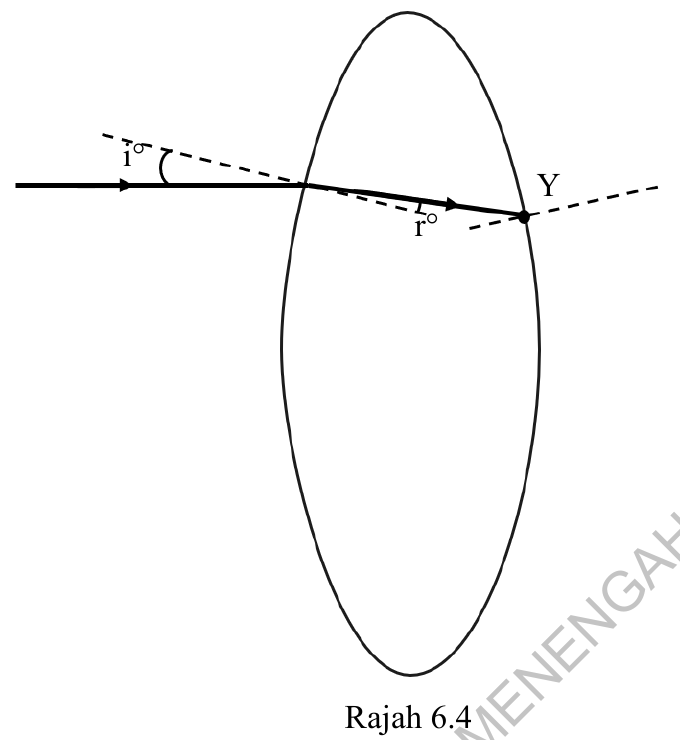
- (d)(ii)
In Diagram 6.4, draw the light ray after it passes through point Y.
[1]
Diagram 7 shows an antenna used to transmit and receive internet data from a satellite using radio wave. Table 2 shows characteristics of three antennas A, B and C: A uses battery and solar, low height from ground, small cross-sectional area; B uses battery and solar, high, large; C uses battery without solar, high, large.
Medium9 marks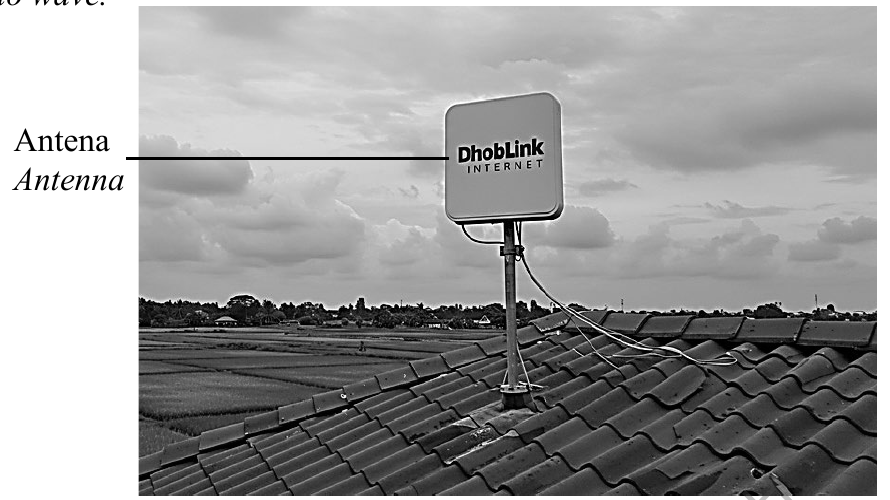
- (a)(i)
Name the type of wave for radio wave.
[1] - (a)(ii)
State one other application of radio wave in daily life.
[1] - (b)(i)
Based on Table 2, suggest the antenna characteristic that can transmit and receive internet data from the satellite more efficiently and is not affected by power outages: energy source, with reason.
[2]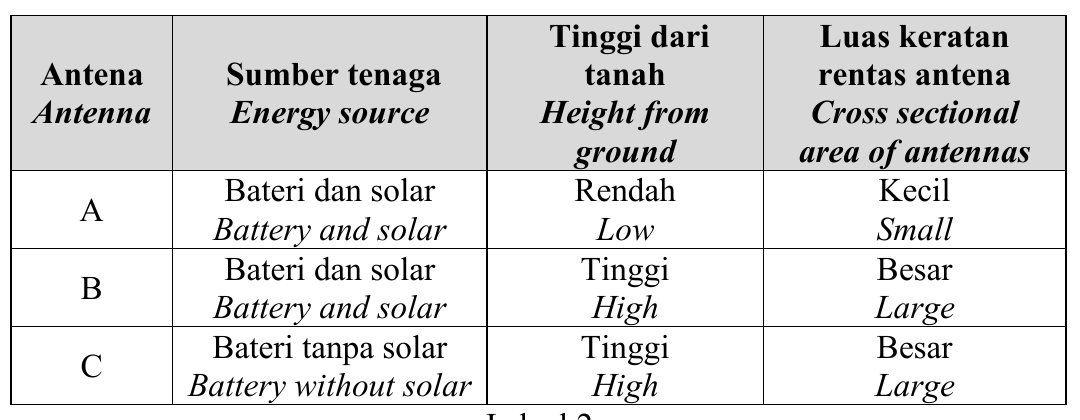
- (b)(ii)
Height from ground, with reason.
[2] - (b)(iii)
Cross-sectional area of antenna, with reason.
[2] - (c)
Based on the answers in 7(b), choose the most suitable satellite antenna.
[1]
Diagram 8.1 shows an amplifier circuit with bulbs L1 and L2, resistors R1 and R2, transistor X, a V1 = 3.0 V battery and a V2 = 1.5 V battery with a switch.
Medium9 marks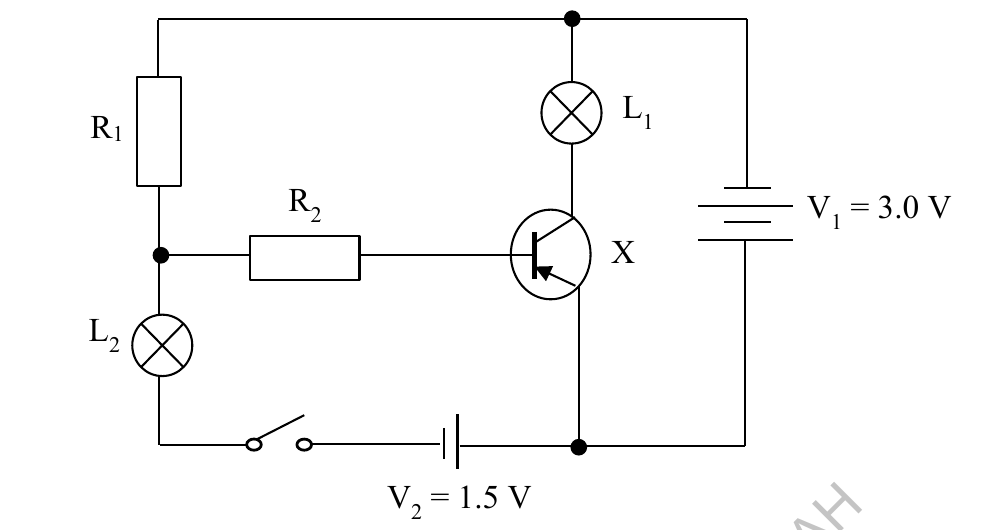
- (a)
What is the type of transistor X?
[1] - (b)(i)
When the switch is closed, compare the brightness of bulb L1 and L2.
[1] - (b)(ii)
Compare the base current and the collector current.
[1] - (c)(i)
A student wants to modify the circuit to serve as an automatic switch for a fire alarm system. Name a component to replace L1 and give a reason.
[2] - (c)(ii)
Name a component to replace R1 and give a reason.
[2] - (c)(iii)
State the component that is not needed in the circuit and give a reason.
[2]
Section B
Diagram 9.1 shows lamps lit when connected to an alternating current power supply with 240 V potential difference (lamps in a large hall).
Medium20 marks- (a)
What is meant by potential difference?
[1] - (b)(i)
Based on Ohm’s Law, state the relationship between potential difference and electric current.
[1] - (b)(ii)
State the type of circuit connection of the lamp in Diagram 9.1. Give two advantages of the connection.
[3]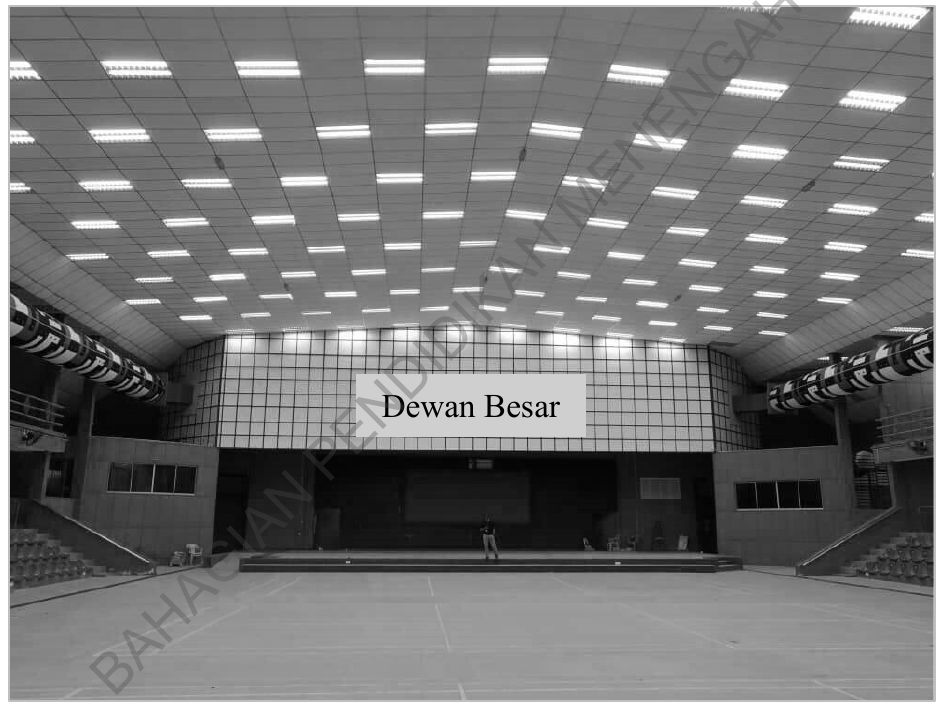
- (c)(i)
Diagram 9.2 shows an electrical circuit (12 V battery, 2 Ω resistor and 2 Ω resistor in series with an ammeter, and two 4 Ω resistors in parallel; a switch is connected across the two 4 Ω resistors). Calculate the electric current in the circuit when the switch is open.
[2]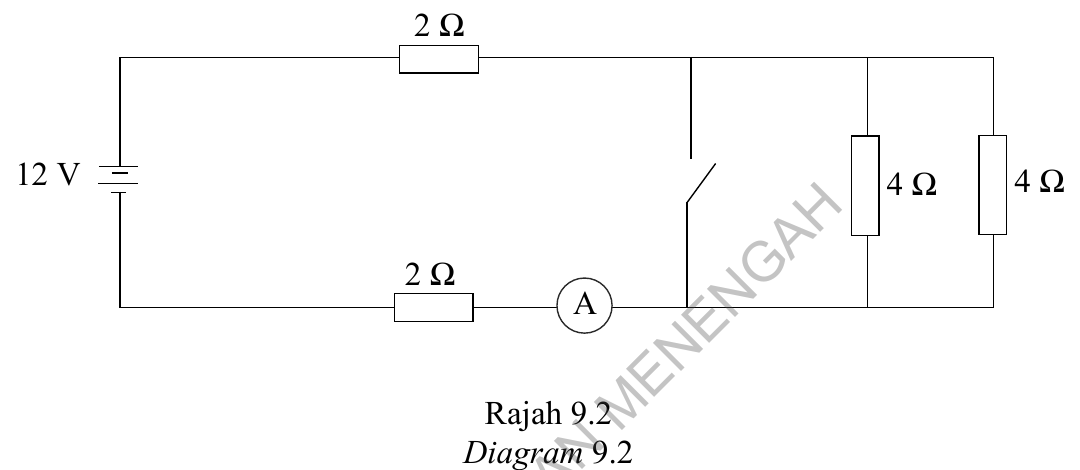
- (c)(ii)
Calculate the electric current in the circuit when the switch is closed.
[3] - (d)
Diagram 9.3 shows a commuter operating using electric energy. Table 3 shows the characteristics of four types K, L, M and N of electric trains (diameter of overhead catenary cable, electric motor, front shape, power source of overhead cable): K small, brushed motor, aerofoil, alternating current; L big, brushless motor, streamline, direct current; M big, brushless motor, streamline, alternating current; N small, brushed motor, aerofoil, direct current. As a Senior Engineer for the East Coast Rail Link (ECRL) project, you have been assigned to study and select the most suitable electric train for a long-distance journey. Suggest suitable characteristics and choose the train.
[10]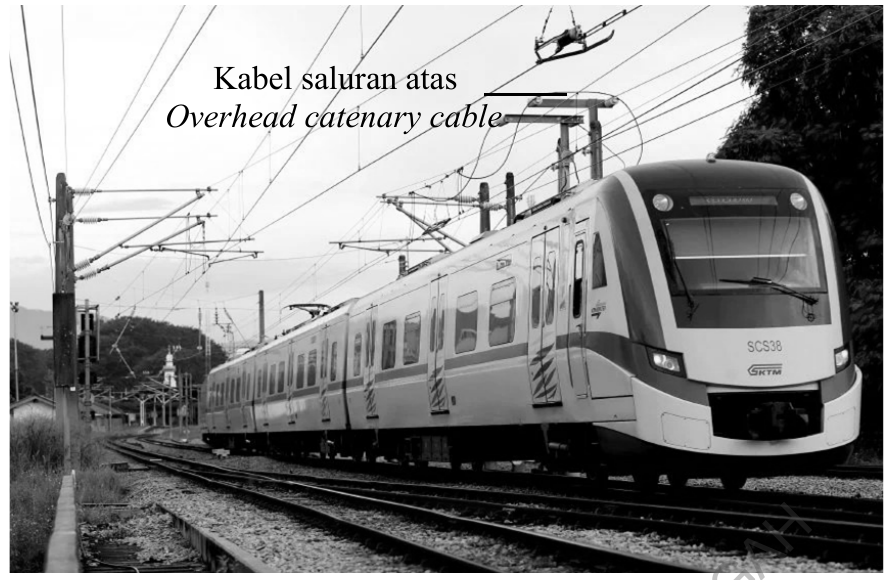
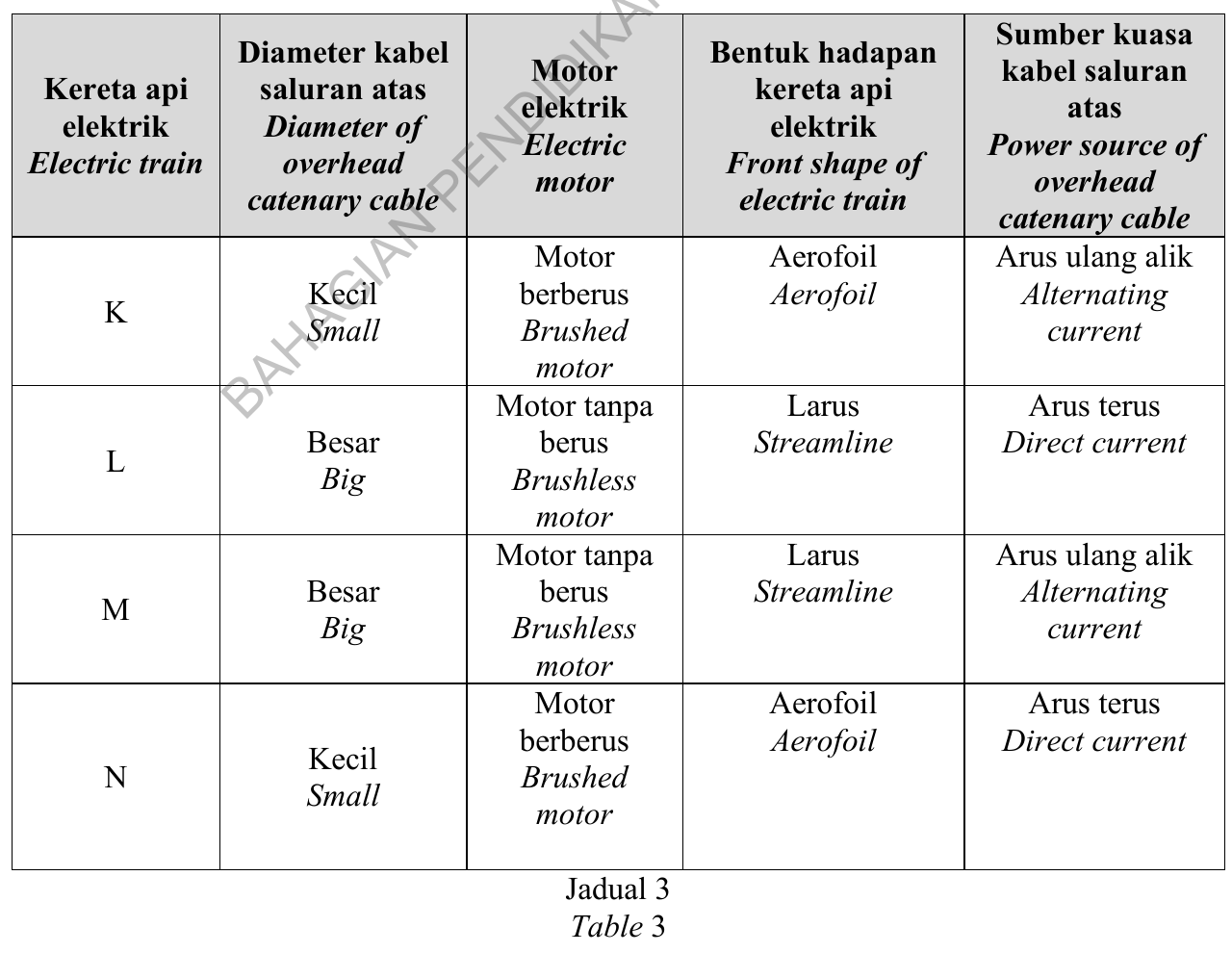
Diagram 10.1 shows a whole chicken roasted in an oven. After several minutes, the temperature of the chicken and the oven is the same.
Medium20 marks- (a)
Name physics concept that explains the situation in Diagram 10.1.
[1] - (b)
Using the concept named in 10(a), explain how the chicken in the hot oven is cooked.
[4]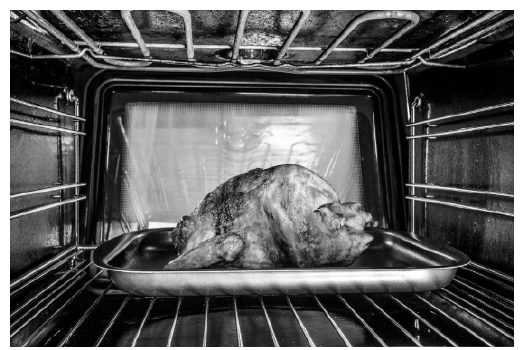
- (c)(i)
A chicken of mass 1.5 kg is roasted in an electric oven with a power rating label 240 V, 1500 W. Initial temperature of the chicken is 30 °C and it is baked in the oven at temperature 220 °C for 45 minutes. Calculate the total energy released by the electric oven.
[2] - (c)(ii)
Calculate the specific heat capacity of the chicken if it absorbed 35% of the total heat released by the oven.
[3] - (d)
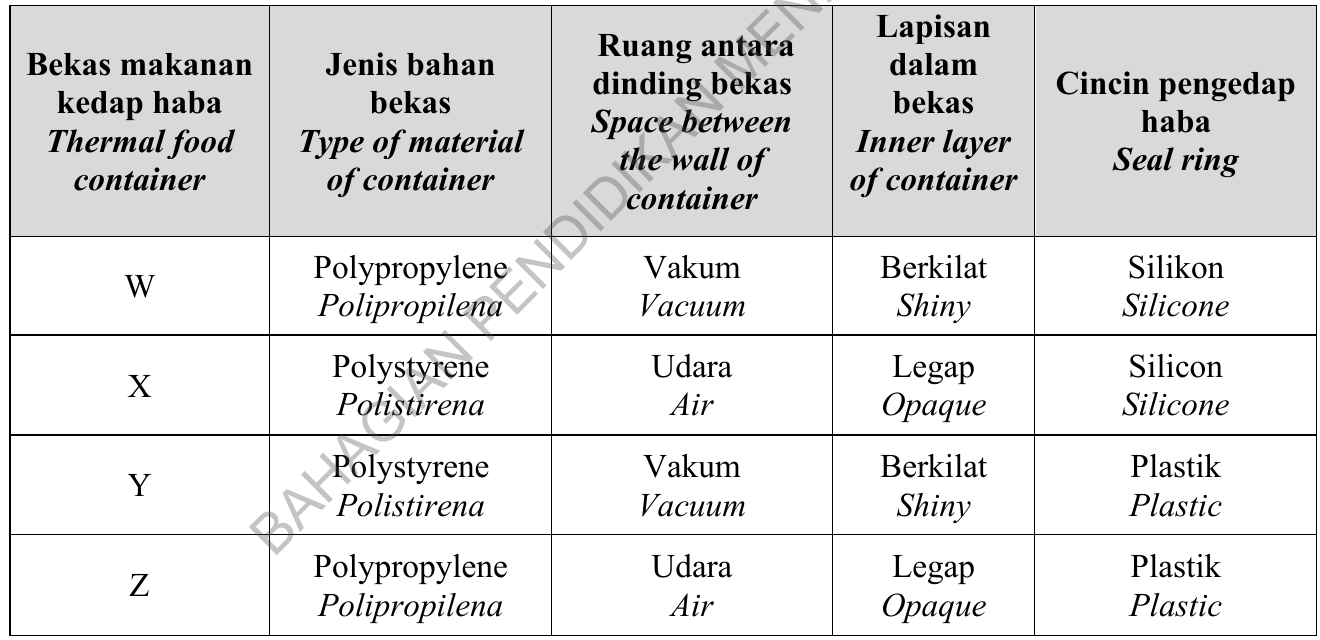
Diagram 10.2 shows a food container. Table 4 shows the characteristics of four thermal food containers W, X, Y and Z (type of material, space between the wall, inner layer, seal ring): W polypropylene, vacuum, shiny, silicone; X polystyrene, air, opaque, silicone; Y polystyrene, vacuum, shiny, plastic; Z polypropylene, air, opaque, plastic. You are required to suggest suitable characteristics for the food container and choose a container that is not easily broken and can maintain the temperature of the food for a longer time.
[10]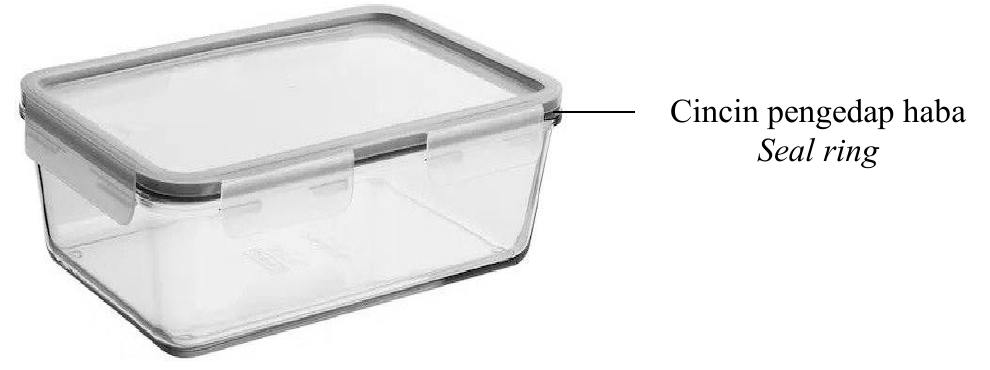
Section C
Diagram 11.1 and Diagram 11.2 show car A and car B of the same mass, moving with the same initial momentum. Car A: final speed 20 m s⁻¹, force 150 N. Car B: final speed 25 m s⁻¹, force 200 N.
Hard20 marks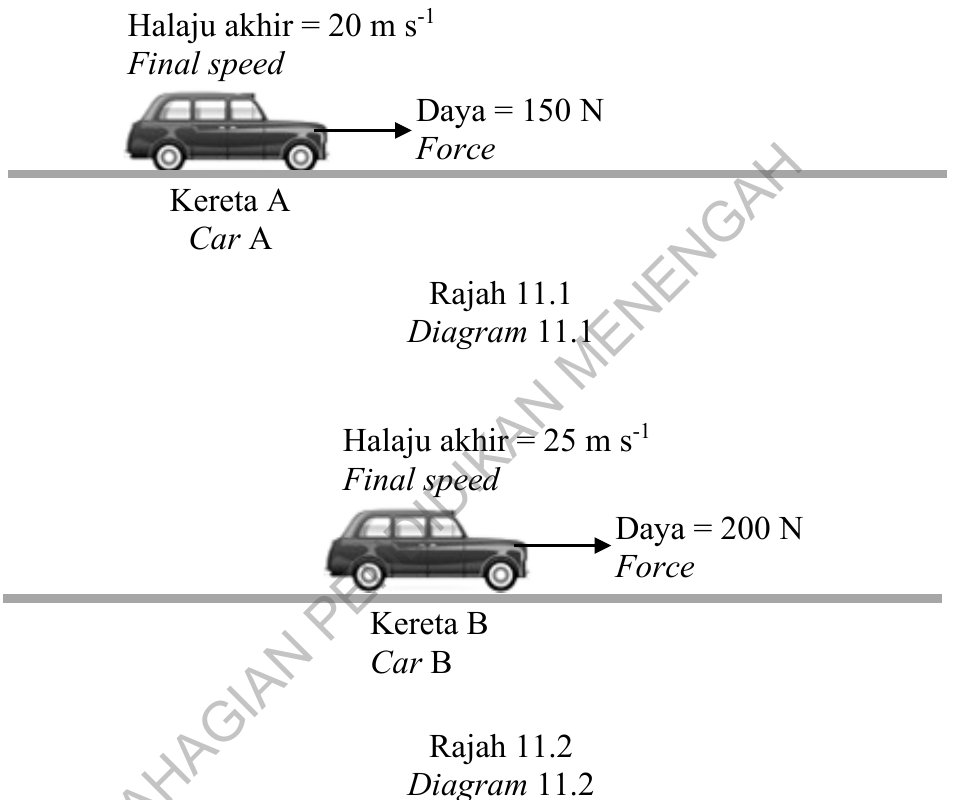
- (a)
What is the meaning of momentum?
[1] - (b)
Based on Diagram 11.1 and Diagram 11.2, compare the final momentum, change of momentum and the force of the cars. State the relationship between the final momentum and the change of momentum and relate the change of momentum and the force exerted by the engine.
[5] - (c)
Diagram 11.3 shows a label (speed limit sticker, 80 and 90 km/j, "LEBUHRAYA") attached to a heavy vehicle. What is the meaning of the sticker and explain why it needs to be displayed?
[4]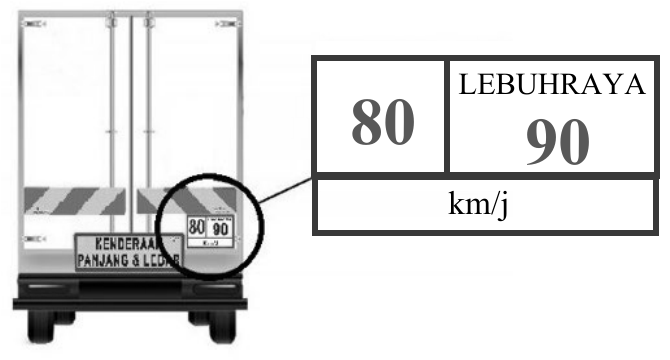
- (d)
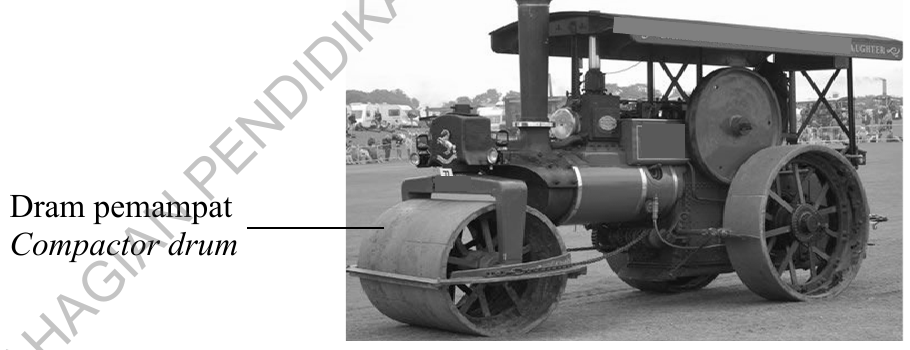
Diagram 11.4 shows a steamroller used to compact or press soil, gravel or tarmac. Using suitable physics concept, suggest and explain modifications which can be made to the steam roller based on characteristics such as compactor drum, engine power, rear wheels and safety features so that the road can be levelled quickly and efficiently.
[10]