Write your answer on paper. Then open the answer to check it.
Section A
Diagram 1 shows a microammeter used to measure the photoelectric current when the photoelectric effect occurs in a photocell (photons strike the cathode in a vacuum photocell; anode and cathode connected to a battery and microammeter).
Medium4 marks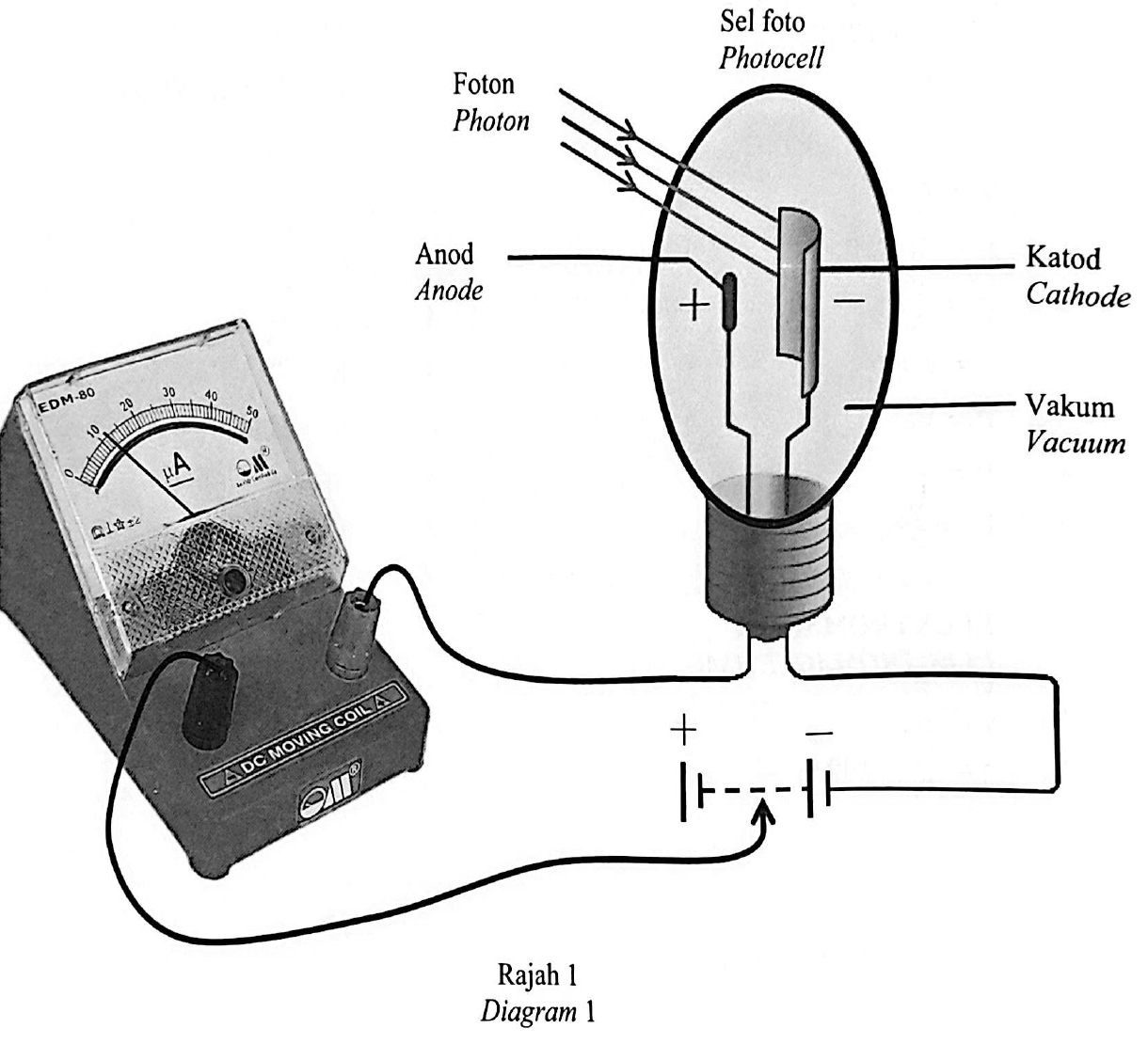
- (a)
What is meant by photoelectric effect?
[1] - (b)
State one characteristic of the cathode that allows the photoelectric effect to occur.
[1] - (c)
Why is the medium inside the photocell vacuum?
[1] - (d)
What changes occur to the reading of the microammeter when the number of photons illuminating the cathode increases?
[1]
In a series of radioactive decays, Polonium-210 decays into Polonium-206 (Diagram 2: ²¹⁰₈₄Po → ²⁰⁶₈₂Po + ⁴₂He + energy).
Medium5 marks- (a)
What is radioactive decay?
[1] - (b)
Table 1 shows the mass of each nuclide in atomic mass unit (a.m.u): Polonium-210 209.982; Polonium-206 205.969; Helium 4.0026. Calculate the energy release in unit J.
[3]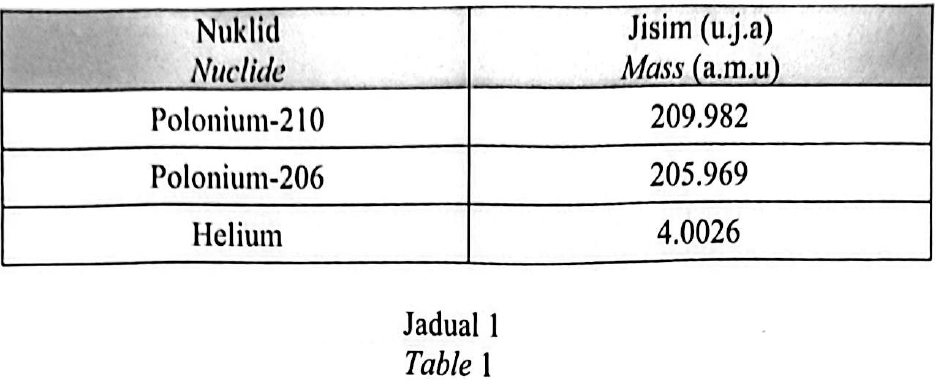
- (c)
If the mass of Polonium-206 in Table 1 increases, what happens to the energy released in 2(b)?
[1]
Diagram 3 shows one electronic circuit connected to a cathode ray oscilloscope (C.R.O.). A wave pattern is produced on the C.R.O. screen (bridge of four diode boxes S, T, U and one diode shown, 240 V a.c. source, resistor, C.R.O. showing a series of humps).
Medium6 marks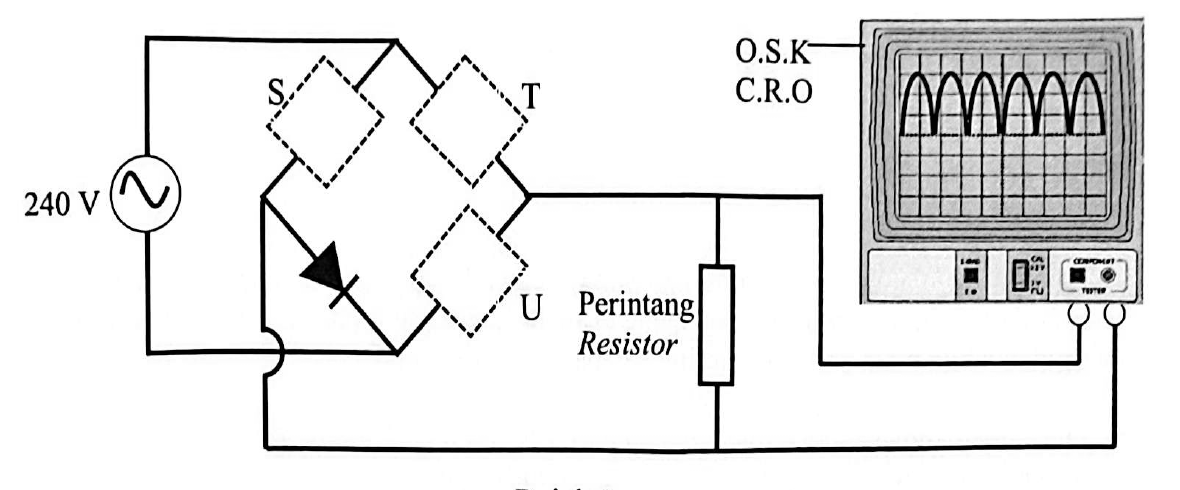
- (a)
What is the process shown in Diagram 3?
[1] - (b)
Complete the circuit in Diagram 3 by drawing diodes in boxes S, T and U.
[2] - (c)(i)
Draw the capacitor connection in Diagram 3 so that the output current shown on the C.R.O. screen is smoother.
[1] - (c)(ii)
Explain how a capacitor can be used to smooth the output current.
[2]
Diagram 4 shows a beverage can taken to a beach on a hot day. It was found that when the beverage can was wrapped in a wet paper towel, the beverage can became cold when the paper towel dried after a few minutes.
Medium9 marks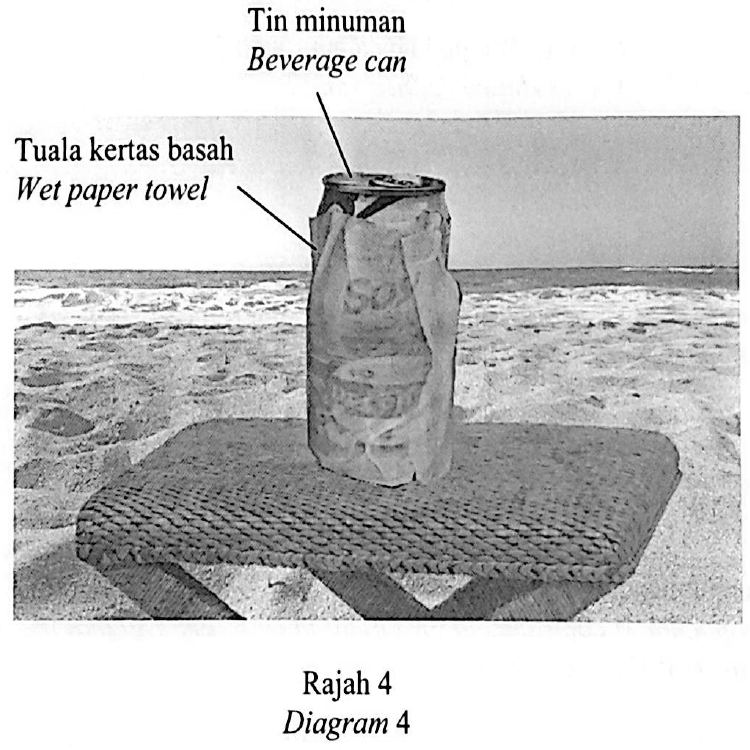
- (a)
State the type of heat involved in cooling the beverage can in Diagram 4.
[1] - (b)
Explain how a wet paper towel can cool the beverage can.
[3] - (c)(i)
Given: specific heat capacity of water = 4200 J kg⁻¹ °C⁻¹; specific latent heat of vaporisation of water = 2.26 × 10⁶ J kg⁻¹; heat absorbed from the beverage can = 12,700 J. Calculate the mass of water on the wet towel involved in cooling the beverage can.
[2] - (c)(ii)
Two other identical beverage cans are placed in a container filled with cold water. The cold water can produce the same cooling effect to each beverage can when the cold water changes temperature from 20 °C to 24 °C. Calculate the mass of cold water involved.
[3]
Diagram 5 shows the top view of a wavefront of water waves in a ripple tank (ripple generator, region A, region B over a perspex sheet, wavelengths λ₁ in A and λ₂ in B, point Q at the boundary).
Medium9 marks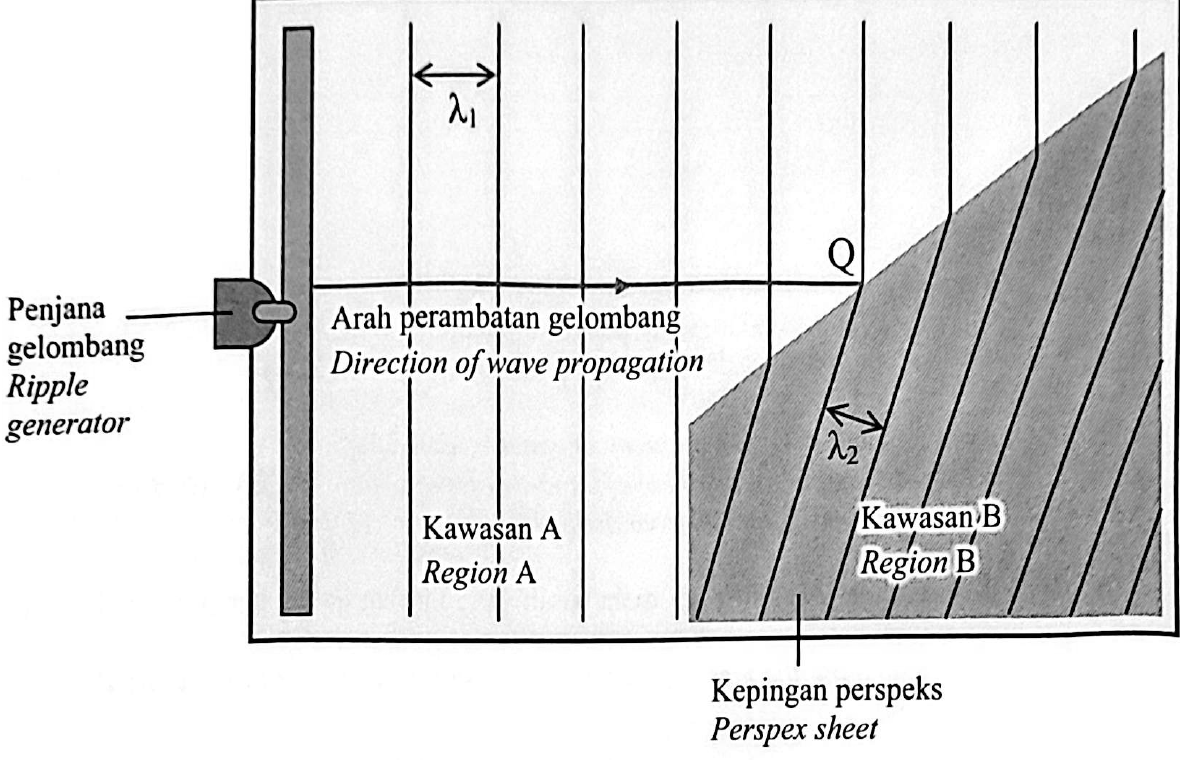
- (a)
Name the wave phenomenon that occurs in Diagram 5.
[1] - (b)
On Diagram 5, draw a normal line at Q. Hence, draw the direction of the wave propagation in region B after passing through Q.
[1] - (c)(i)
Observe region A and region B in Diagram 5. Compare the wavelength, λ.
[1] - (c)(ii)
Compare the depth of water.
[1] - (c)(iii)
Compare the speed of water wave.
[1] - (d)(i)
Relate the depth of water and the wavelength.
[1] - (d)(ii)
Relate the wavelength and the speed of water waves.
[1] - (e)
The wavelength and the wave speed in region A are 2 cm and 12 cm s⁻¹ respectively. Calculate the wave speed in region B when the wavelength in that region is 0.5 cm.
[2]
Diagram 6 shows GOES-19 satellite and the CloudSat satellite orbiting the Earth (orbit radius of CloudSat 6991 km, of GOES-19 42,164 km). Table 2 shows the characteristics of the satellites.
Medium9 marks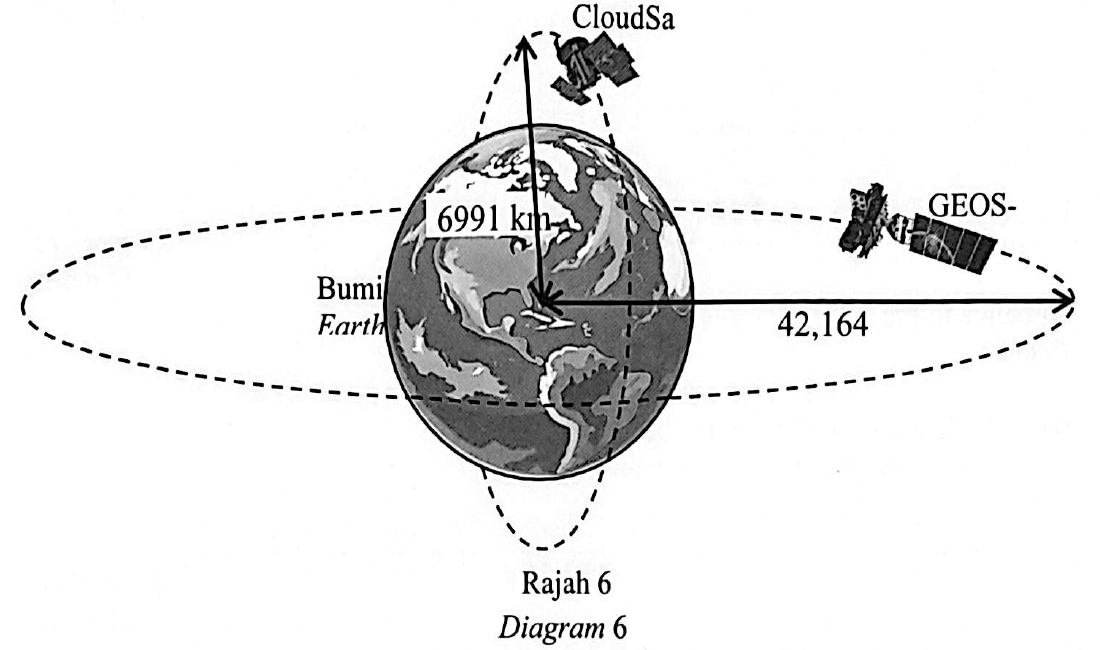
- (a)
State the force that causes the satellites to orbit the earth.
[1] - (b)(i)
Observe Diagram 6 and Table 2. Compare the orbital radius of the satellites.
[1]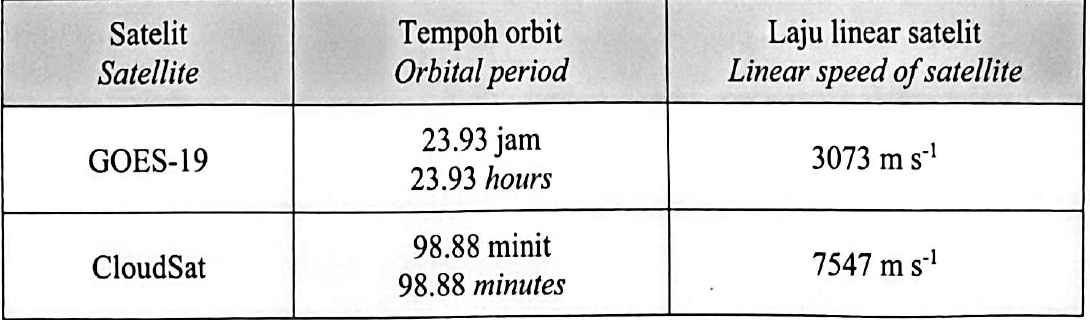
- (b)(ii)
Compare the orbital period of the satellites.
[1] - (b)(iii)
Compare the linear speed of the satellites.
[1] - (c)(i)
Based on answers in 6(b), state the relationship between the orbital radius with the linear speed of satellites.
[1] - (c)(ii)
State the relationship between the orbital radius with the orbital period of satellites.
[1] - (d)
What changes occur to the linear speed of the CloudSat satellite if it is used to orbit planet Z which has a greater mass than the Earth at the same orbital radius?
[1] - (e)
Another satellite orbits the Earth with an orbital radius of 8378 km. Based on Diagram 6 and Table 2, calculate the orbital period of the satellite.
[2]
Diagram 7.1 shows a direct current motor (coil, magnets with poles S and N, carbon brushes, commutator, dry cell). The coil rotates due to the force produced by the catapult field formed around the coil.
Medium9 marks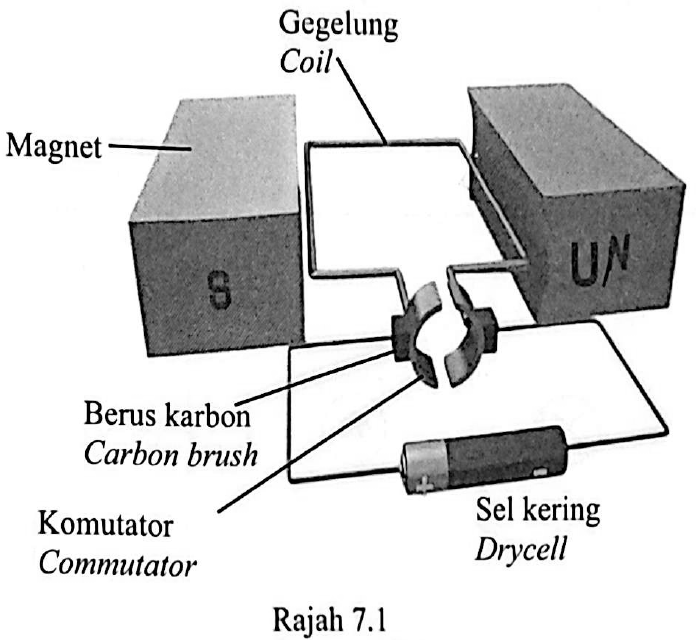
- (a)
State the rule used to determine the direction of the force produced on the coil.
[1] - (b)(i)
In Diagram 7.2, draw the catapult field pattern formed on the coil.
[2]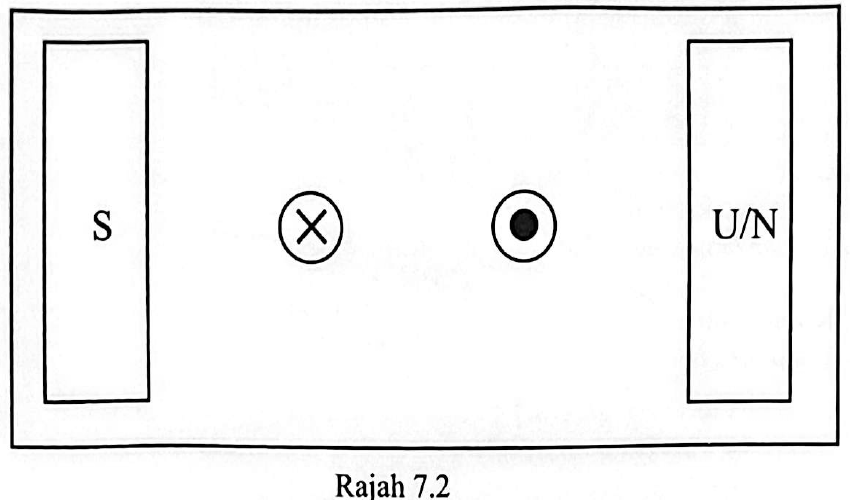
- (b)(ii)
In Diagram 7.2, label the direction of force, F, that is formed on the coil.
[1] - (c)(i)
Table 3 shows the characteristics of the direct current motors R, S and T used in cordless screwdrivers (turns of coil 500, 200, 400; battery voltage 5 V, 8 V, 12 V). State the characteristic of the direct current motor that can rotate the fastest: number of turns of coil, with a reason.
[2]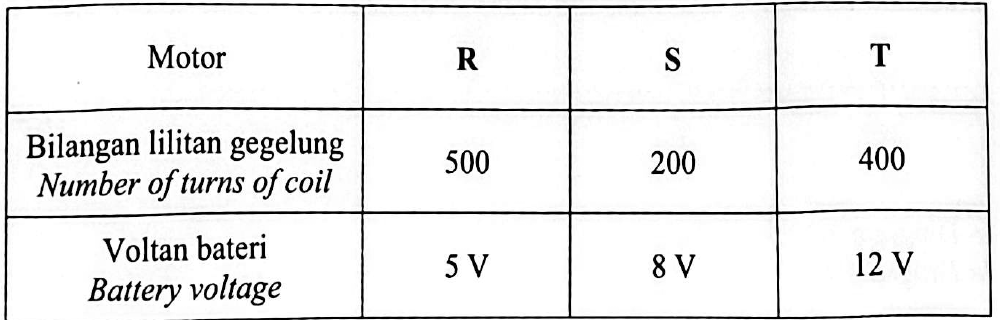
- (c)(ii)
Battery voltage, with a reason.
[2] - (d)
Based on the answer in 7(c), determine the direct current motor that can rotate the fastest in a cordless screwdriver.
[1]
Diagram 8.1 shows a man inspecting the components of a watch using a loupe, a type of magnifying glass to repair the watch.
Medium9 marks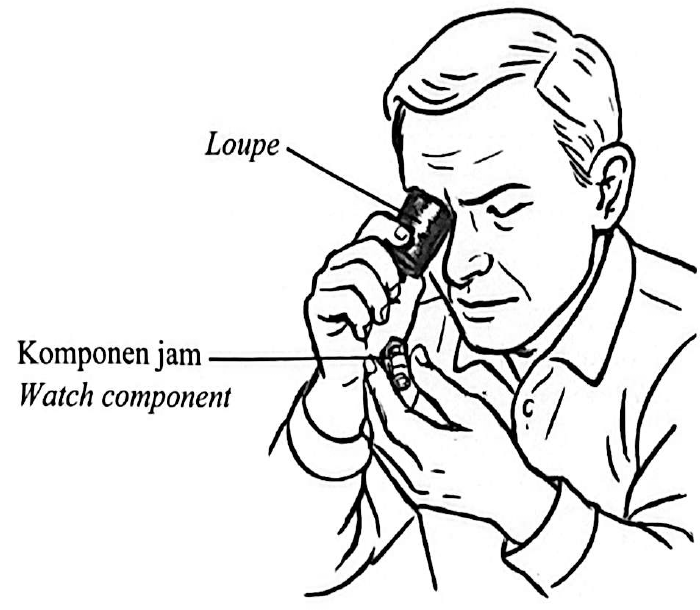
- (a)
Name the wave phenomena involved in Diagram 8.1.
[1] - (b)
Diagram 8.2 shows a ray diagram for light propagating from the components of the watch as an object, O through the loupe lens that has a focal point, F. Complete the ray diagram in Diagram 8.2.
[2]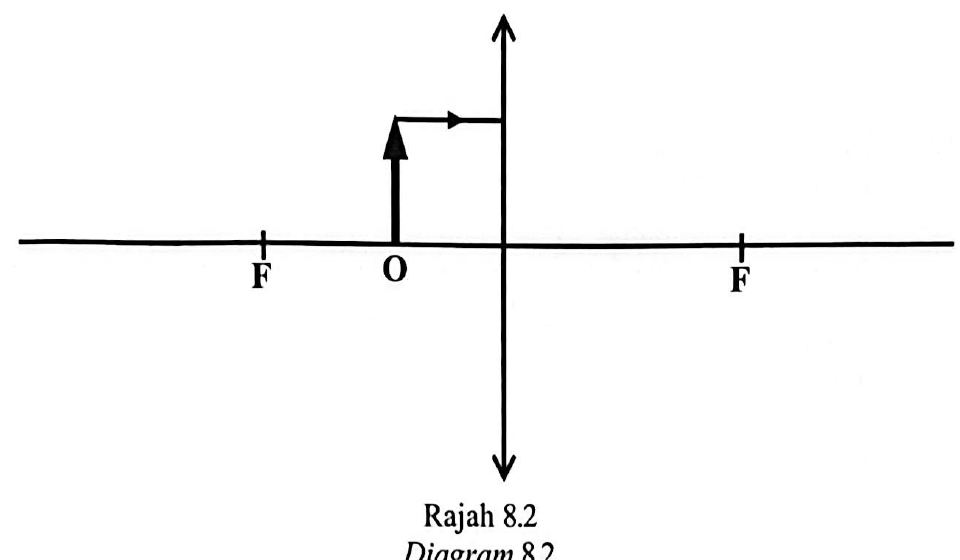
- (c)(i)
Suggest suitable characteristics for a loupe lens so that the clearest image can be seen and it is easy to carry. Focal length, with a reason.
[2] - (c)(ii)
Purity, with a reason.
[2] - (c)(iii)
The density of lens, with a reason.
[2]
Section B
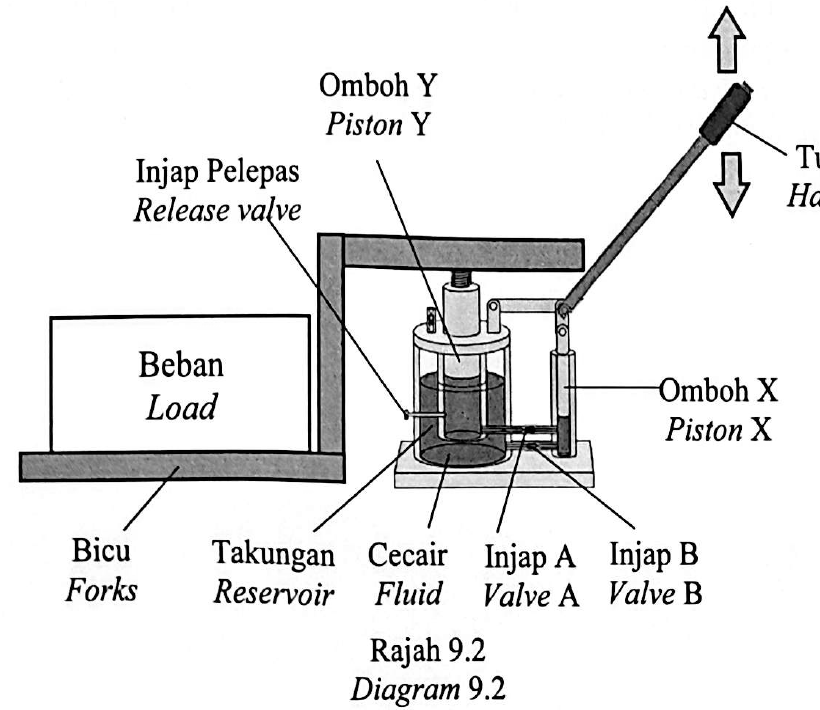
Diagram 9.1 shows a worker using a pallet jack to lift a heavy load in a furniture factory. Diagram 9.2 shows the hydraulic jack system used on the pallet jack (piston X, piston Y, valves A and B, release valve, reservoir, fluid, handle, forks, load). Hydraulic jacks work based on Pascal's Principle.
Hard20 marks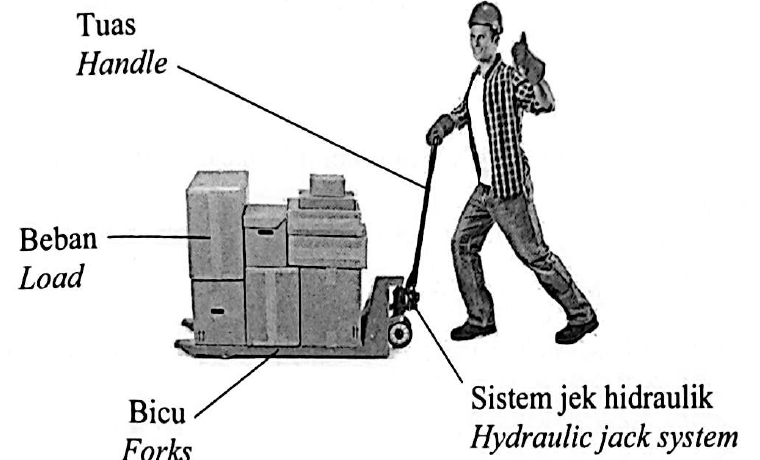
- (a)
State the Pascal's Principle.
[1] - (b)
Explain how a hydraulic jack can be used to lift heavy loads.
[4] - (c)(i)
The cross-sectional areas of piston X and piston Y are 0.004 m² and 0.2 m² respectively. Calculate the mass of the load that can be lifted when the force applied to piston X is 10 N.
[3] - (c)(ii)
Calculate the height the jack is moved upwards when piston X is pushed downwards by 0.3 m.
[2] - (d)
Diagram 9.3 shows an automated forklift truck that uses an electric motor and a hydraulic system to lift, carry and stack heavy items. Table 9.1 shows four types of forklift truck (P, Q, R, S: ratio of input piston to output piston area; hydraulic fluid type; electric motor power; cylinder material). You are required to determine the most suitable forklift truck to use to transport loads in the factory. Give reasons for your choice.
[10]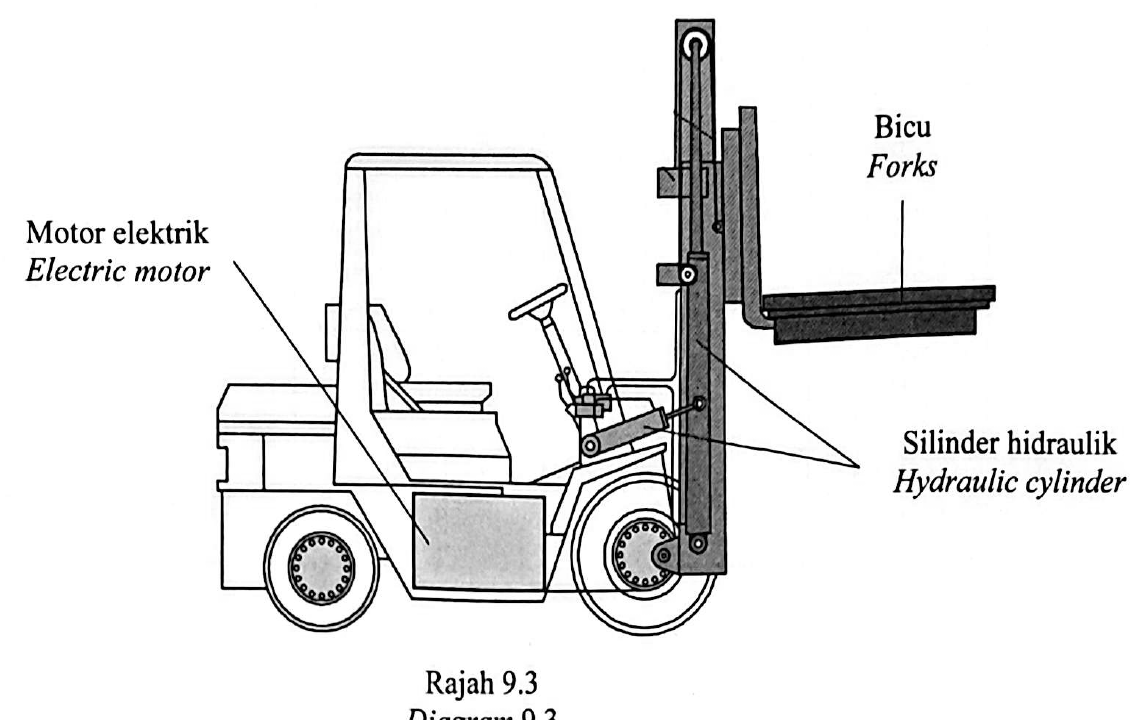
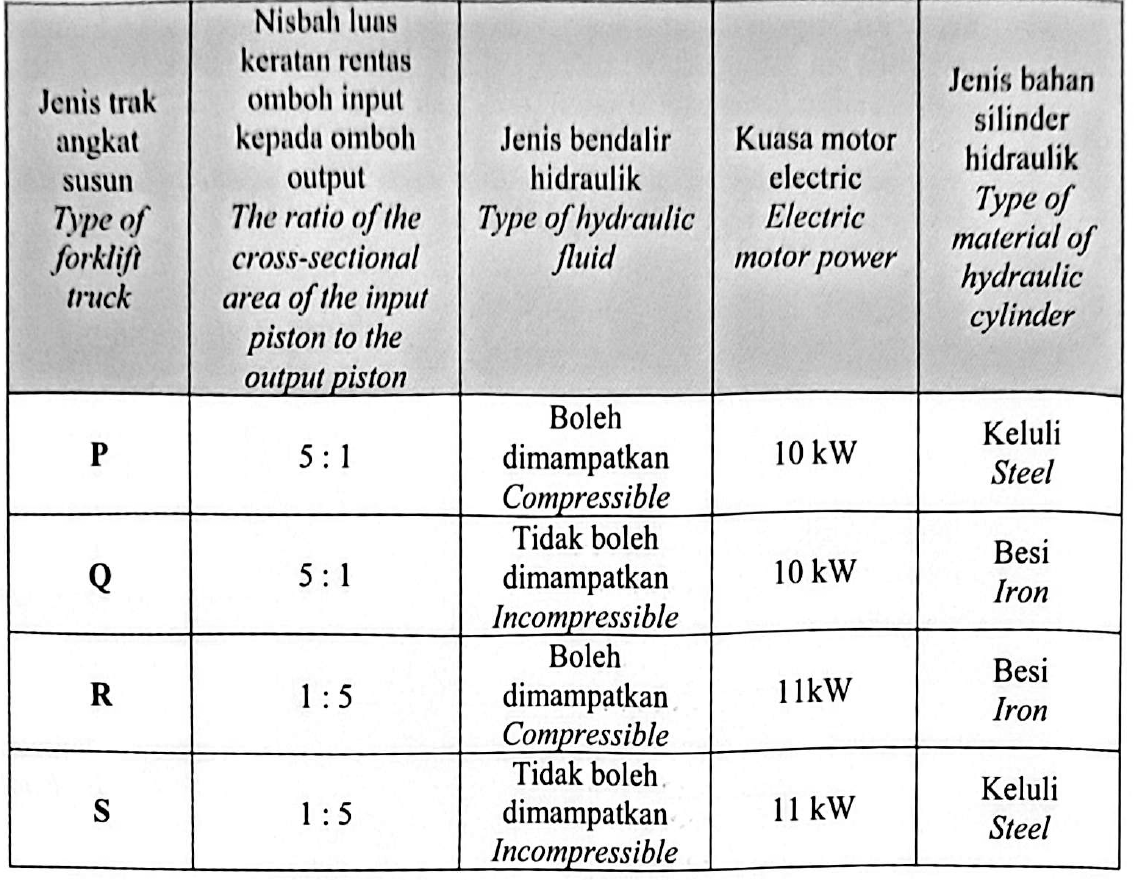
Diagram 10 shows the connecting wires and the heating elements of an electric kaya ball maker made of materials with different resistivities.
Medium20 marks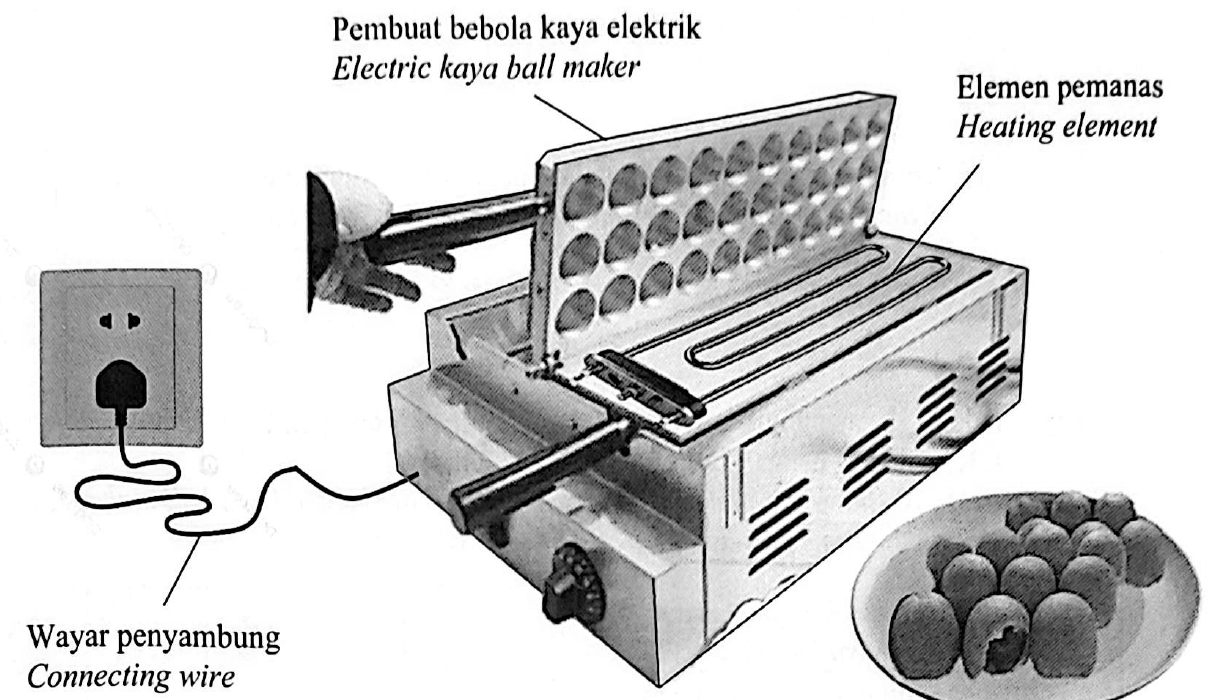
- (a)
State the meaning of resistivity.
[1] - (b)
Explain why connecting wires and heating elements use wires with different resistances.
[4] - (c)(i)
The current flows in the electric kaya ball maker in Diagram 10 is 14.55 A when it is connected to a 240 V power supply. How much charge will flow through the heating element in 5 minutes?
[3] - (c)(ii)
Calculate the power dissipated in the electric kaya ball maker.
[2] - (d)
Table 10 shows the characteristics of four electric kaya ball makers J, K, L and M with the same power rating 240 V 3400 W (turns of heating element 7, 7, 3, 3; heating element material copper, nichrome, nichrome, copper; connecting wire material nichrome, copper, nichrome, copper; fuse 13.0 A, 15.0 A, 13.0 A, 15.0 A). Determine which electric rice ball maker is most suitable for producing large quantities of rice balls quickly and safely. Justify your answer.
[10]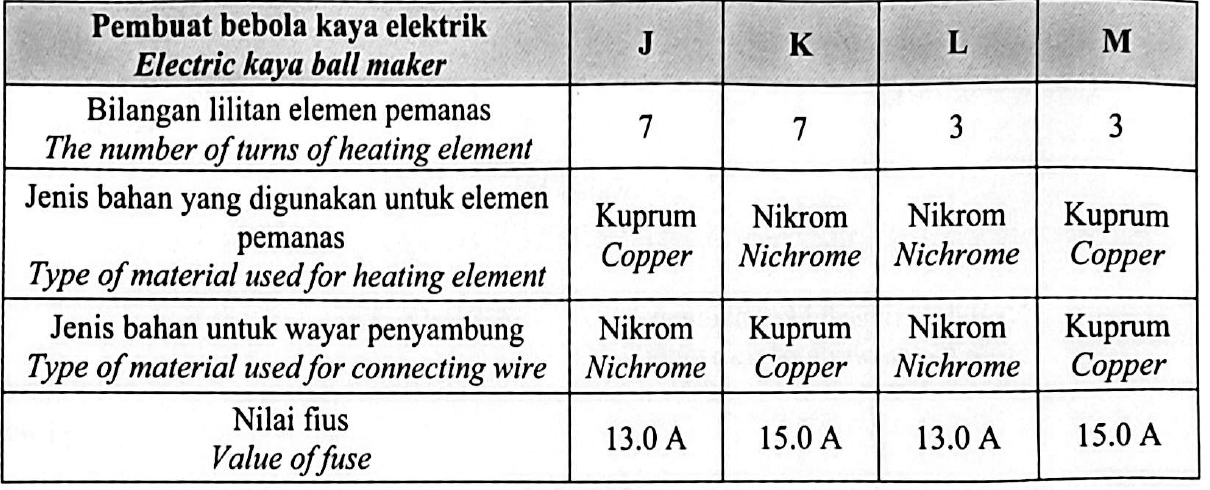
Section C
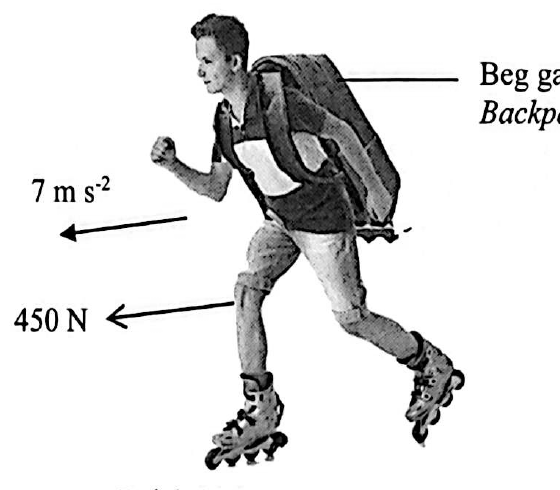
Diagram 11.1 shows Alex using a force of 500 N to move with an acceleration of 10 m s⁻² using roller skates. Diagram 11.2 shows Alex moving with a force of 450 N (acceleration 7 m s⁻²) while carrying a backpack with a mass of 15 kg. The mass of Alex is 70 kg.
Hard20 marks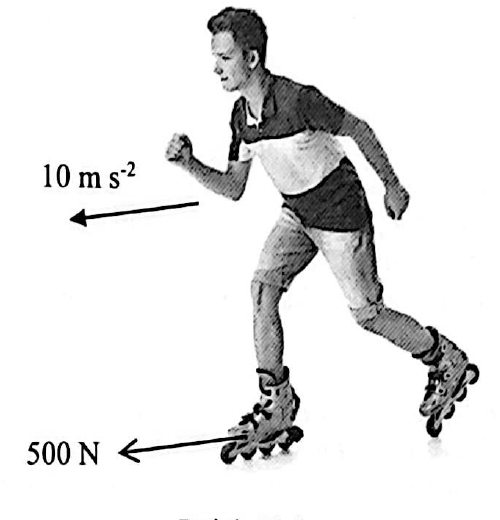
- (a)
What is meant by acceleration?
[1] - (b)
Observe Diagram 11.1 and Diagram 11.2. Compare the mass when Alex is moving, the force that Alex uses to move and Alex's acceleration. Relate the mass and the acceleration. Then deduce the relationship between the force and the acceleration.
[5] - (c)
It was found that Alex's knee was injured when he fell while trying to move using roller skates on a road full of stone bumps. However, Alex's knee was not injured when he fell on the grass while moving using roller skates with the same speed. Explain.
[4] - (d)
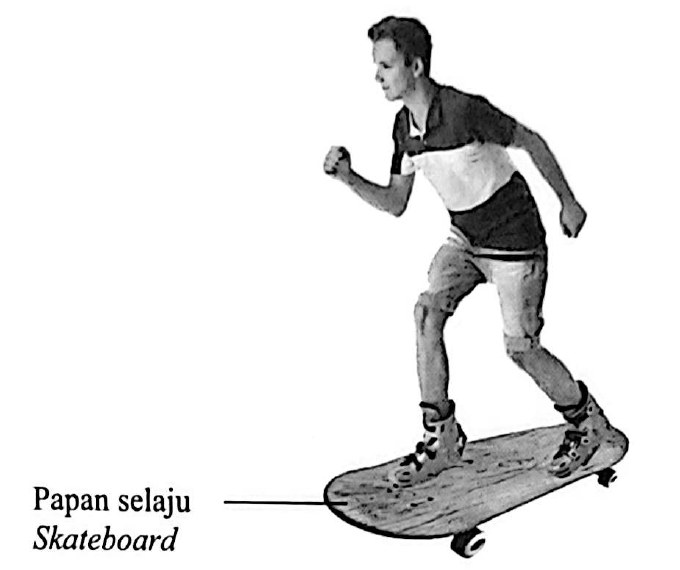
Diagram 11.3 shows Alex practising skateboarding for a Skateboarding Long Distance Championship. Suggest some modifications so that Alex can win easily and safely. State your suggestions based on the safety equipment needed, the type of material of the skateboard, the characteristics of the skateboard and clothing, and the additional tools that can be used so that Alex can move very quickly and safely for a long period of time. Give reasons for your answer.
[10]