KEDAH 2024 P2 Q10
MediumWrite your answer on paper. Then open the answer to check it.
Diagram 10.1 shows a model of a step-down transformer: 240 V supply connected to primary coil NP, secondary coil NS connected to a 36 W, 18 V bulb. (Section B: answer one of two questions.)
Medium20 marks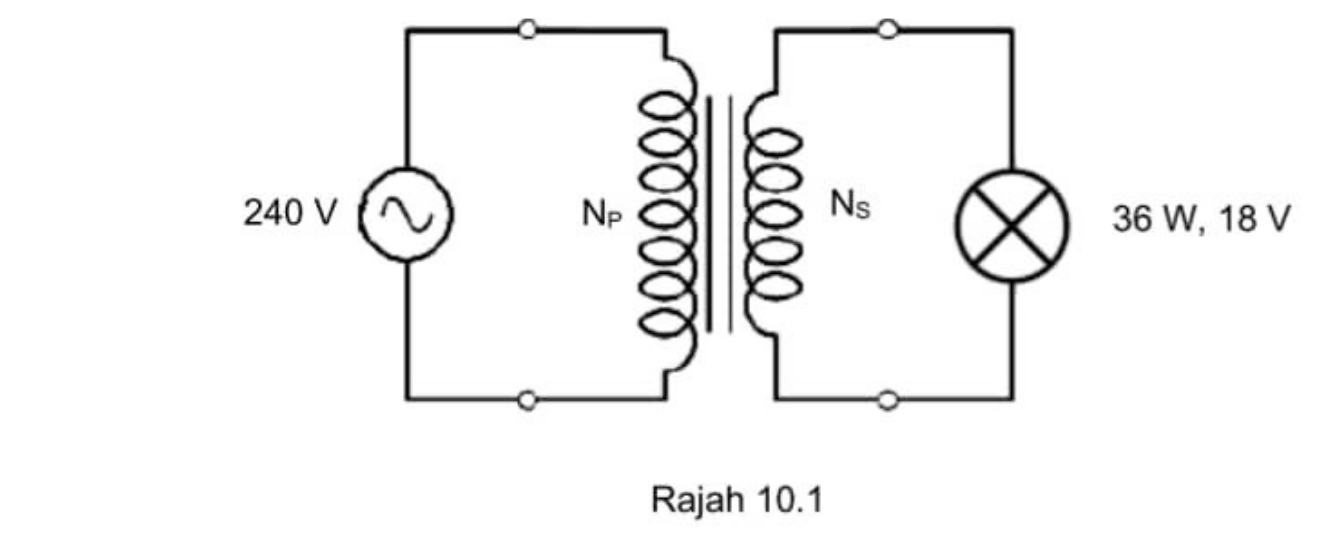
- (a)
What is the function of a step-down transformer?
[1] - (b)
Explain the working principle of a transformer.
[4] - (c)(i)
The transformer in Diagram 10.1 is connected to a 240 V power supply to light up a bulb of 36 W, 18 V in the secondary circuit with normal brightness. The number of turns of secondary coil is 30 turns. Assuming that the transformer is ideal, calculate the number of turns of the primary coil, NP.
[2] - (c)(ii)
Calculate the current in the primary circuit, IP.
[3] - (d)
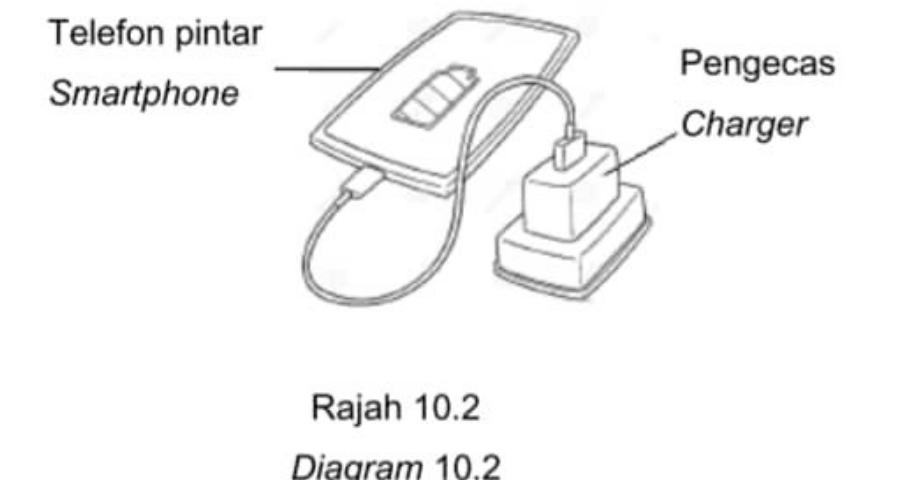
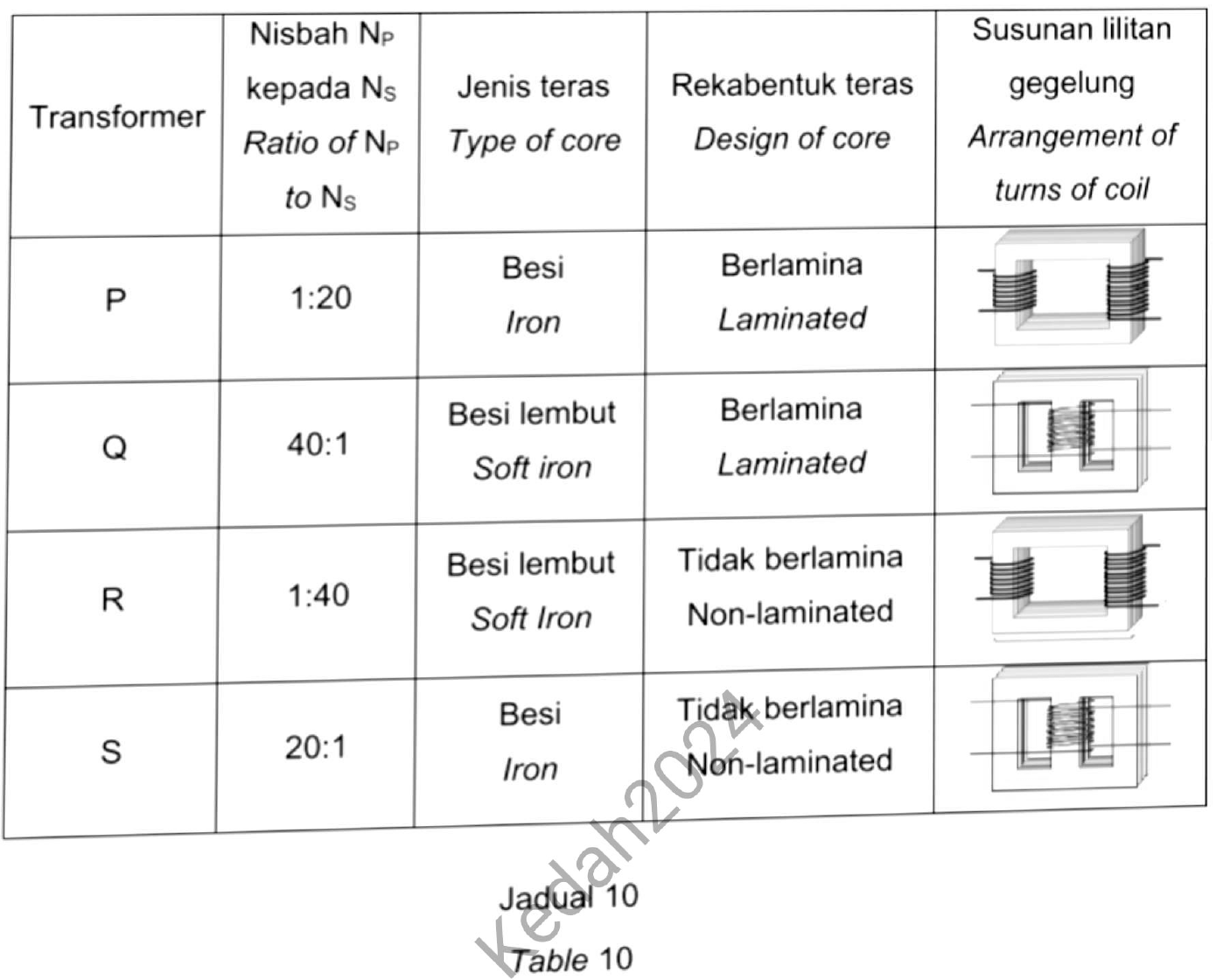
Diagram 10.2 shows a phone charger that contains a transformer to reduce 240 V of input voltage to 6 V of output voltage. The phone charger heats up easily and cannot charge the phone quickly. Table 10 shows the characteristics of four transformer models P, Q, R and S: P = ratio NP:NS 1:20, iron core, laminated; Q = 40:1, soft iron, laminated; R = 1:40, soft iron, non-laminated; S = 20:1, iron, non-laminated (each with a different arrangement of turns of coil, shown in the picture). Study the suitability of each characteristic of the transformer. Hence, determine the transformer model that does not heat up easily and can charge the phone faster. Give reasons for your choice.
[10]