When the body temperature increases above the normal body temperature, the corrective mechanism that is involved is?
I Less sweating
II Vasodilation of blood vessel
III Low metabolism rate
IV Erector muscle contracts
Medium
Which of the following is negative feedback mechanism?
I Blood osmotic pressure regulation
II Body temperature regulation
III Excretion of faeces from the body
IV Intake of oxygen by the lungs
Medium
When body temperature drops below normal range caused by heat loss to surrounding, regulation process by effectors will occur. Which of the following physical responses involved are correct? I Erector muscles contract; II Arteriole in the skin constricts; III More adrenaline is secreted; IV Skeletal muscles less contract and relax
Medium
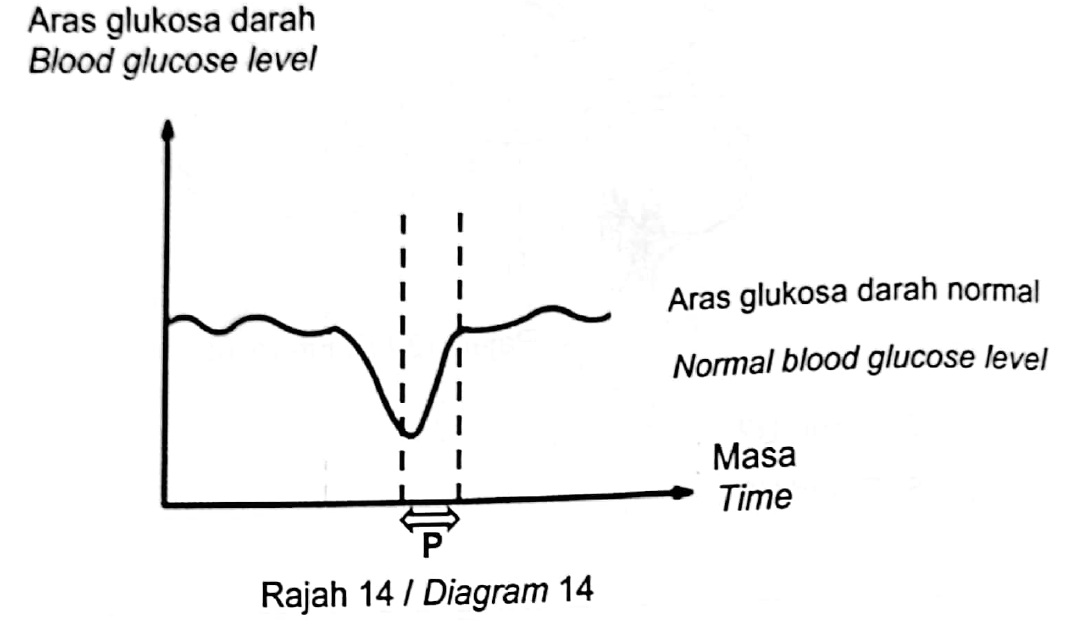
Diagram 14 is a graph which shows the change in the blood glucose level in a woman (blood glucose level against time; it falls sharply during period P and then returns to normal). What happen at P?
Medium
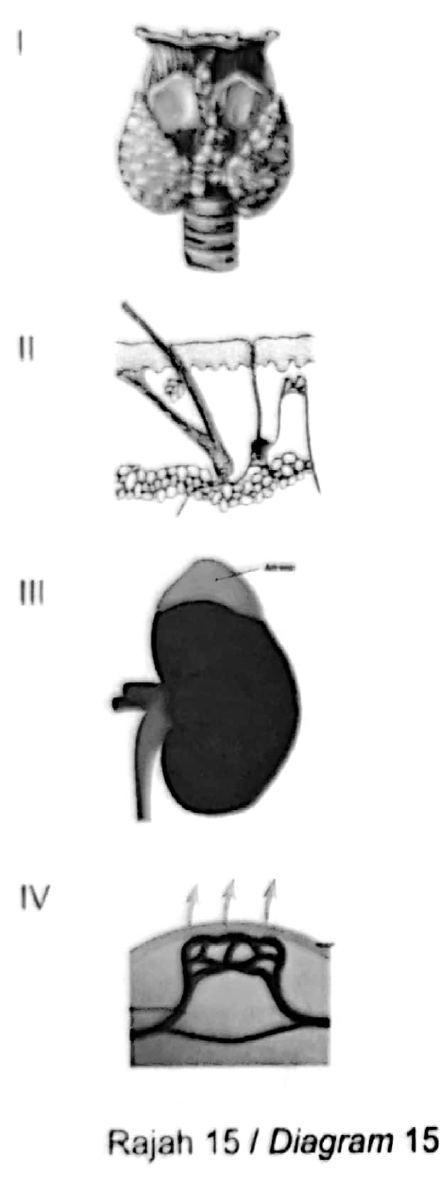
Diagram 15 shows the methods to regulate the human body temperature by effector (I thyroid gland, II sweat gland/skin hair, III kidney, IV blood vessels in skin). Which of the following methods are the regulation of body temperature through physical method?
Medium
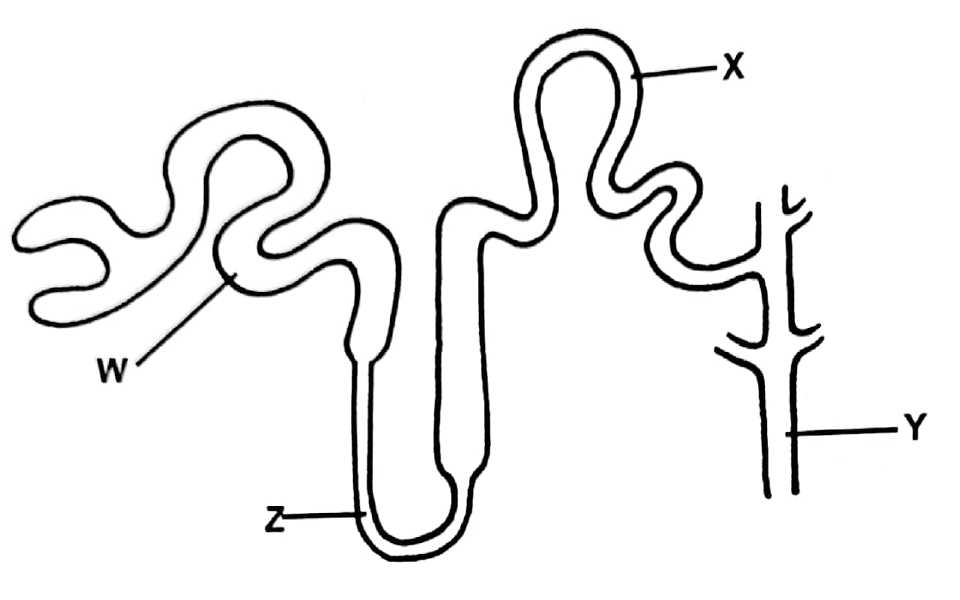
Diagram 16 shows a structure of nephron. A diabetic patient faces symptoms of thirst and frequent urination. Which of the following explains the condition?
Medium
Which of the following is part of the homeostasis process?
Medium
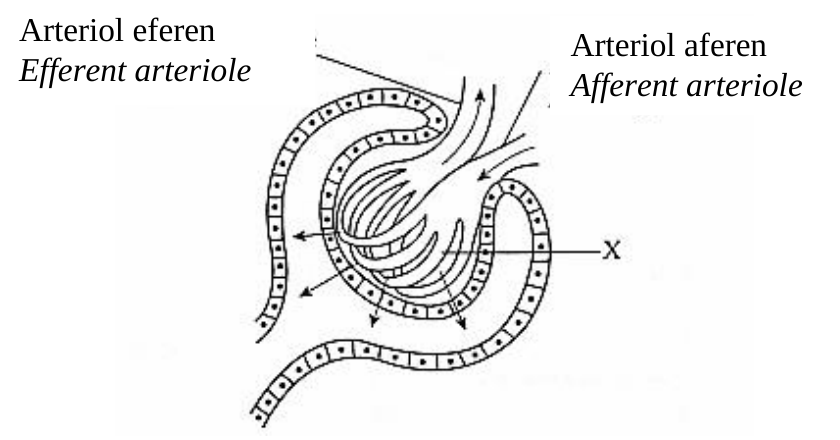
Diagram 11 shows ultrafiltration that occurs in the kidney. Why there are no erythrocytes found in X?
Easy
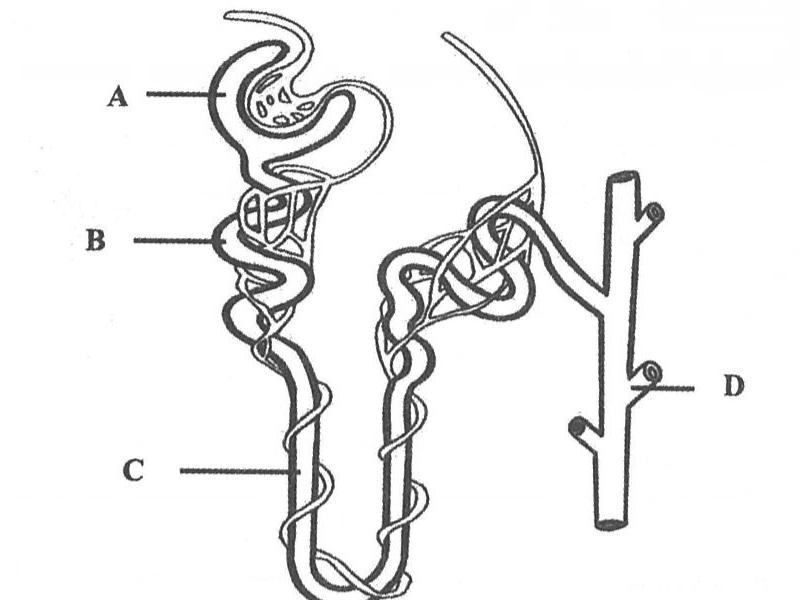
Diagram 19 shows a structure of nephron in the kidney. Which of the part labelled A, B, C and D does the reabsorption of amino acid occur?
Easy
A student runs in a 100 metre race. After the race, he rested for 30 minutes and later entered an air-conditioned sport complex. What happens to his sweat glands and blood capillaries after 30 minutes?
Medium
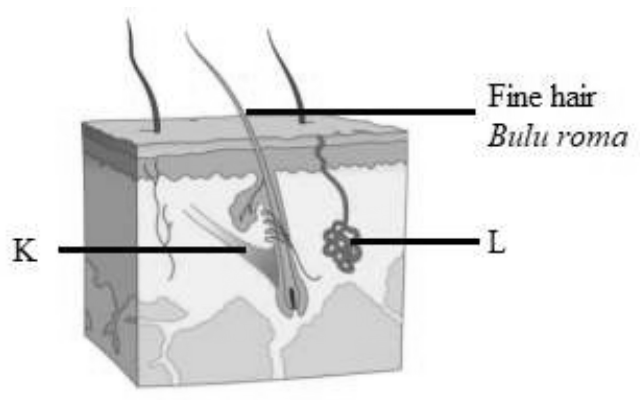
Diagram 11 shows the response of skin in cold surrounding (K: arrector pili muscle, L: sweat gland). What will happen if the fine hair is shaved?
Medium
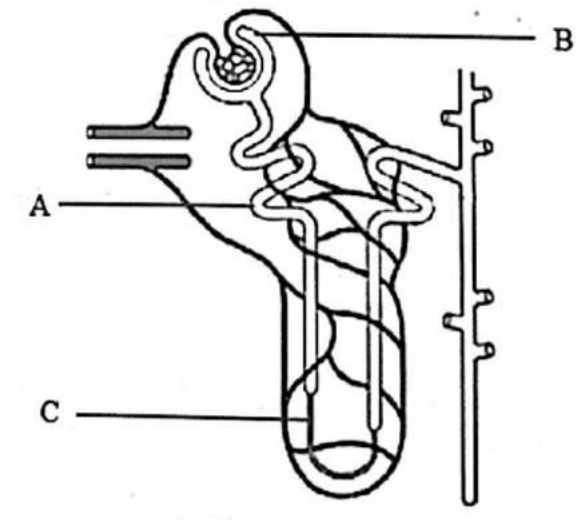
Diagram 11 shows a structure of nephron. Which part labelled A, B, or C does not contain amino acid?
Medium
Individual X likes to eat salty food in his daily menu. What is the effect of eating such food on his urine production?