Which of the following are the characteristics of enzymes?
I Structure of enzymes are changed at the end of a reaction
II Enzymes are only required in small amounts
III The action of enzymes is specific
IV Reactions catalysed by enzymes are irreversible only
Easy
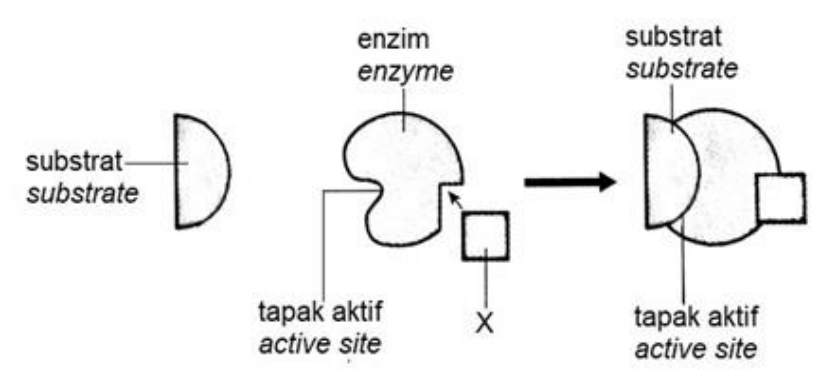
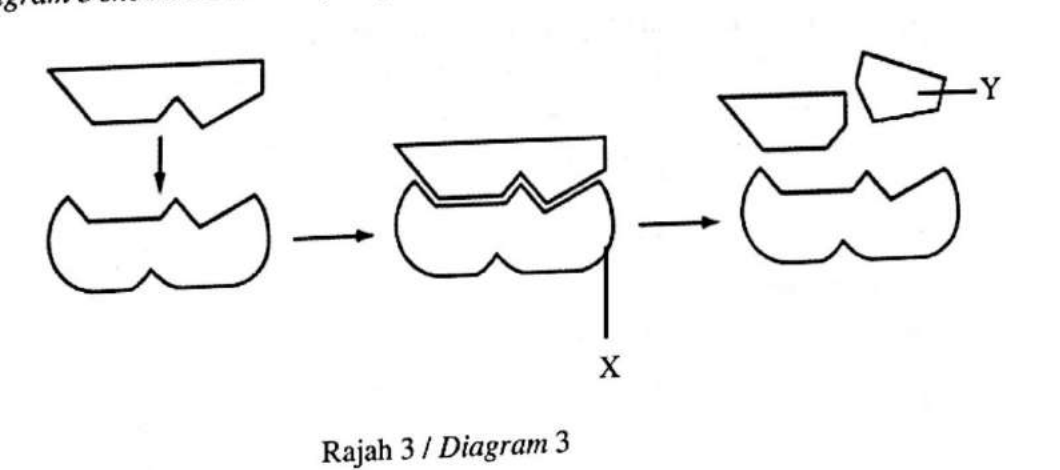
Diagram 3 shows the role of X in the action of an enzyme. Which of the following are described about X?
I Known as a cofactor.
II Known as an inhibitor.
III Able to stop the enzyme activity.
IV Able to increase the enzyme activity.
Medium
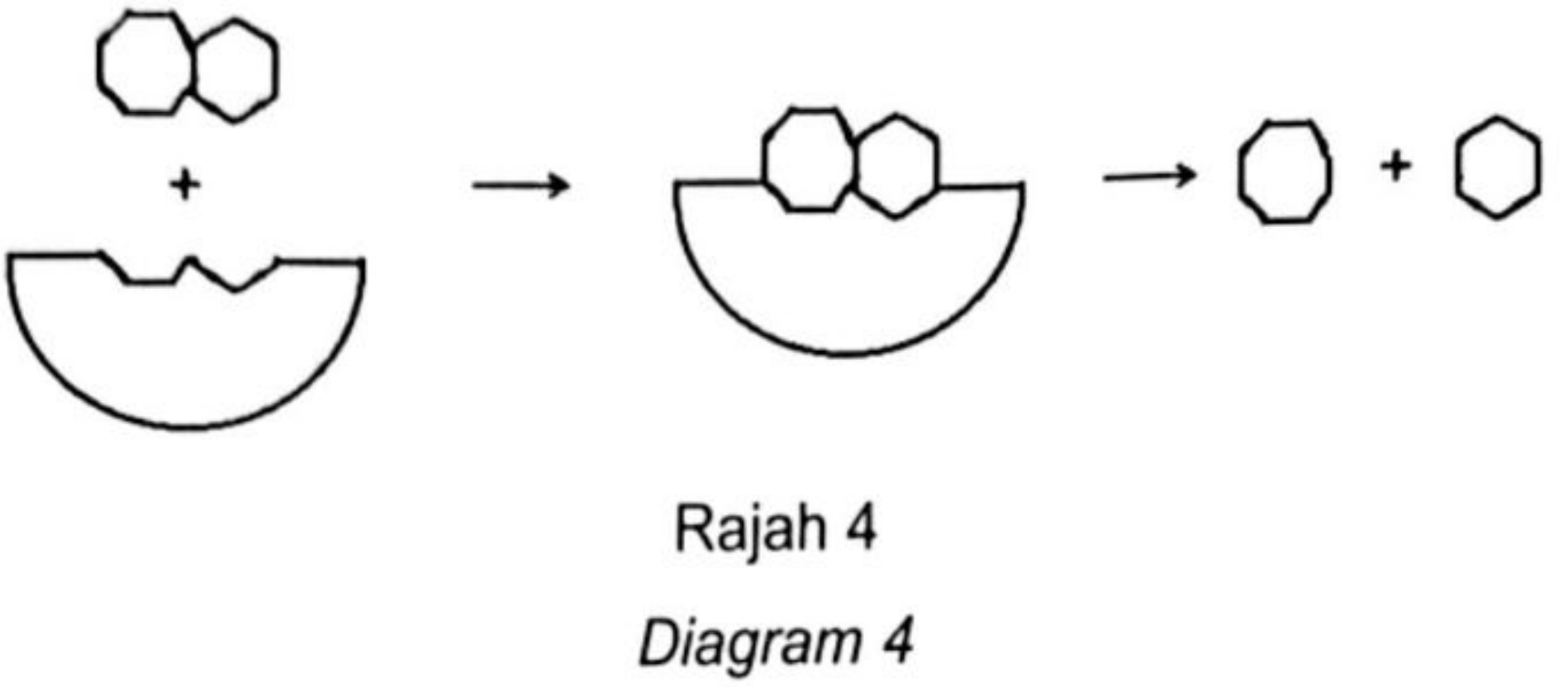
Diagram 4 shows lactase action toward the substrate that takes place in the ileum of an individual. The individual is infected by malaria disease and suffering high fever. Which of the following are the effects of the disease infection on the lactase action? I Less glucose and galactose are produced; II Less lactase-galactose complex formed; III Lactase unable to compliment with lactose due to the change of active site; IV Effective collision frequency between lactase and lactose increases
Medium
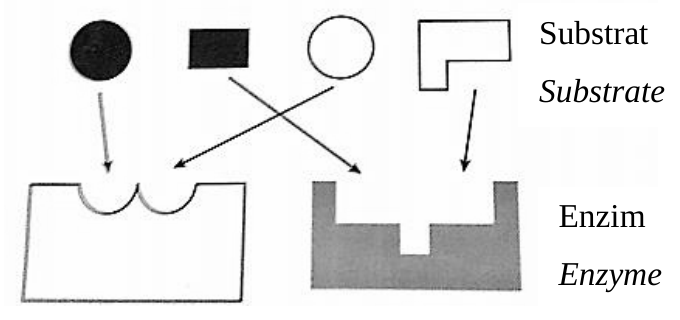
Diagram 4 shows the "lock and key" hypothesis of enzyme action. Based on the diagram, what characteristic does this enzyme show?
Medium
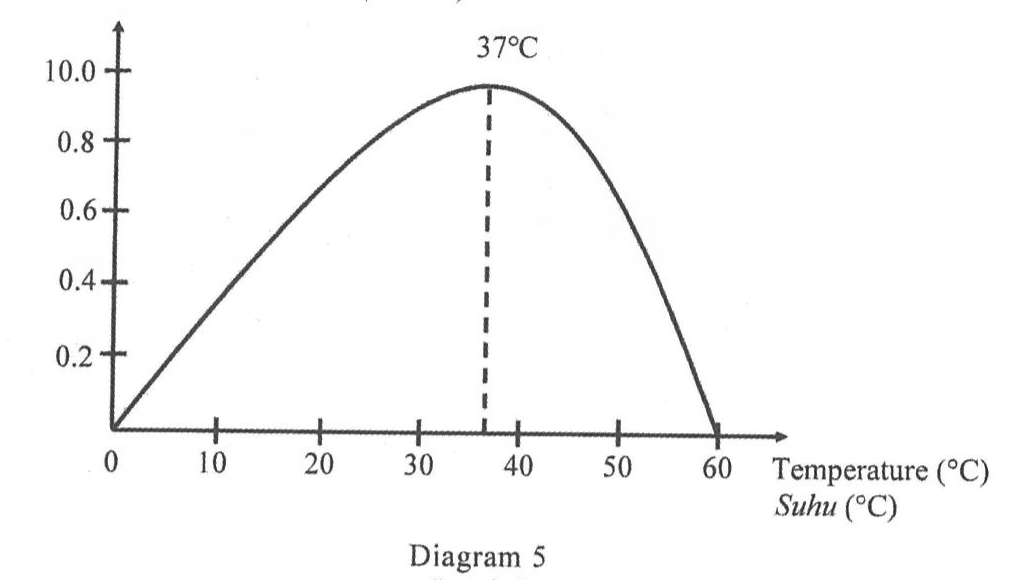
Diagram 5 shows the effect of temperature on the rate of enzyme reaction (rate in minute^-1 against temperature in °C; maximum at 37°C, falling to zero at 60°C). Which of the following shows the condition of enzyme when the temperature reaches 60°C?
Medium
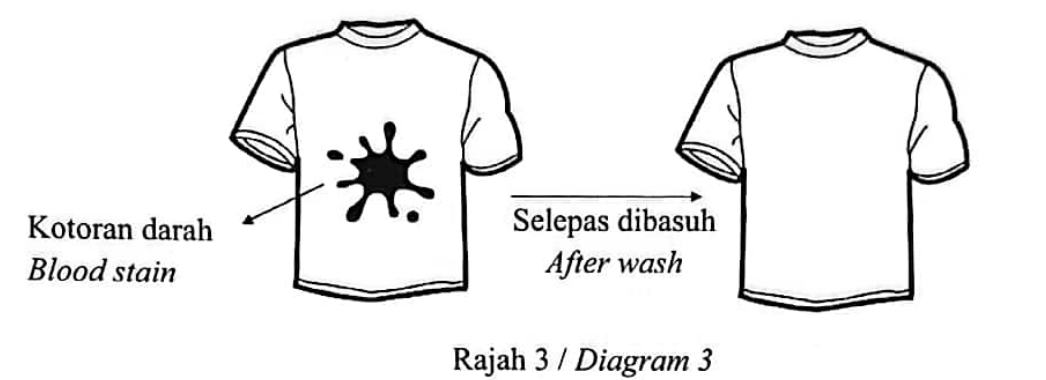
Diagram 3 shows a shirt with a blood stain before and after being washed with detergent containing enzyme. Which is the most suitable enzyme and temperature to give the result shown?
A Lipase, 20 °C
B Protease, 37 °C
C Lipase, 37 °C
D Protease, 20 °C
Medium
Diagram 4 shows the action of maltase: S + Water → (maltase) → T + Glucose. What are S and T?
Medium
Diagram 3 shows the action of enzyme on sucrose. Name X and Y. Options give X then Y.
Medium
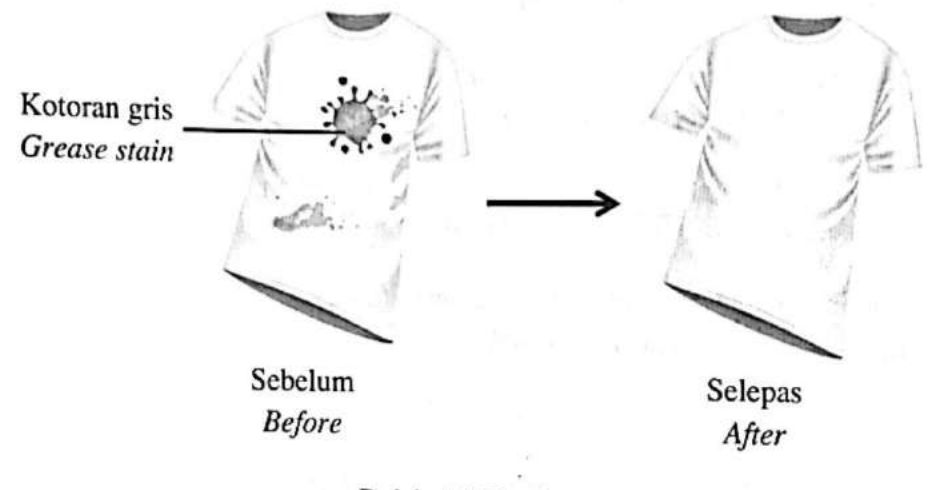
Diagram 4 shows a shirt with grease stain to be washed with a detergent containing enzyme at different temperature. What is the most suitable enzyme and temperature to be used?
Medium
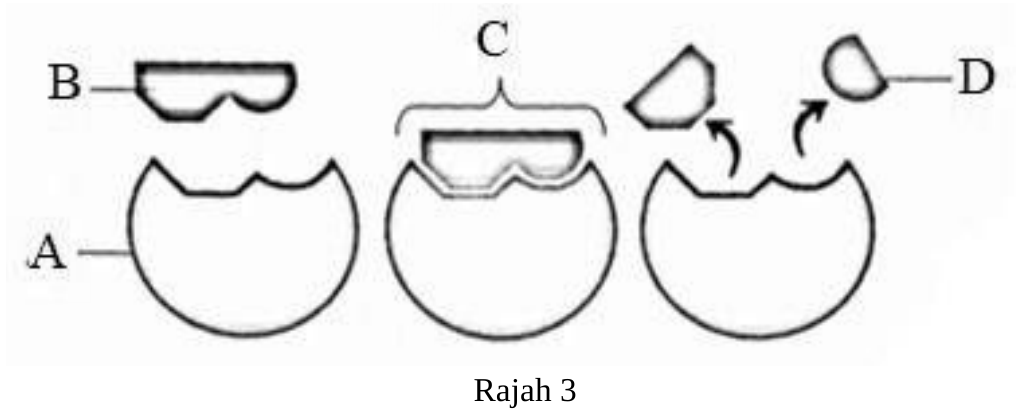
Diagram 3 shows the mechanism of enzyme action. Which of the parts labelled A, B, C or D represents the substrate?
Easy
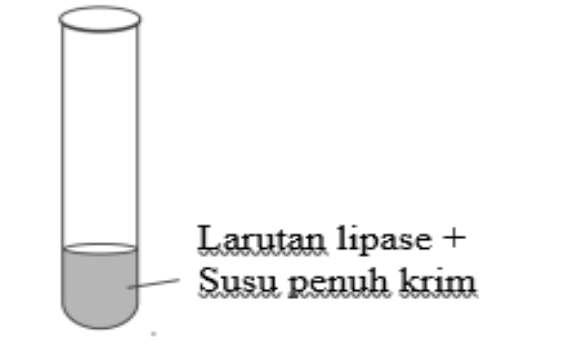
Diagram 4 shows an experiment to study an enzyme reaction at 37 °C. The test tube contains lipase solution + full cream milk. What are the product and the pH after 15 minutes?