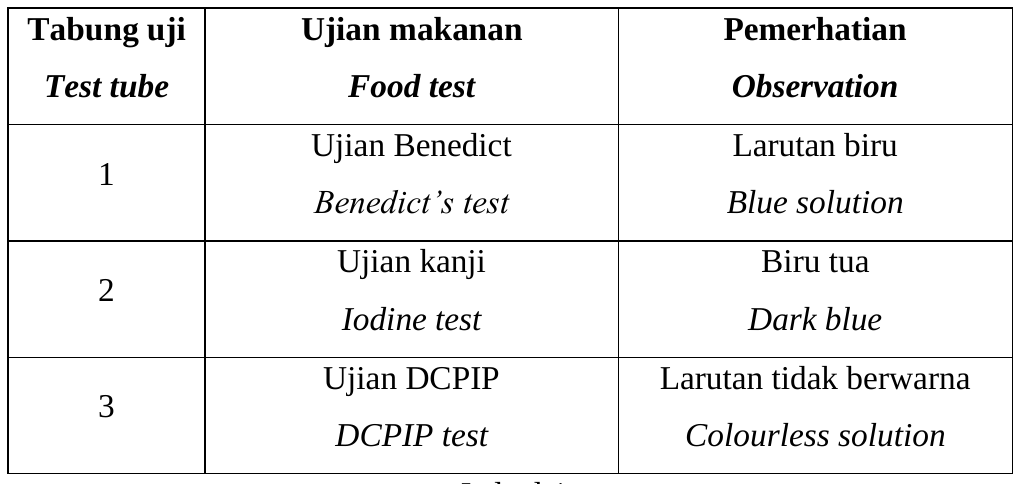
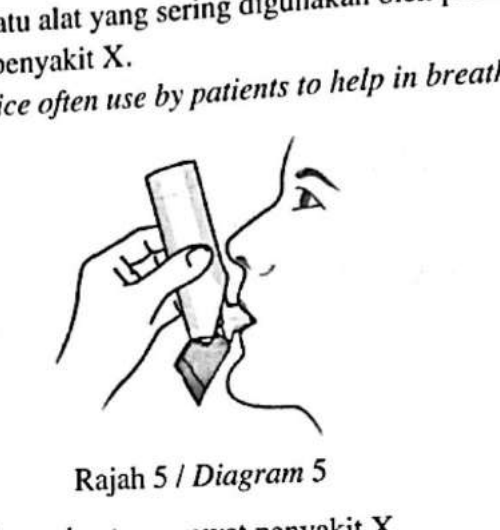
Three different food tests were carried out on a food sample. The results are shown in Table 1.
Test tube 1: Benedict's test - Blue solution
Test tube 2: Iodine test - Dark blue
Test tube 3: DCPIP test - Colourless solution
What is the food sample?
Medium
The following statement describes the eating habit of an individual.
Overeating and vomit out the food that they have eaten.
What health problem does the individual have ?
Easy
The following information shows the result of an experiment to determine the energy value of a cashew nut.
Mass of cashew nut: 2 g
Volume of distilled water: 20 ml
Initial temperature of water: 30 °C
Final temperature of water after the cashew nut has completely burned: 74 °C
Specific heat capacity of water: 4.2 J g⁻¹ °C⁻¹
How much is the calorific value of the cashew nut?
Medium
Which of the following diseases, is not related to obesity?
Easy
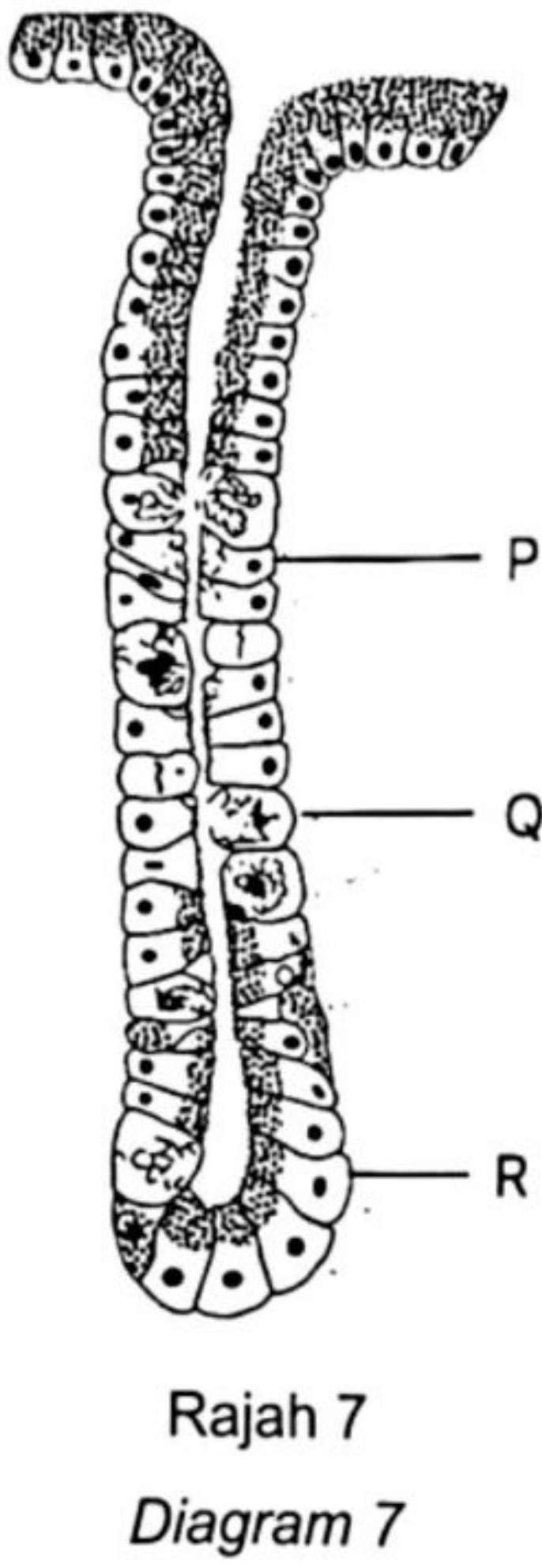
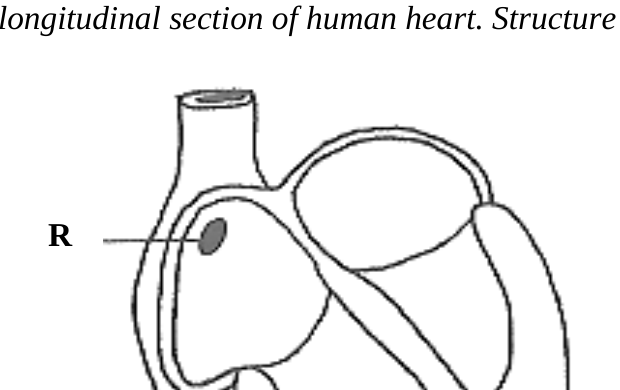
Diagram 7 shows epithelial cells of gastric gland in the wall of stomach. Cell P, Q and R involve in the digestion in the stomach. Which of the following statements explains the role of cell R in the digestion of protein?
Medium
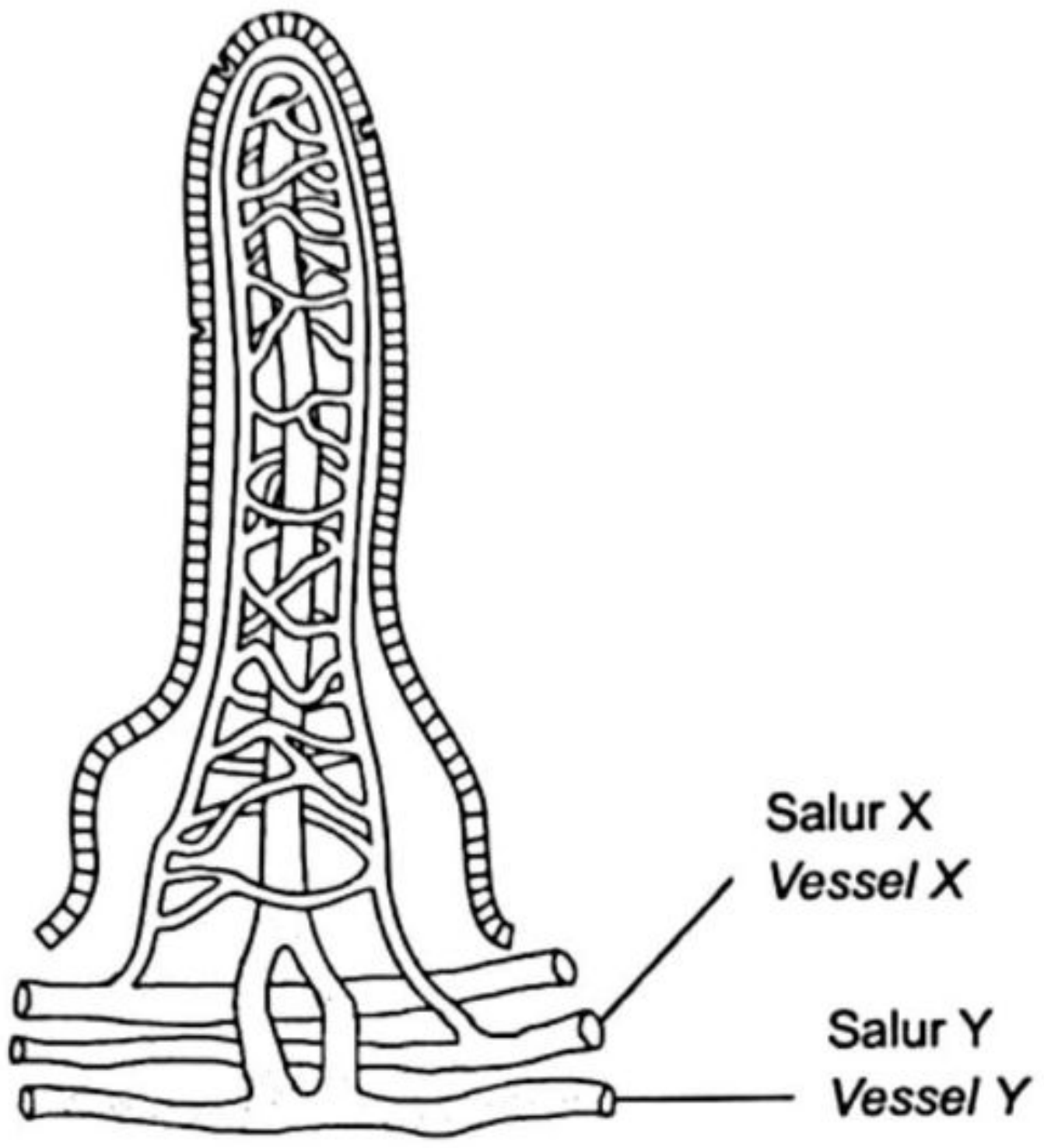
Diagram 8 shows a villus structure in human small intestine. A student has eaten a bread spread with margarine. After 20 minutes what substances will be transported by vessel X and vessel Y?
Medium
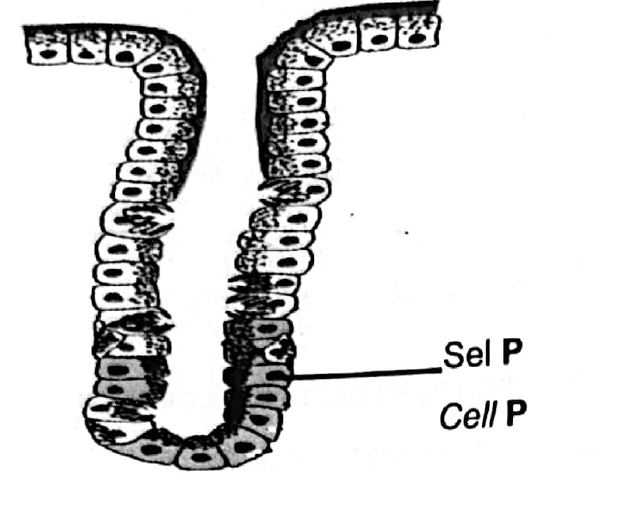
Diagram 11 shows a line of epithelial cells at gastric gland. What happens if cell P is malfunction?
Medium
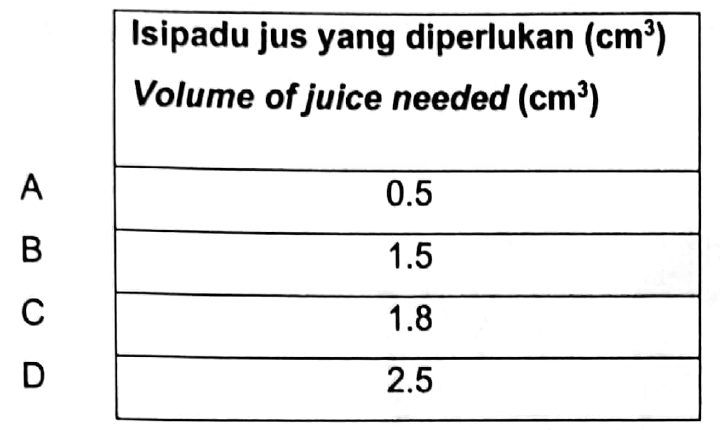
Table shows the volume of fruit juice required to decolourise the colour 1 cm³ of 0.1% DCPIP solution. Volume of juice needed (cm³): A 0.5; B 1.5; C 1.8; D 2.5. Which of the fruit juices A, B, C or D contains the highest vitamin C content?
Medium
Diagram 7 shows a part of the human digestive system where the digestion of food starts. Which of the following statements correctly describes what happens in the mouth? I Saliva emulsifies fats into smaller droplets; II Chewing increases the surface area of food for digestion; III Teeth break up smaller soluble molecules into large insoluble molecules; IV Salivary amylase breaks down large starch molecules into smaller maltose molecules.
Medium
The following statement is about a health problem related to eating disorder. 'Eating disorder is an illness that causes serious disturbances to everyday diet. The person may eat a lot of food at once and then try to get rid of the food by vomiting, using laxatives, or over-exercising. People with this disorder possibly get the medical symptoms such as weakness, fatigue, dehydration, mouth and throat problems.' Which of the following is the health problem related?
Easy
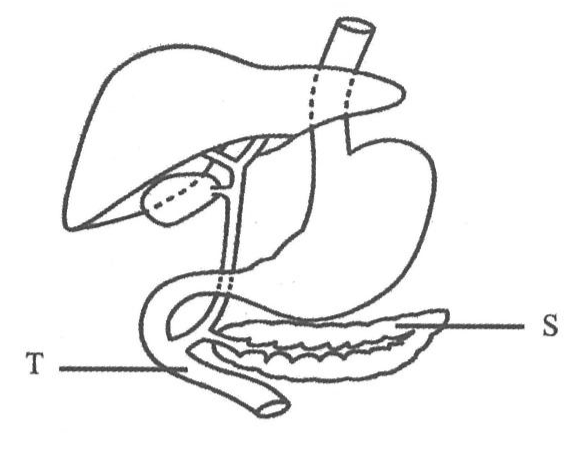
Diagram 10 shows a structure of the human digestive system. What is the function of the juice secreted by S into T?
Medium
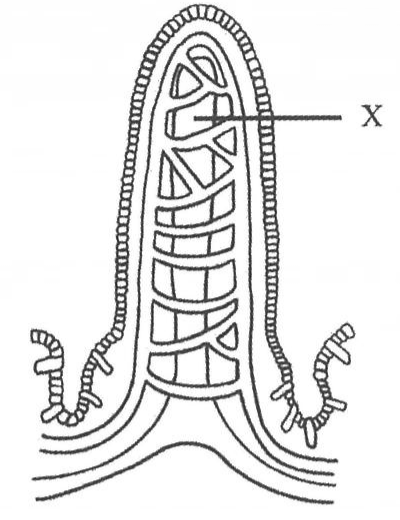
Diagram 11 shows a longitudinal section of a villus. Which of the following food source and substance absorbed are related to structure X?
Medium
0.5 g of food sample X was burned in a calorimeter bomb. The heat energy released increases the temperature of 1000 cm³ water from 25.1 °C to 27.1 °C. The energy needed to increase the temperature of 1 cm³ of water by 1 °C is 4.20 J. What is the energy value for food sample X?
Medium
A balanced diet for an individual changes following the life style, health condition and specific nutrient requirement for each individual. The nutrient requirement can be based on Pinggan Sihat Malaysia. Which is the most suitable menu based on Pinggan Sihat Malaysia for an obese person?
Medium
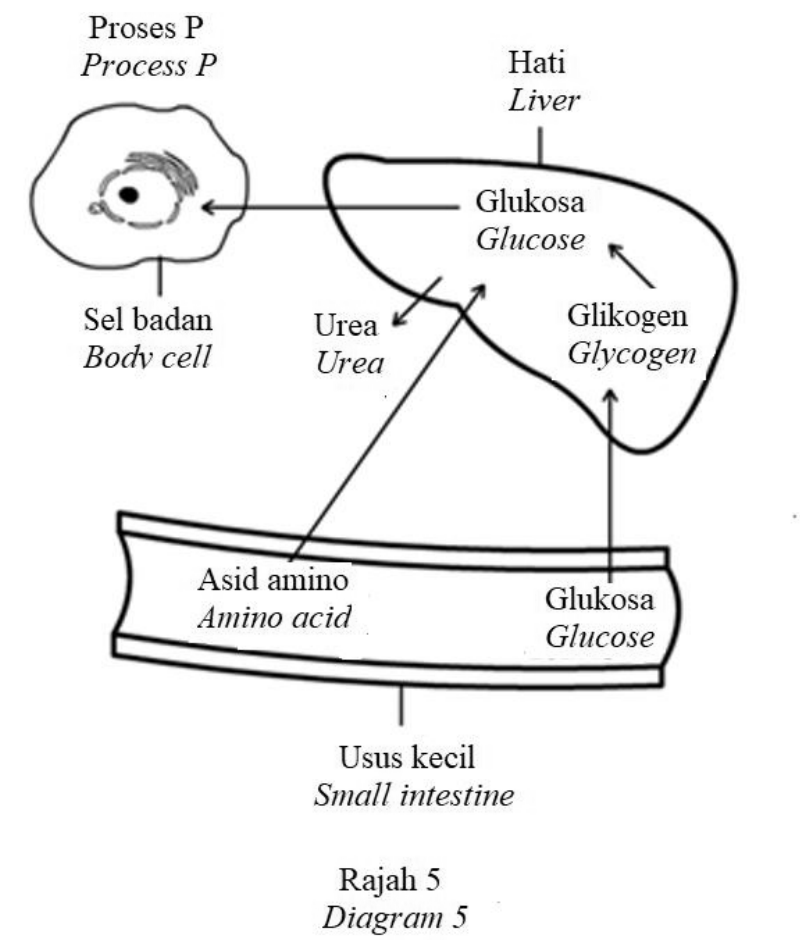
Diagram 5 shows the pathway of nutrients to body cell (glucose from the liver goes to the body cell by process P). Process P is
Easy
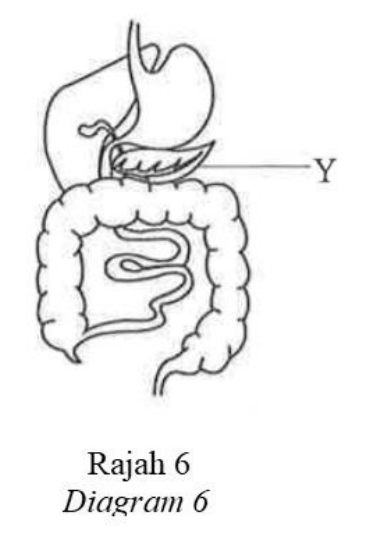
Diagram 6 shows organ Y in the human digestive system (Y is the pancreas). If the organ Y is damaged, an individual will have problems in digesting
Medium
A patient has undergone bile removal surgery. Which of the following menus is most suitable for the patient?
Medium
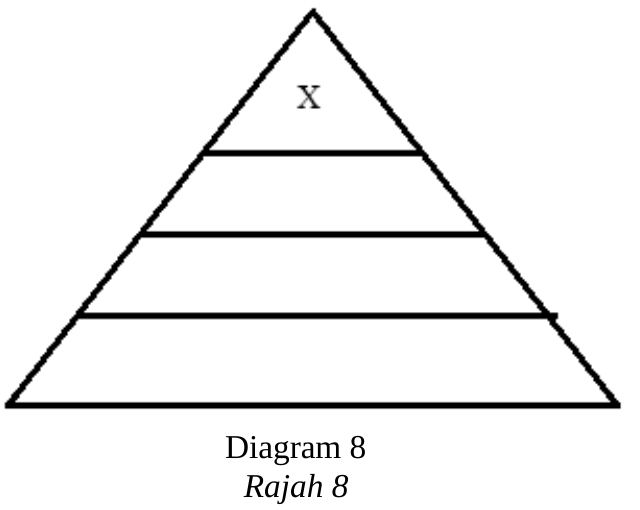
Diagram 8 shows the food pyramids that fulfills the needs of a growing child. What is X?
Easy
Diagram 6 shows a part of human digestive system. Which structure labelled A, B, C or D produces bile?
Easy
Diagram 7 shows a structure of villus. Which pair of nutrient and method of absorption in M and N is correct?
Medium
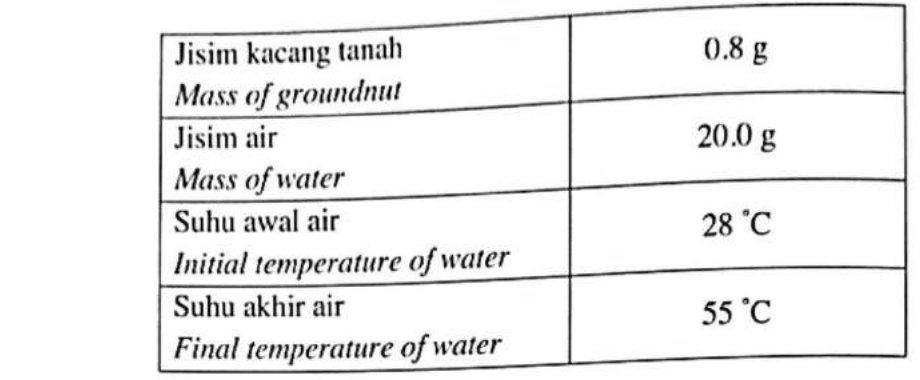
Table 1 shows the result of an experiment to determine the energy value of a groundnut: mass of groundnut 0.8 g; mass of water 20.0 g; initial temperature of water 28 °C; final temperature of water 55 °C. The specific heat capacity of water is 4.2 J g⁻¹ °C⁻¹. Calculate the energy value of the groundnut per gram.
Medium
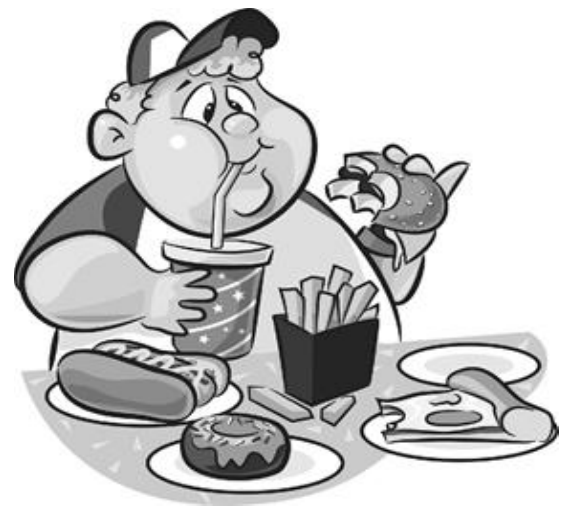
Diagram 8 shows a boy with an unhealthy eating habit. What is the long-term effect of this habit on the boy?
Easy
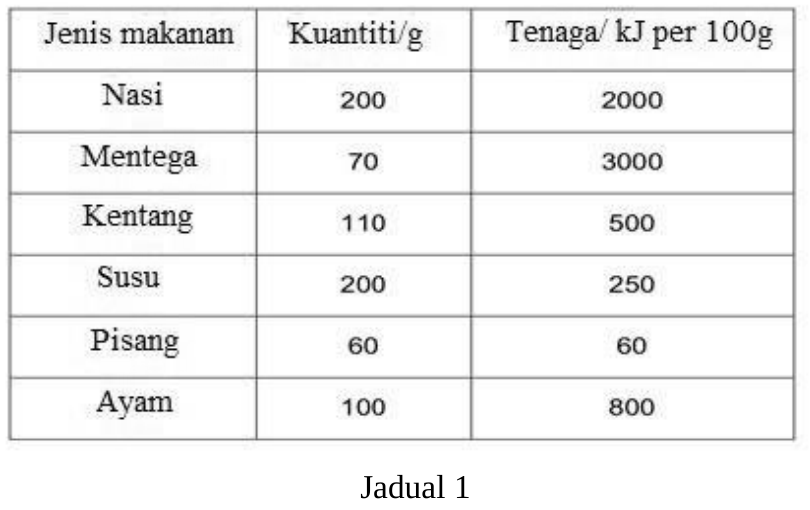
Table 1 shows the types and quantities of food taken by a student in a day.
Food | Quantity/g | Energy/kJ per 100 g
Rice | 200 | 2000
Butter | 70 | 3000
Potato | 110 | 500
Milk | 200 | 250
Banana | 60 | 60
Chicken | 100 | 800
What is the total energy obtained by the student in a day?