Which of the following statements is true about primary and secondary growth?
Medium
Which of the following plant tissues have lignified cell walls to provide support and strength to the growing plant?
I Parenchyma
II Sclerenchyma
III Xylem vessels
IV Collenchyma
Medium
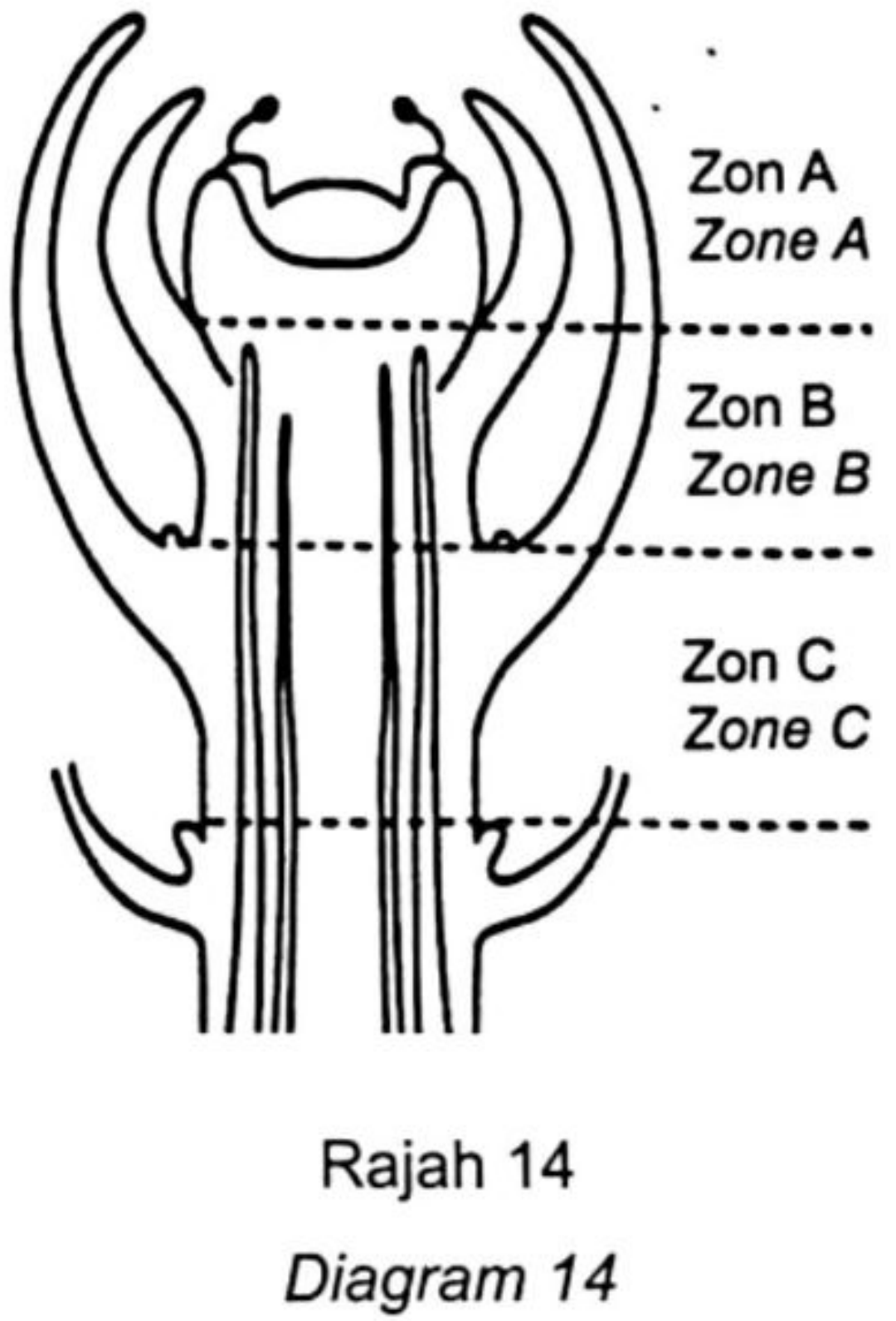
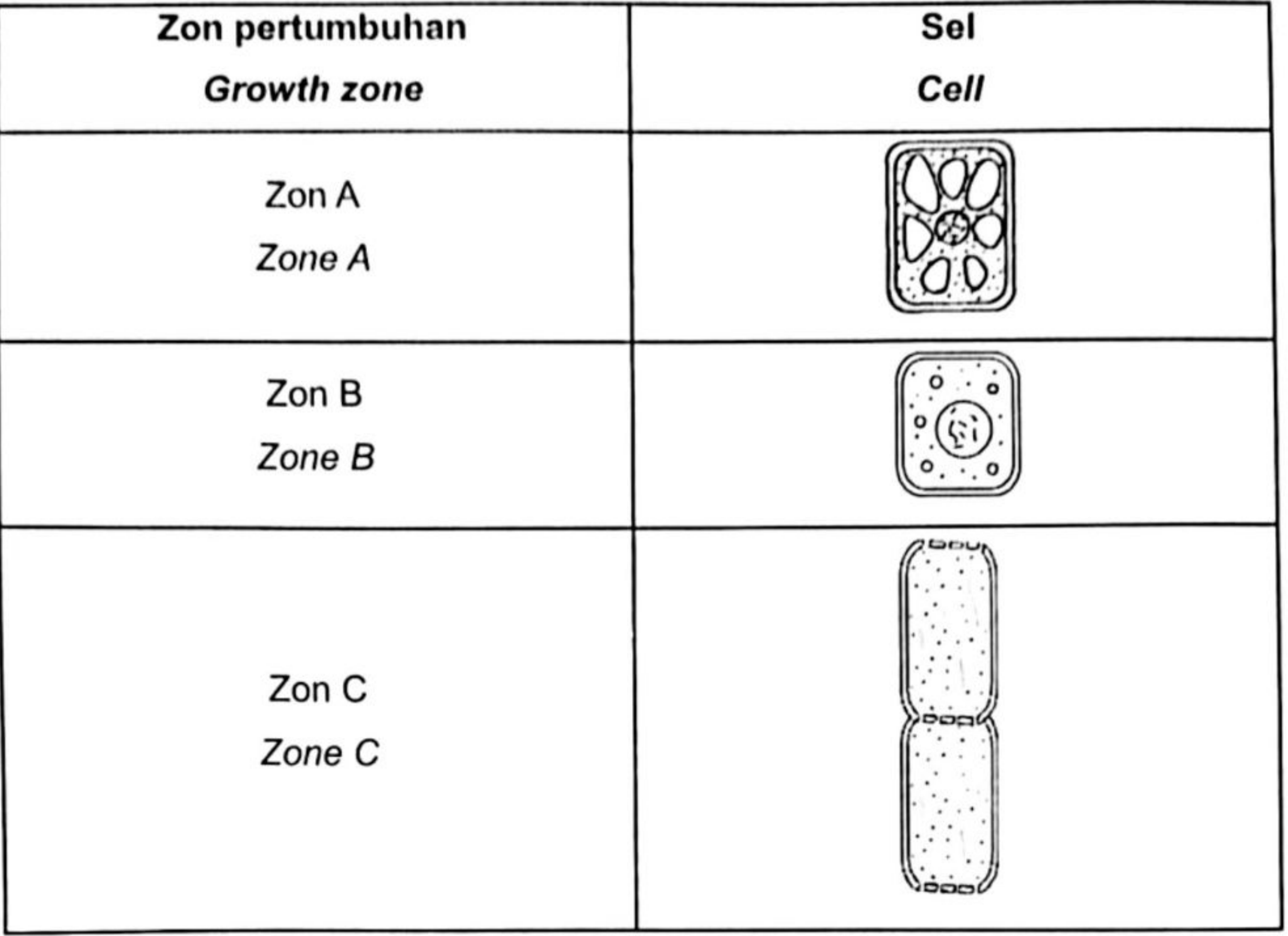
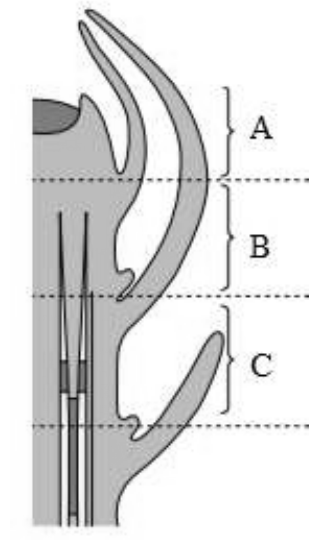
Diagram 14 shows the longitudinal section of eudicot plant shoot (Zones A, B and C). Which of the following match between growth zone in Diagram 14 with the cell is correct? (Options A, B, C pair Zone A, B, C with a cell drawing, shown in the table figure: Zone A - small dividing cell with many small vacuoles; Zone B - cell with a few small vacuoles and a nucleus; Zone C - long, elongated cell.)
Medium
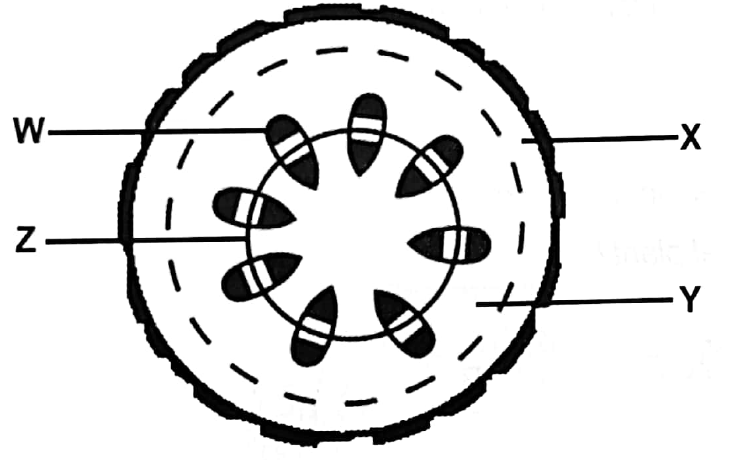
Diagram 18 shows a cross section of the stem from plant R, with parts labelled W, X, Y and Z. Which of the following part labelled is matched correctly with its function? A: W - Provide mechanical support to plant. B: X - Protect stem from insect and pathogen attack when epidermis crack. C: Y - Divide actively through mitosis. D: Z - To form the harder and stronger wood.
Medium
Which plant is biennial plant? (Drawings: A pea plant with pods, B onion plant, C strawberry plant.)
Easy
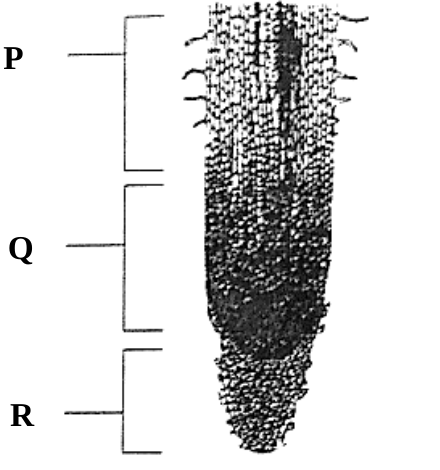
Diagram 5 shows the longitudinal section of a plant root. Which part of the root system carry out mitosis?
Medium
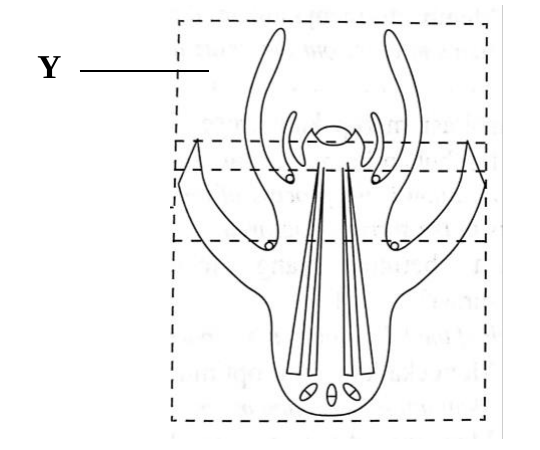
Diagram 12 shows growth zone in plant shoot. What is zone Y?
Medium
Which of the following pairs of tissue and function is true? I Vascular tissue: transport water and nutrient; II Meristem tissue: controls the loss of mineral; III Mesophyll tissue: provide support; IV Epidermal tissue: protects the tissues beneath it.
Medium
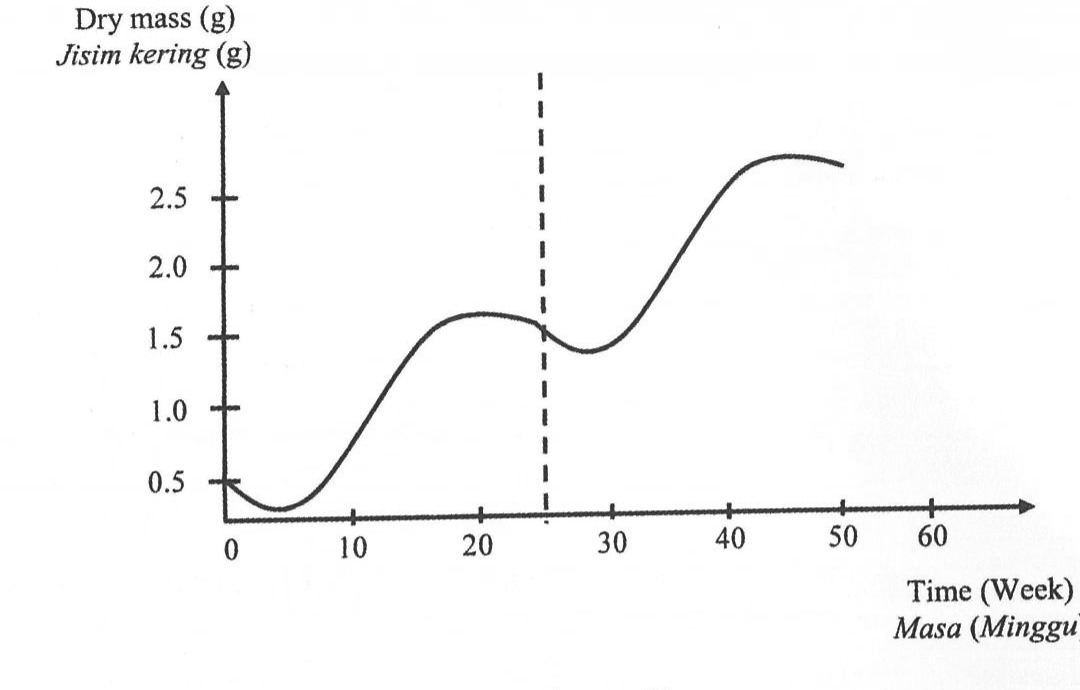
Diagram 23 shows the growth curve in a plant (dry mass in g against time in weeks, two growth cycles). Which of the following describes the growth curve?
Medium
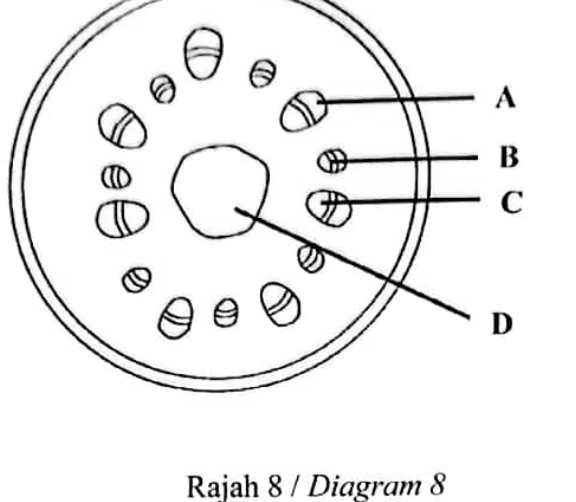
Diagram 8 shows a cross section of a stem of a dicot plant. Which of the parts labelled A, B, C or D is the pith?
Easy
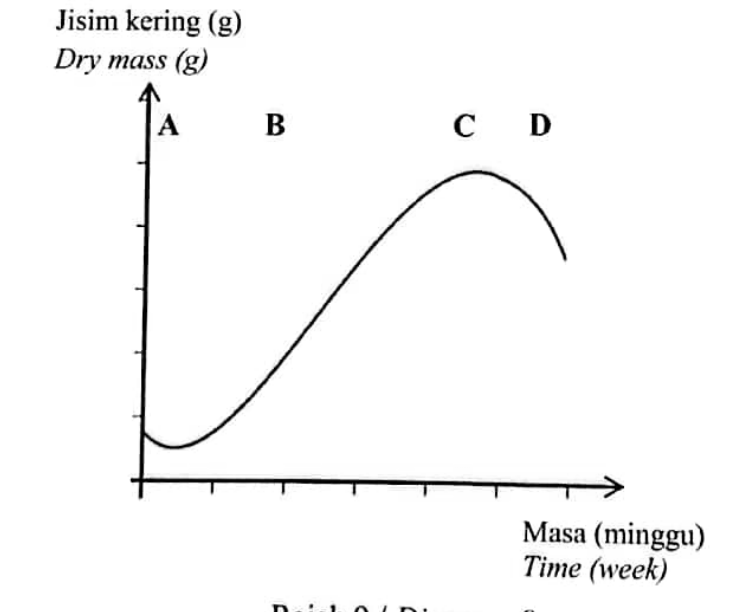
Diagram 9 shows the growth curve of annual plants (dry mass (g) against time (week)). Which of the stages A, B, C or D shows the plant has carried out photosynthesis?
Medium
Which of the following tissues involved in photosynthesis?
Easy
Which of the following are plant organs?
I Phloem
II Root
III Xylem
IV Leaf
Easy
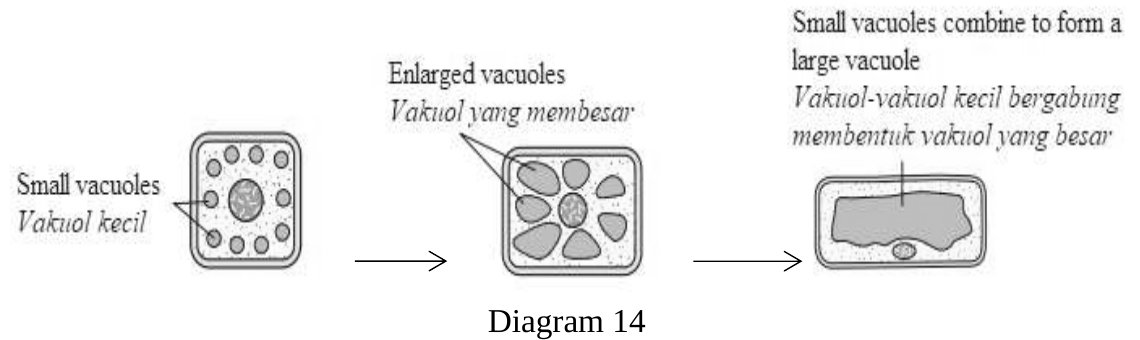
Diagram 14 shows a process that occur at the shoot tip: small vacuoles enlarge and combine to form a large vacuole. In which zone, A, B or C, does the process take place?
Medium
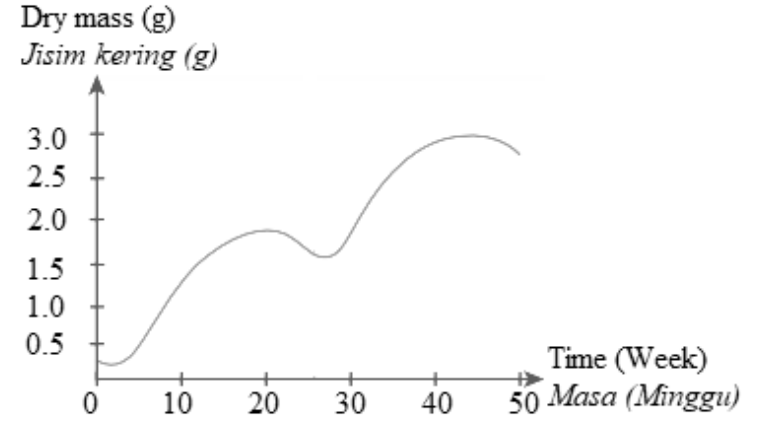
Diagram 15 shows the growth curve of cabbage (dry mass in g against time in weeks, with two growth phases separated by a dip). Which of the following plants has the same growth curve as the cabbage?
Medium
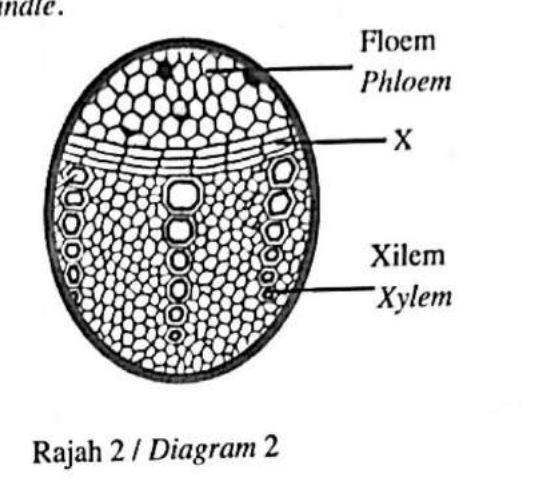
Diagram 2 shows vascular bundle. Which of the following is not the function of X?
Medium
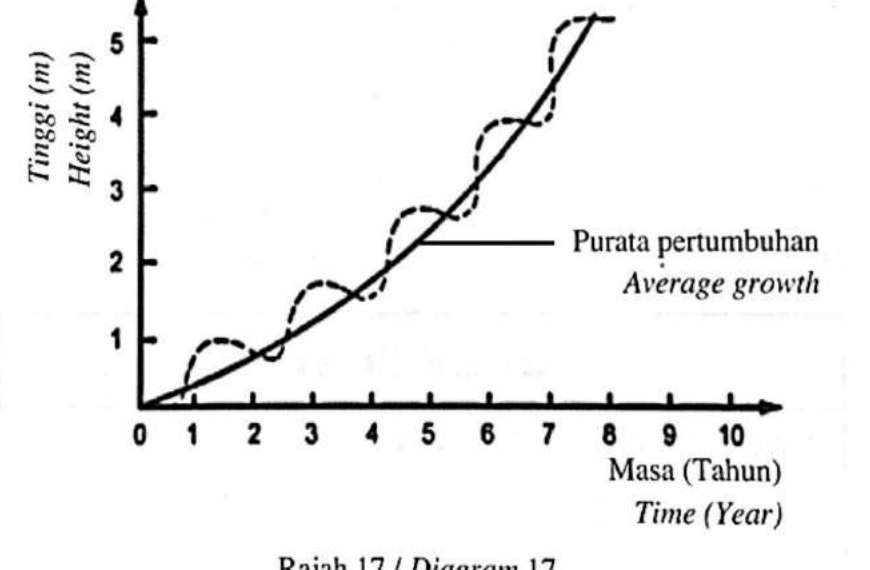
Diagram 17 shows the growth curve of one type of plant (height in m against time in years, 0 to 10 years). Name the type of plant that represents the growth curve.