Table 2 shows the differences between light-dependent reaction and light-independent reaction during photosynthesis.
P: Light-dependent - Takes place in the stroma; Light-independent - Takes place in the granum
Q: Light-dependent - Oxygen is released; Light-independent - Oxygen is not released
R: Light-dependent - Occurs during day time; Light-independent - Occurs during the night
S: Light-dependent - Glucose is not formed; Light-independent - Glucose is formed
Which of the following shows the correct differences?
Medium
Which of the following are the differences between guard cells and epidermal cells in the leaf?
I Guard cells can synthesis glucose while epidermal cells are unable to do so.
II Guard cells are located in the spongy mesophyll layer while epidermal cells only located in the lower surface of leaf.
III Guard cells have irregular shape while epidermal cells have bean-shaped.
IV Guard cells can change their shape to regulate the loss of water while epidermal cells only have protective functions.
Medium
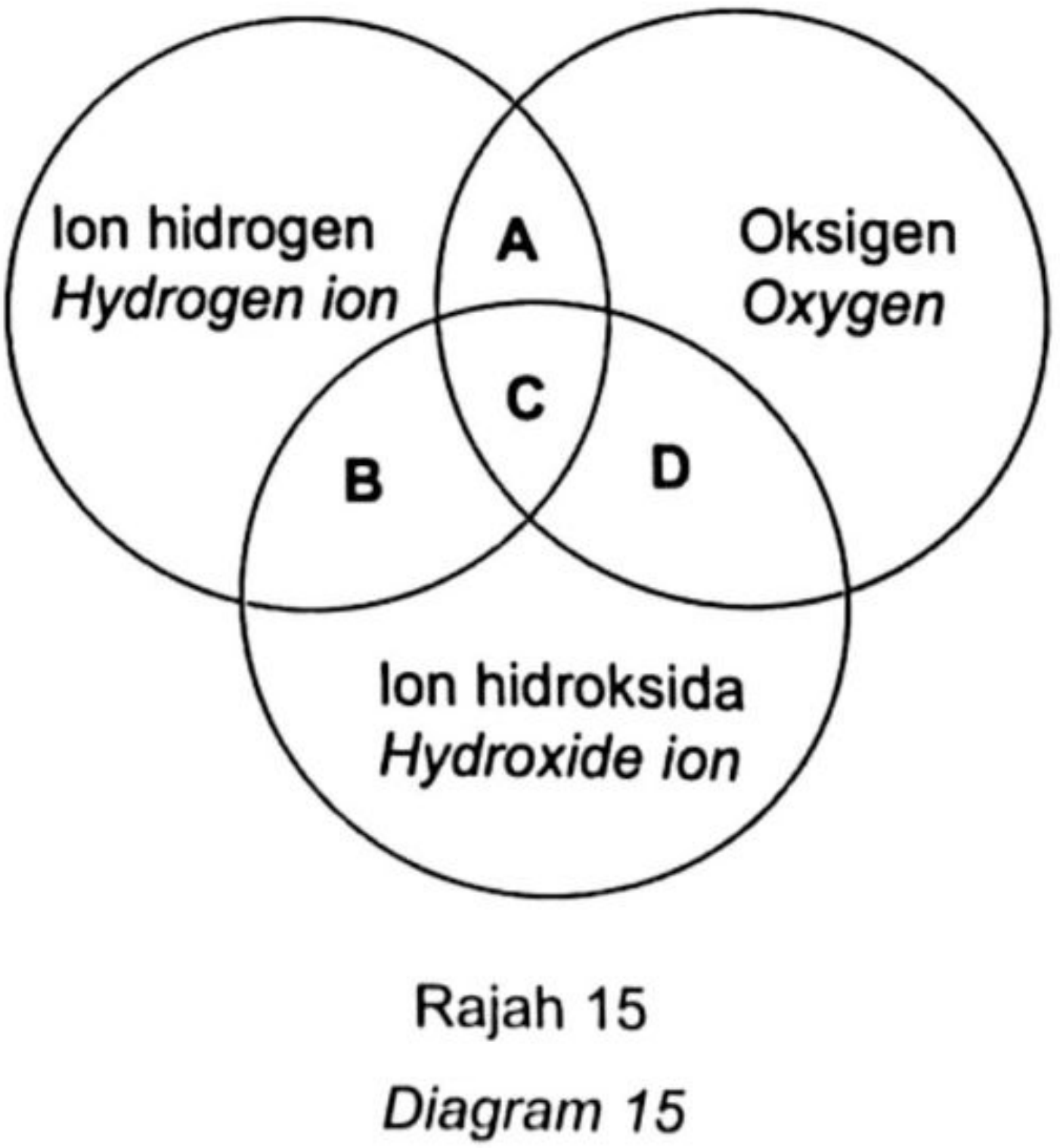
Diagram 15 (a Venn diagram of Hydrogen ion, Oxygen and Hydroxide ion with areas A, B, C, D) shows some substances found in the plant cells. Which of the areas A, B, C or D represents the product of water photolysis?
Medium
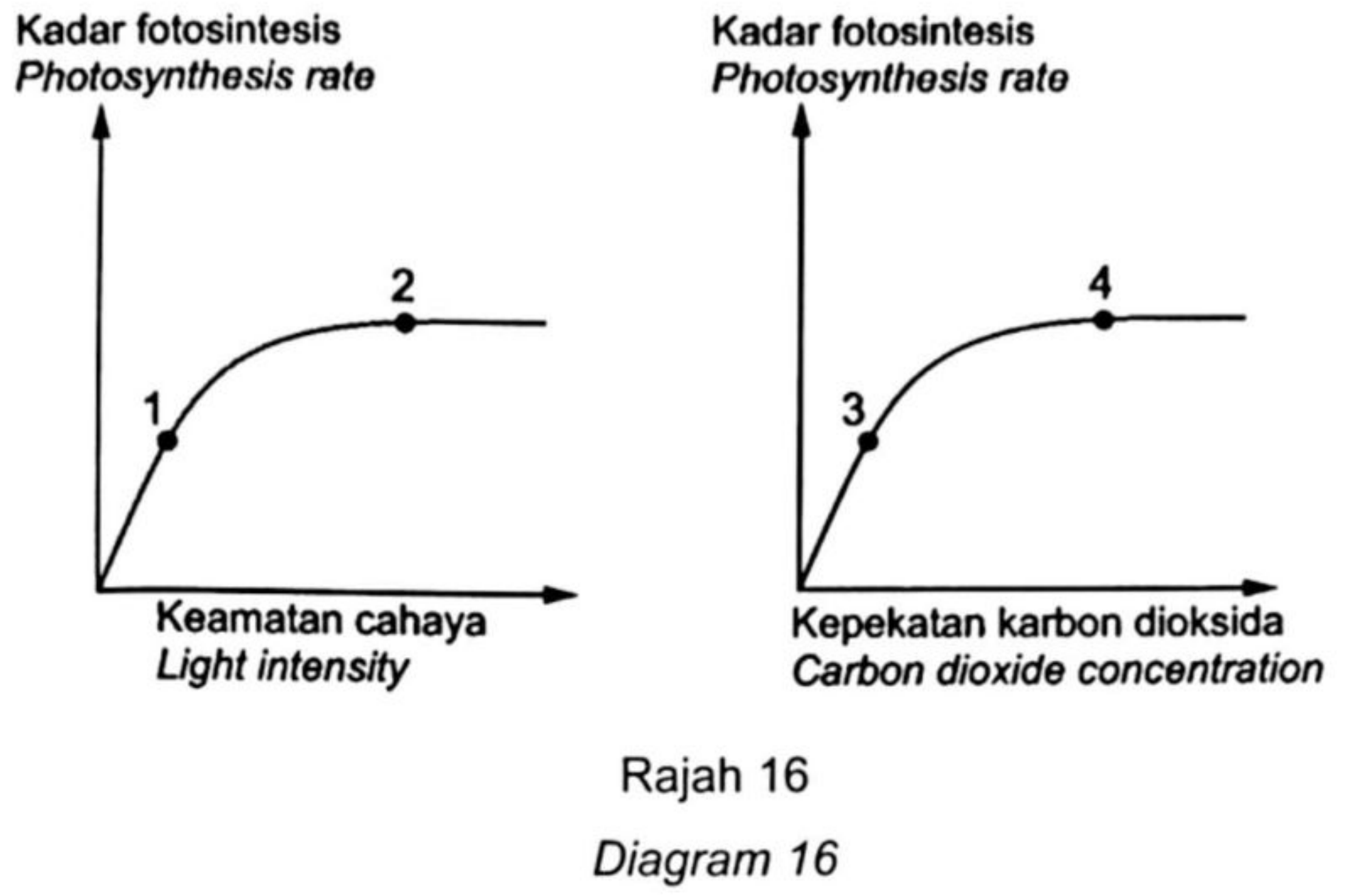
Diagram 16 shows two surrounding factors that affect the rate of photosynthesis (light intensity graph with points 1 and 2; carbon dioxide concentration graph with points 3 and 4). Which points of the graphs in Diagram 16 show that the photosynthesis rate is limited by the carbon dioxide concentration?
Medium
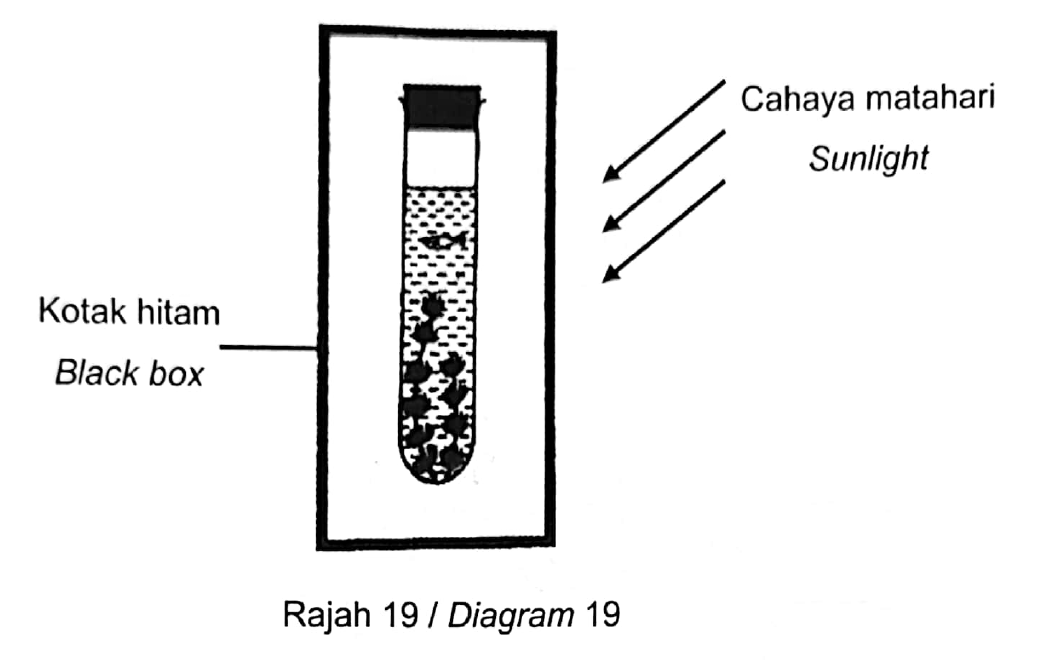
Diagram 19 shows an experiment carry out to study photosynthesis (a test tube containing a small fish and aquatic plant, placed in a black box, in sunlight). Which of the experiment result describe the condition happens after two hours? A: Small fish and plant survive; High concentration of oxygen. B: Small fish and plant survive; Low concentration of oxygen. C: Small fish and plant die; High concentration of oxygen. D: Small fish and plant die; Low concentration of oxygen.
Medium
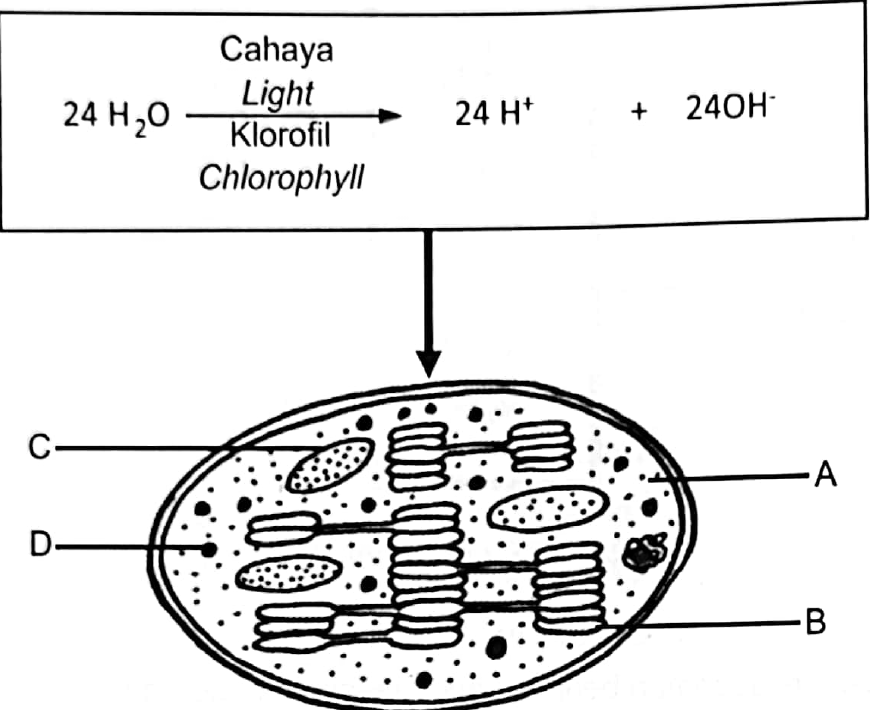
Diagram 20 shows an equation of a process which occurs in chloroplast: 24 H2O -(light, chlorophyll)-> 24 H+ + 24 OH-. Which part labelled A, B, C or D in the chloroplast involved in the process?
Medium
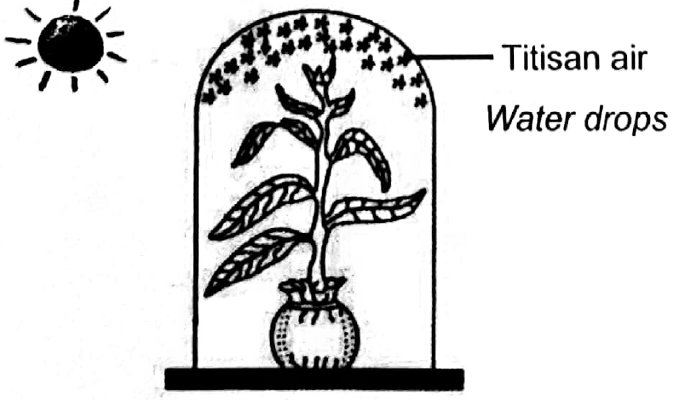
Diagram 23 is an experiment carry out to study a process that occurs on leaves (a potted plant under a bell jar in sunlight, with water drops on the inside of the jar). Which of the following processes related with the study?
Medium
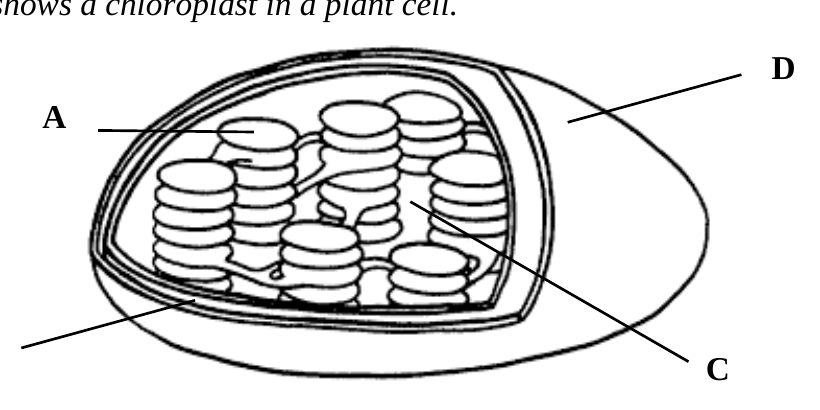
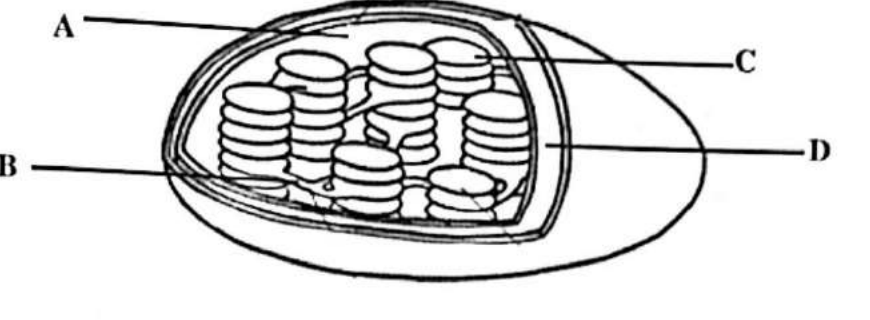
Diagram 13 shows a chloroplast in a plant cell. Which of the structure A, B, C and D, is the site for light dependent reaction for photosynthesis to take place?
Easy
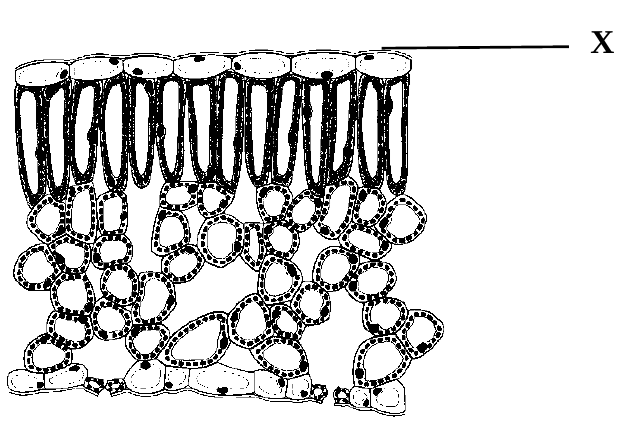
Diagram 14 shows a cross section of a leaf. This plant is exposed to dust from a nearby housing construction site. What is the effect on photosynthesis if structure X is covered with dust from the construction site?
Medium
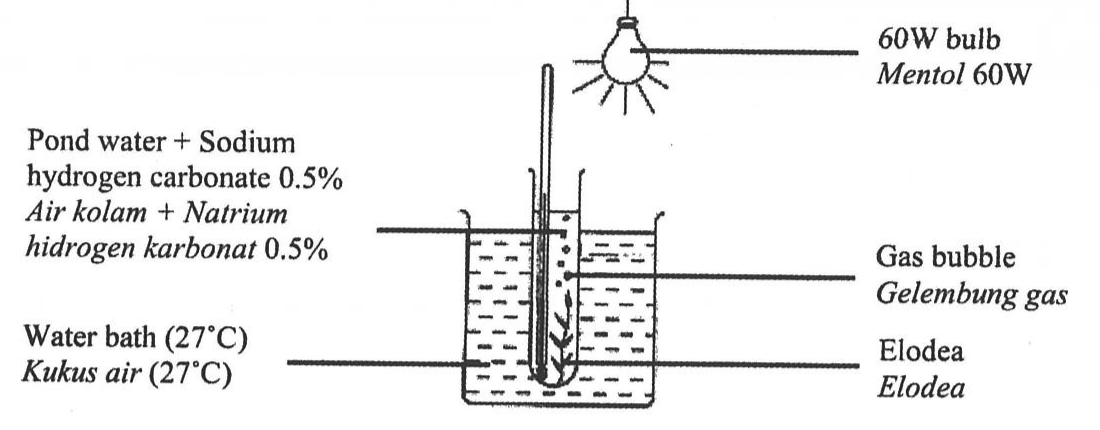
Diagram 24 shows an experiment to study photosynthesis (60W bulb; pond water + sodium hydrogen carbonate 0.5%; water bath 27°C; Elodea). Which of the following statements will increase the number of gas bubble released in the experiment? I Using an 80W bulb; II Using a water bath set at 15°C; III Reduce the number of leaves of Elodea plant; IV Using sodium hydrogen carbonate solution 1.0%
Medium
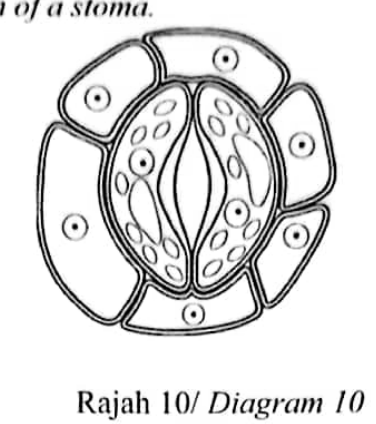
Diagram 10 shows a condition of a stoma. Which of the following factors cause the stoma to be in the condition as shown in Diagram 10?
I High intensity of light
II High air humidity
III High concentration of carbon dioxide in the atmosphere
IV High concentration of oxygen in the atmosphere
Medium
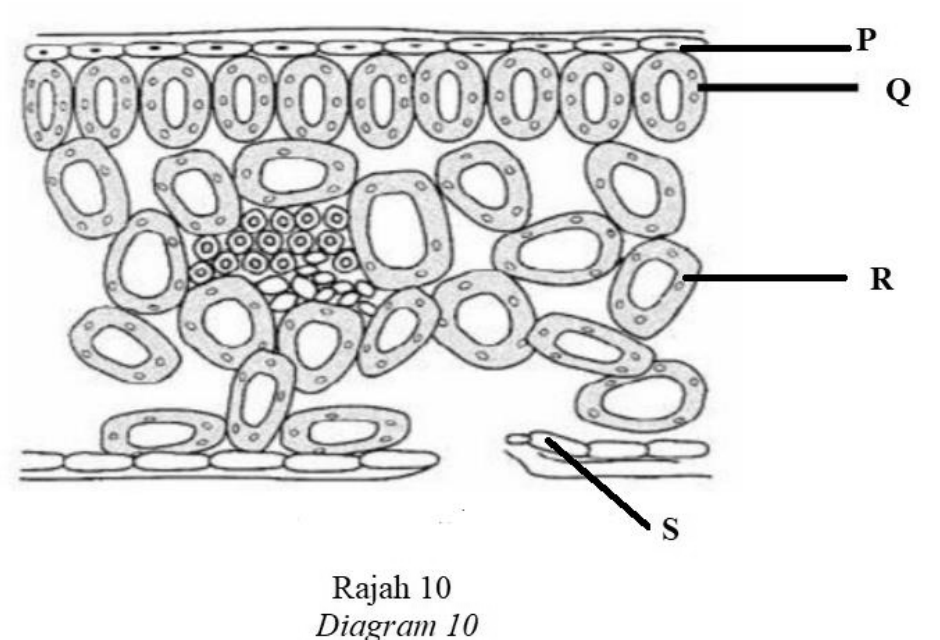
Diagram 10 shows a longitudinal section of a green leaf. Which cells contain a high density of chloroplast?
Medium
What is guttation?
Easy
Which of the following occurs during photolysis of water?
I Hydrogen ions are produced
II ATP is produced
III Water molecules are formed
IV NADPH are broken down
Medium
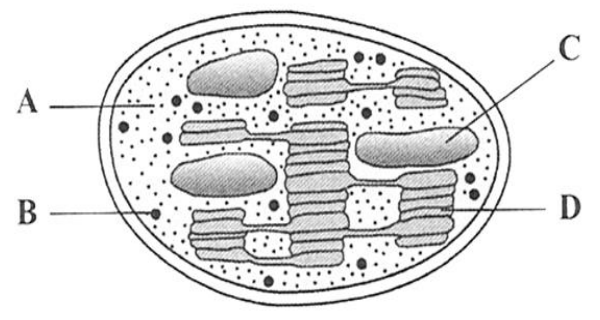
Diagram 18 shows the cross section of an organelle. Which of the structures labelled A, B, C and D in the organelle is thylakoid?
Easy
Diagram 11 shows the structure of a chloroplast. Which part labelled A, B, C or D is involved in the light-independent reaction?