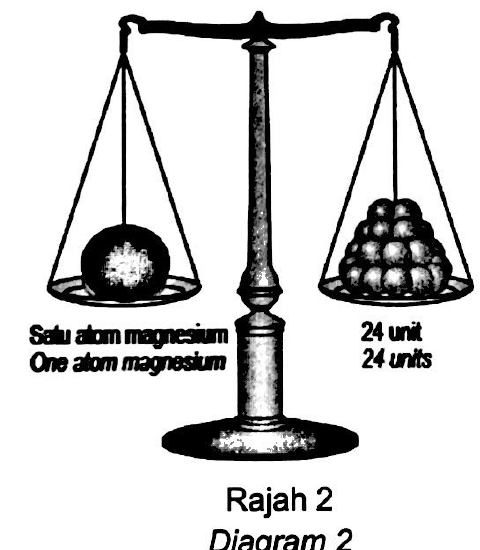
Diagram 2 shows a magnesium atom compared to standard atom of carbon-12.
What is the relative atomic mass of magnesium?
Medium
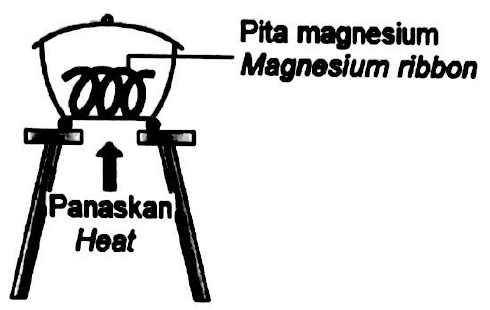
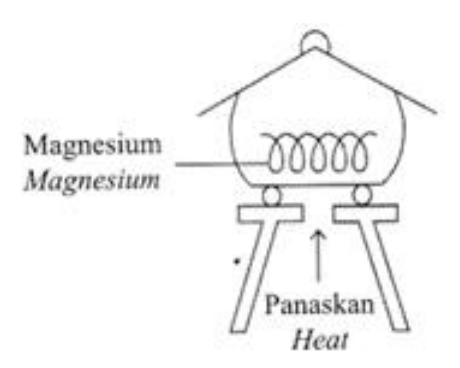
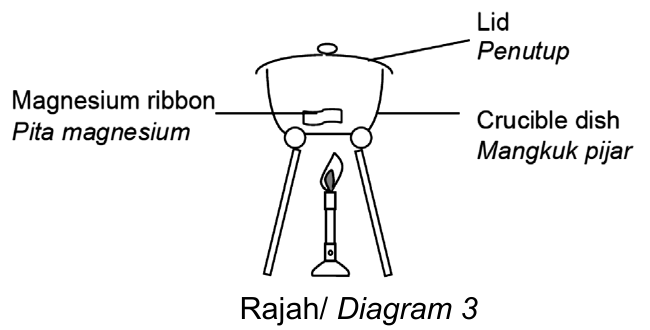
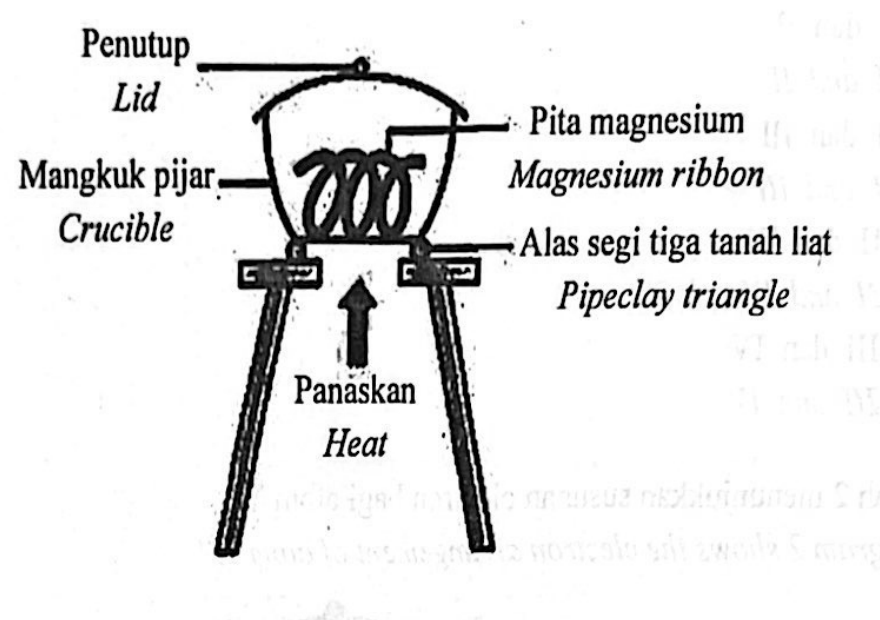
Diagram 13 shows the apparatus set-up to determine the empirical formula of magnesium oxide.
Which of the following steps is correct to ensure the magnesium ribbon reacts with oxygen and burnt completely?
I Repeat the process of heating, cooling and weighing until a constant mass is obtained.
II Heat the magnesium ribbon strongly in the crucible without its lid.
III Cover the crucible with its lid as soon as the magnesium ribbon starts burning.
IV Open and close the crucible lid once in a while during heating
Medium
X consists of two isotopes, ³⁵₁₇X and ³⁷₁₇X. The natural abundance of ³⁵₁₇X is 75% and ³⁷₁₇X is 25%. Calculate the relative atomic mass of X.
Medium
What is the percentage composition of water by mass in hydrated iron(II) sulphate, FeSO₄.7H₂O?
[Relative atomic mass: H = 1, O = 16, S = 32, Fe = 56]
Medium
The following equation shows the complete combustion of propene gas.
2C₃H₆ (g) + 9O₂ (g) → 6CO₂ (g) + 6H₂O (g)
What is the mass of water produced when 2.1 g of propene gas is burnt completely?
[Relative atomic mass: H = 1; C = 12; O = 16]
Medium
Which substance has the same number of atoms as 12 g of carbon-12?
Medium
The molecular formula of propyl propanoate is CH₃CH₂COOCH₂CH₂CH₃. What is the empirical formula of propyl propanoate?
Medium
Diagram 33 shows a patient consumes 10 mg aspirin. The relative molecular mass of aspirin is 180. What is the number of molecules in this sample of aspirin? [Avogadro number = 6.02 × 10²³ mol⁻¹]
Medium
The following chemical equation represents the complete combustion of propane: C₃H₈ + 5O₂ → 3CO₂ + 4H₂O. What is the volume of oxygen gas used if 5.5 g of propane is completely burnt in air? [Relative atomic mass: O = 16, C = 12, H = 1; Molar volume of gas = 24 dm³ mol⁻¹ at room conditions]
Medium
Which of the following statements is correct about empirical formula?
Easy
Element K and element S are located in Group 13 and Group 16 of the Periodic Table of Elements. Element K reacts with element S to form a compound. What is the chemical formula of the compound formed?
Medium
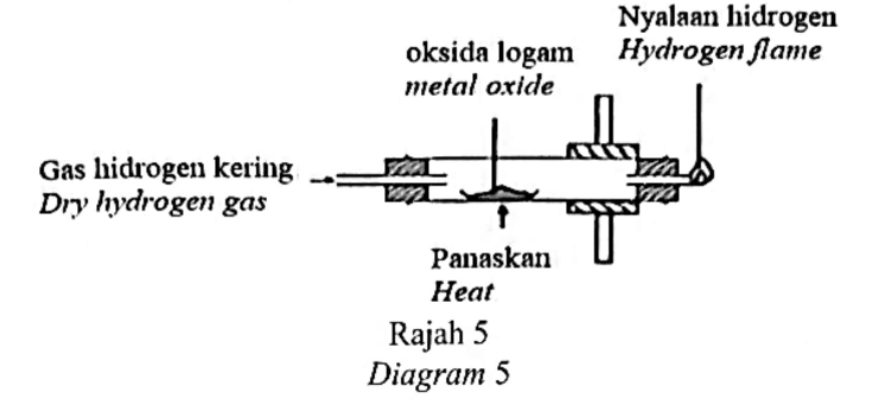
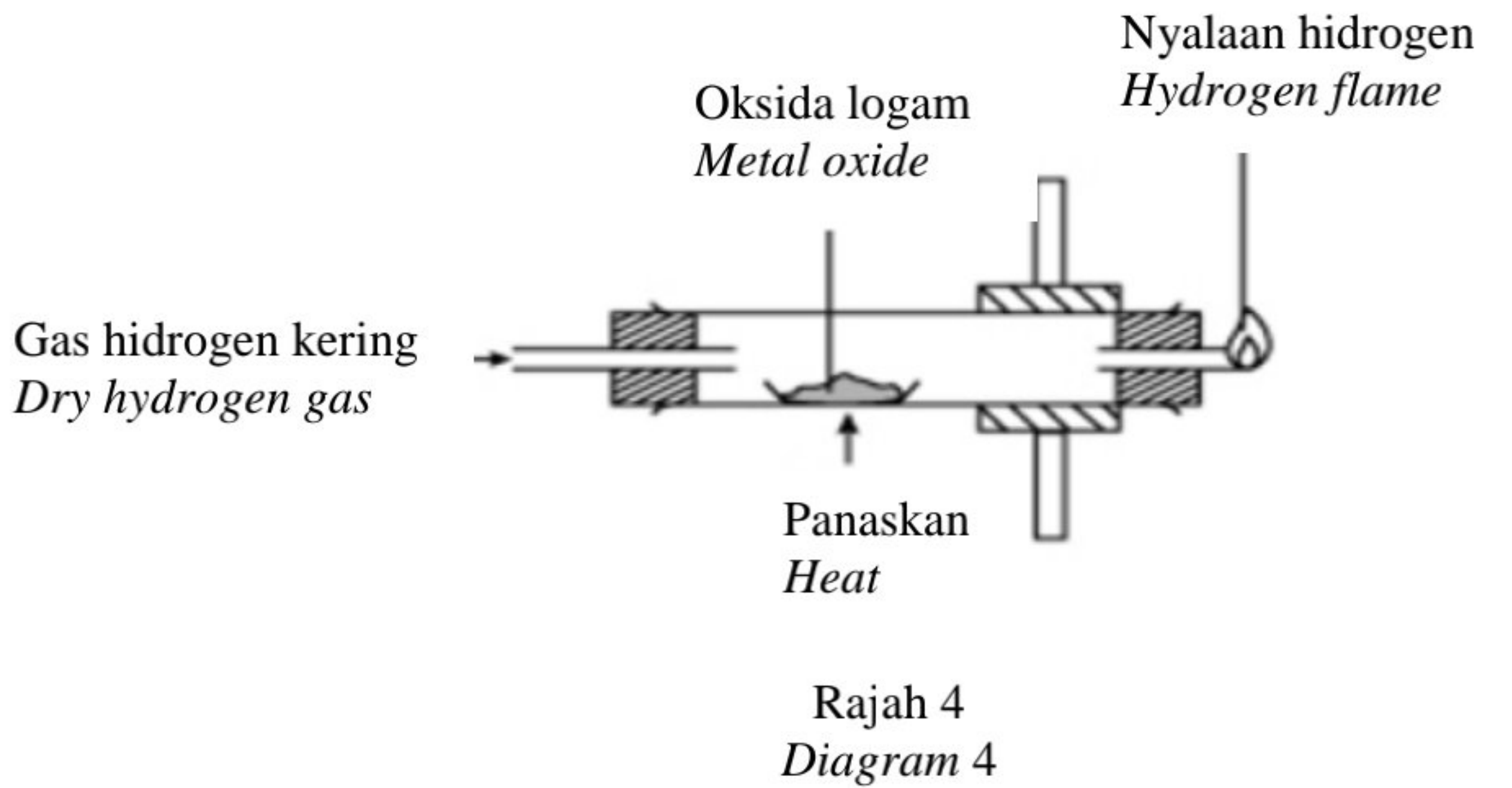
Diagram 5 shows the apparatus set-up to determine the empirical formula of a metal oxide (dry hydrogen gas passed over heated metal oxide, hydrogen flame at the end). Which of the following metal oxides is suitable to be used in this experiment?
Medium
What is the relative molecular mass of 4-methylpent-2-ene? [Relative atomic mass: H = 1; C = 12]
Medium
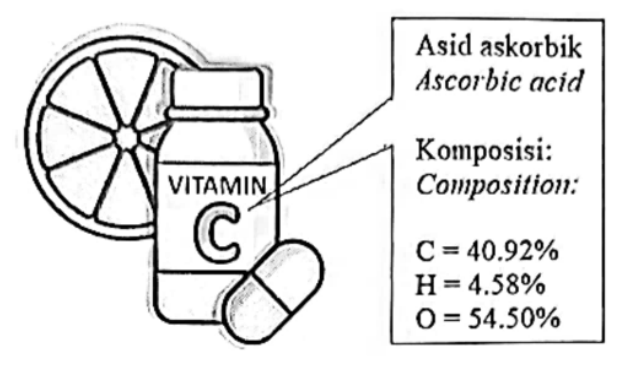
Diagram 12 shows the composition of ascorbic acid in vitamin C serum (C = 40.92%; H = 4.58%; O = 54.50%). What is the empirical formula for ascorbic acid? [Relative atomic mass: H = 1; C = 12; O = 16]
Medium
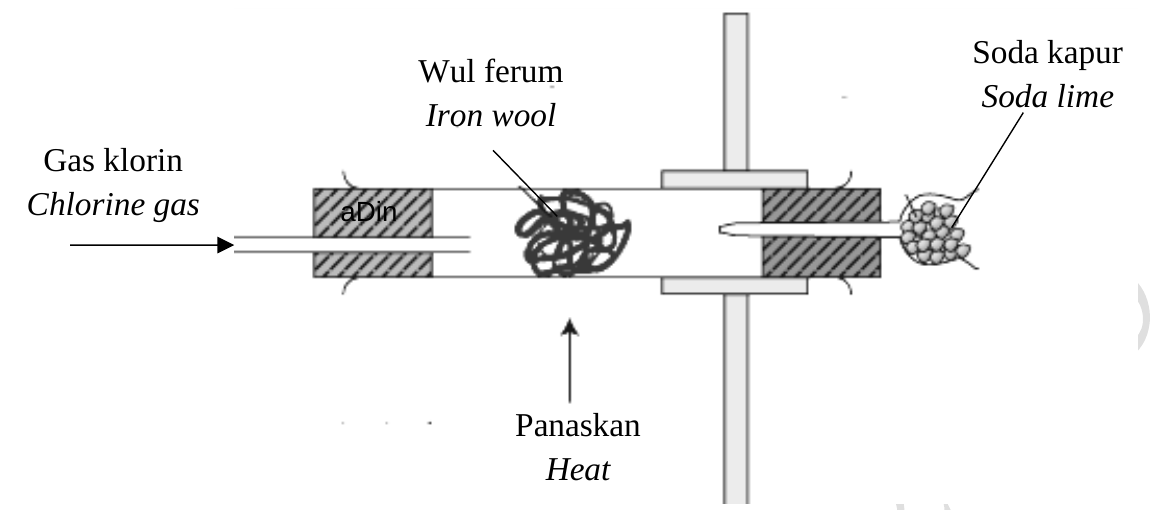
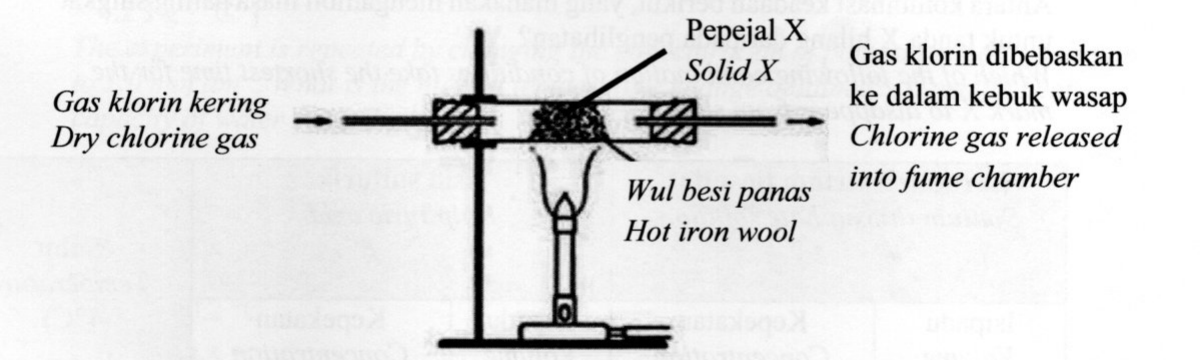
3Cl₂ + 2Fe → 2X, where X is a brown solid. What is the mass of X formed when 120 cm³ of chlorine gas reacted with hot iron wool at room temperature? [Relative atomic mass: Cl = 35.5; Fe = 56; Molar volume of gas at room temperature = 24 dm³ mol⁻¹]
Medium
Which of the following gases contains 0.6 mol of atoms at room temperature and pressure? [Molar volume of gas = 24 dm³ mol⁻¹ at room conditions]
Medium
Diagram 1 shows the chemical formula of potassium hexacyanoferrate (III) trihydrate: K₄Fe(CN)₆.3H₂O. What is the relative mass of this compound? [Relative atomic mass: H = 1, C = 12, O = 16, K = 39, Fe = 56, N = 14]
Medium
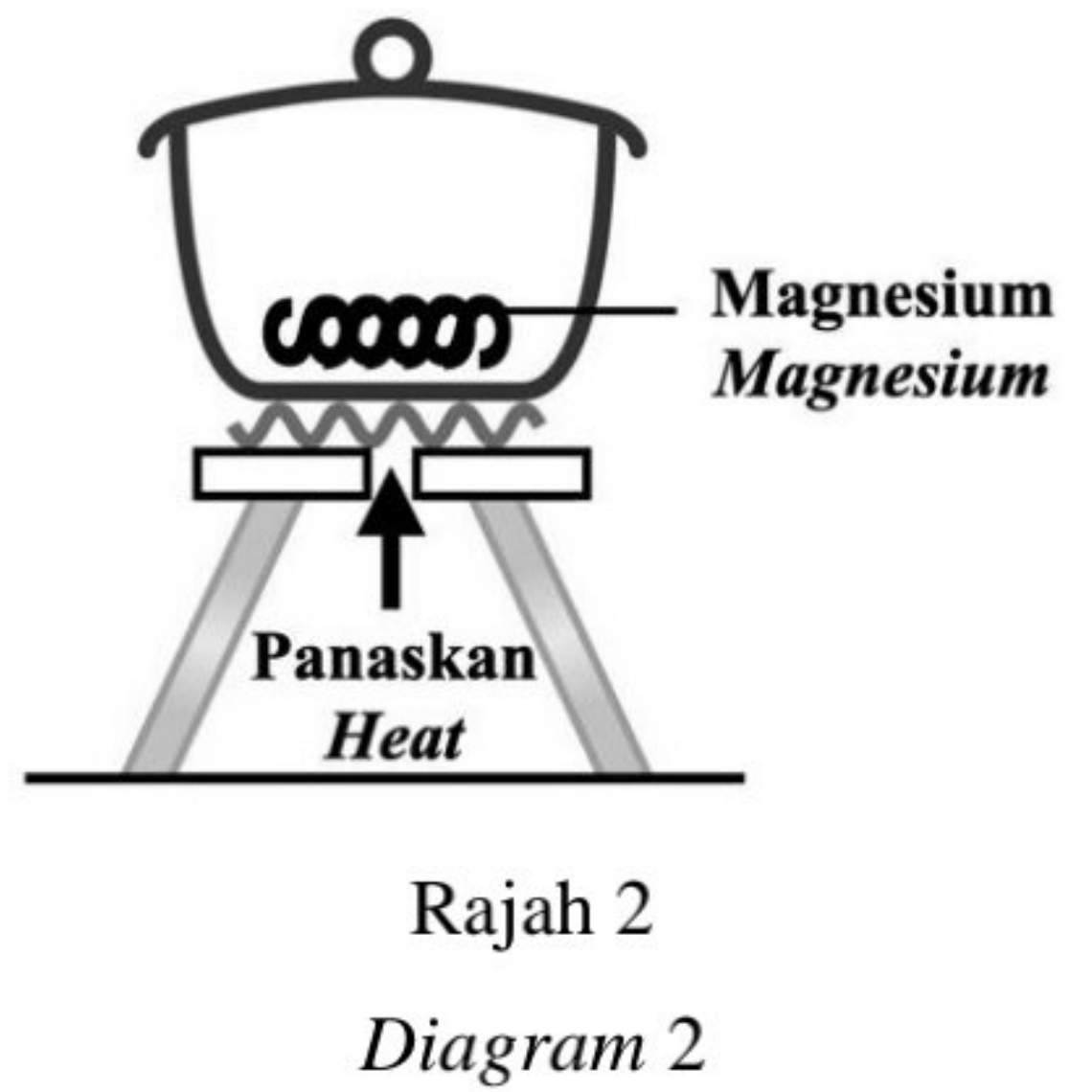
Diagram 3 shows the apparatus set-up to determine the empirical formula of a metal oxide (magnesium heated in a crucible). Which of the following metals uses the same method to determine its empirical formula?
Medium
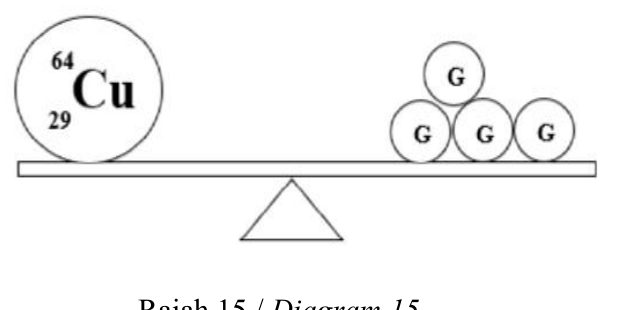
Diagram 15 shows a comparison of mass between one copper atom (⁶⁴₂₉Cu) and four atoms of G on a balance. What is the relative atomic mass of G?
Medium
The chemical equation 3Cl₂ + 2Fe → 2X represents the reaction between chlorine gas and hot iron wool to produce brown solid X. What is the mass of X produced when 120 cm³ of chlorine gas reacted with hot iron wool at room temperature? [Relative atomic mass Cl = 35.5; Fe = 56; molar volume of gas at room temperature = 24 dm³ mol⁻¹]
Medium
The equation C₄H₉OH + 6O₂ → 4CO₂ + 5H₂O shows the complete combustion of butanol. What is the mass of butanol required to produce 360 cm³ of carbon dioxide gas at room condition? [Molar mass of butanol = 74 g mol⁻¹; molar volume of gas = 24 dm³ mol⁻¹ at room condition]
Medium
What is the main reason carbon-12 atom was chosen as the standard for determining relative atomic mass?
Medium
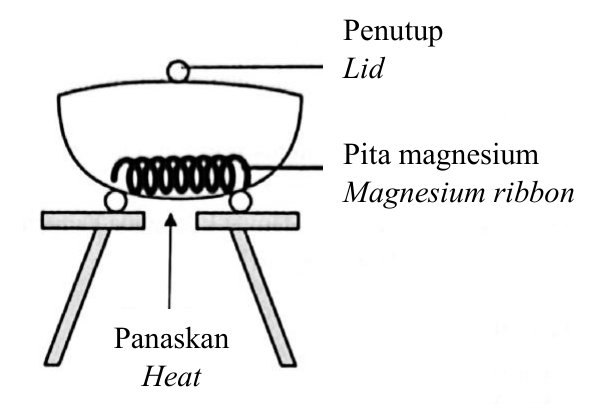
Diagram 14 shows the apparatus set-up to determine the empirical formula of magnesium oxide (crucible with lid, magnesium ribbon, heating). Which of the following steps is the correct to ensure that the magnesium ribbon is burnt completely?
Medium
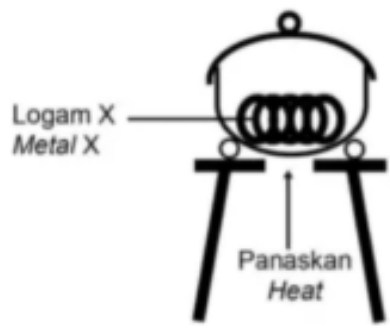
Diagram 30 shows the set up apparatus to study the empirical formula for metal X (metal heated in a crucible with lid). What are the possible of metal X? I Potassium; II Copper; III Magnesium; IV Aluminium
Medium
Which of the following statements explains the meaning of relative atomic mass?
Easy
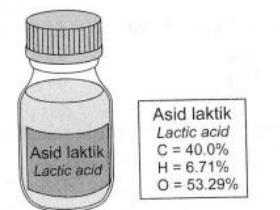
Diagram 10 shows the percentage by mass of elements in lactic acid (C = 40.0%, H = 6.71%, O = 53.29%). What is the molecular formula of lactic acid if its molar mass is 90 g mol⁻¹? [Relative atomic mass: H = 1, C = 12, O = 16]
Medium
The following chemical equation represents a reaction: NaHCO₃ + HCl → NaCl + H₂O + CO₂. What are the reactants in this equation?
Easy
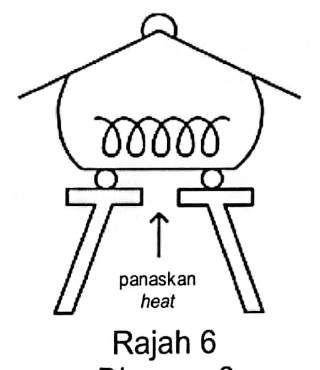
Diagram 6 shows the apparatus set-up to determine the empirical formula of a metal oxide (a crucible with lid heated strongly). Which of the following metal can this method be used to determine its oxide's empirical formula?
Medium
Diagram 13 shows a waste disposal site producing 18 dm³ of methane gas, CH₄ from the activity of microorganisms. What is the mass of methane gas produced? [Relative atomic mass: H = 1; C = 12; Molar volume of gas at room temperature = 24 dm³ mol⁻¹]
Medium
What is the number of atoms in 0.5 mol of ammonia gas, NH₃? [Avogadro constant = 6.02 × 10²³ mol⁻¹]
Medium
One mole of chlorine, Cl2 and one mole of ammonia, NH3 have
Medium
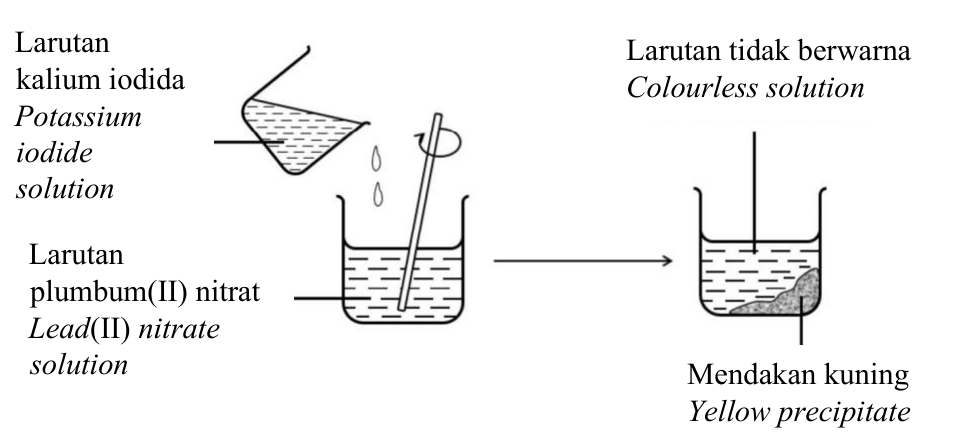
Diagram 14 shows the observation of an experiment that has been carried out by a student in the laboratory (potassium iodide solution added to lead(II) nitrate solution; colourless solution with yellow precipitate formed). Based on Diagram 14, which statement is most accurate to describe the experiment qualitatively and quantitatively?
Medium
1 mole of sodium and 1 mole of neon have [Relative atomic mass: Ne = 20; Na = 23]
Medium
Which of the following substances contains 1.204 × 10²⁴ atoms?
Medium
Mg + 2HCl → MgCl₂ + H₂. What is the volume of hydrogen gas produced when 5.5 g magnesium reacts with hydrochloric acid at room conditions? [Relative atomic mass: Mg = 24, H = 1; Molar volume of gas at room conditions = 24 dm³ mol⁻¹]
Medium
Diagram 3 shows the apparatus set-up to determine the empirical formula of a metal oxide. Which of the following metals uses the same method to determine the empirical formula?
Medium
Which chemical equation is correctly balanced?
Medium
The proton number of atom R is 13 and its relative atomic mass is 27. Which statement is correct about R?
Medium
Which chemical formula is correctly named according to the IUPAC nomenclature system? A: MgO - Magnesium oxide; B: SO3 - Sulphur oxide; C: CO - Carbon dioxide; D: Fe2O3 - Iron oxide.
Medium
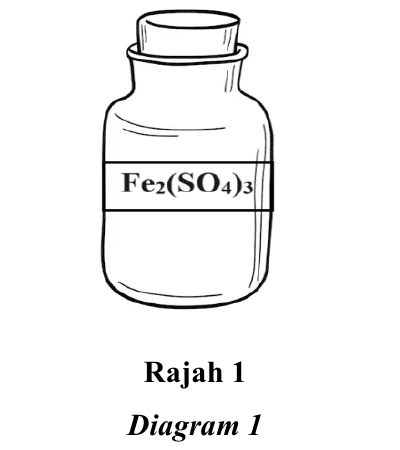
Diagram 1 shows the chemical formula of a substance, Fe2(SO4)3. What is the name of the substance?
Easy
Boron consists of two isotopes, 11B and yB. Relative atomic mass of boron = 10.81. Percentage of natural abundance of Boron-11 = 80.0 %. Percentage of natural abundance of Boron-y = 20.0 %. Based on the information given, what is the value of y?
Medium
A sample of methane gas, CH4, occupied 9.84 dm3 at room conditions. What is the mass of the methane gas? [RAM: C=12, H=1; molar volume: 24 dm3 mol-1 at room conditions]
Medium
Table 2 shows the number of moles of atoms of each element in a hydrocarbon: C 0.4 mol, H 1.0 mol. What is the empirical formula of the hydrocarbon?
Medium
Which of the following is the step that should be taken to ensure that all magnesium are reacted with oxygen and burnt completely during the experiment to determine the empirical formulae of magnesium oxide?
I Open and close the lid quickly occasionally during heating
II Heat the magnesium ribbon strongly in the crucible without its lid
III Observe the white solid produced
IV Repeat heating, cooling and weighing until a constant mass is obtained
Medium
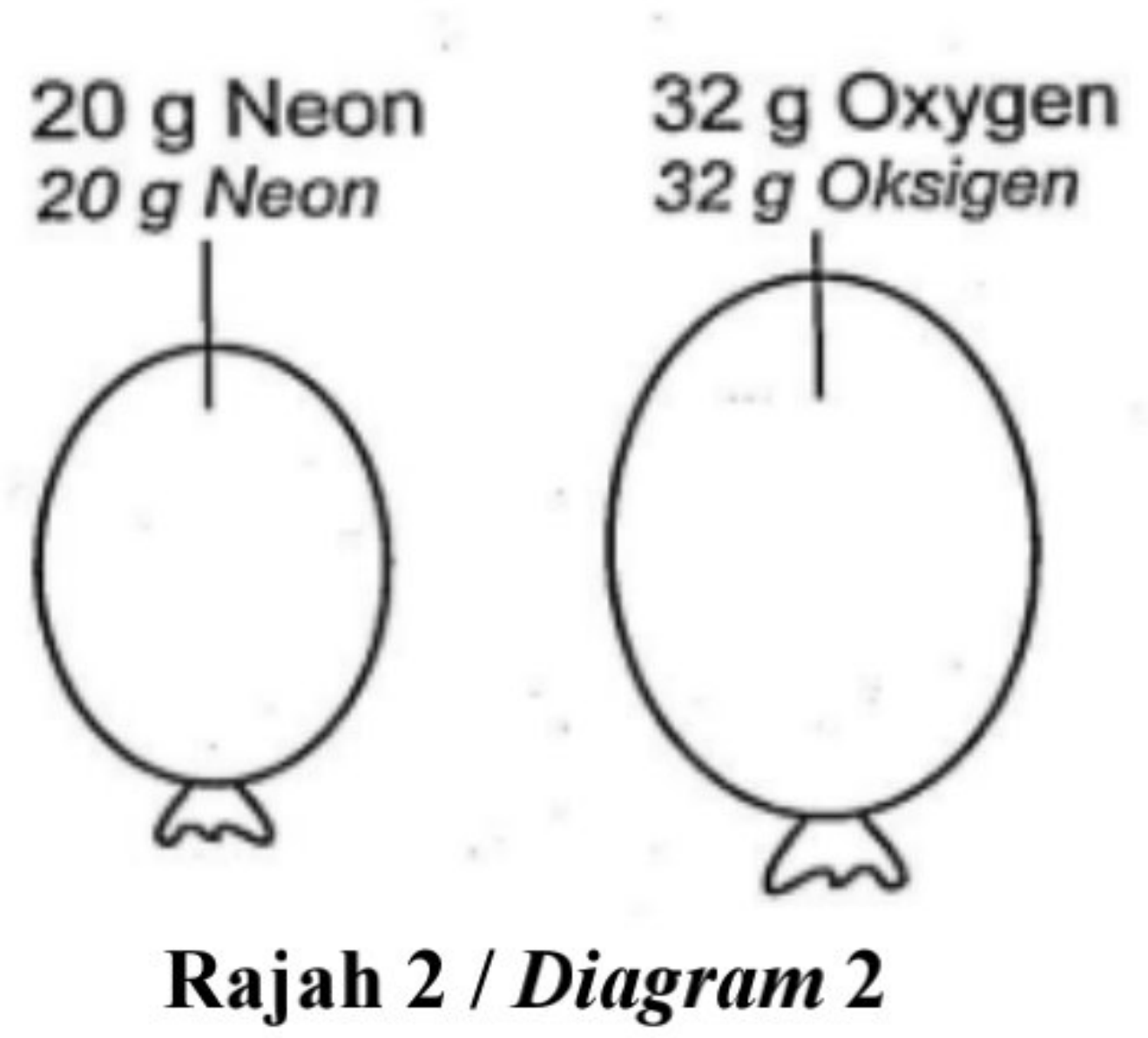
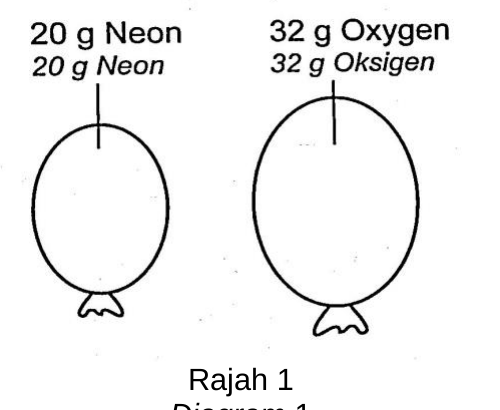
Diagram 2 shows two balloons: one filled with 20 g Neon and one filled with 32 g Oxygen. Which statement is correct about the number of atoms of neon gas? [Relative atomic mass: Ne = 20; O = 16]
Medium
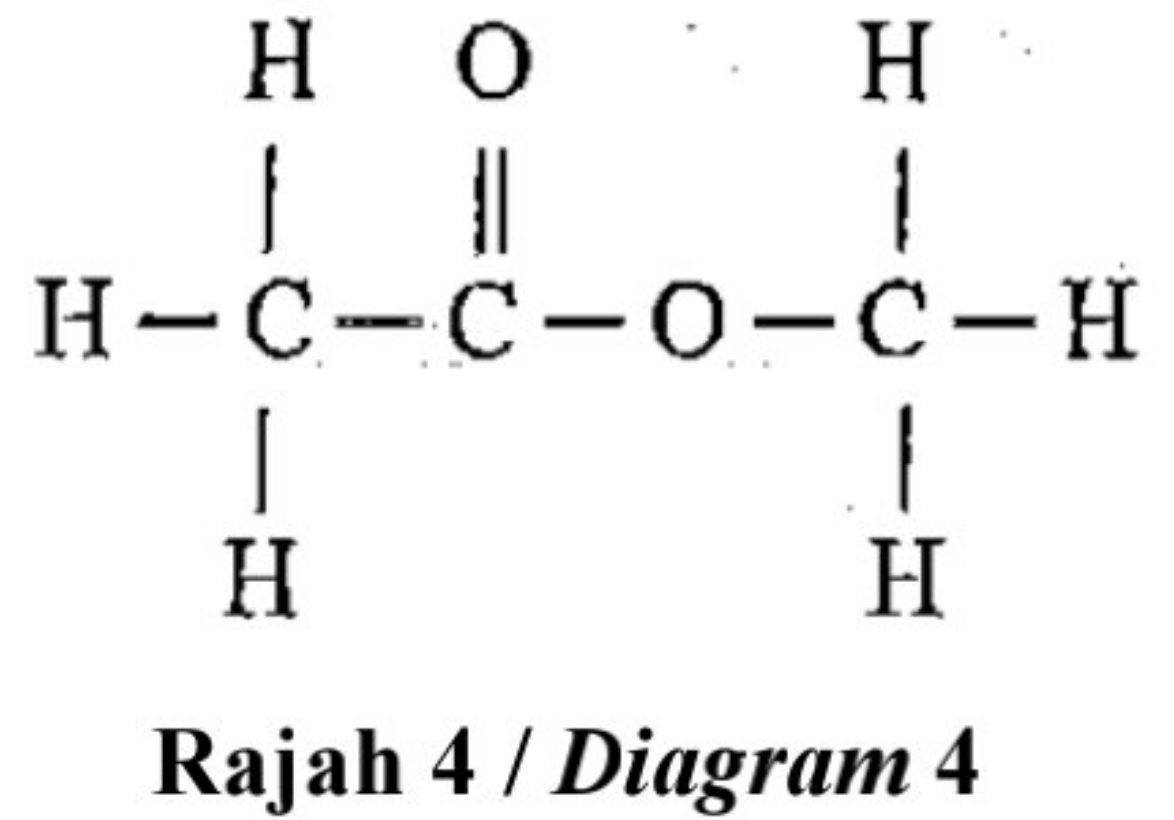
Diagram 4 shows the structural formulae of a compound (CH3-CO-O-CH3, i.e. H3C-C(=O)-O-CH3). What is the empirical formulae of that compound?
Medium
Ammonium sulphate, (NH₄)₂SO₄ is used as a fertiliser for plants. What is the percentage by mass of nitrogen in ammonium sulphate? [Relative atomic mass: H = 1; N = 14; O = 16; S = 32]
Medium
The chemical equation represents the decomposition reaction of copper(II) nitrate when heated.
2Cu(NO₃)₂ → 2CuO + 4NO₂ + O₂
Which of the following is produced when 37.6 g copper(II) nitrate is decomposed completely at room conditions? [Relative atomic mass: Cu = 64, N = 14, O = 16; Molar volume: 24 dm³ mol⁻¹ at room conditions; Avogadro constant, N_A: 6.02 × 10²³ mol⁻¹]
Medium
The following chemical equation represents the combustion of propane gas.
C₃H₈ + 5O₂ → 3CO₂ + 4H₂O
Calculate the volume of oxygen gas needed to react completely with 22 g of propane gas at room condition. [Molar volume of gas = 24 dm³ mol⁻¹ at room condition; Relative atomic mass: C = 12, H = 1, O = 16]
Medium
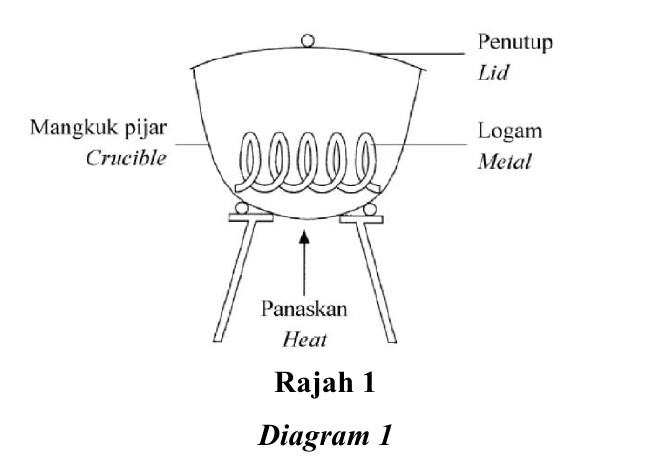
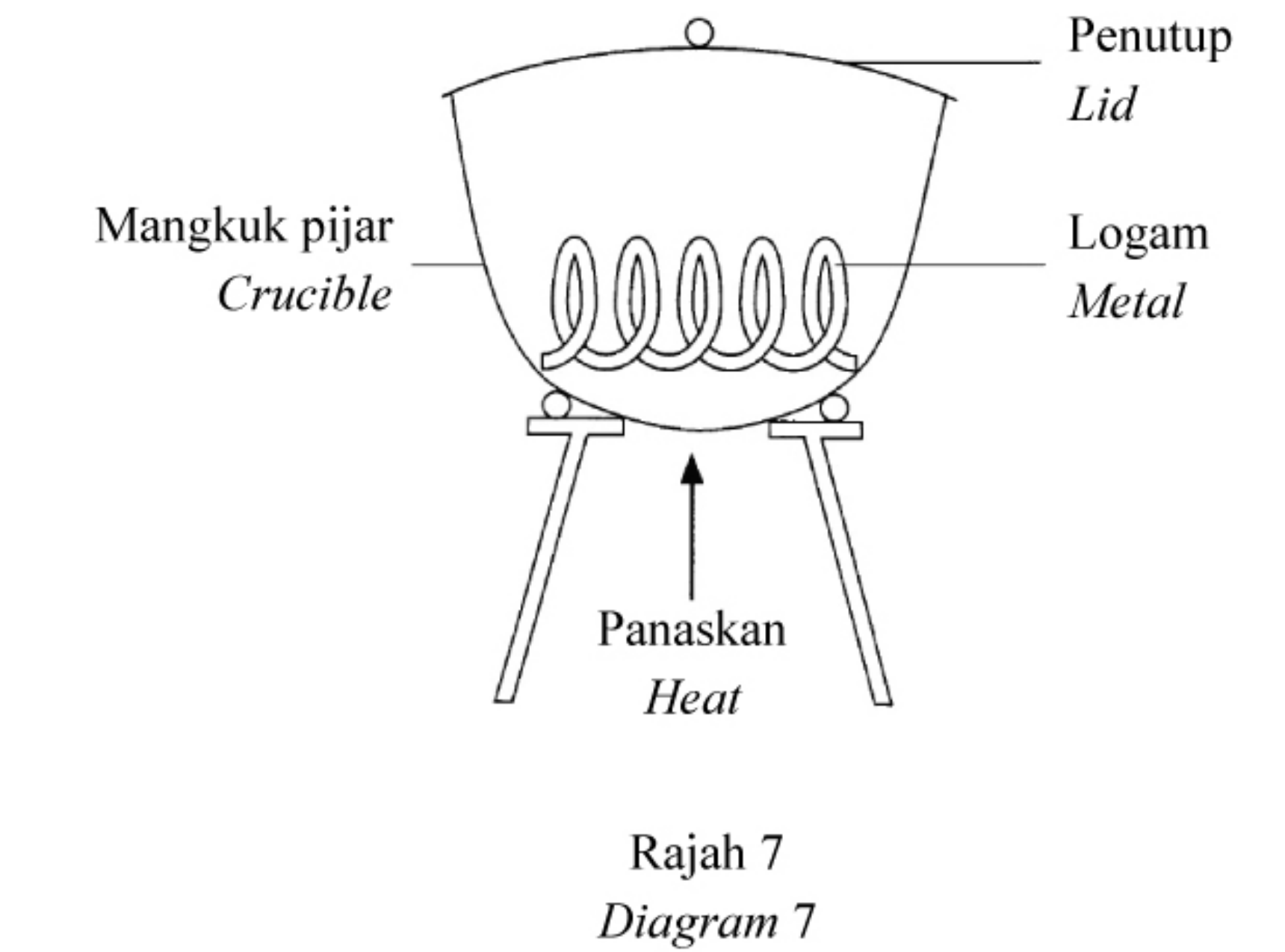
Diagram 1 shows the apparatus set-up to determine the empirical formula of metal oxide. Which statement explains why the crucible needs to be covered by its lid when the metal starts to burn?
Medium
Based on Diagram 7, what is meant by molar volume?
Medium
9.75 g of element X reacts with 63.5 g of element Y to form a compound. What is the empirical formula of the compound formed? [Relative atomic mass: X = 39, Y = 127]
Medium
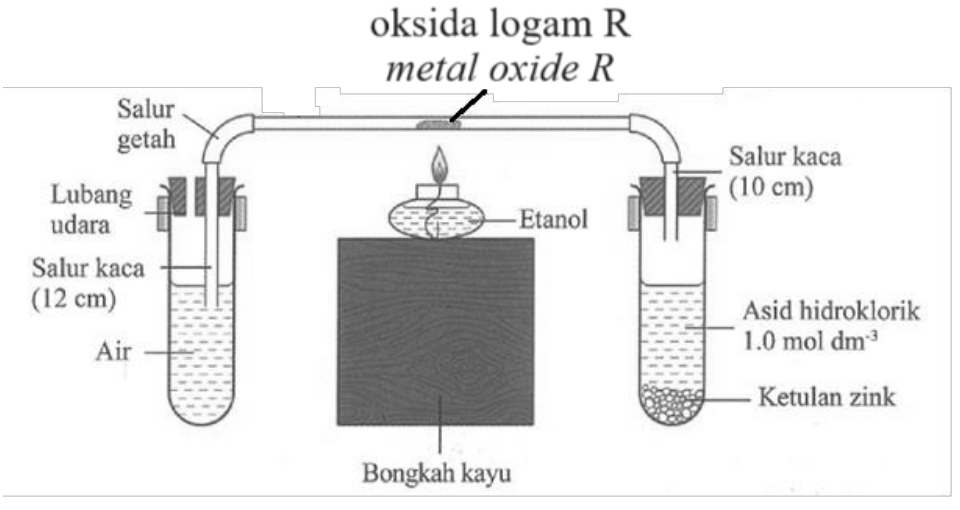
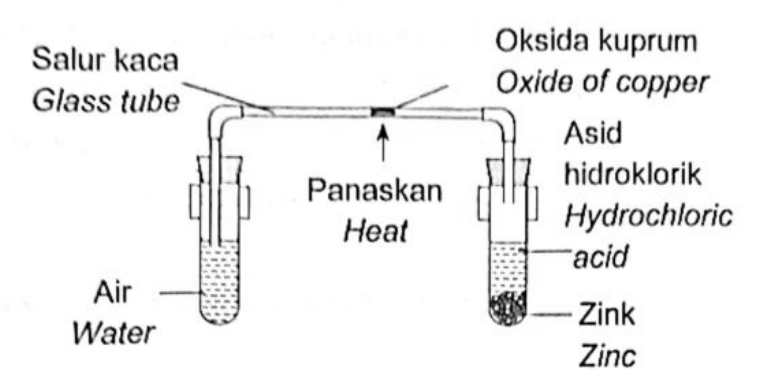
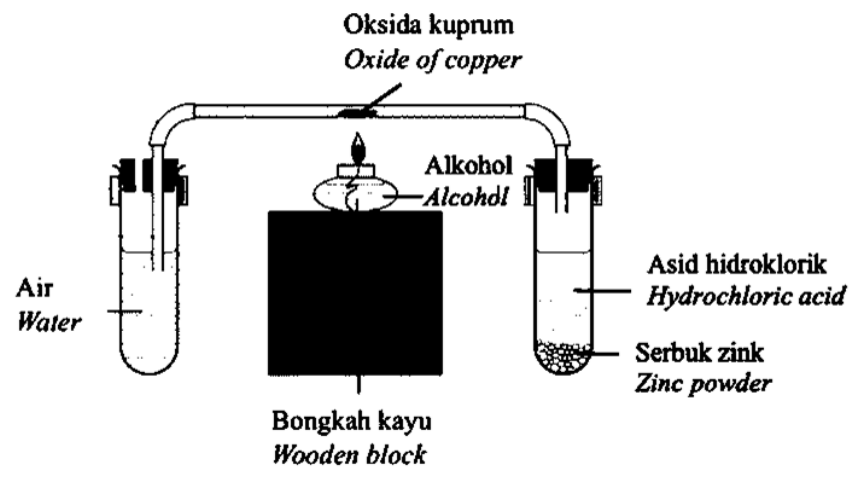
Diagram 14 shows the set-up of the apparatus used to determine the empirical formula of metal oxide R (hydrogen from zinc and hydrochloric acid passes over heated metal oxide R). Determine the balanced chemical equation for this reaction.
Medium
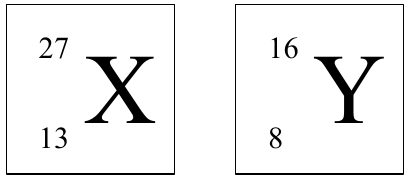
Diagram 15 shows the standard representation of element X (²⁷₁₃X) and element Y (¹⁶₈Y). Element X combines with element Y to form a compound. What is the relative formula mass of the compound formed?
Medium
Chemical formula of copper(I) oxide is
Medium
Plaster of paris consists of a fine white powder of calcium sulphate hemihydrate, (CaSO4)2.H2O. What is the molar mass of calcium sulphate hemihydrate? [Relative atomic mass: Ca = 40; S = 32; O = 16; H = 1]
Medium
0.40 g X metal reacts with fluorine to produce 0.78 g of X fluoride. What is the empirical formula of the X fluoride? [Relative atomic mass: F = 19; X = 40]
Medium
Two atoms of element X have a mass equal to one copper atom. What is the relative atomic mass of X? [Relative atomic mass: Cu = 64]
Medium
Which quantities are the same for one mole of ammonia (NH3) and one mole of methane (CH4) gases? I Number of molecules; II Number of atoms; III Volume; IV Mass. [Relative atomic mass: H=1, C=12, N=14]
Medium
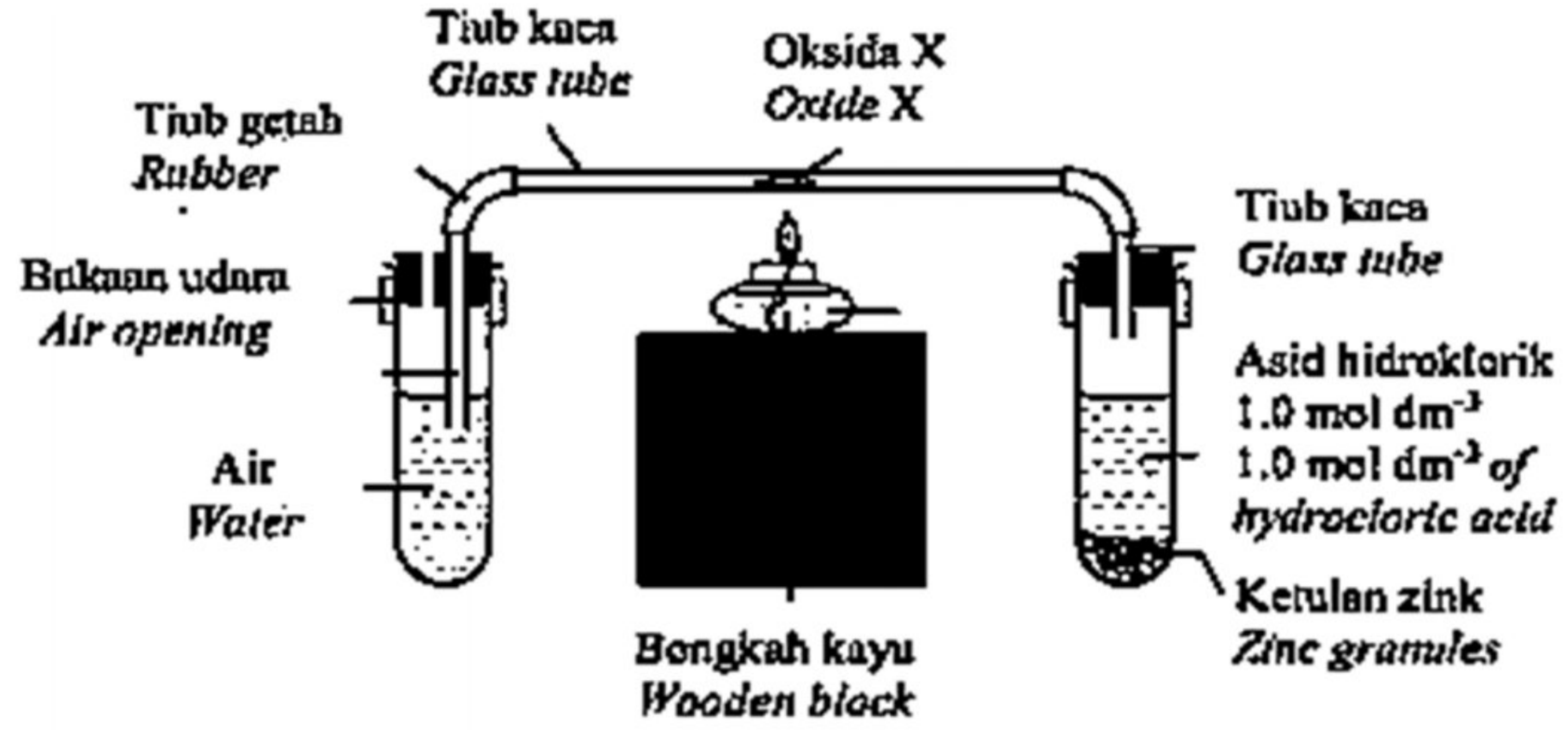
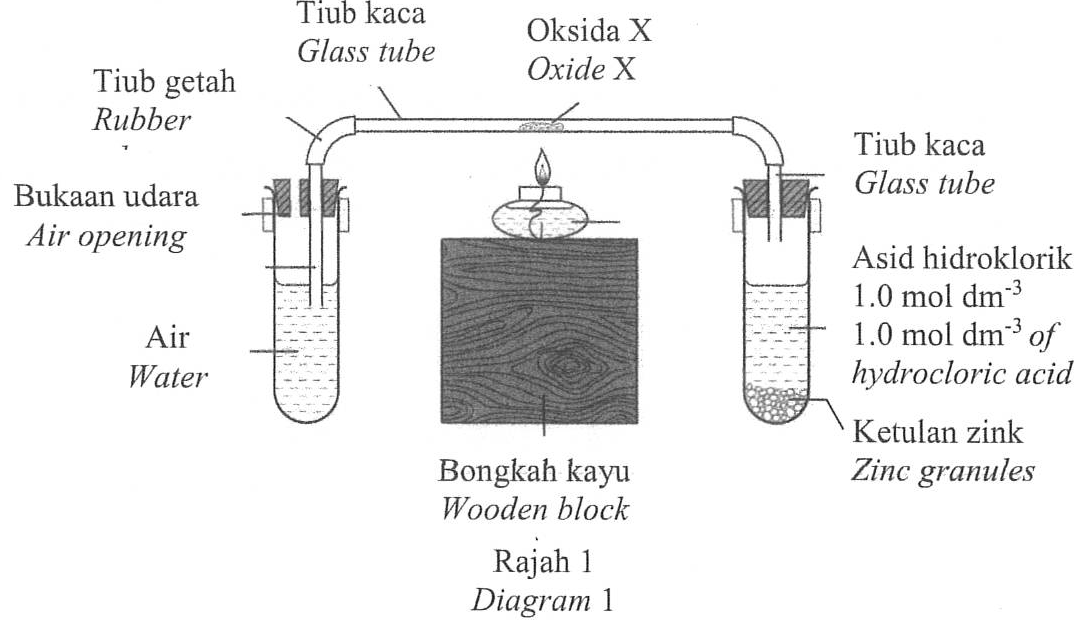
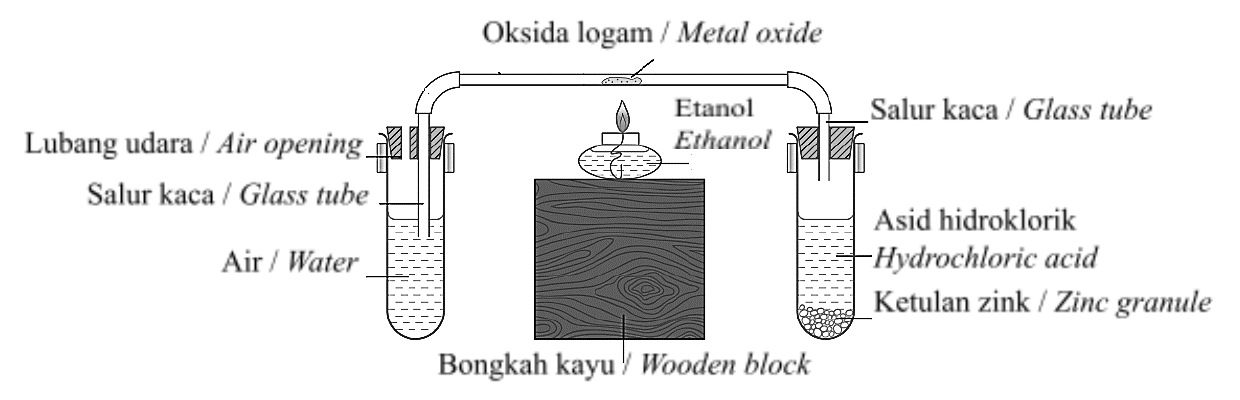
Diagram 1 shows the set-up of the apparatus used to determine the empirical formula of a metal oxide (oxide X heated in a combustion tube; hydrogen from zinc granules and 1.0 mol dm⁻³ hydrochloric acid passes over it). Which metal oxide is suitable to be used in the experiment?
Medium
Diagram 3 shows the structural formula of compound T (CH2=C(CH3)–CH3, four carbon atoms and eight hydrogen atoms). What is the percentage of carbon by mass in compound T? [Relative atomic mass: H = 1; C = 12]
Medium
Which of the following has the same number of molecules as 17.6 g carbon dioxide gas? [Relative atomic mass: C=12, O=16, S=32, I=127]
Medium
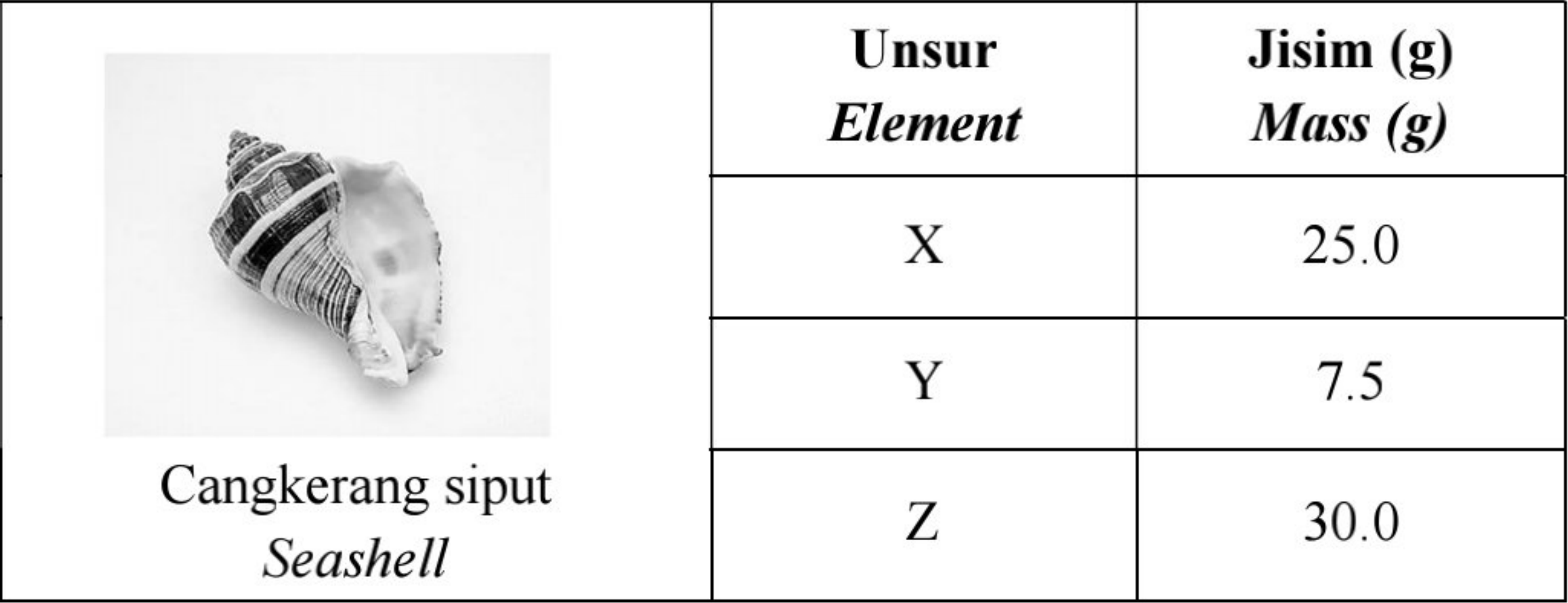
Diagram 20 shows the composition of elements in a seashell: X 25.0 g, Y 7.5 g, Z 30.0 g. What is the empirical formula of the compound in the seashell? [Relative atomic mass: X=40; Y=12; Z=16]
Medium
The diagram shows the relationship between number of moles and number of particles: Number of moles = Number of particles / Z. What is Z?
Easy
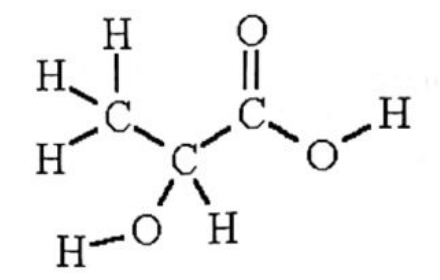
The diagram shows the structural formula of lactic acid. What is the molecular formula of lactic acid?
Medium
The burning of hydrogen is represented by 2H₂(g) + O₂(g) → 2H₂O(g). If 1 mole of hydrogen gas and 1 mole of oxygen gas are mixed and burnt, what are the substances present when the reaction is completed? I 1 mole of steam II 2 moles of steam III 0.5 mole of oxygen IV 0.5 mole of hydrogen
Medium
The diagram shows the apparatus set up to determine the empirical formula of oxide of copper (hydrogen from zinc and hydrochloric acid passed over heated copper oxide). Ali found the calculated empirical formula was not accurate by using the above method. What is the possible reason?
Medium
The following chemical equation represents the reaction between magnesium and sulphuric acid: Mg(s) + H₂SO₄(aq) → MgSO₄(aq) + H₂(g). What is the minimum mass of magnesium required to react with excess sulphuric acid when 480 cm³ of hydrogen gas is produced at room conditions? [Molar volume of gas = 24 dm³ mol⁻¹ at room conditions] [Relative atomic mass: Mg = 24]
Medium
Which of the following statements is true about 1 mole of a substance?
Medium
Which of the following informations are needed to determine the empirical formula of a compound? I Mass of element in a compound II Proton number in the atom of element III The relative atomic mass of element IV The relative molecular mass of element
Medium
Which of the following is true? (Chemical formula / Name)
Medium
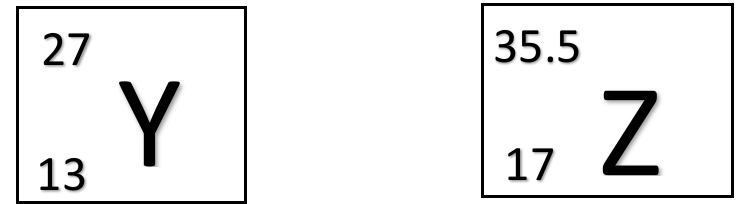
Diagram shows standard representation of atom Y (27/13 Y) and atom Z (35.5/17 Z). What is the relative formula mass of the compound formed from atom Y and Z?
Medium
The following equation represents the oxidation of metal X by steam: 3H2O + 2X → X2O3 + 3H2. What is the maximum mass of X2O3 produced when 50 g of steam reacts with 100 g of metal X? [Relative atomic mass: H = 1; O = 16; X = 56]
Medium
The relative atomic mass of an element is the number of times the mass of one...
Easy
Which of the following chemical formulae is correct?
Medium
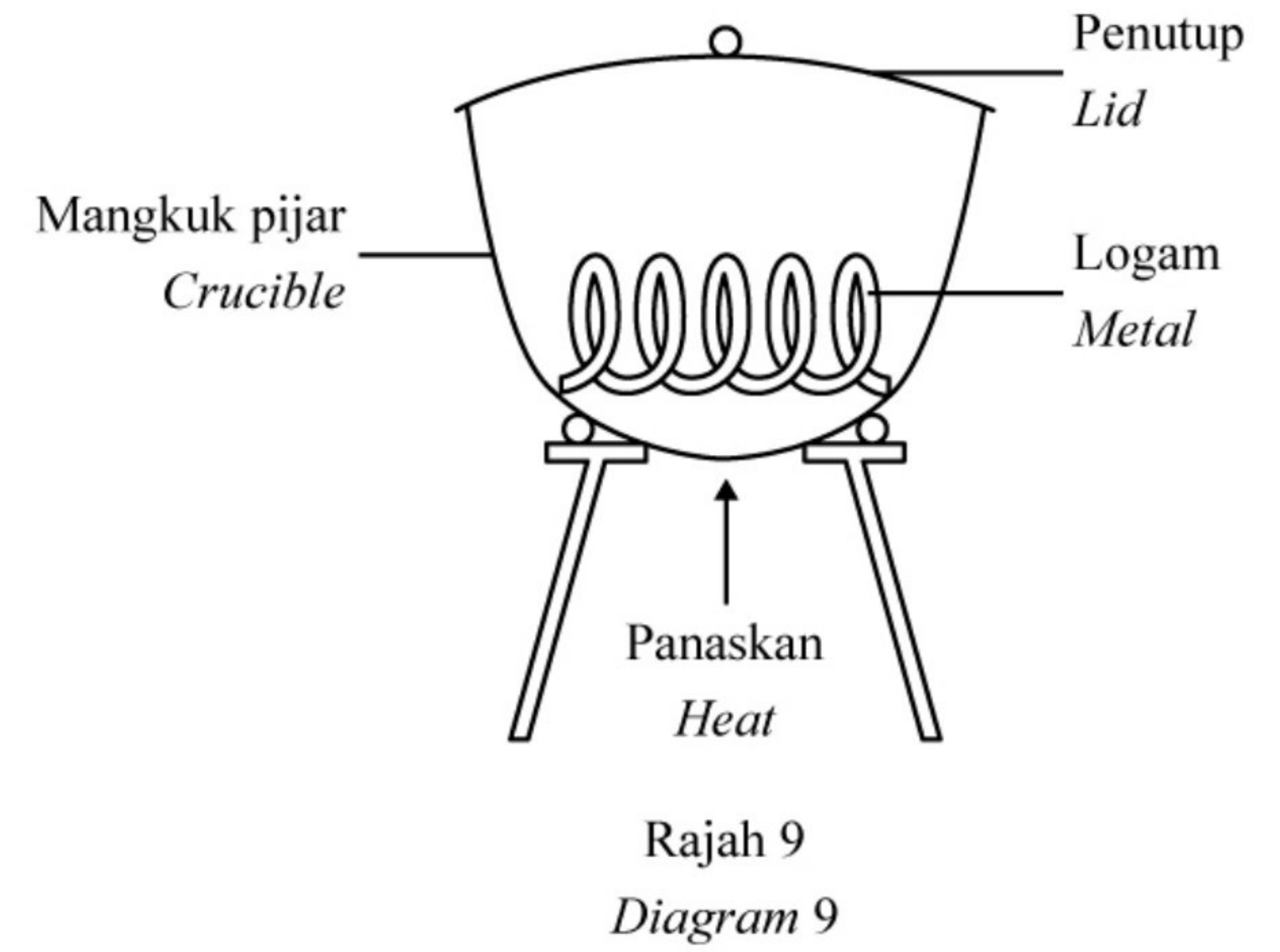
Diagram 9 shows the set-up of apparatus to determine the empirical formula of magnesium oxide. What is the purpose of lifting and closing the lid quickly time to time during heating?
Medium
Equation shows the reaction when ethane burnt in oxygen: C₂H₆ + 7/2 O₂ → 2CO₂ + 3H₂O. What is the volume of carbon dioxide gas produced when 1200 cm³ of ethane gas is burnt completely in air? [1 mol of gas occupied 24 dm³ at room condition]
Medium
Metal P is a Group 1 element in Periodic Table of Elements that can react with oxygen to form oxide of P. What is the mass of metal P that react with 2.4 dm³ oxygen gas at room conditions? [Relative atomic mass: P=7; O=16, Molar volume of gas = 24 dm³ mol⁻¹ at room condition]
Medium
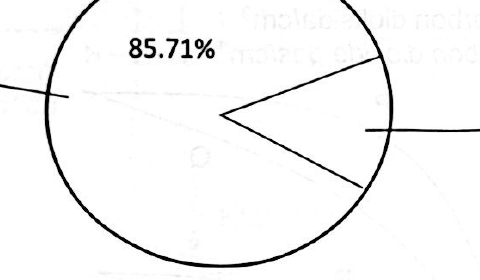
Diagram 14 shows composition percentage of a hydrocarbon Z in 16.8 g sample (carbon 85.71%, rest hydrogen). Hydrocarbon Z burnt completely in excess oxygen to produce carbon dioxide gas and water. What is the volume of carbon dioxide gas released? [Relative atomic mass: C=12; H=1; Molar mass Z=56 g mol⁻¹; 1 mol of gas occupies 24 dm³ at room condition]
Medium
Chemical formula of copper(I) oxide is
Medium
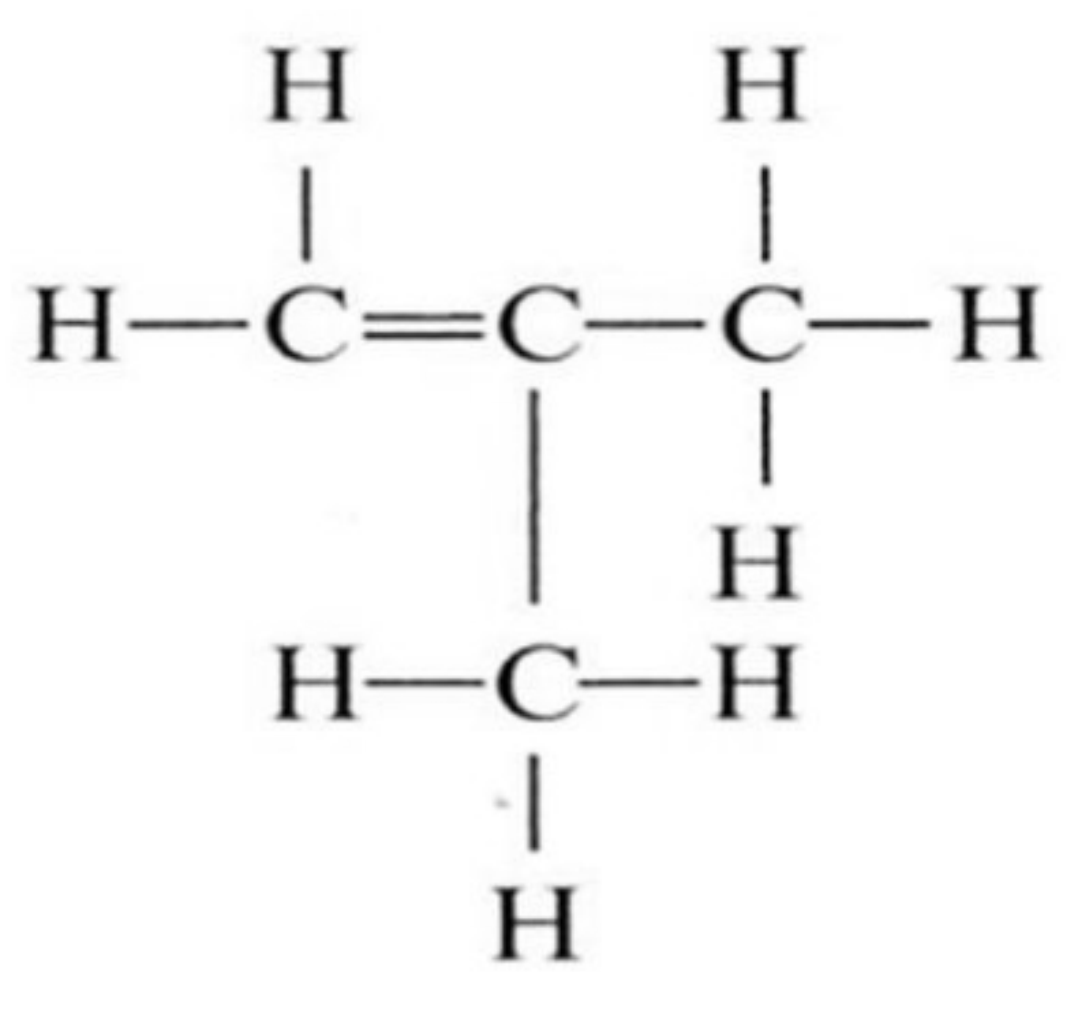
The diagram shows the structural formula of propene: CH3-CH=CH2 drawn with all bonds (H H H above/below the chain: H-C(H)(H)... C=C-H). What is the empirical formula of propene?
Medium
1.2 g of element X reacts with 0.8 g of element Y to form a compound with the formula XY. What is the relative atomic mass of X? [Relative atomic mass of Y is 16]
Medium
Which of the following is true about the meaning of relative atomic mass?
Medium
Which of the following statement is true for 1 mole of substance?
Medium
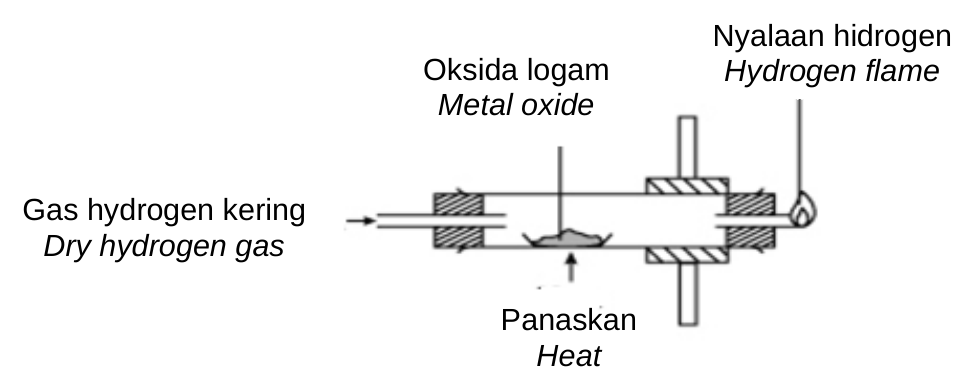
Diagram shows the set-up of the apparatus used to determine the empirical formula of a metal oxide (dry hydrogen gas passed over heated metal oxide, hydrogen flame at the exit). Which one of the following metal oxides is suitable to be used in the experiment?
Medium
The mass of three atoms of element Y is equal to the mass of four carbon atoms. Y is not actual symbol of the element. What is the relative atomic mass of element Y?
[Relative atomic mass: C = 12]
Medium
The following equation represent the reaction between magnesium and oxygen
2Mg + O₂ → 2MgO
Which of the following statements is correct?
[Relative atomic mass of O = 16, Mg = 24; Avogadro constant, N_A = 6.02 × 10²³ mol⁻¹]
Medium
Which of the following chemical formulae is correct?
Medium
Table 1 shows information about the isotopes in a sample of rubidium. Isotope 1: 37 protons, 48 neutrons, 72 %. Isotope 2: 37 protons, 50 neutrons, 28 %. Calculate the relative atomic mass of this sample of rubidium.
Medium
A Bunsen burner cartridge contains 2.75 kg butane gas, C4H10. What is the number of moles of the gas? [Relative atomic mass: H = 1, C = 12]
Medium
In a reaction, 4.6 g of sodium is reacted with oxygen gas in a gas jar. The result is a white solid. Some of the solid is dissolved in 25 cm3 of distilled water to form a colourless solution of concentration 2 mol dm-3, which changes red litmus paper to blue. What is the mass of white solid that reacted with the distilled water to produce the colourless solution? [Relative atomic mass: Na = 23, O = 16]
Medium
Which of the following chemical formulae is correct?
Medium
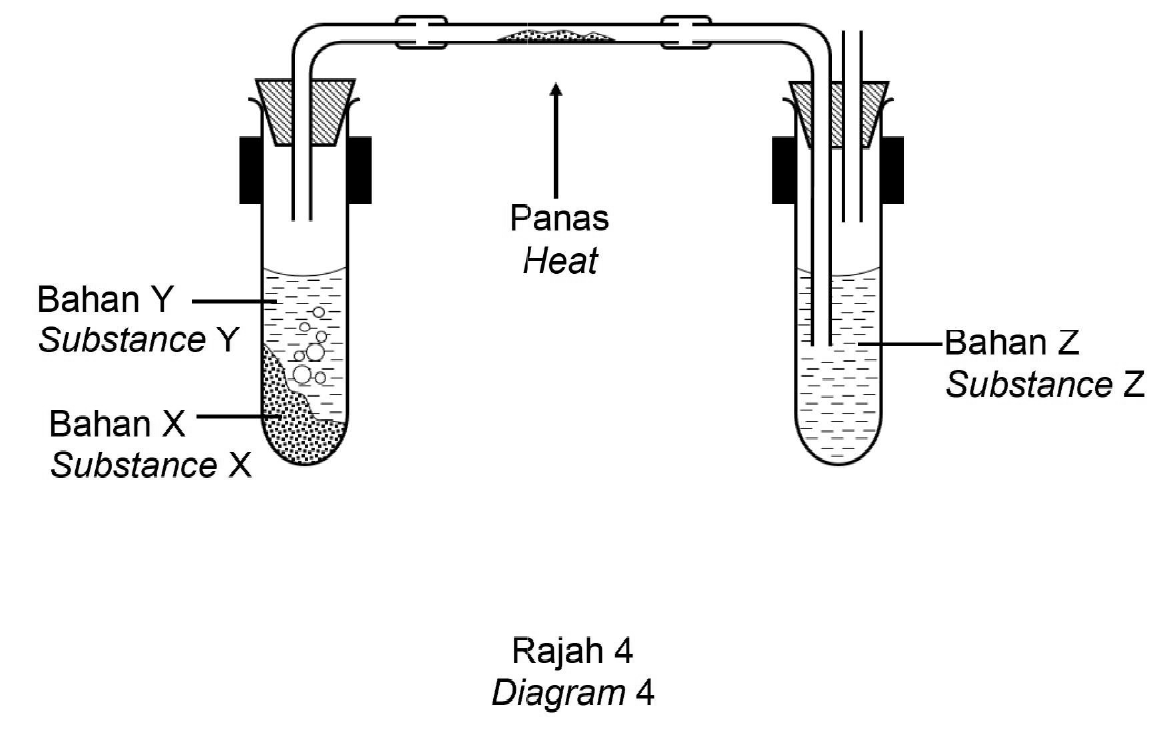
Diagram 4 shows the arrangement of the apparatus used to find the empirical formula for a metal oxide. What is substance P and process X? (The question as printed refers to P and X but the options give Substances X, Y and Z.)
Medium
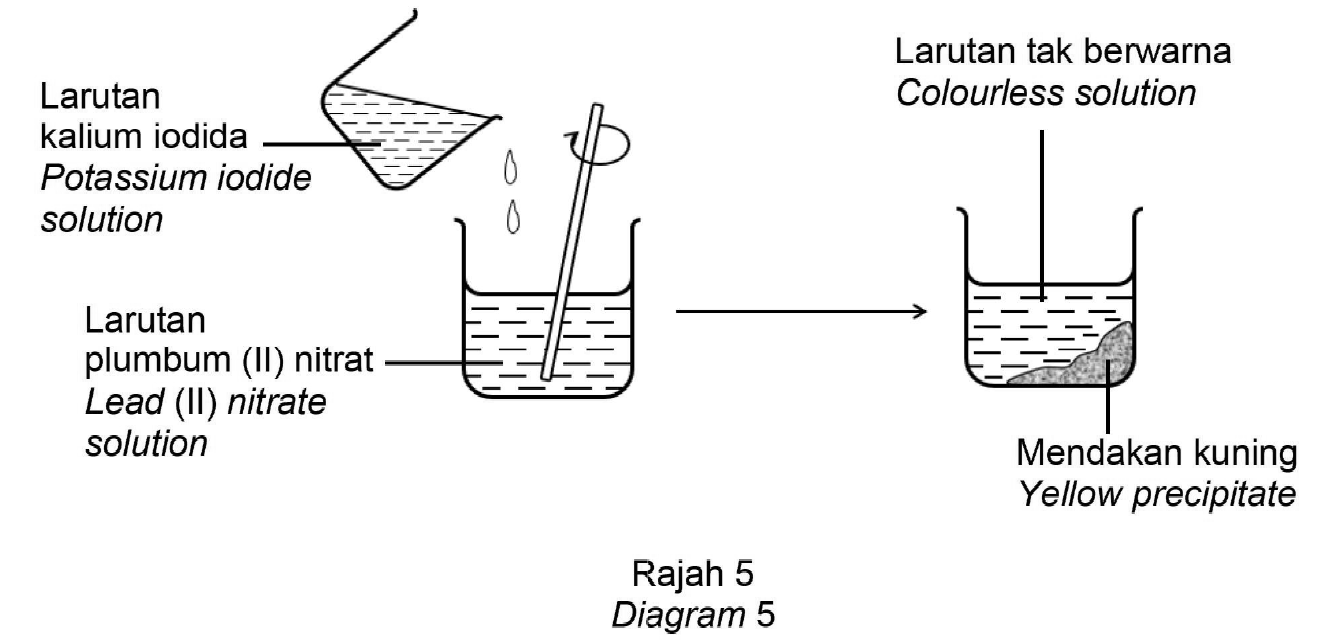
Diagram 5 shows the observation of an experiment carried out by a student in the laboratory: potassium iodide solution is added to lead (II) nitrate solution, giving a colourless solution and a yellow precipitate. Based on Diagram 4 [sic], which statement is most accurate to describe the experiment qualitatively and quantitatively?
Medium
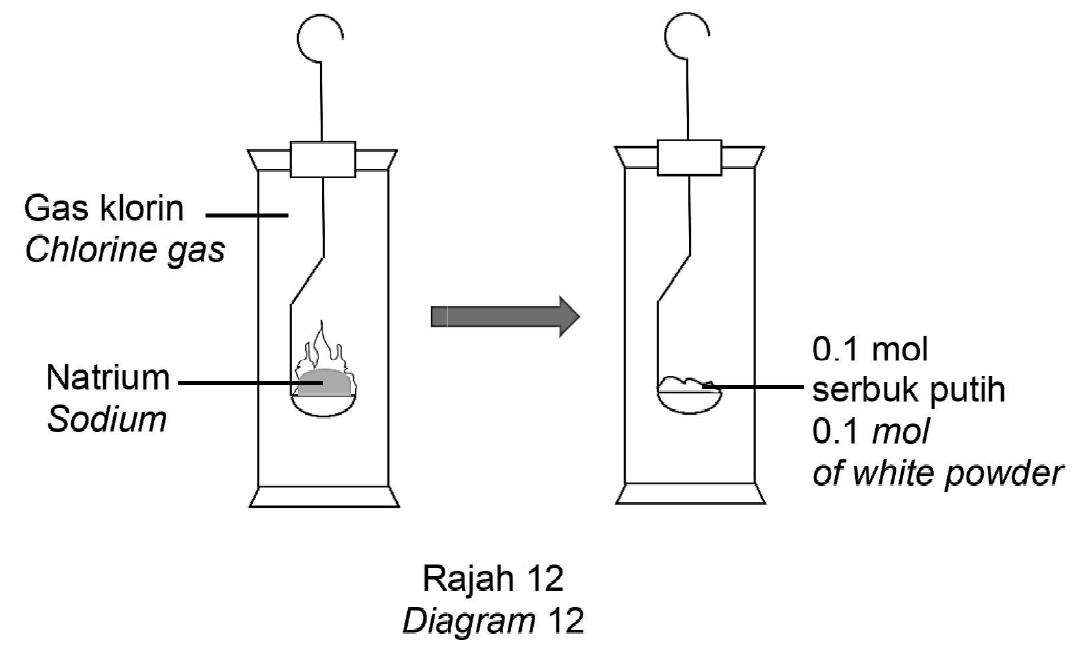
Diagram 12 shows the reaction between sodium and chlorine gas, producing 0.1 mol of white powder. What volume of chlorine gas was used in the reaction? [molar volume of gas at room condition = 24 dm³ mol⁻¹]
Medium
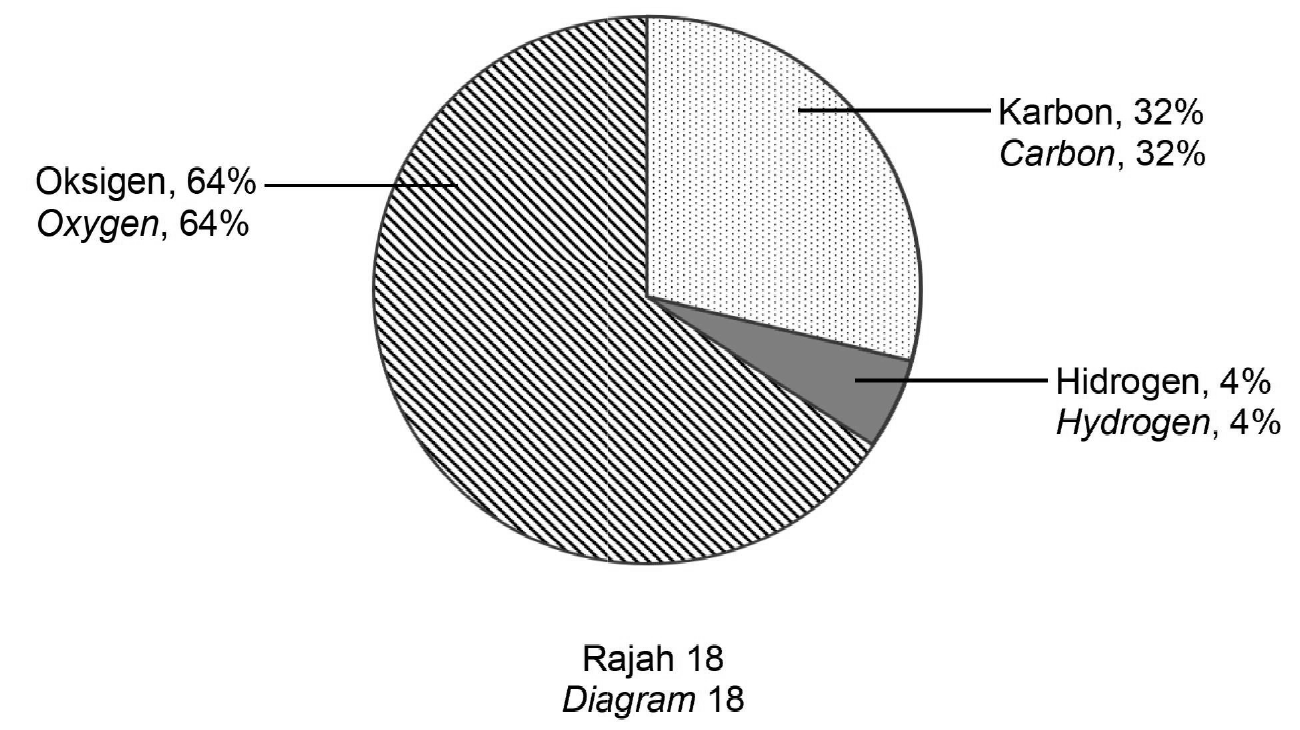
Diagram 18 shows a pie chart of the percentage composition of an organic acid: carbon 32%, hydrogen 4%, oxygen 64%. What is the molecular formula of the organic acid? [Relative atomic mass: H=1, C=12, O=16; Molar mass organic acid = 150 g mol⁻¹]
Medium
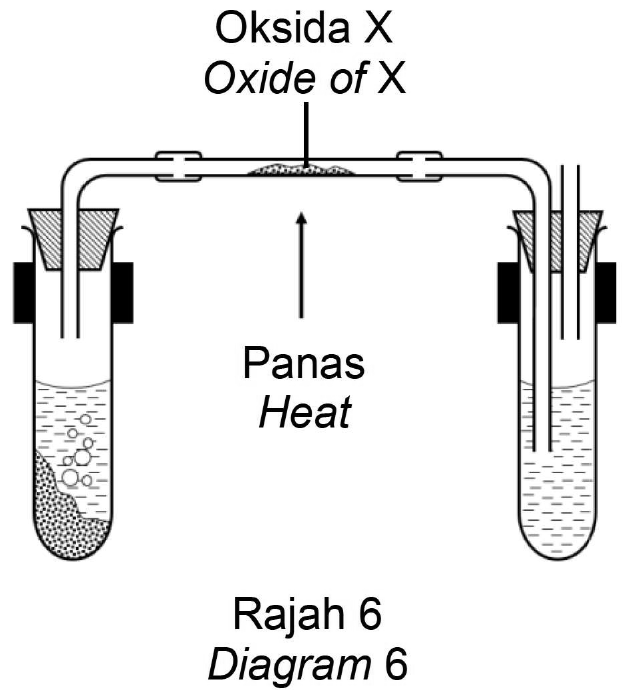
Diagram 6 shows the arrangement of the apparatus used to find the empirical formula for a metal oxide of X (oxide of X heated in a tube with hydrogen/gas flow). Which of the following is possible for oxide X?
I. Zinc oxide
II. Magnesium oxide
III. Copper(II) oxide
IV. Lead(II) oxide
Medium
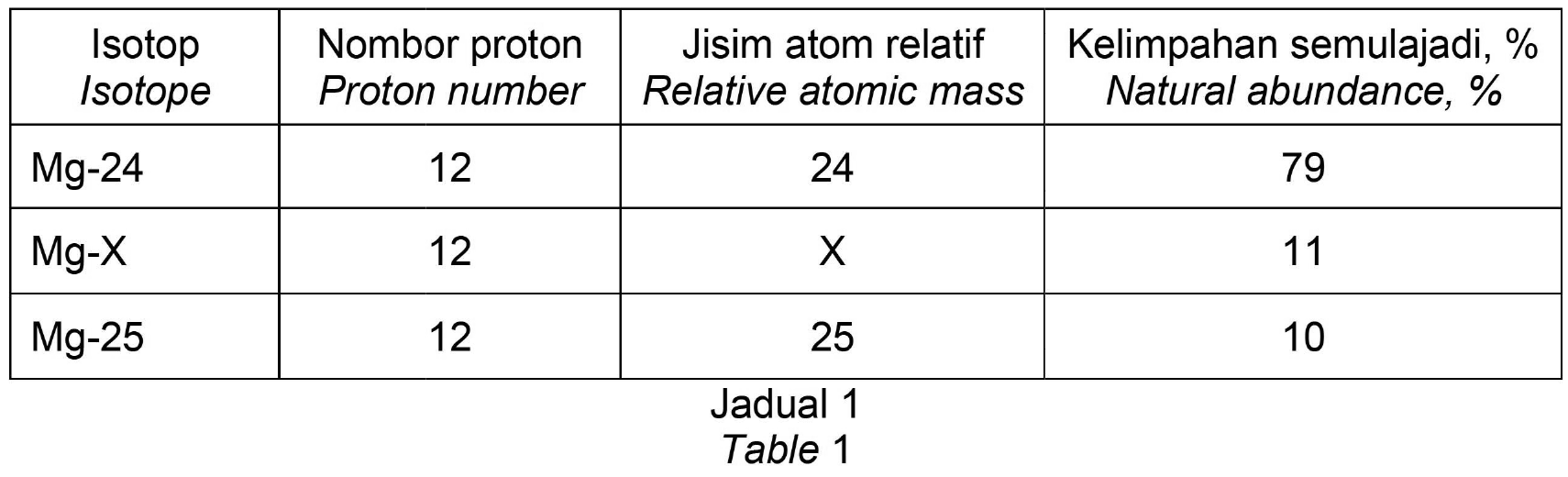
Table 1 shows information for isotopes of magnesium atoms: Mg-24 (proton no. 12, relative atomic mass 24, abundance 79%); Mg-X (12, X, 11%); Mg-25 (12, 25, 10%). What is value of X? [Relative atomic mass Mg=24]
Medium
Which chemical formula is correctly named according to the IUPAC nomenclature system?
Medium
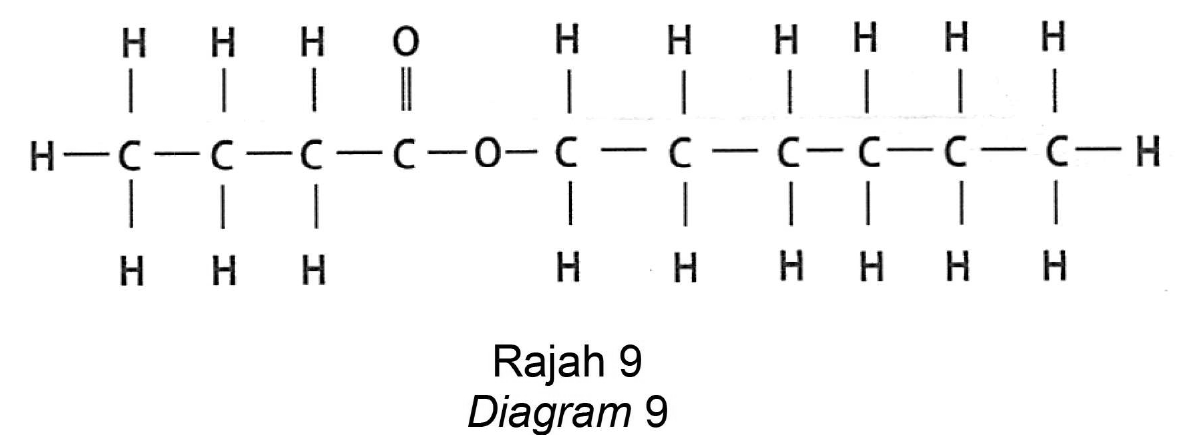
Diagram 9 shows the structural formula of compound X (an ester: CH3CH2CH2COO-C6H13 drawn in full). What is the relative molecular mass for the empirical formula of the compound X? [Relative atomic mass: H=1, C=12, O=16]
Medium
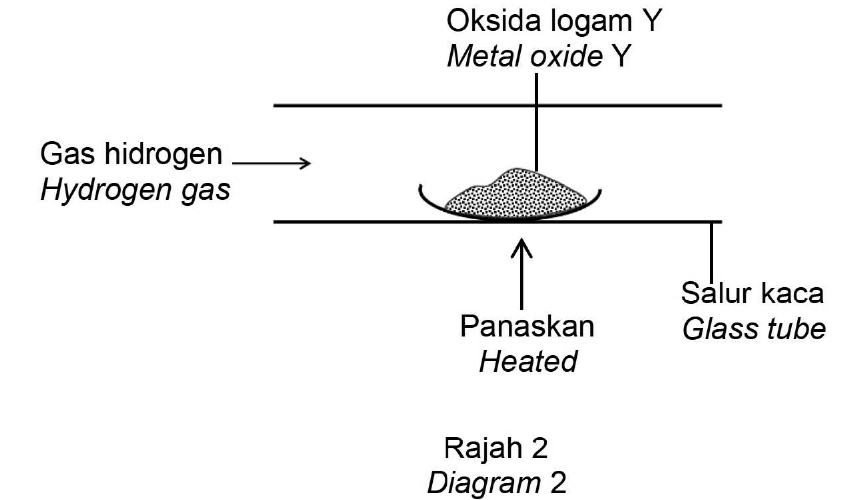
Diagram 2 shows a part of the arrangement of the apparatus used to determine the empirical formula of metal oxide Y. The product of the reaction is copper and water. Which of the following is true about the reaction shown?
Medium
5.6 g of element M has undergone oxidation by receiving 2.4 g of oxygen and forming the oxide compound M with the formula M₂O₃. What is the relative atomic mass of the M? [Relative atomic mass: O=16]
Medium
0.40 g of metal P reacts with fluorine to produce 0.78 g P fluoride. What is the empirical formula of the P fluoride? [Relative atomic mass : F = 19, P = 40]
Medium
The relative molecular mass of M₂(SO₄)₃ is 342. What is the relative atomic mass of element M? [Relative atomic mass: O = 16, S = 32]
Medium
What is the mass of sulphur in 3.45 × 10²² sulphur dioxide molecules, SO₂? [Relative atomic mass: O = 16, S = 32; NA: 6.02 × 10²³ mol⁻¹]
Medium
When zinc nitrate is heated strongly, it decomposes as the equation below: 2Zn(NO₃)₂ → 2ZnO + 4NO₂ + O₂. What is the volume of NO₂ gas produced if 18.9 g of zinc nitrate is heated? [Molar mass: Zn(NO₃)₂ = 189 g mol⁻¹; 1 mol of gas occupies 24 dm³ at room temperature and pressure]
Medium
Diagram 1 shows two types of gases filled in two balloons: 20 g Neon and 32 g Oxygen. Which statement is correct about the number of atoms on neon gas? [Relative atomic mass: Ne = 20; O = 16]
Medium
Plaster of paris or gypsum plaster is often used to treat patients with bone injuries. It consists of a fine white powder of calcium sulphate hemihydrate, (CaSO₄)₂.H₂O. What is the molar mass of calcium sulphate hemihydrate? [Relative atomic mass: Ca = 40; S = 32; O = 16; H = 1]
Medium
The equation below represents the reaction to extract aluminium from aluminium oxide. 2Al₂O₃ → 4Al + 3O₂. What is the mass of aluminium that can be extracted from 102 g of aluminium oxide? [Relative atomic mass: O = 16; Al = 27]
Medium
What is the chemical formula of lead (II) oxide?
Medium
The following equation represents the reaction to determine the empirical formula of copper (II) oxide.
CuO + H₂ → Cu + H₂O
Which metal oxide has the same reaction to determine the empirical formula?
Medium
The following equation represents the reaction between zinc granule and hydrochloric acid.
Zn + 2HCl → ZnCl₂ + H₂
What is the volume of the gas hydrogen produced when 50 cm³ of 1.0 mol dm⁻³ hydrochloric acid react completely with 5 g of zinc granule at room temperature?
[Relative atomic mass: Zn = 65, Molar volume of gas at room condition = 24 dm³ mol⁻¹]
Medium
The relative molecular mass of J₂(SO₄)₃ is 342. What is the relative atomic mass of element J?
[Relative atomic mass: O = 16, S = 32]
Medium
Which chemical formula is correctly named according to the IUPAC nomenclature system?
Chemical formula | Name
A SO2 | Sulphur oxide
B CCl3 | Carbon tetrachloride
C Al(NO3)3 | Aluminium nitrate
D Fe2O3 | Iron (II) oxide
Medium
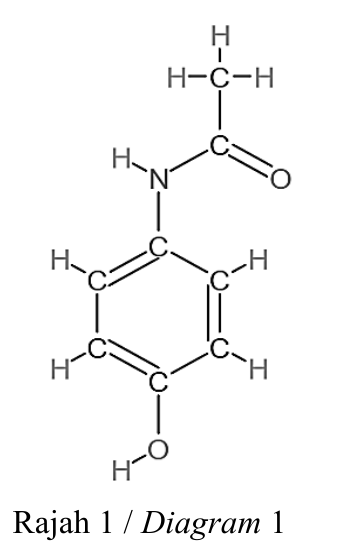
Diagram 1 shows the structural formula for a substance found in a medicine that works to relieve pain. What is the relative molecular mass for the substance? [Relative atomic mass: H = 1, C = 12, N = 14, O = 16]
Medium
Which substance contains 6.02 x 10^23 atoms?
Medium
4.34 g of calcium carbonate reacts with 0.025 mol of sulphuric acid to form calcium sulphate as one of the reaction products. Determine the mass of calcium carbonate remaining after the reaction. [Relative atomic mass: H = 1, C = 12, O = 16, S = 32, Ca = 40]
Medium
The relative molecular mass of XSO4 is 160. What is the relative atomic mass of X? [Relative atomic mass: S = 32, O = 16]
Medium
The reaction of 0.05 mol of copper(II) oxide, CuO with hydrogen gas forms a brown solid, Y. What mass of Y is formed from the reaction? [Relative atomic mass: Cu = 64, O = 16]
Medium
The equation 3Mg + Fe2O3 → 3MgO + 2Fe represents the reduction of iron(III) oxide by magnesium. What is the mass of iron produced from 16.0 g of iron(III) oxide? [Relative atomic mass: Fe = 56, Mg = 24, O = 16]
Medium
A compound contains element P and element Q. The percentage by mass of element P in the compound is 25.26 %. The empirical formula of the compound is PQ2. If the Relative Atomic Mass of element P is 24, what is the Relative Atomic Mass of element Q?
Medium
Which of the following has the same number of atoms as 12 dm³ of ammonia gas at room temperature?
[Avogadro constant = 6.02 × 10²³, Relative atomic mass: H = 1, C = 12, N = 14, O = 16, S = 32, Molar volume of gas at room condition = 24 dm³ mol⁻¹]
Medium
Aiman burned a strip of magnesium metal in air using a bunsen burner. After complete combustion, a white powder had formed. He used 24 g of magnesium. Calculate the mass of magnesium oxide formed. (Relative atomic mass: Mg = 24, O = 16)
Medium
The following equation represents a reaction.
Na₂S₂O₃ + H₂SO₄ → Na₂SO₄ + H₂O + S + SO₂
What are the reactants in this equation?
Easy
The following chemical equation represents the reaction to extract aluminium from aluminium oxide.
2Al₂O₃ → 4Al + 3O₂
Calculate the maximum mass of aluminium that can be extracted from 10.20 g of aluminium oxide?
[Relative atomic mass: O = 16, Al = 27]
Medium
Diagram 1 shows the apparatus set-up to determine the empirical formula of oxide X. Which of the following is metal X?
Medium
The chemical formulae of calcium nitrate and potassium phosphate are Ca(NO₃)₂ and K₃PO₄ respectively. What is the chemical formula of calcium phosphate?
Medium
Which of the following has the largest volume of gas at room condition? [Relative atomic mass: H=1, C=12, N=14, O=16, 1 mol of any gas occupied 24 dm³ at room condition]
Medium
Which of the following has same number of atoms as in 0.5 mol of argon?
Medium
Formula of oxide P is P2O. 21.6 g of oxide P react completely with carbon powder to form 19.2 g of metal P. Which of the following is the relative atomic mass of P? [Relative atomic mass: O = 16]
Medium
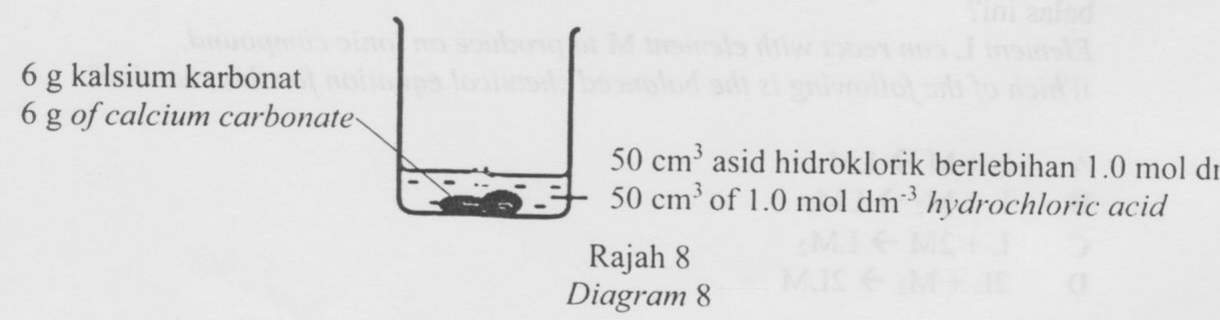
Diagram 8 shows 6 g of calcium carbonate reacting with 50 cm3 of excess 1.0 mol dm-3 hydrochloric acid. Equation: CaCO3 + 2HCl → CaCl2 + H2O + CO2. What is the maximum volume of carbon dioxide gas produced in the experiment? [Relative atomic mass: Ca = 40, C = 12, O = 16; 1 mol of gas = 24 dm3 at room condition]
Medium
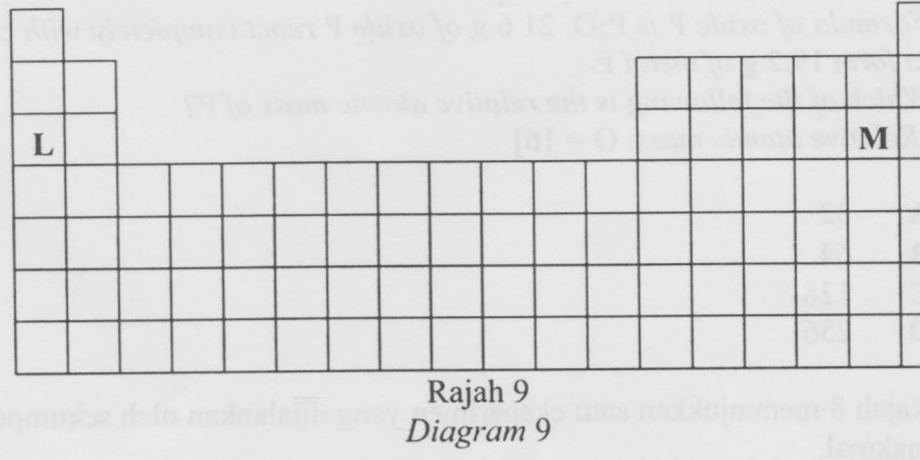
Diagram 9 shows an incomplete Periodic Table of Element (L is in Group 1, M is in Group 17). L and M are not the actual symbol for element. Element L can react with element M to produce an ionic compound. Which of the following is the balanced chemical equation for this reaction?
Medium
What is the unit for Avogadro's constant?
Easy
Which of the following cation's charge is matched correctly?
Easy
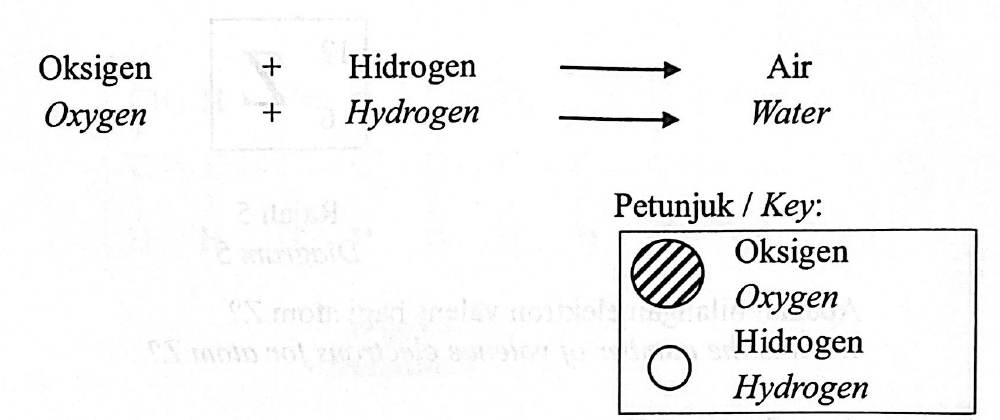
The following equation shows a chemical reaction: Oxygen + Hydrogen → Water (key: shaded circle = oxygen atom, open circle = hydrogen atom). Which of the following arrangement of particles is correct to represent the reaction?
Medium
What is the mass of magnesium needed to react with excess nitric acid to produce 448 cm³ of hydrogen gas at standard temperature and pressure? [Relative atomic mass: Mg = 24; Molar volume = 22.4 dm³ at STP]
Medium
The following equation shows decomposition process of potassium chlorate(V): 2KClO₃ → 2KCl + 3O₂. What is the mass of potassium chlorate(V) needed to produce 2.0 mol of oxygen gas? [Relative atomic mass: O = 16; Cl = 35.5; K = 39]
Medium
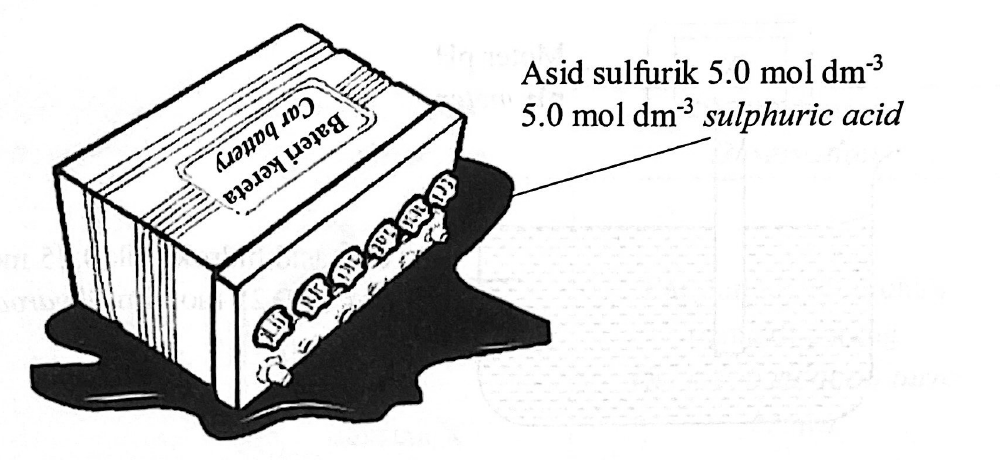
Diagram 11 shows the condition of a car battery on a garage floor (sulphuric acid 5.0 mol dm⁻³). 500 cm³ of acid from the car battery has been spilled on a garage floor. Baking soda, NaHCO₃ can be used to react with the acid to produce sodium sulphate, carbon dioxide and water. What is the minimum mass of baking soda needed? [Relative atomic mass: H = 1, C = 12, O = 16, Na = 23]
Medium
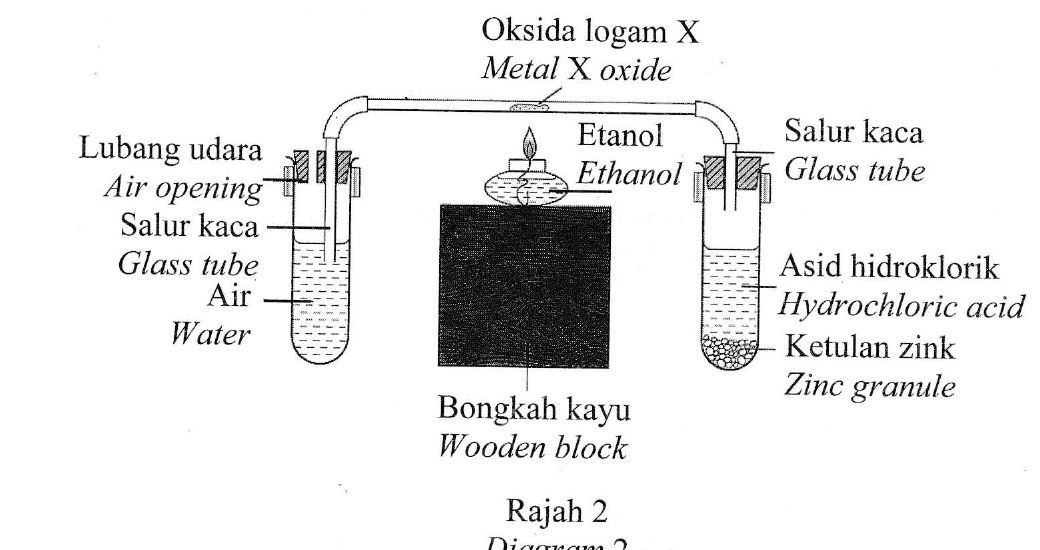
Diagram 2 shows the set-up of the apparatus used to determine the empirical formula of metal X oxide (metal X oxide heated in a glass tube while hydrogen from zinc granules and hydrochloric acid passes over it, ethanol burner; water in a tube on the left side). What is X?
Medium
Which of the following statements is correct about 1 mol of substance?
Medium
Element Q and R have proton numbers of 12 and 9 respectively. What is the relative formula mass of a compound formed between Q and R? [Relative atomic mass: Q = 24, R = 19]
Medium
The following chemical equation shows the decomposition of zinc nitrate: 2Zn(NO₃)₂ → 2ZnO + 4NO₂ + O₂. What is the total volume of gas produced when 1.89 g zinc nitrate salt decomposes completely? [Relative atomic mass: Zn = 65, N = 14, O = 16; one mole of any gas occupies 24 dm³ at room condition]
Medium
Which of the following is the IUPAC name for Cu2O?
Easy
Compound Z is made up of lead(II) ion and hydroxide ion. Which of the following is the formula of compound Z?
Medium
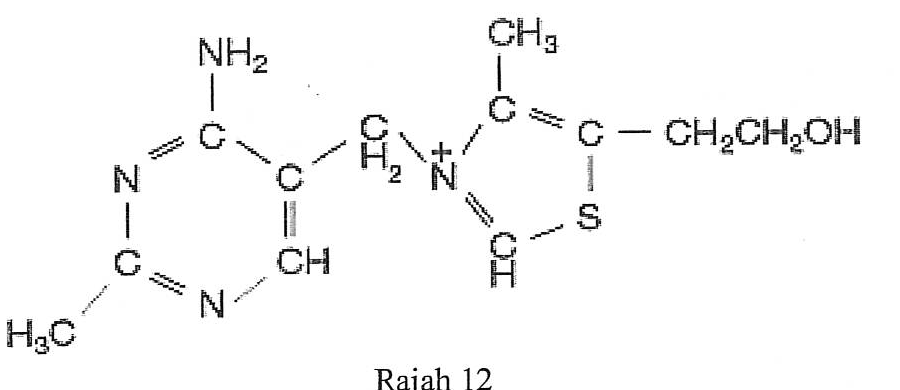
Diagram 12 shows the molecular structure of vitamin B known as thiamine. Which of the following is the empirical formula for thiamine?
Medium
10 g of magnesium oxide is added to 100 cm³ of 2.0 mol dm⁻³ hydrochloric acid. What is the mass of unreacted magnesium oxide? [Relative atomic mass: O = 16, Mg = 24]
Medium
Diagram 1 shows the set-up of the apparatus used to determine the empirical formula of a metal oxide. Which one of the following metal oxides is suitable to be used in the experiment?
Medium
Which substance contains 6.02 x 10²³ atoms?
Medium
Table 3 shows the relative atomic mass for element X and Y. X = 45; Y = 9. Which of the following is true about elements X and Y?
Medium
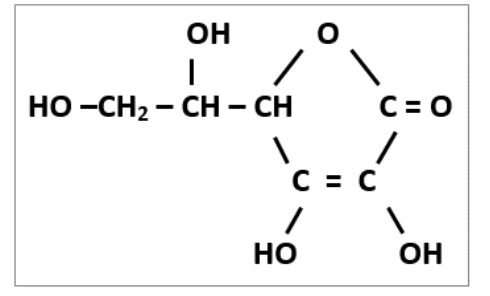
Diagram 11 shows structural formula of vitamin C. What is the mass of 0.25 mol vitamin C? [Relative atomic mass: H = 1; C = 12; O = 16]
Medium
Diagram 3 shows an experiment carried out by a student to determine the empirical formula of magnesium oxide. How can the student make sure that the magnesium ribbon burns completely?
Medium
Which chemical equation is correct?
Medium
9.75 g of element X reacts with 63.5 g of element Y to form a compound with chemical formula XY₂. What is the relative atomic mass of element X? [Given that the relative atomic mass of Y = 127]
Medium
The following equation represents a chemical reaction: Na2CO3(aq) + CaCl2(aq) → CaCO3(s) + 2NaCl(aq). Which statement is correct?
Medium
Paracetamol is an analgesic for headache. The chemical formula of paracetamol is C8H9NO2. What is the relative molecular mass of paracetamol? [Relative atomic mass: H = 1; C = 1; N = 14; O = 16]
Medium
When 9.2 g of ethanol burns completely in excess oxygen, carbon dioxide gas and water are produced. Calculate the mass of water vapour produced. [Relative atomic mass: H=1, C=12, O=16; Molar volume of gas = 24 dm3 mol-1 at room temperature]
Medium
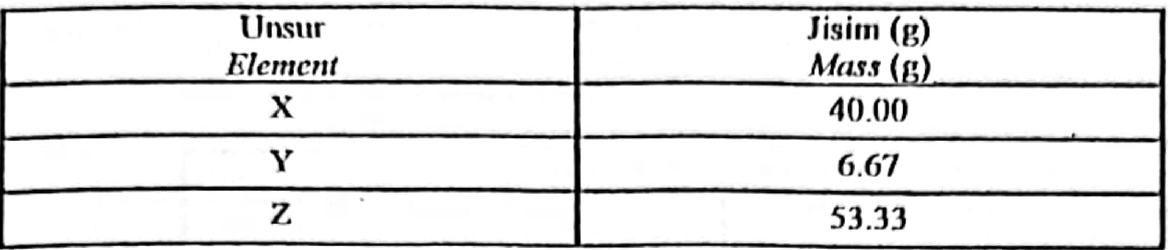
Table 5 shows the composition of acid P in apple cider vinegar: X 40.00 g; Y 6.67 g; Z 53.33 g. What is the molecular formula of acid P? [Relative atomic mass: X = 12, Y = 1, Z = 16; molecular mass of acid P = 60]
Medium
The chemical formula of oxide for metal Q is Q₂O₃ and chemical formula of potassium phosphate is K₃PO₄. What is the chemical formula of phosphate of metal Q?
Medium
Ionic compound of aluminium oxide has formula Al₂O₃. What is the number of ions in 1 mol of the compound? [Avogadro constant: 6.02 × 10²³ mol⁻¹]
Medium
The empirical formula of metal oxide is MO₂. If the oxide metal contain 60% of metal M by mass, what is the relative atomic mass of metal M? [Relative atomic mass O = 16]
Medium
Diagram 15 shows the set up of apparatus for the reaction between chlorine gas and iron wool. What is the volume of chlorine gas at room temperature if 3.25 g of brown solid are formed? [Relative atomic mass: Fe = 56; Cl = 35.5. Molar volume of gas = 24 dm³ mol⁻¹ at room temperature]
Medium
The equation 2Al2O3 → 4Al + 3O2 represents the reaction to extract aluminium from aluminium oxide. What is the mass of aluminium that can be extracted from 102 g aluminium oxide? [Relative atomic mass: Al = 27, O = 16]
Medium
1.08 g of element X combines with y g of oxygen to form a metal oxide with the empirical formula X2O3. What is the value of y? [Relative atomic mass: X = 27, O = 16]
Medium
The relative molecular mass of M2(SO4)3 is 342. What is the relative atomic mass of element M? [Relative atomic mass: O = 16, S = 32]
Medium
Excess zinc powder is reacted with 100 cm3 of 0.1 mol dm-3 hydrochloric acid. What is the volume of gas produced at room condition? (1 mol of gas occupies 24 dm3 at room condition)
Medium
Which of the informations are needed to determine the empirical formula of a compound?
I The relative atomic mass of element
II The relative molecular mass
III Mass of element in a compound
IV Proton number in the atom of element
Medium
Table 5 shows two atoms of the elements and their electron arrangement: M 2.8.1; N 2.6. The letters used are not the actual symbols. Which of the following is the correct balanced chemical equation between element M and N?
Medium
32 g of copper(II) sulphate, CuSO₄ is dissolved in distilled water to produce 0.4 mol dm⁻³ copper(II) sulphate solution. What is the volume of distilled water needed to dissolve copper(II) sulphate? [Relative atomic mass: Cu=64; S=32; O=16]
Medium
0.1 mol ethene burns completely in air to produce water and a gas that can turn lime water cloudy. Calculate the maximum volume of gas produced. [Relative atomic mass: C=12; H=1; O=16] [Molar volume of gas at room condition = 24.00 dm³ mol⁻¹]
Medium
The equation shows the reaction between lead(II) nitrate and sodium chloride. 100 cm³ of 0.1 mol dm⁻³ lead(II) nitrate solution is used. [Relative atomic mass: Pb=207; Cl=35.5]
Pb(NO₃)₂ + NaCl → PbCl₂ + 2NaNO₃
Which of the following are true about the reaction?
I 0.02 mol of sodium nitrate produced
II 0.05 mol sodium nitrate produced
III The mass of precipitate produced is 2.78 g
IV The mass of sodium chloride that reacted is 5.85 g
Medium
Which of the following is the chemical formula of copper(I) oxide?
Medium
The following equation represents the reaction between phosphorus and oxygen: P₄ + 5O₂ → 2P₂O₅. Which of the following statements is correct?
Medium
How many atoms are there in 720 g of glucose, C₆H₁₂O₆? [Relative atomic mass: H = 1, C = 12, O = 16; Avogadro's constant: 6.02 × 10²³ mol⁻¹]
Medium
Diagram 4 shows the ionic formulae of elements X (X³⁺) and Y (Y²⁻). Which of the following ionic equations represents the reaction between the ions?
Medium
The following equation represents the reduction of iron(III) oxide by magnesium: 3Mg + Fe₂O₃ → 3MgO + 2Fe. What is the mass of iron(III) oxide that is reduced if 7.2 g magnesium is used? [Relative atomic mass: Fe = 56, Mg = 24, O = 16]
Medium
The relative molecular mass of M2(SO4)3 is 342. What is the relative atomic mass of element M? [Relative atomic mass: O = 16; S = 32]
Medium
Diagram 4 shows the set-up of the apparatus used to determine the empirical formula of a metal oxide (dry hydrogen gas passed over heated metal oxide, hydrogen flame at the outlet). Which of the following metal oxides is suitable to be used in the experiment?
Medium
The following equation represents the decomposition reaction of solid copper(II) nitrate: 2Cu(NO3)2 → 2CuO + 4NO2 + O2. What is the volume of oxygen gas produce at room condition when 1.88 g of solid copper(II) nitrate is decomposed? [Relative atomic mass: Cu = 64, N = 14, O = 16; Molar volume of gas at room conditions = 24 dm3 mol-1]
Medium
Which chemical formulae are correct
Medium
Diagram 2 shows the apparatus set-up to determine the empirical formula of magnesium oxide. Which of the following metals can replace magnesium?
Medium
The following equation represents the reduction of iron(III) oxide by magnesium.
3Mg + Fe₂O₃ → 3MgO + 2Fe
What is the mass of magnesium needed to reduce 16.0 g of iron(III) oxide?
[Relative atomic mass: Fe = 56, Mg = 24, O = 16]
Medium
The following equation represents the decomposition reaction of zinc nitrate.
2Zn(NO₃)₂ → 2ZnO + 4NO₂ + O₂
What is the maximum volume of nitrogen dioxide gas released at standard temperature and pressure (STP) when 18.9 g of zinc nitrate was heated?
[Relative formula mass: Zn(NO₃)₂ = 189 g mol⁻¹; Molar volume of gas at STP = 22.4 dm³ mol⁻¹]
Medium
The following equation represents the reaction between 50 cm³ of 1.0 mol dm⁻³ sulphuric acid with calcium carbonate chips.
CaCO₃ + H₂SO₄ → CaSO₄ + CO₂ + H₂O
What is the number of carbon dioxide molecules released? [sic: the BM version asks for atoms]
[Avogadro constant: 6.02 × 10²³ mol⁻¹]
Medium
The equation CuO + H₂SO₄ → CuSO₄ + H₂O represents the reaction between 100 cm³ of 1.0 mol dm⁻³ sulphuric acid and 10 g copper(II) oxide. What is the mass of copper(II) oxide that remains unreacted? [Relative atomic mass: Cu = 64, O = 16]
Medium
9.75 g of element X reacts with 63.5 g of element Y to form a compound. What is the empirical formula of the compound formed? [Relative atomic mass: X = 39; Y = 127]
Medium
The equation CaCO₃ + 2HCl → CaCl₂ + CO₂ + H₂O represents the reaction between 50 cm³ of 1.0 mol dm⁻³ hydrochloric acid with calcium carbonate chips. What is the number of carbon dioxide molecules released? [Avogadro constant: 6.02 × 10²³ mol⁻¹]
Medium
Which of the following is the correct pair of compounds and its chemical formula?
A Sodium oxide: NaO
B Potassium chloride: KCl₂
C Copper(II) nitrate: CuNO₃
D Lead(II) chloride: PbCl₂
Medium
Which of the following particles equals to 1 mole?
Medium
The following equation represents a reaction between zinc metal and hydrochloric acid.
Zn + 2HCl → ZnCl₂ + H₂
Determine maximum volume of hydrogen gas released when 50 cm³ of 1.0 mol dm⁻³ hydrochloric acid reacts with excess zinc at room condition.
[1 mole of any gas occupies 24 dm³ mol⁻¹ at room conditions]
Medium
The following equation represents the oxidation of iron by steam.
3H₂O + 2Fe → Fe₂O₃ + 3H₂
What is the maximum mass of iron(III) oxide produced when 50 g of steam reacts with 100 g of iron?
[Relative atomic mass: H = 1; O = 16; Fe = 56]
Medium
110.0 g of propane, C₃H₈ gas undergoes complete combustion in excess oxygen.
What is the volume of carbon dioxide gas produced at room condition?
[Relative atomic mass: H = 1; C = 12; O = 16, Molar volume at room conditions = 24 dm³ mol⁻¹]
Medium
Which of the following is the number for Avogadro's constant, N_A?
Easy
Decomposition of potassium chlorate(V), KClO₃ by heat is often used to produce oxygen gas: 2KClO₃(s) → 2KCl(s) + 3O₂(g). What is the mass of KClO₃ needed to produce 20 dm³ of oxygen gas? [Relative atomic mass: O = 16, Cl = 35.5, K = 39; molar volume: 24 dm³ mol⁻¹ at room conditions]
Medium
4.16 g of element W reacts with 1.92 g of oxygen to form metal oxide W. The empirical formula for this metal oxide is W₂O₃. What is the relative atomic mass of W? [Relative atomic mass: O = 16]
Medium
The chemical formula of compound X is WBr2. What is the chemical formula of the compound formed when cation of X reacts with oxygen?
Medium
There are three stable isotopes of silicon that exist in the environment namely Si-28, Si-29 and Si-30. The relative abundance of Si-28, Si-29 and Si-30 is 92.23%, 4.67% and 3.10% respectively. Calculate the relative atomic mass for silicon.
Medium
The following equation represents the decomposition reaction of zinc nitrate which is imbalanced: Zn(NO3)2 → ZnO + NO2 + O2. What is the maximum volume of nitrogen dioxide gas released at standard temperature and pressure (STP) when 18.9 g of zinc nitrate was heated? [Relative formula mass: Zn(NO3)2 = 189 g mol⁻¹; Molar volume of gas at STP = 22.4 dm³ mol⁻¹]
Medium
0.5 mol of J reacts with 24.0 g of oxygen to form J oxide. Which of the following formulas shows the empirical formula for J oxide? [Relative atomic mass: O = 16]
Medium
What is the meaning of Avogadro's constant?
Easy
Which chemical equation is balanced?
Medium
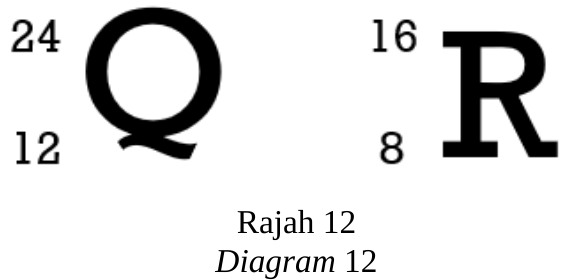
Diagram 12 shows standard representations for element Q (nucleon number 24, proton number 12) and R (nucleon number 16, proton number 8). 0.5 mole of element Q reacts with element R to form compound QR. What is the mass of QR formed from the reaction?
Medium
The monomer of polyisoprene is isoprene or by the IUPAC name 2-methylbut-1,3-diene. What is the relative molecular mass of the monomer isoprene? [Relative atomic mass : C = 12, H = 1]
Medium
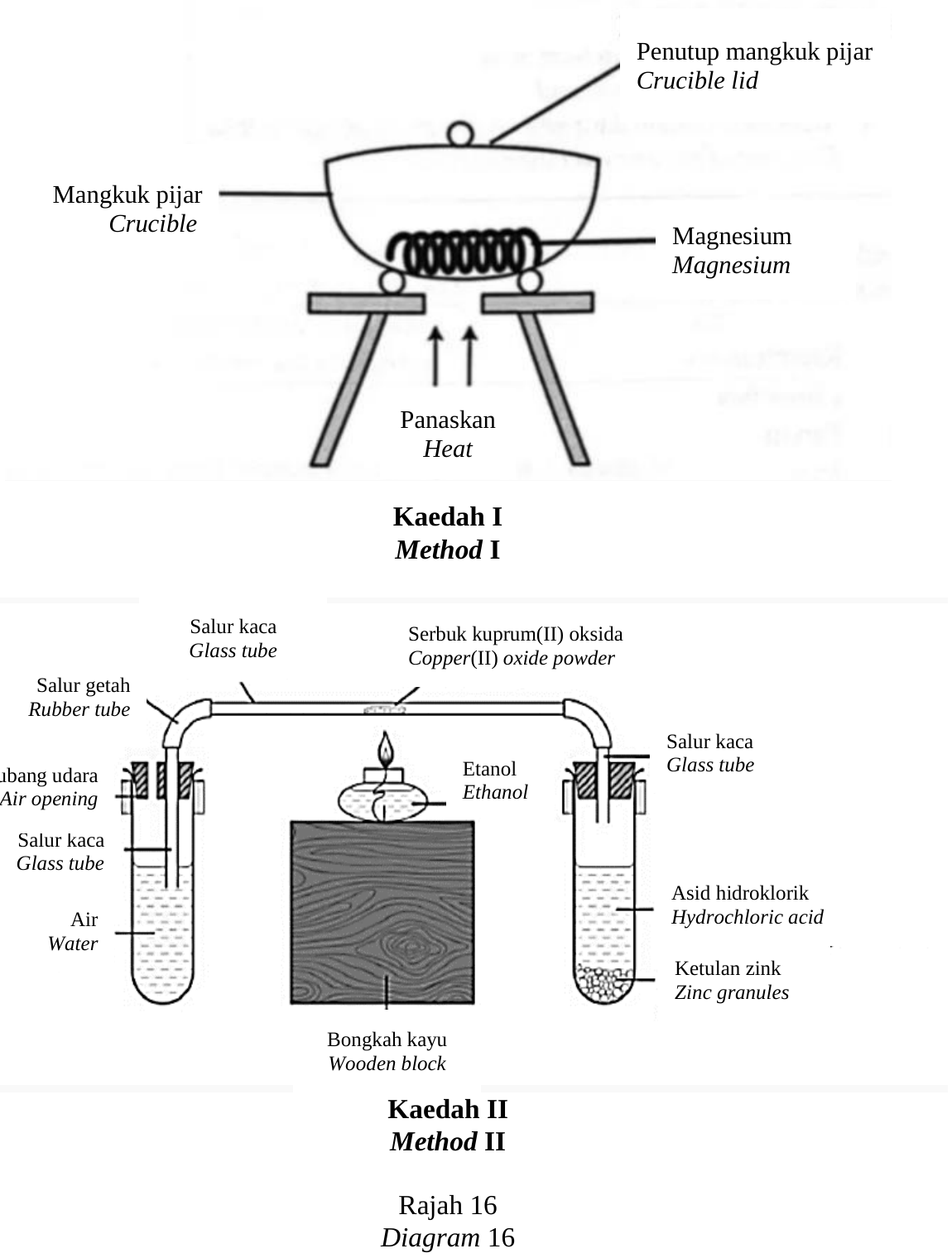
Diagram 16 shows the set up apparatus to determine the empirical formula of two types of metal oxides (Method I: magnesium heated in a crucible with lid; Method II: hydrogen from zinc and hydrochloric acid passed over heated copper(II) oxide powder). Which of the following statements best describes the reaction of the metal used?
A Method I: Magnesium is more reactive towards oxygen; Method II: Copper is more reactive towards oxygen
B Method I: Magnesium is flammable; Method II: Copper is not flammable
C Method I: Magnesium is more reactive towards oxygen; Method II: Copper is less reactive towards oxygen
D Method I: Magnesium is less reactive towards hydrogen; Method II: Copper is more reactive towards hydrogen
Medium
Chemical formula of copper(I) oxide is
Easy
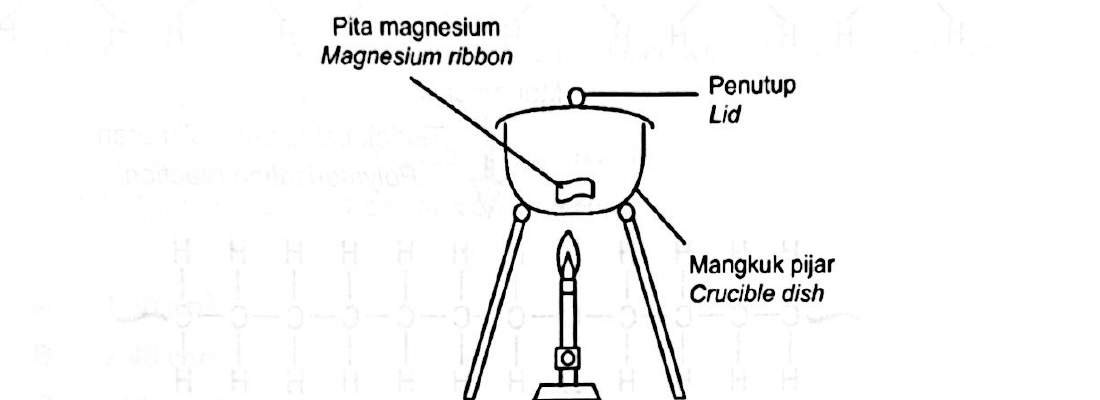
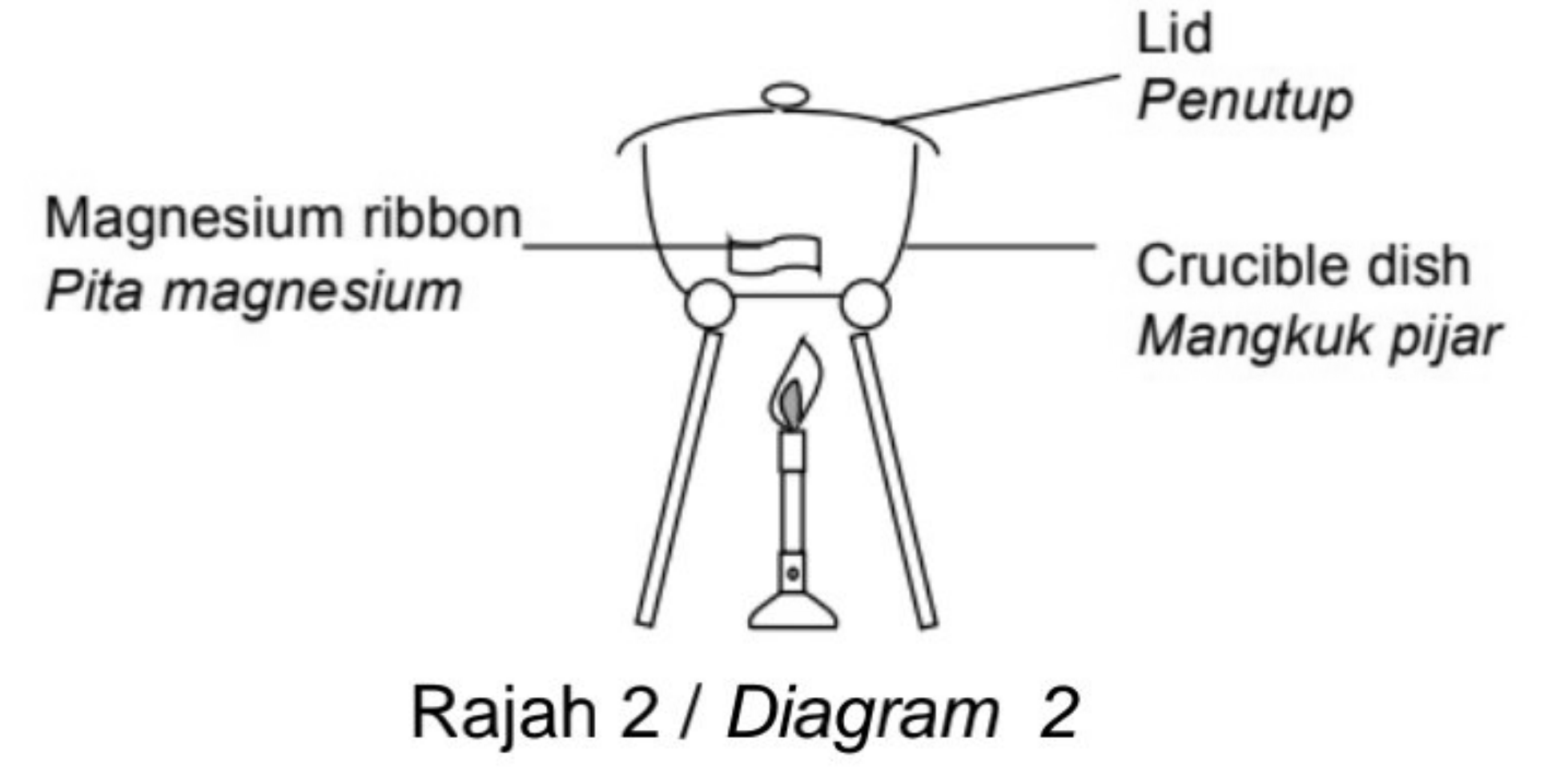
Diagram 2 shows the apparatus set-up to determine the empirical formula of magnesium oxide. (Crucible dish with lid, magnesium ribbon, heated by Bunsen burner.)
Which of the following is the step that should be taken to ensure that all magnesium are react with oxygen and burnt completely?
I Open and close the lid quickly occasionally during heating.
II Heat the magnesium ribbon strongly in the crucible without its lid.
III Observe the white solid produced
IV Repeat heating, cooling and weighing until a constant mass is obtained.
Medium
The proton number of atom R is 14 and its relative atomic mass is 28. Which statements is correct about R?
Medium
The following equation represents a reaction.
3H₂(g) + N₂(g) → 2NH₃(g)
What is the relative molecular mass of the product?
[Relative atomic mass of H=1; N=14]
Medium
The following equation shows the complete combustion of propene gas.
C₃H₆(g) + 9/2 O₂(g) → 3CO₂(g) + 3H₂O(g)
Which of the following statements are true when 1 mol of propene gas is burnt completely?
[Relative molecular mass: C₃H₆ = 42, O₂ = 32, CO₂ = 44, H₂O = 18; Molar volume of gas is 22.4 dm³ mol⁻¹ at S.T.P.]
I Complete combustion of 0.1 mol of propene produces 5.4 g of water
II Complete combustion of 1 mol of propene gas produces 2 mol of water
III Complete combustion of 4.2 g of propene requires 14.4 g of oxygen.
IV Complete combustion of 0.1 mol of propene produces 6.72 dm³ carbon dioxide gas at s.t.p.
Medium
What is the mass of phosphorus that contains twice the number of atoms found in 14 g of iron? [Relative atomic mass: P = 31; Fe = 56]
Medium
Which of the following statements is correct about one mole of ethane gas, C2H4 and one mole of carbon dioxide, CO2 gas? [Relative atomic mass: H, 1; C, 12; O, 16] I Both have the same number of atoms. II Both have the same number of molecules. III Both have the same relative molecular mass. IV Both have the same volume at the same temperature and pressure.
Medium
Why is the atom of carbon-12 used as the standard atom?
I Exist as solid at room temperature
II Can easily combine with other elements
III Exist as non-metal element
IV Can conduct electricity
Medium
Calculate the number of positive ions in 1.5 mol of aluminium oxide.
Medium
What is the mass of one mole of ammonia molecules? [Relative atomic mass: H = 1, N = 14]
Easy
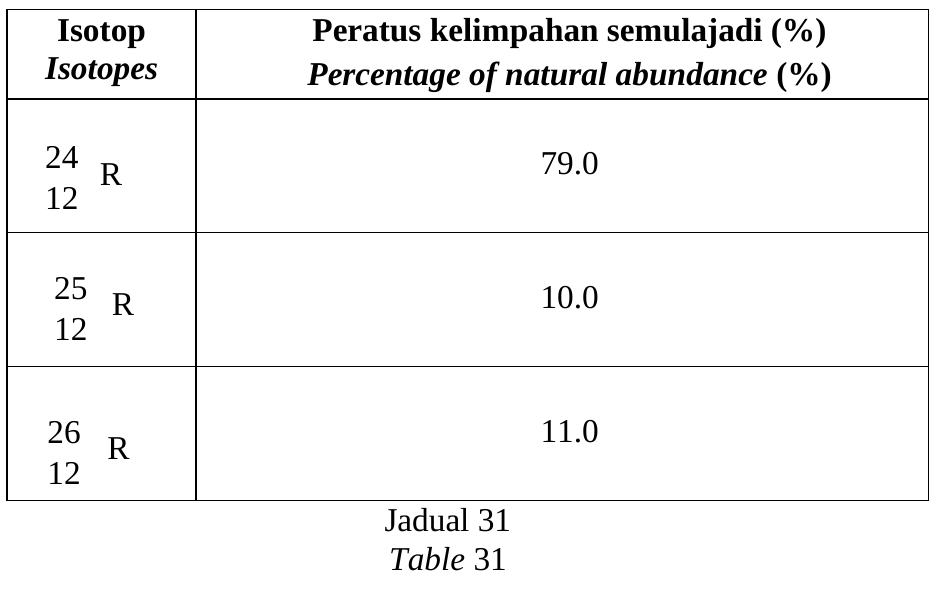
Table 31 shows the natural abundance of three isotopes of element R: ²⁴₁₂R 79.0%; ²⁵₁₂R 10.0%; ²⁶₁₂R 11.0%. Calculate the relative atomic mass of R.
Medium
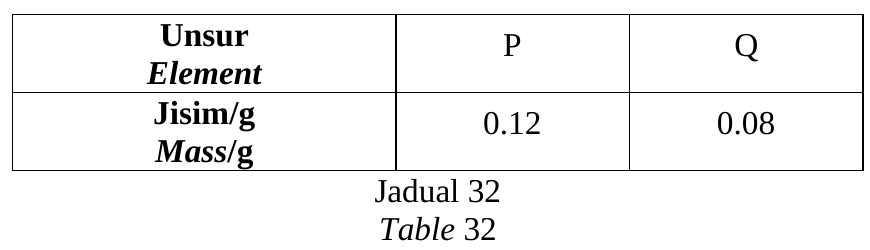
Table 32 shows the mass of element P reacted with element Q to form a compound with empirical formula PQ. Mass of P = 0.12 g; mass of Q = 0.08 g. What is the relative atomic mass of element P? [Relative atomic mass of Q = 16]
Medium
Diagram 33 shows the set-up of apparatus for an experiment carried out by Form 5 Science students to determine the empirical formula for oxide of copper (hydrogen from zinc and hydrochloric acid is passed over heated copper oxide). Which substance can use the same method to determine the empirical formula?
Medium
Which of the following statements explains the reason of carbon-12 chosen as the standard reference for determining the relative atomic mass most accurately?
Easy
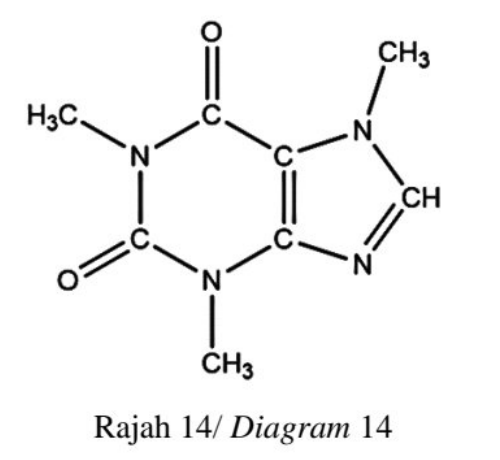
Diagram 14 shows structural formula of caffeine (C₈H₁₀N₄O₂). What is the mass of 0.25 mol caffeine? [Relative atomic mass: H = 1; C = 12; O = 16; N = 14]
Medium
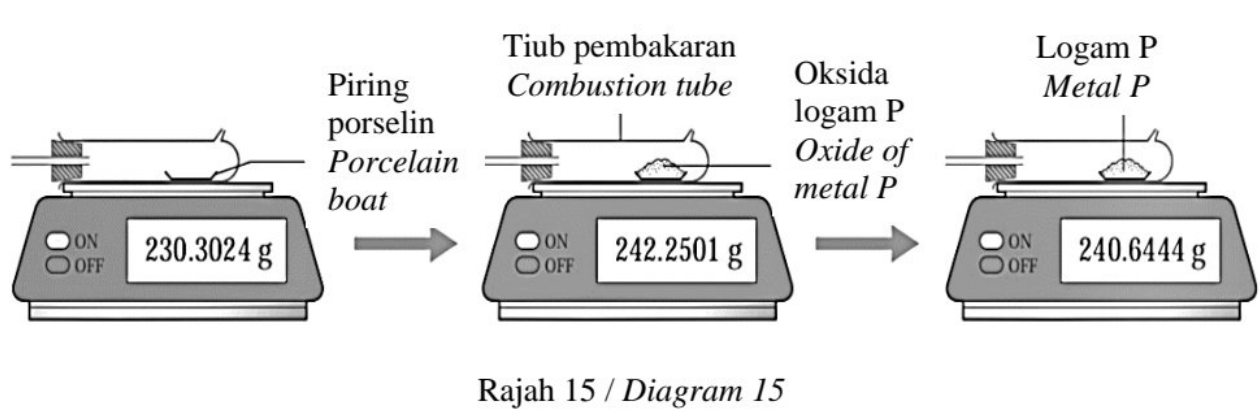
Diagram 15 shows the weighing steps in the determination of empirical formula of the oxide of metal P: porcelain boat 230.3024 g; boat + oxide of metal P 242.2501 g; boat + metal P 240.6444 g. Determine the empirical formula of metal P oxide. [Relative atomic mass: O = 16, P = 207]
Medium
What is the percentage composition by mass of water in hydrated aluminosilicate, Al₂O₃.2SiO₂.2H₂O? [Relative atomic mass: Si = 28; Al = 27; O = 16; H = 1]
Medium
Which of the following chemical name and chemical formulae are correctly matched?
A Sodium oxide - NaO
B Magnesium chloride - MgCl
C Ammonium phosphate - (NH4)3PO4
D Lead(II) bromide - Pb2Br
Medium
Which of the following gases contains 0.6 mol of atoms at room temperature and pressure? [1 mol of gas occupies the volume of 24 dm³ at room temperature and pressure]
Medium
The empirical formula of a compound is given as CH2O. If the molecular mass of the compound is 150, what is its molecular formula? [Relative atomic mass: H = 1, C = 12, O = 16]
Medium
The following equation represents the reaction between magnesium and hydrochloric acid: Mg(s) + 2HCl(aq) → MgCl2(aq) + H2(g). What is the volume of hydrogen gas produced when 2.4 g of magnesium reacts with 100 cm³ of 1 mol dm⁻³ hydrochloric acid at standard temperature and pressure (STP)? [Relative atomic mass: Mg = 24, H = 1; Molar volume of gas at STP = 22.4 dm³ mol⁻¹]
Medium
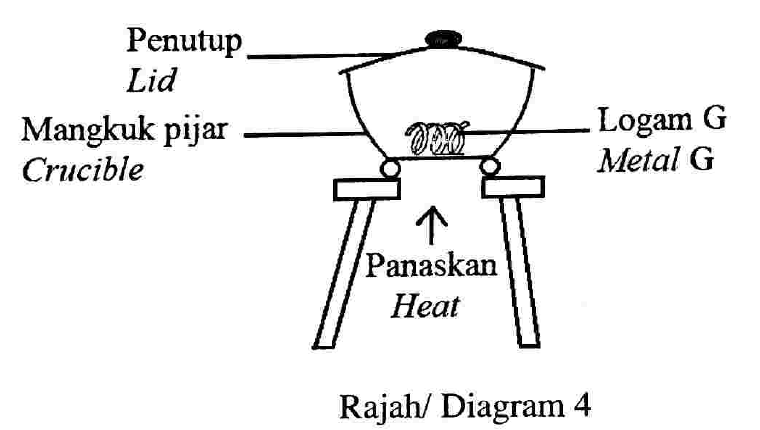
Diagram 4 shows the set-up of apparatus to determine the empirical formula of oxide of metal G. [Diagram: crucible with lid containing metal G, heated.] What is metal G?
Medium
What is the number of atoms in 1 mol of sulphur dioxide gas? [Avogadro constant, N_A = 6.02 × 10²³ mol⁻¹]
Medium
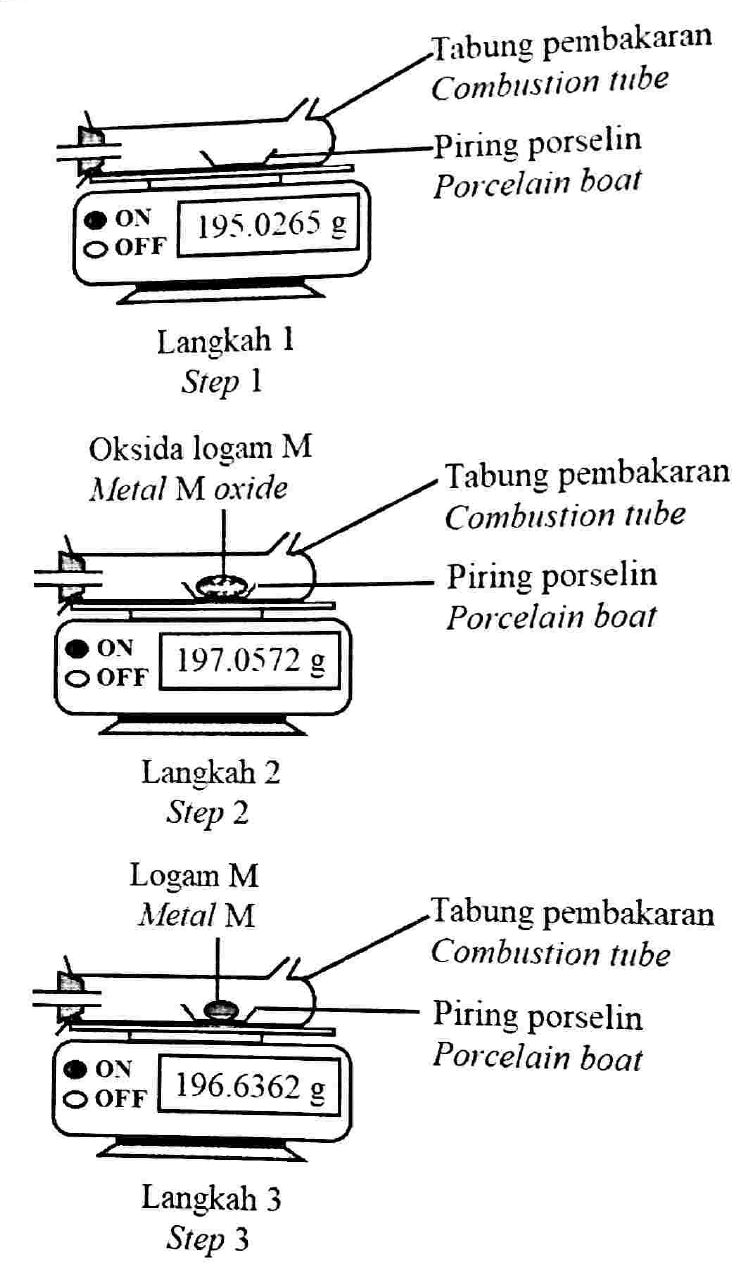
Diagram 32 shows the weighing steps taken to determine the empirical formula of the oxide of metal M. Step 1: combustion tube + porcelain boat = 195.0265 g; Step 2: with metal M oxide = 197.0572 g; Step 3: with metal M (after reduction) = 196.6362 g. What is the empirical formula of metal M oxide? [Relative atomic mass: O = 16, M = 64]
Medium
66.0 g of propane, C₃H₈ gas undergoes complete combustion in oxygen. What is the volume of carbon dioxide gas produced at room conditions? [Relative atomic mass: H = 1, C = 12, O = 16; Molar volume at room conditions = 24 dm³ mol⁻¹]
Medium
Which of the following is the correct formula of an ion?
Easy
What is the meaning of Avogadro constant?
Easy
What is the number of hydrogen atoms in 0.2 mol of propanol?
Medium
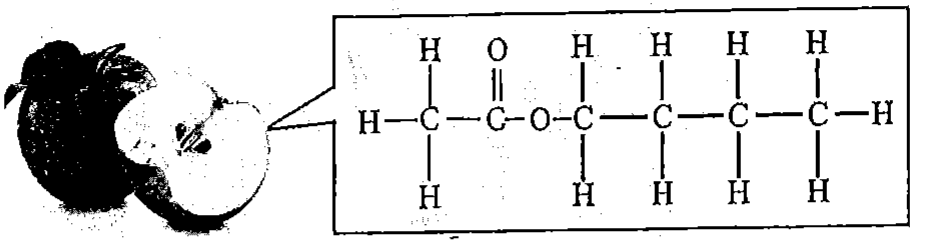
Diagram 8 shows a structural formula of butyl ethanoate which is found in an apple.
Which of the following is correct for butyl ethanoate?
[Relative atomic mass: H = 1, C = 12, O = 16]
Medium
Electron arrangement of atom X is 2.1. Element X reacts with oxygen when heated.
Which of the following chemical equations represents the reaction?
Medium
Alkane X with three carbon atoms undergoes complete combustion to produce carbon dioxide and water.
What is the volume of carbon dioxide gas released when 0.5 mol alkane X is burnt completely at room conditions?
[Molar volume of gas = 24 dm³ mol⁻¹ at room conditions]
Medium
Which of the following statements explains why carbon-12 was chosen as the standard atom to determine the relative atomic mass and relative molecular mass?
Easy
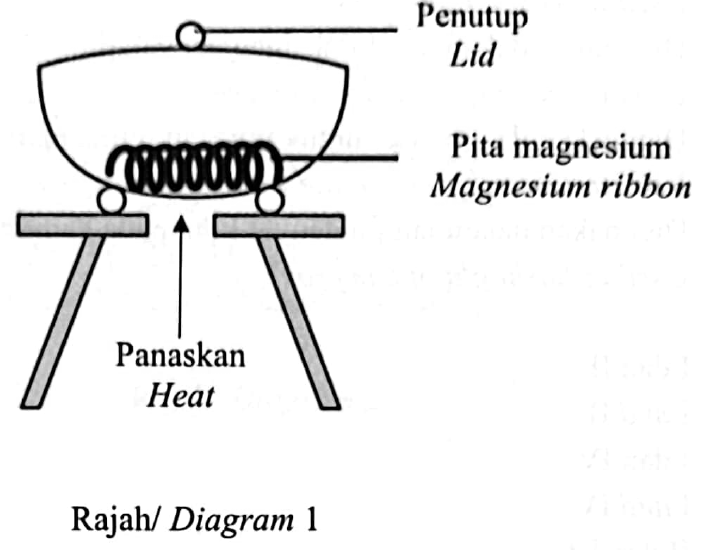
Diagram 1 shows the apparatus set-up to determine the empirical formula of magnesium oxide. Which of the following steps is correct to ensure that the magnesium ribbon is burnt completely?
Medium
Which of the following statements is correct for one mole of a substance?
Medium
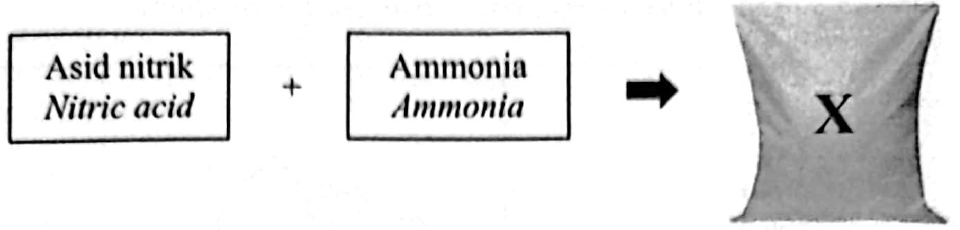
Diagram 12 shows a reaction to produce fertiliser X (nitric acid + ammonia → X). What is the percentage of nitrogen by mass in fertiliser X? [Relative atomic mass: H = 1, N = 14, O = 16]
Medium
Y is a Group 17 element in the Periodic Table of Elements. What is the volume of gas Y₂ needed to react completely with 5.6 g of iron at room conditions? [Relative atomic mass: Fe = 56, Molar volume of gas = 24 dm³ mol⁻¹ at room conditions]
Medium
An experiment was conducted to determine the empirical formula of an oxide of copper. Hydrogen gas is flowed continuously until the glass tube is cooled to room temperature after heating is stopped. Which of the following statements is correct to explain why the step is taken?
Medium
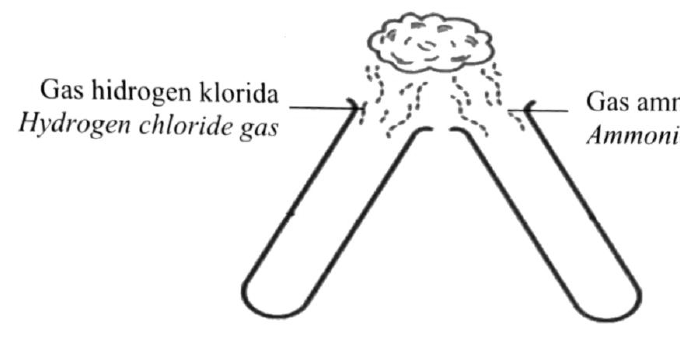
Diagram 18 shows the formation of ammonium chloride. What of the following statements is correct about the reaction?
Medium
Which of the following is the same for 1 mole sulphur dioxide, SO₂ gas and 1 mole of sulphur trioxide, SO₃ gas?
Medium
The empirical formula of compound P is CH₂O. What is the volume of hydrogen gas released when 20 cm³ of 0.5 mol dm⁻³ compound P reacts with excess zinc? [Relative atomic mass: H = 1, C = 12, O = 16; Molar mass of compound P = 60 g mol⁻¹; Molar volume of gas = 24 dm³ mol⁻¹ at room conditions]
Medium
Formula of sulphate ion is SO₄²⁻ and nitrate ion is NO₃⁻. If Y ion and sulphate ion formed a compound with formula YSO₄, state the formula of compound formed by Y ion and nitrate ion.
Medium
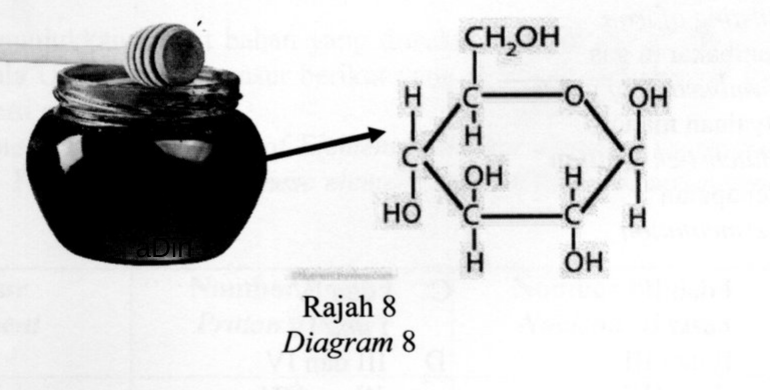
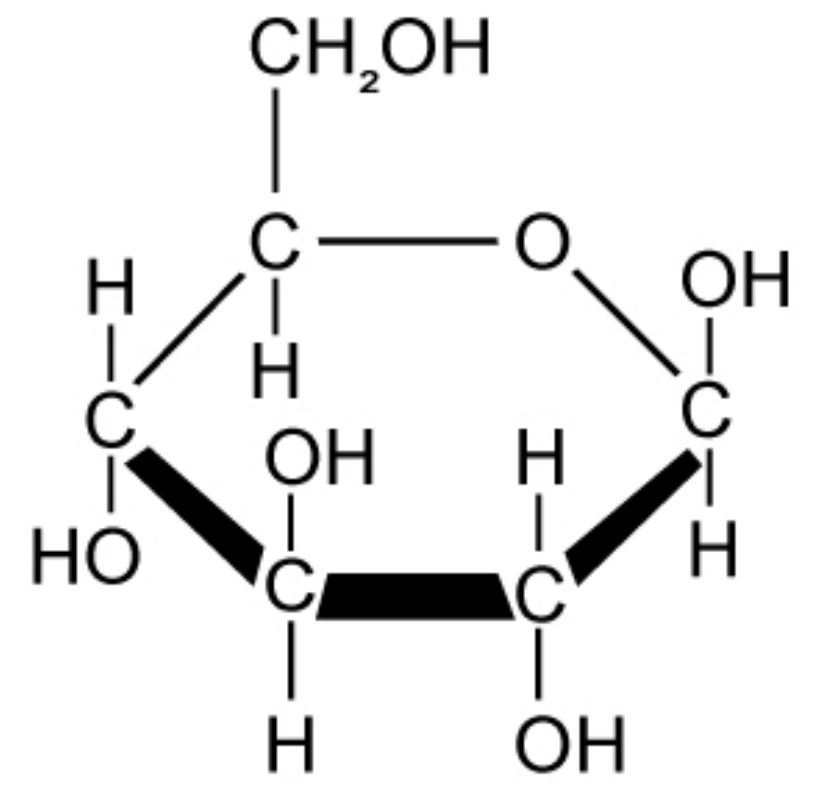
Diagram 8 shows the type of sugar found in honey. What is the empirical formula of the sugar in diagram 8?
Medium
Diagram 9 shows a reaction to produce fertiliser Y (sulphuric acid + ammonia → fertiliser Y). What is the percentage of nitrogen by mass in fertilizer Y? [Relative atomic mass: H=1, N=14, O=16, S=32]
Medium
Diagram 10 shows the reaction between chlorine gas and hot iron wool to produce brown solid X. Calculate the mass of solid X when 100 cm³ of chlorine gas reacted with the hot iron wool. [Relative atomic mass: Fe=56, Cl=35.5; Molar volume of gas at room temperature = 24 dm³ mol⁻¹]
Medium
What is the meaning of Avogadro constant?
Easy
Element M is a metal with oxidation number +1 and can react with oxygen to produce a compound with formula M2O. What is the possible element of M? I Sodium; II Silver; III Calcium; IV Hydrogen
Medium
Diagram 7 shows the structural formula of a compound synthesised by green plant during photosynthesis. What is the simplest ratio of the elements carbon, hydrogen and oxygen for the compound?
Medium
The formula of ion for element X and Y are X3+ and Y2-. Which of the following equation represents the reaction between X and Y?
Medium
Chemists use the concept of relative atomic mass by comparing the mass of atom of an element to the mass of atom of another element that is chosen as the standard. In 1961, chemists across the world agreed to use one of the isotopic atoms of carbon as the standard atom. Which of the following isotopic atom of carbon chosen as standard atom?
Easy
Chemical equation can be interpreted qualitatively and quantitatively. Which of the following is the balanced chemical equation for the following reactions? Sodium metal reacts with water to produce aqueous solution of sodium hydroxide and hydrogen gas.
Medium
What is the number of atoms in 0.5 mol of carbon dioxide gas? [Avogadro constant = 6.02 × 10²³ mol⁻¹]
Medium
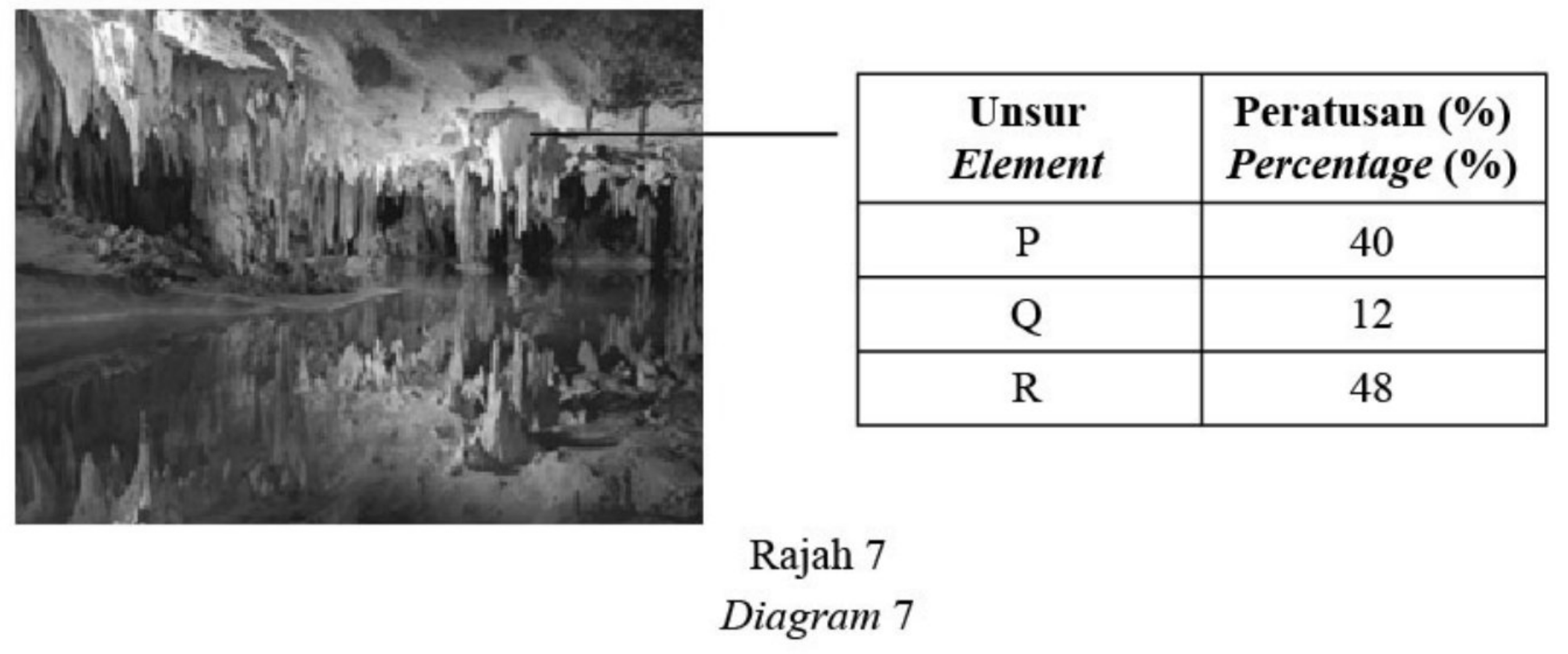
Diagram 7 shows stalactites and stalagmites formed in a limestone cave. Limestone caves consist of a certain compound. The percentages of each element in the compound are recorded in the following table: P 40%; Q 12%; R 48%. Assume that 100 g of the limestone cave sample is used. What is the empirical formula of the compound? [Relative atomic mass: P = 40; Q = 12; R = 16]
Medium
What is the chemical formula of aluminium carbonate?
Medium
Diagram 8 shows epsom salt which is often used in foot soak solution to relief foot ache. It consists of white powder magnesium sulphate heptahydrate, MgSO₄.7H₂O. What is the molar mass of magnesium sulphate heptahydrate? [Relative atomic mass: Mg = 24; S = 32; O = 16; H = 1]
Medium
Diagram 10 shows an overturned lorry carrying concentrated sulphuric acid. 1200 cm³ of 4.65 mol dm⁻³ sulphuric acid has spilled on the road. Calcium carbonate compound is used to react with the acid to produce calcium sulphate, carbon dioxide and water. What is the minimum mass of calcium carbonate compound required? [Relative atomic mass: H = 1, C = 12, O = 16, Ca = 40]
Medium
Which substance contains 6.02 × 10²³ atoms?
Medium
Diagram 7 shows the apparatus set-up to determine the empirical formula of metal oxide. Which statement explains why the crucible need to be covered by its lid when the metal starts to burn?
Medium
The following equation represents the reaction of metal X with sulphuric acid: 2X + H₂SO₄ → X₂SO₄ + H₂. What is the mass of metal X that required to react with 100 cm³ of 0.5 mol dm⁻³ sulphuric acid? [Relative atomic mass: X = 23]
Medium
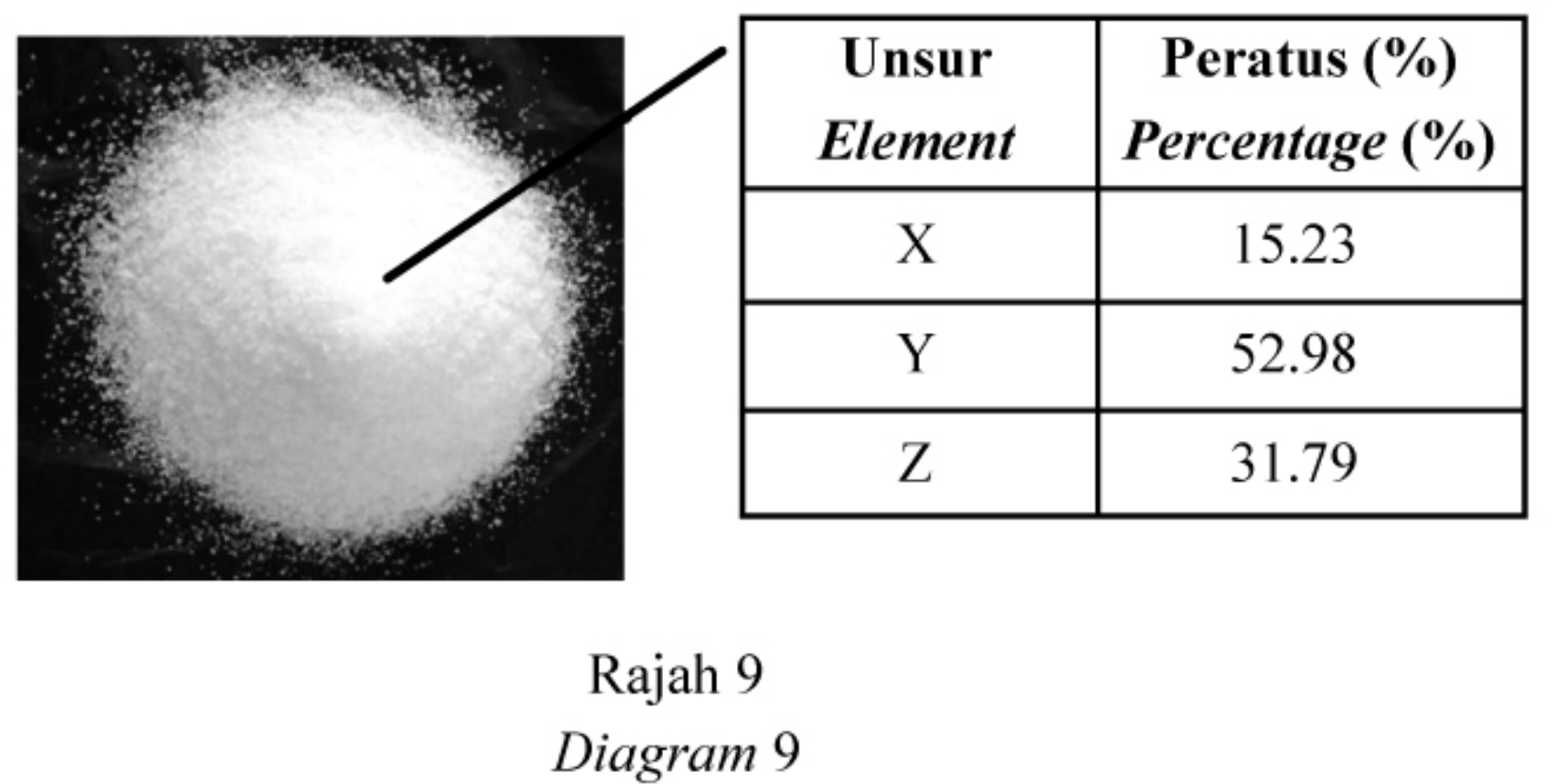
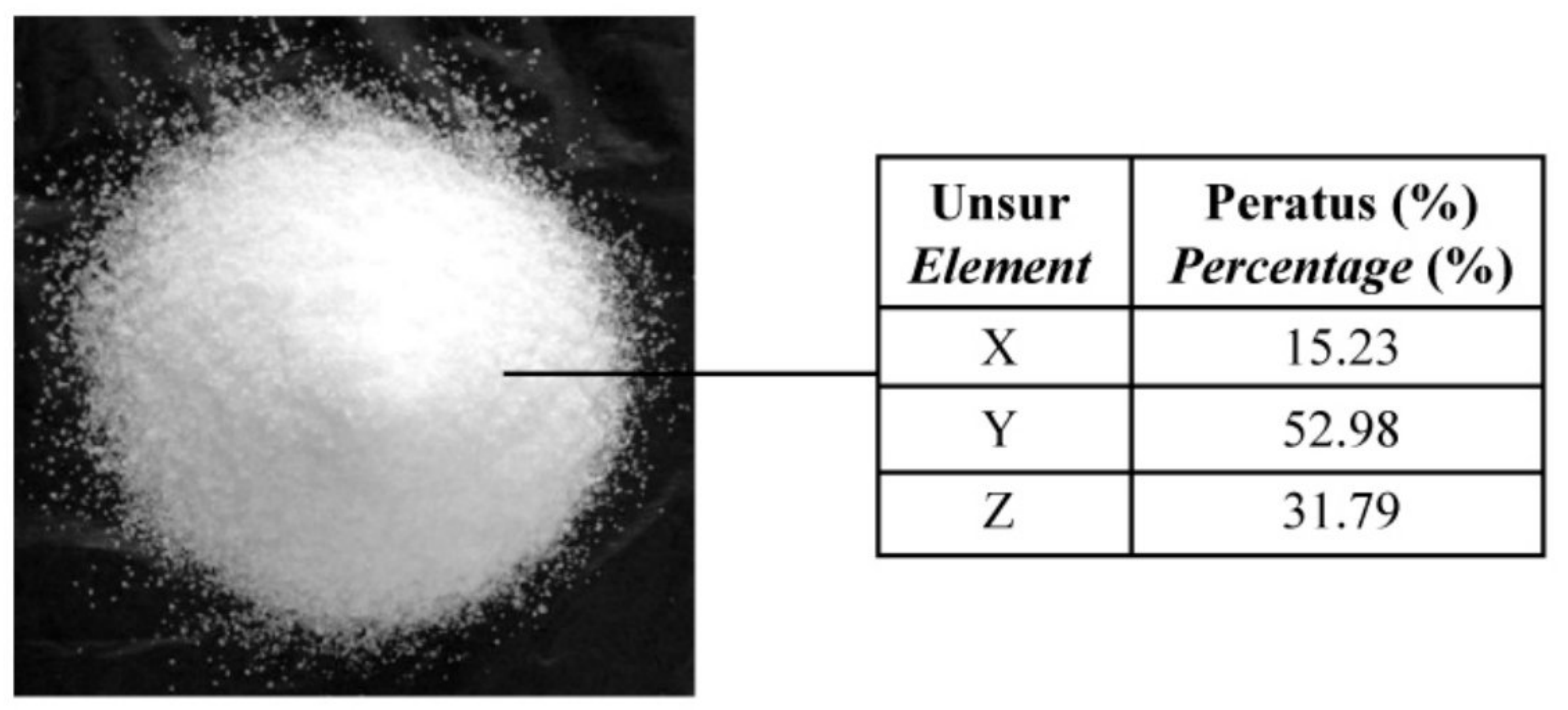
Diagram 9 shows the composition of a certain compound (X 15.23%; Y 52.98%; Z 31.79%). What is the empirical formula of the compound? [Relative atomic mass: X = 23; Y = 80; Z = 16]
Medium
In the field of chemistry, the unit mole is used to measure the amount of substance. According to the IUPAC, one mole of substance contains a fixed value known as the Avogadro constant, N_A. Which of the following value is the Avogadro number?
Easy
Chemical equation can be interpreted qualitatively and quantitatively. Which of the following is the balanced chemical equation for the following reaction? Sodium metal reacts with oxygen to form sodium oxide.
Medium
1.2 g of element X reacts with 0.8 g of element Y to form a compound with the formula XY. What is the relative atomic mass of X? [Relative atomic mass of Y is 16]
Medium
What is the chemical formula of chromium(III) oxide?
Medium
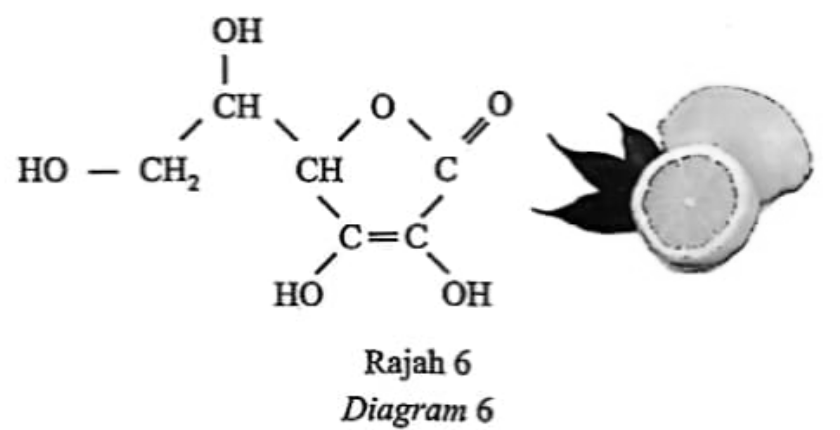
Diagram 6 shows the structural formula of Vitamin C that is found in a lemon. What is the molecular formula for Vitamin C?
Medium
Plaster of Paris is often used to treat patients with bone injuries. It consists of a fine white powder of calcium sulphate hemihydrate, (CaSO₄)₂.H₂O. What is the molar mass of calcium sulphate hemihydrate? [Relative atomic mass: Ca = 40; S = 32; O = 16; H = 1]
Medium
500 cm³ of 4.65 mol dm⁻³ sulphuric acid from a car battery has been spilled on a garage floor. Baking soda, NaHCO₃ can be used to react with the acid to produce sodium sulphate, carbon dioxide and water. What is the minimum mass of baking soda needed? [Relative atomic mass: H = 1, C = 12, O = 16, Na = 23]
Medium
Which of the following fertilisers contains the highest percentage of nitrogen by mass? [Relative atomic mass: H = 1; C = 12; N = 14; O = 16; S = 32; K = 39]
Medium
Which of the following statements is true about 1 mole of substance?
Medium
Diagram 9 shows the apparatus set-up to determine the empirical formula of metal oxide (crucible with lid, metal, heat). Which statement explains why the crucible need to be covered by its lid when the metal starts to burn?
Medium
What is the number of atoms in 0.5 mol of ammonia gas? [Avogadro constant = 6.02 × 10²³ mol⁻¹]
Medium
Diagram 11 shows the composition of a certain compound: X 15.23%, Y 52.98%, Z 31.79%. What is the empirical formula of the compound? [Relative atomic mass: X = 23; Y = 80; Z = 16]
Medium
The relative formula mass of salt, M₂(SO₄)₃ is 342. What is the relative atomic mass of element M? [Relative atomic mass: O = 16, S = 32]
Medium
The following equation represents the reaction between copper(II) oxide and nitric acid.
CuO + 2HNO3 → Cu(NO3)2 + H2O
What is the mass of copper(II) nitrate produced when 1.6 g of copper(II) oxide react completely with nitric acid?
[Relative atomic mass: Cu=64, N=14, O=16]
Medium
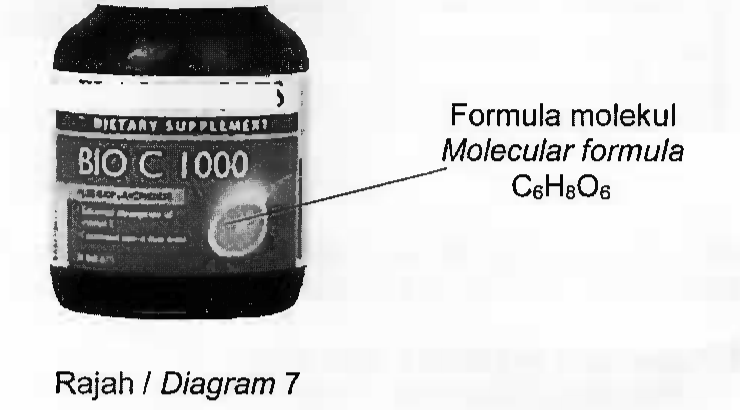
Diagram 7 shows one type of essential vitamin that is needed for our health (molecular formula C6H8O6). What is the relative molecular mass of the vitamin?
[Relative atomic mass: H=1, C=12, O=16]
Medium
When 9.2 g of ethanol burns completely in excess oxygen, carbon dioxide gas and water are produced. Calculate the volume of carbon dioxide gas released.
[Relative atomic mass: H=1, C=12, O=16; molar volume of gas = 24 dm³ mol⁻¹ at room condition]
Medium
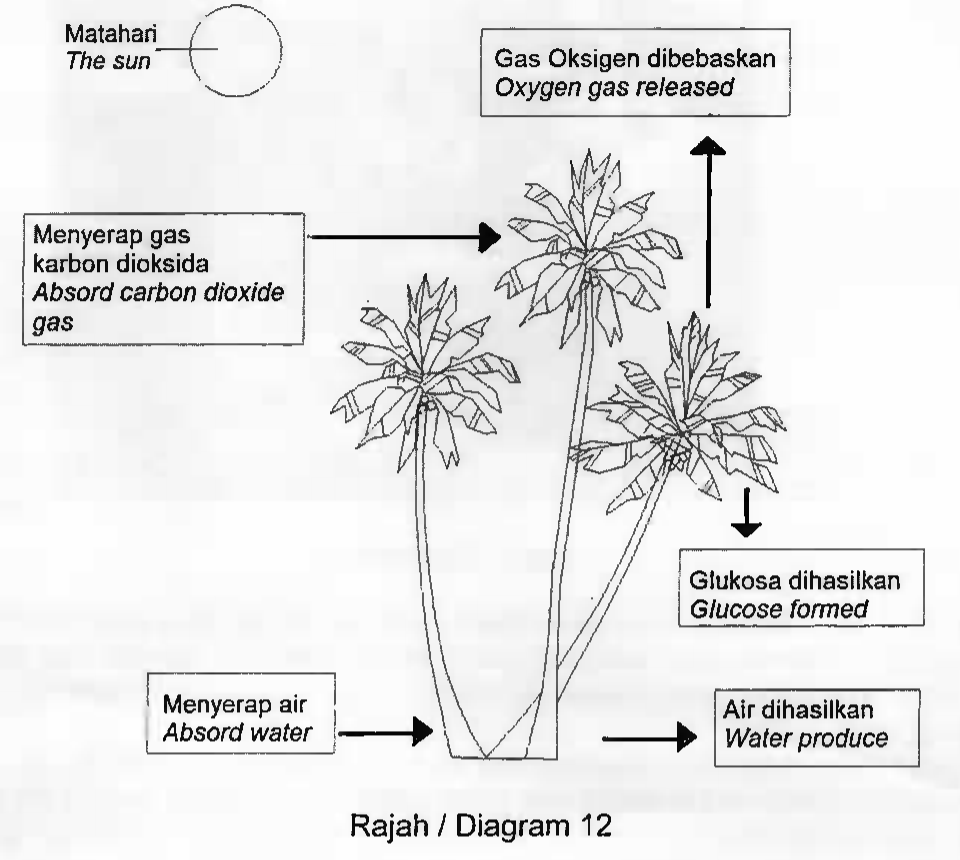
Diagram 12 shows the process of photosynthesis for a coconut tree (absorbs carbon dioxide gas and water; releases oxygen gas; glucose formed). What is the volume of oxygen gas produced if 1.3 dm³ of carbon dioxide gas is used?
[Molar volume of gas at room condition = 24 dm³ mol⁻¹]
Medium
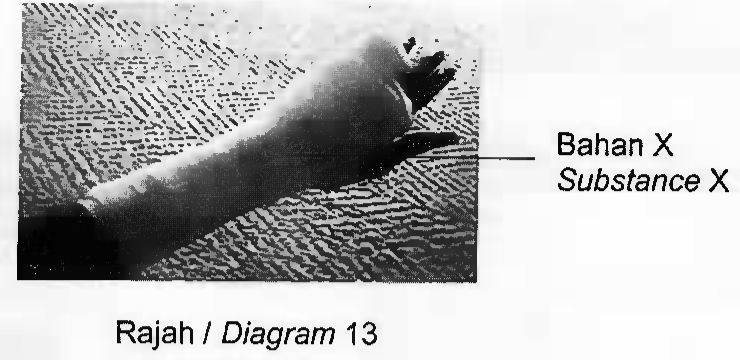
Diagram 13 shows the hand of Mr Zamri's son covered by substance X after treatment for an injury. Substance X is formed when calcium nitrate reacts with sodium sulphate. Calculate the mass of substance X when 25 cm³ of 0.5 mol dm⁻³ sodium sulphate reacts with calcium nitrate.
[Relative atomic mass: Ca=40, S=32, O=16]
Medium
Which of the following particles equal to 1 mol? [Relative atomic mass: H=1] [Avogadro constant, N_A = 6.02 × 10²³ mol⁻¹]
Medium
Which chemical formula is correctly named according to the IUPAC nomenclature system? A: CO - Carbon oxide; B: SO₃ - Sulphur(III) oxide; C: Fe₂O₃ - Iron(II) trioxide; D: FeO - Iron(II) oxide.
Medium
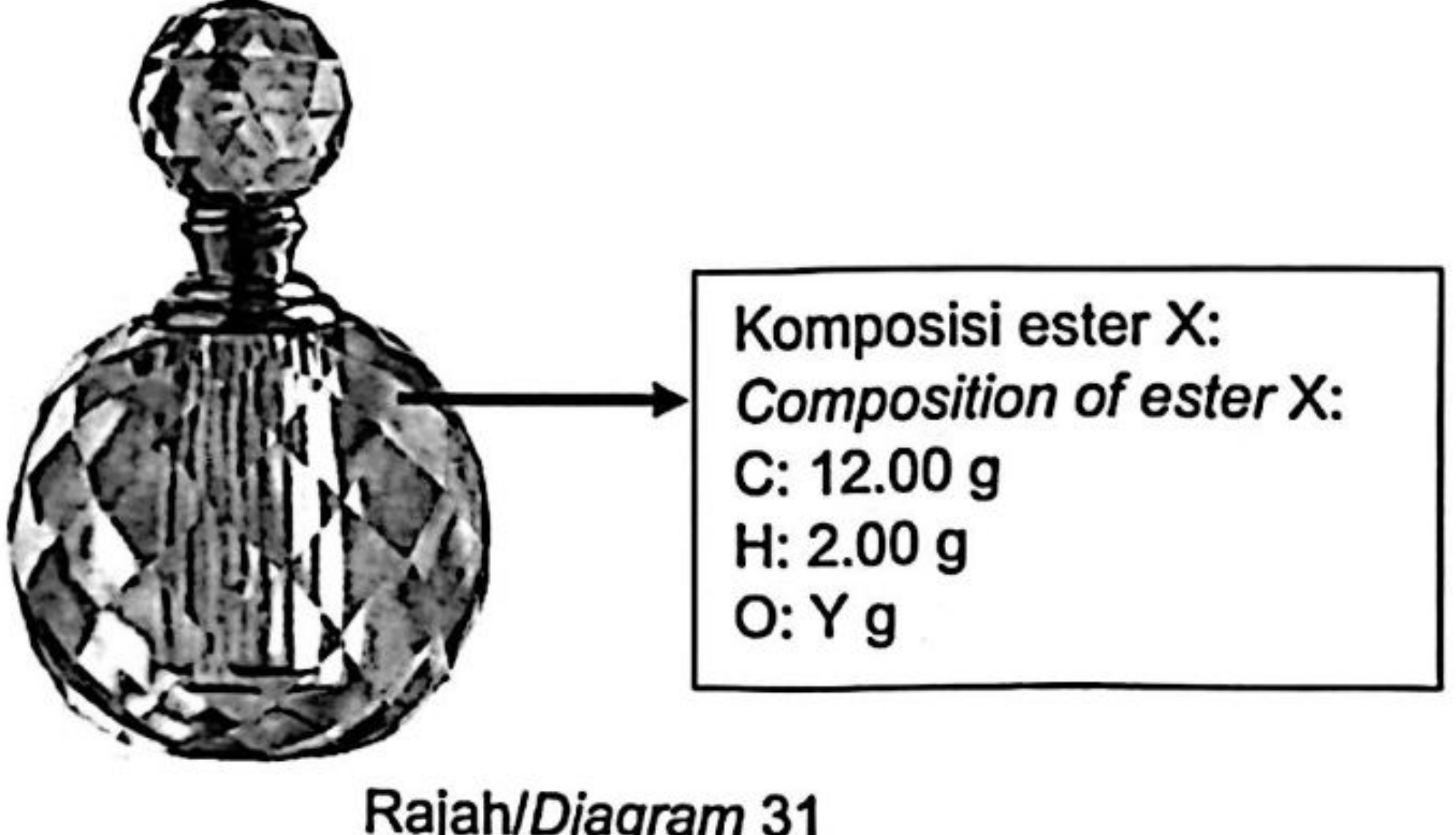
Diagram 31 shows a bottle of perfume containing 50 g of substance including ester X (solvent). 44% of the mass of the substance is ester X. Composition of ester X: C: 12.00 g, H: 2.00 g, O: Y g. Relative molecular mass of ester X is 88. What is the molecular formula of ester X? [Relative atomic mass; H = 1, C = 12, O = 16]
Medium
The formula for a sulphate ion is SO₄²⁻ and for a nitrate ion is NO₃⁻. If the formula of the sulphate salt of T is TSO₄, what is the formula of the nitrate salt of T?
Medium
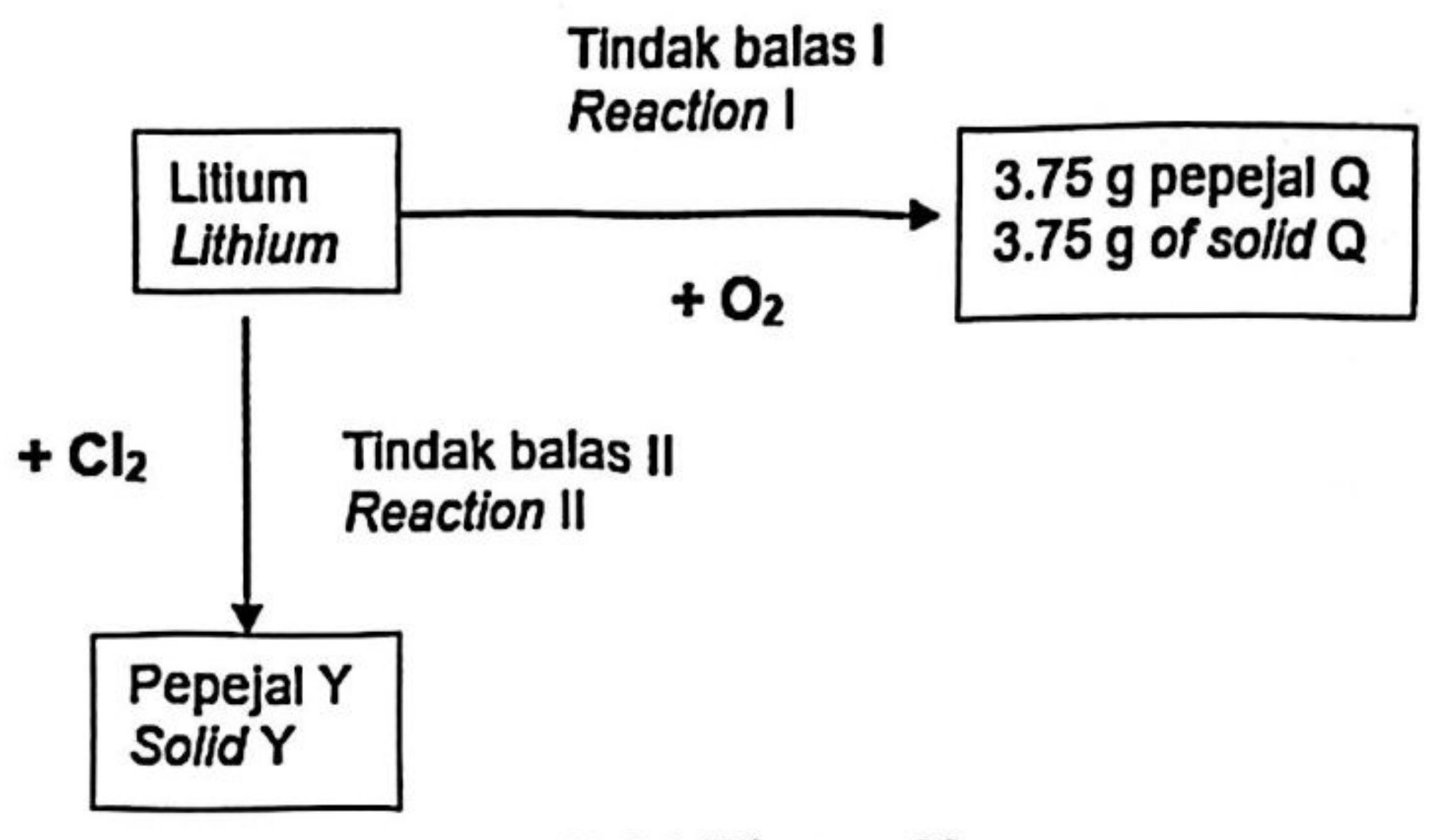
Diagram 33 shows two different reactions of a metal: lithium + O₂ gives 3.75 g of solid Q (Reaction I); lithium + Cl₂ gives solid Y (Reaction II). What is the mass of solid Y formed when the same mass of lithium is used? [Relative atomic mass: Li = 7, O = 16, Cl = 35.5]
Medium
2.3 g ethanol burns completely in excess oxygen producing carbon dioxide gas and water. Calculate the volume of carbon dioxide gas liberated. [Relative atomic mass: C = 12; H = 1; O = 16. Molar volume at room temperature = 24 dm³ mol⁻¹]