An element has the following properties:
• High melting point
• More than one oxidation numbers
• Good electrical conductivity
• Forms coloured compounds
What element could display the properties above?
Medium
Element Y is located on the right of the Periodic Table of Elements. Which of the following combinations shows the correct type and property of the oxide of Y?
Medium
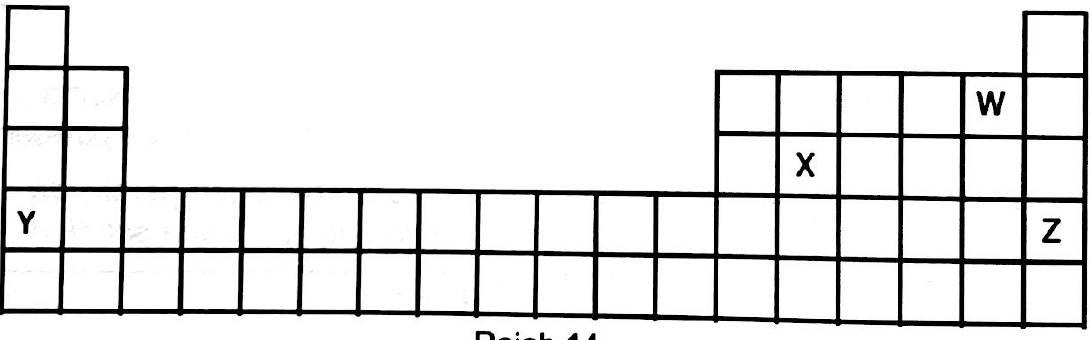
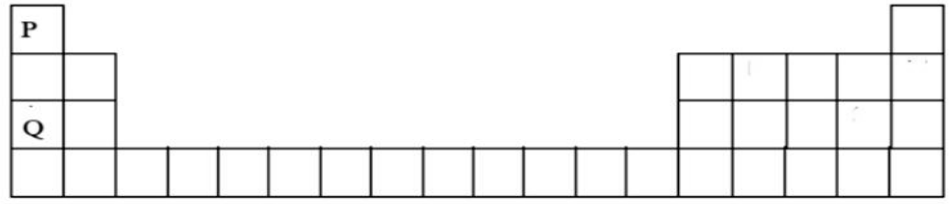
Diagram 14 shows the elements of W, X, Y and Z in a Periodic Table of Elements. The letters in the periodic table are not the actual symbols of the elements.
Which of the following statements is correct?
Medium
Position in period can be determined by referring to...
Easy
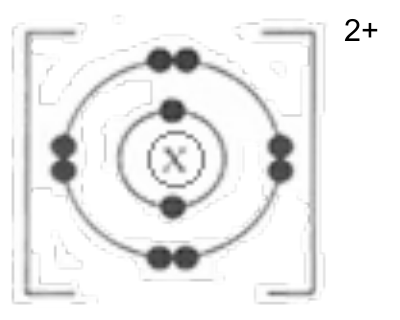
Diagram 20 shows the electron arrangement of the Q ion (charge 2+). Which of the following statements is correct about Q?
Medium
A redox reaction can be represented by the equation X₂(aq) + 2KBr(aq) → 2KX(aq) + Br₂(aq). Element X is in Group 17 in the Periodic Table of Elements. What can be observed if element X is replaced with iodine?
Medium
Which of the following elements is located in Group 18?
Easy
Which of the following are characteristics of Group 18 elements? I Chemically inert; II Colourless and odourless gas; III Has two valence electrons; IV Exists as solid at room temperature
Medium
When going across the period from left to right the Periodic Table of Element, the atomic size is decreasing because of:
Medium
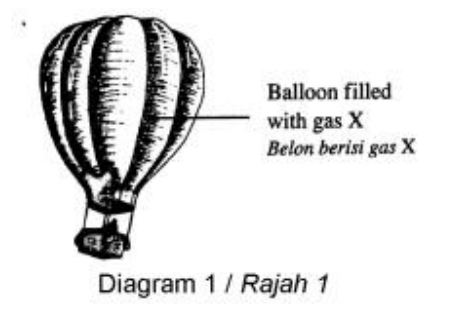
Diagram 1 shows an air balloon filled with gas X. In which group is gas X located in the periodic table?
Easy
Element T is located below chlorine in the Periodic Table of Elements. Which of the following is correct about T?
Medium
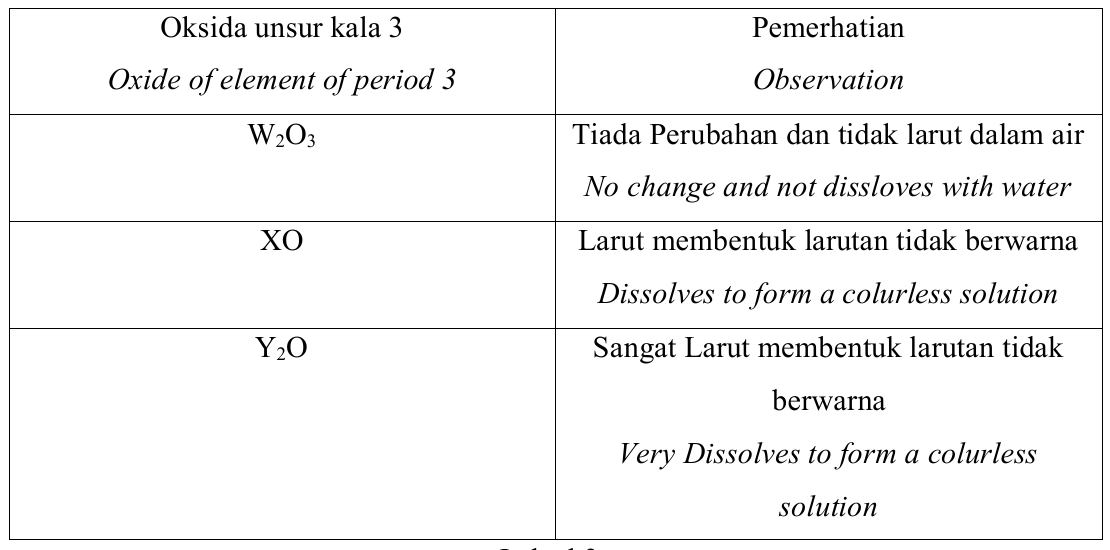
Table 3 shows the observations when oxides of period 3 elements are added to water: W₂O₃ no change, insoluble; XO dissolves to form a colourless solution; Y₂O very soluble, colourless solution. What is the correct arrangement in decreasing proton number of the elements?
Medium
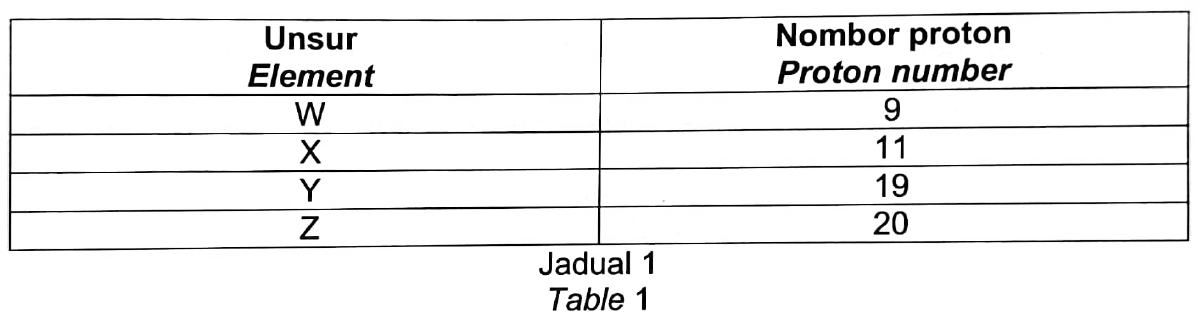
Table 1 shows elements with their respective proton number (W = 9, X = 11, Y = 19, Z = 20). Which pair of elements has the same chemical properties?
Medium
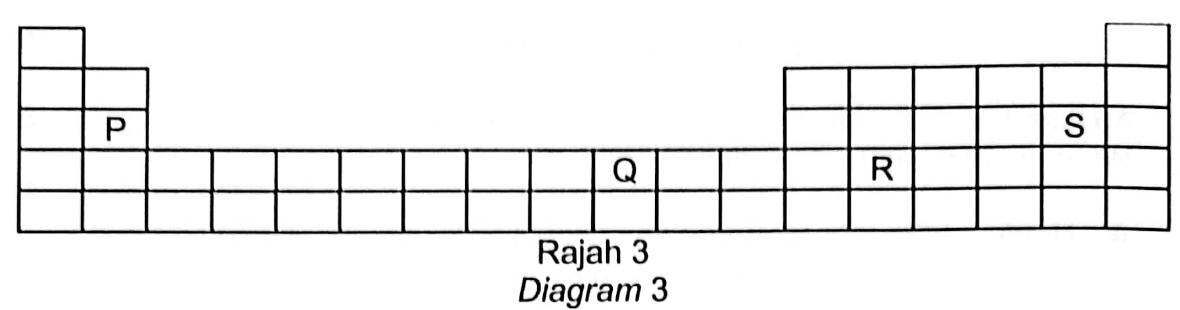
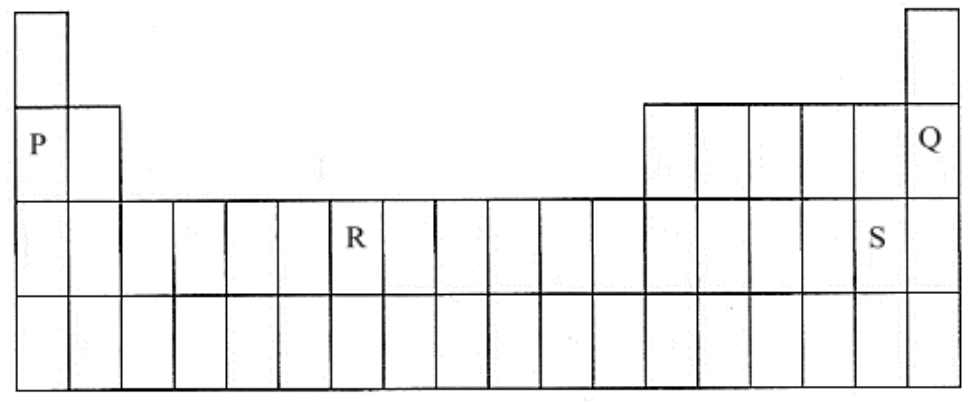
Diagram 3 shows four elements (P, Q, R, S) in the Periodic Table of Elements. Which of the following element can be used as a catalyst in a chemical reaction?
Medium
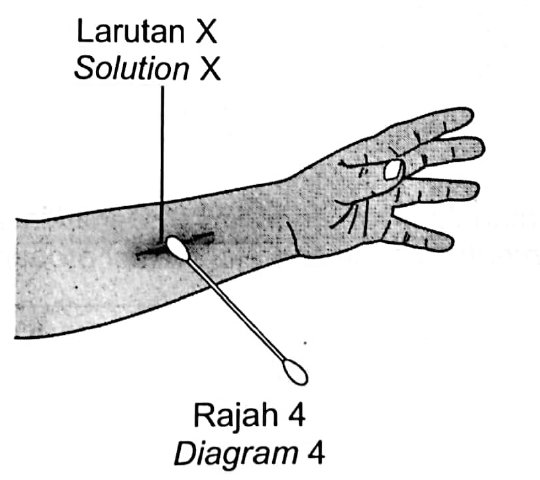
Diagram 4 shows a student applying solution X to his wound to kill bacteria. Which of the following Group 17 element is the most suitable to be used to make solution X?
Medium
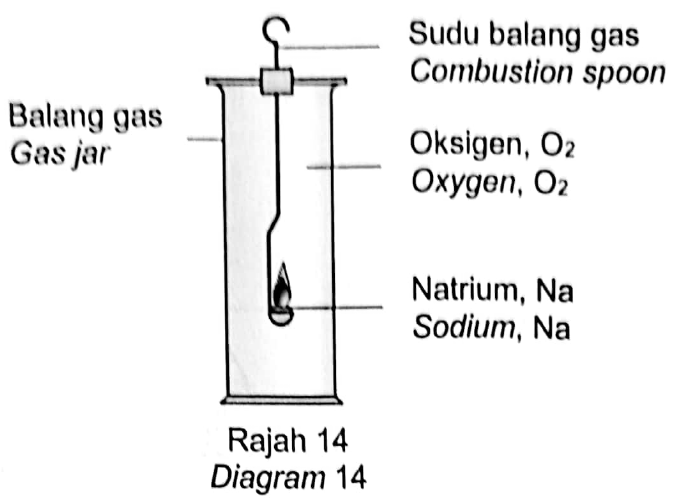
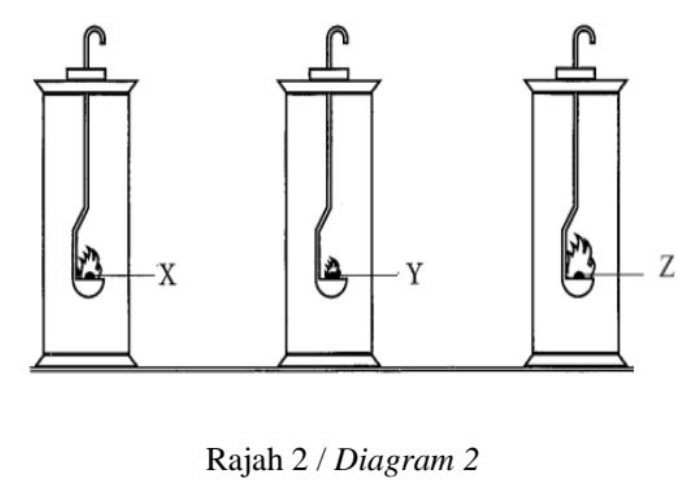
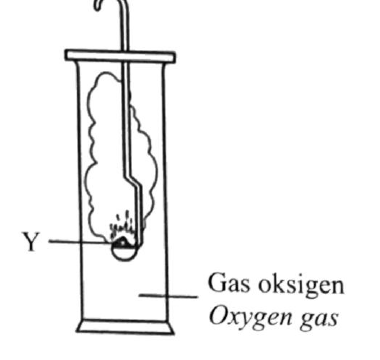
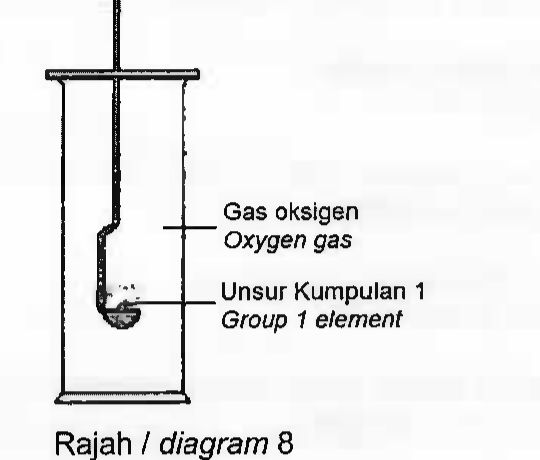
Diagram 14 shows an experiment conducted by a student in the laboratory (sodium burning in a gas jar of oxygen, O₂). Which chemical equation represents the reaction that happens in the gas jar?
Medium
Which of the following are the uses of krypton gas?
I Used in lasers for eye retina treatment
II Used to fill weather balloons
III Used in lighthouse lamps
IV Used in flashlight of cameras
Easy
Among the following positions in the Periodic Table, which one shows the smallest atomic size? (A: Group 1, Period 3; B: Group 13, Period 3; C: Group 18, Period 3; D: a transition element in Period 4.)
Medium
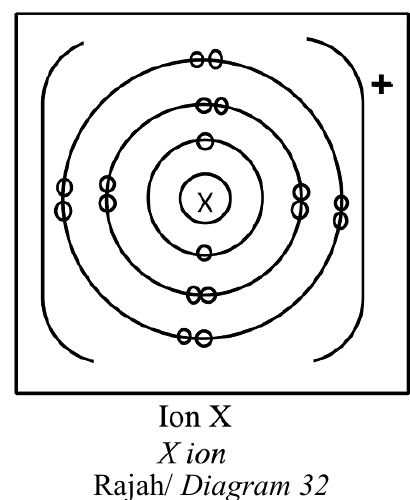
Diagram 32 shows the electron arrangement of X ion (X⁺). Which chemical equation represents the chemical reaction between atom with element X with water?
Medium
Diagram 1 shows the elements in period 3 of the periodic table of elements (Na 11, 23; Mg 12, 24; Al 13, 27; Si 14, 28; P 15, 31; S 16, 32; Cl 17, 35.5; Ar 18, 40). Why does the size of the atoms decrease from sodium to argon in the period?
Medium
Element T is located in the same period as manganese, Mn in the Periodic Table of Elements. Which is a special characteristic of element T?
Easy
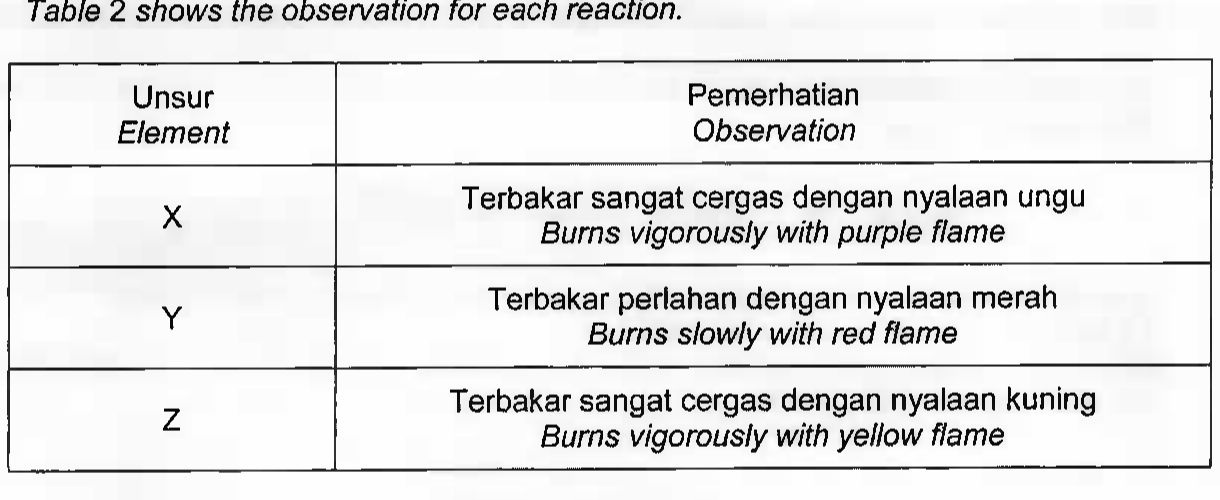
Table 4 shows observations for group 1 elements with oxygen: X burns very vigorously with a purple flame; Y burns slowly with a red flame; Z burns vigorously with a yellow flame. What is the correct descending order of reactivity with oxygen?
Medium
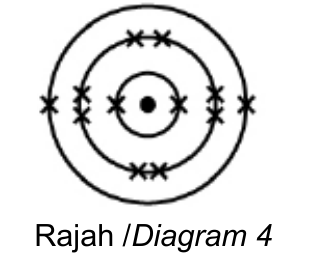
Diagram 4 shows the electron arrangement of an atom M. Which of the following is the position of element M in the Periodic Table of Elements?
[Table: Group, Period: A 2,2; B 2,3; C 12,2; D 12,3]
Medium
Which of the following substances is acidic?
Medium
Which of the following is true about elements in the Periodic Table?
Medium
The following statements refer to the contributions of a scientist in the development of the Periodic Table of Elements: elements with similar chemical properties were placed in the same vertical column; gaps were left for undiscovered elements. Who was the scientist?
Easy
Which of the following Group 1 elements has the smallest atomic size?
Easy
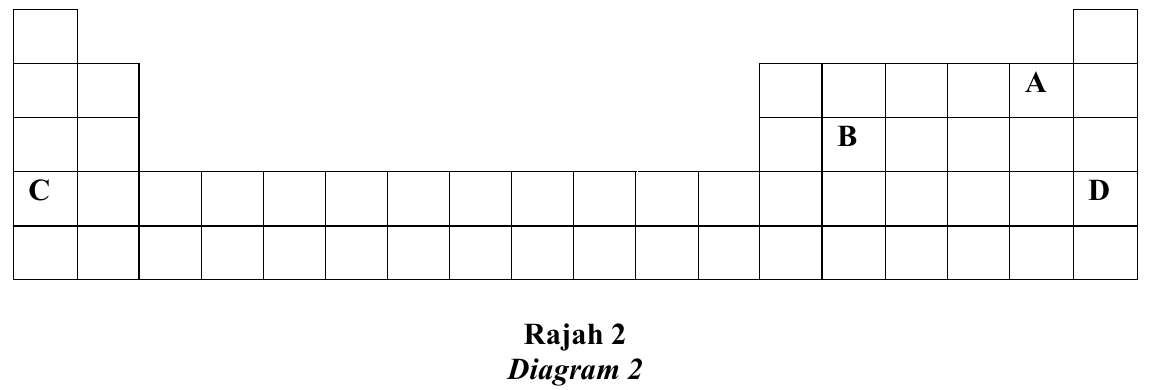
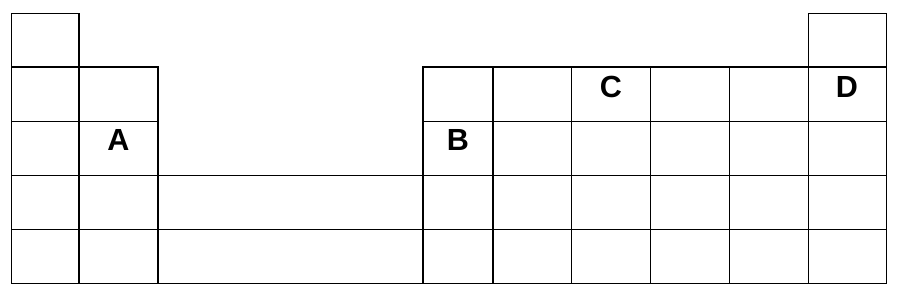
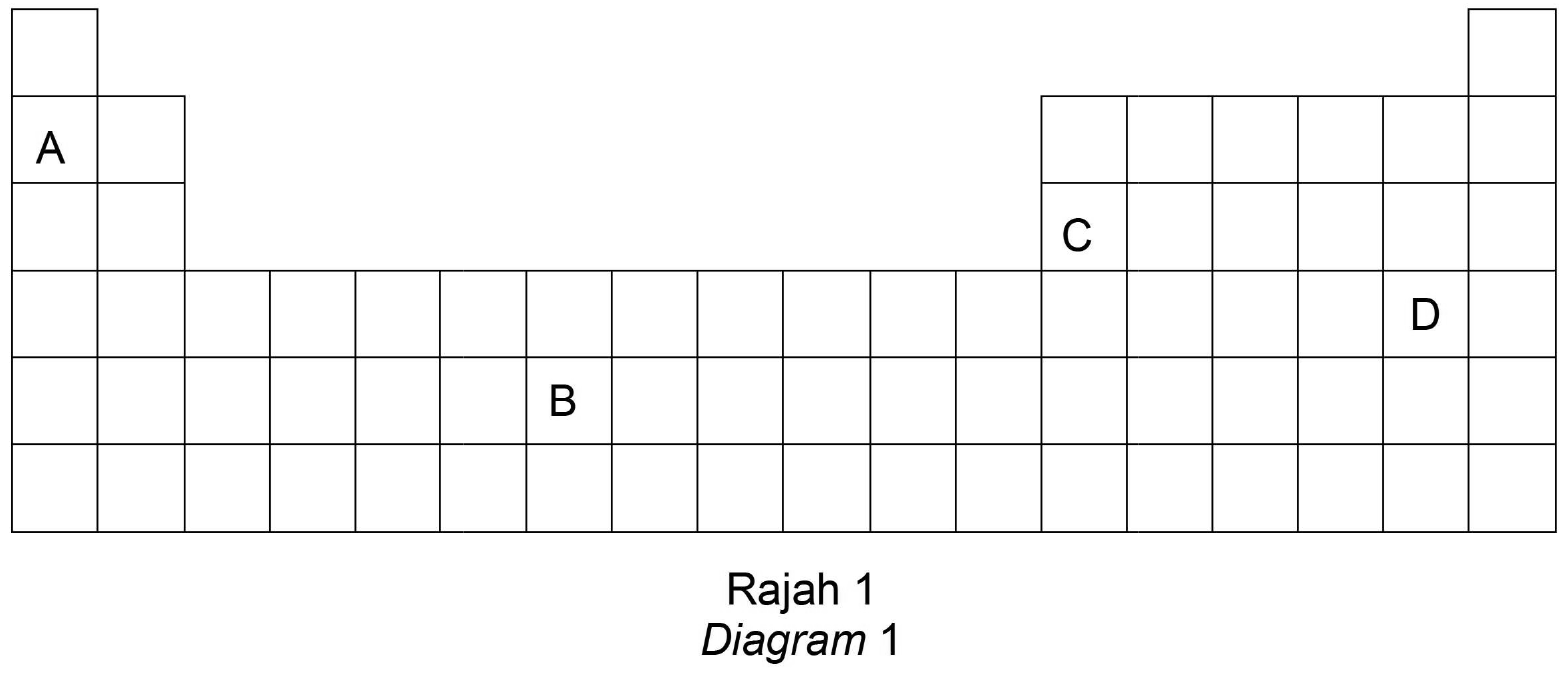
Diagram 2 shows elements A, B, C and D in the Periodic Table of Elements. The letters used are not the actual symbols of the elements. Which of the following should be kept in paraffin oil?
Easy
Which of the following can be used in advertising board light?
Easy
Table 1 shows the property of oxide of elements P, Q and R, located in the same period: P - Acidic; Q - Basic; R - Amphoteric. Arrange the three elements based on increasing proton number.
Medium
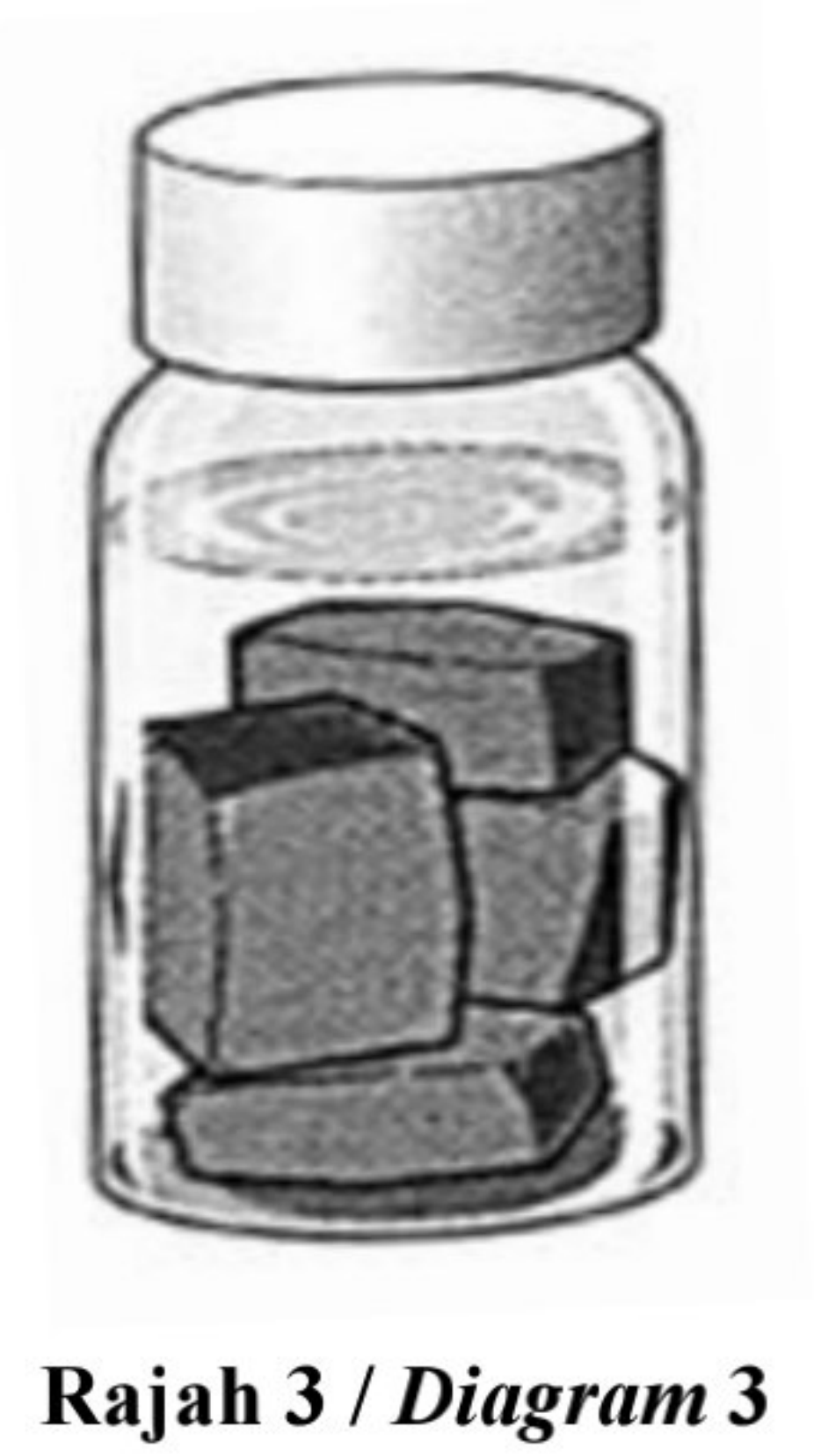
Diagram 3 shows substance X stored in paraffin oil. What is substance X?
Easy
Which of the following can form diatomic molecule?
Easy
The following information describes the characteristics of an element.
- Ions in aqueous solutions are in green or brown
- Used as catalyst in the Haber Process
- Has two oxidation numbers which is +2 and +3
Which of the following is the position of the element?
Medium
Which pair is correctly matched?
Medium
Table 1 shows the proton number of four elements: J = 8, K = 10, L = 12, M = 19, N = 20. Given that the ionic formula of element X is X²⁺. Which element has the same number of valence electron as element X?
Medium
Atoms of element P are located in Period 4 and have one valence electron. Which of the following is the number of protons for atom P?
Medium
Which of the following is a monoatomic gas?
Easy
Which of the following statements is correct about the changes in properties of elements across Period 3 in the Periodic Table of Element?
Medium
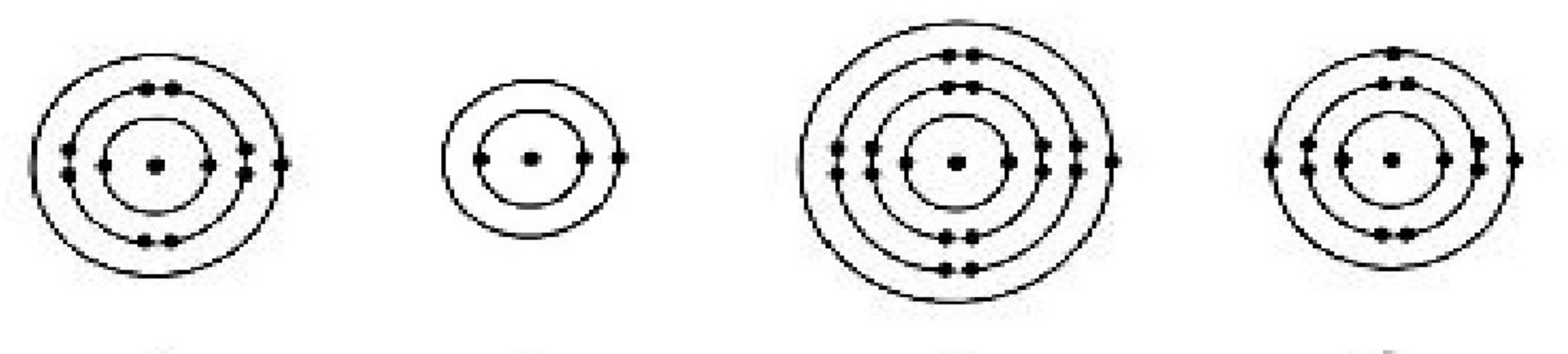
Diagram 2 shows the electron arrangement of four atoms P, Q, R and S. Which of the following sequence will the atoms be arranged in the Periodic Table?
Medium
The following statements refer to the contributions of a scientist in the development of the Periodic Table of Elements. Explored the study of the frequency of X-ray released by various elements and eventually found a relationship between the X-ray spectrum and proton numbers. Arranged the elements in the Periodic Table of Elements according to their increasing proton numbers. Who was the scientist?
Easy
Chlorine and fluorine are halogen gases. Chlorine and fluorine exhibit the same chemical properties because
Medium
An element X forms two coloured chloride salts, XCl₂ and XCl₃. What is X?
Medium
Element Y is located in the same group as potassium in the Periodic Table of Elements. Which of the following statements are chemical properties of element Y? I Reacts with water to produce an alkaline solution. II Reacts with chlorine gas to produce a white solid. III Reacts with oxygen to produce a black solid. IV Reacts with sodium hydroxide solution to produce an acidic solution.
Medium
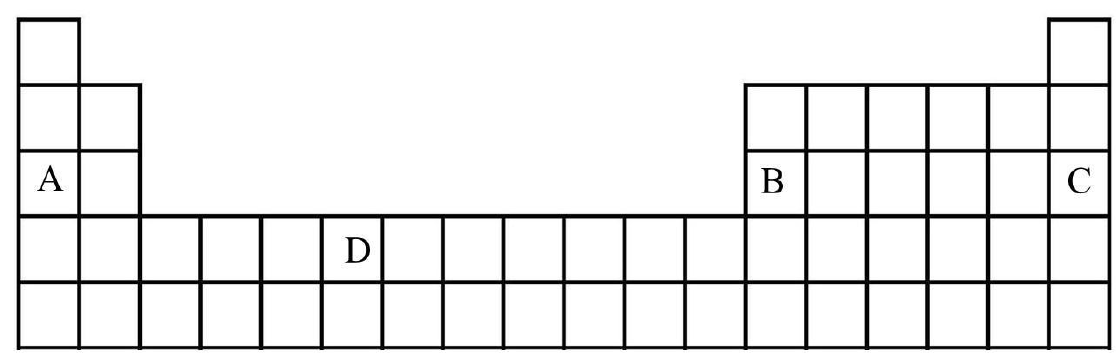
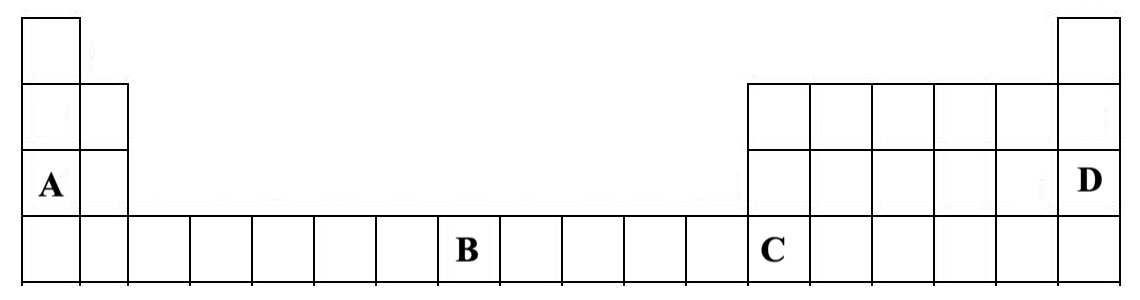
Diagram shows a Periodic Table of Element with four elements represented by letters A, B, C and D. Which of these elements has an electron arrangement of 2.8.3?
Medium
The following equation shows the reaction between chlorine and water. Cl2 + H2O → P + Q. What is P and Q?
Medium
Element L is located in the same group with copper in the Periodic Table of Elements. Which of the following are the characteristics of L? I Low melting point II Poor heat conductor III Act as catalyst IV Has more than one oxidation number
Medium
The following chemical equation shows the displacement of halogen Y from its halide solution: X2 + 2NaY → Y2 + 2NaX. What are halogen X and halogen Y?
Medium
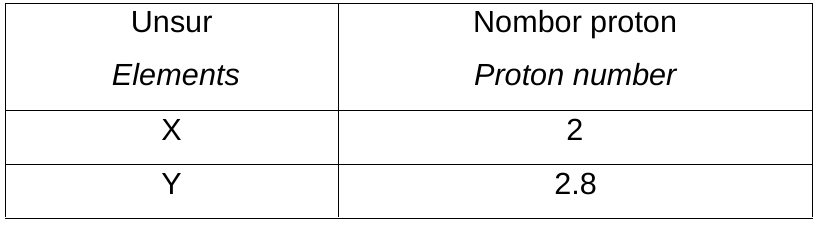
Table shows the proton number of two elements: X = 2, Y = 2.8. Which of the following is the correct statement about X and Y?
Medium
Ahmad uses colorful lights to attract customers to his restaurant. What is the suitable material to fill in the light?
Easy
Krypton is used in laser for eye retina treatment. What is the state of matter of krypton?
Easy
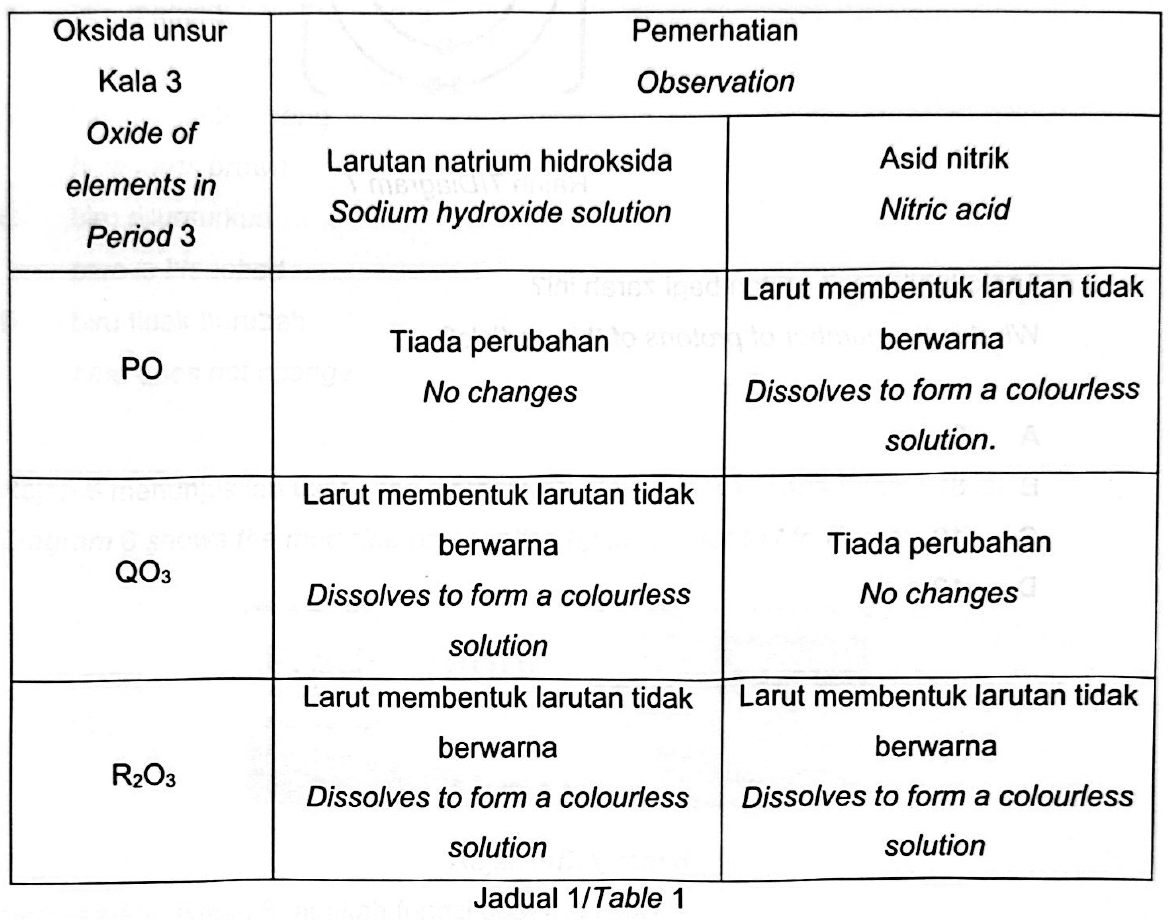
Table 1 shows the observation when oxides of elements in Period 3 are added to sodium hydroxide solution and nitric acid. P, Q and R are not actual symbols of the elements. PO: no change with NaOH, dissolves in HNO₃ to form colourless solution; QO₃: dissolves in NaOH to form colourless solution, no change with HNO₃; R₂O₃: dissolves in both to form colourless solutions. Arrange the three elements based on the descending order of proton number.
Medium
Which of the following elements are Transition Elements in the Periodic Table of Elements?
Easy
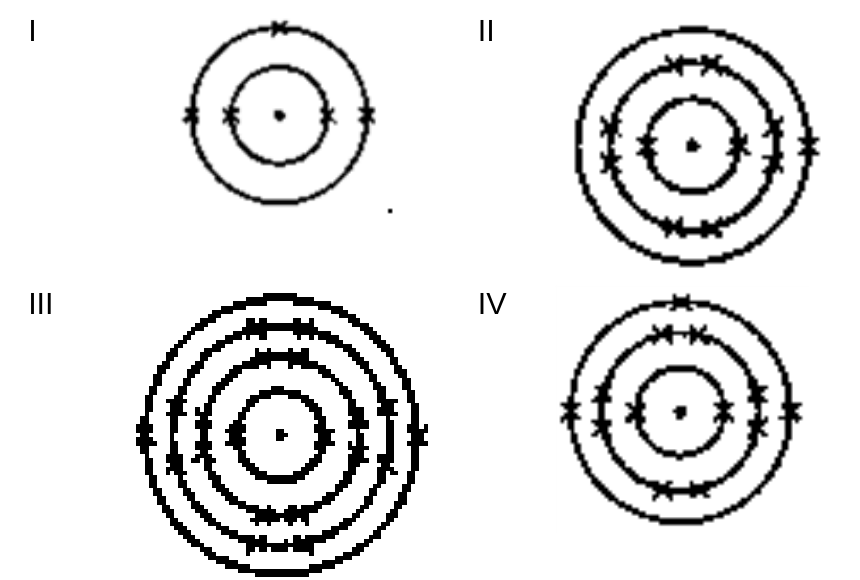
Which of the following electron arrangements represent element of Group 13 in the Periodic Table of Elements? (Four electron-arrangement diagrams I, II, III and IV are shown.)
Medium
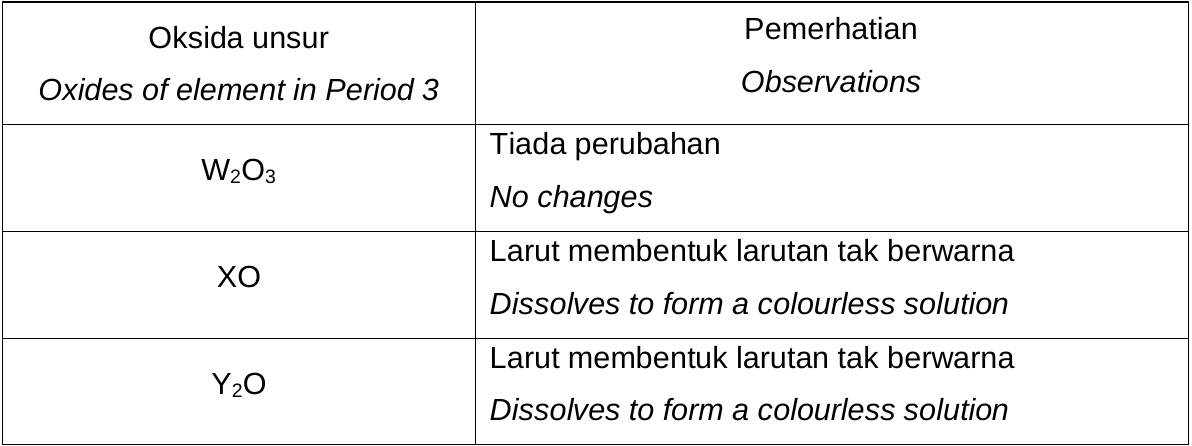
The table shows the observation when oxides of elements in Period 3 are added into water: W2O3 - no changes; XO - no changes; Y2O - dissolves to form a colourless solution. Which of the following is the correct arrangement in increasing proton number of the elements?
Medium
Which of the following elements are located in the Group 18 in the Periodic Table of Elements?
Easy
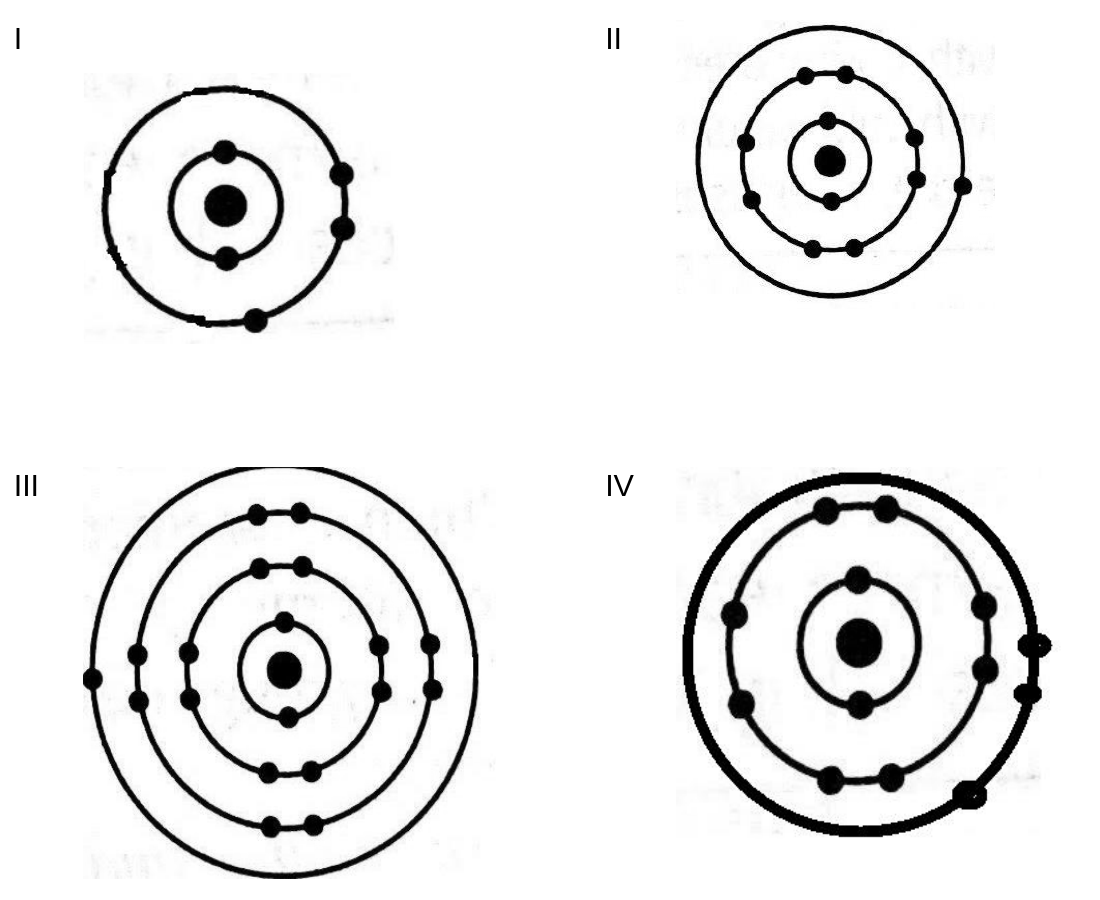
Which of the following elements are in Group 1 in the Periodic Table of Elements? (Four electron arrangement diagrams I, II, III and IV are shown.)
Medium
Table shows the observation when oxides of elements in the Periodic Table of elements is added to water: W₂O₃ - no changes; XO - dissolves to form a colourless solution; Y₂O - dissolves to form a colourless solution. What is the correct arrangement in decreasing proton number of the elements?
Medium
Who is the scientist who has compiled the elements based on the Octave Law?
Easy
Which of the following statements is true about elements in Period 3 from left to right in the Periodic Table of Elements?
Medium
A redox reaction can be represented by the following equation: X2(aq) + 2KBr(aq) -> 2KX(aq) + Br2(aq). Element X is in Group 17 in the Periodic Table of Elements. What can be observed if element X is replaced with iodine?
Medium
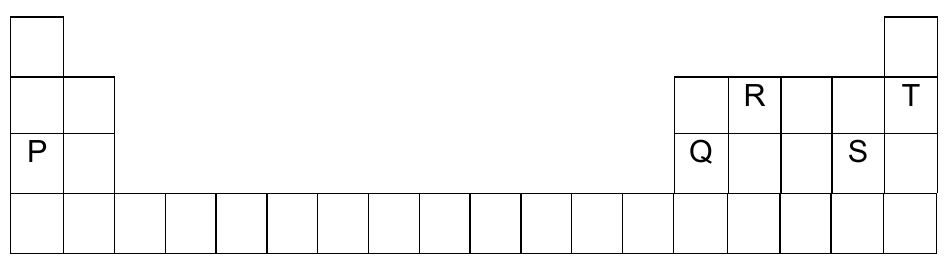
Diagram 10 shows the Periodic Table of Elements consisting of the elements P, Q, R, S and T. Arrange the elements P, Q, R, S and T based on the increase in atomic radius size.
Medium
Elements are arranged in the Periodic Table of Elements based on
Easy
The following is information on how the elements are arranged at the beginning of the construction of the Periodic Table of Elements: Elements are arranged in order of increasing atomic mass; the 7 elements are arranged in a row based on repeated chemical and physical properties; known as the Law of Octaves. Who is the scientist who arranged the elements based on the above information?
Easy
Information about atom Q and atom P: Atom Q is located in Period 2 in the Periodic Table of Elements; proton number of atom P is 11; element Q is above element P in the same group. Which of the following shows the electron arrangement of the Q atom?
Medium
Which of the following is the result of the reaction between sodium hydroxide and iodine? I. H₂ II. NaI III. Na₂O IV. H₂O
Medium
What is the name of Group 1 of the Periodic Table of Elements?
Easy
Which physical properties is same for elements in Group 17 in the Periodic Table of the Elements.
Medium
Diagram 1 shows part of the Periodic Table of Elements. Which letter indicates the position of a non-metallic element?
Medium
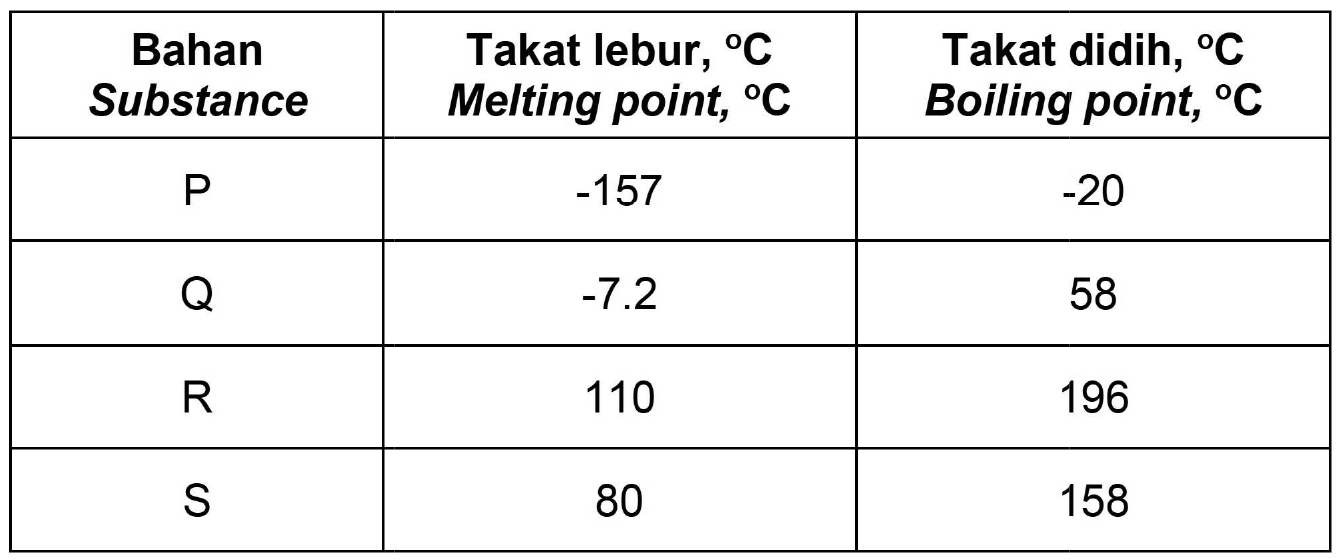
Which of the following substance is a bromine?
Substance / Melting point (°C) / Boiling point (°C): P -157 / -20; Q -7.2 / 58; R 110 / 196; S 80 / 158. Options A-D are P, Q, R, S respectively.
Medium
Which atom is the most electronegative?
A. 23/11 P B. 35/17 Q C. 24/12 X D. 40/18 Y (nucleon number / proton number)
Medium
The following are the chemical formulas for compounds X oxide and X chloride: XO and XCl3. In which group is element X in the Periodic Table of Elements?
Medium
J is a Group 1 element. What is the chemical formula formed when J reacts with element M? [Proton number M: 16]
Medium
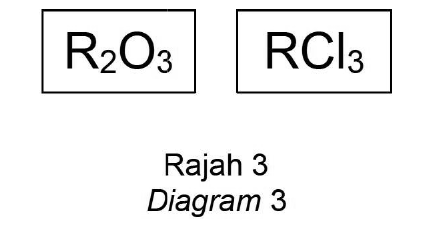
Diagram 3 shows the chemical formula formed when element R reacts with a different element (R₂O₃ and RCl₃). Which of the following is a special characteristic of the element R? I. Can form coloured ions; II. Has a shiny surface; III. Can act as a catalyst; IV. Exists as a solid at room temperature
Medium
Who introduced the Octaves Law in arranging elements in the Periodic Table of Elements?
Easy
Which of the following has the largest atomic radius? [Proton number: Mg=12, Al=13, Cl=17, Ar=18]
Medium
Which of the following are the elements of Group 18 in the Periodic Table of Elements?
Easy
The following information is about element X: • Can be used as catalyst in industry • Forms complex ions. Which of the following is correct about element X?
Medium
Table 1 shows three elements X, Y and Z that are in Period 3 of the Periodic Table of Elements. Element X: oxide is acidic; Element Y: oxide is basic; Element Z: oxide is amphoteric. Which of the following sequences is correct based on the increase in the proton number of the elements?
Medium
Element T is located below sodium in the Periodic Table of Elements. Which statement is correct about element T?
Medium
What are the symbols for the element chromium, copper, manganese and potassium?
Easy
Which of the following statements is correct about the changes in properties of elements across Period 3 in the Periodic Table of Element?
Medium
Iodine is a Group 17 element. Which statement regarding iodine is true?
Medium
Atom X has four shells with its last shell occupied by a single electron. Which statement describes the chemical properties of atom X?
Medium
A restaurant owner uses colourful electric lights to attract his customers. Which statement explains the properties of the substance used for making such lights?
Medium
Which statement is not the special characteristic of transition elements?
Easy
Why does the reactivity of Group 17 elements decrease when going down the group?
Medium
Silicon is an element that is widely used in the production of microchips. Which property allows silicon to be used as a microchip in industry?
Medium
Which of the following transition elements is used in the process of making margarine and the Ostwald process?
Easy
Atom Q has the number of protons 11 and the number of neutrons 12. Where is the position of atom Q in the Periodic Table of Elements?
Group | Period
A 2 | 3
B 1 | 3
C 13 | 2
D 15 | 4
Medium
Which of the following is true about the properties of oxide of elements in period 3?
Medium
The following information is about P atom and Q atom.
- Element P is a metal.
- The proton number of the Q atom is 12.
- Element P is above element Q in the same group in the Periodic Table of Elements.
Which of the following shows the electron arrangement of the P atom?
Medium
Which of the following are correct for Group 17 elements? I Molecular size becomes smaller when going down the group; II Low melting and boiling points when going down the group; III Valence shell has seven electrons; IV Atoms form negatively charged ions.
Medium
Table 2 shows elements of Period 3: Na, Mg, Al, Si, P, S, Cl, Ar. Which of the following is correct about the change in the physical properties of elements across the period?
Medium
Which of the elements in Group 18 is correct in terms of its use? A Ne - used in anaesthetics; B He - used in divers' oxygen tank; C Ar - used in billboard lighting; D Xe - filled into an electrical bulb.
Medium
Which of the following is a transition element?
Easy
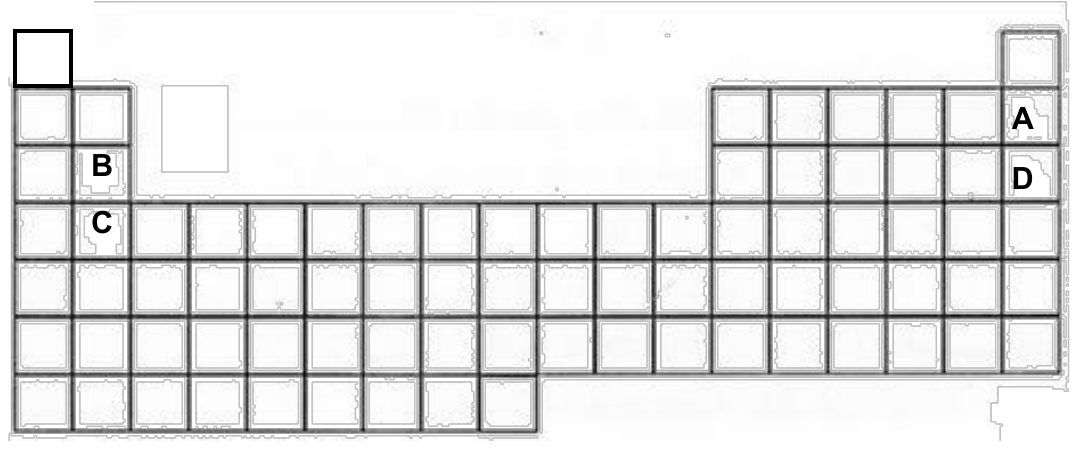
Diagram 1 shows the electron arrangement for the X2+ ion. Which of the following is the position of element X in the Periodic Table of Elements? (Options A to D are marked on the Periodic Table in the figure.)
Medium
Table 3 shows the elements in a period: Na, Mg, Al, Si, P, S, Cl, Ar. Which statement is true about the changes in the properties of elements across that period from left to right?
Medium
Elements X and Y are Group 1 elements. Table 6 shows the observations from an experiment to study the reactivity of metals X and Y with water.
X: Moves rapidly and randomly on the surface of the water with a loud 'hiss' sound and burns with a yellow flame.
Y: Moves very rapidly and produces loud 'hiss' and 'pop' sounds, and burns with a purple flame.
Which of the following statements explains the observation?
Medium
The following statements refer to the contributions of a scientist in the development of the Periodic Table of Elements.
• Elements with similar chemical properties were placed in the same vertical column called a group.
• Gaps were left in the Periodic Table of Elements for undiscovered elements.
Who was the scientist?
Easy
Element X is located below bromine in the same group in the Periodic Table of Elements.
If element X reacts with iron, how does the reactivity of X compared to bromine and what is the chemical formula of the product formed?
(Options give: reactivity with iron; formula of the product.)
Medium
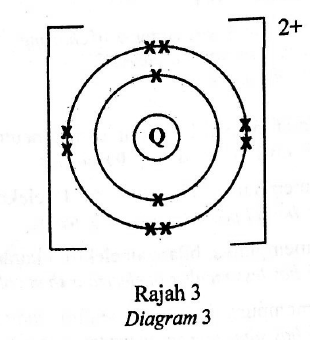
Diagram 3 shows the electron arrangement for Q ion (Q²⁺, with three shells).
Which of the following statements is true about Q atom?
Medium
Element Z is located in the same group as neon, Ne and krypton, Kr in the Periodic Table of Elements. Which of the following is the property of Z?
Easy
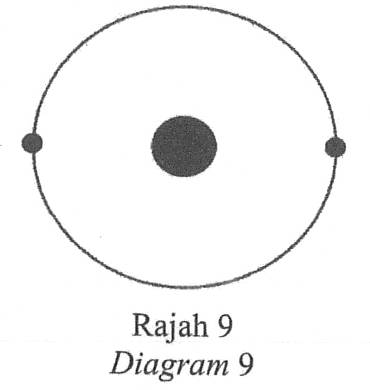
Diagram 9 shows the electron arrangement for an atom in the Periodic Table of Elements (one shell with 2 electrons). Which of the following statements is correct about the atom?
Medium
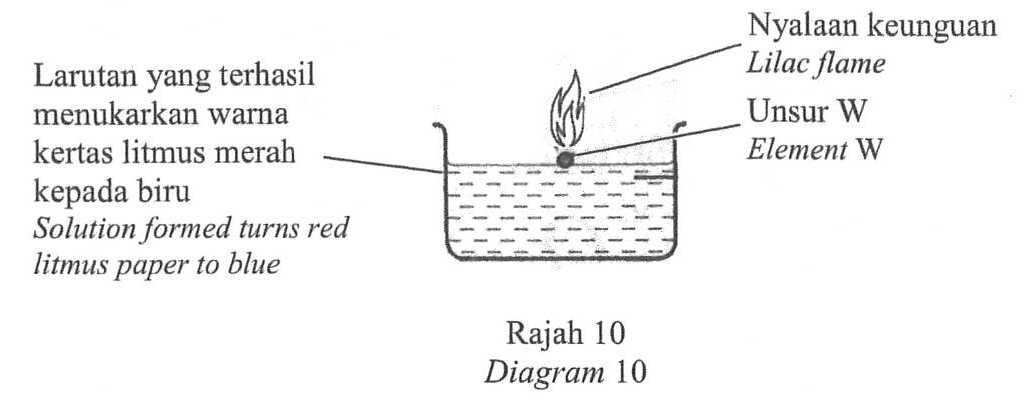
Diagram 10 shows the reaction of an element W and water, H₂O. The solution formed turns red litmus paper to blue and a lilac flame is seen. What is element W?
Medium
The following shows the uses for gas X. Used in flashlight of cameras; Used in lasers for eye retina treatment. What is gas X?
Easy
The reaction of fluorine with other elements is more vigorous compared to iodine. Which of the following is the best to explain the above statement?
Medium
Which of the following elements is located in Group 17 of the Periodic Table of Elements?
Easy
Atom Q has an electron arrangement of 2.8.4. Which of the following represents the positions of element Q in the Periodic Table of Elements? (Group, Period)
Medium
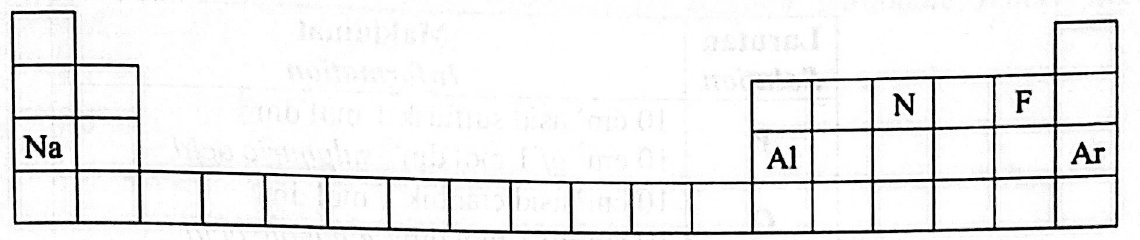
Diagram 6 shows a part of Periodic Table of Elements (Na, Al, N, F, Ar marked). Which of the following arrangements shows the correct ascending order of atomic size?
Medium
Which of the following statements did Dmitri Mendeleev propose in the development of the Periodic Table of Elements?
Easy
Which of the following represent changes of properties of elements when across Period 3? I Increase in atomic size; II Decrease in metallic properties; III Increase in electronegativity; IV Decrease in the number of valence electrons.
Medium
Z⁻ ion has an electron arrangement of 2.8. Which of the following is correct about element Z?
Medium
Which of the following is a monoatomic gas?
Easy
Element Q is located in the same group as neon, Ne in the Periodic Table of Elements. Which of the following is true about element Q?
Medium
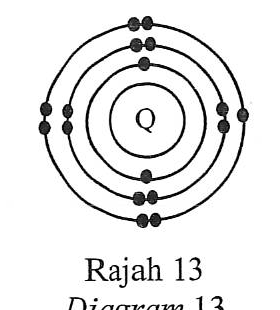
Diagram 13 shows the electron arrangement of atom Q. Which of the following is correct about Q?
Medium
What are the other names for the elements in Group 1?
Easy
Diagram 2 shows a part of The Periodic Table of Elements. Which element has the highest tendency to accept electrons?
Medium
The statement shows the properties of elements in the Periodic Table of Elements: act as a catalyst; able to form coloured ions; has more than one oxidation number; forms complex ions. Which Group of element is suitable for the above characteristics?
Medium
The following information shows the properties of element X: soft metal; dissolves in water and produces hydroxide solution X. Which of the following Group is the element X located in the Periodic Table of Elements?
Easy
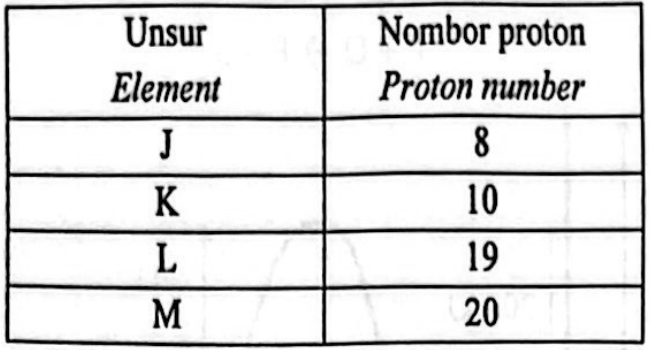
Table 2 shows the proton number of four elements: J = 8, K = 10, L = 19, M = 20. Given that the ionic formula of element X is X²⁺, which element has the same number of valence electrons as element X?
Medium
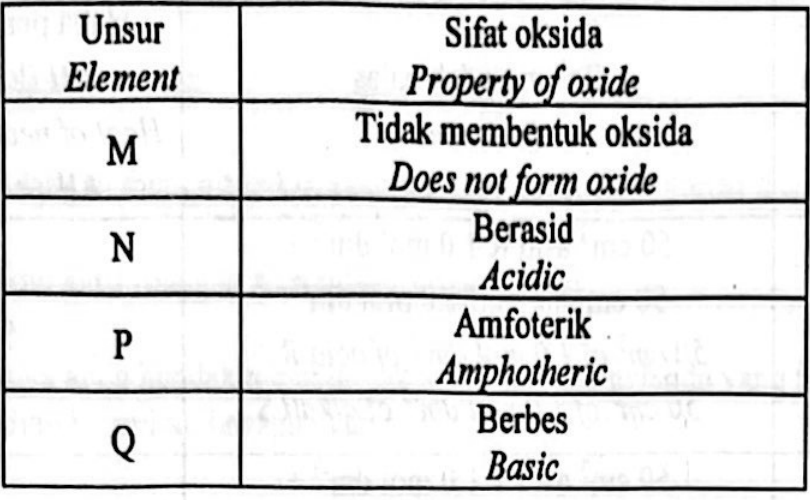
Table 3 shows the property of oxide of elements M, N, P and Q: M does not form oxide; N acidic; P amphoteric; Q basic. Which of the following is the correct position of elements M, N, P and Q in the Periodic Table of Elements?
Medium
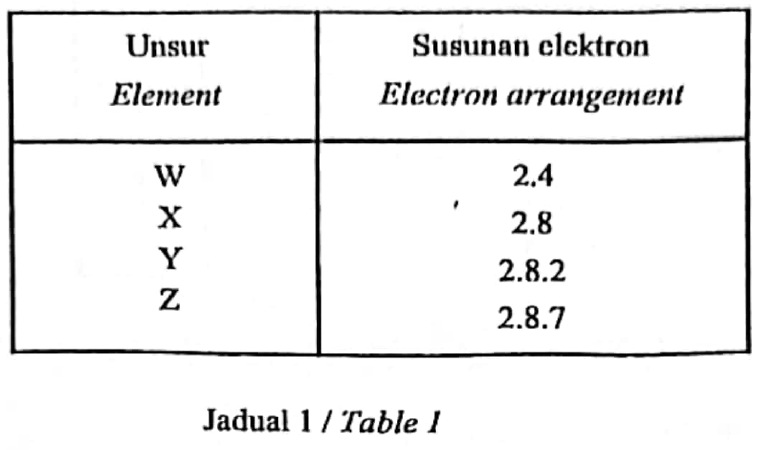
Table 1 shows the electron arrangement for element W, X, Y and Z: W 2.4; X 2.8; Y 2.8.2; Z 2.8.7. Which element is a metal?
Medium
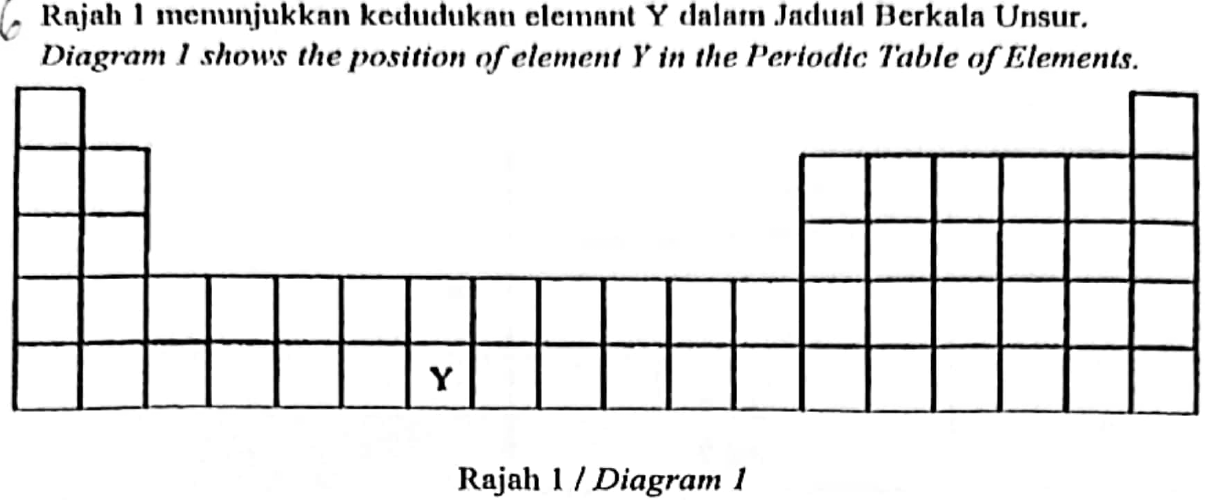
Diagram 1 shows the position of element Y in the Periodic Table of Elements (Y is in the transition-element block of Period 5). Which of the following are the characteristics of element Y? I Dissolve in water; II Form coloured compound; III Has low melting point; IV Has more than one oxidation number
Medium
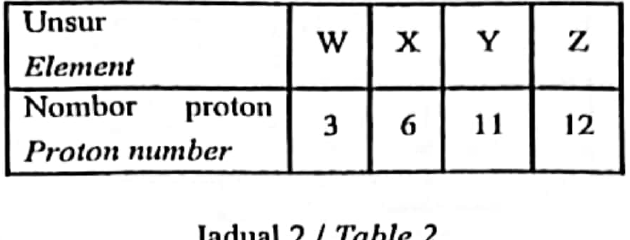
Table 2 shows the proton number of elements W, X, Y and Z: W 3; X 6; Y 11; Z 12. Which arrangement shows the atomic size of the elements in descending order?
Medium
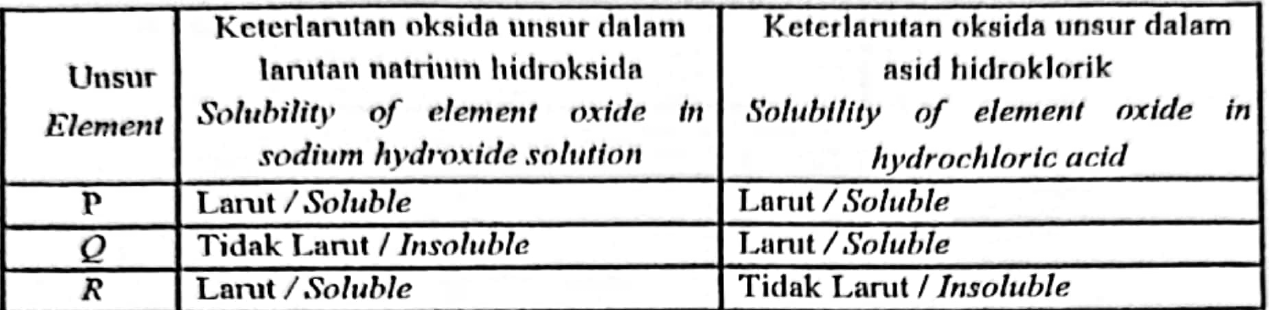
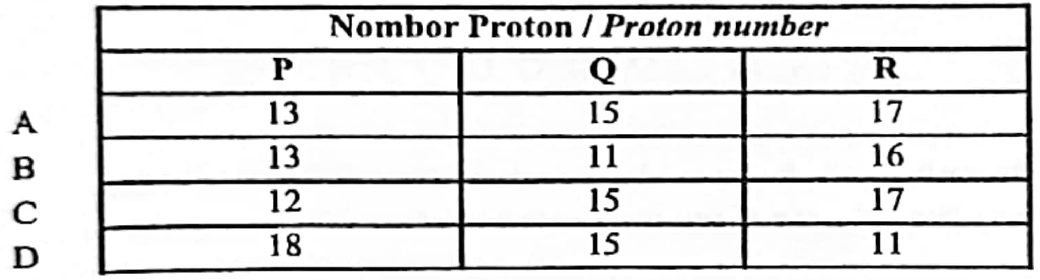
The properties of oxides of element across period 3 are shown in Table 6: P oxide soluble in NaOH and soluble in HCl; Q oxide insoluble in NaOH and soluble in HCl; R oxide soluble in NaOH and insoluble in HCl. What is the possible proton number of element P, Q and R? A 13, 15, 17; B 13, 11, 16; C 12, 15, 17; D 18, 15, 11
Medium
Why helium gas does not react with other elements?
Easy
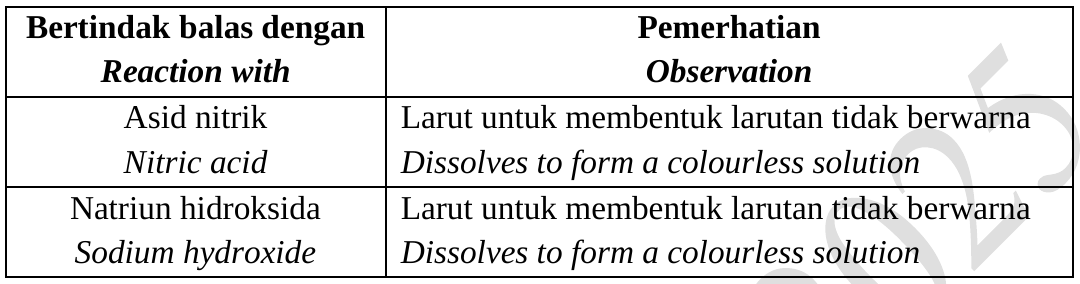
J is one of the element in Period 3 of the Periodic Table of Elements. Table 1 shows the observation of the oxide of element J reacts with nitric acid (dissolves to form a colourless solution) and sodium hydroxide solution (dissolves to form a colourless solution). What is element J?
Medium
Which of the following are the special characteristics of transition elements? I. Form coloured compounds II. Can be used as a catalyst III. Have a low melting point IV. Have only one oxidation number
Medium
The statement refers to the contributions of a scientist in the development of the Periodic Table: studied the frequency of X-ray released by various elements and eventually found a relationship between the X-ray spectrum and proton numbers; arranged the elements in the Periodic Table of Elements according to their increasing proton numbers. Who was the scientist?
Easy
Which characteristics is correct about elements in Group 1 in the Periodic Table as going down the group?
Easy
Which of the elements form an amphoteric oxide?
Easy
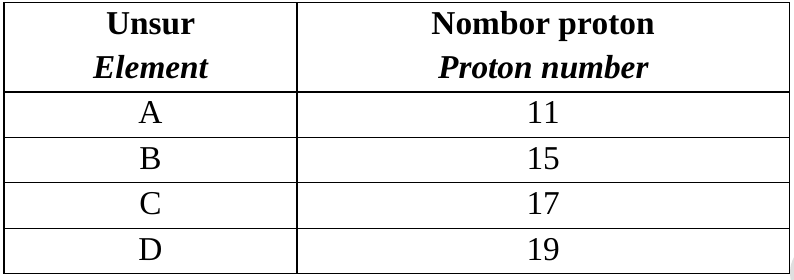
Table 1 shows four elements with proton number respectively. The descending order of atomic size of these four elements is
Element A: 11; B: 15; C: 17; D: 19
Medium
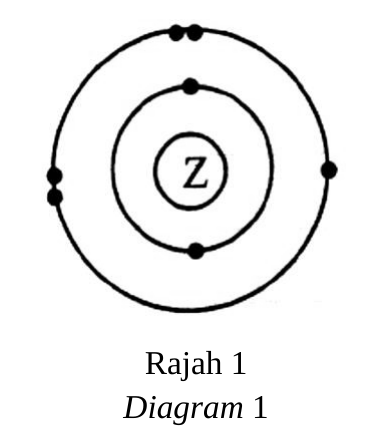
Diagram 1 shows the electron arrangement of atom Z. Chemical properties of atom Z are similar to the chemical properties of the atom with proton number
Medium
The boiling point of bromine is higher than chlorine. Which statement explains this phenomenon correctly?
Medium
Nickel is a transition metal. Which of the following is the special characteristic of nickel?
Easy
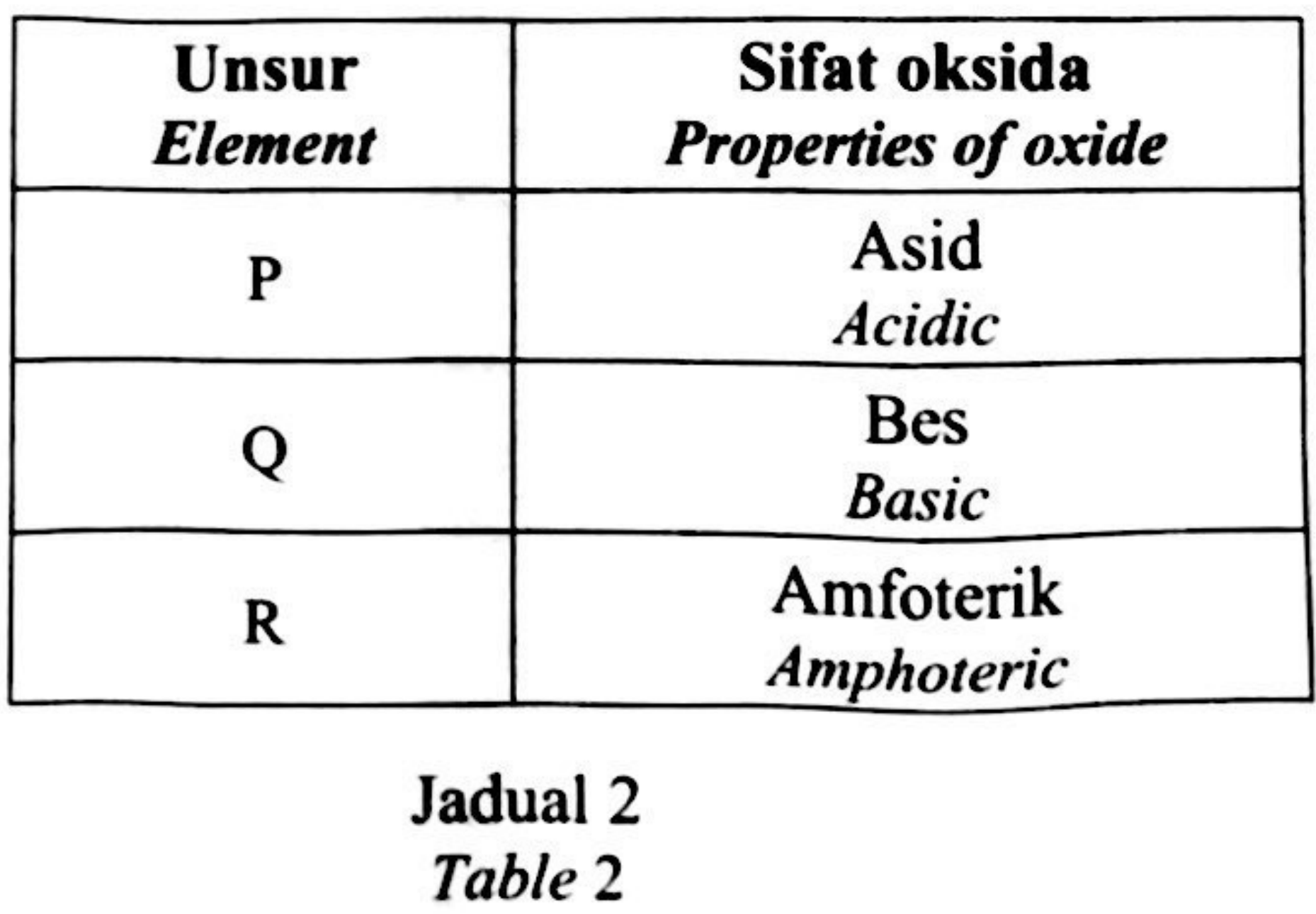
Elements P, Q and R placed in Period 3 of the Periodic Table of Elements. Table 2 shows information about the oxides: P - acidic; Q - basic; R - amphoteric. Which of the following is the correct sequence based on the increase in proton number?
Medium
Element X is located in the same group as potassium in the Periodic Table of Elements. Which of the following statements are chemical properties of element X? I. Reacts with water to produce an alkaline solution II. Reacts with oxygen to produce a black solid III. Reacts with chlorine gas to produce a white solid IV. Reacts with potassium hydroxide solution to produce an acidic solution
Medium
Which of the following physical properties are the same for the elements in Group 17 of the Periodic Table of Elements?
Medium
The following are the characteristics of elements L and M: forms complex ions; forms coloured compounds. What are L and M? I Iron II Barium III Chromium IV Magnesium
Easy
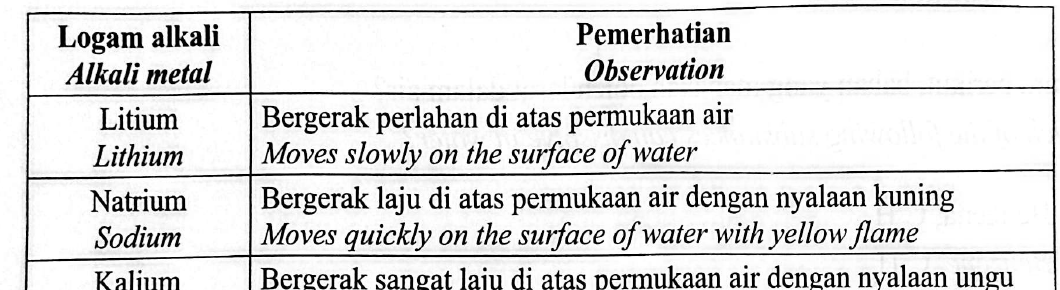
Table 2 shows observations when three alkali metals are placed into water: lithium moves slowly on the surface of water; sodium moves quickly with yellow flame; potassium moves very fast with lilac flame. Which of the following statements best explains the observation?
Medium
The boiling point of chlorine is lower than bromine. Which statement best explains this phenomena?
Medium
Element P is located in the same group with iron in the Periodic Table of elements. Which of the following are the characteristics of P?
I Low melting point
II Poor heat conductor
III Act as a catalyst
IV Has more than one oxidation number
Medium
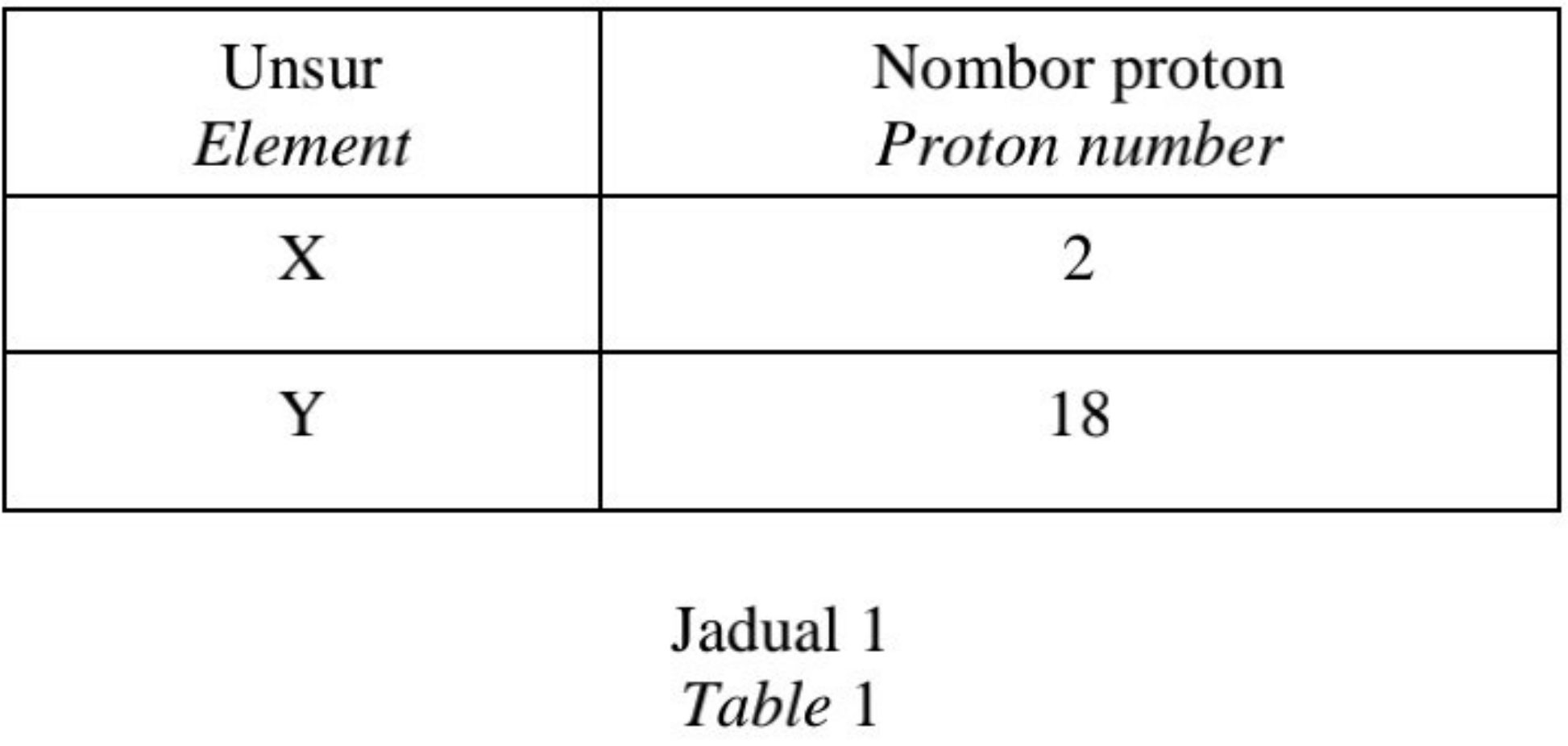
Table 1 shows the proton number of two elements X and Y: X = 2, Y = 18. Which of the following statements is correct about X and Y?
Medium
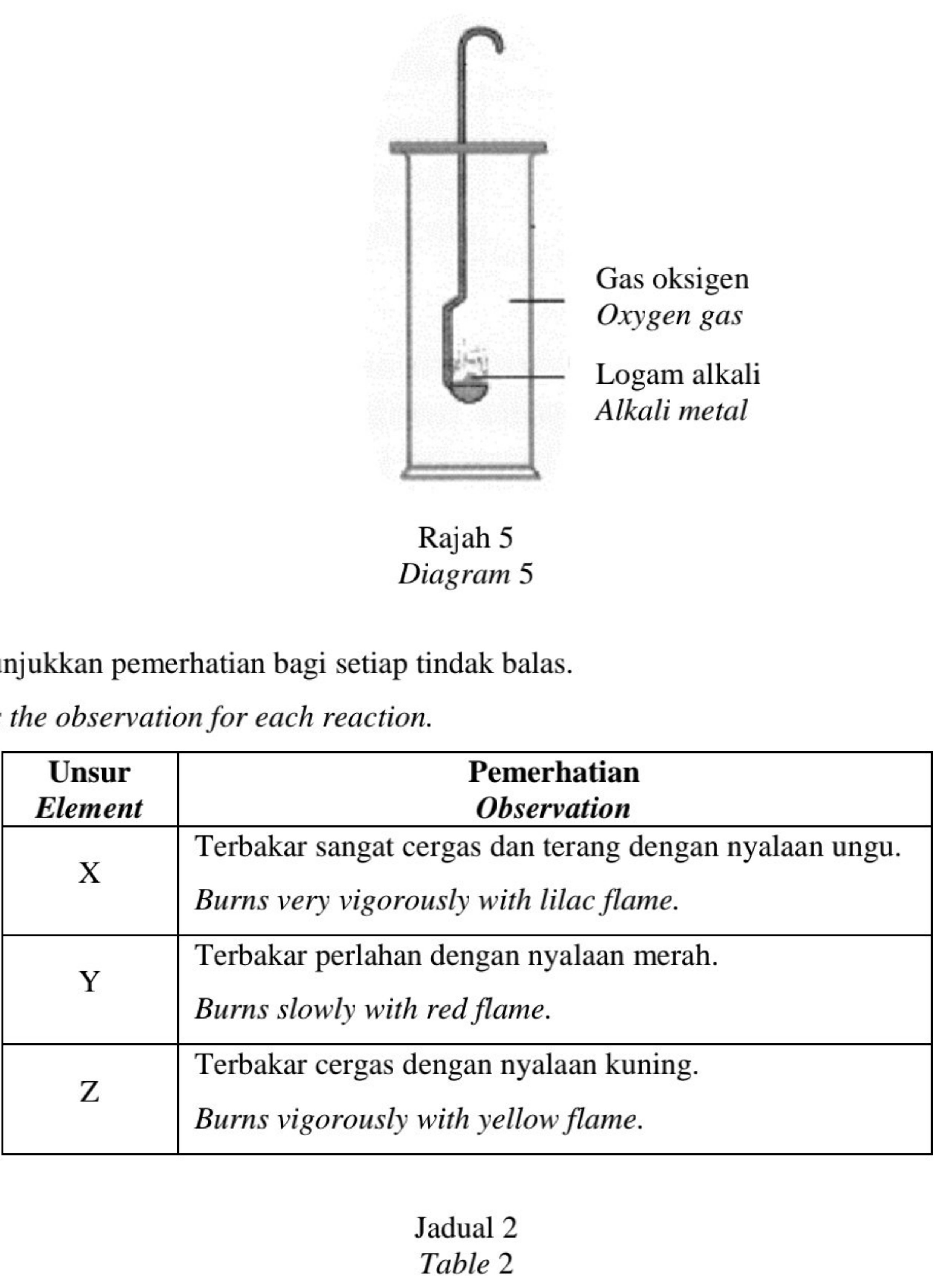
Diagram 5 shows the apparatus set-up to study the reactivity of alkali metals towards oxygen. Table 2 shows the observation for each reaction: X burns very vigorously with lilac flame; Y burns slowly with red flame; Z burns vigorously with yellow flame. What is the correct arrangement of reactivity of the elements towards oxygen in descending order?
Medium
Why does the size of element in Group 1 increase when going down the group in Periodic Table of Elements?
Medium
Which of the following elements can form acidic oxide when it reacts with oxygen?
Medium
The statements below show the properties of X.
- Used in Haber process
- Able to conduct heat and electricity
- Forms green and brown coloured ions
Which of the following is the location of X in the Periodic Table of Elements?
Medium
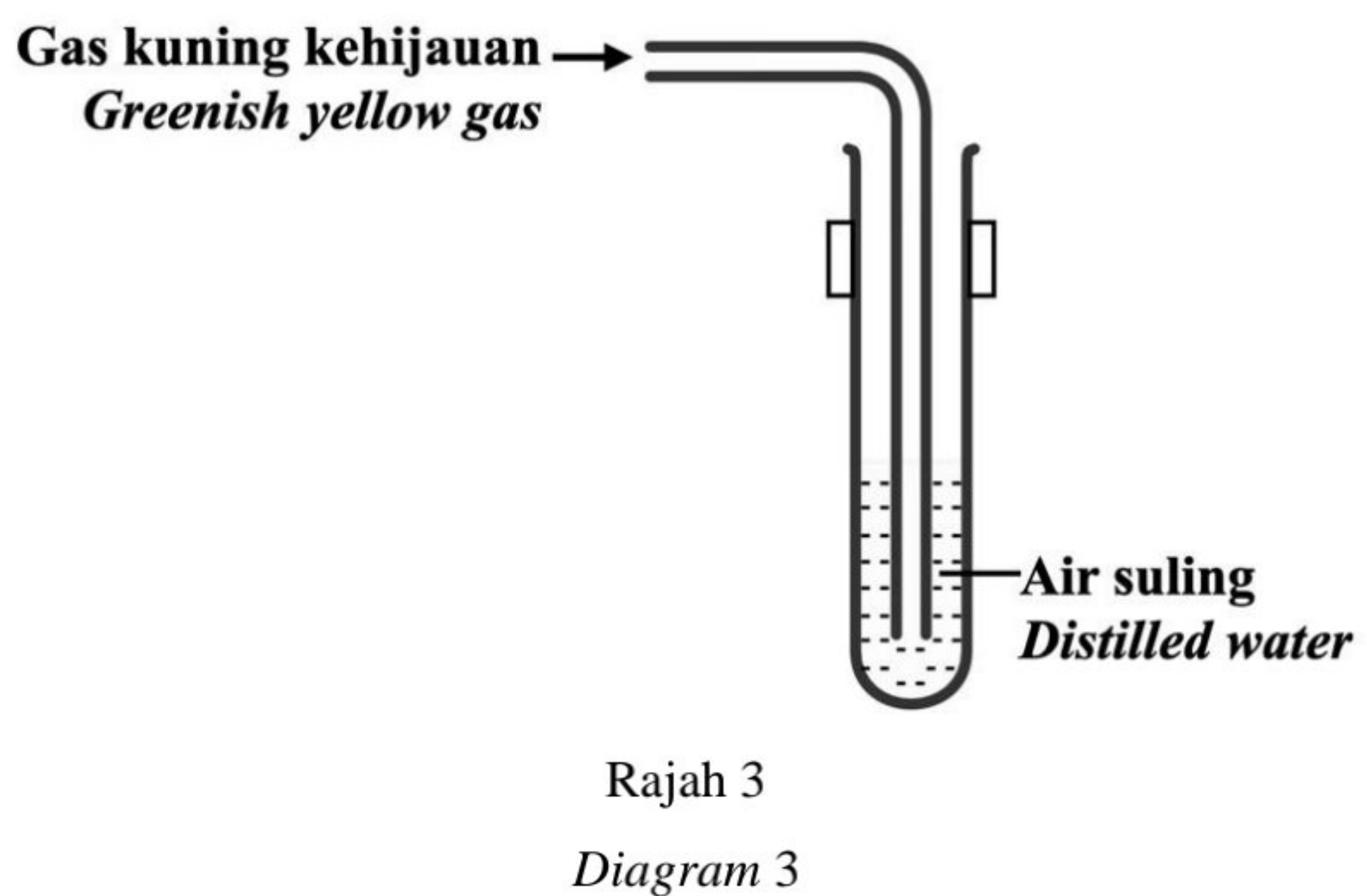
Diagram 3 shows the apparatus set-up when a gas (greenish yellow gas) is flowed into distilled water. Which of the following is the pH of the solution formed?
Medium
Which of the following are symbols for the elements of chromium, manganese and potassium?
Easy
Elements in the Periodic Table are arranged according to an increase in
Easy
What is the period for an element with proton number of 20?
Medium
Table 1 shows elements with their respective proton number: W = 7, X = 9, Y = 17, Z = 19. Which pair of elements has the same chemical properties?
Medium
Which of the following gasses is used in a weather balloon?
Easy
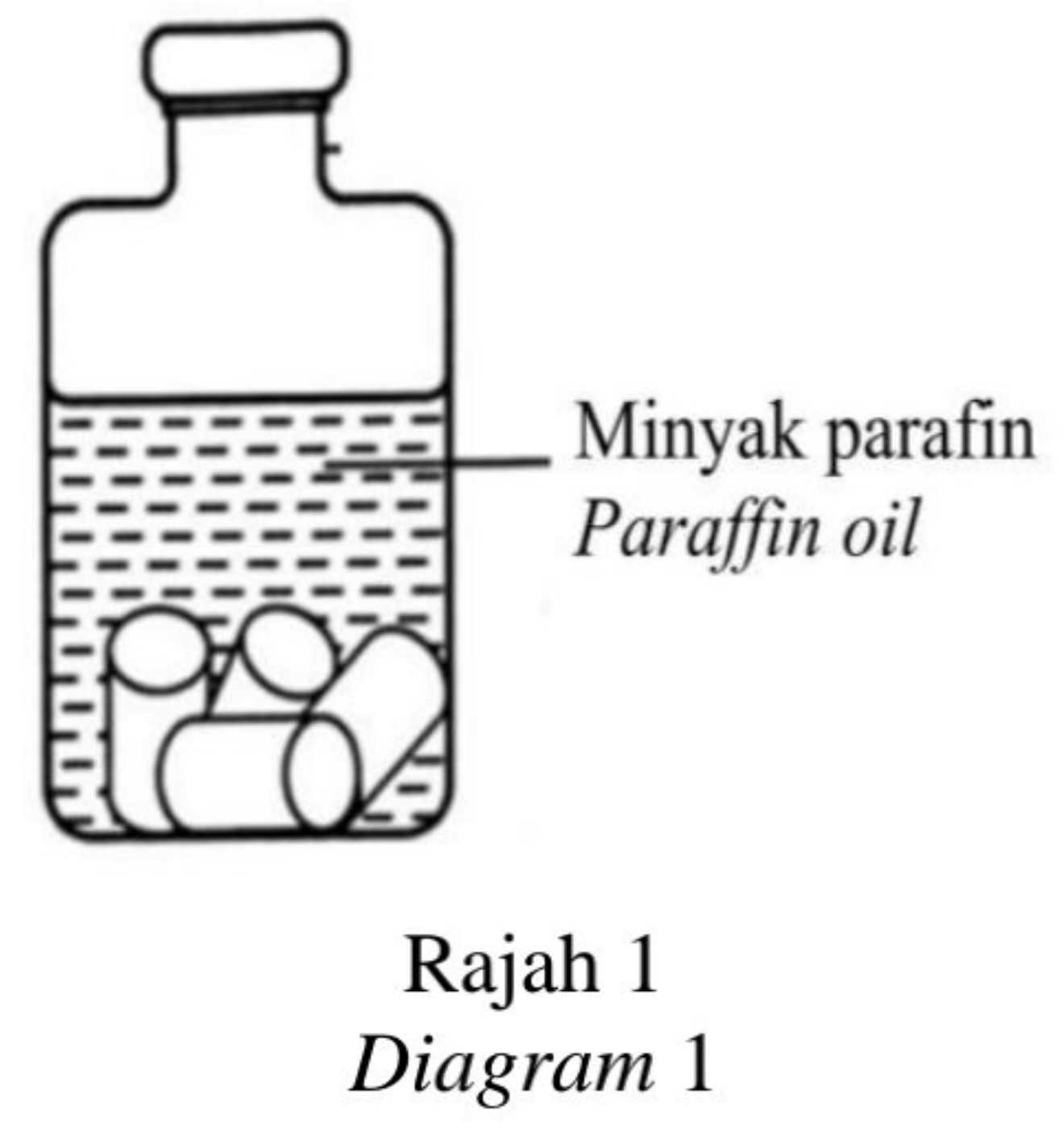
Diagram 1 shows the method used to store an element (a bottle with pieces of the element under paraffin oil). Which of the following is the explanation of why this method was used?
Medium
In the Periodic Table of the Element, X element has 11 proton number, while Y element has 17 proton number.
Which of the following is not true about element X and Y?
Medium
Which of the following is the special characteristic of transition metals?
Easy
What is the basic principle used in the arrangement of elements in the Periodic Table of Elements?
Easy
Which of the following is the correct change in the property of elements across the period in the Periodic Table of Elements?
Medium
The vertical columns in the Periodic Table of Elements are named as
Easy
Table shows the content of transition elements in gems. Which one shows the correct match of the transition element? (A: Ruby - Chromium; B: Sapphire - Manganese; C: Amethyst - Titanium; D: Emerald - Silicone)
Easy
2Li + 2H2O → 2LiOH + H2. The chemical equation above represents the reaction between lithium metal and water. Which of the following observations may happen when lithium metal is replaced by potassium?
Medium
Diagram 10 shows the elements of P and Q in Periodic Table of Elements (P and Q in Group 1, Q lower down the group). Why is the atomic size of atom Q bigger than atom P?
Medium
The elements in the Modern Periodic Table of Elements are arranged according to
Easy
What is the other name of Group 2 in the Periodic Table of Element?
Easy
Table 2 shows three elements that exist in gems: Ruby - Chromium; Sapphire - Iron, titanium; Amethyst - Manganese. Apart from the characteristics in the table above, choose the correct statement to explain the other characteristics found in the element.
Medium
What is the basic principle used to arrange the elements in the modern Periodic Table of Elements?
Easy
Which characteristic is correct about elements in Group 17 in the Periodic Table as going down the group?
Medium
Which of the following Group 1 elements has the smallest atomic size?
Easy
Which of the following elements could form coloured compounds and aqueous solutions?
Easy
The scuba tank used by deep sea divers contains 79% nitrogen and 21% a mixture of oxygen and unknown elements. Which of the following could be the element?
Medium
In the Modern Periodic Table, the elements are arranged in order of the
Easy
Which of the inert gases below is used in a diver's oxygen tank?
Easy
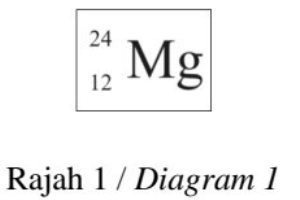
Diagram 1 shows the standard representation of magnesium atom (24/12 Mg). What is the number of valence electrons of the atom?
Medium
Which of the following statements are correct about the physical properties of elements in Group 18 when going down the group?
I The intensity of colour decreases
II The attraction forces between atom increases
III The density of the elements decreases
IV Melting point and boiling point of these elements increases
Medium
Diagram 2 shows the apparatus set-up of an experiment to study the reactivity of element in Group 1 towards chlorine gas. What is alkali metal X, Y and Z? (Z burns most vigorously, Y least vigorously.)
Medium
Oxide of Y is a white solid that is insoluble in water but can react with nitric acid and sodium hydroxide solution. What is Y element?
Medium
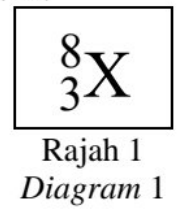
Diagram 1 shows the symbol of element X (nucleon number 8, proton number 3). Element X is placed at Group 1 and Period 2 in the Periodic Table of Elements. What are the factors that determine the position of element X in the Periodic Table of Elements? (Group / Period)
A Nucleon number / Proton number
B Proton number / Nucleon number
C Number of shells filled with electrons / Number of valence electrons
D Number of valence electrons / Number of shells filled with electrons
Medium
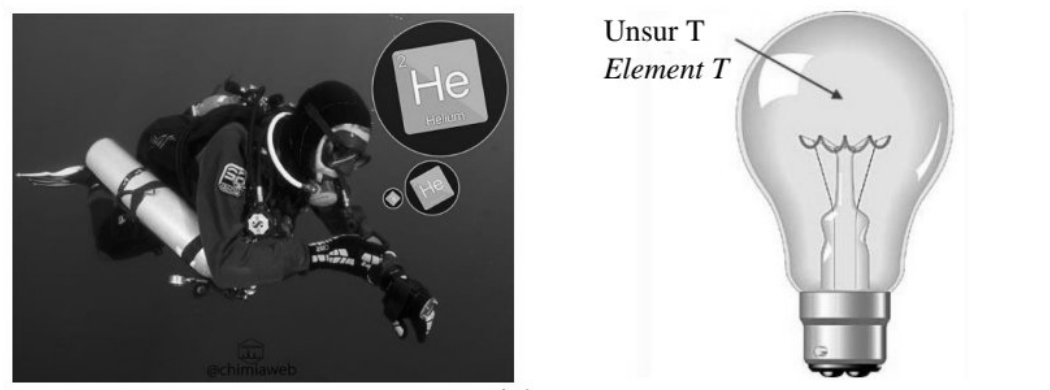
Element T and Helium are placed in the same group as in the Periodic Table of Elements. Diagram 6 shows the Helium gas used in the oxygen tanks of divers and gas of element T used to fill electric bulb. Which statement best explains why the atom T and atom Helium are suitable to be used for that purpose?
Medium
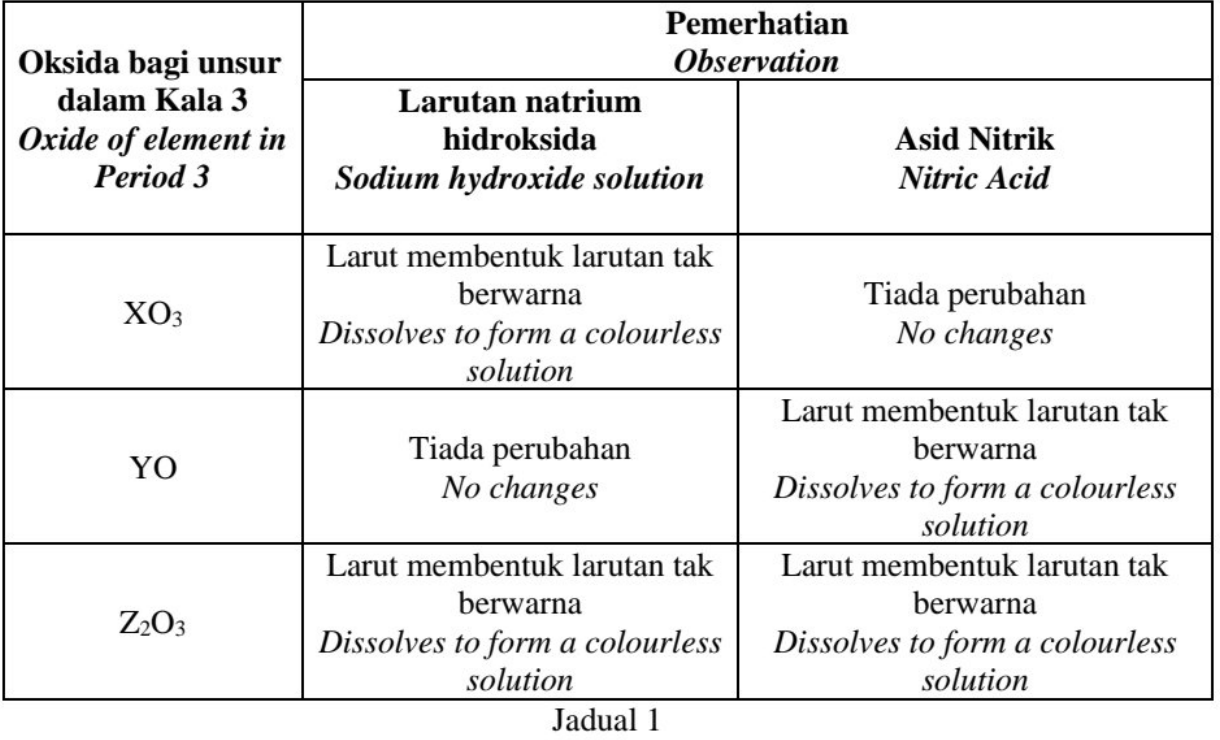
Table 1 shows the observation when oxides of elements in Period 3 of the Periodic Table is added to sodium hydroxide solution and nitric acid. X, Y and Z are not the actual symbols of the elements.
XO3: NaOH - dissolves to form a colourless solution; HNO3 - no changes.
YO: NaOH - no changes; HNO3 - dissolves to form a colourless solution.
Z2O3: NaOH - dissolves to form a colourless solution; HNO3 - dissolves to form a colourless solution.
What is the correct arrangement in increasing proton number of the elements?
Medium
Which of the following are the special characteristics of transition metals? I Conduct electricity II Act as catalyst III Has low melting point IV Form coloured compound
Medium
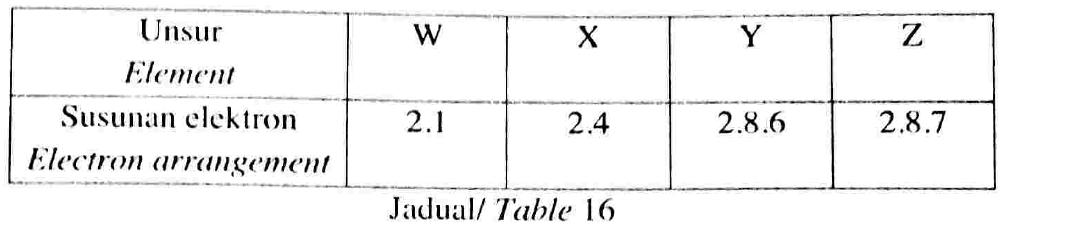
Table 16 shows the electron arrangement for atom of the elements W, X, Y and Z: W 2.1, X 2.4, Y 2.8.6, Z 2.8.7. Which element is located in Period 3, Group 16 in the Periodic Table of Elements?
Medium
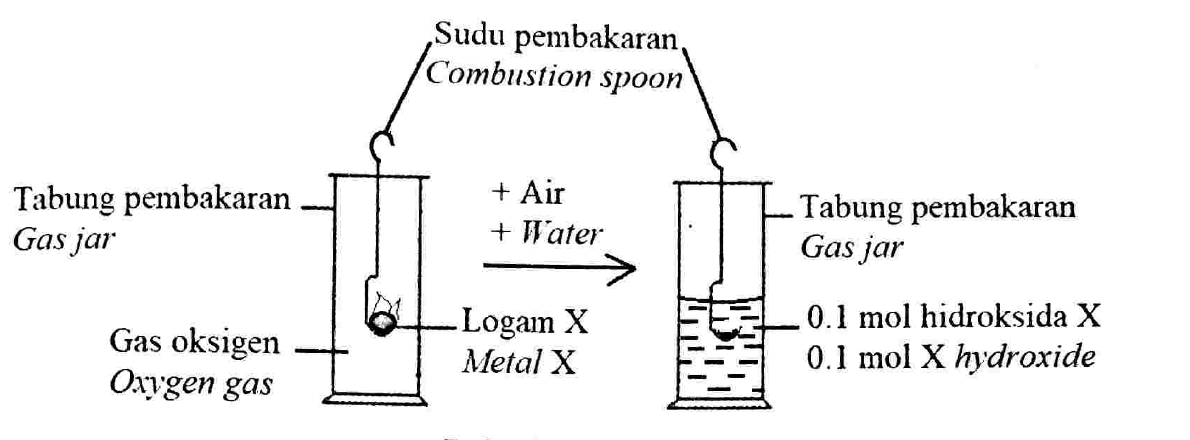
Diagram 33 shows the steps carried out to investigate the chemical properties of Group 1 element: metal X burns in oxygen gas, then water is added to give 0.1 mol of X hydroxide. What is the volume of oxygen gas needed to react completely in this reaction? [Molar volume of gas at room conditions = 24 dm³ mol⁻¹]
Medium
Which of the following elements form acidic oxides when react with oxygen?
I Sulphur
II Sodium
III Phosphorus
IV Magnesium
Easy
Element T is located below chlorine in the Periodic Table of Elements.
Which of the following statements explains why element T is less reactive than chlorine?
Medium
Which of the following are the uses of helium gas?
I Used in weather balloons
II Used in the oxygen tanks of divers
III Used in lasers for eye retina treatment
IV Used in flashlight of cameras
Medium
Element X reacts with oxygen to form a compound that is soluble in water. Which of the following elements could be X?
Medium
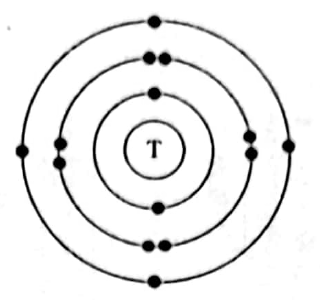
Diagram 4 shows the electron arrangement of atom T. Elements U and T are placed in the same period in the Periodic Table of Elements. The atomic radius of U is bigger than T. What is the electron arrangement of atom U?
Medium
The nucleon number of atom of element W is 23. Atom W has 12 neutrons. Which of the following elements has the same chemical properties as W? [Proton number: C = 6, O = 8, Mg = 12, K = 19]
Medium
Which of the following noble gases are correctly match with its uses?
I Helium - Used in the oxygen tank of divers
II Radon - Used for anaesthesia
III Krypton - Used in lasers for eye retina treatment
IV Xenon - Used to treat cancer
Medium
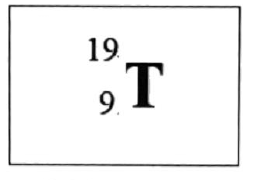
Diagram 19 shows the standard representation of an atom of element T: 19/9 T (nucleon number 19, proton number 9). Which of the following properties is correct about element T?
Medium
Diagram 33 shows the apparatus set-up to study the chemical property of element Y which is located in Group 1 of the Periodic Table of Elements (Y burning in oxygen gas). What is the mass of element Y burnt if the number of moles of the product formed in the reaction is 0.15 mol? [Relative atomic mass: Y = 7]
Medium
Which of the following statements is true regarding the modern Periodic Table of Elements?
Medium
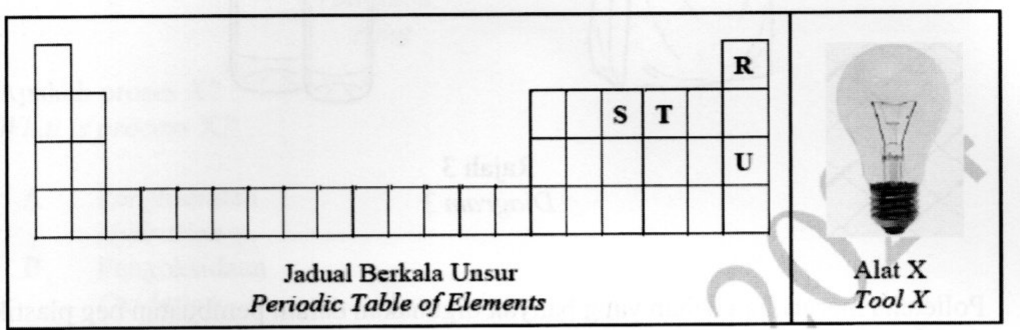
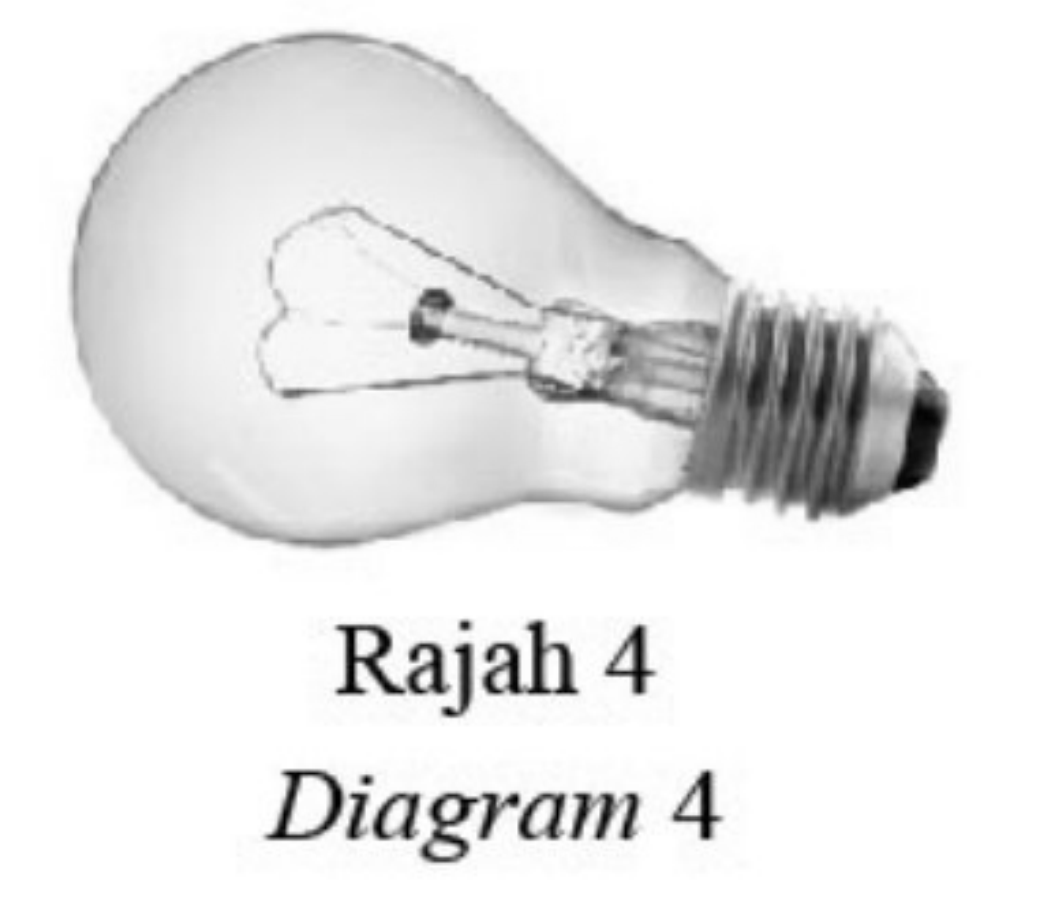
Diagram 4 shows the elements R, S, T and U in the Periodic Table of Elements as well as a picture of tool X (a light bulb) that applies the use of one of the given elements. Which element is suitable to be used in tool X?
Medium
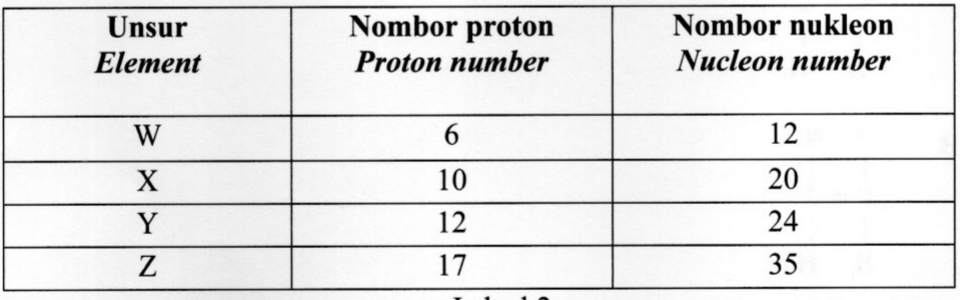
Table 2 shows a Periodic Table of Element with four elements represented by letters W, X, Y and Z. Which of these elements has an electron arrangement of noble gas? (W: proton number 6, nucleon number 12; X: 10, 20; Y: 12, 24; Z: 17, 35)
Medium
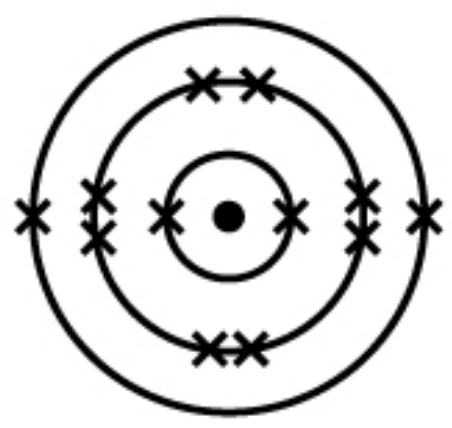
Diagram 2 shows the electron arrangement of an atom M (three shells with 2, 8 and 2 electrons). Which of the following is the position of element M in the Periodic Table of Elements?
Medium
Which characteristic is similar for all elements in Group 18 in the Periodic Table of Elements?
Easy
Noble gases are chemically unreactive due to: I noble gases exist as monoatoms; II noble gases have valence shells that are fully filled with electrons; III noble gases have achieved a stable duplet or octet electron arrangement; IV atoms of noble gases do not donate, accept or share electrons with the atoms of other elements
Medium
Diagram 4 shows electric bulb which is filled with one of the elements in Group 18. What is the element?
Easy
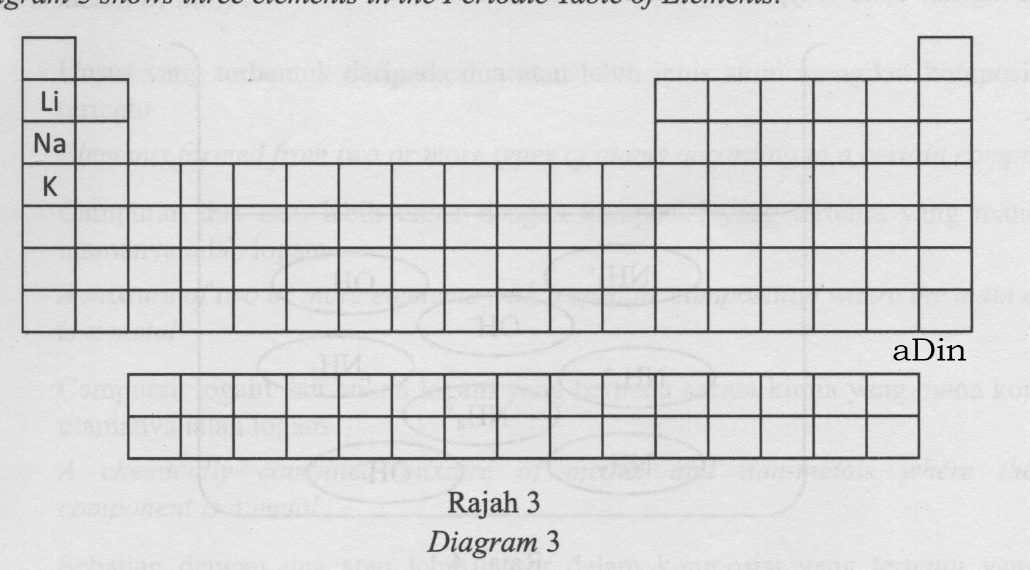
Diagram 3 shows three elements (Li, Na, K) in the Periodic Table of Elements. Which of the following is true about the elements?
Easy
Which of the following elements in Group 17 has the biggest atomic size?
Easy
The boiling point of potassium is lower than sodium. Which statement most accurately explains this phenomenon?
Medium
Where reactive metals such as lithium, sodium and potassium should be stored?
Easy
The boiling point of bromine is higher than chlorine. Which statement exactly explains this phenomena?
Medium
Diagram 4 shows advertisement light board which made of X. In which group is X located in the Periodic Table of Elements?
Easy
Chlorine is more reactive than bromine because I chlorine exists as diatomic gas; II valence shell of bromine is further from nucleus compared to chlorine; III chlorine has a stronger nucleus attraction force towards the electrons; IV Van der Waals forces between bromine molecule are stronger
Medium
Argon is Group 18 element. Which of the following is the use of argon in daily life?
Easy
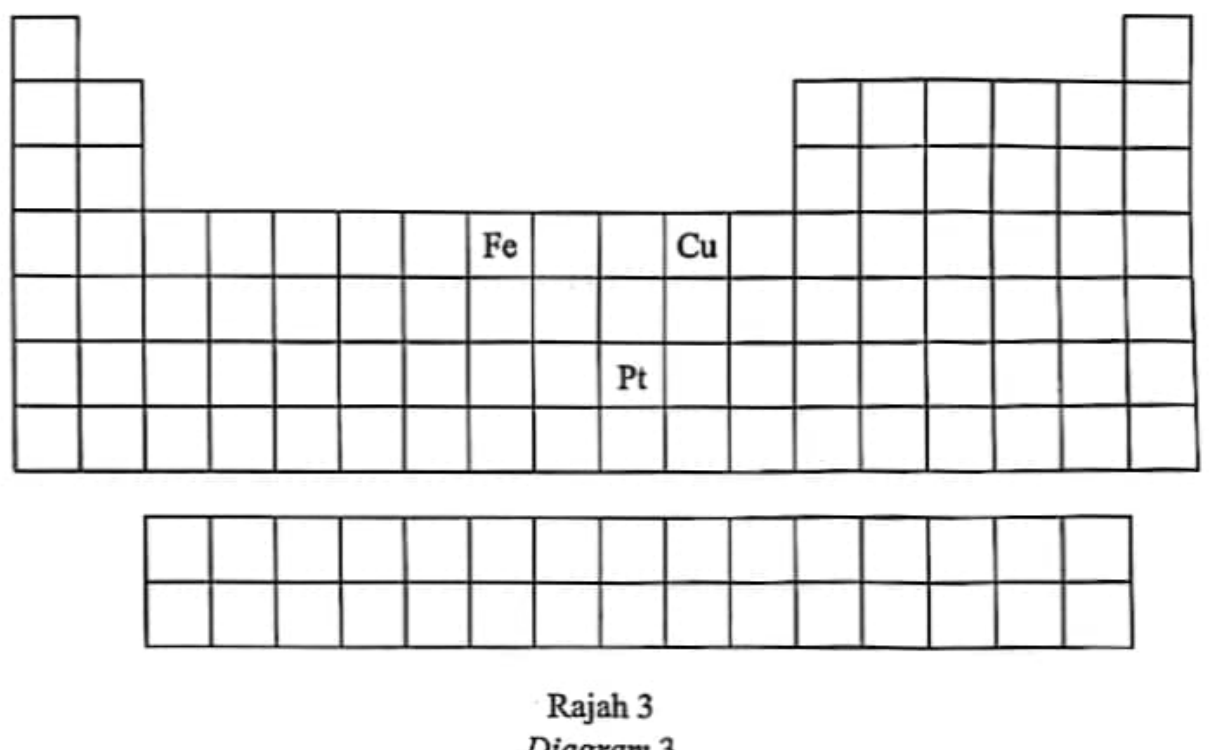
Diagram 3 shows three elements (Fe, Cu and Pt) in the Periodic Table of Elements. Which statement is true about the elements?
Medium
Which element in Group 17 has the smallest atomic size?
Easy
The boiling point of chlorine is lower than bromine. Which statement best explains this phenomenon?
Medium
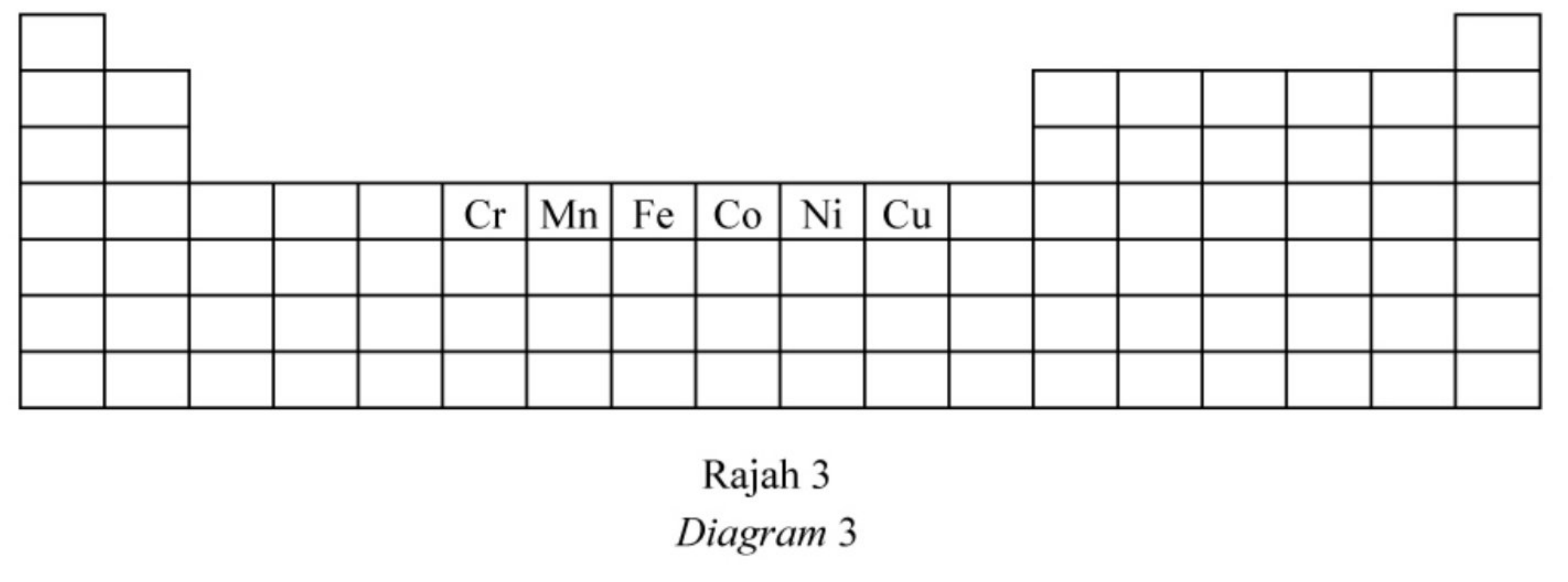
Diagram 3 shows six elements of Period 4 in the Periodic Table of Elements (Cr, Mn, Fe, Co, Ni, Cu). Which of the following is true about the elements? I Have a low melting point; II Able to form coloured compounds; III Do not conduct heat; IV Able to show different oxidation numbers in their compounds.
Medium
Metal oxide X is yellow when hot and white when cold. What is X?
Easy
Element X is located in Group 18 in the Periodic Table of Element. X is not the actual symbol of the element. Element X is use in the advertising board lights. What is X?
Easy
The statement: "Elements classified according to certain group such as gases, non-metals, metals and metal oxides." Which scientist made the statement?
Easy
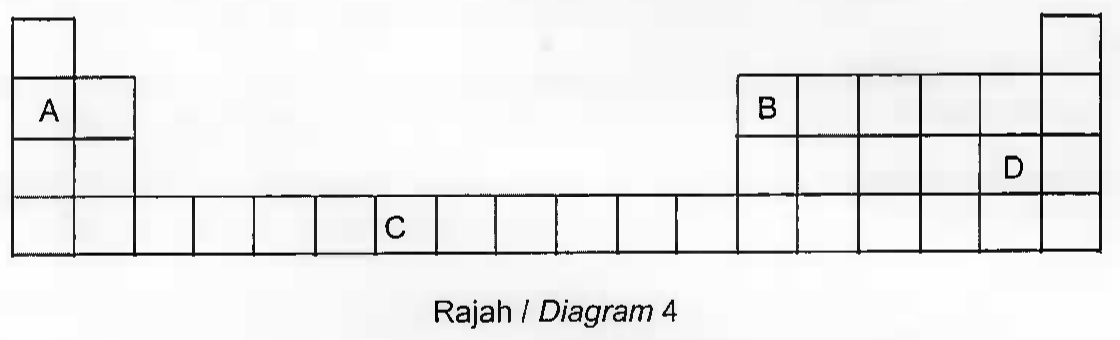
Diagram 4 shows part of the Periodic Table of Elements. Which of the following is a transition element? (A: Group 1 element; B: Group 13 element; C: in the transition element block; D: Group 16 element.)
Medium
Diagram 8 shows the apparatus set-up to study the reactivity of Group 1 elements in reaction with oxygen. Table 2 shows the observation: X burns vigorously with purple flame; Y burns slowly with red flame; Z burns vigorously with yellow flame. Which is the correct descending order for the reactivity of this element with oxygen?
Medium
Why is helium gas chemically inert?
Medium
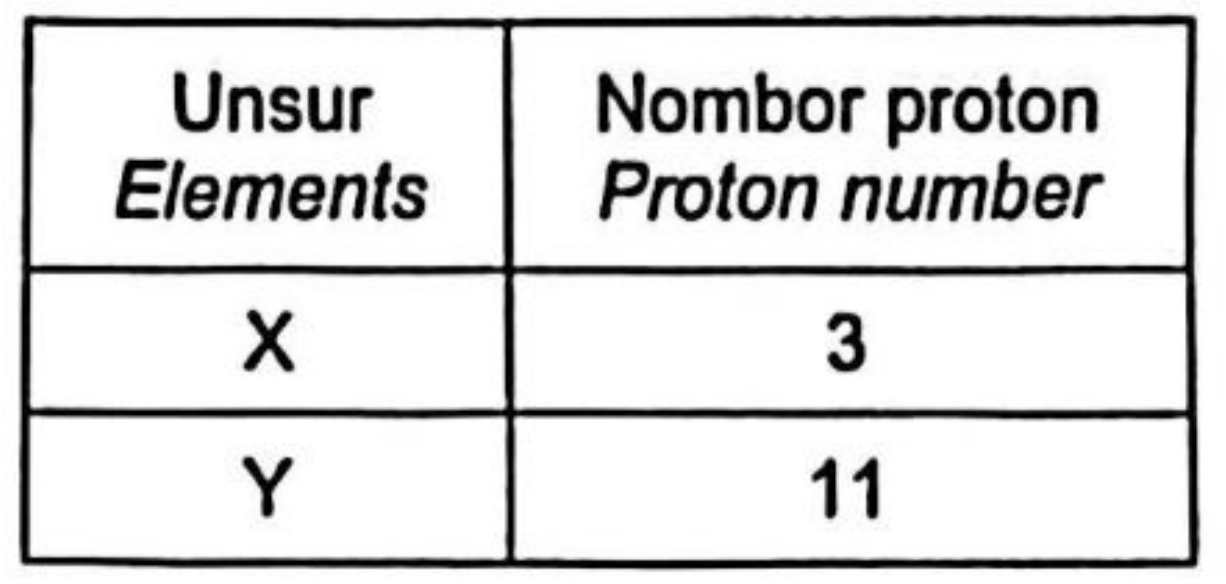
Table 19 shows the proton number of two elements in Group 1 of The Periodic Table of Elements: X = 3, Y = 11. Which of the following is the correct statement about X and Y?