PAHANG 2024 P2 Q9
MediumWrite your answer on paper. Then open the answer to check it.
Diagram 9 shows standard representation of chlorine atom: 35/17 Cl. Answer any one of Section B questions.
Medium20 marks- (a)(i)
State the physical state of chlorine at room condition.
[1]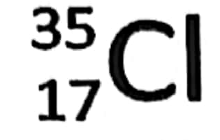
- (a)(ii)
Identify the position of chlorine atom in the Periodic Table of Elements.
[1] - (a)(iii)
Draw the electron arrangement of chlorine that exists as diatomic molecule.
[2] - (a)(iv)
The reaction between sodium and chlorine forms a compound with high melting point. Determine the mass of the compound formed when 2.3 g sodium reacts with excess chlorine. [Relative atomic mass: Na = 23, Cl = 35.5]
[6] - (b)
Table 9.1 shows information on metal Q and metal R (Q reacts with chlorine to form a white solid, QCl; R reacts with chlorine to form a green solid, RCl2 or brown solid, RCl3). Based on Table 9.1, identify the transition element and give a reason for your answer.
[2]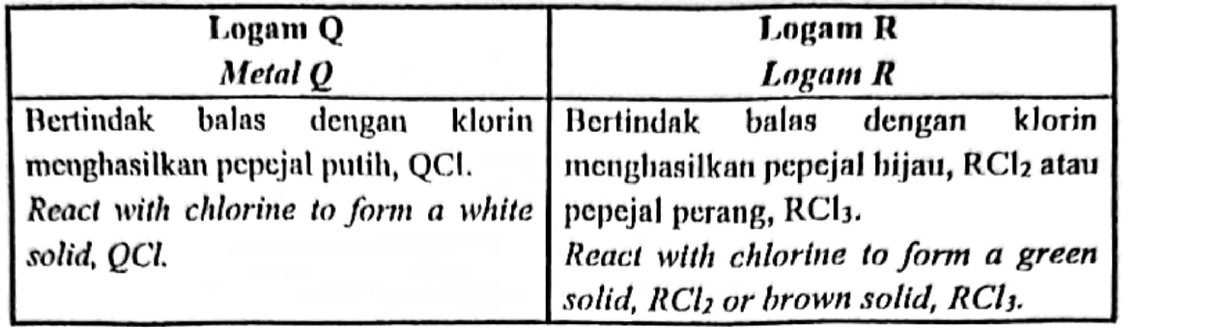
- (c)
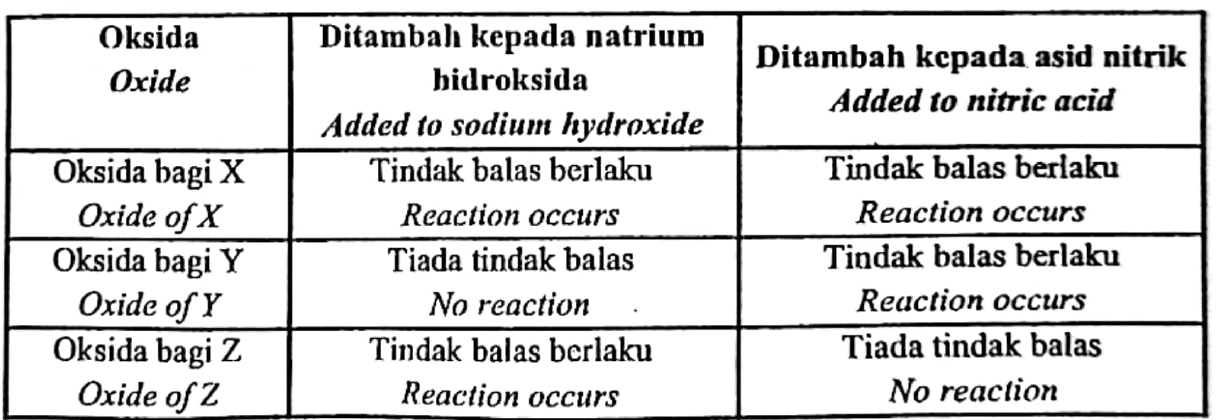
Table 9.2 shows the results when three oxides of elements in Period 3 are added to sodium hydroxide solution and nitric acid (oxide of X: reaction with NaOH, reaction with HNO3; oxide of Y: no reaction with NaOH, reaction with HNO3; oxide of Z: reaction with NaOH, no reaction with HNO3). Based on Table 9.2, arrange X, Y and Z in order of their increasing atomic size. State the type of oxide of X, oxide of Y and oxide of Z. Then state the solubility of each oxide in water. Choose an oxide compound that dissolved in water and produces an alkaline solution.
[8]