SBP 2022 P2 Q9
MediumWrite your answer on paper. Then open the answer to check it.
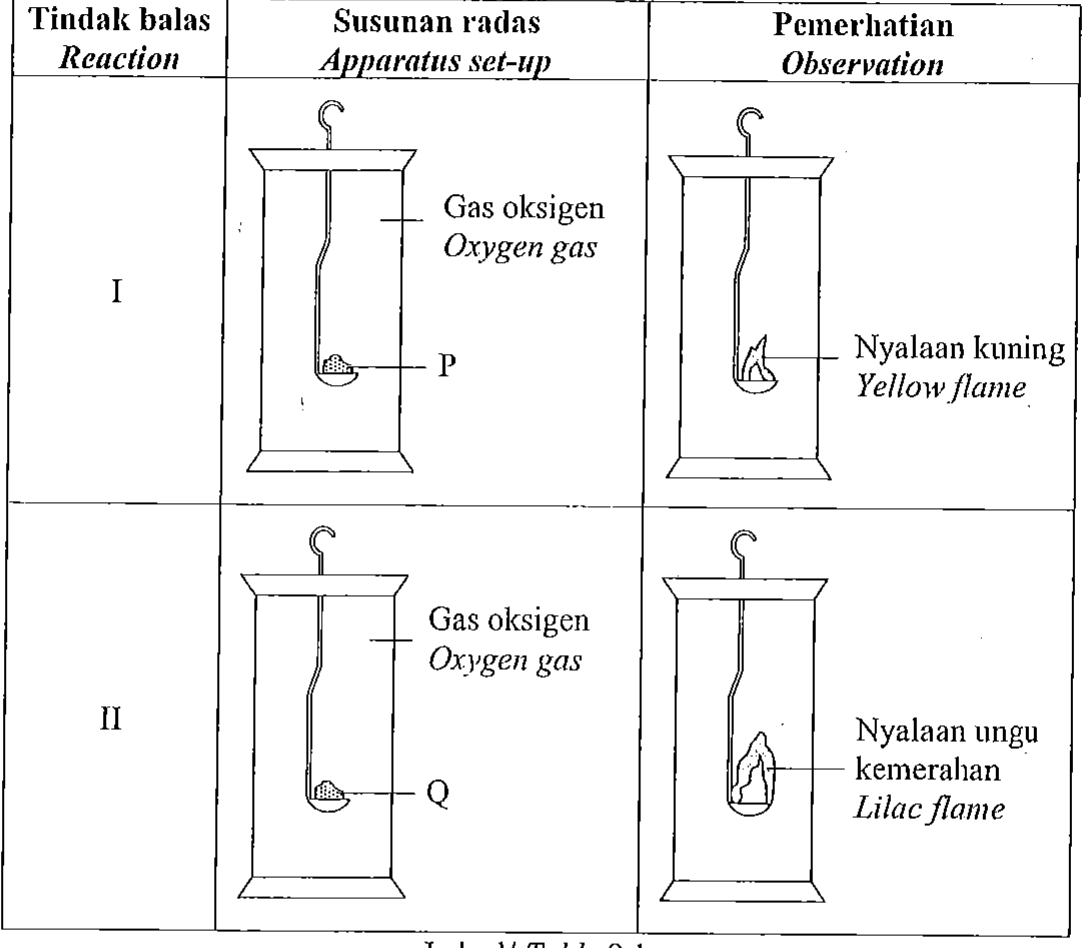
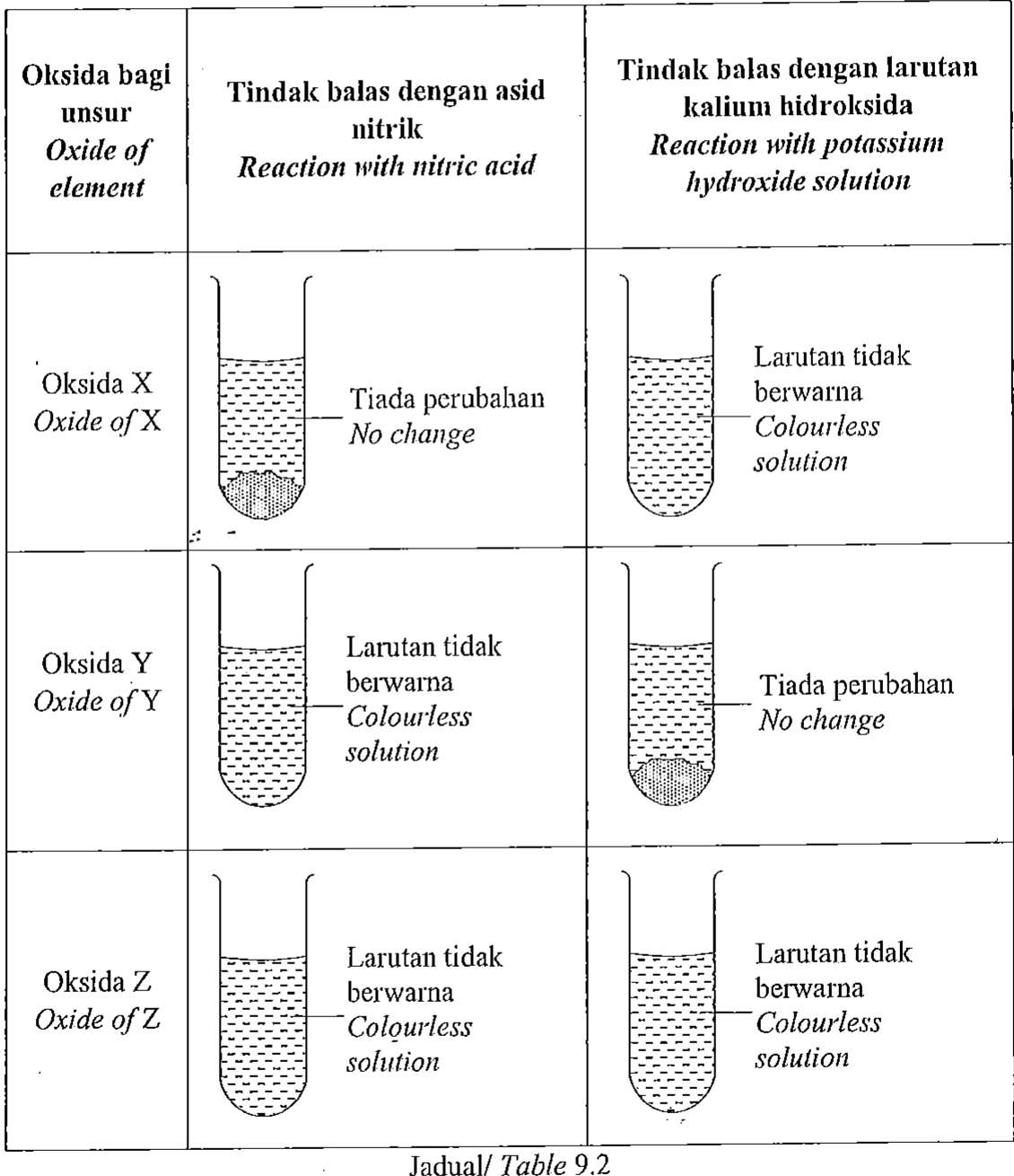
(a) Diagram 9.1 shows the pie chart of percentage uses of chlorine in daily lives: Organic chemicals 17%, Inorganic chemicals 12%, Pulp & paper 12%, Soaps/Detergent 6%, Water treatment 5%, Alumina 14%, Textiles 9%, Other 25%. (b) Table 9.1 shows the observations when elements P and Q react with oxygen gas to form different compounds: Reaction I, element P burns with a yellow flame; Reaction II, element Q burns with a lilac flame. (c) Table 9.2 shows the result of an experiment to investigate the properties of oxide of elements X, Y and Z that are located in Period 3 of the Periodic Table of Elements. The solid oxide of the elements is added into nitric acid and potassium hydroxide solution separately: oxide of X: no change with nitric acid, colourless solution with potassium hydroxide; oxide of Y: colourless solution with nitric acid, no change with potassium hydroxide; oxide of Z: colourless solution with both nitric acid and potassium hydroxide.
Medium20 marks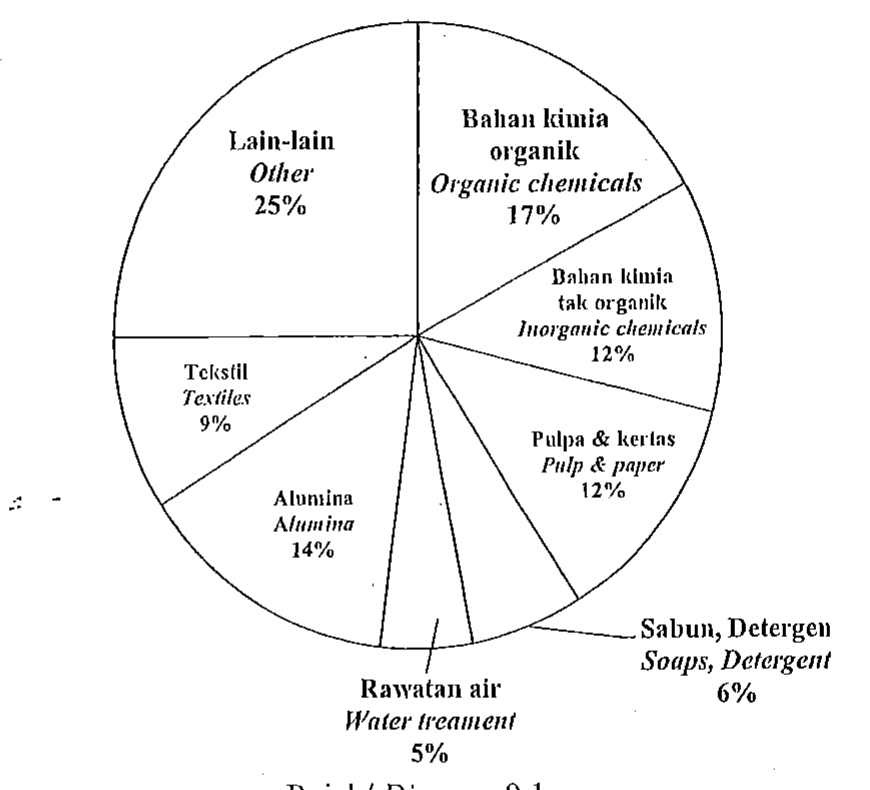
- (a)(i)
State the colour and physical state of chlorine element at room temperature.
[2] - (a)(ii)
Based on Diagram 9.1, 5% of chlorine is used in water treatment to disinfect bacteria. When chlorine reacts with water, colourless solution is produced. State the observation when a blue litmus paper is dipped into the solution. Give reason for your answer. Write a chemical equation of the reaction.
[4] - (b)(i)
Write a chemical equation for reaction II. Calculate the mass of compound formed when 3.12 g of element Q reacts completely with oxygen. [Relative atomic mass: O = 16, Q = 39]
[5] - (b)(ii)
Based on the observation in Table 9.1, compare the reactivity of element P and Q towards oxygen. Explain your answer.
[5] - (c)
Suggest oxide of elements X, Y and Z. Arrange elements X, Y and Z in descending order of electronegativity.
[4]