PUTRAJAYA 2024 P2 Q10
MediumWrite your answer on paper. Then open the answer to check it.
Question on the dative bond in the hydroxonium ion H3O+ (Diagram 8.1), the metallic bond in magnesium (Diagram 8.2) and the solubility of sodium chloride and naphthalene in solvents P and Q (Diagram 8.3). Answer any one question from Section B.
Medium20 marks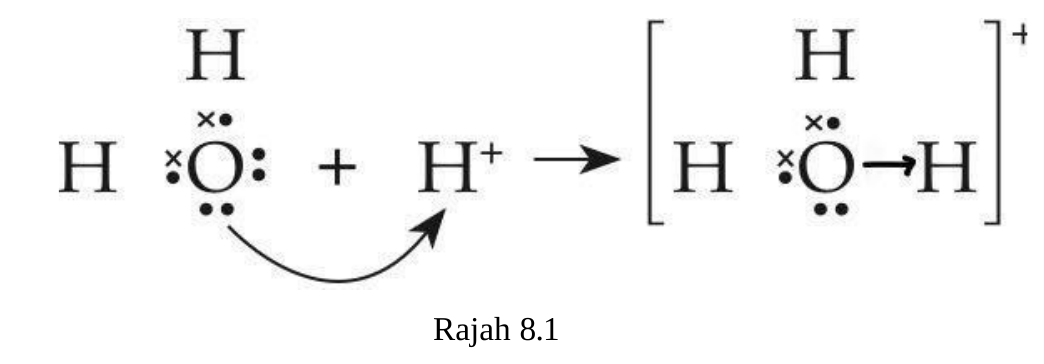
- (a)(i)
Diagram 8.1 shows the electron arrangement for formation of the dative bond of hydroxonium ion, H3O+ (water molecule + H+). What is meant by dative bond?
[1] - (a)(ii)
Based on the answer in 10(a)(i), describe the formation of the dative bond.
[4] - (a)(iii)
Suggest another compound that consists of dative bonds.
[1] - (b)(i)
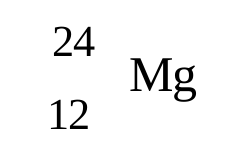
Diagram 8.2 shows the standard representation of magnesium metal atom (²⁴₁₂Mg). Valence electrons delocalise to form positive metal ions and a sea of electrons. Name the force formed between the sea of electrons and the positively-charged metal ions.
[1] - (b)(ii)
How can magnesium metal conduct electricity in solid state?
[3] - (c)(i)
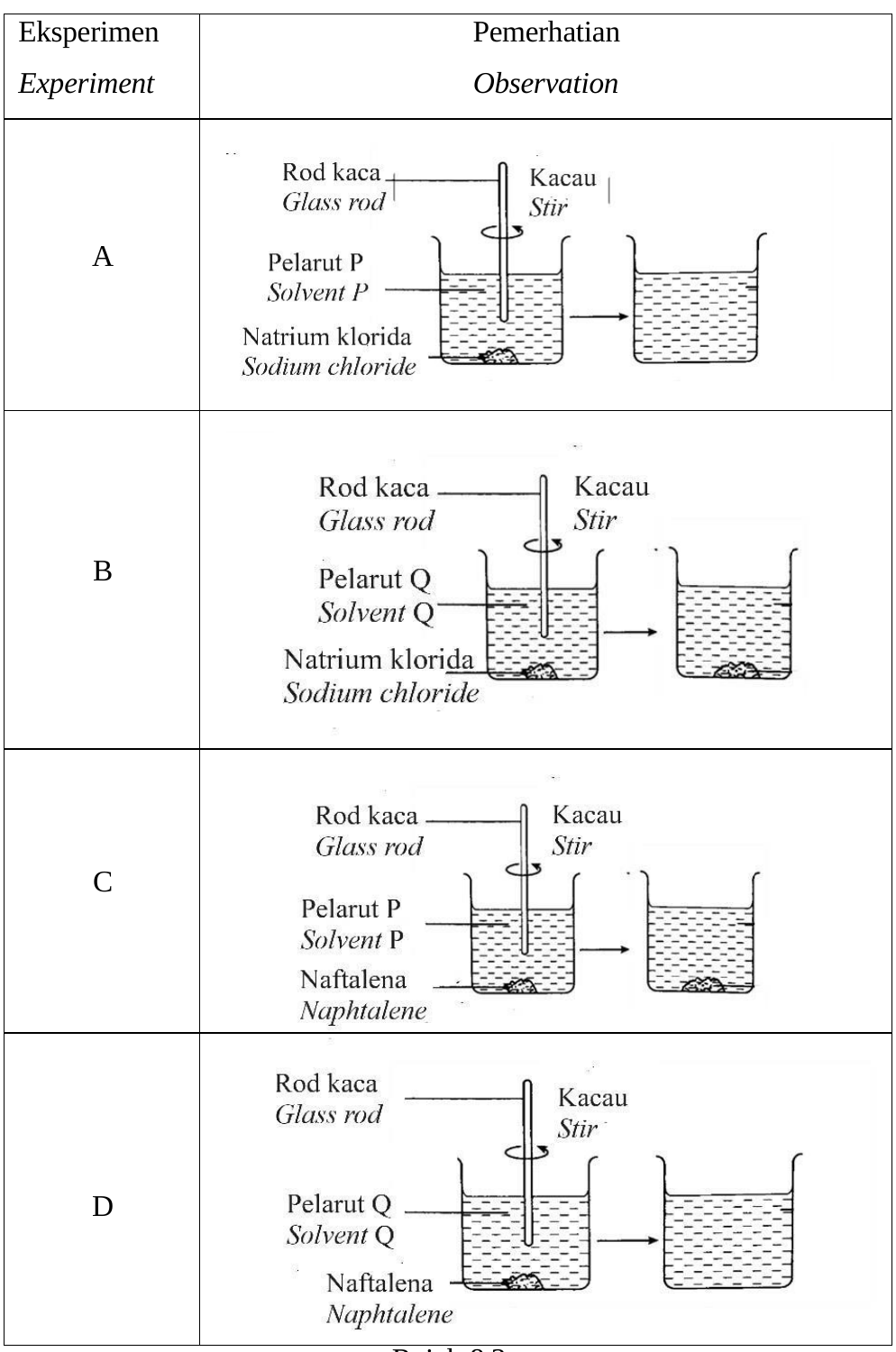
Diagram 8.3 shows the observation for four experiments to determine the solubility of sodium chloride (A in solvent P, B in solvent Q) and naphthalene (C in solvent P, D in solvent Q). Suggest solvent P and Q.
[2] - (c)(ii)
What type of bonds exist in sodium chloride and naphthalene compounds?
[2] - (c)(iii)
Explain why there are differences in the observations for experiments A and B.
[6]