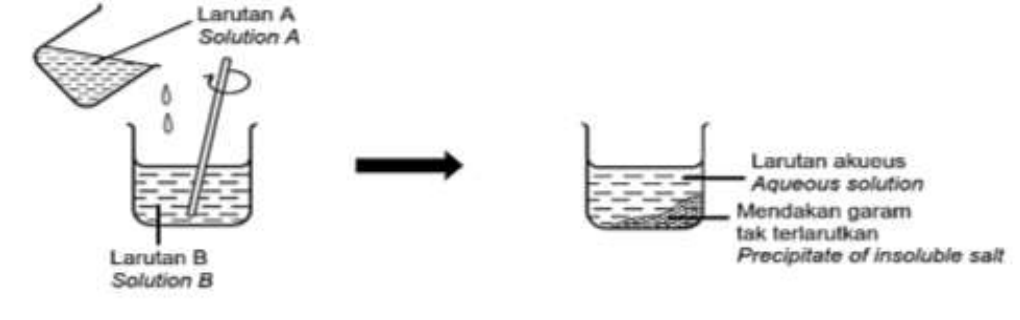
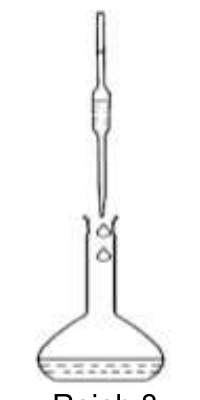
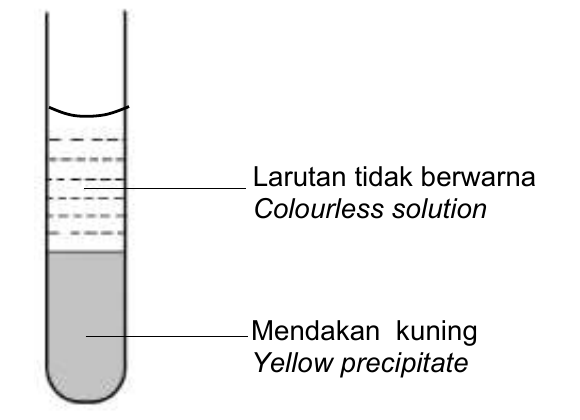
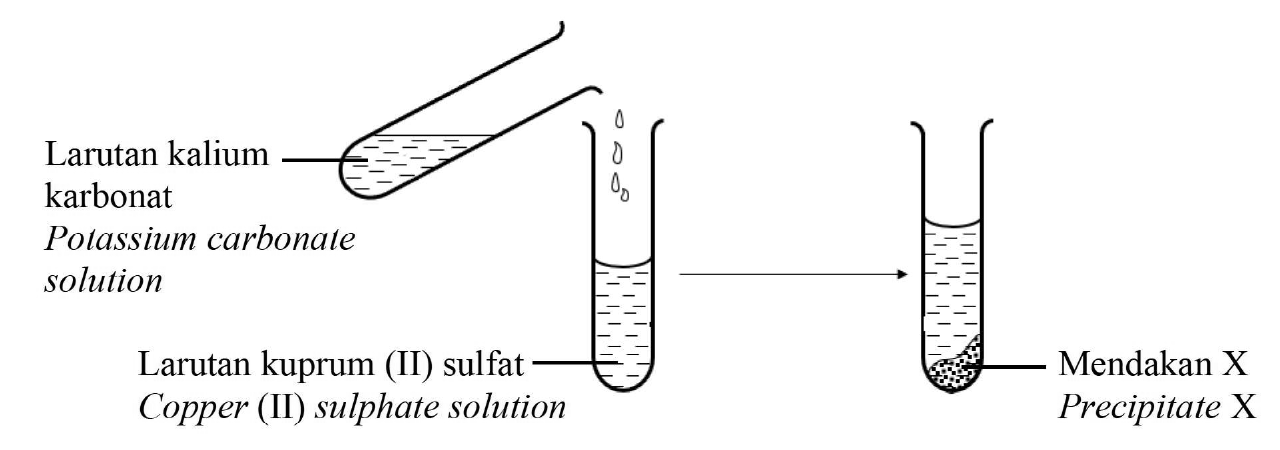
A student is required to prepare barium sulfate salt in the laboratory. Which of the following chemical equations are suitable to prepare the salt?
I Ba(NO₃)₂ + ZnSO₄ → BaSO₄ + Zn(NO₃)₂
II BaCO₃ + Na₂SO₄ → BaSO₄ + Na₂CO₃
III BaCl₂ + K₂SO₄ → BaSO₄ + 2KCl
IV Ba(OH)₂ + H₂SO₄ → BaSO₄ + 2H₂O
Medium
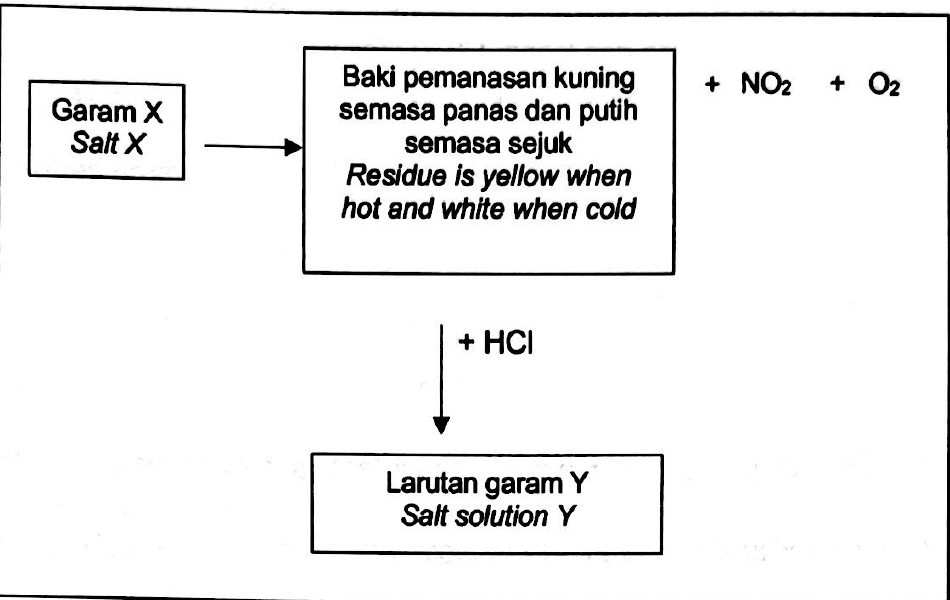
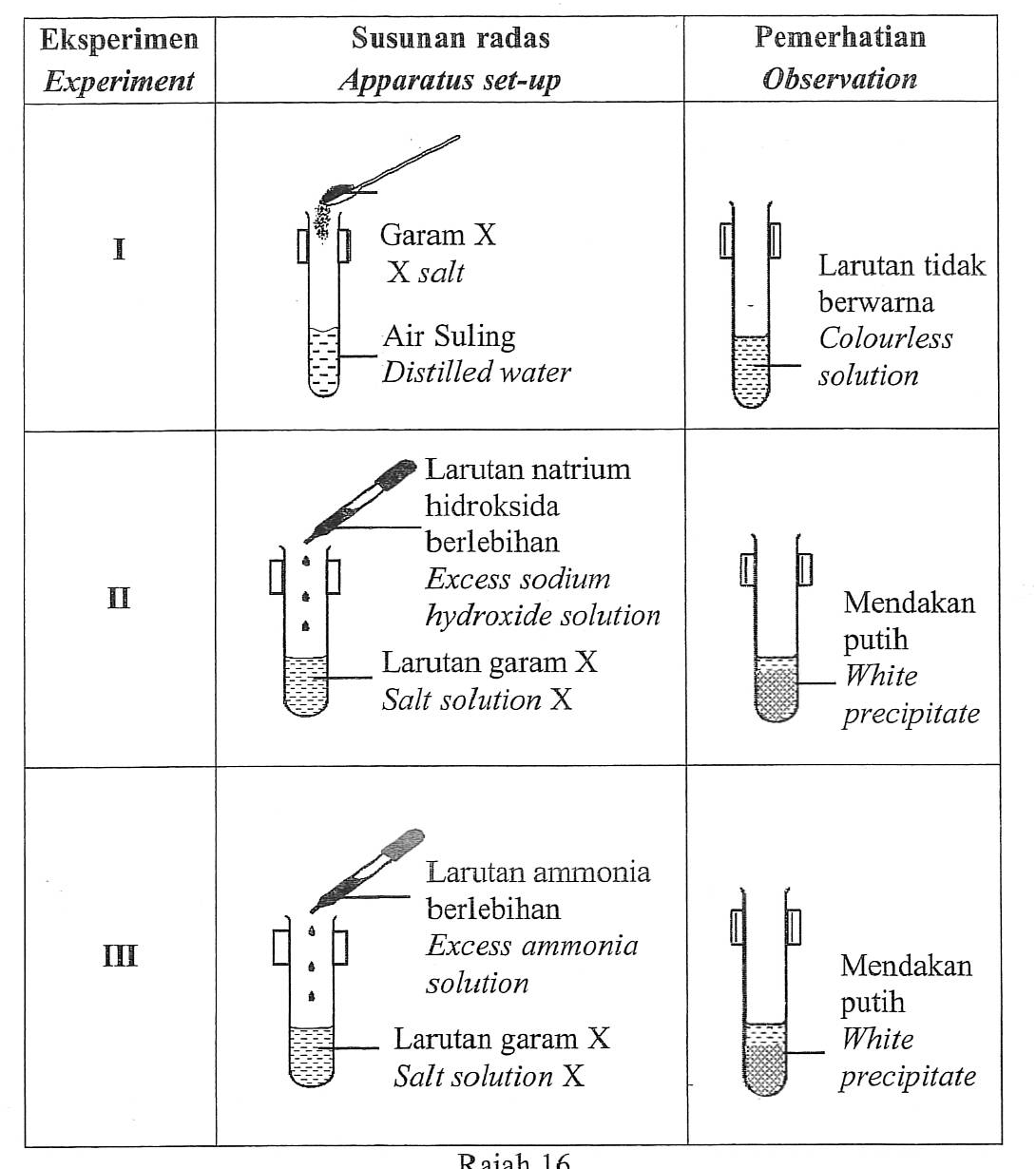
Qualitative analysis of salt is a technique used to identify the cation and anion present in a salt. Diagram 16 shows a flow chart of qualitative analysis on salt X.
What are the reagents can used to test the presence of cation and anion in salt solution Y?
Medium
Why can ammonia gas, NH₃ show alkalinity in water?
Medium
Which of the following is true about weak acids?
Medium
Diagram 30 shows the heating coil in an electric kettle used by a housewife (white layer containing calcium carbonate). To remove the white layer, housewives need to add a substance to the kettle and leave it for an hour before washing it with soap. What is the material?
Easy
Formic acid, HCOOH is a type of acid used in latex coagulation. Which of the following statements is true about the acid?
Medium
Which of the following pairs correctly shows the pH value and the degree of ionisation for sulphuric acid, H₂SO₄? (A: pH 1, High; B: pH 1, Low; C: pH 5, Low; D: pH 5, High)
Medium
Which of the following is correct about the use of neutralisation in daily life?
Medium
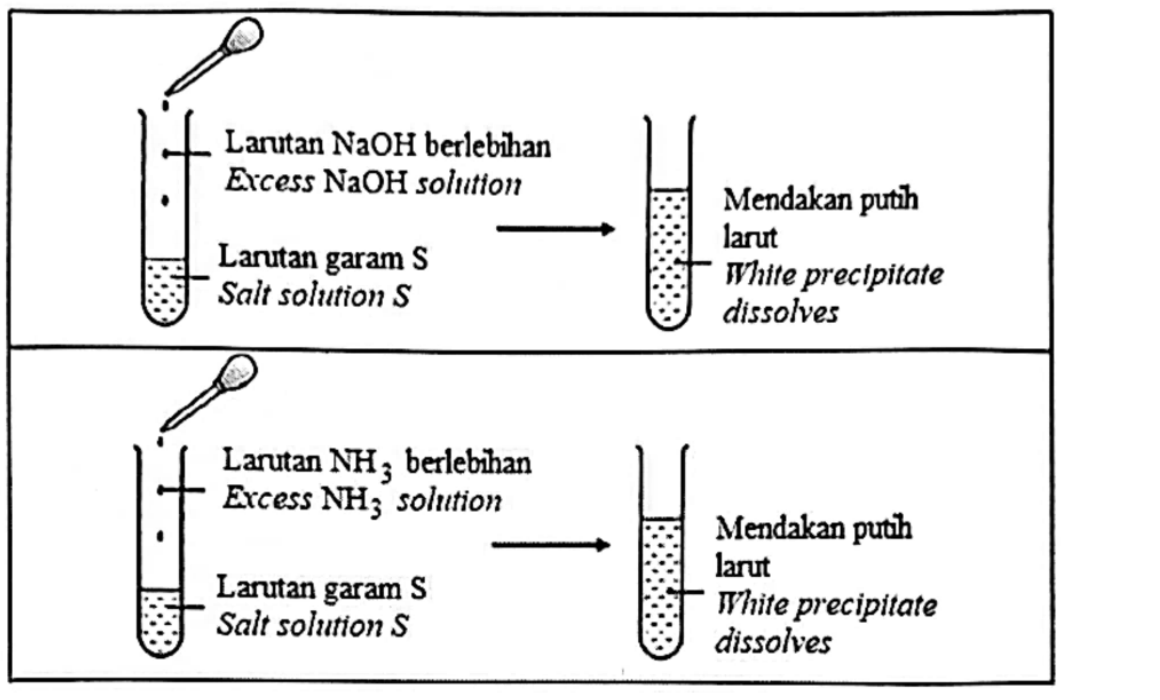
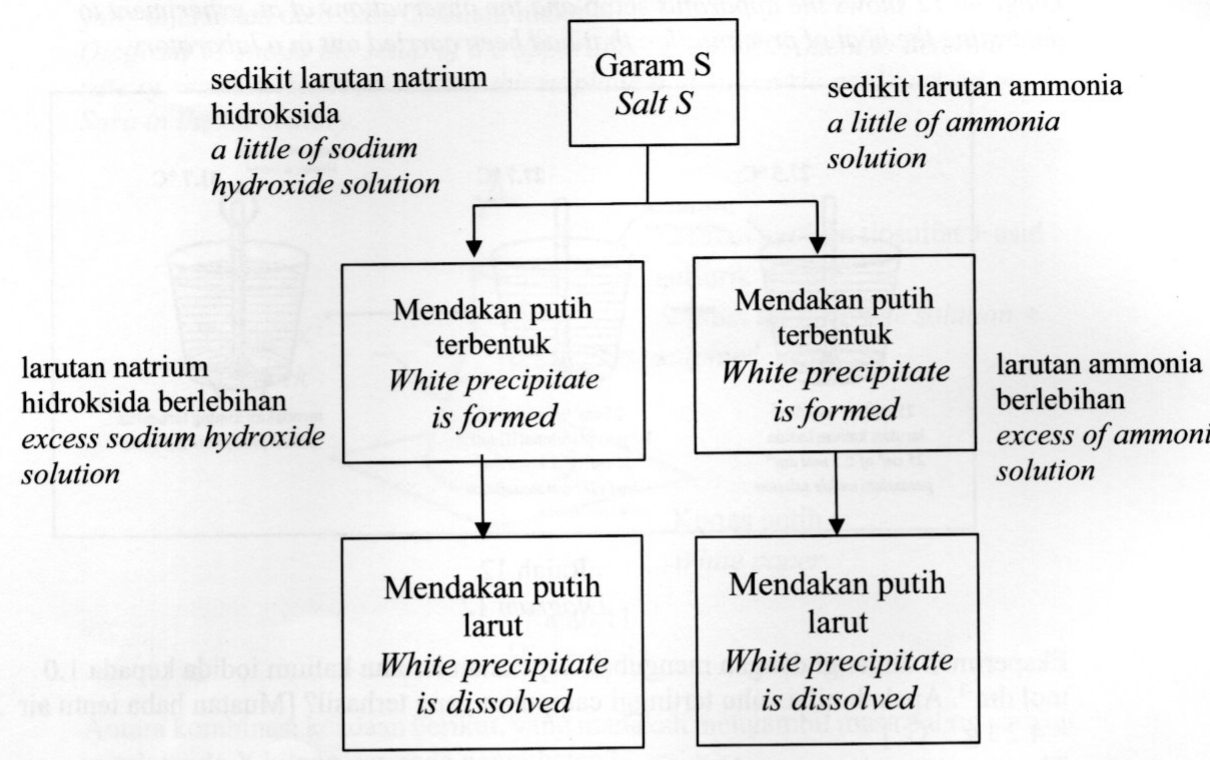
Diagram 14: salt solution S gives a white precipitate that dissolves in excess NaOH solution and in excess NH₃ solution. S is then added with sodium carbonate solution and a white precipitate forms, which is heated strongly. Which pair is correct about the cation in S and the observation for the residue of the heating? (A: Pb²⁺, brown when hot and yellow when cold; B: Zn²⁺, yellow when hot and white when cold; C: Cu²⁺, black solid; D: Al³⁺, white solid)
Medium
Which of the following substances is acidic?
Medium
What ion is produced when a hydrogen ion combines with water molecule?
Easy
Which of the following terminology for chemical substances that ionises partially in water to produce low concentration of hydroxide ions?
Easy
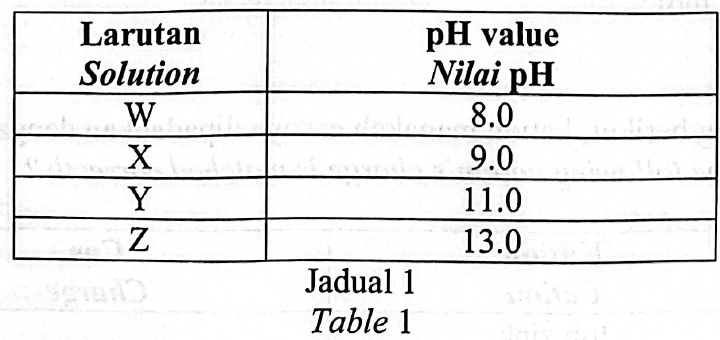
Table 2 shows the pH values of four alkaline solutions: W 8.0, X 9.0, Y 11.0, Z 13.0. Which solution has the highest concentration of hydroxide ion?
Medium
Faizal wants to prepare 250 cm³ of 0.3 mol dm⁻³ sodium hydroxide solution. What is the mass of sodium hydroxide Faizal needs to produce the solution? [Relative atomic mass: Na = 23, O = 16, H = 1]
Medium
Milk of magnesia can relieve gastric pain. It neutralises gastric juice in the stomach. What is the pH value of gastric juice?
Easy
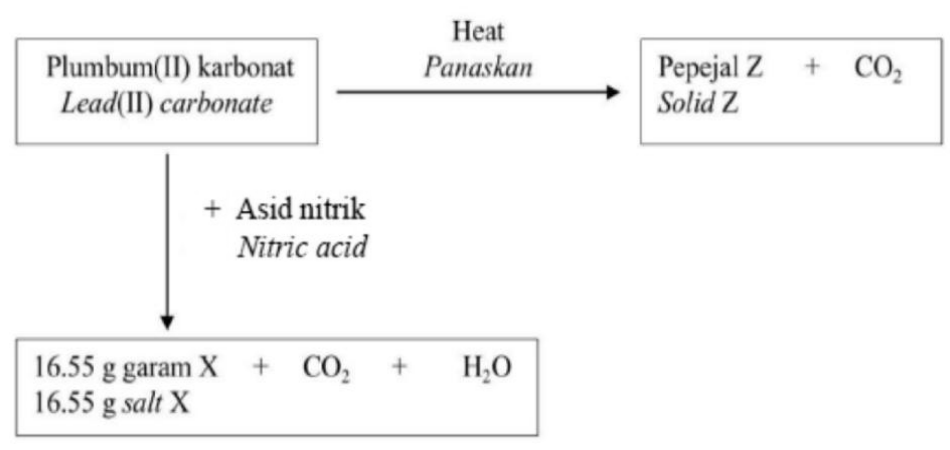
Diagram 16 shows two different reactions of lead(II) carbonate: heating gives solid Z and CO₂; reacting with nitric acid gives 16.55 g salt X, CO₂ and H₂O. What is the mass of solid Z formed when the same mass of lead(II) carbonate is used? [Relative atomic mass: N = 14, O = 16, Pb = 207]
Medium
Table 6 shows the pH values of solutions P, Q, R, and S: P = 5, Q = 6, R = 7, S = 9. Which solution is alkaline?
Easy
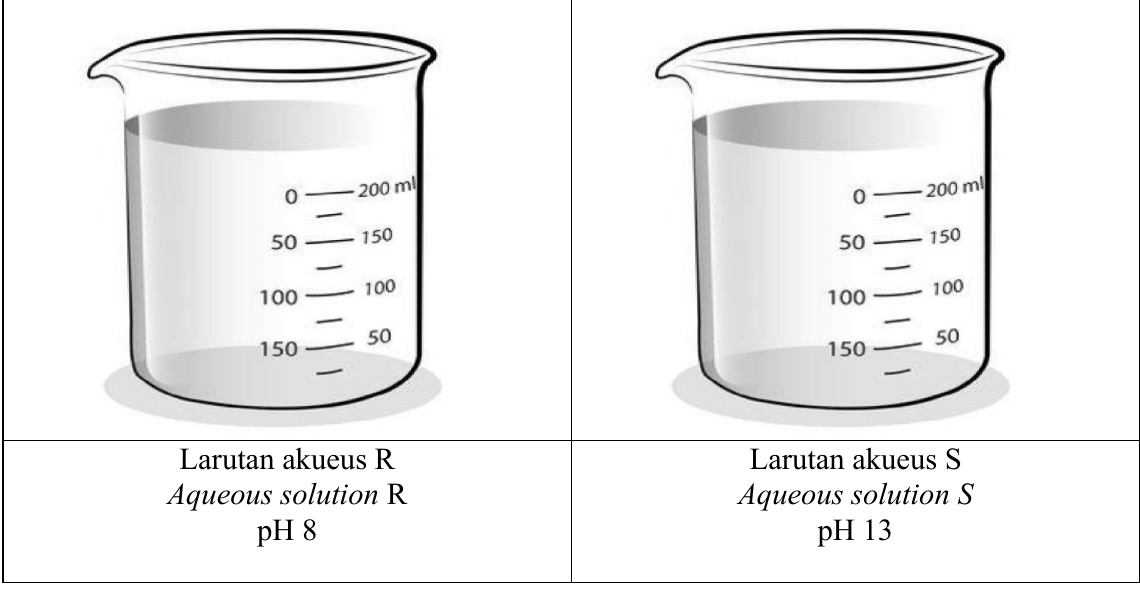
Diagram 17 shows two solutions of the same concentration and their pH values: aqueous solution R pH 8, aqueous solution S pH 13. The difference in the pH because
Medium
Vinegar contains mixture of water and ethanoic acid, CH3COOH. What is the molarity of vinegar with a concentration of 40 g dm⁻³? [Molar mass of ethanoic acid, CH3COOH = 60 g mol⁻¹]
Medium
The following situation shows results of an analysis of solution X. Add sodium hydroxide solution in excess: white precipitate formed and dissolves in excess sodium hydroxide. Add ammonia solution in excess: white precipitate formed and does not dissolve in excess ammonia solution. Add sodium sulphate solution: white precipitate formed. From the observation, we can conclude that the cation present in solution X is
Medium
Which of the following shows the correct pair of acid and its basicity?
A Phosphoric acid - Diprotic acid
B Ethanoic acid - Monoprotic acid
C Sulphuric acid - Triprotic acid
D Carbonic acid - Monoprotic acid
Medium
The following equation shows a reaction to obtain a soluble chloride salt: HCl + X → Chloride salt + H₂O. What is substance X?
Medium
Which of the following are the physical characteristics of salt crystals?
I Uneven surface, curved sides and no corners
II Different crystals have the same geometric shape
III A fixed angle between two adjacent surfaces
IV The same crystals of different sizes still have the same geometric shape
Medium
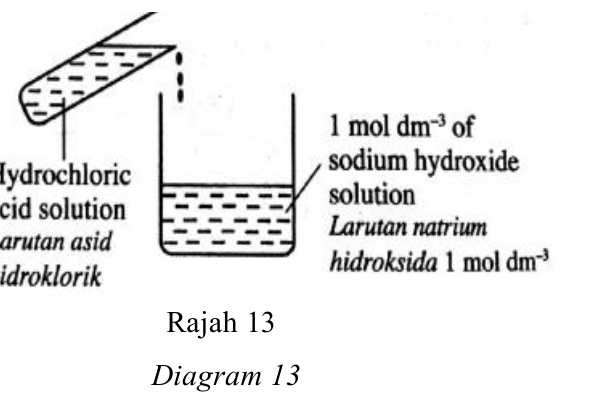
Diagram 13 shows the neutralisation of 1 mol dm⁻³ sodium hydroxide solution with hydrochloric acid. What is the volume of the alkali needed to produce 1.4625 g of salt? [Relative atomic mass: Na = 23, Cl = 35.5, H = 1, O = 16]
Medium
Which of the following is a soluble salt?
Easy
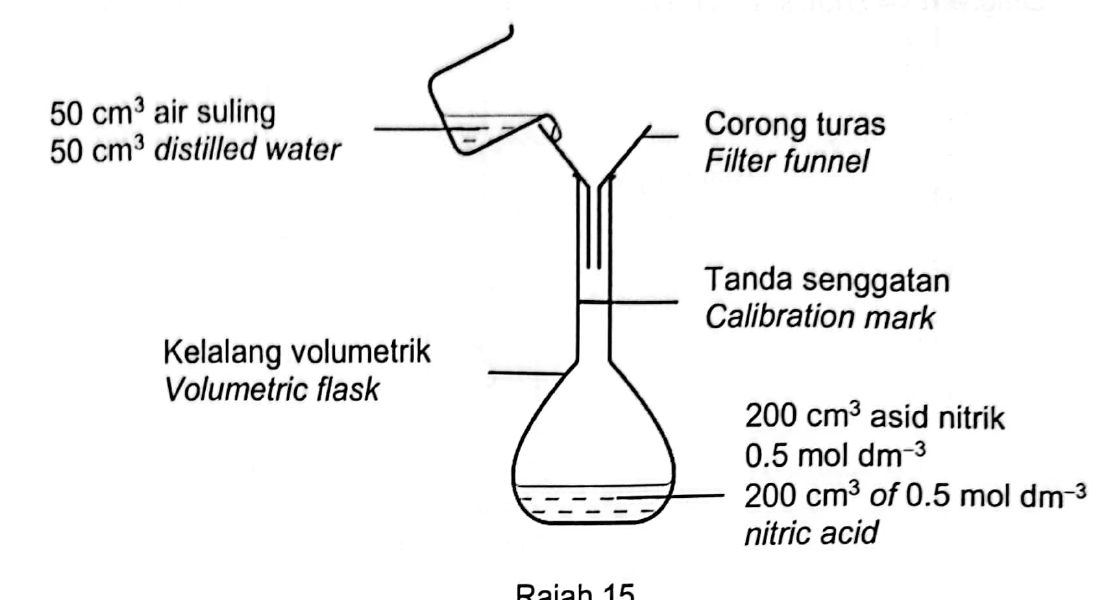
Diagram 15 shows a step taken by a student in the laboratory: 50 cm³ distilled water is added to 200 cm³ of 0.5 mol dm⁻³ nitric acid in a volumetric flask. What is the final pH value?
Medium
0.2 mol dm⁻³ sodium hydroxide solution reacts completely with 0.49 g sulphuric acid to produce sodium sulphate solution and water. What is the volume of sodium hydroxide solution needed in the neutralisation reaction? [Relative atomic mass: Na = 23; O = 16; H = 1; S = 32]
Medium
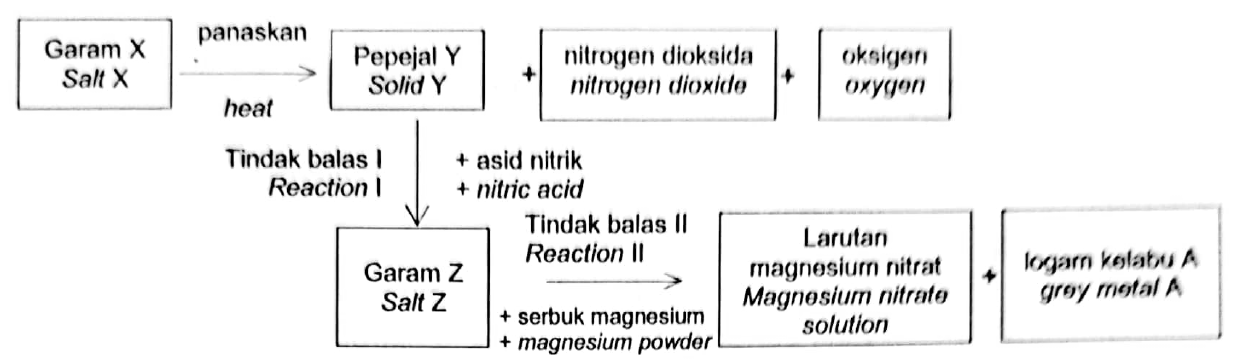
Diagram 17 shows a flow chart for several reactions involving salt X: salt X is heated to give solid Y + nitrogen dioxide + oxygen; solid Y + nitric acid (Reaction I) gives salt Z; salt Z + magnesium powder (Reaction II) gives magnesium nitrate solution + grey metal A. When salt X is heated, solid Y which is yellow in colour when cold is produced. Which of the following statements is true about the flow chart?
Medium
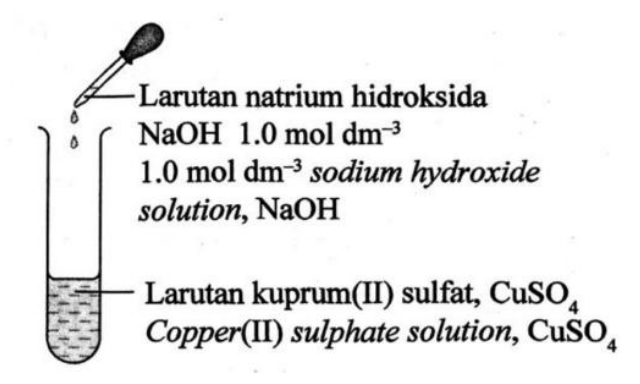
Diagram 6 shows the apparatus set-up to identify the cation present in the aqueous solution (1.0 mol dm⁻³ sodium hydroxide solution, NaOH, added dropwise to copper(II) sulphate solution, CuSO4). What is the observation at the end of the reaction?
Easy
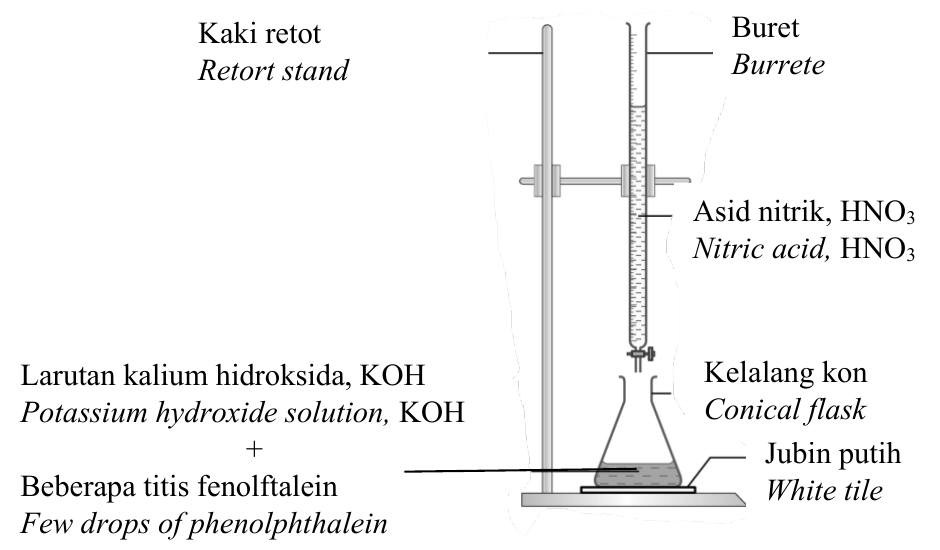
Diagram 17 shows process X (titration of potassium hydroxide solution, KOH, with a few drops of phenolphthalein in a conical flask, against nitric acid, HNO3, from a burette). Why phenolphthalein is needed in titration?
Easy
Chempaka make a natural soap and finds the pH value of the soap solution is 9. When the solution is added with substance X, the pH value of the soap solution change to 8. Which of the following is the substance X and which explanation causes the pH value of the soap solution change?
Medium
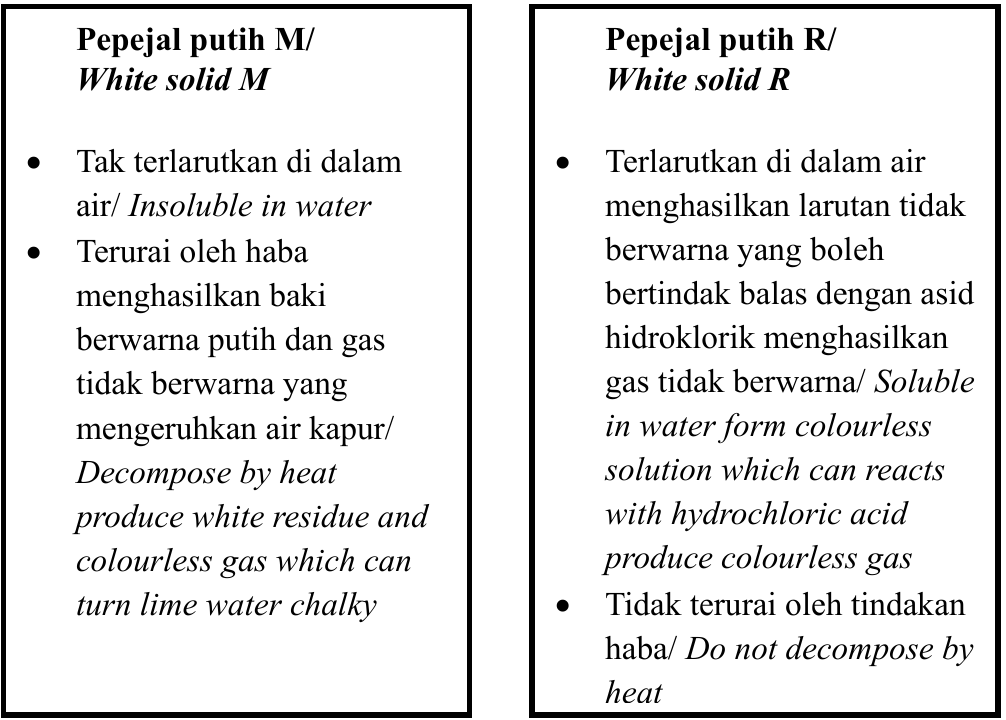
While carry out an experiment, Alston found two bottles of white solid of ionic compound which labelled with solid M and solid R. Diagram 38 shows the information. White solid M: insoluble in water; decomposes by heat to produce white residue and colourless gas which turns lime water chalky. White solid R: soluble in water to form colourless solution which reacts with hydrochloric acid to produce colourless gas; does not decompose by heat. What is white solid M and white solid R?
Medium
The steps in the preparation of a standard solution through dilution are: P Calculate the volume of the solution to be diluted; Q Add distilled water until it reaches the calibration mark; R Use a pipette to draw up the needed volume of the stock solution; S Transfer the solution into a volumetric flask. Which sequence shows the correct steps?
Medium
Observations when salt Y is heated: gas released turns lime water chalky; residue is black. What are the gas and residue?
Medium
Which statements correctly describe a strong acid? I Has a high pH value; II Ionises completely in water; III Has a high concentration of hydrogen ions; IV Exists as molecules in water
Medium
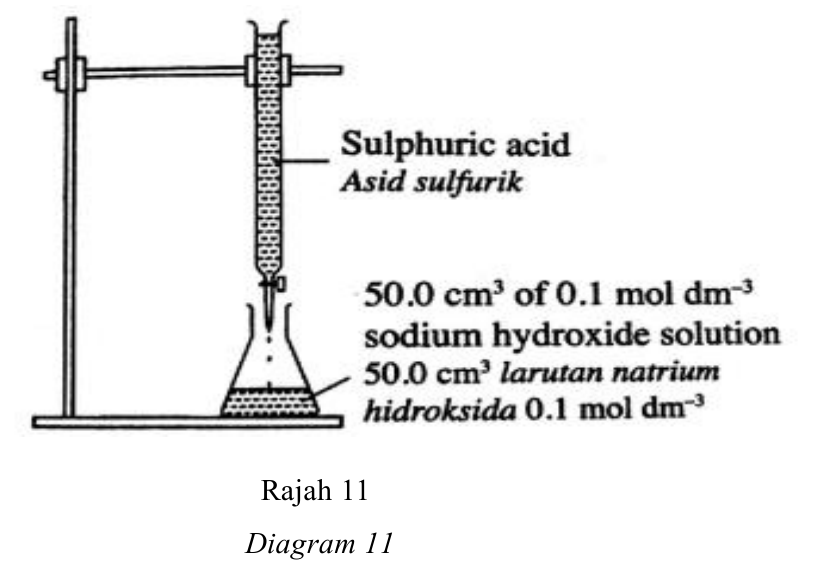
Diagram 11 shows the apparatus for neutralisation between a strong acid and a strong alkali. 25.0 cm³ of sulphuric acid neutralises 50.0 cm³ of 0.1 mol dm⁻³ sodium hydroxide solution. What is the molarity of the sulphuric acid?
Medium
Which of the following are neutralisation reactions?
I HCl + KOH II Pb(NO3)2 + NaCl III Zn + HNO3 IV Ca(OH)2 + HNO3
Medium
Table 30 shows the observations when a series of tests is conducted to verify the anion and cation in compound X.
Test 1: add 2 cm³ of nitric acid followed by silver nitrate solution into solution X: white precipitate is formed.
Test 2: add a few drops of ammonia solution until excess to solution X: white precipitate is formed and it dissolves in excess ammonia solution.
What are the anion and cation present in compound X?
Medium
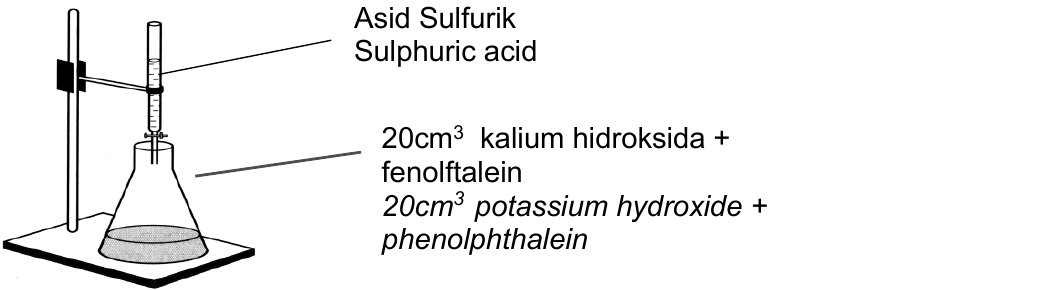
Diagram 39 shows the apparatus set-up for the titration of potassium hydroxide solution and sulphuric acid. It was found that 10 cm³ of sulphuric acid is needed to neutralise 20 cm³ of potassium hydroxide solution that has pH 13. What is the concentration of the sulphuric acid?
Medium
Which of the following is a process which occurs during tooth brushing?
Easy
The chemical substance with low concentration of hydroxide ion is
Medium
Which of the following shows the ionization of ammonia in water?
Medium
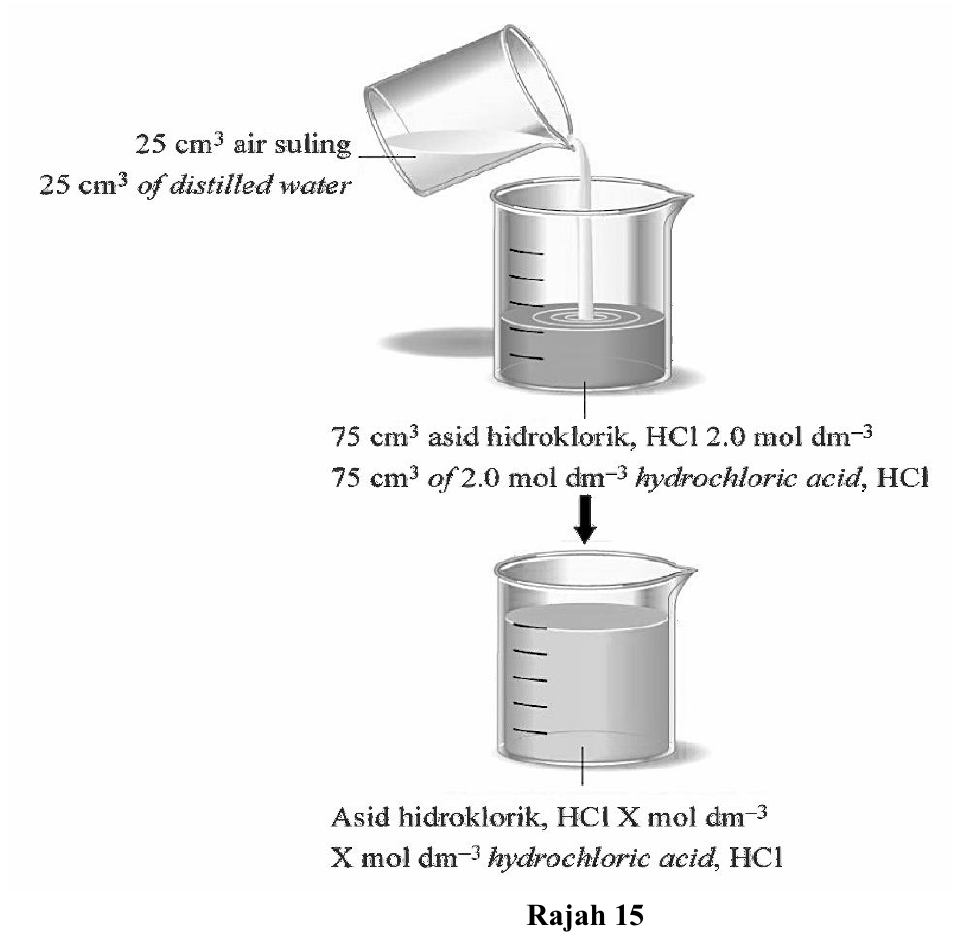
Diagram 15 shows 75 cm3 of 2.0 mol dm-3 hydrochloric acid diluted to X mol dm-3 when 25 cm3 of distilled water is added. What is the volume of the dilute hydrochloric acid that should be used to neutralise 25 cm3 of 3.0 mol dm-3 sodium hydroxide?
Medium
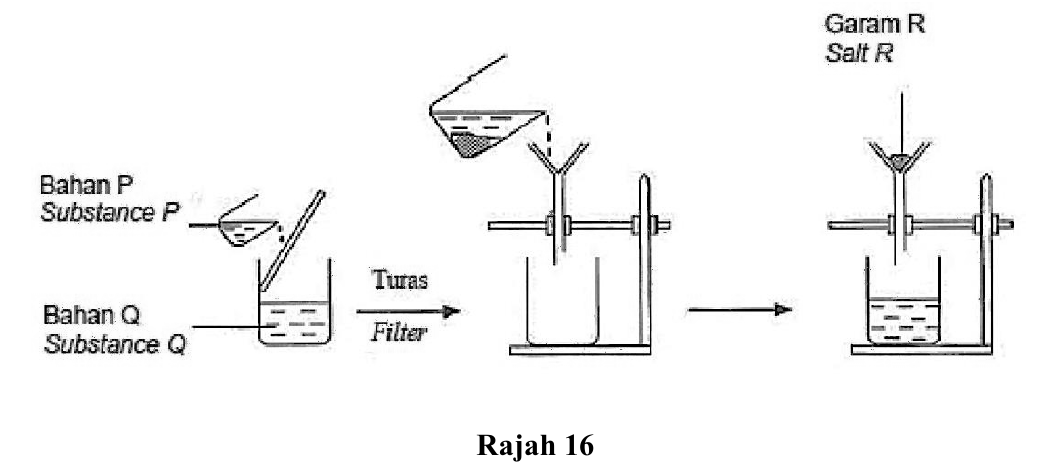
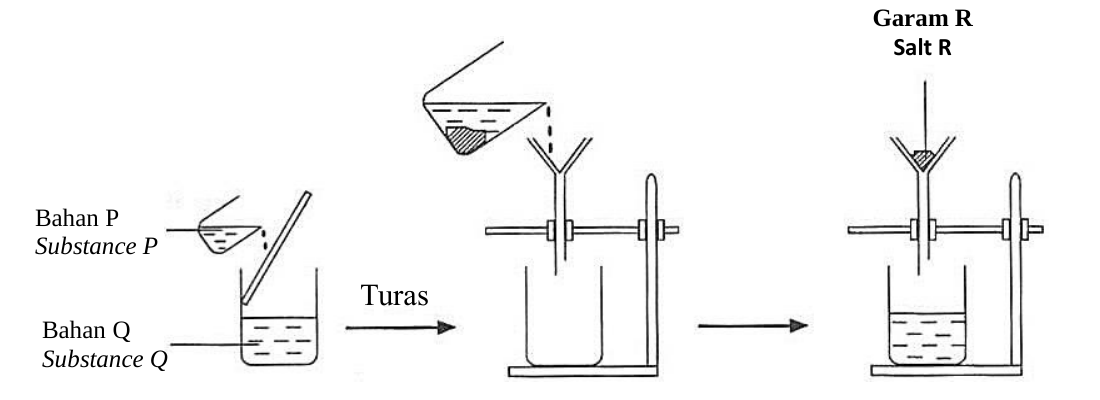
Diagram 16 shows the apparatus set-up to prepare a salt (substance P added to substance Q, filtered; salt R is in the residue on the filter paper). Which of the following is correct?
Medium
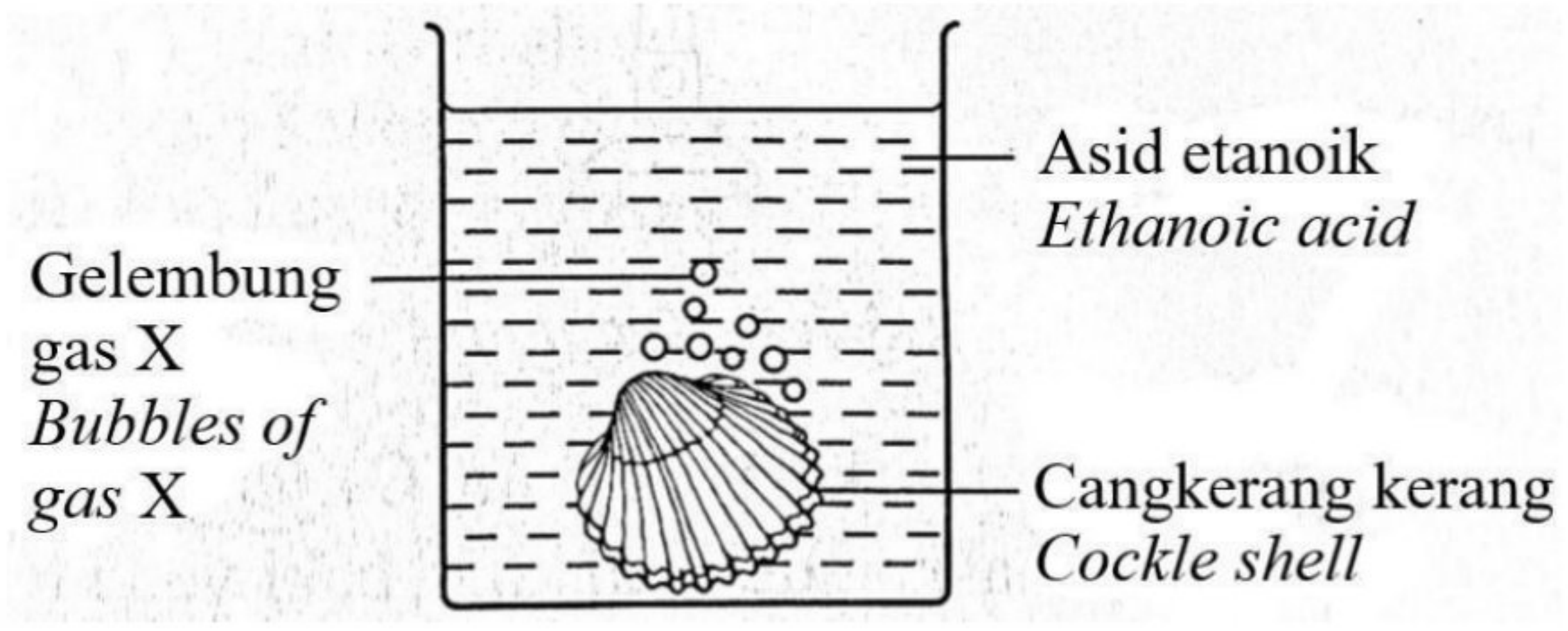
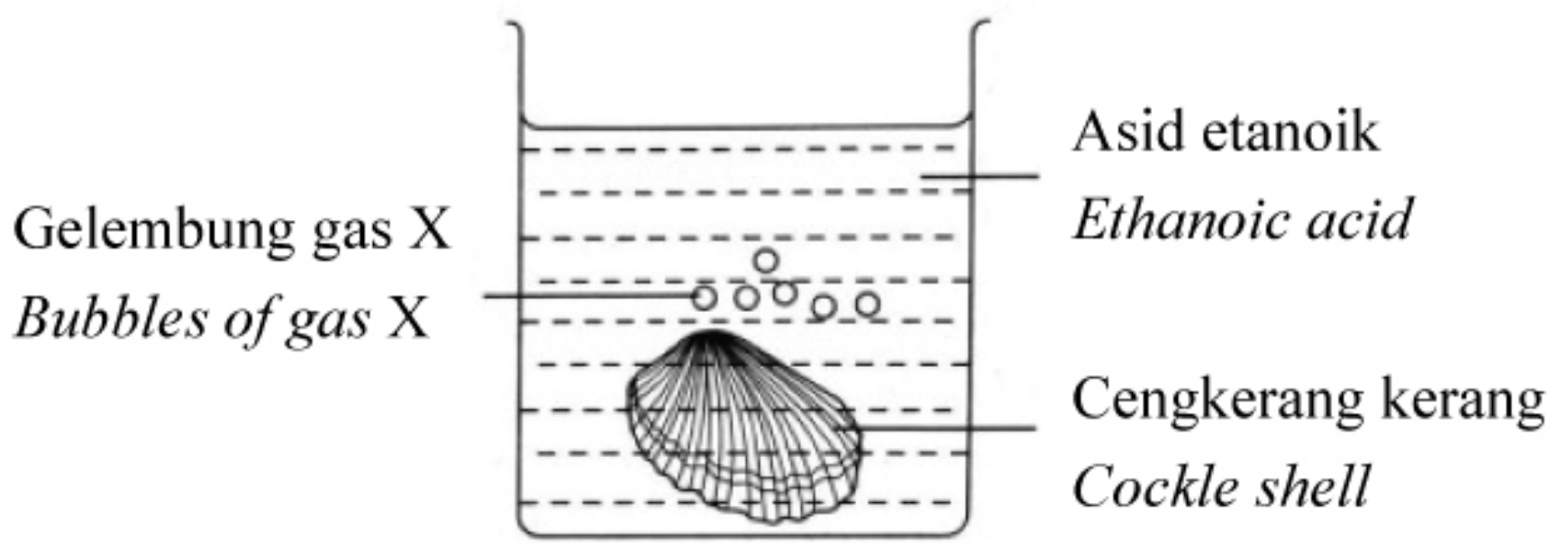
Diagram 6 shows an observation when a cockle shell is put into a beaker containing vinegar (ethanoic acid); bubbles of gas X are released. What is X?
Easy
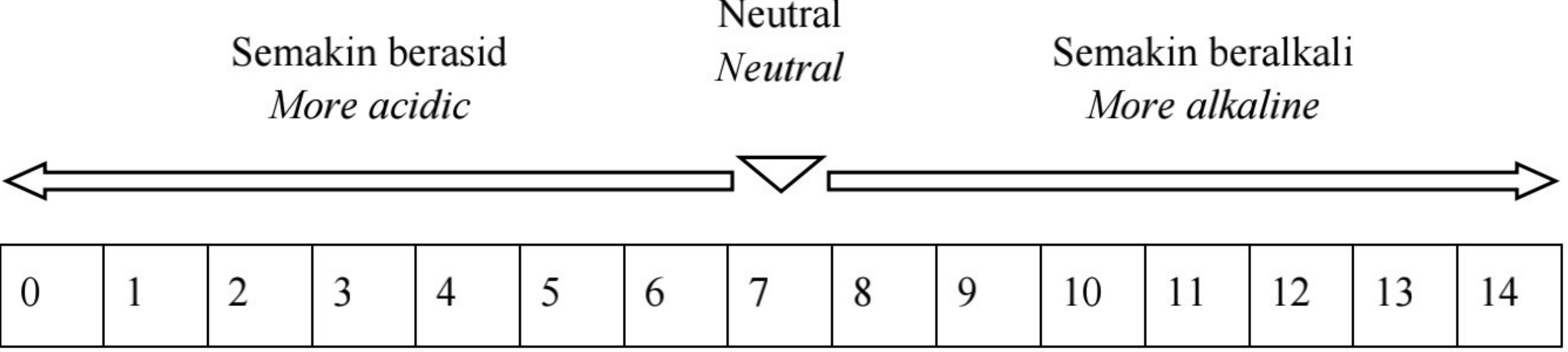
Diagram 2 shows the pH scale (0 to 14, acidic below 7, neutral 7, alkaline above 7). Which of the following substances are arranged in the order of increasing pH values?
Medium
Table 1 shows the results of an experiment to study the properties of hydrogen chloride gas in different solvents. Solvent A: no change on blue litmus paper. Solvent B: blue changes to red. What are solvents A and B?
Medium
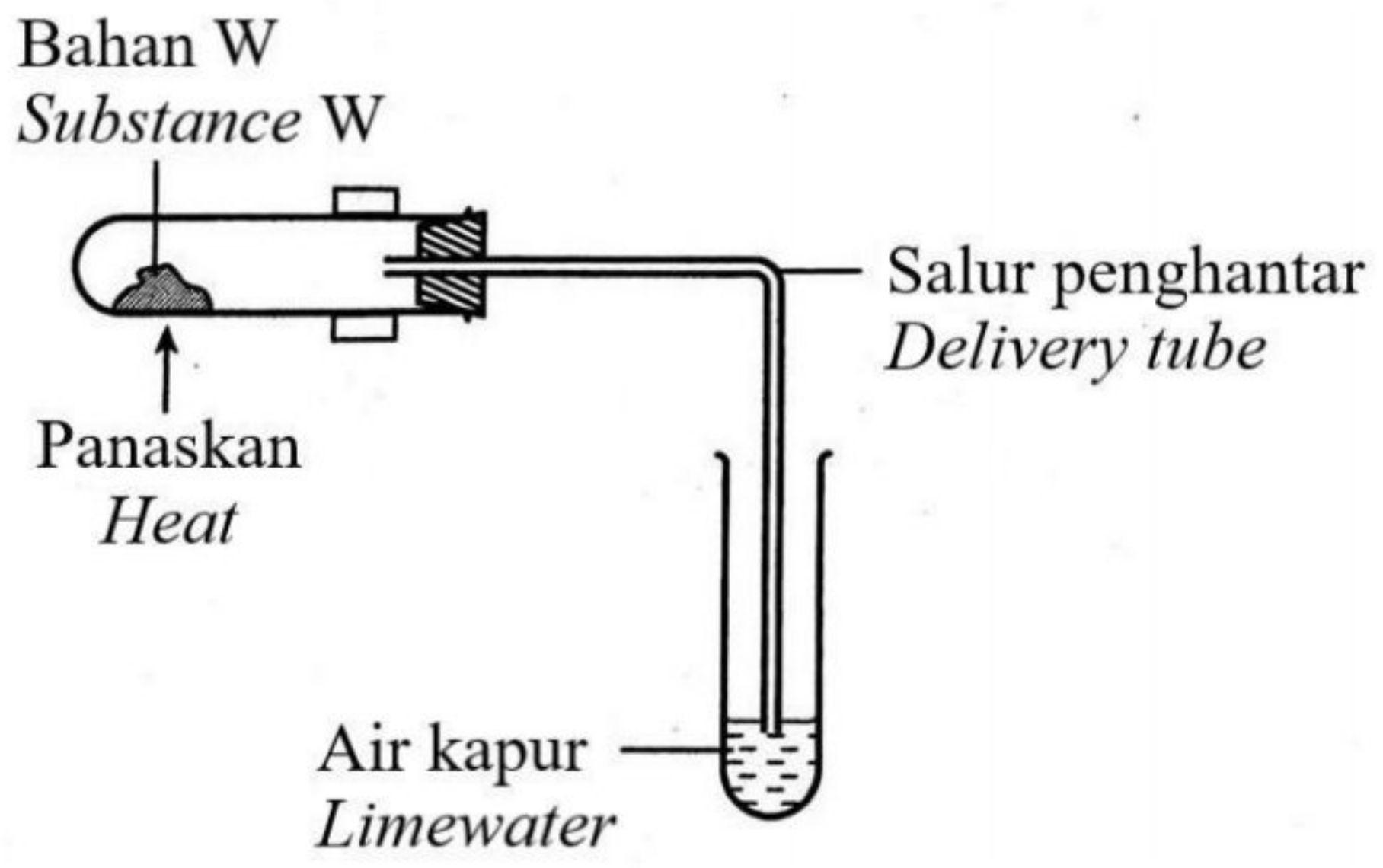
Diagram 8 shows the apparatus set-up for the effect of heat on substance W. Substance W is white in colour. After heating for a few minutes, the limewater turns cloudy. The residue formed is brown when hot and turns yellow when cold. Which of the following salts could be substance W?
Medium
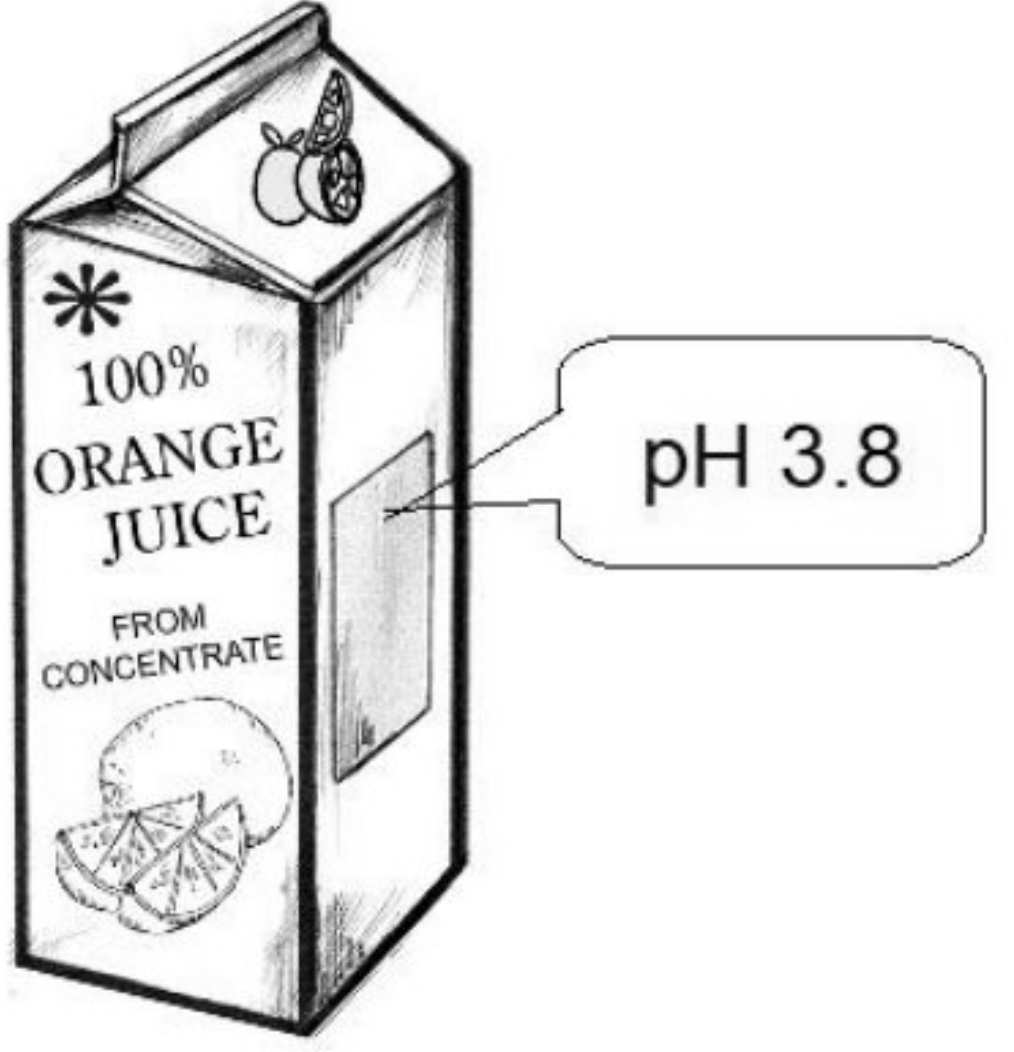
Diagram 15 shows a sample of orange juice with pH 3.8. What is the concentration of the orange juice? (Concentration of hydrogen ions in mol dm⁻³.)
Medium
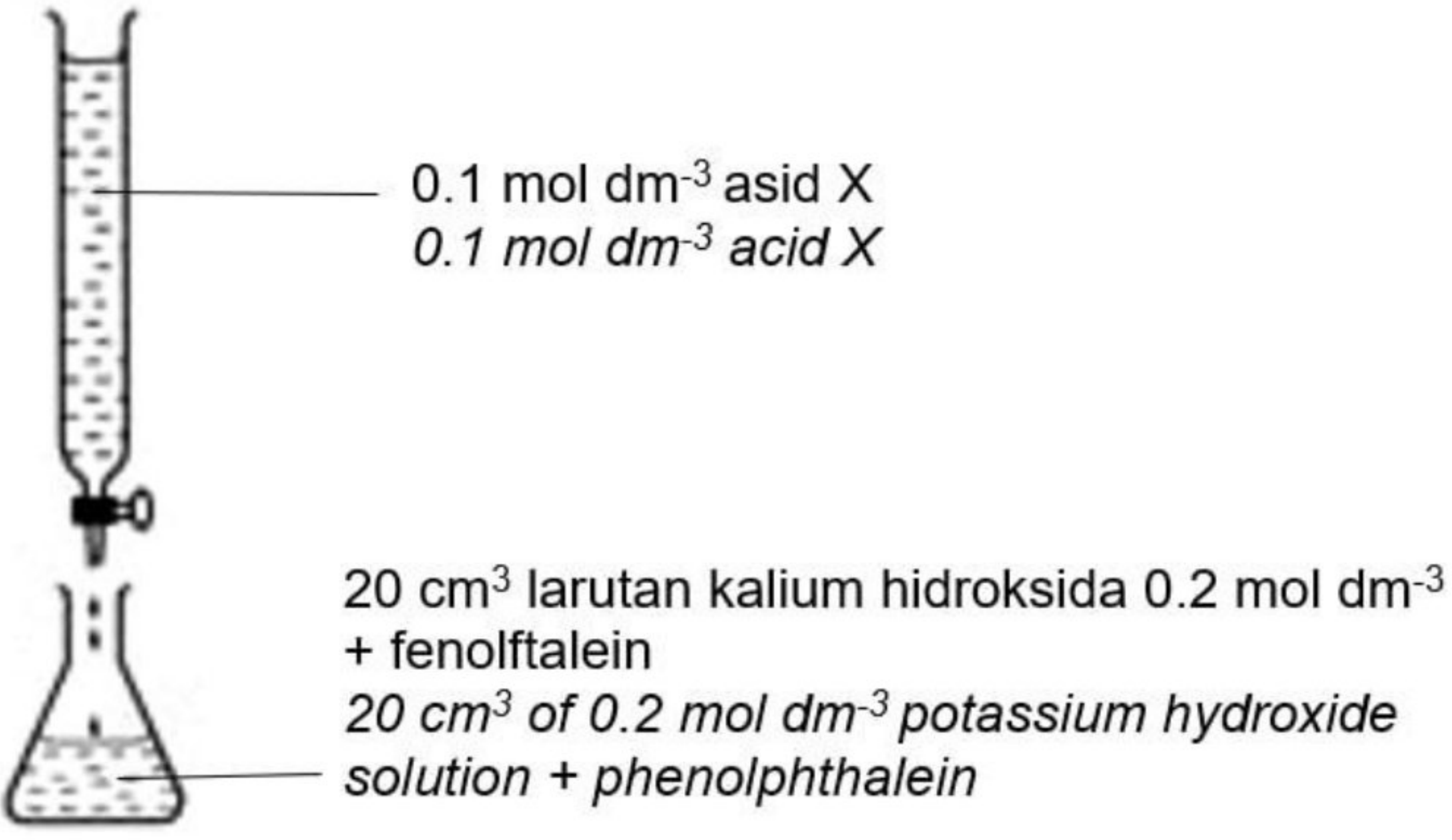
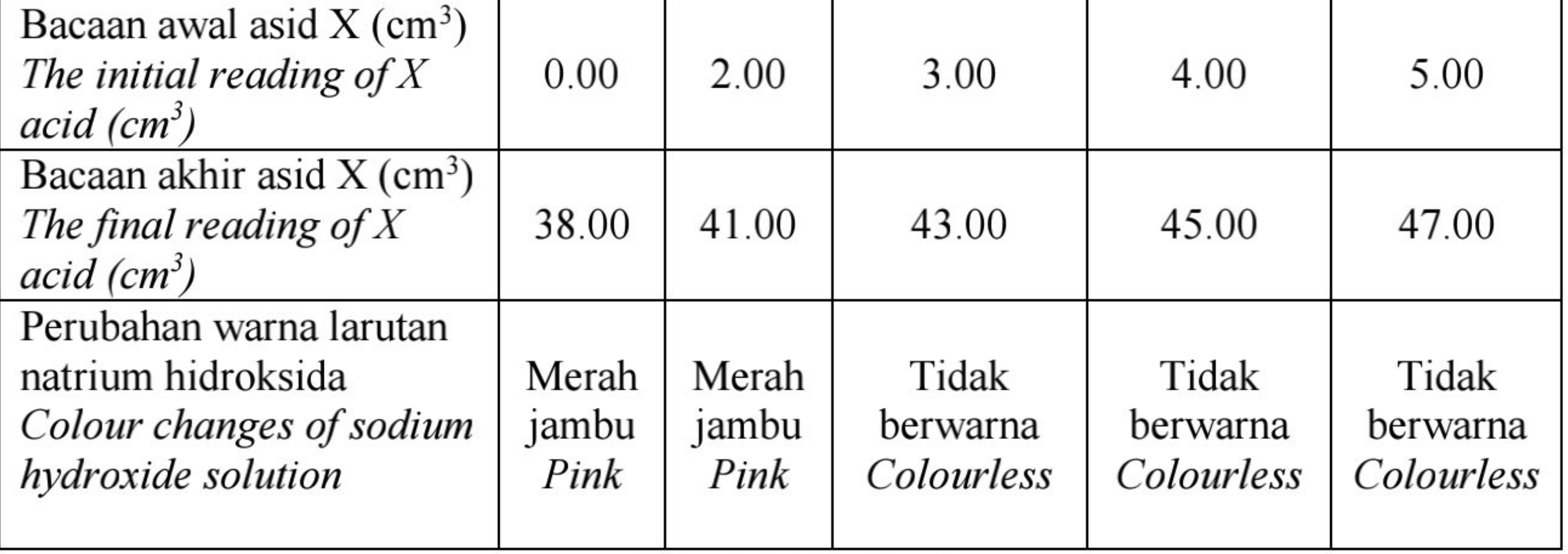
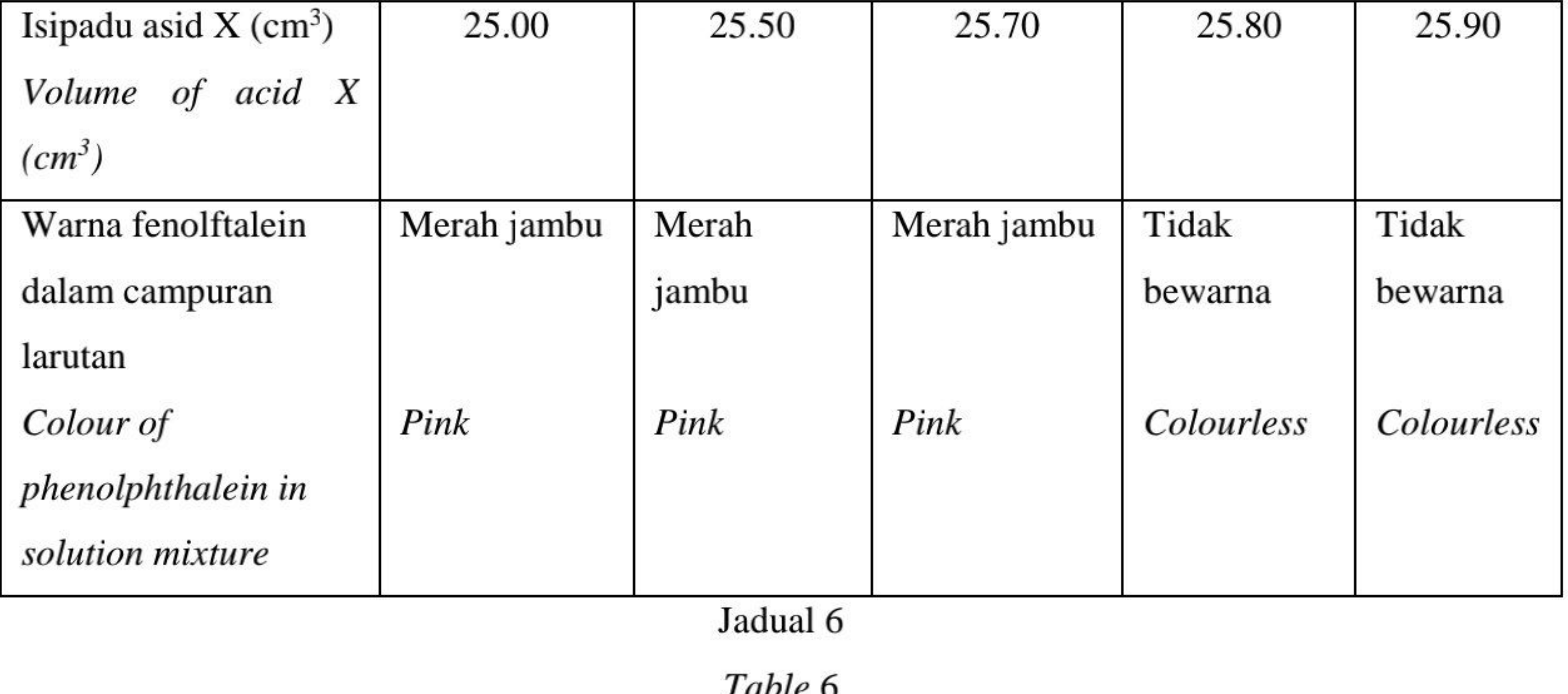
Diagram 17 shows apparatus set-up of an experiment: burette containing 0.1 mol dm⁻³ acid X added to 20 cm³ of 0.2 mol dm⁻³ potassium hydroxide solution + phenolphthalein. Table 4 shows the results. Initial reading of X acid (cm³): 0.00, 2.00, 3.00, 4.00, 5.00. Final reading of X acid (cm³): 38.00, 41.00, 43.00, 45.00, 47.00. Colour changes of the solution: Pink, Pink, Colourless, Colourless, Colourless. Which of the following represents X acid?
Medium
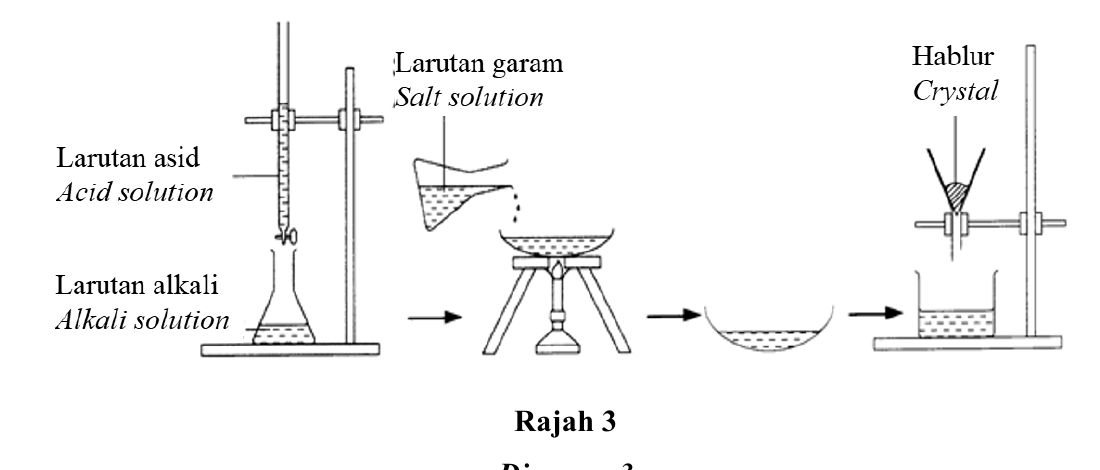
Diagram 3 shows the apparatus set-up for the preparation of a soluble salt. Which salt is prepared through this method?
Medium
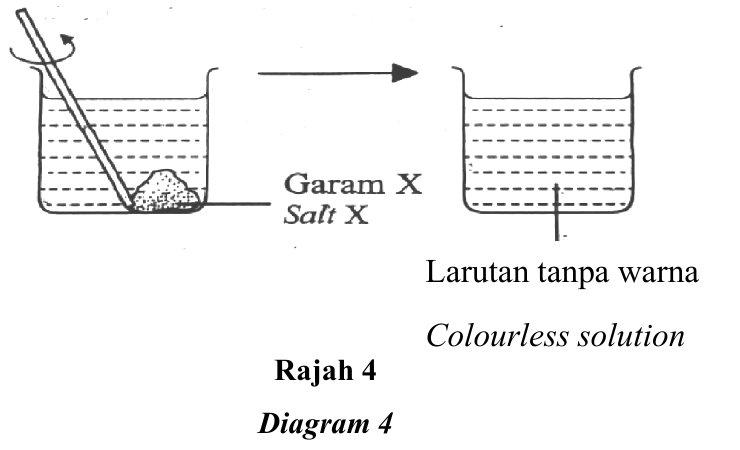
Diagram 4 shows salt X is added to water and gives a colourless solution. What is salt X?
Medium
Table 2 shows the pH value of four acid solutions: P = 5, Q = 3, R = 2, S = 1. Which acidic solution has the highest concentration of hydrogen ions?
Medium
Siti carried out three chemical tests to identify cation P in the solution. Table 3: excess ammonia solution - no precipitate form; excess sodium hydroxide - no precipitate form; Nessler reagent - brown precipitate form. What is cation P?
Medium
Soil at Farm P is polluted by monoprotic acid X. The acid is titrated with 25 cm³ of 0.001 mol dm⁻³ calcium hydroxide solution with three drops of phenolphthalein. Table 4: volume of acid X (cm³) 49.50, 49.60, 49.70 - phenolphthalein pink; 49.80, 49.90 - colourless. What is the pH value of acid X?
Hard
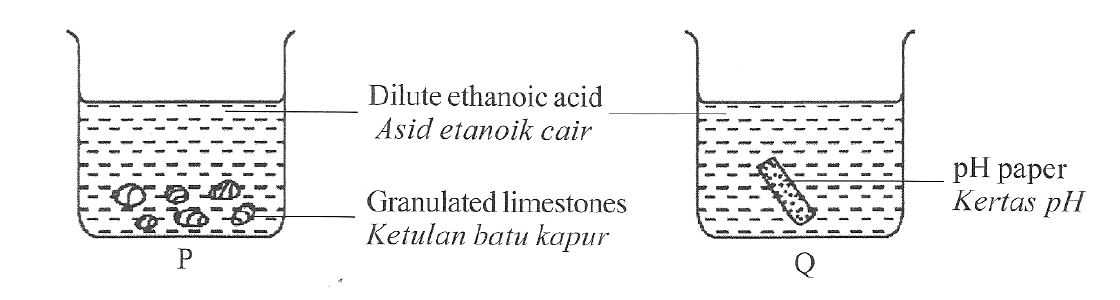
Diagram 12 shows two beakers, P and Q that contain granulated limestones, CaCO3 and pH paper respectively in dilute ethanoic acid. Which observation is correct?
Medium
Which acid contains the highest number of hydrogen ions?
Medium
Diagram 32 shows the apparatus set-up to prepare a salt: substance P is poured into substance Q, the mixture is filtered, and salt R is the residue on the filter paper. Which of the following is correct?
Medium
During the movement control order (MCO), Ahmad felt abdominal pain and needed to drink a 'barium meal' made of barium sulphate salt before an X-ray. Which of the following solutions are suitable to verify the presence of anion in that salt?
I Hydrochloric acid
II Sulphuric acid
III Barium chloride solution
IV Sodium sulphate solution
Medium
Solid Q is heated strongly. The colour of the residue is brown when hot and yellow when cold. What is solid Q?
Medium
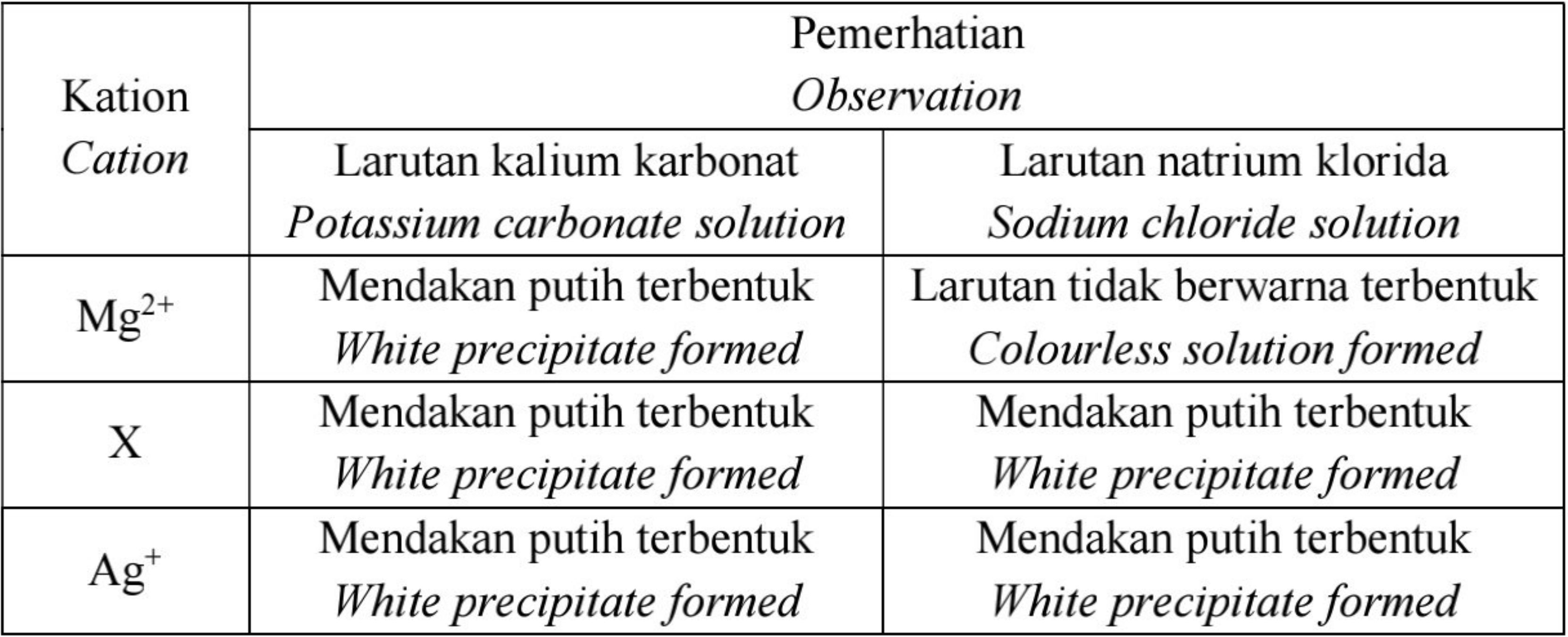
Table 3 shows the observations when three cation solutions are added to potassium carbonate solution and sodium chloride solution respectively: Mg²⁺ – white precipitate with K₂CO₃, colourless solution with NaCl; X – white precipitate with both; Ag⁺ – white precipitate with both. What is X?
Medium
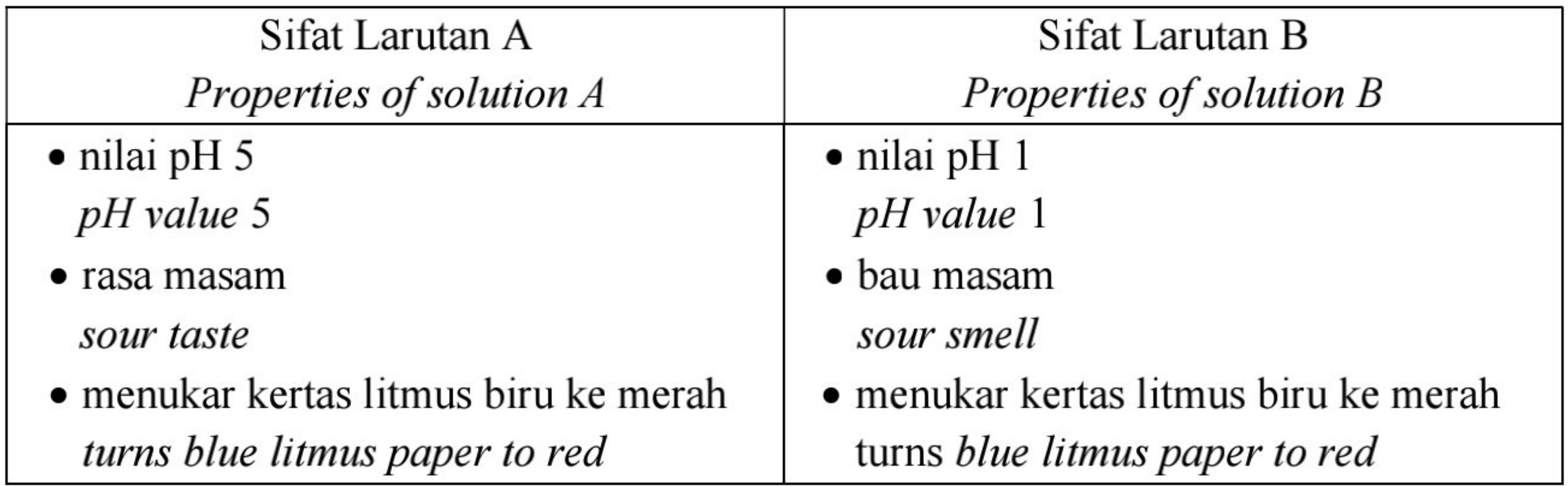
Alif studied two solutions. Solution A is often used in the kitchen; solution B is found in a car battery. Solution A: pH 5, sour taste, turns blue litmus paper red. Solution B: pH 1, sour smell, turns blue litmus paper red. Why is there a difference in pH value of the solutions while other properties are the same?
Medium
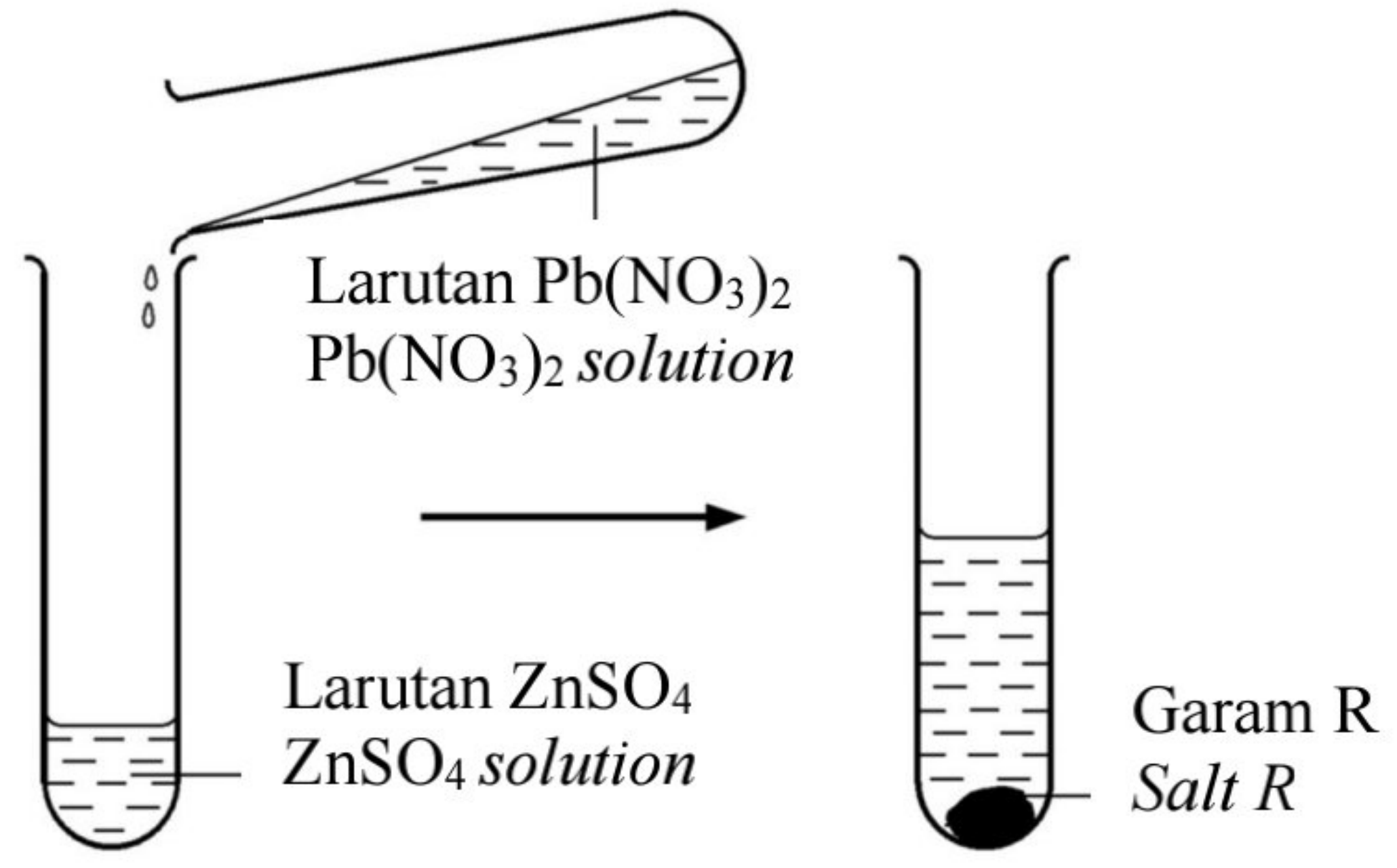
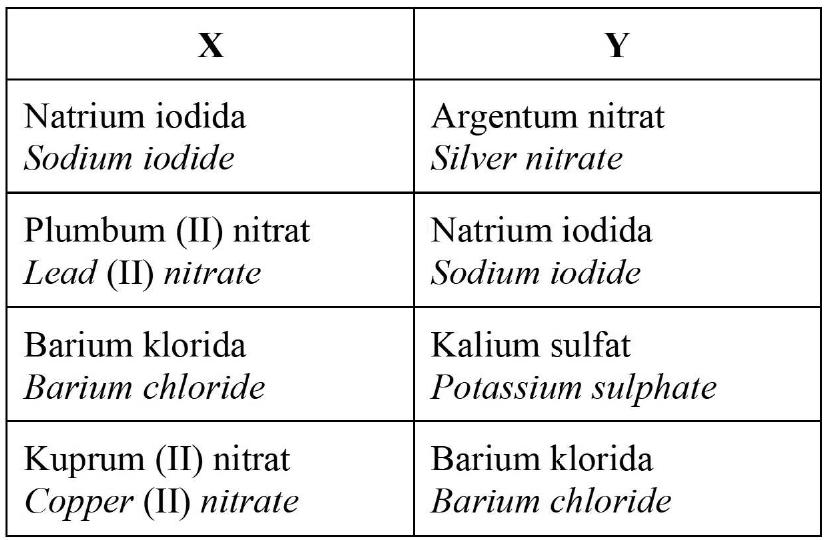
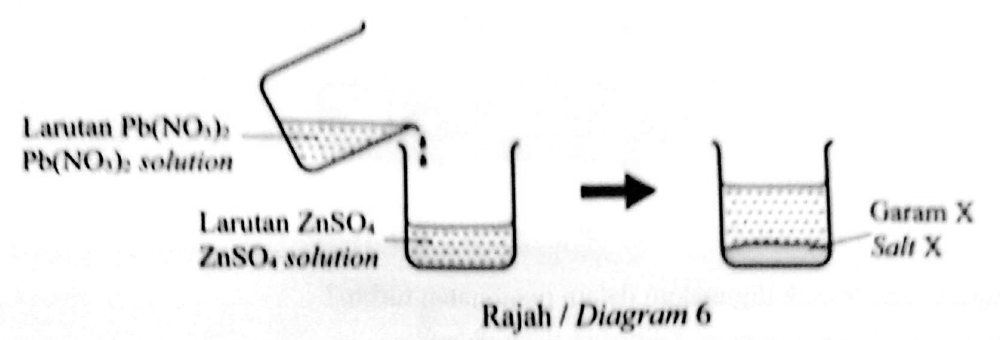
Diagram 6 shows the apparatus set-up to produce salt R: Pb(NO₃)₂ solution is poured into ZnSO₄ solution and salt R (a precipitate) forms. What salt solution can be used to replace Pb(NO₃)₂ solution to produce a salt that has the same solubility as salt R?
Medium
When the green substance R is heated, it turns black and a gas which turns lime water milky is released. What is R?
Medium
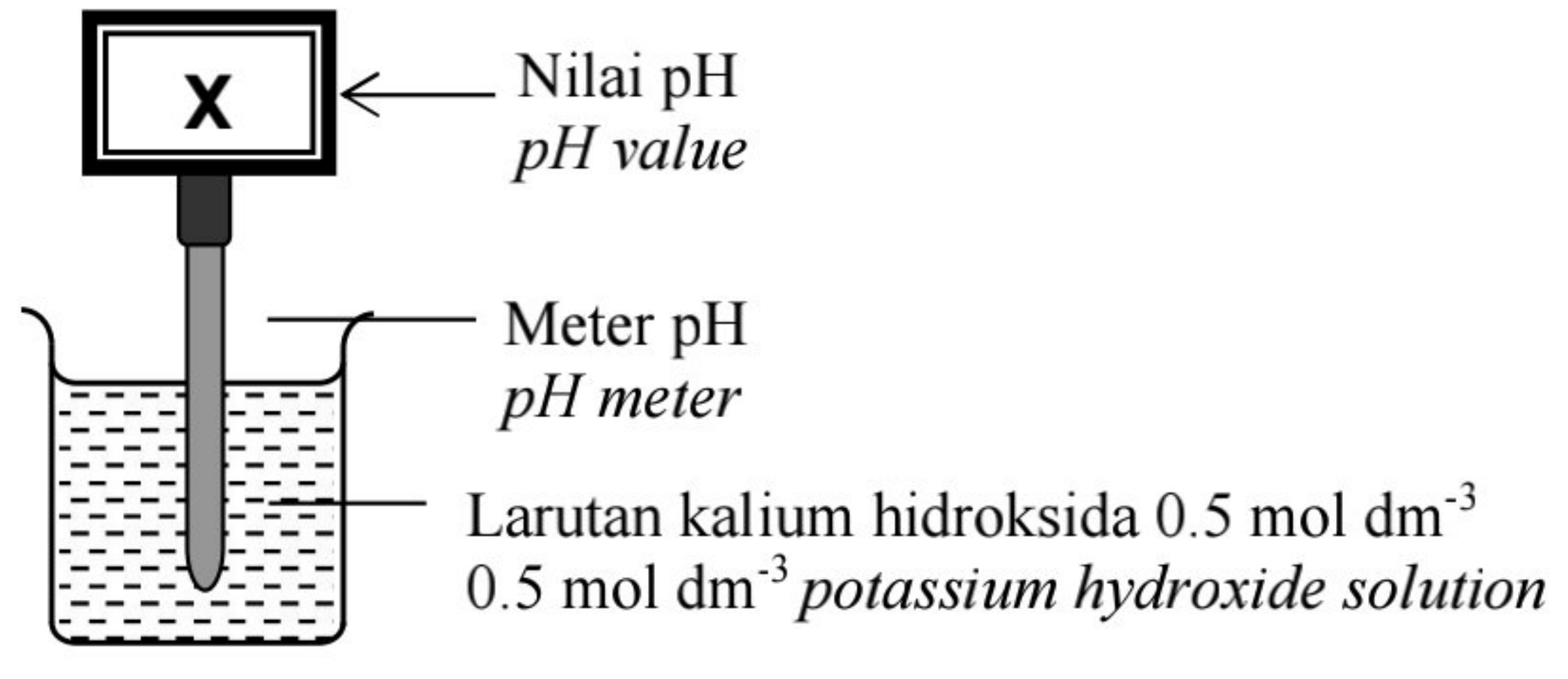
Diagram 16 shows a pH meter in 0.5 mol dm⁻³ potassium hydroxide solution, displaying value X. What is the value of X?
Medium
Dhia received a wedding invitation letter that is white without any writing. A note says: the ink used was Solution X. To read this letter, spray a phenolphthalein solution that will produce pink writing. Which solution should be sprayed to enable Dhia to read the letter?
Medium
Which of the following pairs of physical properties is correct about copper(II) sulphate? (Solubility in water; Electrical conductivity in aqueous) A: Soluble, Conducting. B: Soluble, Not conducting. C: Insoluble, Conducting. D: Insoluble, Not conducting.
Easy
Which of the following statements explains why 0.1 mol dm⁻³ of potassium hydroxide solution has high pH value?
Medium
Which of the following pairs of substances form a precipitate when mixed?
Easy
What is the volume of distilled water to be added into 100 cm³ of 2.0 mol dm⁻³ of nitric acid to produce 0.5 mol dm⁻³ of nitric acid?
Medium
Which of the following acids are correctly matched with their basicity? (Monoprotic acid / Diprotic acid)
Medium
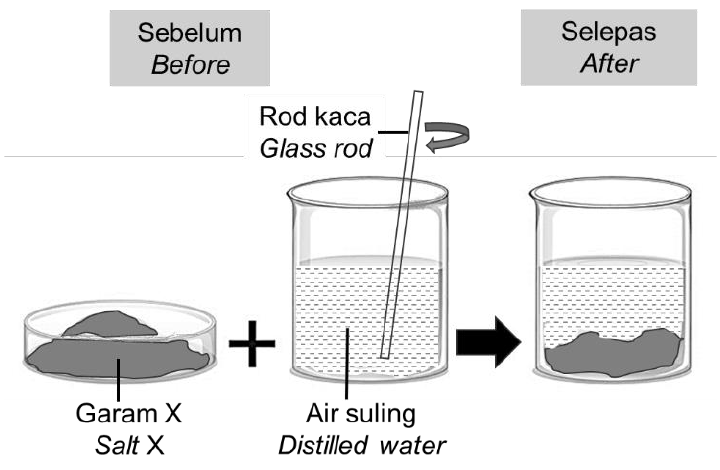
Diagram shows an experiment to investigate the solubility of salt X. Based on observation on diagram above, salt X is ...
Medium
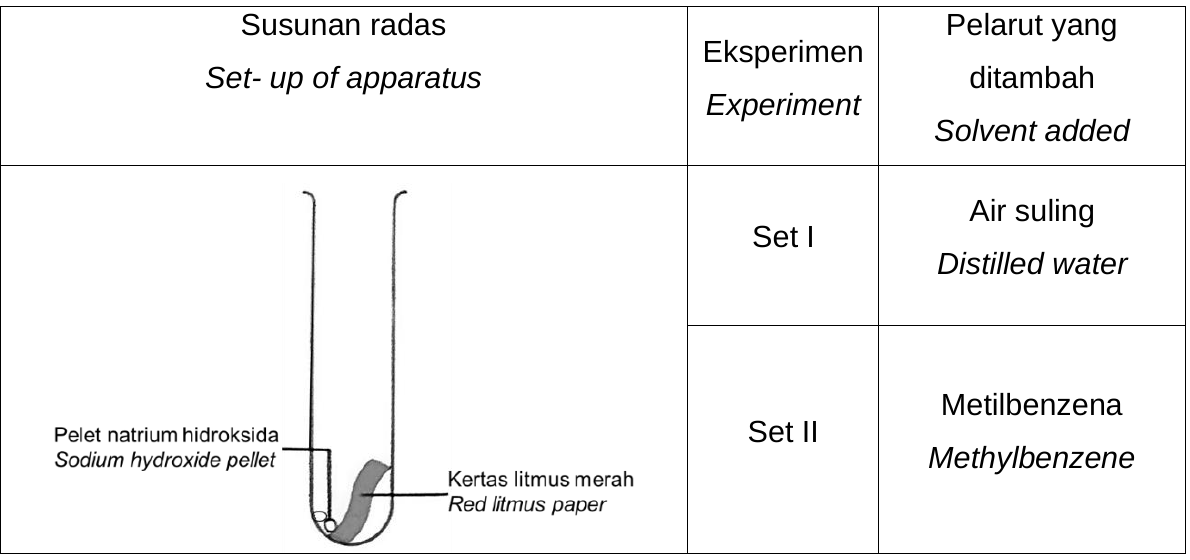
A student sets up an experiment: sodium hydroxide pellet and red litmus paper in a U-tube. Set I: distilled water is added. Set II: methylbenzene is added. Which of the following observations should be obtained?
Medium
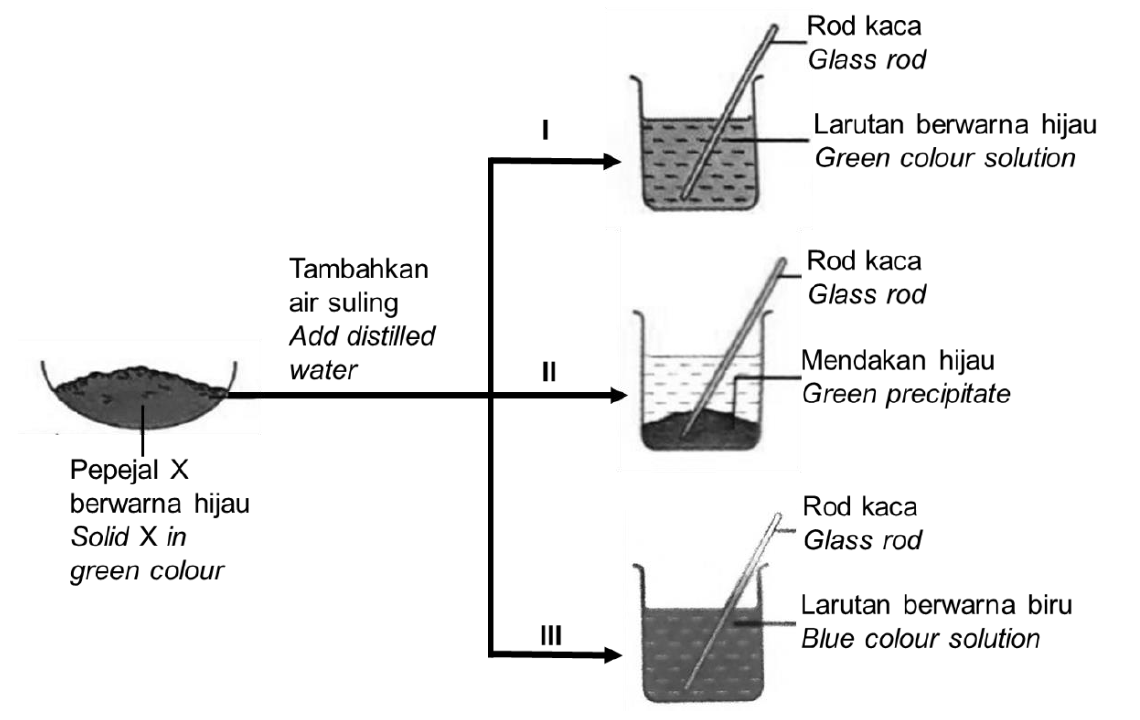
Diagram shows qualitative analysis of a green solid X with distilled water, giving three possible results: I green solution, II green precipitate, III blue solution. Which of the following is the correct example of salt for each possibility?
Medium
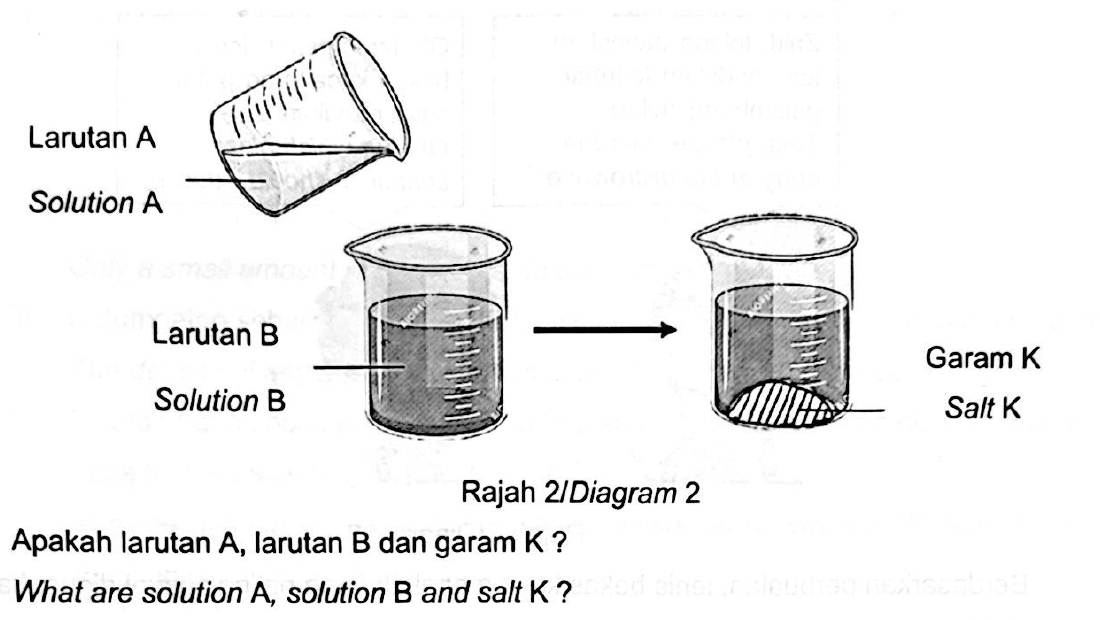
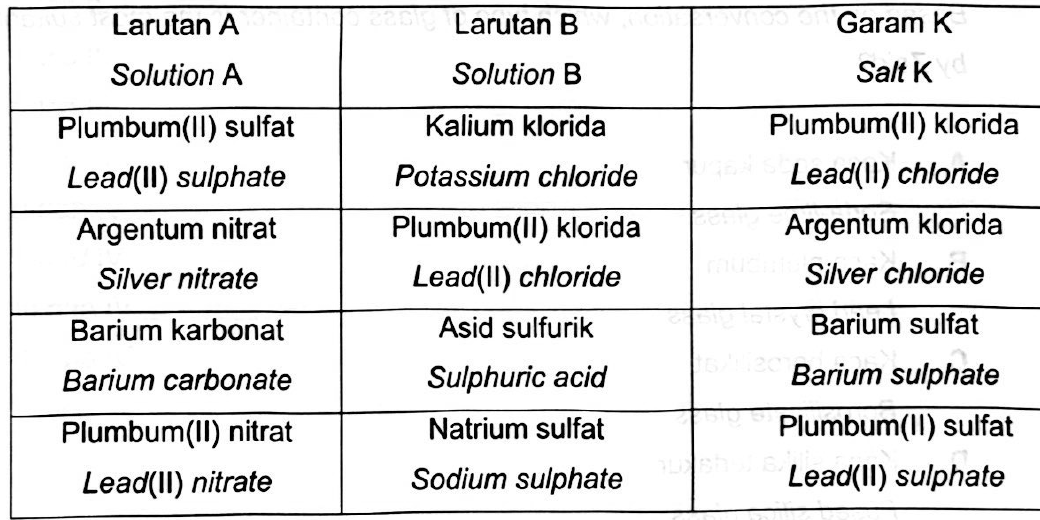
Diagram 2 shows the arrangement of the apparatus for preparing K salt (solution A is poured into solution B, salt K precipitates). What are solution A, solution B and salt K?
Medium
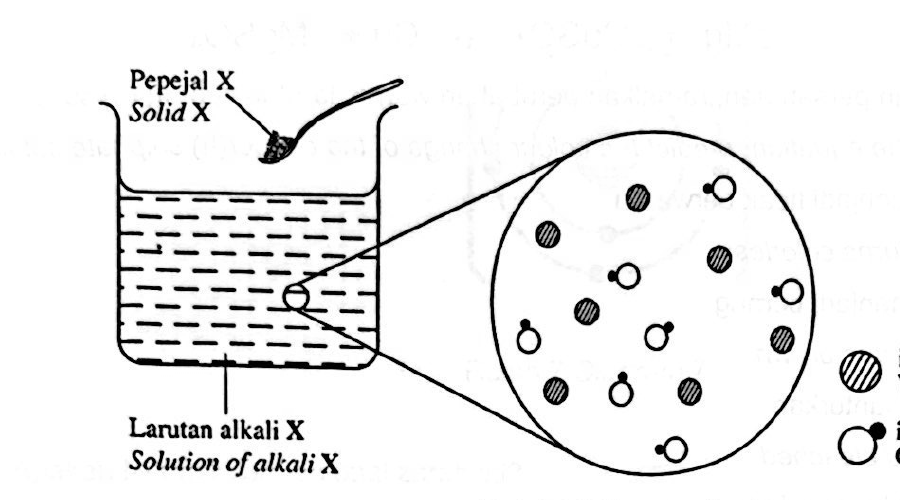
Diagram 5 shows the ionization of solid X in water (solution of alkali X contains W ions and OH⁻ ions only). Which of the following statement is true about the alkaline solution X?
Medium
Diagram 11 shows a conversation between two students. This volumetric flask contains 25 cm³ of hydrochloric acid, 1.5 mol dm⁻³. I want to add 125 cm³ of distilled water into a volumetric flask. Calculate the new molarity of hydrochloric acid.
Medium
H2SO4 + 2NaOH → Na2SO4 + 2H2O. What is the volume of 0.5 mol dm⁻³ sulphuric acid required to neutralise 25 cm³ of 0.1 mol dm⁻³ sodium hydroxide?
Medium
The table shows solutions P, Q, R and S with their pH values: P = 3, Q = 7, R = 9, S = 11. Which of the following solution reacts with magnesium to produce hydrogen gas?
Medium
Which of the following solutions have the same number of hydrogen ions, H⁺, as in 50 cm³ of 0.1 mol dm⁻³ sulphuric acid, H2SO4?
I 100 cm³ of 0.1 mol dm⁻³ ethanoic acid, CH3COOH
II 50 cm³ of 0.1 mol dm⁻³ phosphoric acid, H3PO4
III 100 cm³ of 0.1 mol dm⁻³ hydrochloric acid, HCl
IV 50 cm³ of 0.2 mol dm⁻³ nitric acid, HNO3
Medium
Ba(OH)2 → Ba²⁺ + 2OH⁻. What is the number of moles of hydroxide ion in 250 cm³ of 0.2 mol dm⁻³ barium hydroxide?
Medium
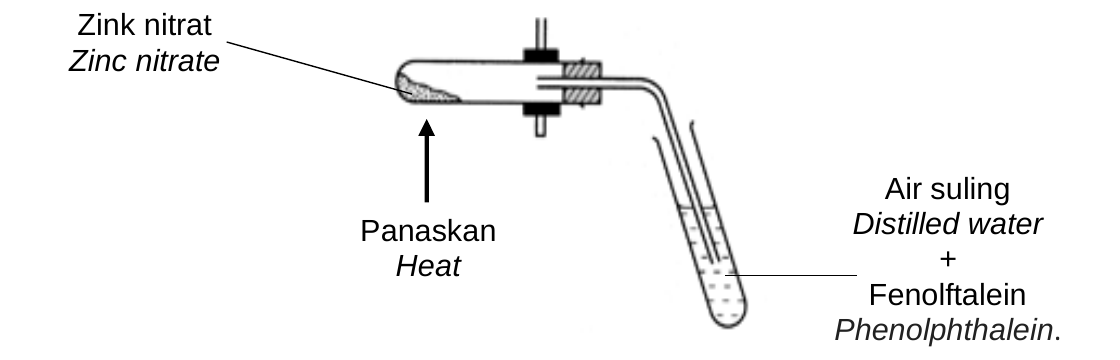
The diagram shows the flow of gas liberated by heating zinc nitrate into distilled water which contains a few drops of phenolphthalein. Which of the following is the correct observation?
Medium
Table shows solutions A, B, C, D and E with their pH values: A = 5, B = 6, C = 7, D = 9, E = 11. Which of the two solutions will produce neutral solution when mixed?
Medium
When hydrochloric acid and sodium hydroxide react, the ionic equation for the reaction can be represented by
Medium
The chemical equation shows the reaction between Substance X and Monoprotic acid (HZ).
Substance X + HZ → Salt Y + Water
Referring to the equation above, what could be the best for substance X and Y be?
Medium
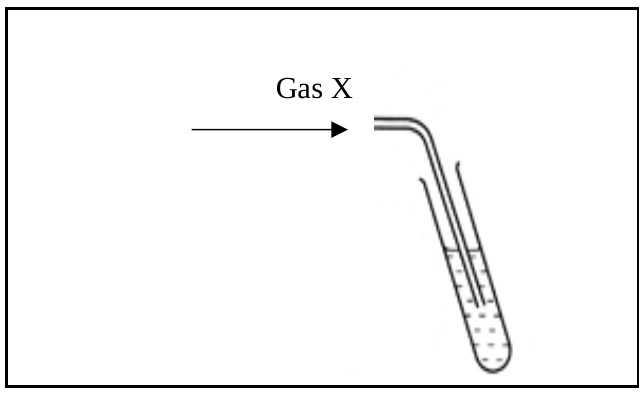
Diagram below shows Gas X is bubbled into distilled water. The solution obtained changes blue litmus paper to red. Gas X could be…
Easy
Among the particles in ammonia solution, what are the particles that cause the ammonia solution to be alkaline?
Medium
Insoluble salts are prepared by mixing two aqueous solutions through the double decomposition reaction. Diagram 4 shows how insoluble salts are produced in the laboratory (Solution A is added to Solution B; a precipitate of insoluble salt forms in an aqueous solution). Choose two substances that can produce an insoluble salt by the same method.
A: Solution A lead(II) oxide, Solution B sulphuric acid; B: barium nitrate, sodium sulphate; C: calcium chloride, magnesium nitrate; D: magnesium hydroxide, calcium nitrate.
Medium
Determine the pH value of a solution of barium hydroxide, Ba(OH)2 at a concentration of 0.05 mol dm-3.
Medium
Diagram 8 shows the preparation of a standard solution of sodium carbonate, Na2CO3 by dissolving 10.6 g of sodium carbonate in distilled water and making the volume up to 100 cm3. What is the volume of standard solution prepared that should be used if a student wants to prepare 50 cm3 of 0.5 mol dm-3 sodium carbonate solution? [Relative formula mass: Na2CO3 = 106]
Medium
Diagram 11 shows the reaction between 8.0 cm3 of 1.0 mol dm-3 lead(II) nitrate solution and 5.0 cm3 of 1.0 mol dm-3 potassium chromate(VI) solution (colourless solution above a yellow precipitate). What are the ions present in the colourless solution above the precipitate?
Medium
X g of sodium chloride powder is dissolved in 300 cm³ of distilled water to produce a solution with a concentration of 0.005 mol dm⁻³. What is the value of X? [Molar mass of sodium chloride = 58.5 g mol⁻¹]
Medium
Diagram 10 shows a precipitation reaction: potassium carbonate solution is added to copper(II) sulphate solution and precipitate X forms. What is the colour of precipitate X?
Easy
Sarah immersed a piece of filter paper into a beaker containing solution X, then used solution Y to write 'CHEMISTRY' on the filter paper after the filter paper was dried. The wording on the filter paper is yellow in colour. Which of the following pairs is solution X and solution Y?
Medium
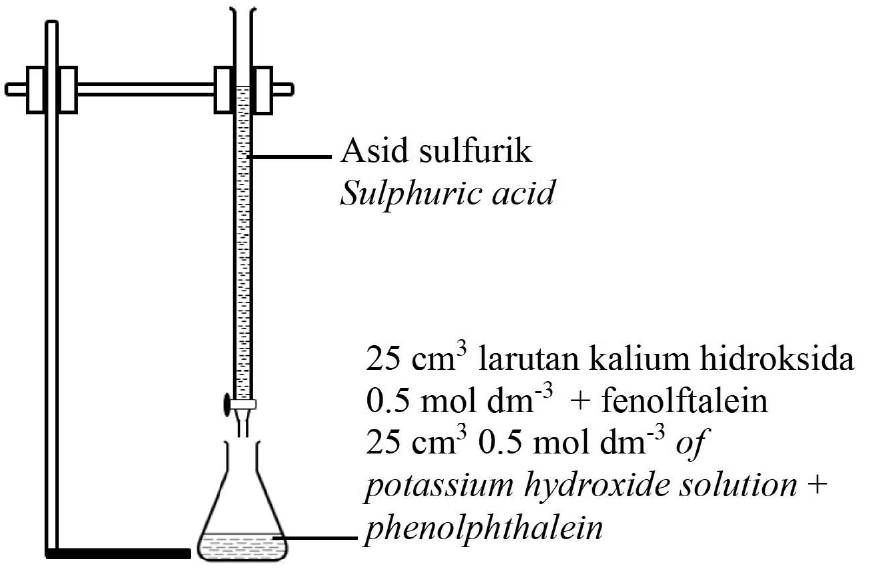
Diagram 11 shows a set-up apparatus used for neutralisation reaction (burette of sulphuric acid, conical flask with 25 cm³ of 0.5 mol dm⁻³ potassium hydroxide solution + phenolphthalein). In the neutralisation process, the initial burette reading is 5.0 cm³ and the final burette reading is 30.0 cm³. Which of the following statements is true?
Medium
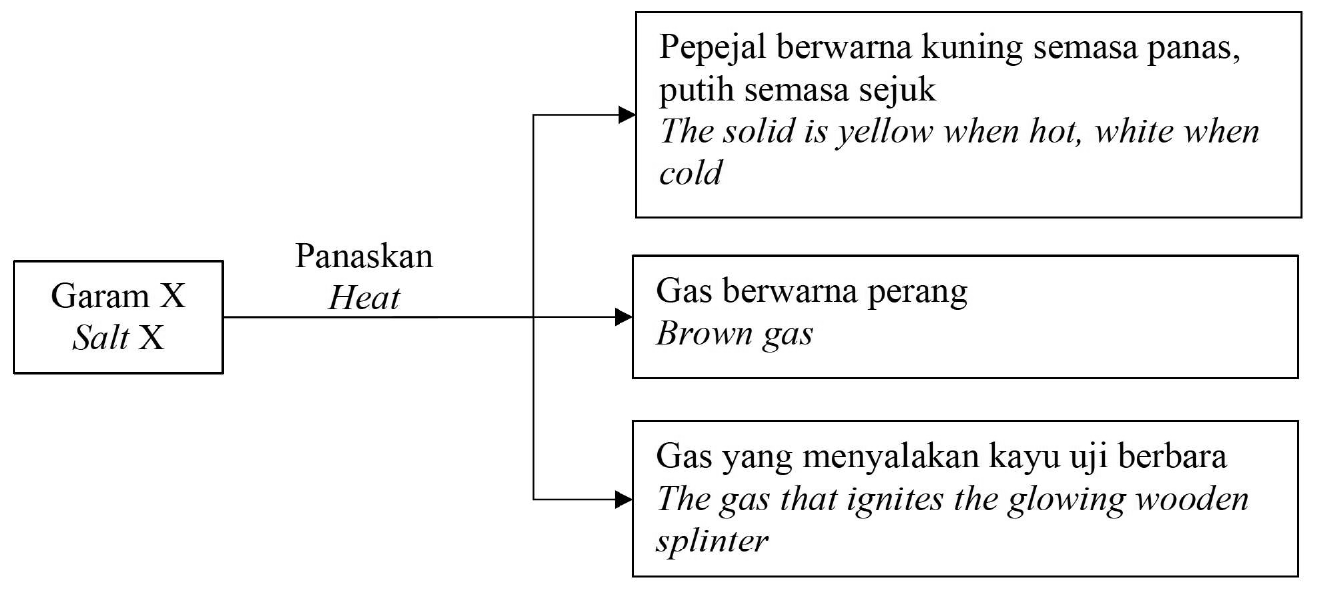
The flow chart in Diagram 12 shows the effect of heat on salt X: the solid is yellow when hot, white when cold; brown gas; the gas that ignites the glowing wooden splinter. What cations and anions may be present in salt X?
Medium
Which of the following is a weak acid?
Easy
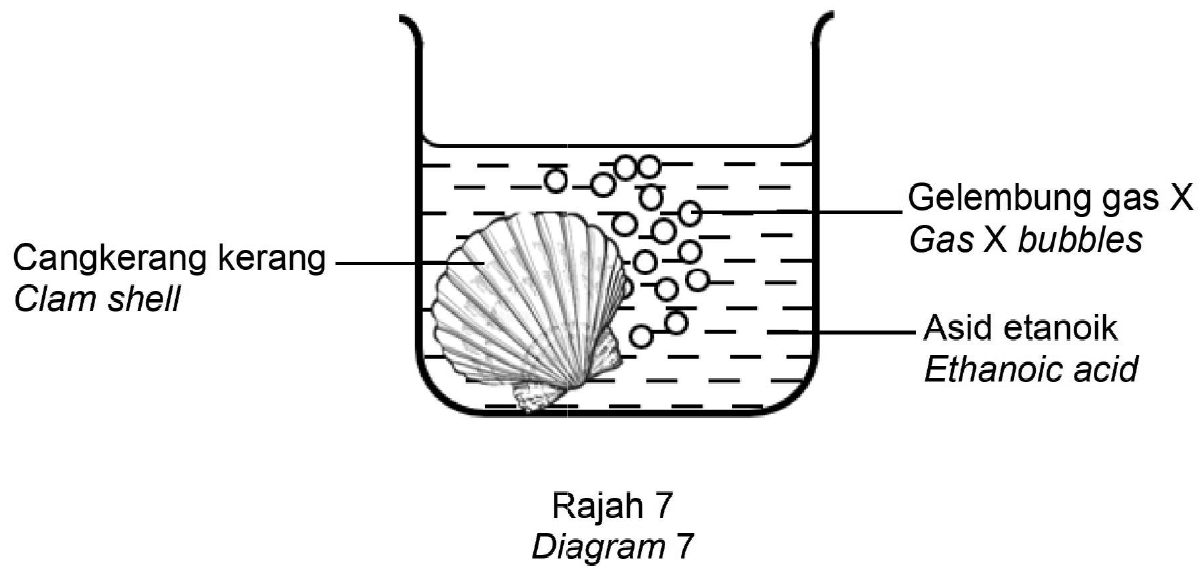
Diagram 7 shows an observation when a cockle shell is put in the beaker containing ethanoic acid (gas X bubbles). What is X?
Easy
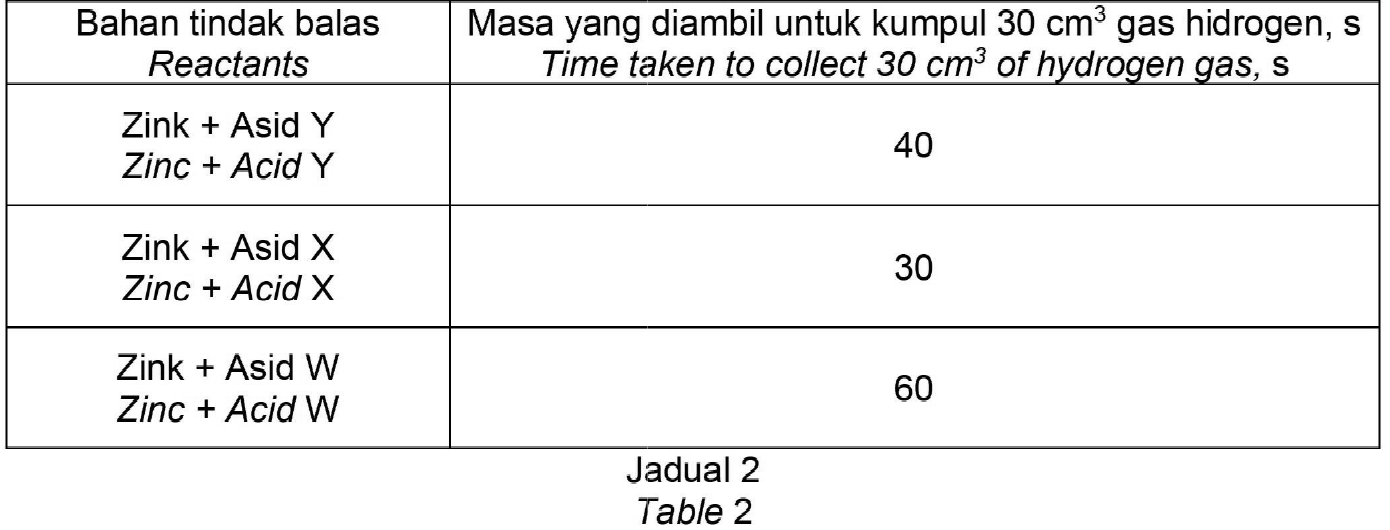
Table 2 shows the time taken to collect 30 cm3 of hydrogen gas when zinc reacts with several different acids: Zinc + Acid Y 40 s; Zinc + Acid X 30 s; Zinc + Acid W 60 s. Based on Table 2, arrange the strength of the acids used in ascending order.
Medium
Which of the following solutions have the same number of hydrogen ions, H+, as in 50 cm3 of 0.1 mol dm⁻³ sulphuric acid, H2SO4? [Avogadro constant = 6.02 × 10²³]
I. 100 cm3 of 0.1 mol dm⁻³ ethanoic acid, CH3COOH
II. 50 cm3 of 0.1 mol dm⁻³ phosphoric acid, H3PO4
III. 100 cm3 of 0.1 mol dm⁻³ hydrochloric acid, HCl
IV. 50 cm3 of 0.2 mol dm⁻³ nitric acid, HNO3
Medium
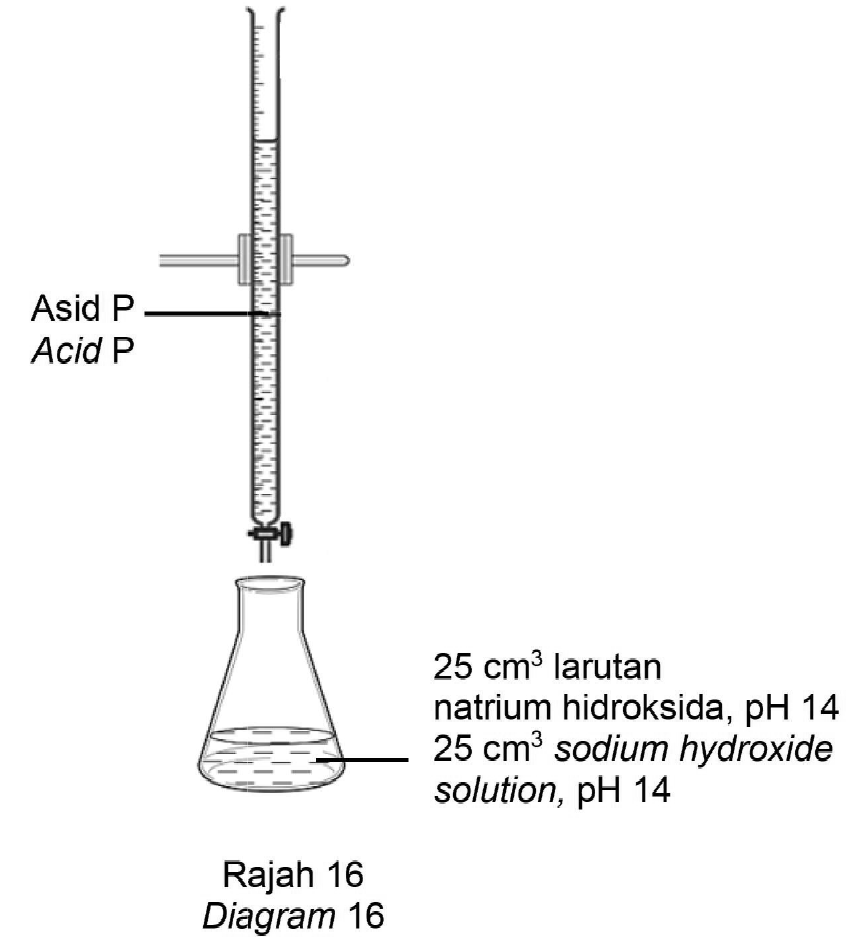
Diagram 16 shows the arrangement of the apparatus used for the neutralization reaction between acid P and sodium hydroxide solution (25 cm3 of sodium hydroxide solution, pH 14, in the conical flask). Which of the following can be acid P so that the sodium hydroxide solution can be neutralized completely?
Medium
Which of the following has a high pH value?
Easy
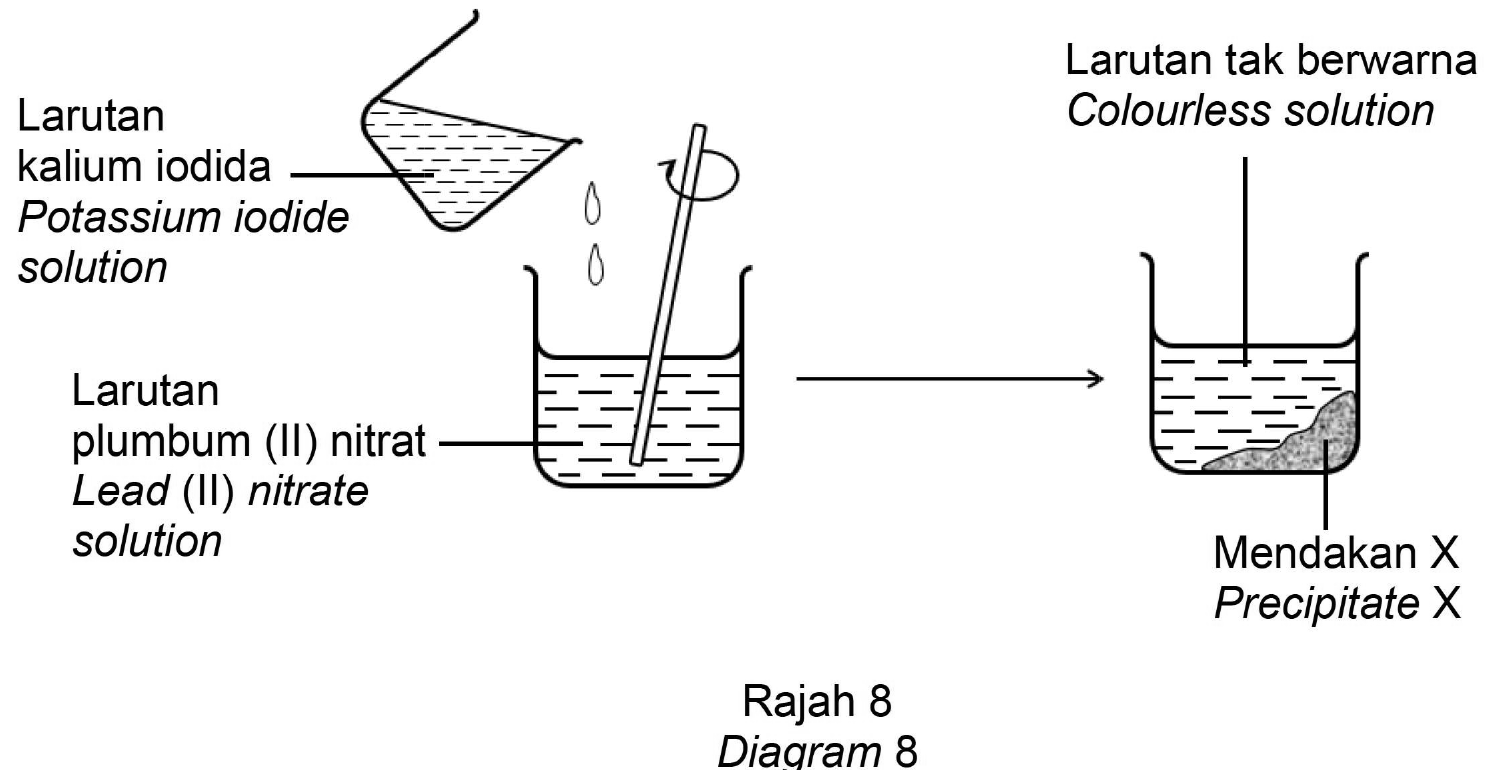
Diagram 8 shows the observation of an experiment carried out by a student in the laboratory (potassium iodide solution added to lead(II) nitrate solution gives colourless solution and precipitate X). What is the colour of precipitate X?
Easy
Which of the following explains why the pH of 1.0 mol dm⁻³ of ethanoic acid is higher than 1.0 mol dm⁻³ of hydrochloric acid?
Medium
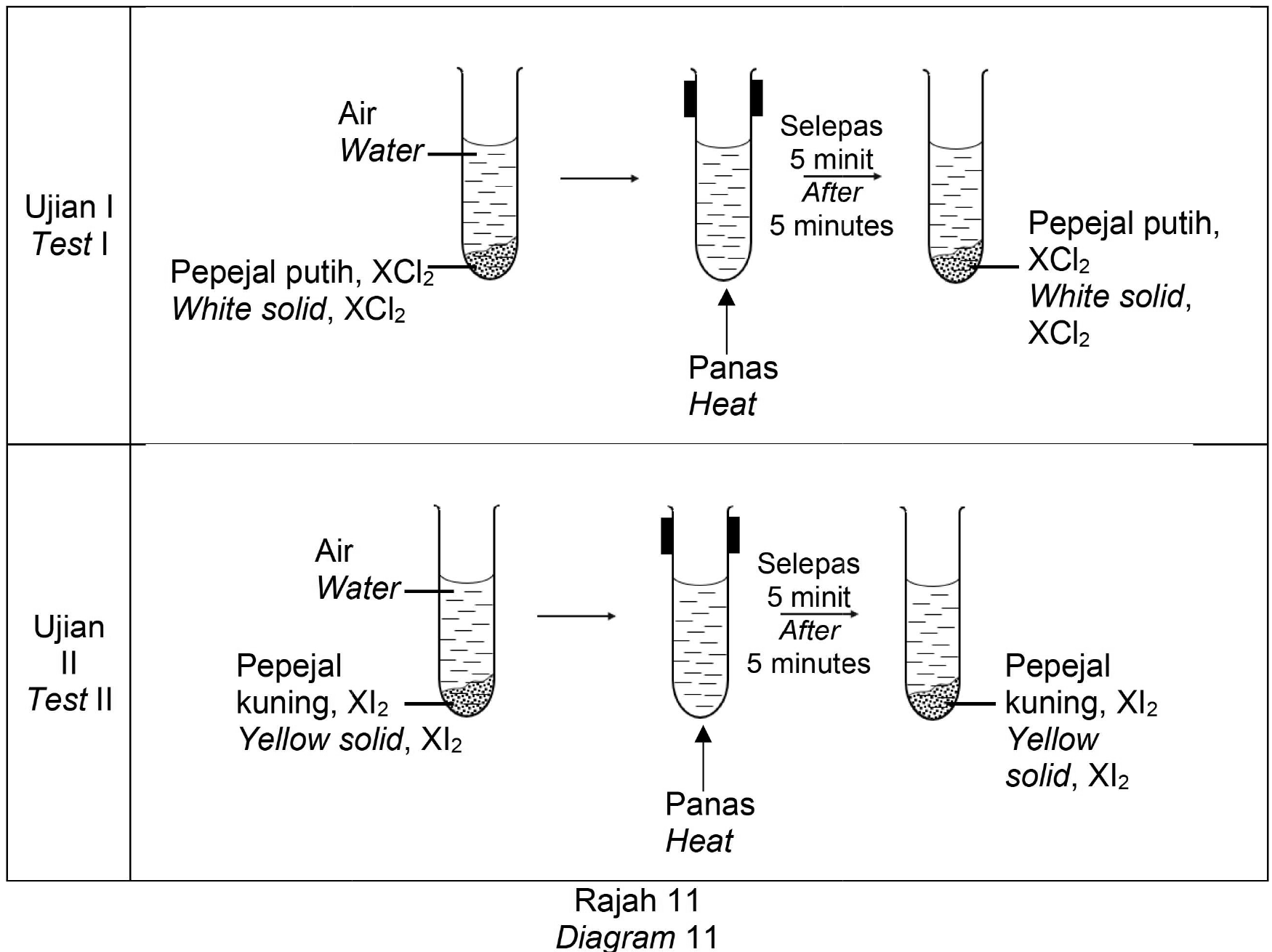
Diagram 11 shows two tests carried out on two different types of salt (Test I: white solid XCl2 in water, heated; Test II: yellow solid XI2 in water, heated; the solid remains after 5 minutes in both). What is X?
Medium
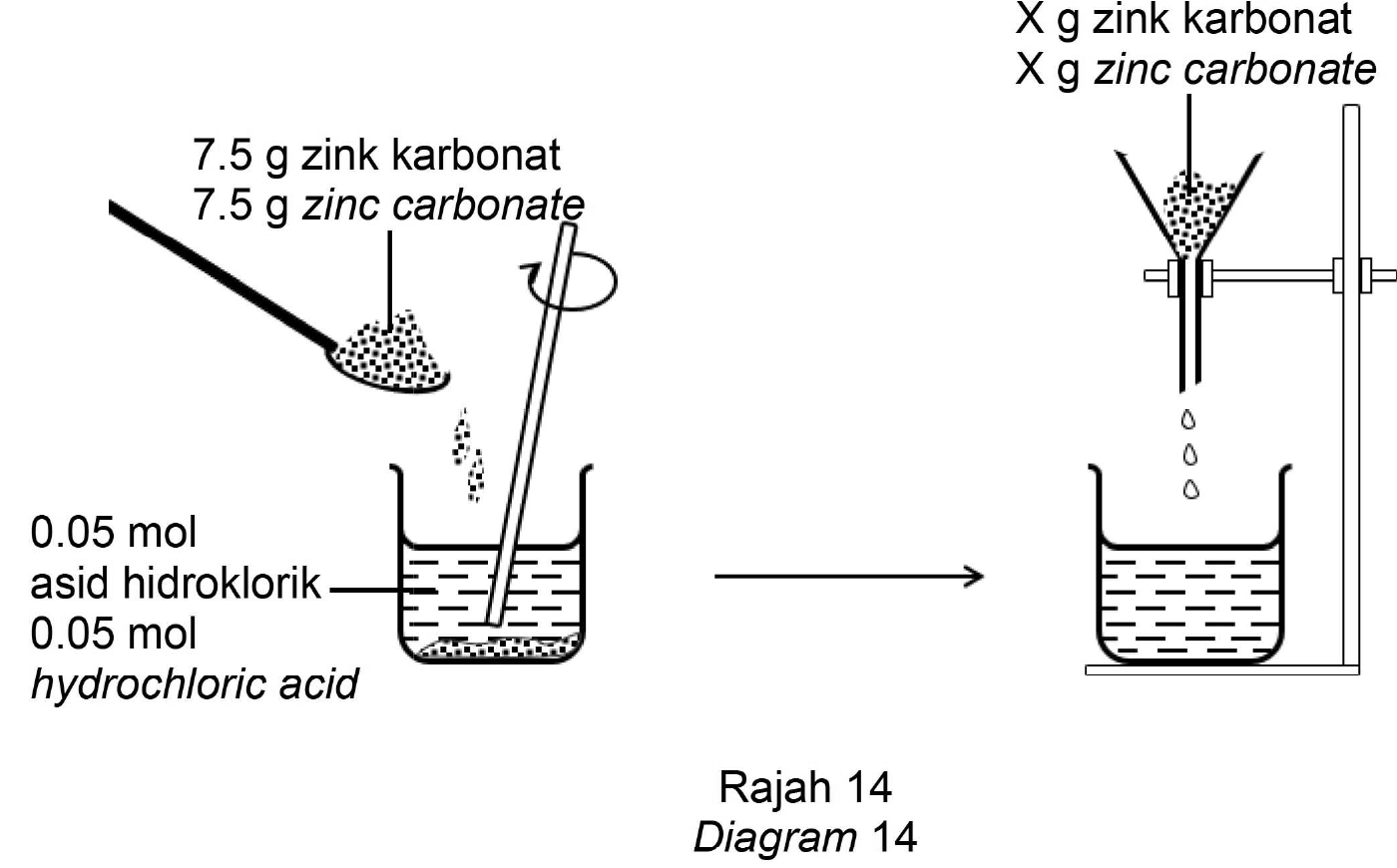
Diagram 14 shows the steps for the preparation of dissolved salt (7.5 g zinc carbonate added to 0.05 mol hydrochloric acid, stirred, then X g of unreacted zinc carbonate filtered). What is the value of X? [Relative atomic mass: C=12, O=16, Zn=65]
Medium
Which of the following chemical equations is correct for the decomposition of lead(II) nitrate when heated strongly?
Medium
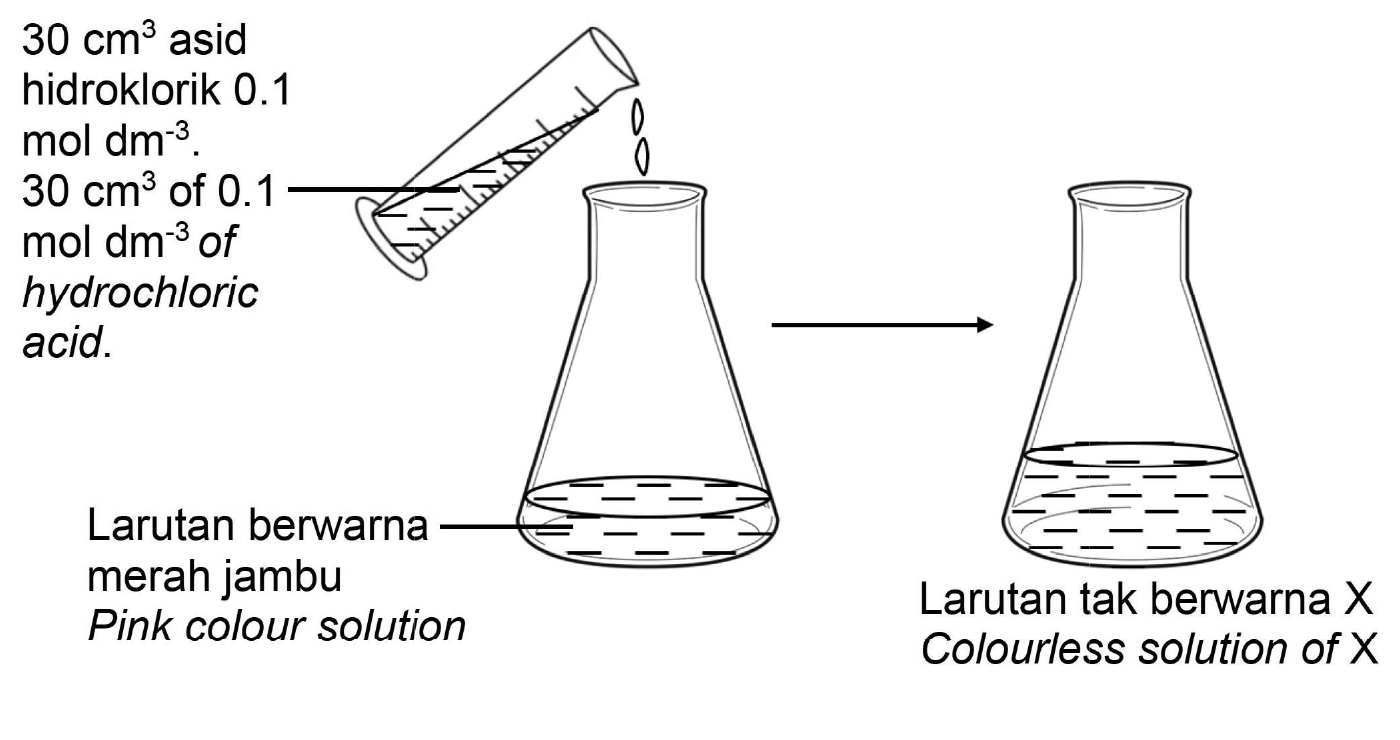
Diagram 18 shows the observation when hydrochloric acid is added to 25 cm³ of 0.1 mol dm⁻³ sodium hydroxide solution which is dripped with phenolphthalein indicator (30 cm³ of 0.1 mol dm⁻³ hydrochloric acid added; pink solution becomes colourless solution X). What is the pH value of colourless solution of X?
Medium
Which of the following has the highest number of hydrogen ions per unit volume?
Medium
What mass of zinc nitrate salt is required to prepare 250 cm³ of a 0.5 mol dm⁻³ zinc nitrate solution? [Relative atomic mass: N=14, O=16, Zn=65]
Medium
Which substance forms yellow precipitate when added to lead (II) nitrate solution?
Medium
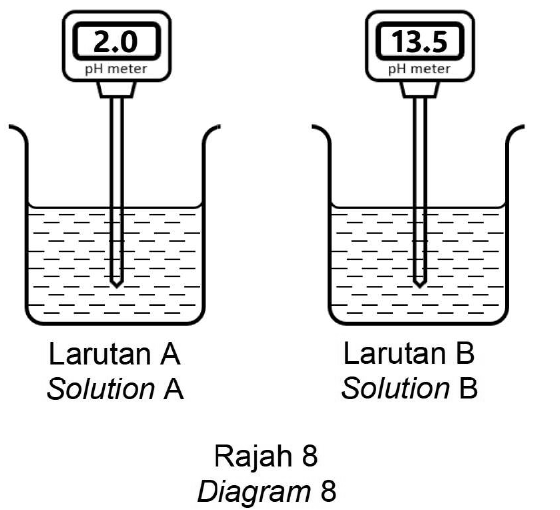
Diagram 8 shows the pH readings of two different solutions (Solution A pH 2.0; Solution B pH 13.5). Which of the following is true about solutions A and B?
Medium
Which of the following can react with 50 cm³ of 1.0 mol dm⁻³ potassium hydroxide solution until the final point of neutralization is reached without excess?
Medium
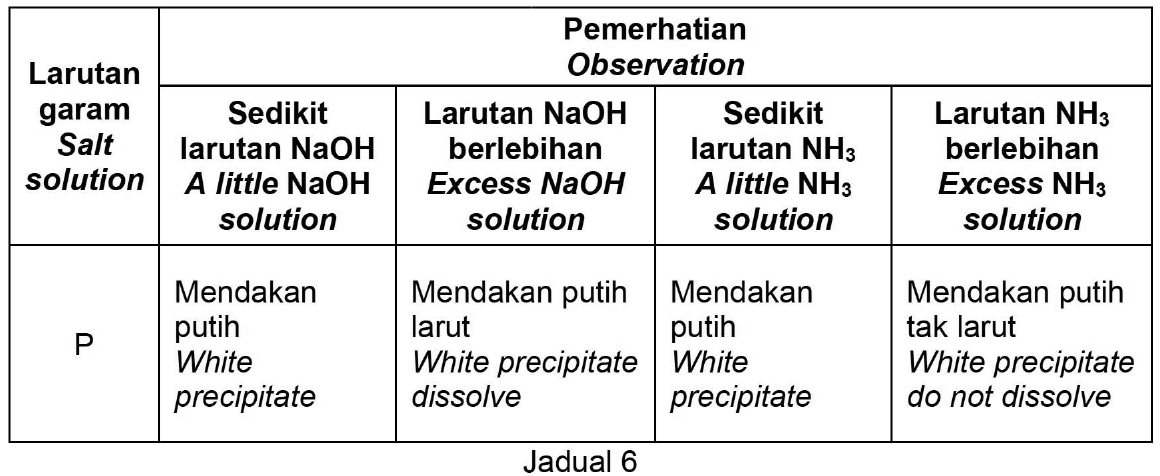
Sodium hydroxide and ammonia solutions are used as reagents for a test to confirm the cations present in a salt. Table 6 shows the observations recorded when the test was carried out on a salt P: a little NaOH – white precipitate; excess NaOH – white precipitate dissolves; a little NH₃ – white precipitate; excess NH₃ – white precipitate does not dissolve. What cations might exist in a solution of a P salt? I. Al³⁺; II. Zn²⁺; III. Pb²⁺; IV. Mg²⁺
Medium
The following is the chemical equation for the decomposition of copper (II) nitrate when heated strongly: 2Cu(NO₃)₂ → 2CuO + 4NO₂ + O₂. Which of the following is true if 1.0 mol of copper (II) nitrate decomposes when heated? [Relative atomic mass: N=14, O=16, Cu=64; Molar volume of gas at room condition = 24 dm³]
Medium
Elman dissolves glacial ethanoic acid into a beaker containing propanone. Which of the following statements is correct for the solution produced?
Medium
Determine the pH value of calcium hydroxide solution Ca(OH)₂ with a concentration of 0.1 mol dm⁻³.
Medium
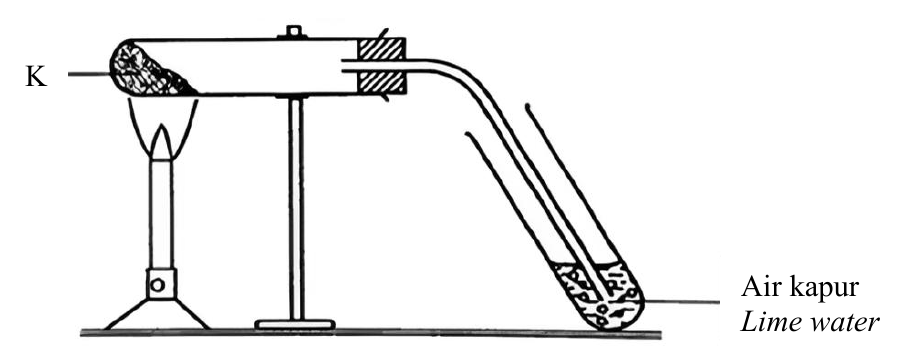
Diagram 7 shows the apparatus set up for the decomposition of compound K by heat. When K is heated, the lime water turns chalky. What is compound K?
Medium
Which of the following substances are suitable to prepare copper(II) chloride? I Copper metal and hydrochloric acid; II Copper(II) oxide and hydrochloric acid; III Copper(II) nitrate and magnesium chloride; IV Copper(II) carbonate and hydrochloric acid
Medium
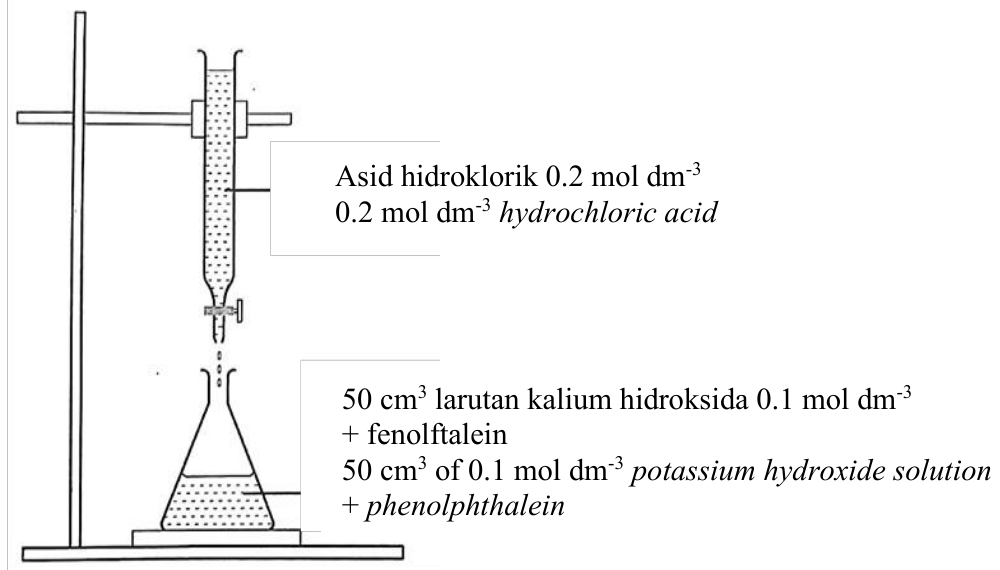
Several students from 5 Kekwa conducted a titration experiment for hydrochloric acid and potassium hydroxide solution in the laboratory (Diagram 12: 0.2 mol dm⁻³ hydrochloric acid in the burette; 50 cm³ of 0.1 mol dm⁻³ potassium hydroxide solution + phenolphthalein in the conical flask). What is the volume of hydrochloric acid needed to neutralise potassium hydroxide solution?
Medium
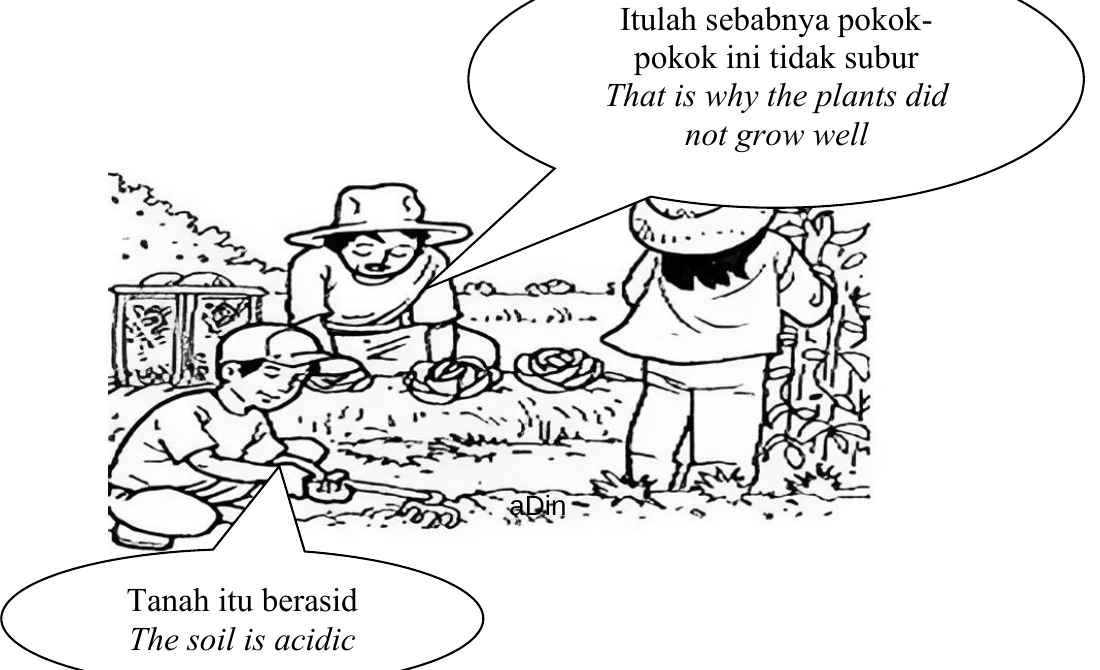
Diagram 14 shows conversation between two farmers: 'The soil is acidic' and 'That is why the plants did not grow well'. Based on the conversation in Diagram 14, which of the following substances is suitable to overcome the problem faced by the farmer?
Easy
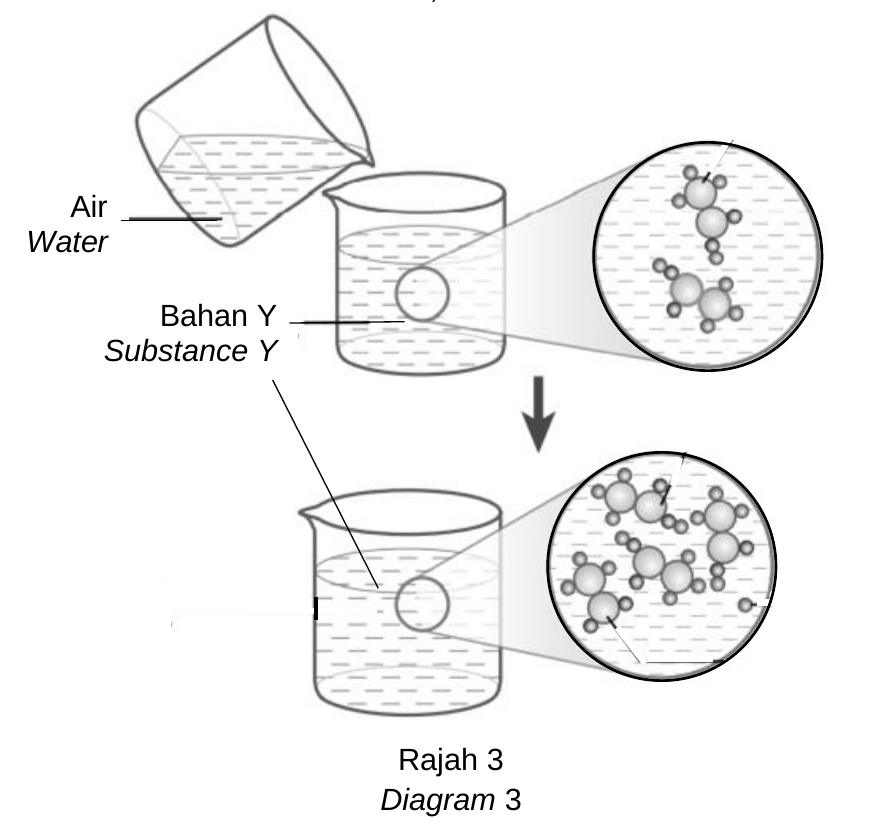
Diagram 3 shows a chemical substance, Y (substance Y is added to water; the enlarged view shows the particles before and after dissolving). What is the most suitable definition for substance Y?
Medium
Which of the following statements is true about an acid? I An acid turns red litmus paper blue. II An acid contains hydrogen ion in aqueous solution. III An acid has a pH more than 7. IV An acid reacts with metal to give off hydrogen gas.
Easy
What is the molarity of sodium hydroxide solution, NaOH with pH value is 12.0?
Medium
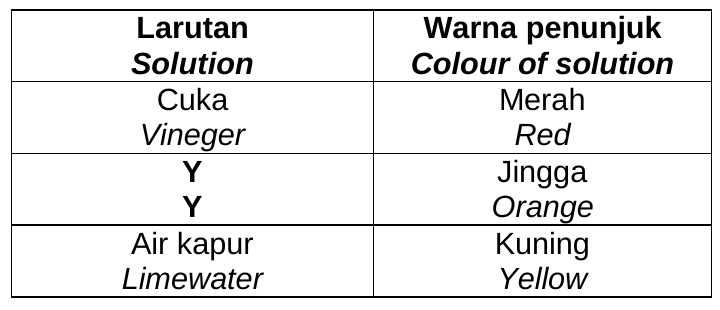
Table 3 shows the results of a test using methyl orange indicator. Vinegar: Red; Y: Orange; Limewater: Yellow. What is solution Y?
Medium
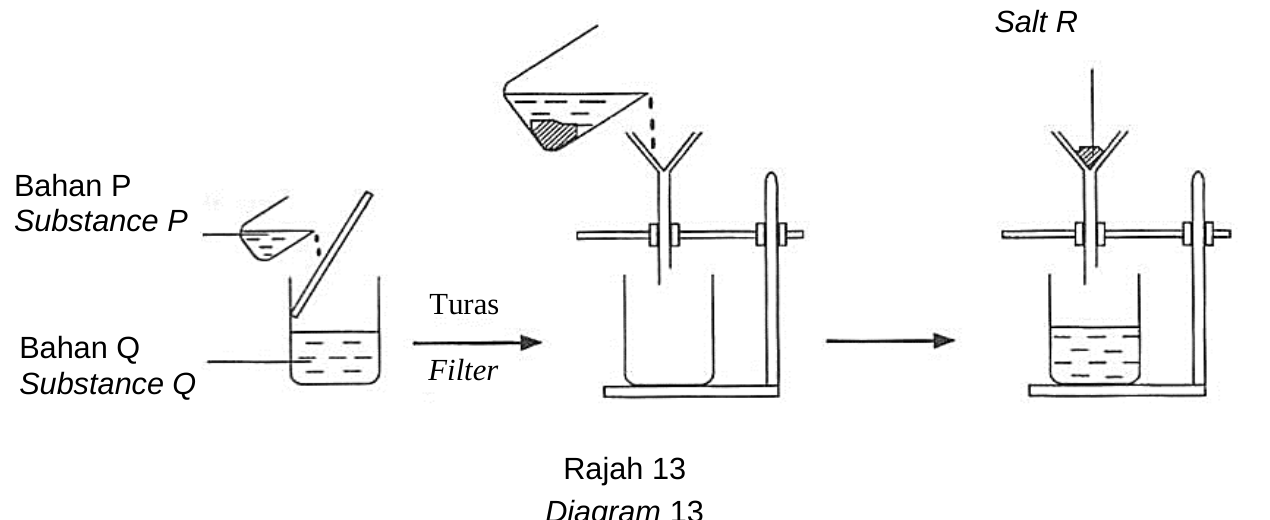
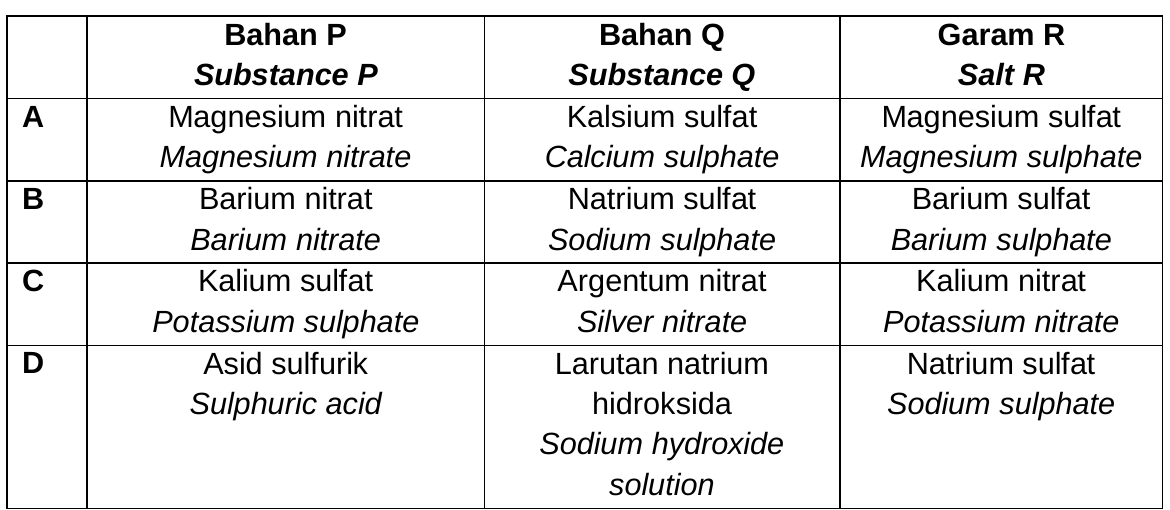
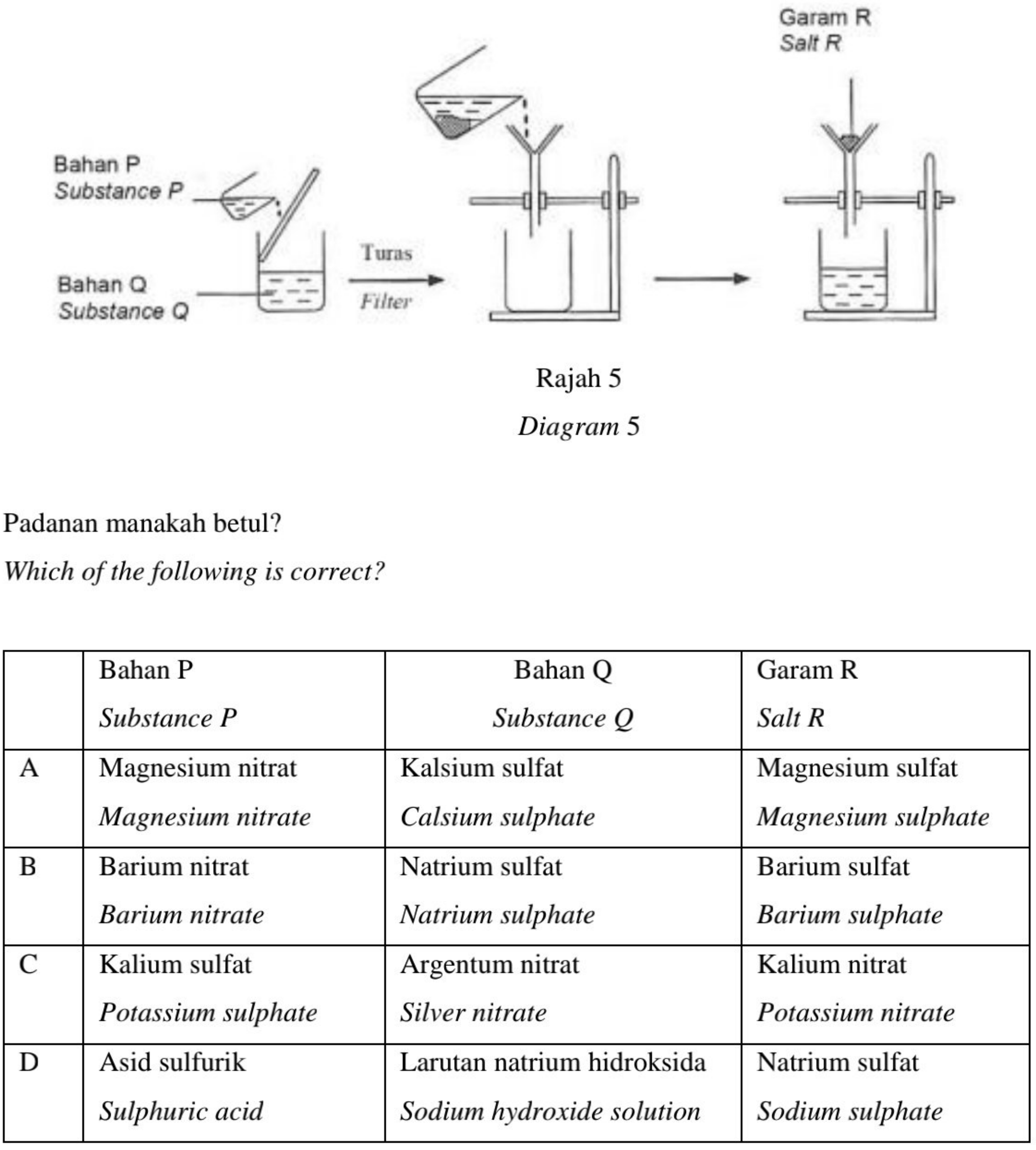
Diagram 13 shows the apparatus set-up to prepare a salt (substance P is added to substance Q, the mixture is filtered and salt R is the residue). Which of the following is correct? A: P magnesium nitrate, Q calcium sulphate, R magnesium sulphate; B: P barium nitrate, Q sodium sulphate, R barium sulphate; C: P potassium sulphate, Q silver nitrate, R potassium nitrate; D: P sulphuric acid, Q sodium hydroxide solution, R sodium sulphate.
Medium
A student wants to identify cation that present in a salt solution. When sodium hydroxide solution is added into the salt solution, brown precipitate is formed. What is the method that need to be done next and the observation expected to confirm the presence of the cation?
Medium
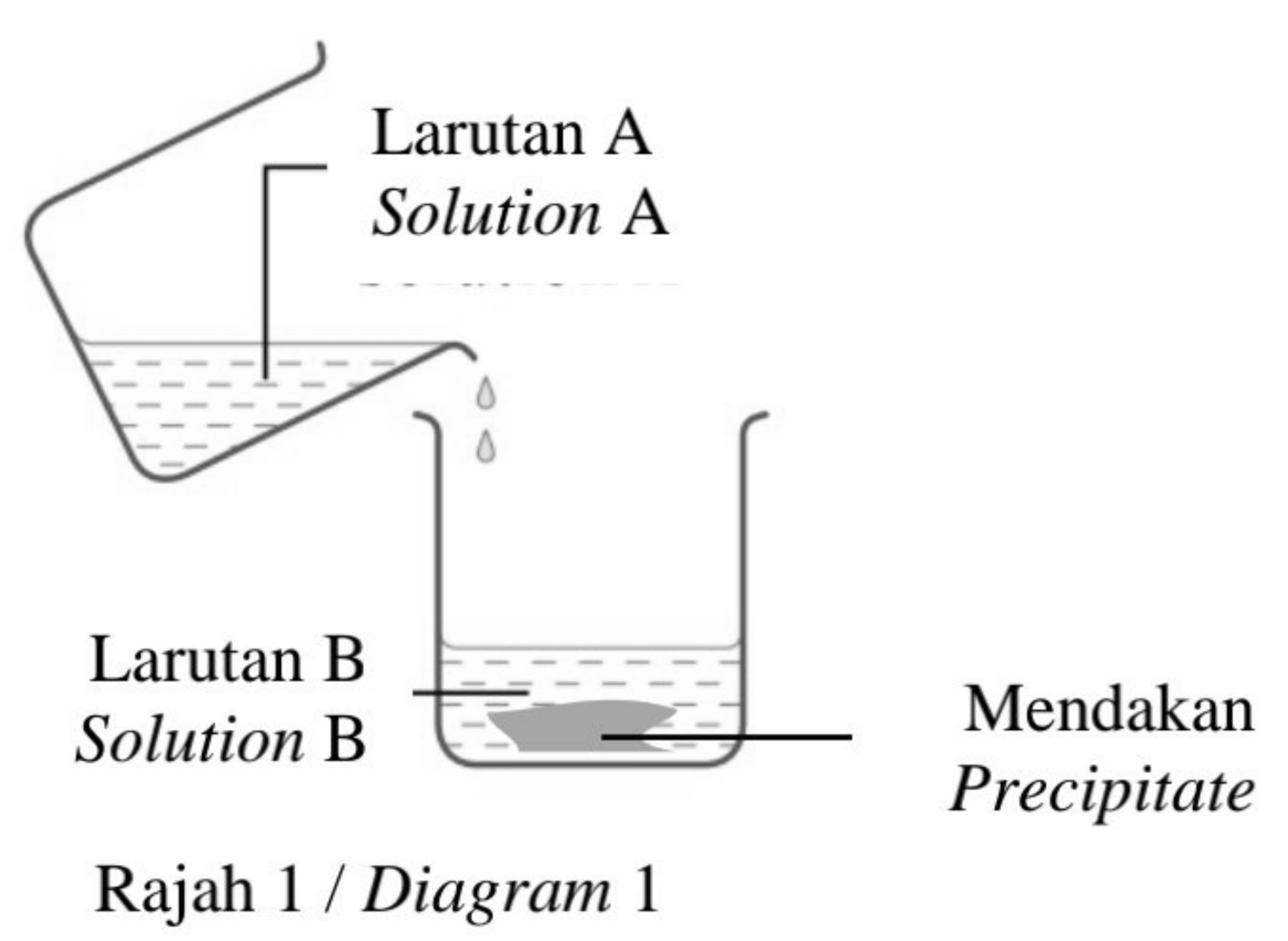
Diagram 1 shows a reaction to prepare a salt (Solution A is poured into Solution B and a precipitate forms).
What salt can be produced by this reaction?
Medium
The chemical substance with low concentration of hydroxide ion is
Medium
Substance X has the following characteristics.
- Turns moist blue litmus paper to red
- Sour taste
- Release gas bubbles when reacted with zinc powder
What is the molecular formula of substance X?
Medium
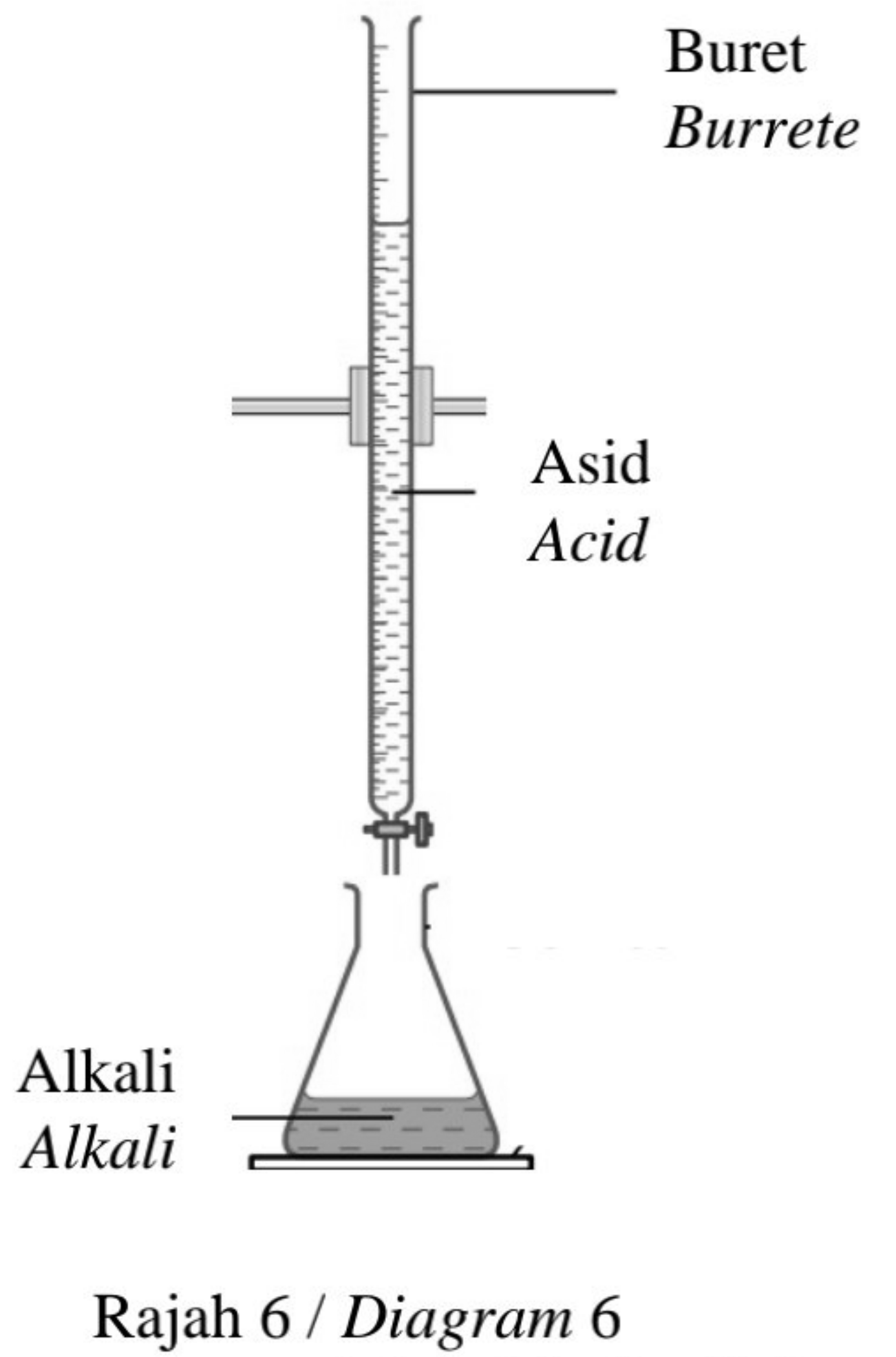
Diagram 6 shows a method to prepare a soluble salt (acid in a burette is added to an alkali in a conical flask).
Which of the following salts can be prepared by the method above?
Medium
A student was stung by a wasp. Which substance is best applied to treat the student immediately?
Easy
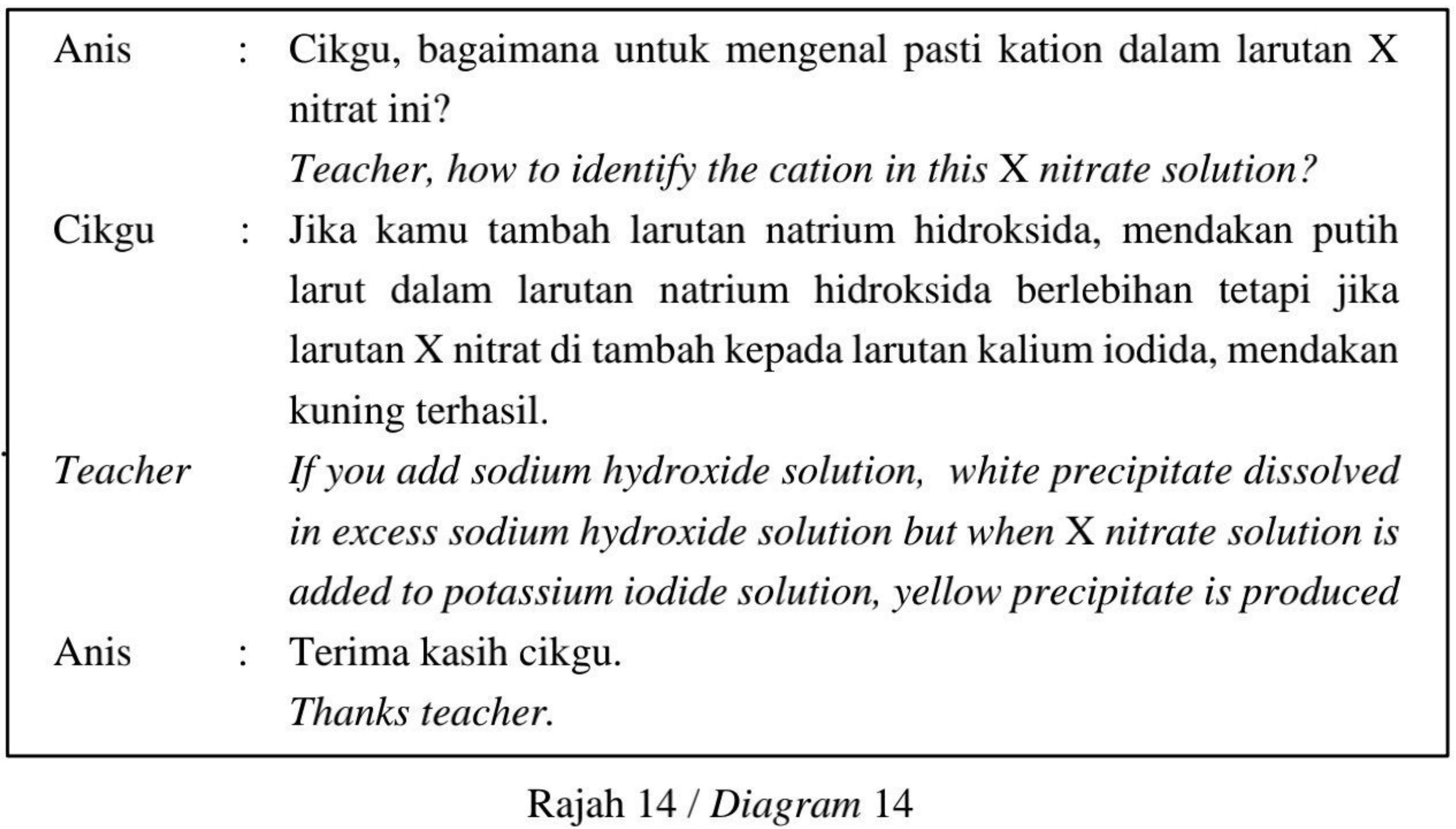
Diagram 14 shows a dialogue between a teacher and her student, Anis in a laboratory. The teacher says: if you add sodium hydroxide solution, white precipitate dissolved in excess sodium hydroxide solution, but when X nitrate solution is added to potassium iodide solution, yellow precipitate is produced.
Based on Diagram 14, what is solution X nitrate?
Medium
A student has added 25 cm3 of distilled water into a beaker containing 50 cm3 of 0.5 mol dm-3 copper (II) chloride solution, CuCl2. Calculate the molarity of the new copper (II) chloride solution.
Medium
Which of the following substances are insoluble salts?
I Barium sulphate
II Magnesium chloride
III Silver chloride
IV Zinc sulphate
Medium
The following statement is an observation for the confirmatory test of cation of salt X: White precipitate dissolves when ammonia solution is added into the salt solution of X in excess. What is cation of salt X?
Medium
Which of the following will produce precipitate when mixed?
Medium
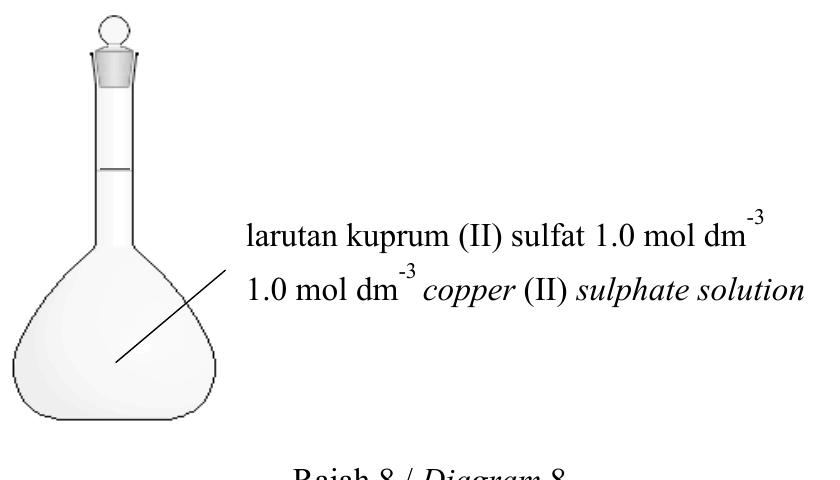
Diagram 8 shows a stock solution of copper(II) sulphate (1.0 mol dm-3). If Amsyar wants to prepare 250 cm3 of 0.5 mol dm-3 copper (II) sulphate solution from a stock solution, what is the volume of stock solution needed?
Medium
Salt solution X reacts with zinc nitrate, Zn(NO3)2 solution to produce a white solid. Which of the following is correct to test the presence of anion for salt X?
Medium
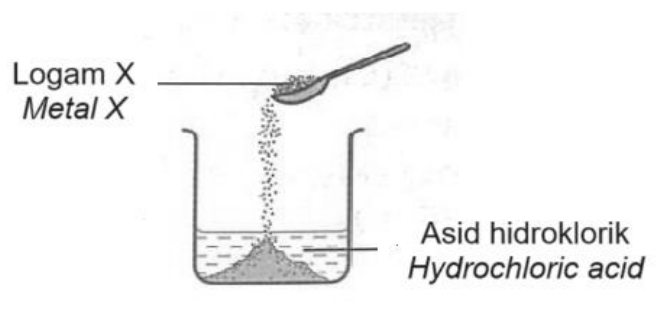
Diagram 7 shows the apparatus set-up for the preparation of a salt (metal X added to hydrochloric acid). Which salt will be produced through the reaction?
Medium
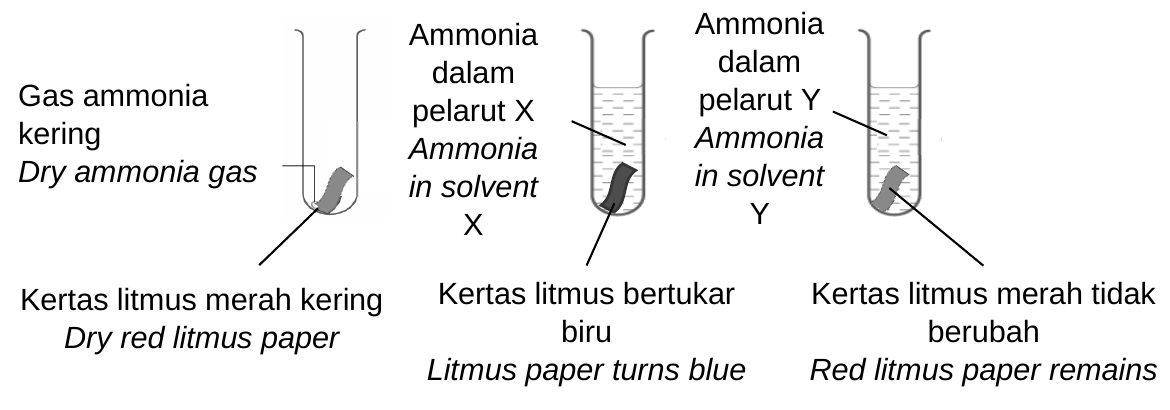
Diagram 8 shows the reaction to determine the alkaline properties of ammonia: dry ammonia gas does not change dry red litmus paper; ammonia in solvent X turns litmus paper blue; ammonia in solvent Y leaves red litmus paper unchanged. What are solvents X and Y?
Medium
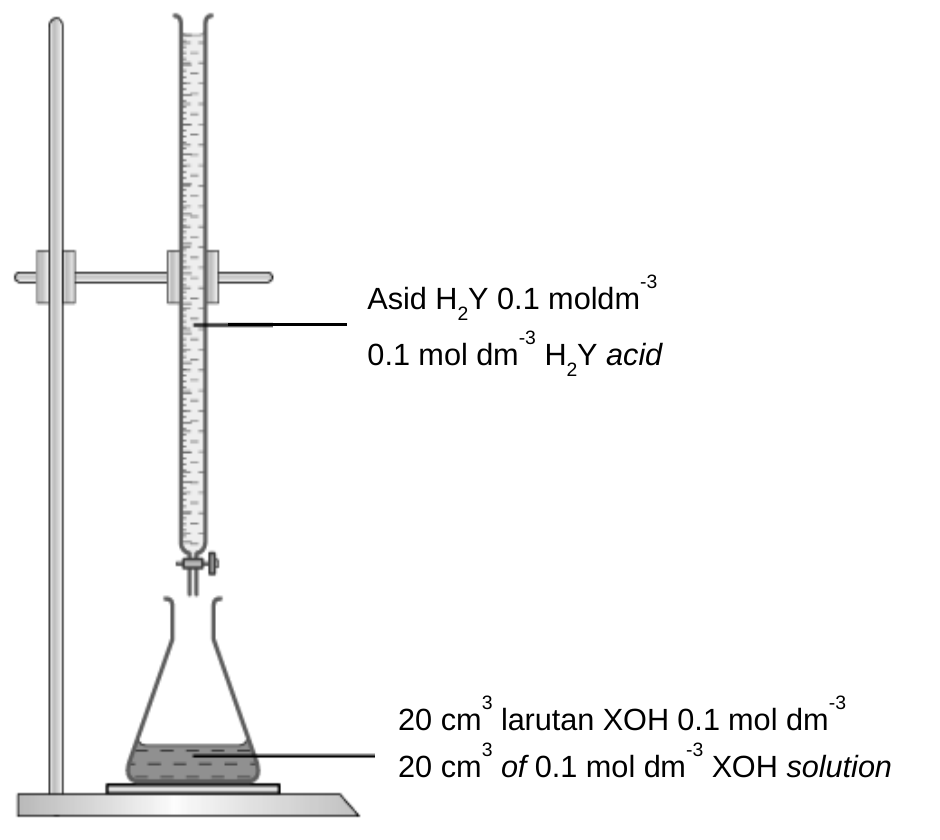
Diagram 9 shows the titration of 20 cm3 of 0.1 mol dm-3 XOH solution with 0.1 mol dm-3 H2Y acid. What is the volume of H2Y acid needed to neutralise the XOH solution?
Medium
There are four solutions with different pH values. Which solution has the highest degree of dissociation in water?
Medium
Table 4 shows tests for the cation and anion in salt K solution. Test 1: add a few drops of ammonia solution then excess - the precipitate dissolves and gives a colourless solution. Test 2: add excess nitric acid followed by silver nitrate solution - white precipitate formed. What is salt K?
Medium
Choose the statement that describes one of the chemical properties of alkalis.
Medium
Which of the following salts is insoluble in water?
Easy
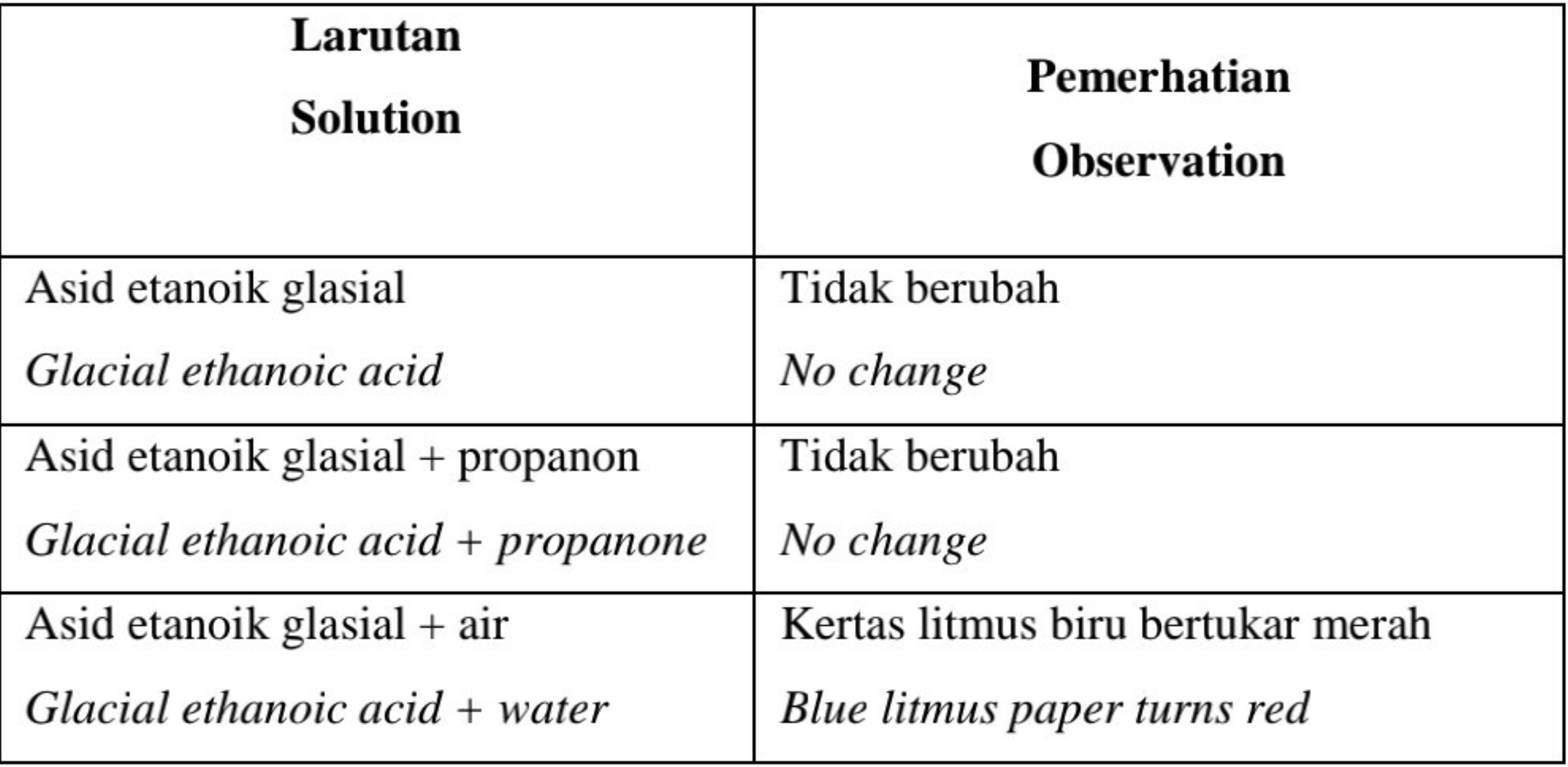
Table 2 shows the observation on blue litmus paper in three solutions.
Solution | Observation
Glacial ethanoic acid | No change in the colour of blue litmus paper
Glacial ethanoic acid + propanone | No change in the colour of blue litmus paper
Glacial ethanoic acid + water | Blue litmus paper turns red
Based on the observation, choose the correct statement.
Medium
A total of 25 cm³ of sodium hydroxide solution, NaOH with a concentration of 0.1 mol dm⁻³ is used to neutralise hydrochloric acid, HCl. Calculate the volume of hydrochloric acid required if the concentration is 0.05 mol dm⁻³.
Medium
Table 7 compares solutions X, Y and Z at the same concentration and volume.
Solution | X | Y | Z
pH value | 5 | 2 | 1
Degree of ionisation in water | Low | Higher | Higher
Time taken to react completely with excess zinc powder | Slow | Fast | Fastest
What are X, Y and Z?
Option | X | Y | Z
A | HCl | CH3COOH | H2SO4
B | HCl | H2SO4 | CH3COOH
C | CH3COOH | HCl | H2SO4
D | H2SO4 | CH3COOH | HCl
Medium
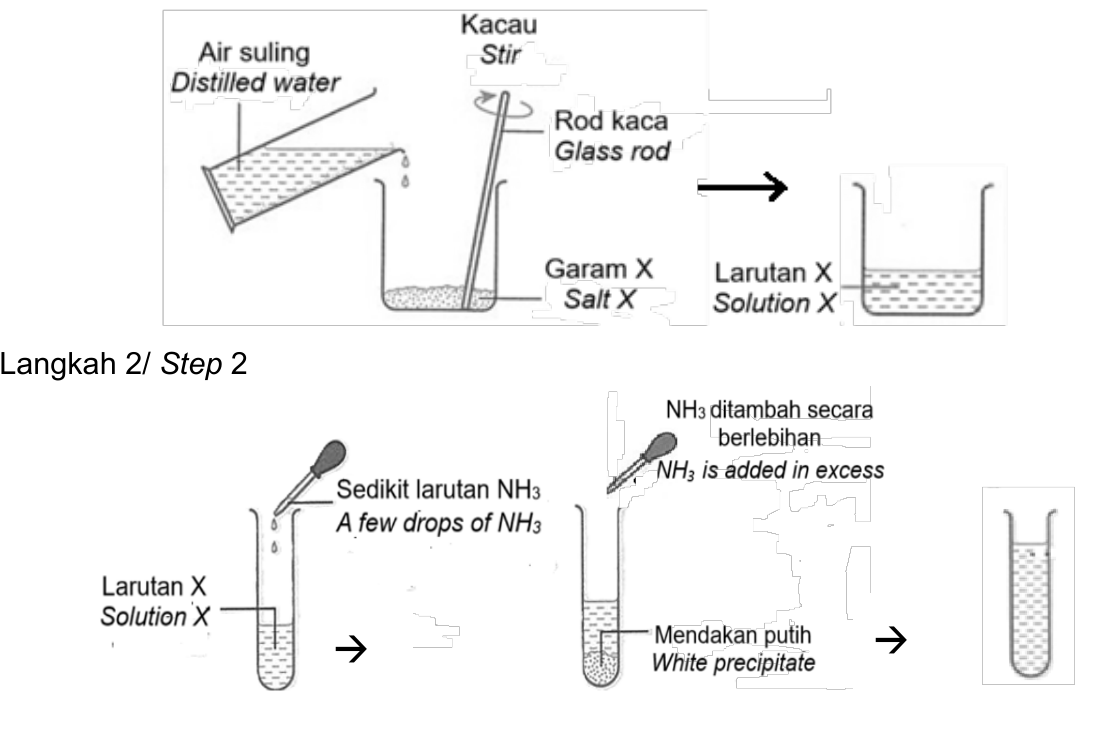
Diagram 14 shows the qualitative analysis conducted by a group of students to identify salt X. Step 1: salt X is dissolved in distilled water. Step 2: a few drops of NH3 solution give a white precipitate, then NH3 is added in excess (result shown in the diagram). Table 10, step 3: hydrochloric acid is added in excess to a test tube containing solution X, followed by 2.0 cm³ barium chloride solution. Observation: white precipitate is formed. What is salt X?
Medium
A student added 2 cm³ of 0.1 mol dm⁻³ nitric acid into a test tube containing 2 cm³ of 0.1 mol dm⁻³ potassium hydroxide solution.
Identify the salt produced and its solubility in water.
(Options give: chemical formula of product formed — solubility in water.)
Easy
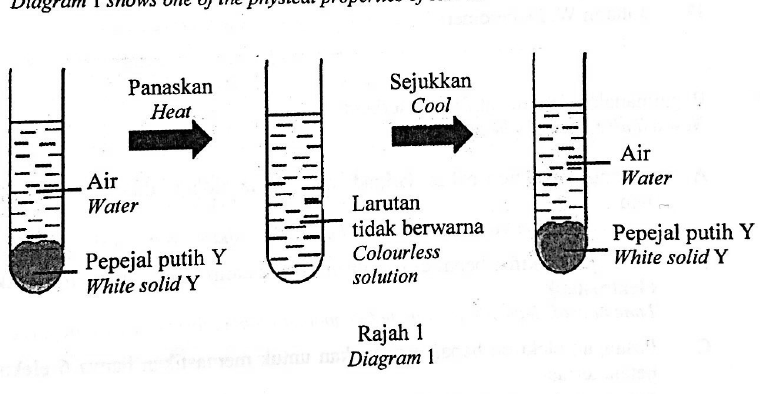
Diagram 1 shows one of the physical properties of salt Y. White solid Y in water is heated to give a colourless solution; on cooling, white solid Y reappears.
What is salt Y?
Medium
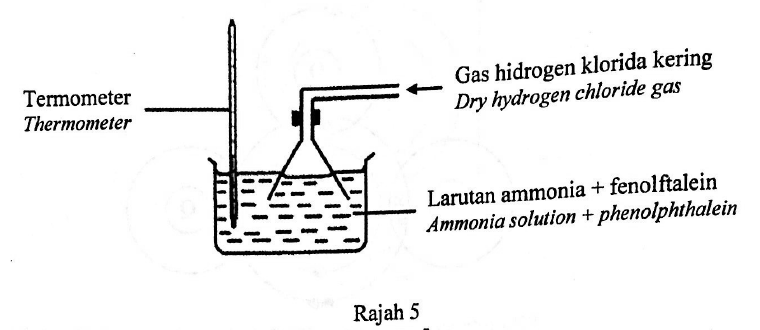
Diagram 5 shows dry hydrogen chloride gas is passed through an ammonia solution which was added with a few drops of phenolphthalein.
Which of the following is true?
Medium
A solution of sodium hydroxide has a concentration of 4 g dm⁻³.
What is the pH of the solution?
[Molar mass of NaOH = 40 g mol⁻¹]
Medium
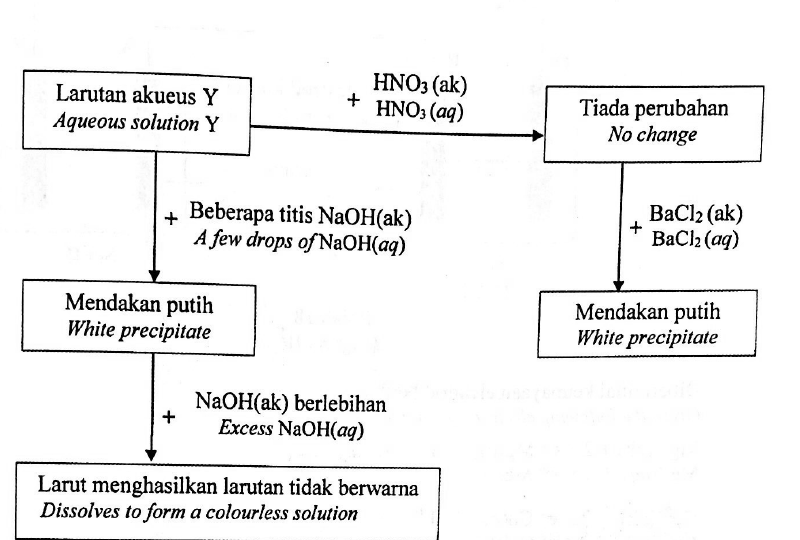
Diagram 17 shows the observations obtained when aqueous solution Y reacts with a few reagents: + HNO₃(aq): no change; + a few drops of NaOH(aq): white precipitate, which dissolves in excess NaOH(aq) to form a colourless solution; + BaCl₂(aq): white precipitate.
What is salt Y?
Medium
Ionisation of acid in water affects the pH value. Which of the following gives the highest pH value? (Each option is a particle diagram, A to D.)
Medium
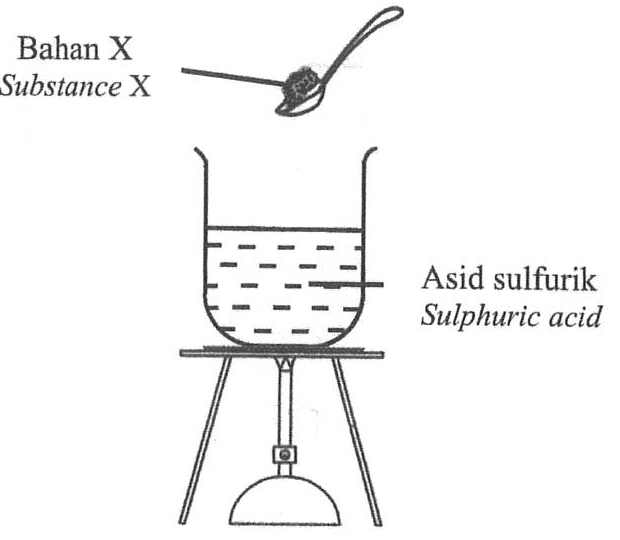
Diagram 12 shows a step in the preparation of a soluble sulphate salt (substance X added to heated sulphuric acid). What is substance X?
Medium
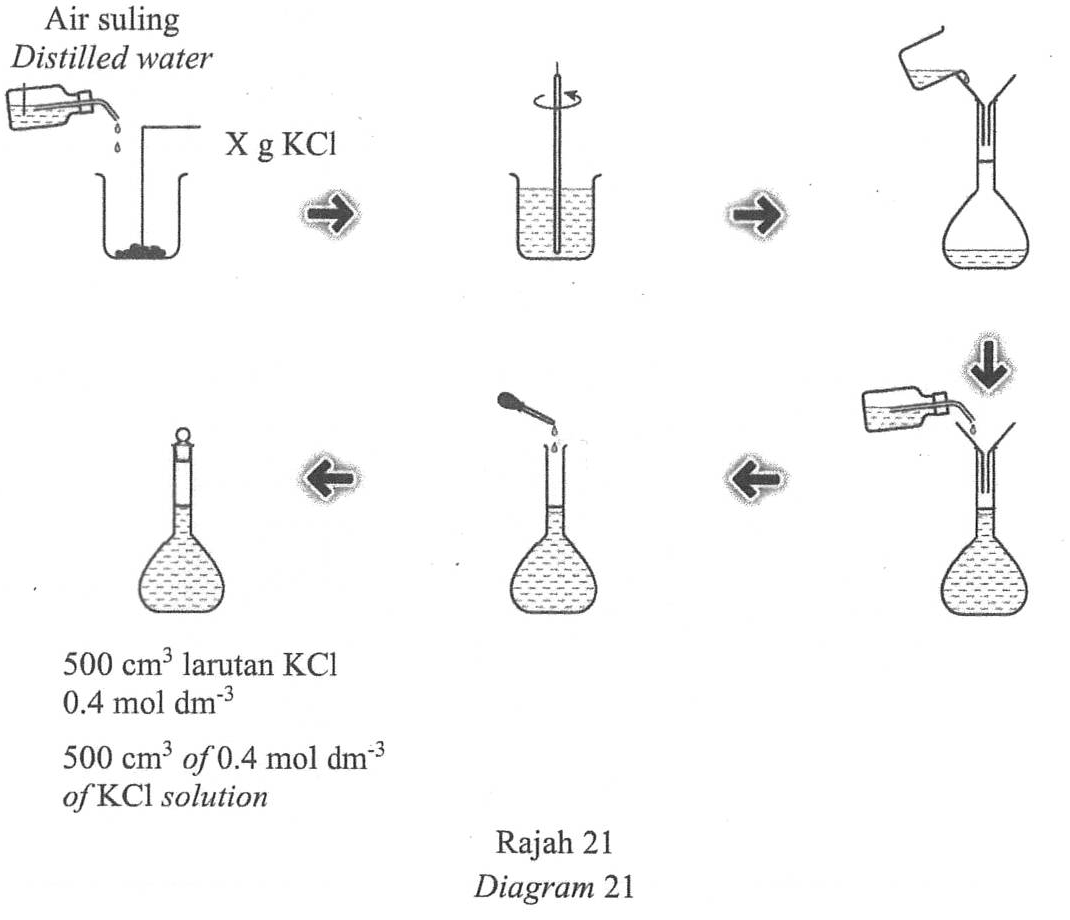
Diagram 21 shows the preparation of potassium chloride solution (X g of KCl dissolved to make 500 cm³ of 0.4 mol dm⁻³ KCl solution). What is the value of X? [Relative atomic mass: K=39, Cl=35.5]
Medium
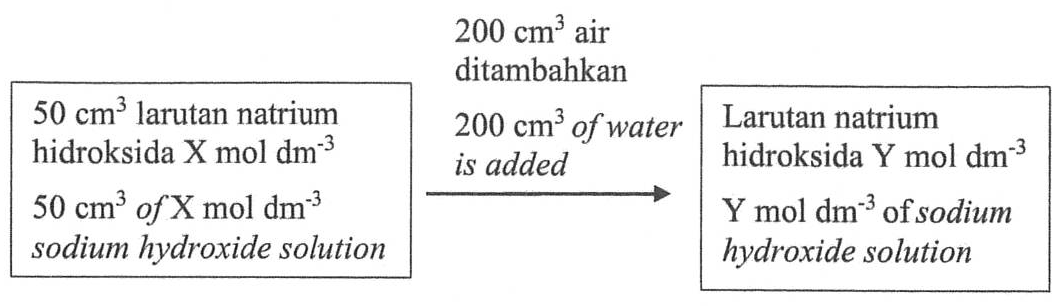
Diagram 22 shows a preparation of Y mol dm⁻³ of sodium hydroxide solution with a pH value of 13 (50 cm³ of X mol dm⁻³ sodium hydroxide solution, 200 cm³ of water is added). What is the value of X?
Medium
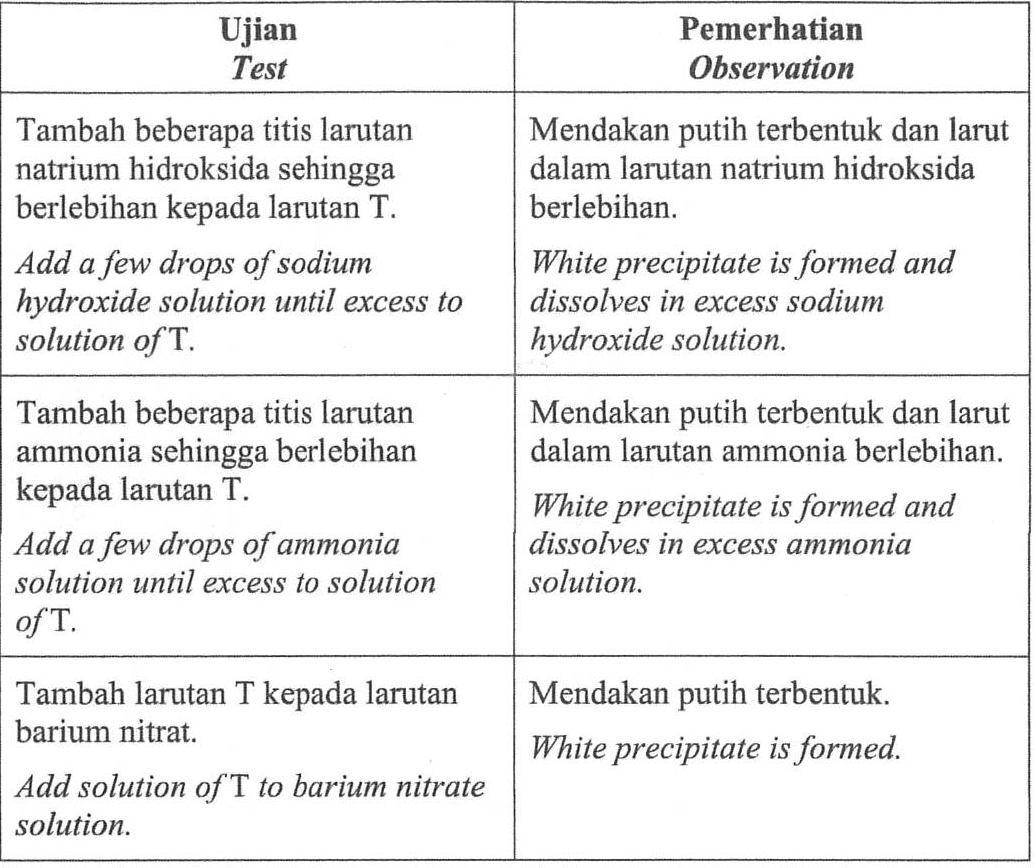
Table 3 shows the observations recorded when a series of tests were conducted to verify the cation and anion of compound T: excess NaOH gives white precipitate that dissolves; excess ammonia solution gives white precipitate that dissolves; adding T to barium nitrate solution gives white precipitate. What are the cation and anion present in compound T?
Medium
Which of the following ion shows alkaline properties?
Easy
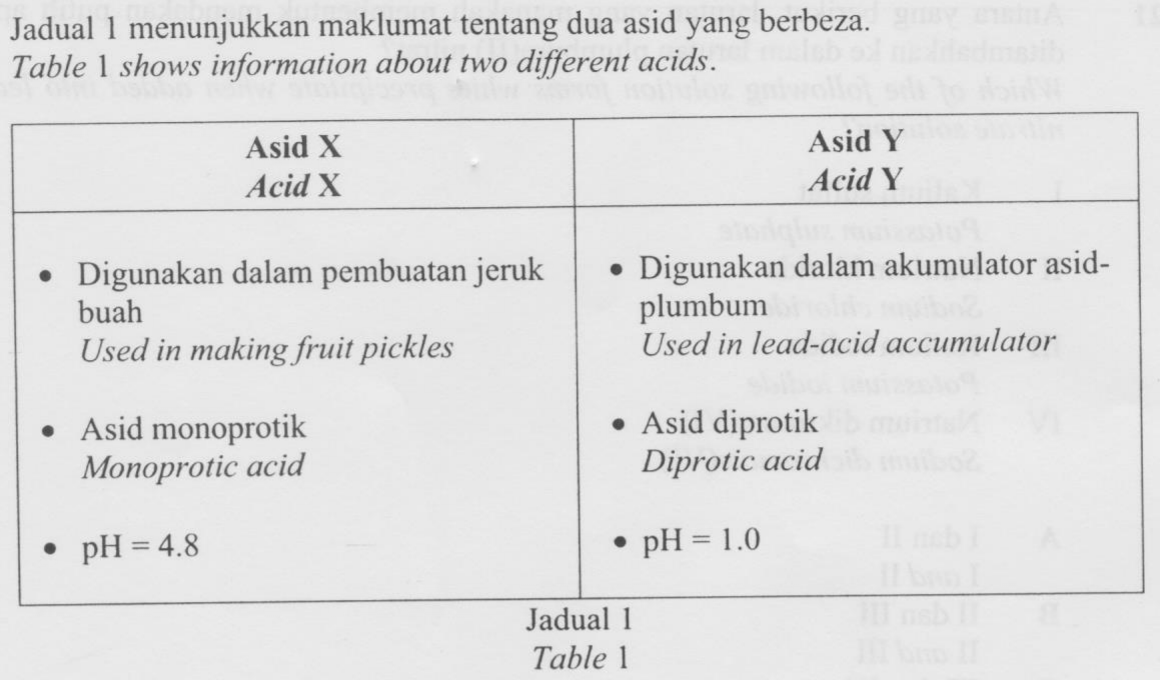
Table 1 shows information about two different acids. Acid X: used in making fruit pickles; monoprotic acid; pH = 4.8. Acid Y: used in lead-acid accumulator; diprotic acid; pH = 1.0. Which of the following statement is true about acid X and acid Y?
Medium
Which of the following solution forms white precipitate when added into lead(II) nitrate solution? I Potassium sulphate; II Sodium chloride; III Potassium iodide; IV Sodium dichromate(VI)
Medium
Which of the following salts can be prepared through reaction between acid and metal?
Medium
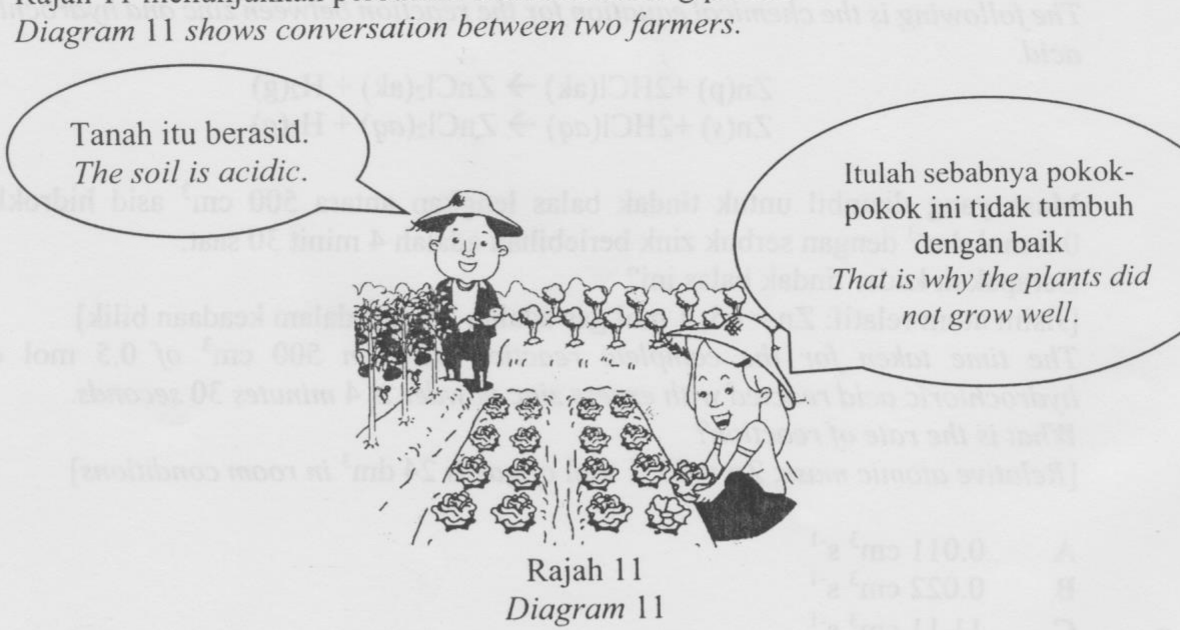
Diagram 11 shows conversation between two farmers: 'The soil is acidic.' 'That is why the plants did not grow well.' Which of the following substance is suitable to overcome the problem faced by the farmer?
Easy
Table 1 shows the pH values of four alkaline solutions: W = 8.0, X = 9.0, Y = 11.0, Z = 13.0. Which solution has the highest concentration of hydroxide ions?
Medium
In an experiment, damp blue litmus paper turns red when inserted into a test tube containing gas X. Which of the following statements is correct about X?
Medium
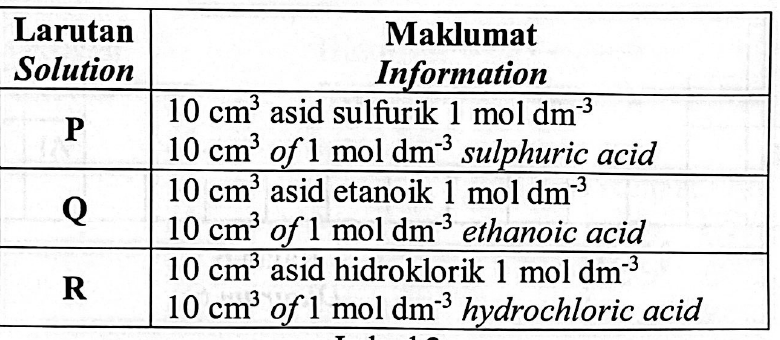
Table 2 shows information about three solutions P, Q and R: P = 10 cm³ of 1 mol dm⁻³ sulphuric acid; Q = 10 cm³ of 1 mol dm⁻³ ethanoic acid; R = 10 cm³ of 1 mol dm⁻³ hydrochloric acid. Which of the following shows the correct arrangement in ascending order of concentration of hydrogen ions of the solutions?
Medium
Substance Y produces a colourless gas when reacted with zinc carbonate powder. The gas turns lime water chalky. What is the molecular formula of Y?
Medium
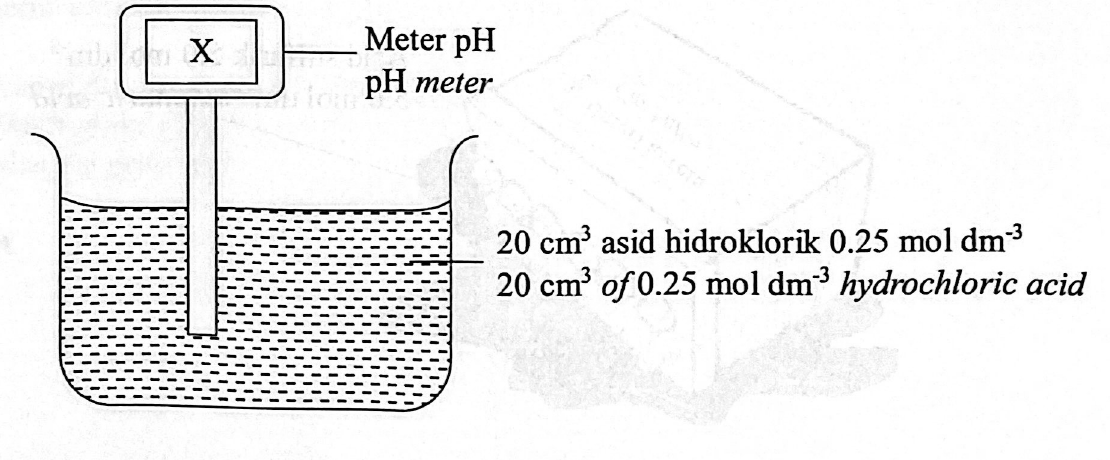
Diagram 12 shows an apparatus set-up to measure the pH value of an acid (20 cm³ of 0.25 mol dm⁻³ hydrochloric acid, pH meter reading X). What is the value of X?
Medium
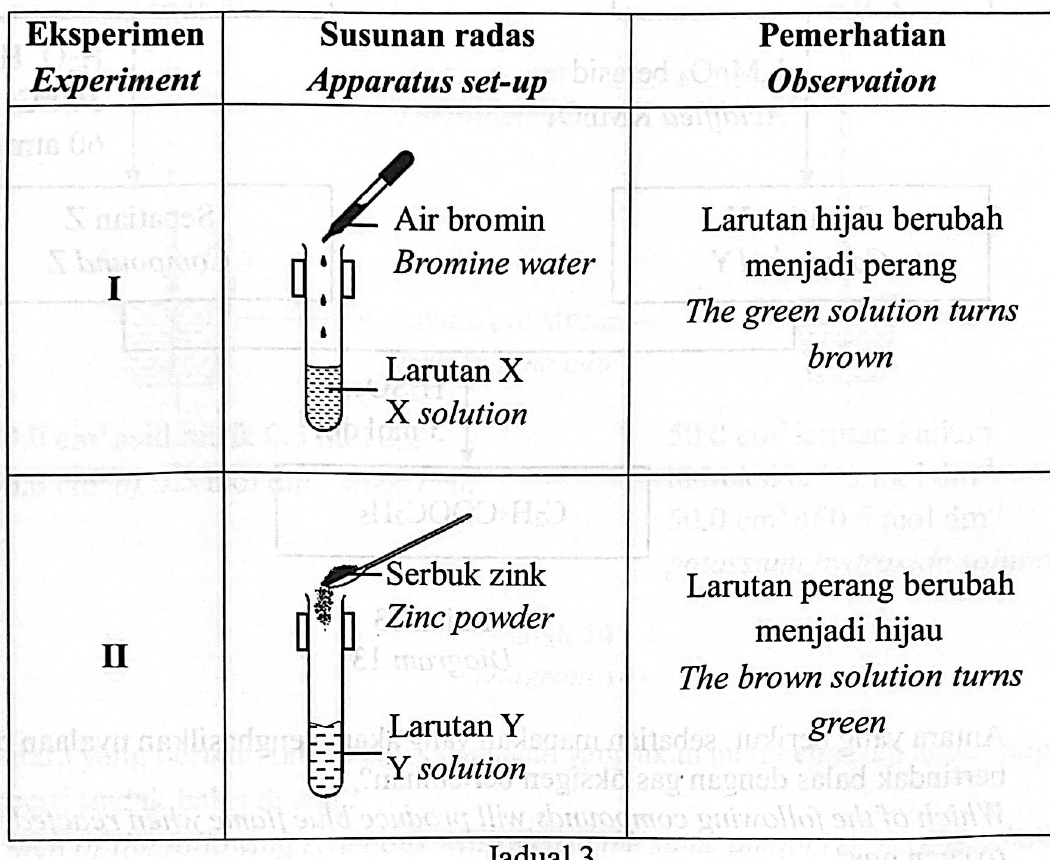
Table 3 shows the observations for two experiments carried out by a student. Experiment I: bromine water added to X solution; the green solution turns brown. Experiment II: zinc powder added to Y solution; the brown solution turns green. Which of the following is the correct observation if X and Y are tested with potassium hexacyanoferrate(III) solution?
Medium
Which of the following statements is correct about a weak alkaline solution?
Medium
Which of the following is correct about sulphuric acid? I pH value is less than 7; II Has higher degree of dissociation; III Turn red litmus paper to blue; IV Has lower concentration of hydrogen ions.
Medium
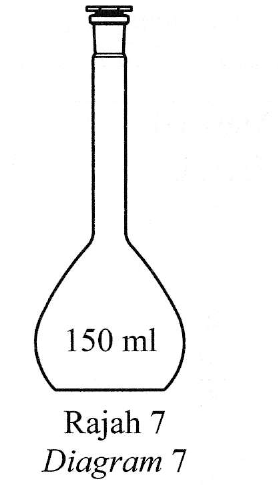
Diagram 7 shows an apparatus (150 ml volumetric flask) to prepare a standard solution of 0.2 mol dm⁻³ sodium chloride. What is the volume of 2.0 mol dm⁻³ sodium chloride solution needed to prepare the standard solution?
Medium
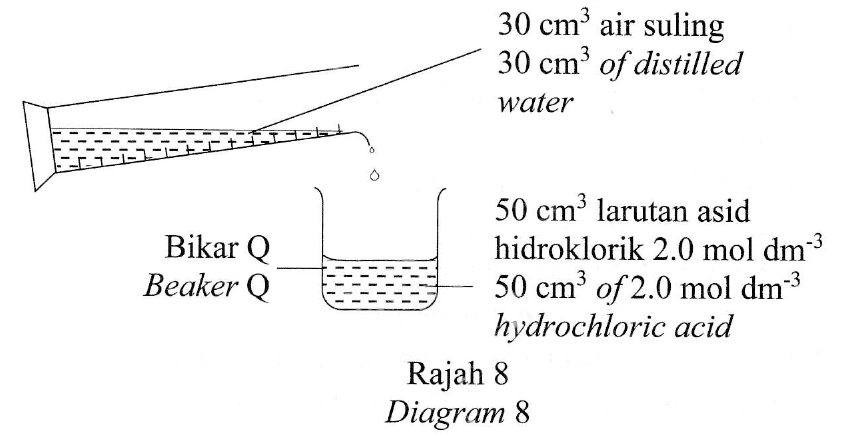
Diagram 8 shows the apparatus set-up to prepare hydrochloric acid solution (30 cm³ distilled water added to 50 cm³ of 2.0 mol dm⁻³ hydrochloric acid in beaker Q). Excess zinc powder is added into 40 cm³ of hydrochloric acid solution prepared in beaker Q. What is the maximum mass of salt formed at the end of the experiment? [Relative atomic mass: Cl = 35.5, Zn = 65]
Medium
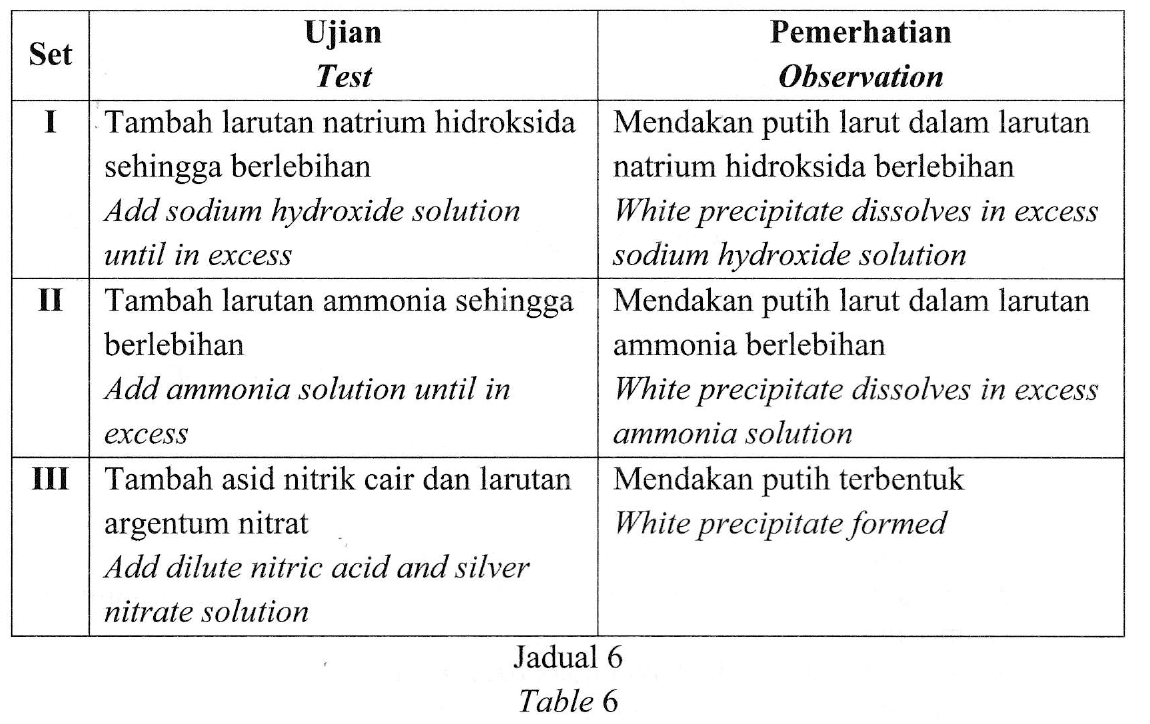
Table 6 shows the observations in three tests on solution G. Set I: add sodium hydroxide solution until in excess: white precipitate dissolves in excess. Set II: add ammonia solution until in excess: white precipitate dissolves in excess. Set III: add dilute nitric acid and silver nitrate solution: white precipitate formed. What is G?
Medium
Which of the following substances ionise partially in water?
Medium
A green colour salt produces a blue solution when dissolved in water. What is the name of the salt?
Medium
What is the concentration of solution produced when 400 cm³ of distilled water is added into volumetric flask containing 100 cm³ of 2.0 mol dm⁻³ nitric acid?
Medium
Which equations represent a neutralisation reaction?
I CuO + H₂SO₄ → CuSO₄ + H₂O
II C₂H₅OH + 3O₂ → 2CO₂ + 3H₂O
III MgCO₃ + 2HCl → MgCl₂ + CO₂ + H₂O
IV CH₃COOH + NaOH → CH₃COONa + H₂O
Medium
Diagram 17 shows the observation of three tests on salt X. I: dissolves in distilled water giving a colourless solution. II: excess sodium hydroxide solution gives white precipitate. III: excess ammonia solution gives white precipitate. What is X?
Medium
Table 1 shows the pH values of P, Q, R and S solutions.
Solution: P pH 5; Q pH 6; R pH 7; S pH 9.
Which solution is alkaline?
Easy
Which of the following is an insoluble salt?
Easy
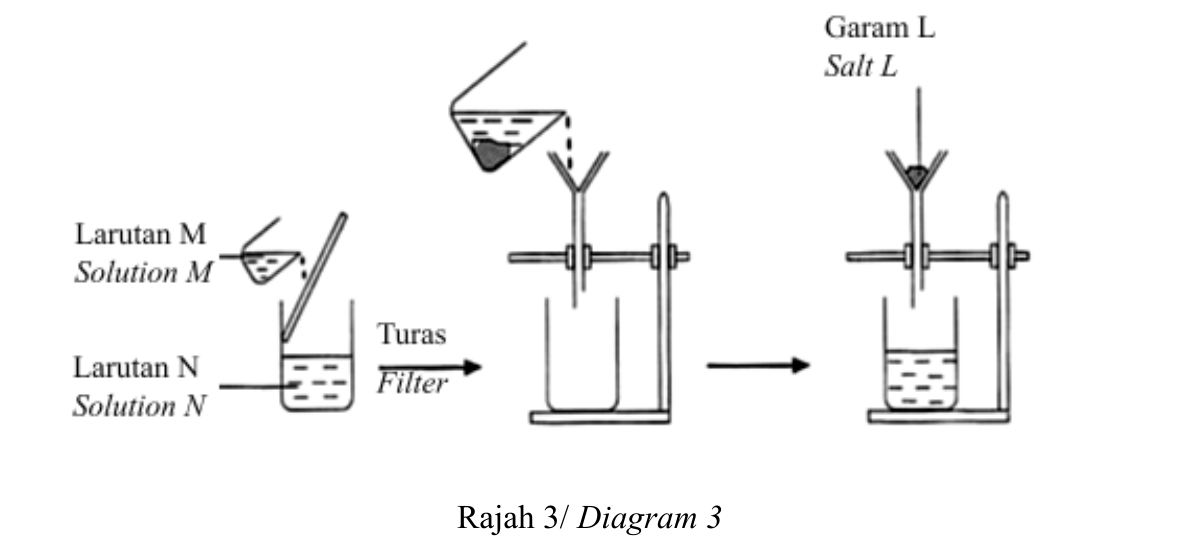
Diagram 3 shows the apparatus set-up to prepare a salt (solution M is added to solution N, the mixture is filtered, and salt L is the residue). What is solution M, solution N and salt L? (M, N, L: A magnesium nitrate, barium chloride, magnesium chloride; B lead(II) nitrate, silver chloride, lead(II) chloride; C barium nitrate, sodium chloride, barium chloride; D lead(II) nitrate, sodium chloride, lead(II) chloride)
Medium
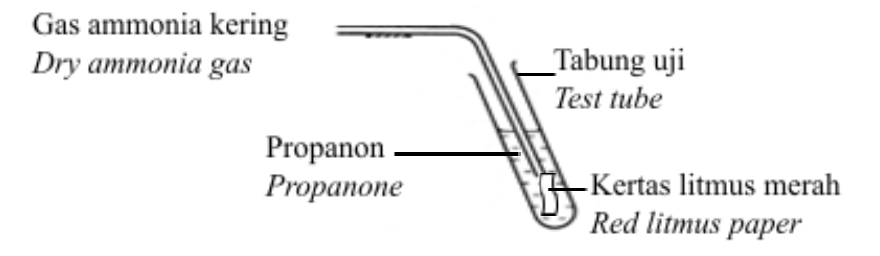
Diagram 5 shows dry ammonia gas being flowed into propanone. No change was observed on red litmus paper. What should be done to change the color of the litmus paper?
Medium
Toothpaste can be applied to treat ant bite. What is the name of the chemical that may be found in the ant bite?
Easy
Calculate the pH value of calcium hydroxide, Ca(OH)2 0.02 mol dm⁻³.
Medium
What is the number of moles for 200 cm³ of nitric acid with a concentration of 31.5 g dm⁻³? [Relative atomic mass: H = 1; N = 14; O = 16]
Medium
Which of the following substances is acidic?
Easy
Limestone is an insoluble salt. Which of the following salts is in the same type as limestone?
Easy
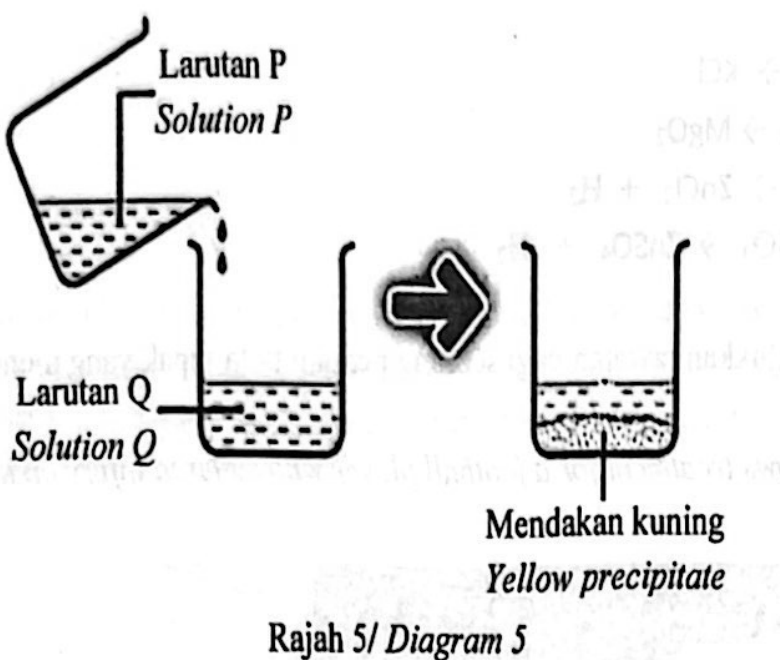
Diagram 5 shows a yellow precipitate formed when solution P and solution Q are mixed. Which of the following best represents solution P and solution Q?
Medium
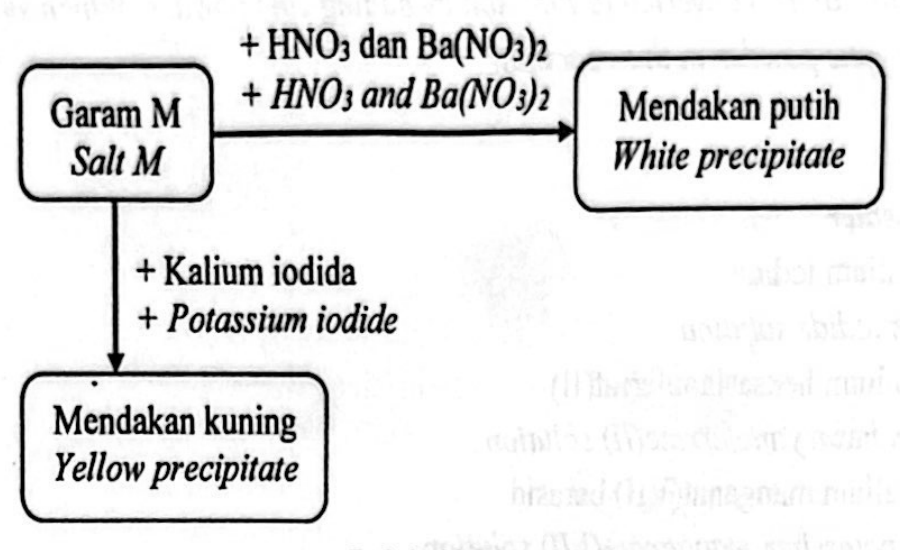
Diagram 6 shows a series of reactions involving salt M: salt M + HNO₃ and Ba(NO₃)₂ gives a white precipitate; salt M + potassium iodide gives a yellow precipitate. What are the cation and anion present in salt M?
Medium
What is the volume of distilled water that needed to be added to 5.7 g of magnesium chloride to obtain a solution with concentration of 0.3 mol dm⁻³? [Relative atomic mass: Mg = 24, Cl = 35.5]
Medium
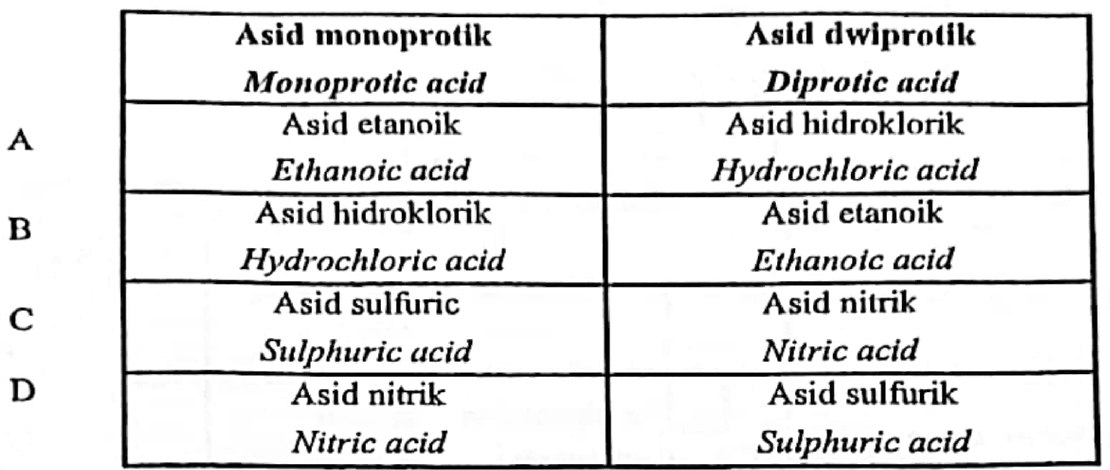
Which pair of acids is classified correctly? (Monoprotic acid / Diprotic acid) A Ethanoic acid / Hydrochloric acid; B Hydrochloric acid / Ethanoic acid; C Sulphuric acid / Nitric acid; D Nitric acid / Sulphuric acid
Easy
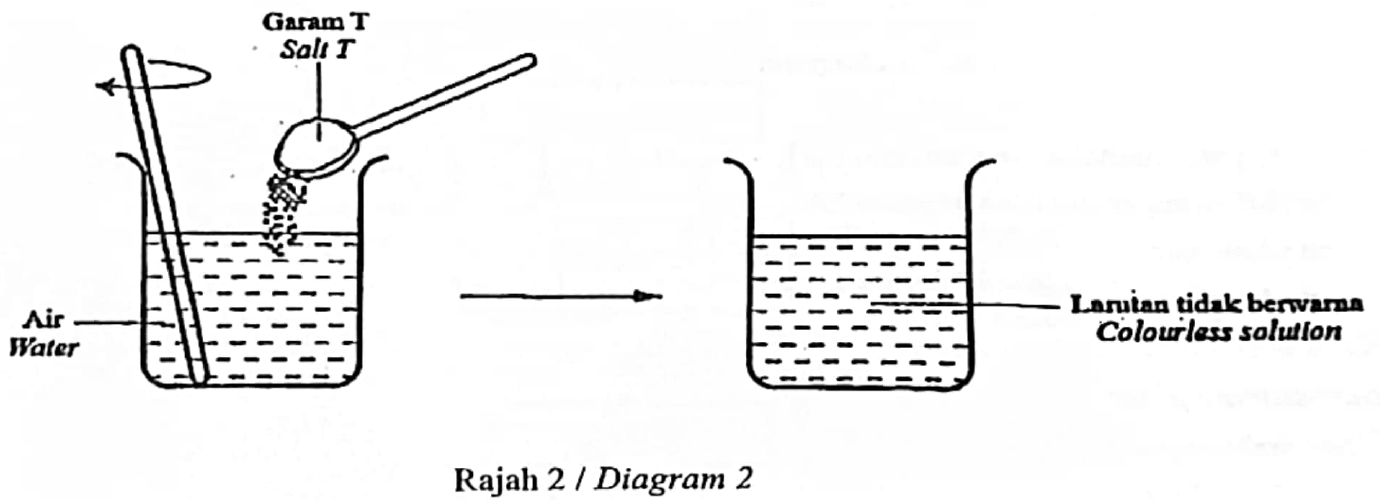
Diagram 2 shows salt T is added into the water and stirred to give a colourless solution. What is salt T?
Medium
The following observations are obtained when M salt powder is heated: a colourless gas released which turns limewater chalky; the green powder turns black. What is salt M?
Medium
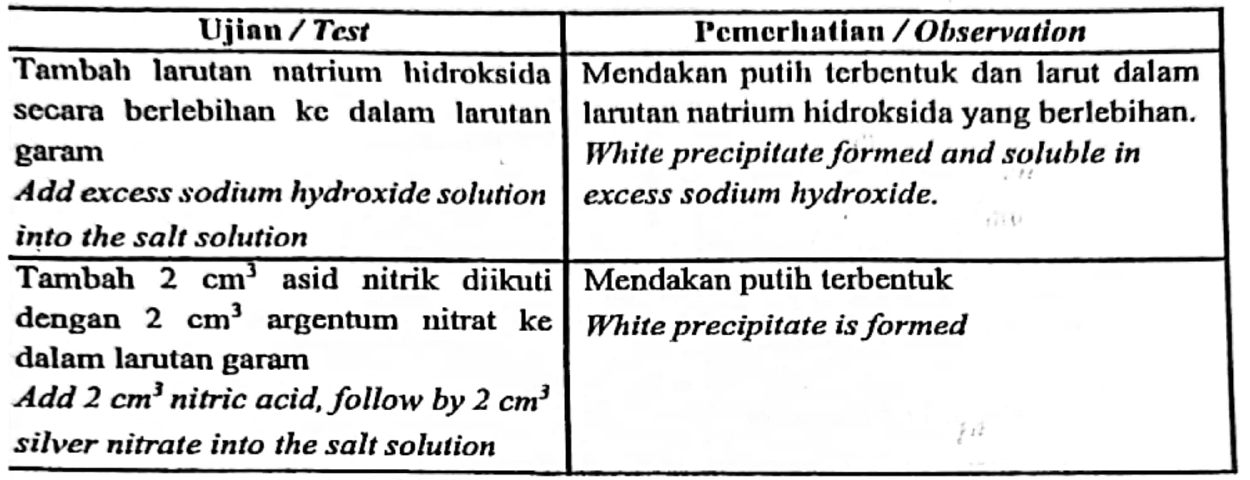
A series of tests are conducted to verify the ions present in a salt solution. Table 7: add excess sodium hydroxide solution - white precipitate formed and soluble in excess sodium hydroxide; add 2 cm3 nitric acid followed by 2 cm3 silver nitrate - white precipitate is formed. Which of the following is the salt solution?
Medium
Which of the following is true about the properties of a strong alkali?
Medium
Which of the following will produce an insoluble salt?
Medium
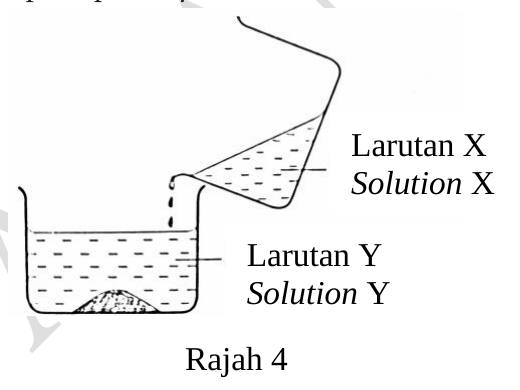
Diagram 4 shows white precipitate formed when solution X is added into solution Y. Which of the following is the most suitable to represent solution X and solution Y?
A X: Fe(NO₃)₃, Y: Na₂CO₃
B X: Pb(NO₃)₂, Y: KI
C X: Pb(NO₃)₂, Y: KCl
D X: Cu(NO₃)₂, Y: K₂CO₃
Medium
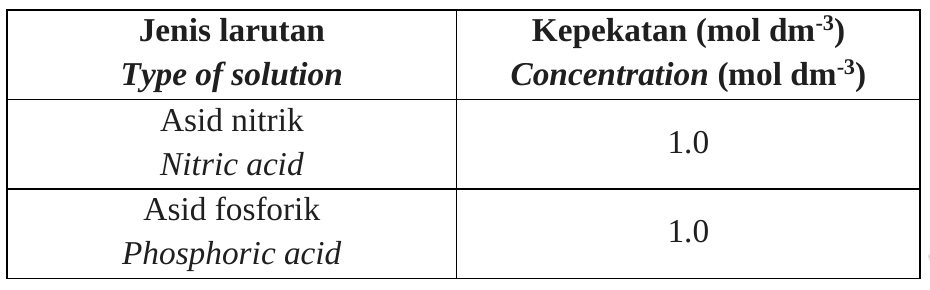
Table 2 shows nitric acid 1.0 mol dm⁻³ and phosphoric acid 1.0 mol dm⁻³. Which of the following is correct about the two solutions?
I The pH value of nitric acid is lower than phosphoric acid
II The degree of ionisation of phosphoric acid is lower than nitric acid
III The concentration of hydrogen, H⁺ ion is higher in phosphoric acid
IV Phosphoric acid is a strong acid while nitric acid is a weak acid
Medium
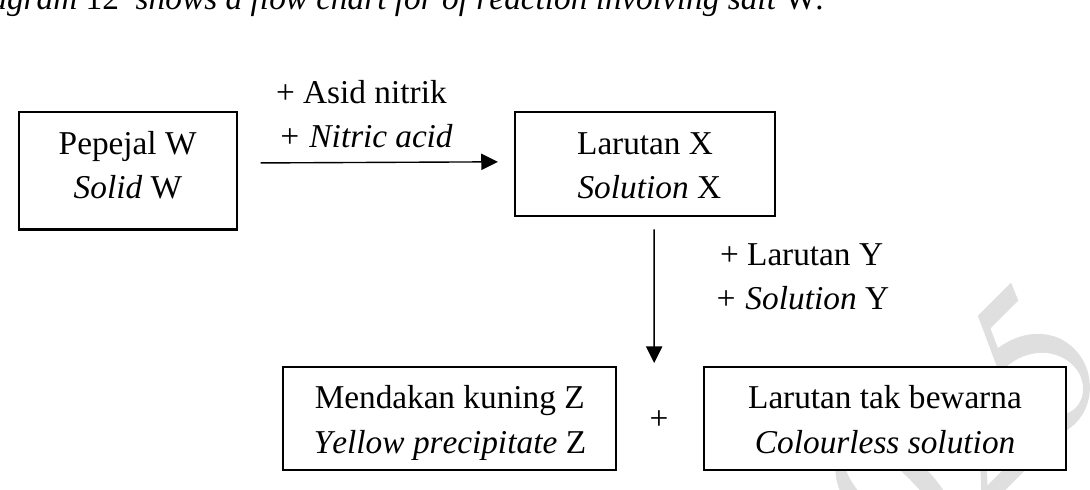
Diagram 12 shows a flow chart for reaction involving salt W: solid W + nitric acid → solution X; solution X + solution Y → yellow precipitate Z + colourless solution. State cation and anion present in yellow precipitate Z and name a solution Y.
Medium
Which of the following substances is a monoprotic acid?
Easy
Which of the following is a base?
Medium
Which of the following is a salt that does not dissolve in water?
Easy
Which of the following is the characteristic of hydrogen chloride gas that enables its acidic properties to be shown?
Medium
What is the pH value of sodium hydroxide 0.1 mol dm-3?
Medium
Heating of zinc nitrate produces brown gas. What is the gas?
Easy
Faizal wants to prepare 250 cm3 of 0.3 mol dm-3 sodium hydroxide solution. What is the mass of sodium hydroxide does Faizal need to produce the solution? [Relative atomic mass: Na = 23, O = 16, H = 1]
Medium
A series of tests are conducted to verify the cation and anion present in a salt solution. Adding excess sodium hydroxide solution: white precipitate formed, insoluble in excess. Adding excess ammonia solution: white precipitate formed and soluble in excess ammonia solution. Which of the following is the cation present in the salt solution?
Medium
A diprotic acid, H2X has a concentration of 1.0 mol dm-3. What is the volume of H2X needed to neutralise 25.0 cm3 of 1.0 mol dm-3 sodium hydroxide solution, NaOH?
Medium
Which substance is a triprotic acid?
Easy
Table 4 shows the pH value of two acids, P and Q: pH of 0.1 mol dm⁻³ solution is 0.7 for P and 5.5 for Q. Which statement is true about acid P and Q?
Medium
Solid R produces a brown gas that turns moist blue litmus paper to red when heated strongly. Identify solid R.
Medium
Which of the following substances ionised completely in water? I. Ammonia II. Hydrochloric acid III. Ethanoic acid IV. Sodium hydroxide
Medium
Which of the following acids produce the highest concentration of hydrogen ions, H⁺ in water?
Medium
Which of the following methods is used to prepare a standard solution?
Easy
Which of the following substances reacts with magnesium carbonate, MgCO₃ to produce magnesium chloride, MgCl₂?
Easy
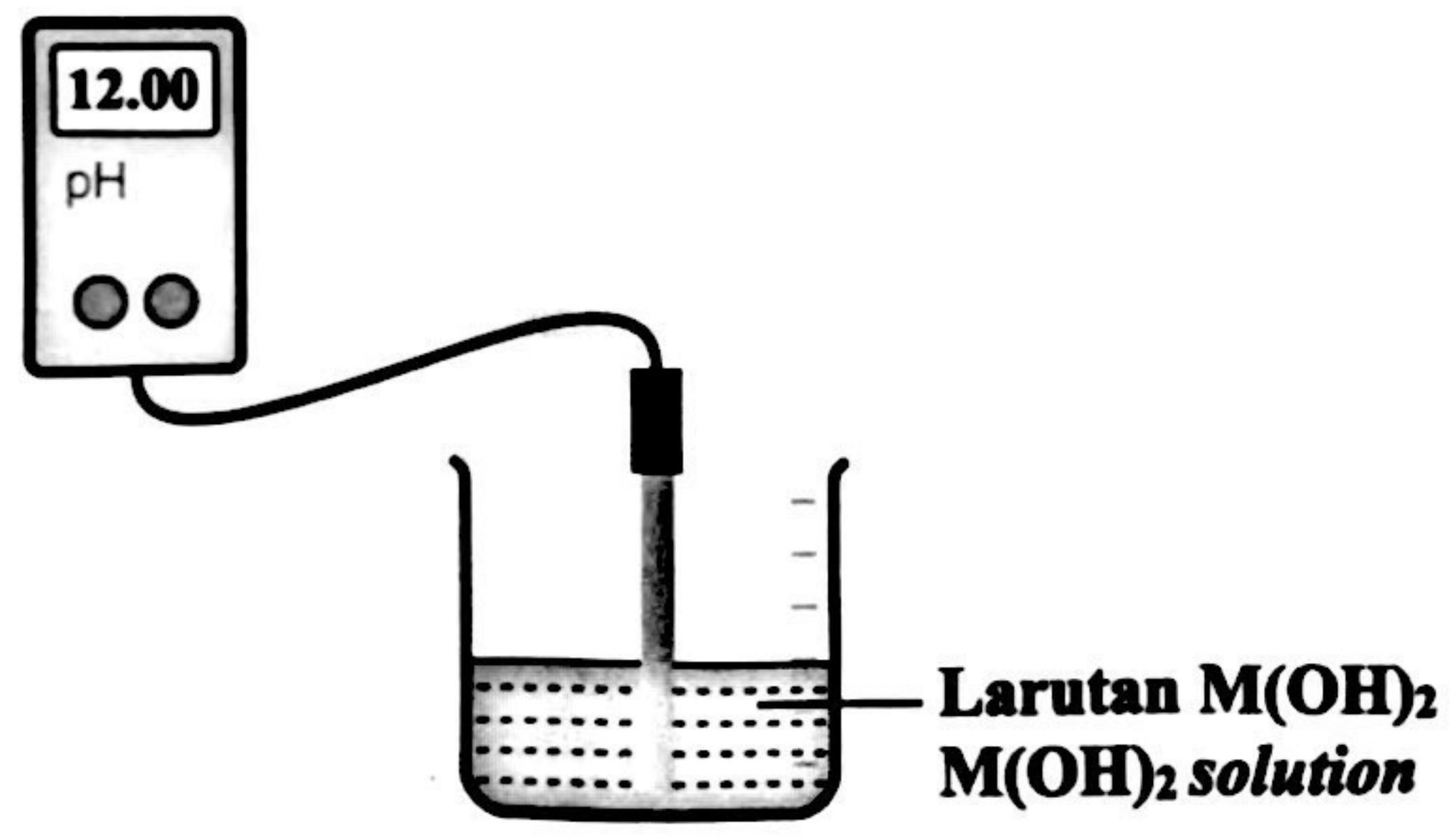
Diagram 10 shows the reading of pH meter (12.00) when its probe is dipped into a M(OH)₂ solution. What is the molarity of the solution?
Medium
In an experiment, Ahmad adds excess of zinc oxide to 50 cm³ of 2.0 mol dm⁻³ nitric acid. What is the maximum mass of zinc nitrate formed? [Relative atomic mass: H = 1; N = 14; O = 16; Zn = 65]
Medium
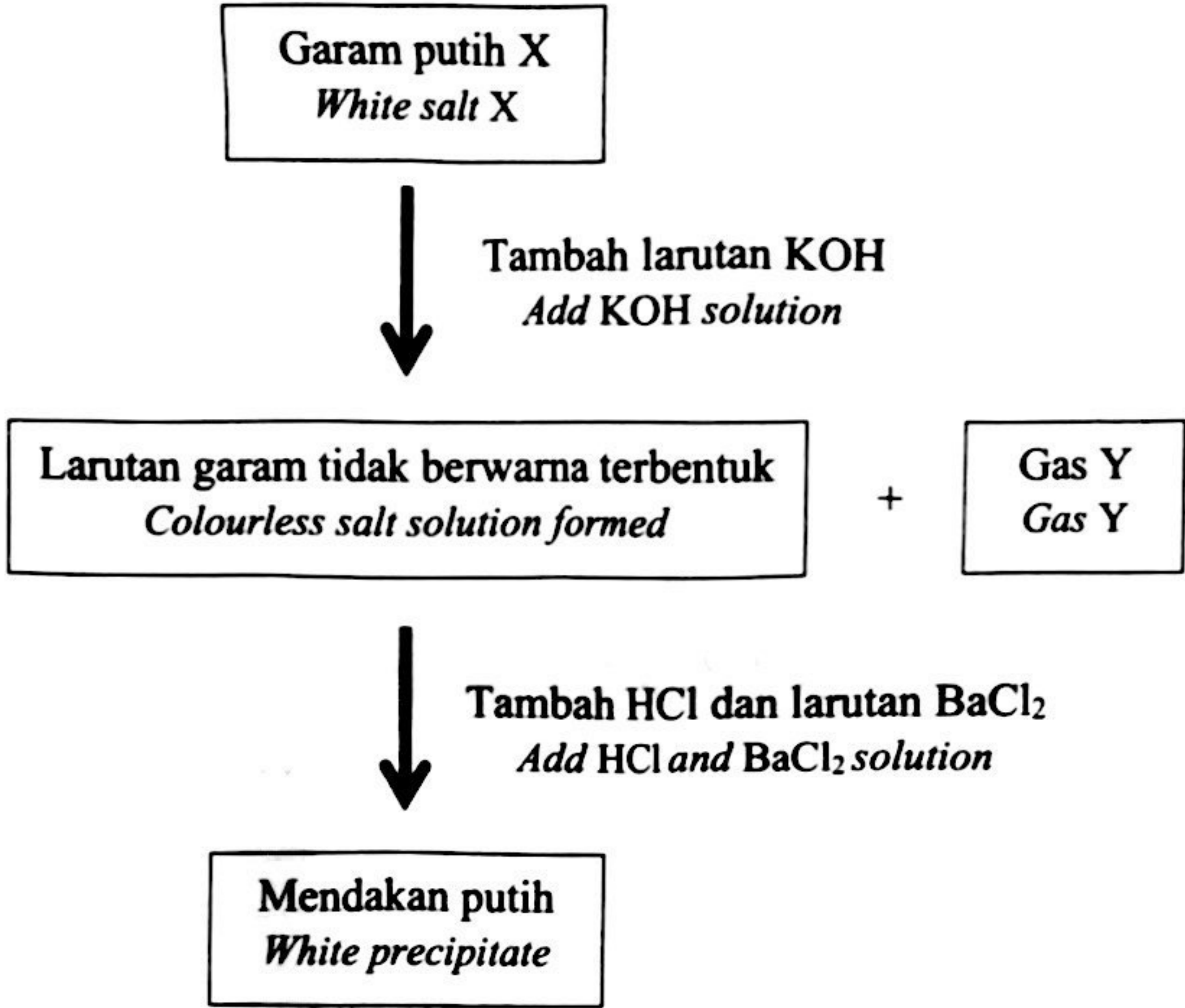
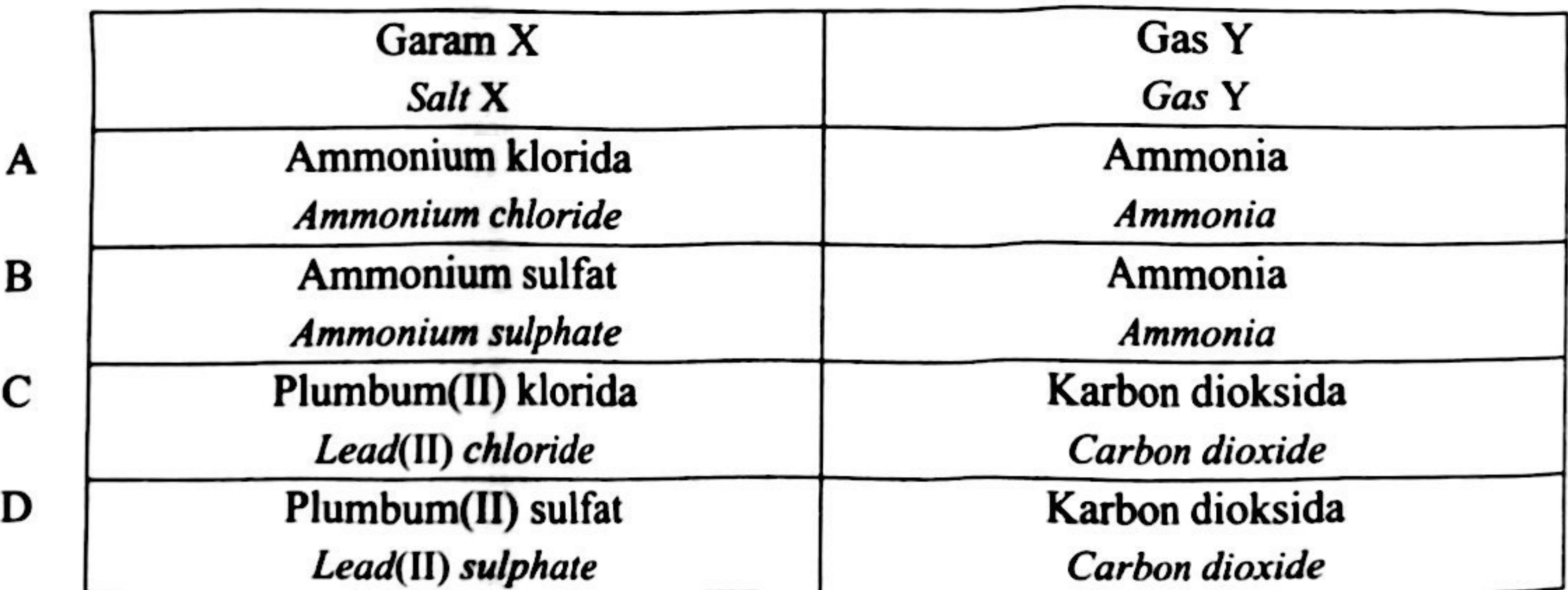
Diagram 13 shows a series of test carried out on salt X: white salt X + KOH solution gives colourless salt solution + gas Y; then HCl and BaCl₂ solution give a white precipitate. Gas Y turns moist red litmus paper to blue. What is salt X and gas Y? (A ammonium chloride / ammonia; B ammonium sulphate / ammonia; C lead(II) chloride / carbon dioxide; D lead(II) sulphate / carbon dioxide)
Medium
Which of the following statements is true about the role of water in showing acidic properties?
Medium
Which of the following is true about weak acid?
Easy
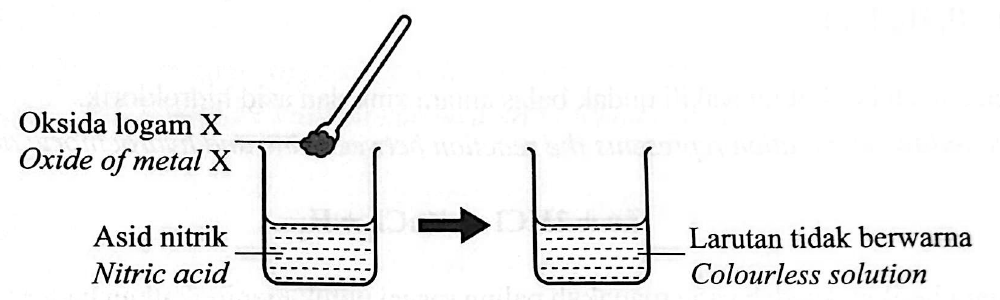
Diagram 5 shows the observation when oxide of metal X is added into nitric acid: a colourless solution forms. Which of the following substances will show the same observation when added to nitric acid? I Calcium oxide II Sodium oxide III Silicon dioxide IV Copper(II) oxide
Medium
Which of the following is the correct sequence in preparation of solution by dilution method? I Transfer the solution into a volumetric flask II Calculate the volume of stock solution to be diluted III Use a pipette to measure the volume of solution needed IV Add distilled water until the calibration mark
Medium
Diagram 6 shows an experiment to produce salt X by adding Pb(NO₃)₂ solution to ZnSO₄ solution. The experiment is repeated to produce salt Y which has the same solubility as salt X. Which of the following salt solutions can be used to replace the Pb(NO₃)₂ solution?
Medium
The following information shows the observation when a solution containing cation R is tested with alkali solutions: white precipitate is insoluble in excess NaOH solution; white precipitate is insoluble in excess NH₃ solution. What is cation R?
Medium
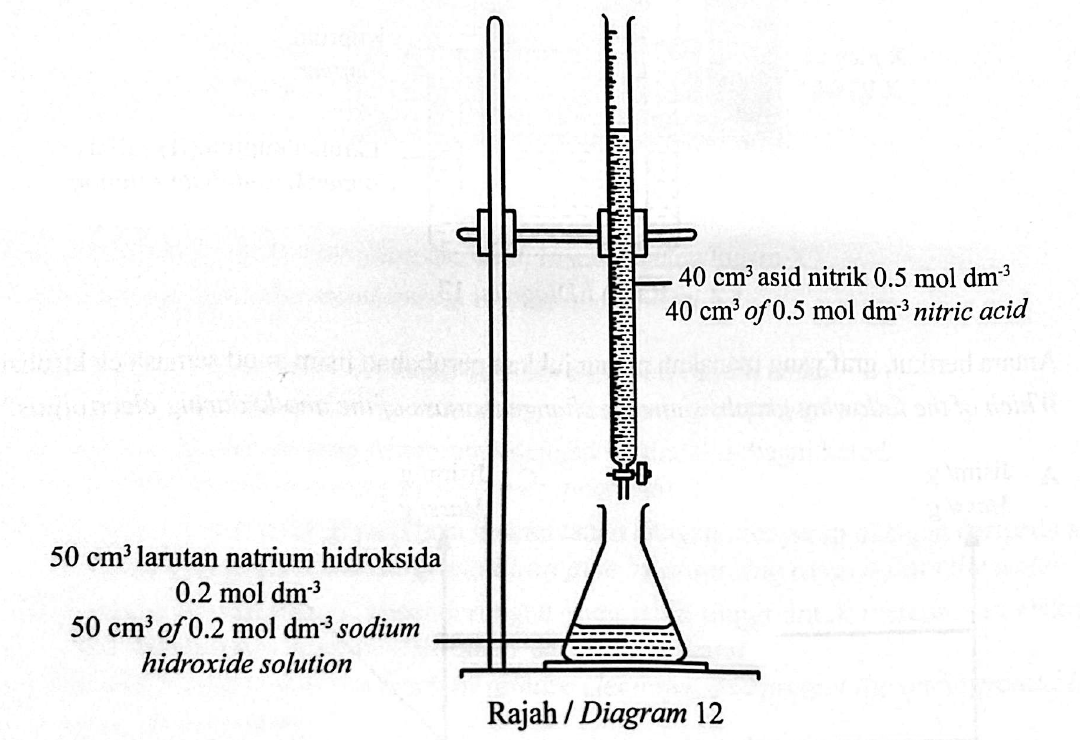
Diagram 12 shows the apparatus set-up for the titration of sodium hydroxide, NaOH with nitric acid, HNO₃ (burette: 40 cm³ of 0.5 mol dm⁻³ nitric acid; flask: 50 cm³ of 0.2 mol dm⁻³ sodium hydroxide solution). What is the maximum mass of the salt formed in this reaction? [Relative atomic mass: Na = 23, O = 16, N = 14]
Medium
A student prepared 100 cm³ of sodium hydroxide solution, NaOH by dissolving 4.0 g of sodium hydroxide in distilled water. After that, 150 cm³ of distilled water was added to the solution to dilute it. What is the pH value of the dilute solution? [Relative atomic mass: Na = 23, O = 16, H = 1]
Medium
Which of the following substances is a diprotic acid?
Easy
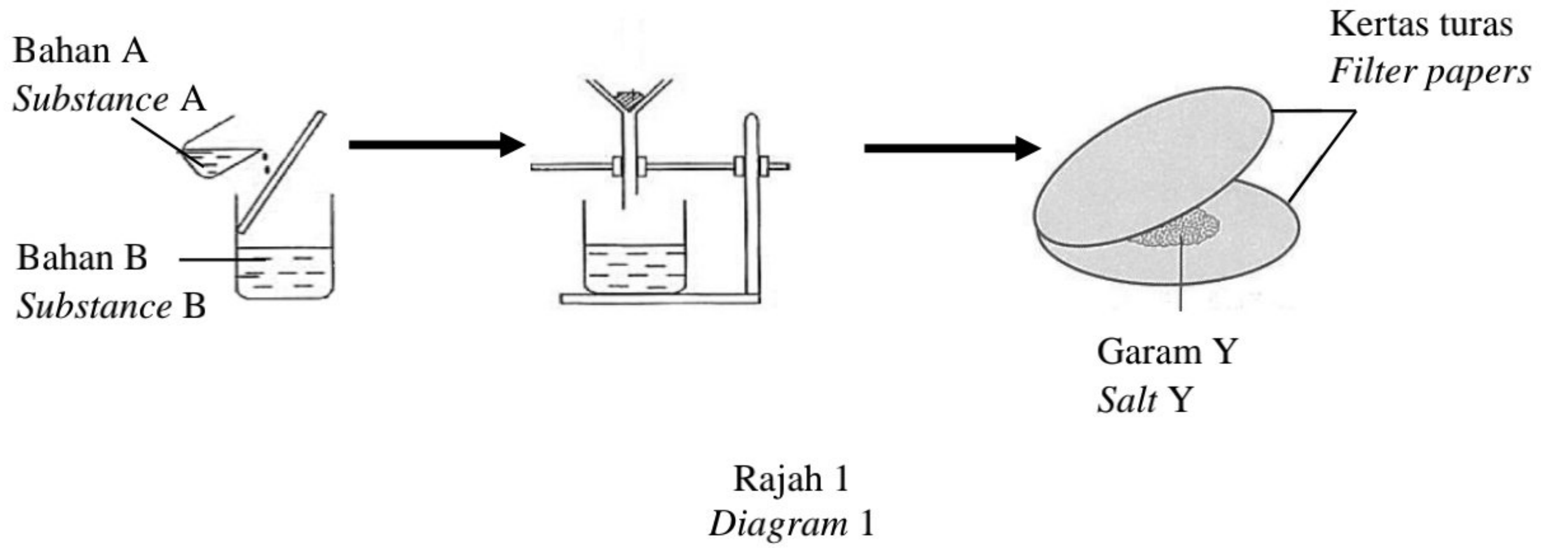
Diagram 1 shows the apparatus set-up to prepare salt Y through reaction X. What is the reaction of X, substance A, substance B and salt Y?
Medium
Table 4 shows the observation when blue litmus paper is dipped into three substances: glacial ethanoic acid - no change; glacial ethanoic acid + propanone - no change; glacial ethanoic acid + water - blue litmus paper turns red. Which of the following statements explain the observations?
Medium
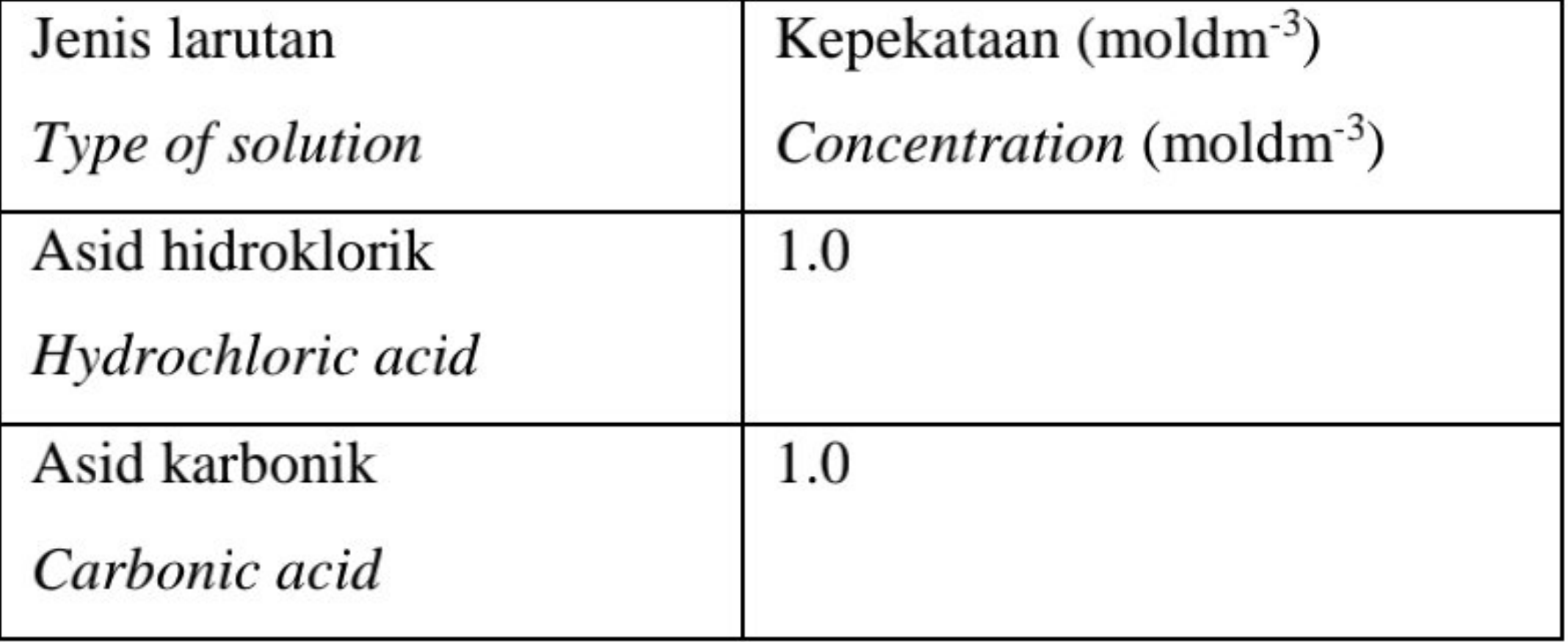
Table 5 shows information about two different solutions: hydrochloric acid 1.0 mol dm-3; carbonic acid 1.0 mol dm-3. Which of the following is not true about the two solutions?
Medium
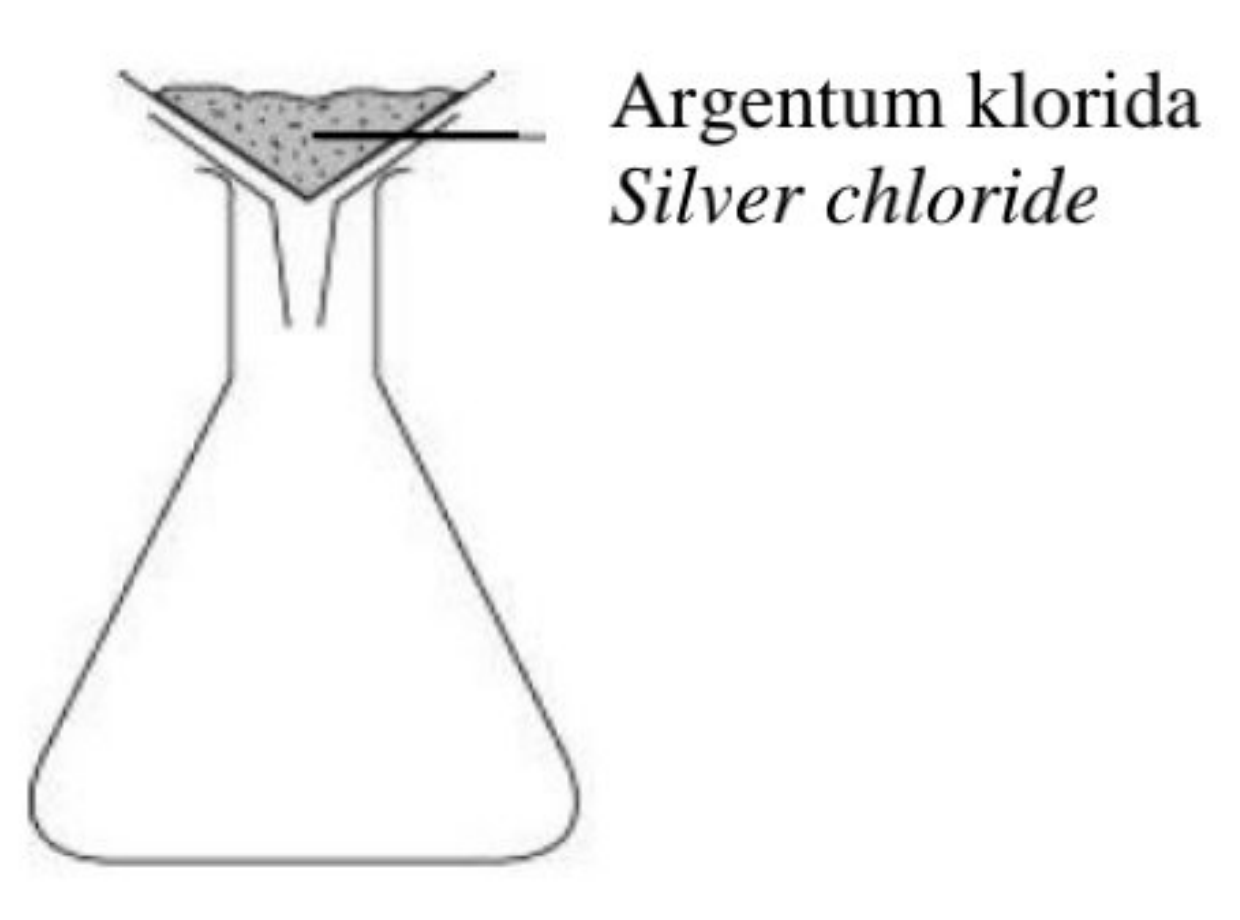
Diagram 7 shows the apparatus set-up to prepare silver chloride (filtering silver chloride). Which of the following materials is the most suitable to react with hydrochloric acid to prepare silver chloride?
Medium
When copper(II) carbonate is heated, lime water turns cloudy and a black solid is formed. Which of the following equations represents the reaction correctly?
Medium
In which of the following test tubes does a reaction occur?
Medium
14.9 g of potassium chloride, KCl is dissolved in distilled water to produce 0.4 mol dm-3 potassium chloride solution. What is the volume of distilled water needed to dissolved the potassium chloride? [Molar mass KCl = 74.5 g mol-1]
Medium
The equation below represents a neutralisation reaction: 2HNO3 + Ba(OH)2 → Ba(NO3)2 + 2H2O. 10.0 cm3 0.1 mol dm-3 of barium hydroxide solution is titrated with 0.1 mol dm-3 nitric acid. If the initial reading of the burette is 20.00 cm3, what is the final reading of the burette?
Medium
Which of the following substances has the highest pH value?
Medium
Which of the following salts could be produced through neutralisation reaction?
Medium
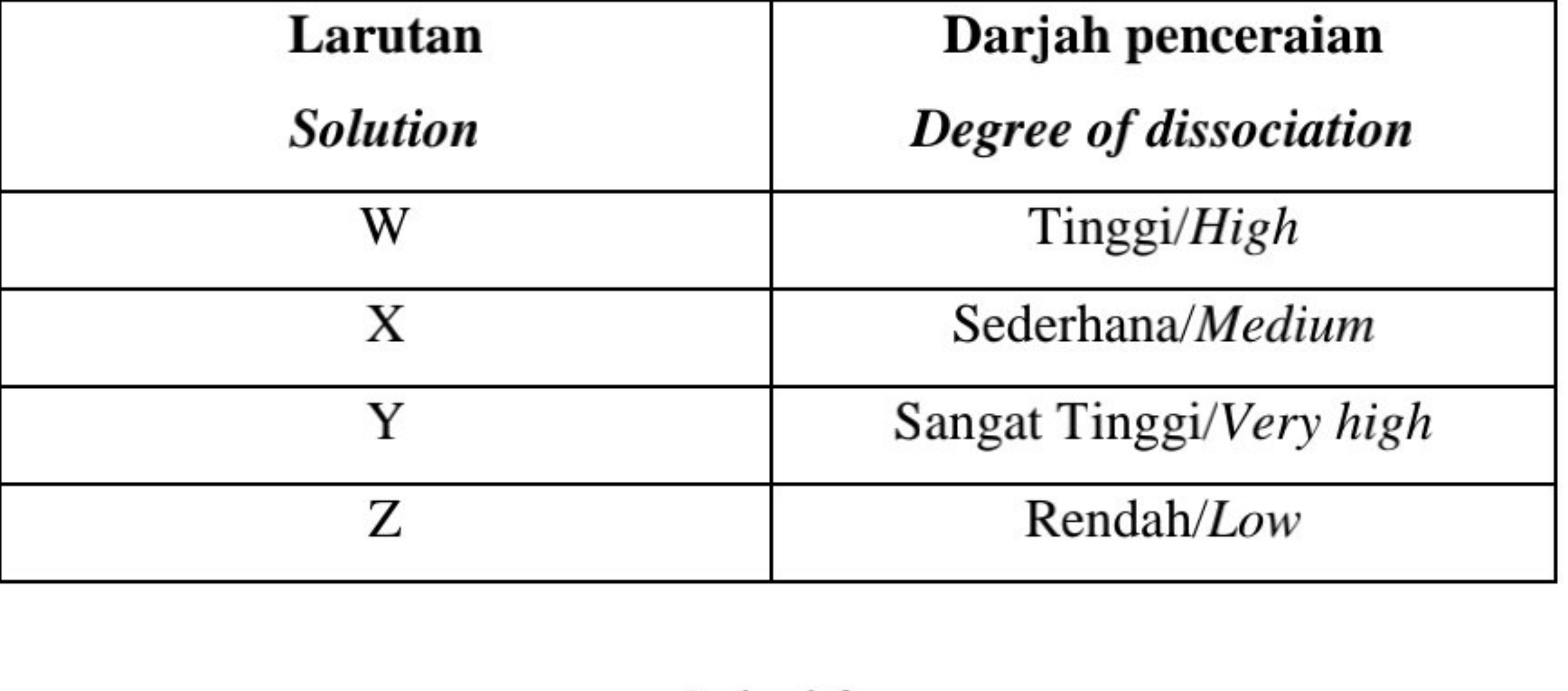
Table 3 shows the degree of dissociation of four solutions of alkalis which have the same concentration (W: High, X: Medium, Y: Very high, Z: Low). Which solution has the highest pH value?
Medium
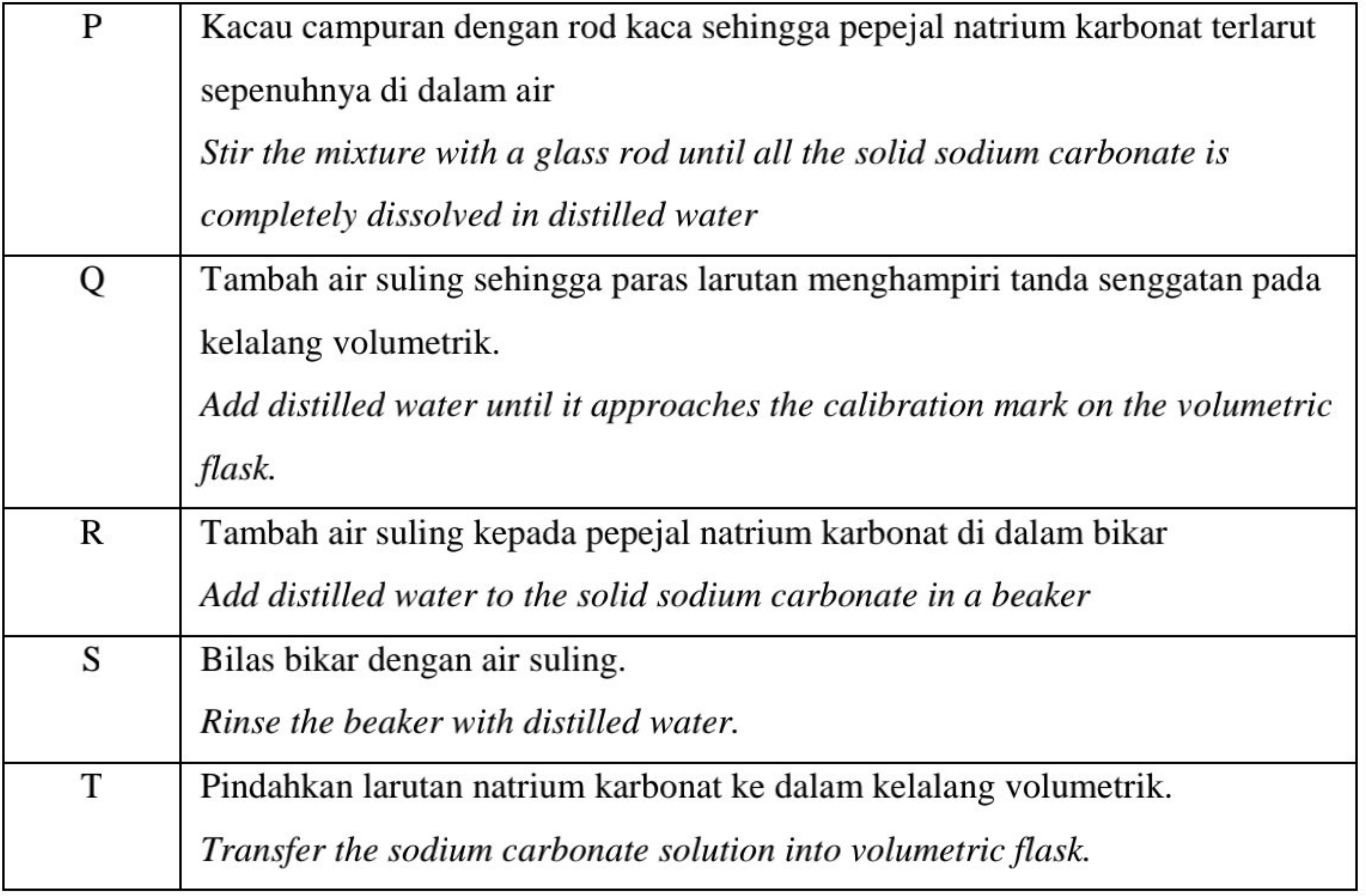
Table 4 shows part of the steps to prepare standard solution of sodium carbonate in laboratory.
P Stir the mixture with a glass rod until all the solid sodium carbonate is completely dissolved in distilled water
Q Add distilled water until it approaches the calibration mark on the volumetric flask
R Add distilled water to the solid sodium carbonate in a beaker
S Rinse the beaker with distilled water
T Transfer the sodium carbonate solution into volumetric flask
Choose the correct arrangement of steps to prepare the standard solution of sodium carbonate.
Medium
Diagram 5 shows the apparatus set-up to prepare a salt (Substance P is added to Substance Q, the mixture is filtered, and Salt R is obtained as residue on the filter paper). Which of the following is correct?
Medium
The crop production at a farm is decreasing due to soil problem. The soil sample is dissolved in distilled water and a few tests are carried out on the solution. It is found that the soil is polluted by diprotic acid X. The acid is titrated with 25 cm³ of 0.001 mol dm⁻³ of sodium hydroxide solution that is added with three drops of phenolphthalein. Table 6 shows the results: volume of acid X (cm³) 25.00, 25.50, 25.70 = pink; 25.80, 25.90 = colourless. What is the pH value of acid X?
Medium
Which of the following is correct about weak acid solution?
Easy
Which acid contains the highest number of hydrogen ions?
Medium
Which of the following is a soluble salt?
Medium
Solution X formed green precipitate when added with sodium carbonate solution but blue solution formed when added with potassium sulphate solution. What is solution X?
Medium
During the MCO, Ahmad needed to drink a Barium meal (made of barium sulphate salt) before an abdominal X-ray. Which of the following solutions are suitable to verify the presence of anion in that salt? I Hydrochloric acid; II Sulphuric acid; III Barium chloride solution; IV Sodium sulphate solution
Medium
20 cm³ of 0.5 mol dm⁻³ metal X hydroxide solution reacts completely with 20 cm³ of 1.0 mol dm⁻³ nitric acid. What is the formula of metal X nitrate salt produced?
Medium
Salt X is heated: Salt X → Oxide J + Gas K + Gas L. Oxide J is black when hot and cold; brown gas K is released; colourless gas L ignites a glowing wooden splinter. Which of the following is true about the test?
Medium
Which of the following particles in solution of ammonia is responsible for its alkaline properties?
Easy
Which of the following is not a chemical property of acids?
Easy
Name the gas that turns lime water to cloudy?
Easy
Which of the following substances dissolve in water to produce a solution with pH value more than 7?
Medium
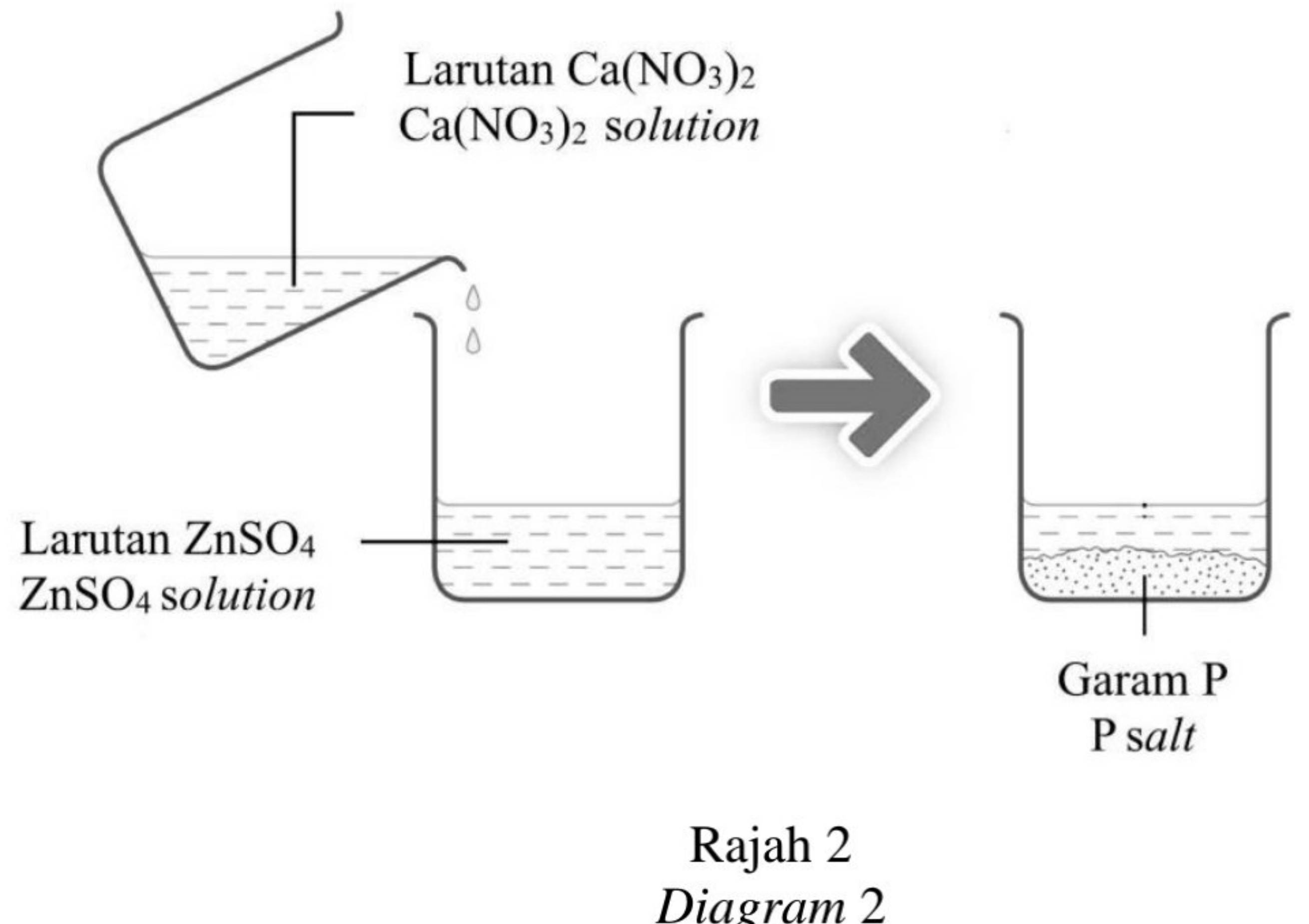
Diagram 2 shows an experiment to produce salt P: Ca(NO₃)₂ solution is poured into ZnSO₄ solution and salt P forms as a precipitate.
What salt solution can be used to replace Ca(NO₃)₂ solution to produce salt that has the same solubility as salt P?
Medium
Diagram 7 shows reactions of acid X: acid X + iron powder gives iron(II) nitrate; acid X + zinc carbonate gives salt Y.
Salt Y could be
Medium
Which of the following is not strong acid?
Easy
Acid which has a basicity value of 2 is
Easy
Which of the following is the characteristic of hydrogen chloride gas that enables its acidic properties to be shown?
Medium
The chemical equation represents the preparation of zinc sulphate: Zn(s) + H₂SO₄(aq) → ZnSO₄(aq) + H₂(g). 3.5 g of zinc powder is added to 50 cm³ of 0.60 mol dm⁻³ sulphuric acid. What is the mass of unreacted zinc powder? [Relative atomic mass: Zn = 65]
Medium
Which of the following particles in ammonia solution is responsible for its alkaline properties?
Easy
Which of the following is true about the chemical properties of alkalis?
Easy
Diagram 3 shows two solutions of the same concentration and their pH values: aqueous solution R pH 8 and aqueous solution S pH 13. The difference in the pH because
Medium
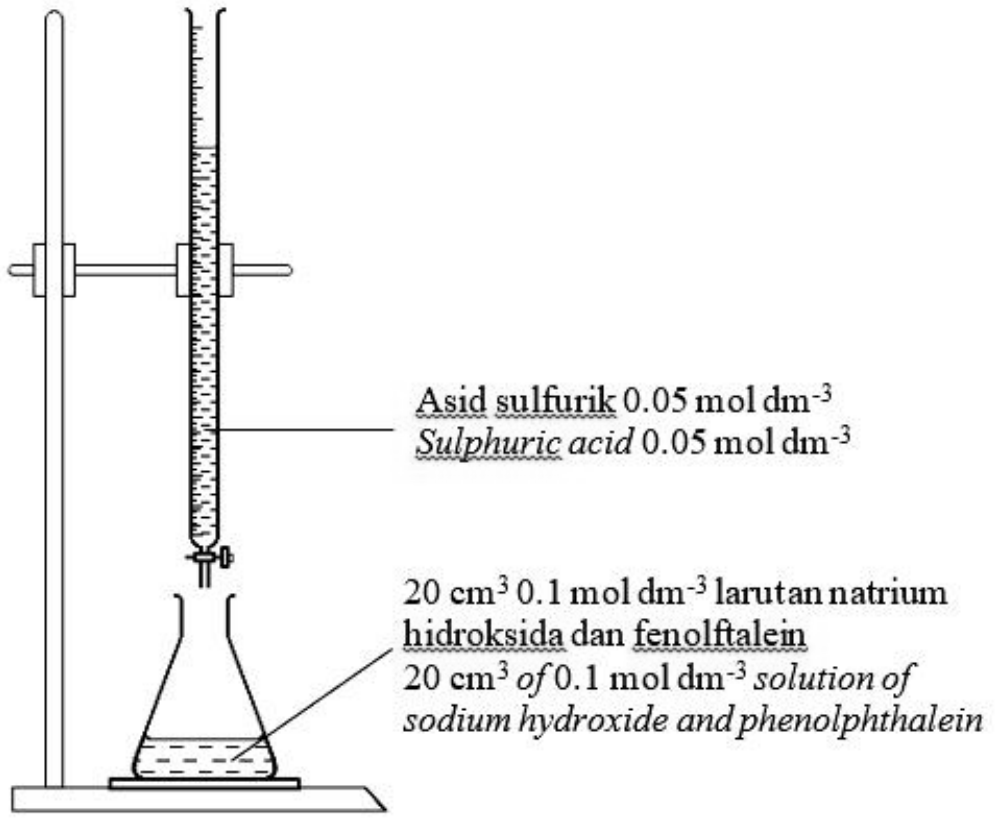
Diagram 11 shows the arrangement of the apparatus for the titration process of sodium hydroxide solution with sulfuric acid (burette: 0.05 mol dm⁻³ sulphuric acid; conical flask: 20 cm³ of 0.1 mol dm⁻³ sodium hydroxide and phenolphthalein). What is the volume of sulphuric acid needed to neutralise sodium hydroxide solution in the conical flask?
Medium
The chemical substance with highest pH value is
Easy
What is meant by strong acid?
Easy
Which of the following pairs of chemical substances and degree of dissociation is correct?
A Ammonia solution - Complete
B Sodium hydroxide - Partial
C Oxalic acid - Partial
D Ethanoic acid - Complete
Medium
Diagram 14 shows a reagent bottle containing sodium hydroxide solution with pH 13. What is the concentration of sodium hydroxide solution in mol dm⁻³?
Medium
Which of the following is a base?
Easy
Which of the following is true about weak acid?
I The pH is less than 7
II Turn red litmus paper to blue
III Has low concentration of hydrogen ions
IV Completely ionises in the water to produce hydrogen ions, H⁺
Medium
Diagram 5 shows inland lake known as dead sea. In dry season, solid X formed. During raining season all the solid X disappear. What are the properties of the solid X?
I Can be purified using recrystallization
II Can conduct electricity in molten state
III Consist of chloride and sulphate
IV Low melting and boiling point
Medium
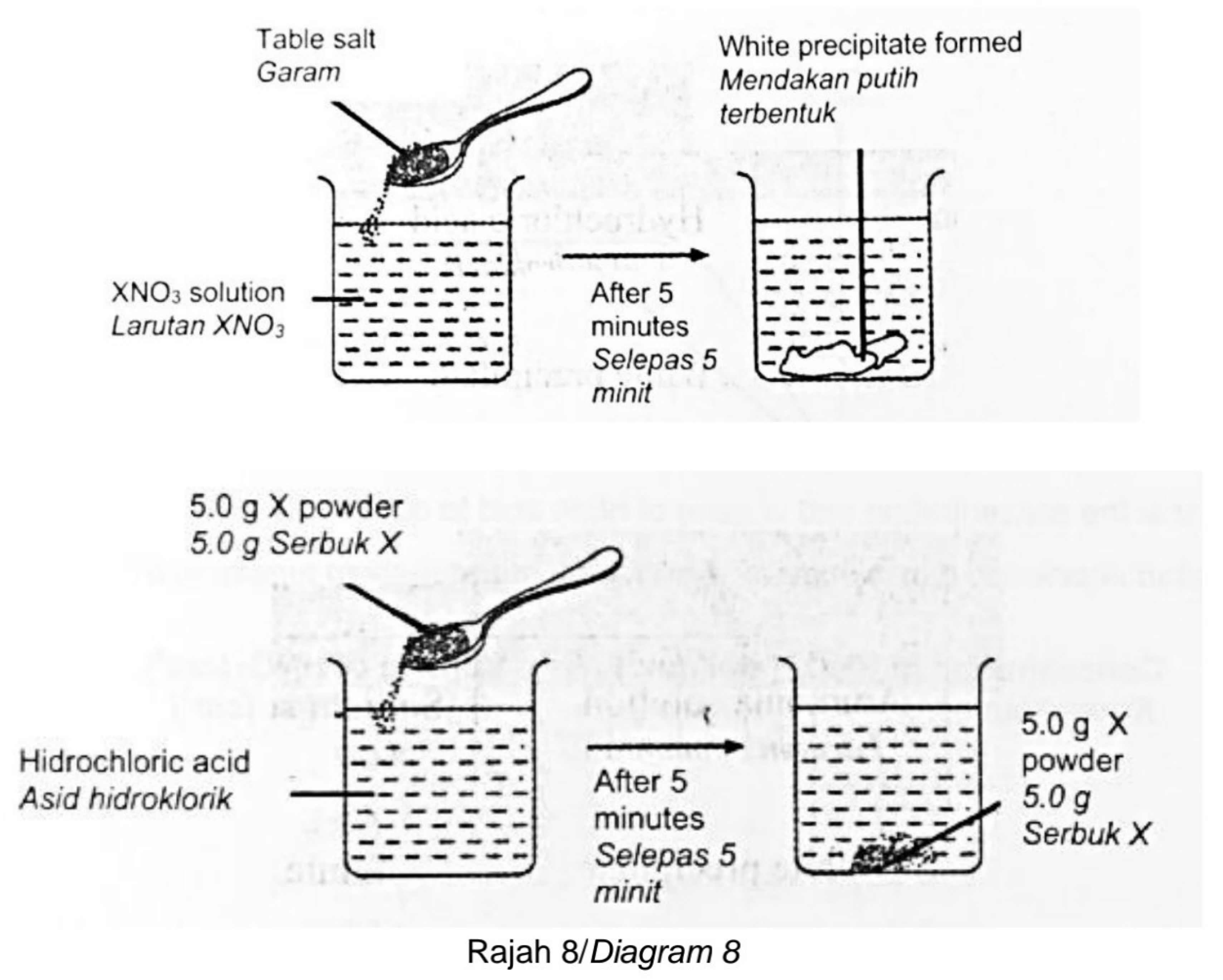
Diagram 8 shows two chemical reactions. Reaction 1: table salt is added to XNO₃ solution; after 5 minutes a white precipitate forms. Reaction 2: 5.0 g X powder is added to hydrochloric acid; after 5 minutes 5.0 g X powder remains.
What is X?
Medium
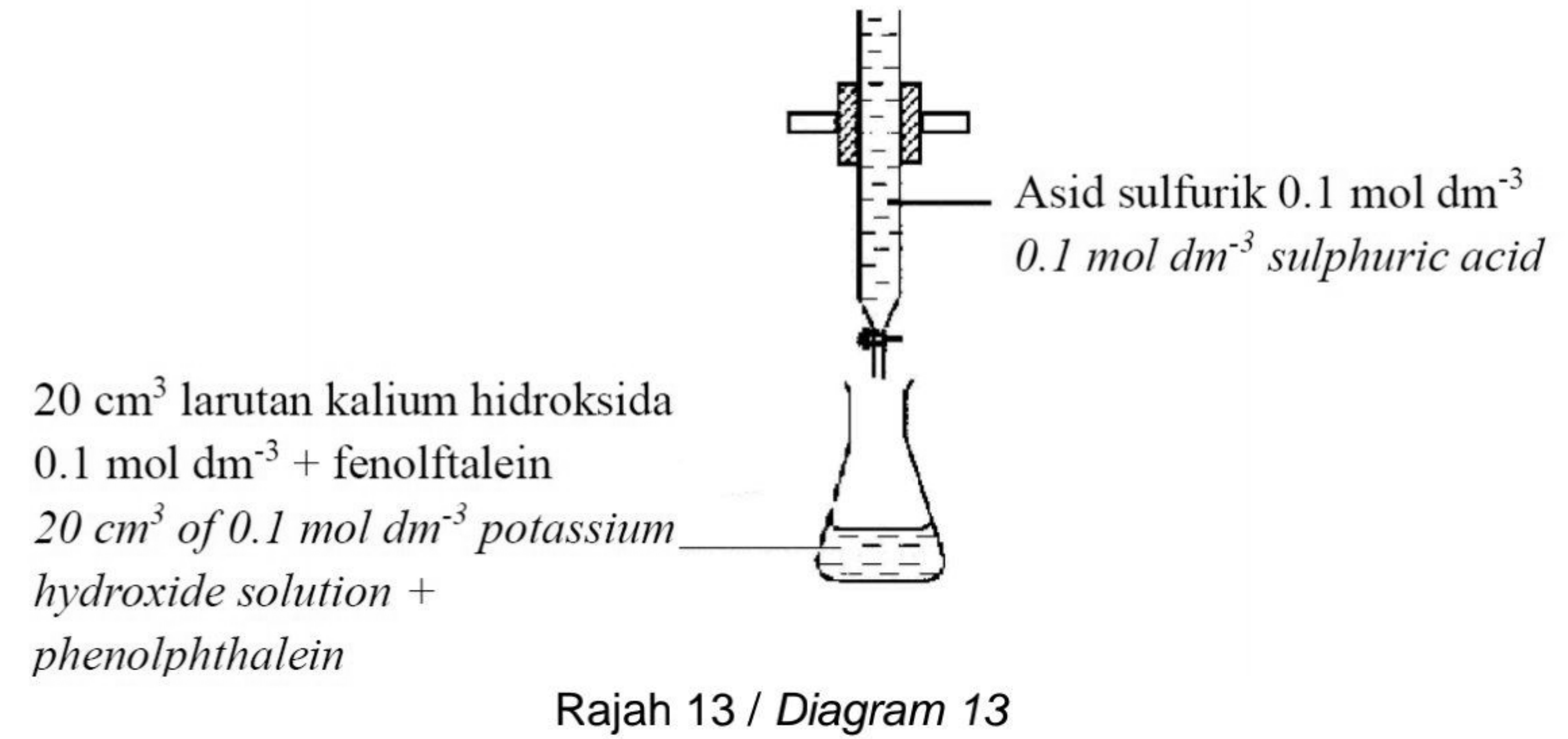
Diagram 13 shows set up apparatus for titration of potassium hydroxide with sulphuric acid (burette: 0.1 mol dm⁻³ sulphuric acid; flask: 20 cm³ of 0.1 mol dm⁻³ potassium hydroxide solution + phenolphthalein).
What is total volume of the mixed solution in the conical flask at the end point of titration in Diagram 13?
Medium
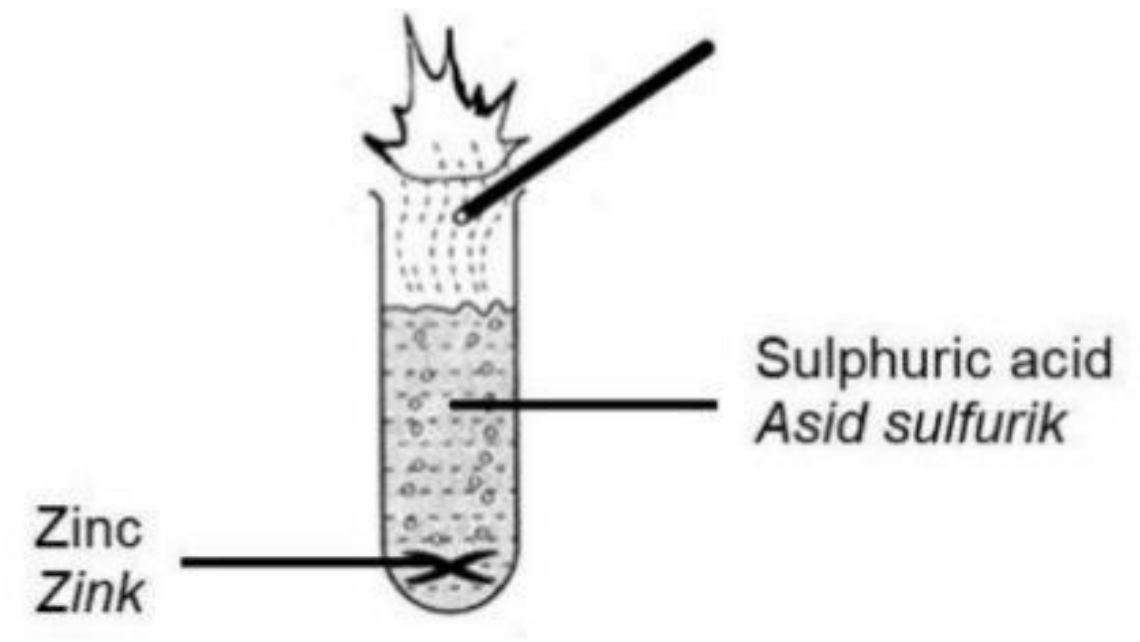
Diagram 1 shows zinc granules which is put into a conical flask containing sulphuric acid to produce gas A. What is gas A?
Easy
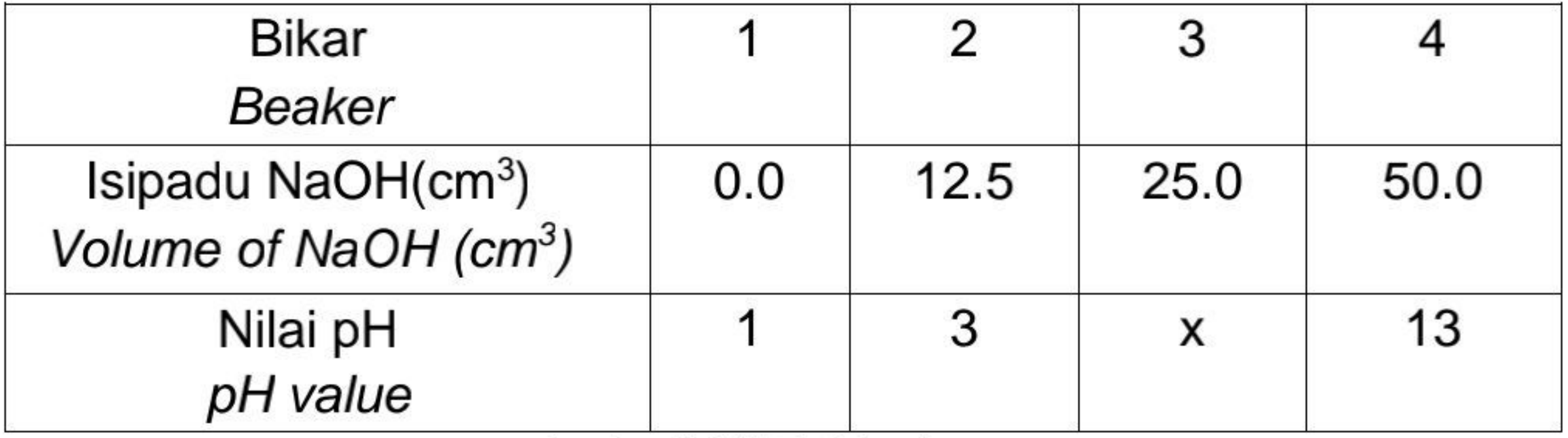
Sodium hydroxide solution 0.10 mol dm-3 was added to the beakers which containing 25 cm3 of 0.1 mol dm-3 of hydrochloric acid. The changes of pH value of the solutions in the beaker was measured with pH meter. The result was recorded in Table 1: beaker 1: 0.0 cm3 NaOH, pH 1; beaker 2: 12.5 cm3, pH 3; beaker 3: 25.0 cm3, pH x; beaker 4: 50.0 cm3, pH 13. What is the pH value of third beaker?
Medium
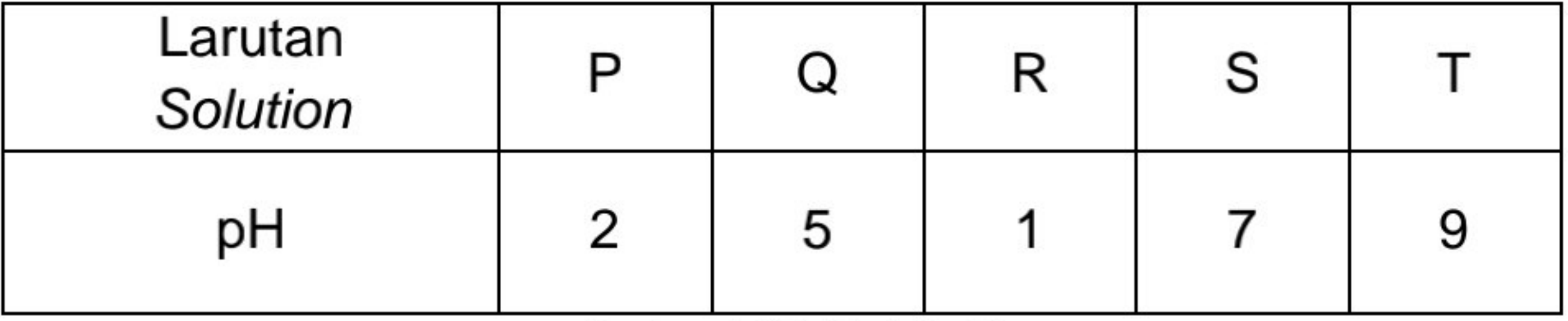
Table 2 shows the pH values of various solutions: P pH 2; Q pH 5; R pH 1; S pH 7; T pH 9. Which pair of solutions can react with sodium carbonate to produce carbon dioxide gas?
Medium
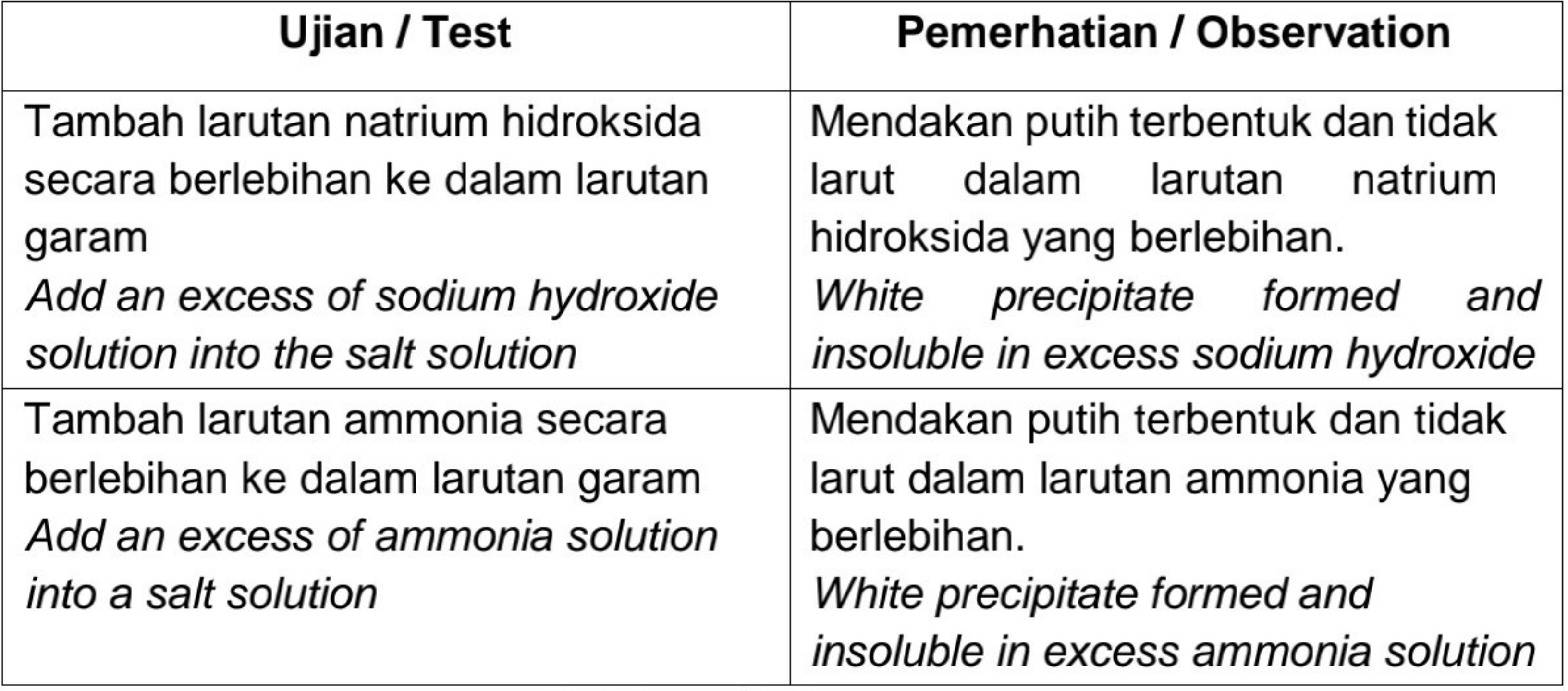
A series of tests are conducted to verify the cation and anion that is present in a salt solution. Table shows the observation for each test. Add an excess of sodium hydroxide solution into the salt solution: white precipitate formed and insoluble in excess sodium hydroxide. Add an excess of ammonia solution into a salt solution: white precipitate formed and insoluble in excess ammonia solution. Which of the following is the cation present in the salt solution?
Medium
Which pair is matched correctly?
Substance / pH value:
A Hydrochloric acid / 4
B Sodium hydroxide / 8
C Ethanoic acid / 6
D Ammonia / 14
Easy
Which of the following is a salt that does not dissolve in water?
Easy
Which of the following is the characteristic of sodium hydroxide pellet that enables its alkaline properties to be shown?
Medium
Farhan was stung by a wasp while he was in his grandfather's orchard. Which of the following substance is suitable to reduce Farhan's pain? (Substance / pH value)
Medium
X g of sodium chloride is dissolved in 500 cm³ of distilled water to produce 0.01 mol dm⁻³ of sodium chloride solution. What is X? [Relative atomic mass: Na = 23, Cl = 35.5]
Medium
Anna carries out a reaction of hydrochloric acid with potassium hydroxide by titration. What is the concentration of 25 cm³ of hydrochloric acid required to neutralise 50 cm³ of 1.0 mol dm⁻³ potassium hydroxide solution?
Medium
In an experiment, moist universal indicator paper changes from yellow to purple when gas X is delivered to it. Which of the following statements is correct about X?
Medium
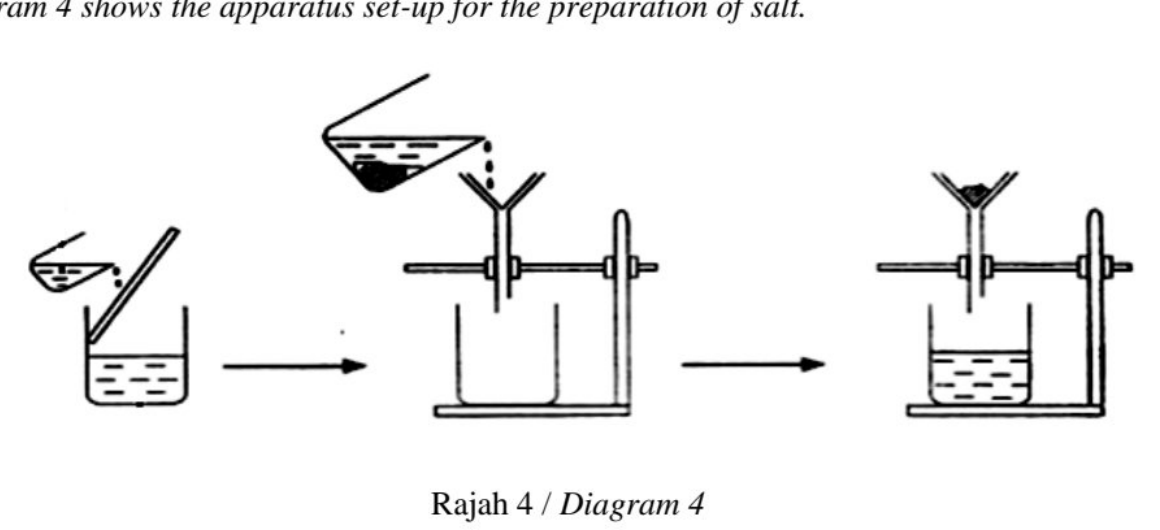
Diagram 4 shows the apparatus set-up for the preparation of salt (mixing, then filtering the precipitate, then washing/drying). Which salt is prepared through this method?
Medium
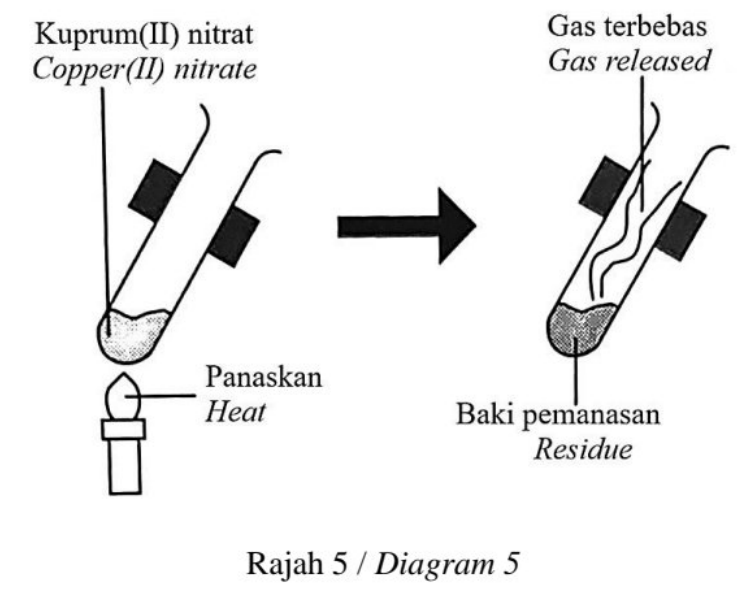
Diagram 5 shows the apparatus set-up of heating copper(II) nitrate. Which observation and test are correct to identify the gas released?
A Brown gas released; Blue litmus paper turns red
B Colourless gas released; The glowing wooden splinter is rekindled
C White fumes released; Blue litmus paper turns red
D Greenish-yellow gas released; The glowing wooden splinter is rekindled
Medium
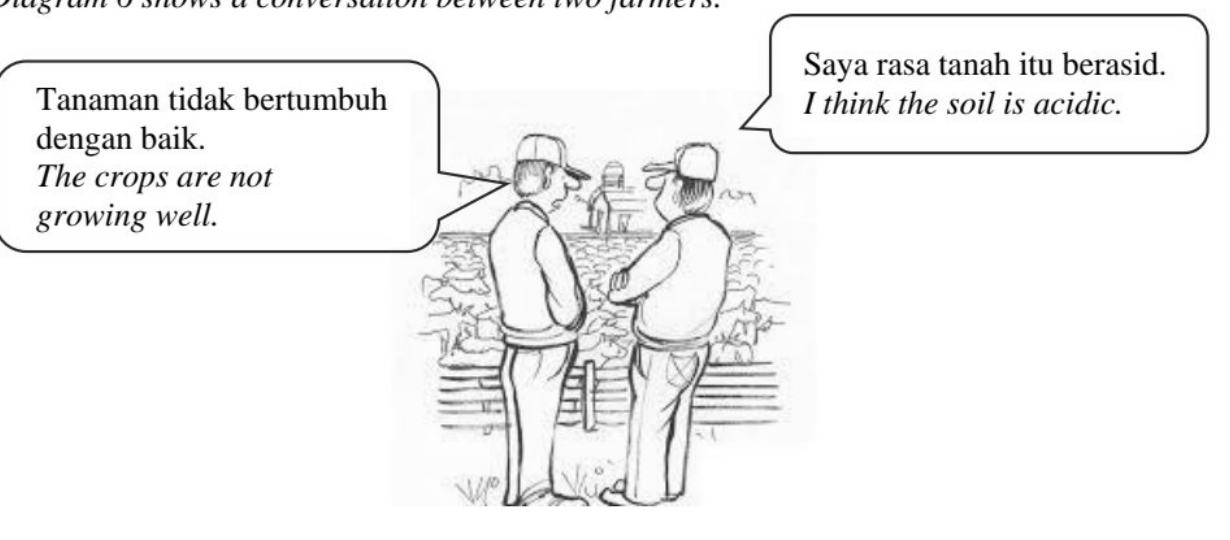
Diagram 6 shows a conversation between two farmers: 'The crops are not growing well.' 'I think the soil is acidic.' Based on the conversation, which of the following substances is suitable to overcome the problem faced by the farmer?
I Barium sulphate
II Calcium oxide
III Calcium chloride
IV Slake lime
Medium
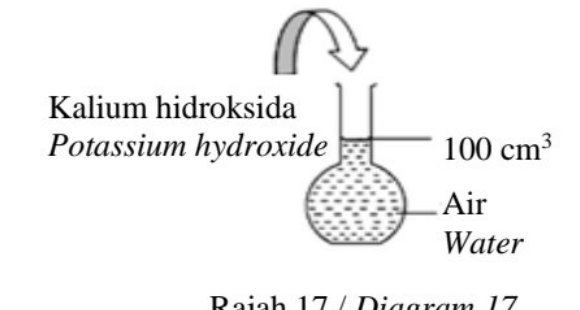
Diagram 17 shows the preparation of standard solution of potassium hydroxide, KOH by dissolving 5.6 g of potassium hydroxide in 100 cm³ of distilled water. What is the volume of the standard solution prepared above that should be used if a student wants to prepare 50 cm³ of 0.5 mol dm⁻³ potassium hydroxide solution? [Relative atomic mass: H=1; O=16; K=39]
Medium
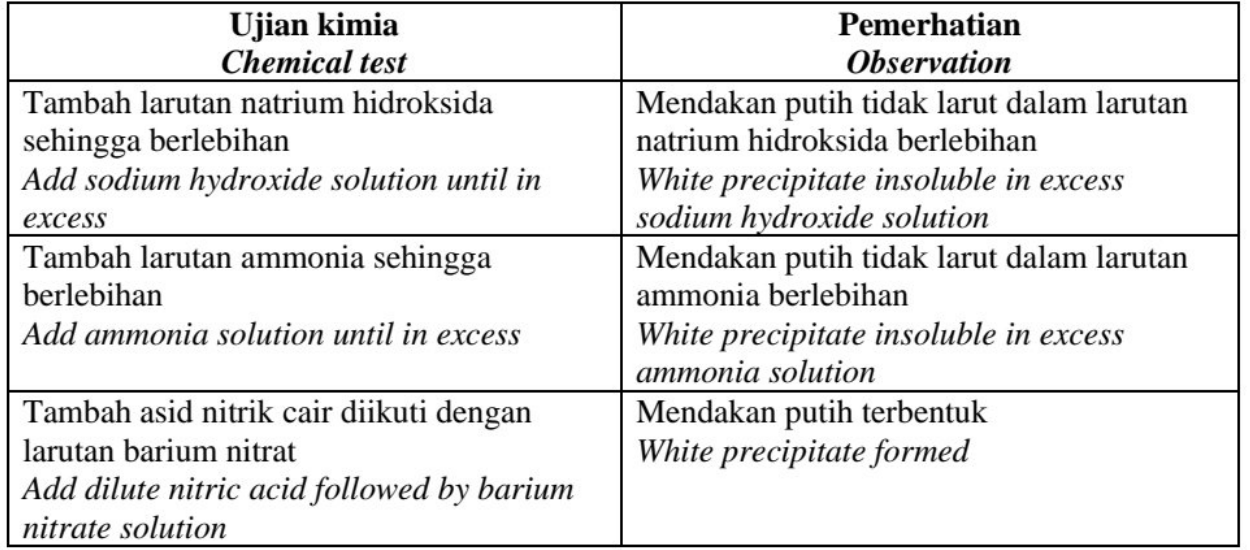
Table 4 shows the observations of chemical tests on solution X. Add sodium hydroxide solution until in excess: white precipitate insoluble in excess. Add ammonia solution until in excess: white precipitate insoluble in excess. Add dilute nitric acid followed by barium nitrate solution: white precipitate formed. What is solution X?
Medium
Which of the following is a weak alkali?
Easy
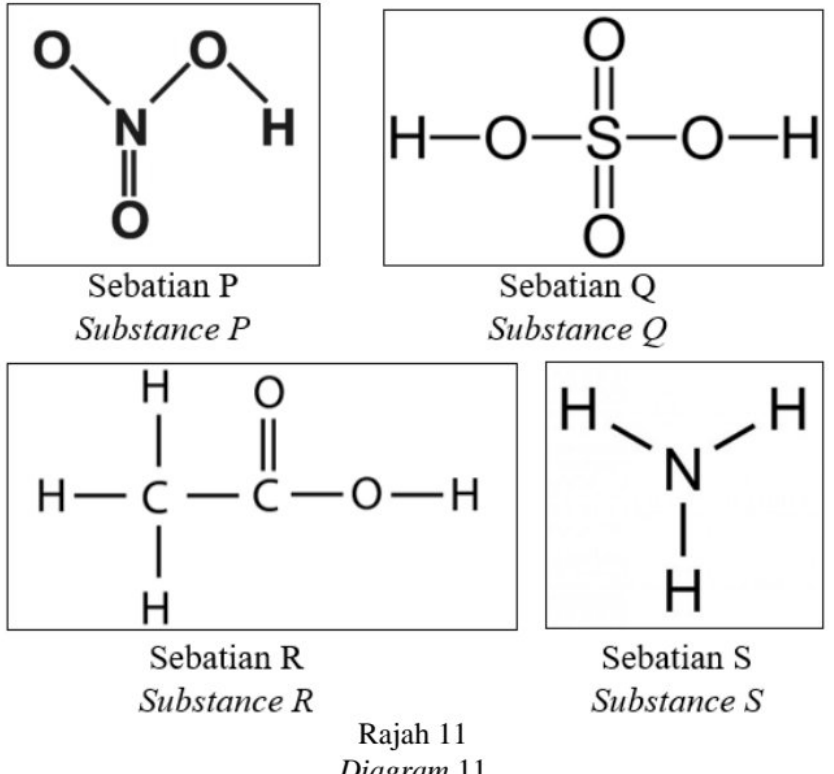
Diagram 11 shows the structural formulae of four chemical substances that can ionise in water to produce a solution containing free moving ions: P = HNO3, Q = H2SO4, R = CH3COOH, S = NH3. Which of the following is the order of the solution in ascending order of pH value?
Medium
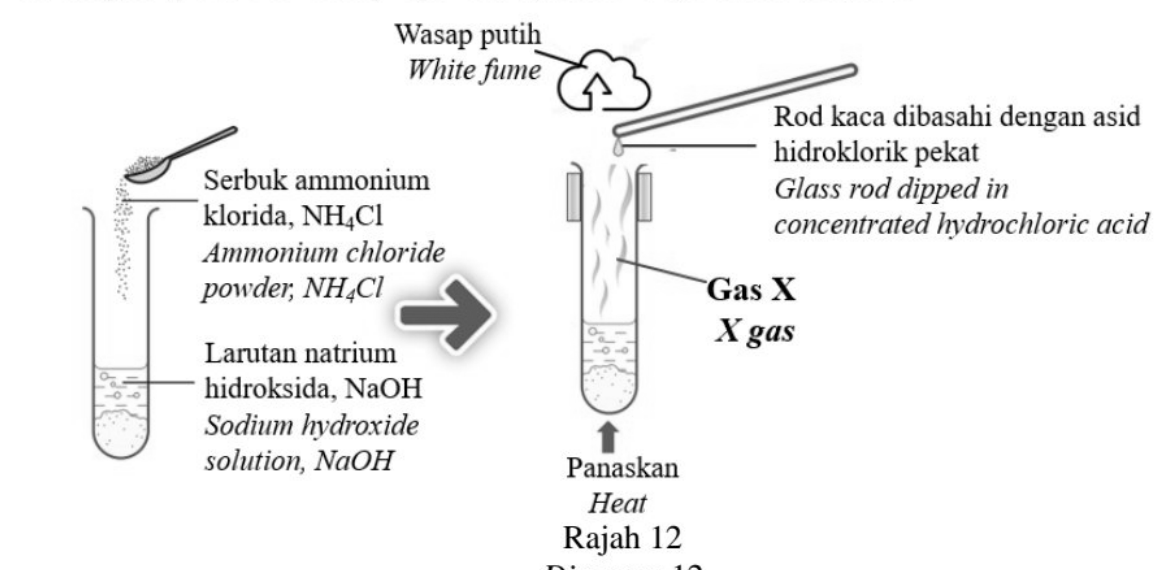
Diagram 12 shows the apparatus set-up used and observation obtained by a student when investigating the chemical properties of sodium hydroxide solution (ammonium chloride powder added to NaOH solution and heated; glass rod dipped in concentrated hydrochloric acid gives white fumes). What is the name of gas X released?
Easy
The following equation represents a neutralisation reaction: Acid + Base → Salt + water. Which pairs are reactants in neutralisation reaction?
I Sulphuric acid + Potassium hydroxide
II Hydrochloric acid + Solid copper(II) oxide
III Sulphuric acid + Solid calcium carbonate
IV Hydrochloric acid + Sodium carbonate solution
Medium
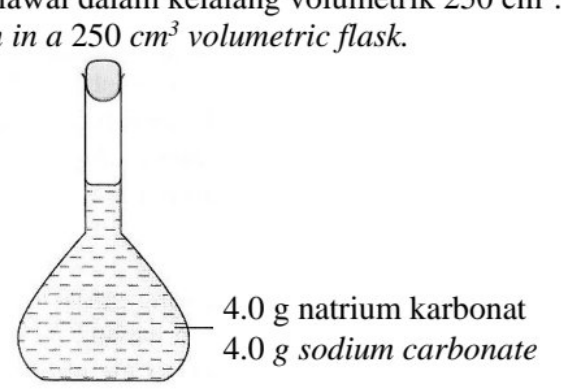
Diagram 17 shows a standard solution in a 250 cm³ volumetric flask containing 4.0 g sodium carbonate. What is the concentration of the standard solution produced? [Relative atomic mass: C=12; O=16; Na=23]
Medium
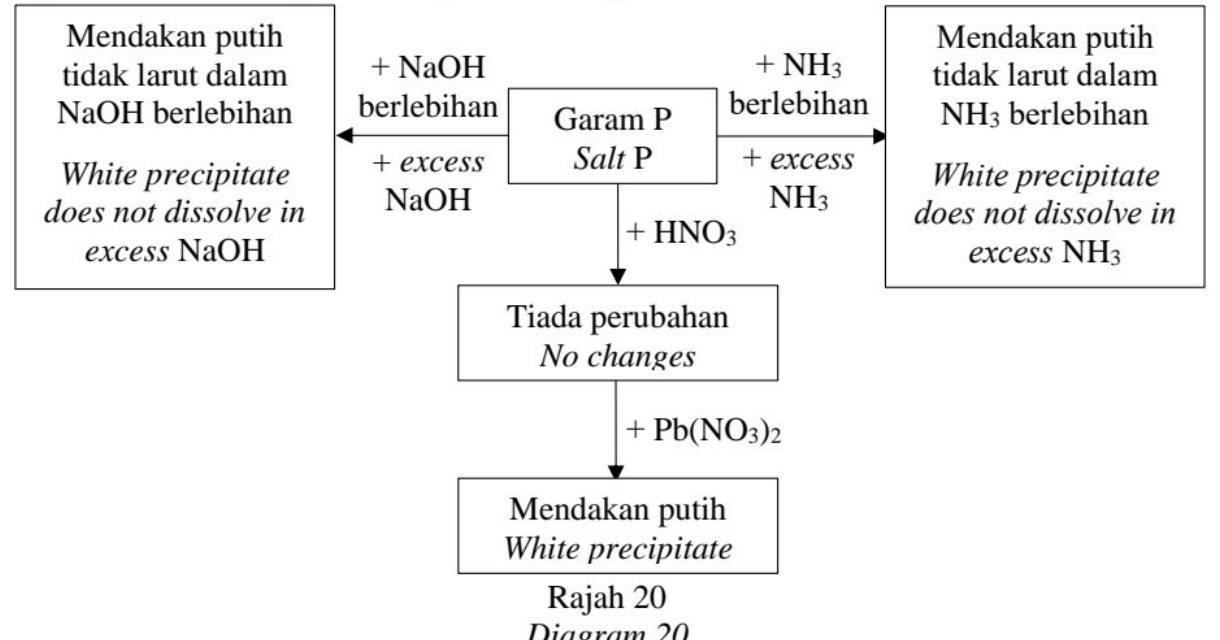
Diagram 20 shows the flow chart for a series of reaction on salt P: + excess NaOH gives white precipitate that does not dissolve in excess NaOH; + excess NH3 gives white precipitate that does not dissolve in excess NH3; + HNO3 no changes, then + Pb(NO3)2 gives white precipitate. Based on the results of the experiment, what is salt P?
Medium
Salt X decomposed to another salt and a gas when it is heated strongly. What is salt X?
Medium
In an experiment, damp universal indicator paper changes from green to purple when gas X is delivered to it. Which of the following statements is correct about X?
Medium
Barium chloride solution is mixed with ammonium sulphate solution in a beaker. Which of the following ions present in the salt precipitate formed? I Sulphate ion II Barium ion III Chloride ion IV Ammonium ion
Medium
Which of the following chemical equations represents a reaction that produces the highest heat of neutralisation?
Medium
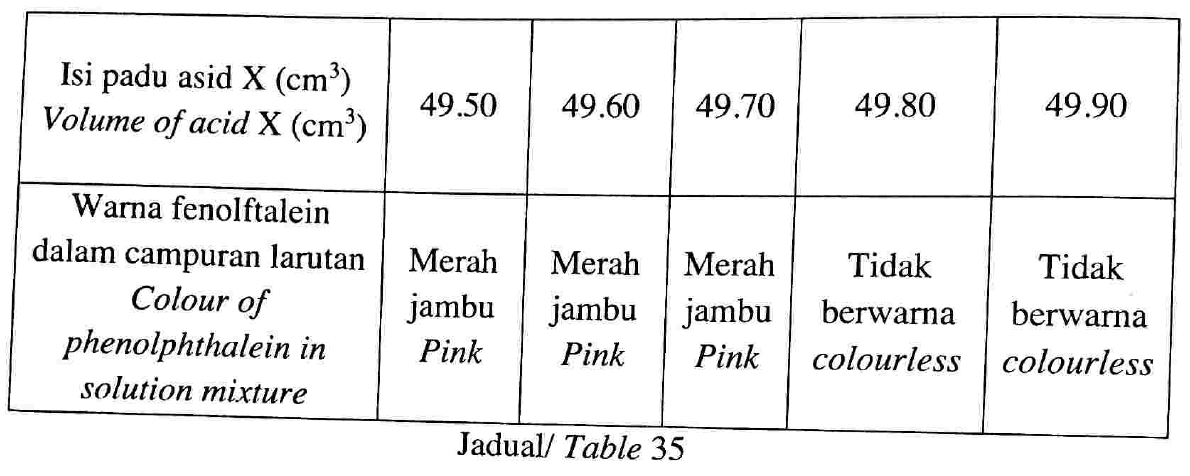
The soil is polluted by monoprotic acid X. The acid is titrated with 25 cm³ of 0.001 mol dm⁻³ calcium hydroxide solution that is added with three drops of phenolphthalein. Table 35 (volume of acid X in cm³ / colour of phenolphthalein): 49.50 pink; 49.60 pink; 49.70 pink; 49.80 colourless; 49.90 colourless. What is the pH value of acid X?
Hard
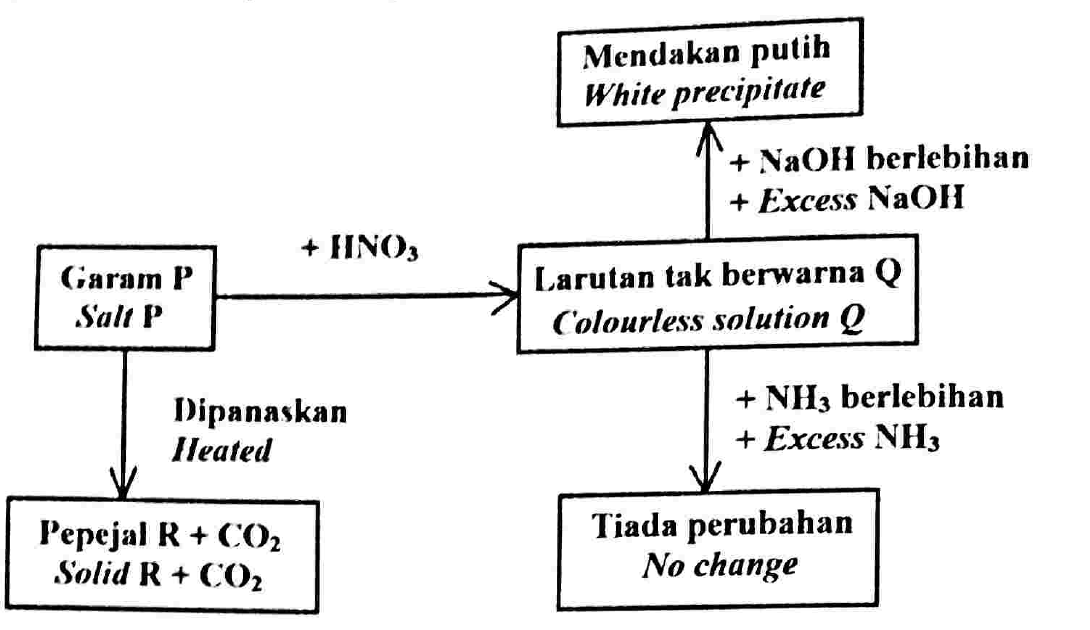
Diagram 39 shows a flow chart for a series of reactions on salt P: salt P + HNO₃ → colourless solution Q; Q + excess NaOH → white precipitate; Q + excess NH₃ → no change; salt P heated → solid R + CO₂. What are the reactants used to prepare salt P?
Medium
Which of the following salts is prepared through double decomposition reaction?
Medium
Sodium chloride powder mixed with lead(II) iodide powder.
Which of the following is the correct sequence to obtain the sodium chloride crystal from the mixture?
Medium
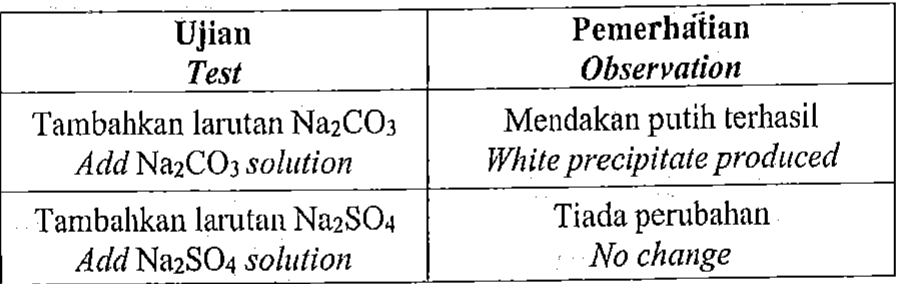
Table 2 shows the observations for two tests conducted to confirm the cation present in salt W solution.
Add Na₂CO₃ solution: white precipitate produced.
Add Na₂SO₄ solution: no change.
What is the cation present in salt W?
Medium
What is the pH value of lithium hydroxide solution with the concentration of 0.2 mol dm⁻³?
Medium
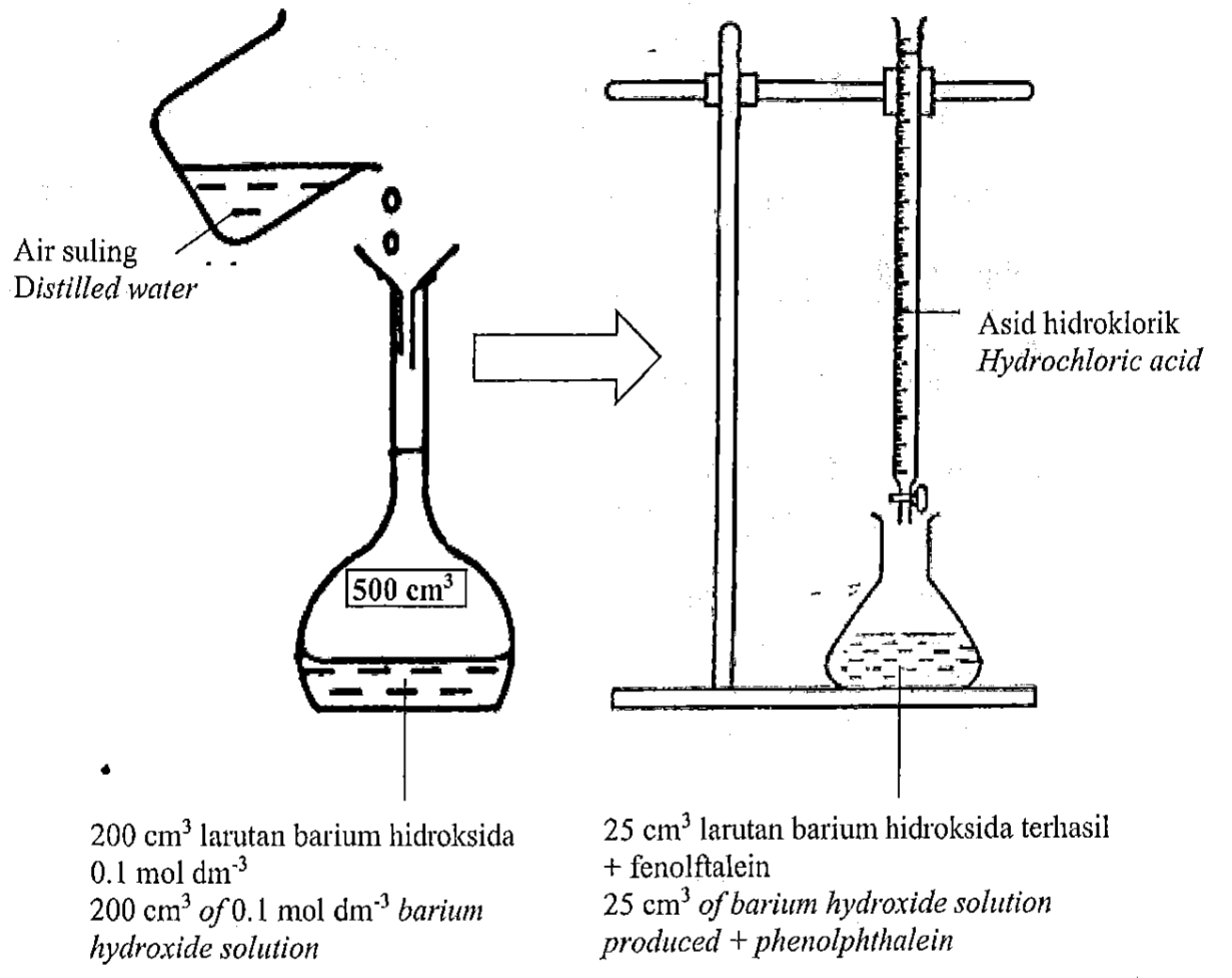
Diagram 11 shows the apparatus set-up to prepare barium hydroxide solution from a standard solution: 200 cm³ of 0.1 mol dm⁻³ barium hydroxide solution is diluted with distilled water in a 500 cm³ volumetric flask. 25 cm³ of the barium hydroxide solution produced + phenolphthalein is titrated with hydrochloric acid of pH 1.
What is the volume of hydrochloric acid needed to achieve the end point of titration?
Medium
Which of the following substances produces yellow colour when universal indicator is added into it?
Easy
What is the observation for the gas released when ammonium chloride is heated with sodium hydroxide solution?
Easy
The soil in Encik Ahmad's farm is not suitable for agricultural activities since it is too near to the industrial factories which emit poisonous gases. The situation become worse when it is raining. Which of the following substances can be used to help Encik Ahmad to solve his problem?
Medium
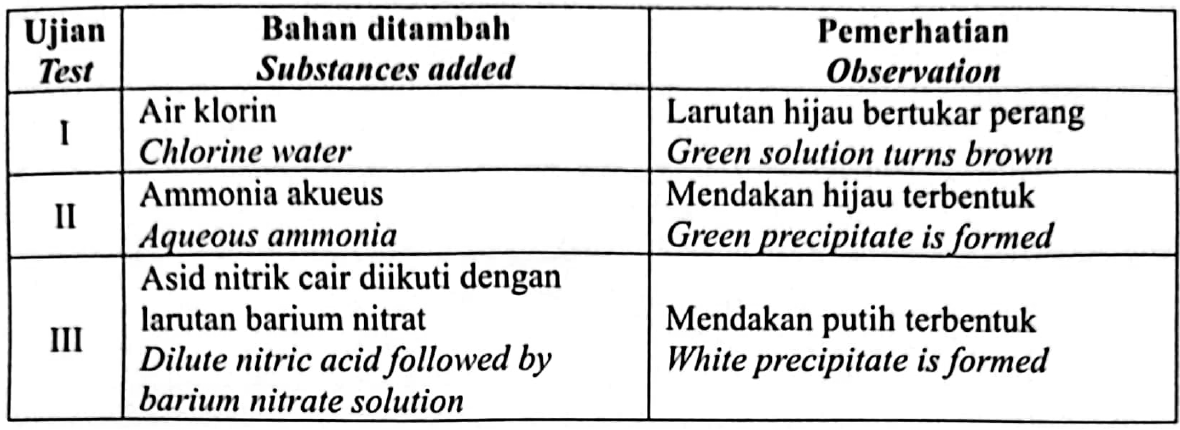
Table 4 shows a few series of chemical tests carried out on salt Z when dissolved in water. Test I: chlorine water, green solution turns brown. Test II: aqueous ammonia, green precipitate is formed. Test III: dilute nitric acid followed by barium nitrate solution, white precipitate is formed. What are the reactants that can form salt Z?
Medium
Which of the following bases dissolves in water?
Easy
Which of the following particles is responsible in showing acidic properties in hydrogen chloride solution?
Easy
Amin's finger was stung by a bee while helping his mother gardening in house yard. What is the action should be taken by his mother to relieve Amin's pain?
Medium
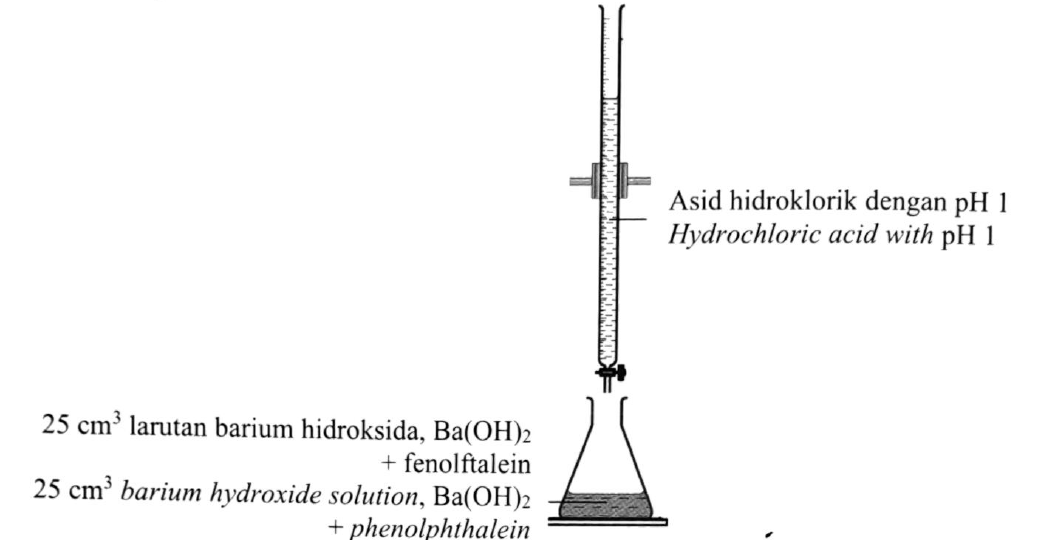
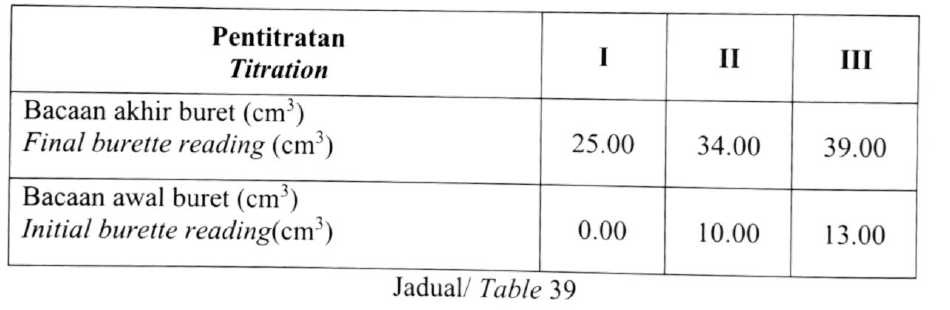
Diagram 39 shows the apparatus set up of an experiment to determine the end point of titration (hydrochloric acid with pH 1 in the burette; 25 cm³ barium hydroxide solution, Ba(OH)₂ + phenolphthalein in the conical flask). Table 39 shows the result: Titration I, II, III. Final burette reading (cm³): 25.00, 34.00, 39.00. Initial burette reading (cm³): 0.00, 10.00, 13.00. What is the concentration of barium hydroxide solution used?
Medium
Which of the following substances has alkaline properties?
Medium
Which of the following terminology refers to chemical substances that ionizes partially in water to produce low concentration of hydrogen ions?
Easy
Diagram 13 shows a process to confirm the presence of the cation in salt solution S (a little sodium hydroxide: white precipitate, dissolves in excess; a little ammonia: white precipitate, dissolves in excess). Which of the following cations is present in salt solution S?
Medium
Diagram 15 shows Pak Ali feeling sad because his agricultural activities are not successful because the soil is not suitable. This happened because Pak Ali's farm is near to industrial factories which emit acidic gases. Which of the following substances can be used to help Pak Ali increase the fertility of the soils?
Medium
Which pairs are reactants in neutralisation reaction? I Sulphuric acid + sodium hydroxide; II Hydrochloric acid + copper(II) oxide; III Sulphuric acid + calcium carbonate; IV Hydrochloric acid + potassium carbonate
Medium
Which of the following is a strong acid?
Easy
Diagram 8 shows an observation when a cockle shell is put into a beaker containing vinegar (ethanoic acid). What is X (the gas bubbles)?
Easy
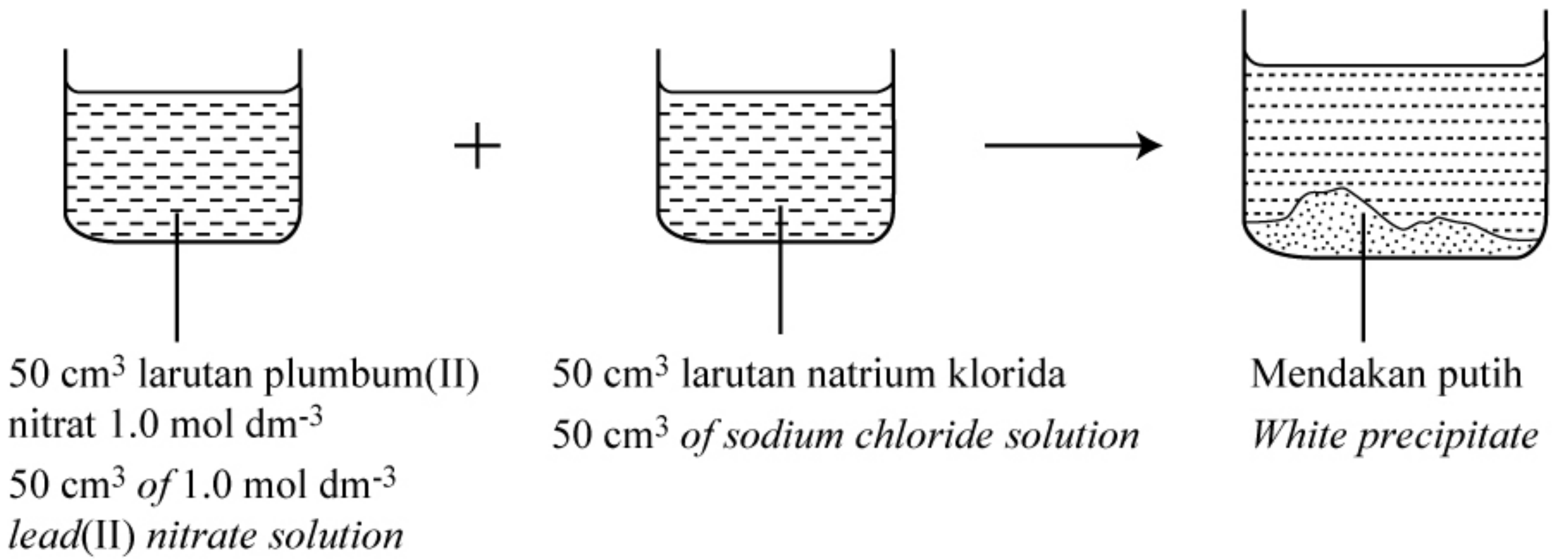
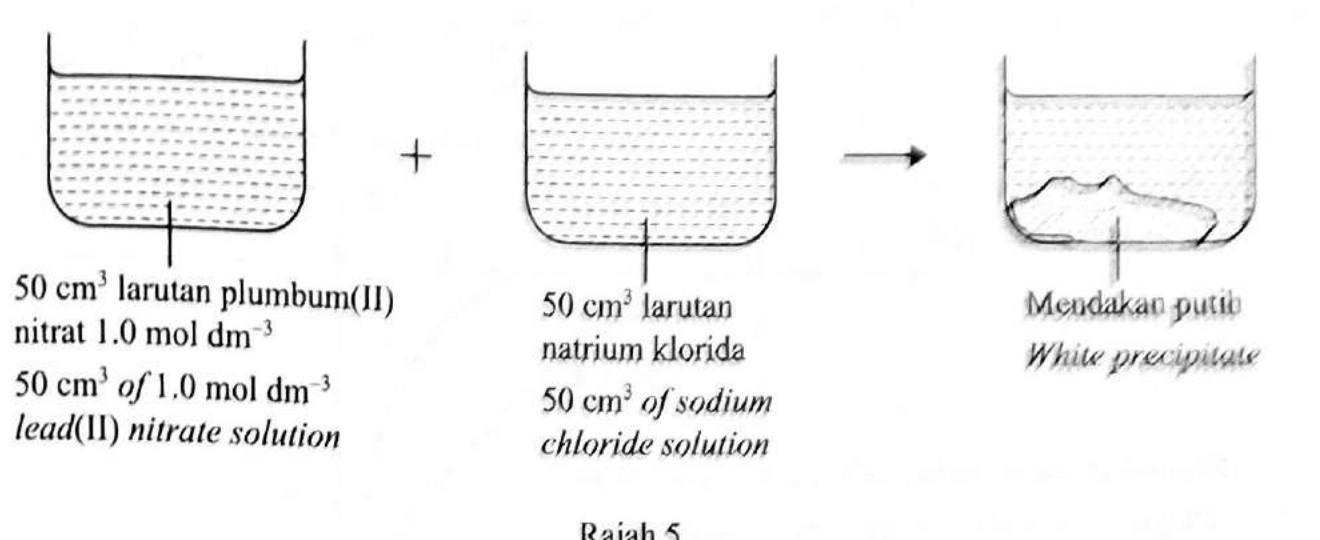
Diagram 9 shows the preparation of lead(II) chloride: 50 cm3 of 1.0 mol dm-3 lead(II) nitrate solution is mixed with 50 cm3 of sodium chloride solution to give a white precipitate. What is the concentration of sodium chloride solution needed to react completely with lead(II) nitrate solution?
Medium
Siti immersed a piece of filter paper into a beaker containing solution P, then she used solution Q to write CHEMISTRY on the filter paper after the filter paper was dried. The wording on the filter paper is yellow in colour. Which of the following pairs is solution P and solution Q?
Medium
Which substance has high degree of ionisation when ionises in water?
Medium
Which of the following reagent is used to test the presence of cations in the salt?
Easy
Which acid contains the highest number of hydrogen ions?
Medium
Lead(II) nitrate decomposes when heated. What is the volume of nitrogen dioxide gas is produced when 10 g of lead(II) nitrate is heated at room temperature? [Relative atomic mass: Pb = 207; N = 14; O = 16; Molar volume of gas = 24 dm³ mol⁻¹ at room condition]
Medium
Most chemical reactions involve reactants in aqueous solution. In that case, the preparation of aqueous solution with specific concentrations is very important. Standard solution is a solution with known concentration. However, sodium hydroxide is not suitable to be used for the preparation of a standard solution. Which of the following statement exactly explains this phenomenon?
Medium
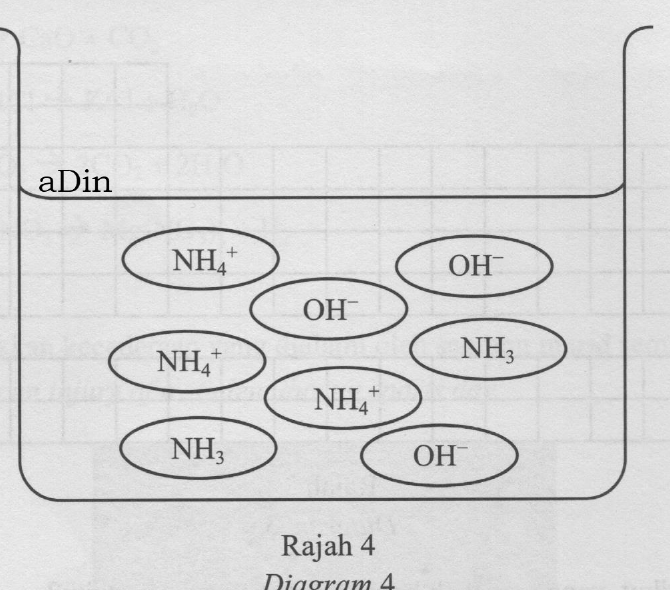
Diagram 4 shows types of particles in a solution (NH₄⁺, OH⁻ and NH₃). Which of the following represents the type of solution shown?
Medium
Which of the following is a diprotic acid?
Easy
Diagram 9: saline solution contains sodium chloride solution with a concentration of 9 g dm⁻³, commonly used in hospitals to supply daily water and salt needs to patients unable to consume orally. What is the molarity of the saline solution? [Relative atomic mass: Na = 23, Cl = 35.5]
Medium
Pak Ahmad works at a potato plantation. The potato crops were not growing well. He sprinkled some quicklime (calcium oxide) onto the soil for a week. After a few weeks, the potato crops became healthier. What was the purpose of sprinkling the quicklime onto the soil?
Medium
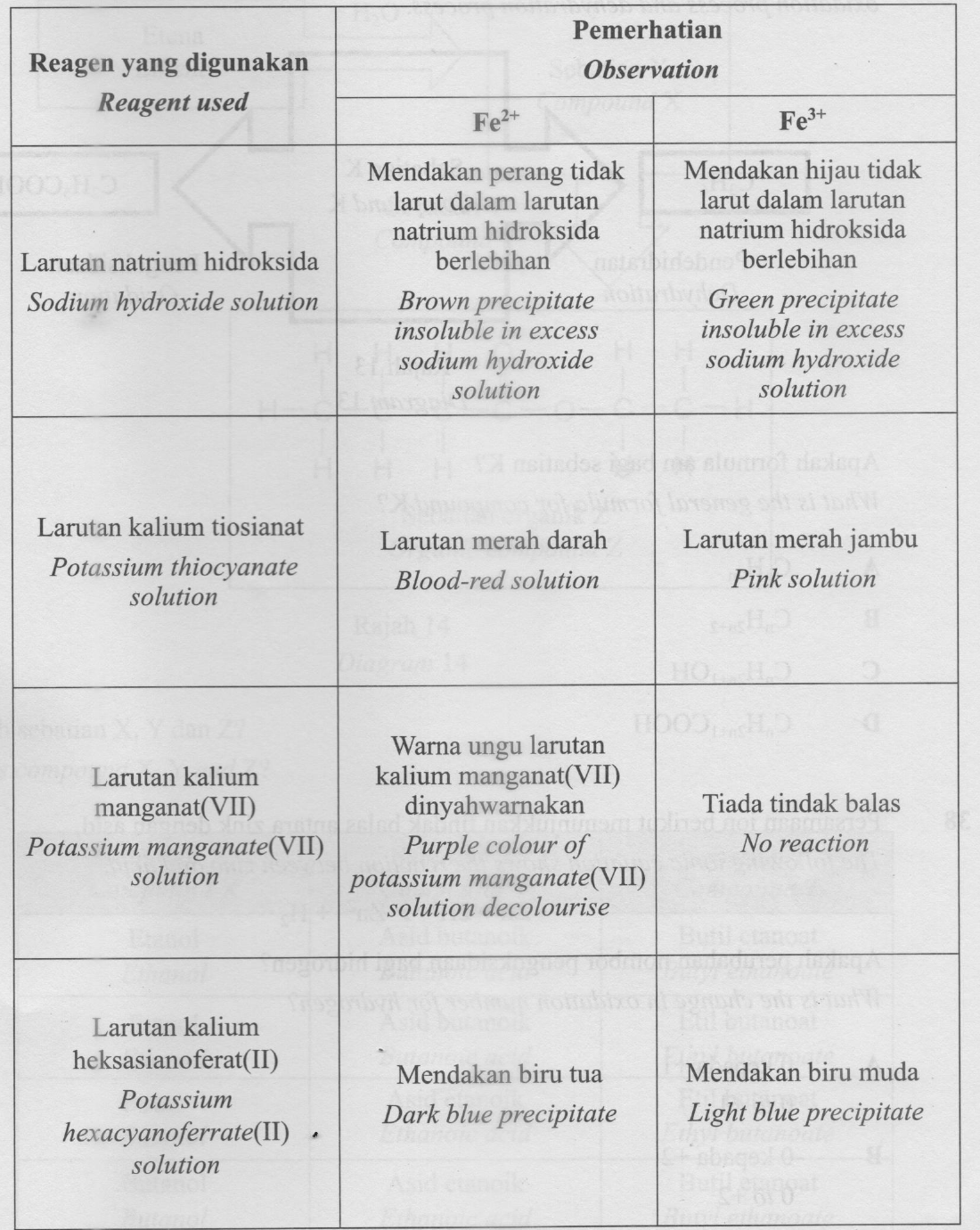
Which of the following observation obtained is true for iron(II) ion and iron(III) ion? (Table: reagent used; observation for Fe²⁺; observation for Fe³⁺)
Medium
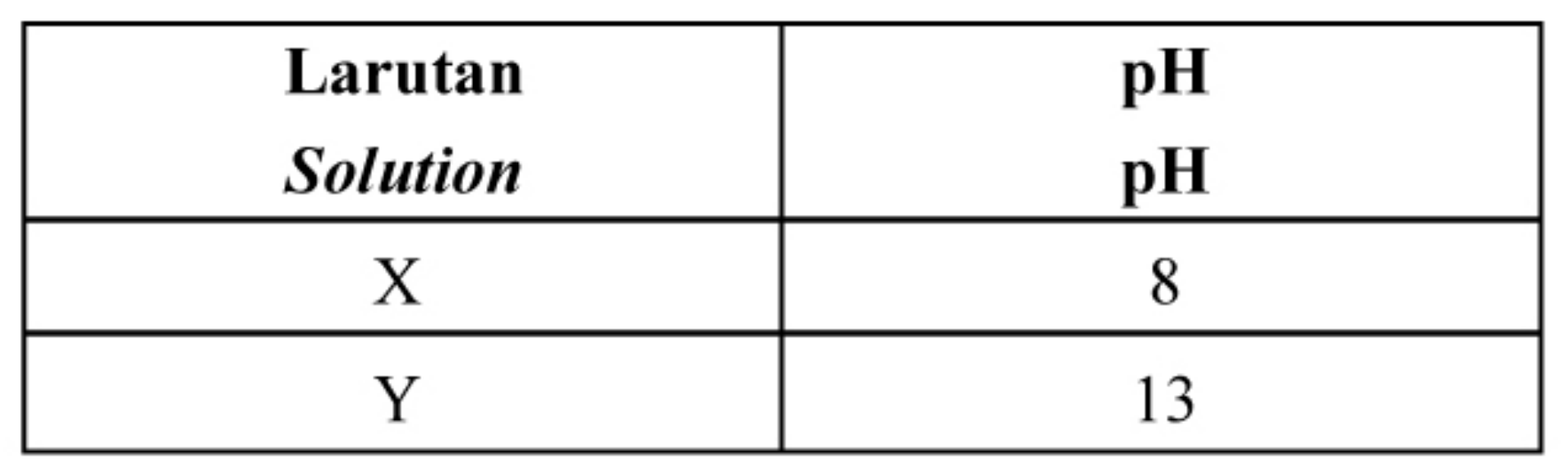
Table 2 shows the pH values of two solutions with the same concentration (X: pH 8; Y: pH 13). Which statement explains the differences in the pH values?
Medium
Which of the following is an insoluble salt?
Easy
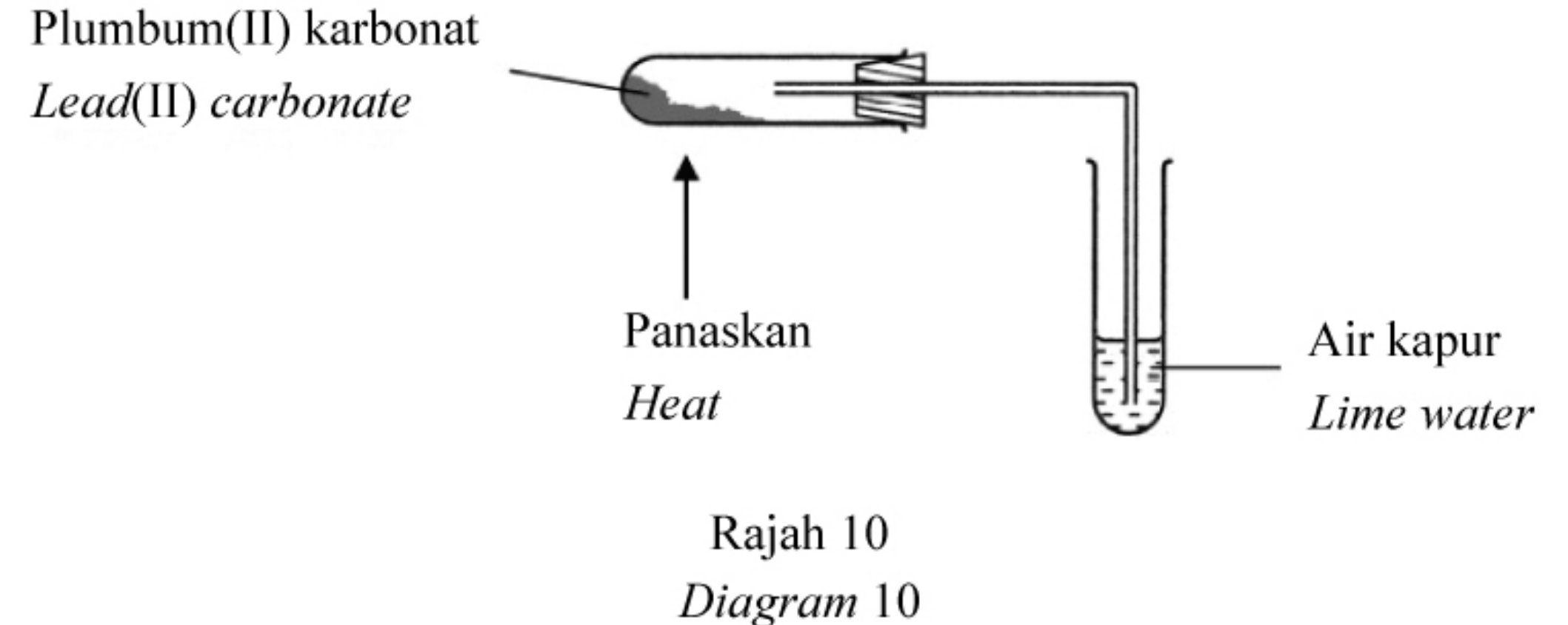
Diagram 10 shows the set-up of apparatus to study the effect of heat on salt. What is the volume of gas released when 24 g of lead(II) carbonate is used at room condition? [Relative atomic mass: Pb = 207; C = 12; O = 16; Molar volume of gas = 24 dm³ mol⁻¹ at room condition]
Medium
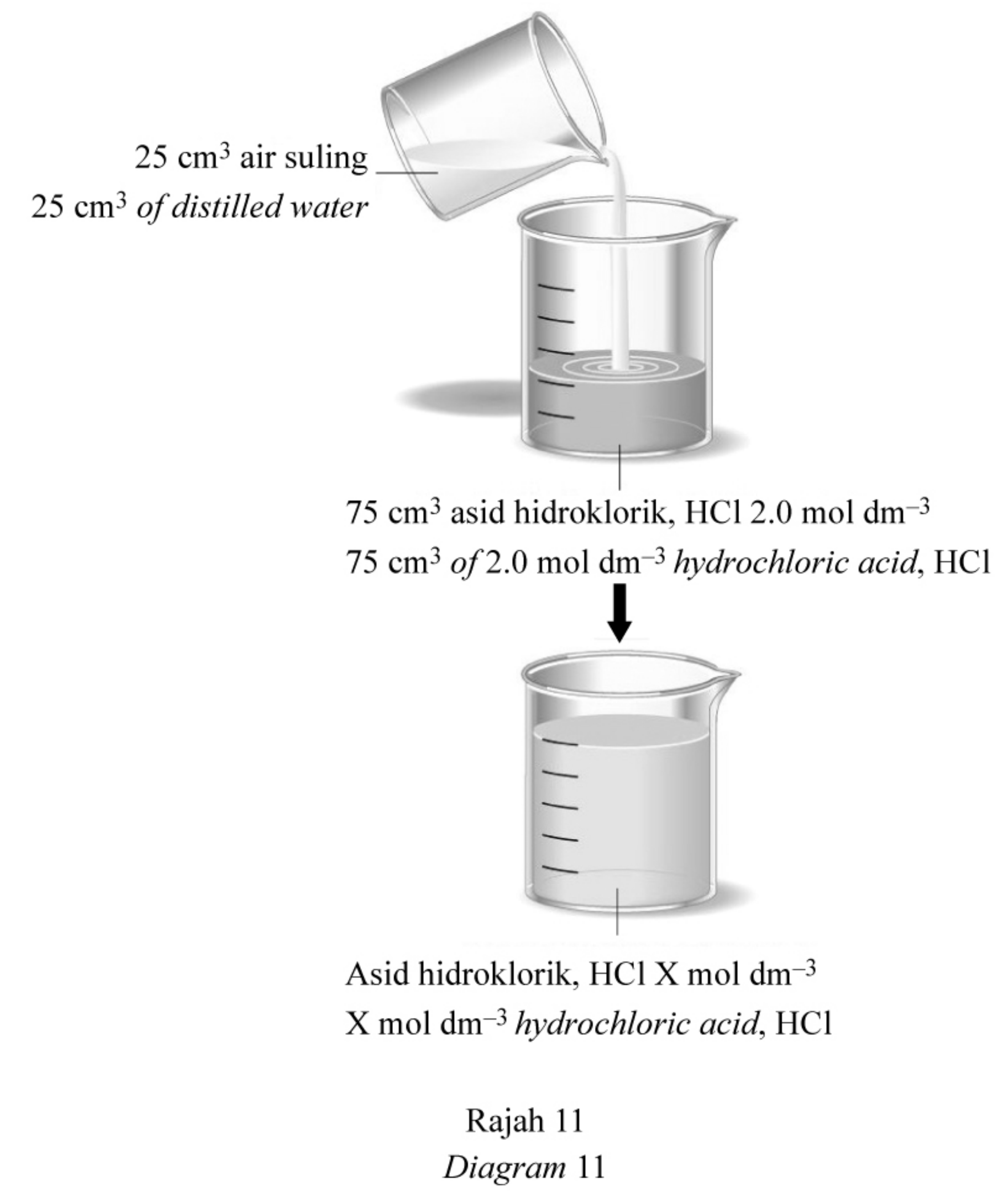
Diagram 11 shows 75 cm³ of 2.0 mol dm⁻³ hydrochloric acid that is diluted to X mol dm⁻³ when 25 cm³ of distilled water is added. What is the volume of the dilute hydrochloric acid that should be used to neutralise 25 cm³ of 3.0 mol dm⁻³ sodium hydroxide?
Medium
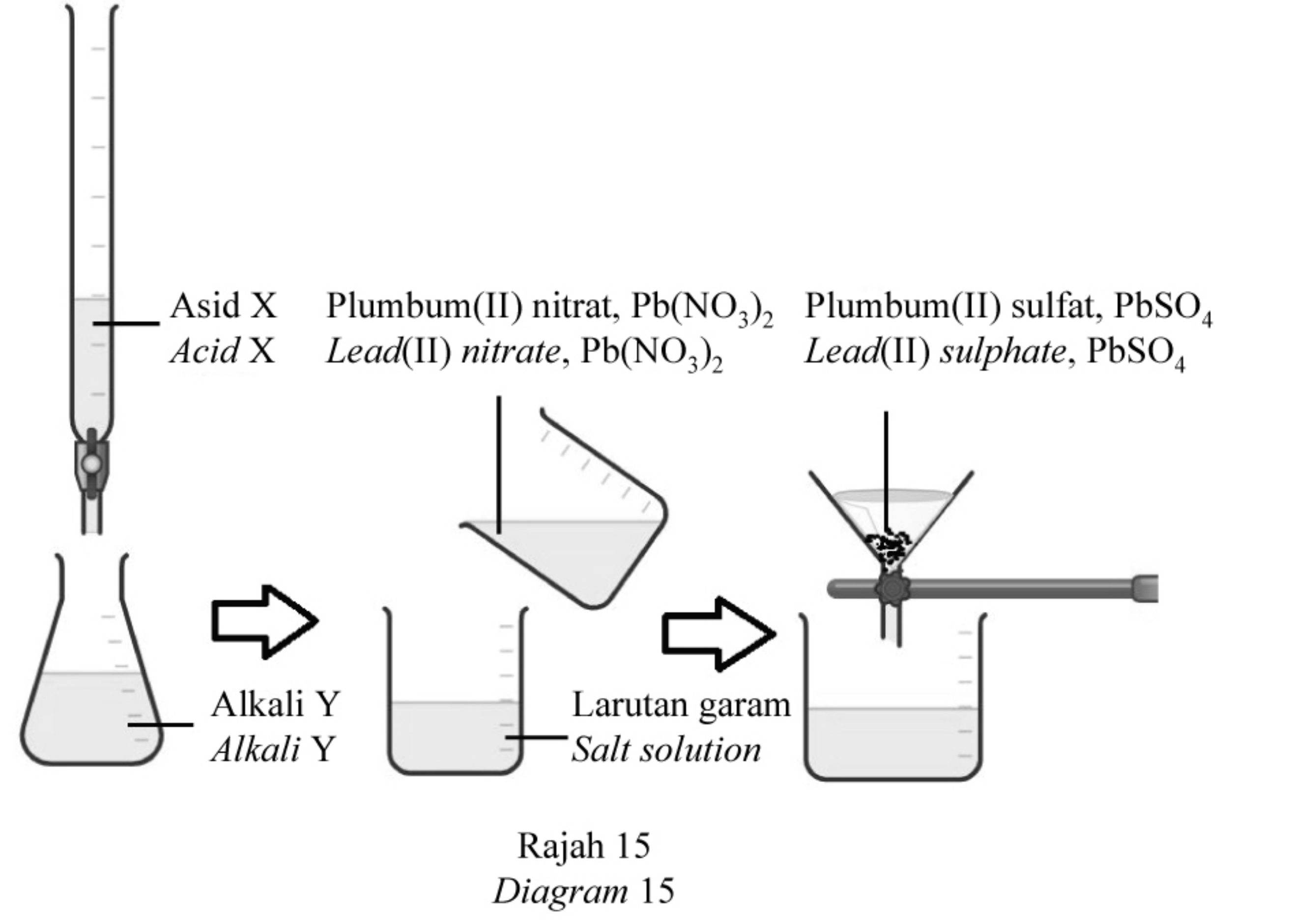
Diagram 15 shows the preparation steps of lead(II) sulphate salt. What are the acid and alkali that can be use to prepare the lead(II) sulphate salt?
Medium
Which substance has low degree of ionisation when dissolves in water?
Easy
Which of the following reagent is used to test the presence of cations in the salt?
Easy
X g of sodium chloride is dissolved in 300 cm³ of distilled water to produce 0.005 mol dm⁻³ of sodium chloride solution. What is X? [Relative atomic mass: Na = 23, Cl = 35.5]
Medium
Diagram 5 shows the preparation of lead(II) chloride: 50 cm³ of 1.0 mol dm⁻³ lead(II) nitrate solution is mixed with 50 cm³ of sodium chloride solution to give a white precipitate. What is the concentration of sodium chloride solution needed to react completely with lead(II) nitrate solution?
Medium
Ahmad immersed a piece of filter paper into a beaker containing solution P then he used solution Q to write CHEMISTRY on the filter paper after the filter paper was dried. The wording on the filter paper is yellow in colour. Which of the following pairs is solution P and solution Q?
Medium
Which ion shows the alkaline properties in ammonia solution?
Easy
Which of the following substances is a salt?
I Barium sulphate
II Magnesium oxide
III Ammonium chloride
IV Potassium hydroxide
Medium
A standard solution is prepared by dissolving 8.0 g sodium hydroxide in 250 cm³ of water. What is the molarity of the standard solution of sodium hydroxide? [Relative atomic mass: H = 1, O = 16, Na = 23]
Medium
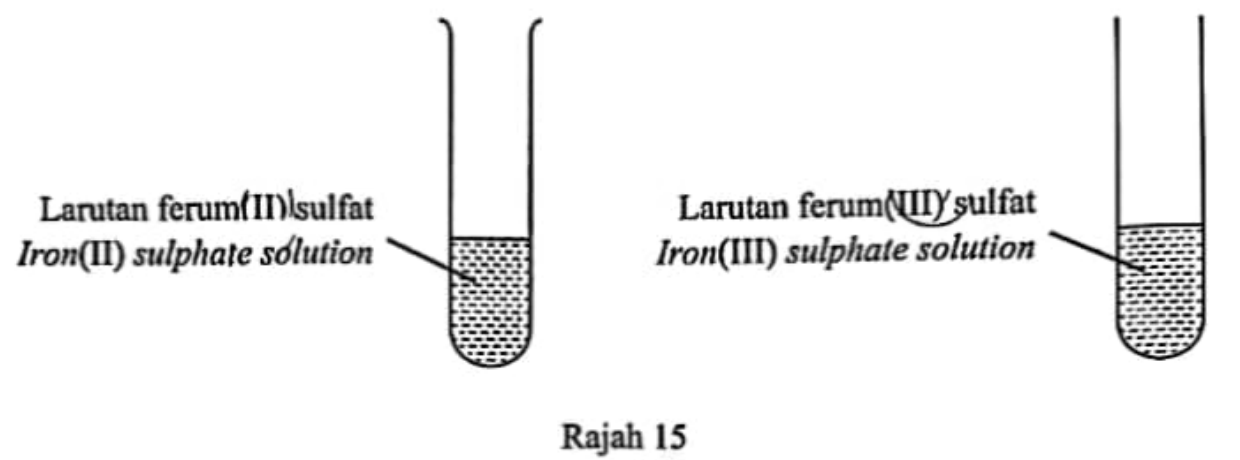
Diagram 15 shows two salt solutions: iron(II) sulphate solution and iron(III) sulphate solution. Which of the following reagent can be used to differentiate the two solutions?
Medium
Which of the following shows the acidic properties of sulphuric acid?
Easy
Amin wants to prepare 250 cm³ of 0.3 mol dm⁻³ sodium hydroxide solution. What is the mass of sodium hydroxide does Amin need to produce the solution? [Relative atomic mass: Na = 23, O = 16, H = 1]
Medium
A boy was stung by a bee while in his father's garden. Which of the following substance is suitable to reduce the boy's pain?
Easy
Which of the following will produce an insoluble salt?
Medium
Determine the pH value of alkali Q solution that contains hydroxide ion, OH⁻ 0.5 mol dm⁻³?
Medium
H2SO4 + 2NaOH → Na2SO4 + 2H2O
What is the volume of 0.5 mol dm⁻³ sulphuric acid needed to neutralise 25.0 cm³ of 0.5 mol dm⁻³ sodium hydroxide?
Medium
Which of the following is diprotic acid?
Medium
A substance commonly used in daily life is found to have a pH value of 9. Which of the following is the substance?
Easy
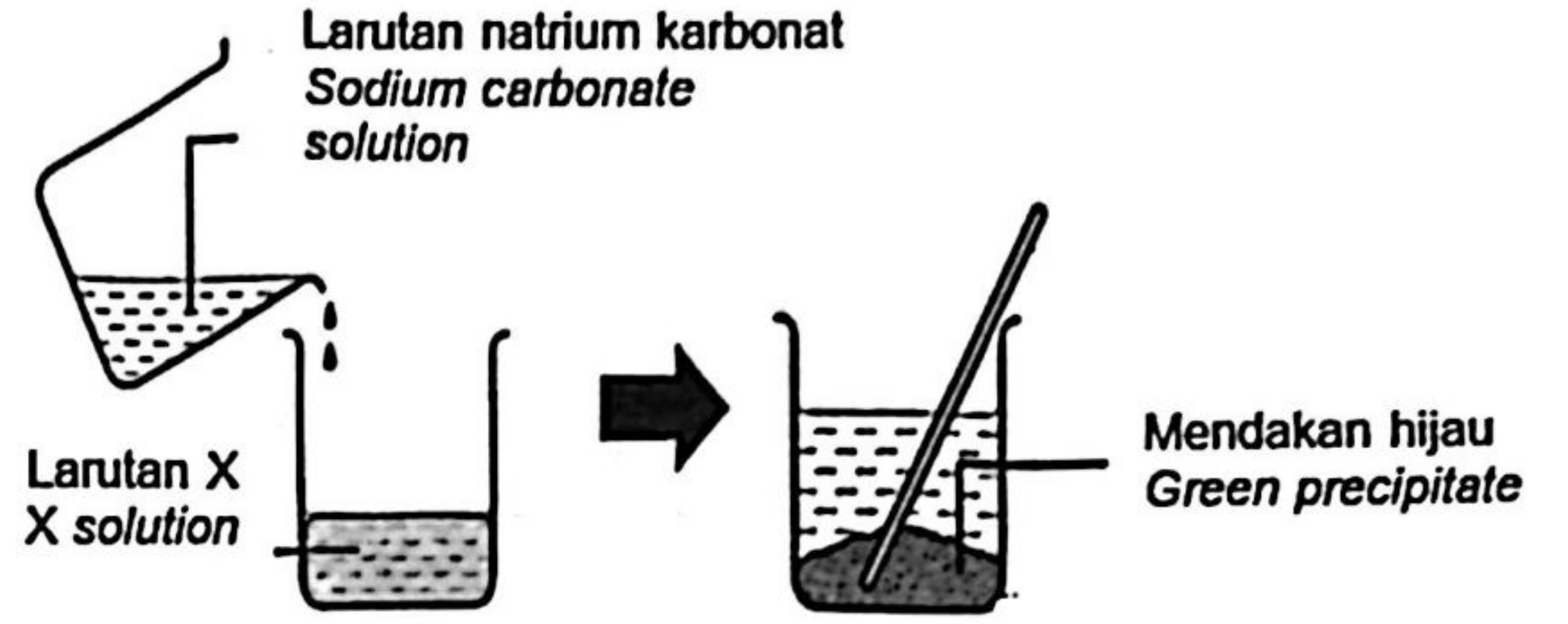
Diagram 21 shows the observation when sodium carbonate solution is added to solution X which is blue. A green precipitate forms. Which of the following is the name for a green precipitate?
Medium
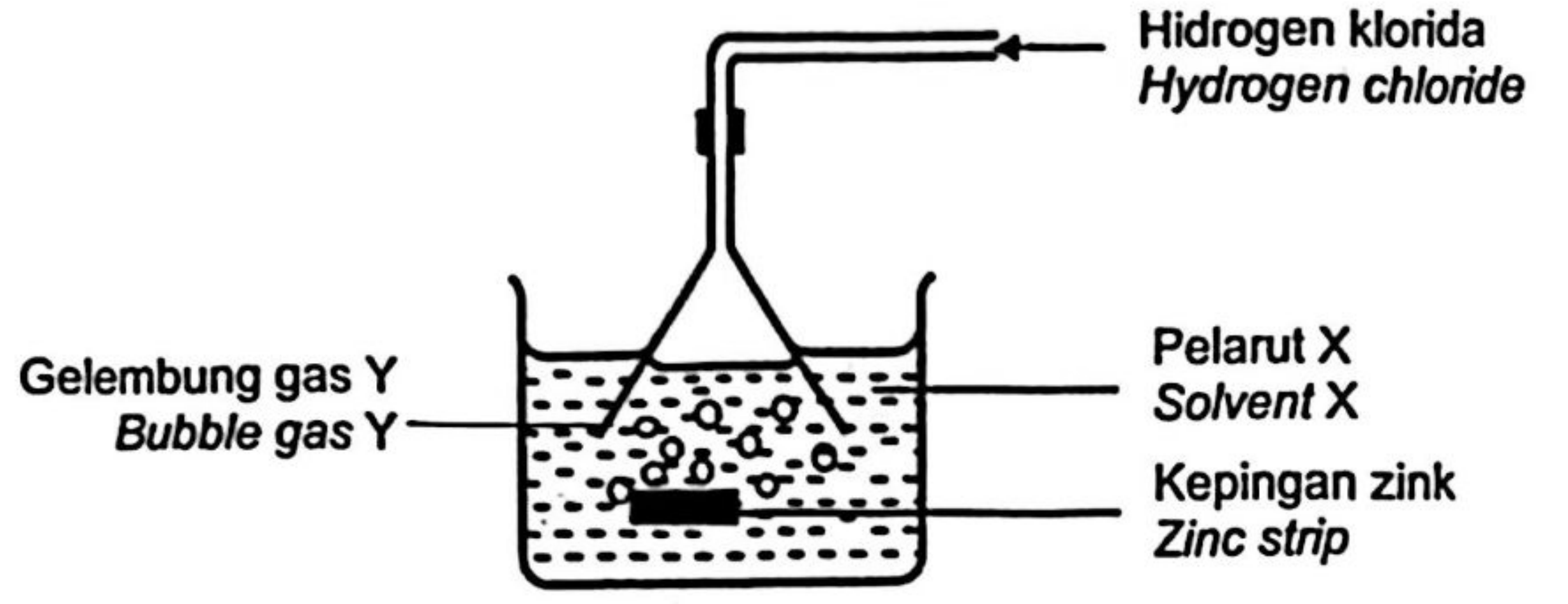
Diagram 22 shows the arrangement of the apparatus to study the properties of hydrogen chloride in solvent X (zinc strip in solvent X, bubbles of gas Y released). Based on the observations in diagram 22, what is the method to identify the released gas Y?
Medium
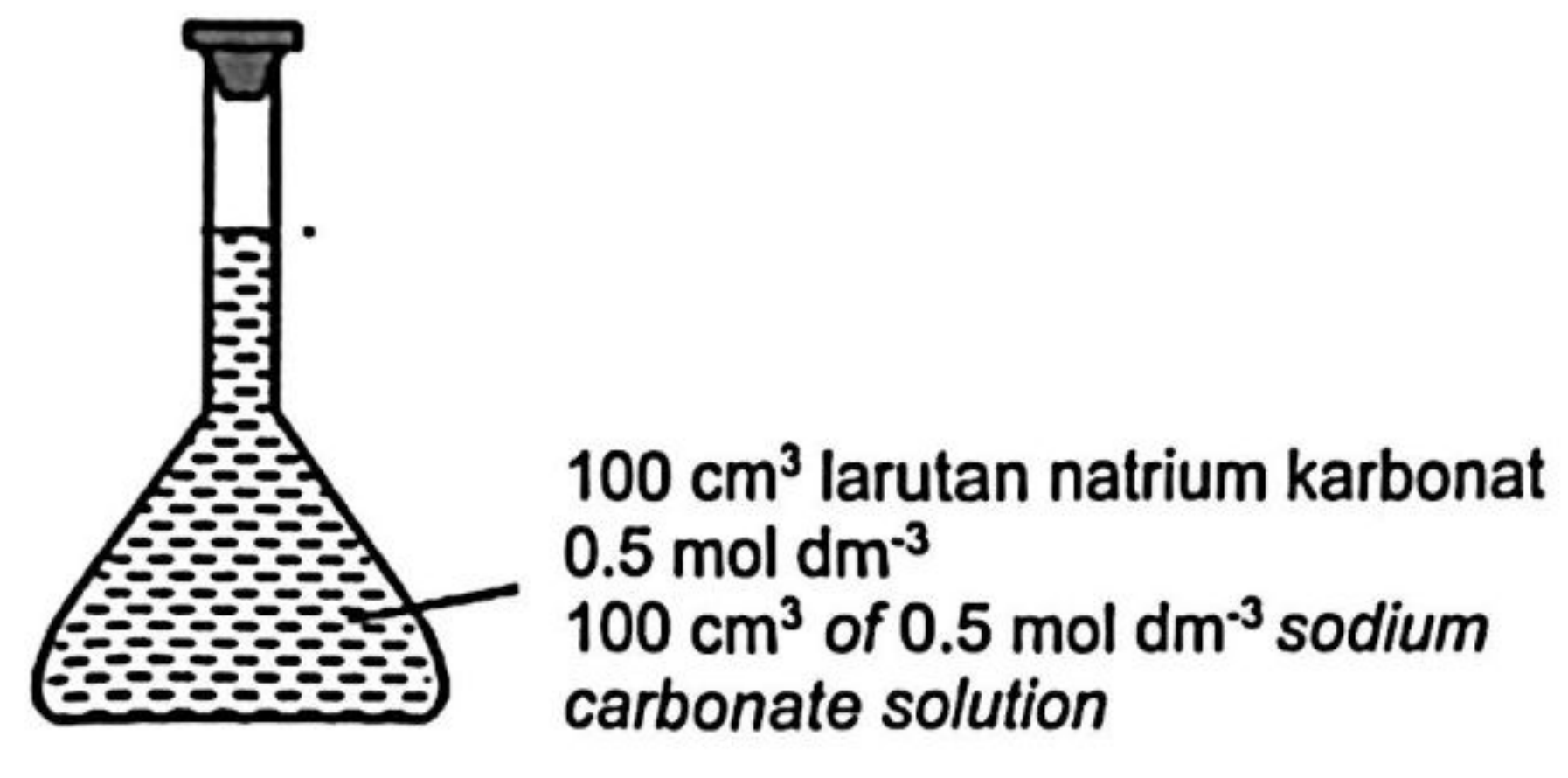
Diagram 34 shows the preparation of sodium carbonate stock solution (100 cm³ of 0.5 mol dm⁻³ sodium carbonate solution). How much volume of stock solution needs to be added to produce 500 cm³ of 0.01 mol dm⁻³ sodium carbonate solution using the dilution method?
Medium
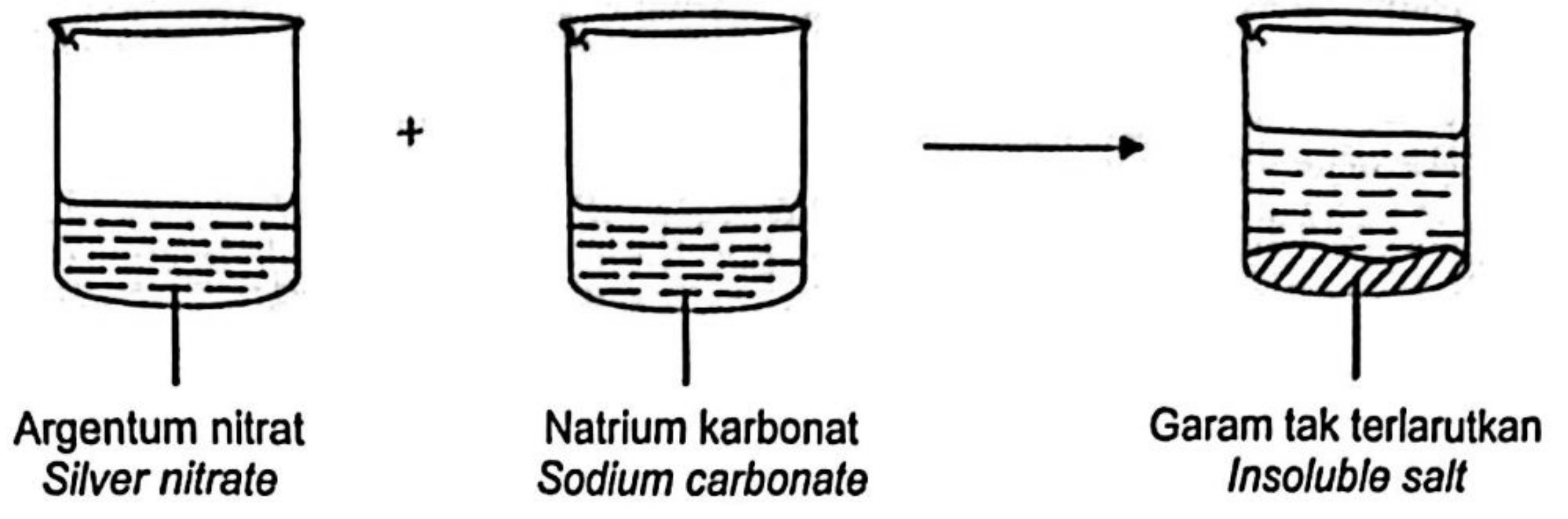
Diagram 35 shows the reaction of two types of soluble salts (silver nitrate and sodium carbonate) to produce an insoluble salt. Calculate the mass of insoluble salt produced if 20 cm³ of 0.5 mol dm⁻³ silver nitrate solution is used. [Molar mass of insoluble salt = 276 g mol⁻¹]